
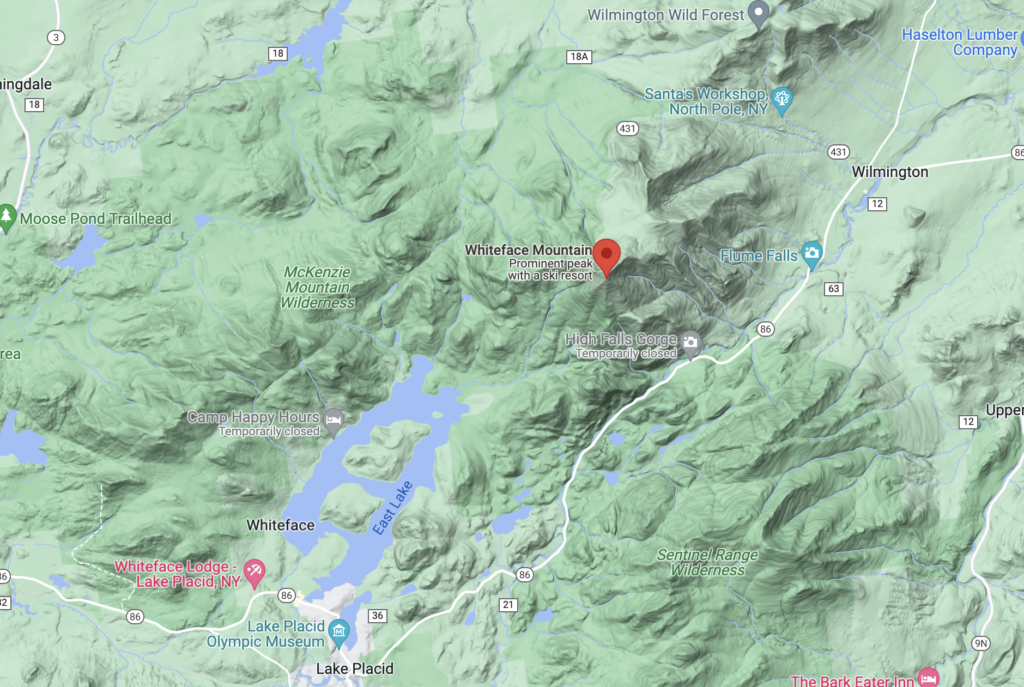
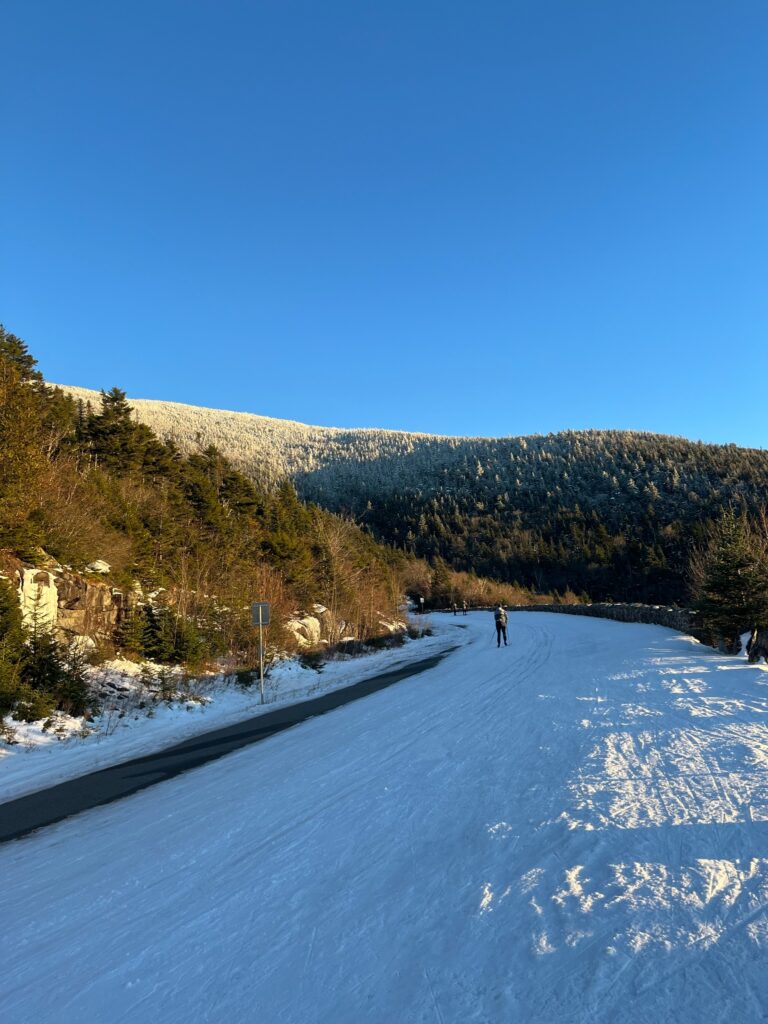
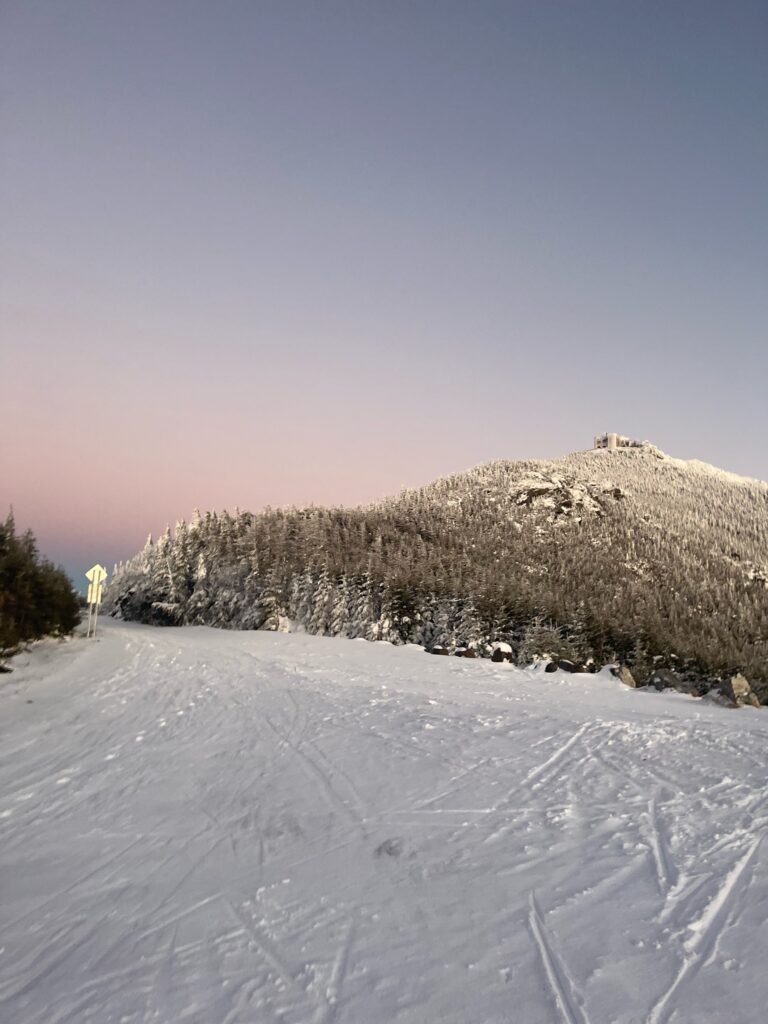
Over Thanksgiving break, I spent some time in the Lake Placid area in northeastern New York. During this time, I skied up to the top of Whiteface Mountain(4867ft) via a toll road that is left unplowed during the winter to allow for recreation. It took me about 80 minutes to climb the 1,760ft to an overlook at the top, which I reached right around sunset. On the way up, I was able to notice as the ecosystem around me changed with the elevation. The bottom of the mountain was a typical northern hardwood forest, I noticed a lot of birch, American beech, Eastern White Pine, and Northern White Cedar. These were all species that I have noticed either at my phenology location at Red Rocks, or in the areas surrounding it. The farther up I went, the more changes I saw in the ecosystem. The top of the mountain was a boreal forest made up mostly of spruce and fir trees, as these trees are best suited to survive through the harsh winds and cold, long winters, that they experience at the top of the mountain.
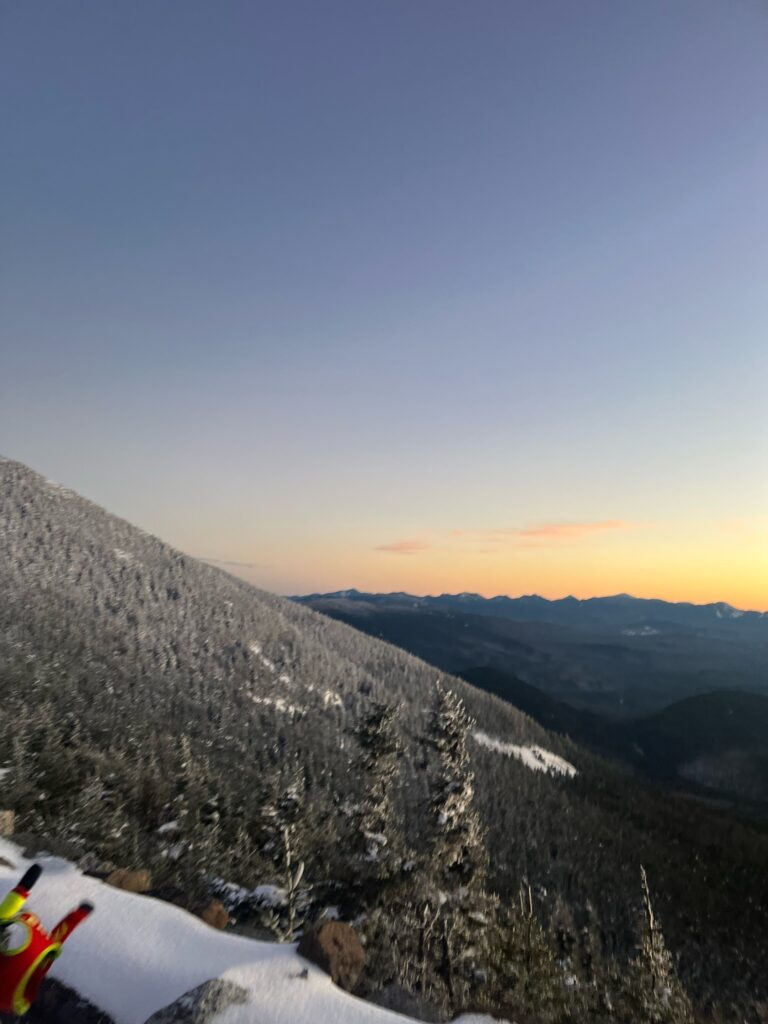
This location is known for having some of the highest windspeeds in the Adirondaks, and the trees that grow near the top are built to survive these high-speed winds. Many of the trees on the edge of the mountain have noticeable differences in the growth on the sides of their branches, the side more exposed to the wind will have little to no needles, while the sides more protected from the wind have more coverage on their branches.

Something about my phenology spot that made me pick it in the first place was how open it was, the flat rocks, lichen, and spruces reminded me of a more alpine-like place, like Whiteface Mountain. The trees and plants growing at my place in Red Rocks, however, have a lot easier time surviving, as it is over 3,000ft lower and doesn’t experience as harsh and extreme conditions as the vegetation on Whiteface Mountain.
Coming from the flatlands of the Midwest, I’ve always been obsessed with mountains, so now living in Vermont near the Green and Adrirondak mountains has made me really grateful for these opportunities. To thank the land for allowing me to be able to explore it, I wrote a quote from the Honourable Harvest in a trail log at the base of the mountain on the toll road, where I was able to read other people’s experiences on the mountain, and express my own gratitude.
