Posts

Phenology Blog #4

It’s a week into December here in Burlington, and the weather when I visited my phenology spot feels almost exactly the same as when I first saw it two months ago in October, and really similar to when I last visited it before Thanksgiving break. Winter has not been off to a strong start yet, when I went down to Red Rocks it was in the mid 40°s and rainy. The path I follow to my spot is muddy, and the leaves scattered along the sides are starting to slightly decompose, but many are covered by water, as there has been a lot of rain lately.

There are still some signs of the approaching winter, there were fewer chipmunks running around than the last time I was here, and the squirrels look to be twice the size as they were earlier in the fall. The chipmunks remain dormant over the winter, whereas the grey squirrels are still active as they have eaten a lot in the fall and buried food to find when they need it.
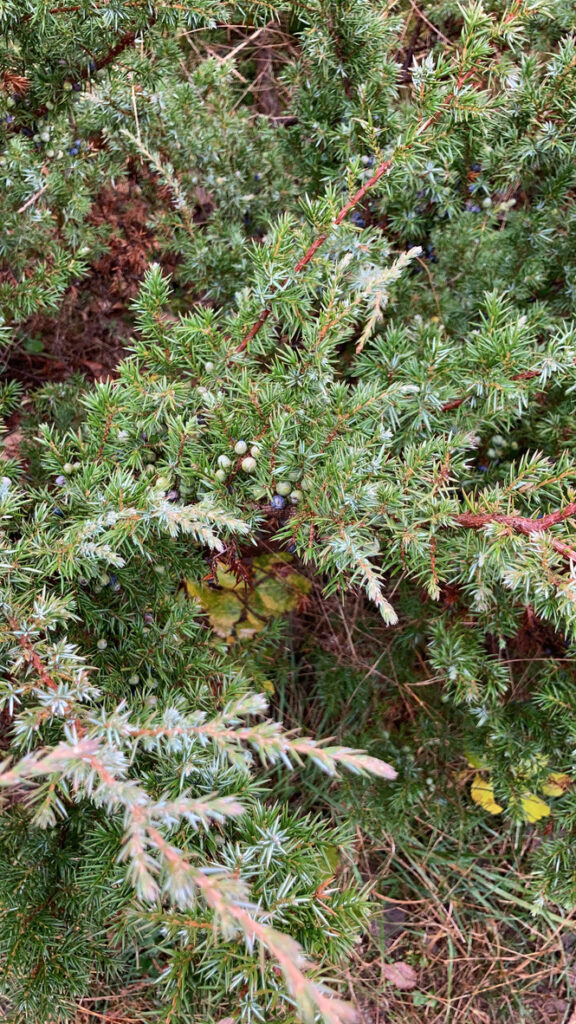
A female juniper- you can tell because of the “berries”, which only the females produce. While they look like berries, these are mini cones that are really small.
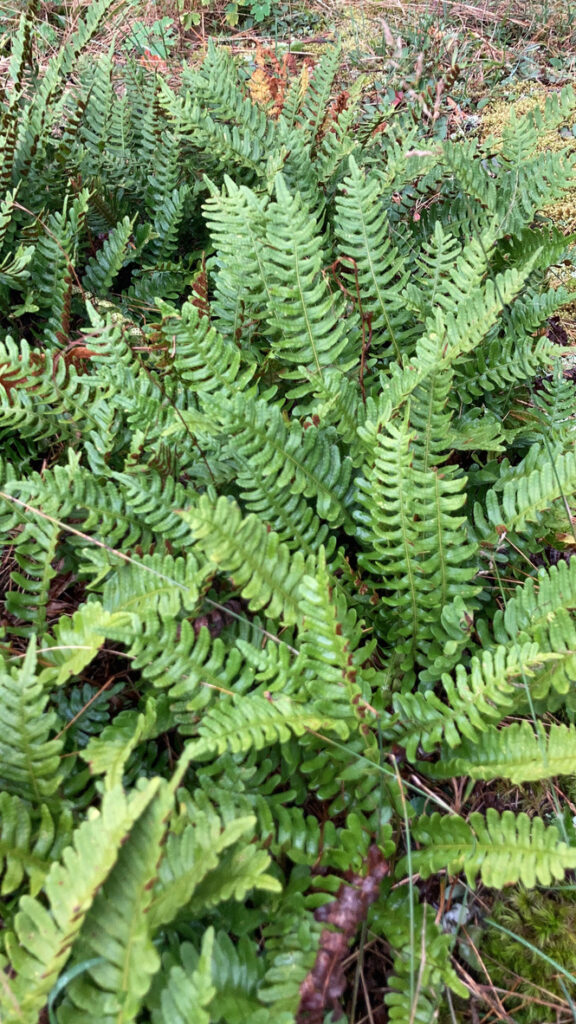
Common Polypod

At my spot, I noticed that there was a lot more greenery than I had expected to see. The warmer temperatures have been more forgiving to many of the species growing in the area, bringing some color to the very brown forest that surrounds it. The evergreen trees in the area like the spruce and junipers have no problem surviving in the winter because the waxy protective layer on the needles of conifers holds more water in, which prevents them from needing to drop their needles to survive. There were also some plants that I was able to identify as the common polypod fern, which was also highlighted in Naturally Curious. According to the book, these are a part of the evergreen family, which is why they keep their color throughout the winter. I was hoping that by the last time I visited this spot before winter break it would have snowed, and I would be able to see what this spot looks like in the winter, but I’ll have to wait a little longer to see this.

What aspects of your phenology spot do you enjoy the most?

When I first came to Burlington this fall, Red Rocks was one of the first natural places that I was able to form some connection with. I loved the ecological differences spread throughout the park, and how there seemed to be endless trails to wander through the woods. There are beaches with rocks to skip, clifs overlooking Lake Champlain, massive moss walls coverering rocks, the wolf tree, and my phenology spot- the clearing on the rocks. A lot of the trails that got through the park are dead ends, which is how I found my phenology spot, I turned off the main teail and took this till it dead-ended in what felt like a private area of the park. I love the vegetation that grows within it too, it’s too rocky for trees to grow in it so it’s surrounded by larger trees, while smaller junipers are spread out on the rocks, and assorted mosses, grasses, and ferns grow where they can. It’s a spot that feels like my own little oasis in bigger park, all the times I’ve been here I’ve never seen anyone else on this trail or at my spot which makes it feel extra special to me. It provides me with a place to stop and slow down, focus on where I am and what is going around me in that exact moment.
Phenology Blog #3 – Whiteface Mountain

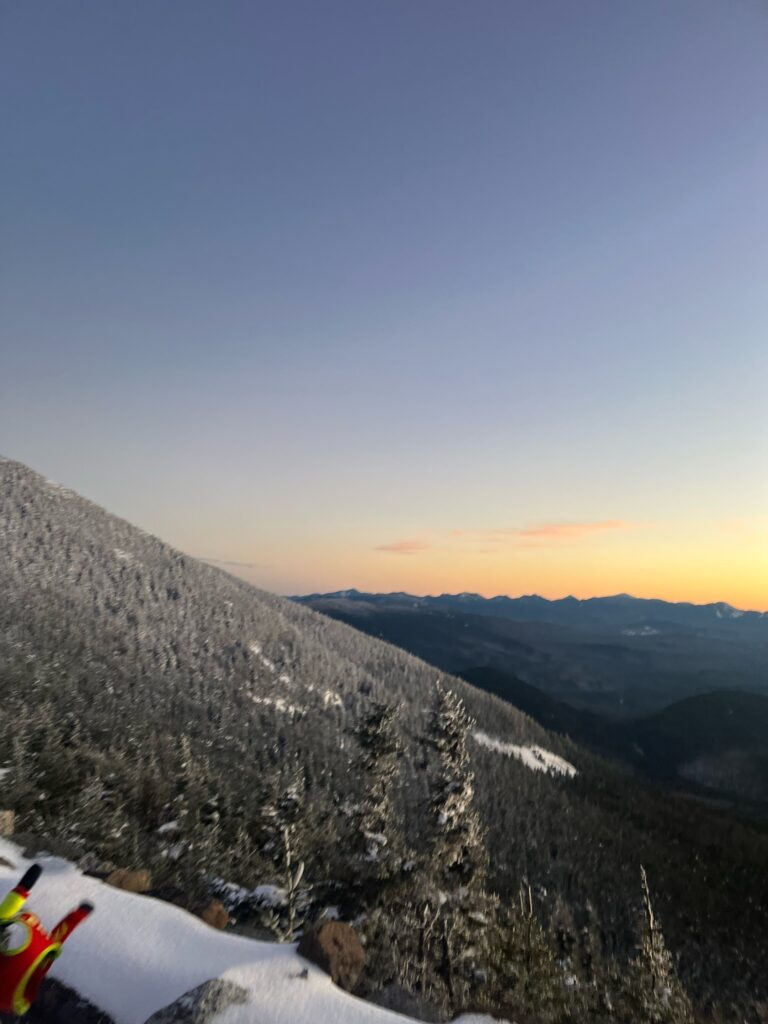
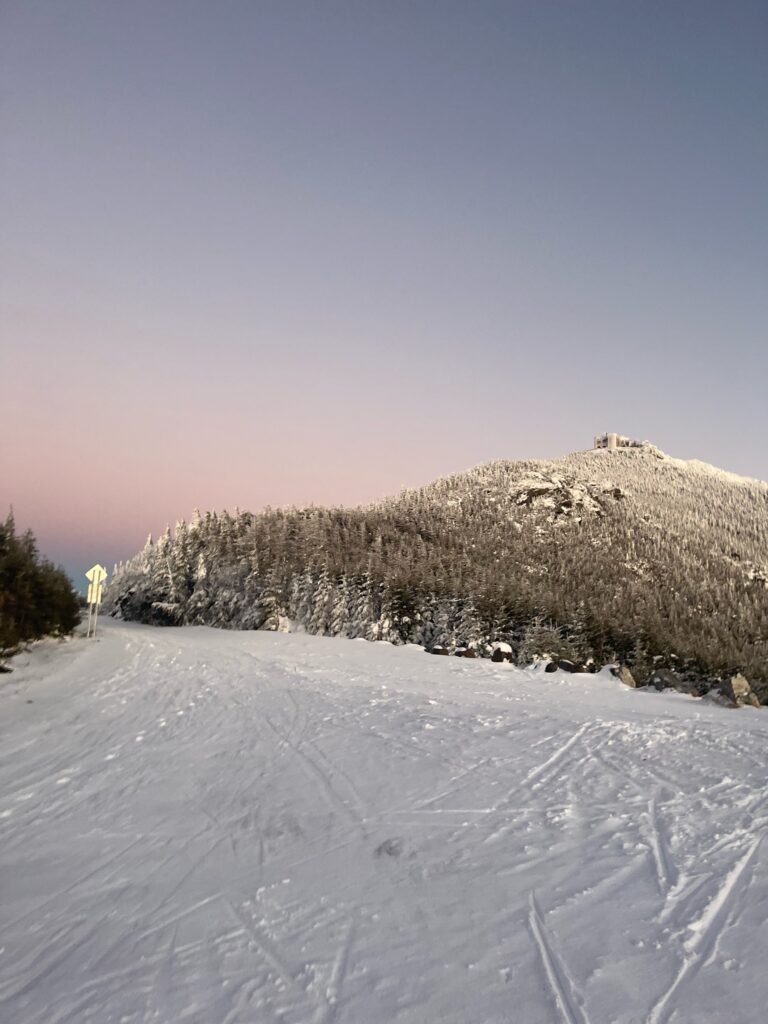
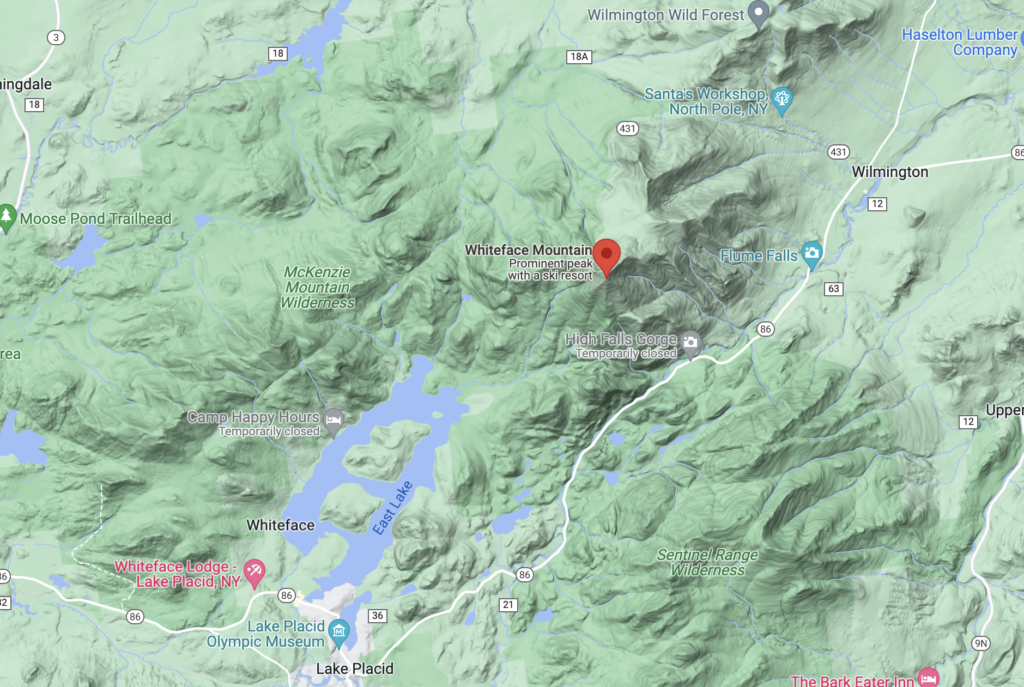
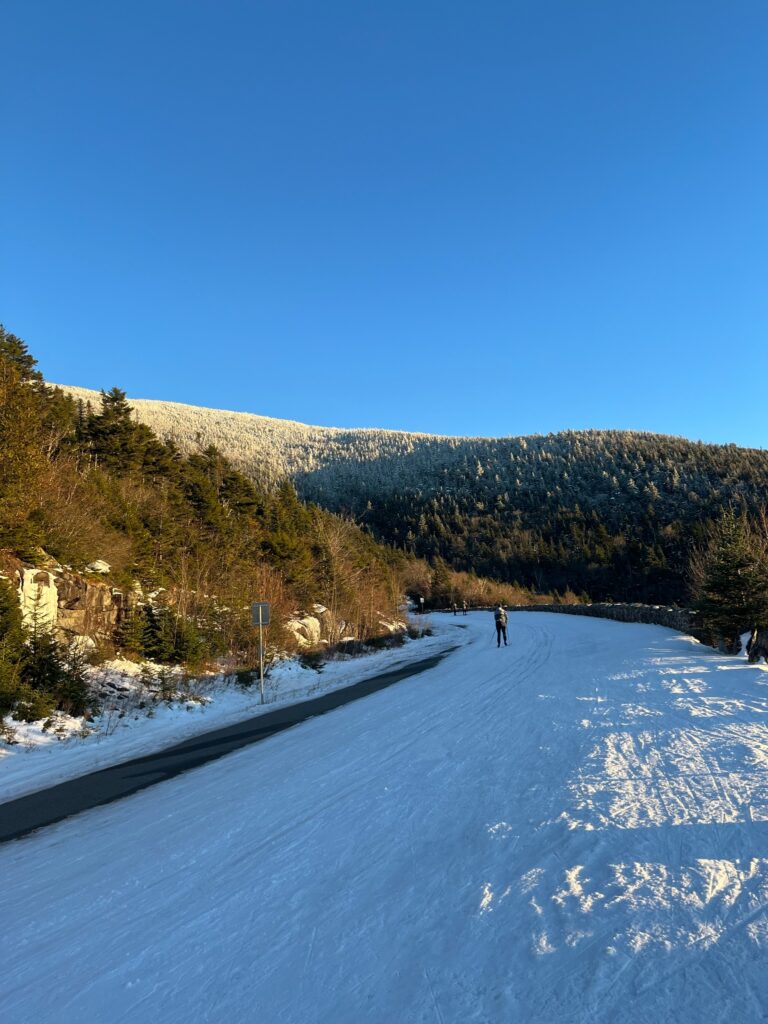
Over Thanksgiving break, I spent some time in the Lake Placid area in northeastern New York. During this time, I skied up to the top of Whiteface Mountain(4867ft) via a toll road that is left unplowed during the winter to allow for recreation. It took me about 80 minutes to climb the 1,760ft to an overlook at the top, which I reached right around sunset. On the way up, I was able to notice as the ecosystem around me changed with the elevation. The bottom of the mountain was a typical northern hardwood forest, I noticed a lot of birch, American beech, Eastern White Pine, and Northern White Cedar. These were all species that I have noticed either at my phenology location at Red Rocks, or in the areas surrounding it. The farther up I went, the more changes I saw in the ecosystem. The top of the mountain was a boreal forest made up mostly of spruce and fir trees, as these trees are best suited to survive through the harsh winds and cold, long winters, that they experience at the top of the mountain.

A view of the road up to the top, and the transition to a boreal forest.

This location is known for having some of the highest windspeeds in the Adirondaks, and the trees that grow near the top are built to survive these high-speed winds. Many of the trees on the edge of the mountain have noticeable differences in the growth on the sides of their branches, the side more exposed to the wind will have little to no needles, while the sides more protected from the wind have more coverage on their branches.

A (slightly blurry) view of the trees more exposed to the wind that have loss of needles due to extreme wind.
Large spruce and fir trees.

Something about my phenology spot that made me pick it in the first place was how open it was, the flat rocks, lichen, and spruces reminded me of a more alpine-like place, like Whiteface Mountain. The trees and plants growing at my place in Red Rocks, however, have a lot easier time surviving, as it is over 3,000ft lower and doesn’t experience as harsh and extreme conditions as the vegetation on Whiteface Mountain.

Shorter trees almost at the top of the mountain, around 4,000ft.

Coming from the flatlands of the Midwest, I’ve always been obsessed with mountains, so now living in Vermont near the Green and Adrirondak mountains has made me really grateful for these opportunities. To thank the land for allowing me to be able to explore it, I wrote a quote from the Honourable Harvest in a trail log at the base of the mountain on the toll road, where I was able to read other people’s experiences on the mountain, and express my own gratitude.

Phenology Blog #2

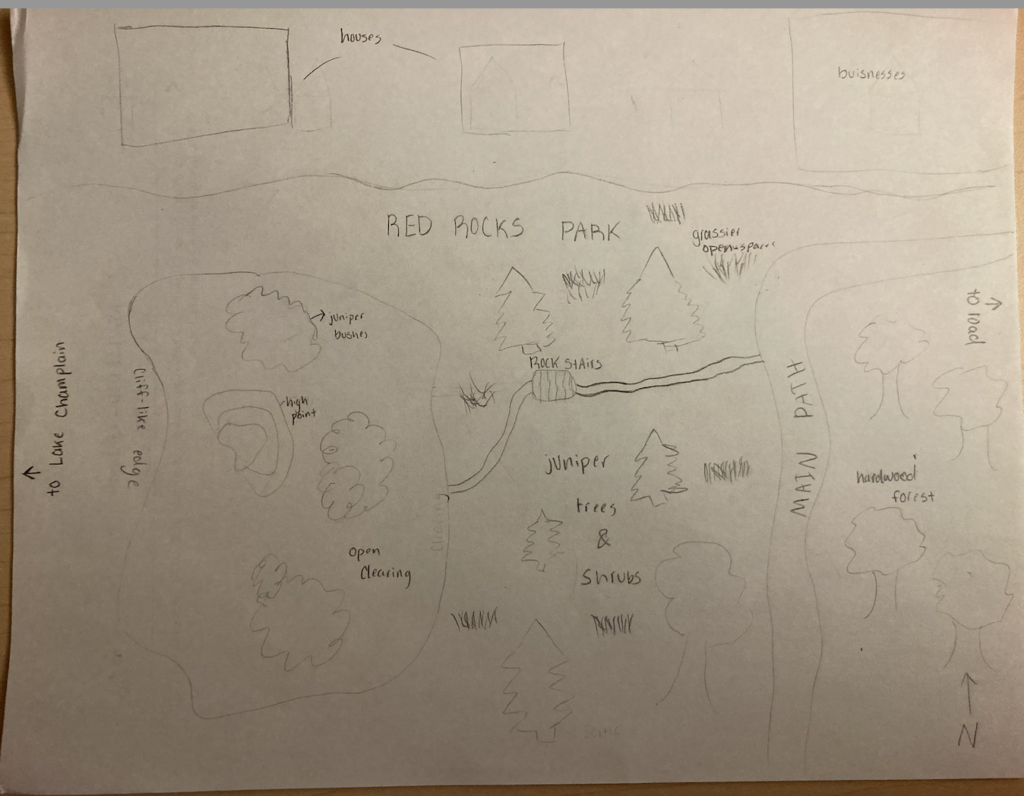
Bird’s eye view drawing of location in Red Rocks Park.

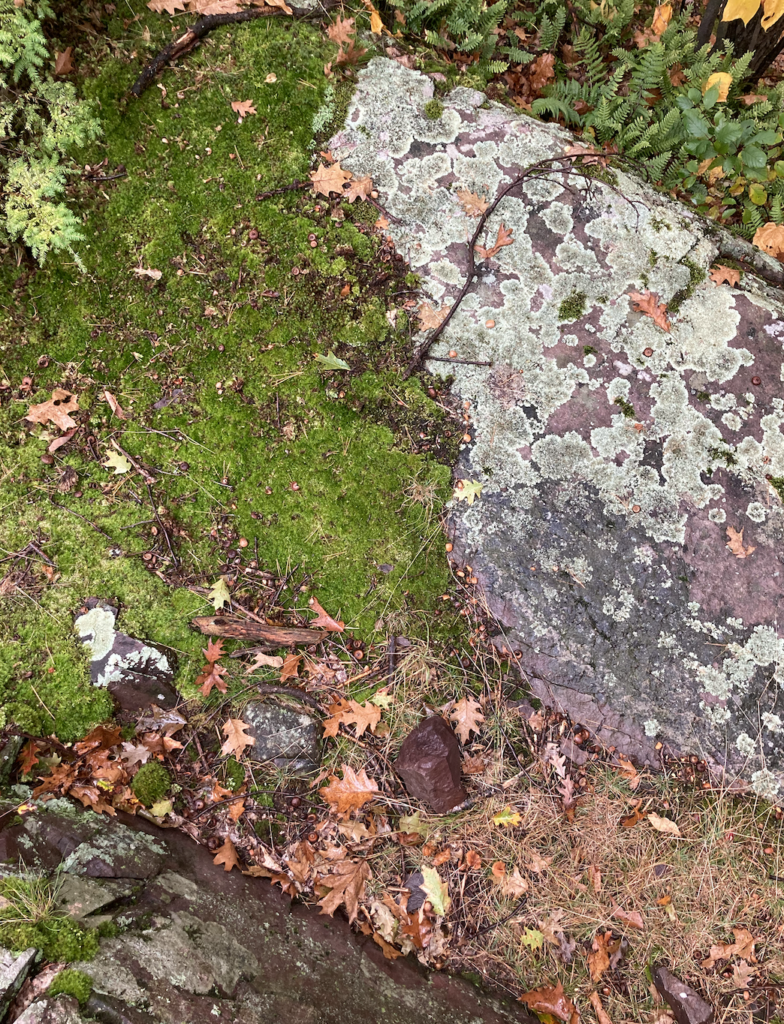
Update from 11/05/2022: Since I was last at this spot, there have been some shifts in the appearance of the surrounding vegetation. When I was last here the maples that surround this clearing had brightly covered leaves covering their branches, but now the leaves have all fallen, leaving the forest without color. The few types of grass or flowers that were still alive last time have died, leaving the junipers and various mosses on the rocks the last surviving vegetation in the area.

Some lichen on the rocks in the area

Phenology Blog #1

Welcome to my place-based phenology blog, where I will be keeping you updated through the year and the seasons on a place I picked out in Red Rocks Park in South Burlington. When you enter the park, head west on one of the main trails, it goes through the northern part of the park which is made up of a lot of sugar maples which were a bright yellow as I walked through them. The main trail starts to veer to the south, but at this point, you break off the main path and follow a more narrow path up a small hill that suddenly becomes a clearing looking over the maple forest below. The change is quick, and you suddenly feel like you’re in a completely different place than you were a minute ago. The vegetation and exposed rock give off the feeling that you’ve just climbed a mountain, rather than wandering less than a mile from the shores of Lake Champlain. 

44°26’46″N, 73°13’28” W

Vegetation:

  • Cumberland Rock Shield
  • Rock Spikemoss
  • Bristly Haircap Moss
  • Hedwig’s Fringeleaf Moss
  • Rock Polypody
  • Tall Cinquefoil
  • Virginia Saxifrage
  • Sheep’s Sorrel
  • Striped Maple
  • Sugar Maple
  • Northern White Cedar
  • Freeman’s Maple
  • Northern Red Oak
  • Western Hemlock
  • Common Juniper
  • Eastern White Pine

The vegetation that grows in this area is able to grow here with little soil since the top layer is mostly bedrock. Since this is the case, the main vegetation in the area is various types of moss, ferns, grasses, and a lot of juniper shrubs of varying sizes. The woody plants in the area are surrounding the clearing and are Western Hemlock, Northern White Cedar, and Eastern White Pine. 

Skip to toolbar