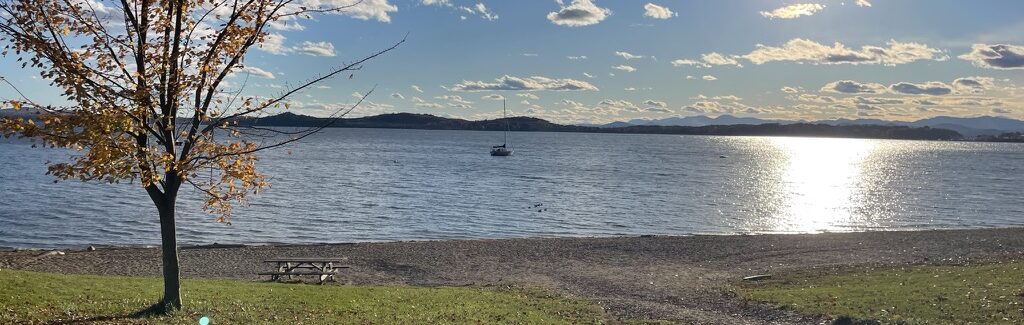

A final visit before departing for break
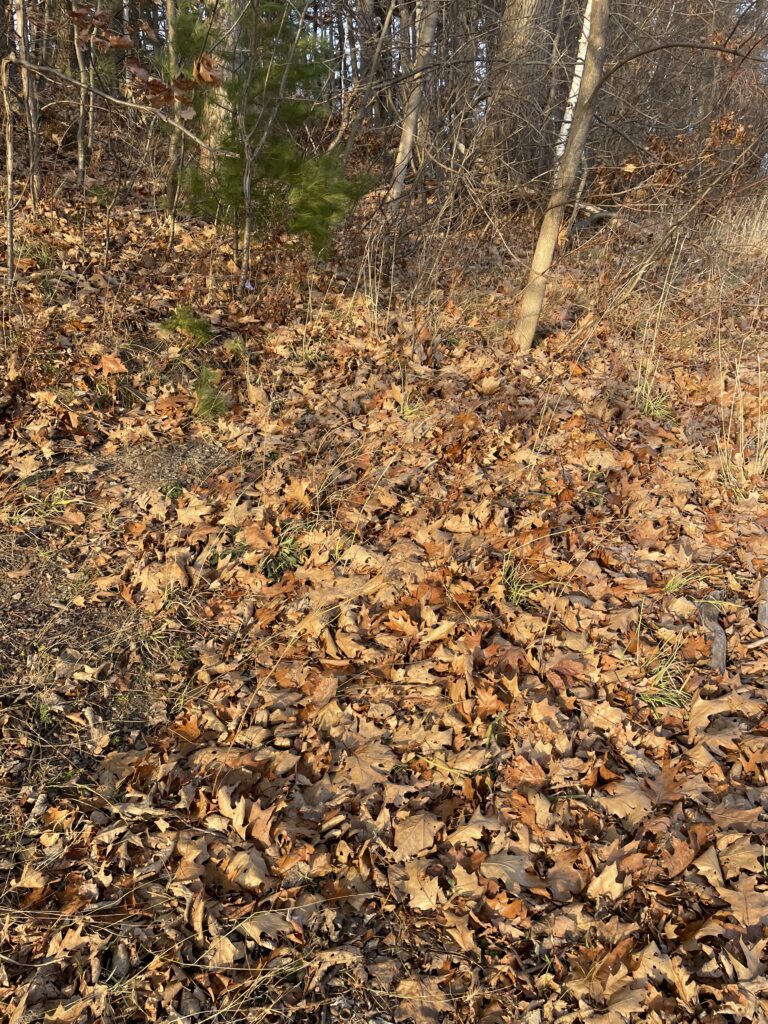
The site at Red Rocks was drastically different from when I last visited in November. The deciduous trees are now almost all bare. The only one with leaves remaining is a Northern Red Oak determined to hold onto its leaves. The larger Eastern White Pines are the only source of greenery in the overstory. The leaf litter on the forest floor is composed of red oak leaves and little else. Decomposition is more apparent on the trails, where more human activity has occurred, and is also starting to ramp up in the non-trail areas. A young eastern white pine is making its way into the wintery forest and growing strong.


Sand telling stories

Located along the shoreline on the Shelburne Bay/Lake Champlain, tracks are easy to spot in the coarse sand. Even though the tracks are not clearly identifiable, patterns of steps can be observed. It is likely that most of the tracks seen in the sand are from dogs and humans, as lots of nearby residents walk their dogs and take walks along the beach here.
The ducks seen in November were not to be found at this visit, leading me to wonder where they have waddled off to? Overall animal activity has definitely decreased since the last time I was here. It was quieter, more still, a lack of movement and activity was apparent.