April 20th, 2023

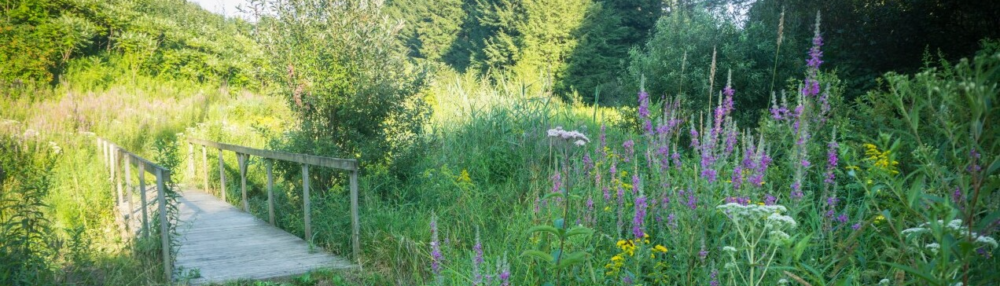
Today I visited my phenology spot for the final time this semester. Understanding that this is the last time I will be here for this class and project, I can’t help but reflect on the changes that have occurred at this site over the past year. For the past two semesters, I have been visiting this spot every month, observing the changes in the plants and animals that call this place home. When I first began my observations, the site was in late summer. The trees were full of green leaves, and the ground was covered in grass. As the months progressed, I saw leaves fall and temperatures drop. I witnessed winter come and go, and wildlife migrate and return. Now, I have seen the buds on the trees begin to swell, and the first signs of spring begin to emerge. The birds have returned, and the sound of their songs fills the air. The forest floor has come alive and the insects have come back. 

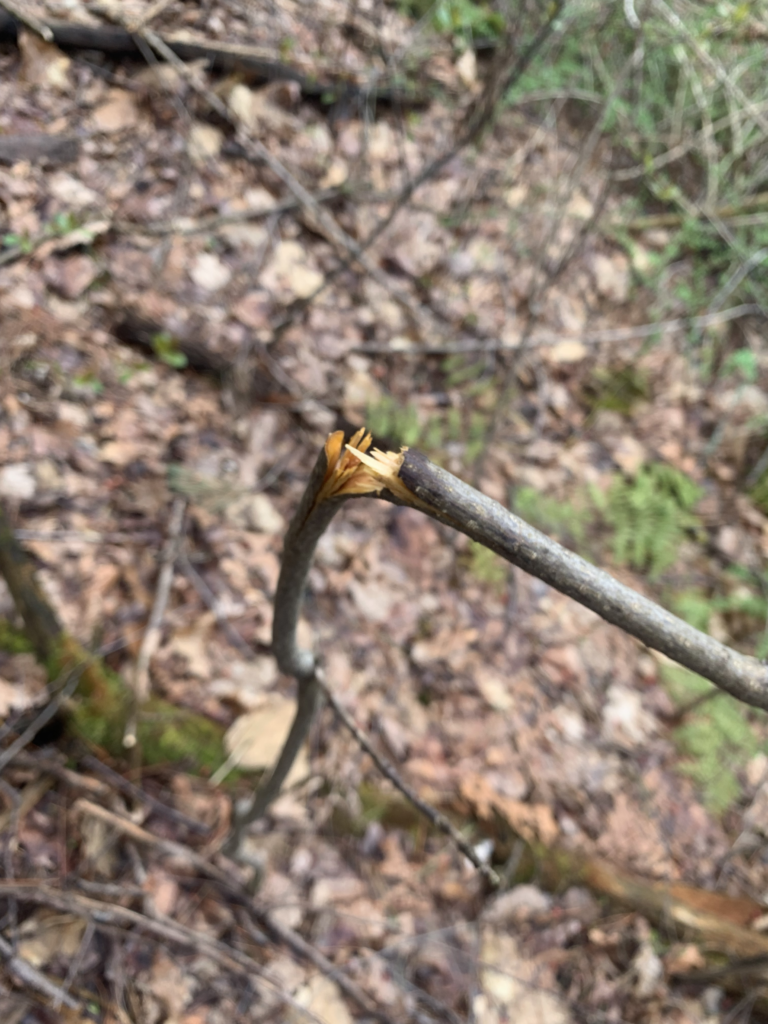
Observing these phenological changes has allowed me to see how closely nature and culture are connected at this site. This is not simply a wild space, but also a place where humans have left their mark. There are foot trails surrounding my site, and the trees bear scars of interactions with humans. Broken trigs off the path and footprints in mud tell the stories of visitors before. Even in the face of human intervention, nature has found a way to thrive. The plants and animals here have adapted to the changing landscape, and the ecosystem continues to evolve.

Observing this place for the past year has allowed me to see how different species are interconnected and how changes in one part of the ecosystem can have ripple effects throughout the entire system. It’s a reminder that everything in nature is connected, and that we as humans are a part of that larger whole. The site will continue to grow and change after I am gone. I know that this place will continue to thrive as long as we respect and appreciate it as an important natural landscape and ecosystem.

April 9, 2023

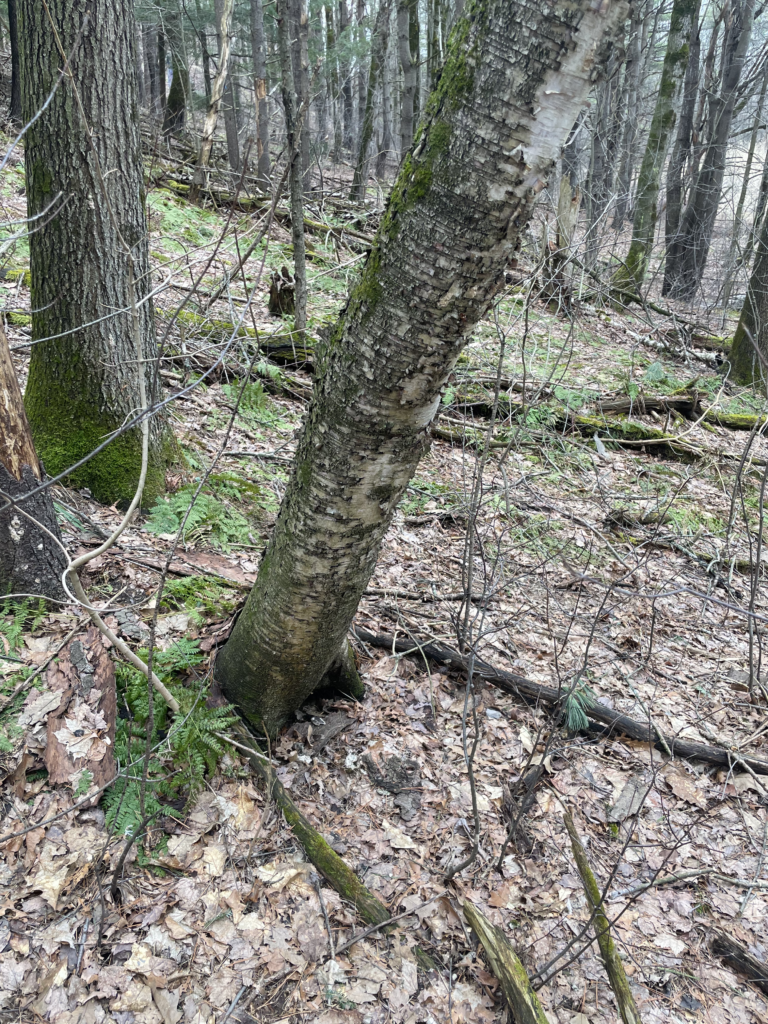
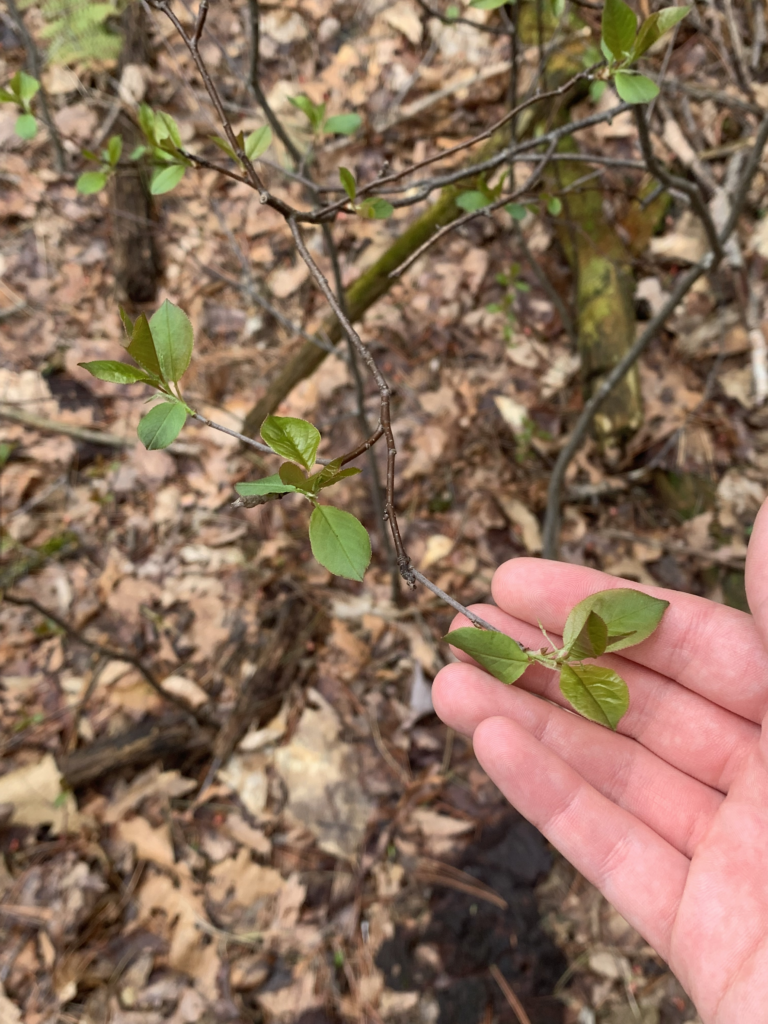
Today I visited my tree in Centennial woods. Upon entering the woods, I immediately noticed some phenological changes. Warm weather has melted the last of the snow. The ferns have sprung up and are looking more lively, and I also noticed an increase in the amount of moss growing on the side of my tree. It was difficult for me to determine whether my tree had started to bud or not, as its branches were too high for me to see clearly. However, I did observe that the neighboring trees had already begun to bud.

March 27, 2023

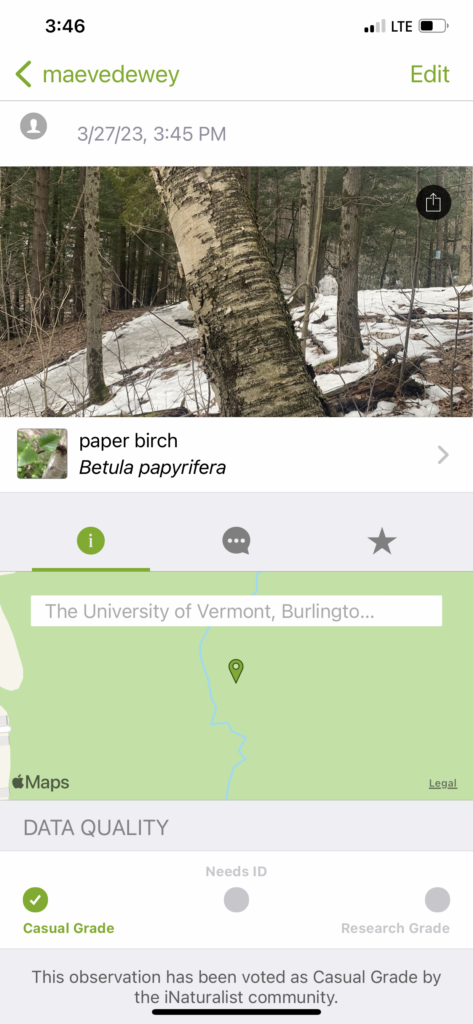
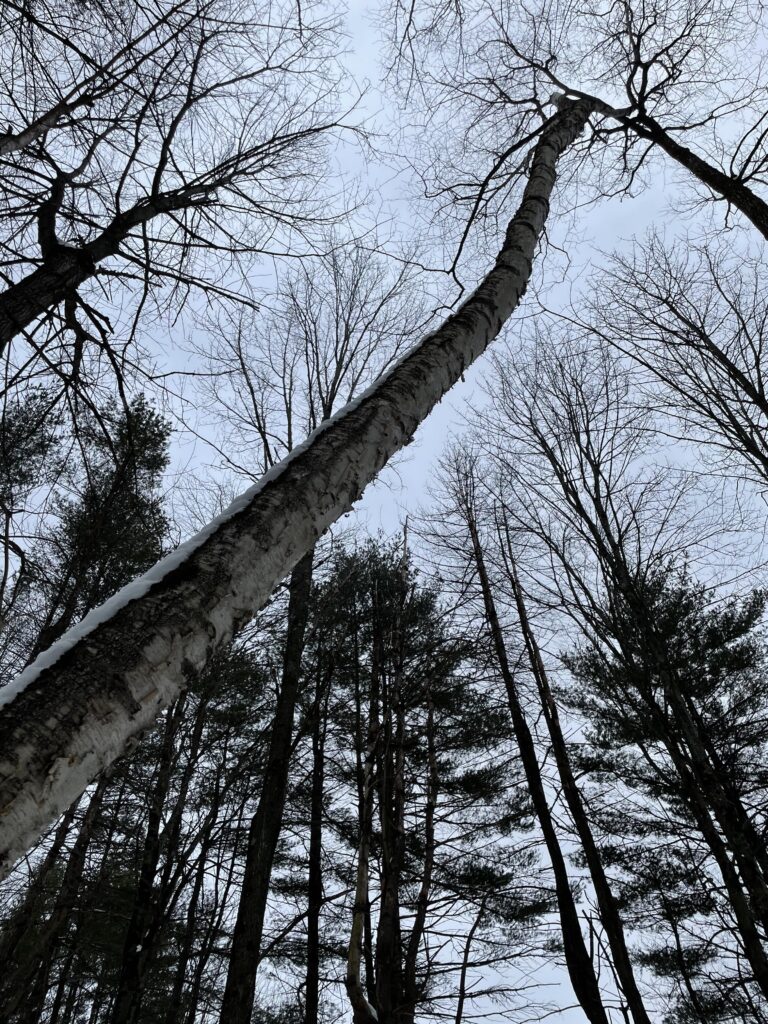
Today I revisited my birch tree in Centennial woods. Due to warmer spring weather, most of the snow from my last visit has melted. Apart from the rise in temperature, the forest and birch tree has remained unchanged to the casual viewer. The branches of the tree are too high to determine any bud changes, however, the surrounding trees are the same. I expect that in the upcoming weeks this will change. In late March, the phenological changes in birch trees in the United States start to become visible. The trees begin to show signs of new growth, with buds growing and leaf buds beginning to break. The emergence of new leaves is a critical event in the tree’s life cycle, as it marks the start of the photosynthetic process that will sustain it throughout the year. As the days lengthen and temperatures rise, the birch trees will continue to grow and mature, eventually producing flowers and seeds. These phenological changes are a vital part of the ecosystem, providing food and habitat for a wide range of animals and insects, and signaling the beginning of spring.

March 15th, 2023

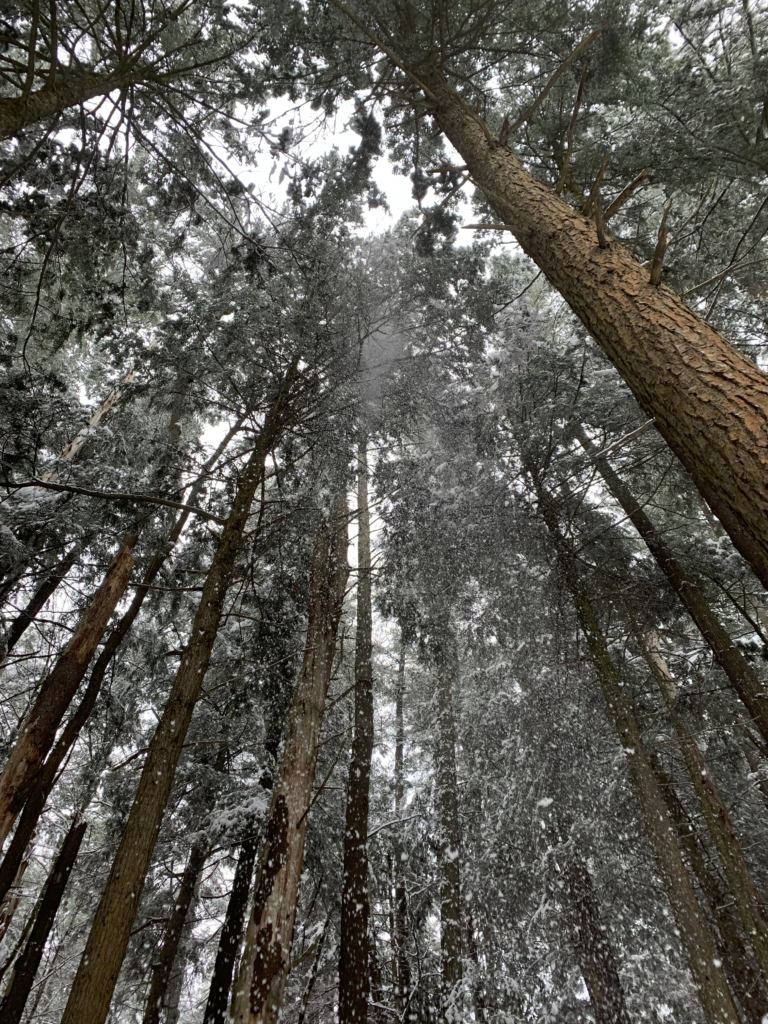
Over spring break, I went skiing at Sugarbush Lincoln Peak! Located deep in the Green Mountains, Sugarbush is one of the largest ski areas in New England. Lincoln Peak has a summit elevation of 3,975 feet. The major habitat types are balsam-fir forests, mixed northern forests, northern hardwood forests, and mature hemlock forests. Vegetation communities at Sugarbush have been influenced over time by natural processes, such as ice storms and changes in climate. A large portion of the mixed northern forest was impacted by an ice storm which occurred in January 1998. The storm left 60 to 70 percent of trees in the area bent or broken from heavy ice loads. The vegetation at Sugarbush has also been influenced by human activities. Timber harvesting, clearcutting, ski area development and skiing all negatively affected the surrounding areas. Since the development of Sugarbush, the forests in this area have been primarily maintained and limited cutting of small vegetation and tree limbs has occurred to preserve trails. While skiing, I spent some time in the woods off of Castle Rock Peak. Due to the recent snow storm, the woods were covered in a thick layer of powder making it difficult to move around. The main difference between my place at sugarbush and my phenology spot at Centennial woods was elevation. Due to the elevation at Castle Rock Peak, the main tree types identified were evergreens rather than birch and maple. The snowfall here was also significantly more than in Burlington. The woody plants here appeared dormant. I expect this to change within the upcoming weeks as plants and animals respond to the increased sunlight and warming temperatures. I was unable to hear or spot any birds during my visit.

March 1st, 2023

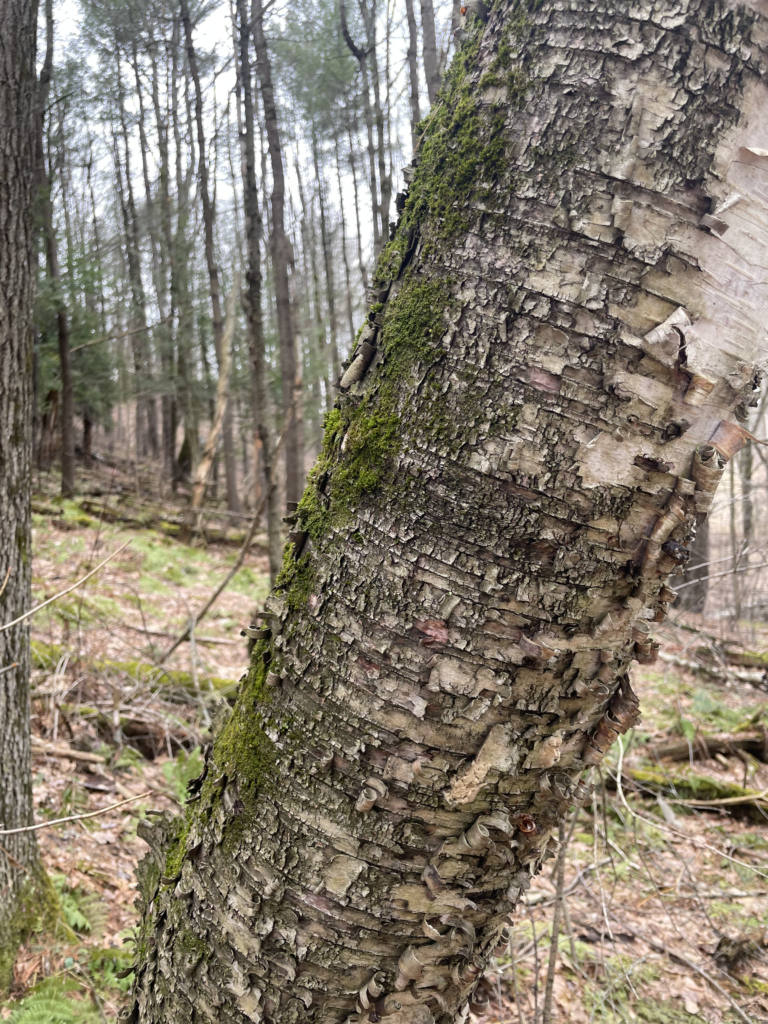
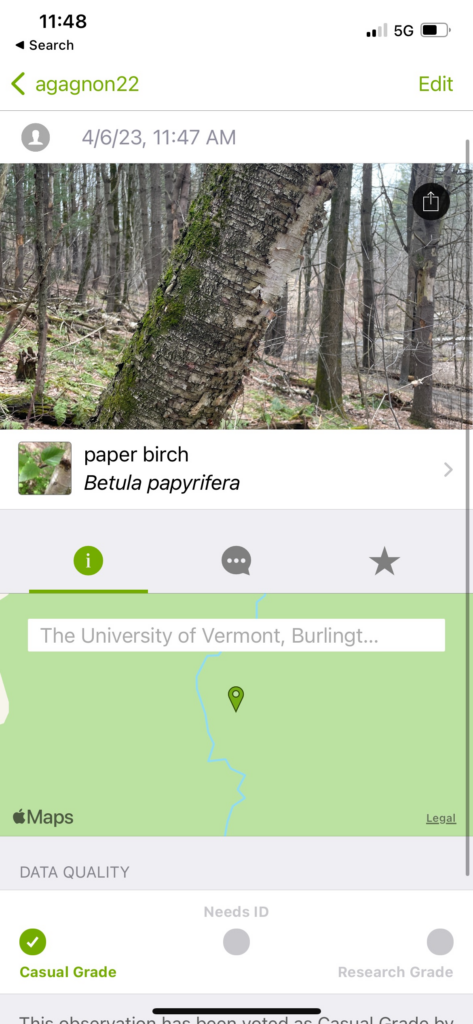
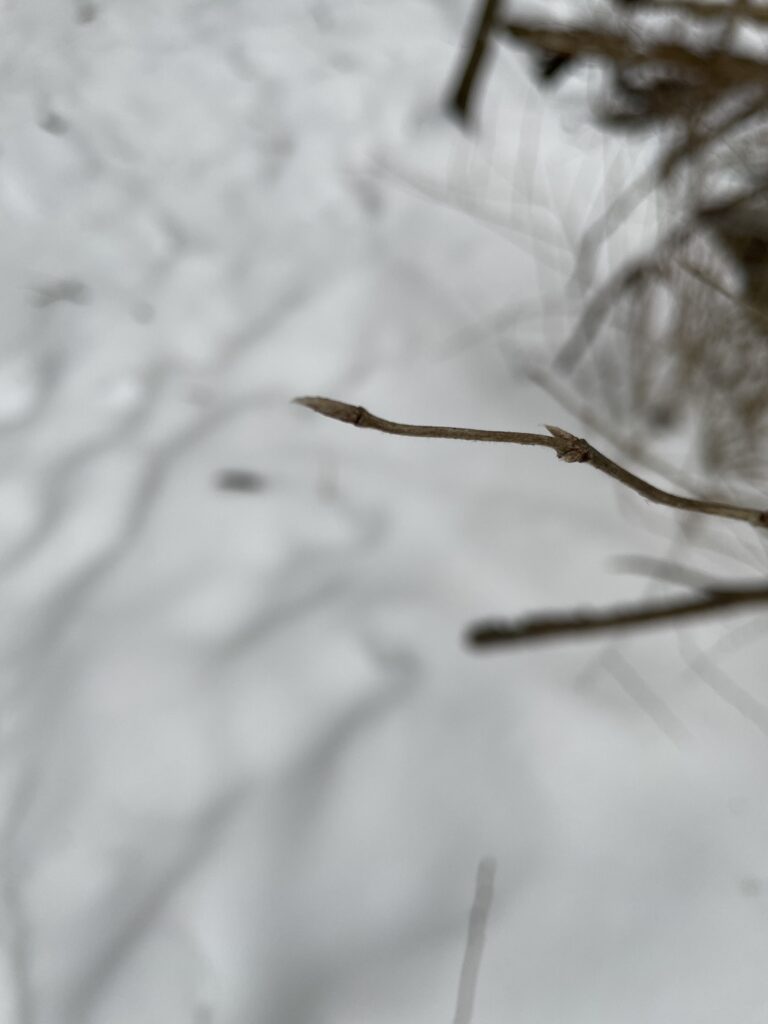
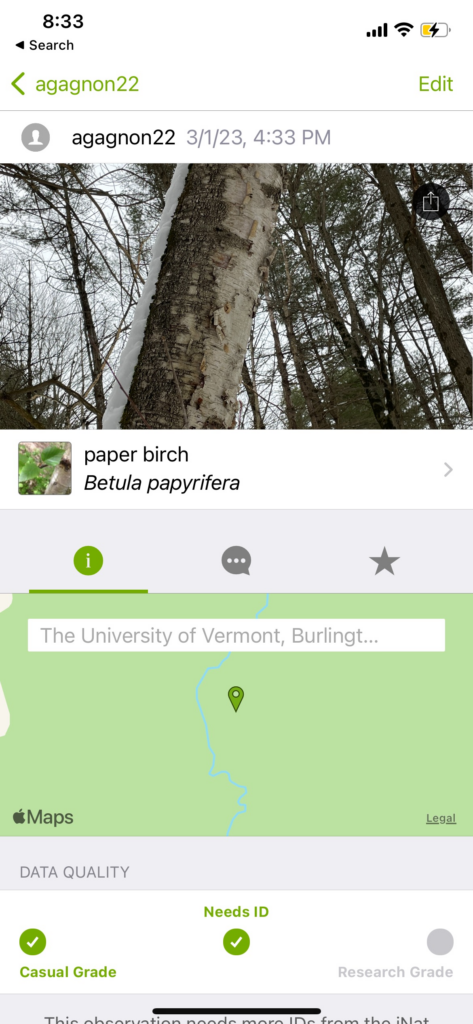
For the third phenology assignment this semester, I identified a paper birch (Betula papyrifera) tree at my site. The bark on this mature paper birch was white and peeling on one side, with moss and scaly / rough brown dark on the other. The twigs and buds of the tree were slender, a dull red-brown color, with numerous lighter lenticels. All of its leaves were shed and part of the tree was covered by snow. I was able to rule out river birch because the tree did not have pale pink and brown/gray colored bark or curled paper scales. I knew that the tree wasn’t yellow or gray birch because it lacked the coloring and triangular dark patches.

February 16, 2023

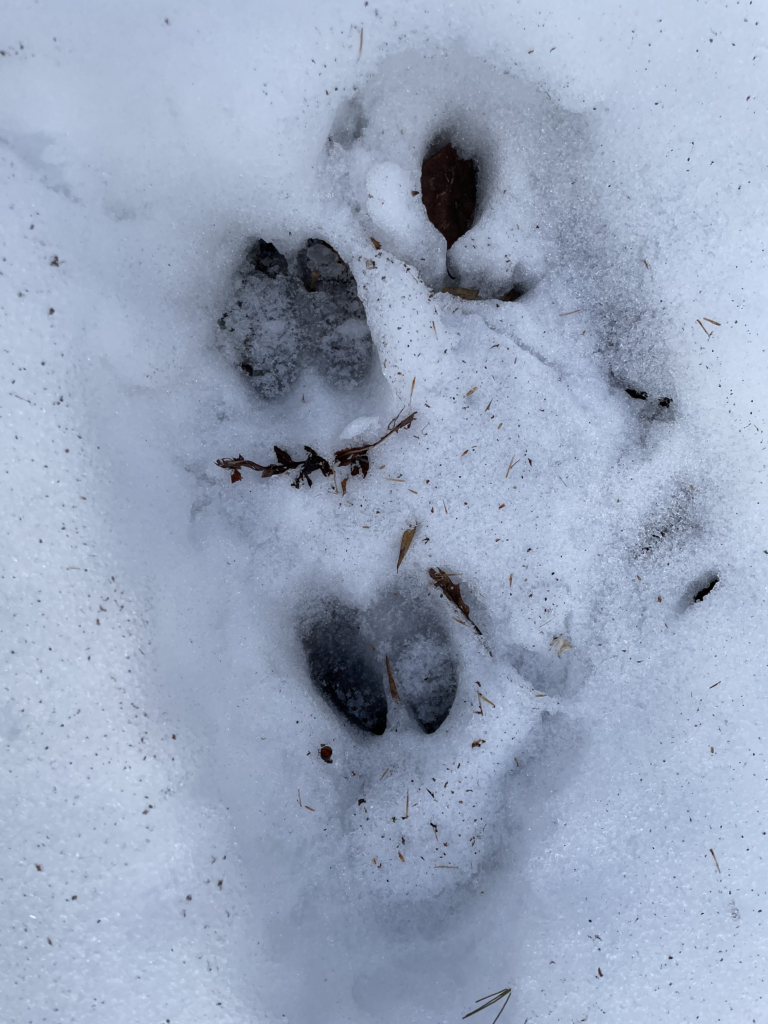
For the Wildlife Signs in Burlington Project, I went to Centennial Woods to document animal tracks. Due to recent temperatures, most of the snow had melted. The reason we have seen such warm temperatures across the past week is because of the lift in the jet stream, which is associated with an area of high pressure over the Atlantic Ocean. This lift in the jet stream has allowed warm air from the south to be filtered into the Northeast. These sudden changes have made tracking more difficult. To increase my chances of finding signs of animal life, I walked along a patch of snow boarding the Centennial Brook. About 10 minutes into my journey I spotted the tracks of a white tailed deer herd. White-tailed deer tracks have two toes (hooves) that form an upside-down heart-shaped track with the rounded bottom indicating the direction of travel. The hoof print was about two to three inches long, and sunk deep into the snow. Moose tracks are similar to white tailed deer tracks, however, I was able to rule out this possibility because moose hooves are significantly larger. I also noted some dog tracks in the snow!

January 25, 2023

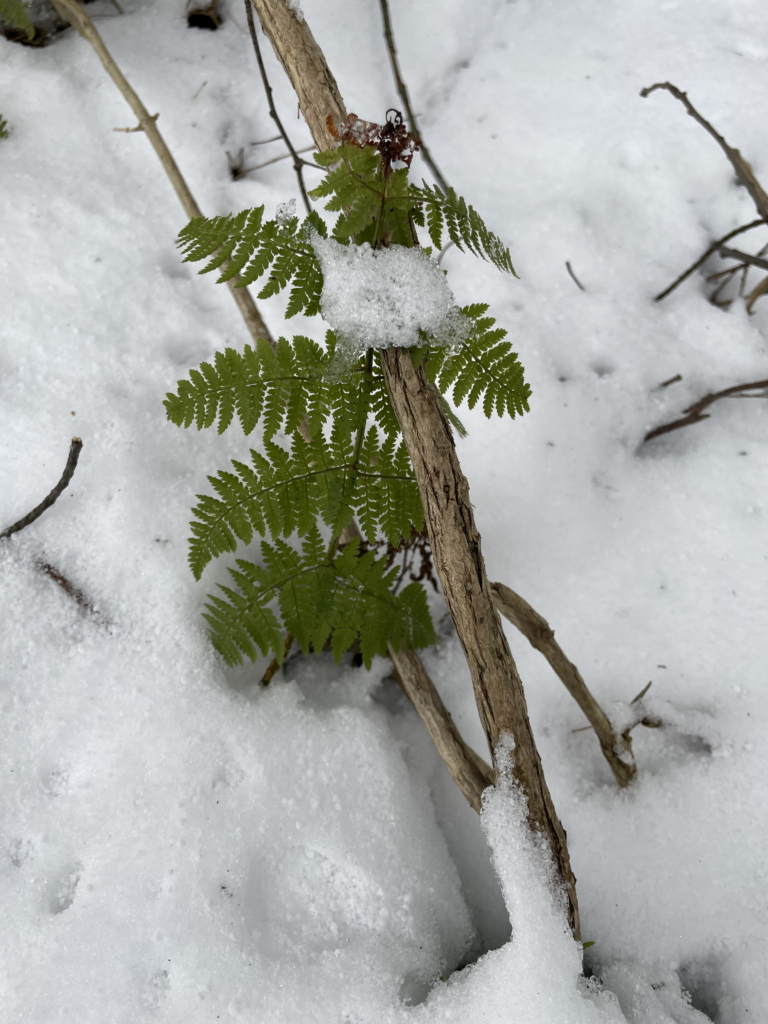
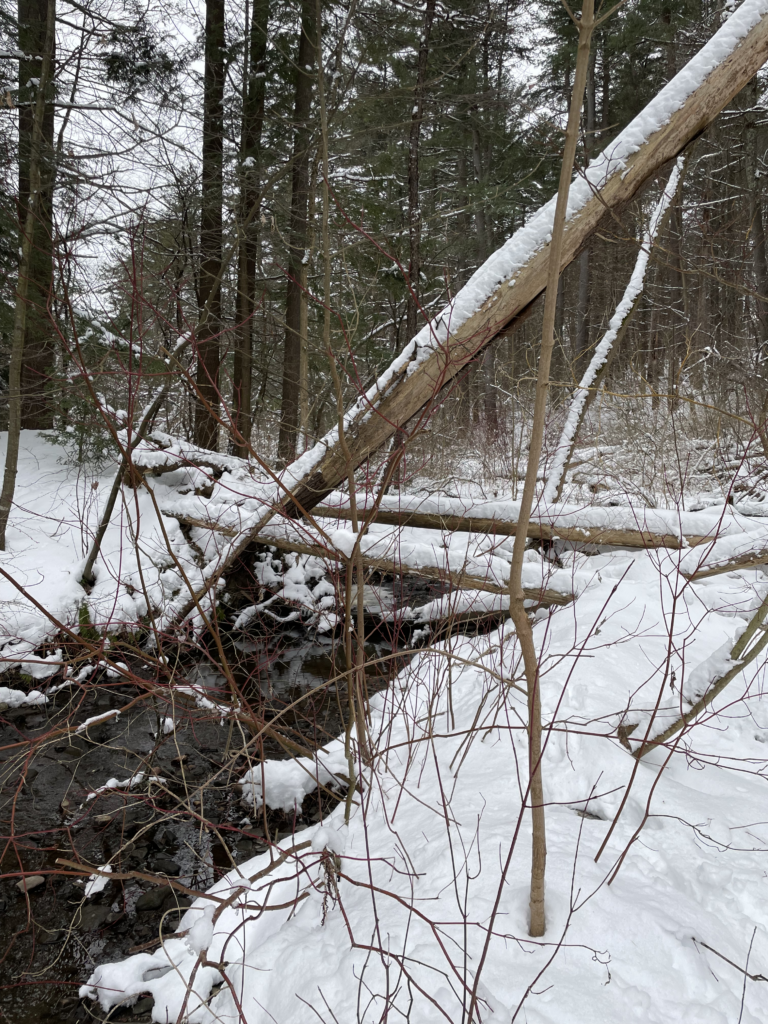
To continue my phenology blog I decided to return to my spot in Centennial Woods from last semester. Many seasonal changes have occurred since my last visit in December. There is a thick blanket of snow on the ground, the trees are completely bare, and the temperatures have dropped significantly. During my visit I did not see any animals and very few tracks. I saw many human boot prints and the imprint of snow falling off trees. I saw some dog tracks and a fern peaking out of the snow. Hardy ferns are tolerant of cold winter temperatures and can be grown outdoors year-round. There were some new fallen trees around my site likely caused by recent wind and snow storms. These new changes are exciting and I am looking forward to seeing what phenological changes occur next month!

December 1st, 2022

Today, while in my final NR lab of the year, I walked by my phenology spot in Centennial Woods. I immediately noticed some changes since my last visit on November 16th. Warm weather patterns and rainfall has melted all of the snow. This change is saddening, however colder weather is on the way. Strong wind gusts on my walk today made the journey difficult. The surrounding trees at my site are completely bare, and the fallen leaves have begun to decompose on the forest floor. Earthworms and other soil animals have broken the leaves into smaller pieces in a process called fragmentation. Over time these decaying leaves will release carbon back into the atmosphere. The thick wall of vegetation present at the beginning of the semester has also been reduced to sticks. With few barriers, my view of the surrounding land has increased, allowing me to see deep into the woods. The barberry bush at my site has completely shed its leaves, however its red berries are still present. There were no signs of animals present when I visited. With the drop in temperatures, insects have gone dormant, birds have flown south, and many animals have begun to hibernate.

The aspect of my phenology spot that I enjoyed the most was spending time in the natural world. At the beginning of the semester, my phenology location was just a pretty place that I chose by chance. Over time, I have become familiar with the surroundings and processes at my spot and have grown more attached to it. I feel lucky that I am able to take classes that allow me to get outside.

I look forward to returning to my phenology spot and documenting changes during semester two!

Waterbury VT – November 19th, 2022

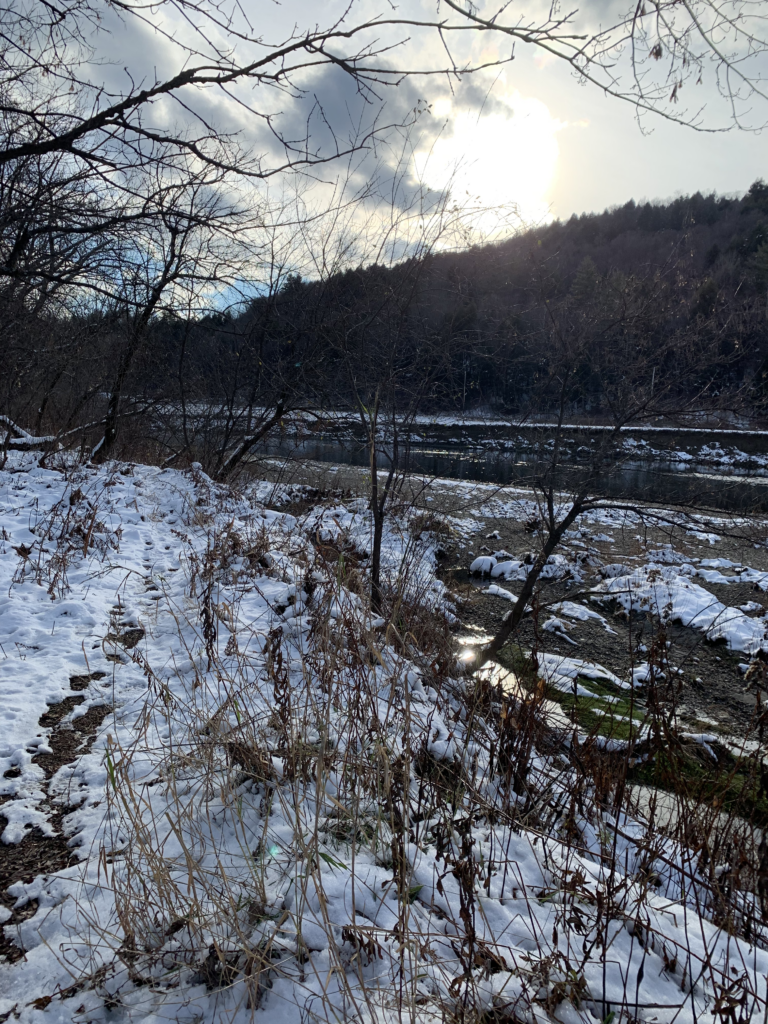
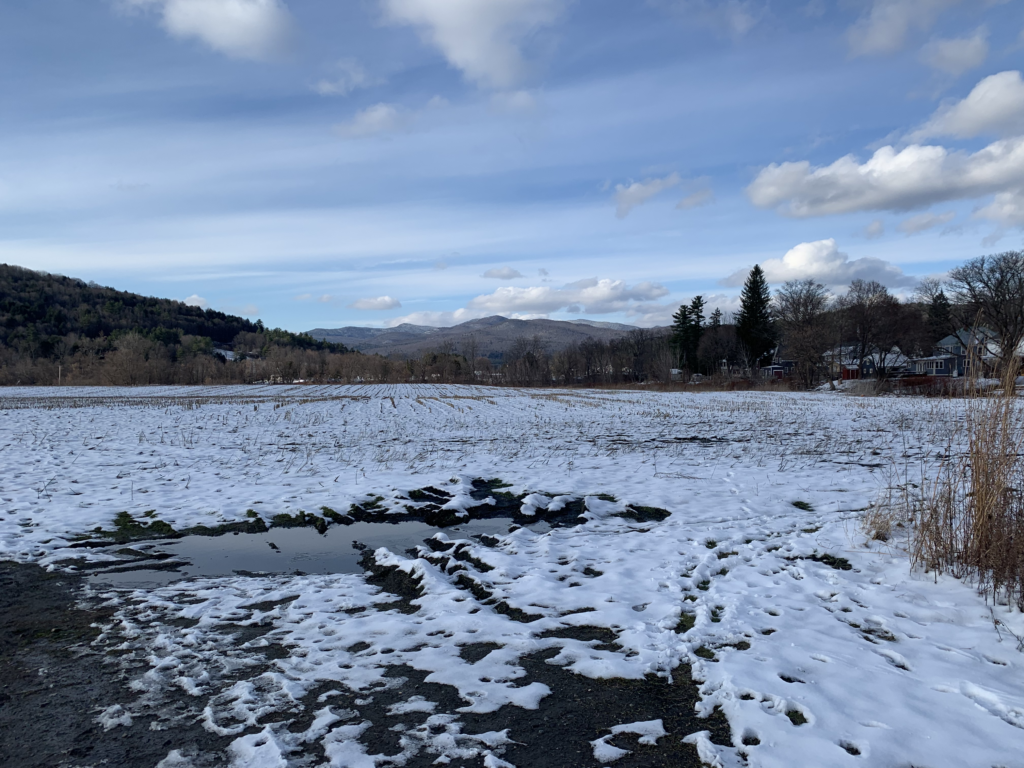
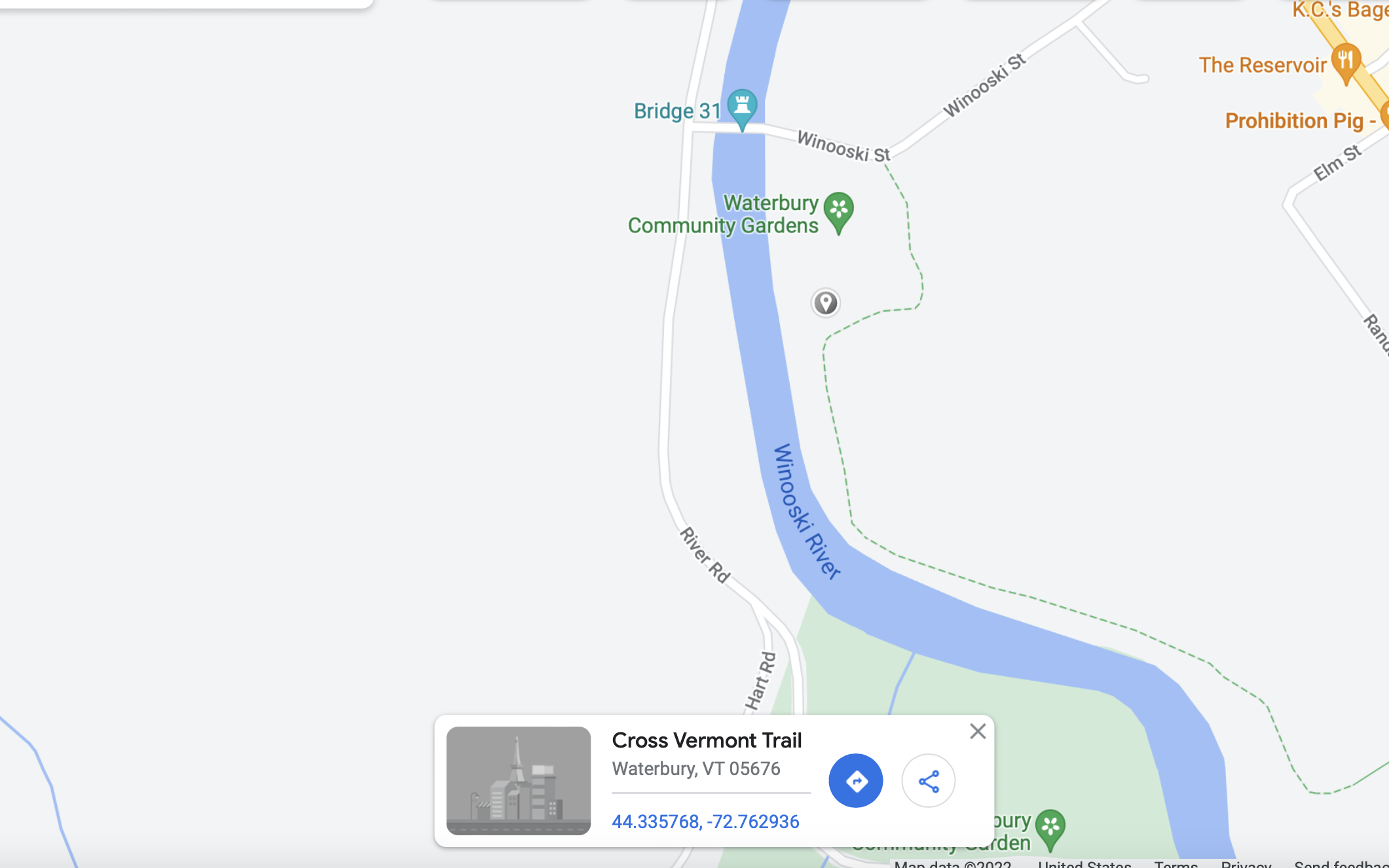
Today is the first day of Thanksgiving Break! That means I am back at home in Waterbury VT. I took a walk around the corn field behind my house that borders the Winooski River. This spot is special to me because it is where I used to take my dog Norah on walks. Every year on the 4th of July, fireworks are also set off from the field! While on my walk, I thought about how the farmer who owns the field spreads manure each spring on his crops. Farmers apply nutrients on their fields to provide crops with nitrogen and phosphorus necessary to help them grow. This phosphorus is easily lost from the fields and can negatively impact water quality. The excess nutrients is washed into waterways during the heavy spring rains. High levels of nitrogen and phosphorus can cause eutrophication downstream in the Winooski, killing fish and causing harmful algal blooms. There is a thin riparian buffer standing between the river and fields, which a some points disappears completely. There is also significant erosion along the riverside due to the lack of trees. A few months ago, I was blind to these processes that have been in front of me for years. After my learning in NR, I can see and understand far more of the human impacts on the land around me.

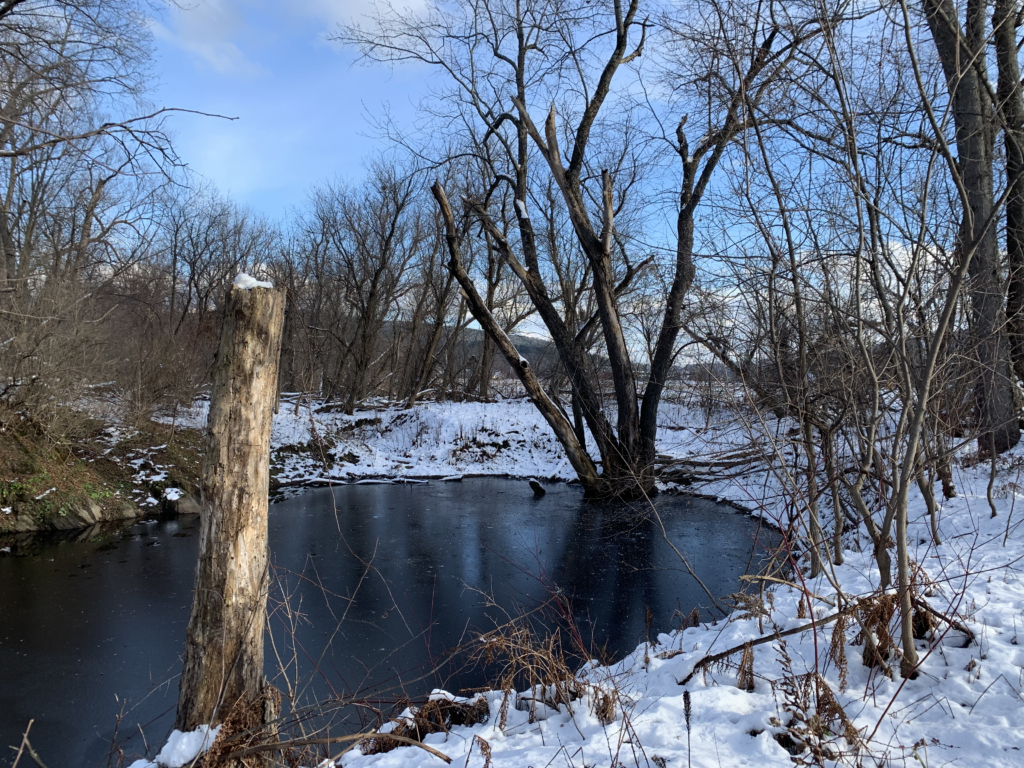
Since the last time I was home in August, the land has changed significantly. The thick green vegetation has been reduced to sticks. What once was grass, now has a patchy layer of white snow covering it. The temperature has also dropped. When I stepped onto the field, I immediately felt the presence of winter through the frigid gusts of wind. While on my walk I noted that the main tree species were Sugar Maples! Some other things noted were lots of dog tracks in the snow and some trees growing in an area flooded by the winooski. I imagine that this flooding is caused by a lack of trees surrounding the river. Trees take in water through their roots. Removing them causes flooding and reduces soil security which leads to erosion.

Being only 20 minutes away from Burlington, the ecology and phenology of my chosen spot at home is very similar to my spot in Centennial Woods. One main difference that I noticed was density of trees in the understory and canopy layer. My spot back in Centennial Woods felt far more natural and undisturbed than my spot by the field / Winnoski. This is because Centennial Woods is on protected land, whereas the field has been cleared for human development.

Site Location

November 16th, 2022

I visited my phenology spot today for the third time! This visit was especially exciting because of some very clear phenological changes that had just occurred in the woods. It was actively snowing when I arrived! With the first few inches of snow on the ground, the woods were transformed into a winter wonderland! This snow was especially wet (perfect snowman snow) and stuck on the branches of surrounding trees. Ferns and other vegetation at my spot were flattened and covered by a thin layer of snow. There also was a thick layer of dead leaves under the freshly fallen snow. The woods felt completely different from the last time I visited. They seemed to be much quieter and felt more peaceful. The only sounds I could hear were of water flowing over rocks in the brook. There is a science behind this peacefulness. Snow absorbs sound, so when a fresh blanket of snow covers the landscape, it absorbs the sound waves, making it seem quieter outside. I think I will appreciate this quietness away from the bustling campus. While at my spot, I noticed no signs of wildlife, but there were some unidentifiable tracks in the snow. It often seems that there is not a lot going on in the natural world during winter. Some species have begun hibernating and others have flown away, however, there are many mammals, birds, and even insects that remain active throughout this cold season. I hope that I get at chance to see them at my site! Other changes documented were a significant loss of canopy coverage, a drop in temperatures, and a change in color scheme, from oranges and reds to white and brown. I hope that this snow stays!