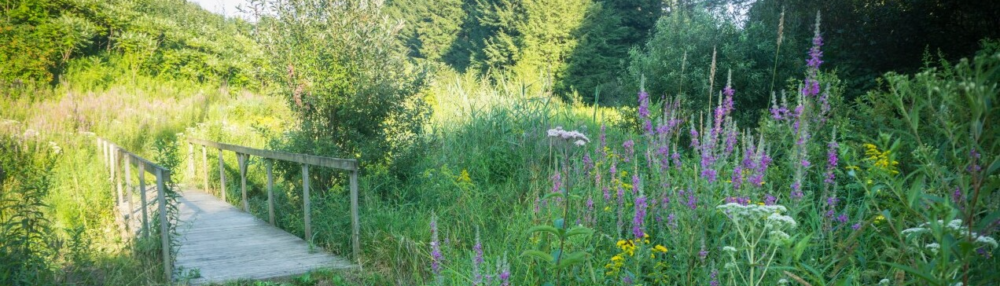
Centennial Woods is one of the most frequently visited UVM natural areas. The area contains over 65 acres of diverse land, with mixed hardwood and conifer tree species, wetland areas, fields, and streams. It is located in Burlington and is only a ten-minute walk from campus, making the natural area very accessible to students. Centennial Woods is a result of the complex interaction between natural systems, human-driven development, and shifting views of environmental values over time. The current landscape of Centennial woods is a result of dynamic change over time: Geological changes from erosion, mountain change, and glacials, ecological changes from wildlife and plants, and cultural changes from pollution and a changing climate. After doing some digging, I found that Centennial Woods was previously owned by C. Baxter Est., H. Stevens, Hickok Est., and the Ainsworth family and was used for agriculture. Evidence of its land use history can be seen from the remains of barbed wire, which was most likely used to fence in sheep. Today, it serves as an area for recreation and a natural laboratory for students to study Vermont’s plants, animals, and natural processes. An extensive system of trails wanders and loops through the woods, showcasing its beauty and offering visitors a sample of the natural communities and landscape. Students in the Rubenstein School like myself use this area for classes and fun. Apart from my classes and labs, I often visit Centennial Woods alone or with friends as an escape from life on campus.
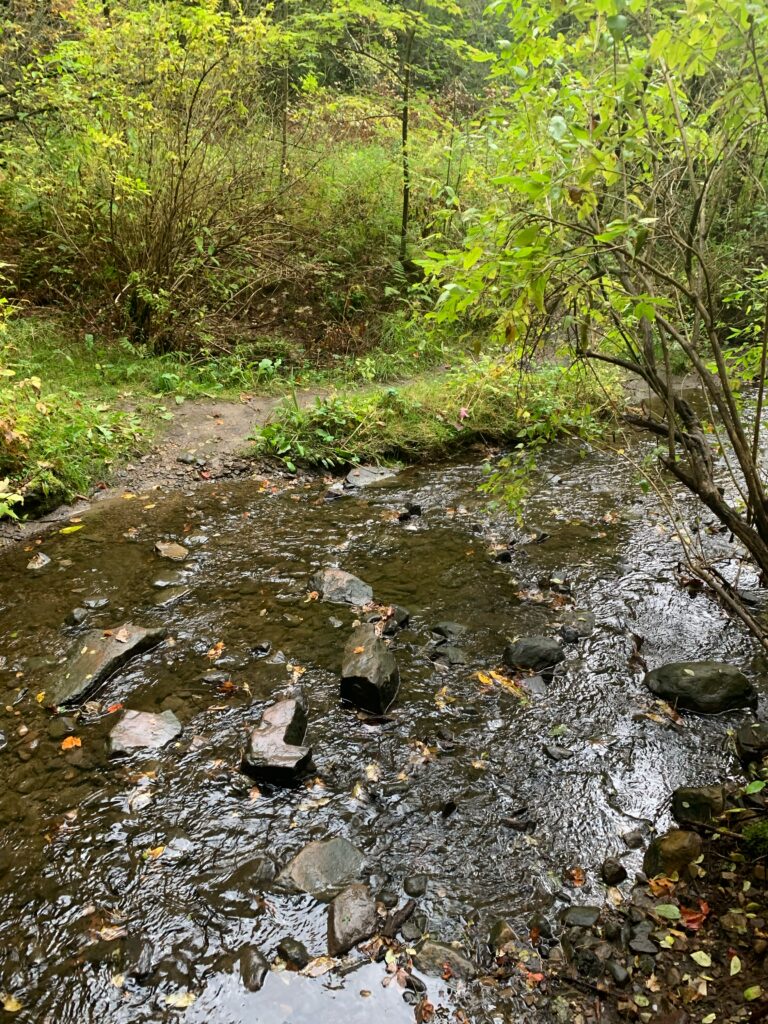
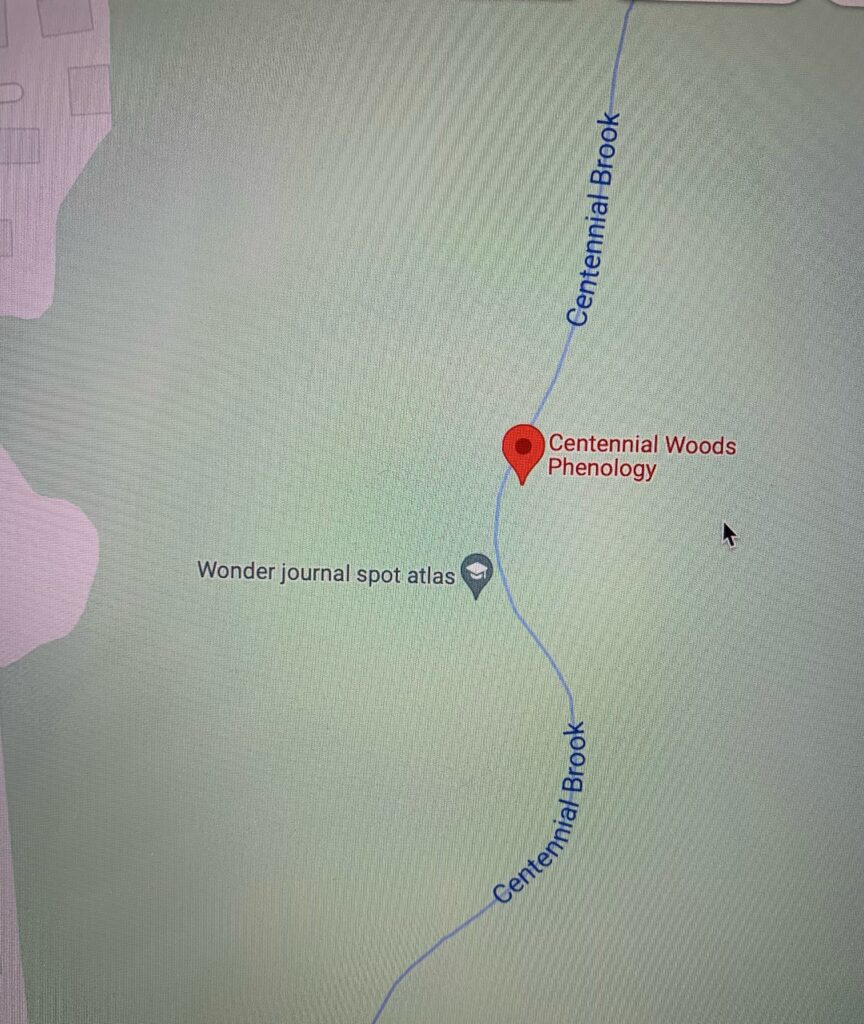
My phenology place is about a five minute walk beyond the trailhead of Centennial woods. It can be found by passing the evergreen clearing, and the bridge over Centennial Brook, in the crossroads opening. My place is down a slope, where Centennial Brook runs along a small trail. Here, small bushy vegetation and fallen autumn leaves surround the stream. The sound of the shallow water crashing against rocks and frogs croaking can be heard. The change in seasons can be seen in the leaves which have begun to change into shades of red and orange. The vegetation here is dense as bushes and smaller plants compete for sunlight under the larger trees above. Some of the plants and trees identified include, a lady fern, barberry bush, paper birch, black cherry, red maple, and a yellow birch! During the first Centennial woods self guided exploration, I stumbled across this spot. I remember it being a lot hotter and sunnier then. Overall, I chose this place for my project because It felt like somewhere I would be happy to return over the next few months. While nature is abundant in Vermont, it is not very accessible to students who do not have cars. This makes the preservation of Centennial woods all the more important. Most of us are aware of the effect that the natural world has on our well-being. Spending time in nature can be incredibly calming. Being in natural spaces such as Centennial Woods is an escape from the stress of school. However, the health of the woods is threatened. 67 acres of this site have been permanently protected by UVM and the Vermont Land Trust, yet much more of this sensitive area remains largely unprotected! Stormwater has caused bank erosion and pollution in the centennial stream which runs through my site. Stream morphology shifts more radically in response to the stormwater inputs, impacting channel stability and water quality.
Hi, this is a comment.
To get started with moderating, editing, and deleting comments, please visit the Comments screen in the dashboard.
Commenter avatars come from Gravatar.