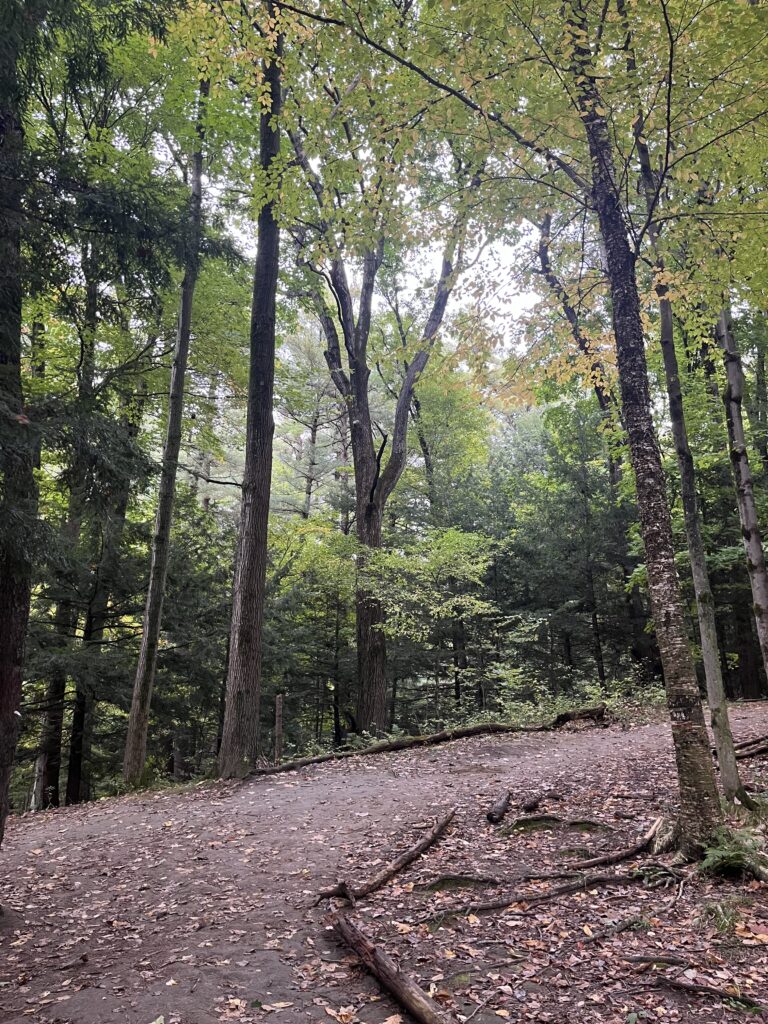
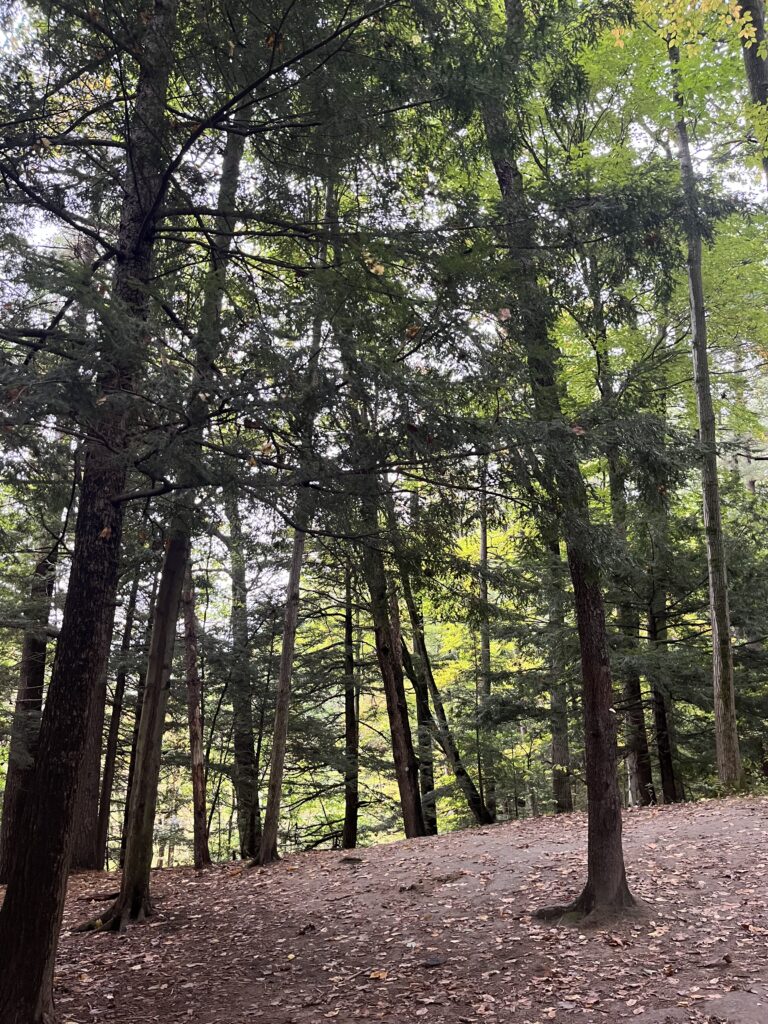
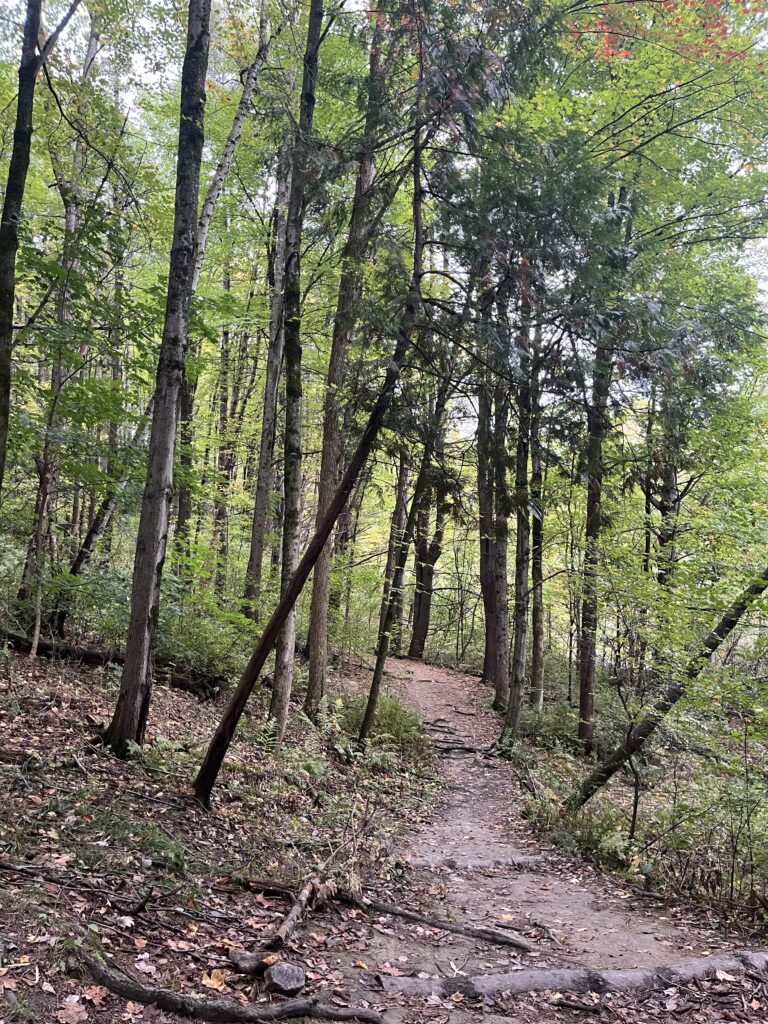
For my phenology spot, I chose Centennial Woods. To get there, I walked from Tupper Hall on athletic campus, through central campus past Jeffords Hall, and down the street to the entrance of the woods. When thinking about a phenology spot, I ended up deciding on Centennial Woods because it was easy to get to and, since the first time I’d been, I’d really enjoyed it. The woods offer a feeling of serenity close to campus, and being out in the woods feels very peaceful while also very safe.
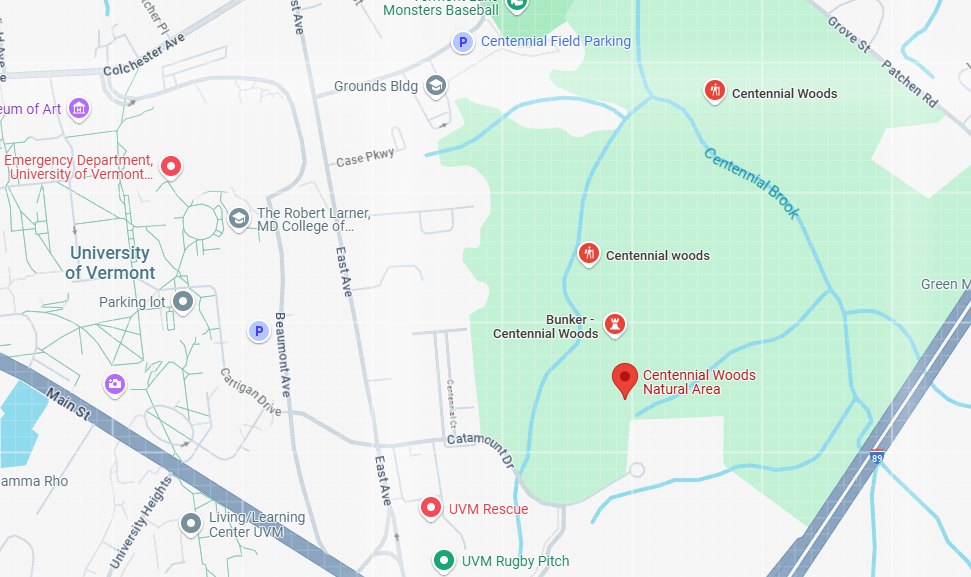
I chose my spot at a small clearing about 1,000 feet down the trail. Near the trail, the vegetation is barer. Many of the branches on the trees closer to the trail are bare and, in the clearing, there is little to no ground vegetation, like ferns or shrubs. The ground in the clearing is covered in pine needles, sticks fallen leaves, and fallen logs that were once trees, now giving a new home to a few different species of mushrooms. A bit off the trail, many of the leaves on the trees are either still green or beginning to change color to yellow or red, depending on the tree species.
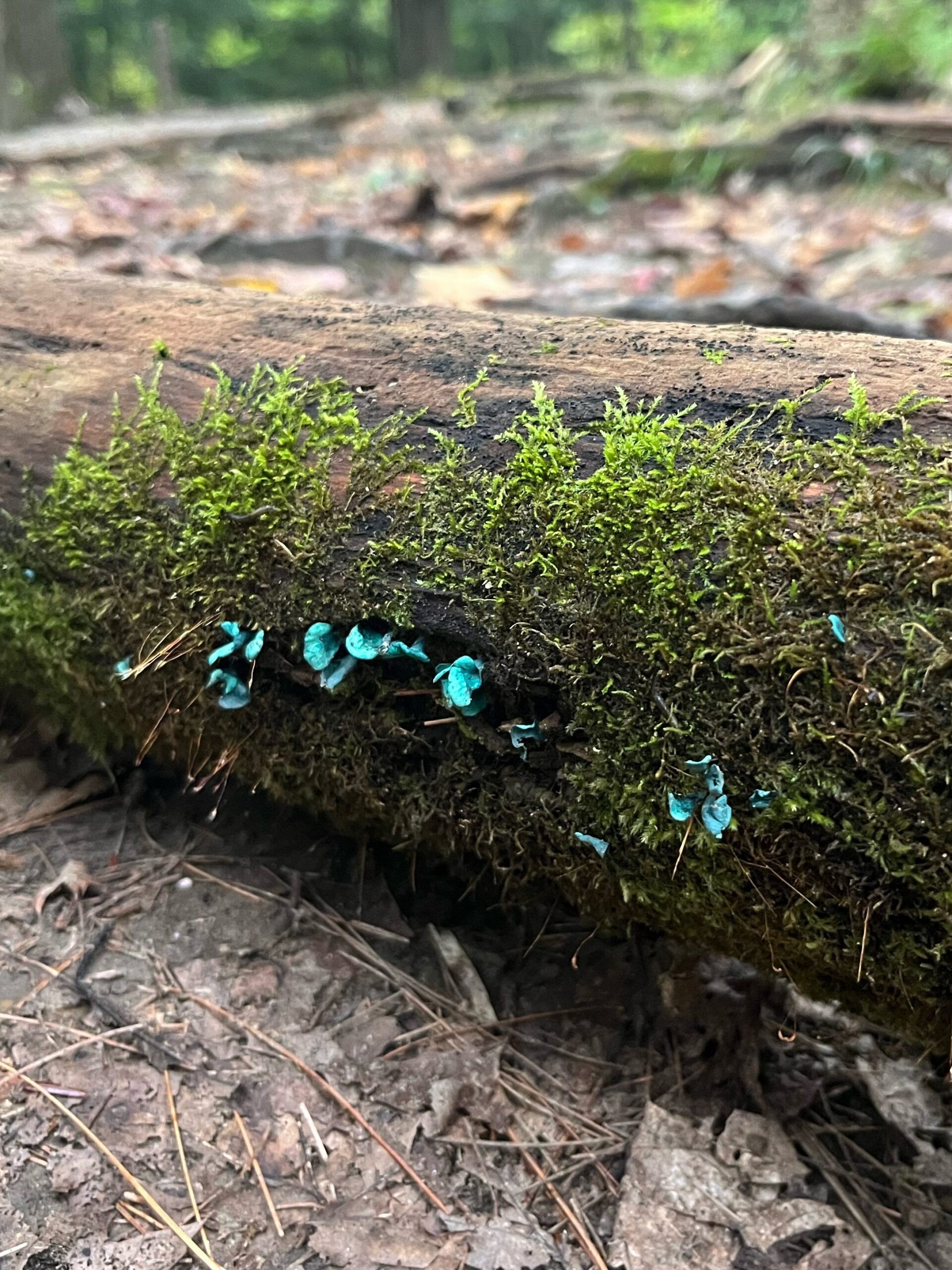
While around the clearing, the only ground vegetation that could be found were ferns and, small woody plants, and barberry bushes. There were a few types of common trees that surrounded the clearing.
These trees included:
– Eastern Hemlock
– Sugar Maple
– White Oak
– Yellow Birch
The clearing was surrounded by multiples of each of these tree species and the path to the clearing was also surrounded by these trees. There were also two common ground plants I had found.
These included:
– wood ferns
– Japanese Barberry
While I was in the woods, it was cloudy and around 63 degrees F. During my time in Centennial, I tried to take notice of the sounds around me. During my time in the woods, I noticed the occasional chirping of birds, wind blowing through the trees, animal and human footsteps in the distance, a small plane overhead, and leaves steadily hitting the ground.