
Introduction:
10/12: My Phenology place is located near the East Woods natural area in South Burlington. It’s a short bike ride from UVM campus down Spear Street to the bike path which will bring you to a three-way intersection in a wooded area just west of Farrell Park. I chose this location because of its close proximity to campus and my frequent runs through these woods. I hope to document the changes of this place as I visit it throughout the year.

Vegetation:
The Vegetation in the woods West of Farrell Park is largely Maples and Hickorys in the overstory and then various species of ferns and young growth in the understory. The bike path is densely forested on all sides and there is patchy to complete shade coverage in the woods.

Common woody plants:
Black Cherry
Currants and Gooseberries
Oriental Bittersweet
Red Maple
Shagbark Hickory
Wood ferns
iNaturalist: https://www.inaturalist.org/observations?user_id=morganmccuent:
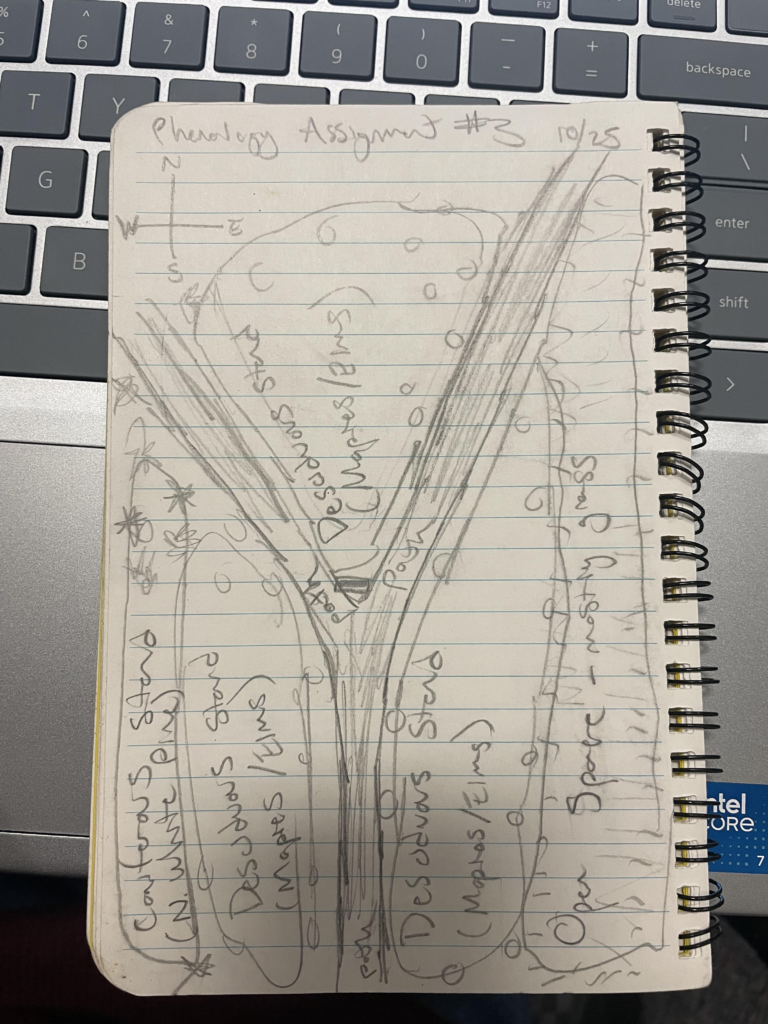
10/25: My experience at my phenology location was very peaceful today. I’d had a very hectic morning, and it felt very good to spend the afternoon out on a beautiful clear day and sit in the foliage of the woods West of Ferrel Park. There were some walkers and roller skiers going bye but for the most part it was completely silent with the occasional sound of falling leaves. The spot has changed fairly dramatically from a phenology standpoint since I last visited. On my first trip most of the leaves were still green or just starting to change color and nearly two weeks later all of the leaves were bright yellow and falling all around me. The forest floor was covered with fallen leaves, and I could see significantly further through the canopy. This allowed me to notice a stand of Eastern White Pines to the West of the path.
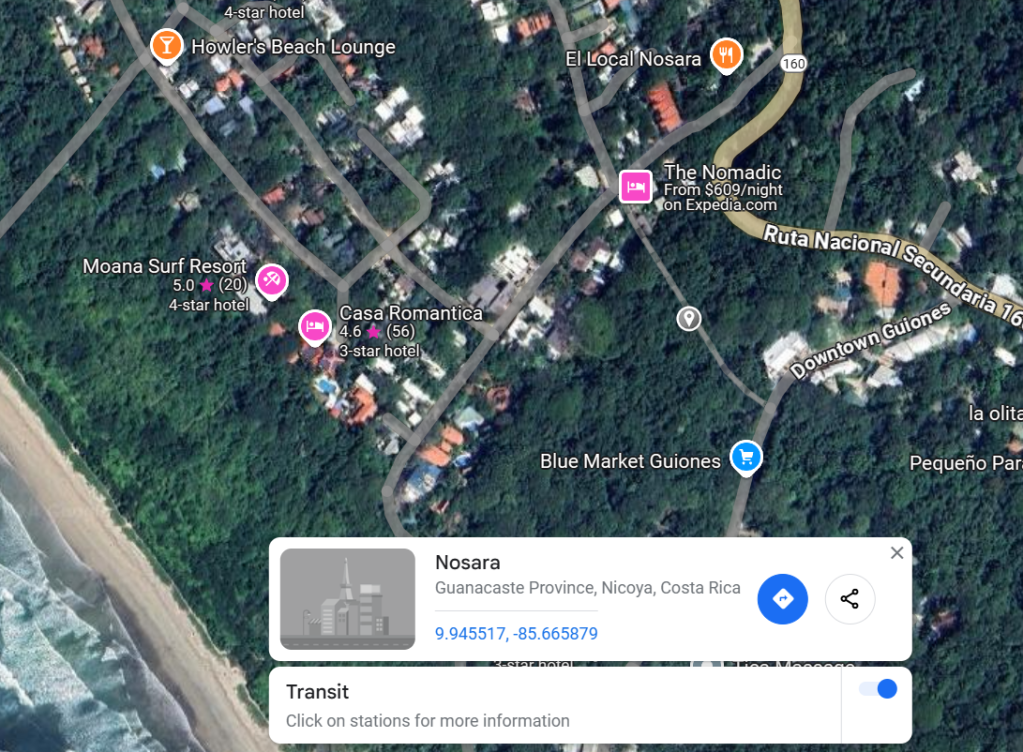
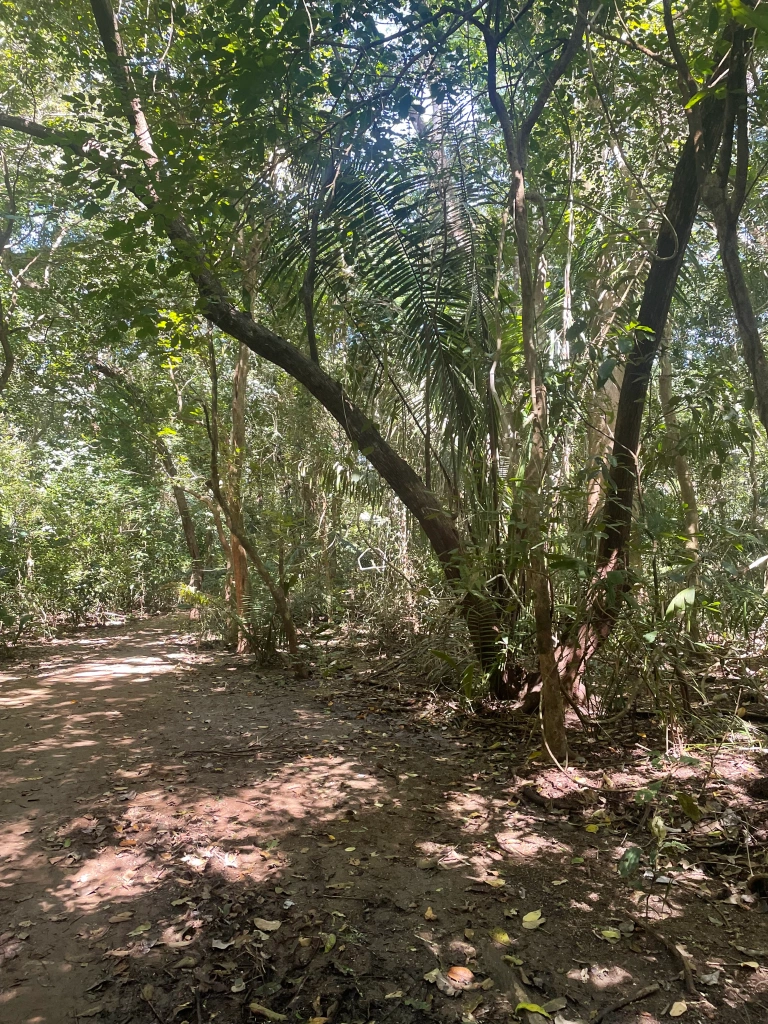
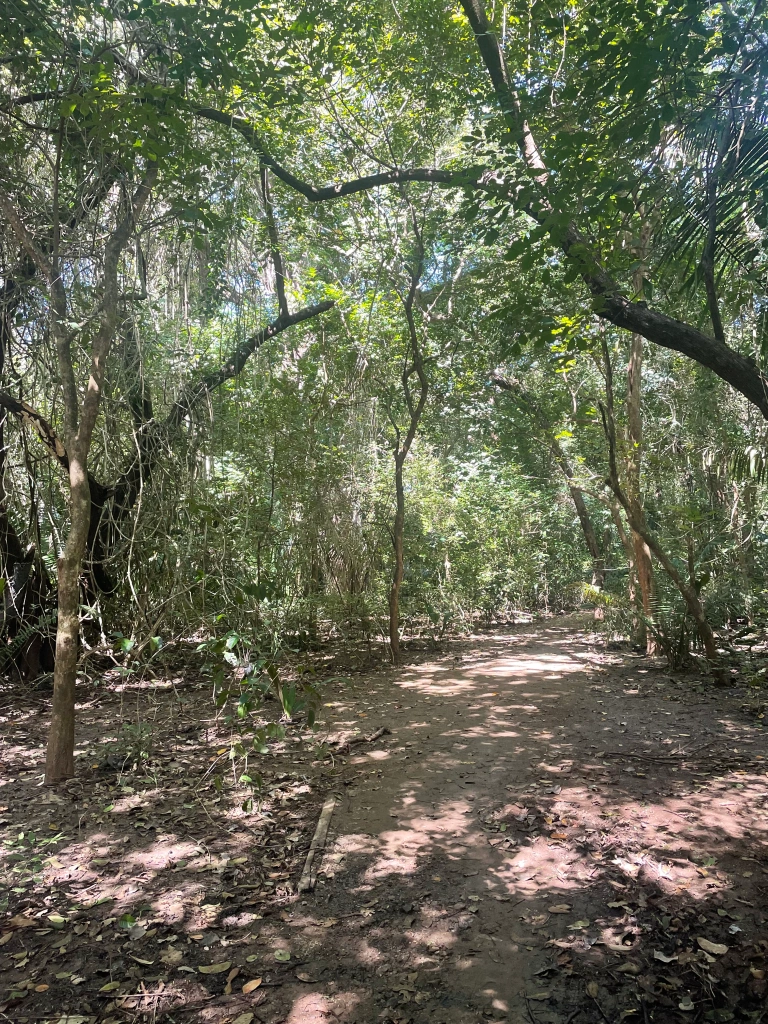
12/2: Over thanksgiving break my family and I traveled to Nosara, Costa Rica. While we were there I walked to a farmer’s market, titled Blue Market Guiones in the map, and took a path through a very vegetated section of trees. I found a place in the middle of this path where the foliage opened a little bit, and I was reminded of my phenology spot back in Burlington in a number of ways. This spot and my spot west of Ferrel Park are both urban forests with trails through them to connect parts of town. Granted Nosara is less developed than Burlington and there are a lot more trees and patches of forest, but this spot is still similar. The ecology of my spot in Costa Rica is significantly different from my spot in Burlington. There was no overlap of tree species and possibly some ferns that both places shared, but for the most part the flora of Costa Rica was very different. The animals I saw there were also very different from in Burlington. I saw spider monkeys and various tropical birds, but I saw no animal species common to New England.
12/8: After a full autumn my phenology spot has changed a lot. The foliage is completely gone and all of the leaves in the leaf litter have either blown away, decomposed, or are covered by a few inches of snow. There is some overstory cover on the Westside of my spot as the Eastern White pines are coniferous and don’t shed any leaves. The understory is covered in snow and some animal tracks can be observed. Many of the tracks appear to be dogs, with the occasional rabbit or squirrel tracks visible too. The animal activity seems to have decreased significantly compared to when I visited in October and many of the creatures were preparing for the winter.
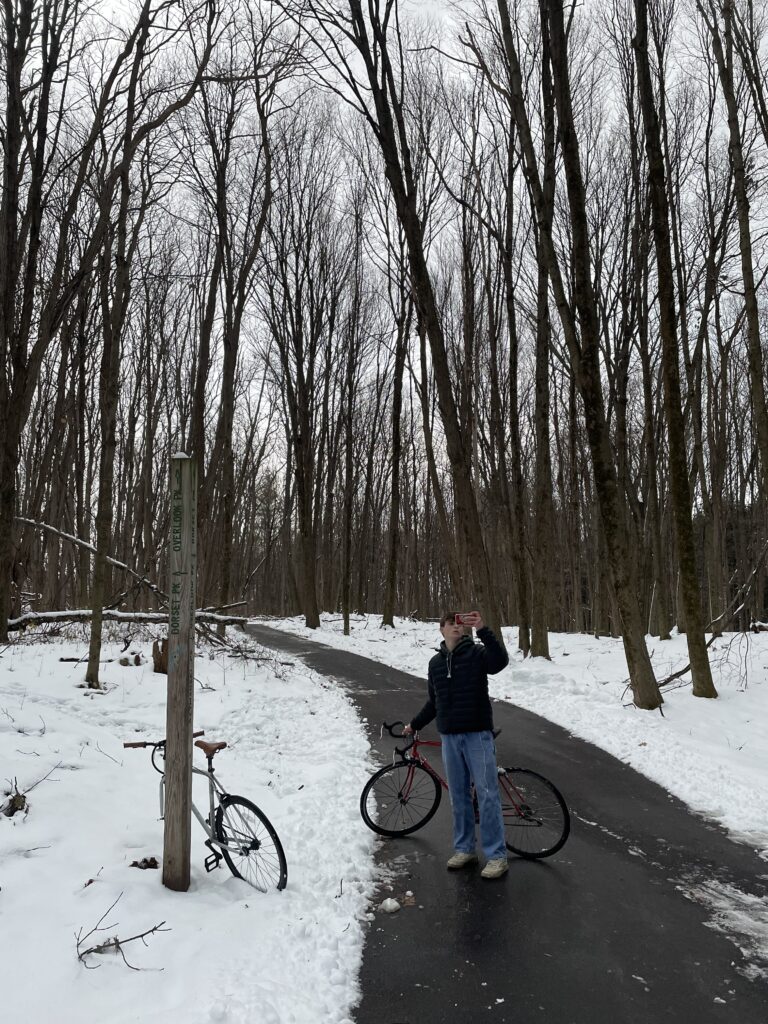
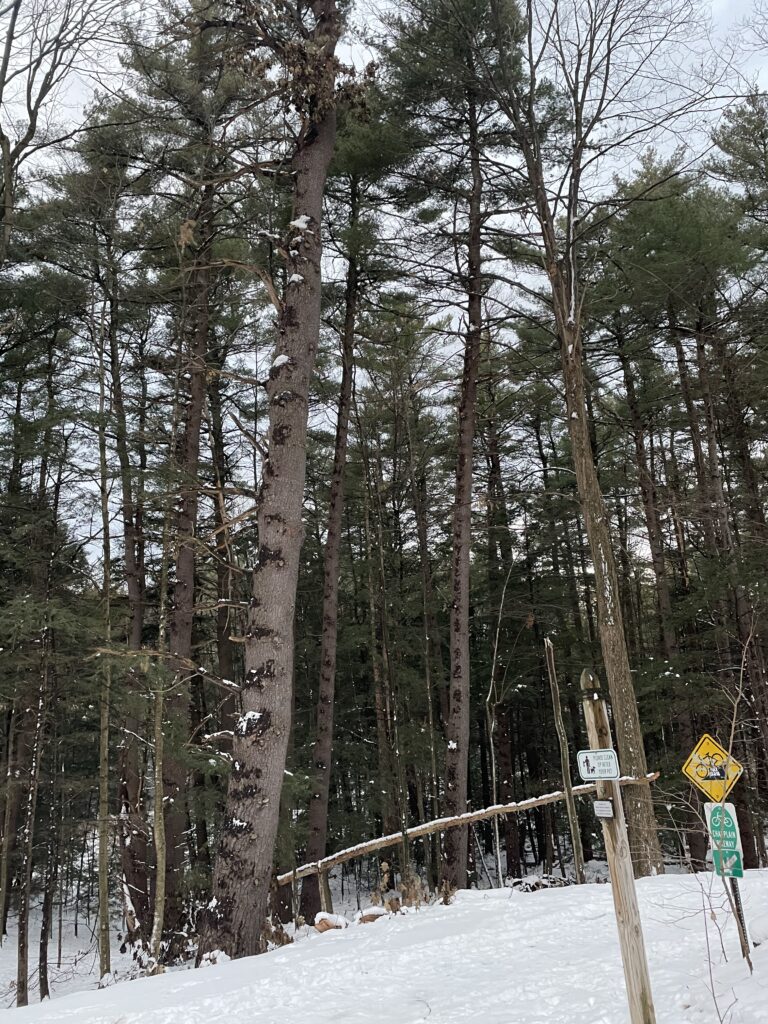
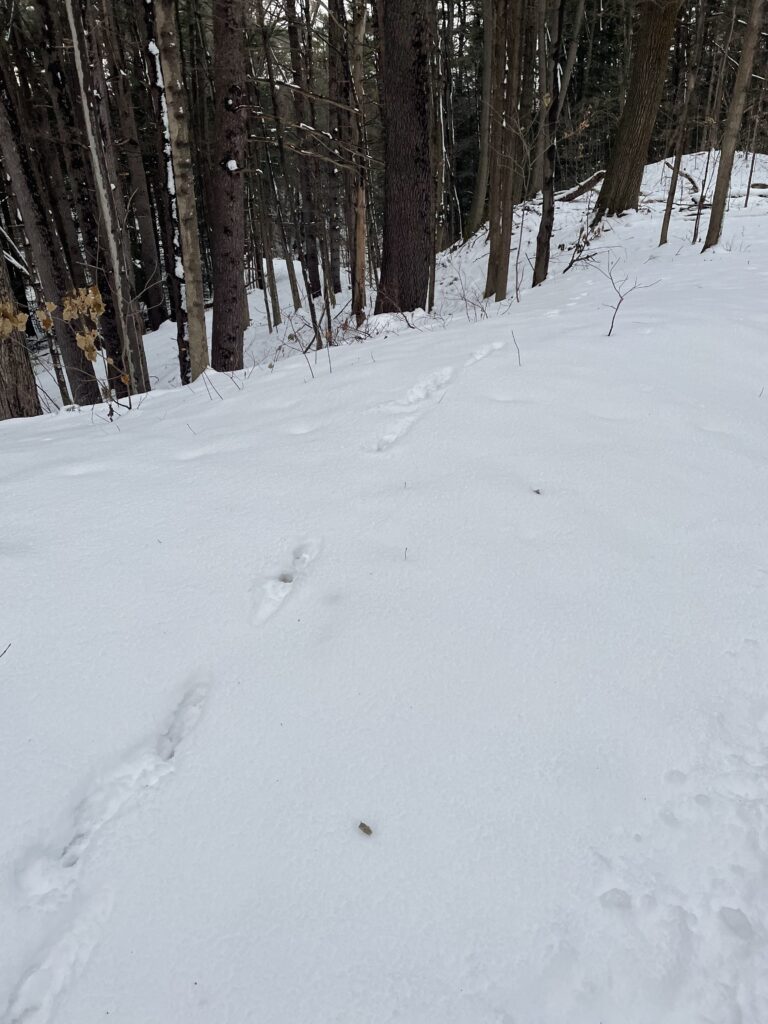
After spending nearly two months with my phenology spot I think my favorite parts of it have to be the maturity of the hardwood stands and the feeling of complete immersion in the woods despite only being a quarter mile away from a road. I love how dense the stands are and how secluded these towering trees make the spot feel. This sense of wilderness in an urban area is very special to preserve not just for ecosystem services a stand of woods serves, but also for the joy of being outside and in the natural world.
1/26
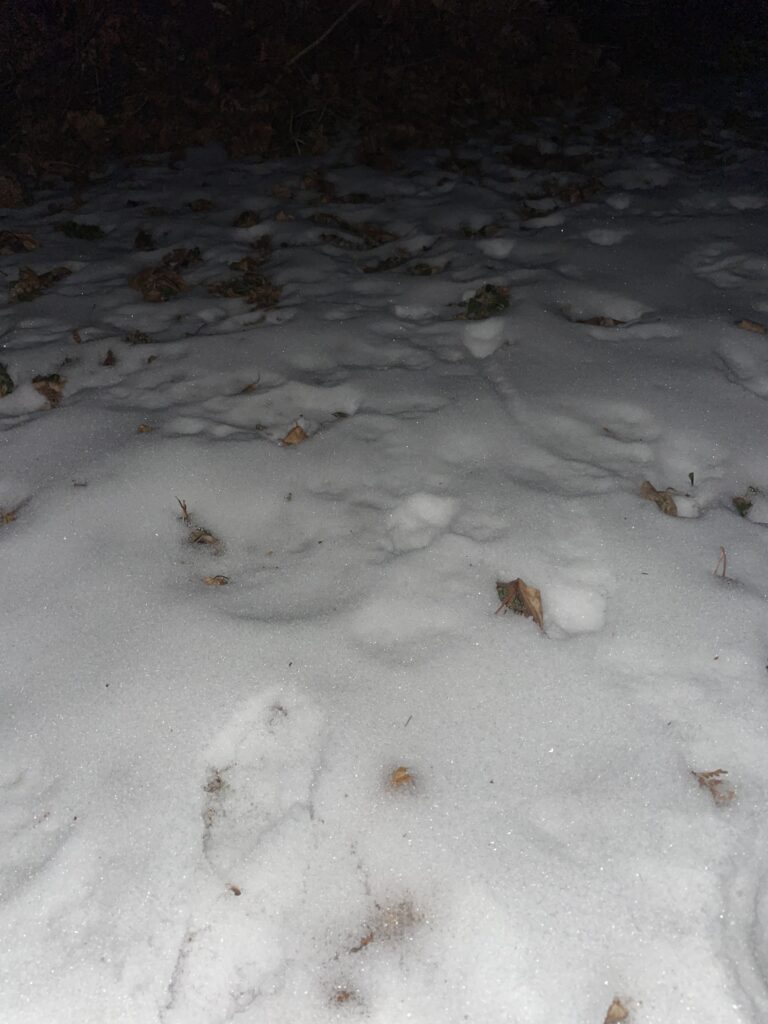
My phenology spot has not changed much after being away for over a month. The foliage is still gone and shows no signs of returning soon. There is still a layer of snow on the ground which allowed me to note some animal tracks, although looking at these tracks later they may be dog tracks. I noticed a robin and some crows in the trees at my spot but besides birds I did not encounter any other animals.
2/24
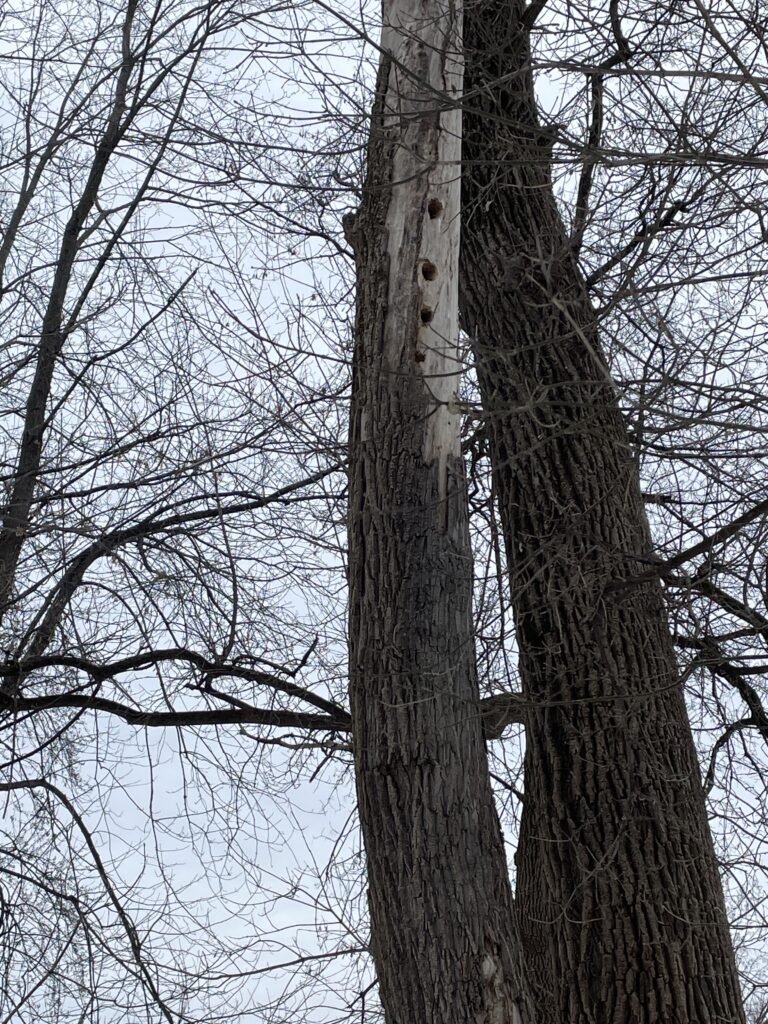
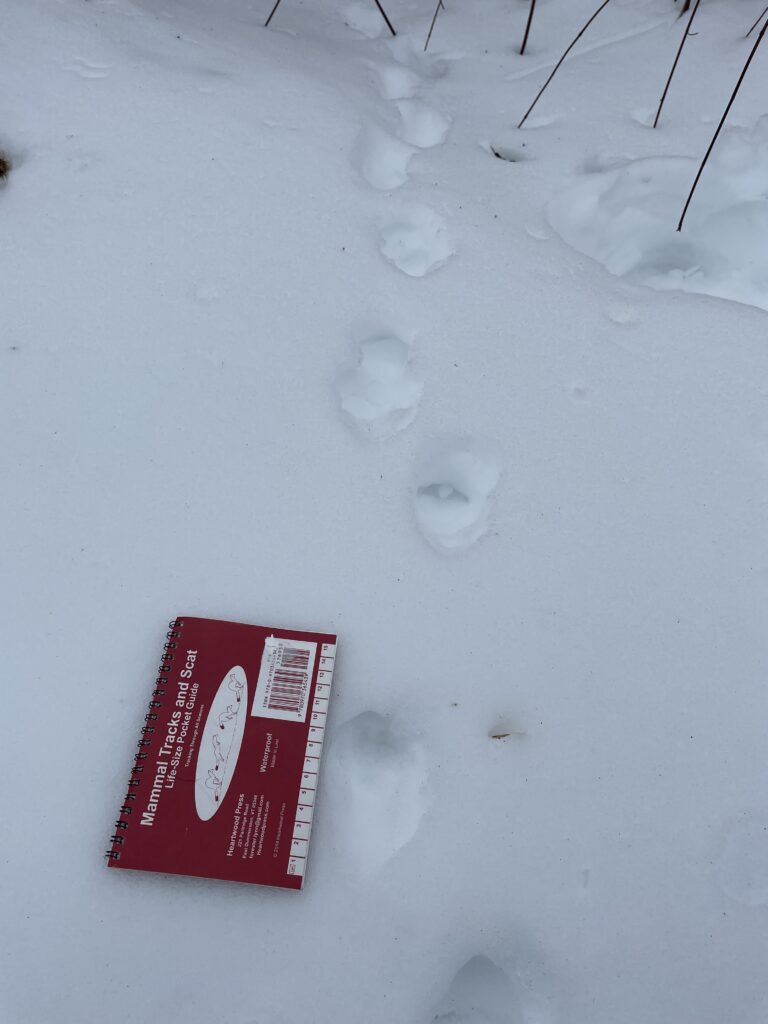
This week I visited the Intervale center with my NR lab group and among other things, we tracked and looked for signs of wildlife. We encountered several bird and mammal species that I documented in iNaturalist and the experience was overall very fun and easy to record. We believe that the first image shows signs of Pileated Woodpecker as the tree bears the distinctive rectangular holes created by the bird and we are well withing the native range and habitat of the bird species. In the second photo we believe we observed a mink because of the size of the distinctive bounding movement pattern and because the separation between paw prints was seven centimeters, fitting the mink description. Additionally, the paw prints were around 4 centimeters in length and width and had five toes, ruling out a majority of other species that could have had a similar movement pattern. Finally, the straddle of 5 centimeters fit mink range and led us to conclude that what we encountered was a mink running towards the riparian zone to hunt either rodents or fish if any are active at this point in the winter.
4/28
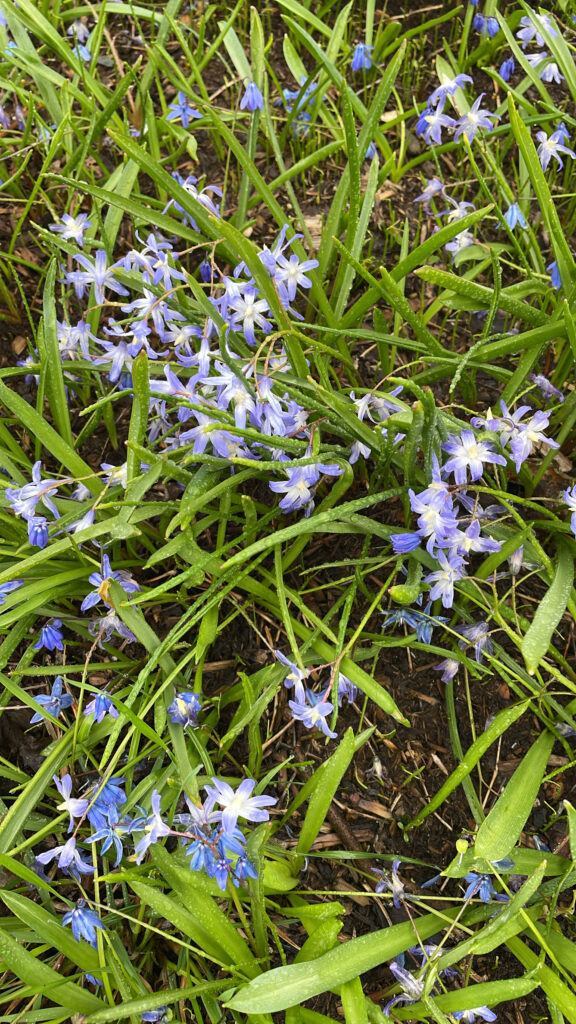
During my urban BioBlitz experience I visited the Intervale center and various locations around UVM campus. My experience using iNaturalist was very smooth and I was able to Identify an Eastern grey squirrel and a Northern Cardinal around Redstone campus. At the Intervale Center I observed Squill which I have pictured below. After checking reports from other cities, I was struck by the diversity of observations being made. I assumed that urban biodiversity was lacking, and many people would submit the same common species, however it was almost difficult to find two of the same species in a lot of cities!
5/4
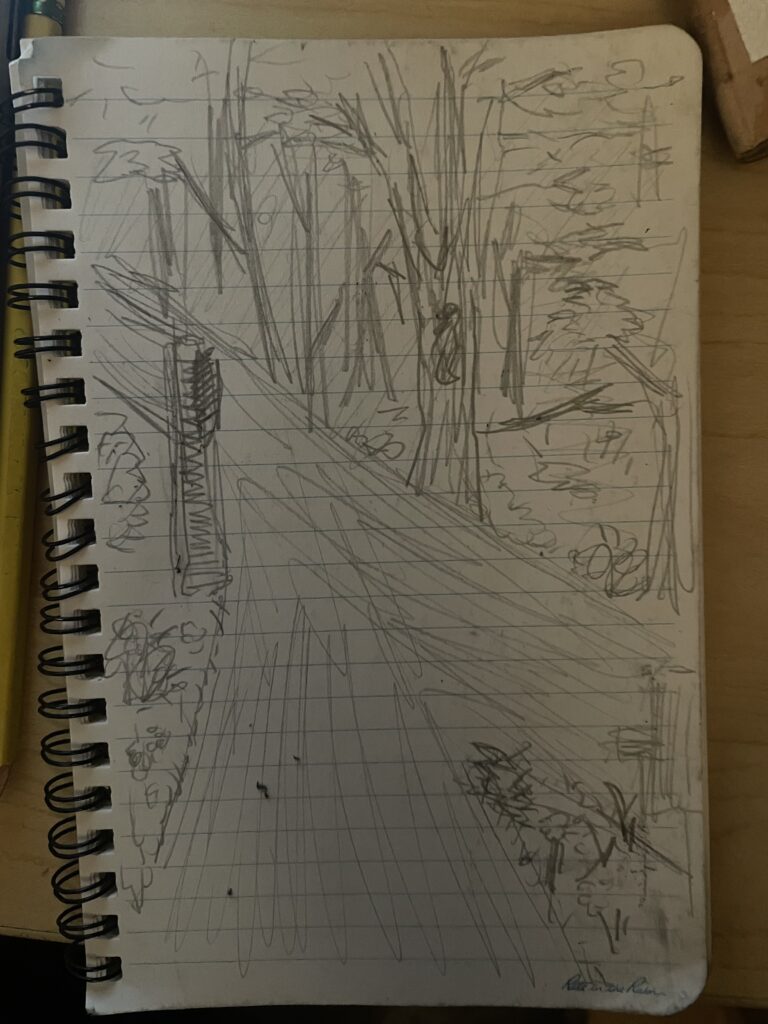
After spending most of a year with my phenology site I would say that it has changed dramatically over the past seven months. Witnessing the seasons change is always a breathtaking experience, but being tethered to this spot has allowed me to truly focus on how it changes a landscape. The dropping of leaves, the falling of snow, the departure and return of various species, and of course the bloom that we are in now is a very dynamic sequence for such a humble little intersection in a bike path. The major landmarks that I am familiar with can partially be seen in the picture I drew, but they are the large signpost on the left, the tall and gnarled birch tree close to the intersection, and a nice log that is out of view but makes a really good seat. Culture and nature intertwine in so many ways whether it be through direct impacts of one on the other or the indirect value that nature gives us. My spot seems very mundane, but it meant something to me even before it was my phenology site. I would go for runs through these woods and I always looked forwards to this wooded intersection because of how pretty the area became in a very developed neighborhood. I think that people gain value from the environment all the time and can be very positively impacted by natural areas. If these places are not available to some then I see that as an issue and an environmental hazard to their wellbeing. I would consider myself a part of this place at this point. After visiting it for much of this year and putting in so much time at such a seemingly ordinary location, I feel an affinity for it like it is my own limb. Anytime I pass through I can see myself mentioning my involvement in the phenology of the place and it’s significance and I don’t see myself forgetting my place anytime soon.
Hi, this is a comment.
To get started with moderating, editing, and deleting comments, please visit the Comments screen in the dashboard.
Commenter avatars come from Gravatar.