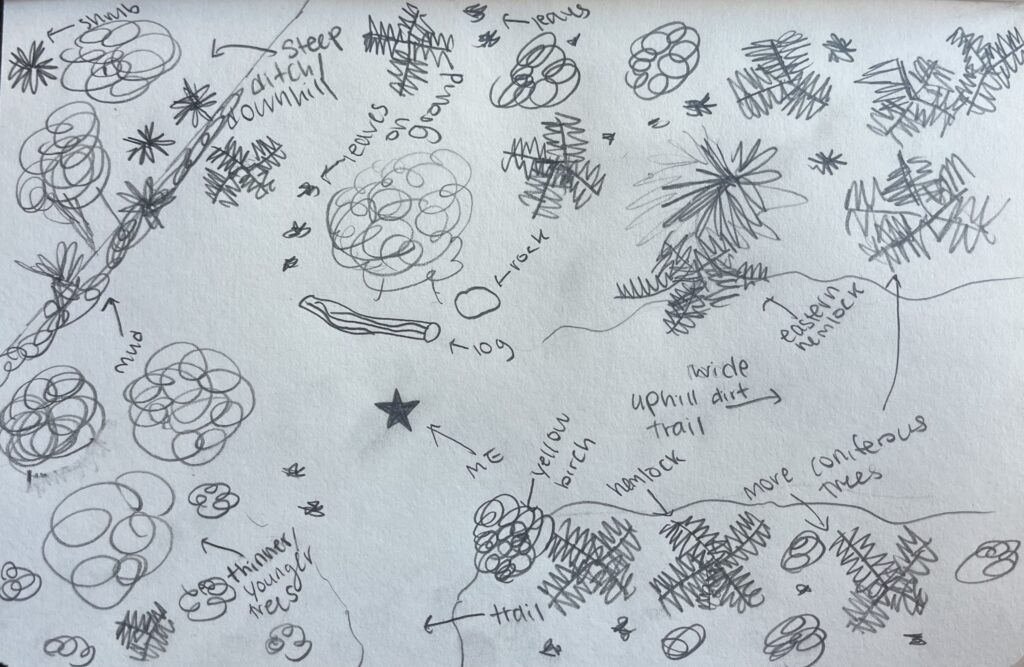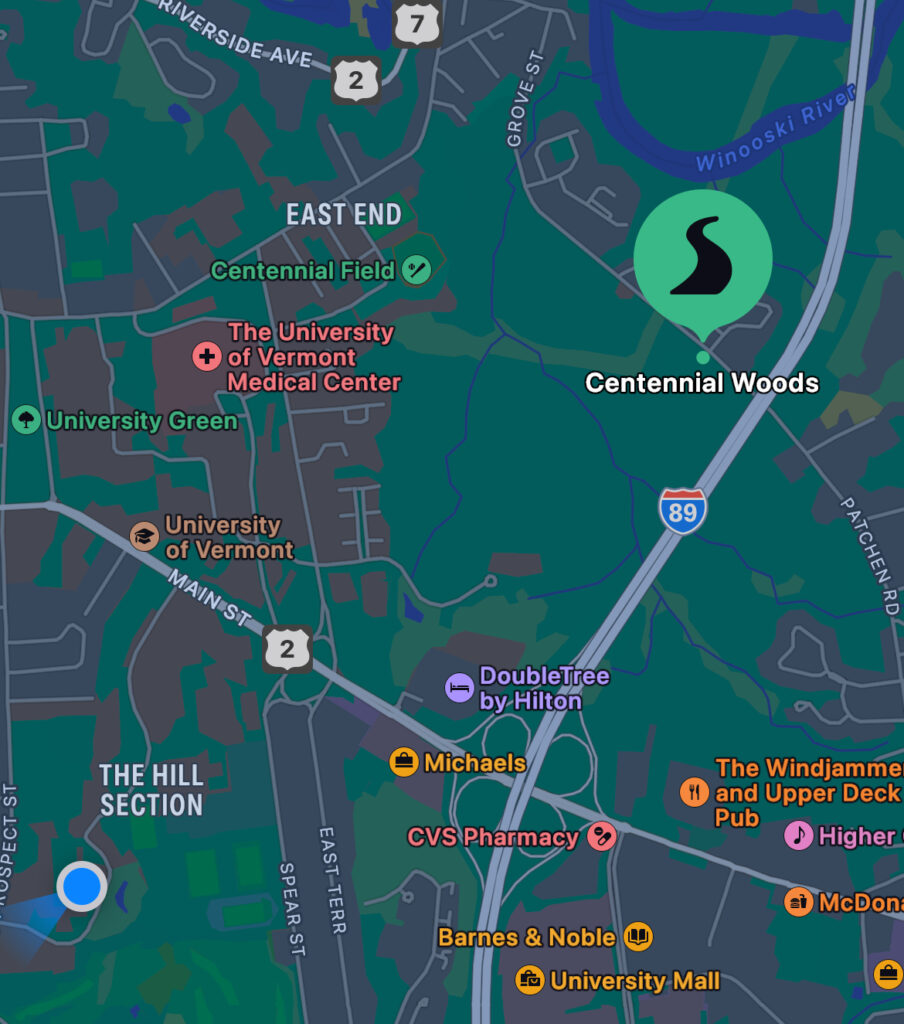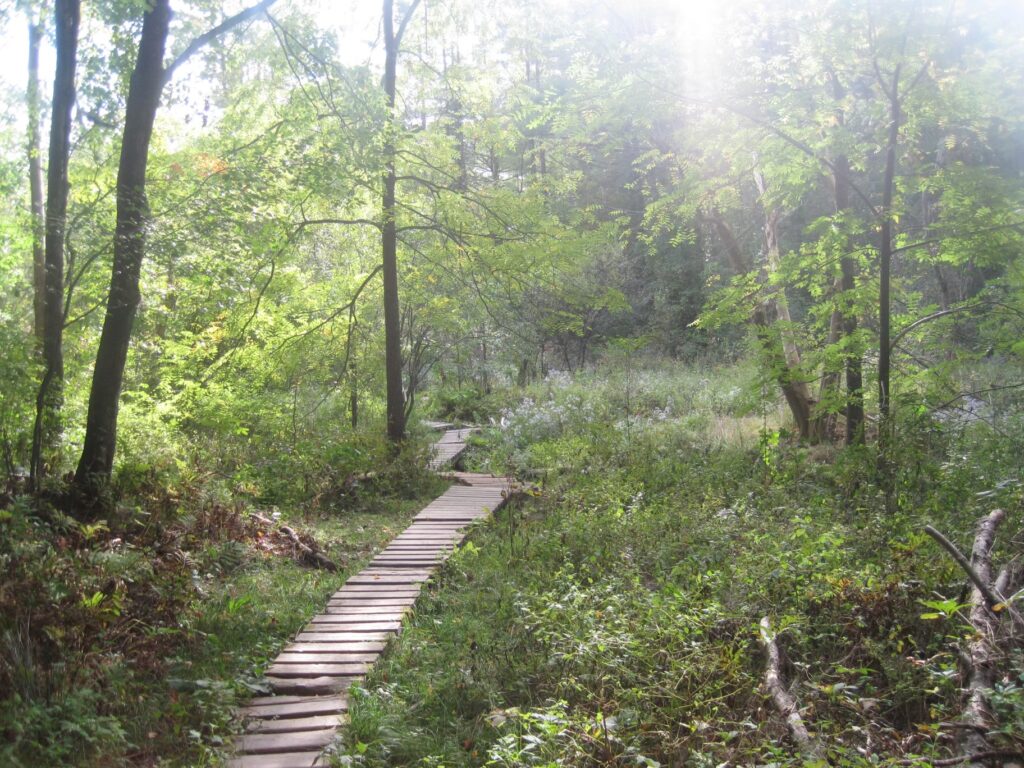
On December 7th, I headed out to Centennial Woods, my phenology spot this past semester. During the stress of finals week, it was nice to get outside, away from the noise.
It’s clear this spot has changed through the seasons since the last time I visited. This time, there’s snow on the ground, snow on the trees, barely any leaves left on the trees, decomposed organics covered by snow on the ground, it’s colder, no persistent vegetation or fruit, and it seems quieter (less bird noises, etc.). In a way, it looks like a winter wonderland. Here are some pictures from my visit:
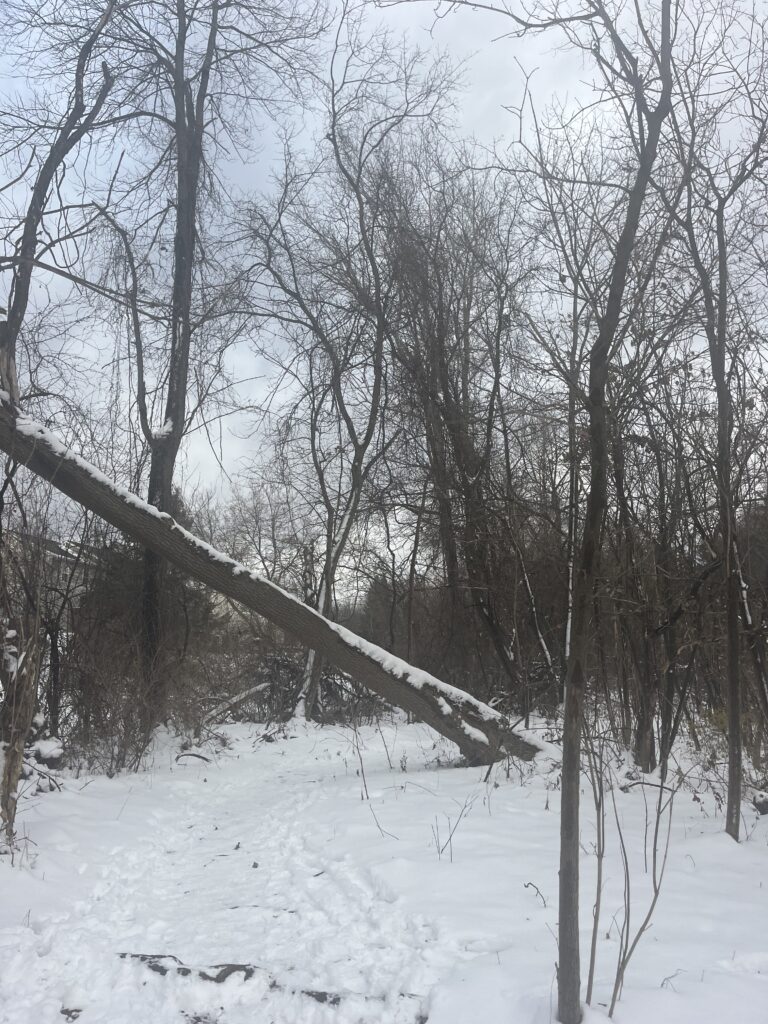
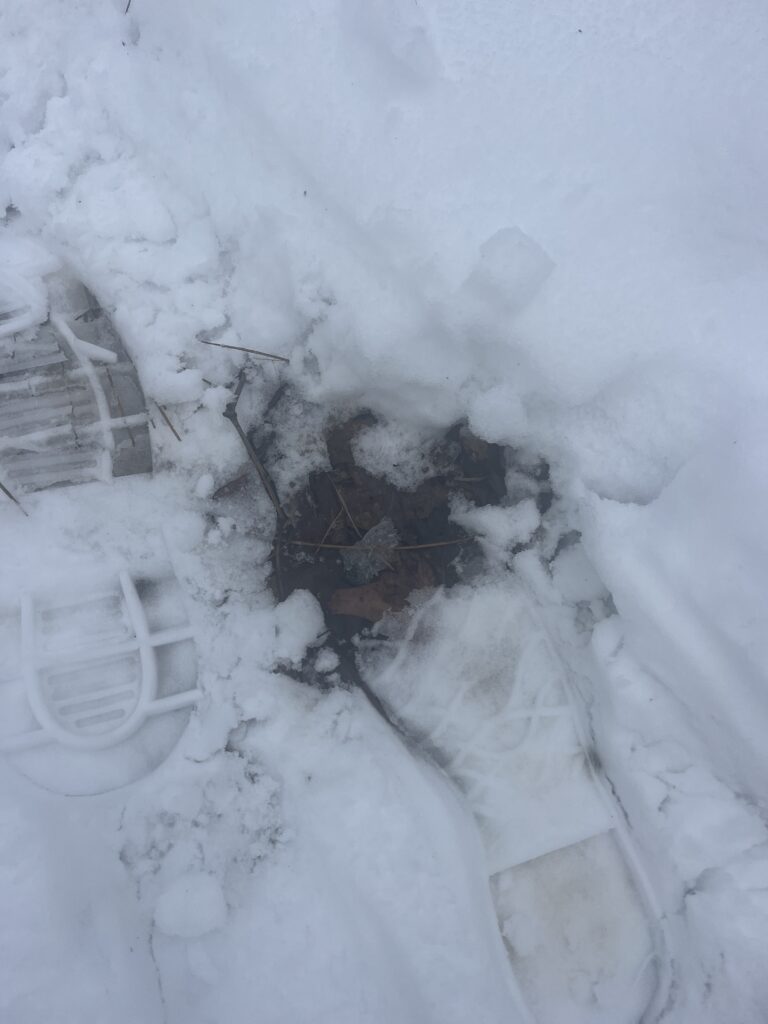
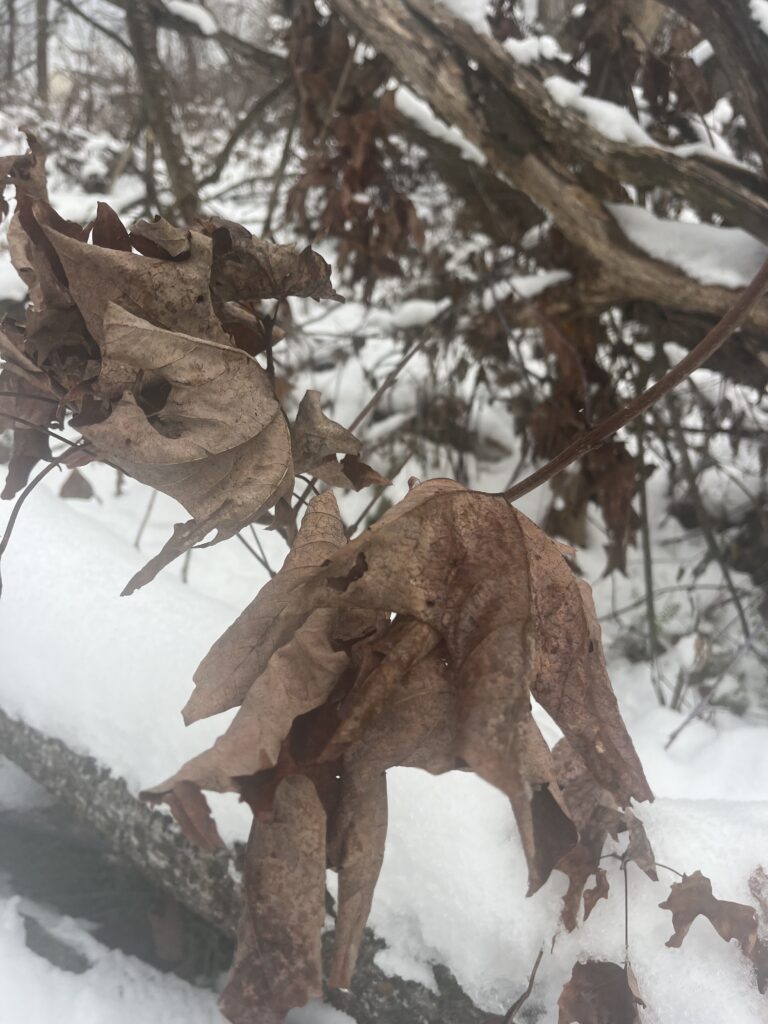
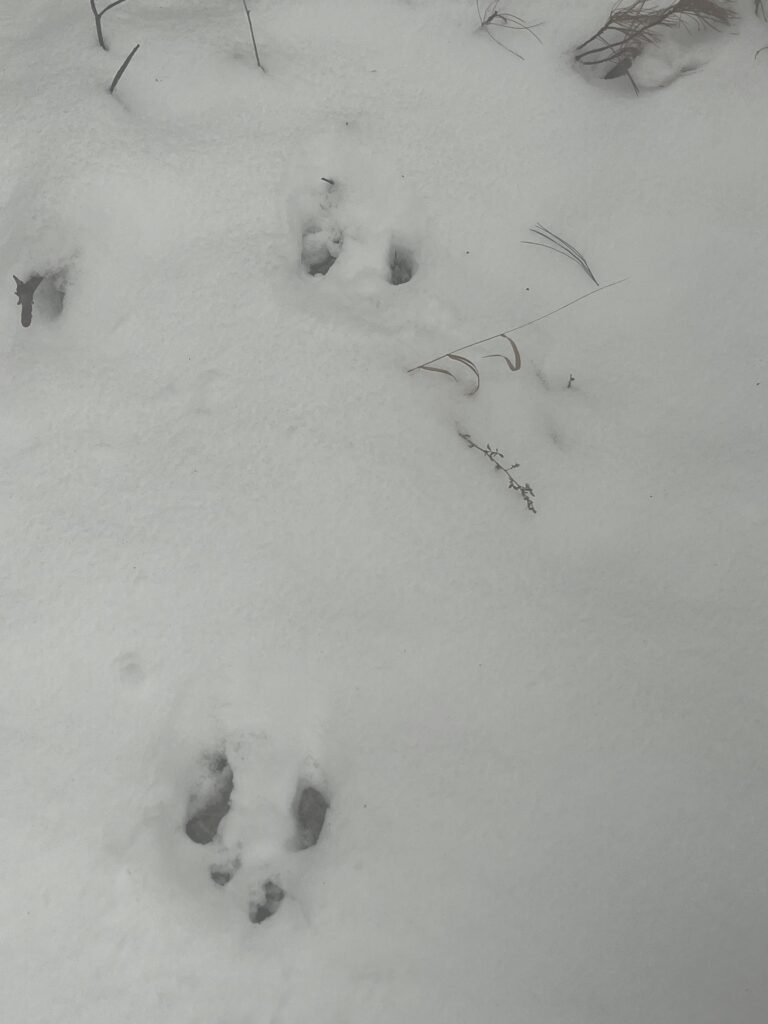
Above, you can see traces of animals- tracks to be more specific. Luckily, the snow makes it easier to distinguish a track. I saw no nests or animals myself, but i saw three different tracks from larger animals. I noticed some vegetation still on the white pines and sugar maples (above), though the sugar maple leaves were close to falling off.
The animal activity has definitely decreased, with creatures using different tactics to survive such as hibernation or freezing. I was able to see tracks, but I did not witness any animals for the 45 minutes I was there. I also only saw one critter/bug. The leaves below the snow surface seem to be more decomposed compared to the last time I visited my phenology spot.
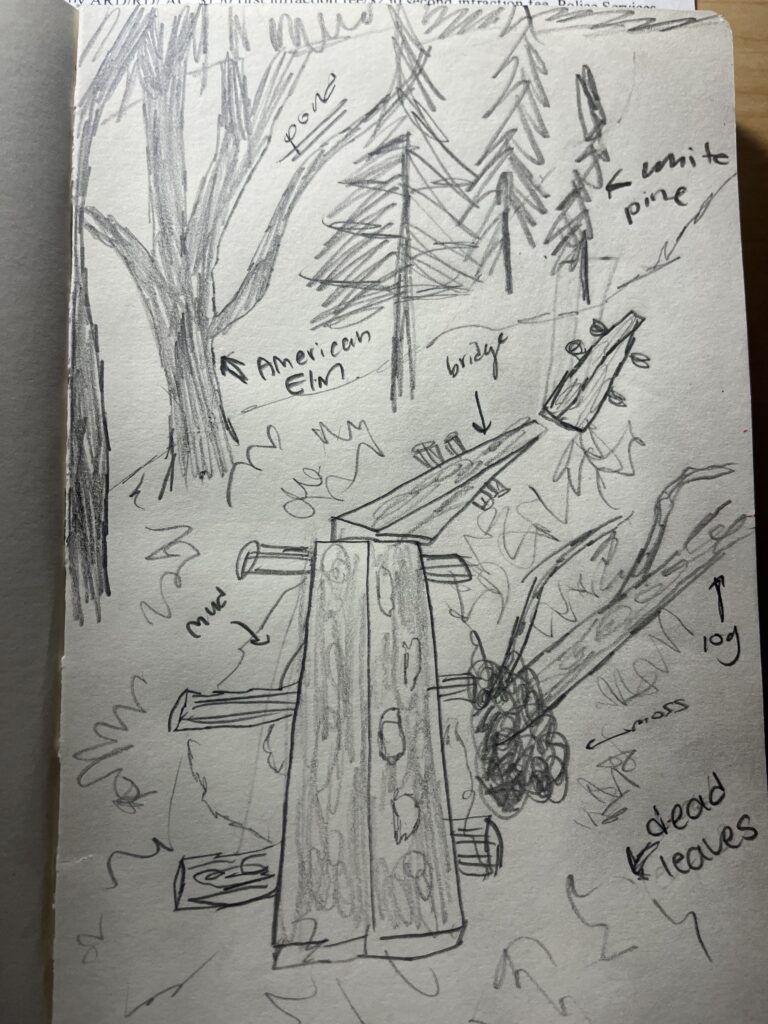
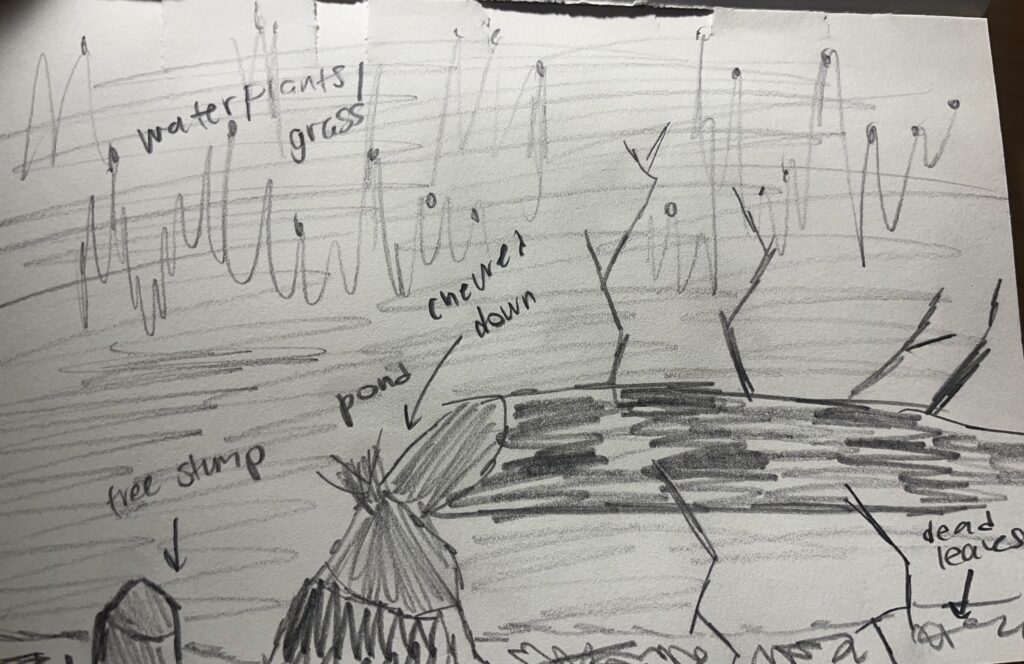
The part of my phenology place that I enjoy most are the small streams as part of a larger watershed. It reminds me of my backyard back home, and I find it fun walking over the bridges. It’s interesting which way they flow and what critters lay within them, as well as how it looks different in the wintertime.
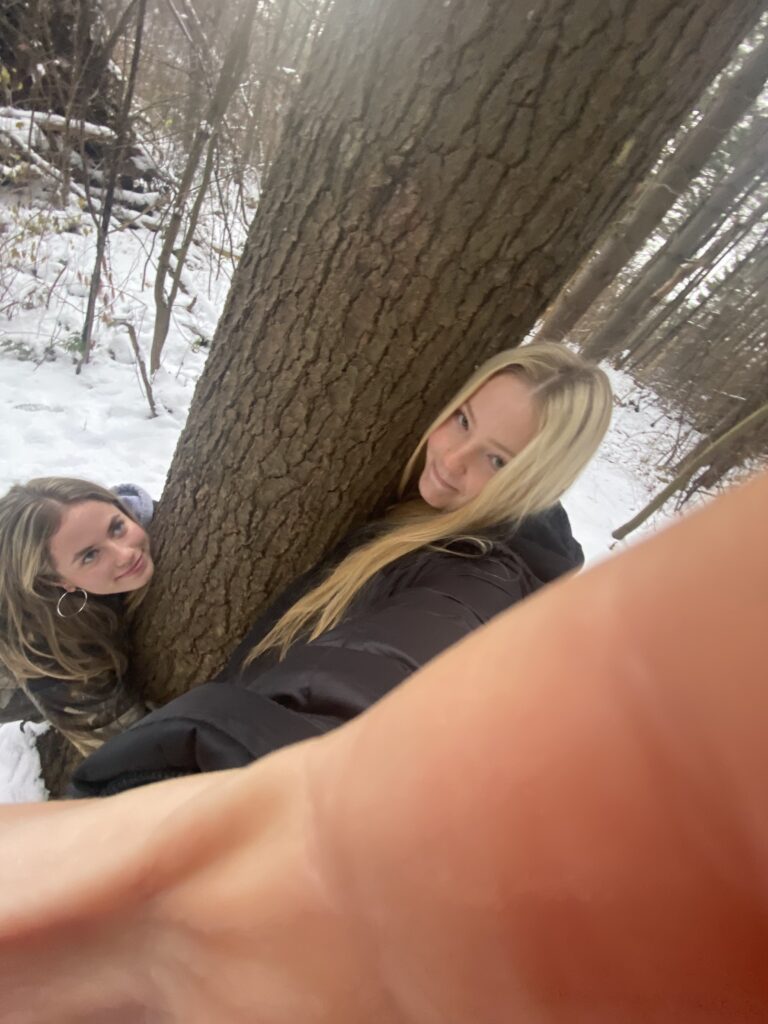
Below, you will see a well deserved tree hug for my last visit to Centennial Woods… for the semester. I’ll be back, don’t worry 😉