Feeds:
Posts
Comments

Home Page

Welcome to Max’s Phenology Blog! Embark on an extensive collection of updates on Vermont’s beloved walking trail, Centennial Woods. Throughout the Fall 2022 season, I will be focusing on a specific spot where a small bridge crosses over Centennial Brook. I will be observing and recording the environmental changes that occur within this spot and documenting the effects of human interaction with the natural area. Hope you Enjoy the journey!

Max’s Blog Post #4

10 December 2022: This is my last blog post for the 2022 fall semester and looking back I couldn’t be happier with choosing Centennial Woods as my phenology spot. I chose Centennial Woods because I connected with the area during our first tree identification assignment. It brought nostalgia from my favorite trails in my hometown and has quickly become my favorite trail for my home away from home at UVM. I look forward to witnessing all the charges that occur when I return for the spring semester.

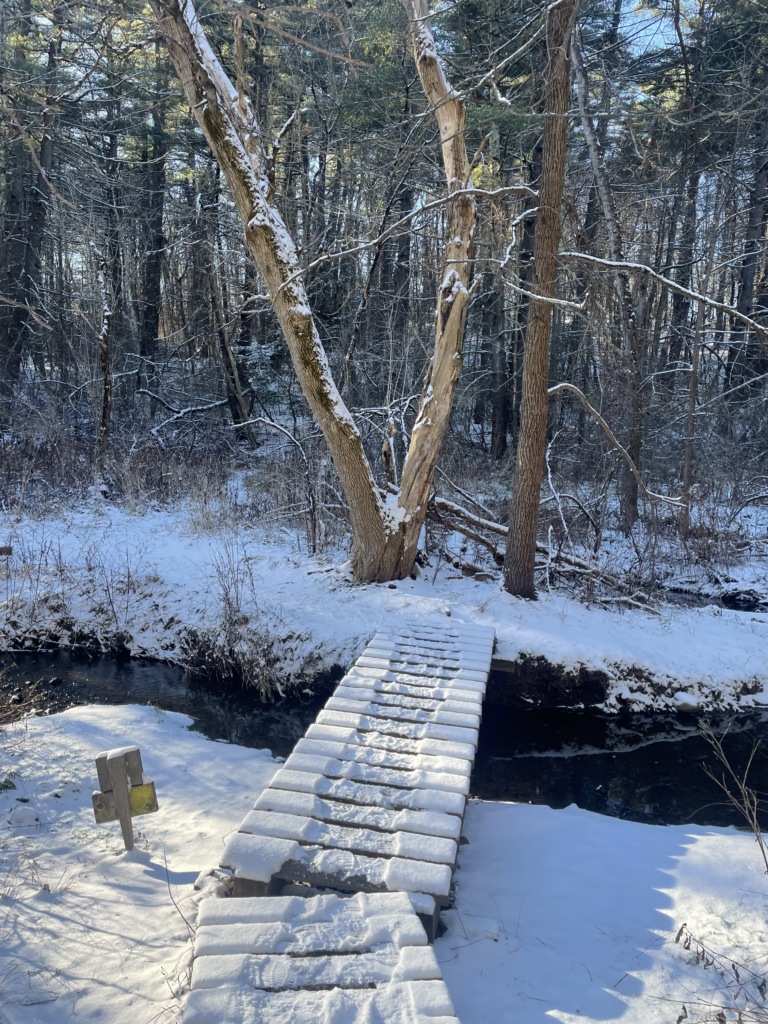
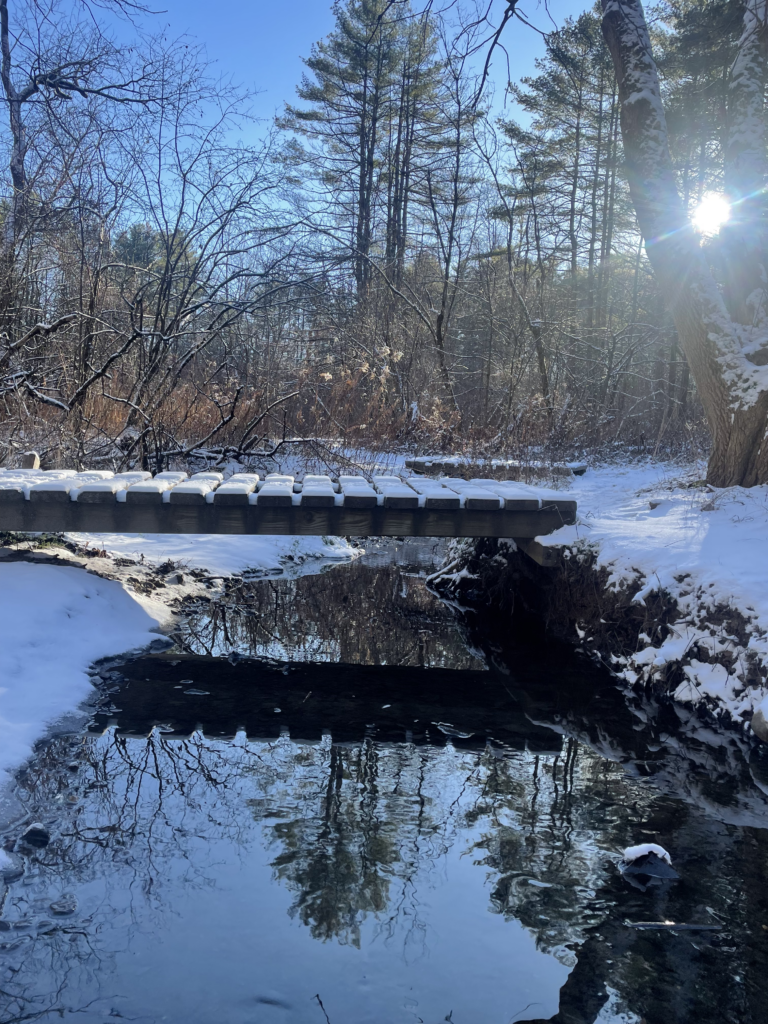
Today was cold with a slight wind but overall was a beautiful day full of sun. It had just snowed all day yesterday so there is still a fresh blanket of white powder about half an inch thick, just enough to not see the grass anymore. As I reached my spot in the woods, I noticed how all the foliage was completely gone with not a single trace of a leaf hanging from the trees. All were now littered amongst the forest under a layer of snow most likely beginning the decomposition process. The only trees still persisting were the Eastern White Pines in the overstory with full branches of pine needles. This is because the needles of the Eastern White Pines have a special waxy coating that allows the evergreens to conserve water during summer and winter months. The conservation of water allows for the continuation of photosynthesis and gives them the ability to stay green and remain on the branches for a few years. I noticed tracks along the trail, some i could distinguish as dog tracks but the majority of them belonged to the hikers of centennial woods. I did however hear bird songs from the trees above, and it sounded like a chickadee after comparing the sound to an online reference. Compared to the beginning of the year animal activity definitely, has decreased. I used to hear several different bird songs now I just hear one song from the chickadee. This makes me wonder if chickadees migrate, and if so, when do they migrate? With the decrease in activity and the cold temperatures, I would think most bird species have flown south by now but considering it’s mid-December with snow, maybe these bird species don’t migrate at all.

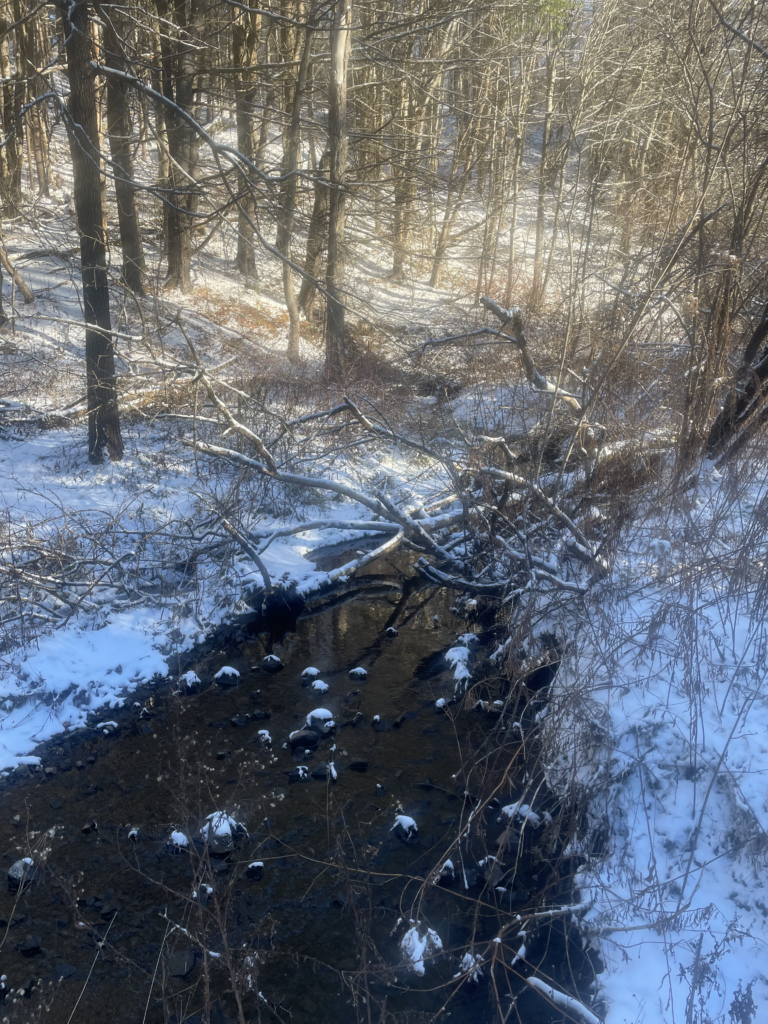
As I stood on the bridge and watched the stream slowly trickle along, I did notice the brook was slower moving and lower than usual; I could see a lot more woody debris crowding the brook, so I wonder if that is causing a decrease in the brook or if other factors are at play. I’m excited to see what this spot looks like when I return and I’ve had a lot of fun observing the ecological changes in the ecosystem of my phenology spot.

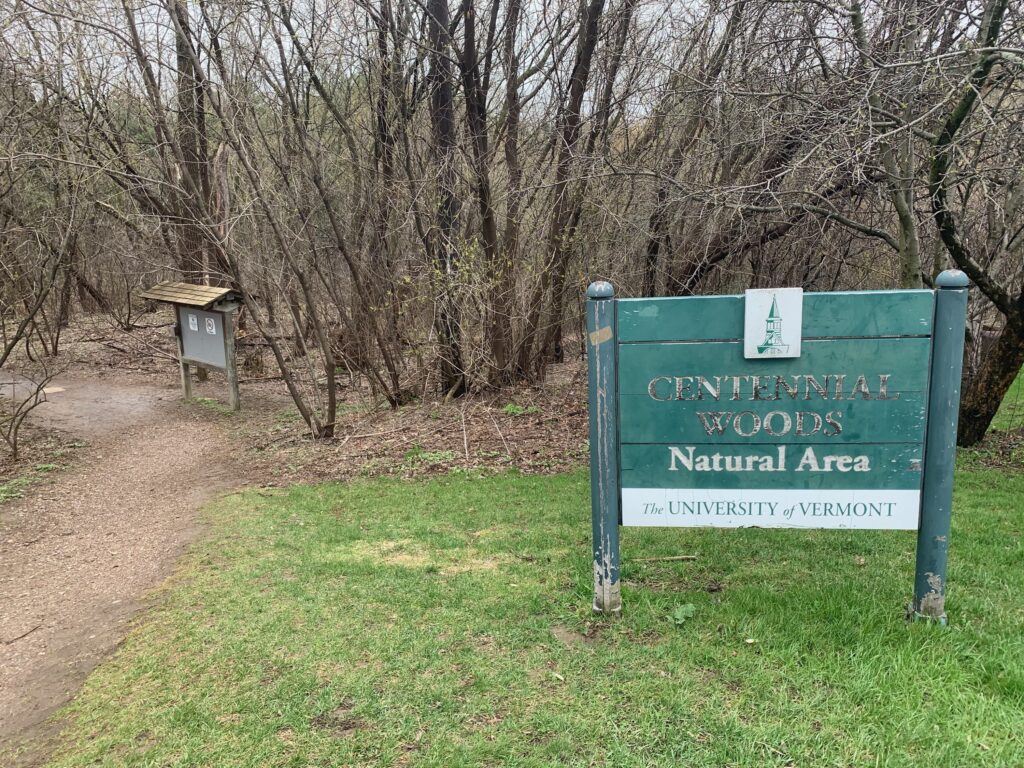
Centennial Woods is a 65-acre natural space adjacent to the University of Vermont, yet many people don’t realize its true value or existence. In the heart of Vermont’s largest metropolitan area, Centennial Woods is almost tucked away from city chaos with only small green signs to signal its place, as it discretely coexists with the environment around it. This hidden oasis contains a variety of early succession plant species and wildlife, as well as several miles of hiking trails and small bridges across the hilly terrain. What once existed as private property, originally used as farmland for many years is now available for public recreation and research purposes. With a conservation easement placed by the Vermont land trust and now managed by UVM, it is important that people recognize the value and human impact of Centennial Woods which is prioritized in the land conservation of a new-growth forest and is continued to be safeguarded from outside environmental threats to maintain a sustainable future.

I believe Centennial Woods represents Vermont’s natural heritage as it provides incredible land use history and resources for UVM’s field-based teachings. The area is a perfect place for students to conduct studies on biodiversity, soil acidity, and watershed deposits; In doing so, I think the land requires much more supervising and precautionary care to be put in place. For instance, the land itself needs to be better represented and made known with an input ­of proper signage. The small green signs can often go undetected, so properly labeling the area and making its importance as a research and recreational area known is important for local hikers or passer Byers. Centennial Woods is a crucial space for environmental research at UVM, but it is also a place where people can unwind and improve their mental health through recreational activities. Personally, when I find myself walking along the trails of Centennial Woods, I can’t help but feel at peace with the calming sounds of trickling water from the brook, the dopamine-boosting colors from the vegetation, and the overall gentle charm that envelopes you as you’re passing through. I find Centennial Woods to be a truly special place with almost therapeutic properties to heal you from the hustle and bustle of city life. Having access to a rich natural area in a dense urban setting is very important for the physical health and well-being of the people inhabiting those areas so it’s imperative that the trails are consistently maintained throughout the season. This would require more funds to help improve the land to reach its full potential and for UVM to take charge by fully cleaning the area of any sort of trash. Throughout the land, there are also remnants of barbed wire fences from the old farmland borders so removing all barbed wire would keep any animals or hikers from being harmed.

Establishing future stewardship for the natural area and implementing these measures would create a more welcoming and organized environment for the Centennial Woods as well as allow for a thriving ecosystem to exist. People need a place like Centennial Woods; it opens the doors to new methods of learning and teaching while also creating a space that connects humans to the rich environment that surrounds us. It’s important that we continue to protect this area to return the favor for all the gifts that it has given us.
Max’s Blog Post #3

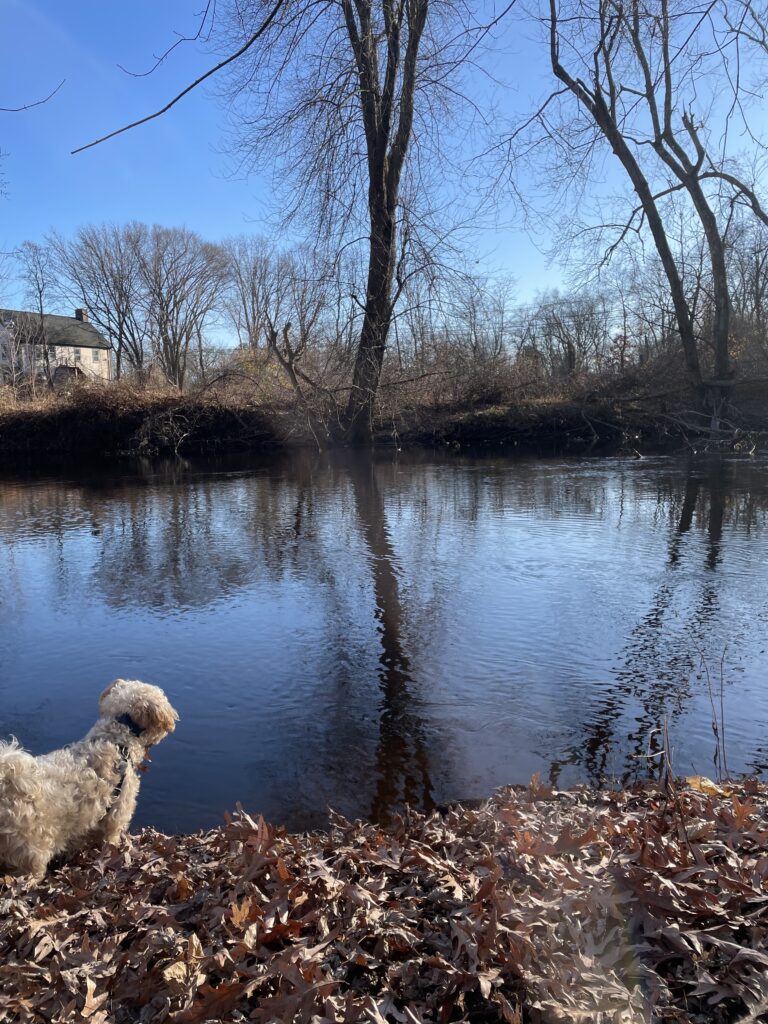
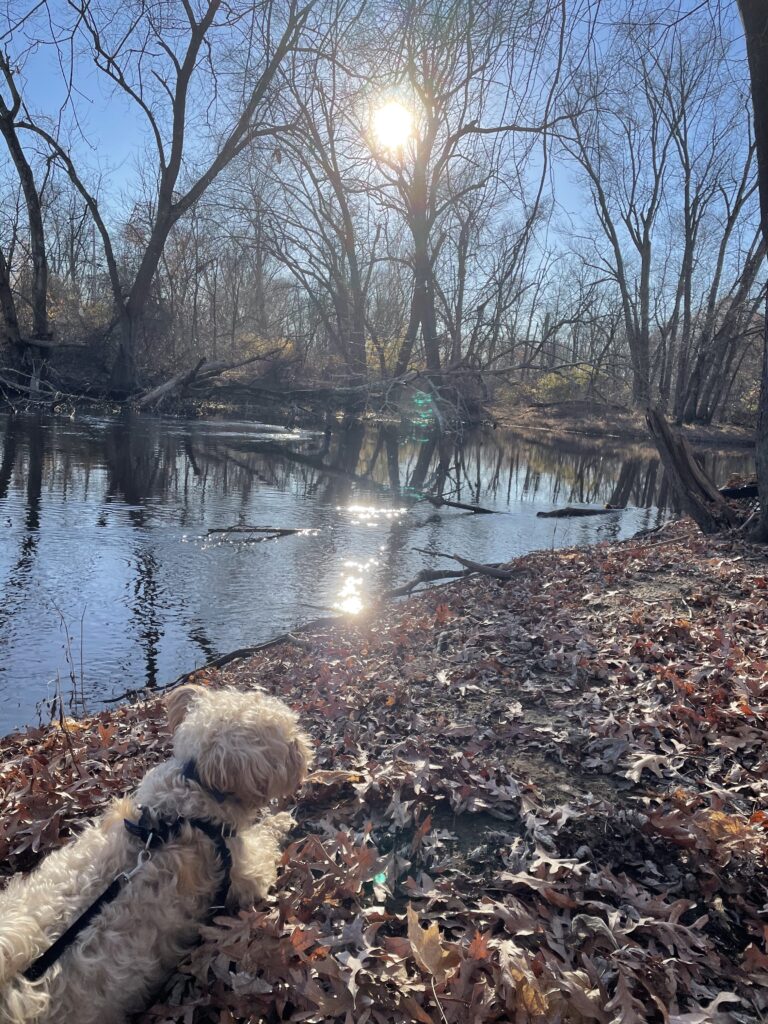
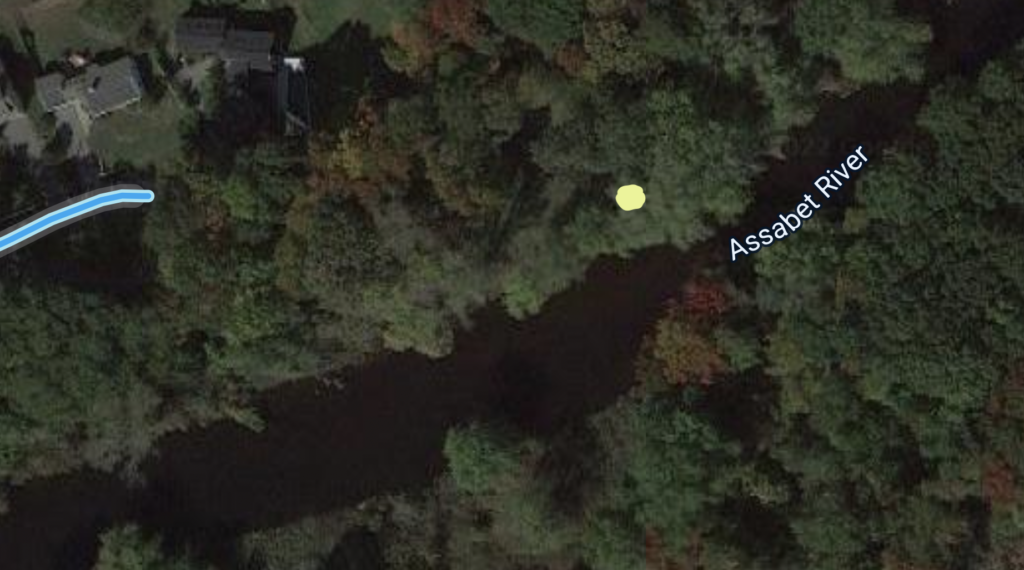
28 November 2022: For my new phenology spot I chose an outlook along the Assabet River. Its a very peaceful place that I always walk my dog to because he loves laying down in the leaves next to the river and watching the water flow downstream. We walked down our street to a small path that takes you directly to the river which runs through my town, Concord, MA. In the area there is mostly a mix of white and red oak in the overstory with small samples around the bank. As you can see from the photos below, there’s a bunch of logs and woody debris that hangs over the edge and into the water; in the summer you can spot small turtles sun bathing on the logs. A pattern I noticed was the logs creating ripples in the water. A process I noticed was the river slowly eroding the bank and wearing away the land as well as depositing rocks and sand further up stream.

Comparing both phenology spots I found many similiarites and differences between the two of them. For starters, the tree diveristy is much different. I found more white and red oaks in the new spot where as the UVM spot has much more eastern white pines and maples. I recently found out both bodies of water, Assabet river and Centennial brook, have been subject to pollution. The assabet river used to be a spot where factories would dump mercury so many of the fish in the river have traces of mercury from the past. Centennial Brook used to be the dumping area for the UVM medical building, so both bodies of water are similiar in that human impact has caused a significant effect on the water quality. The area around Assabet River is less dense in tree coverage and you can clearly see the highway adjacent to the river. Similarly, centennial brook is also near major roads, so noise pollution would definetly have an impact on the wildlife around the spots. I found both spots to be very peaceful regardless; the soft sounds of the waters always provide a tranquil feeling to me and I think my dog, Percy loves the water too.

Max’s Blog Post #2

7 October 2022: It was a beautiful sunny day today as I biked to my phenology spot in Centennial woods. I sat on the small bridge that crossed Centennial brook and took 15 minutes to use my senses and engage with the beauty of my surroundings. The wind was strong today, so most of my silent listening observations were interrupted by continuous gusts of high-speed winds, but for a few, I captured the wonderful bird noises of what sounded like a Chickadee and an American Robin. I sat on the bridge and listened to the calming ripples of water quickly passing under my feet and felt the sun’s warmth hitting my face. I felt at peace sitting in this area the wonderful sounds, sights, and nature smells created a very warm meditative environment and I believe this quality time I spent admiring the space in the woods helped me connect better with the land.

As I looked around I noticed some key differences with the spot since my previous visit, most of it with the vegetation in the area. The last time I was in Centennial woods the trees were covered with colorful leaves, but now all but the pines were bare and it felt like the brook was receiving a lot more sunlight than before. As the leaves fell they covered the trail and were scattered across the brook but now I noticed that not many leaves were in or near the brook at all. It looks like the wind or rain carried all the leaves in the area into the deep woods and off the trail. The grass is still long and overgrown along the trail and around the river, but with the leaves gone from the tree, I can now get a better view of the prominent tree species in the area. I see mostly Eastern White Pine as the trail continues up along the hill, and sugar maples in the distance. I more intensive tree analysis of the area will be gathered in the next blog post. I also hope to do a soil and water test in the near future.

Max’s Blog Post #1

I chose Centennial Woods brook because I really connected with the area during our first tree identification assignment. It reminds me of one of my favorite trails in my hometown where I could escape from the stresses of life. As I walked along the trail, I felt at peace standing on the small bridge crossing the brook. I appreciated that people can come to enjoy the nature in the area but also that it wasn’t overcrowded.

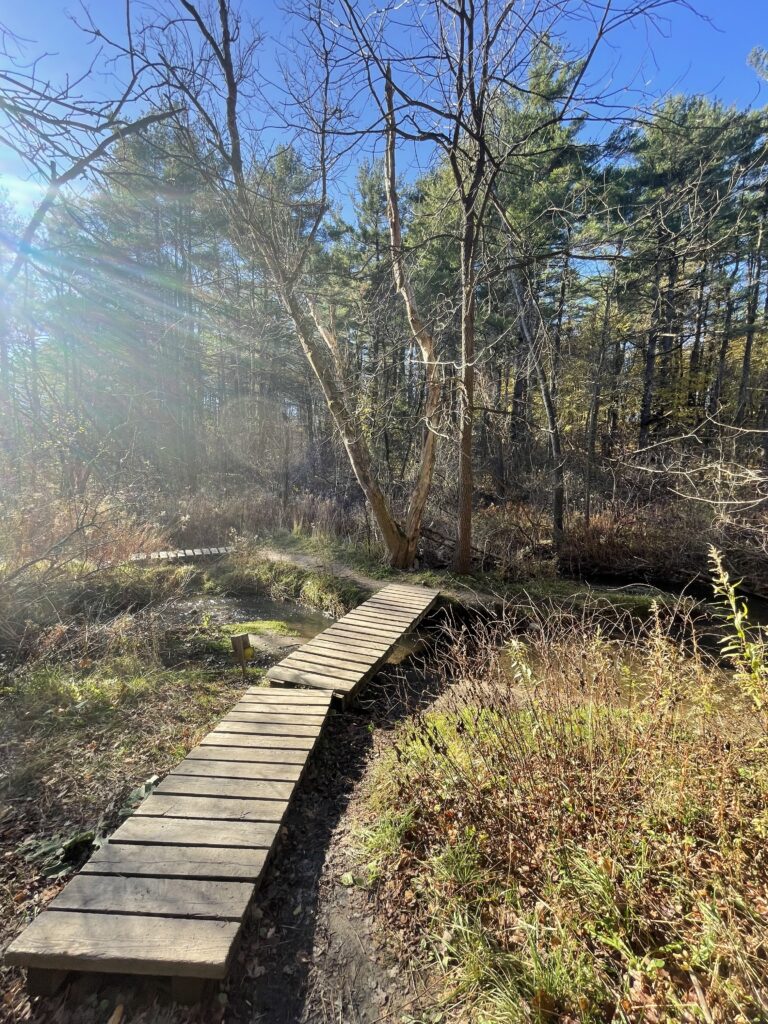
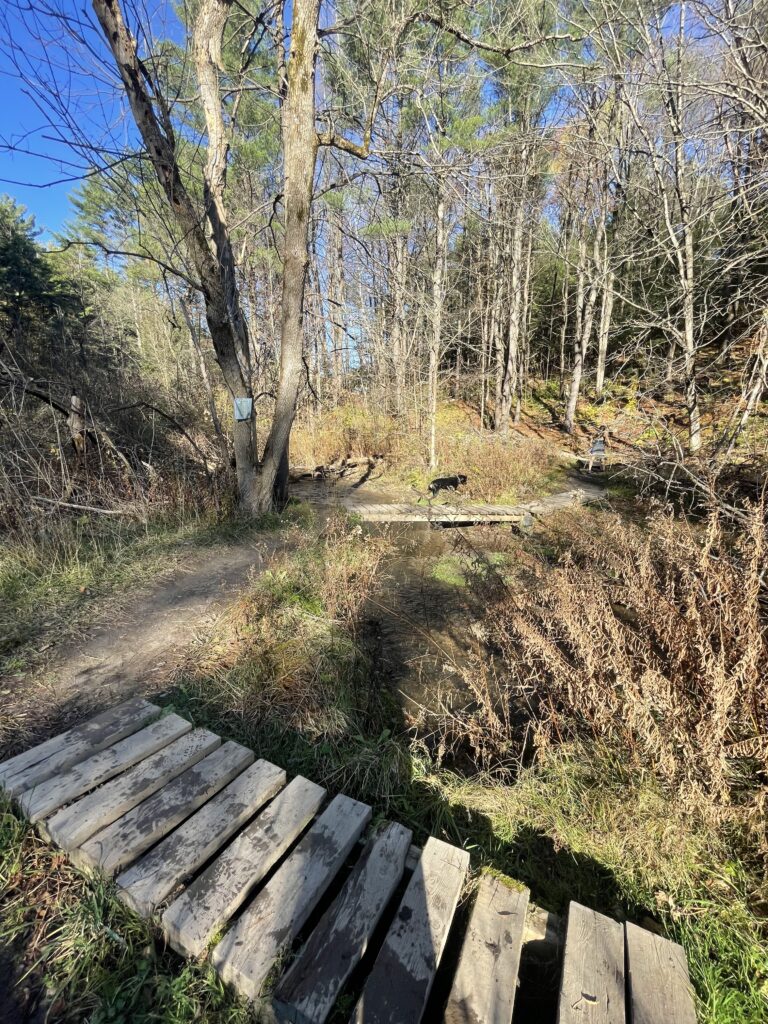
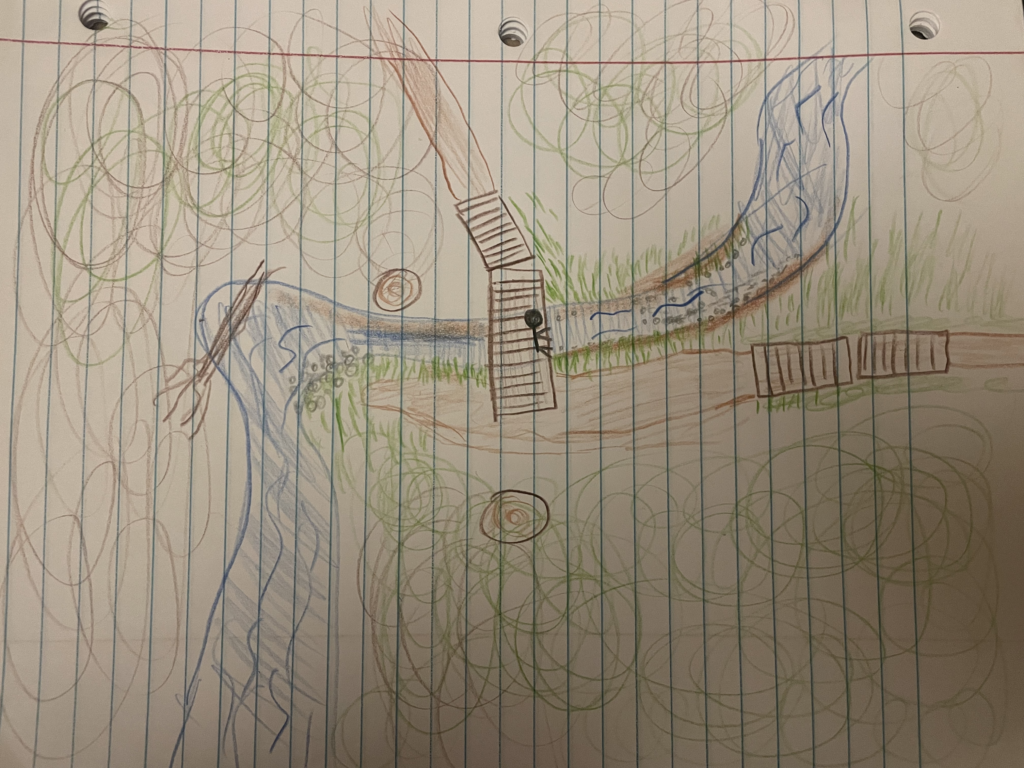
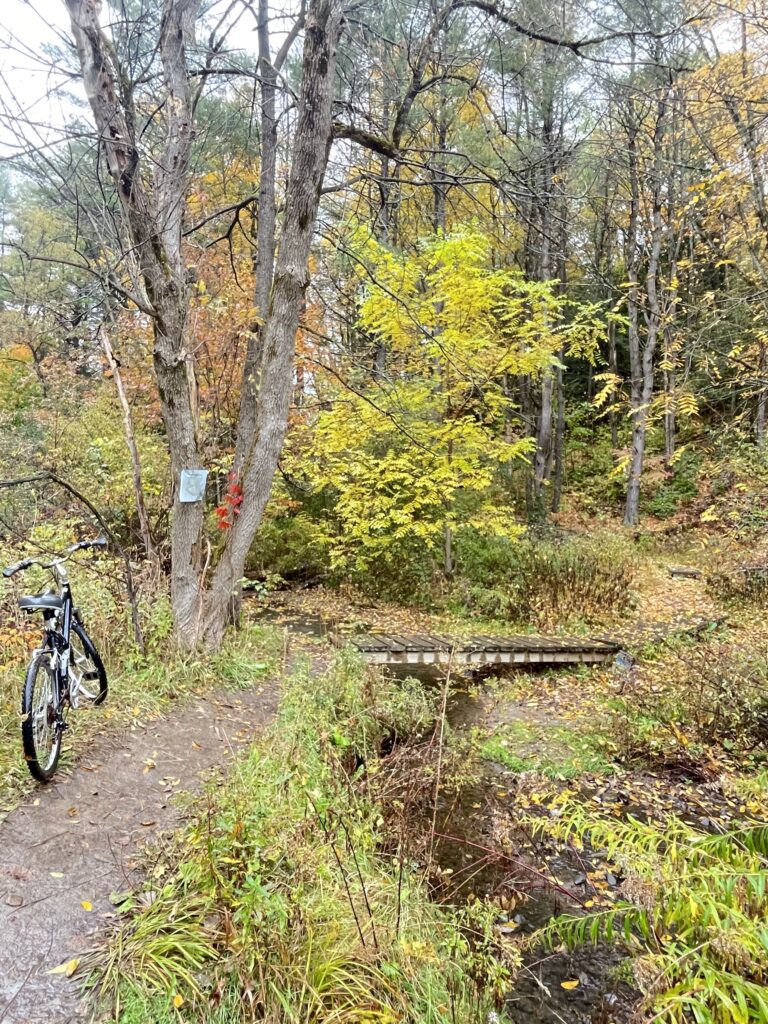
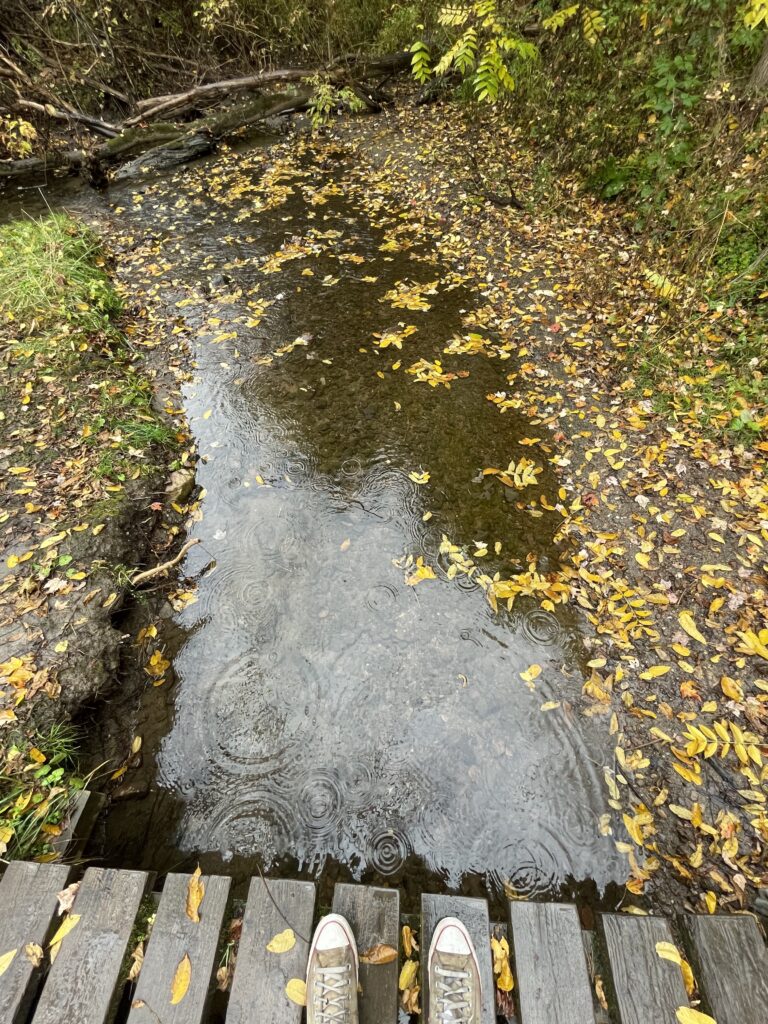
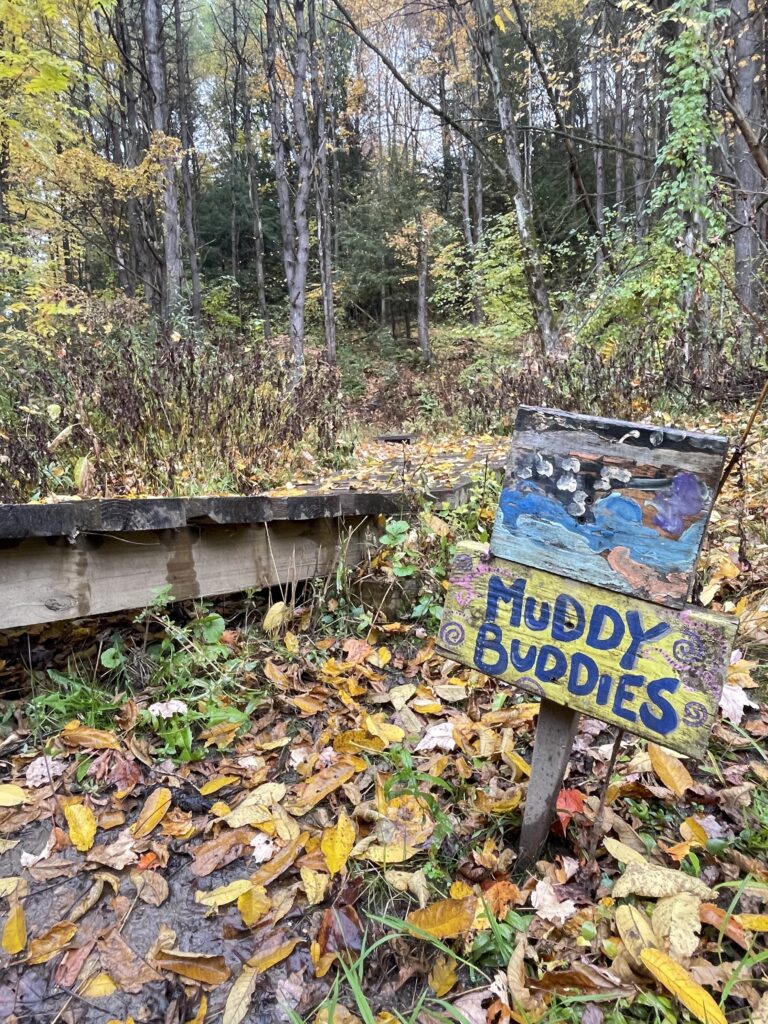
17 October 2022: Welcome to my blog! I’m excited to share my observations and updates with my phenology spot. Today, I biked to my spot in the pouring rain to gather my notes, the trail turned to mud as I made my way to the brook. The brook was fast-moving due to the heavy rain with lots of surrounding vegetation and fallen leaves in the water. I heard many birds chirping in the area as I walked to my spot; leading up to the brook I walked along a series of small bridges that allow you to cross the muddy trail. Surrounding the brook, I observed the biodiversity of the area; Lots of tall grass covered the ground along with a Red Maple tree close by and three Walnut trees in the understory. An abundance of Eastern White Pines appeared in the overstory, providing a good amount of coverage from the rain. When it comes to human interaction, many people use these woods as a place to, hike, run, and even bike. My goal is to hopefully maintain the land to prevent any kind of pollution and keep it as peaceful and biodiverse as possible. I would love to test the water and soil quality of the area to get a better understanding of the effect humans and pollution have on it. I’m excited to see the progression of this phenology spot as we move throughout the year.

Skip to toolbar