
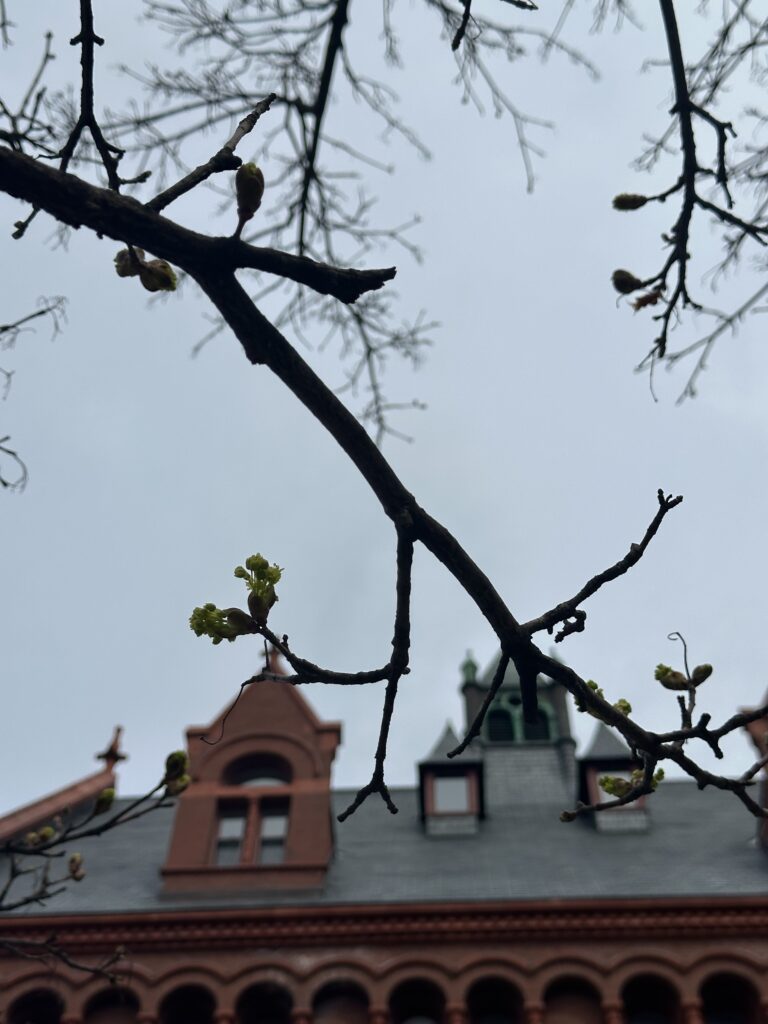

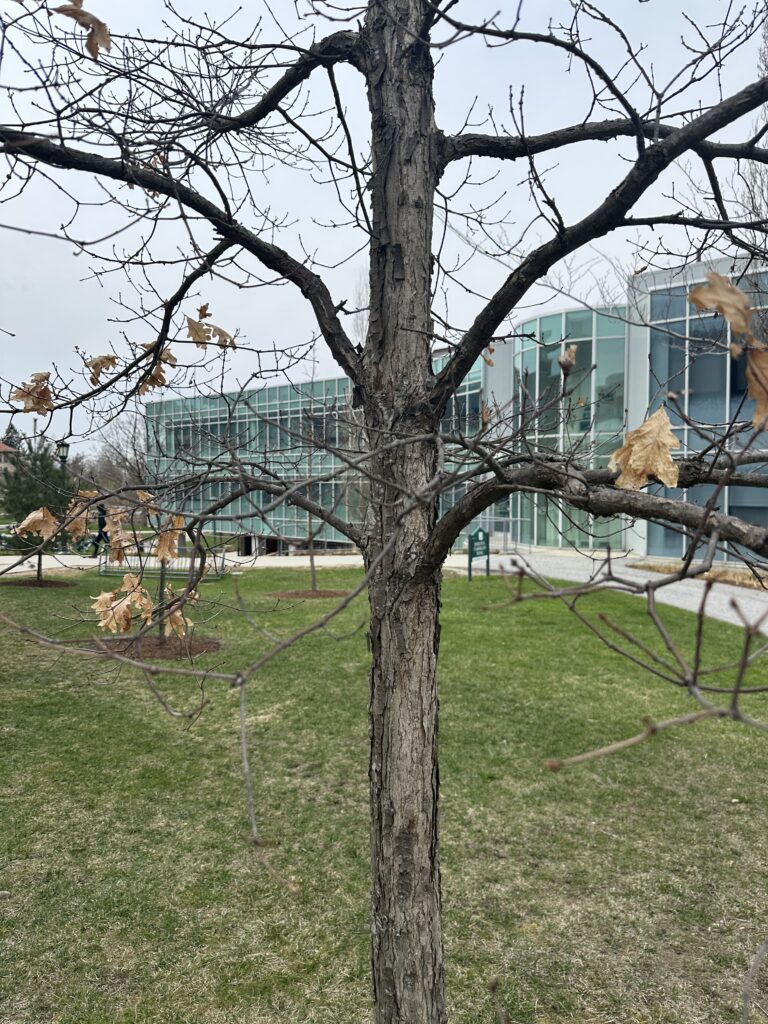


The images above depict each of the 5 trees visited across campus.
- 1- Norway Maple
- 2- Red Maple
- 3- White Oak
- 4- Red Oak
- 5- Sugar Maple
The date I explored the phenology walk was April 25th. It was a little overcast, but warm and slightly sunny. Most of the trees across campus seemed to be in the same phenophase. They had buds sprouting all across the species. Many even started to bloom into flowers as well as possible expanding leaves. However, the White Oak behind Aiken surprisingly still had some shedding, dead leaves with zero to little budding on the branches. The buds on the Sugar Maple were very green, looking like they would bloom soon. In contrast, the Norway Maple had many green flowered buds at the end of most branches. The Red Oak also had some budding and left over acorn tops still attached to some of the tree as well. Overall, the sign of spring can be seen all across the campus trees.
The article I explored on the NPR website discussed how signs of spring this year compares to past years. It was published in mid-March and explores how much earlier the anticipation of spring in nature has been compared to previous years. This article also explains how the arrival of spring is determined through the Spring Leaf Index and the Spring Bloom Index. Although only predicting the earliest signs of spring, looking into weather and conditions for growing is also of benefit in addition to recording any observations on different plant species.
https://www.usanpn.org/news/article/more-complete-picture-timing-spring: Phenology Walk 4/25