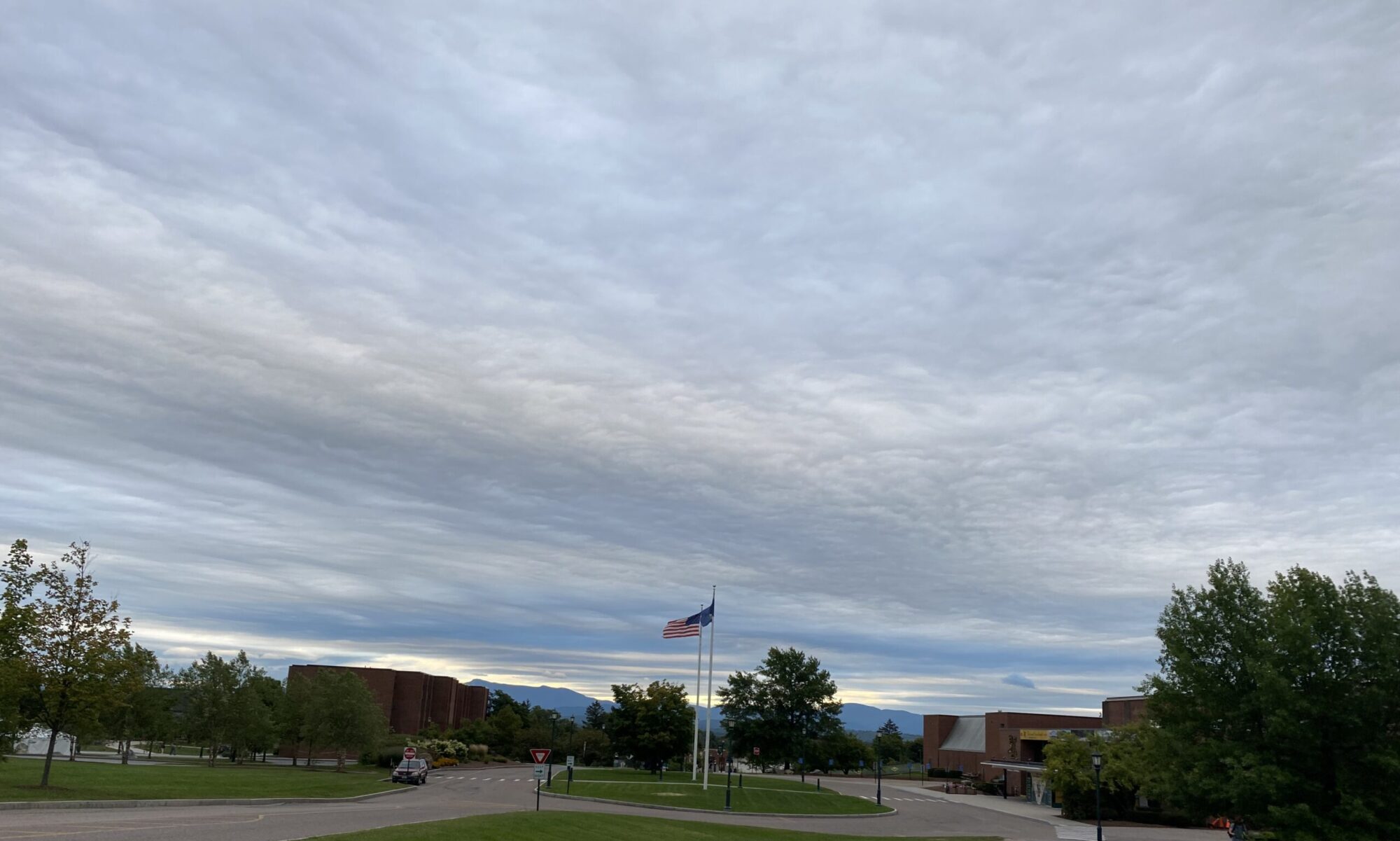
For the City Nature Challenge, I went to my phenology spot (The Redstone Pines) and look photos of the different species in the area. I also went for a walk to identify species with inaturalist and was able to identify many different tree species without even using the app. Some of the species I saw were yellow birch, red maple, green ash, and sugar maple. I enjoyed doing the City Nature challenge because it gave me an excuse to get outside and explore in ways I would not have before.
April in The Pines
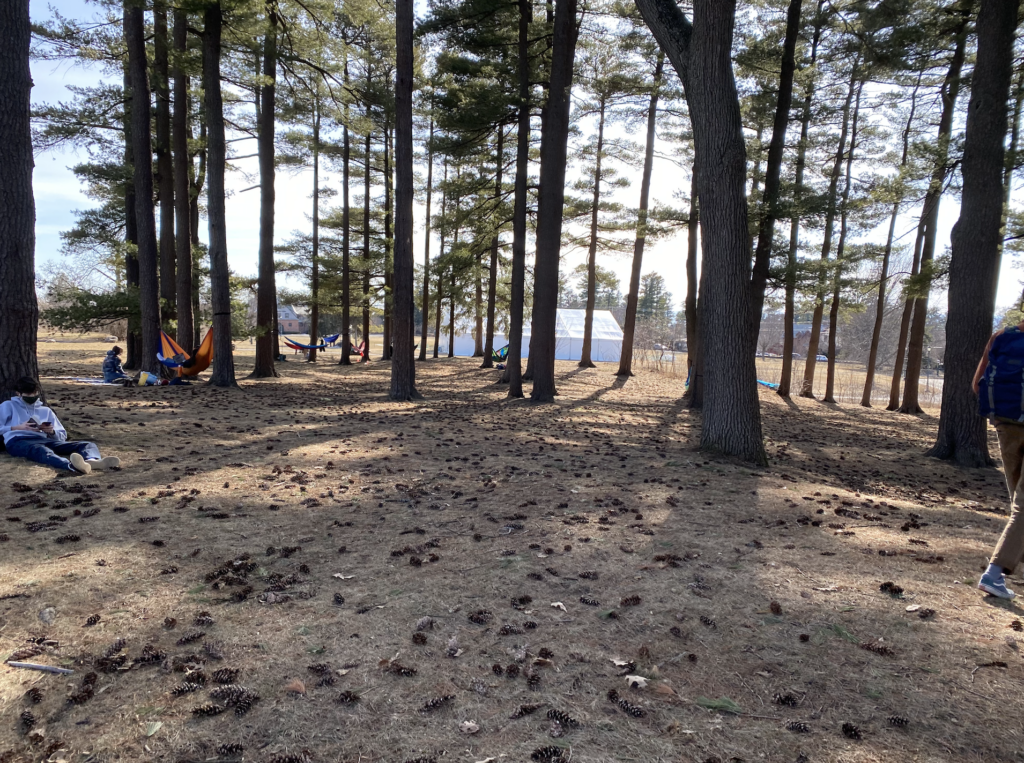
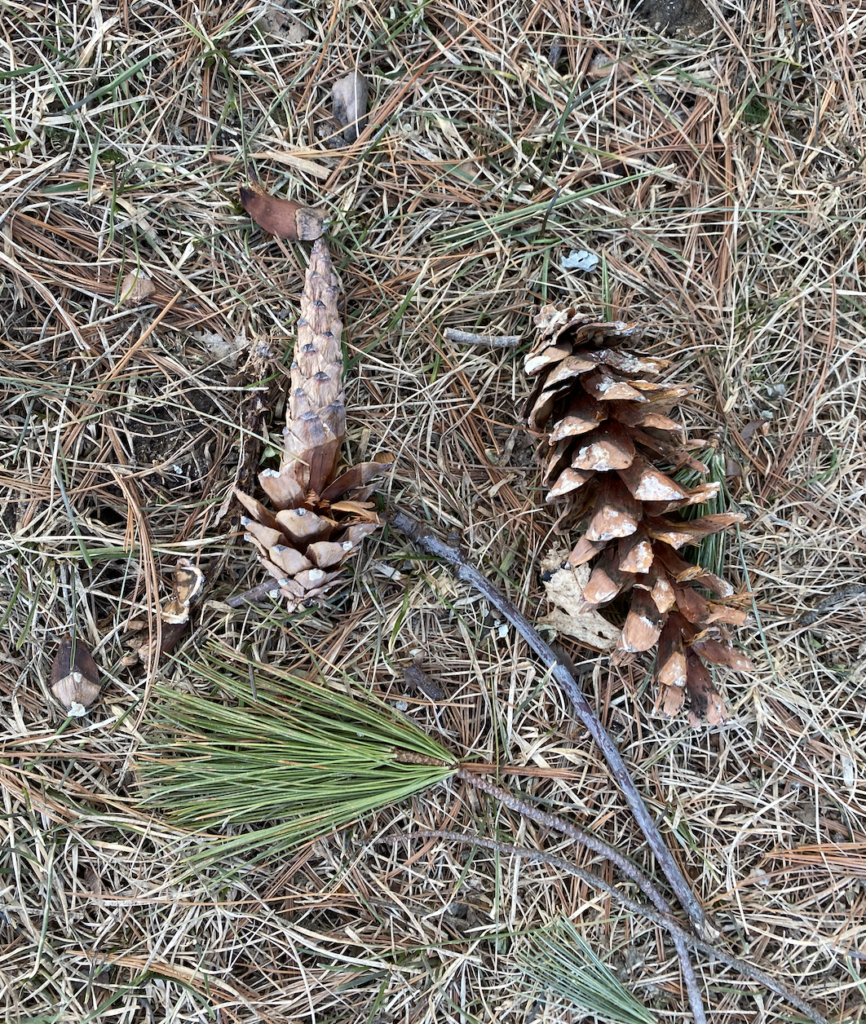
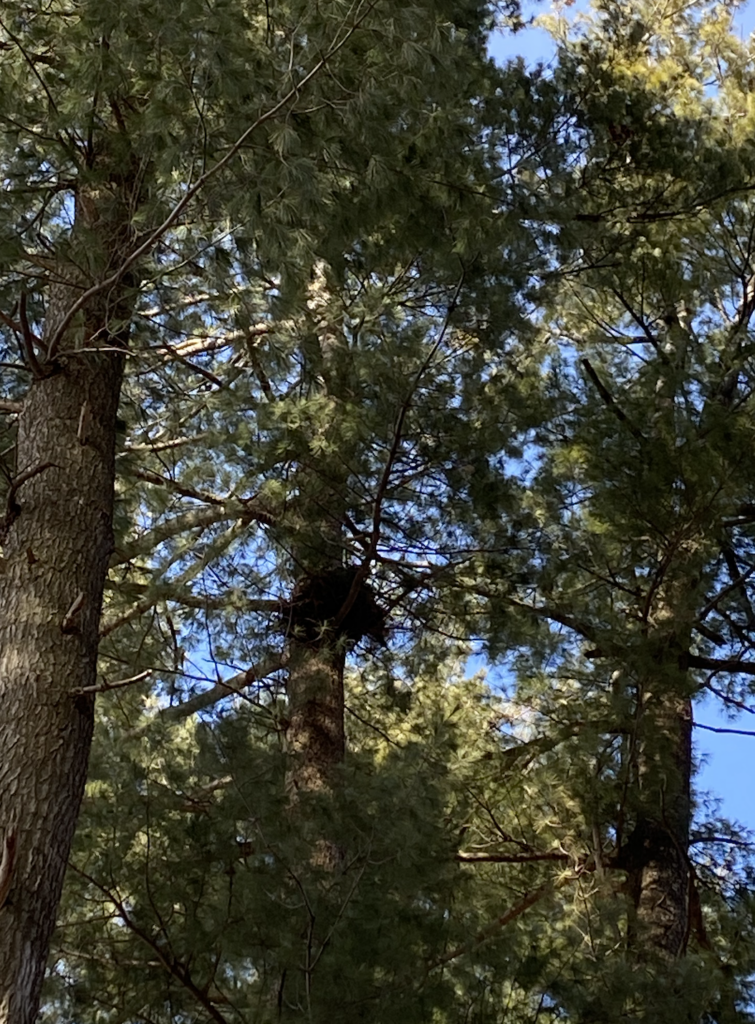
As we know, the pines don’t see a lot of wild-life action. During my April visits the main thing I did notice was the new bird’s nests that have been built in early spring. The pines are a great place for birds to build their nests because there are a lot of trees to use and there aren’t many threatening predators.
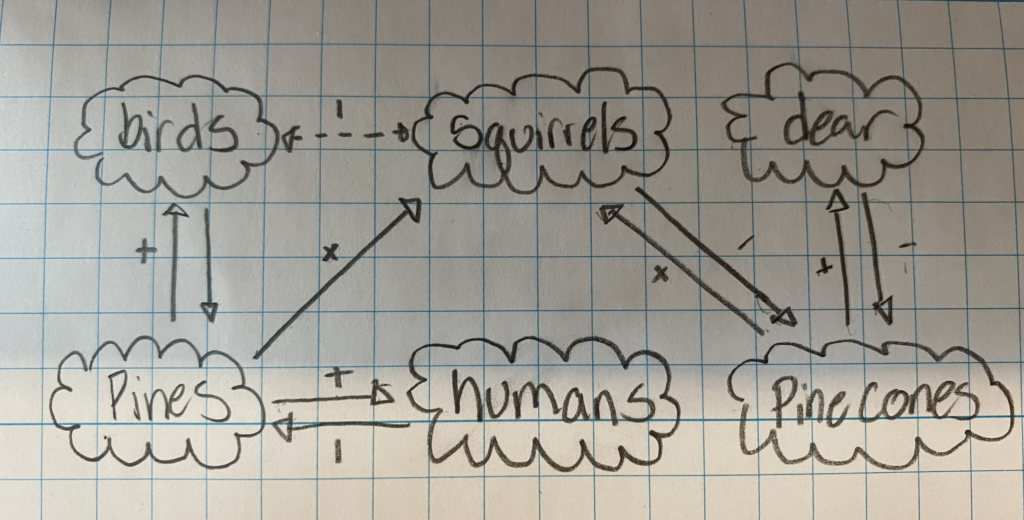
Winooski in Early March
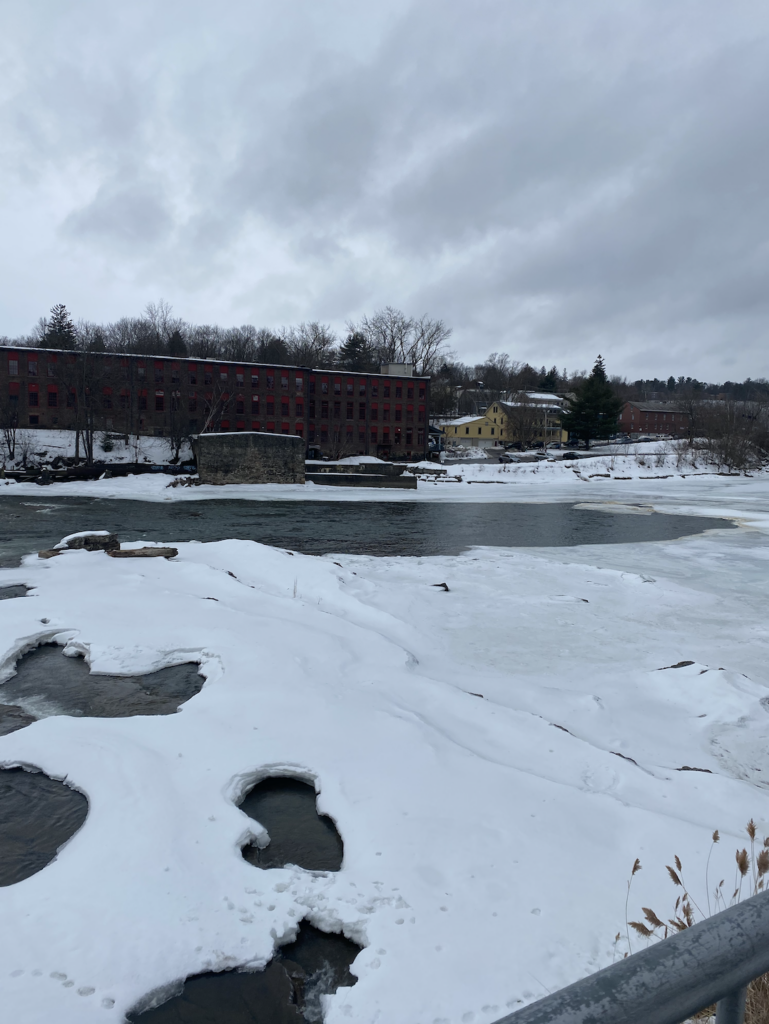
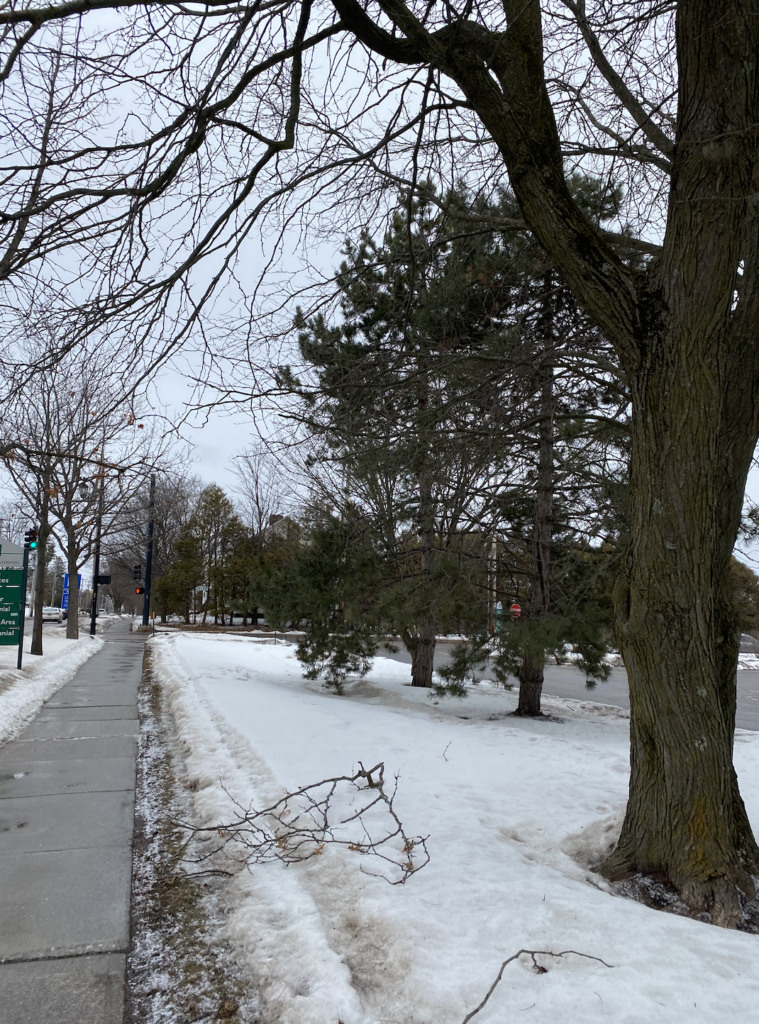
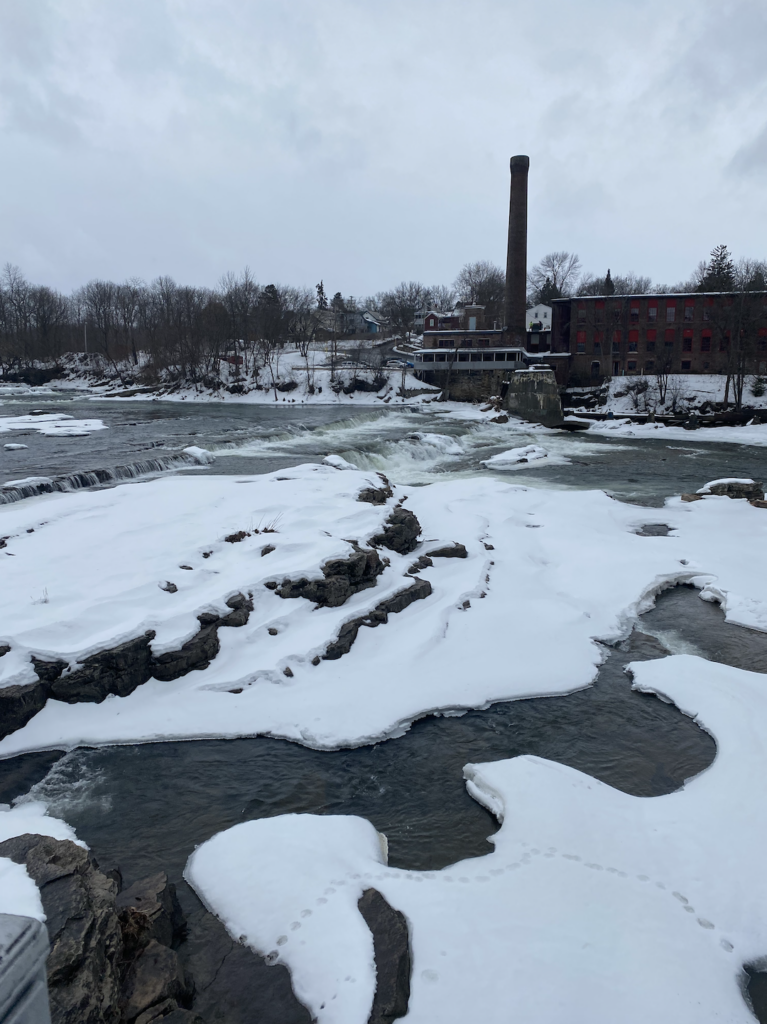
I explored the city of Winooski this past weekend. I chose to look at Winooski instead of Burlington because I have walked around Burlington countless times and I thought it would be interesting to see the Winooski river. The main thing I noticed was how the rover was partially frozen and partially still rushing. It was interesting how the ice formed in specific patterns along the edge of the river. I also noticed some sort of animal tracks on the ice but could not quite make out what the animal was because it was so far away. The main takeaway from this walk was that everything was much icier than snowy at this time. It even started to rain during my walk which meant that it wasn’t even cold enough for snow. Something interesting I’ve noticed this month is that sometimes in Vermont when the sky is cloudy it seems as if the world is in black and white. Not saying that that is a bad thing, just thought it was an interesting phenomenon.
Wild Life Activity
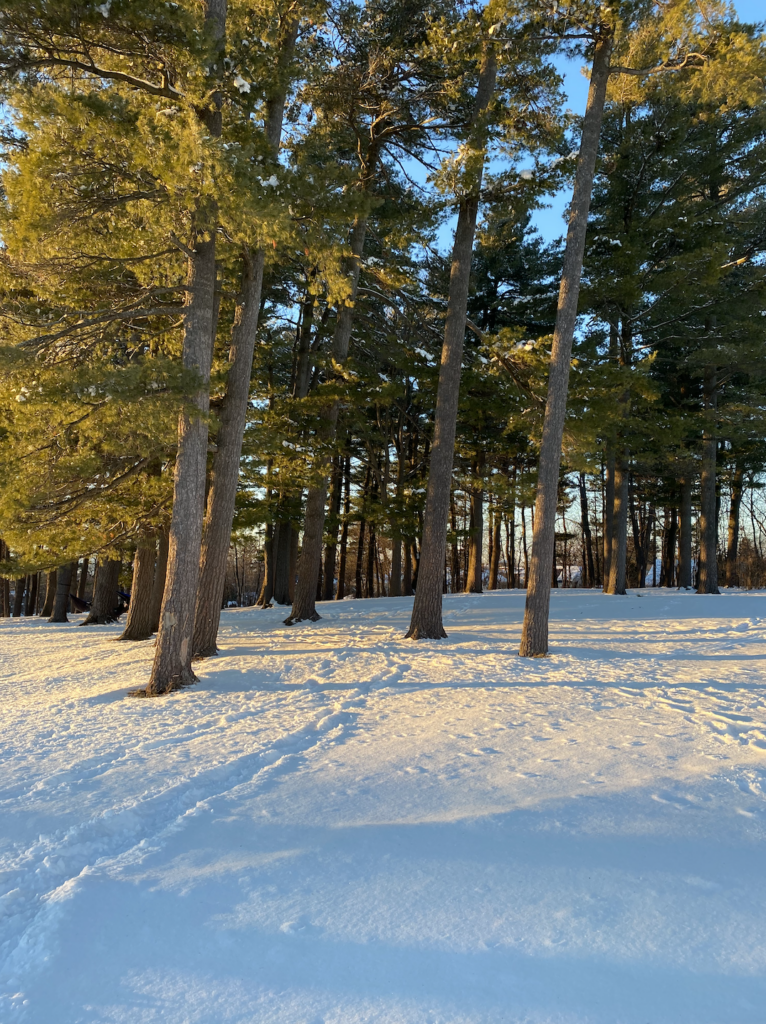
It was nice to return to the pines after about a two and a half month break. It is very different now considering it is covered in a layer of snow. I walked around and searched for wildlife activity but unfortunately, I was unable to find any evidence of animal activity. The only tracks in the snow were boot prints. I wasn’t exactly shocked by this because the Redstone Pines are not known to be a place of habitat for many different species. Other than the immense amount of snow, there were not many changes because the pines are evergreens. I visited the pines on a sunny day so the snow that was on the trees had melted/falling off. This time of year, you don’t see many people hanging around in the pines anymore because of the cold weather. Over all it was a good reunion with the pines.
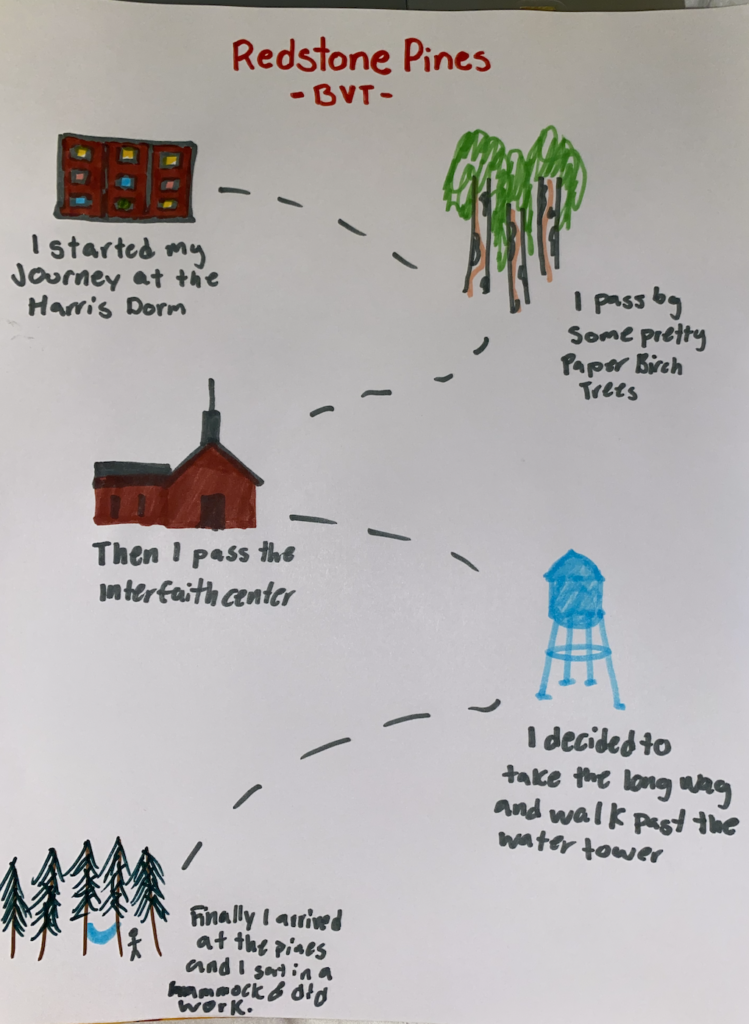
Event Map
Human History
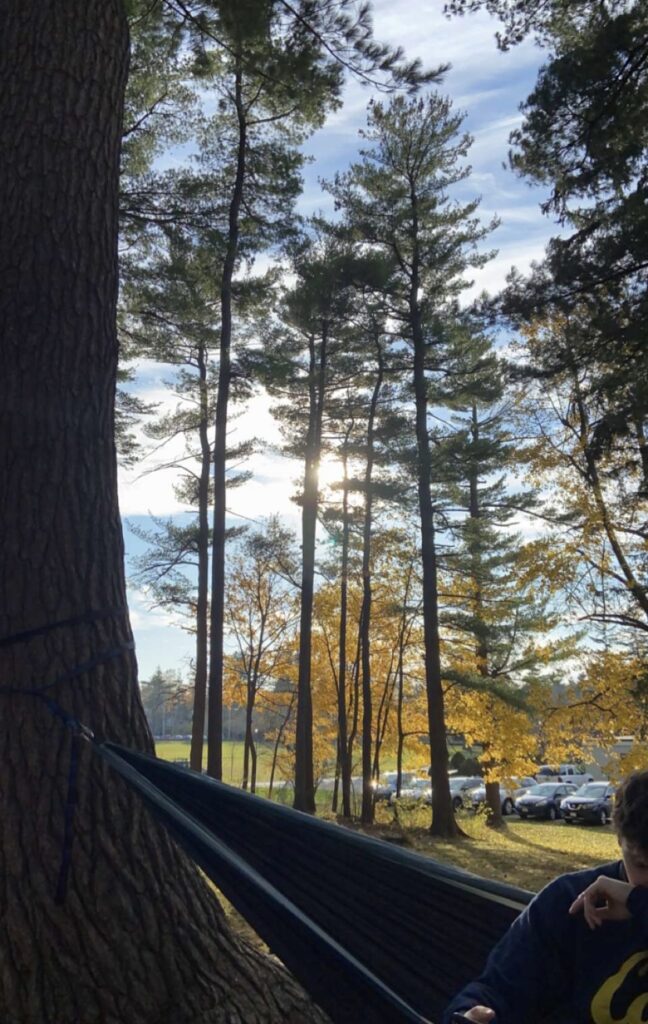
Before I talk about the history of the pines themselves I thought I would talk about my history first. I started going to the pines at the beginning of the school year because my roommate told me it was a great spot to hammock, hangout with people, and sometimes do homework. I spent a lot of time sitting in a hammock and making friends, and it was actually the place that I cultivated a lot of long lasting relationships. I have a deep sentimental connection to the pines and that is definitely one of the reasons I chose it to be my phenology spot.
Now for the human history of the pines! It was actually really hard trying to find information on the human history of the pines as the majority of information pertained to UVM and not earlier years and indigenous impacts on the land. In reality what I could find was that UVM kept the pines intact in order to use the space for agriculture experiments in the 1800s. UVM was mainly focused on farming in those days and the pines made for a great spot for educating students on agriculture. In fact at one point in time cattle roamed the area we now know as the Redstone Pines.
Wildlife 🦊🐿🦌
The Redstone Pines are not a permanent home too many wildlife. Squirrels will frequent the area in search of sustenance and this is the same for deer and other common Vermont wildlife. I have seen many a squirrel in the pines in search of nuts or human’s discarded food on the floor. Sometimes deer will wander into the pines in search of food or a little bit of shade during the warmer weather. Along with this it is highly plausible that birds will nest in the trees, but they are too high up to see.
Vegetation
The Redstone Pines, dare I say, don’t really have a lot of biodiversity. I mean it is called the Redstone PINES after all. Though it is mainly populated by pine trees there are a sprinkling of other species that germinate in the area. Along the edge of the pines there are a few invasive species growing. During my last visit I noticed some barberries growing as well as a touch of poison ivy! Other then that the area is populated by Eastern White Pines.
Compare and Contrast
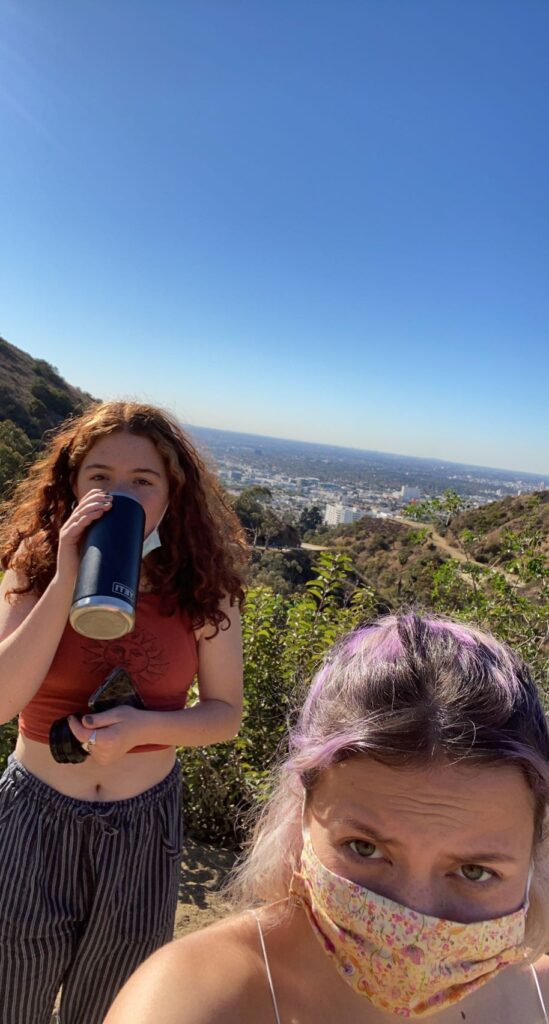
When I had to chose a place from my home town to compare the Redstone Pines to I wasn’t sure where to go. There aren’t any areas that are somewhat similar to the pines so no matter what it would be like comparing oranges and apples. Either way, I ended up choosing to go to Runyon Canyon. Runyon Canyon is a recreational area in which many activities can be done. It is a place for hiking, picnicking, small concerts, and more. It is a highly popular location as it is home of the infamous Hollywood sign hike. When I visited this spot it was crawling with people. Already this is very different then the pines. The pines tend to be a quieter space will hammocks and students doing work. The pines also only haver one main focal species while Runyon Canyon had an abundance. Runyon Canyon was also a much dryer landscape as it sees much less rain than the Redstone Pines. Along with this, the Redstone Pines are of course a much smaller area than Runyon Canyon and the pines are a flat surface while Runyon canyon has mountains.
Changes
Since I began visiting the Redstone Pines I have notices a few key changes due to the changing of the seasons. At the beginning of the year everything was green and lush, from the tops of the trees to the green grass below. Throughout the year pine needles began to fall and what started out a a green oasis turned into a mixtures of green, yellow, and brown. The ground was dotted with fallen pine needles and the people in hammocks had disappeared. Most recently the Redstone Pines saw their first snow, which caused a slight change in look but quickly melted away. Below is a poem I wrote about the Redstone Pines Phenology.
The Pines
green green green
warm and sunnywhat a perfect scene
rich like hone
yhammocks have been hung
until a new song is sung
Brown brown brown
needles fall to the ground
things are changing all around
birds don’t make a sound
white white white
so crisp and bright
what a beautiful sight
but disappeared over night