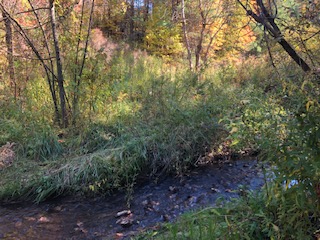
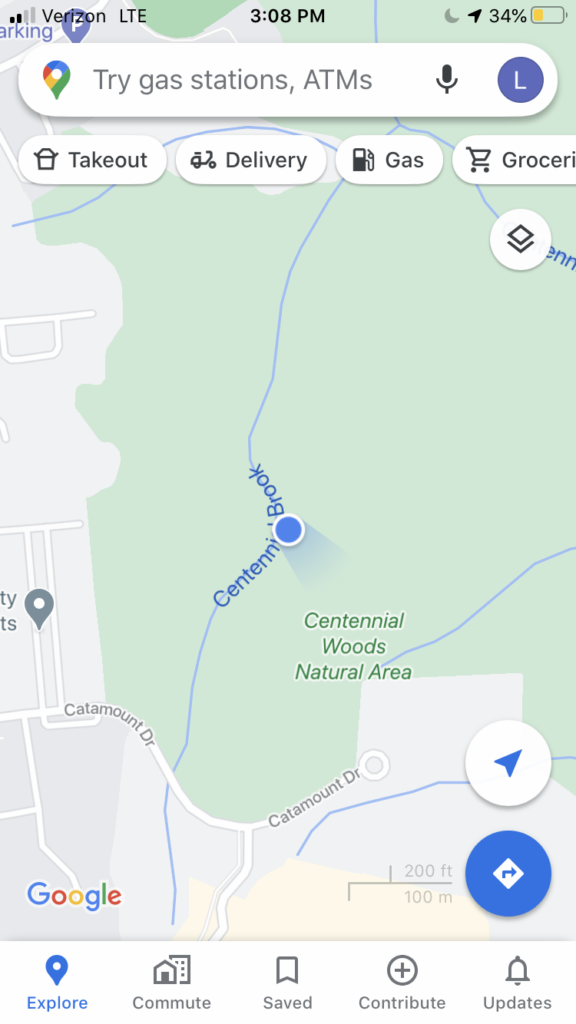
A Farewell to Centennial Brook

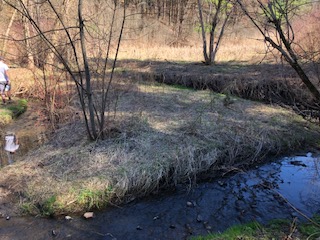
This past week, I decided to see the amount of edible species I could forage from my site, as plenty of leafy greens and gorgeous flowers are starting to sprout up in the warmer days of spring. The ground was covered once again in a thick blanket of grass and flowers, much like the way I found it at the very beginning of the school year.
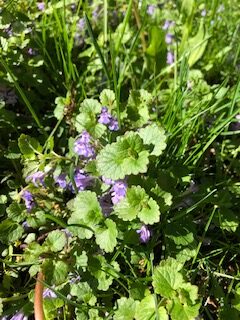
My first finding was some delicious ground ivy. Native to the mint family, ground ivy can be dried out and steeped into boiling water to make a mint-like tea. It is said to help with eye and skin health, and helps upset stomachs. I took some home with me to hang up and dry to make some tea a couple weeks down the road.
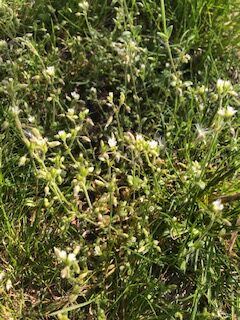
The second species I found is commonly known as Mouse-ear Chickweed. This plant is usually used as a microgreen, and can be paired with leafy salads or sautéed like spinach. I had no place to cook the chickweed, so I ate it right from the ground. Not bad!

As I wave goodbye to my phenology site, I realize just how much I have watched it changed over the course of the past school year. I saw it covered with bright reds and oranges in autumn, saw it bare the days leading up to winter break, saw it covered in a blanket of snow, and now seeing it as a lush, green landscape like I saw it on my very first journey to Centennial. I most definitely consider myself part of my place, as I am always there foraging or looking for creatures to spot.

Just because this project is over doesn’t mean I won’t revisit this spot through the rest of my time here at UVM. I’ll be back for frog, tea, and newt hunting, as well as a spot to meditate and ground myself to the nature around me.

Until next semester, Centennial Brook!
City Nature Challenge!

In my personal opinion, the City Nature Challenge was a whole lot of fun! iNaturalist is a neat little app, and outside of NR2 I still use it on my day to day travels.

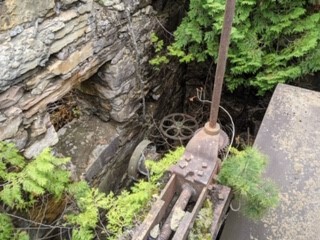
The place I explored the most for the City Nature Challenge was on a little island in Winooski, mostly made up of birch, spruce, and cedar. What I found especially cool about the place we explored, there was cedar growing right out of the abandoned buildings/structures all around us! It was like a cedar bonanza!

This probably means that the surrounding environment is pretty acidic and moist, as that is where red cedar thrive the most.

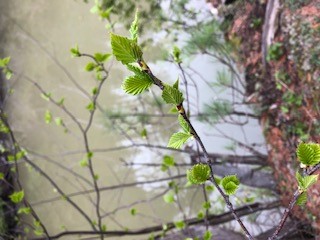
And here was some little paper birch leaves peeking out to say hi, ready to grow into big strong leaves for the summer!

Other species of wildlife we saw were a pair of common merganser, and a lone Canada goose. Unfortunately I was unable to document the birds, because the goose was quite aggressive about protecting its nest.

I found it extremely breathtaking to see the biodiversity across the globe through the world wide city nature challenge. But I was also super surprised about how many species we see right here in Burlington are super common all across the world! I hope to think people from Tokyo were just as interested to see the species that was spotted in Vermont as I was seeing their species.

Spring is in the Air at Centennial!

This past week, I have spent three consecutive days outside wandering Centennial Woods. This time of year is prime amphibian-findin’ time, and my friends and I set out to look for some frogs and newts. I hadn’t visited Centennial Woods since the beginning of March, and seeing the landscape becoming green and colorful again was quite refreshing.

Our first day out there, we found almost up to ten frogs in a 20-foot radius!

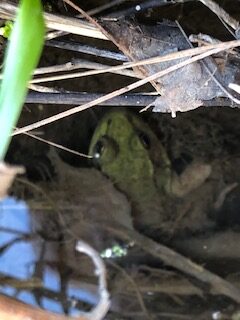
Pictured above is a shy, little green frog I captured a snapshot of before he swam away in a cloud of sediment, further down Centennial Brook.

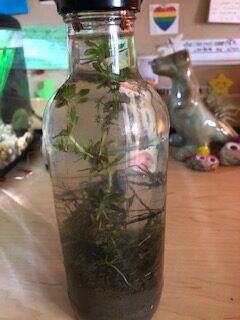
The next day, I ventured out on my own to see just what kinds of little critters live within Centennial Brook that you can’t quite see by just looking at the running water. Taking a clean glass bottle, I scooped up some sediment, vegetation, and of course some brook water to take back home with me to observe. I originally thought I would only observe a few snails, and a little water penny if I was lucky. But boy was I in for a surprise!!

Once the sediment settled, and the brook water became clear again, I saw HUNDREDS of microbes swimming about in the bottle! There were some that swam around with whip-like tails, there were some that looked like tiny little dots almost too close to loose sediments, and there were some that looked so thin and stringy that they almost looked like algae. I watched these little dudes swim about for hours, because I had no idea there would be so much life in one little scoop of brook water!

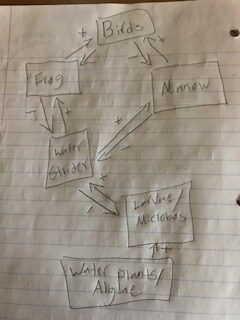
After this, I just had to make a trophic map of some the wildlife I had observed right in my very own dorm room, and also of some of the friends I had happened upon in Centennial Woods.

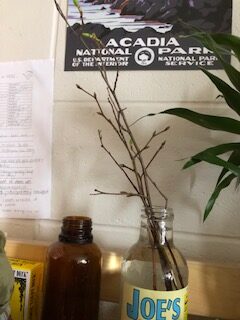
On the third day of my exploration of Centennial Woods, I decided to go in the rain this time to see what life comes out in the wet. To my surprise, I saw even less amphibians than I saw on the days it was hot and sunny. Perhaps it was too wet and dangerous for these friends to be out. This time, I decided to grab some bud clippings to keep in a jar on my desk. Within a day, the buds started to break and are now shooting out brand-new, green leaves! I will give updates in the days to come in the twigs’ progression.

A Walk in Burlington

On Thursday, a couple of friends and I got together to wander the parts of Burlington we haven’t yet explored. The ground was frozen solid, and most of the trees had long lost their leaves. A small dusting of snow covered the ground that crunched under our feet as we walked. As per usual, I was so pleasantly surprised and delighted at the amount of wildlife that can be found even in the most urban parts of the city!

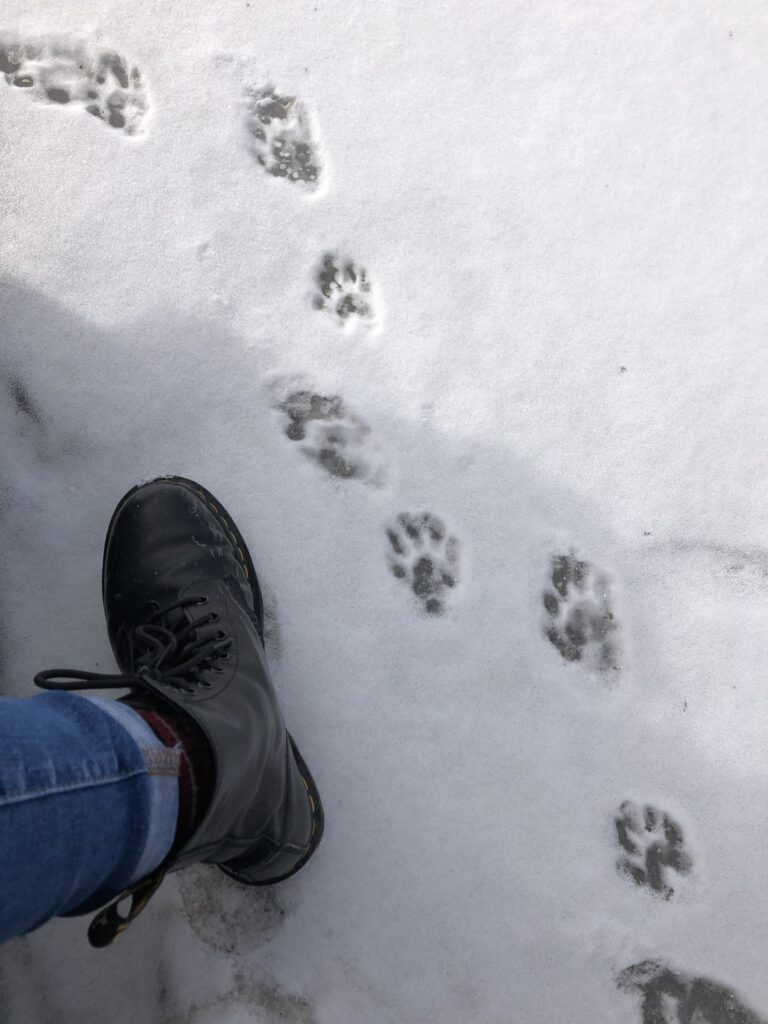
First, we visited a pier along Lake Champlain that was mostly frozen. All across the ice was a tapestry of little foot paths left by the residents of Lake Champlain. The most prevalent were these particular tracks pictured below:

They weren’t quite in a bound pattern, signature of the fisher, nor did they have evidence of belly-sliding like a river otter. The group concluded that they are still definitely part of the weasel family one way or another.

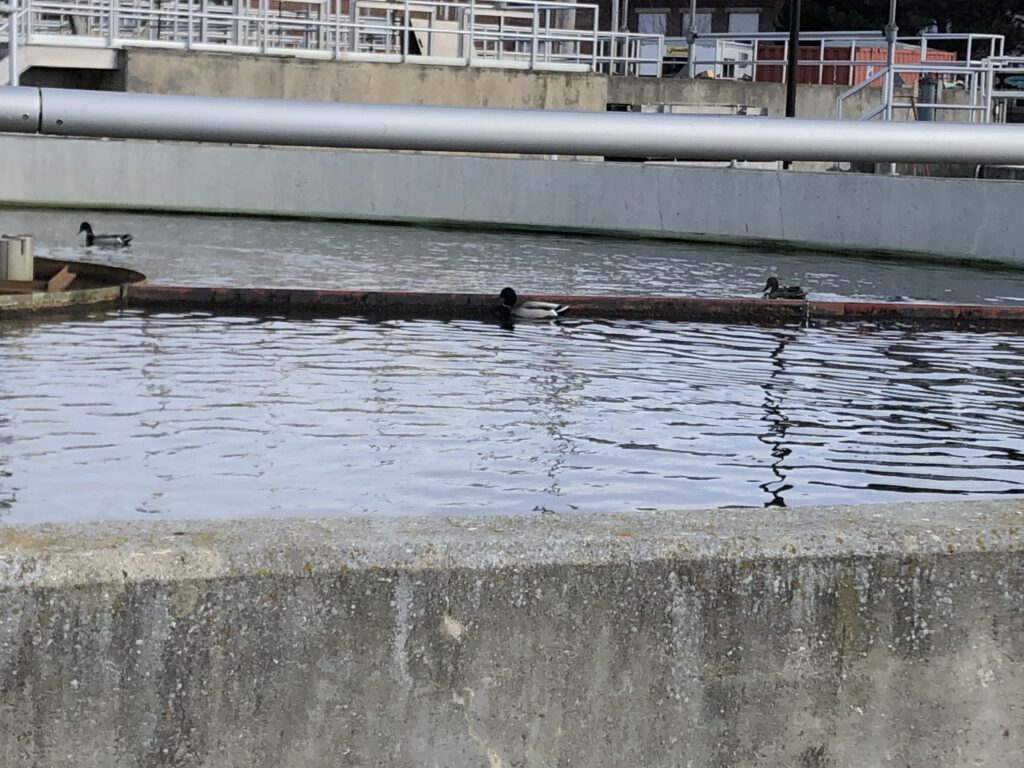
On the next stop of our little adventure, we explored a walkway that trailed alongside a wastewater treatment plant. This isn’t a place you would normally expect to see wildlife, but we were pleasantly surprised!

Swimming as if they owned the place, a group of mallards swam laps around one of the facility’s basins. My friends and I thought they looked so absurd and out of place, and we marveled over how wildlife and human activity go so hand in hand from time to time.

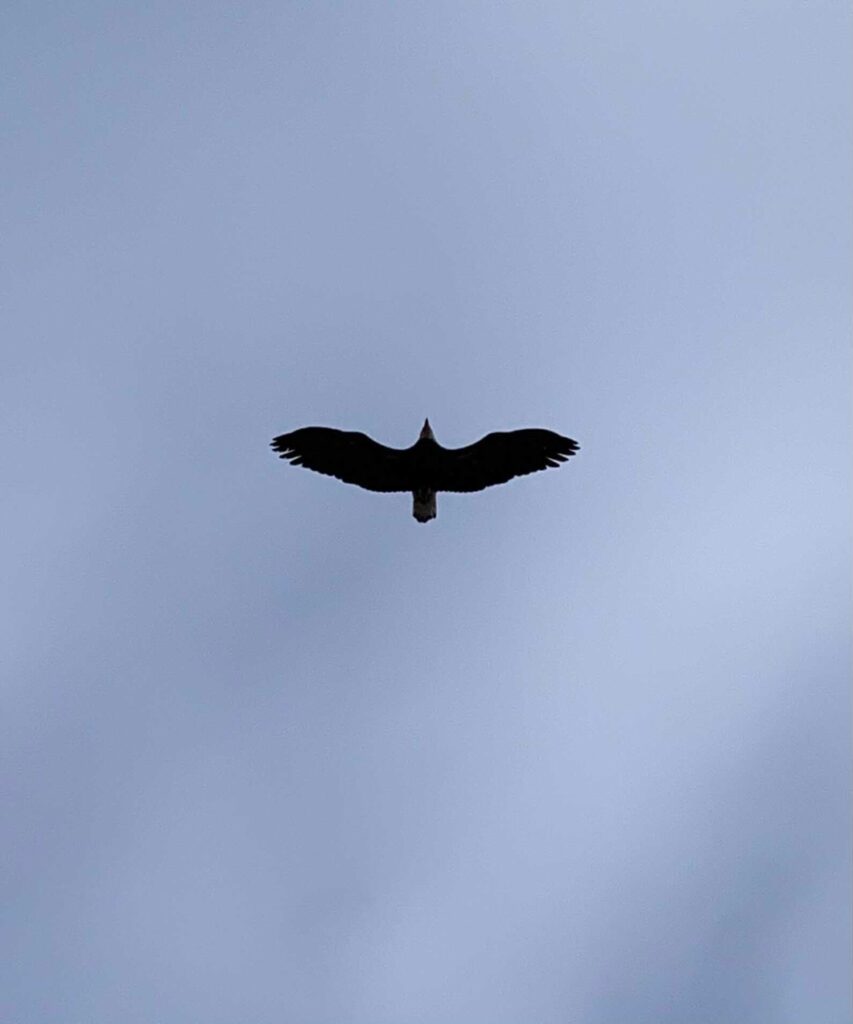
The most stunning marvel of them all came at the end of our adventure when a beautiful, full grown bald eagle soared over our heads as we began our walk home.

Centennial Brook: Frozen Over

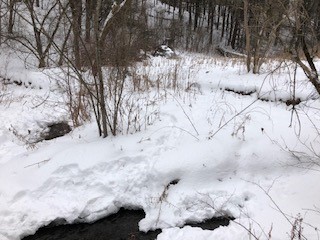
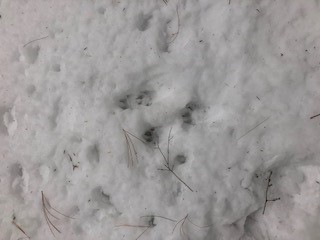
As I returned to my phenology spot after winter break, I was almost certain I would find less evidence of wildlife than I did in the spring. Boy was I wrong! I found all kinds of tracks and scat through the snow, in fact even found more evidence of the residents of Centennial than I would have without the snow. I think the absolute cutest piece of evidence that my spot had had a visitor was a long trail of fox tracks.

Here, you can see the fox’s pace slow down and his paws come together.

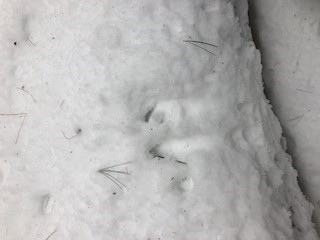
But in this next part here, you can see how he got ready and hopped up right on this log! I loved playing detective with all of his movements through the snow.

I found evidence of plenty of other species such as a well-packed deer path, and many little birdie prints under a berry bush. You would think that it being the winter, there would be so many less friends wandering the woods. But there’s still plenty of life out and about during the winter!

Centennial Woods: History of Human Use

Centennial Woods has had a broad and rocky human history, and has been no stranger to human use. Back before white settlers even came to Vermont, the Abenaki indigenous people used this space to hunt and live. The space used to much more vast and forested, but it almost became completely deforested once the white settlers began to colonize the area. There was an effort to reforest the area in the early to mid 1900s and it became the size that it is today. From here, it has had a variety of uses from a ski resort to an area for ROTC training, and there is much evidence of these uses within the forest today. Pieces of the ski lift and chunks of machinery can still be found along the forest floor, and the concrete ROTC bunker stands unused within the woods. Eventually, UVM bought up the land and preserved it, making it the Centennial Woods we know today. Today, Centennial Woods is used as a place of recreation and research by the community and the university alike.

Away from Centennial Brook: The Perkiomen Creek

My new spot at home is much like Centennial Brook, but is also very different in many ways!

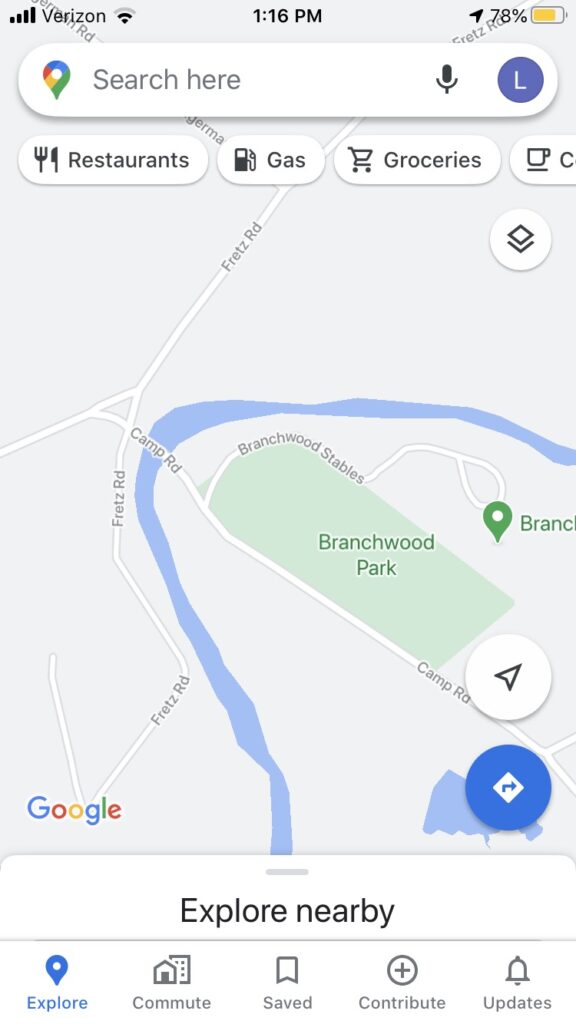
Located just down the street from me, the Perkiomen Creek is 38 miles long and extends across three counties. The part I have access to is only about a ten minute walk from my house and is used as a place for recreation at the park Branchwood Park. I’ve explored here a ton as a kid, and there’s all kinds of really cool species that you have to look really hard to notice.

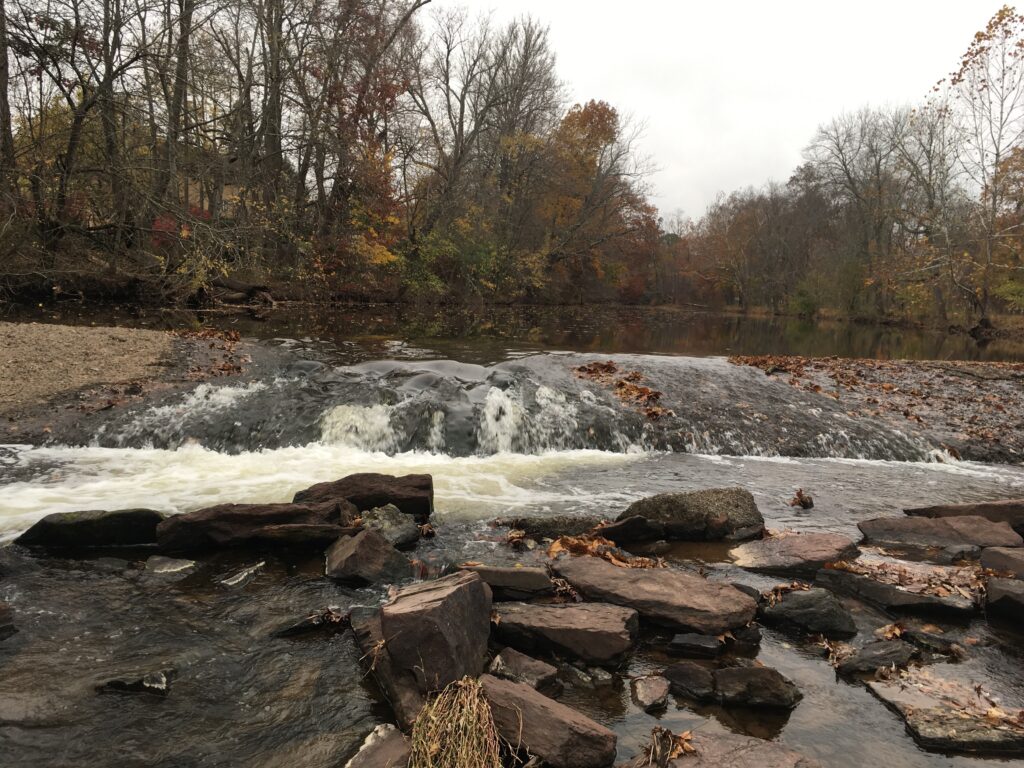
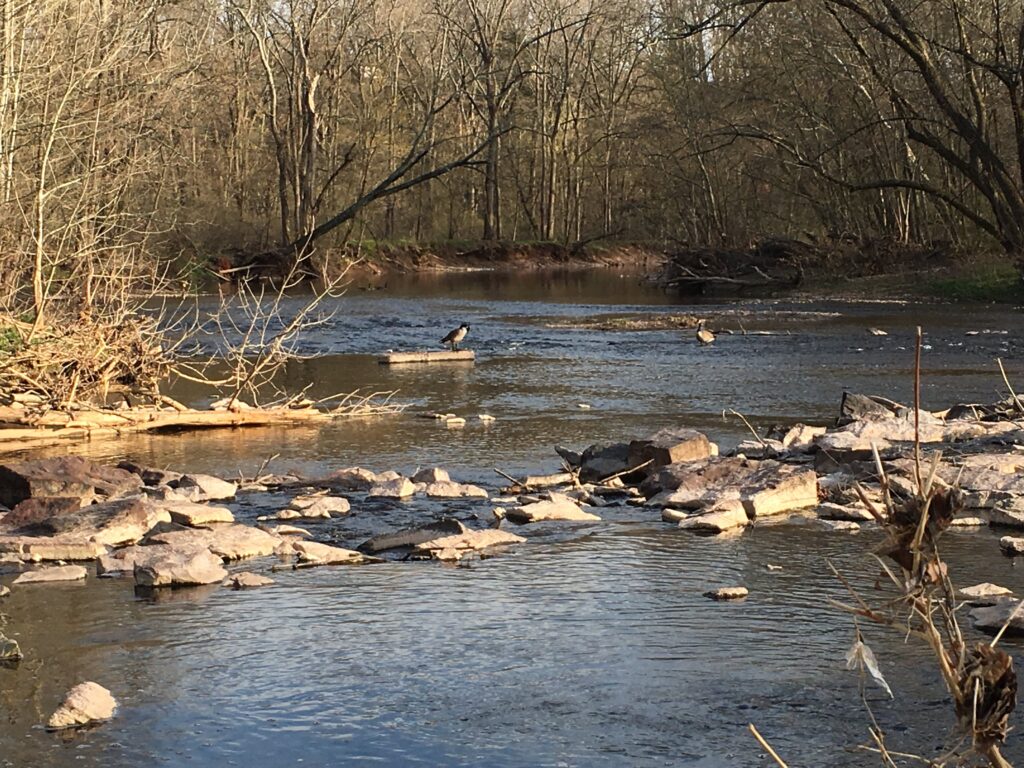
Compared to Vermont, Pennsylvania is a lot slower with its change of seasons. When I came home, I noticed that there were still live leaves on some of the trees and shrubs in this area, and that there had been a lot of rain. I was also not used to the sheer size of the Perkiomen Creek, because Centennial Brook is so much smaller in comparison. Unfortunately, there weren’t too many wildlife friends out, but I did see a few lingering Canada geese hanging out in the creek on their way to migrate. I feel like every year they leave later and later.

I also noticed this little guy watching the water, but not staying for very long. He was too far away to identify, but I hadn’t seen a bird like him either here before or in Vermont. I think I can definitely say that there was limited wildlife activity in this area, simply because of the frequency of human use and not because of the time of the season. Usually when I’m exploring more secluded places nearby, or there aren’t many people in the park, I’ve seen animals like muskrats and fisher cats getting ready to hibernate. I most definitely didn’t see species like that in Centennial Woods!

Pictures: Whiteman, L. (12/5/2020) Perkiomen Creek and location on Google Maps, Telford PA

Centennial Brook Events Map

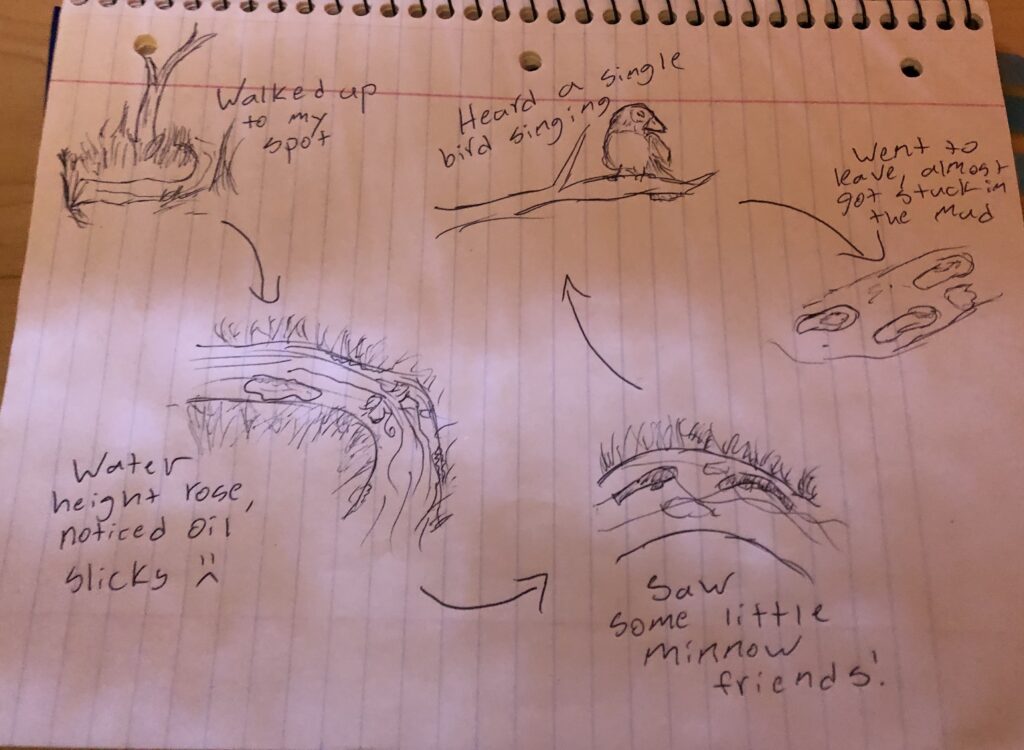
When I visited Centennial this time, it was quite dead and barren. There was hardly any activity besides a single singing bird and a couple of minnows. A curious thing happened while I was there though, as the water level in the brook rose and got really fast all of a sudden. It wasn’t gradual, it looked as if someone had dumped directly in the brook. There were also many filmy oil slicks all along the brook, which made me sad to see.

In The Reeds: A Poem About Centennial Brook

The trickle of the brook is calming, almost as if it is whispering to me

The wind blows back and forth, striking up a conversation between the reeds

They whisper to each other, they are full of secrets, they throw their seeds into the wind

The brook joins in on the conversation, water rushing over the rocks, whispering and trying to get in on the reeds

But the reeds are thick, cliquey

I want to know what’s between the reeds

Picture: Whiteman. L, (11/8/2020) Events map, Burlington VT

Centennial Brook Update

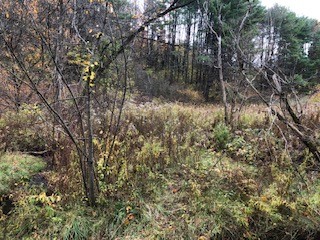
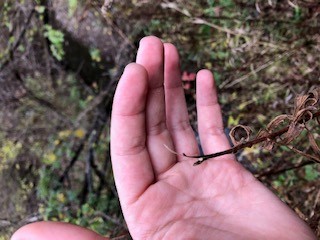
When I visited Centennial Woods again this week, I was amazed at how much had changed due to the weather. It was much more quiet, and the colors were very different. Most of the reedy plants are beginning to die for the season and are releasing white, wispy seed pods. All of the trees in the surrounding area have lost most of their leaves.

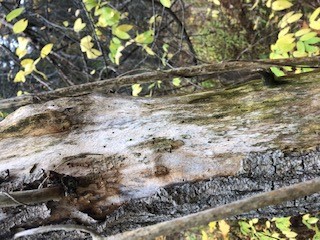
A particularly interesting observation I made was tiny little holes in a snag right next to the bank. I could only assume that some sort of woodpecker has been looking for a tasty bug snack within the rotting wood.

Another observation I happened to make was a deer grazing mark on one of the woody plants surrounding the area. Deer do not have top teeth, so when they bite off a part of a plant, a little strip of bark typically gets left behind.

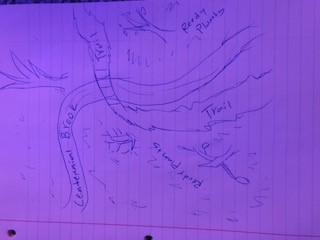
Pictures: Whiteman. L, (10/25/2020) Birdseye view map and various stops along Centennial Brook. Burlington VT

Centennial Brook

I chose the first visible spot of Centennial Brook as my spot for my phenology project. If you take a left at the first fork in the trail entering Centennial Woods, it’s only a little ways away past that. There are not too many woody species in the area besides a Norway maple and a few buckthorns. The area is mostly dominated by reedy plants such as the common European reed, and grassy wildflowers such as asters. There are also many snags, or dead trees, scattered among the brook, making the area pretty open and light. I chose this spot because it’s the loudest part of the brook and I love listening to the water run. I also think the purple aster is beautiful and this spot in particular is beautiful.

Pictures: Whiteman. L, (10/11/2020). Centennial Brook and location on Google Maps, Burlington VT

Skip to toolbar