Feeds:
Posts
Comments

Globalization

File:Baxter Colleague 3 CXE 1 at Joondalup 2020.jpg - Wikimedia Commons
Baxter is a company that manufactures medical technologies, such as the one pictured above.

Question 1

  1. The TNC I decided to research is Baxter Healthcare (Makarik, 2008). Baxter Healthcare is a company focused on manufacturing medical equipment, specializing in kidney disease treatments and IV administration sets. They also specialize in transporting and distributing these medical technologies globally (Baxter, n.d). 
  2. Costa Rica has one of Baxter’s several manufacturing plants. The plant is located in Cartago, Costa Rica, and is Costa Rica’s fourth-largest exporter. The goods from Costa Rica’s plant are used in 60 countries globally (CSMADMIN, 2009).  This plant was the first manufacturing plant outside of North America to receive the Shingo Prize for Operational Excellence in 2008 (Pharmaceutical Online, 2008). 
  3. The most recent number of employees at this plant I could find was 1,200 in 2009 (CSMADMIN, 2009). The building is 152,000 square feet and has a portfolio of 169 codes, as of 2008 (Pharmaceutical Online, 2008). Their main output is medication delivery products (CMSADMIN, 2009). 
Biopharma: Splitting the Difference | Site Selection Online
This is an image of the Baxter building in Cartago, courtesy of SiteSelection.com (Bruns, n.d).

Question 2

The positive impact of this manufacturing plant being located in Costa Rica is that it employs at least 1,200 locals in the area. This plant is also a safe workplace for its’ workers, being the first OHSAS 18001 certified company in the region (Pharmaceutical Online, 2008). The plant is located in Cartago, which is Southeast of San Jose, which could be beneficial for transportation purposes. However, Cartago is also just north of Parque Nacional Tapanti, a conservation area, which makes me concerned that pollution from the plant, especially transportation pollution, could be affecting the natural area. However, the plant has been working with the government in Costa Rica to plant native trees with Fundacion Tropical Sierra to offset their carbon footprint (Amazon AWS, 2010). 
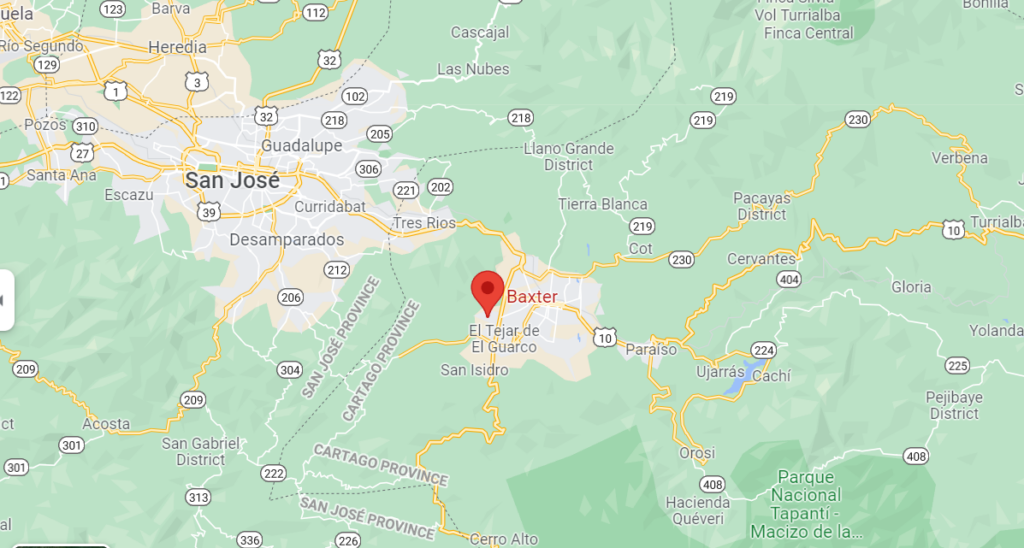
This screengrab from Google Maps shows the location of the Baxter plant (center) compared to San Jose (top left) and Parque Nacional Tapanti (bottom right)

Question 3

I think neoliberalism best represents Baxter’s presence in Costa Rica. There is no sense of controlling or influencing the country, and Baxter largely stays out of Costa Rica’s government and culture, meaning neo-colonialism does not fit. However, there is a sense of the company wanting to expand and grow economically. The company places a huge emphasis on its ability to be efficient and produce its products efficiently, with is aligned with the ideas of neoliberalism.

References

Amazon AWS. (2010). Sustainability at baxter. Retrieved February 2, 2022, from http://q4live.s22.clientfiles.s3-website-us-east-1.amazonaws.com/911189824/files/doc_downloads/2020/CR-reports/updated/Baxter_2010_Sustainability_Report.pdf

Baxter. (n.d.). Our Story. Retrieved February 2, 2022, from https://www.baxter.com/our-story

Bruns, A. (n.d.). Biopharma: Splitting the Difference | Site Selection Online. Site Selection. Retrieved February 2, 2022, from https://siteselection.com/LifeSciences/2014/nov/baxter.cfm

CMSADMIN. (2009, August 16). Baxter Healthcare Cartago Facility. Pharmaceutical Technology. Retrieved February 2, 2022, from https://www.pharmaceutical-technology.com/projects/baxter-cartago/

Makarik, A. (2008, March 28). Costa Rica’s Multinational Investors and Where They’re Located. We Love Costa Rica. Retrieved February 2, 2022, from https://www.welovecostarica.com/costa-ricas-multinational-investors-and-where-theyre-located/

Pharmaceutical Online. (2008, February 6). Baxter’s Costa Rica Facility Recognized With Shingo Prize For Excellence In Manufacturing. Retrieved February 2, 2022, from https://www.pharmaceuticalonline.com/doc/baxters-costa-rica-facility-recognized-with-s-0001

Colonization In Peru

This image of Cusco Cathedral in Peru is an example of how Spanish colonialism left a mark on Peru that persists today. This cathedral was built in 1560, towards the beginning of Spain’s rule over Peru. It was built with a Gothic-Renaissance style with Baroque touches (All About…, 2021).

This second image is a graph from Encyclopedia Britannica showing the ethnic makeup of Peru. The legacy of colonialism is evident here because before the Spanish took over the country, the Inca people were in control and made up a majority of the population. Now, a majority of Peru’s population identifies as mestizo, or of mixed indigenous and European descent (Pugar-Vidal, 2022).

This image shows the city of Cajamarca, which is known as the place where Spanish conquistador Francisco Pizzaro captured and executed the emperor of the Incan empire Atahualpa. Pizzaro’s legacy does not stop there, he is attributed to naming the capital city of Peru, Lima, which remains the name today (Francisco Pizzaro, n.d).

This image shows a coca leaf. Today, Peru is the world’s second-largest producer of cocaine, and that can be attributed to the very beginning of the Spanish colonization of the country (Heritage, n.d). Prior to the Spanish invading Peru, Inca people would chew the coca leaf and use it for medicinal properties. After the Spanish took over, it began to be exploited and exported to Europe (TD Consultancy).

This image shows a zinc-lead-silver mine in Cerro de Pasco. Peru’s metals and minerals have been exploited since the 16th-century Spanish rule. Today, Peru is the second-largest producer of silver and copper, third in zinc, and fourth in molybdenum, lead, and tin (Summer, 2021).

The Material Basis

The colony was originally built on conquest as Spanish conquistadors traveled throughout South America and sought to spread Catholicism, but it was quickly exploited for its’ minerals, mainly silver and mercury (History of Peru, n.d). The primary source of labor was enslaved indigenous peoples, as they were put to work in the mines and forced to adopt Catholicism (Graubart and Ulrickson, 2017). 

The Political and Judicial Basis

The viceroyalty was divided into audiences, which were made up of provinces or districts, and so on. The viceroy was in charge of everything from the general management of Peru to the management of churches and the indigenous peoples. They used taxes to control the population and they removed rights from the conquistadors who were growing too powerful (History of Peru, n.d). 

The Ideological Foundation

Colonizer presence in Peru was justified through the spread of Catholicism. Missionaries wanted to spread their religion to the indigenous groups of Peru (Cultural Atlas, n.d). 

References

All about the Cusco Cathedral | Blog Machu Travel Peru. (2021, July 2). Peru Travel Blog | Machu Travel Peru. Retrieved January 25, 2022, from https://www.machutravelperu.com/blog/cathedral-cusco

Cultural Atlas. (n.d.). Peruvian Culture. Retrieved January 25, 2022, from https://culturalatlas.sbs.com.au/peruvian-culture/peruvian-culture-religion

Francisco pizzaro. (n.d.). The Mariners’ Museum and Park. Retrieved January 25, 2022, from https://exploration.marinersmuseum.org/subject/francisco-pizarro/

Graubart, K. B., & Ulrickson, M. C. (2017). Colonial Peru. Oxford Bibliographies Online Datasets. https://doi.org/10.1093/obo/9780199766581-0189

Heritage. (n.d.). Peru Economy: Population, GDP, Inflation, Business, Trade, FDI, Corruption. Index of Ecnomic Freedom. Retrieved January 25, 2022, from https://www.heritage.org/index/country/peru

History of Peru, The Colonial Period, 1550–1824. (n.d.). Mother of Peru. Retrieved January 25, 2022, from http://motherearthtravel.com/history/peru/history-5.htm

Pugar-Vidal, J. (2022, January 24). Peru | History, Flag, People, Language, Population, Map, & Facts. Encyclopedia Britannica. Retrieved January 25, 2022, from https://www.britannica.com/place/Peru

Summer, E. (2021, August 14). Peruvian Economy. LimaEasy. Retrieved January 25, 2022, from https://www.limaeasy.com/peru-guide/peru-info/peruvian-economy#mining-peru

TD Consultancy – Drug Training & Consultancy. (2021, June 28). History of Cocaine – A brief history of cocaine. TD Consultancy. Retrieved January 25, 2022, from https://tonydagostino.co.uk/history-of-crack-cocaine/

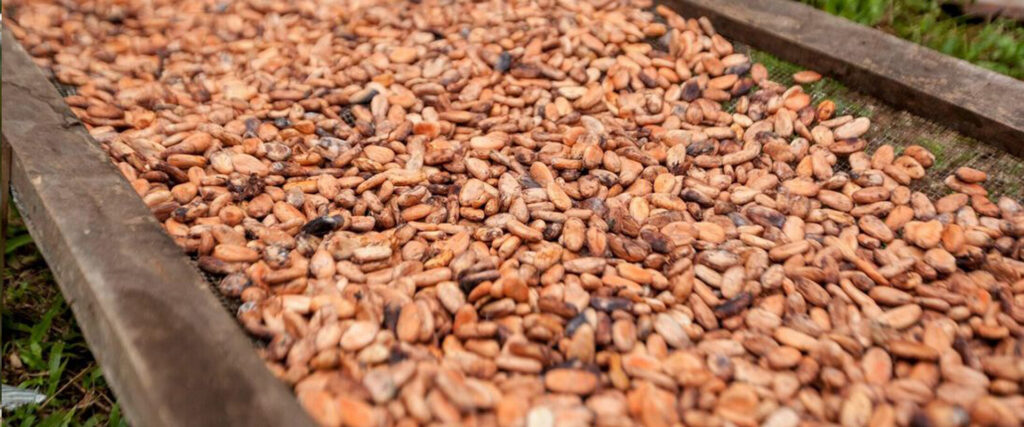
Cacao being processed courtesy of Drake Bay Birdwatching

On the Osa Peninsula, cacao plantations thrive in the humid, tropical environment. Cacao grows in pods on cacao trees, which can be found all over the peninsula. The cacao pods are harvested from the trees and then processed. The cacao is sometimes brought to chocolate factories, where it can be made into profitable chocolate. Not only is this product sold in gift stores and candy shops, like Samaritan Xocolata (1), but it is also a big component of the tourism industry. Businesses like Rancho Raices de Osa (2) offer chocolate tours, where tourists can watch the process of cacao being made in the factory and taste the fresh chocolates. 

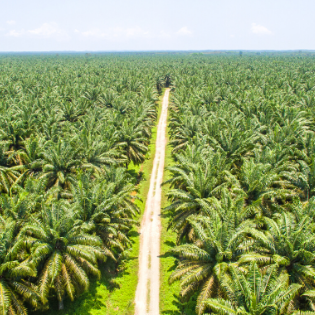
Another product of the Osa Peninsula is palm oil. Palm oil is an ingredient found in many food and beauty products, from Girl Scout cookies to shampoo. Palm trees are grown in palm oil plantations on the Osa Peninsula that, as shown in the image above, can be very expansive. The large seed clusters found underneath the leaves of the palms are harvested and processed into palm oil. While palm oil isn’t typically sold on its’ own, products containing palm oil can be found in nearly every store and restaurant (3). It can be used in place of vegetable oil, coconut oil, and other cooking oils. (Image: Palm oil plantation courtesy of Green Hawks Media)

Vanilla vine growing up the side of its host tree courtesy of Reinaldo Aguilar on Flickr

A product that surprised me when doing research on the economy of Costa Rica is vanilla. When you’re eating your vanilla ice cream or buying vanilla extract from the grocery store, you oftentimes don’t consider where that flavoring came from. Vanilla is a vining plant that grows up the side of its host plant, as seen in the image above. The seed pods on the vine get harvested and processed into what we know as vanilla extract and vanilla flavoring. Something that interested me is that the vanilla plant is actually part of the orchid family (4). On the Osa Peninsula, vanilla can be sold in the form of vanilla extract or flavoring as a grocery item at markets or may be used in food or cosmetic products for its’ scent.

 Unlike many of the other products to come out of Costa Rica, bananas do not require a lot of processing. Banana and plantain trees are grown all over the Osa peninsula, and the fruit is harvested and sold at grocery stores and markets, such as Verduleria El Mercadito (5). Bananas are also a major export for Costa Rica, which greatly contributes to the country’s economic success (6).

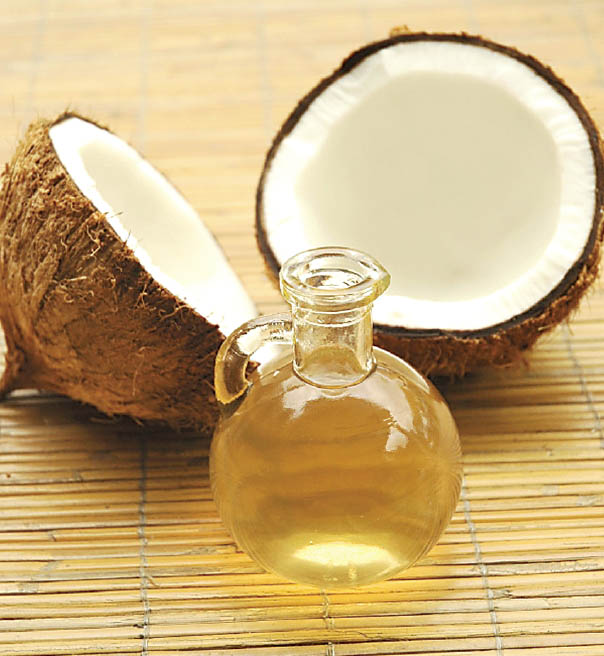
Coconut trees thrive in the tropical climate of the Osa Peninsula. The coconuts are harvested and can be sold in markets like Verduleria El Mercadito (5) whole, for their coconut milk, or, they can be processed for coconut oil, which is used in cooking and in cosmetics. The coconut oil is produced by taking the meat of the coconut and extracting its’ natural oils. Businesses like Osa Natural (7) use coconut oil in their products and sell globally online and locally in Costa Rica. It is said that coconut oil is excellent for hydrating skin and hair, and also can have beneficial properties in foods (Image: Coconut and coconut oil courtesy of Costa Rica Star News)

Citations

  1. Samaritan Xocolata – https://www.fodors.com/world/mexico-and-central-america/costa-rica/the-osa-peninsula-and-the-south-pacific/things-to-do/shopping/reviews/samaritan-xocolata-112833910 
  2. Rancho Raices de Osa – https://www.tripadvisor.com/Attraction_Review-g309284-d3174761-Reviews-Rancho_Raices_de_Osa-Puerto_Jimenez_Osa_Peninsula_Province_of_Puntarenas.html#REVIEWS 
  3.  Costa Rica Palm Oil Industry – https://uvmheadwaters.org/redefining-an-industry-costa-ricas-alternative-model-for-palm-production/ 
  4. Vanilla – https://osaconservation.org/unexpected-values-vanilla/ 
  5. Verduleria El Mercadito – https://www.facebook.com/Verduleria-El-Mercadito-1615094892041692/ 
  6. Bananas as a major export – https://www.britannica.com/place/Osa-Peninsula 
  7. Osa Natural Coconut Oil – https://www.facebook.com/osanatural/

Skip to toolbar