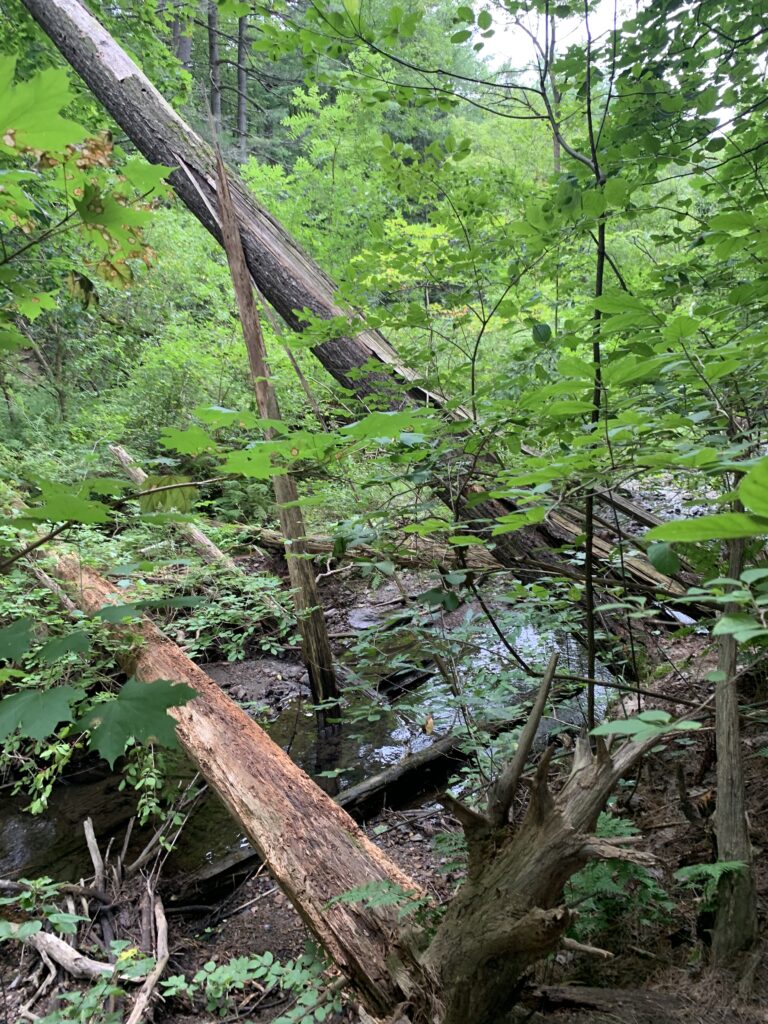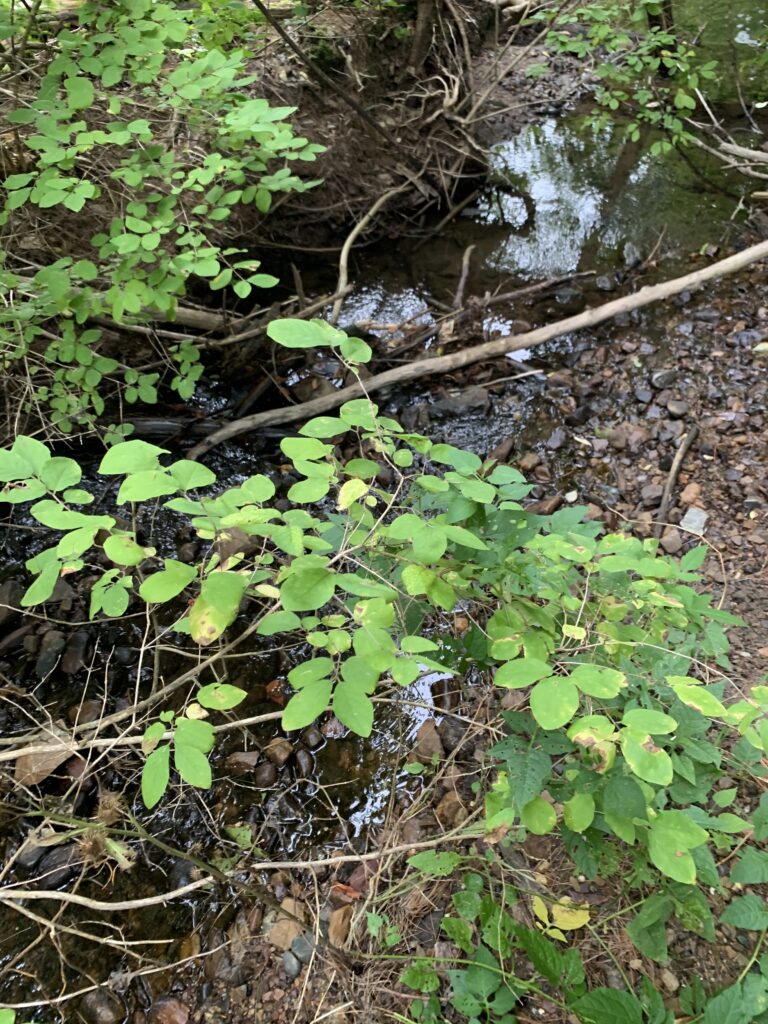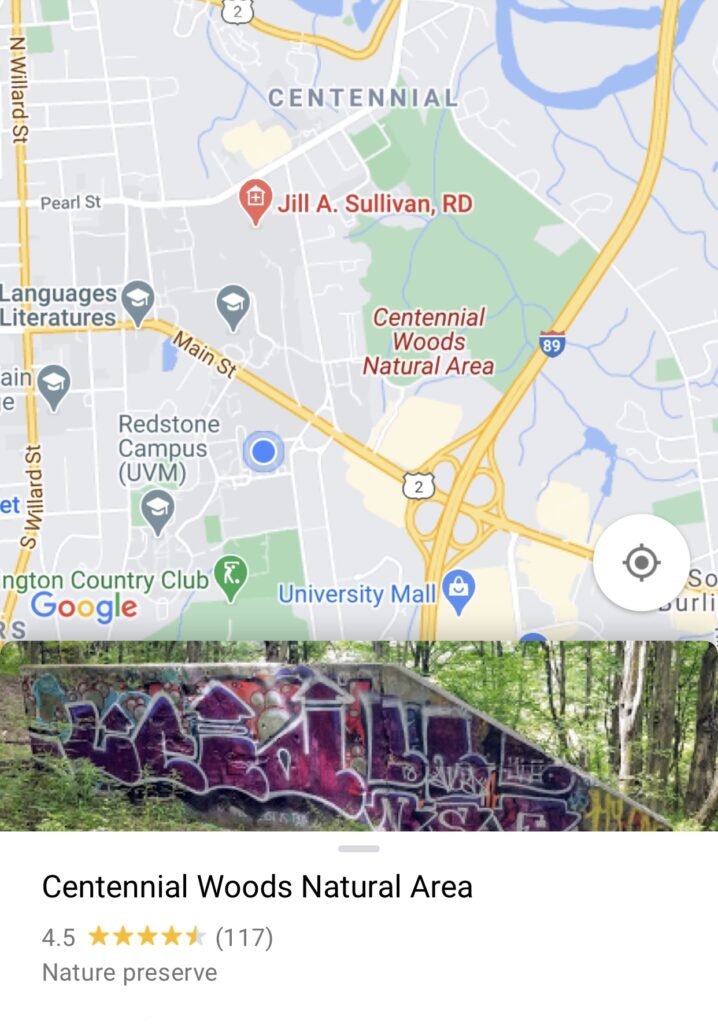
Centennial Woods is located on the University of Vermont’s campus and it is loved by many of its students. To get to Centennial Woods, one can simply walk to Jeffords Hall then turn onto Carrigan Drive, which then leads to Catamount Drive. On the left, there will be a sign that states “Centennial Woods: Natural Area,” which is where the entrance is located. I chose this location to observe since it is easy to access regularly and is an area I am already familiar with. Centennial Woods has many different features that providing habitats for a variety of species, forming communities and complex ecosystems that will possess changes throughout the seasons. There are many woody plants including black cherry, sugar and striped maple, American beech, northern red and white oak, paper and yellow birch, eastern white pine, and eastern hemlock. Both poison ivy and ferns make up the groundcover under the taller trees. Buckthorn and jewelweed are the two most prominent invasive species in Centennial Woods. Buckthorn is seen mostly near and along the brook where smaller, bush-like trees are able to flourish. Most pines are located at higher, more stable elevations than the brook where there is even ground for them to implant their roots to support their tall stature. They also thrive in more acidic soils and continue to keep it at an acidic level as they drop their pines, which have a pH below 7. The various sections within the woods make Centennial a great location for studying phenology and understanding how the time of year affects the natural world.