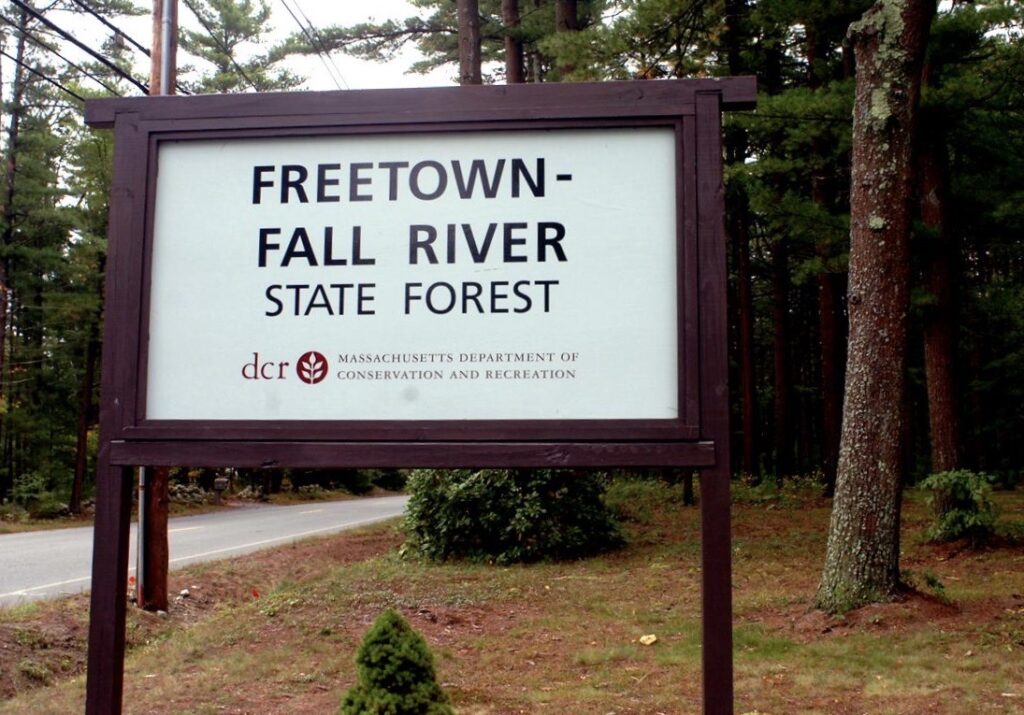
Freetown-Fall River State Forest
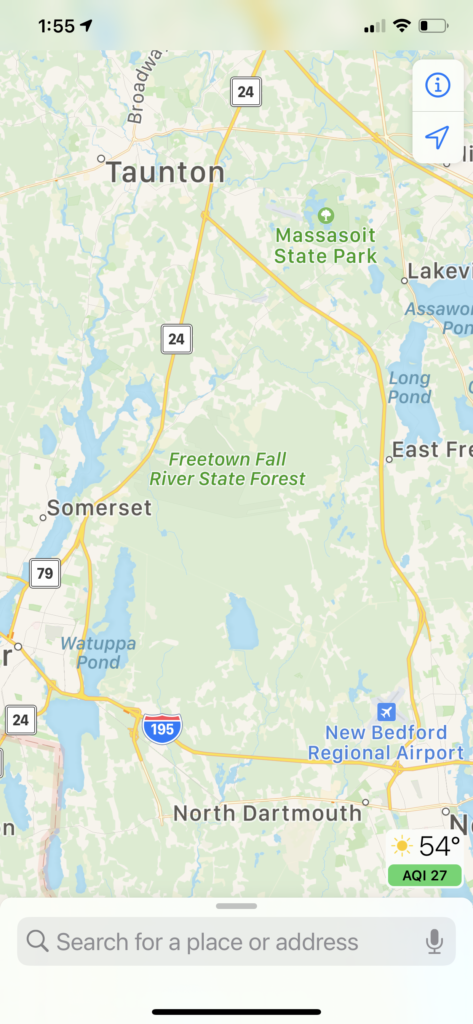
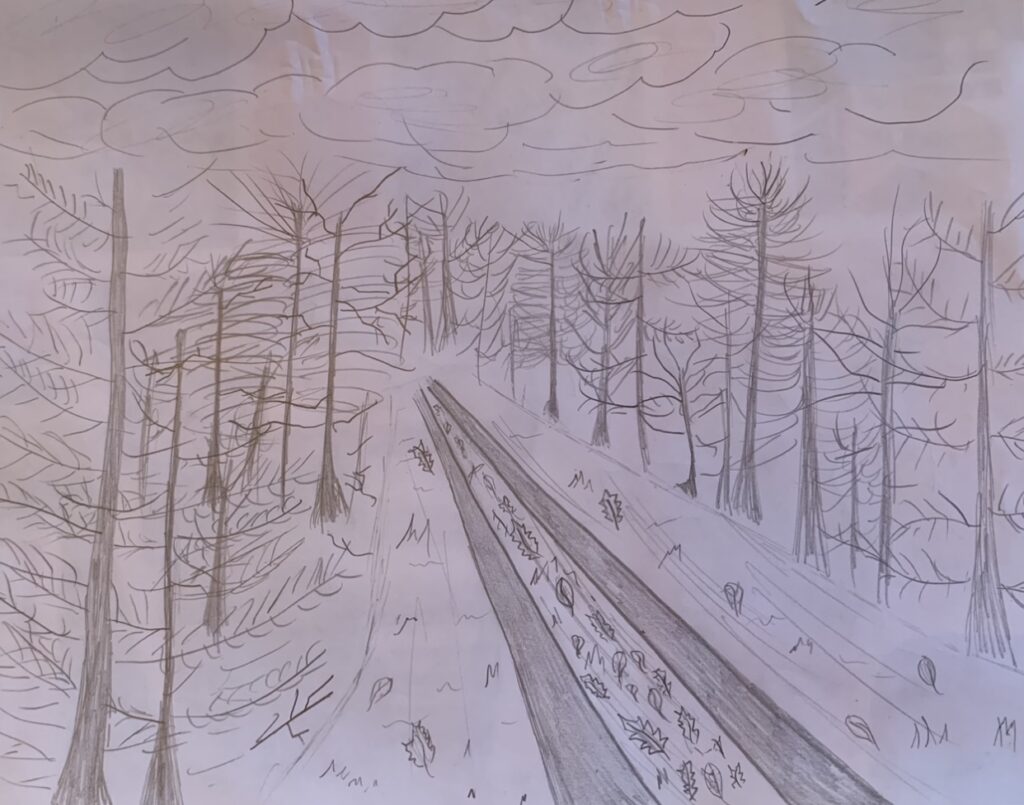
The Freetown-Fall River State Forest is located within the city of Fall River and the town of Freetown in southeastern Massachusetts. The forest is managed by the Department of Conservation and Recreation (DCR) in MA and has been preserved for the members of the indigenous Wampanoag tribe. It is similar to Centennial Woods in that it contains mostly deciduous trees as well as a small number of evergreens The forest is dominated by white oaks as well as eastern white pines. The trees now barely have any leaves, yet some are still holding onto their last ones, which are brightly colored or are beginning to brown, indicating the oncoming of the cold season. Woodland mammals such as deer, foxes, and chipmunks are plenty in number throughout the forest. The forest borders the Watuppa Pond, Mother’s Brook, and Doctor’s Mill Pond that serve as habitat for many fish, salamanders turtles, and frogs. The pond also provides a huge source of drinking water for the community. The thick forest acts as a riparian buffer so that pollutants can be absorbed before entering into the body of water. Unlike Centennials, there are large rocks that many people enjoy climbing, such as Profile Rock, and contains 50-mile trails for people to explore. There are plenty of snags and fallen dead trees that can be seen when walking the trails that provide habitat to many insects, birds, and small mammals. Since the soil mostly consists of loam, sand, and small rocks, water drains quickly into the earth, preventing major flooding, yet wetlands and bogs are still present. This encourages mosquitos to thrive in this area during the summer due to high humidity, then die off in the winter.