Nature and culture entertain at the Freetown-Fall River State Forest since many people have hiked and camped there during the summers, which has become a tradition to the people who live in the area. The land is a natural area that is preserved by the state for people in the city and towns nearby can enjoy the outdoors and observe the different species that live in Southeast Massachusetts. A stronger relationship can be made between people, especially in the urban sections near the forest, and nature as people walk, fish, camping, and riding bikes amongst the vegetation and creatures that inhabit the space. Unfortunately, more people from Freetown and other suburbs visit the forest than those from Fall River, an industrialized city with many immigrants and people of color. Initially, the Wampanoag Native Americans used to live on the land of the forest. A large rock shaped like a man’s face, known as Profile Rock, is said to be the face of Chief Massasoit, the leader of the Wampanoag tribe. There is little information known about the Native Americans who lived there, but they are recognized as being the first people to use the land. Many haunting stories have been created about the forest, with some being tied to folktales told by the Indigenous people, keeping their traditions alive to some degree. I do not necessarily see myself as part of the Freetown-Fall River State Forest because I have never been camping or done any recreational activities there that many people have. Even though I have much knowledge about the place, I do not feel a strong connection to it since my parents never took me there when I was young. On the other hand, horseback beach is somewhere I feel more connected to since I have been visiting and exploring the area since I was little. I would have chosen the beach as my phenology location but the species there do not visibly change according to each season like those we learned about in class. The dunes and lands on the coast are also mostly off-limits to people since they are protected for the sake of endangered species.
Overall Experience
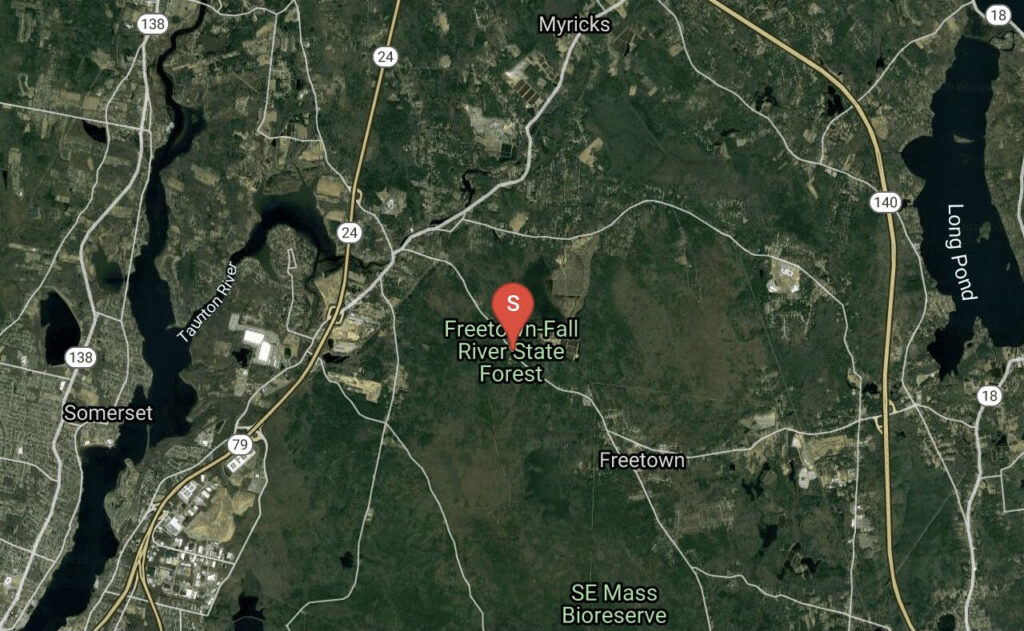
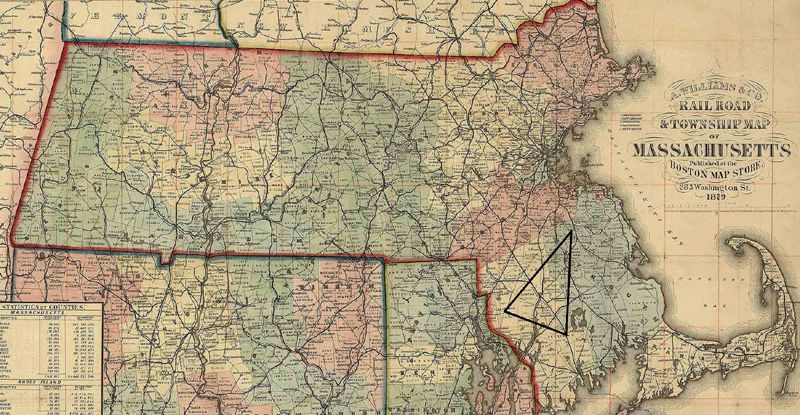
Posted in Uncategorized on May 4, 2021 by lnorthruI conducted my exploration at the Freetown-Fall River Stare Forest, which is about 20-25 minutes from where I live. It is located between the two areas and provides habitat for many species you would typically find in Southeastern Massachusetts including white and red oak, sugar and red maple, eastern white pine, squirrels chipmunks, deer, owls, and coyotes. I also explored the woods near my house and the mills close to the forest in Fall River for my labs, which involved tracking and the history of the Industrial Era in America. I recently learned that the forest is part of the cursed “Bridgewater Triangle,” an area including about 4 towns in Southeastern Massachustss where ghosts and Big Foot were claimed to have been sighted, making it a famous spot for thrill-seekers to visit.
My most memorable observations were the red maple and white oak trees because they were so plentiful in my area and reminded me of last semester when I was on campus and had to identify the different trees by their leaves and bark. I loved seeing the trees transition from one season to another as the leaves turned color in the fall, the branches became bare in the winter, and buds formed in the spring.
I loved using iNaturalist to identify plants and trees in the forest that I did not recognize, especially on the forest floor. It also helped me decipher between bird species when I went out into the woods. I will continue using the app in the future for academic purposes and my own interest, especially when traveling to new places where the geography is different from New England’s.
I liked seeing the different species coming from the various cities. I did not think s many people would participate in the City Nature Challenge from all over the world! Knowing the types of species that live in certain cities can help determine the biome and habitats that exist in that part of the world.
April
Posted in Uncategorized on April 18, 2021 by lnorthruApril is the first full month of spring…a time when animals are more active and plants, trees, and flowers bloom and flourish. In the Freetown-Fall River State Forest, many birds, especially robins, sparrows, cardinals, blue jays, and woodpeckers. They are forming nests and catching food for themselves and their young while singing loudly. Rabbits and squirrels have been seen running around also finding food and enjoying the warmer weather. The mud in some areas of the forest displaying squirrel and rabbit tracks. No signs of deer, including tracks, were found, but they are known for living in the southeastern portion of Massachusetts. They are also slightly more active in the winter when they are on the hunt for hard-to-find food sources. The warmer seasons bring a sense of calm to the deer who live long, stressful winters. Chipmunks were found throughout the forest when I was recently exploring the forest, but not in large numbers. Many insects were seen on the forest floor, leaves, and the bark of trees. Most are inactive during the winter and expose themselves once spring emerges in order to find food and reproduce. Caterpillars usually go through metamorphosis and emerge from cocoons as butterflies or moths in the springtime as well.
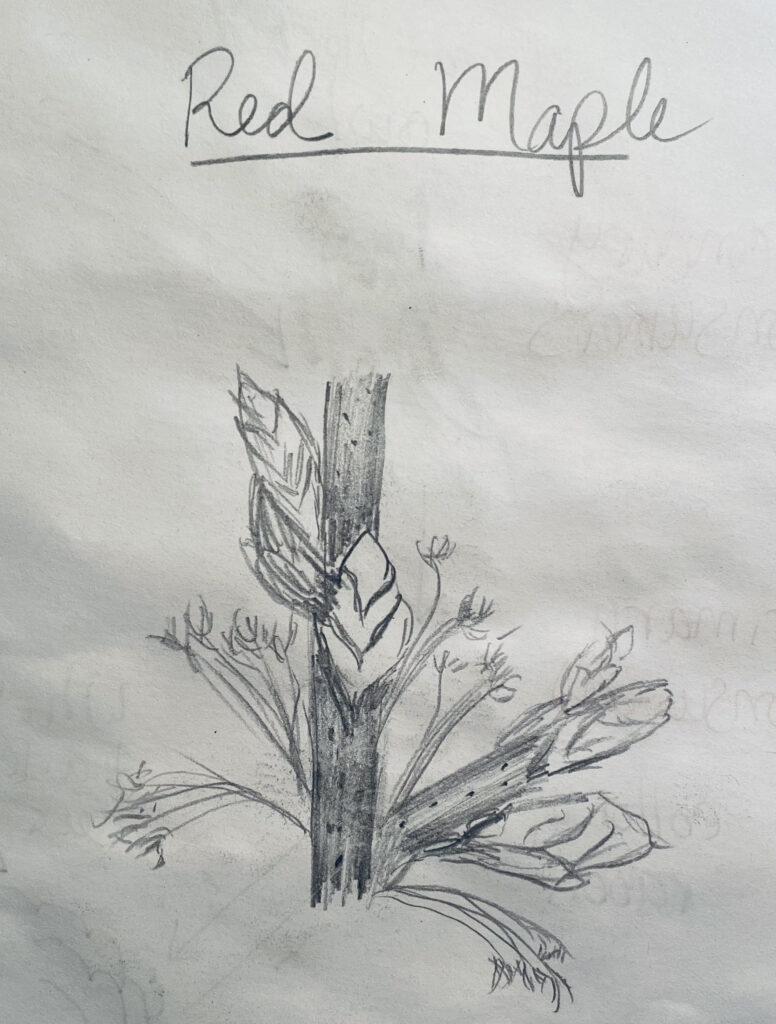
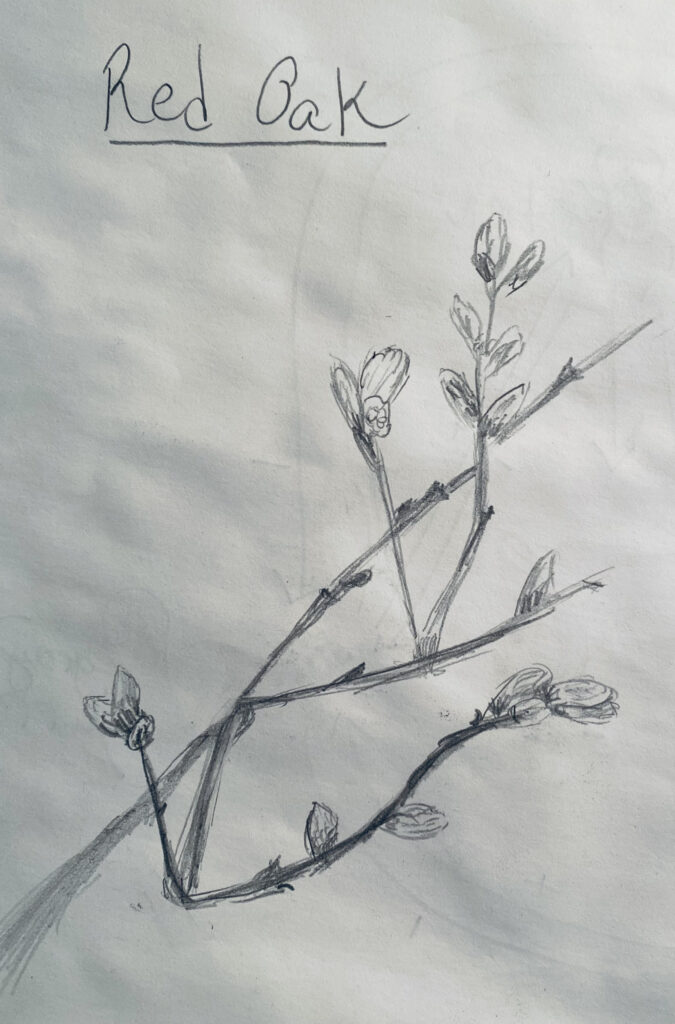
Buds on the trees in the forest were much larger and colorful than in March, especially on the red maples. Not many other species of trees and plants had changes besides the plentiful red maple and red oak trees. Some white oak and other maple trees were seen as well with similar changes to the red maple and red oak. Leaves on ferns and small trees/plants were vibrant and more plentiful than in the colder seasons. due to more sunlight and rain.
March
Posted in Uncategorized on March 7, 2021 by lnorthru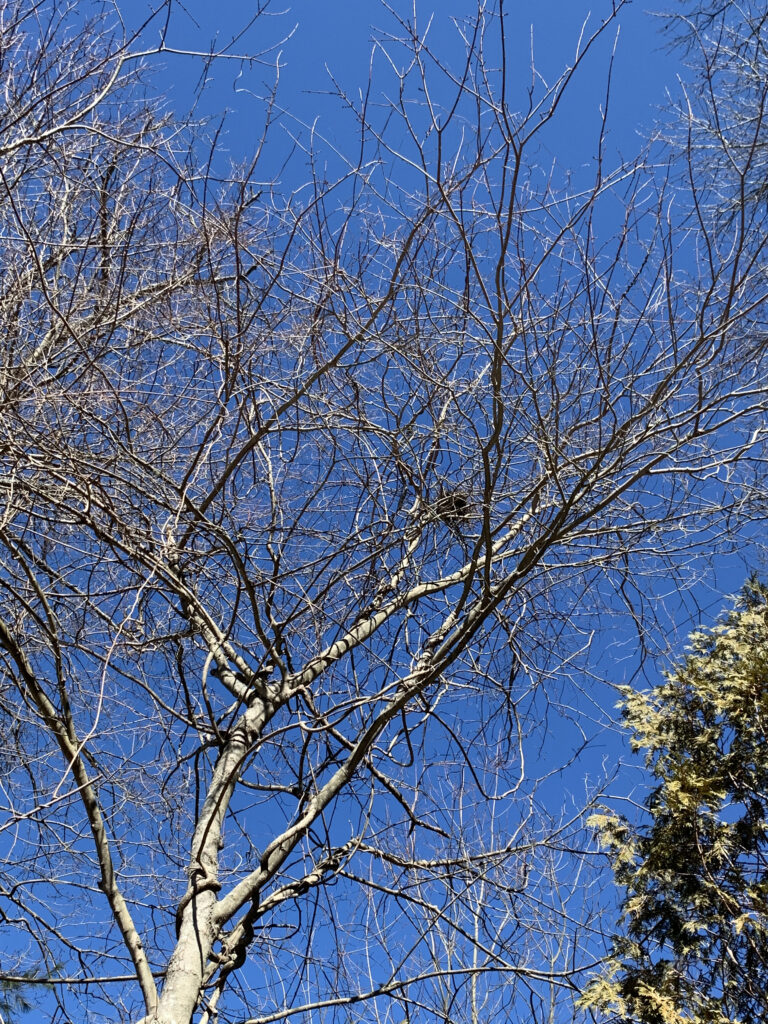
In the woods near my house and in my own backyard in Swansea, MA, I noticed many more birds flying and singing loudly. I found many nests that were visible through the bare trees. They are much more active now that the spring season is approaching. Birds, especially robins, also travel in flocks to hunt down sources of food in case they encounter competition from other larger birds or mammals who eat the same berries, worms, and insects. By the end of winter, food sources become more scarce.
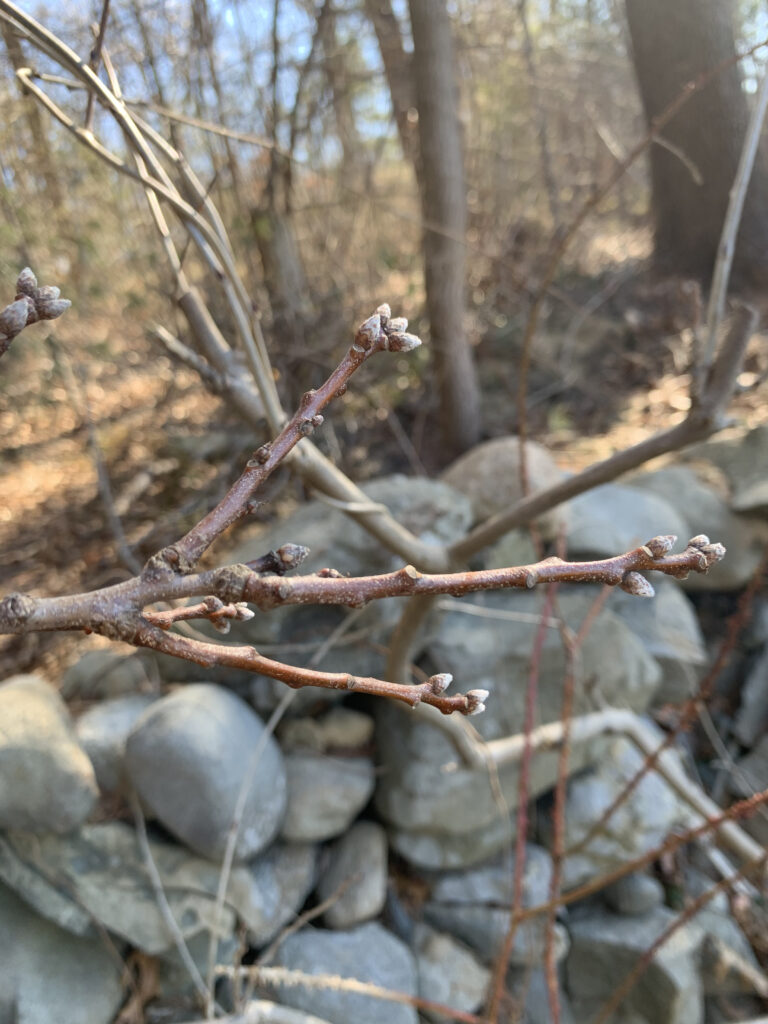
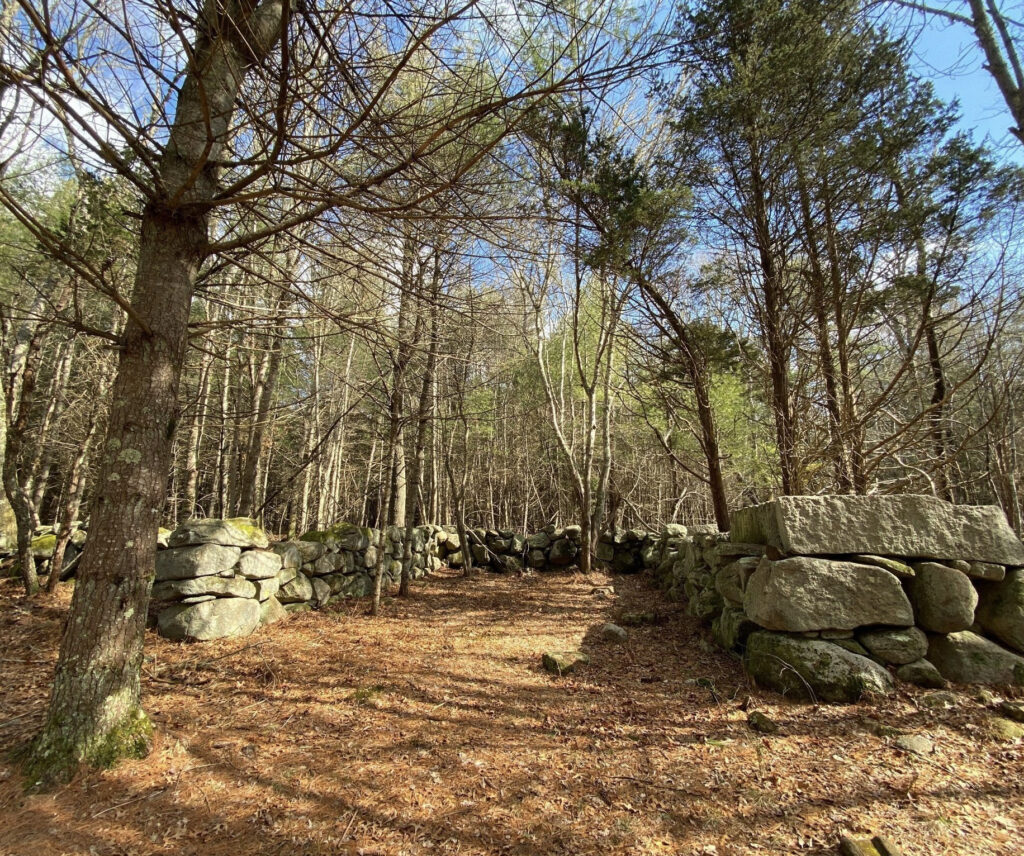
The buds on many of the deciduous trees, specifically the northern red oats that grow on my property and in my neighborhood, have started to form buds. There are also many stone walls that were once built to divide farmland in the nineteenth century. Most of this farmland has turned into woodlands over the years.
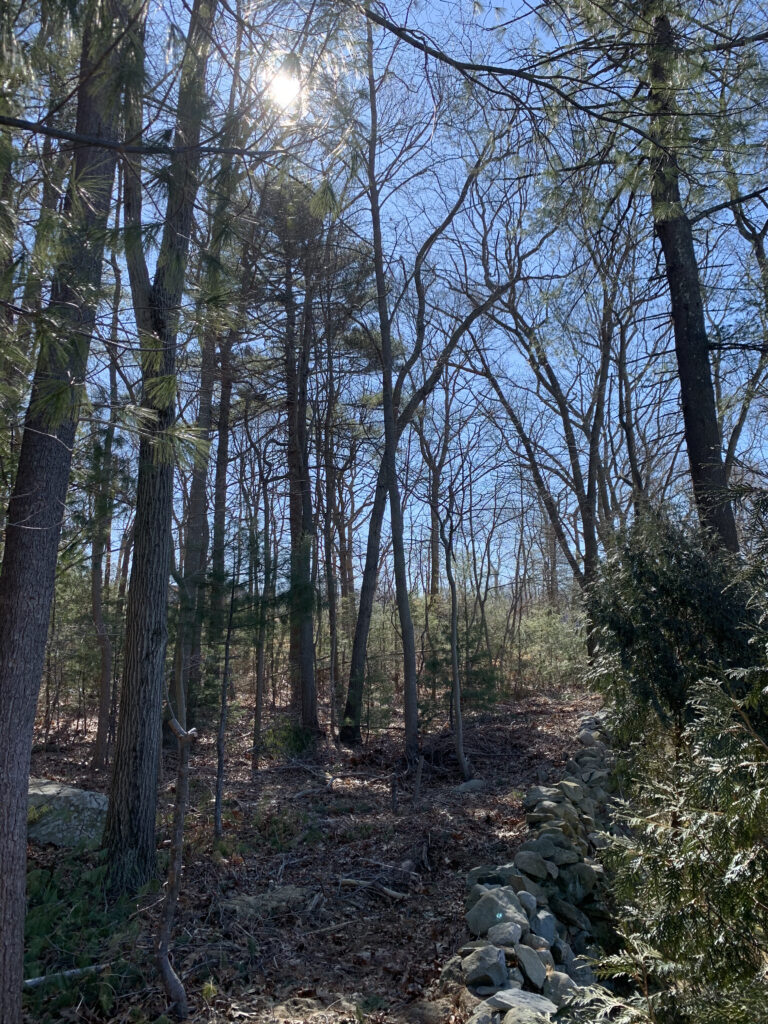
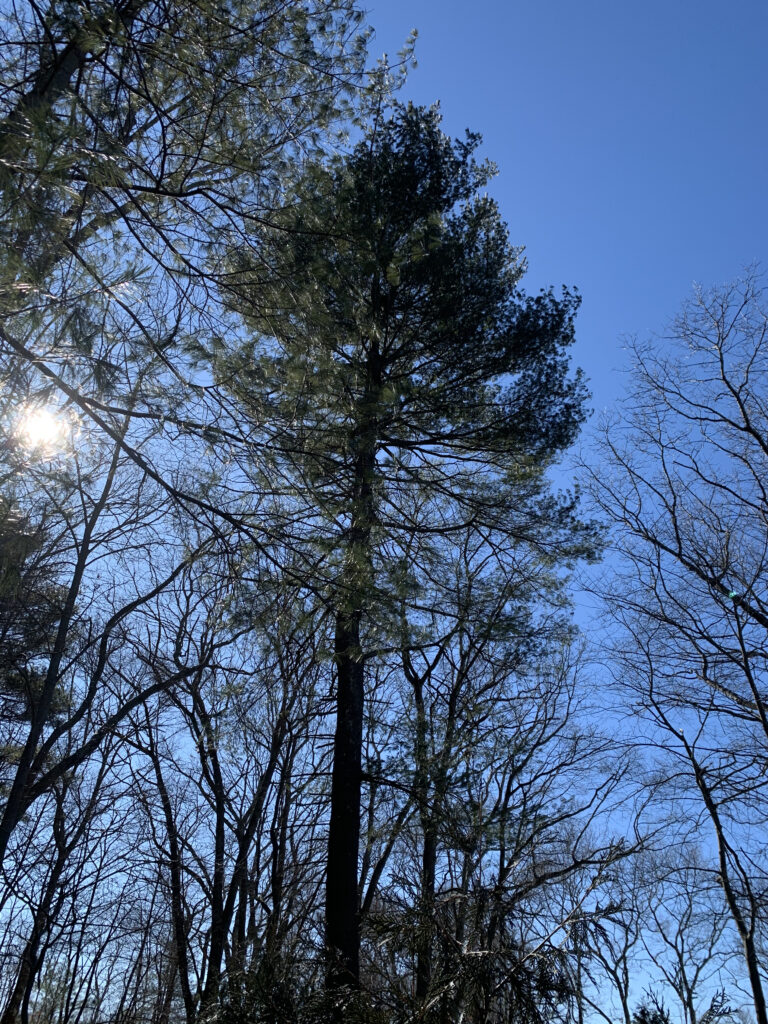
The trees are still bare; however, all of the snow has melted, which is a sign that warmer weather is near. Most of the eastern white pines still have their needles towards the top of their trunks, which is characteristic of their species.
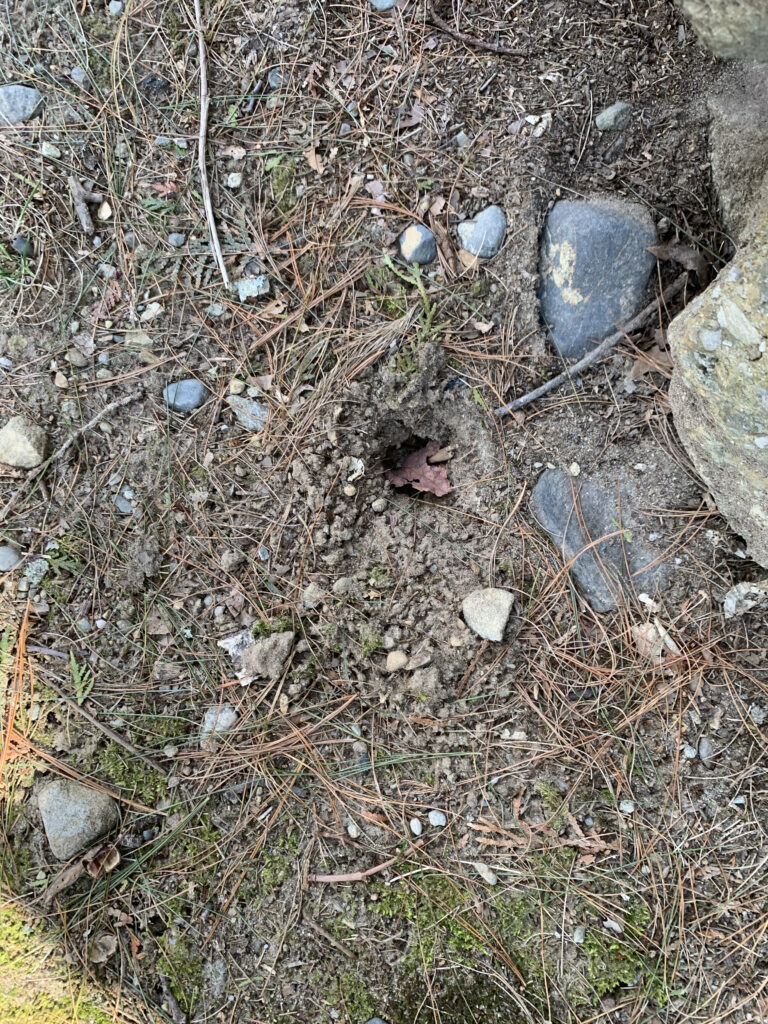
No animal tracks were found since the snow is gone and the ground was dry and still frozen, however, I did find this hole that I believe is a snake hole. There are many garter snakes that live in my yard that mostly I see in the summertime.
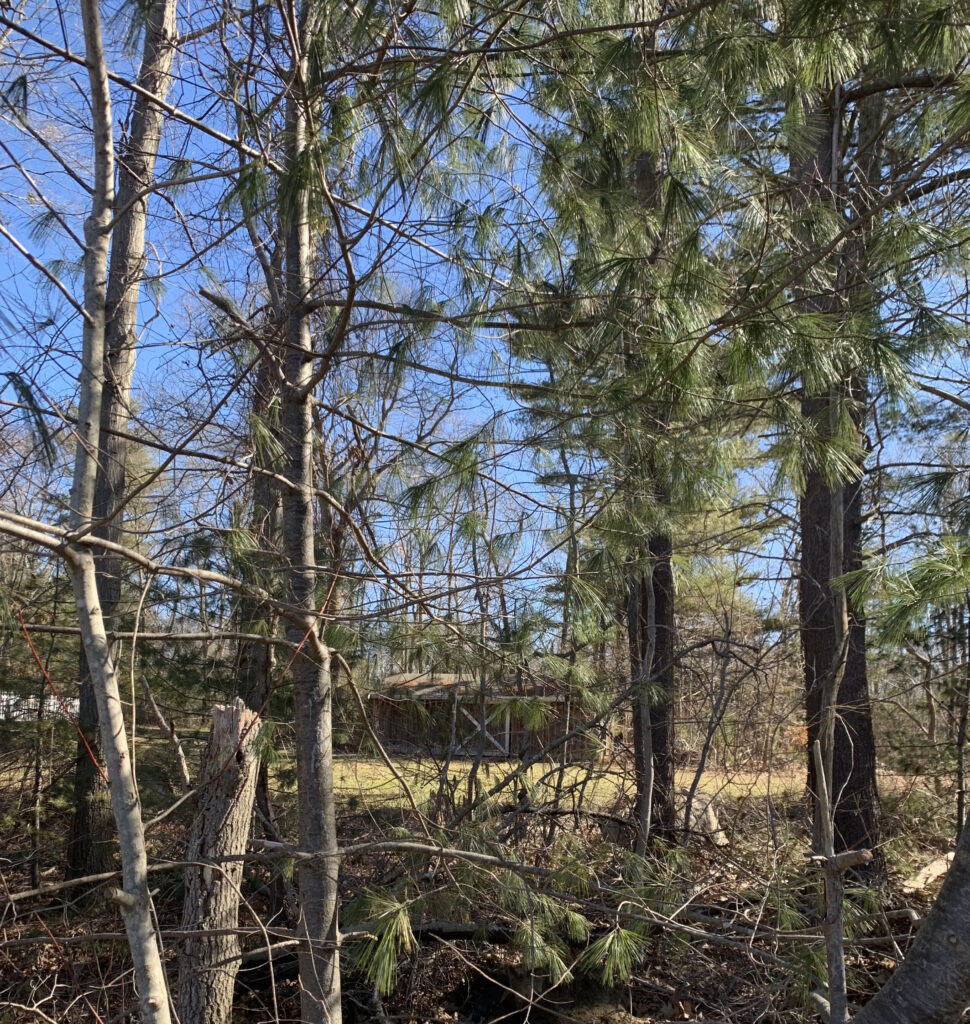
There are many barns in my town and in Rehoboth, the town which borders Swansea. These barns typically house cows used for dairy and beef. While driving by farms in the area, I noticed how they still have their thick winter coats, indicating that the season is not yet over. They enjoy basking in the sun in March when temperatures begin to rise to about 35-45 degrees Fahrenheit compared to temperatures below 20 degrees, which is normal for winters in Southeastern Massachusetts.
Winter Animal Tracks
Posted in Uncategorized on February 7, 2021 by lnorthruSimilar to the end of last semester, I will be visiting the Freetown-Fall River State Forest as my phenology site. Since I last visited the forest in the fall, there is now snow on the ground, no leaves on the trees, but still a visible amount of roaming squirrels, rabbits, chipmunks, and birds. The small ponds and other bodies of water are only partially frozen since it has not been cold enough to freeze completely. No insects make no appearance since most thrive in warmer weather when food is available.
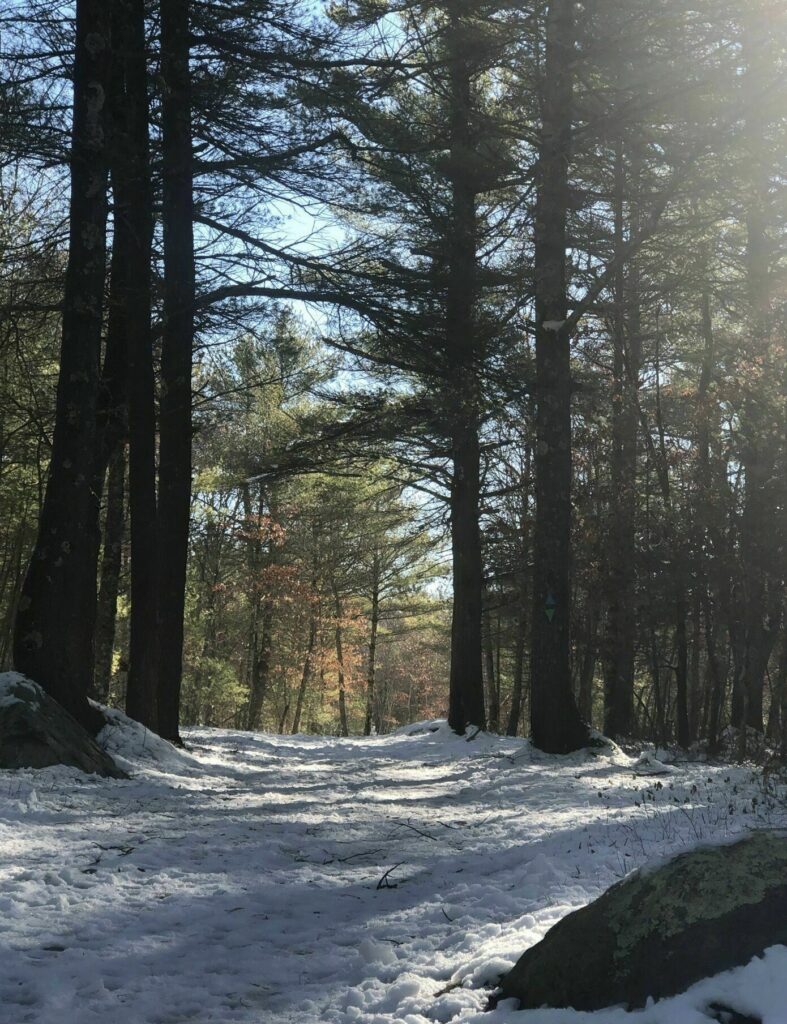
This was from the first day I visited the forest again. Many people have obviously still been walking the trails, as seen by the beaten-down snow. Sunny days provide windows of time for humans to explore the outdoors in the winter.
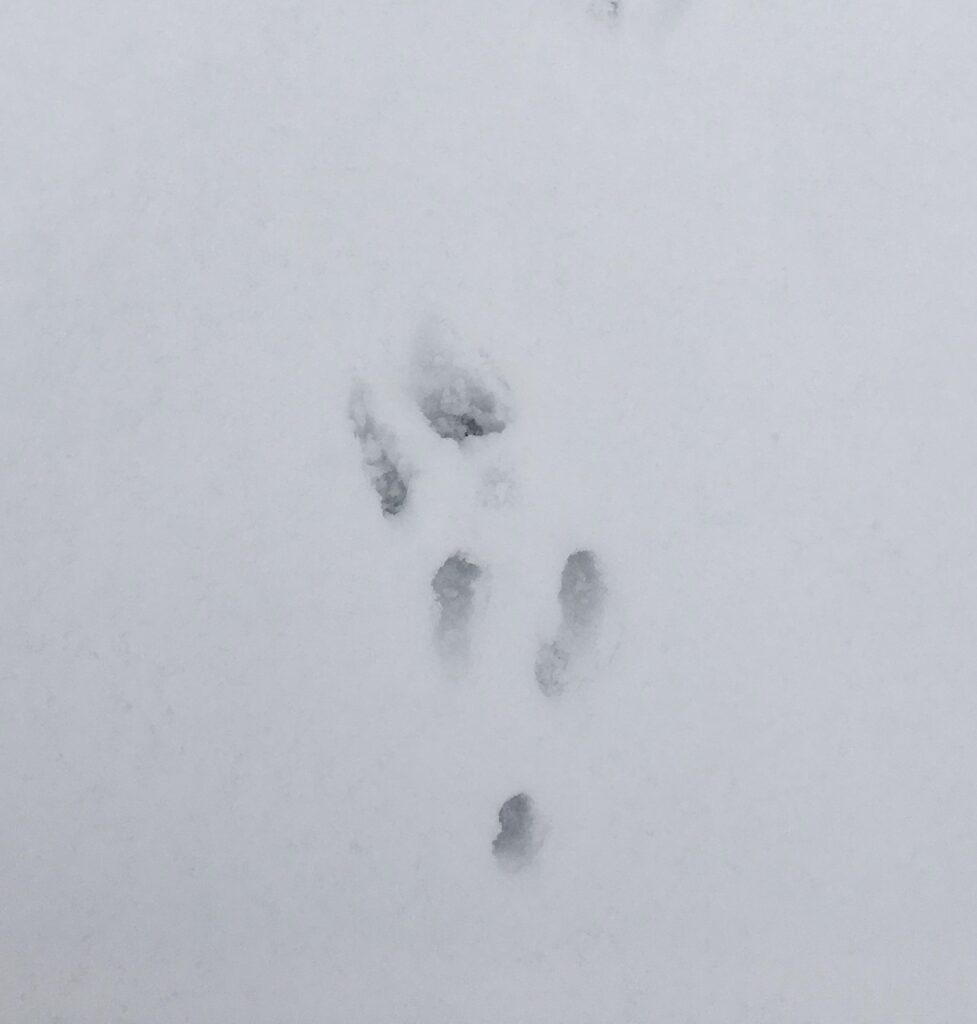
This was taken my second day visiting the Freetown-Fall River State Forest when there was more snow on the ground and I found tracks further off the main trail. These are rabbit tracks, which are popularly found in the snow during the winter in MA. They remain active during the cold months in order to find food, shelter, and keep warm for survival.
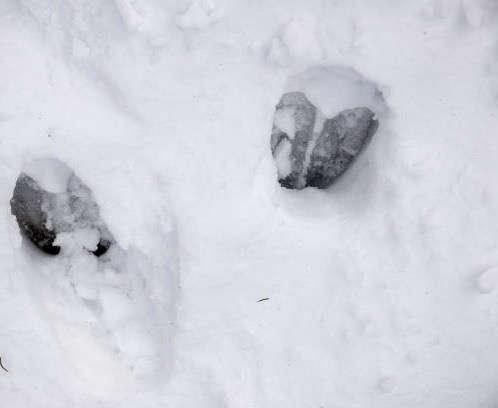
These are most likely tracks left by a white-tailed deer, which are still very active during the winter months, similar to rabbits.
History of Centennial Woods
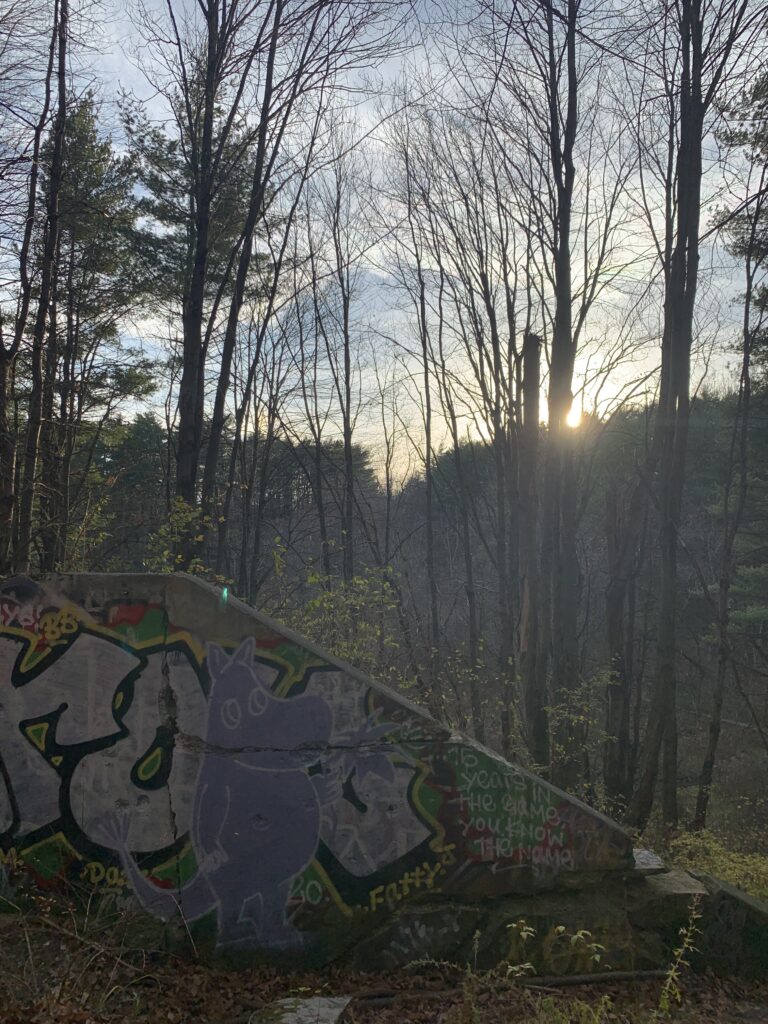
Posted in Uncategorized on December 4, 2020 by lnorthruCentennial Woods was one home to the indigenous Abenaki tribe and was mostly taken over by white settlers for agricultural and living purposes. The Abenaki people were hunters and gatherers and used natural resources from the woods to sustain themselves. Once Europeans migrated to the East Coast, it was destroyed over time as they exploited the area to make a profit. Centennial Woods was owned by many wealthy families who used it as farmland to grow and sell crops, and to raise farm animals. Previous owners include C. Baxter Est., H. Stevens, Hickok Est., and the Ainsworth family. A vast majority of the vegetation was most likely cleared for large farms to be established, demolishing any natural ecosystems that existed prior to white settlement. It must have also been involved in some sort of battle since there is a concrete wall standing that was once a bunker. Fortunately, Centennial was bought by the University of Vermont in 1974 for students to explore and learn about the environment. This led to efforts being made to preserve the woods in their most natural state, allowing ecosystems to revive and be taken care of throughout the following years. Evidence of this can be seen by the groups of young trees, mostly including maples, birches from my own observation, that are present. Centennial Woods provides people a place to wander during their spare time, allowing them to be one with nature and develop an appreciation for it.
Freetown-Fall River State Forest
Posted in Uncategorized on November 29, 2020 by lnorthru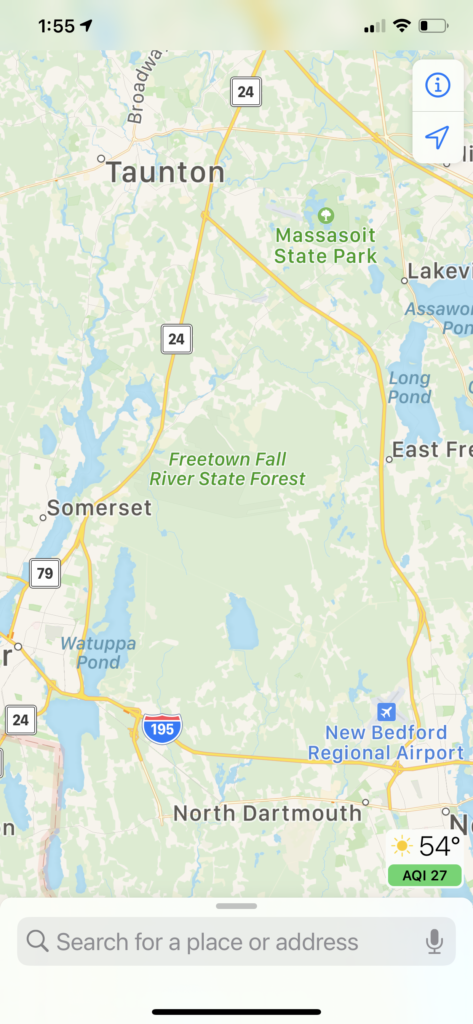
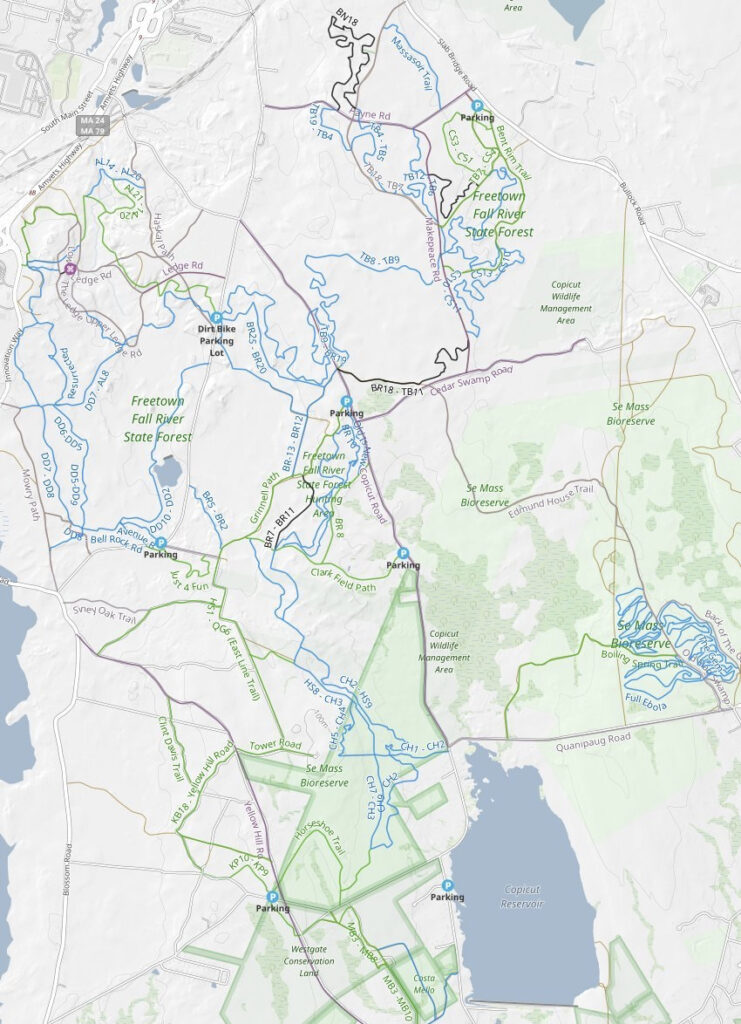
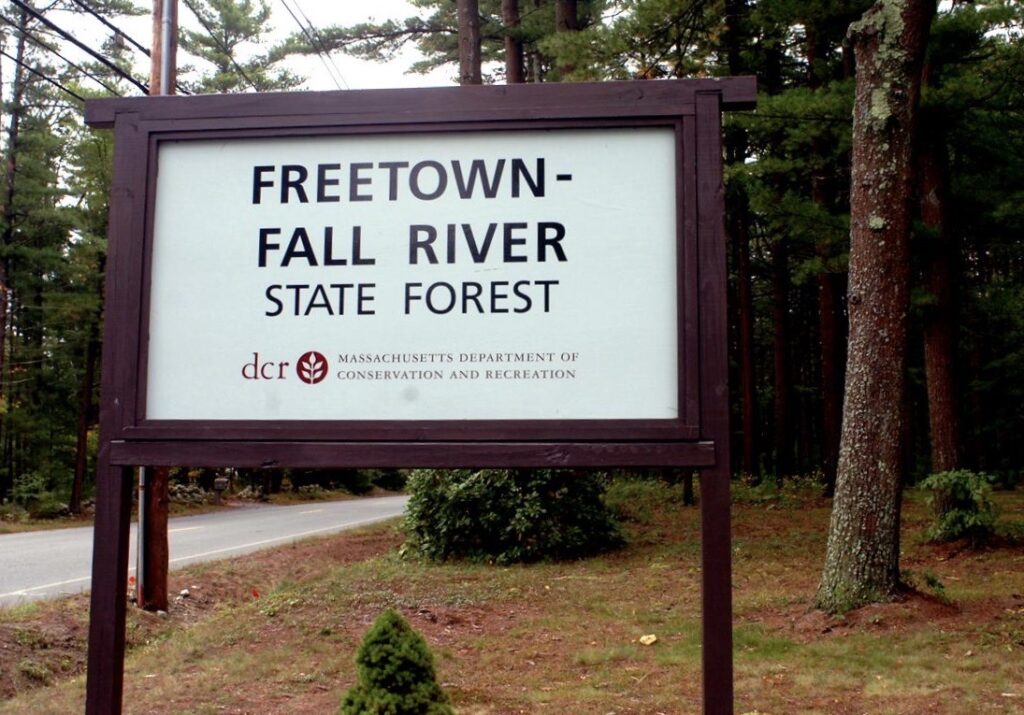
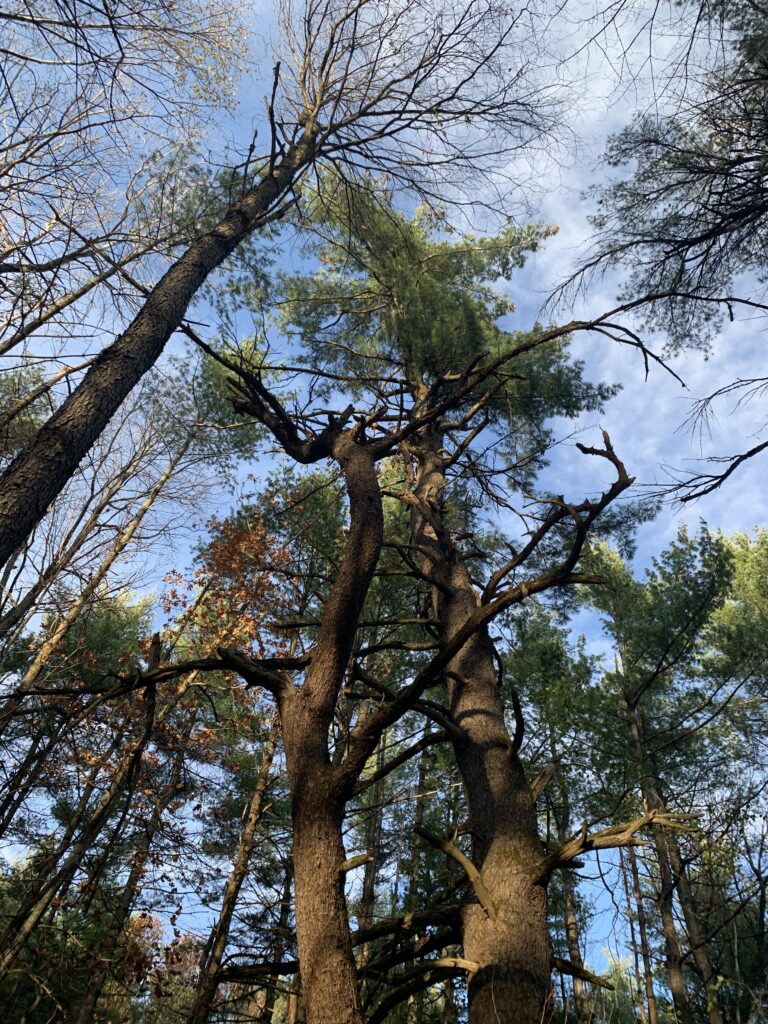
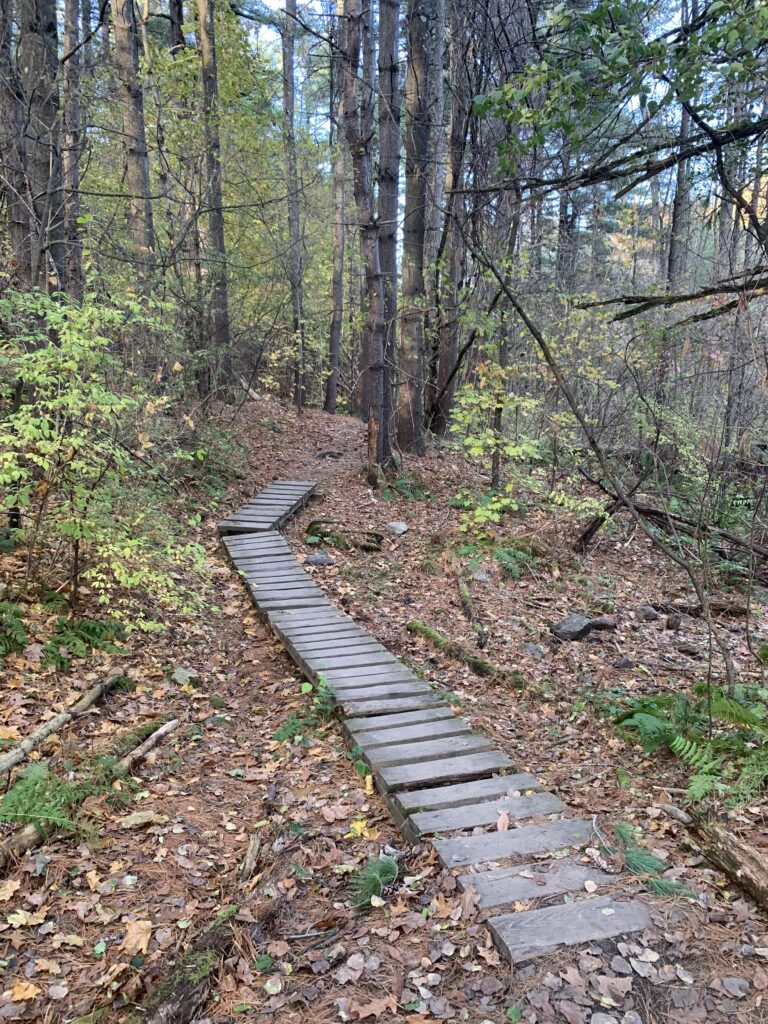
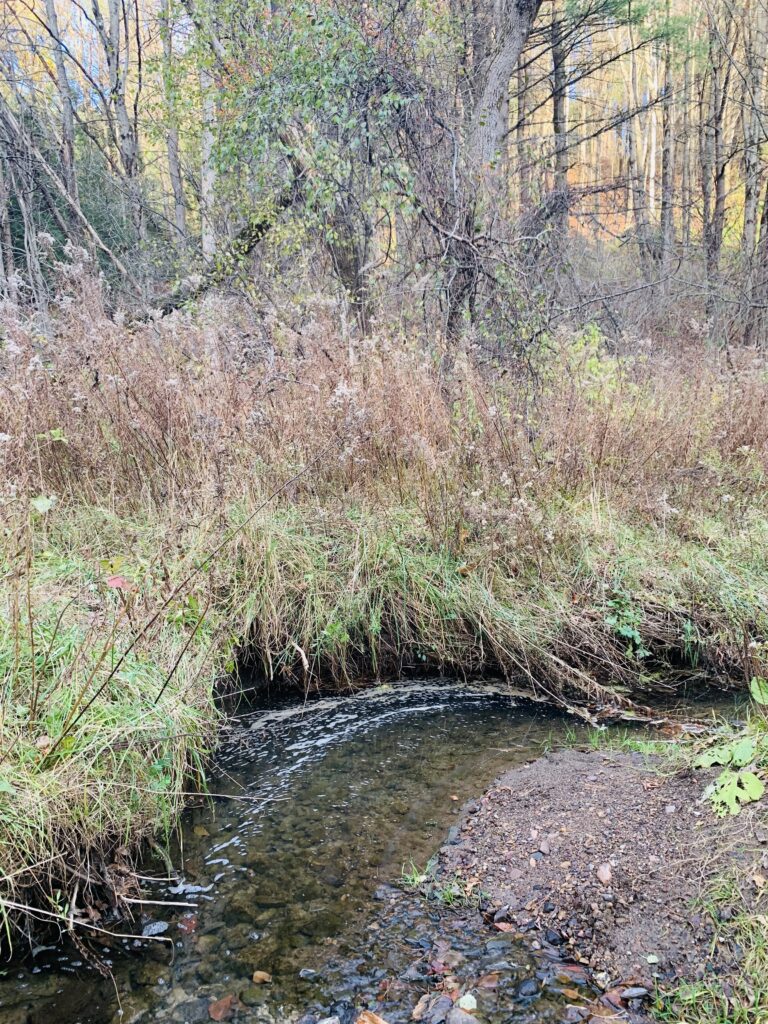
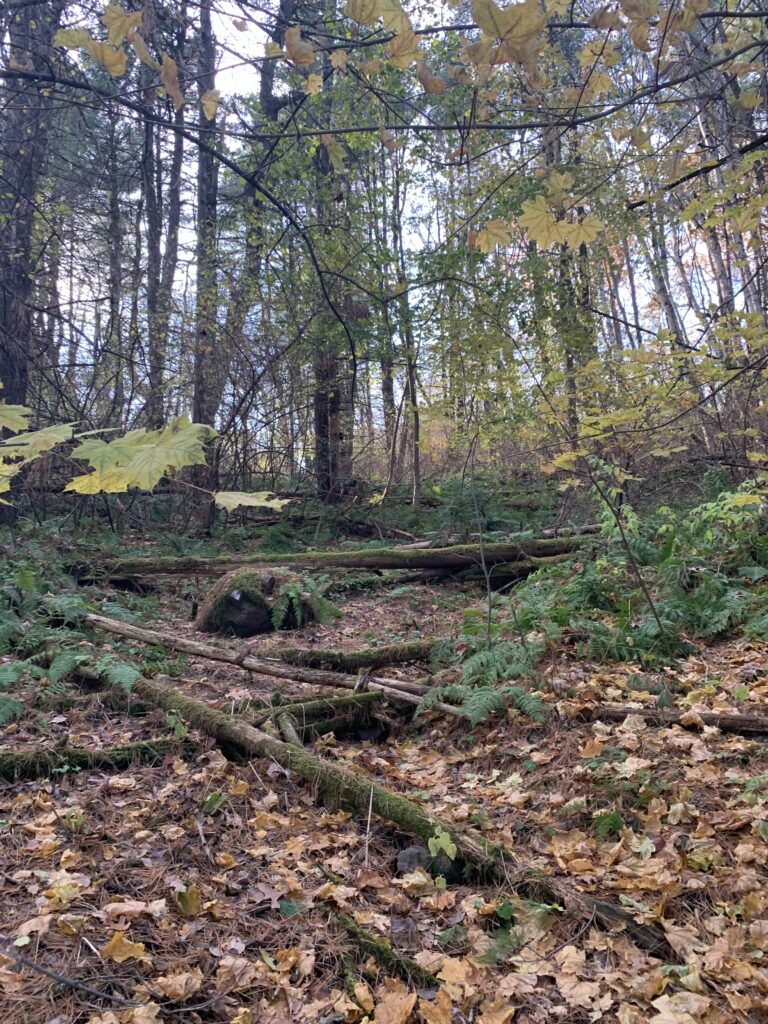
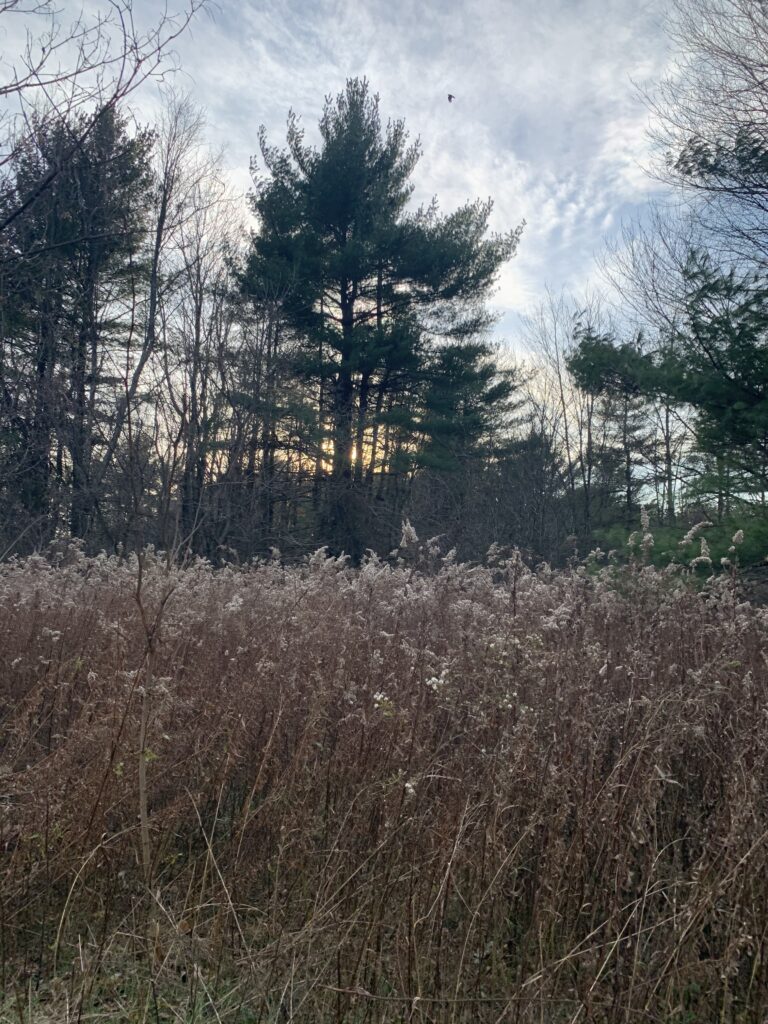
The Freetown-Fall River State Forest is located within the city of Fall River and the town of Freetown in southeastern Massachusetts. The forest is managed by the Department of Conservation and Recreation (DCR) in MA and has been preserved for the members of the indigenous Wampanoag tribe. It is similar to Centennial Woods in that it contains mostly deciduous trees as well as a small number of evergreens The forest is dominated by white oaks as well as eastern white pines. The trees now barely have any leaves, yet some are still holding onto their last ones, which are brightly colored or are beginning to brown, indicating the oncoming of the cold season. Woodland mammals such as deer, foxes, and chipmunks are plenty in number throughout the forest. The forest borders the Watuppa Pond, Mother’s Brook, and Doctor’s Mill Pond that serve as habitat for many fish, salamanders turtles, and frogs. The pond also provides a huge source of drinking water for the community. The thick forest acts as a riparian buffer so that pollutants can be absorbed before entering into the body of water. Unlike Centennials, there are large rocks that many people enjoy climbing, such as Profile Rock, and contains 50-mile trails for people to explore. There are plenty of snags and fallen dead trees that can be seen when walking the trails that provide habitat to many insects, birds, and small mammals. Since the soil mostly consists of loam, sand, and small rocks, water drains quickly into the earth, preventing major flooding, yet wetlands and bogs are still present. This encourages mosquitos to thrive in this area during the summer due to high humidity, then die off in the winter.
Event Map
Posted in Uncategorized on November 8, 2020 by lnorthru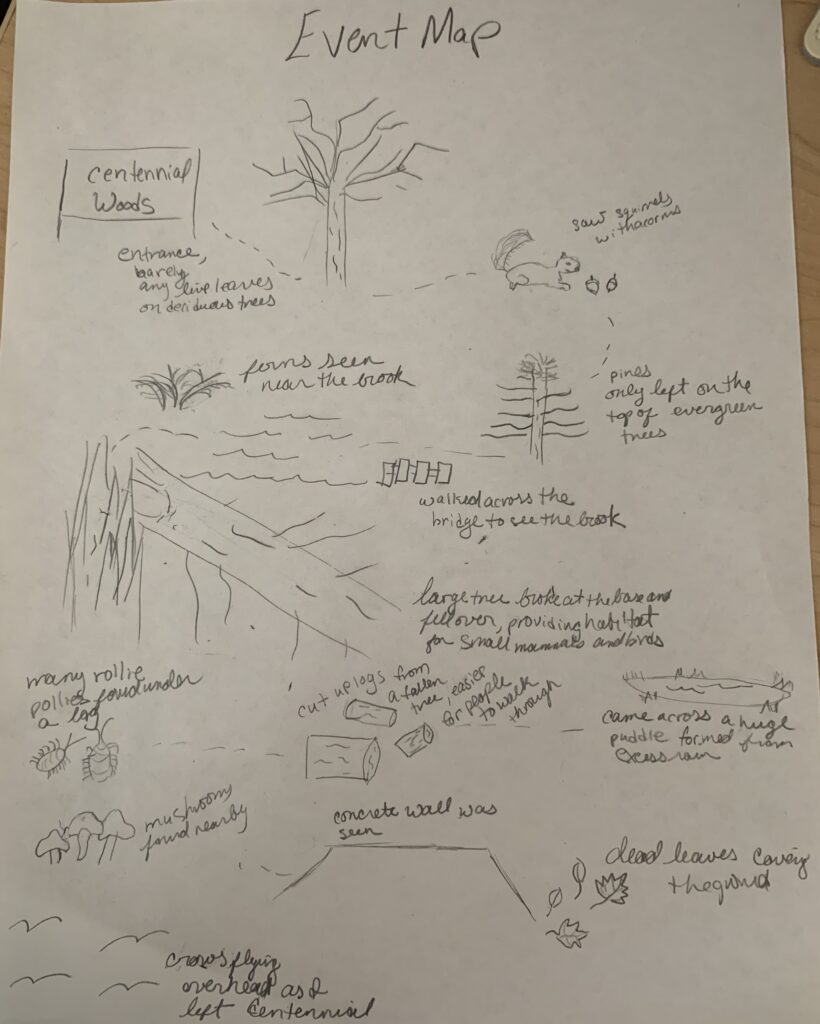
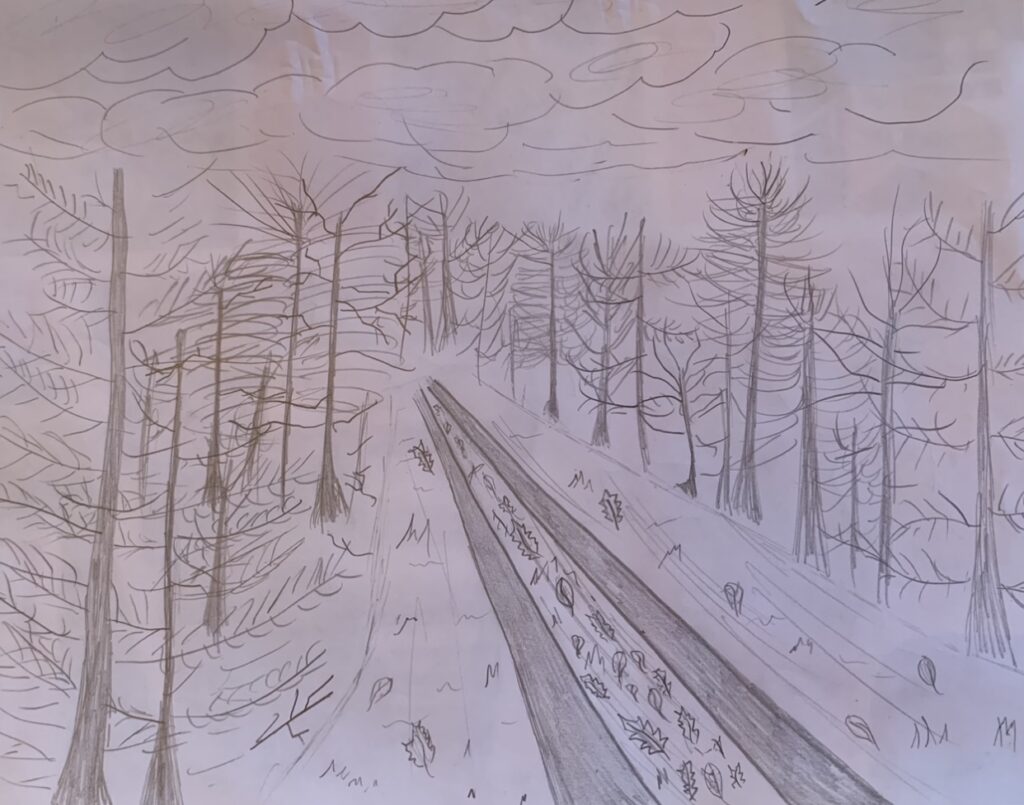
Since I visited Centennial Woods, there are fewer leaves on the trees and more dead ones piling on the ground. Evergreens look barer but still have some of their needles. It is clearer to look through the woods due to the lack of leaves. There are less frogs visible near the brook and more mushrooms near dead trees. Snags laying across the main trail have been chopped up into smaller pieces so that people can walk through more easily. This aids the recreational aspect of the woods but can interfere with animals’ habitat. Centennial is quieter now, showing signs of less wildlife, especially insects, during the colder months.
Birds-Eye Map
Posted in Uncategorized on October 25, 2020 by lnorthru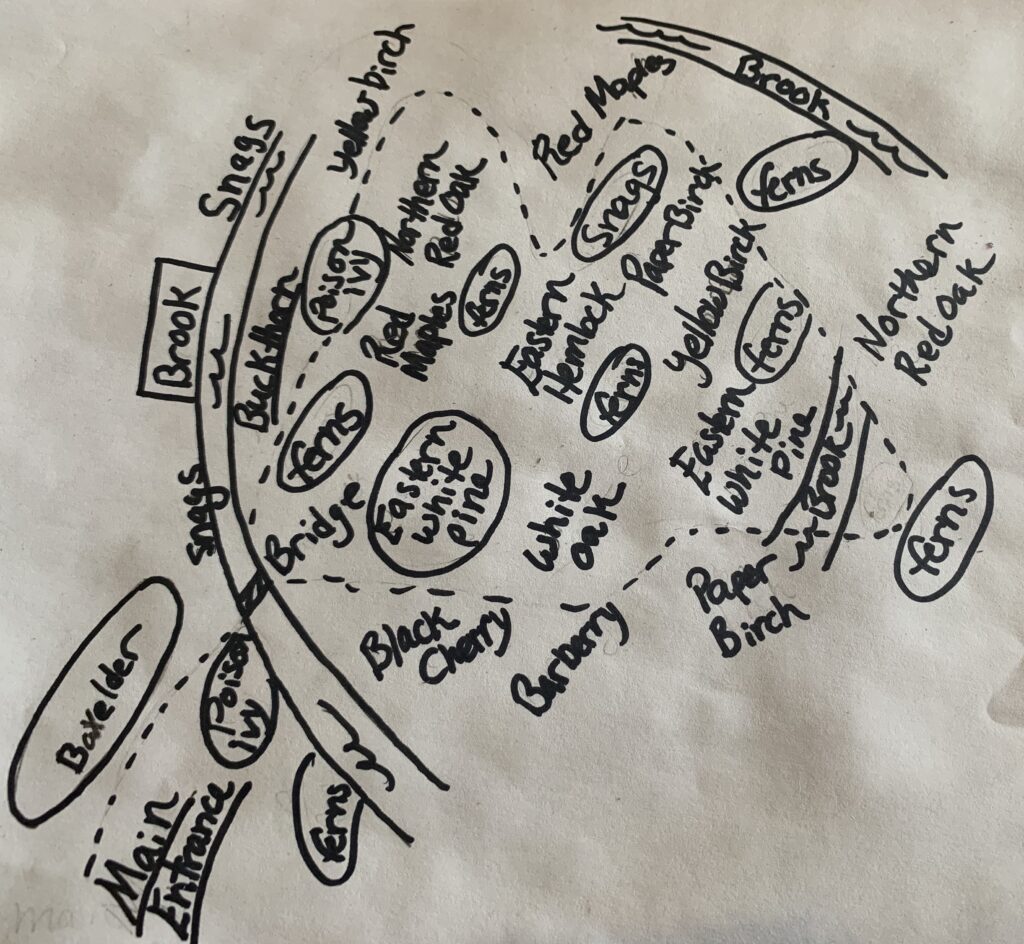
The deciduous trees in Centennial Woods changed colors and display beautiful foliage. They are losing their chlorophyll and showing their true pigments in preparation for a long, cold winter with much less sunlight and warmth than the summer. Colors such as yellow, red, orange, and brown are now seen in the woods instead of just green leaves. A major difference that I noticed was that the evergreen trees, especially the eastern white pines, lost some of their needles, exposing birds’ nests higher up. Ferns close to the ground are accompanied by layers of fallen leaves and pines. There are also many large fallen limbs on the ground due to the recent gusts of wind that we have been experiencing. Since the trees still have most of their leaves, they are still more susceptible to falling and having branches broken off by the wind since the leaves create drag. As the fall becomes colder, fewer birds will be seen as they migrate to warmer areas and large mammals will be seen easier once the leaves begin to drop.