A UVM blog Wonder Blog

Posts

Entry #4: The Brook on Tollgate Rd. Manchester VT, 7/10/23

Description of my site:

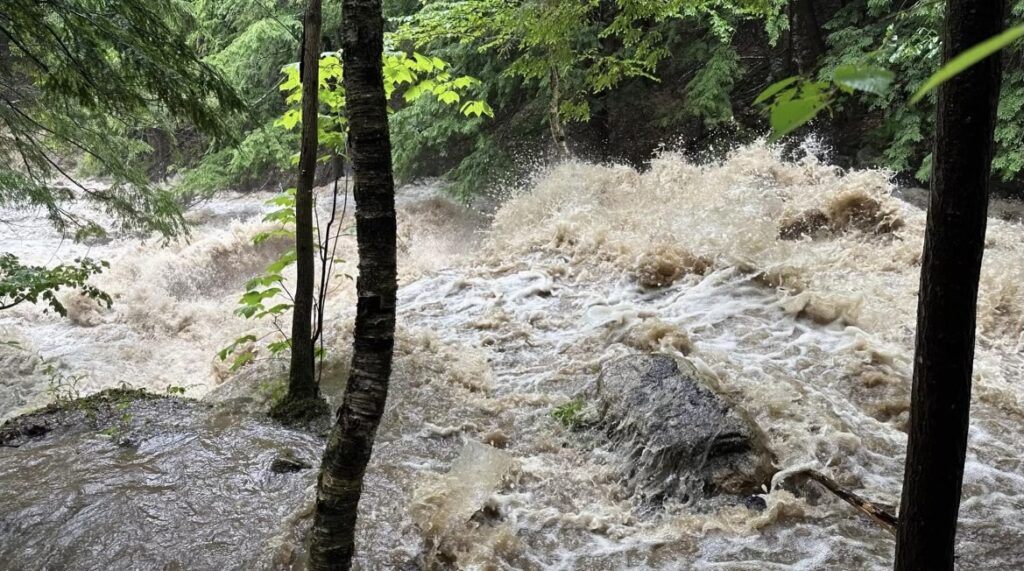
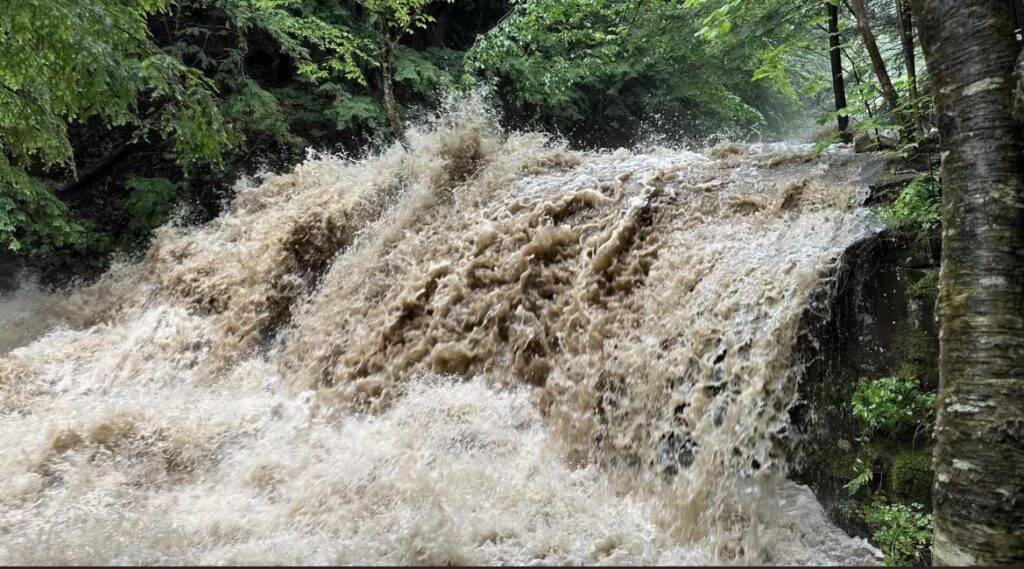
Today is rainy, humid, and about 75 degrees. Unfortunately, because of dangerous flooding in Vermont, I was not able to visit my blog spot in person. My spot is by a river and would be unsafe with the state that it is in. From photos on social media, my location is completely flooded with gushing water. It is unrecognizable from what is was in previous weeks.

Photos from social media:
Mini Project:

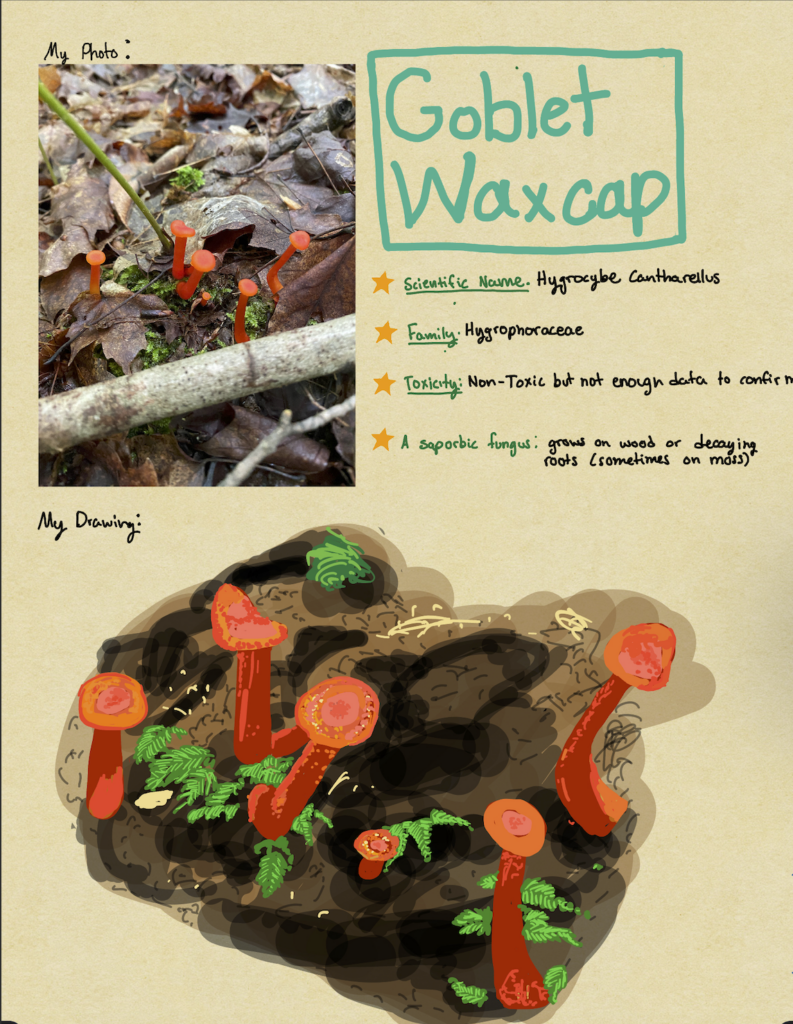
Because I couldn’t be at my site, I did some artwork and I.D. of some mushrooms! I have come across these in past two weeks so I was excited to learn more about them. I had a lot of dun doing this. Any opportunity I get to do some art I will take. I used the app Notability, a note taking app, to create my sketches. I enjoyed adding color to this wonder blog assignment rather doing more of the black and white sketches from before. The drawing I am most proud of is of the Honey Fungus. I spent a lot of time on that one, and I like how much detail there is. I thought it was especially fun to draw the slug slime. I think I will keep drawing mushrooms more often after this project.

#1

#2

#3
Citations:

  1. Miller, Robert. “10 Orange Mushroom Species (with Pictures).” Back Garden – Gardening Blog, Plants, Landscaping, Mushrooms, 1 Feb. 2023, backgarden.org/orange-mushrooms/.

2. Mushroom, Mrs., et al. “Chasing the Chicken of the Woods (Facts, Identification, and Recipes).” Mushroom Appreciation, 5 May 2023, www.mushroom-appreciation.com/chicken-of-the-woods.html.

3. Kuo, M. (2017, May). Armillaria tabescens. Retrieved from the MushroomExpert.Com Web site: http://www.mushroomexpert.com/armillaria_tabescens.html
Entry #3, The Brook on Tollgate Rd. Manchester VT, 7/4/23

Description of site:

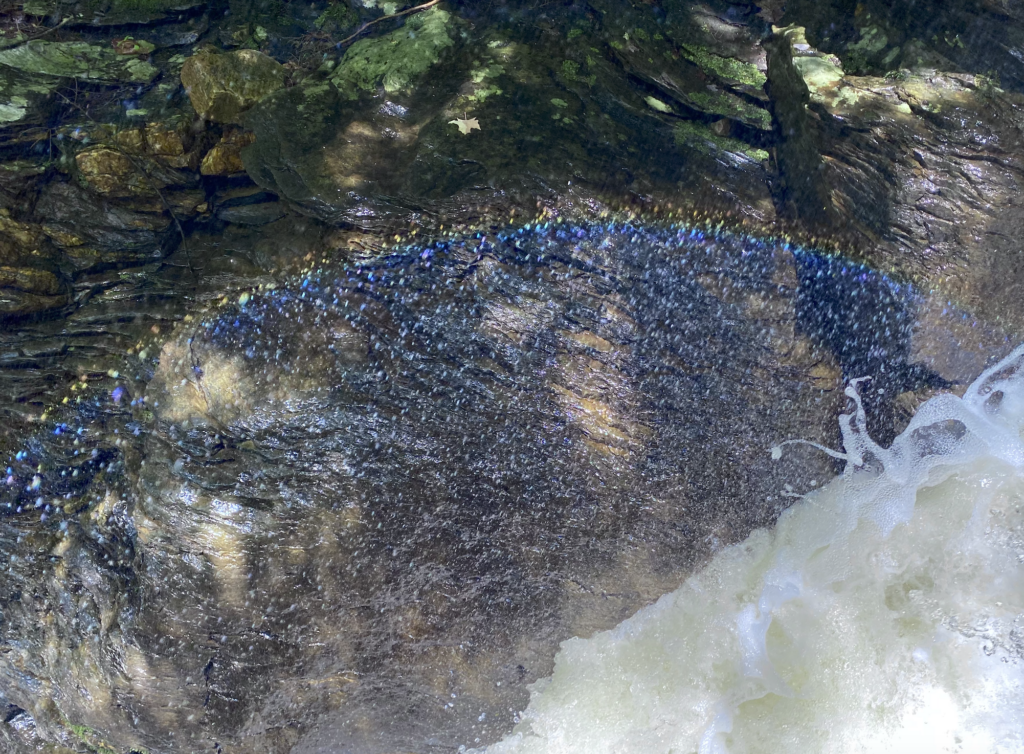
I arrived at my site at 1:23 pm today and the weather was warm with blue, sunny skies. This past week was another rainy week in my area, so I was not too surprised to see that the water level was even higher than last time. The white water of the falls is even more rampant than before and there are three new streams of water trickling off the ledge of the rocks. When I stood close to the edge to look at the water, the waterfall coated me with a spritz of mist. With the sun shining, the water sprayed a rainbow if I looked at it at the right angle.

I saw that the puddles are completely devoid of algae and larvae at this point. The new streams of water must have washed them away. They are nothing like the glowing bodies of water I saw my fist visit here. It’s kind of a relief there are no more mosquito larvae in them anymore. They were fun to look at at first but once I knew what they were I found them a little creepy.

Photos:

Today at my site I was more focus on the little details of my site rather than the big picture of it. Photos allowed me to capture the little wonders of the place.

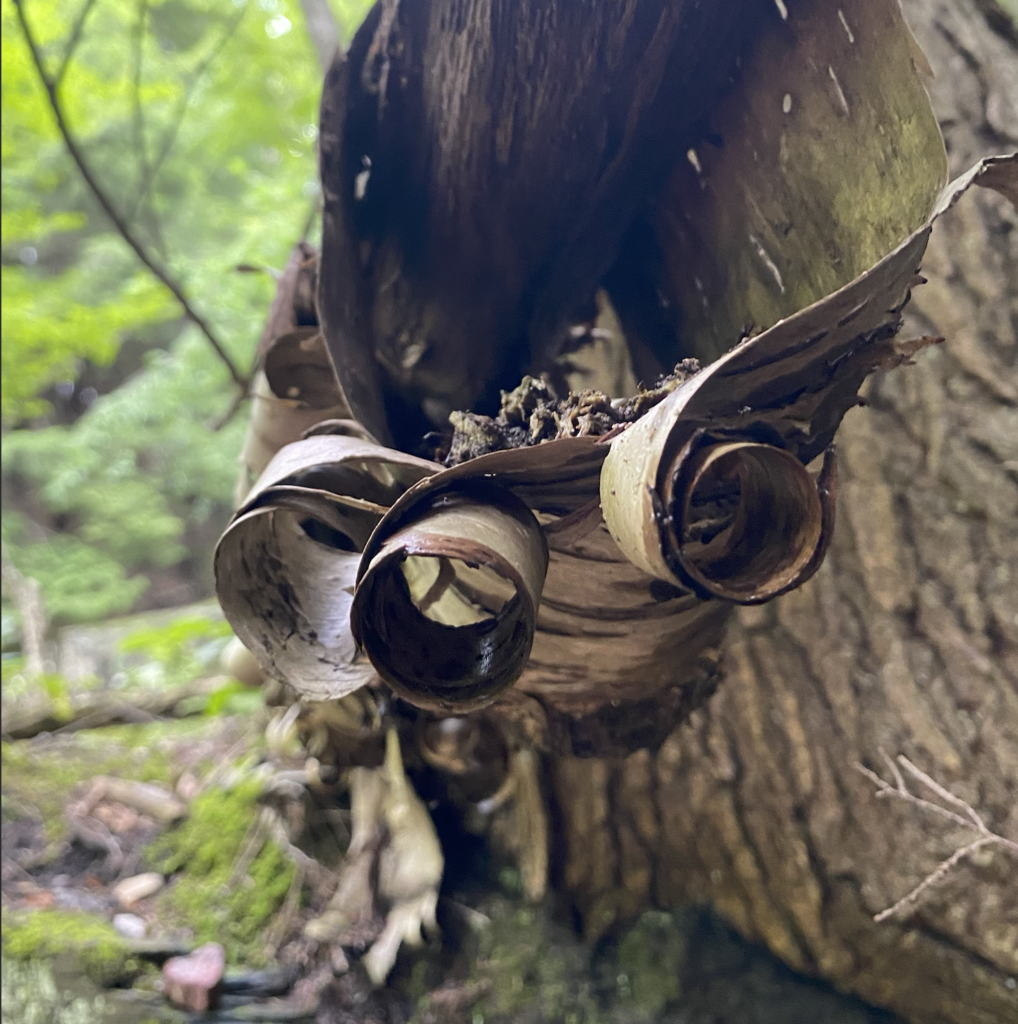
Photo #1

I found this fallen birch tree with some of its bark dangling underneath it. I liked how the bark aged to form three perfect curls of bark in a row.

Photo #2:

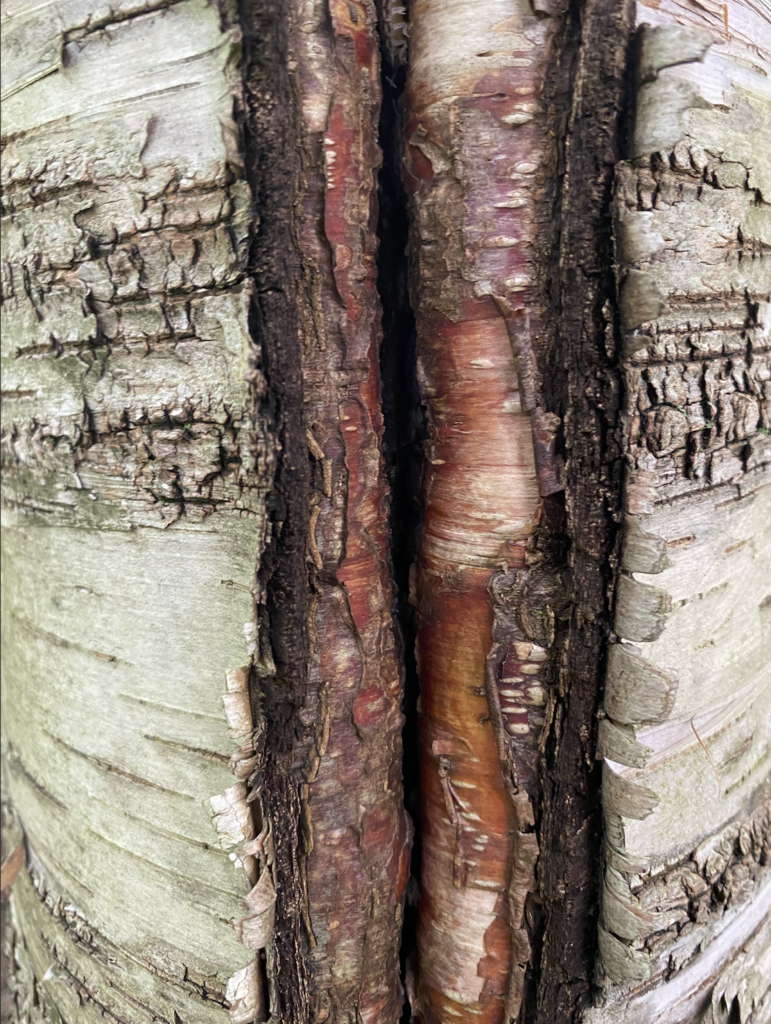
This is another interesting birch bark phenomenon I came across. This gash in the tree travels from the base to about ten feet straight up the tree. I liked how the slice of the tree divided it into two parts which I think makes an interesting photograph.

Photo #3

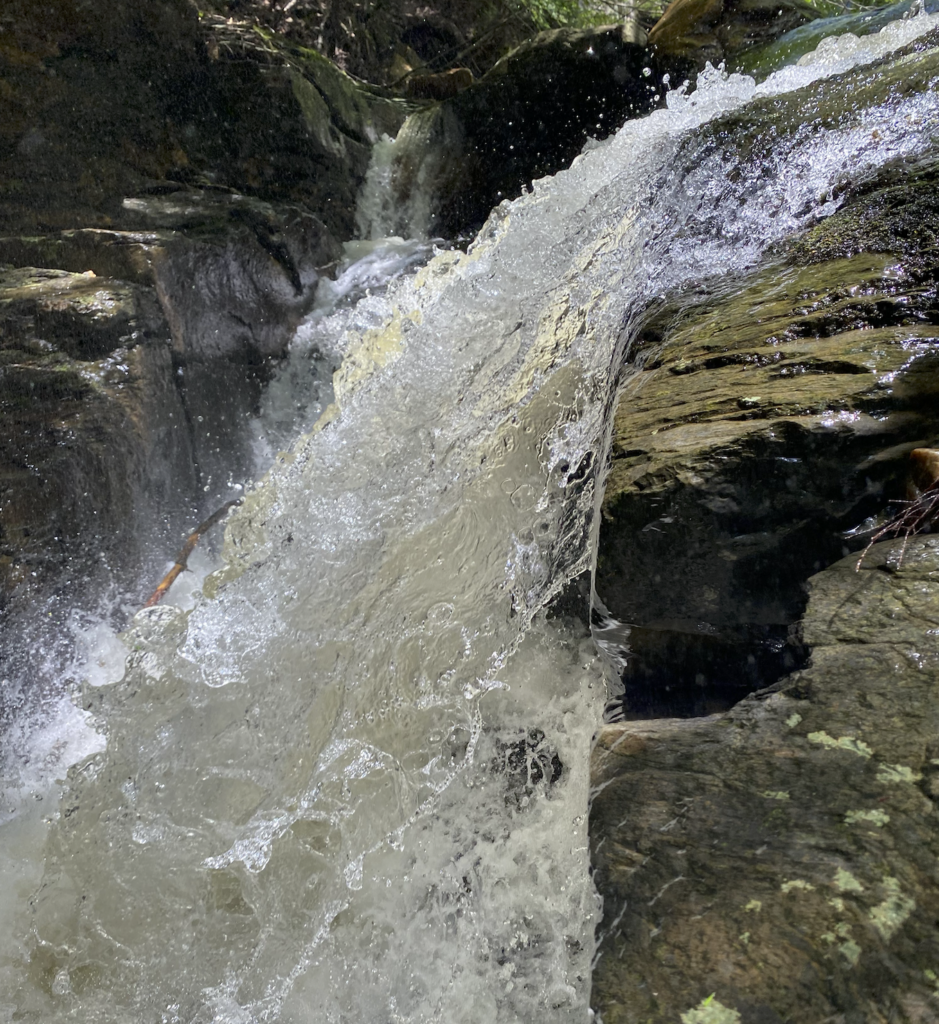
This is a close-up of the flow of the waterfall as it drops off. I talk so much about the water at my wonder blog site. I liked how the water glistens in this photo. It captures its beauty and how fast it was moving today.

Photo #4

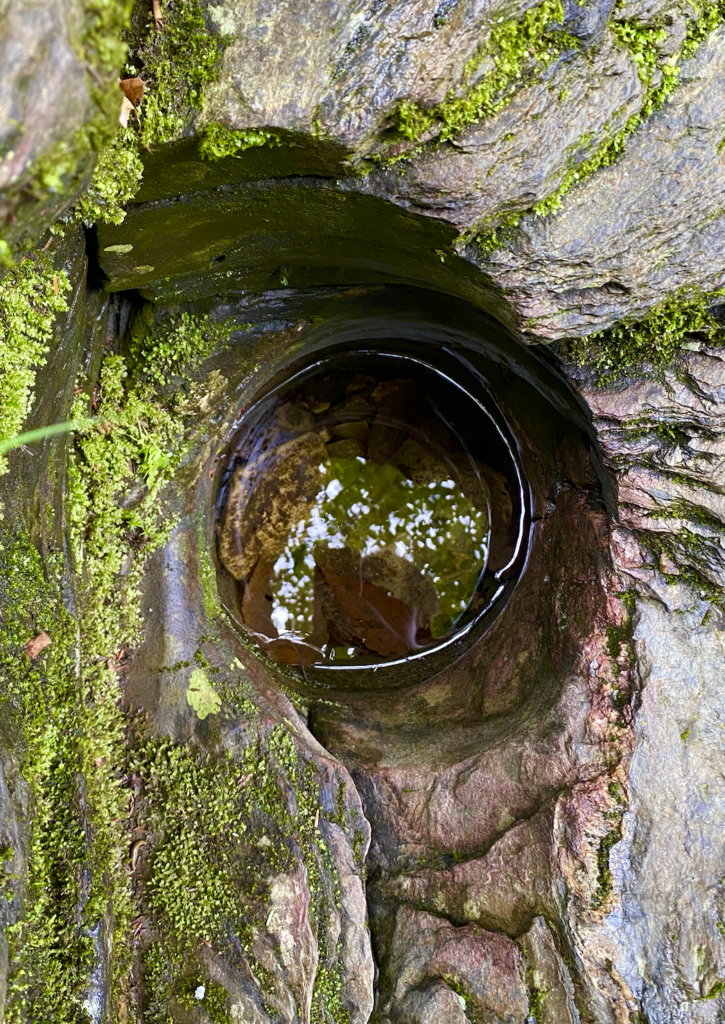
This is a photo of a perfectly circular pool of water tucked in the rocks next to the waterfall. This was such a cool find! I can’t believe I haven’t seen this yet but I am glad I found it. It almost looks like someone drilled into the rock but I’m sure it’s from natural water erosion.

Photo #5

This is a photo of the rainbows that showed up from the waterfall mist and the sun. It was hard to get a picture of it but I think this photo came out well. It captures how the mist sparkles in the sunlight which I thought would be exciting to share.

Natural History Mystery:

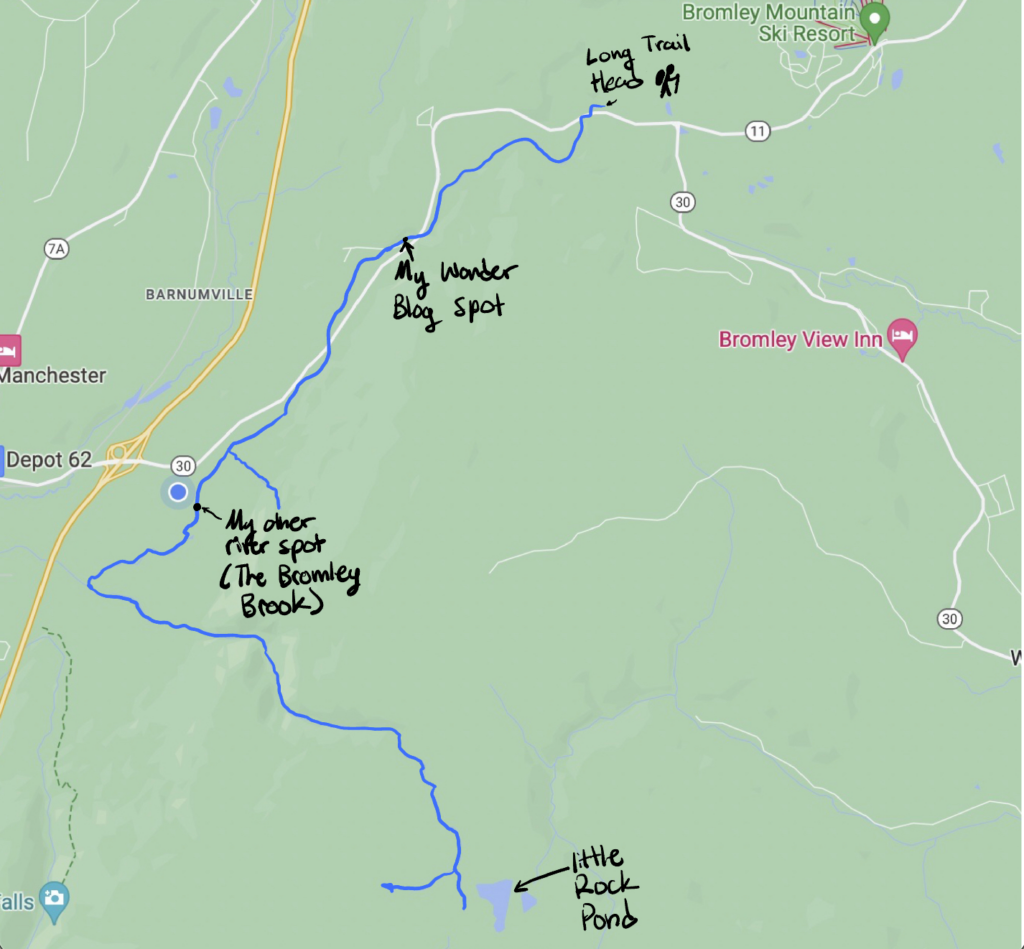
Ever since the first day at my wonder blog site, I have been curious as to where this brook starts and where it ends. I also wanted to know if it had any particular name. There are small brooks down almost every street in my town and I always wonder if I have technically been on that stream before or if it’s coming from somewhere new to me. Because of this, I had no prediction for where this rive could be coming from and ending. I decided to look all of this up on a map.

Where the river starts, ends, and other notable spots.

I discovered that the river starts at the long trail head that goes up Bromley Mountain and ends right next to Little Rock Pond. It’s not on this map but there is another small runoff that comes from the Batten Kill river and flows into the one I have been visiting from the west. The most interesting thing about this map is that it is the same flow of water that I have been visiting for years close to my house. I have always called the brook near my house the Bromley Brook. The official name was not indicated on the map so I will continue to call it the Bromley Brook. This is funny to me because I thought I was choosing a place that was completely new to me. Turns out I have actually been visiting this brook for my whole life but a bit farther down stream.

Conclusion:

I think that photography was an excellent way to portray the little things at my site. I find myself wondering what is worth mentioning in my site’s descriptions. What is too insignificant to share or too broad? Sketching and photography gave me the outlet I needed to discover new things about my site and show it in blog form with greater detail. I would say I am much more fulfilled by the drawings I made from last time’s visit because it took a lot of focus to produce something that looked nice. Photography felt less involved, but I am still happy with the way my photos came out.

Overall, photography was fun and new to me so I was happy to give it my best try. I also feel satisfied now that I know a bit more about the brook as a whole and that it connects to my childhood river spot. It seems that every visit to my wonder blog site gets better and better.

Entry #2: The Brook on Tollgate Rd. Manchester VT- 6/26/23

This Sunday Morning at my blog spot, I arrived at 9:30 AM. The weather was partly cloudy with the sun shining in and out behind the clouds. Over the course of my time there, darker clouds were moving in and the air felt humid indicating that it was almost time to rain.

Description of my site:

On the arrival at my site, trees trickled drops of water from the storm that we got the night before. Every gust of wind splattered me with fresh water. In fact, the whole floor of the area appeared to be coated with a light layer of water. I didn’t realize this at first but then I slipped while I was climbing up the rocks which forced me to pay better attention. After a brief, open-eyed meditation, I felt clear headed enough to start looking at things in better detail in comparison to my last visit here. The first thing I noticed next to where I was sitting were two new puddles that had formed next to the green algae puddles I observed last time. These puddles weren’t filled with algae or mosquito larva yet. Instead they were filled with brown leaves, sticks, and other forest litter that was probably swept down from the storm last night. I suspect that they will dry up or drain once we start getting less rain. I checked in on the green algae puddles that I observed last visit. This time they are more full of water and had far less mosquito larva swimming around in it.

When I climbed back down the rocks, I sat on a large boulder that views the water fall. While sitting there, I discovered that the rocks were layered different on either side of the water. On the left of the waterfall, the layers of rock look more fragile, thin, and flaky compared to the right side which has some distinct layering but was more of a smoothed down, solid mass. I don’t see the right side getting chipped apart as easily as the left might. I wonder if this has to do with the age of the rock.

Looking at the waterfall itself, I noticed that the flow of it is a lot more full and bustier compared to the flow of it last time. The white water is also showing yellow tints and a new flow of gushing water. The volume of the waterfall put into perspective how much a week of rain can do. Following my eyes away from the falling water and looking more closely at the water bed, I noticed the different patterns of rock deposits. Right after the falls, it is mostly smooth rock which then leads to a drop off. After the drop, there appears to be a line of sand and pebbles which then gradients into larger rocks. Lastly, it leads to the boulders that I’m sitting on.

The wall of greenery that I climb to get to the top of the rocks caught my eye this time. It appears to be filled with different plant species bursting out of the crevasses of the rock. It’s lined with mosses, liverworts, ferns, buttercups, vines, grasses and other plants I don’t recognize. The buttercups stand out to add some color other than green to the wall.

lastly, next to the wall was a pool of water where I noticed bugs striding across the water. I have seen these before, but don’t know the exact name. Their movements are quick and twitchy. It appears that they only move about an inch or two at a time. I counted three in the spot I was looking at.

Photos and drawings:

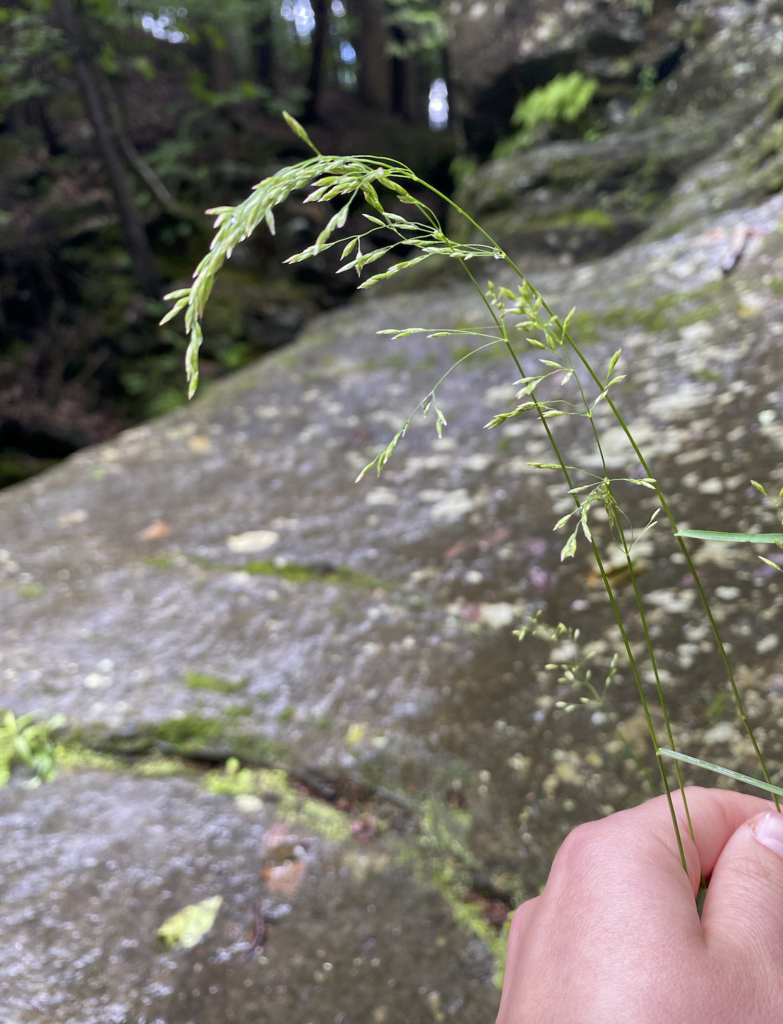
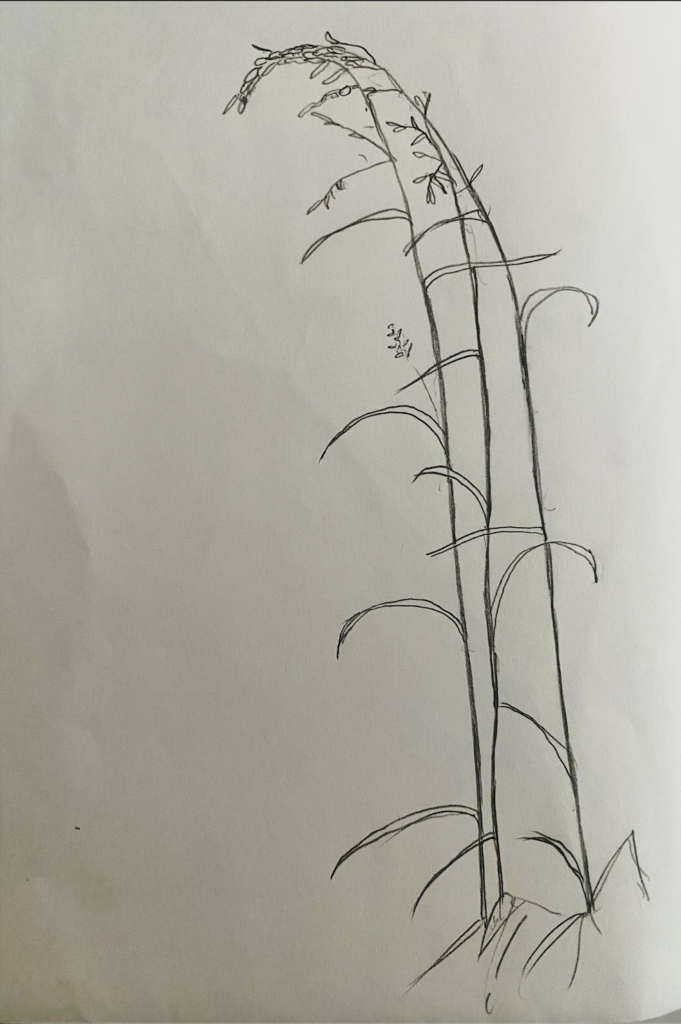
Photo and drawing #1: This is a type of grass I saw growing on the rocks. It might seem silly to chose to draw this but I think long blades of grass are much more beautiful and interesting than we may think. I am working at a farm right now which uses regenerative farming practices like rotational grazing. Proper rotation of livestock helps return nutrients to the soil which grows long, healthy blades of grass with thick root systems. This singular clump of grass I found caught my attention at my site for this reason. Mowed grass in our backyard really does not do the plant justice. I think it is quite beautiful.
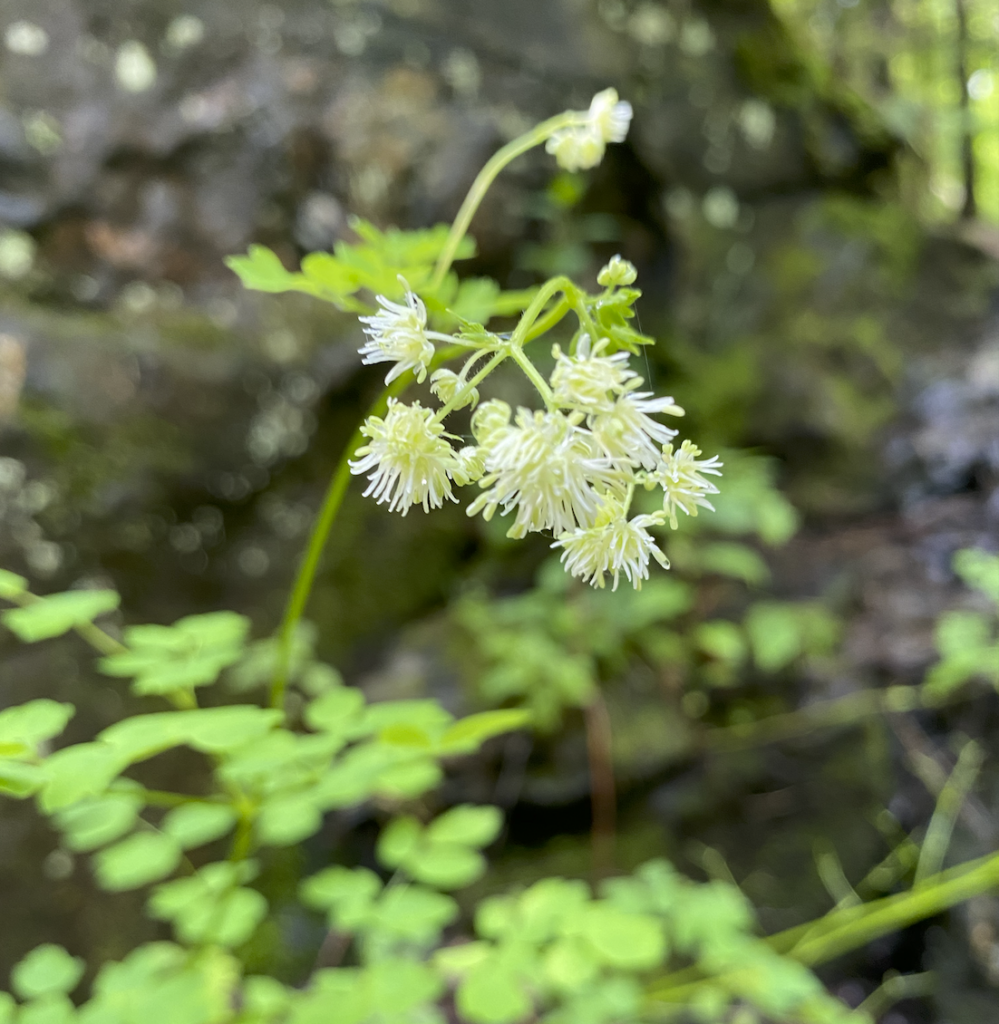
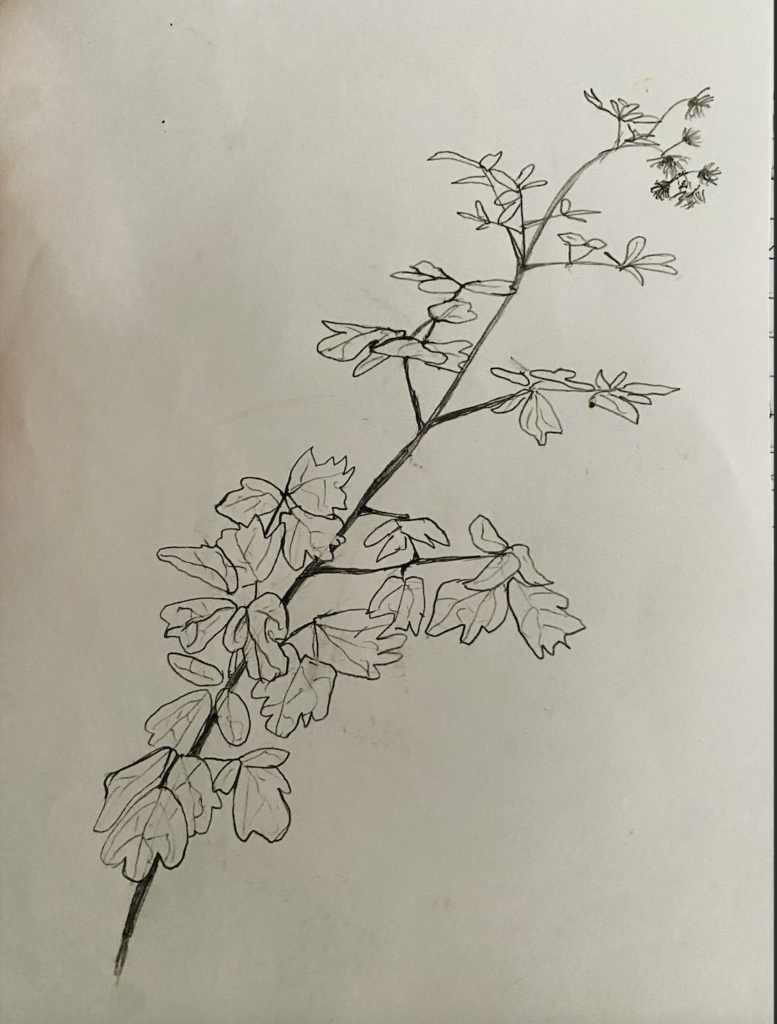
Photo and drawing #2: This plant was found on the wall of greenery (referenced today in my site description). There were so many different plants on the wall, it was hard to decide which to draw. I ended up choosing this plant because its white puffy flowers caught my eye and I liked the shape of the leaves.
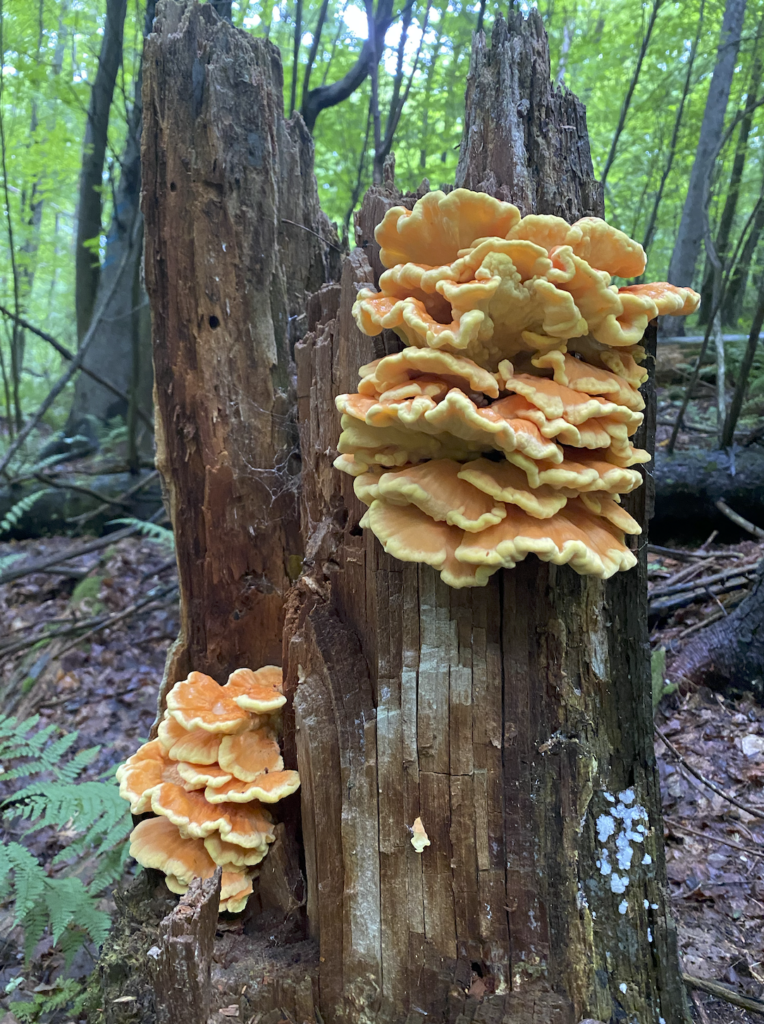
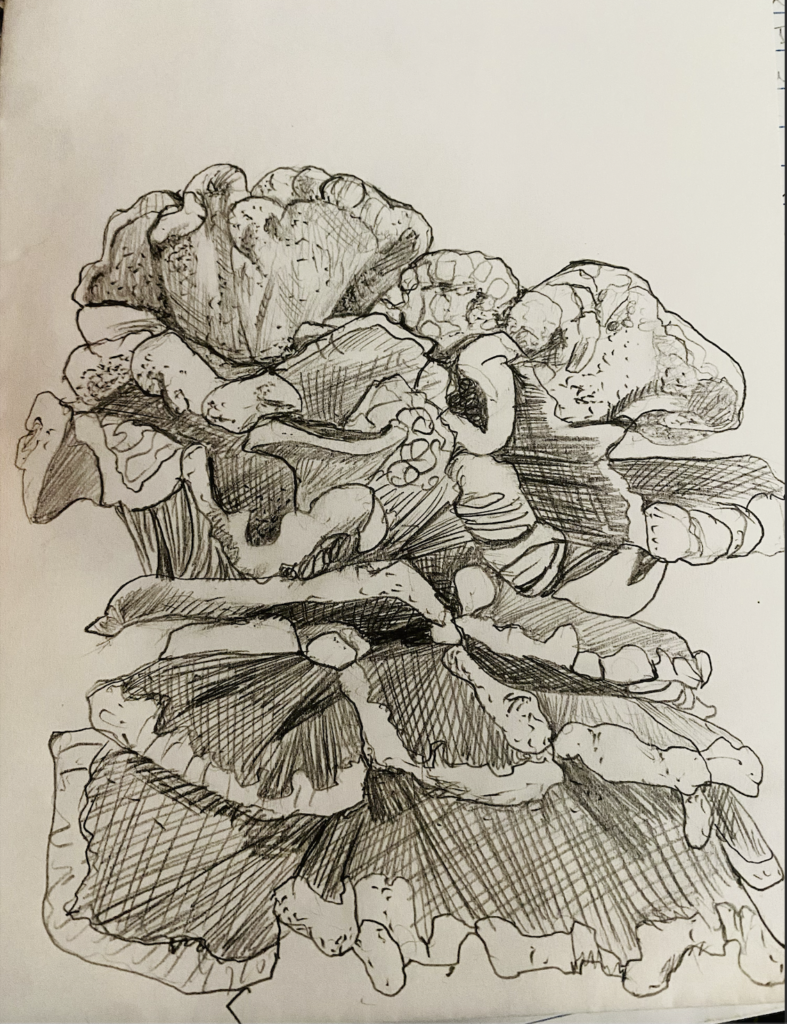
Photo and drawing #3 and Identifying a Species From my Site: This was a lucky find! This is a mushroom fungus that I spotted on an old log. I found it while wandering in the forest near my site. This species is Laetiporus. It’s also known as the Chicken of the Woods. It’s a type of edible mushroom which is considered a delicacy in many parts of the world! I didn’t want to take the risk in eating it but they are said to taste like chicken and have a meaty texture. They also are a type of polypore mushroom which means they disperse their pores under their caps. This was so exciting to find. I always wanted to find one for myself!
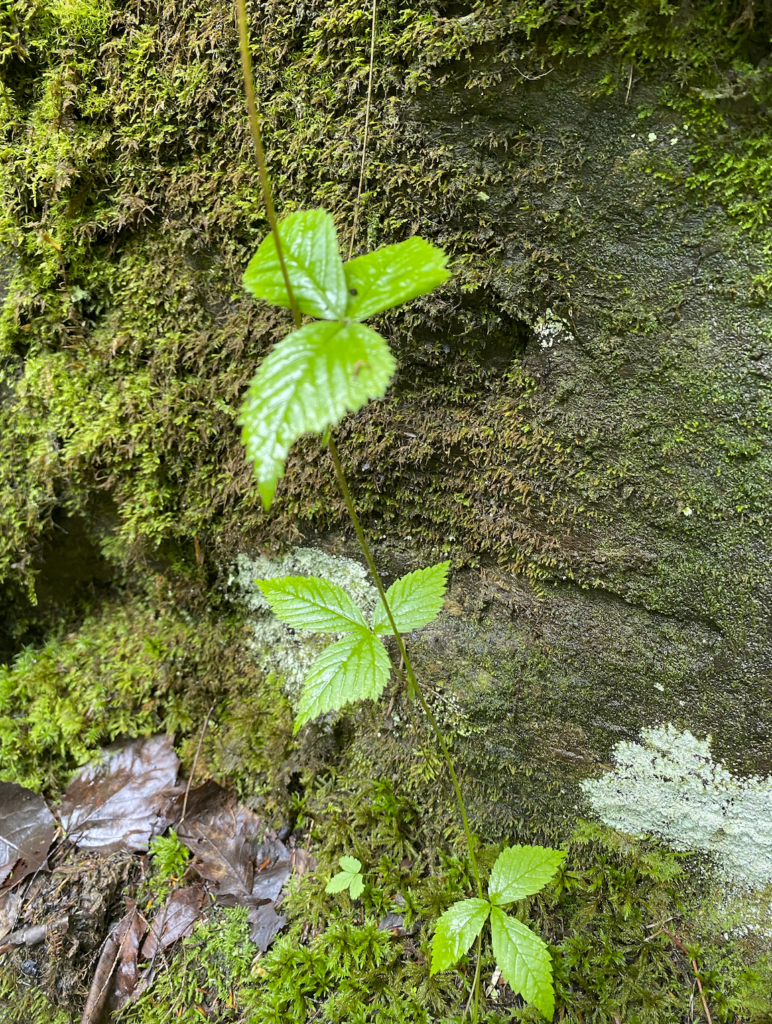
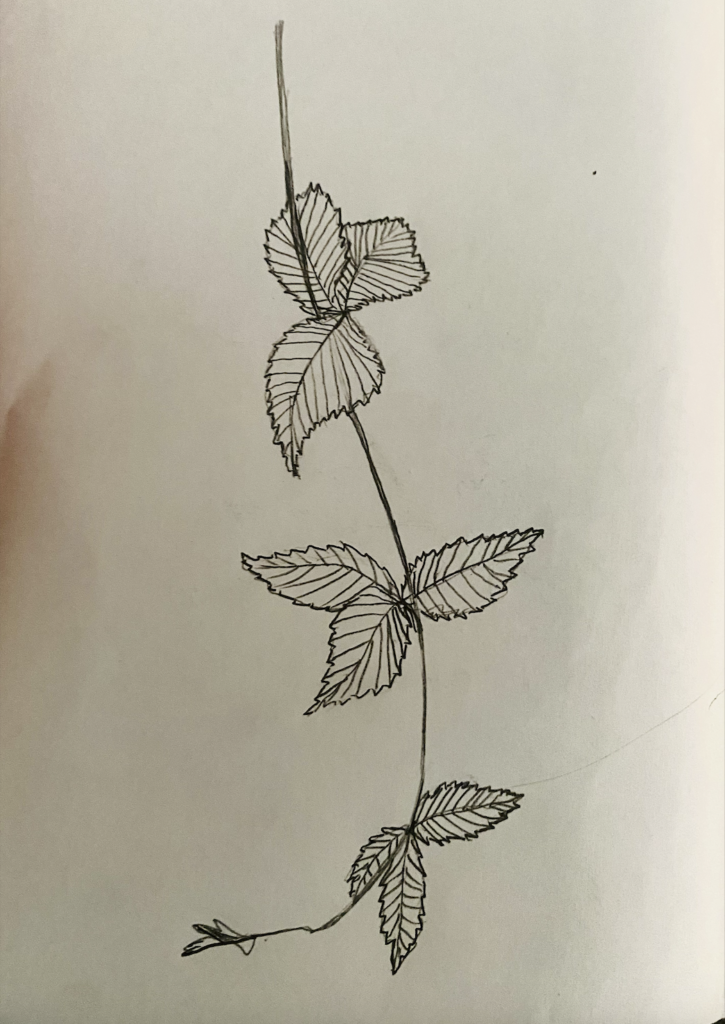
Photo and drawing #4: The last plant I chose to draw was also on the wall of greenery. It appeared to be a vine that grows green, shiny leaves in clumps of three. I wondered if this was poison ivy, so I didn’t risk touching it. Weather it is poison ivy or not, I could still appreciate its appearance, but from a safe distance.

Conclusion:

I think I payed closer attention to the details of my wonder blog site this time. I believe that my ten minute meditation helped keep my mind clear and focused for exploring and drawing. With a clear mind, I did not struggle to sit and draw for a long period of time. In fact, I stayed at my site for two hours this day just sketching and exploring. The process of drawing and exploring made me feel like a child again. I found myself looking closely and curiously on every thing my eyes could focus on. It’s funny, I have never looked at water bugs with such awe before. It felt healthy to appreciate everything. I am always told that practicing affirmations and gratitude is a healthy habit. Maybe a way I can practice this is by simply looking closely and curiously at more things.

Something I would like to check in on next time is the Chicken of the Woods mushroom I found. Will it grow larger? Will it start to rot? Maybe it will not change at all. Besides, I am considering harvesting it if I can find someone to identify if it is safe or not.

Lillian Cyr’s Wonder Blog

Entry #1, The Brook on Tollgate Rd. Manchester VT, 6/22/23

Description of my site:

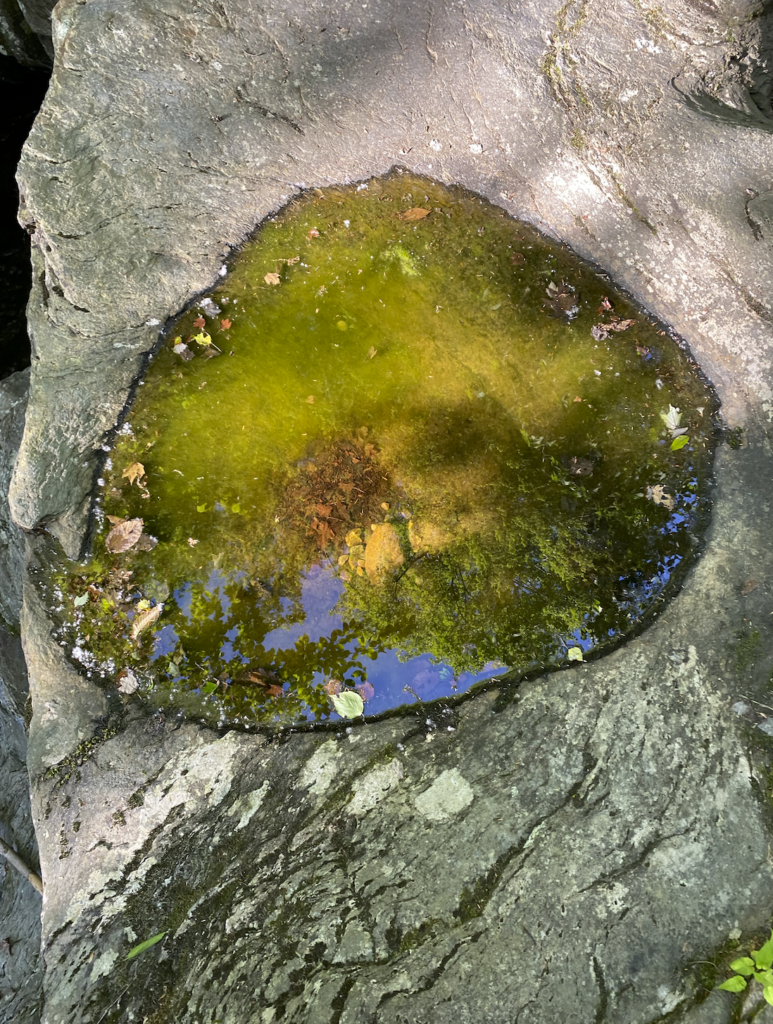
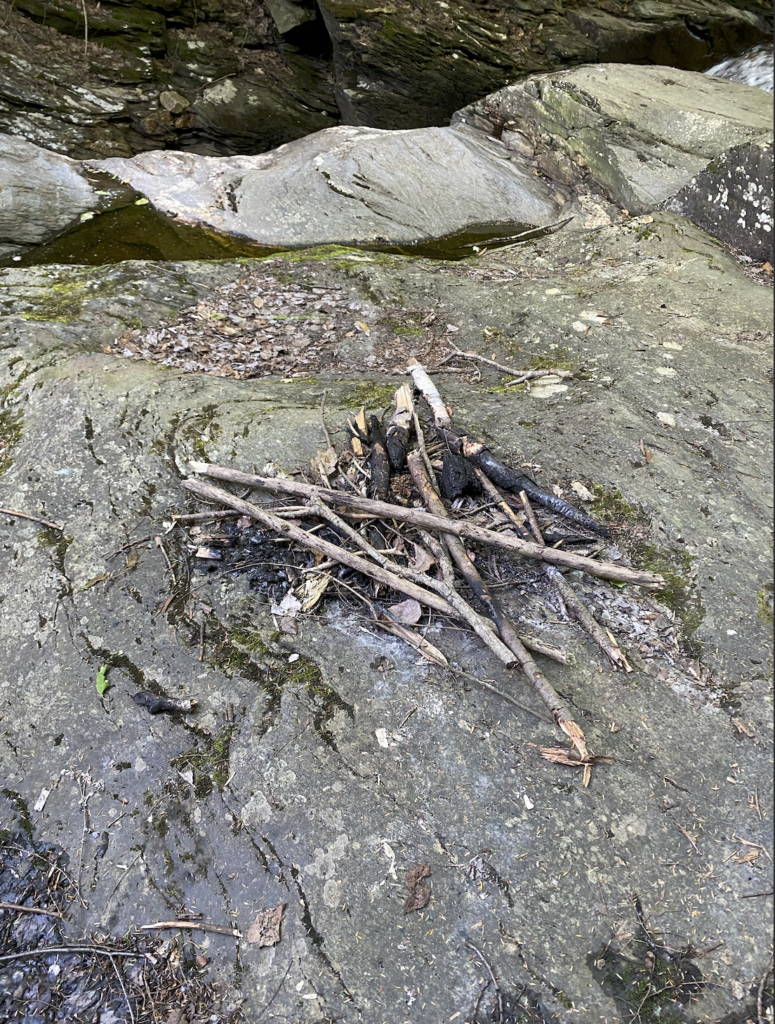
My Wonder Blog site is located right off of Tollgate Road in Manchester Vermont. My first visit was on a beautiful sunny day with the temperature being 80° F. It was a perfect day to spend some time by some water, which is where I was heading. While I was walking the trail that lead me down to my spot, I admired wide variety of trees that surrounded me. The tress I could identify were spruce, golden birch, striped maple, and beech. The trail lead me down to solid, rock and a small brook with a water fall upstream from me. The waterfalls loud, gushing sound makes Its presence known despite it being hidden by the slabs of rock. I could see that the rock had been shaved away by the fast moving water over the years. Because of this, the parts of the rock that were close to fast moving water were smooth. This is in contrast to the scratchy, layered rock that was located farther away from fast-moving moving water. When I investigated further upstream to get a better look at the waterfall, I noticed the crevices of the layered rocks were filled with small amounts of moss, sprouting ferns, and other common, small greenery. At the top of the short climb, I saw two dark green pools of water which sat still. These were something I normally would pay no attention to because they look like nothing but a puddle. However, when I looked closer, I found that the pools contained green algae and hundreds of tiny little wiggling creatures that were no more than a centimeter long. I thought that they could be they are worms or small fish. Another thing I spotted from the flat surface of the landing was a burned pile of sticks that someone must have used for a fire. This place could make a great camping spot. The landing was decently flat to put a tent and the view of the waterfall from your campsite would be nice as well. Putting future camping ideas aside, I finally sat down hang my feet over the ledge to look at the waterfall from above.

Photos from my site:

25 questions I had while exploring the site:

  1. How has the path of the river changed over time?
  2. How does rainfall affect the path and current of the water?
  3. Where does the brook start and end?
  4. Is the fast moving water safe to drink?
  5. Are the small worm-like organisms in the green puddles small fish, worms, or something else?
  6. Will the worm-looking organisms grow? Are they already full grown?
  7. how many people visited this place today?
  8. How long does it take for rock to wither away and become smooth depending on the speed the water is moving?
  9. What caused the golden birch next to the puddle to get such a large and deformed scar?
  10. Which part of this place have not been modified by people?
  11. Are there fish in this brook?
  12. Looking at the light-green, new growth on the red spruce, how much new growth will it have by the end of the year?
  13. Is this a potential camping spot?
  14. There is a pile of burned sticks. How long ago were they burned?
  15. Is the water deep enough for me to jump from the top of the waterfall and not get hurt?
  16. What is beyond the hill next to the river?
  17. Is the wind coming from North, South, East, or West?
  18. What is the orange taped tight around some of the trees for?
  19. How does the eroded, exposed roots affecting the health of the tree?
  20. Why is the rock from the waterfall intact instead of break off?
  21. Does the size of the rocks indicate how old it is? Can rocks have age?
  22. Why does falling water appear white?
  23. What causes this tree (referring to a tree farther up stream) to fall? At first glance, is has no signs of disease or damage.
  24. How will the temperature of the water change over the course of the summer?
  25. Is the green algae in the puddles toxic?

Researching my question: Are the small worm-like organisms in the green puddles small fish, worms, or something else?

Out of all of these questions, I chose to identify the small figures in the puddles. I thought they could be worms or fish but I was wrong about both. After looking at some reference photos and articles, I think they could be mosquito larva. I was disappointed that they were not fish but I’m happy to have this question answered. This also answers the other question I had which asked if these organisms were full grown yet. According to a pdf i found on the mosquito life cycle, mosquitos have five stages in their life cycle: egg, larva, pupa, and adult (1). The larva I saw can develop into pupae in just about five days (1). The larva are also aquatic so the only stage of their life spent out of water is when they develop into adults (1).

Something to follow up on during my next visit:

The mosquito larva was very interesting to become curious about today. Because their life before their adults only lasts a week, I will be surprised if I see them in those puddle the next time I visit. This is something I would like to follow up on on next time I’m at me site so I can see if my prediction was correct. I hope there isn’t new larva, they are mosquitos after all.

Citations:

  1. “Life Cycle: The Mosquito – Centers for Disease Control and Prevention.” Centers for Disease Control and Prevention, www.cdc.gov/dengue/resources/factSheets/MosquitoLifecycleFINAL.pdf. Accessed 23 June 2023.

Skip to toolbar