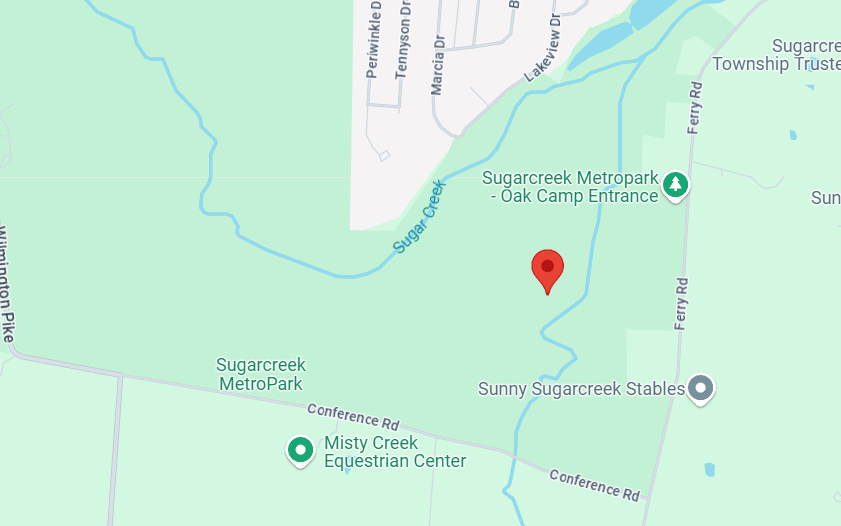
Over break, I visited the Three Sisters at Sugarcreek MetroPark in Bellbrook, Ohio, with my dad. The Three Sisters are 580-year-old white oak trees. Neither my dad nor I had visited here before, but we’ve been trying to explore the different MetroParks in the Dayton area.
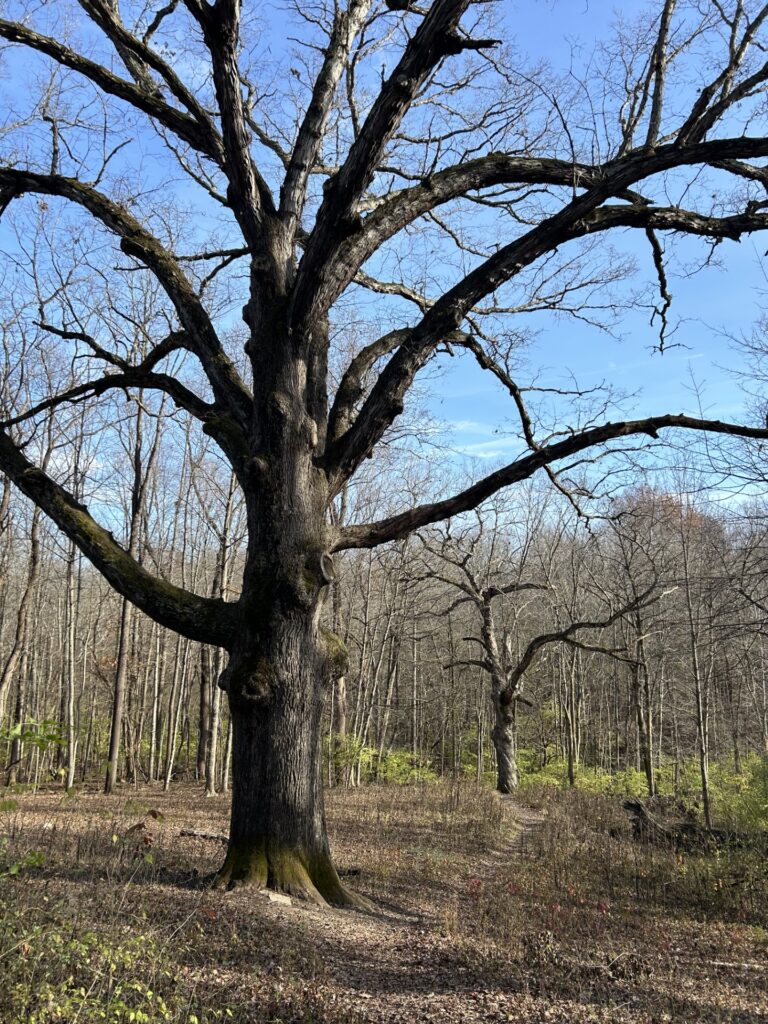
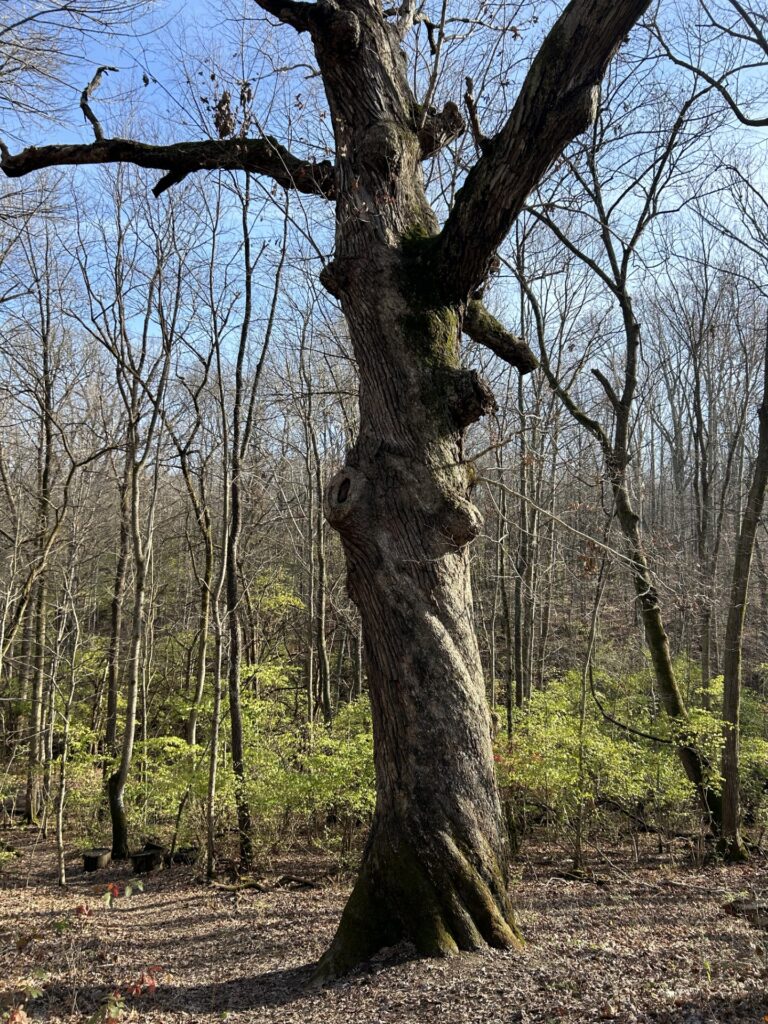
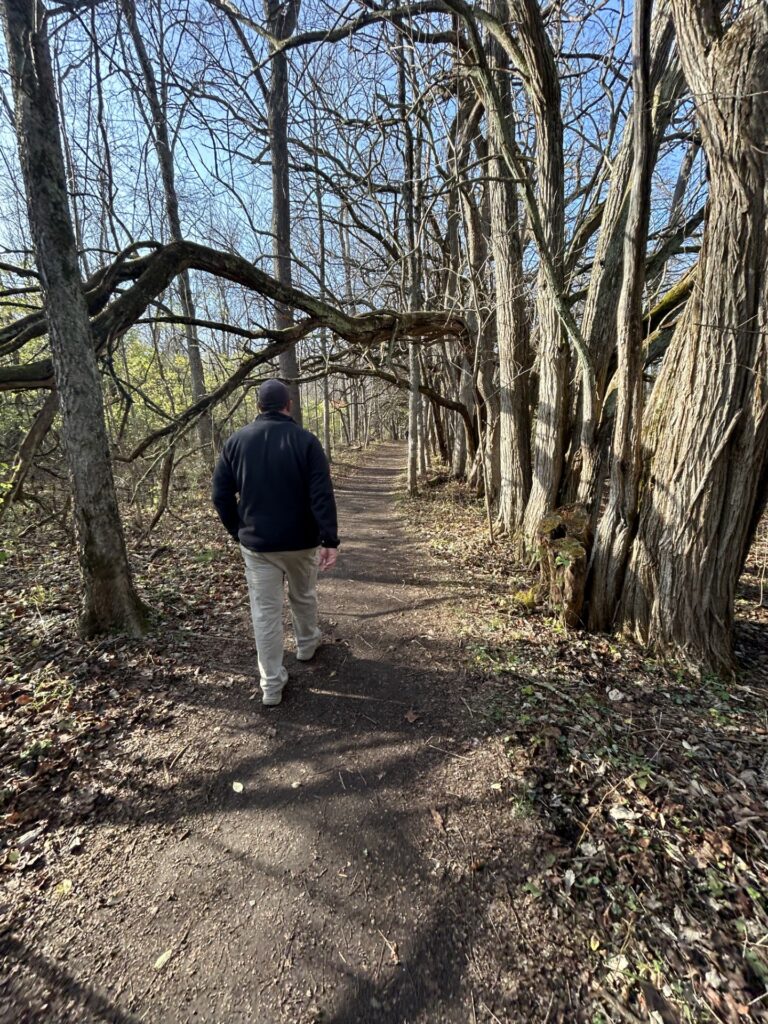
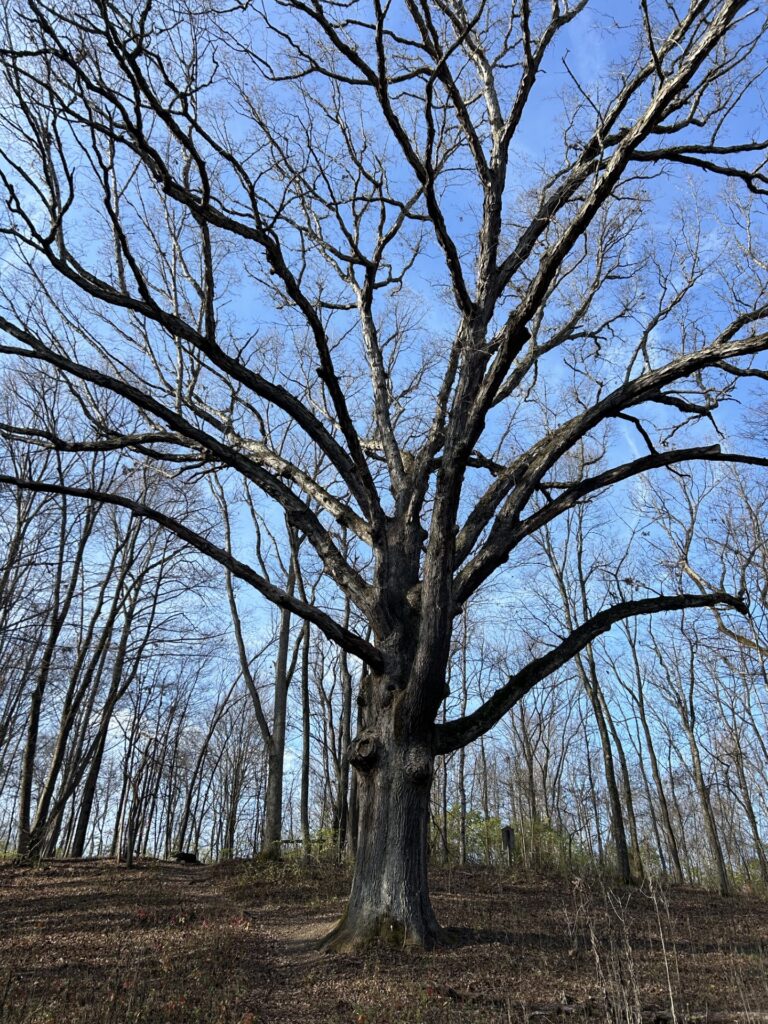
Honeysuckle visibly dominates the understory of this forest, as it is the last tree here to hold onto its leaves. There was sparse new growth for the native trees of this forest. The overstory consisted of a mix of white oak, sycamore, cottonwood, sugar maple, black cherry, and chestnut oak. There are little to no coniferous trees in this forest, which is similar to my phenology spot by the Winooski River. The soil in Ohio felt more clay-like, in contrast to the sandy soil in Burlington. Most of the groundcover has died off by now, but it appeared to be grassy in this opening where the white oak trees were. It appeared that there were a lot of fallen trees in this forest, and with most of the new growth being invasive honeysuckle, it makes me worried for the future of this forest.
What was most notable to me when I was picking somewhere to visit for my assignment was that Sugarcreek MetroPark was once completely farmland. The Osage orange trees seen planted in rows once acted as fencing for their cattle before barbed wire was invented. The MetroPark system in Dayton is similar to the urban natural areas in Burlington, in that conscious land use practices have restored this forest after its clearing, allowing for use by the public.
Overall, I was really shocked that these trees had been 40 minutes away from my house my whole life and I had never seen them! I can’t imagine what they have seen in their lifetime, and I am curious about the history of land use in the Greater Dayton area as it compares to what we have learned about Burlington. I am extremely grateful to have these urban natural areas available to me at home as well as in Burlington.
https://maps.app.goo.gl/JP1EwWk2wsT9EBJ4A