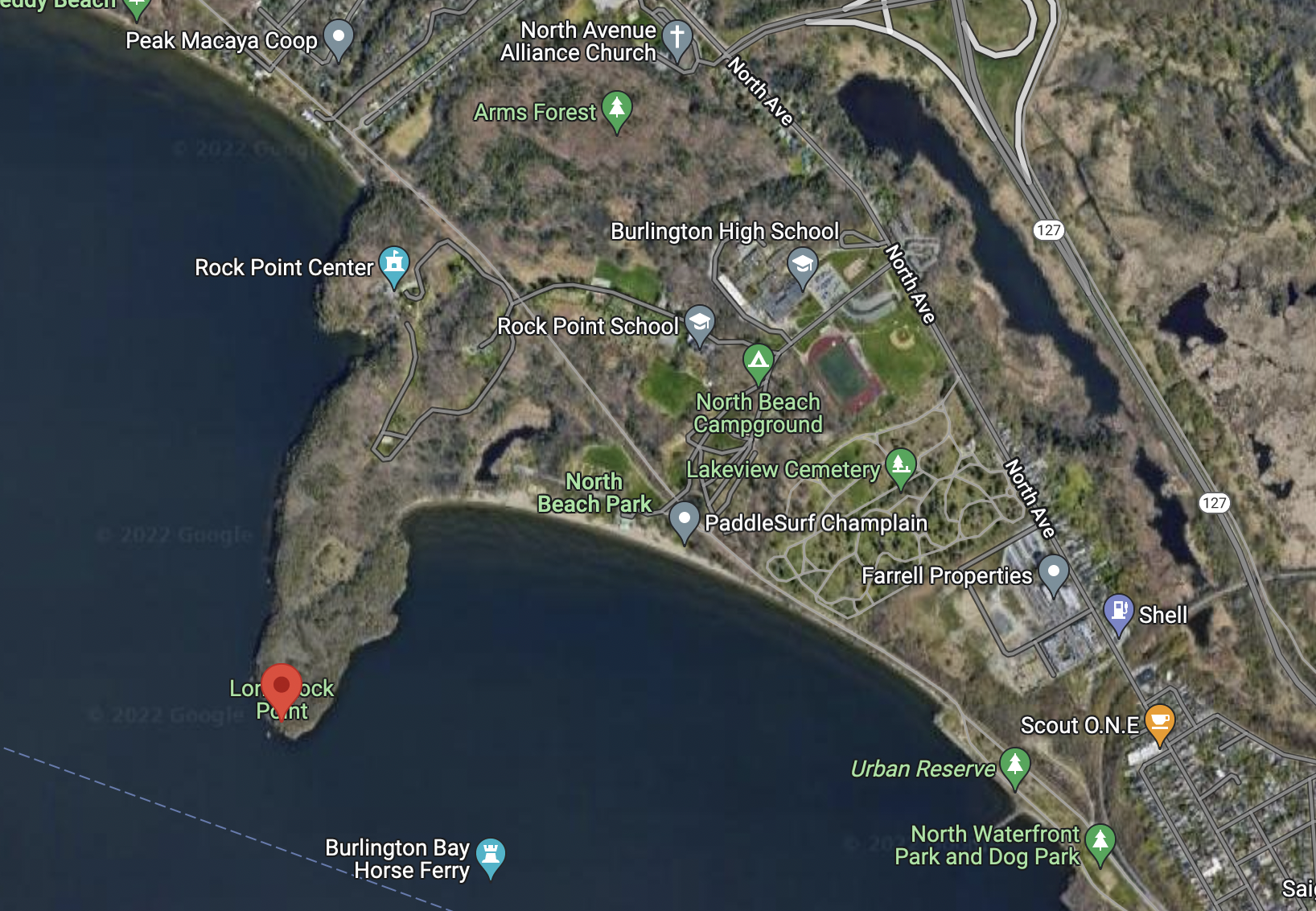
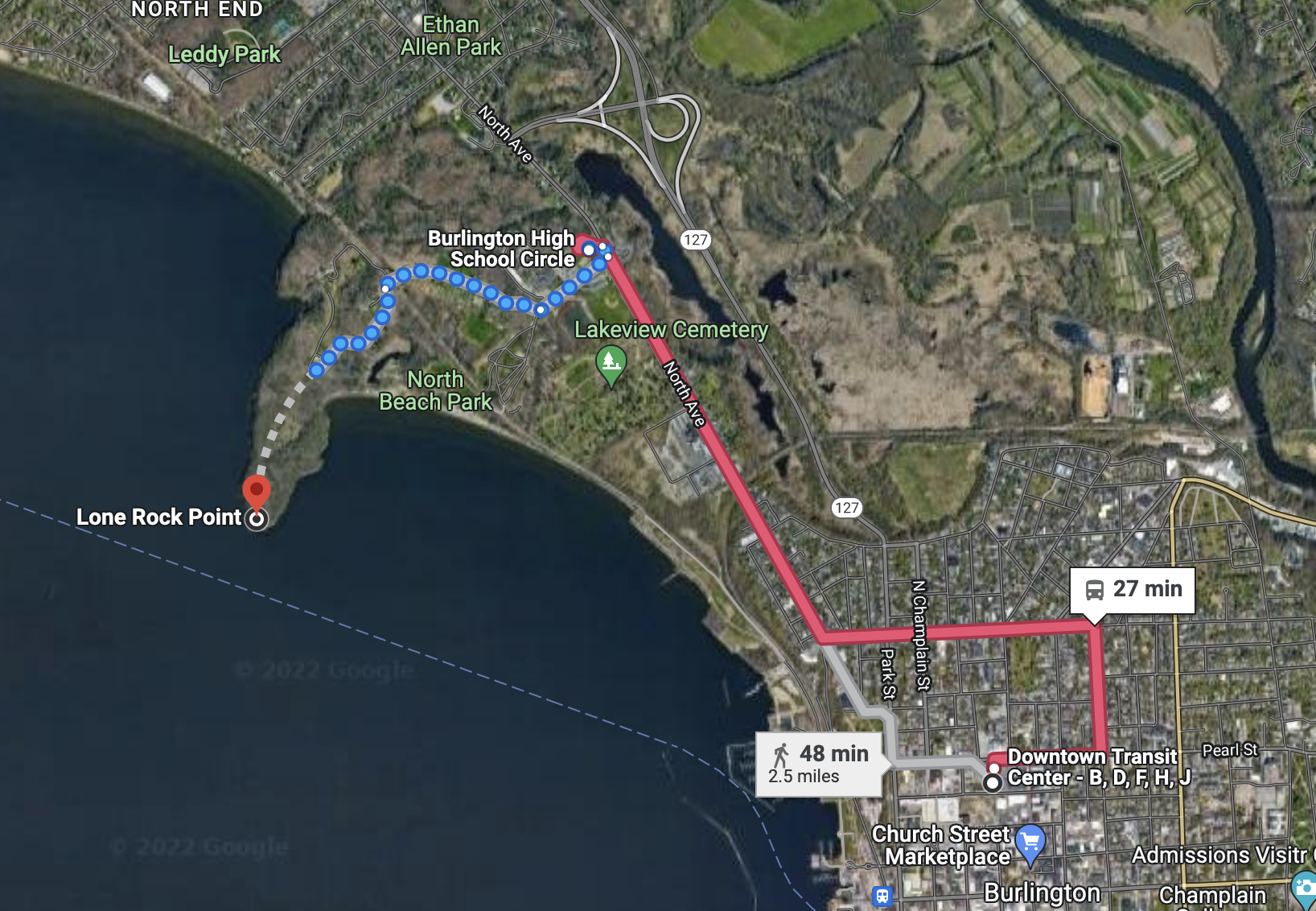
In terms of getting to my location, there are quite a few options. You can bus, bike, drive, or even walk. I choose to take the bus, so I will explain my process:
- Take the 7 bus from the Downtown Transit Center ( this can be reached by walking downtown from campus, or taking a bus)
- Get off right before Burlington High School
- Cross the street to the left ahead and head down Institute Rd.
- Turn onto Rock Point Rd, and follow it until you hit a fork in the road.
- Turn left at the fork, and follow the road all the way until you see a Trailhead.
- Take the trail to the right of the Trailhead, past the outdoor chapel.
- Continue along the path until you reach the lookout without railings ( be careful it is a big drop!)
- Congrats!, you’ve made it to the Overlook over Lone Rock Point!
Let’s Take a Look Around!
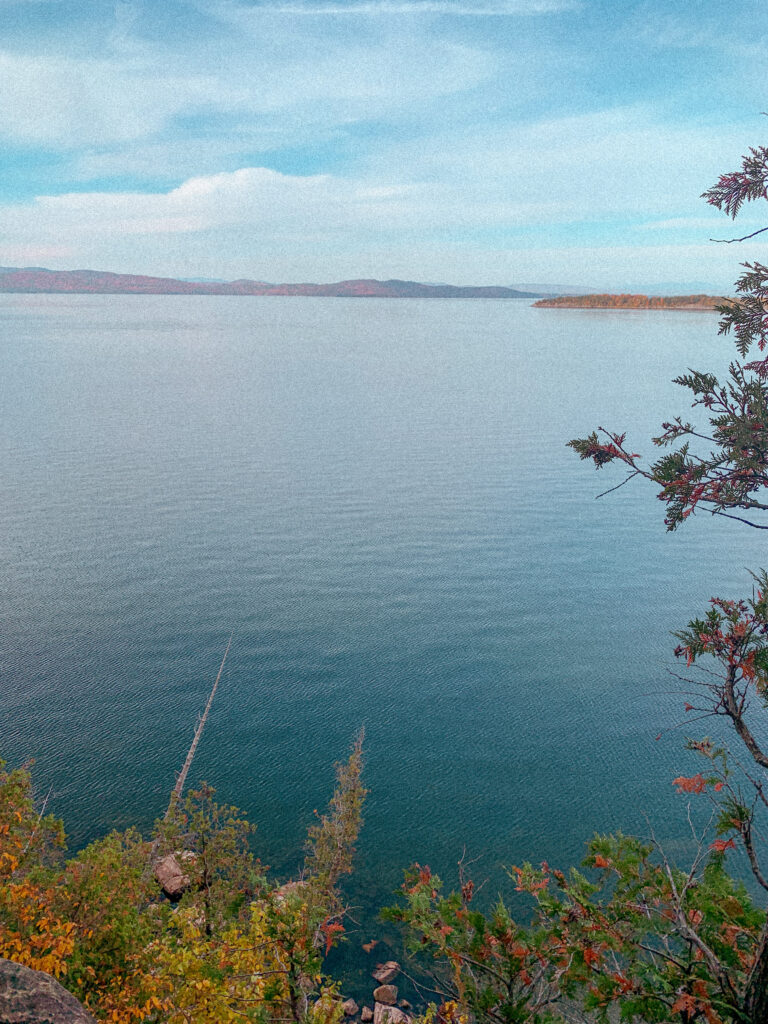
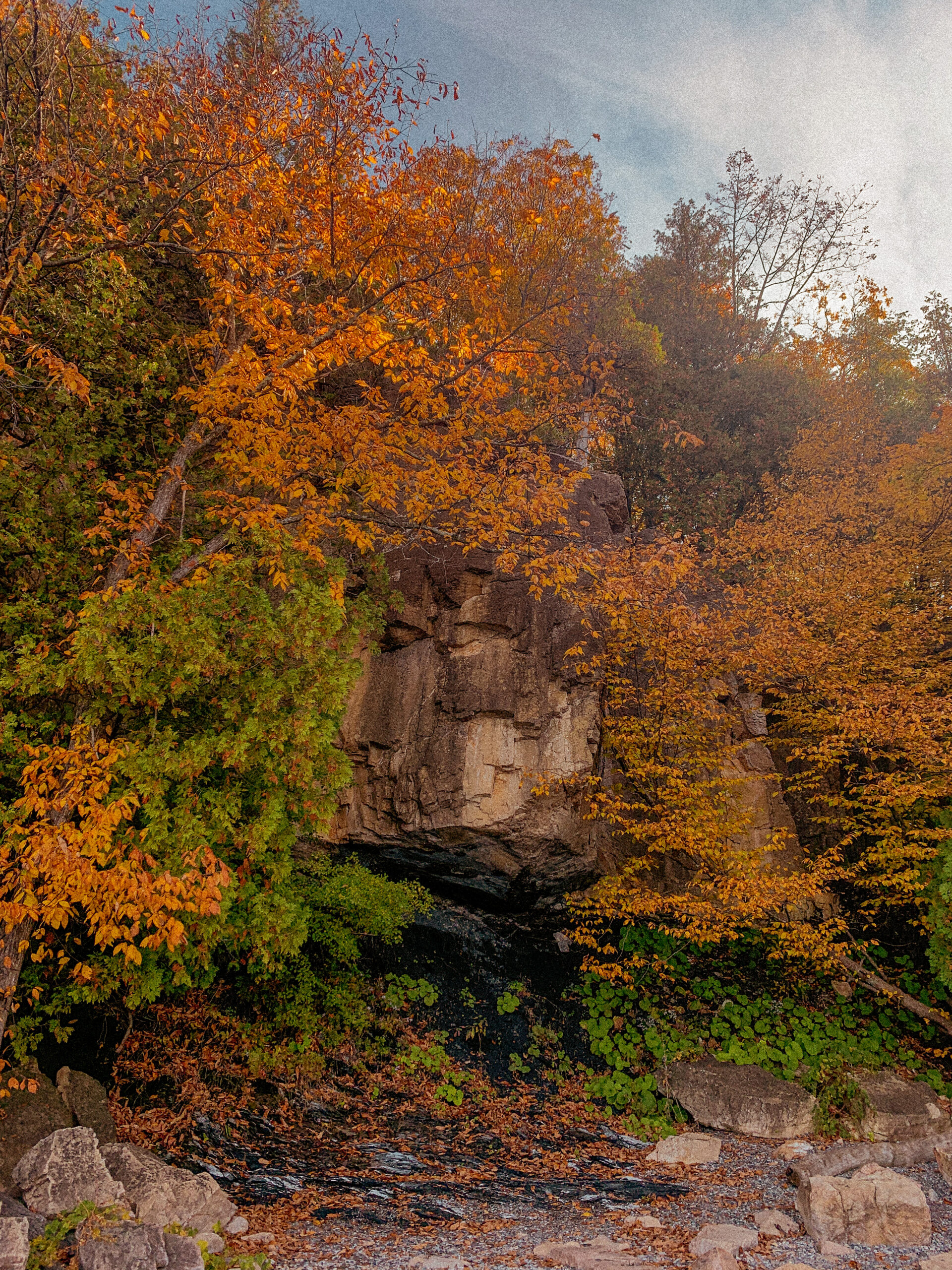
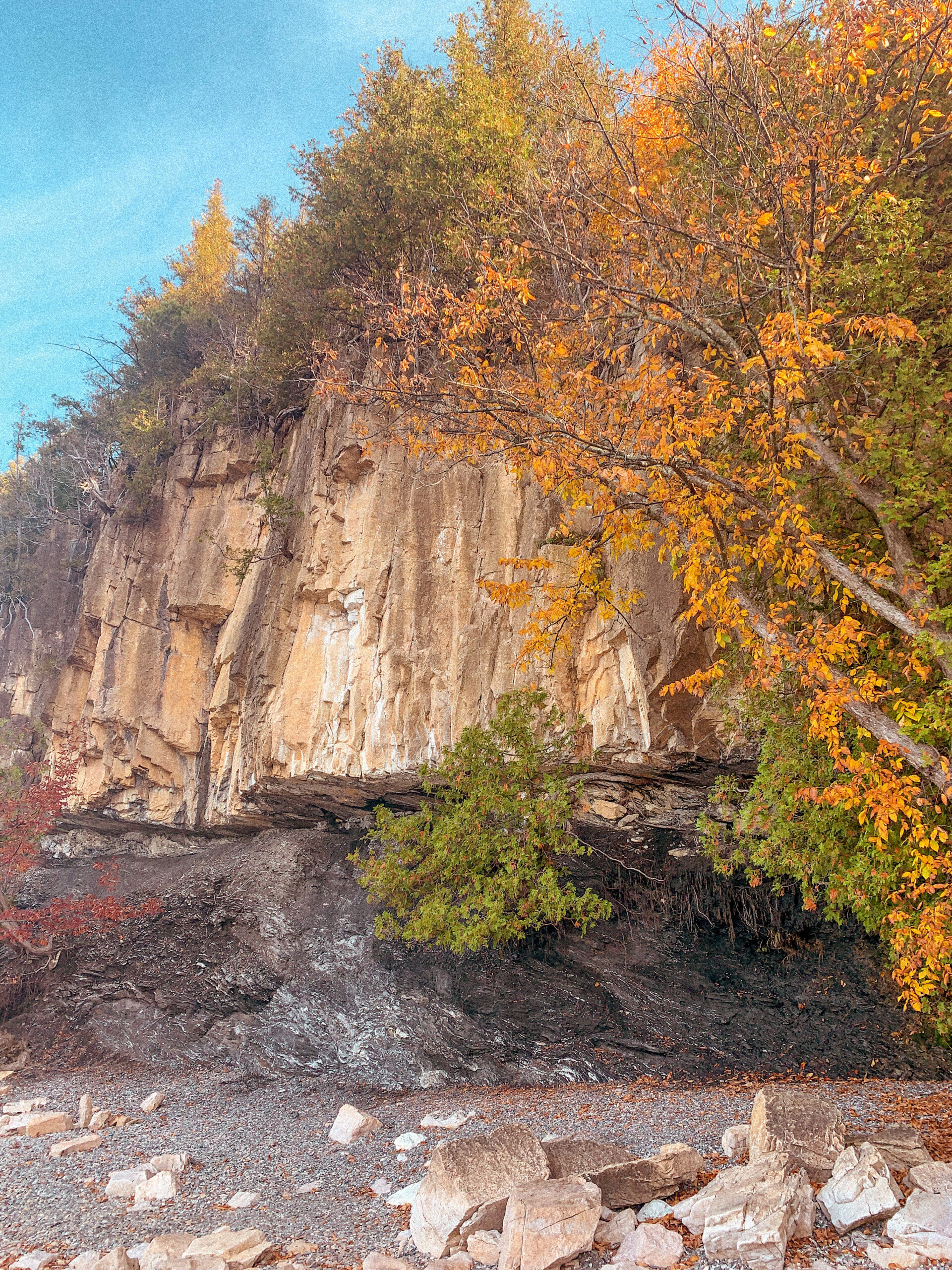
As you can see from the video, this area is a lookout over a Rock Point, it is a small clearing above Lone Rock Point, surrounded by rock, small woody shrubs, and a few trees towards the cliff’s edge, and a more expansive amount of trees behind the lookout.
A Bit of Background
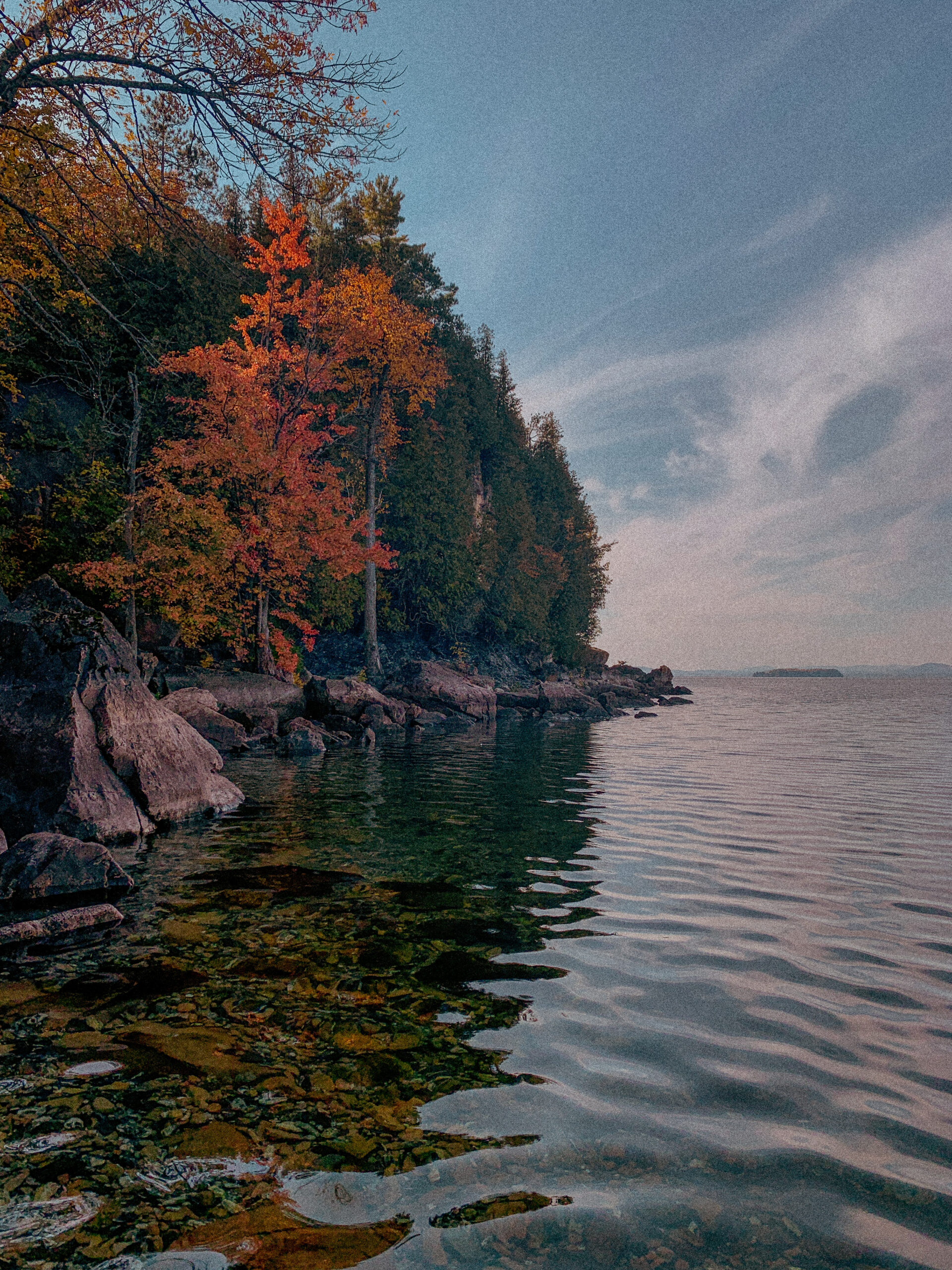
When I first went to Lone Rock Point, I had quite an unfavorable experience. Within fifteen minutes of walking towards the final destination, I was stung by two yellow jackets, one on each of my legs. This darkened my mood significantly, as I hobbled my way through the forests and rock-lined trails. Eventually, I reached the shore of Lone Rock Point. I felt the pain of my yellowjacket stings subside, and was washed away by the beauty of the historic geological site, with the massive pilings of shale and dolostone. I felt so enamored by the location, that when I considered a location for my Phenology Project, I had to follow my gut and choose Lone Rock Point. I hope throughout my time exploring my overlook over Rock Point, that I can form a deep connection between the environment around me and everything that it encompasses.
What’s going on around here?
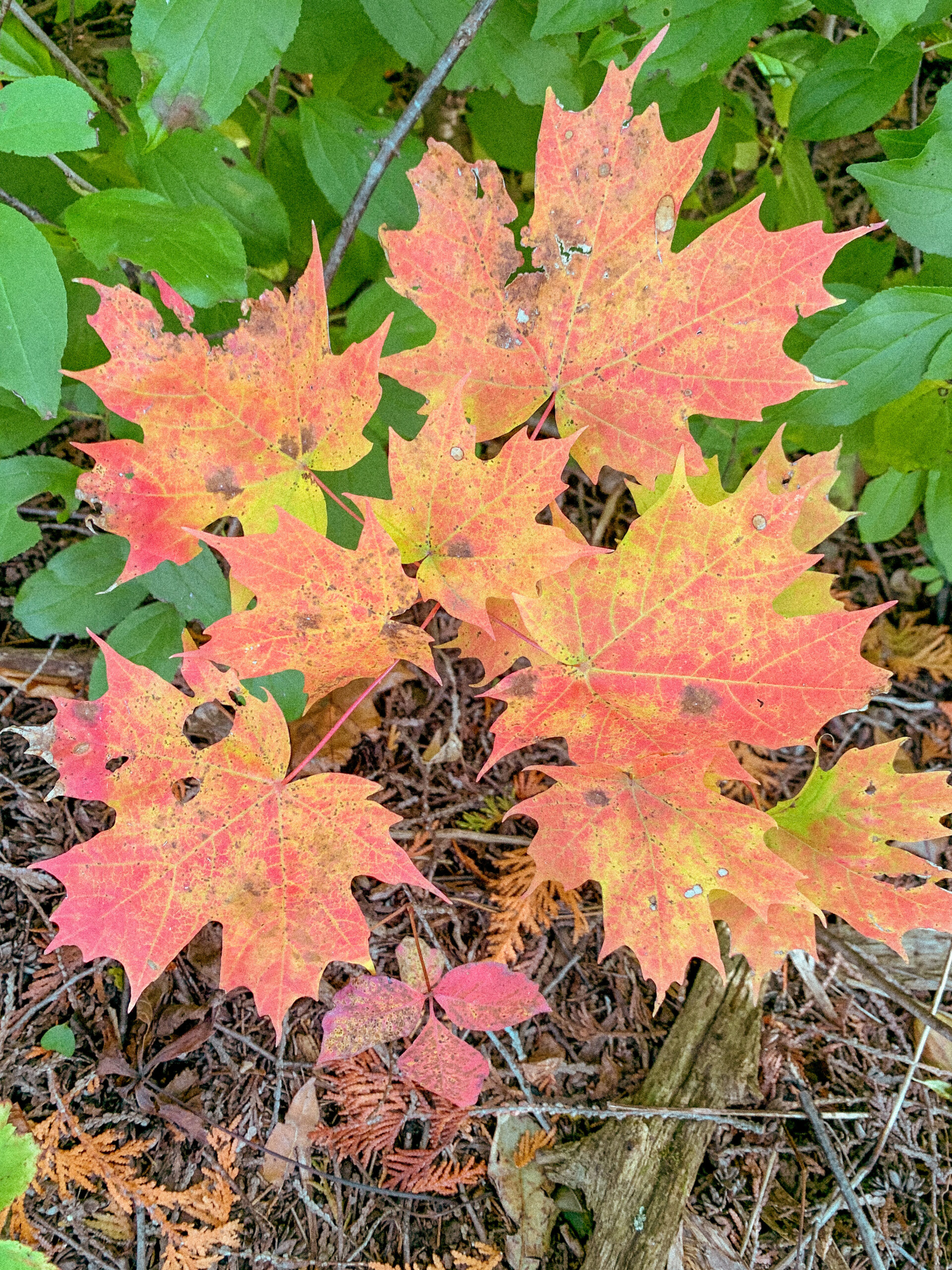
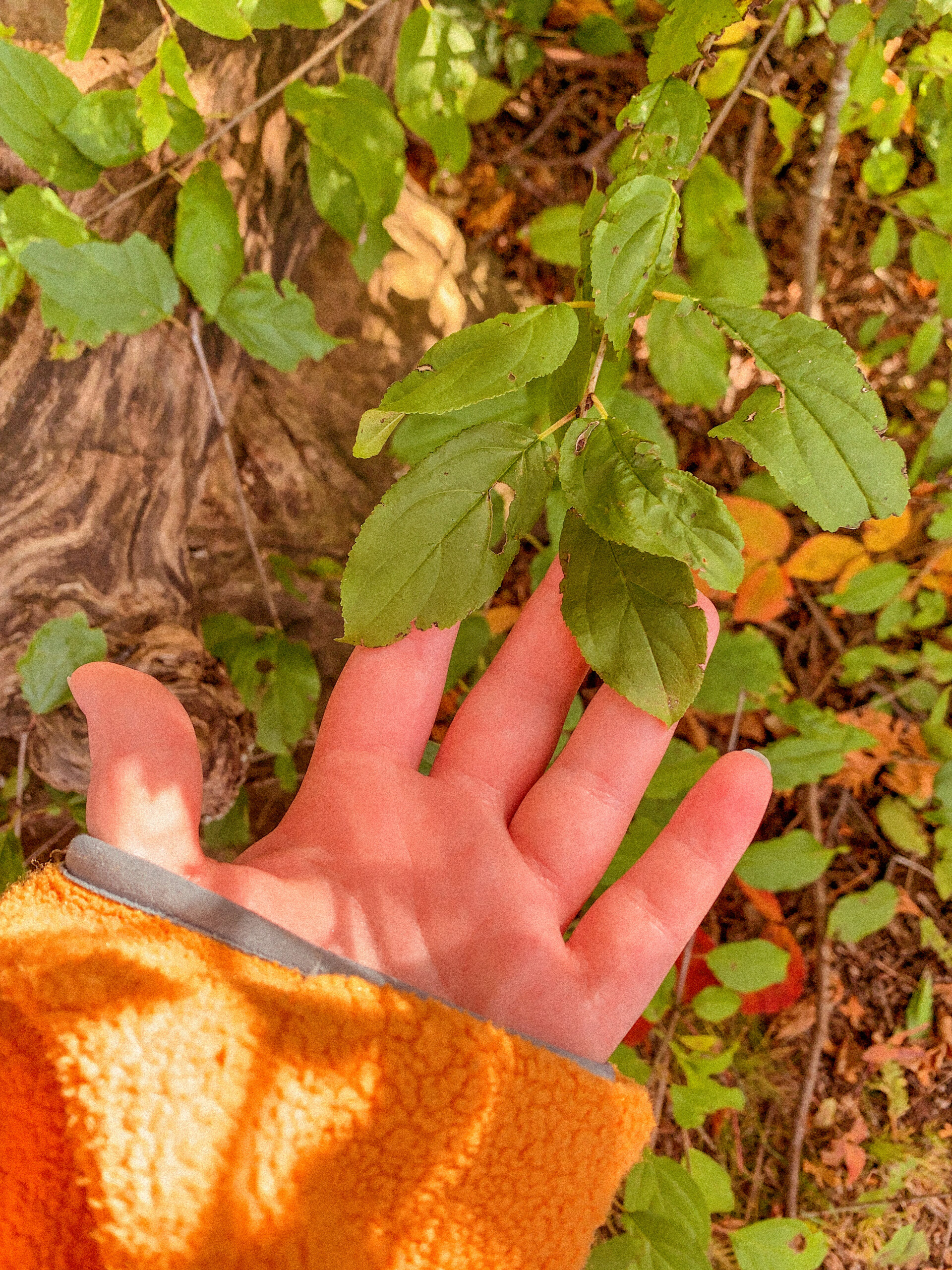
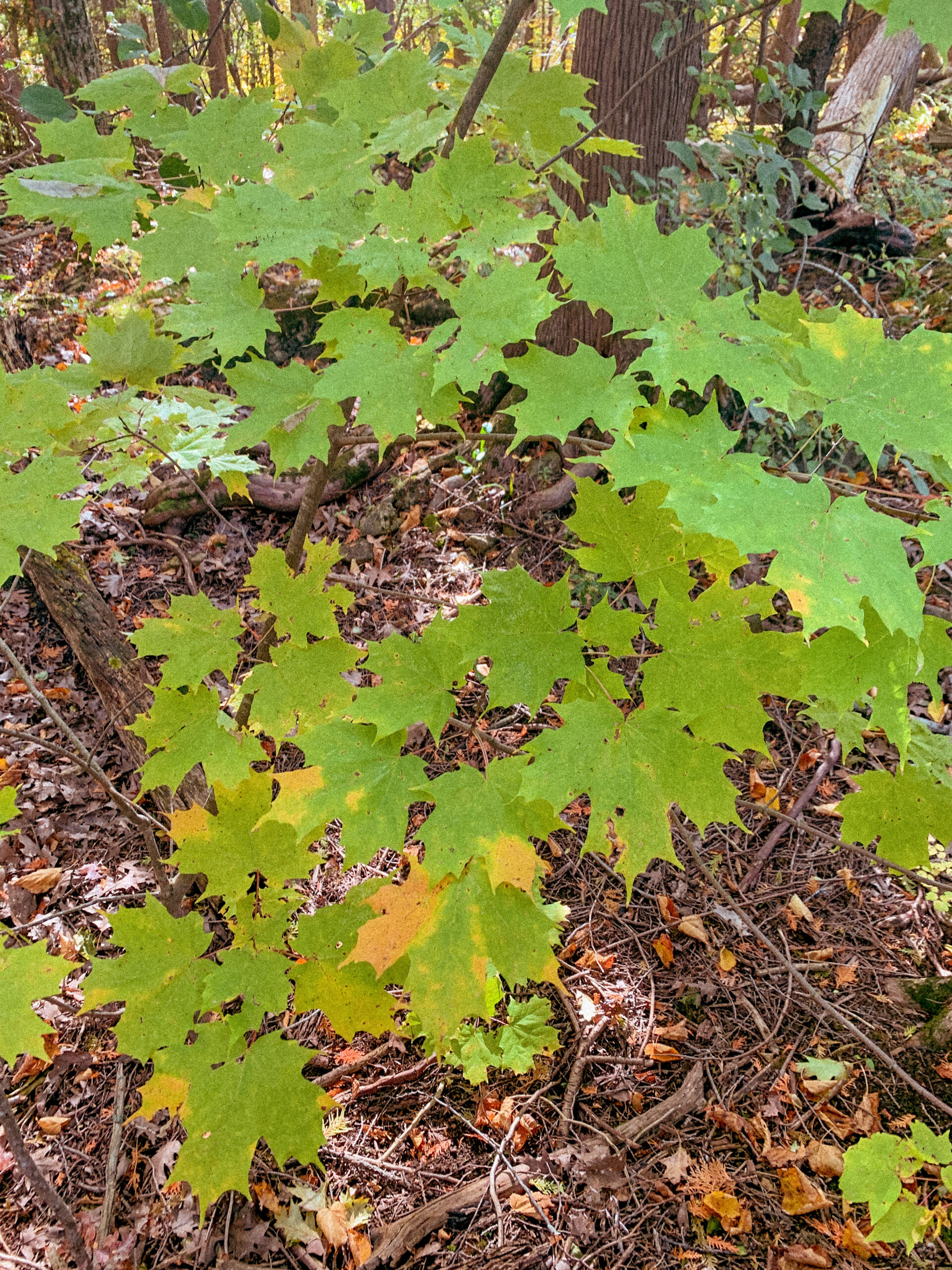
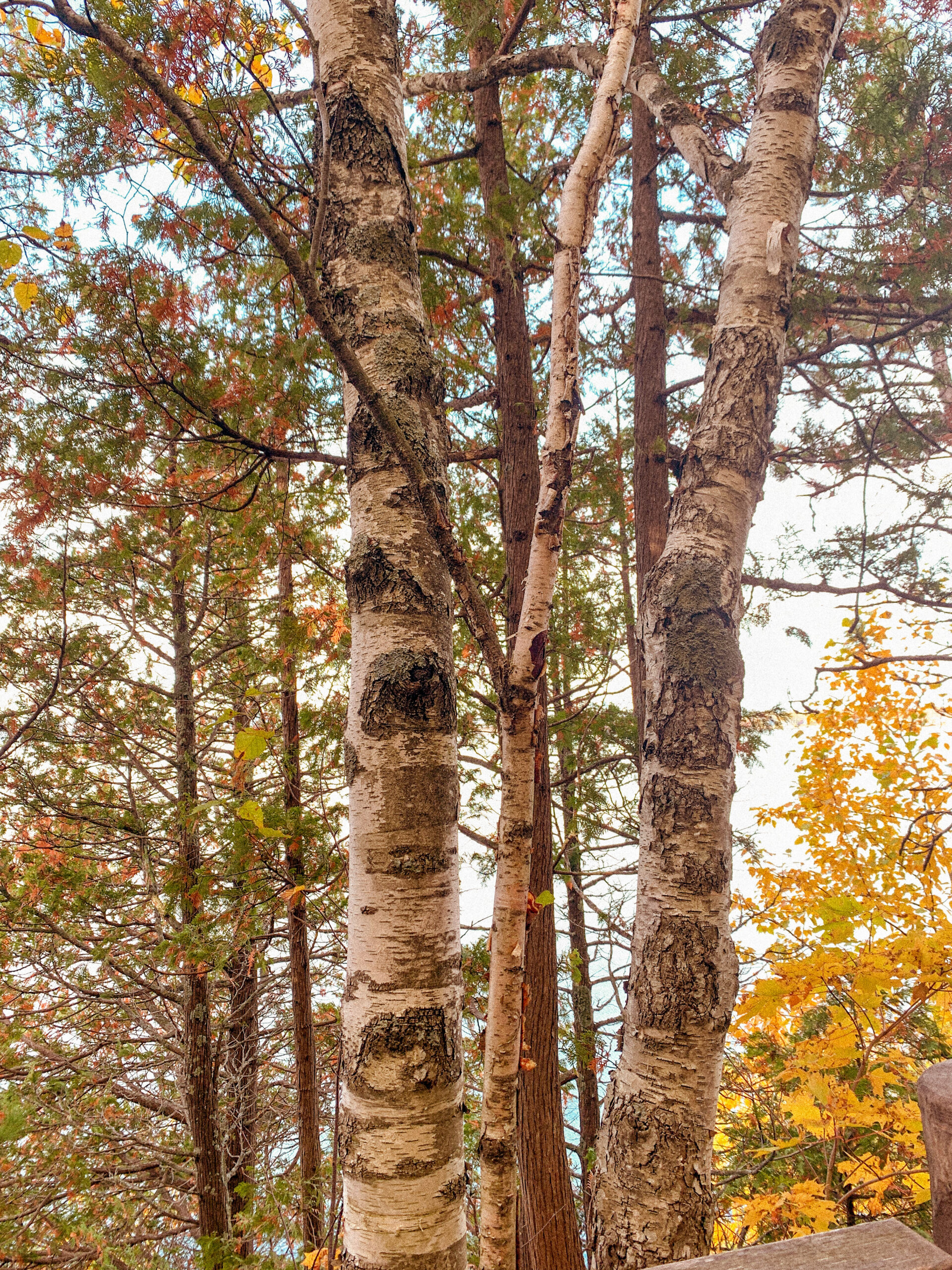
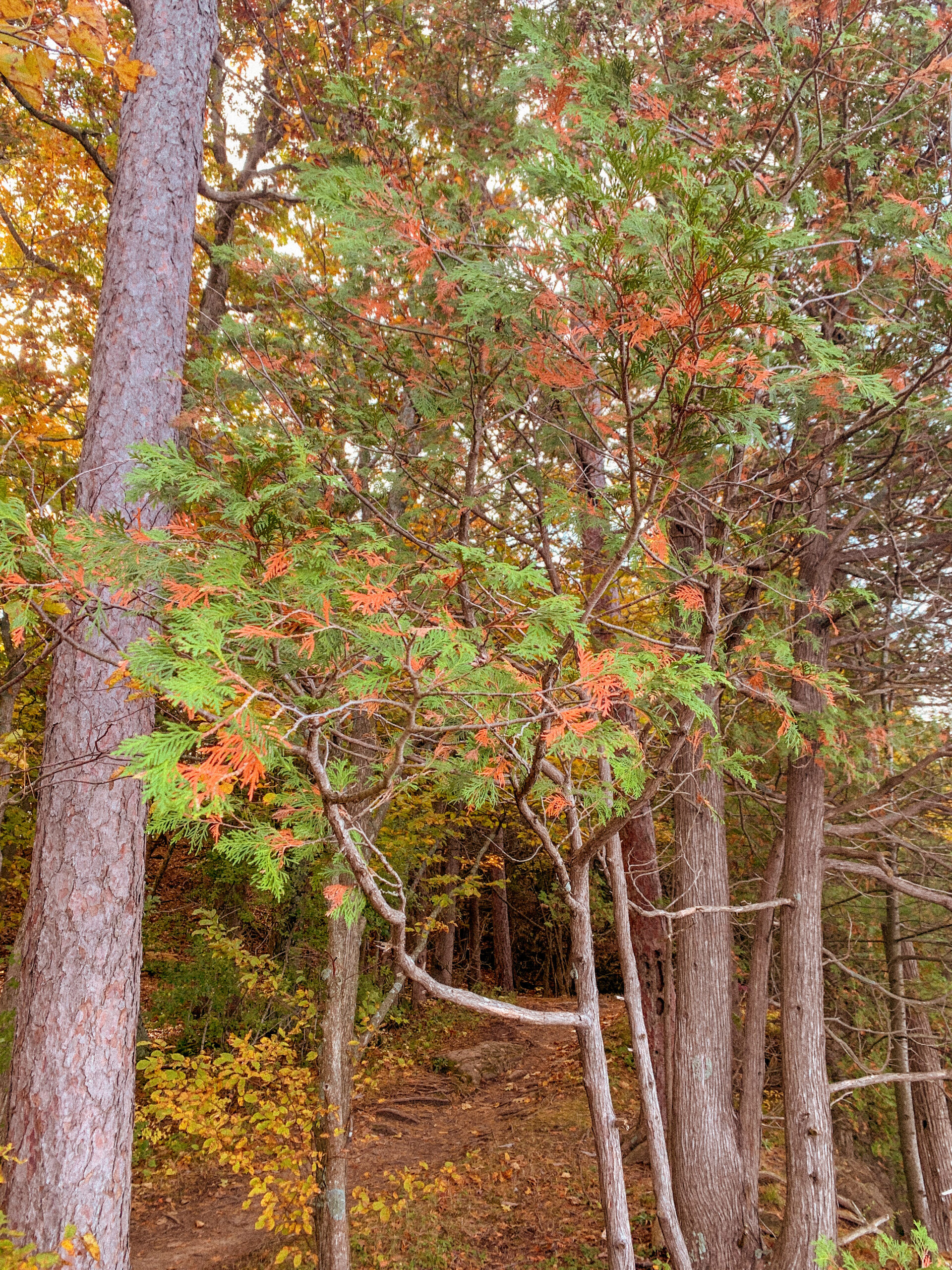
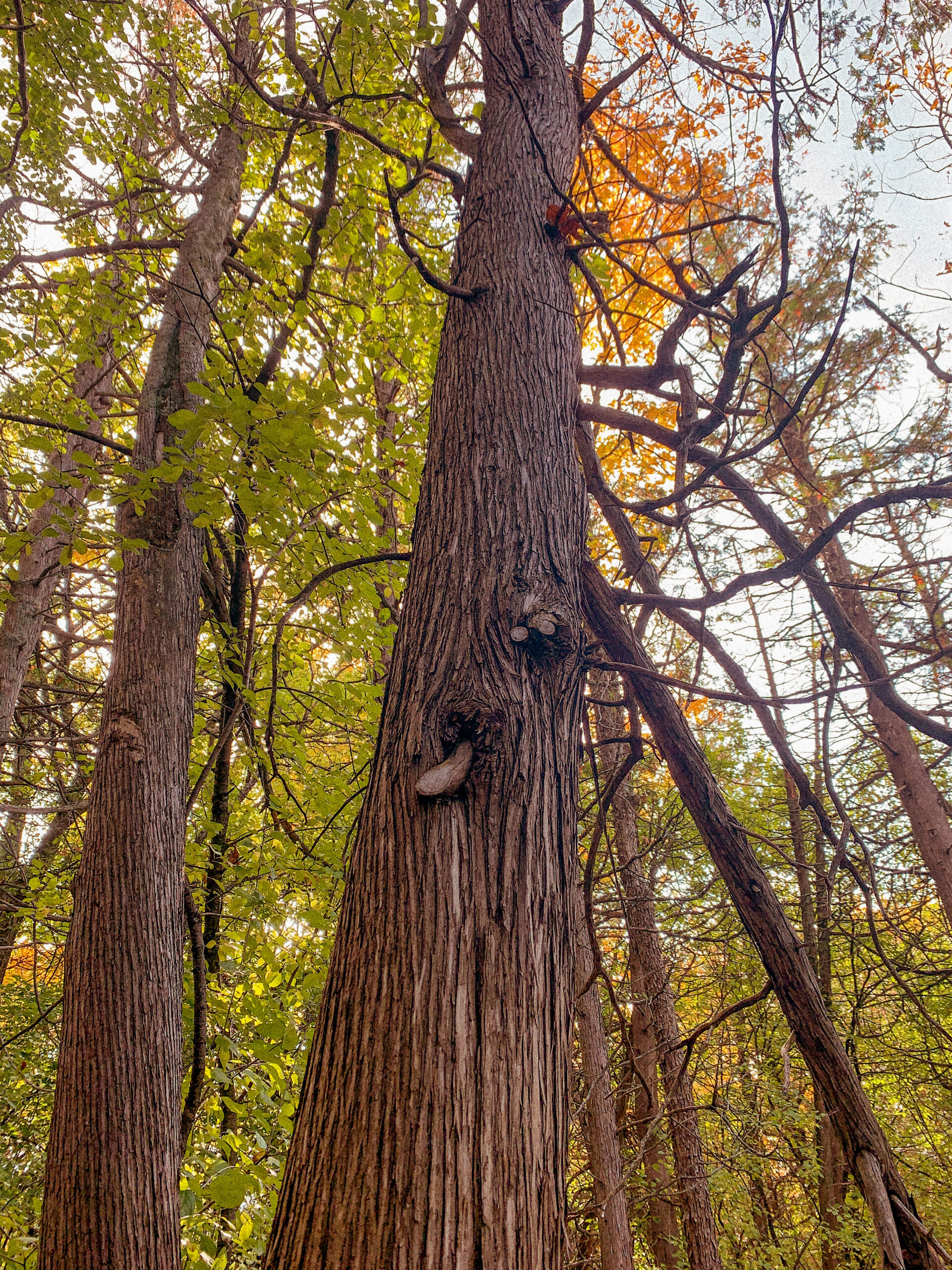
The most common species I found in my specific location were Northern White Cedar, Eastern White Pine, and Paper Birches. In terms of woody plants/shrubs, I saw a large amount of Buckthorn, as well as Sugar Maple, and some young Norway Maple (as seen by the tar spots on the maple leaves in the top left)
A farewell ( for now)
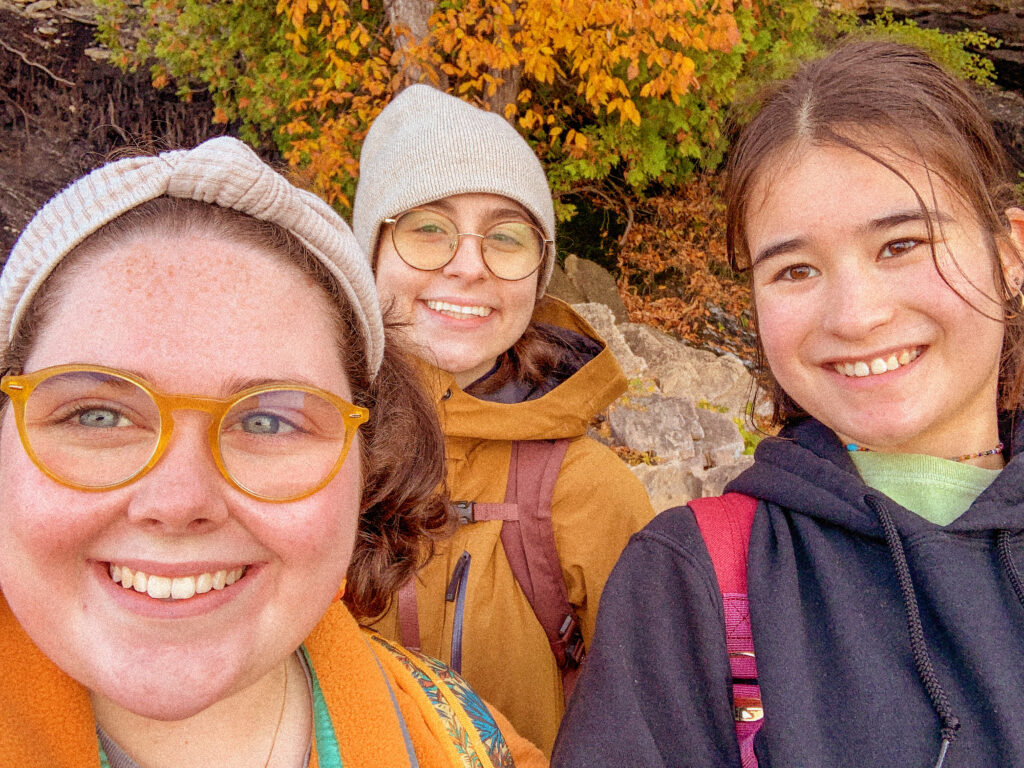
I had a great day exploring Lone Rock Point, and the overlook I chose for my phenology project. I skipped rocks, watched some nearby geese, and even sat and sketched some of my surroundings. I cannot wait to return and see how it changes throughout the seasons!
“Earth and sky, woods and fields, lakes and rivers, the mountain and the sea, are excellent schoolmasters, and teach of us more than we can ever learn from books.”
– John Lubbock