
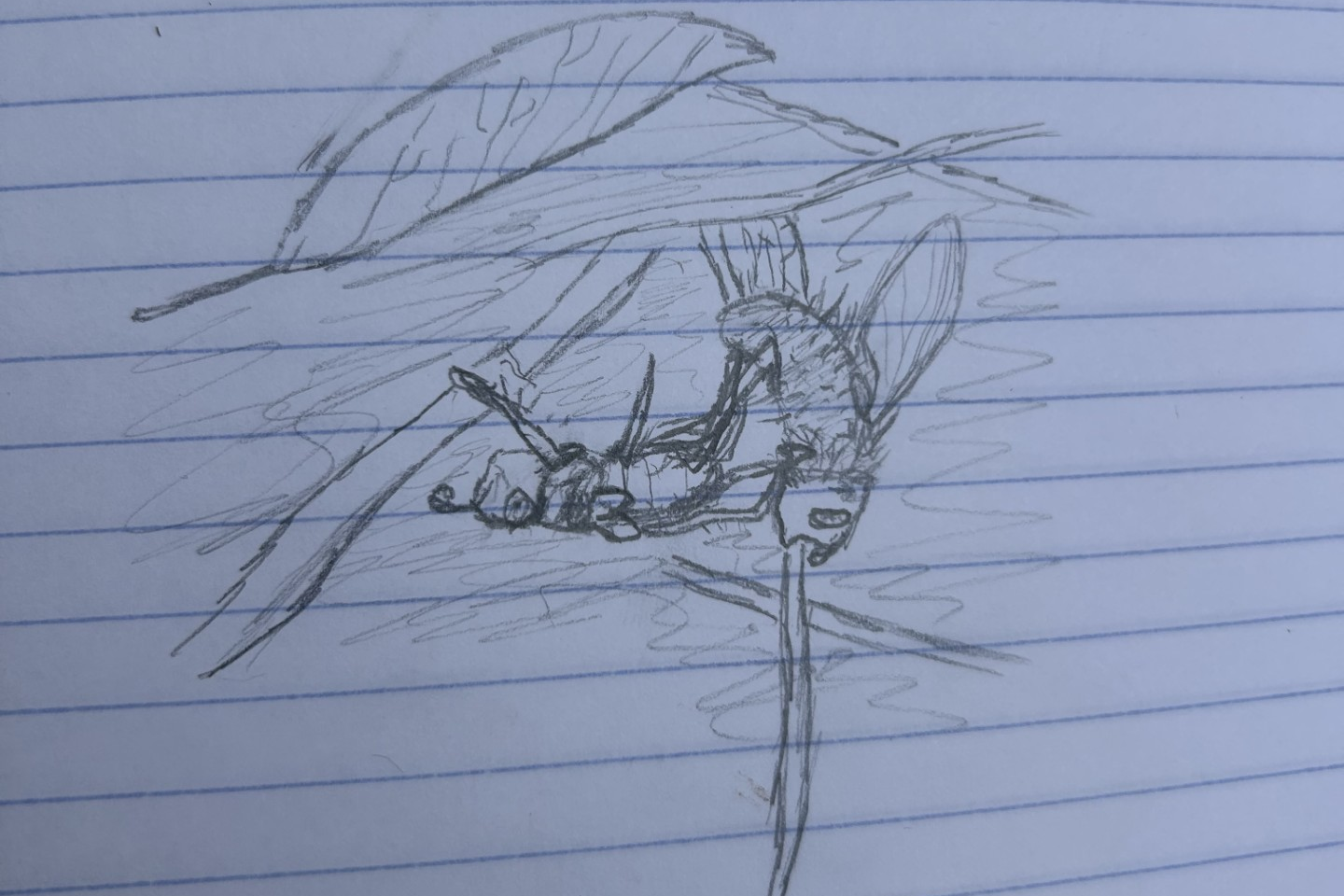
The biggest phenological change I have noticed at my site in the springtime is the dramatic increase in wildlife activity. In my past blogs, I’ve written about how birding at this spot has been relatively uninteresting, with me only observing a few individuals of common species like black-capped chickadees, robins, and crows. During this visit to my site, however, the forest was filled with the diverse songs of many different species, including a lot of birds that just arrived for their spring migration. I am not very good at identifying most bird calls, but the Merlin app picked up on the songs of multiple warbler species, (possibly?) scarlet tanagers, Goldfinches, titmice, a great-crested flycatcher (I looked for it for so long but never found it), and many more! Additionally, where there was previously ice and snow in the brook, a steady stream of water from our recent rain was flowing and full of small fish. A lot of trees I saw were flowering and budding for the first time I’ve seen this semester. Finally, I observed many insects and other arthropods moving around the forest and gliding across the surface of the brook, including the reproducing flies I observed for my sit-and-sketch.
The landmarks of my spot with which I have become familiar are the bend in the river near the path (because of the shape of the surrounding hills), the patch of grassy and herbaceous plants across the brook, the brook itself, and the wooden planks on the path because of the muddy soil.
The primary way nature and culture intertwine in my spot as well as the rest of Centennial Woods is that it is used as a natural recreational and educational space. The UVM Birdwatching and Herpetology Clubs use the space for their wildlife observation recreation. Classes like NR1010/1020 and Restoration Ecology use Centennial Woods as a venue for hands-on environmental education. The space expands outside of human use, too: I have seen community members coming to forage (not allowed, so…), trail run, walk their dogs, and hike with their families. All of these methods help to create a space for a culture of outdoors appreciation and conservation.
Honestly, I do not consider myself a part of my place. I am simply a visitor, coming to observe what the actual parts of the habitat are up to. Unlike other organisms, I do not sleep, eat, hydrate, live, reproduce, or grow in these woods. Centennial Woods is designated as a scientific natural area, and the only way I am a part of the place is in my temporary role as an environmental scientist.