
For this month’s phenology assignment, I explored East Woods as well as around the downtown Burlington area and campus. With the new knowledge I have gained from the reading, lecture, and lab, I realized I felt much more knowledgable not only about what wildlife was around me, but also their behaviors and how to identify them from their signs.
By far the most interesting thing I observed during the February 15-24 period was actually on the CATSbus on the way to lab, where I saw a red-tailed hawk attacking a squirrel right by the road outside Morrill Hall. Later that night, I walked around looking for any signs of this event and found signs of the bird’s feathers in the snow as well as the squirrels tracks leading away from it.
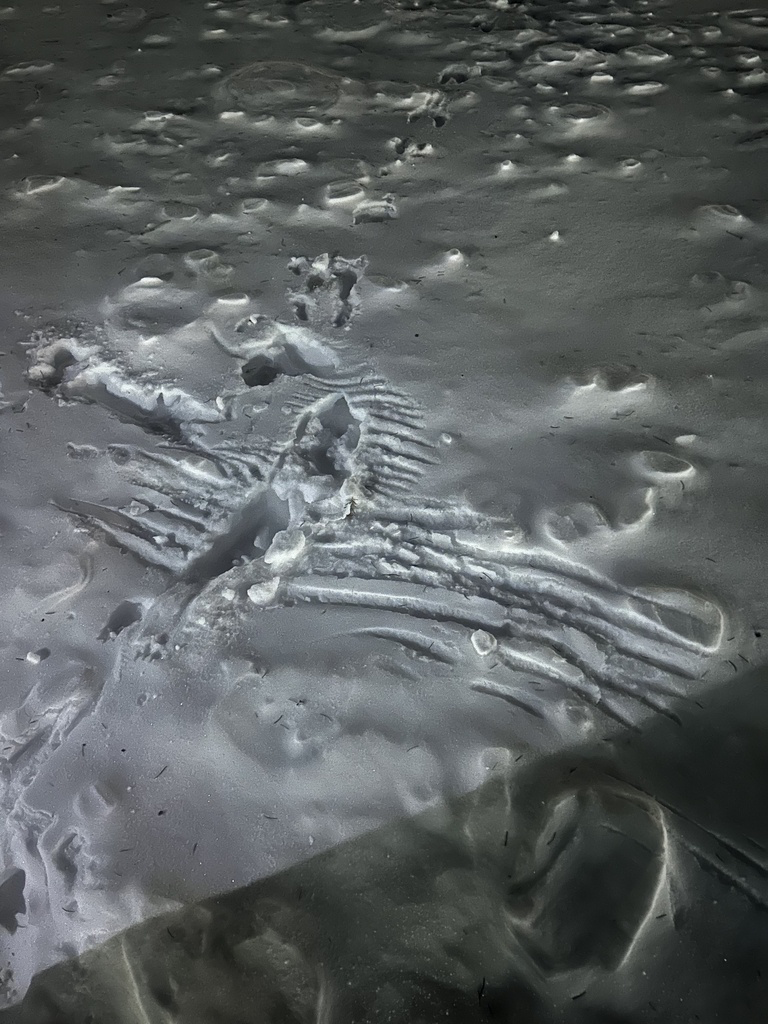
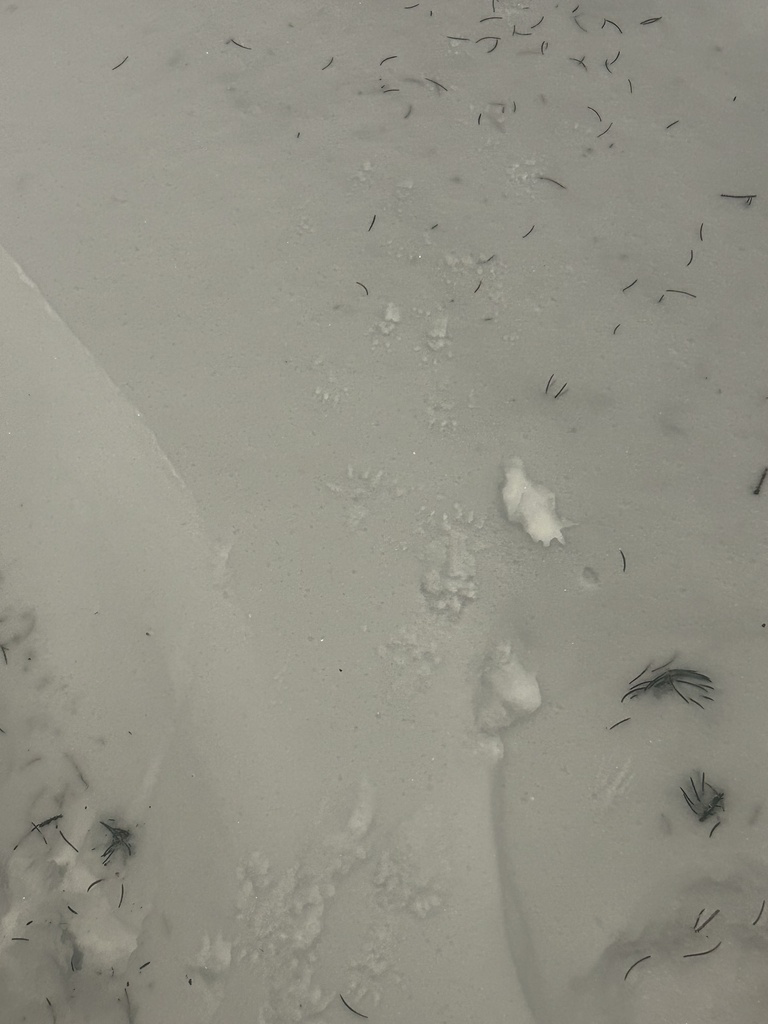
Because I saw both of the animals that left this prints in-person, I was able to confidently identify what left these prints. However, I was much less confident in the other bird tracks I saw.
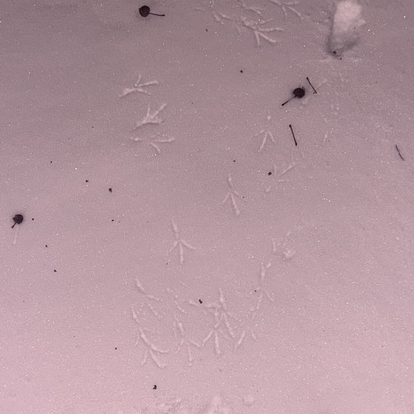
I could reasonably infer that these tracks were left by a passerine based on my knowledge of what birds could leave tracks of this size in our area at this time of year. However, I could not really reach any more specific identification, besides that it wasn’t a smaller bird like a chickadee. I would assume they were left by a robin, based on the near total dominance they seem to have on the campus bird population, but I can not say this with certainty. Based on the small imprints left by the fruits dropped under the tree, I assume the bird was feeding on these fruits.
When I went to East Woods Natural Area to observe wildlife signs, I was expecting to find many signs that I might not be able to find elsewhere. However, I was greatly disappointed by what I found, with the only tracks I found being from domesticated dogs. I had originally considered that these tracks could have been left by another canine, such as a coyote, but the frequency of them and their positioning exclusively by the trail led me to believe they were all from dogs (as well as the fact that I saw ~5 different dogs being walked there).
I really enjoy using iNaturalist for our phenology assignments, for I enjoy being a “citizen scientist” by helping document wildlife all over. Despite having used. iNaturalist before, using it for our phenology assignments has inspired me to use it more and broaden the diversity of my identifications.