
Today, I conducted my final exploration of the phenological changes in Dutch Fork Wetlands. The most significant changes I observed in the flora were that most of the last leaves that were clinging onto the alders had dropped to the ground. The rest of the leaf litter has also started to darken and break up, sinking into the mud and succumbing to the accelerated decomposition that is characteristic of wetlands. The seeds on top of the stems of the indianagrass surrounding the wetlands have also dropped, leaving behind mostly empty branches where they had previously been. More of the pricklier goldenrod seeds were still in their clusters, with only some missing from the pods of the dried plants. Additionally, the fruit that adorned the multiflora rose has vanished, either eaten by animals or dried and dropped to the ground.
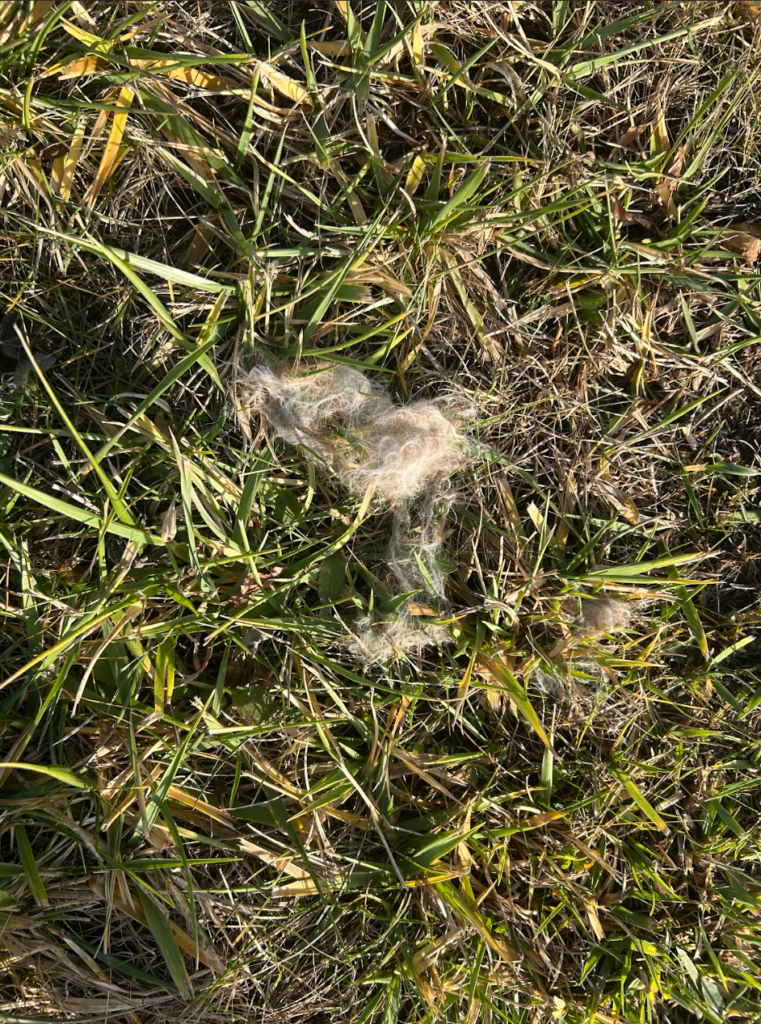
I was also able to find evidence of some animal activity by my spot, such as the spot of fur left in the middle of the trail above. My assumption is that it is from a white-tailed deer, perhaps one that has molted into their winter coat. The bird activity that I had come to known the wetlands for had also diminished, as I only heard tree sparrows, white-throated sparrows, crows, and Carolina wrens. The blackbirds that could often be spotted flying above the grasses outside the tree cover seemed to be missing, possibly having migrated South for the winter.
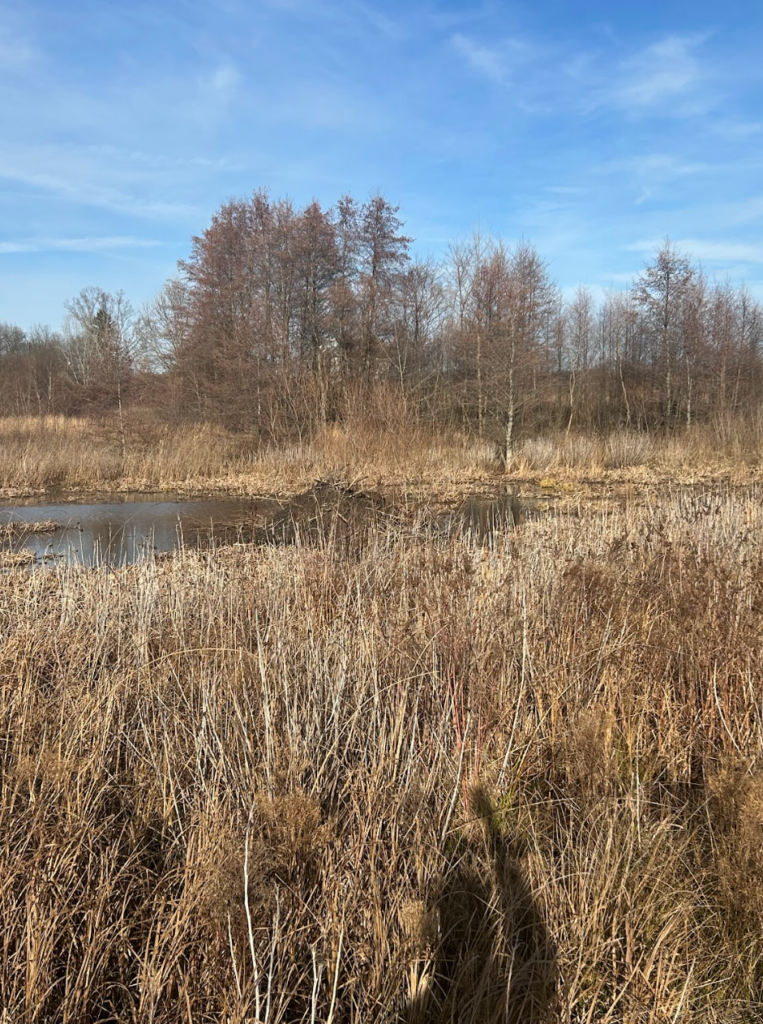
Finally, in the increased absence of leaves and thick vegetation, I was able to observe a beaver dam I had not previously noticed, however I was not able to spot any beavers.