Posts

Reflecting on my Phenology Walk

On March 31, I went out to collect my data for the phenology walk.

Generally, it appeared that all 5 trees were in a dormant phenophase, with no buds breaking, flowers, expanded leaves, or pollen visible.

Looking at the National Phenology Network’s website, something that sticks out to me is how spring started earlier than average in some places in the US, but later in others. Spring tended to be arriving later in northern states, like Vermont, and earlier in southern states, a development that is likely related to climate change. Thinking back to our phenology guest lecture, I wonder if this could represent phenological mismatch, where phenophases that are meant to occur in sync will become disjointed, disrupting ecological processes. For example, a lot of birds migrate through Vermont in the spring, but if spring occurs earlier in the South and later in Vermont, is it possible that the birds could migrate too early and not have enough food?
Final Phenology Post

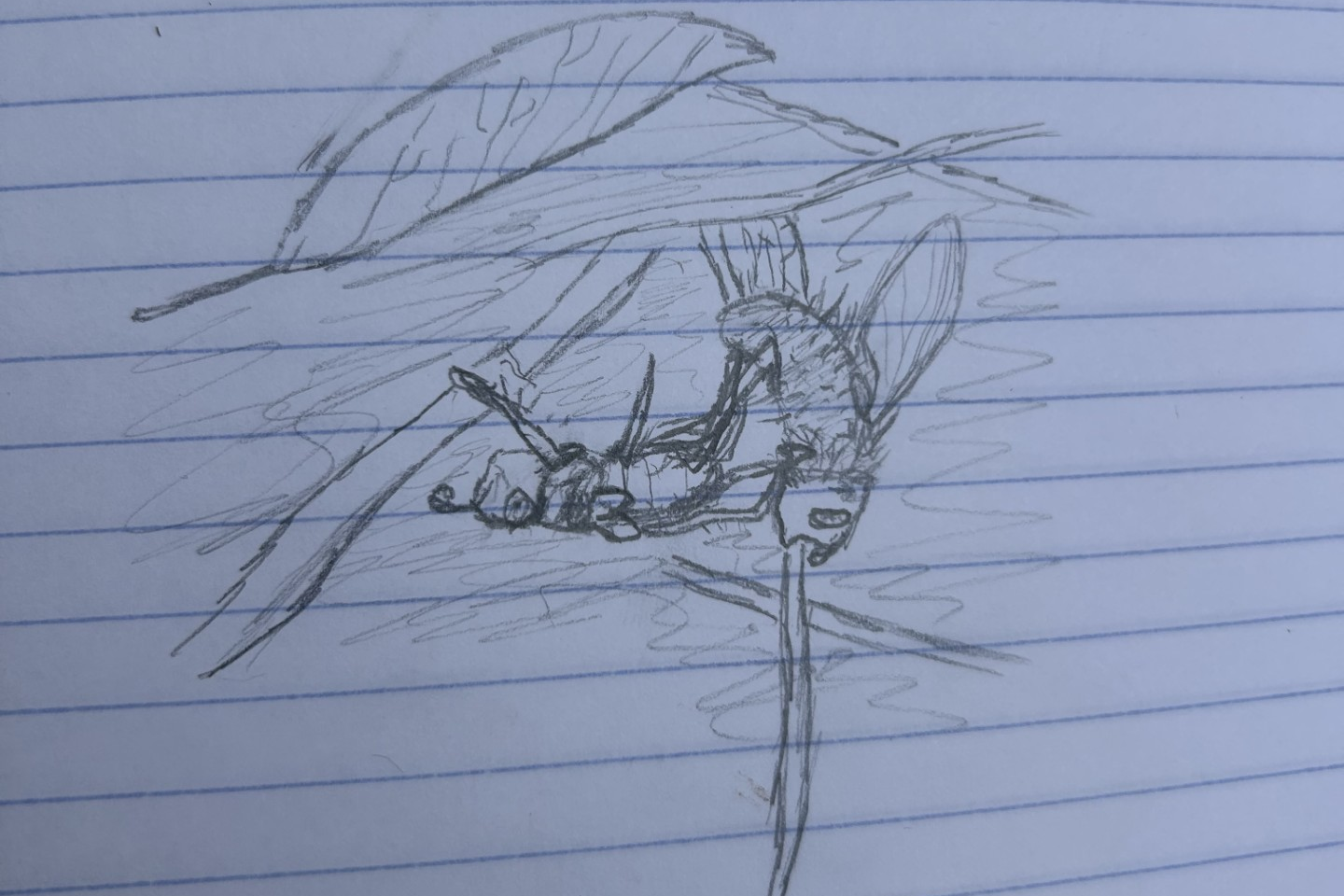
The biggest phenological change I have noticed at my site in the springtime is the dramatic increase in wildlife activity. In my past blogs, I’ve written about how birding at this spot has been relatively uninteresting, with me only observing a few individuals of common species like black-capped chickadees, robins, and crows. During this visit to my site, however, the forest was filled with the diverse songs of many different species, including a lot of birds that just arrived for their spring migration. I am not very good at identifying most bird calls, but the Merlin app picked up on the songs of multiple warbler species, (possibly?) scarlet tanagers, Goldfinches, titmice, a great-crested flycatcher (I looked for it for so long but never found it), and many more! Additionally, where there was previously ice and snow in the brook, a steady stream of water from our recent rain was flowing and full of small fish. A lot of trees I saw were flowering and budding for the first time I’ve seen this semester. Finally, I observed many insects and other arthropods moving around the forest and gliding across the surface of the brook, including the reproducing flies I observed for my sit-and-sketch.

The landmarks of my spot with which I have become familiar are the bend in the river near the path (because of the shape of the surrounding hills), the patch of grassy and herbaceous plants across the brook, the brook itself, and the wooden planks on the path because of the muddy soil.

The primary way nature and culture intertwine in my spot as well as the rest of Centennial Woods is that it is used as a natural recreational and educational space. The UVM Birdwatching and Herpetology Clubs use the space for their wildlife observation recreation. Classes like NR1010/1020 and Restoration Ecology use Centennial Woods as a venue for hands-on environmental education. The space expands outside of human use, too: I have seen community members coming to forage (not allowed, so…), trail run, walk their dogs, and hike with their families. All of these methods help to create a space for a culture of outdoors appreciation and conservation.

Honestly, I do not consider myself a part of my place. I am simply a visitor, coming to observe what the actual parts of the habitat are up to. Unlike other organisms, I do not sleep, eat, hydrate, live, reproduce, or grow in these woods. Centennial Woods is designated as a scientific natural area, and the only way I am a part of the place is in my temporary role as an environmental scientist.

Burlington BioBlitz!

For my participation in the BioBlitz this weekend, I decided to go through Centennial Woods and the surrounding area. I was particularly looking for birds, for I was helping my friend identify them for her biology assignment, but I also observed plants and invertebrates.

The plants I observed were staghorn sumac, boxelder, Norway maple, and Eastern white pine. The staghorn sumac was found in patch next to the road by the parking lot leading into Centennial where the sumacs were the dominant plant. The boxelders and Norway maples were both found planted in rows next to this parking lot, implying they were planted there rather than naturally sprouting. Finally, the Eastern white pine was found at the border of the forest (near the aforementioned lot).

The birds I observed, which certainly predominated the number of species I observed, were:
– downy woodpecker
– pileated woodpecker
– American goldfinch
-black-capped chickadee
-white-throated sparrow
-American robin
-song sparrow

Because I observed most of these birds by the feeders, I was able to observe some interspecies dynamics that I otherwise would not have seen. For example, I saw that the white-throated sparrows spent more time at the feeders than a lot of the smaller species, and sometimes physically intimidated other birds to maintain their dominance over the food. Unfortunately, I was not able to photograph any of these birds clearly with my phone, so I was unable to submit them to iNaturalist and the BioBlitz.

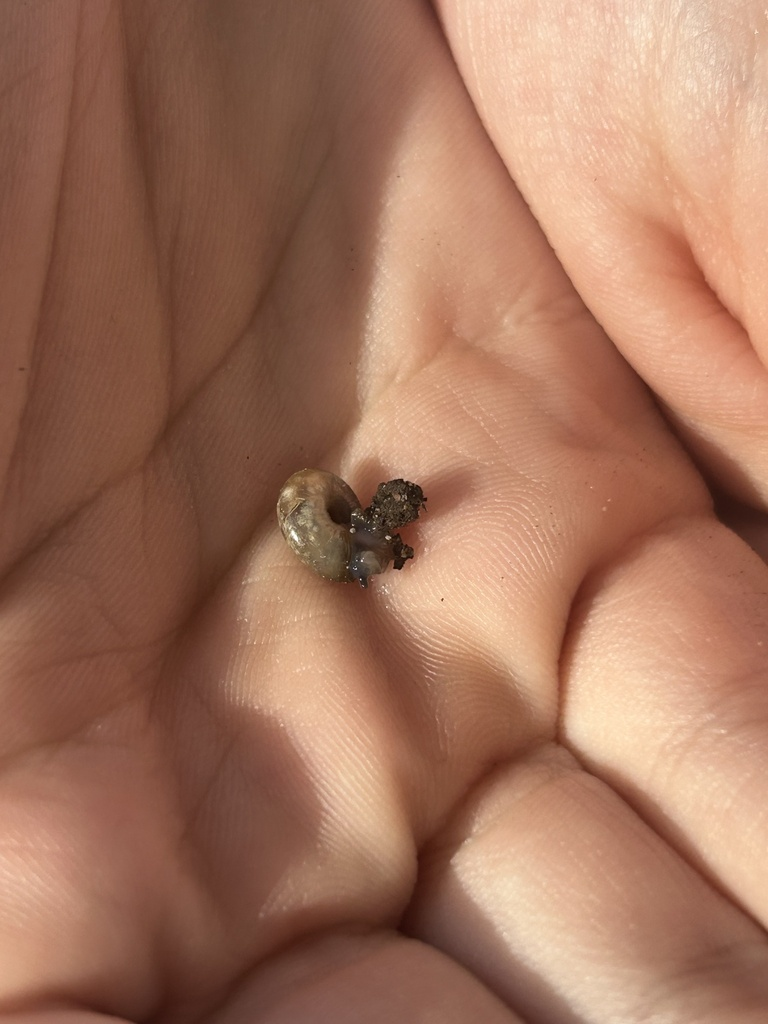
Finally, the only other fauna I observed were a snail belonging to the superfamily Gastrodontoidea, found under a rock, and a bumblebee, which I was unable to photograph. I was unable to confidently identify the snail, for I have not studied snail identification by myself or in my formal education.

Snail (found under a rock)


Overall, I observed 12 species during my walk for the BioBlitz.

As always, I really enjoyed using iNaturalist because it helps me to identify species by suggesting taxons while allowing me to contribute to citizen science! The former was especially relevant for this weekend, as I was able to contribute to the Greater Burlington Area’s species count for the BioBlitz and improve the documentation of species in my area.

One thing I found interesting about the incoming reports from cities around the world were how the cities dominating the leaderboard were not the most populated, although they are all relatively large. I would have expected cities like New York City, Tokyo, and Los Angeles to dominate the City Nature Challenge simply because they would have more people to make observations. It is possible that urban environments, with a higher ratio of inorganic to organic mater, did not dominate the challenge because there was less wildlife to observe. I wonder, then, why cities like Dallas, San Antonio, and DC performed so well? Is it because these places are especially biodiverse, or perhaps that there is a more prevailing naturalist culture in these locations?

Exploring Burlington’s Wildlife

For this month’s phenology assignment, I explored East Woods as well as around the downtown Burlington area and campus. With the new knowledge I have gained from the reading, lecture, and lab, I realized I felt much more knowledgable not only about what wildlife was around me, but also their behaviors and how to identify them from their signs.

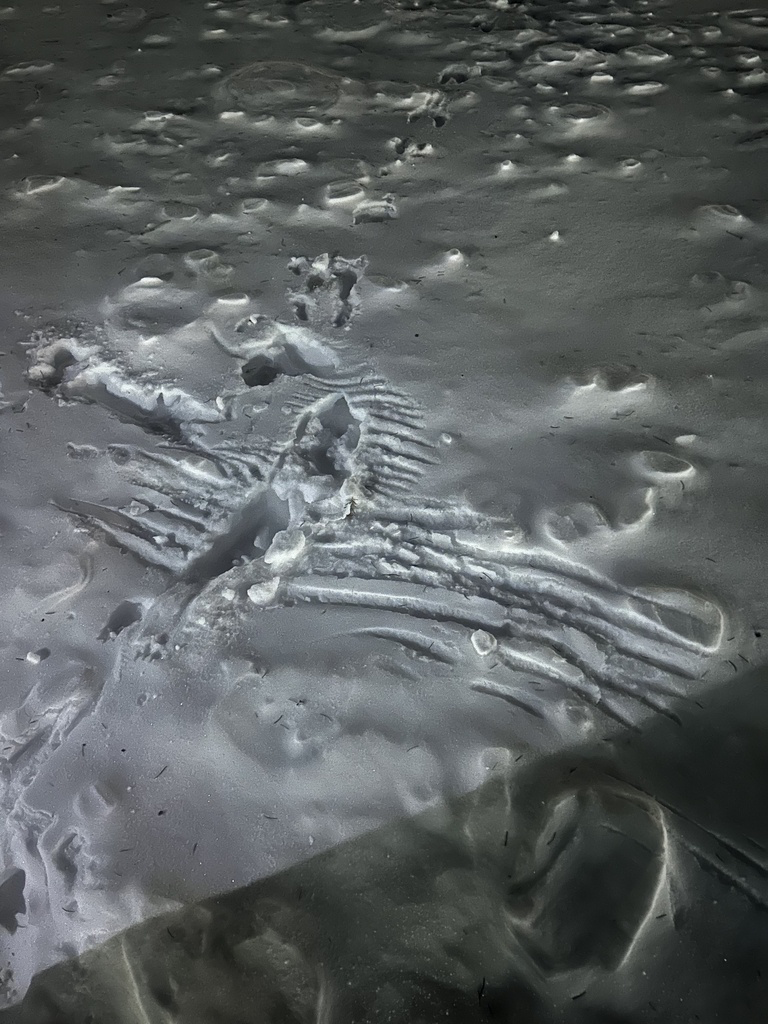
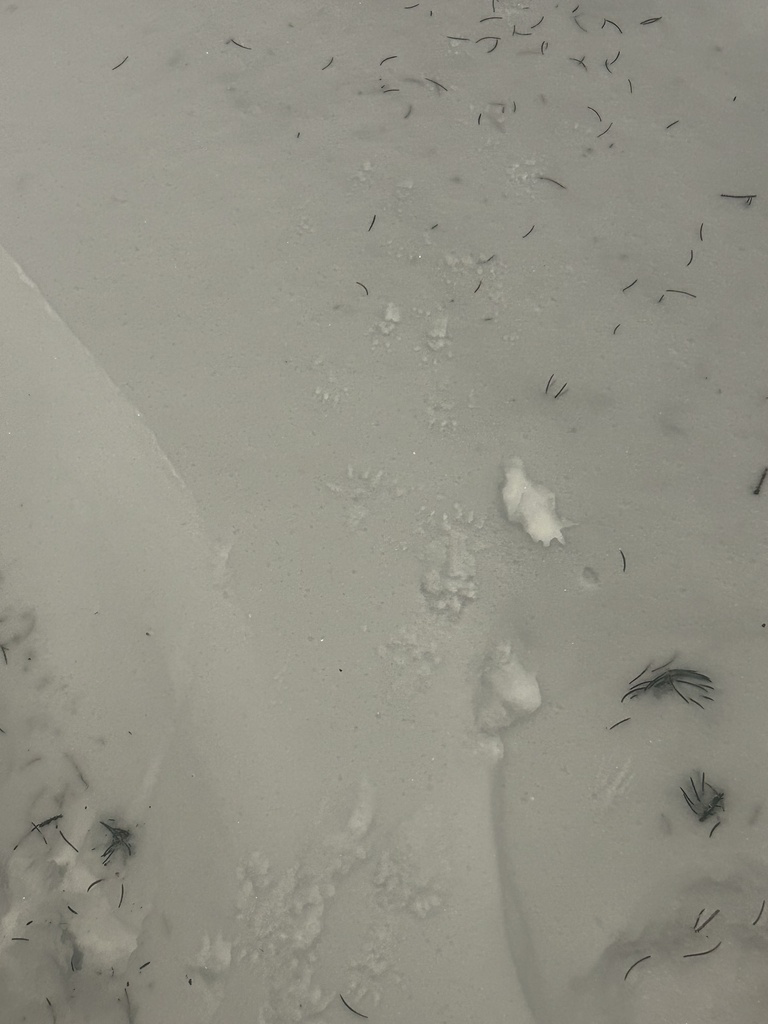
By far the most interesting thing I observed during the February 15-24 period was actually on the CATSbus on the way to lab, where I saw a red-tailed hawk attacking a squirrel right by the road outside Morrill Hall. Later that night, I walked around looking for any signs of this event and found signs of the bird’s feathers in the snow as well as the squirrels tracks leading away from it.

Red-tailed hawk wing prints and gray squirrel tracks
Gray Squirrel Tracks

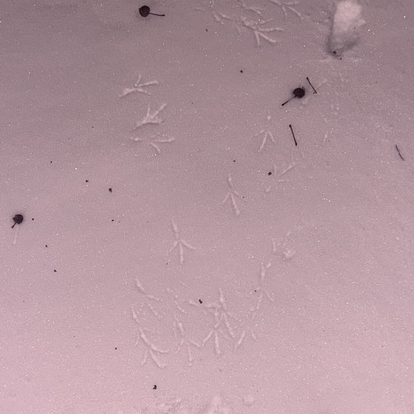
Because I saw both of the animals that left this prints in-person, I was able to confidently identify what left these prints. However, I was much less confident in the other bird tracks I saw.

Passerine tracks (assumed robin)

I could reasonably infer that these tracks were left by a passerine based on my knowledge of what birds could leave tracks of this size in our area at this time of year. However, I could not really reach any more specific identification, besides that it wasn’t a smaller bird like a chickadee. I would assume they were left by a robin, based on the near total dominance they seem to have on the campus bird population, but I can not say this with certainty. Based on the small imprints left by the fruits dropped under the tree, I assume the bird was feeding on these fruits.

When I went to East Woods Natural Area to observe wildlife signs, I was expecting to find many signs that I might not be able to find elsewhere. However, I was greatly disappointed by what I found, with the only tracks I found being from domesticated dogs. I had originally considered that these tracks could have been left by another canine, such as a coyote, but the frequency of them and their positioning exclusively by the trail led me to believe they were all from dogs (as well as the fact that I saw ~5 different dogs being walked there).

I really enjoy using iNaturalist for our phenology assignments, for I enjoy being a “citizen scientist” by helping document wildlife all over. Despite having used. iNaturalist before, using it for our phenology assignments has inspired me to use it more and broaden the diversity of my identifications.

Centennial Woods in January

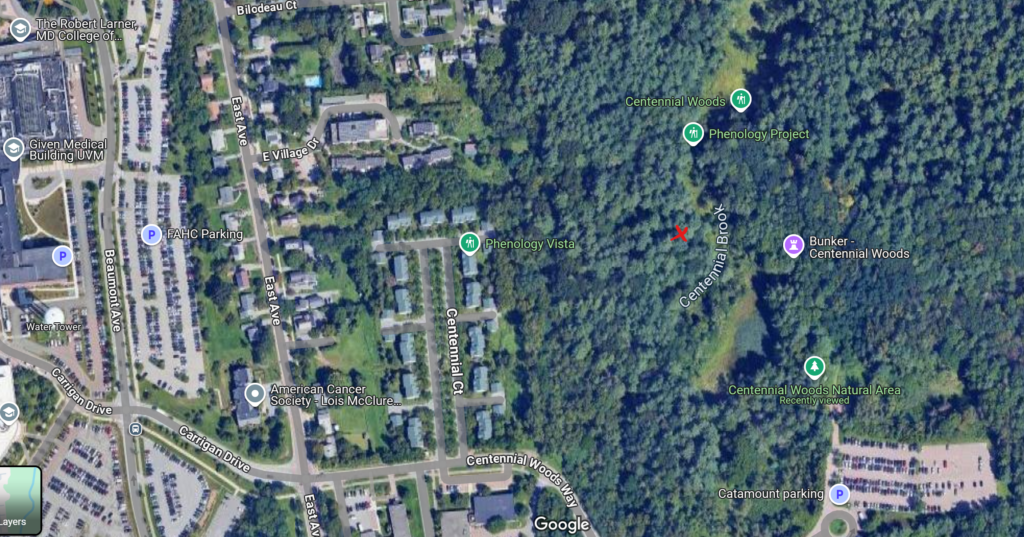
For my second semester phenology spot, I decided to return to where I had visited previously in Centennial Woods. Pictured below is the spot, which is at the bottom of a hill by the brook.

Google Maps of My Location

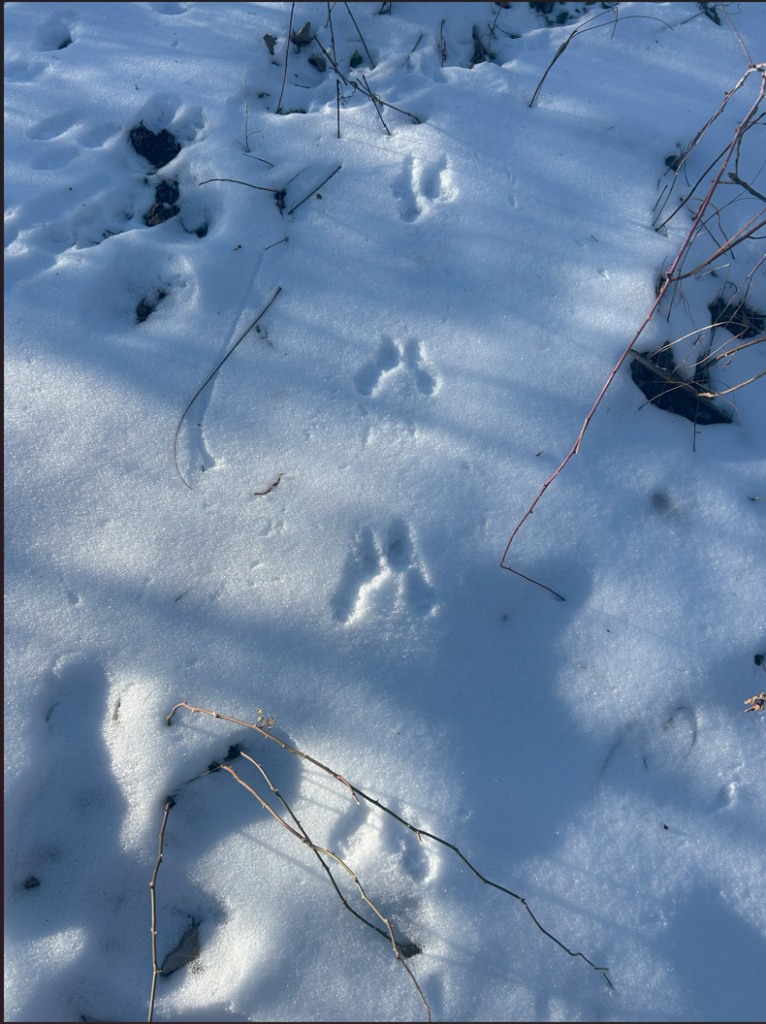
The most obvious and consistent sign of animal activity I observed during my visit to the Natural Area today were the tracks of a small rodent, most likely a squirrel, in the snow all through the woods.

Assumed Squirrel Tracks

I considered that these tracks might be from another animal, like a rabbit, but there were many instances of the tracks leading to trees, furthering my confidence that the tracks were from squirrels.

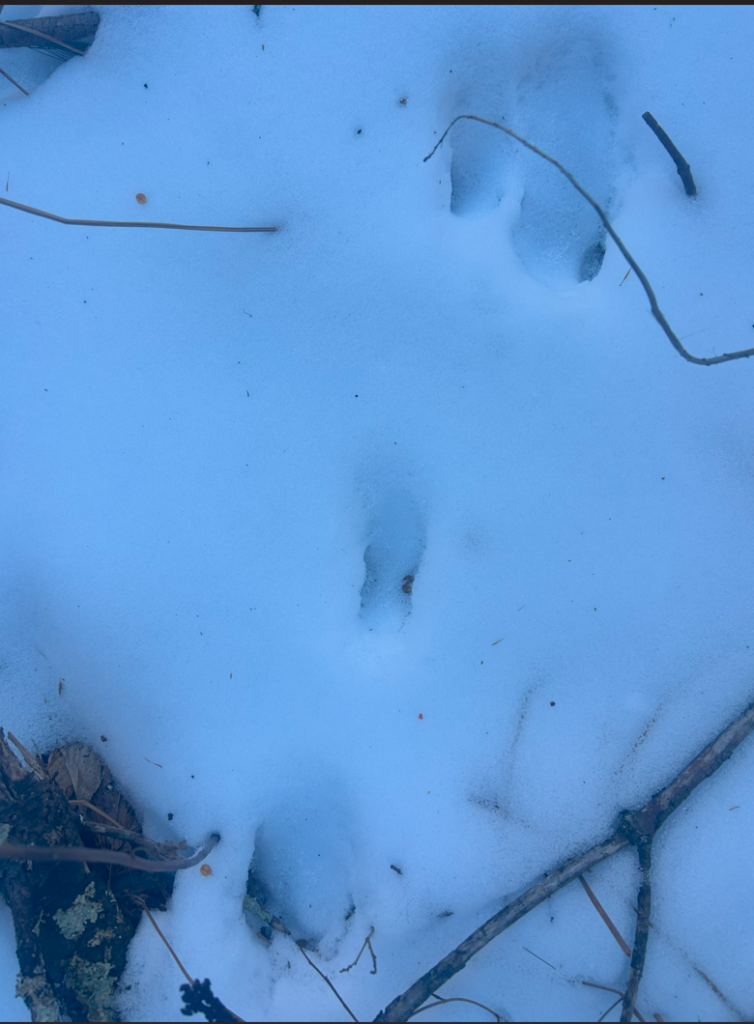
Additionally, I observed what I believe to be deer tracks. The tracks were not very clear so I was unable to discern any imprint of hooves, but the diagonal placement of the relatively small tracks in straight lines only seemed possible to have been left by a deer.

Deer Tracks in Snow

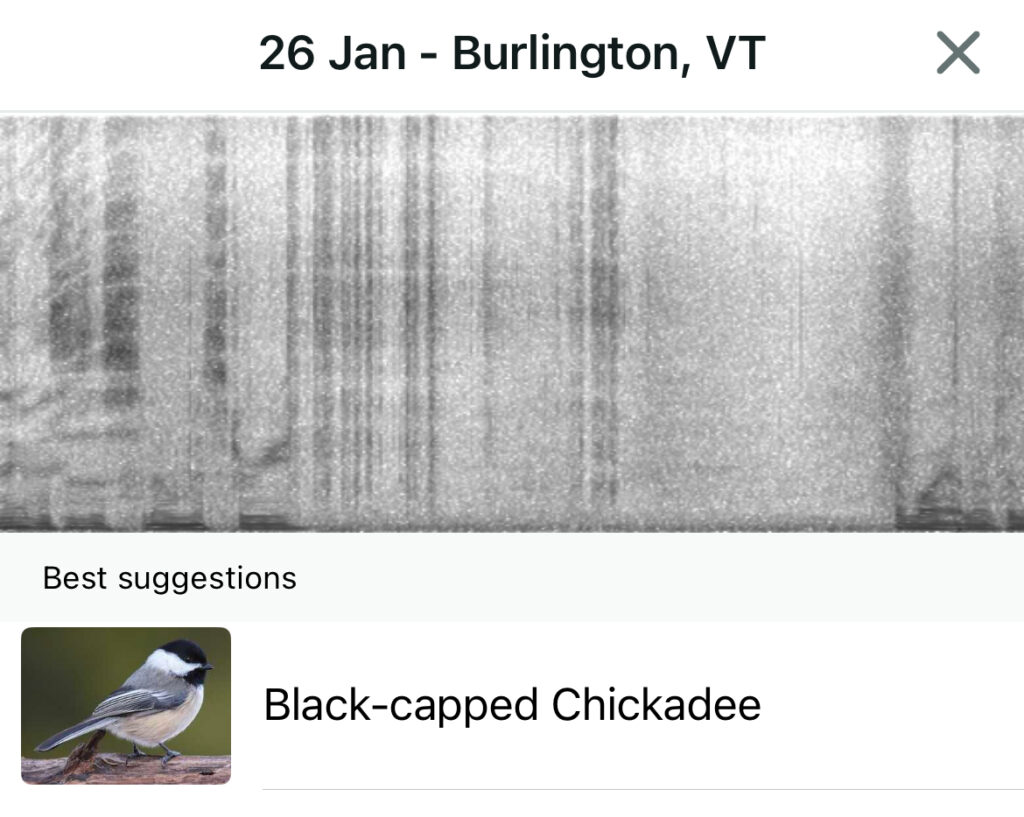
Towards the entrance to the natural area I was able to hear chickadees (a pretty common bird to see in the winter in our area) in the canopy of trees above me. Using Merlin’s bird call ID I was able to confirm my ID.

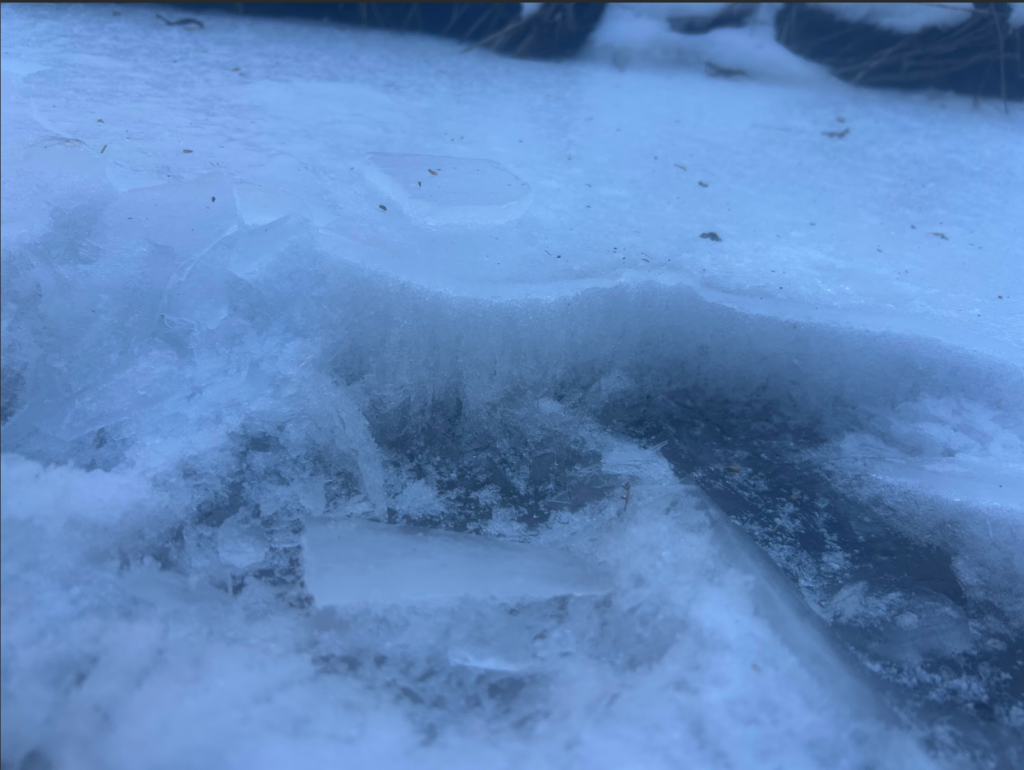
Finally, the biggest phenological change I noticed from my last visit was that the brook had almost completely frozen over, as well as the wetland into which the brook flows.

Ice Pattern in Brook

I was able to see some tracks, like those of the squirrels, in the snow over the ice, which implied an interesting behavioral difference in relation to the landscape of their ecosystem.

Final Dutch Fork Expedition

Today, I conducted my final exploration of the phenological changes in Dutch Fork Wetlands. The most significant changes I observed in the flora were that most of the last leaves that were clinging onto the alders had dropped to the ground. The rest of the leaf litter has also started to darken and break up, sinking into the mud and succumbing to the accelerated decomposition that is characteristic of wetlands. The seeds on top of the stems of the indianagrass surrounding the wetlands have also dropped, leaving behind mostly empty branches where they had previously been. More of the pricklier goldenrod seeds were still in their clusters, with only some missing from the pods of the dried plants. Additionally, the fruit that adorned the multiflora rose has vanished, either eaten by animals or dried and dropped to the ground.

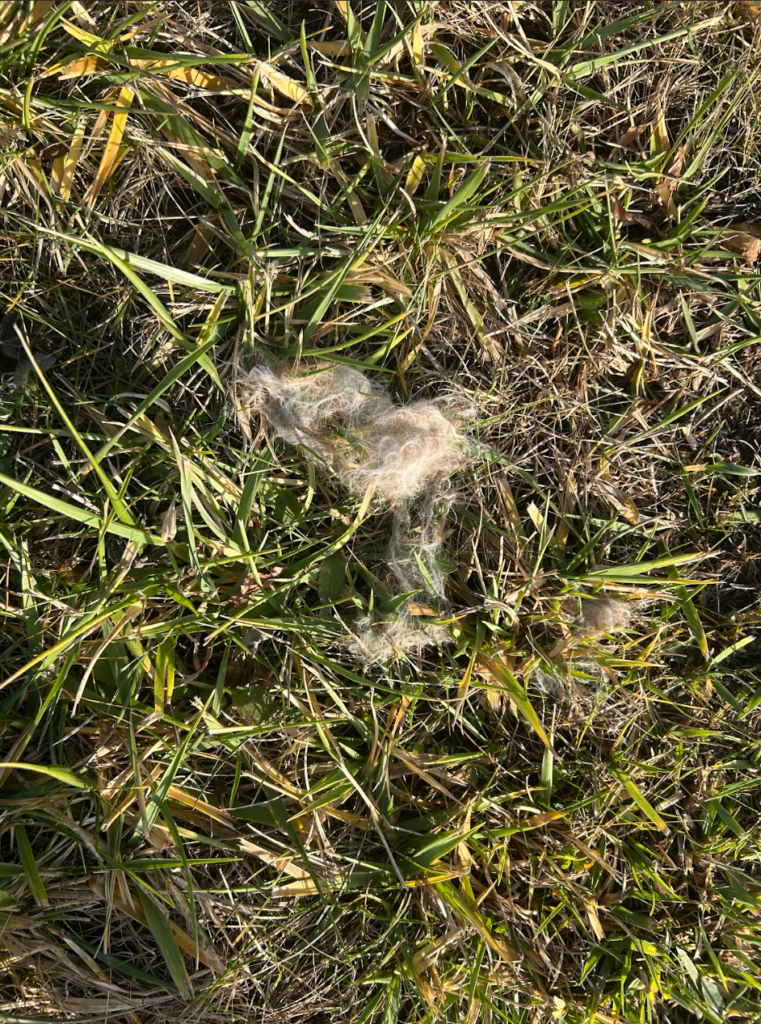
Fur I observed on the trail

I was also able to find evidence of some animal activity by my spot, such as the spot of fur left in the middle of the trail above. My assumption is that it is from a white-tailed deer, perhaps one that has molted into their winter coat. The bird activity that I had come to known the wetlands for had also diminished, as I only heard tree sparrows, white-throated sparrows, crows, and Carolina wrens. The blackbirds that could often be spotted flying above the grasses outside the tree cover seemed to be missing, possibly having migrated South for the winter.

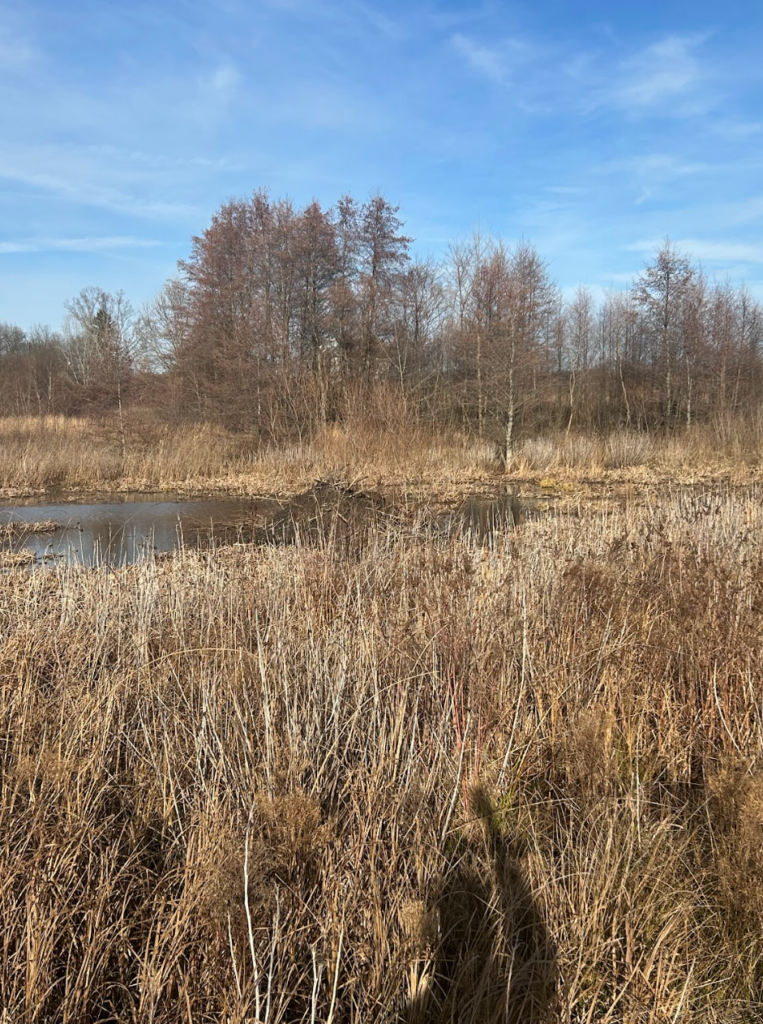
Beaver dam in the smaller wetland

Finally, in the increased absence of leaves and thick vegetation, I was able to observe a beaver dam I had not previously noticed, however I was not able to spot any beavers.

Bird’s Eye View Reflection

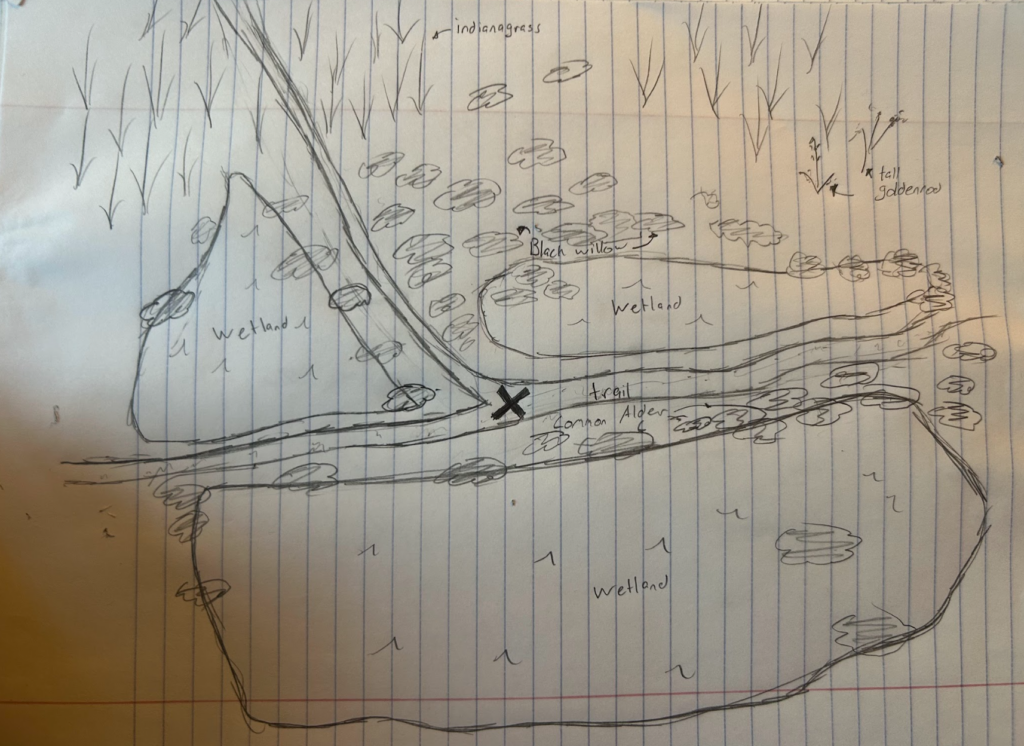
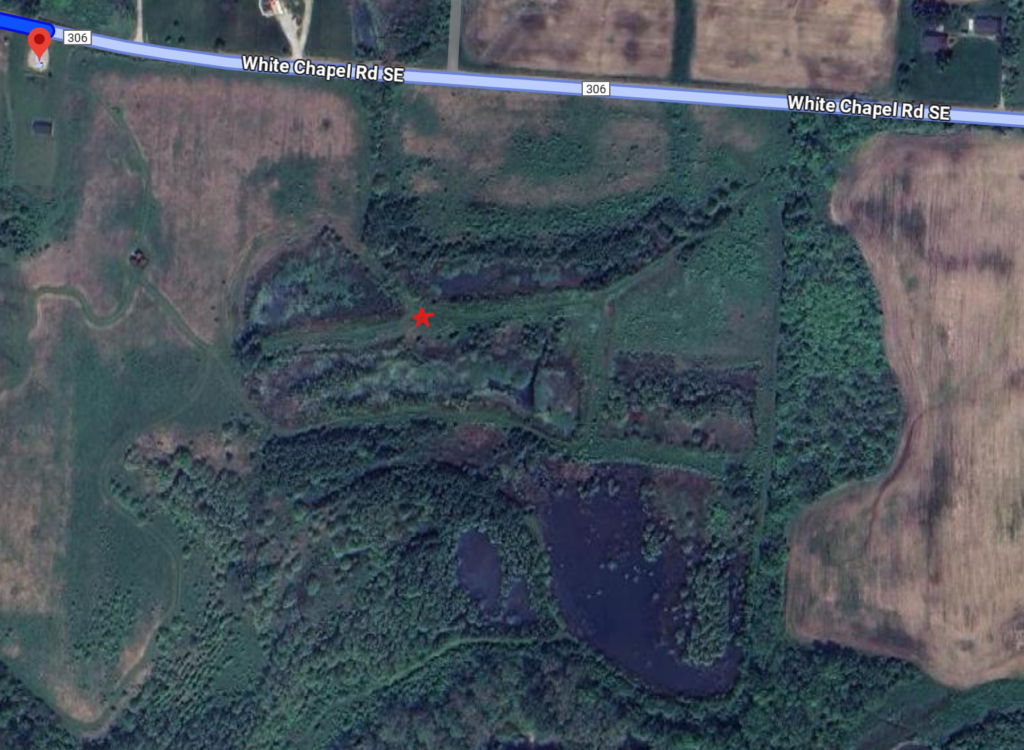
Bird’s eye view of my spot (marked by X)

Above is my bird’s eye view of my spot, which is highlighted by the X in the center. Divided by the trail, there are 3 wetlands surrounding my spot, protected by common alders and black willows and bordered by grassland occupied by indianagrass and goldenrod.

Sitting still for 15 minutes in my spot really helped connect a sense of place between me and this spot in Dutch Fork. By sitting, rather than walking around and examining flora, I was able to focus my hearing on the sounds of the environment, such as the familiar call of Carolina wrens between each other. I was also able to spend more time noticing the small differences that had occurred since my last visit there as temperatures trended downwards. Since I have been at UVM, there has not been much of a chance for me to come here, so it was really refreshing to sit and reconnect with it.

Observing My Burlington Site

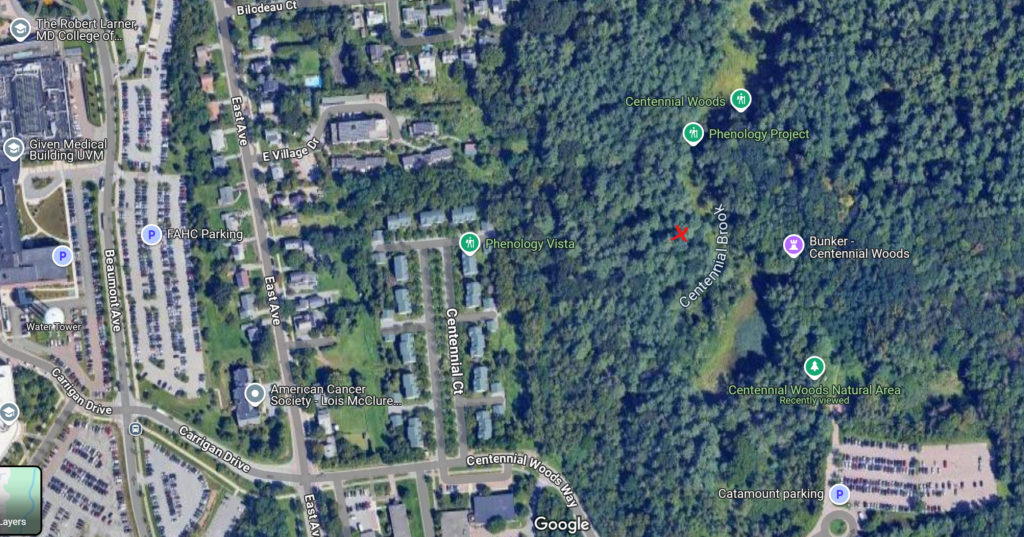
Google Maps of my location

The spot that I chose in Burlington to compare to my spot at Dutch Fork in Ohio is in Centennial Woods next to Centennial Brook. I thought that this spot would make for a good comparison because the brook provides an aquatic environment in the Woods ecosystem like the wetlands of Dutch Fork.

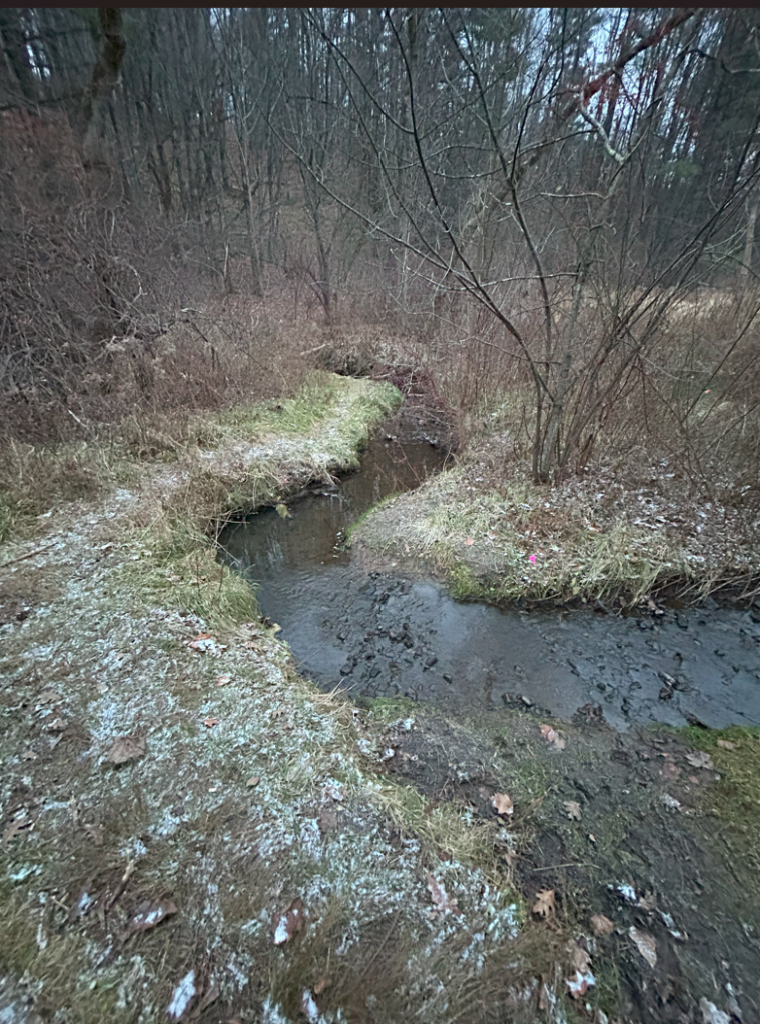
Centennial Brook at my spot

The picture above illustrates what I think is special about this spot and why I think it is comparable to my phenology spot. The brook is surrounded by small woody plants, particularly some Japanese knotweeds (which are invasive woody plants that frequently border streams in Vermont), similar to the invasive multiflora rose I’ve observed in Dutch Fork Wetlands. Additionally, there was a small area of grassland on the opposite side of the brook with many goldenrods, which then gave way to a taller cover of trees, predominantly Eastern White Pine in this case. This pattern of water habitat being surrounded by grassland and then forest exists in both Dutch Fork Wetlands and Centennial Woods. However, while Dutch Fork is a great place for birding, the only birds I saw on this snowy Centennial Woods evening were white-breasted nuthatches and crows. Perhaps the snow made other birds less active?

First Visit to Dutch Fork

Dutch Fork Wetlands is an incredibly interesting spot in rural Ohio. Despite the fact that the majority of Ohio’s “natural” lands are now forested, the pre-colonial landscape was dominated by swamps and grasslands. Currently, 90% of Ohio’s wetlands have been destroyed, largely for agricultural purposes. The wetlands at Dutch Fork were destroyed for road construction, but have been restored by the Dawes Arboretum. Over the summer, I spent a lot of time there during my internship with the Arboretum, one of only 30 Level IV arboreta worldwide, monitoring pollinator species and volunteering with management projects such as invasive species removal. More importantly, I chose this spot because of how great it is for birding; I love going there with my birder friends and adding unique species to our life lists that we might not see in other spots. Although they aren’t present at this time of year, Dutch Fork is also home to many vernal pools and thus important homes for many amphibian species that need protection in my state.

Starred is my specific spot.
Starred is my specific observation point.

The most common woody species I saw were:

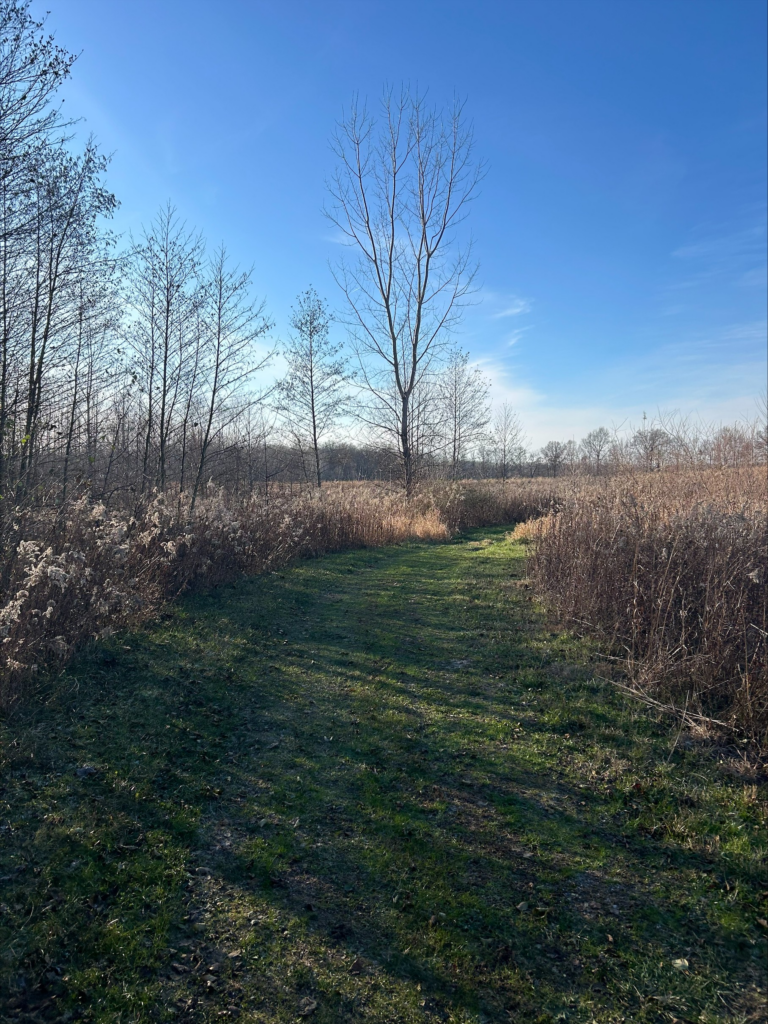
The area surrounding the wetlands was pretty much uniformly grassland, primarily composed of indianagrass. As I got closer to where the trees began popping up, some tall goldenrods began appearing. Speckled throughout the grass were the seed pods of hibiscus flowers, however I was unable to confidently determine a species since the leaves and flowers were dry and shriveled. The trees surrounding the larger wetlands were almost entirely common alders (at least as far as I could see from the path), but some of the smaller pools had multiple black willows surrounding them. Speckled throughout the understory, I found many multiflora rose shrubs, which was concerning considering they are invasive in Ohio.

View of my spot (sycamore is centered)

Special Shoutout: my friend Madi for coming with me to ID plants!

Skip to toolbar