October; Vegetation At Rock Point
10/01/22
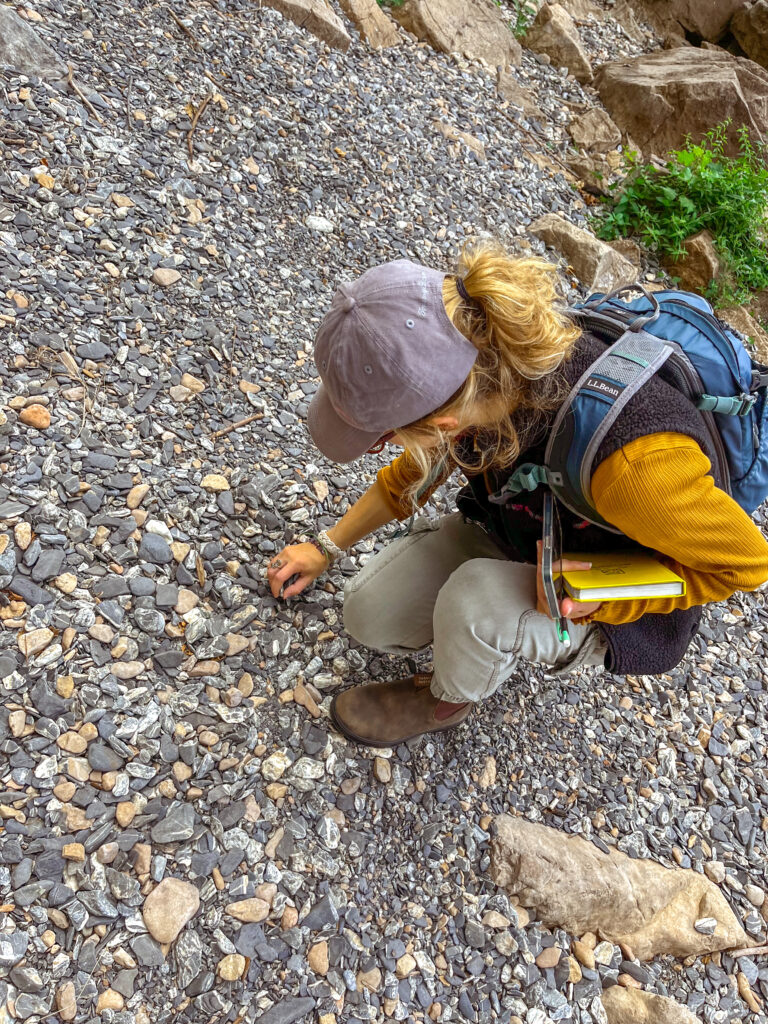
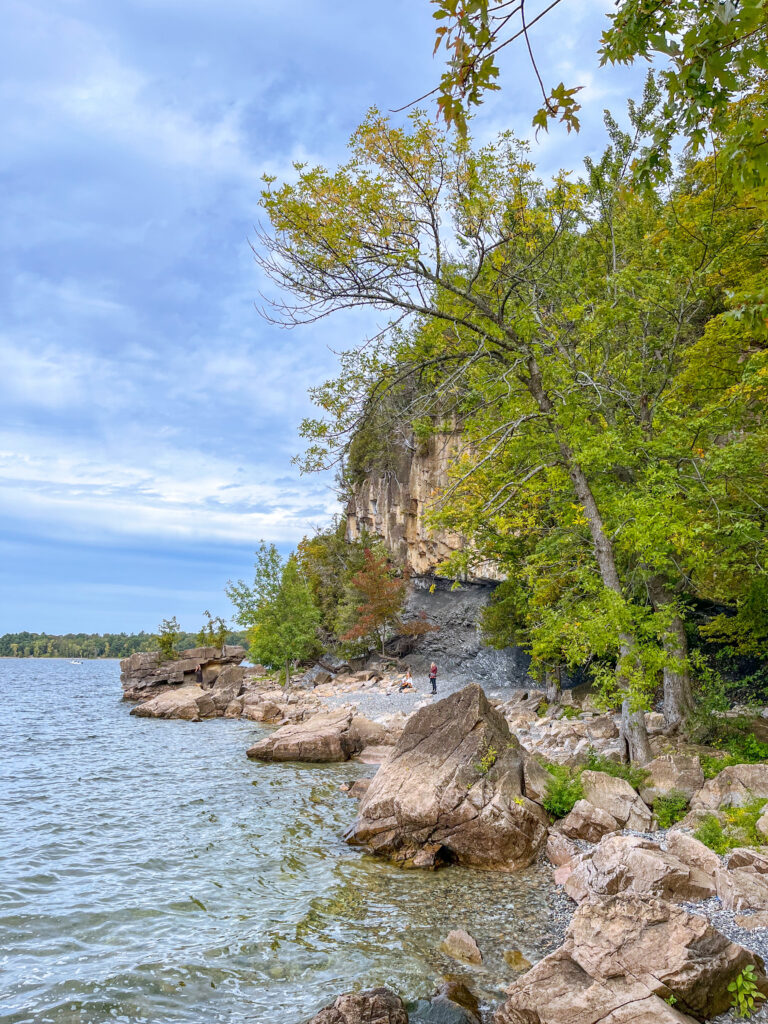
The vegetation growing throughout Rock Point is heavily influenced by the unique reverse thrust fault that occurs within this beautiful place. The dolostone and limestone bedrocks, saturated with calcium, amplify the presence of calcium in the soil above the rock. Northern white-cedar, together with white and red pines, are the most prevalent trees in the Limestone Bluff Cedar-Pine Forest, which dominates the area along the Rock Point peninsula. Directly on the shoreline, the vegetation is quite bare for the crumbly pieces of Iberville Shale. A mixture of White Ash, Red Maple and Red and White Oaks grow at the base, climbing up the steep slope to above the thrust fault. What is so interesting about Rock Point, is the Northern White Cedar growing off of the Dunham Dolostone rock, not just at its base but on cliff points. Above the thrust fault, the herbaceous layer of Rock Point consists of few ferns, wildflowers and a lot of fallen trees. The understory of Rock Point is a varying mixture of Red and Sugar Maples, American Beech, Paper Birch and Honeysuckle and Buckthorn. The overstory consists of Northern White Cedar, Red and White Pines, White Oak and mature Paper Birch.
The patterns within the vegetation are not just the types of plants growing there, but how they are growing. The cedars are quite short and stocky on the fault, which is abnormal for their tall and lanky height. It is an adaptive strategy for the cedars given the intense atmosphere of the environment in which they grow. The combination of sharp winds from the water, and constantly moving, rocky-sand influenced the cedars to grow long, deep roots and shorter trunks, so that the wind and sand would not affect their health as badly.
Most Common Woody Plants
- Northern White Cedar
- Paper Birch
- Eastern White Pine and Red Pine
- American Beech
- White Ash
- White Oak
- Honeysuckle
- Buckthorn