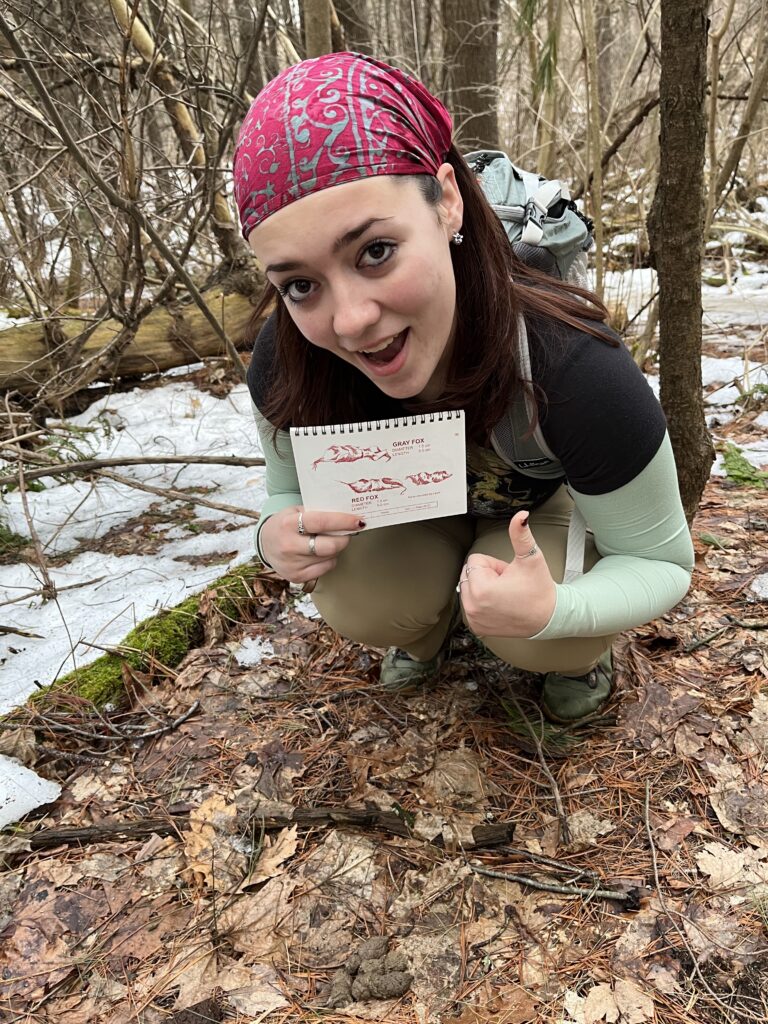
February; Exploring Burlington Wildlife
02/15/23
On this expedition, I decided to venture away from Rock Point and observe Burlington wildlife in Centennial woods. It was during an odd hour of day, where the only wildlife I encountered was flying birds and climbing squirrels. Overall, it was not a very successful observation walk, given the miniscule amount of wildlife signs encountered. It was shocking really, as I’d thought the warm and sunny afternoon would have awoken a couple mammals from their slumber. The main sign of life that brought some excitement to my trip was the faint sound of a black-capped chickadee in the distance.
Besides the chickadee hearings, I encountered a couple prints and scat on my way through the woods. The mixture of melting snow and crushed ice made the tracks very faint in distinct shape and pattern. The scat was also dissolving from the elements of melting snow. From the tracks, we saw a lot of domesticated dog prints. One hopeful wildlife print was a possible fisher, that I uploaded onto the iNaturalist app. This app is a very special social platform advocating the joys of outdoor adventure and human connection with their environment. Unfortunately with the poor internet connection, I was unable to upload the photos at my spot, live. The sound-recording section of the app also was not able to pick up the sounds of the chickadee, but I enjoyed exploring the app after my trip, listening to other people’s recordings and their photographic observations.
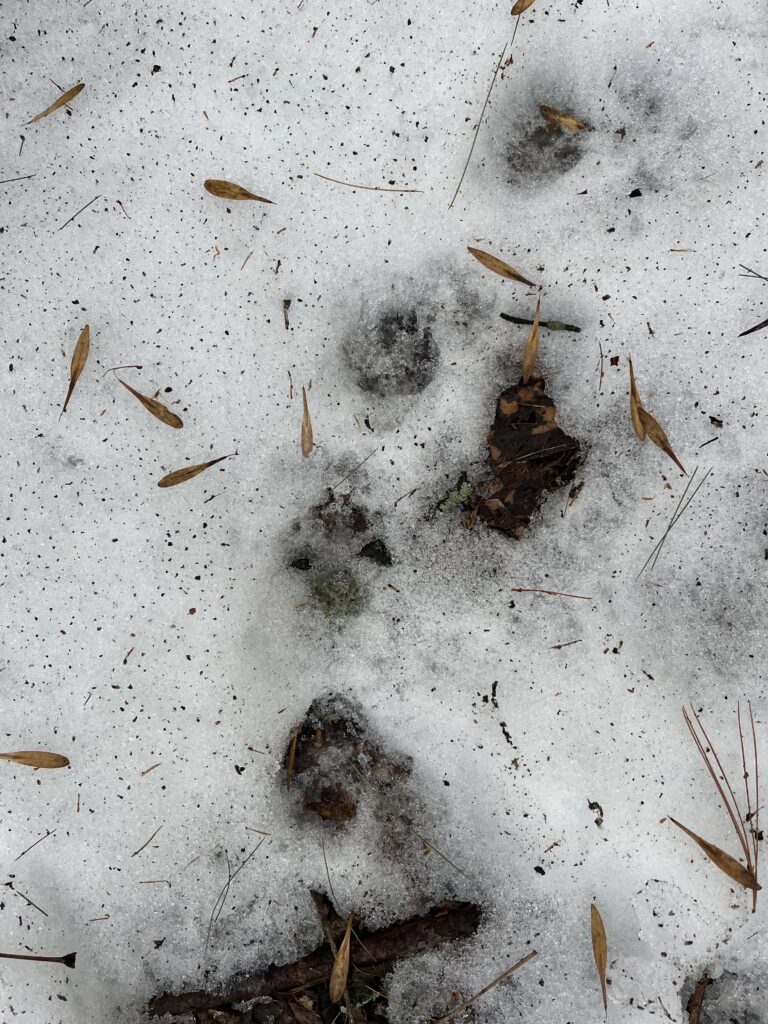
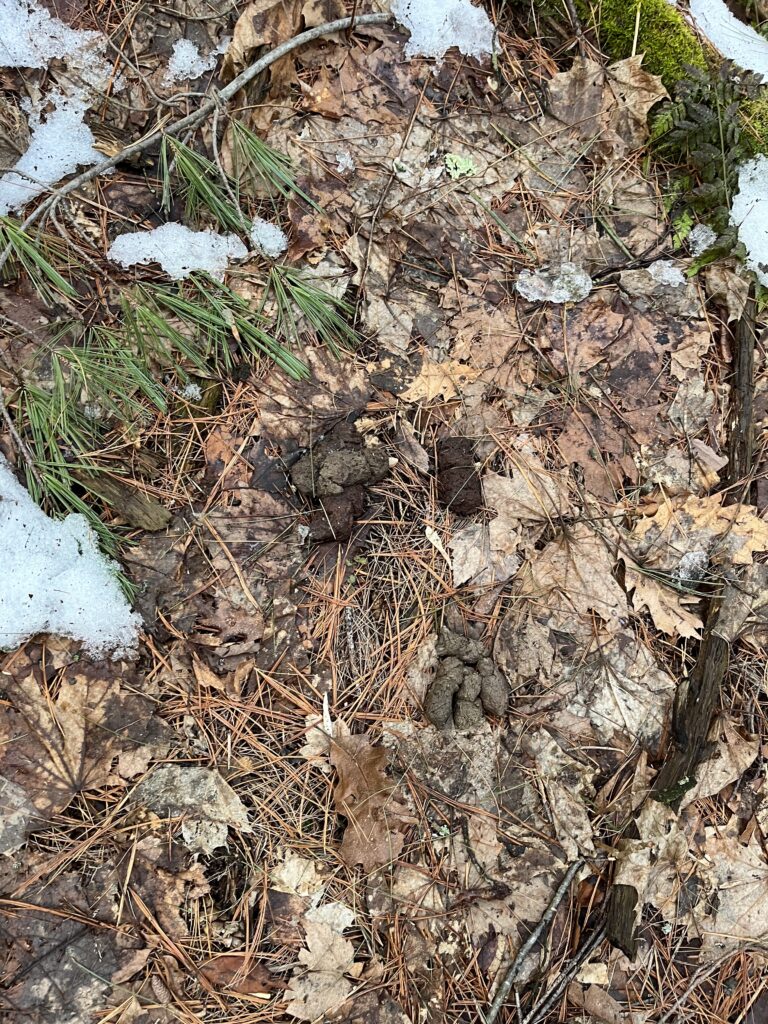
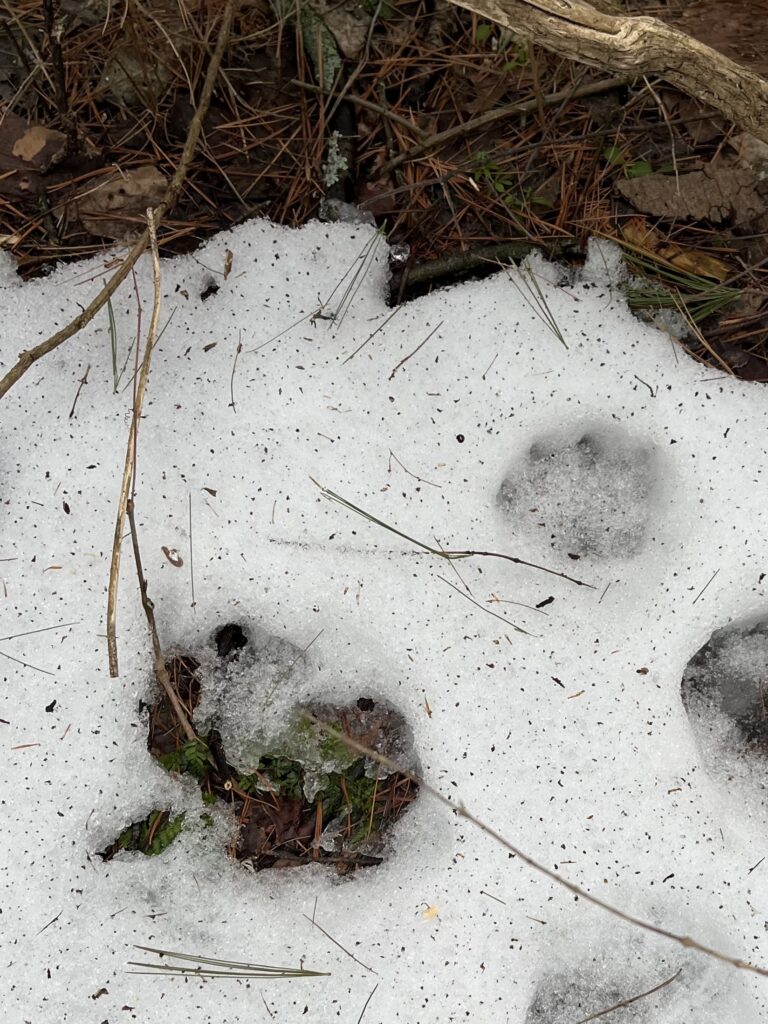
The main thing I saw, besides the black-capped chickadee, were these distinct prints. I firmly believe them to be fisher, although there is a toe missing in comparison to what is within my guidebook. The sizing of the print, being about 6 cm in length and 6.5 cm in width has it fitting into the size range for the fisher. There are also claw marks visible in the print, with no “X” shape that can be seen within the print. The size and claw marks are what really helped me narrow down my identification. But I cannot be confident with my answer, given the poor tracking conditions and their effect on the track’s details. As for scat, there were several sightings of the same type I’d predict to be gray or red fox scat. The scat was hard to identify, given they had absorbed much of the melting ice water, and were disintegrating under the natural elements.