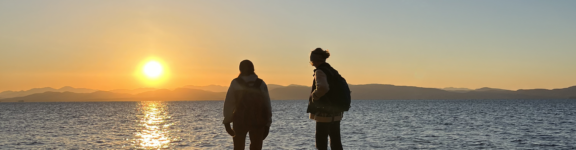
December; Final Trip to Rock Point in 2022
12/09/22
My December check-in with Rock Point can probably be marked as the month with the greatest change in terms of phenological characteristics. Last I stepped foot here, a majority of the oaks and ash still had leaves attached to the branches making canopies of bright oranges, reds and yellows. Now, not a single deciduous tree had their leaves on them, let alone any persistent vegetation or fruit. Every maple, oak have been stripped clean from the wind and cold, with a new surface of decomposing, crunchy leaves layering the ground. On the actual shoreline, it remains roughly clean. The detached leaves tend to attract towards the muddy and dirty surface, avoiding the smooth Iberville Shale stones we call Rock Point’s sand. The only vegetation remaining a constant at my place are the coniferous Northern White Cedar, and Eastern White Pine.
During this trip to Rock Point, it felt like wandering through a ghost town. There was absolutely no animal activity across the entire shoreline. The only thing that hinted at animal life was the start of pileated woodpecker markings in an oak tree on the shoreline. This place appears to be utilized mostly by organisms accustomed to living in trees like squirrels and birds. There aren’t many shelter opportunities on Rock Point, with the reverse thrust fault cliffs, Large Dunham Dolostone blocks and very rocky shore. Any organisms that do live in the place seek shelter in the trees, particularly the oaks. While there, I heard a couple calls from Hairy and Downy Woodpeckers, as well as the Tufted Titmouse. I did not see any nests in any of the trees, or scat or tracks. The marks in the bark were the only giveaway of some sort of animal life. Rock Point is a very challenging place to observe animal life, because of its drastic changes from intense natural forces. The water splashes away any sort of scat or tracks, and tracks are difficult to imprint anyways, with the cloggy stones.
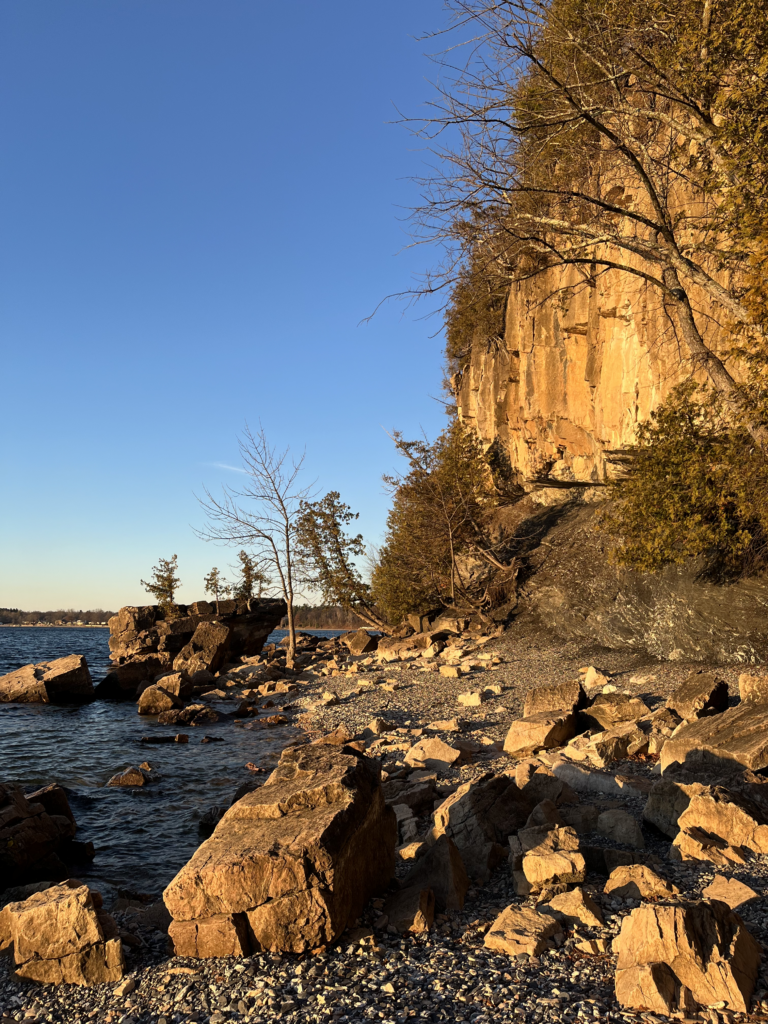
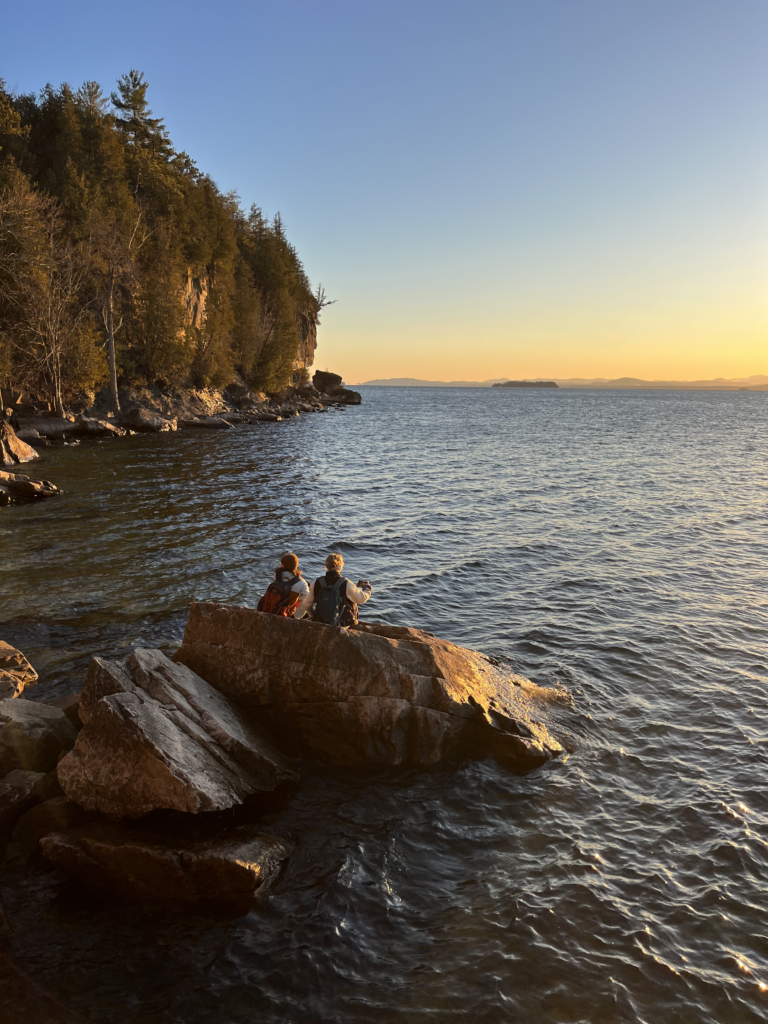
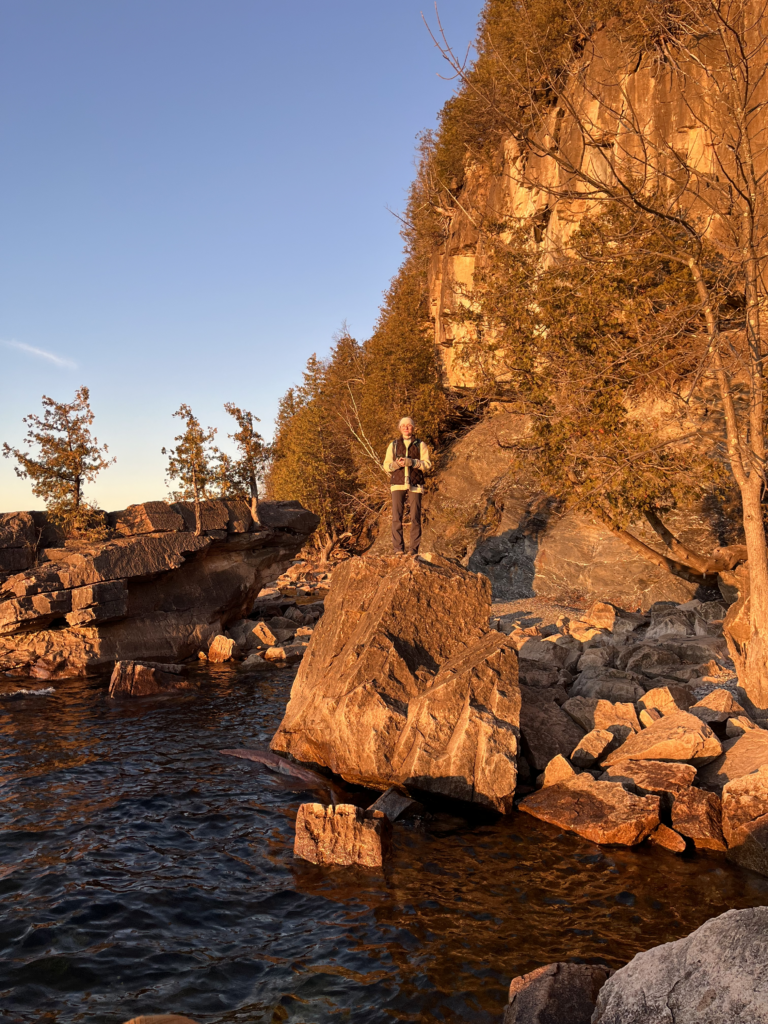
At the end of the day though, this place never fails to take my breath away. I never thought Vermont could have a natural landscape like this. I love being surrounded by ancient, exposed rock, and the idea of such a violent force creating a beautiful landscape peaceful and intimidatingly powerful. I think I enjoy the water the most about this spot. It not only acts as a memorial to the ancient sea that once swallowed all of Burlington, but keeps Rock Point alive. No matter the weather, Rock Point always experiences change and movement. The waves from the water pound on the surface, sculpting unique shapes of Iberville Shale and Dolostone. The water is what also creates the wind this place experiences annually, and the wind is what designed the curving trunks of the cedars, oaks and pines. All the pieces that compose Rock Point work with one another, and I find that both fascinating and satisfying. Rock Point is a sensual experience, for the eyes and ears. Hearing the wind and water while watching the sunset behind the Green Mountains gives me this thrill and call to adventure I’ve never experienced before, nor thought I could.
