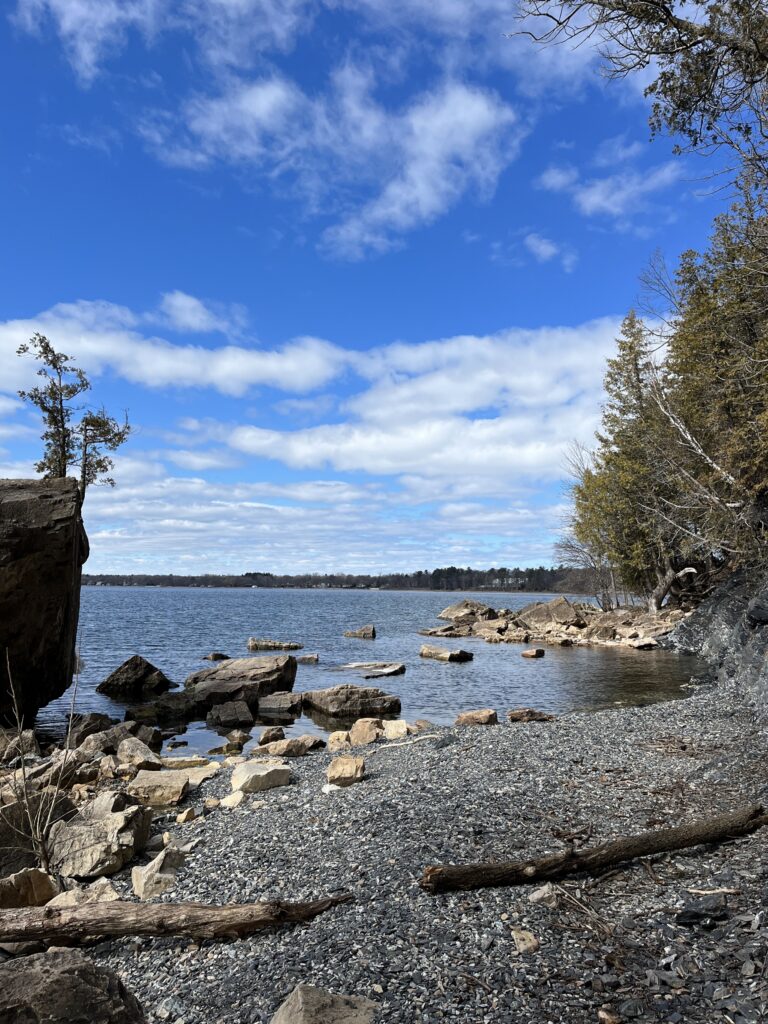
Rock Point is so beautiful. This place has never failed to amaze me. Through each season, it transformed into a completely different energy, highlighting major and minor landmarks in different ways through different periods of time. Overtime, Rock Point experienced losses and gains. The most noticeable change to me was the leaf deposition throughout my visits to Rock Point. Other changes that were unexpectedly noticeable to me though, included the shape of the shoreline, the water levels, and deposition of logs and rocks.
In the Summer
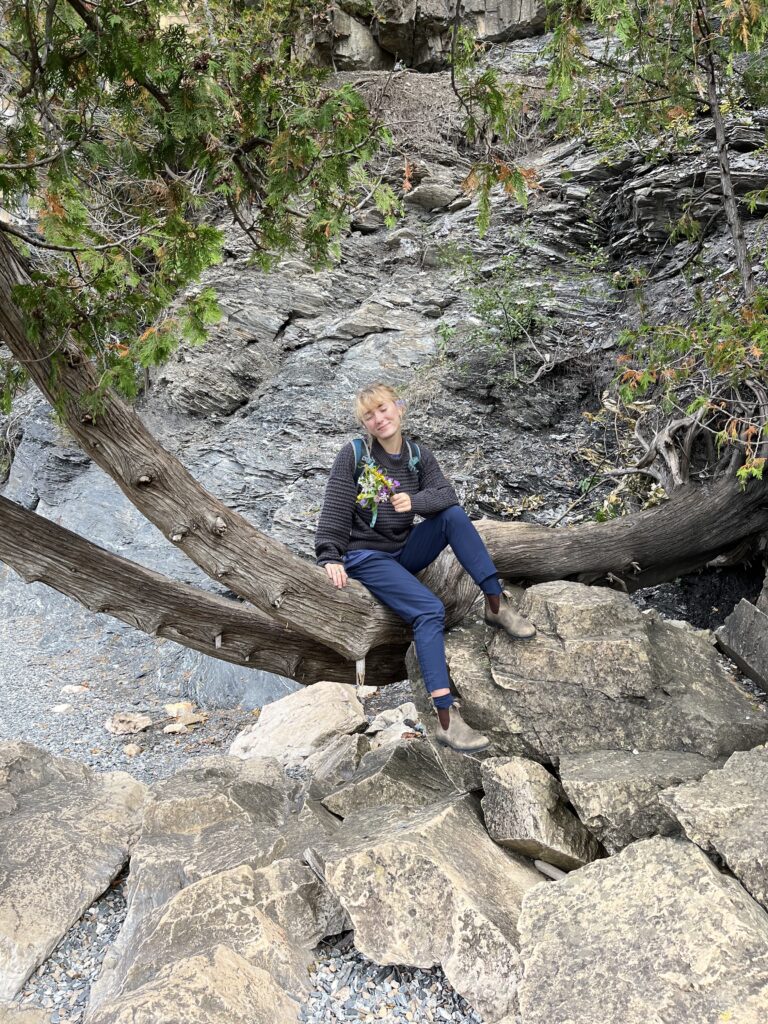
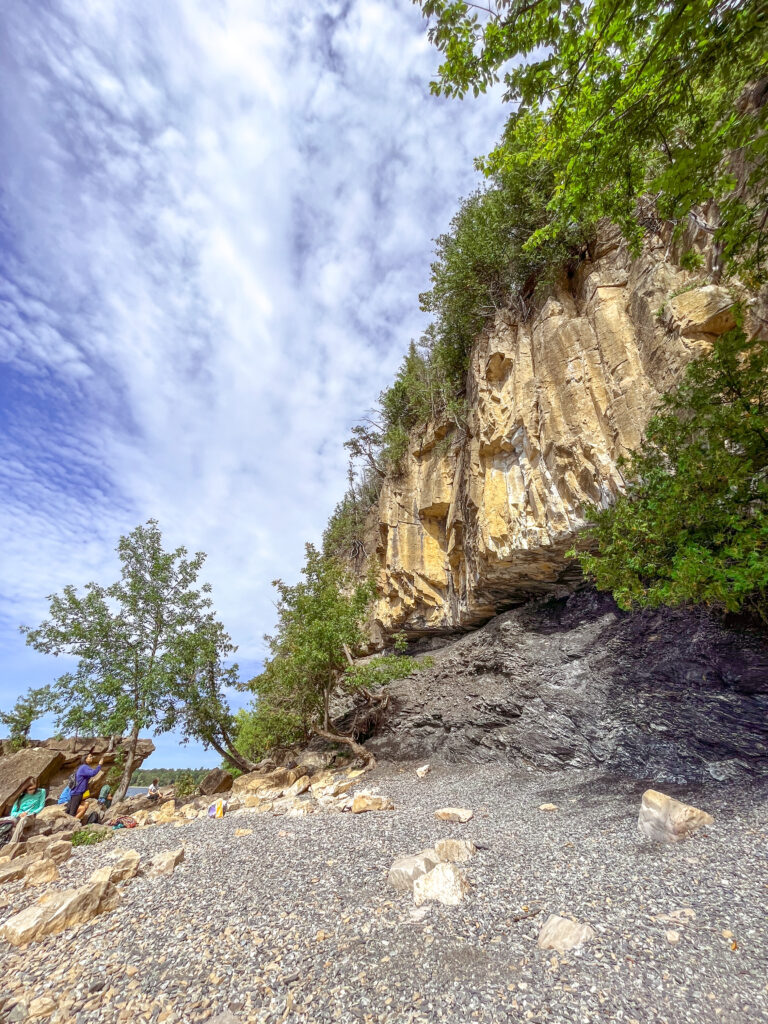
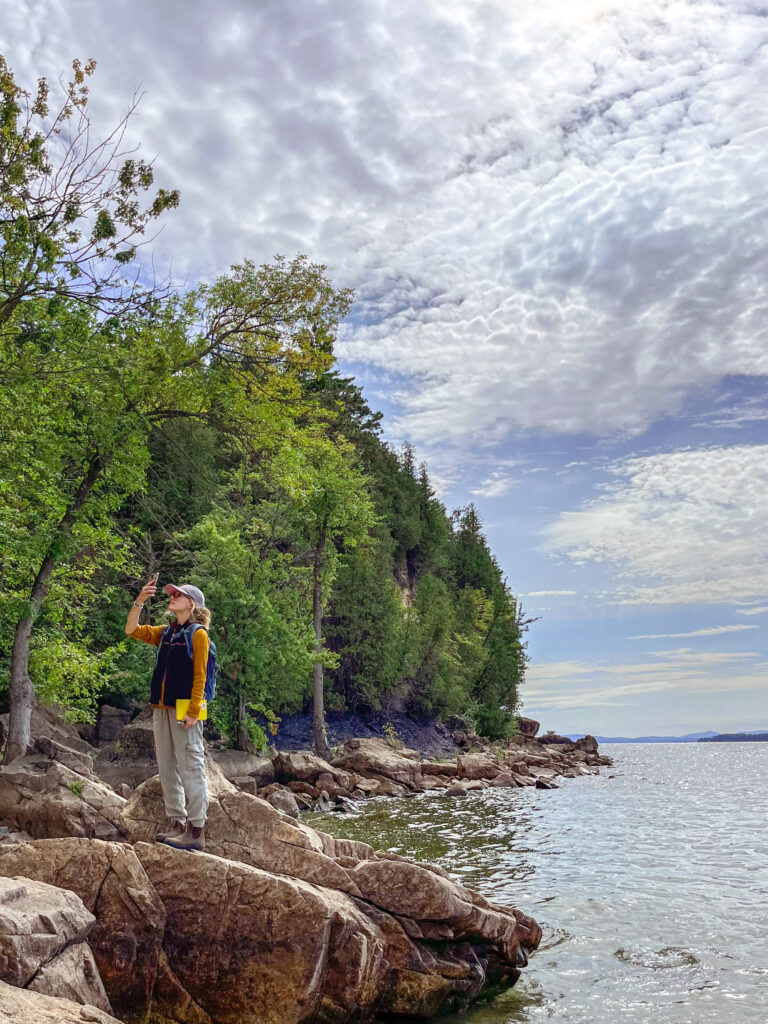
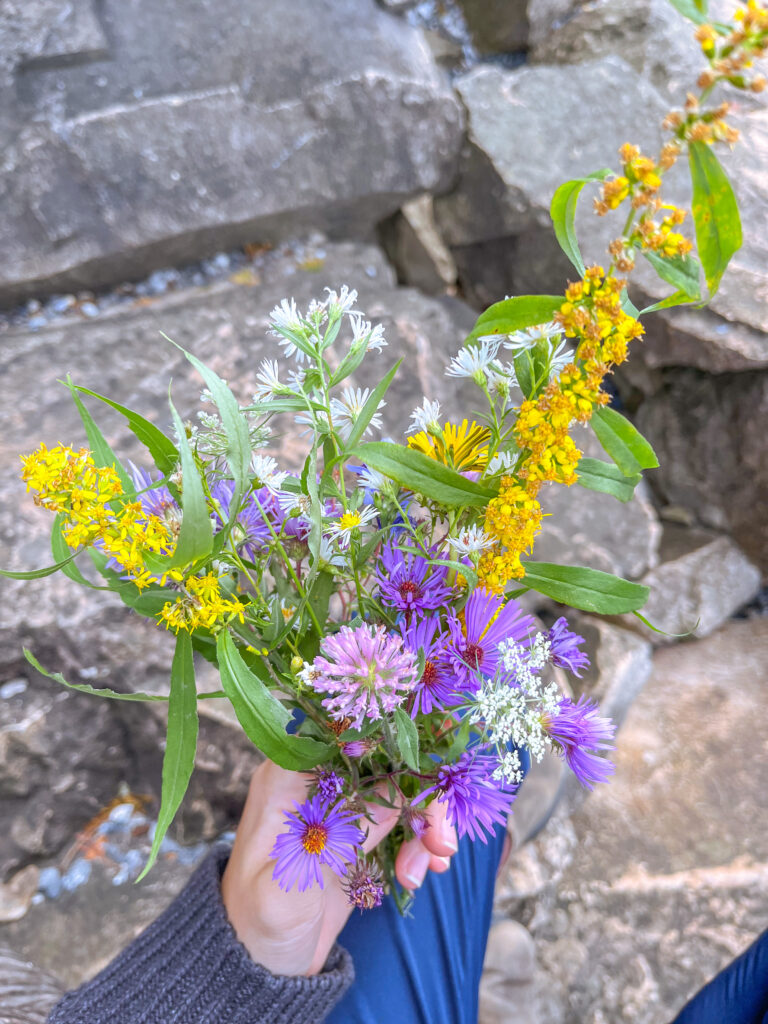
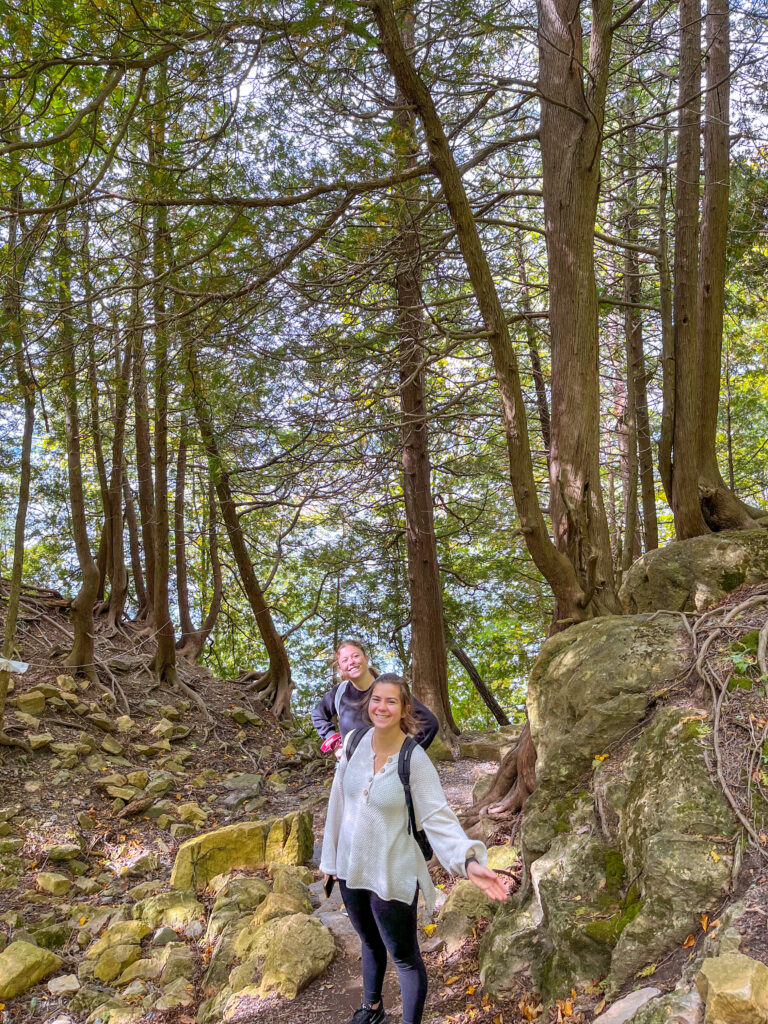
The pines, cedars, maples and oaks flourished in the lushness of big, green mature leaves. The land itself felt like a ying-yang of green and blue. Blue, from the sparkling Champlain lakewater. Green, from the forest towering above the reverse thrust fault line, speaking through rustles of inhabiting critters and leaves.
In the Fall
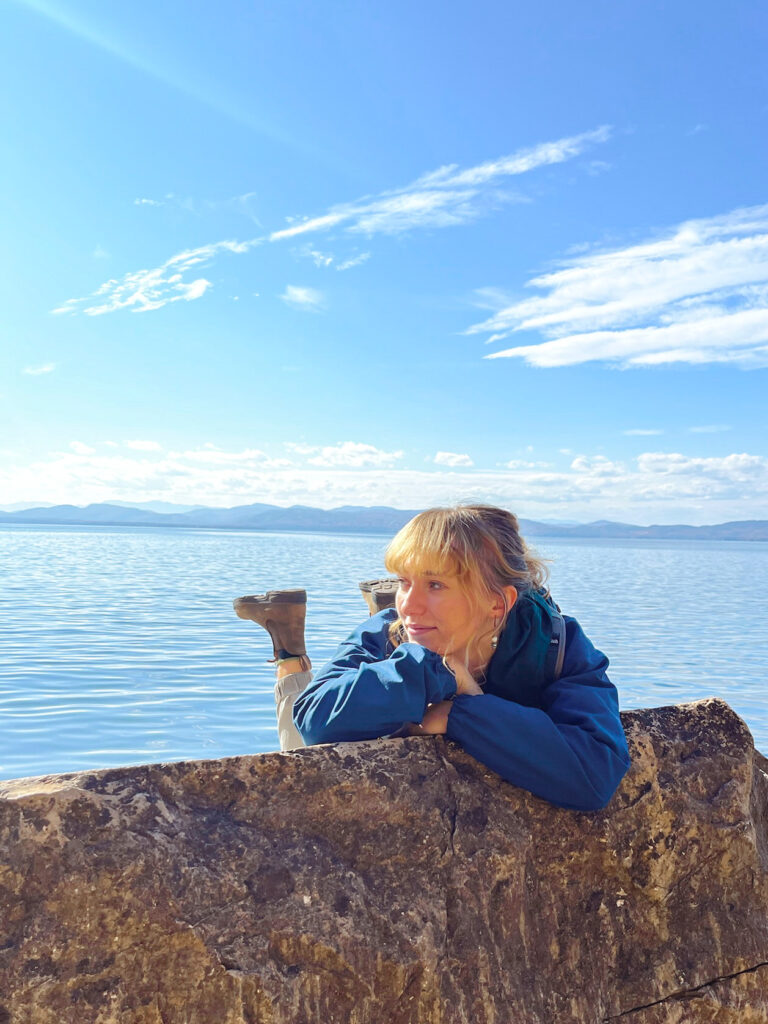
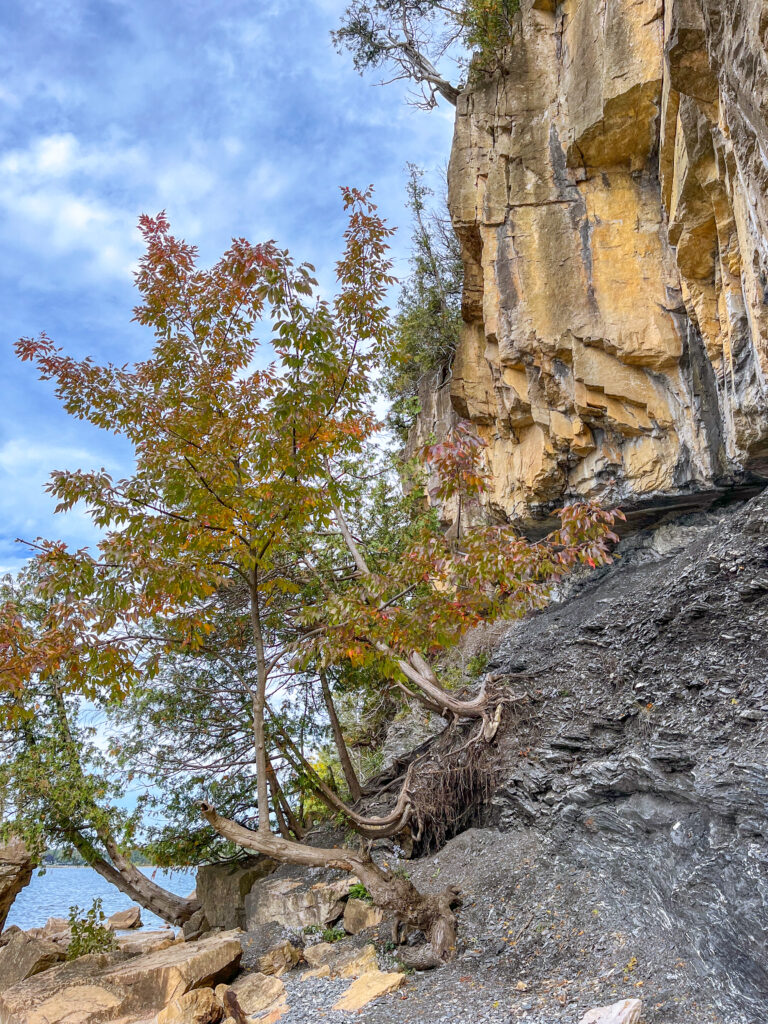
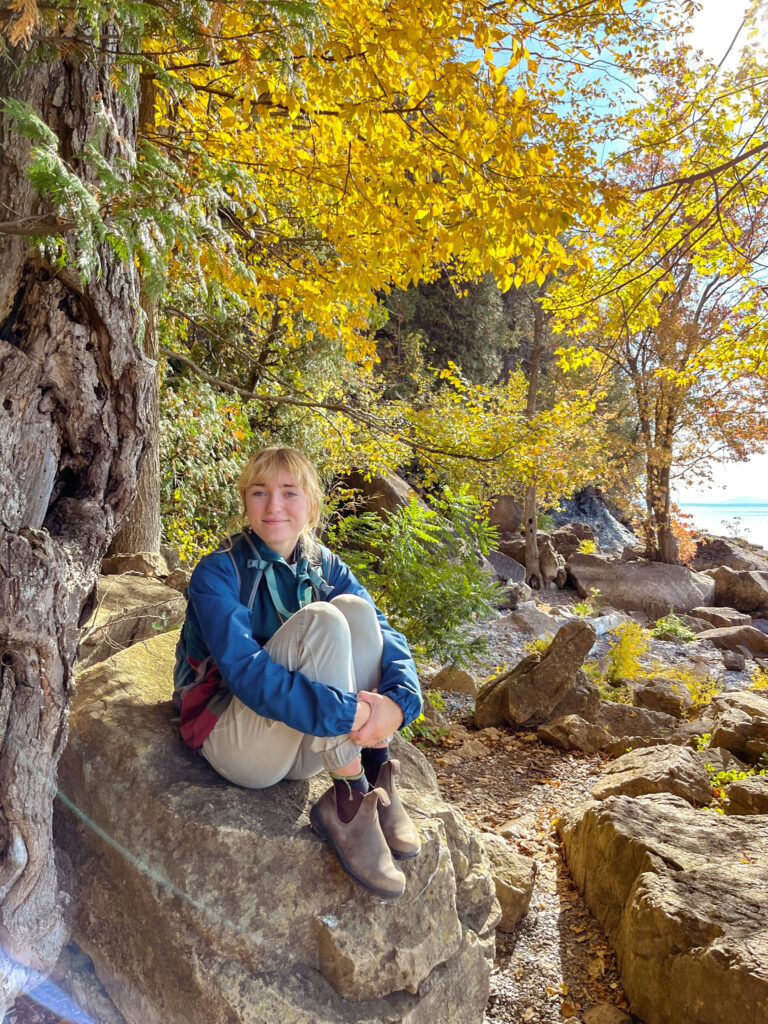
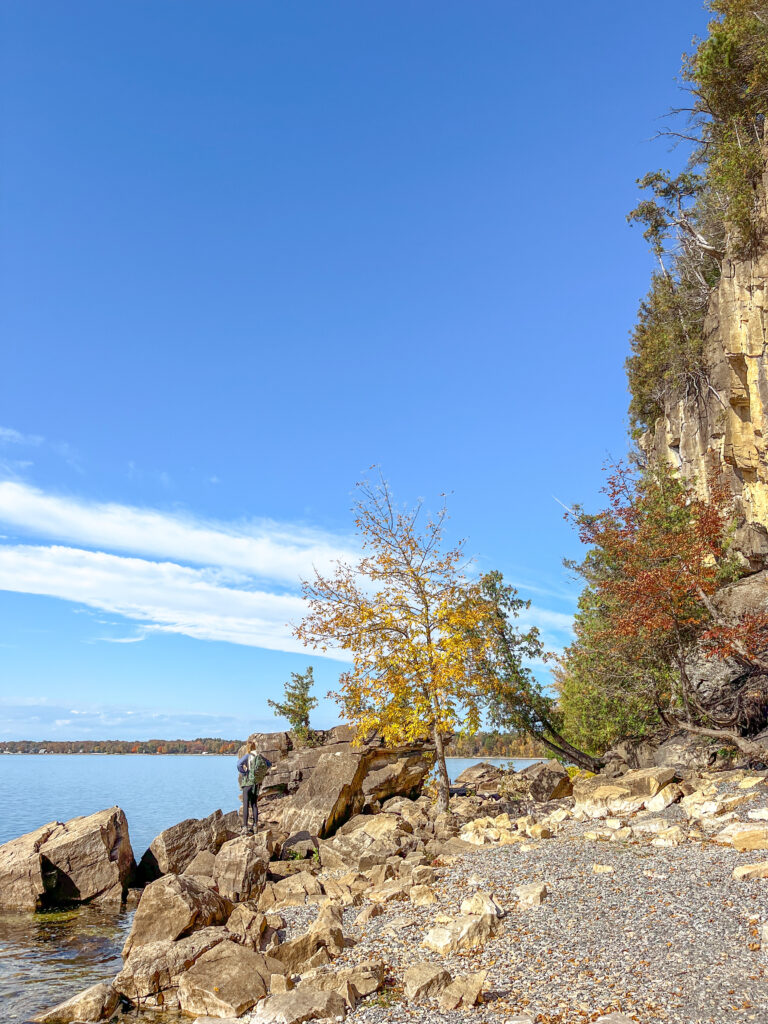
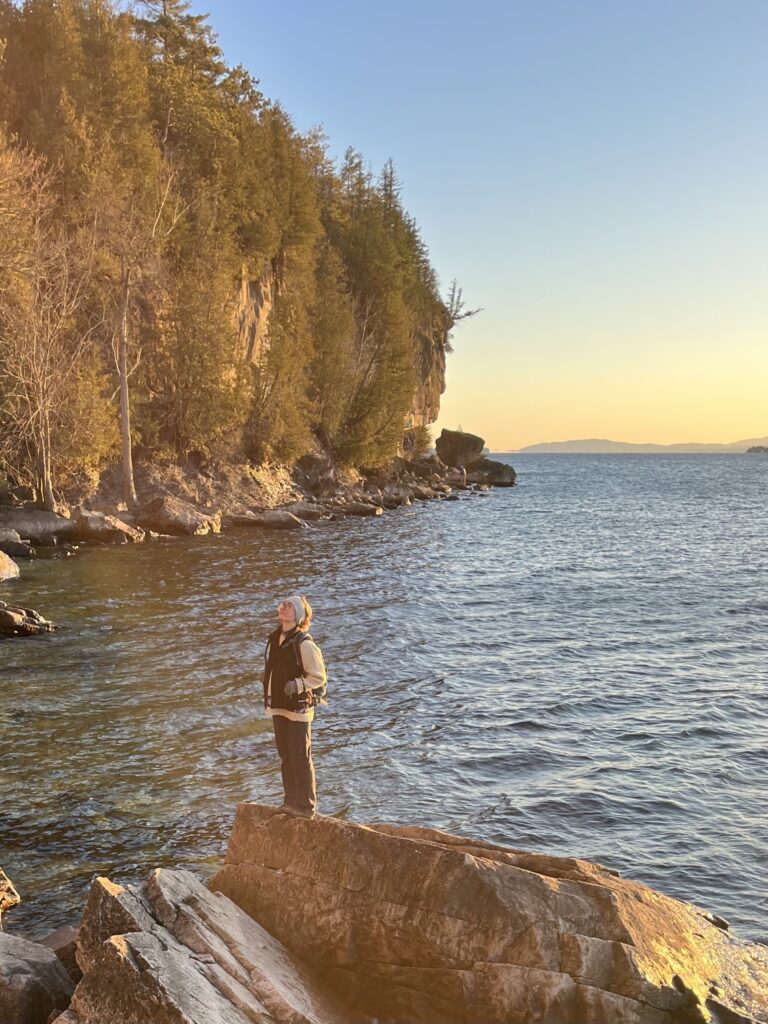
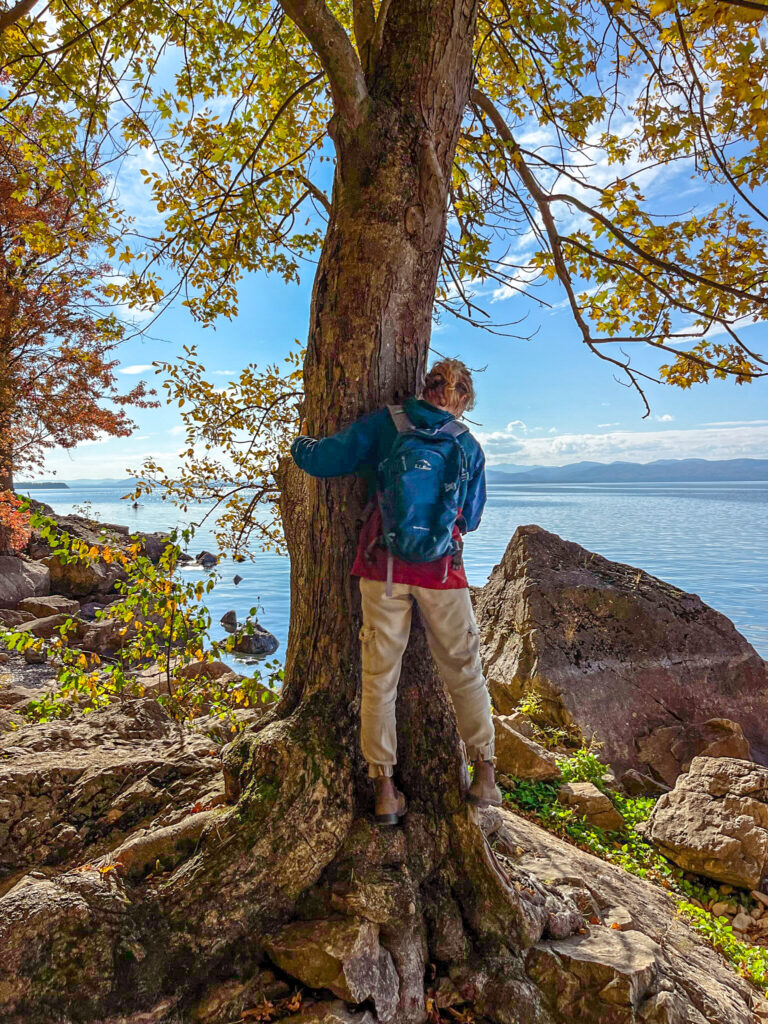
The fall consisted of many different stages, through many levels that led me gently into Rock Point’s winter. First, was the change in color of the landscape. The canopies started bleeding vibrant oranges and reds in the deciduous birches, maples and oaks, while the pine and cedar remained resiliently green. Then, came the wind. A cool breeze arrived in the air, stirring the landscape with an anxious apprehension of the upcoming winter. The wind’s violence danced around the cove-like shape of Rock Point, stripping maples and oaks of their leaves slowly over time. Eventually, there were more dead leaves on the ground, than lively ones on branches. The activity of the critters decreased as well, as I encountered less squirrels, robins, finches, jays and chickadees. The wind caused greater power on the currents of the Champlain shoreline line, with larger waves crashing into the shale and chunks of dolostone, disturbing some from their original position.
In the Winter
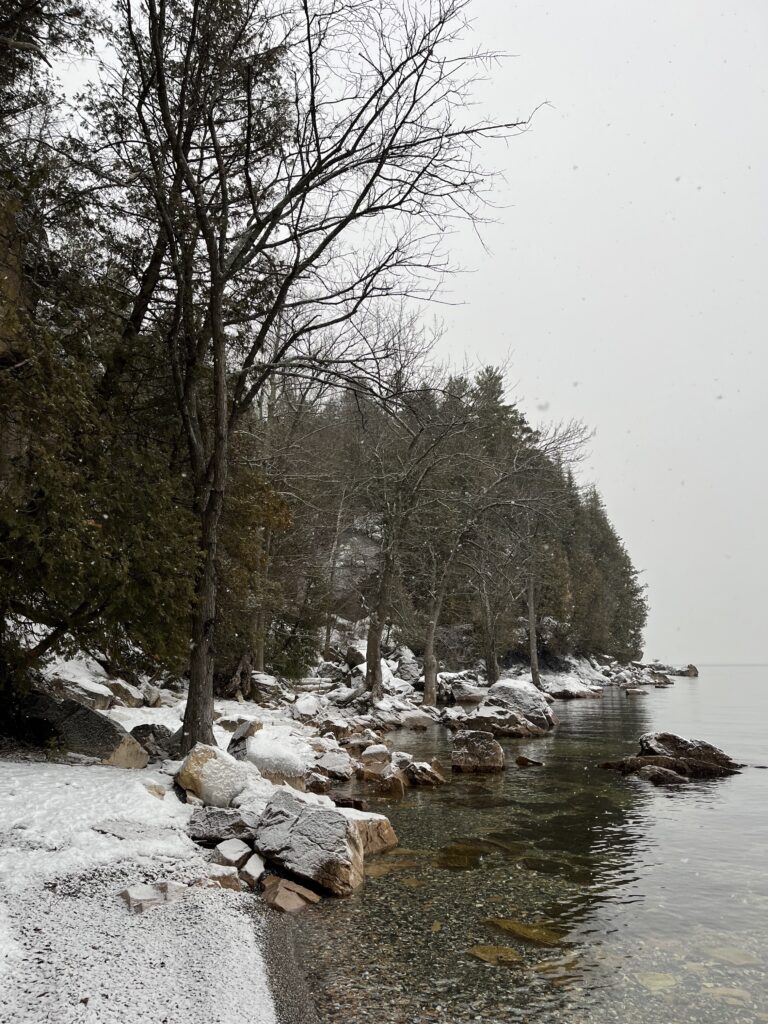
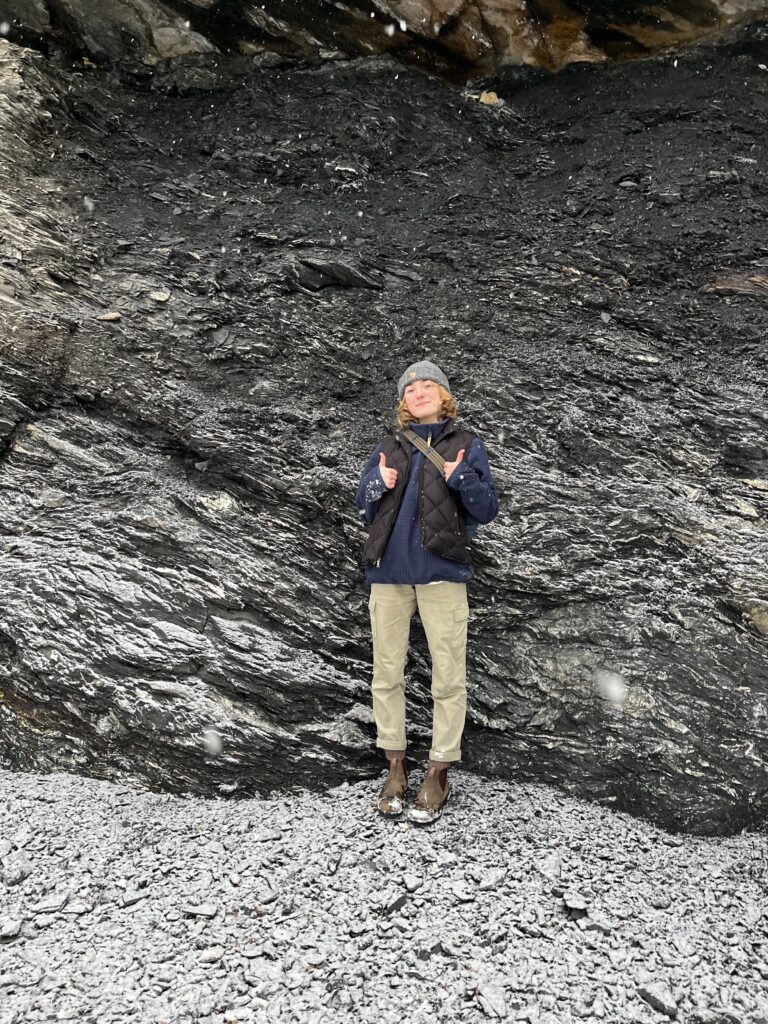
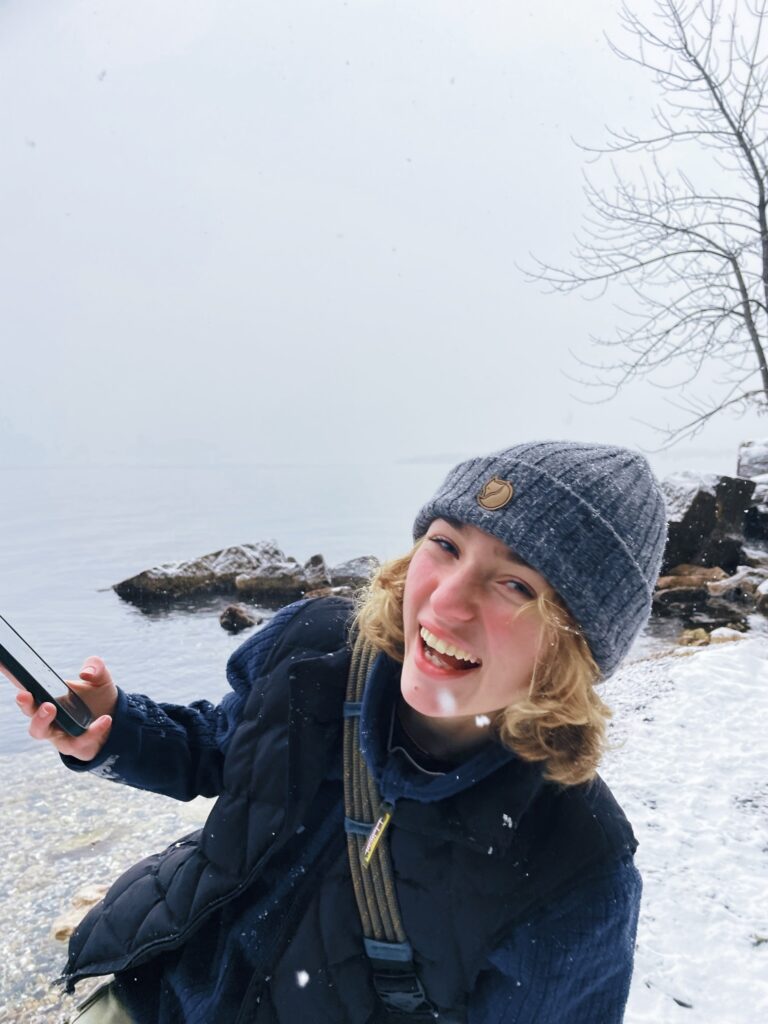
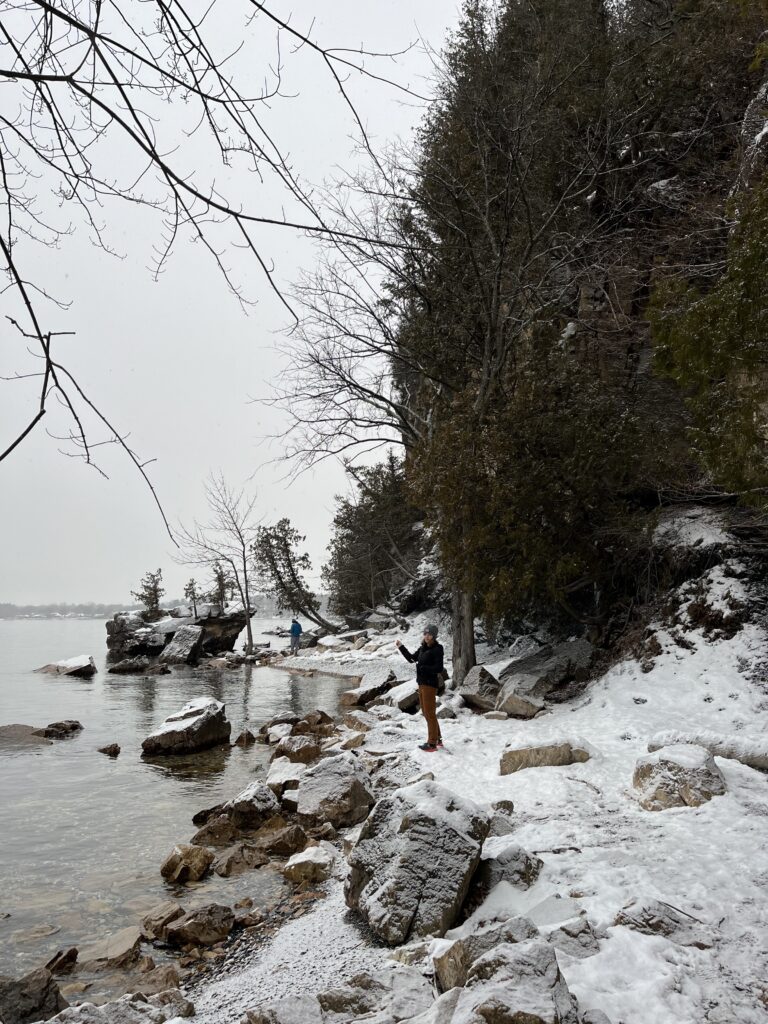
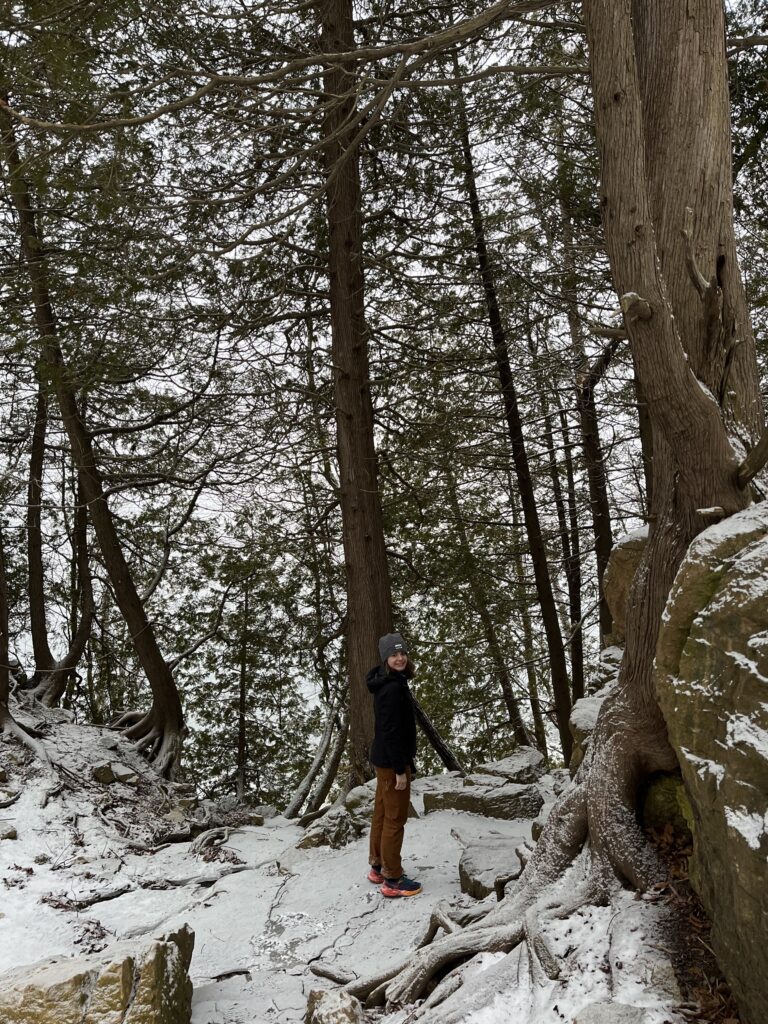
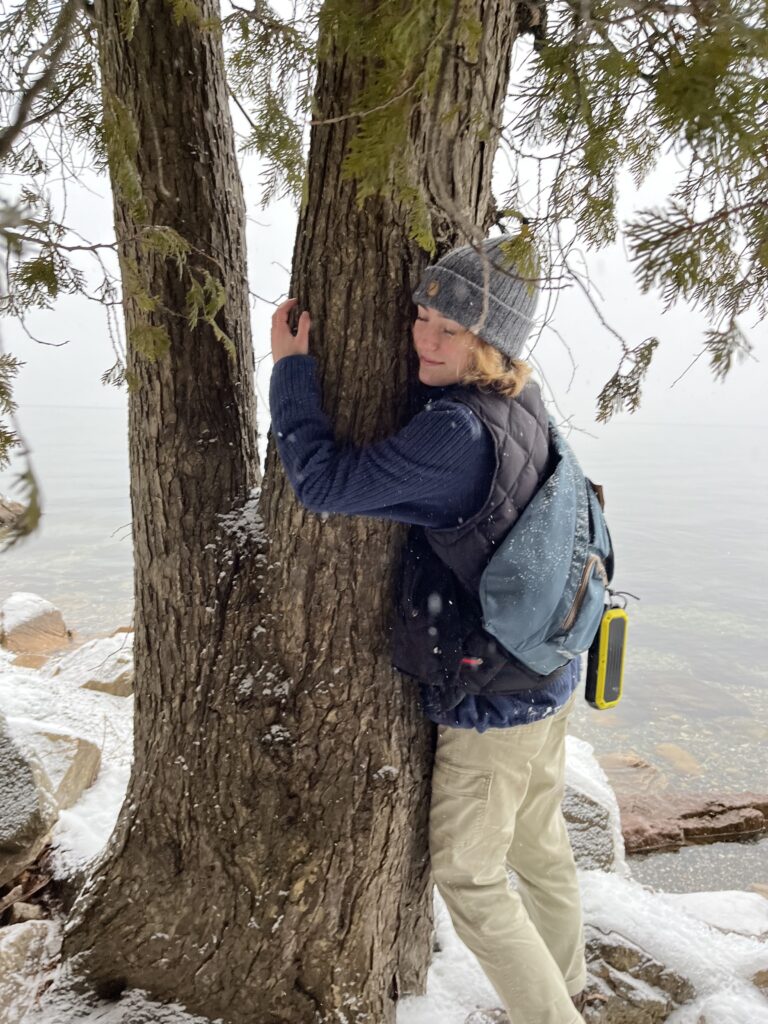
Finally, winter arrived and Rock Point was in a dormant condition. The trees stood extra still, the animals were rarely scuttling about. All you could hear was the smooth, rolling waves of lake Champlain, carrying in icy water that froze shale pebbles in place. The thrust fault behind the water grew long icicles from running rainwater that rolled over the frozen earth. The deciduous birches, maples and oaks appeared frozen in time, with no buds or leaves seen on a single branch. The cedars and pines were the only source of color in this chilly landscape, with the green reminding me of the life that still existed there. The greatest change had to be in the shape of the shoreline itself. The water levels rose to drastic heights, submerging half of the original shoreline. The shale rocks were frozen in place, piled up in choppy levels of “shale dunes” making the walk along the shoreline more challenging. Large chunks of ice were the finishing touches to making this landscape one of a gray, black and white palette. Like icebergs, they trapped rocks and wooden debris in their solidity, coating over larger dolostone rocks that now shimmered under rare sunlight. The deadness in life and color in the landscape was drastically different to what I experience in the summer and fall. It was like stepping onto another planet; and I felt unsure and untrustworthy of Rock Point given its drastic transformation.
In the Spring
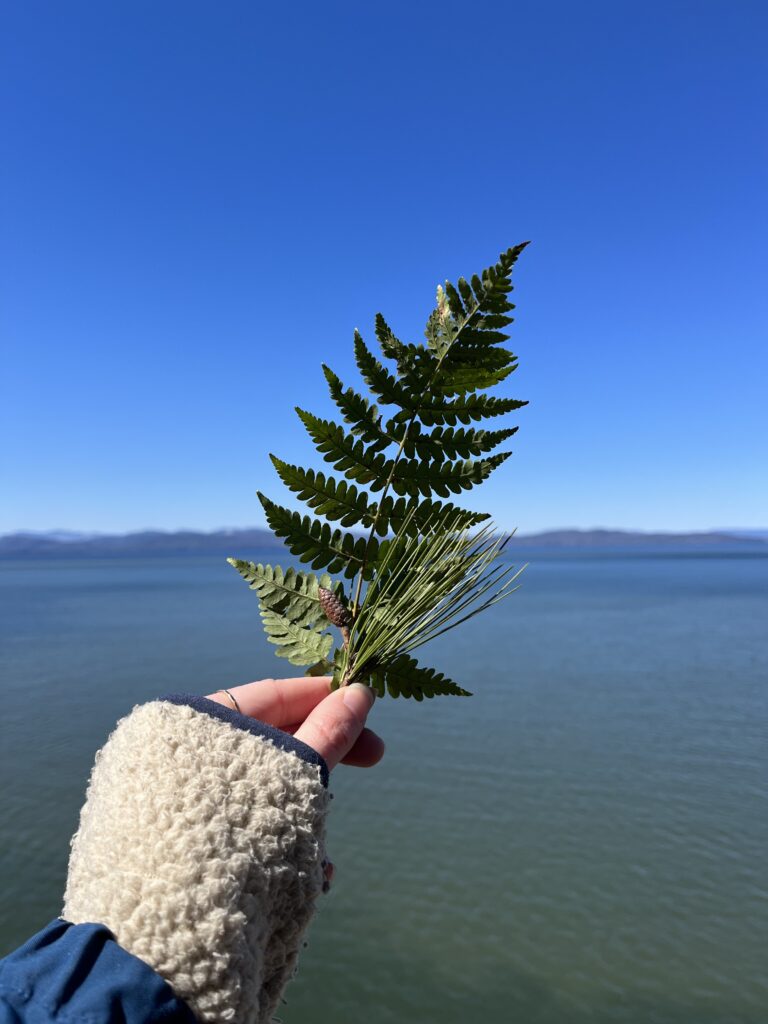
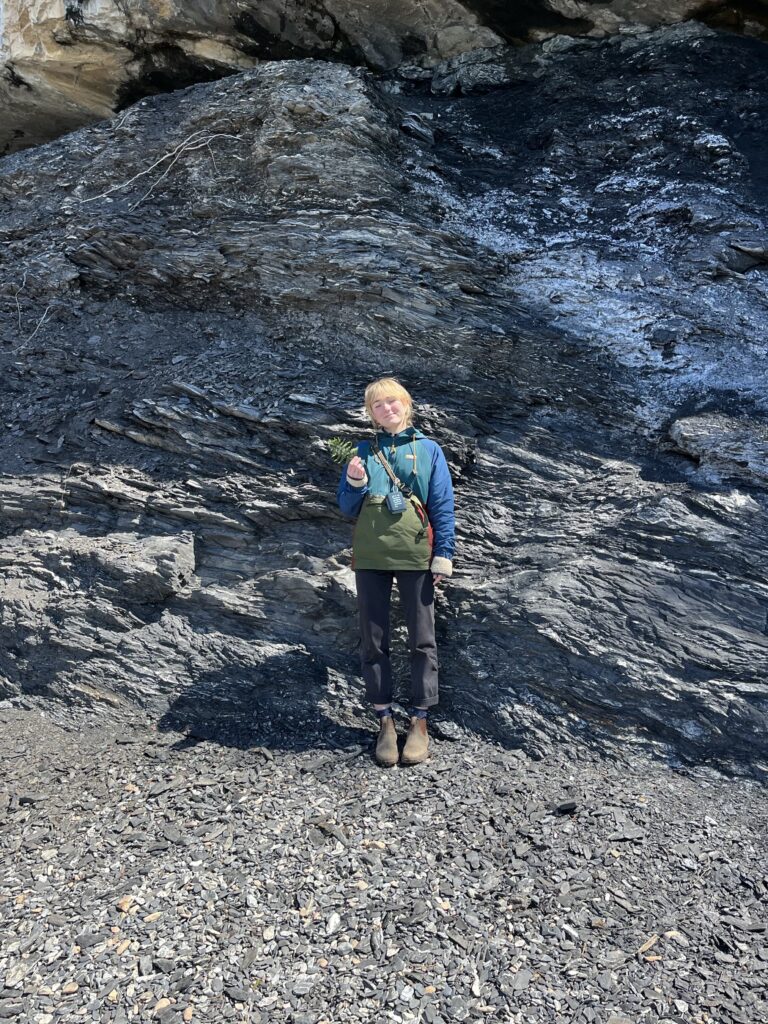
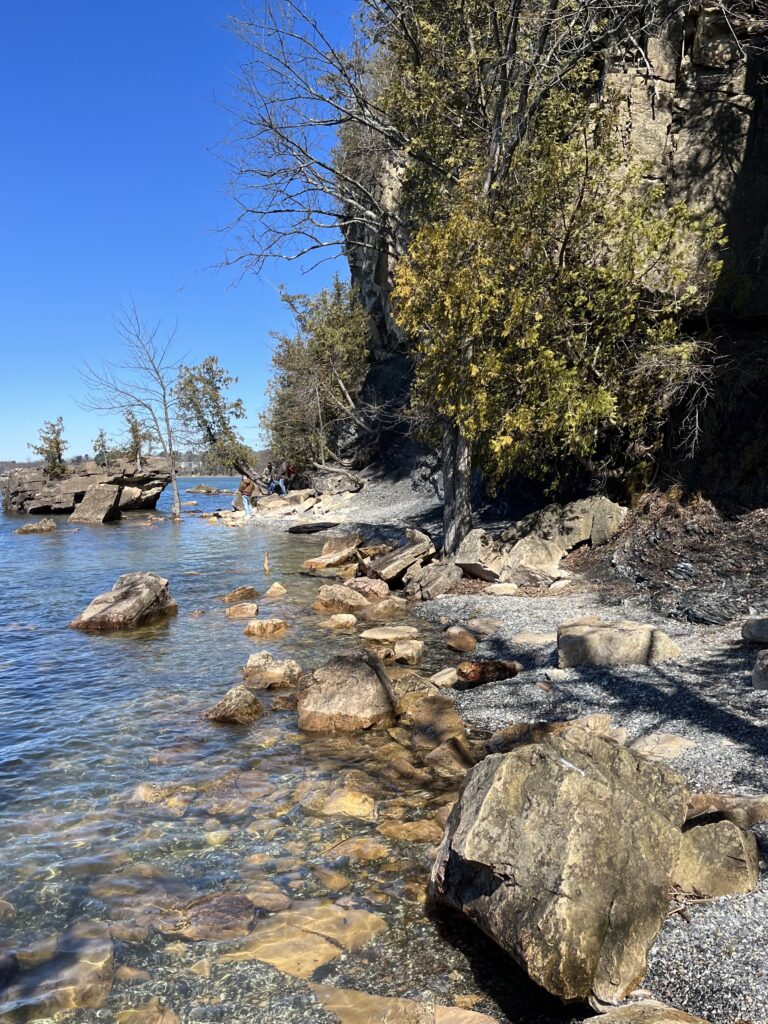
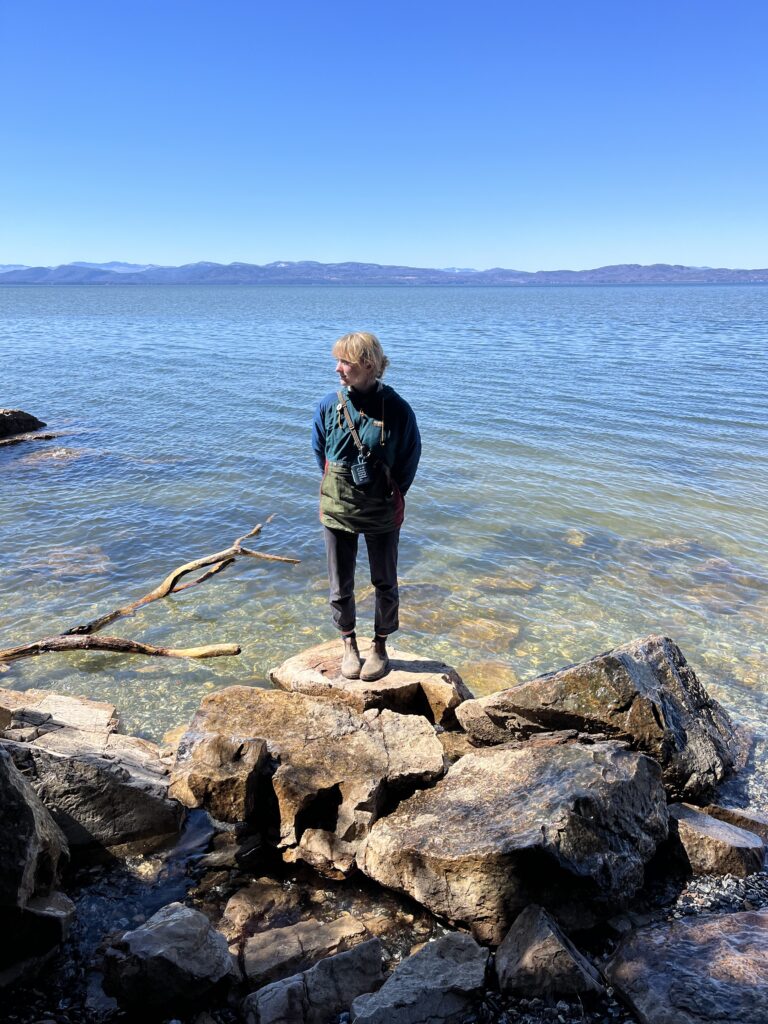
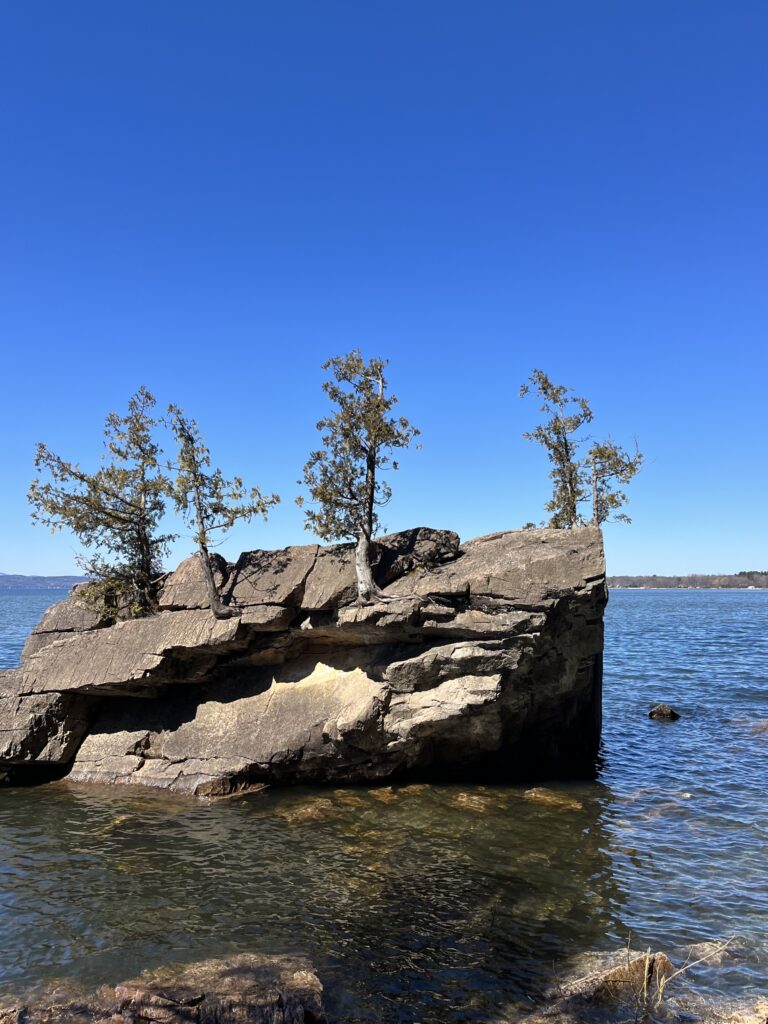
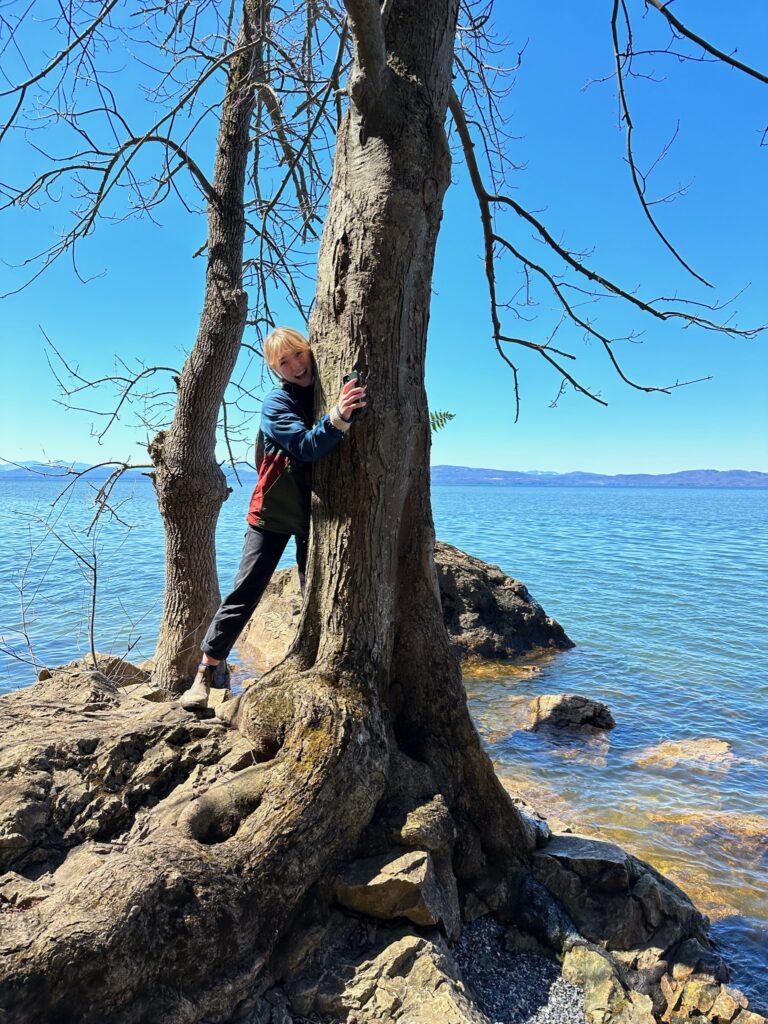
Spring truly symbolizes rebirth and regrowth in Rock Point. The wind came back, but instead of taking away life, it carried it in. The sunnier days tickled the birches, maples and oaks with warmth, causing their branches to reach upwards towards the rays that awakened their buds. Even the green in the cedars and pine felt brighter, as they photosynthesized in stronger sunlight. The warmer days also led to a re-emergence of critters; chipmunks, squirrels and even deer. You could hear the calls of chickadees, jays and finches in the air as well, singing songs of celebration for the end of winter. The ice that had frozen Rock Point into a slumber had thawed away drastically as well, uncovering disturbed branches bleached of their bark, and shale piled in uneven surfaces. Runoff melting water also trickled down the thrust fault and trail leading to the shoreline, creating bonus water-fall like patterns that added more movement to Rock Point. Everything felt more colorful and lively compared to winter. The winter storms left more logs on the beach for sure, but also displaced the once-smooth shale sand into uneven lumps and bumps of crushed rock, showing winter’s hardships like scars on skin.
Minor and Major Landmarks
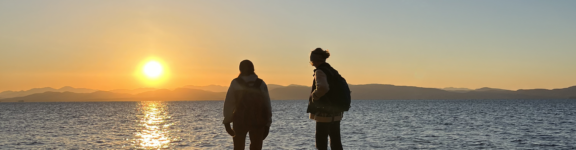
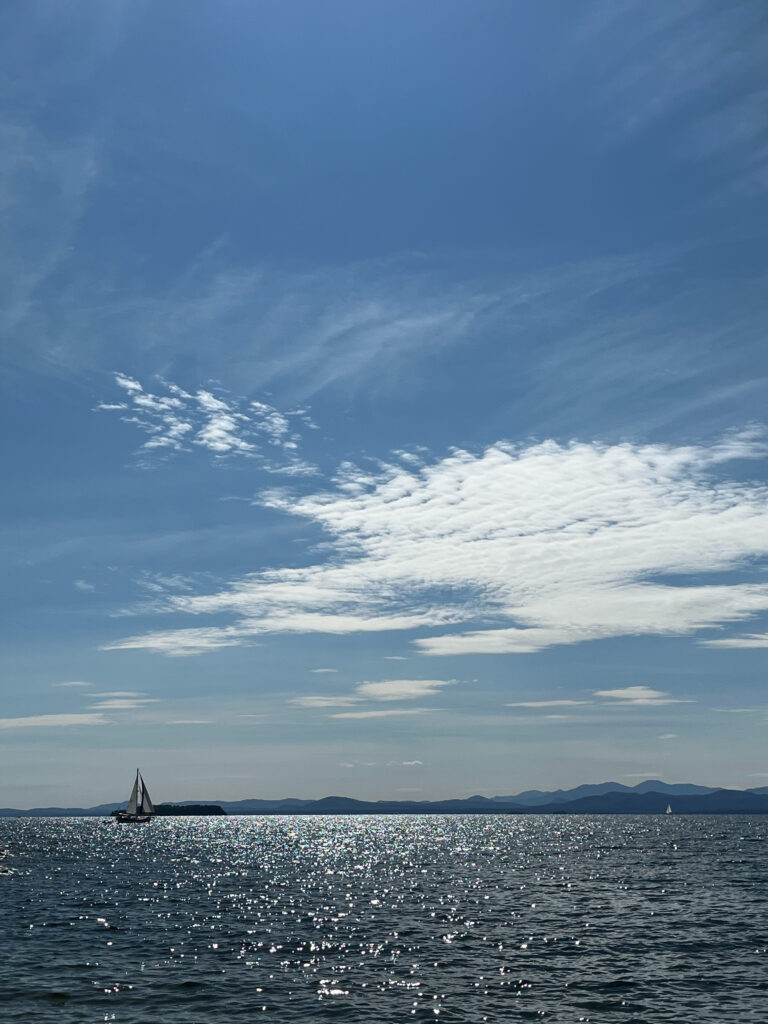
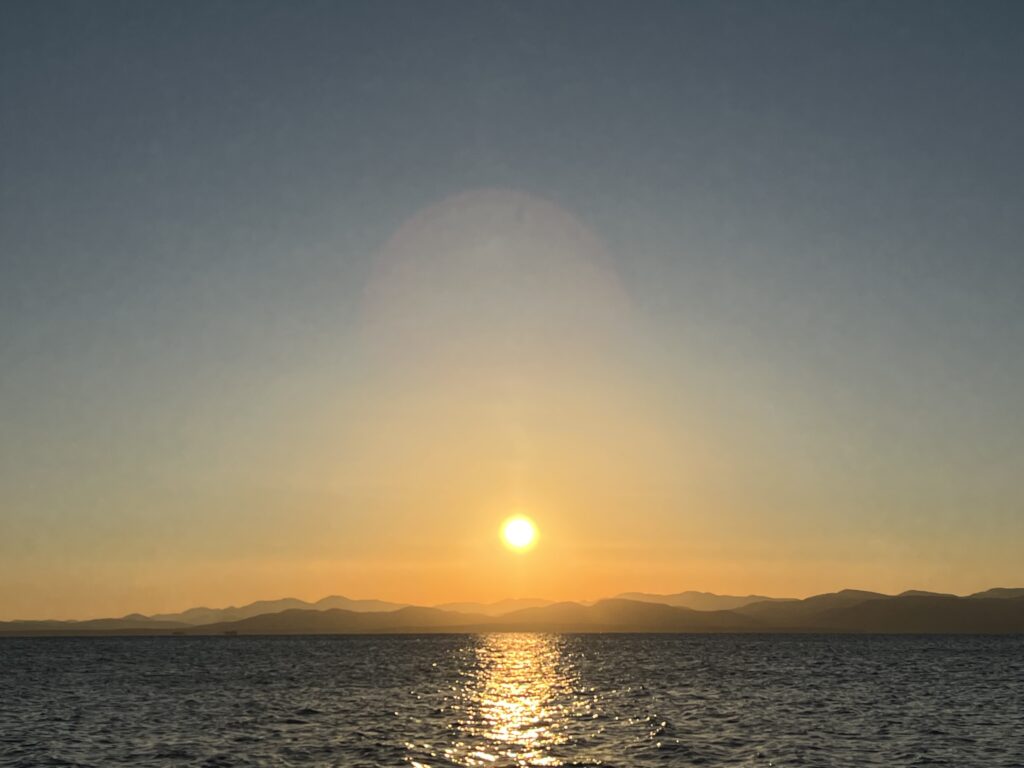
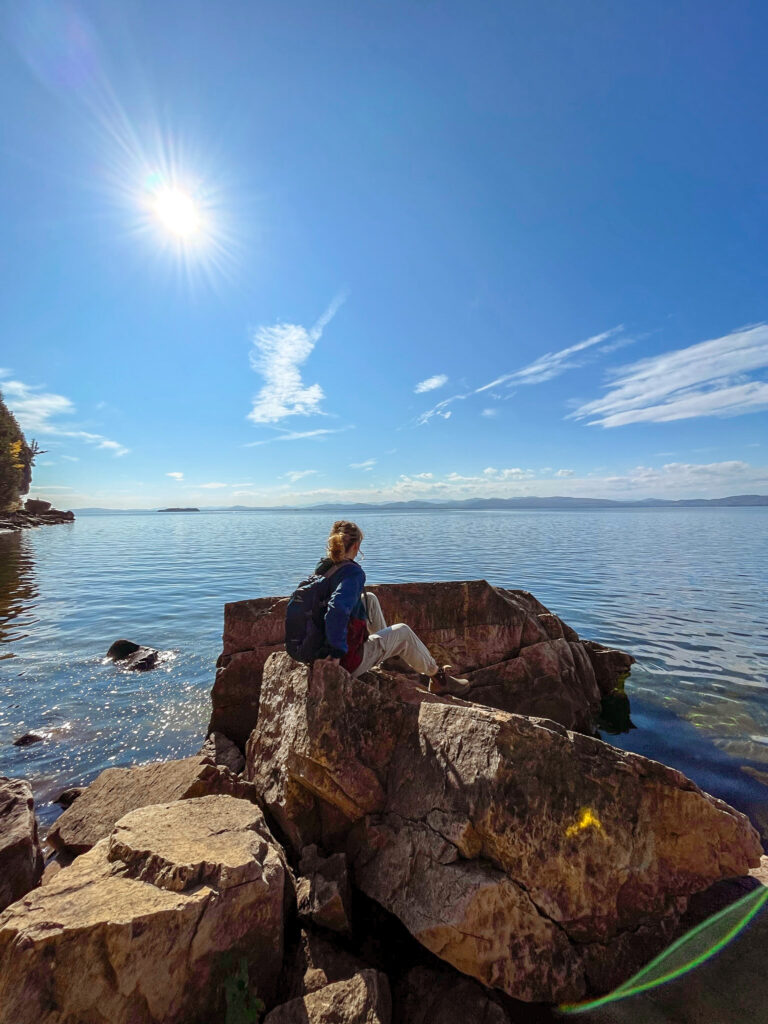
There was one minor landmark I connected with the most. It was a singular chunk of dunham dolostone that was surrounded by water. I liked to sit on that rock through my visits at Rock Point; watching the sunsets and adirondacks across the lake, as well as the movement of trees on Rock Point’s shoreline. It was the place where I felt most connected with this landscape.
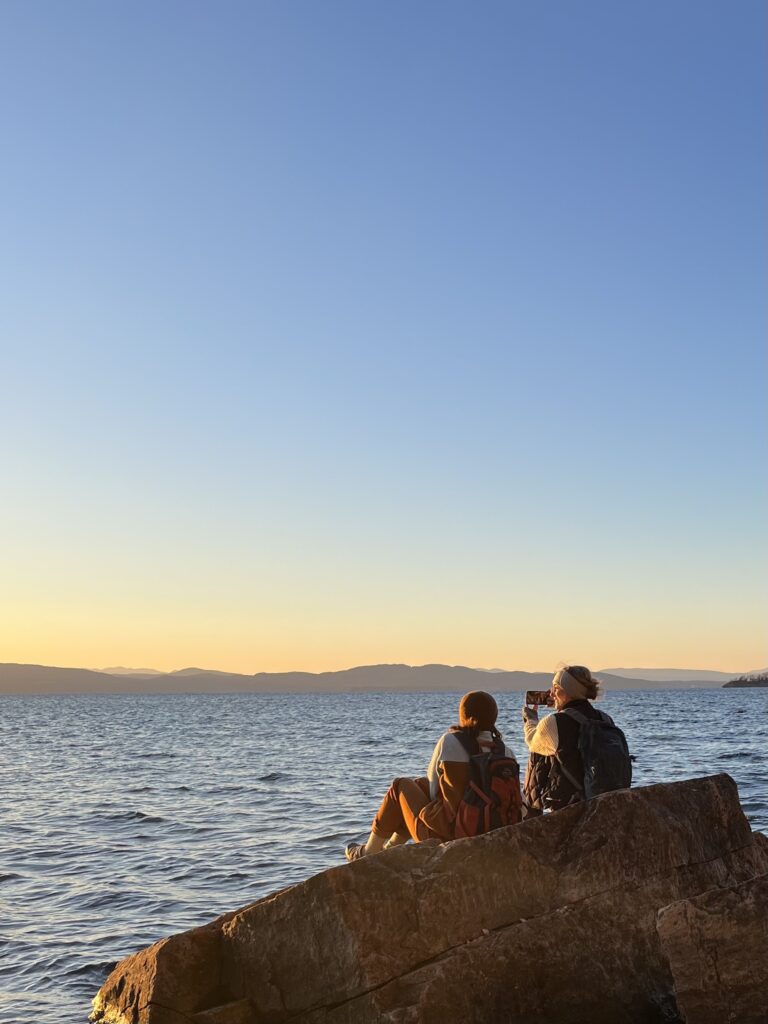
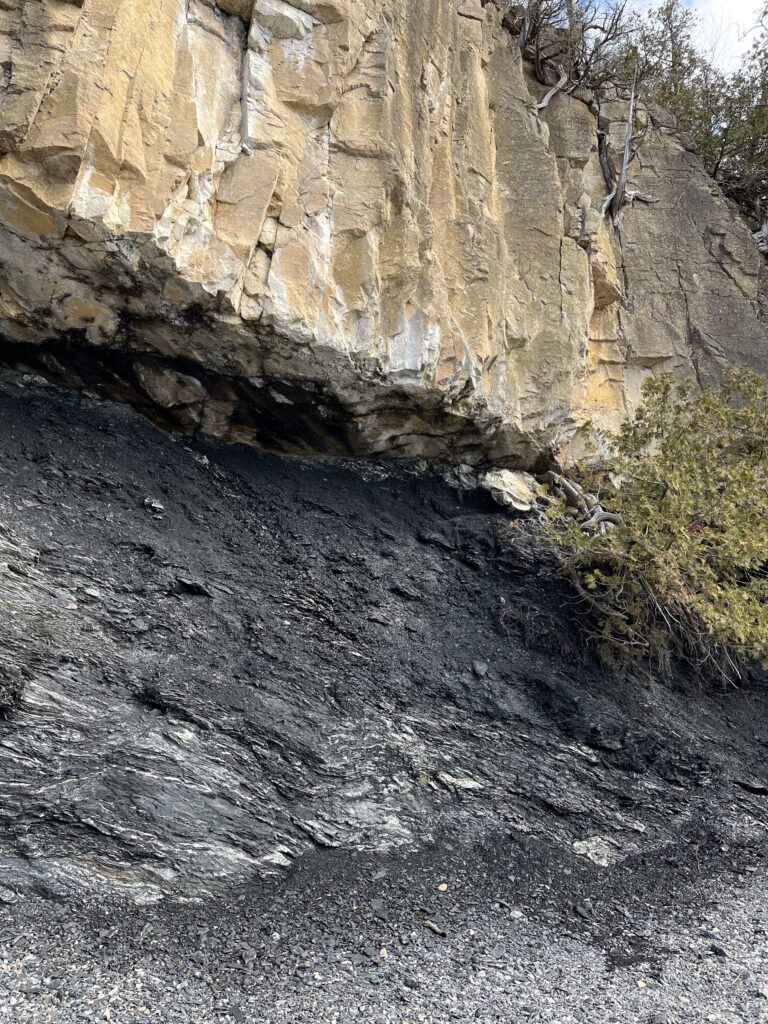
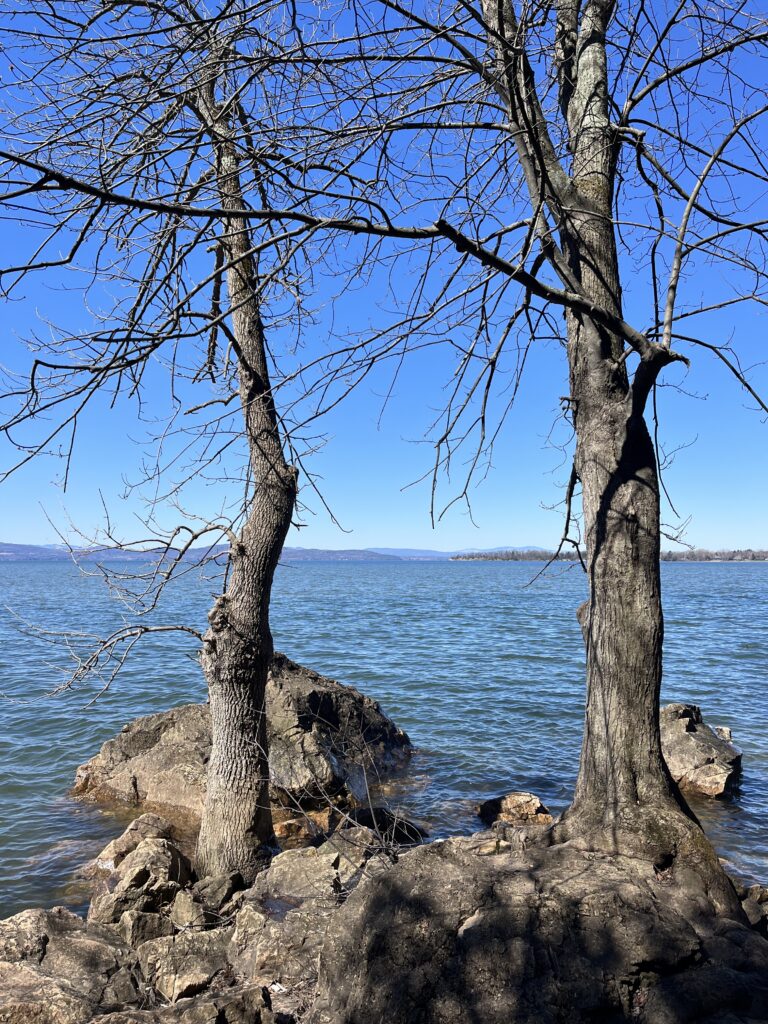
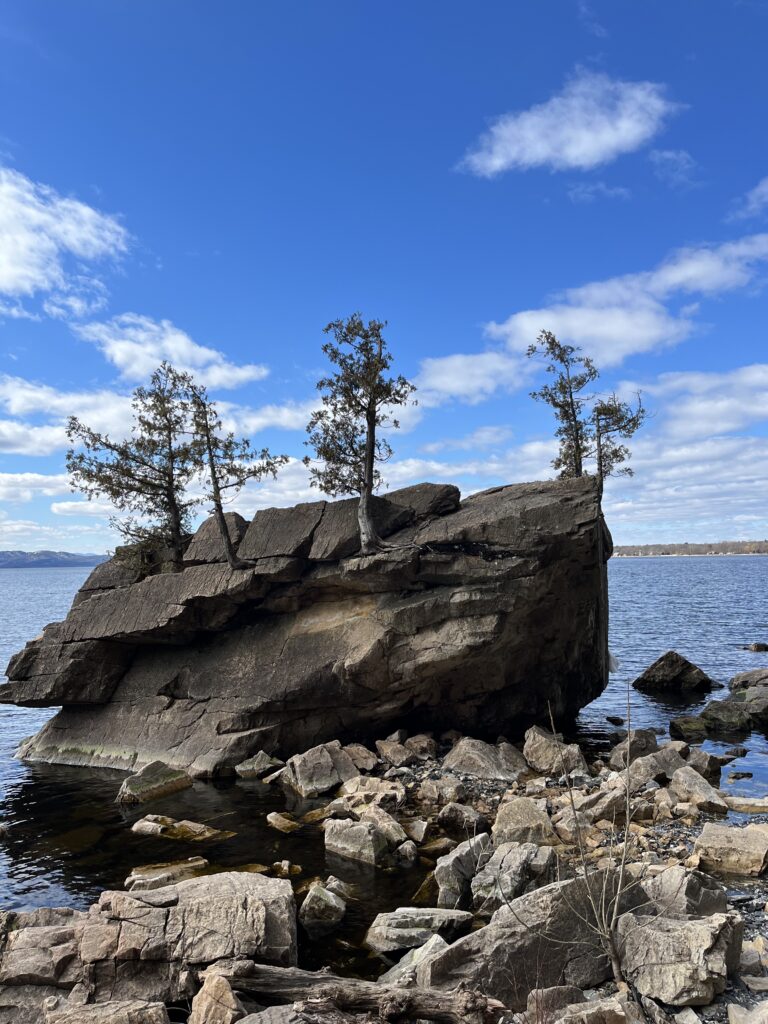
Other minor landmarks could consist of a large log placed along the shoreline and the cedars growing out of the dolostone. The major landmarks consisted of the large boulders of dolostone that had fallen from the thrust fault, and the reverse thrust fault itself. There was also two maples that stood out on the shoreline of Rock Point itself, acting as a key measuring tool to the seasons Rock Point was currently existing through.
The Entwining of Nature and Culture
Its many uses are evident as one wanders through the Rock Point Center. With its educational institutions and research facilities, it serves as a source of instruction. With its shared gardens and solar farms, it is a location that prioritizes environmental protection and sustainability. But more significantly, it serves as the habitat for numerous ecosystems and endangered species thanks to its protection as a conservation area. At Rock Point Center, life is abundant for a wide variety of creatures, including people. I also selected Rock Point due to its understated attractiveness. It truly has a mix of everything, including forests, cliffs, and the coast. the tranquil sound of Iberville shale chips being gently eroded by the lake coast. The thrust fault itself is made up of a vibrant assemblage of hues, as are the peculiarly curved White Cedars that sprout off the sides of the rock. It’s a place of sentimentality for many cultures, including the pre-colonialism inhabitants; the Abenaki tribe. Because of its access to the lake, Rock Point is regarded as a location of “high prehistoric sensitivity,” as it likely allowed the Abenaki people to make multiple uses of the land. There is evidence of Abenaki activity, including the presence of chert projectile points, even though the precise methods it was used are not well understood or agreed upon by archaeologists.
The Rock Point landscape has long been associated with humans, who have interacted with it in a diversity of ways over time. Nature and culture mostly intertwine through the human-environment interaction positioned there; from the trail hikes to educational services provided through the Rock Point Center. The opportunities of interacting with the environment give you a glimpse into the emotional aspect of historical cultures embodied there. The emotions this beautiful place releases include the feeling of understanding and knowledge of why this place was so special to a variety of cultures for many millennia. For those who do arrive at Rock Point with the environment in mind, a synergy emerges, between the public and the sustainability missionaries of Rock Point. The abundance of recreational activities that follow Rock Point’s sustainability mission can inspire the public to want to participate in the community as well. Thus, that commonly serrated border between the public and sustainability mission of Rock Point blend together to create an environmental movement towards protecting Rock Point not just as a place of adventure, but a home that protects the life around us.
I am a part of Rock Point.
When I chose Rock Point as my phenological location, I was interested in finding out how the ecosystem there and the wide variety of other natural structures that can be found there can coexist harmoniously and rely on one another. I’ve said it once, but I’ll say it again; Rock Point never failed to amaze me. Every time I stepped out onto that shore of shale, I felt my breath catch. It’s like a whole world of different geological and natural elements. And somehow, they all correspond and communicate with one another, helping all lively aspects of Rock Point be sustained through the drastic changing of the seasons. Every trip I took to Rock Point was with a different mindset. Some trips were emotionally harder than others, but I still managed to get there nonetheless. I saw Rock Point through all its seasons and light. During the early morning sun and the sunsets. During snow and rain and sunny days. No matter what conditions Rock Point was facing, or what I was facing, it still managed to help me recollect myself. I felt restored at the end of each trip going there. And for all the changes Rock Point experienced, I unconditionally visited it. I consider myself to be a part of this place for that reason. Not only did I not give up on Rock Point, but Rock Point did not give up on me. It gave me a chance to connect with it, and see all its parts come together as a whole; through seasonal time and patience in progress.
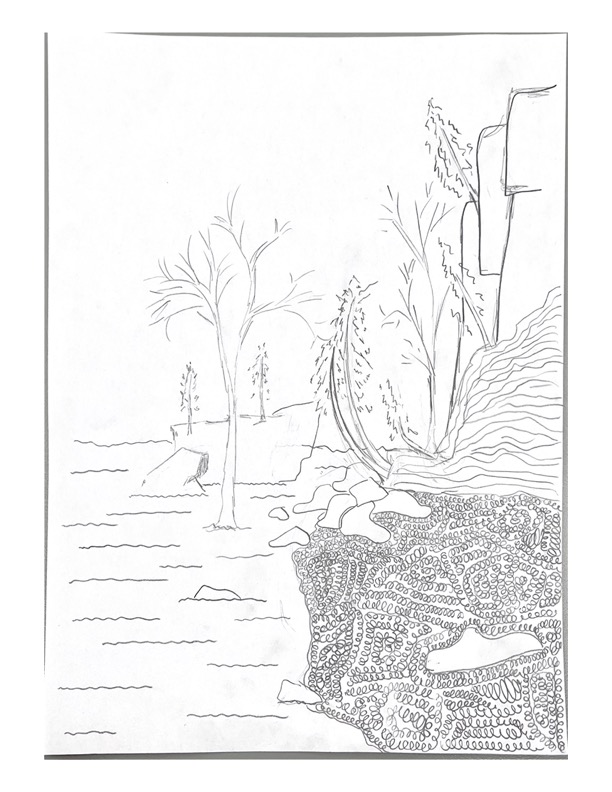
It’s such a gentle and small place. Perhaps that’s why I love it so much. Here I am now; in college in a completely different state with a completely different perspective on the world compared to my younger self. But somehow when I come to Rock Point, I feel connected with that faraway, youthful and innocent part of me. I think I know deep down how much my younger self would’ve loved this place. She would’ve imagined herself to be a water fairy, and pretended Rock Point was her home. She would’ve hugged every tree on the shoreline, and designed stars and circles out of the shale pebbles of the beach. That recollection and reconnection to my childhood character has healed me in a way. Rock Point has helped me become more connected with myself, and realize just how important nature is to my life and growth, and the growth and life of the world. That’s why I make sure when I say goodbye to Rock Point after a visit, I give one of its trees a long-lasting hug.