January; Making the Trip Back to Rock Point
(01/25/23)
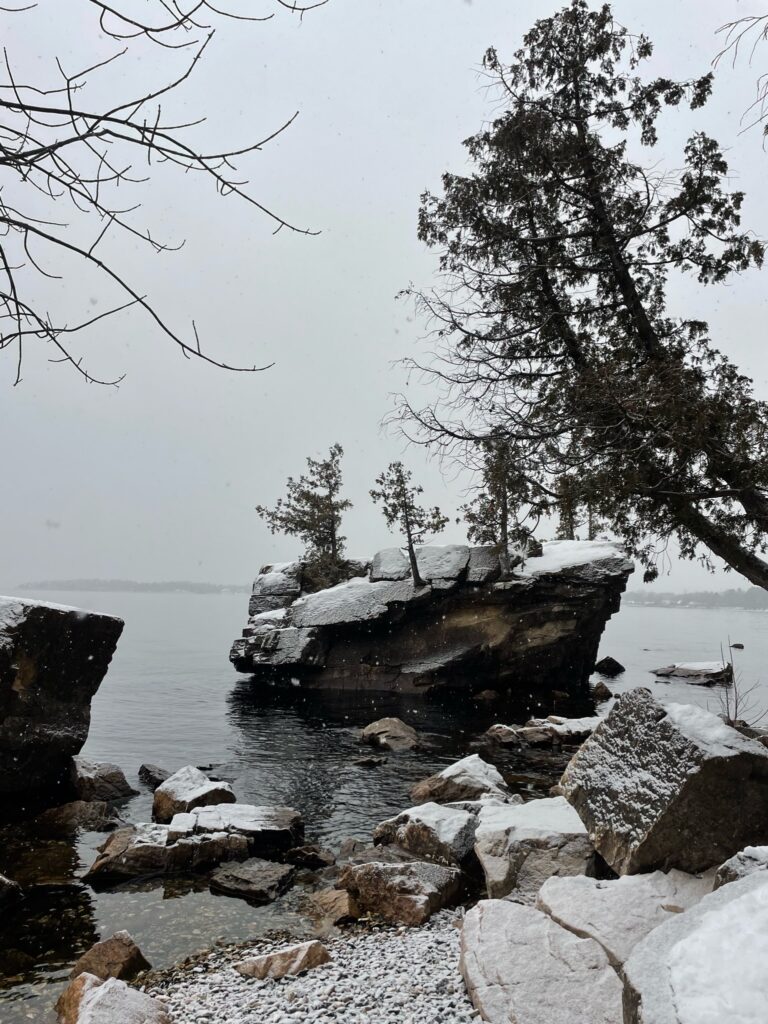
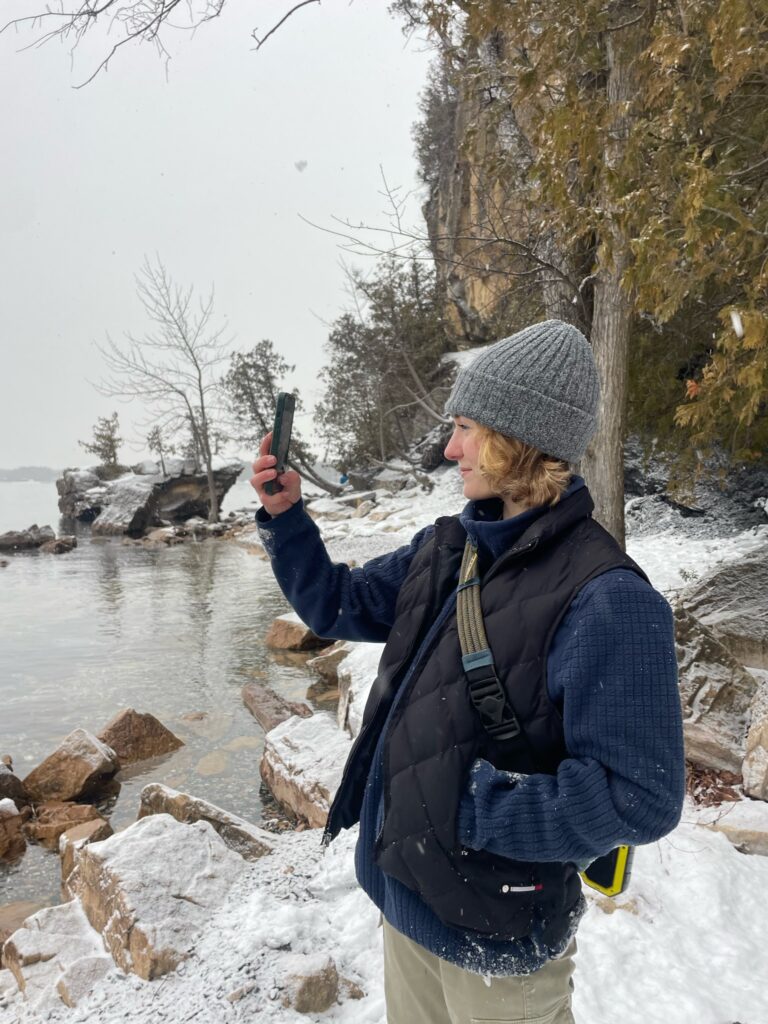
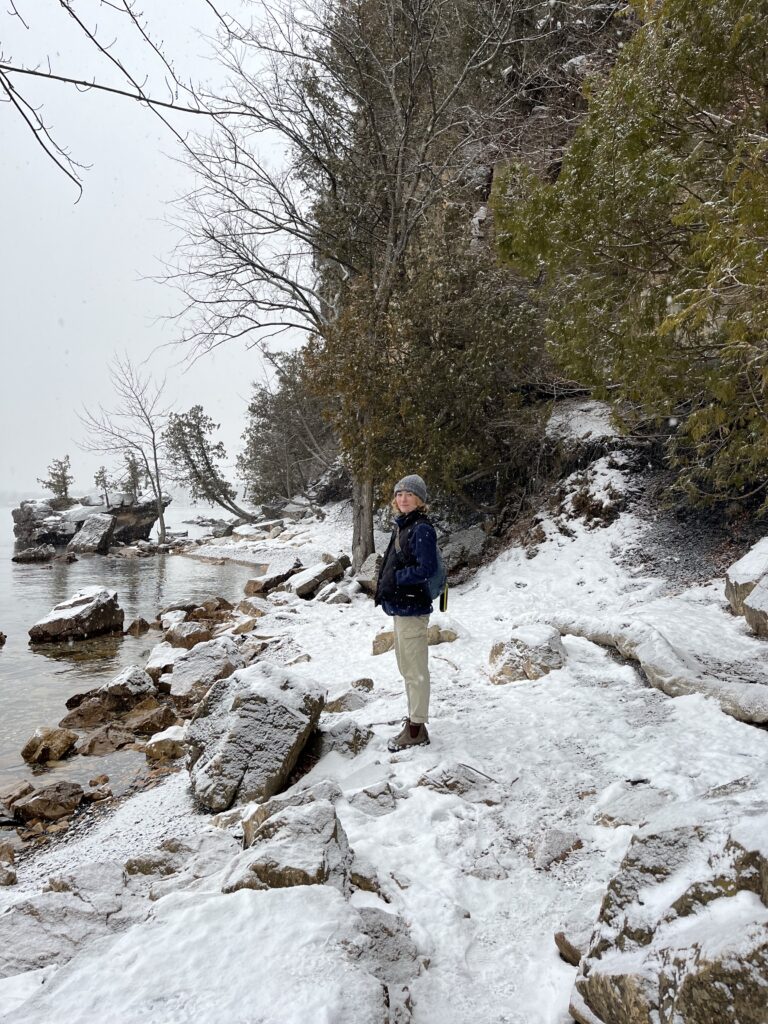
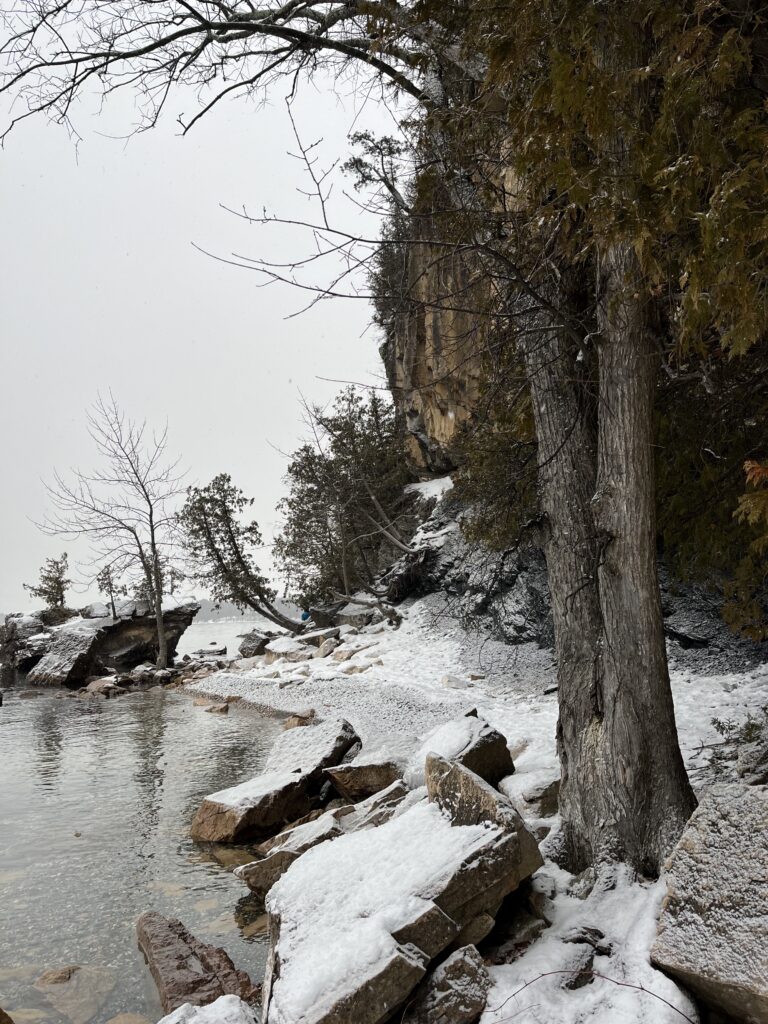
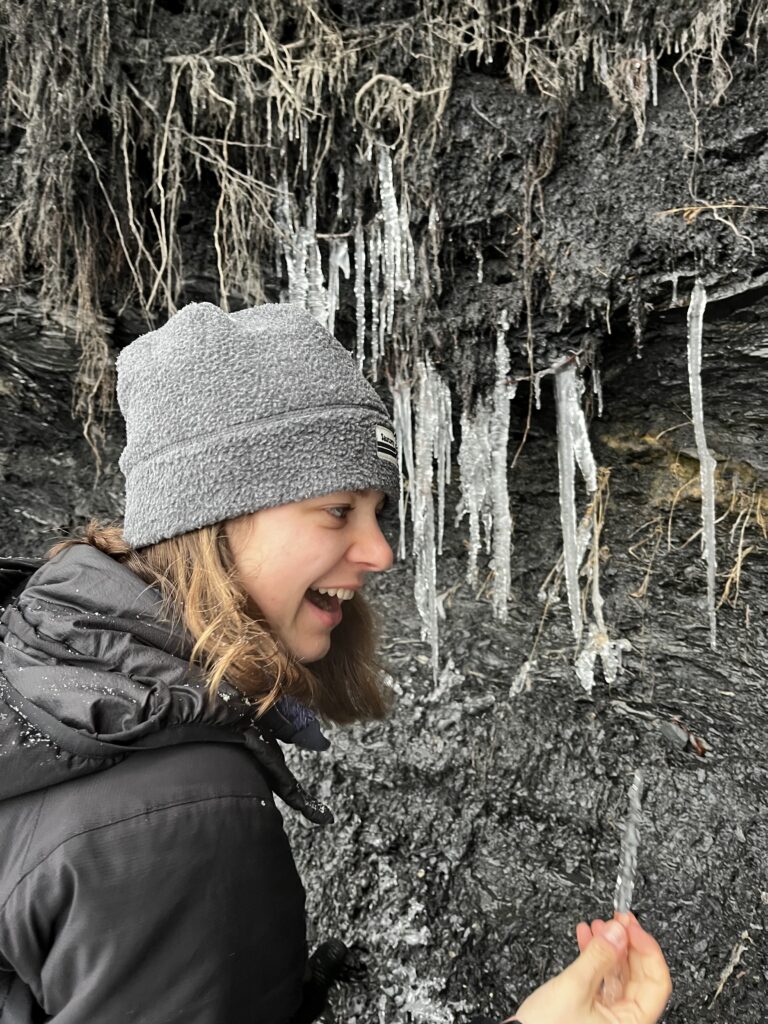
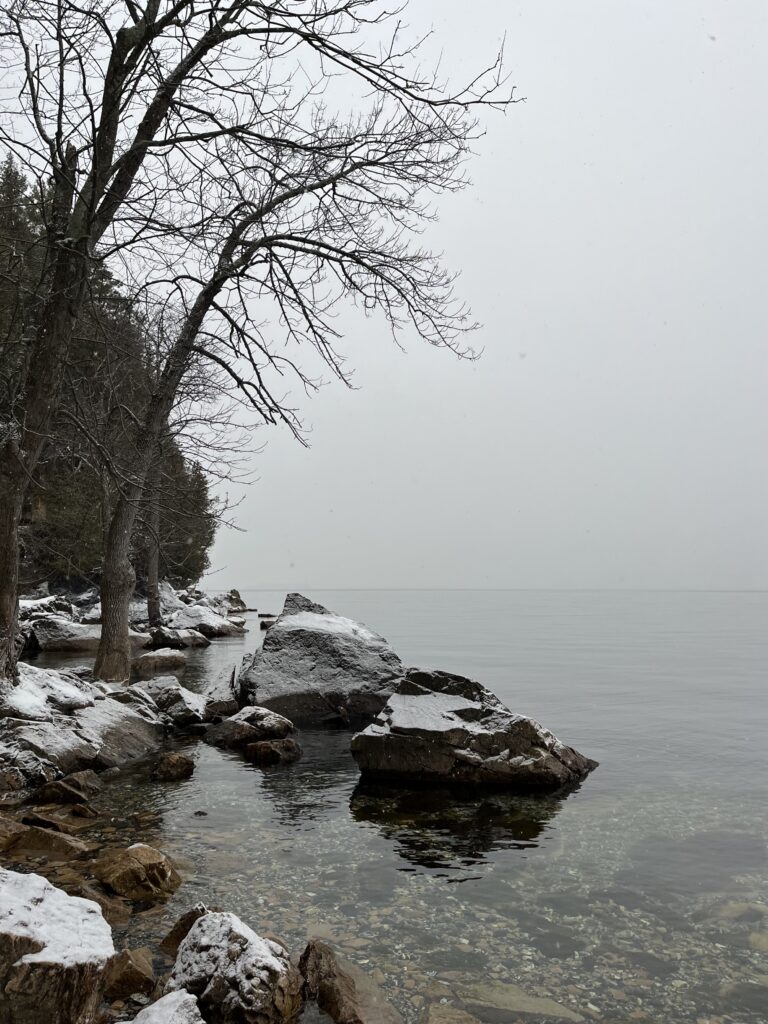
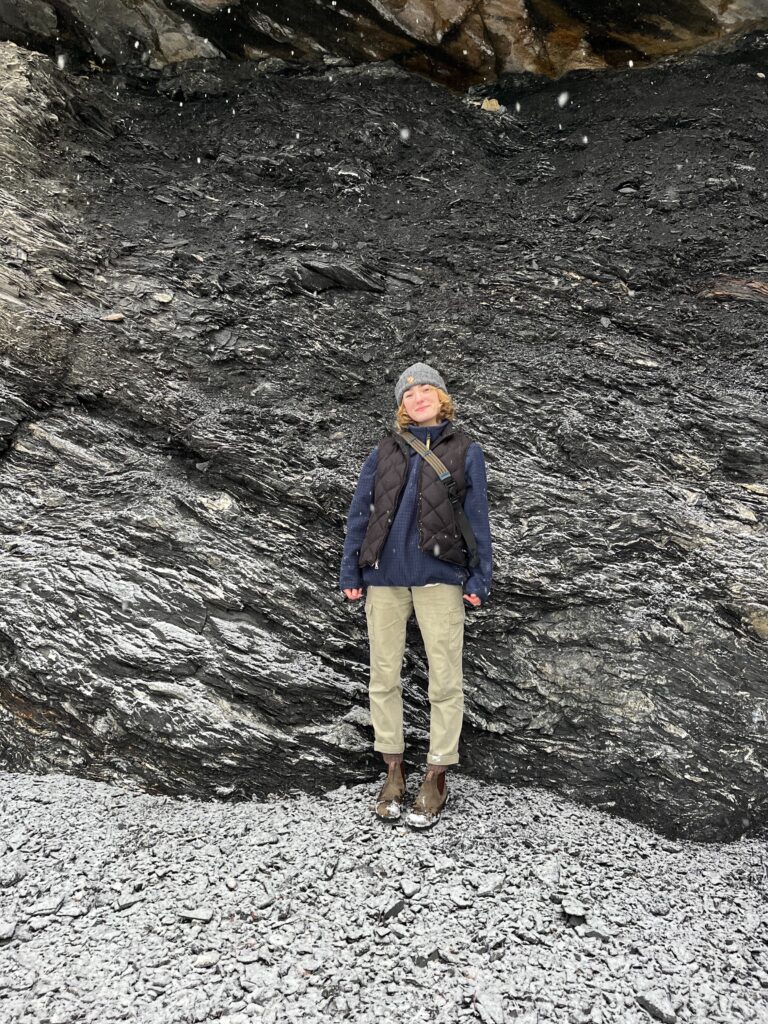
On this particular trip to Rock Point, I was met with a setting I’ve never seen before. An entirely new element has now been added to this place, managing to make it more beautiful than ever; snow. A pristinely elegant, white coat stretches across the shoreline, resting on rocks, branches and logs, that outline their unique shapes and colors. All the deciduous trees growing in this area have not a single leaf on any of their branches anymore, making the land feel very brown and chromatic. The shore itself has lost at least a yard of land to the water, whose levels have increased inward dramatically. Half of the shoreline that I could walk on in my previous visits is now submerged completely, leaving me extremely curious at what may have caused this water rise. The pebbles of Iberville shale making up the “sand” of Rock Point beach have been pushed and pulled steeply on top of one another, frozen in place. No longer is this shoreline smooth and flat, but now has a steep slope of frozen shale, distinctly separating land from water. Layers of ice from consistent pounding of the water, coats the rocks in a brilliant light blue, with icicles trimming their edges that touch into lake water. Above me, runoff water from the Limestone Bluff Cedar-Pine Forest has trickled over the edge, forming large icicles that hang from the Dunham Dolostone and Iberville Shale. The only part of this place that hasn’t changed much at all, are the cedars and pine, whose green needles stand out freshly under the sugar-like snow.
Tracks in the snow; where did the come from, and where did they go?
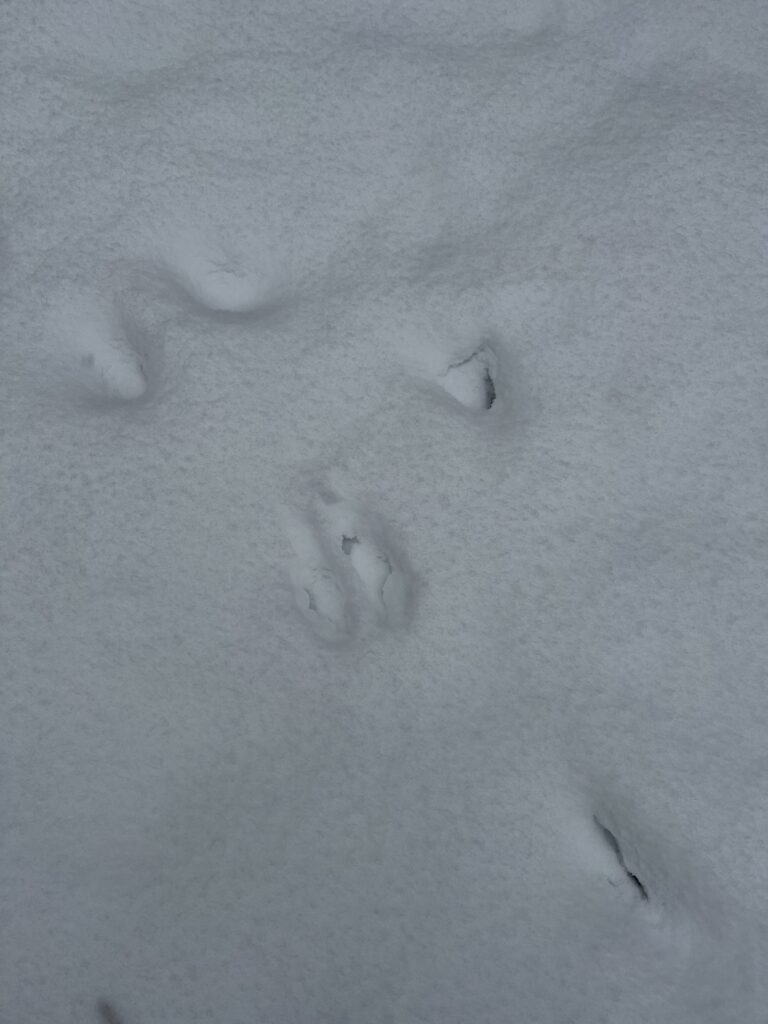
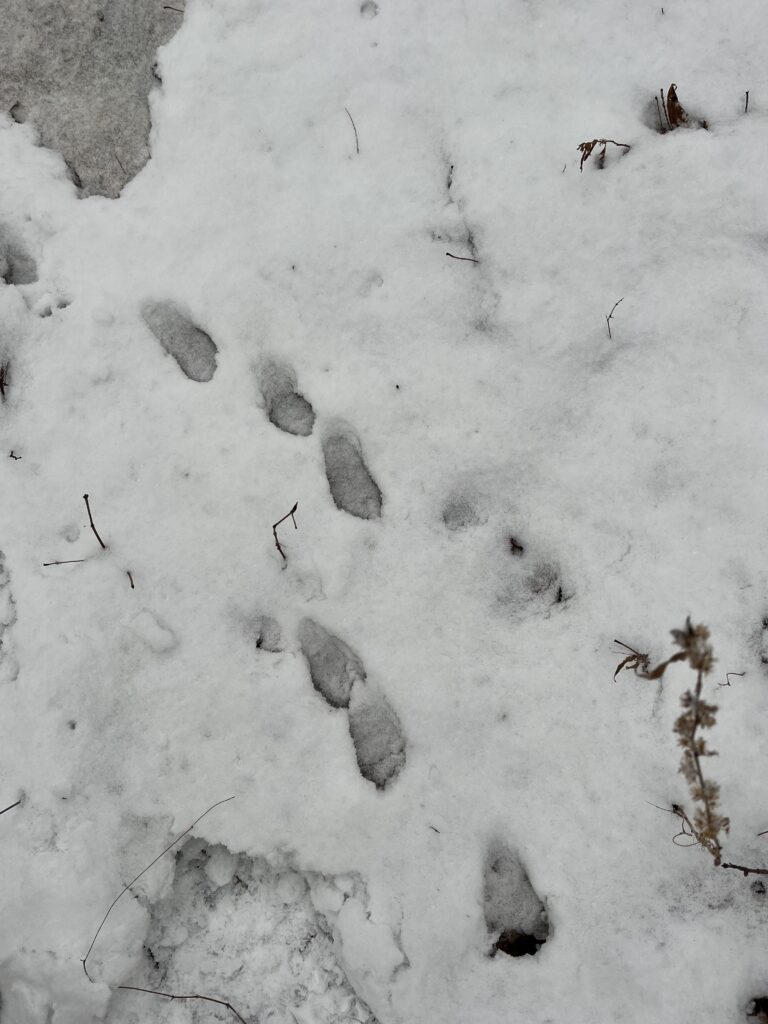
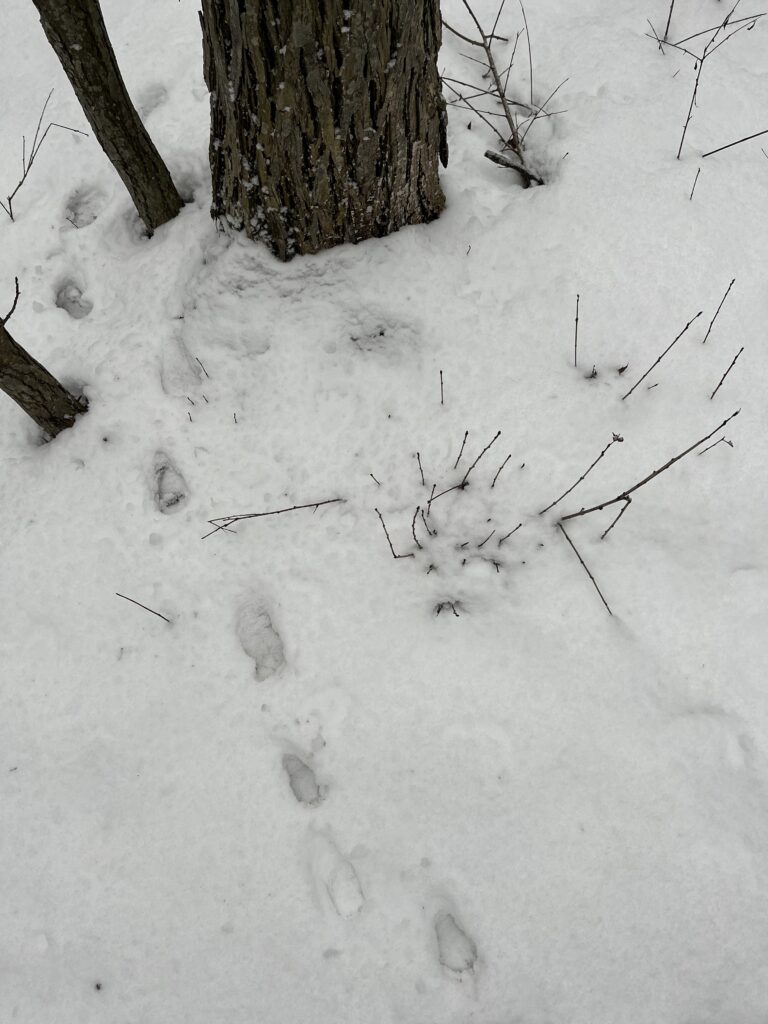
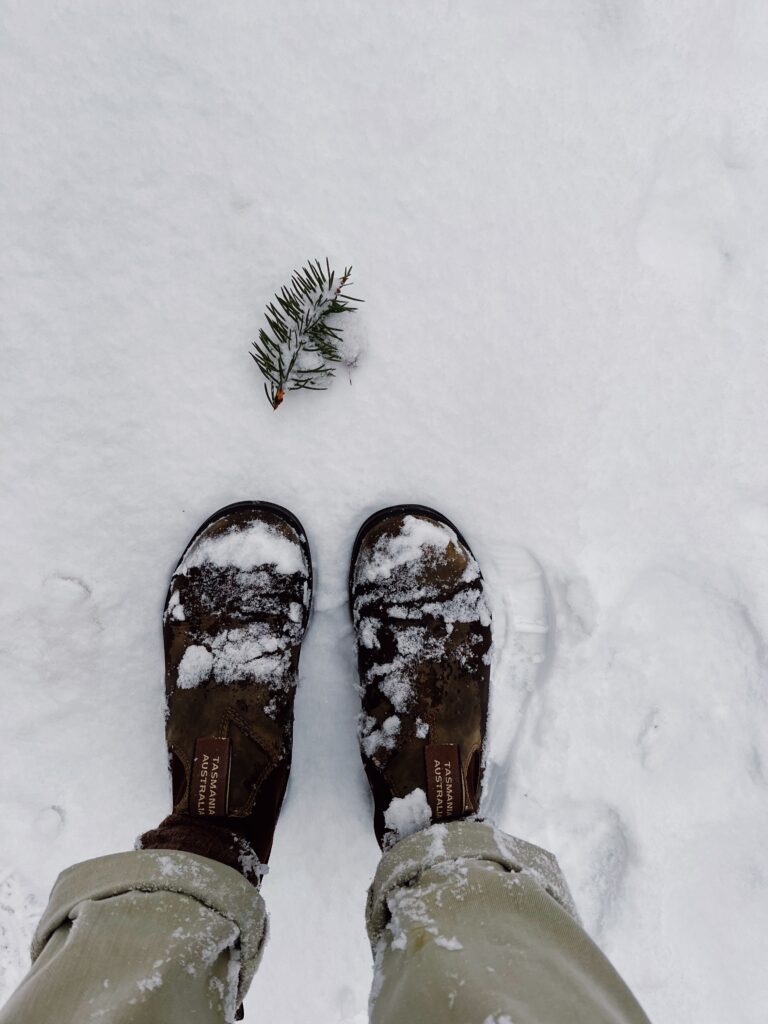
Now that there is snow though, it is much easier to be able to identify if any life has come across this icy terrain. No identifiable tracks were on the shoreline itself, but some recognizable ones from gray squirrels and cottontail rabbits could be noted on the path down to the shoreline.