A UVM blog Phenology blogging

Posts

Finale For Phenology!

With the end of the semester, comes the end of my phenology observation at Red Rocks Park. Upon returning the park the first thing I noticed was simply that everything was much greener and growing! Flowers sprouting on twigs, new growth trees coming up from the ground. There was also what seemed to be a significant amount of deadwood that was around, indicating that it will provide a healthy habitat for many species that we have learned about.

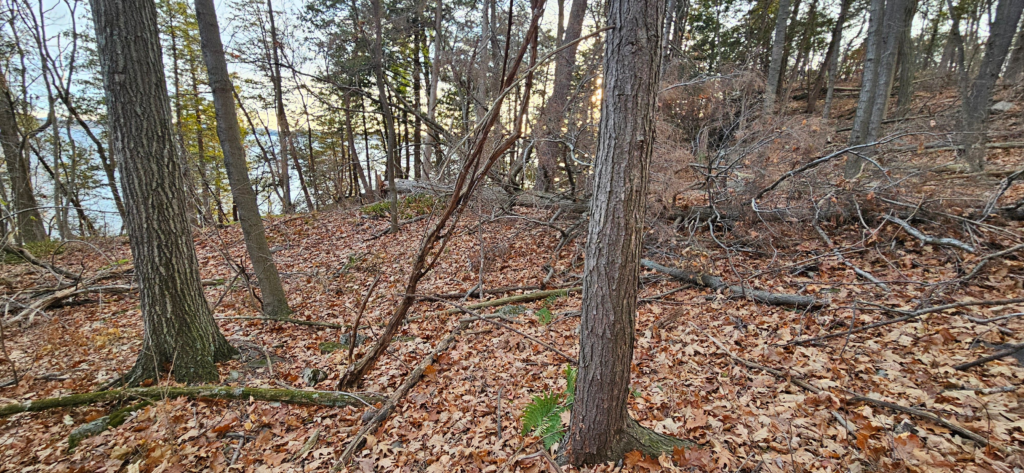
In this photo you’ll find that not only is there a large amount of moss growing around my site but also ferns! a great indicator that there is lots of shade for tolerant plants that are drawn to it.
20250428_163356.jpg
I’ve also become very accustomed to this specific picture above, the same fallen tree, big rock face (now covered up with moss) and the other dead pieces that were slowly being decomposed.

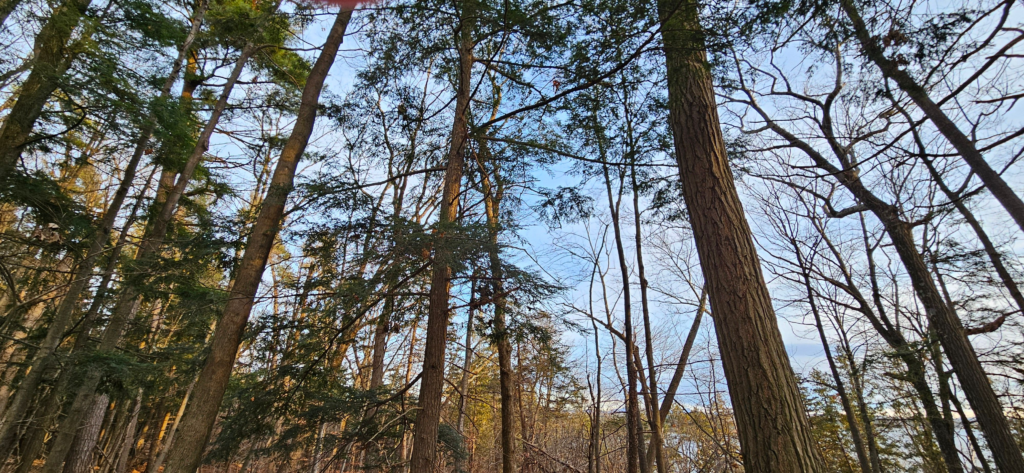
The image above also shows the changes in the overstory trees that are primarily fir trees, and white cedar. Many of the firs actually stayed alive throughout the whole cycle! I don’t feel that there was a lot of influence of culture and nature in this specific site but I can say for the greater area (that is Red Rocks), it has a large culture around outdoor activities. Having a main trail/path to walk, numerous smaller ones that branch off all over the land.

With that said, I also believe that I am not a part of the site, because it is the environmental world, which is very influence by humans yes, but not all. I am simply someone who is in that site every so often, just observing and watching the natural world continue its own course, that is what makes me not a part of that site.

BioBlitz In Burlington!

When choosing on what main areas I wanted to be in my phenology site, as my location is based in the Red Rocks Park, I have access to certain species / groups of trees all together. Such as the White Cedars, Pine trees, and many other hardwood trees!

I found this mushroom above in the most unlikely place while hiking today! it was so intriguing, and the underside of it had a very irregular and complex pattern.

While on the walk, I also found a Red Billed Woodpecker, chipping away at a piece of fallen tree near the trail. Not only did I find very interesting species but also got very lucky and see a woodpecker in action!

Using iNaturalist wasn’t a very bad experience and I felt that it was very well at identifying the species of plants and other animals. Although I did encounter many species while on my walk through red rocks, I didn’t record as many as I had hoped due to also forgetting to record it :(.

Tracking in Burlington

I chose to go to Centennial Woods for this assignment and explore there once more, of course, the weather was frigid and the loudest sound I could hear was the trees swaying in the cold breeze with the occasional chirp of a bird. I felt like it was somewhat hard to find tracks, possibly due to the frequency of people coming through there.

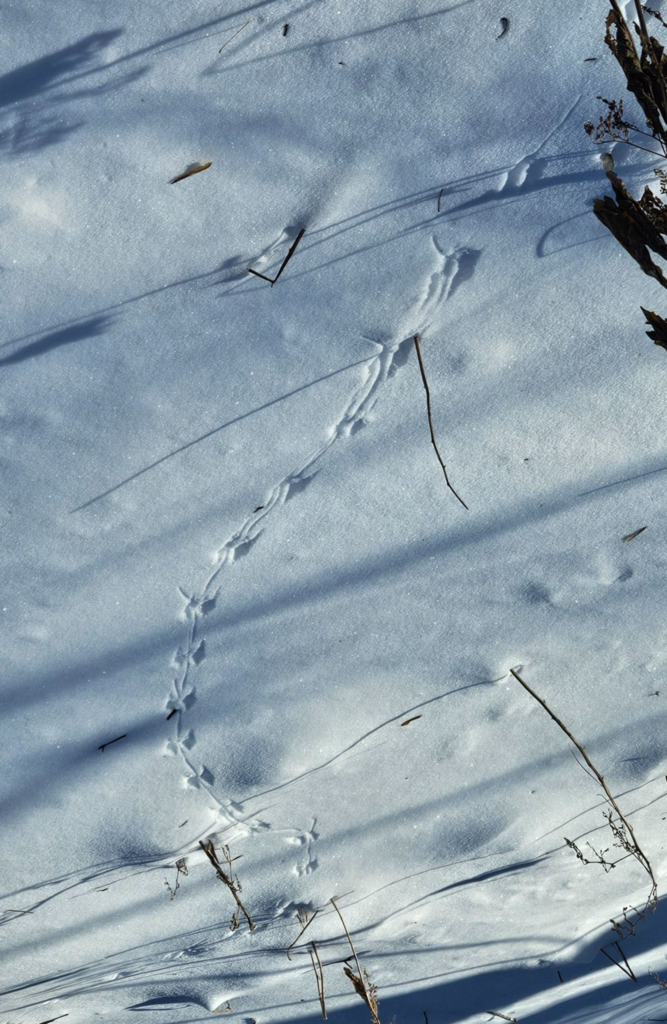
I believe the next image prints are the straddle hopping tracks of a mouse, I assume it is this animal due to the markings of the tail dragging along the snow behind its feet, when consulting my tracking book, it also confirms the description of the tracks.

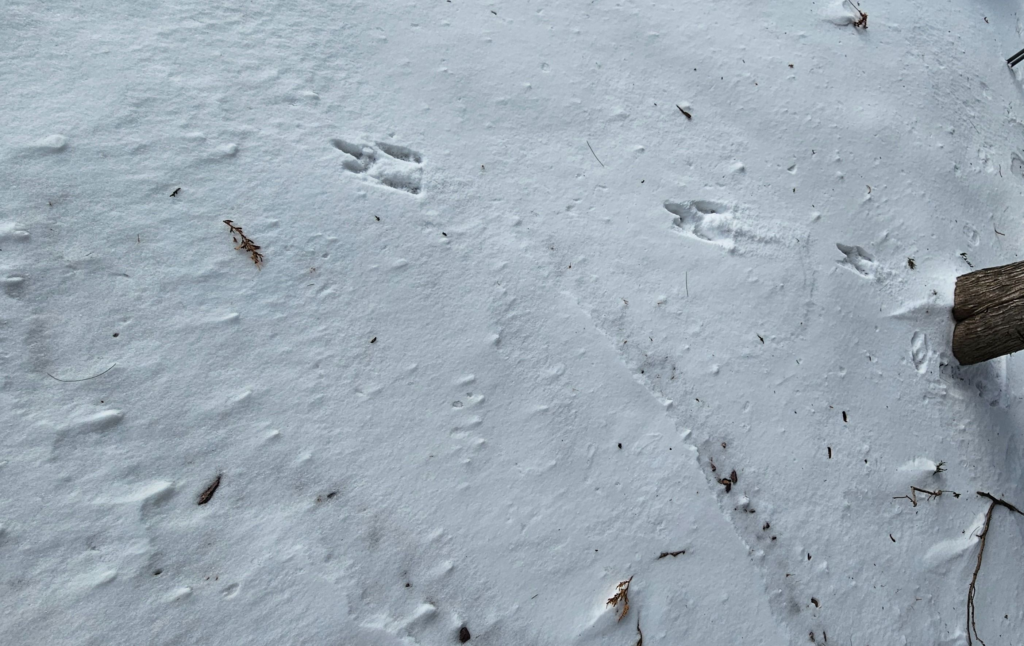
After steering off more to the left, away from the main trail to explore the woods for a bit I found even more distinct hopping tracks! from what seemed to be a gray squirrel due to the large distance that in person were roughly 11-12 cm.

Phenology Phenology Phenology!

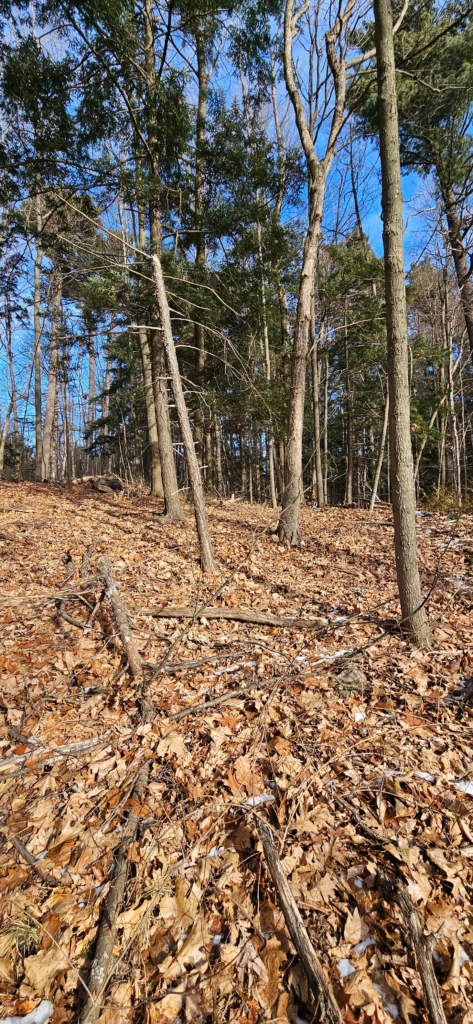
Although there weren’t any new plants growing due to the winter season, the trees and plants that had endured were primarily fir trees!

Sadly due to the amount of foliage uncovered by snow and the rise in temperature within the last week, any tracks that could have been found were now gone with the snow.

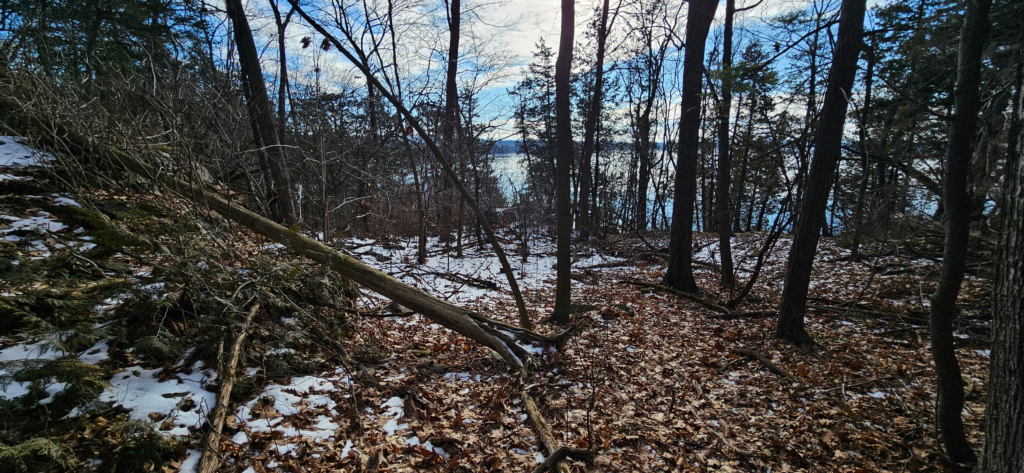
Even though the phenology of the surrounding area hadn’t changed significantly, there were still signs of more trees, branches, twigs, and other understory trees either having fallen or shifted around due to the weather.

Even with that said I found it very interesting how after the snow melted, the phenology of the area looked almost the same as the fall time! With the extra patches of snow lying around here and there.

The Changes of the Season

Change in Foliage

Surprisingly, there are still some trees with leaves on them! Interestingly enough, the majority of the trees that still have leaves are coniferous trees, which is most likely due to the nature of the trees and their resilience to hostile growing conditions. The vegetation however, seems to have sadly all died due to the cold weather that is at Red Rocks.

The leaf litter seems to have increased a great deal as compared to the last blog post. While there wasn’t too many signs of decomposition we can still expect these fallen trees to be decomposed at some point and returned to the soil.

Due to said leaf litter, I was unable to find tracks/traces of animals but I did hear the trace of bird sounds! I’m not sure as to what species they were but I was surprised to have seen that there was still so many active during this time of the year.

Sneak peak into my homes phenology?!

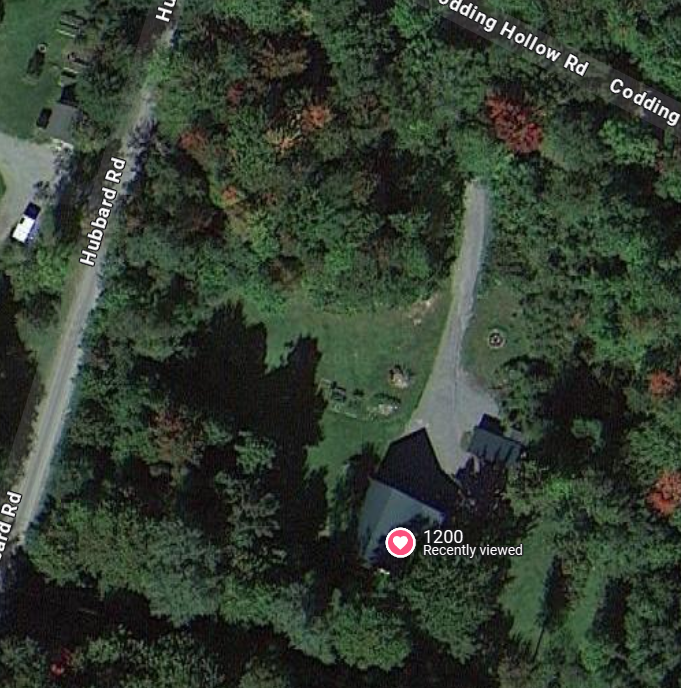
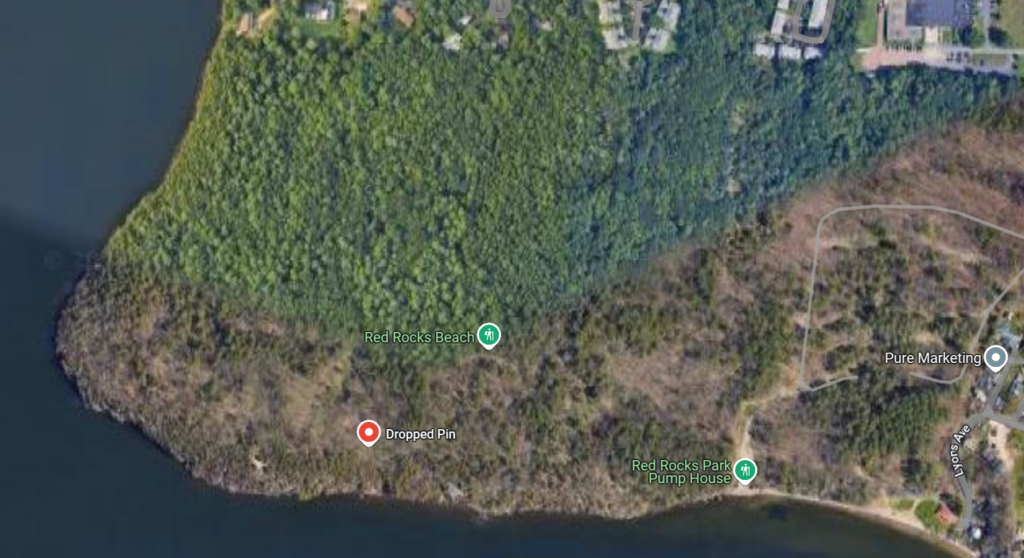
For break, I went home with my family to enjoy thanksgiving. Here is the lovely satellite image!

Here is why I find this location to be very special
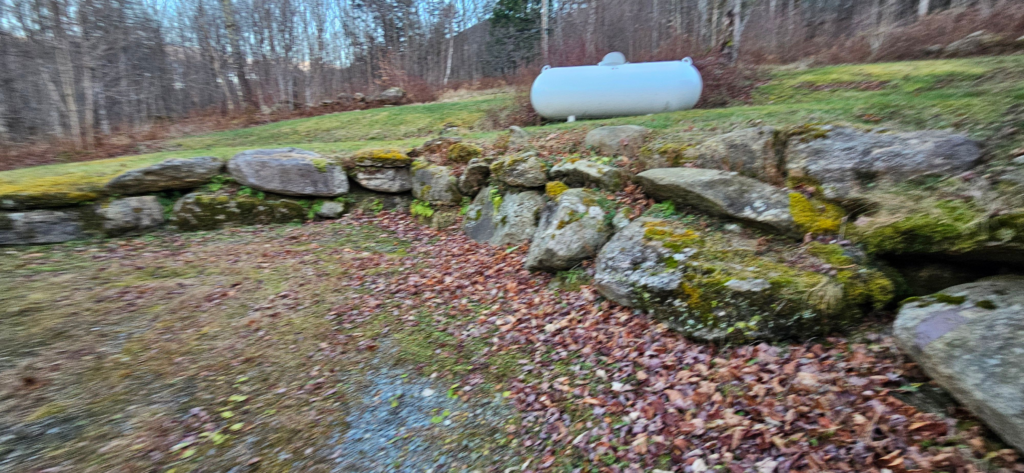
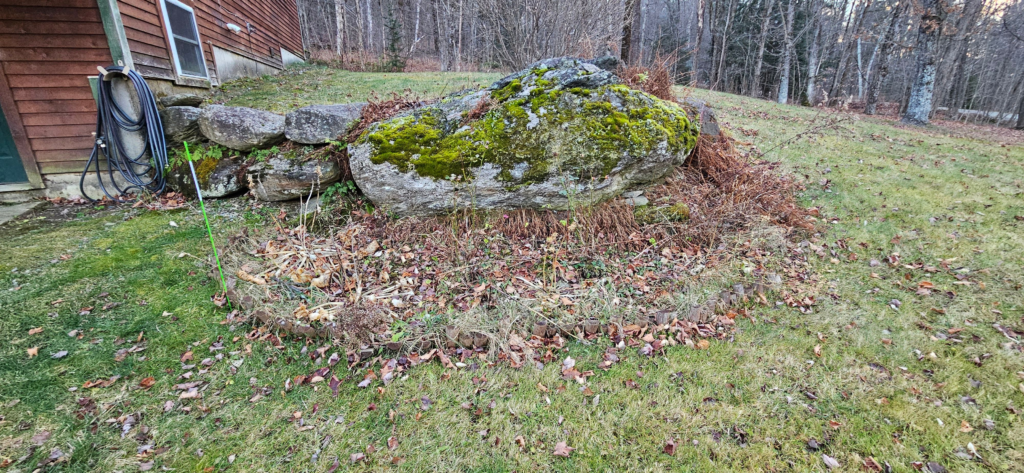
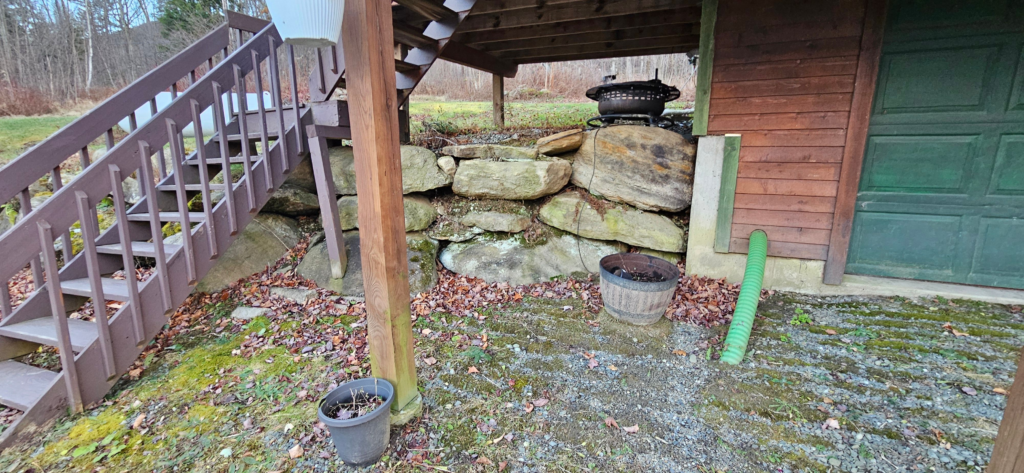
  • Large rocks are neatly stacked by what looks to be decades since it was settled on! Likely due to the hill-like nature of the mountain area, this land was built to give a flat surface for other human uses.

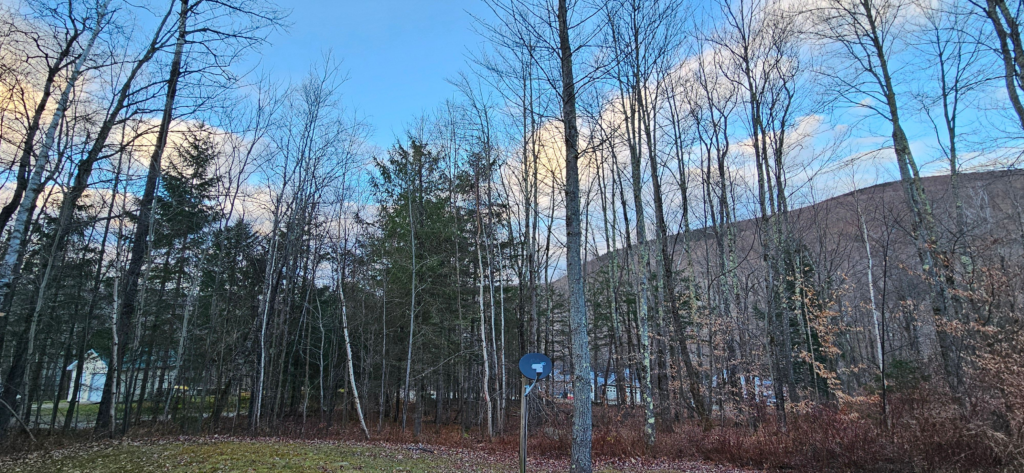
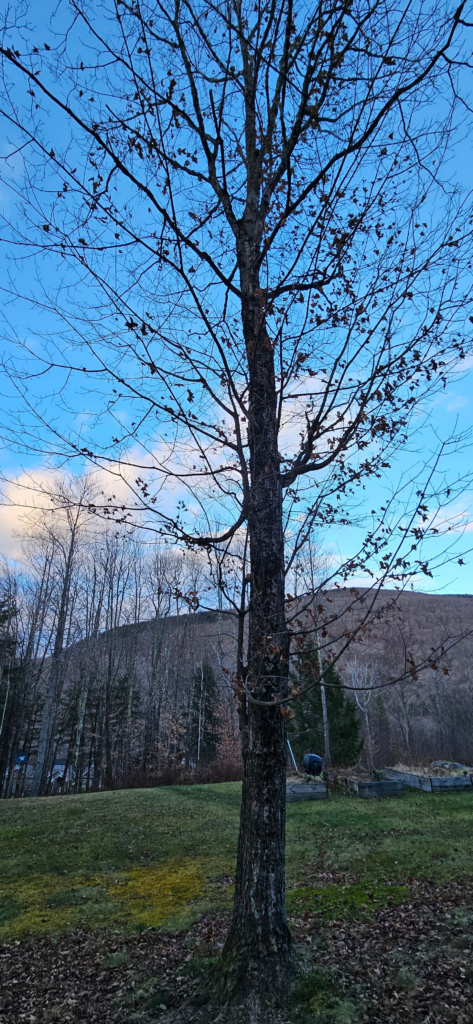
  • A majority of the trees were without leaves and dead but from what I could tell of the bark a large portion of them were sugar maples, paper birch, and spruce!
  • Here are some 40+ feet tall sugar maples that I found in our backyard!
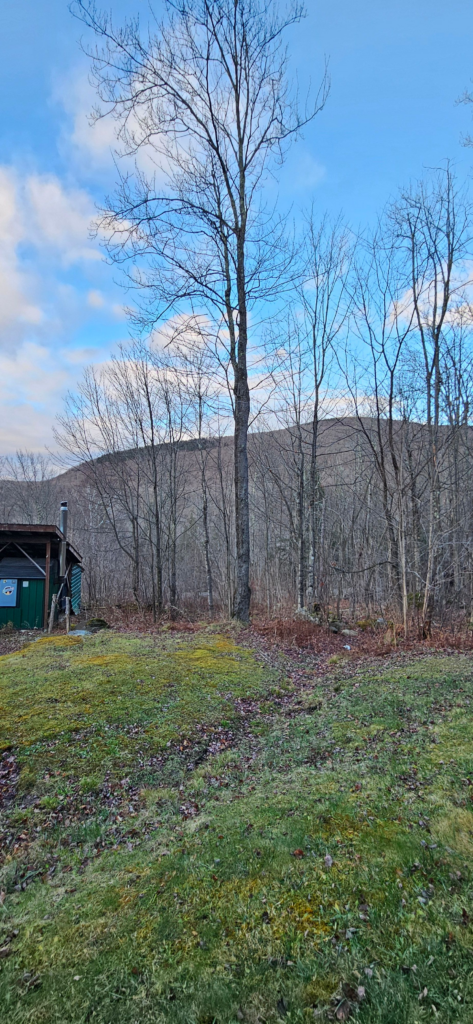
  • I also noticed that on the side of the yard with more sun there was moss and clovers growing on the ground instead of grass! I’m unsure if this was purely a natural occurrence or whether this was done on purpose. As well as moss growing on the side of rocks and trees alike.

One thing I find interesting is that there is a noticeable difference in the amount of animal species in my new location, especially bird species. In Burlington, the biodiversity of animals isn’t quite as high as it is in more rural areas like this one. One consistent bird I see here a lot throughout the seasons is the crow! I’ve seen whole murders of them before during the spring.

Both of these phenology sites have a human impact on it on the daily, with Burlington having frequent cars, people, and noise pollution. In this new site, we have the same human impacts but on a much smaller scale, it is a very drastic difference surprisingly. There are many more animals you see actively here such as foxes, deers, more rodents, and even bears! I think the biggest issue in this neighborhood however is the loss of habitat, as I’ve lived here I have also noticed the clearing of plots of land for houses which tends to have a large impact on such remote places.

Foliage Friday?!

Funky or fun foliage?

Entering the park, you could immediately notice that there was quite a drop in temperature as compared to the first blog. The walk itself was easy and enjoyable as usual, with a slight breeze at the beginning of the trail as well! However, there was also a lack of noise, very few birds were heard and even less seen, as well as other small critters and animals. It’s clear that the season is changing and the animals are preparing for the cold winter to come.

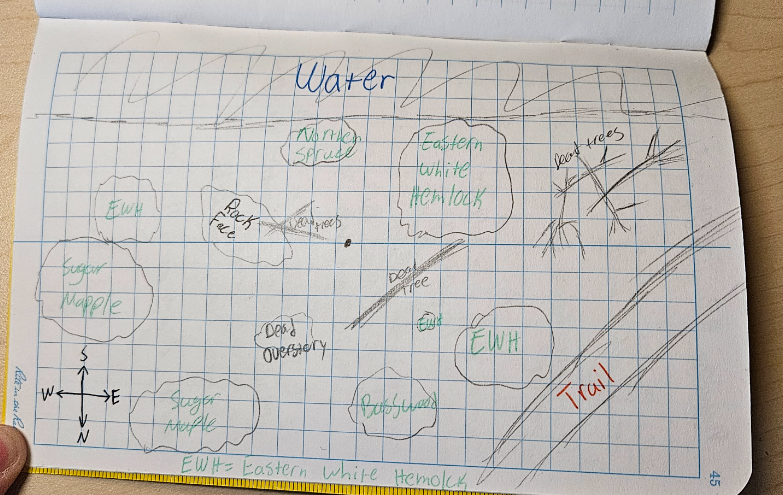
Map of trees that were found in my location facing the water

Many of the trees had lost most if not all their leaves, the few that remained were consistent of coniferous trees, Sugar and Norway Maples, a few Basswoods, and least of all, Green Ash. All of the trees that had remaining leaves were yellow in color or had a brown curl forming on them due to impending DEATH.

Phenology beginning blog

How to get there

How to get to my location

I am using a car to get there however it is accessible via walking (very time-consuming), biking, or anything else really! I chose this place as I wanted to be in a decently sized park that would have a good amount of focal diversity.

-I’m located in Redrocks Park!

Vegetation

A large majority of the vegetation seen was hardwood trees with a few coniferous trees, some ferns sparsely, and other yet-to-be-identified plants.

Most common woody plants

I mostly found that a majority of the woody plants were basswood and sugar maple, with a large amount of them being understory trees.

basswood (Tilia americana) from South Burlington, VT 05403, USA on October 09, 2024 at 02:01 PM by Karim Naser · iNaturalist

sugar maple (Acer saccharum) from South Burlington, VT 05403, USA on October 09, 2024 at 02:01 PM by Karim Naser · iNaturalist

Skip to toolbar