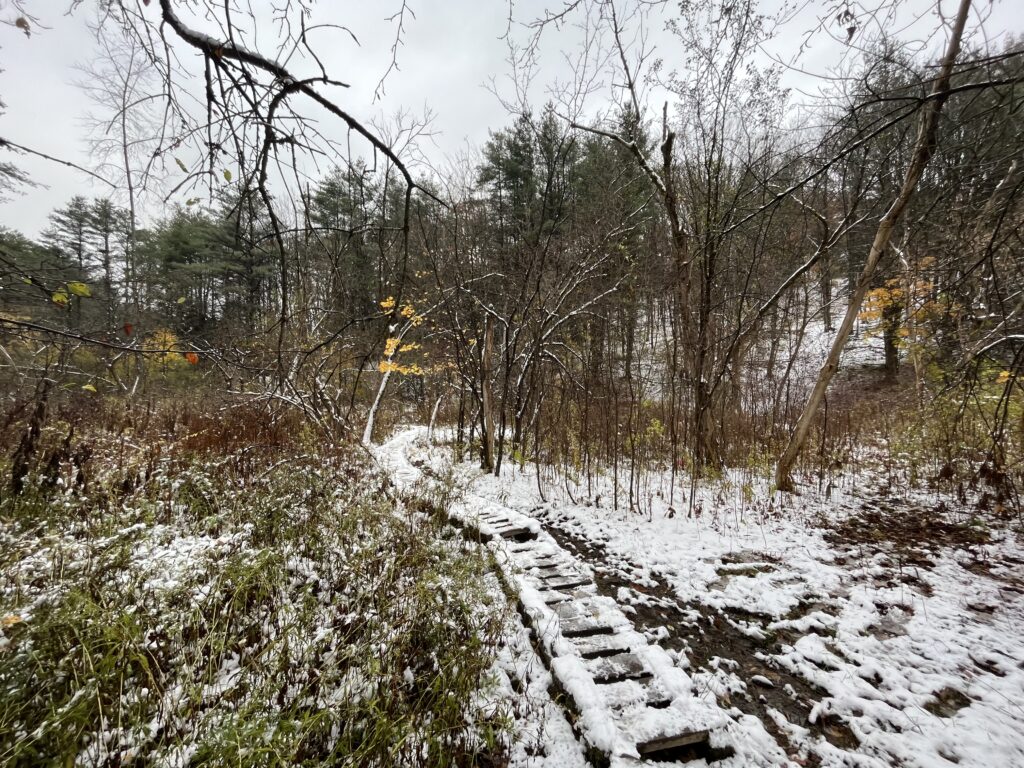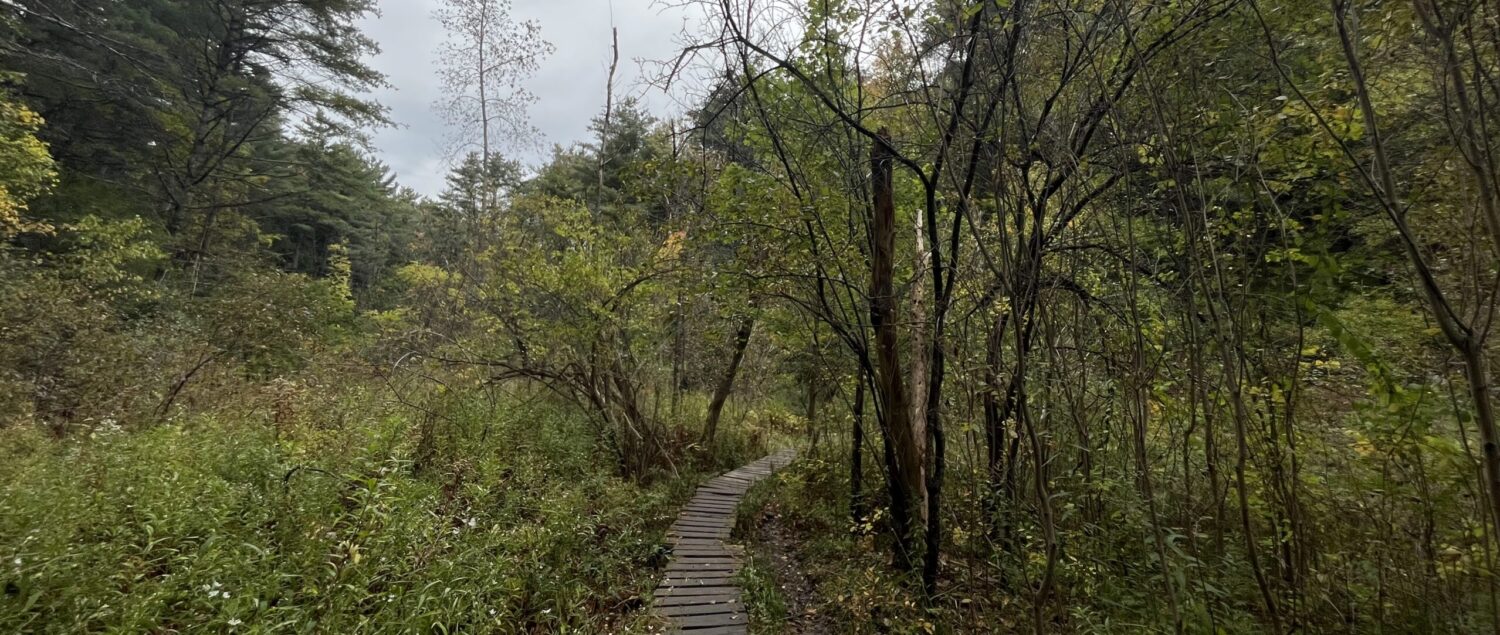
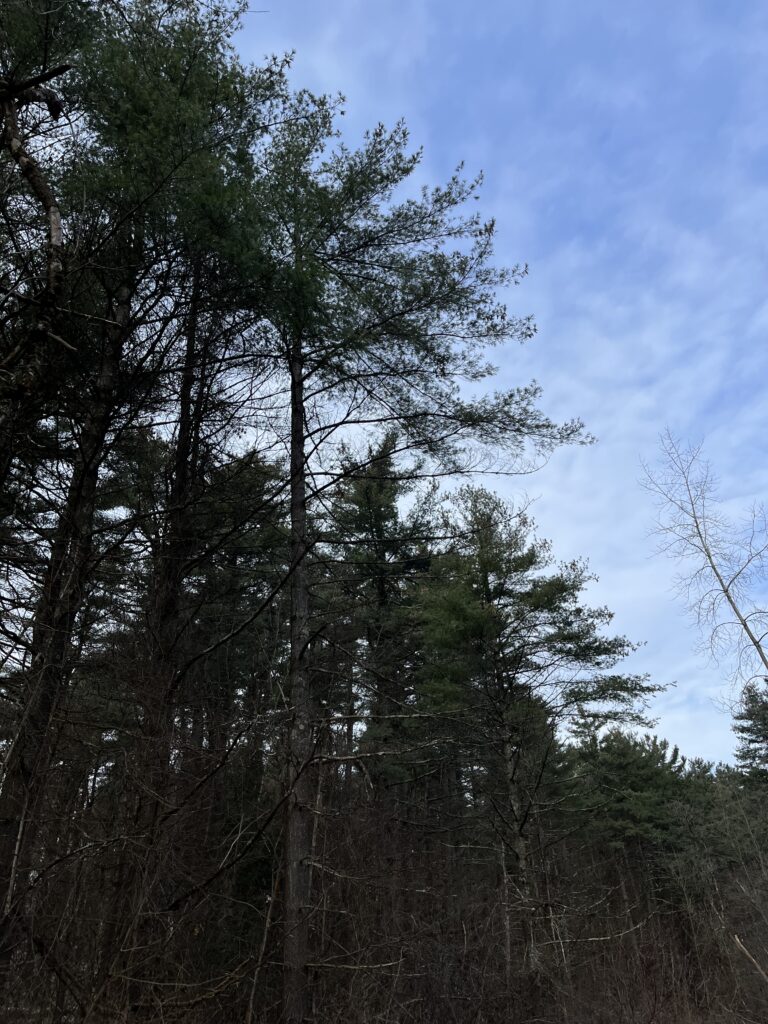
In the general area of my sit spot, all the tree species had no leaves anymore besides the White Oaks and a Norway Maple. The leaves that were still on the two deciduous were orange/red, curled, kind of crunchy, and droopy. The coniferous Eastern White Pine tree still had all their pine needles. Lots of the dead leaves were found on the ground and mixed in with the mud. With all the dead leaves on the ground, there was lots of dead organic matter being broken up which was frozen in the mud. There was sadly no traces of animals that I was able to find.
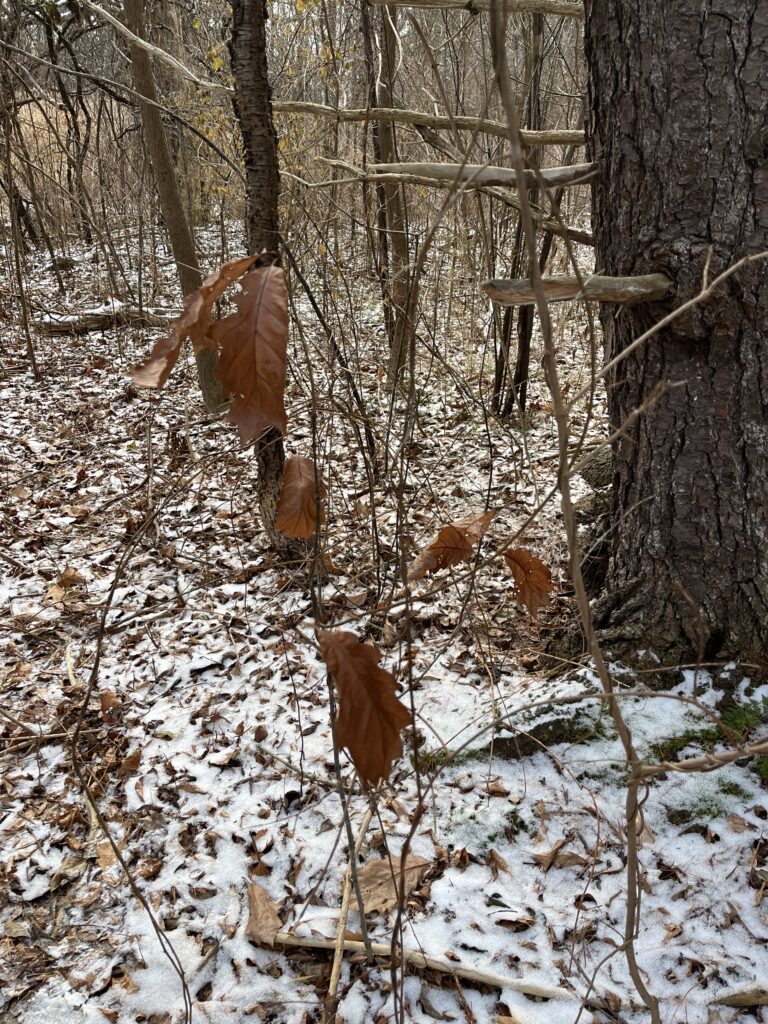
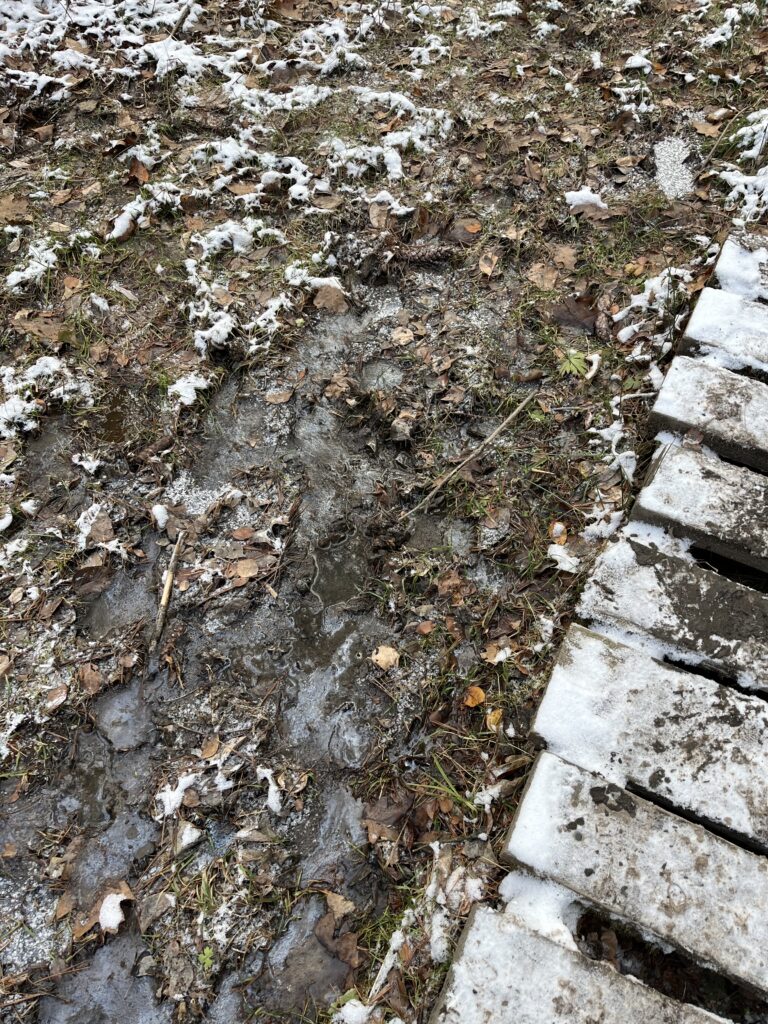
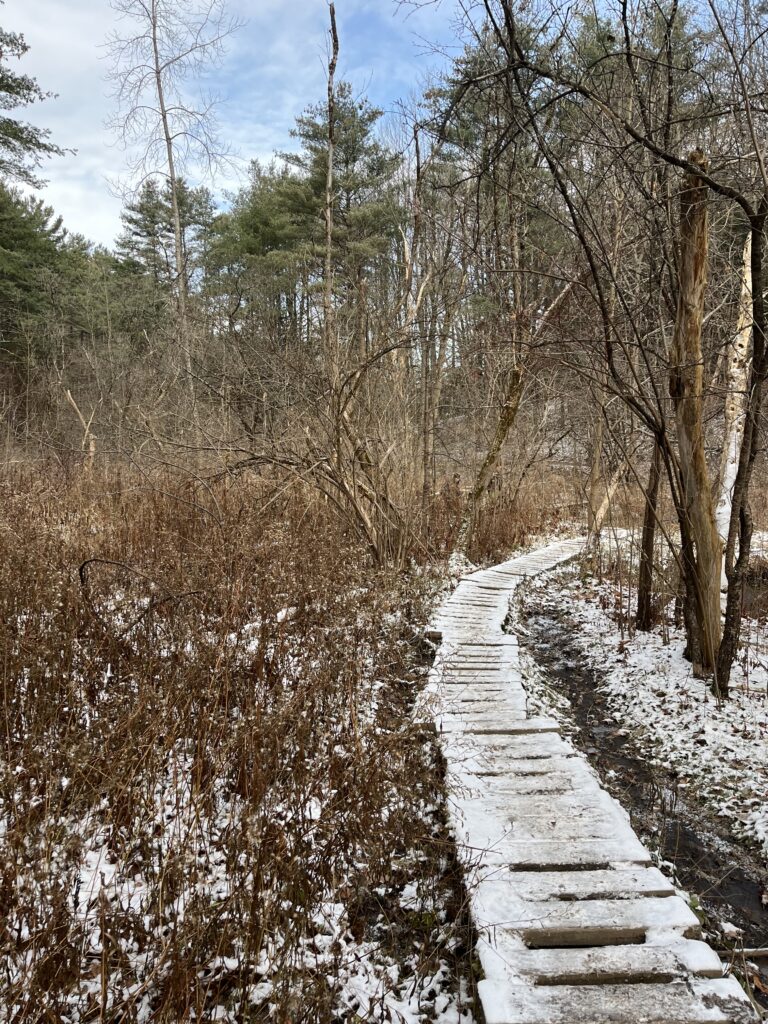
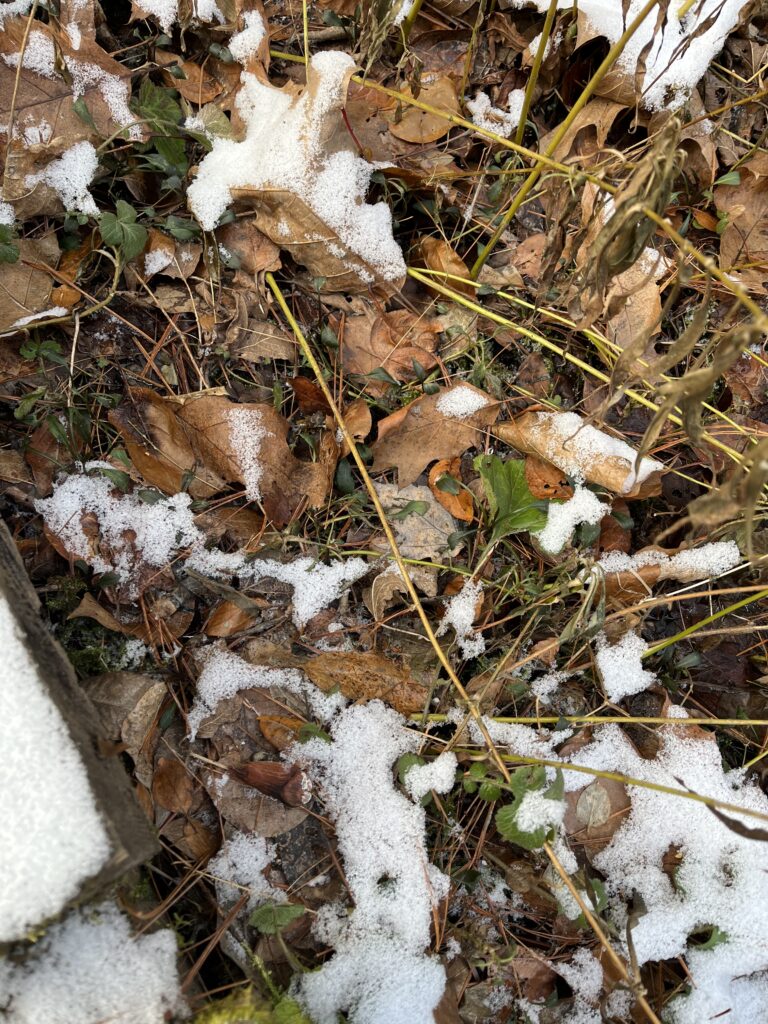
Most of the understory was either covered in snow/ice or dead which also mixed in with any organic matter in the mud. There were some patches of Threeleaf Goldthread near the bridge and some grass that was still alive. The plant species in the meadow were mostly dead. The leaf litter was smaller because some of it had already broken down/ decomposed or was hidden under snow.
Bringing the knowledge I have learned from NR 1010 into Centennial Woods has allowed me to deepen my understanding of natural areas and nature. With my relationship to this phenology spot, I have learned through observations how systems work in nature and was able to see my spot change with the seasons over time. I enjoyed observing how certain species are able to survive this long and how they adapted to the changing environment, such as the Easter White Pines and the plant species in the meadow. I hope to continue to observe the phenology of an area in the next semester. 🙂