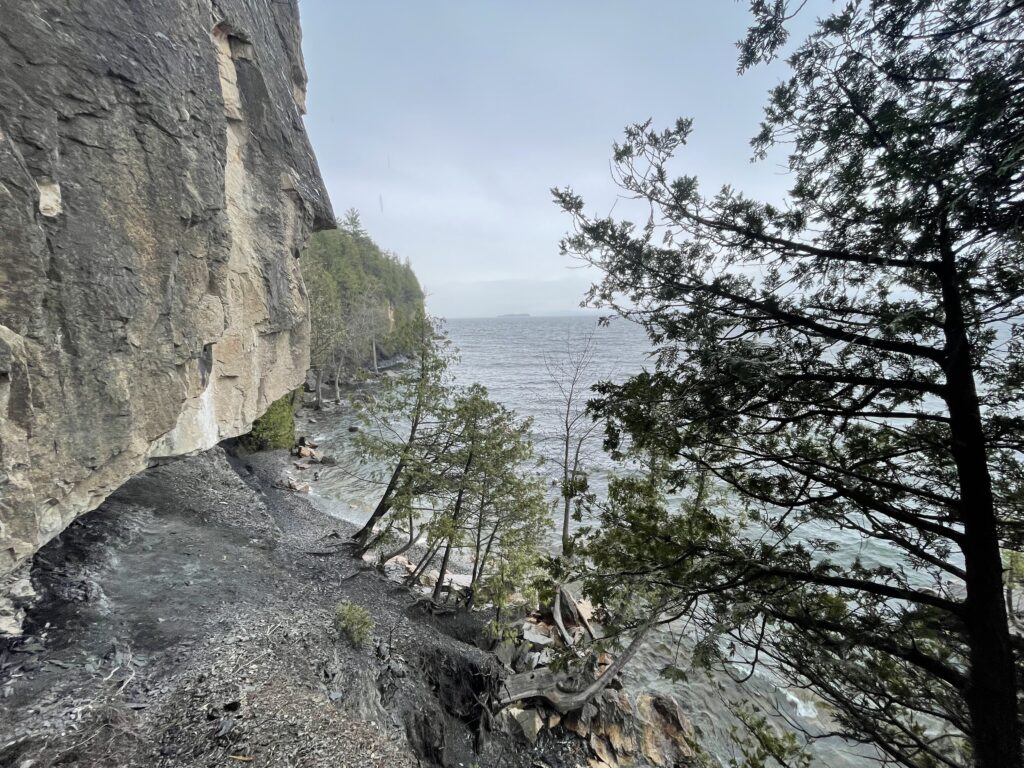
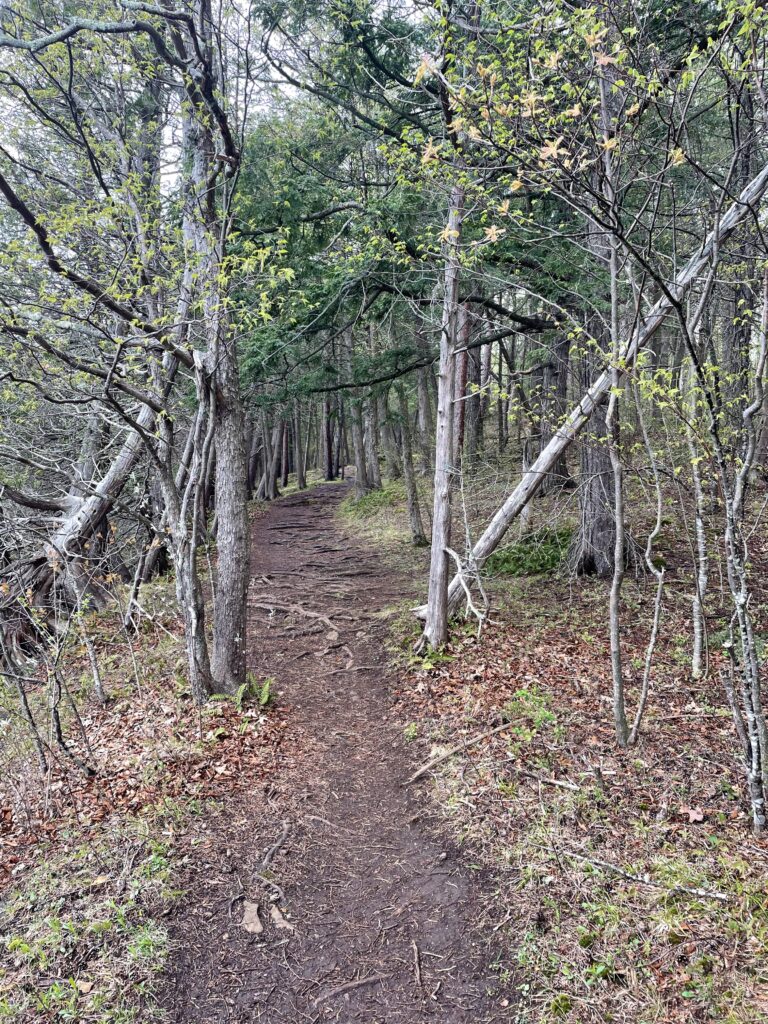
Areas of Burlington explored: For this event, I traveled to Rock Point and made a majority of my observations on my journey there and at the location itself. I also explored areas near campus such as the road near the golf course, Centennial Woods, and Church Street itself since I lack transportation.
iNaturalist Experience: Overall, I had a good experience with iNaturalist. However, I wished it included features that were more helpful in identifying flora and fauna species. As someone with little knowledge surrounding Vermont’s many native species, I struggled to identify certain species that we had not discussed in lecture or lab. Other than this, I really enjoyed the app and the experiences it enabled me to have!
Number of Species Observed: According to iNaturalist, I made 55 observations and identified 42 different species! 🙂
Cities Participating Globally: I found the number of cities participating globally to be very interesting. Often with the environmental movement, it feels like only a handful of people truly care about the topic and strive to create awareness/change. I was pleasantly surprised to see the number of cities that participated and the amount of biodiversity they recorded. It was incredible to see that many other cities outperformed Burlington, merely because I felt we would “win” since I thought Rubenstein students might be the only ones who cared.
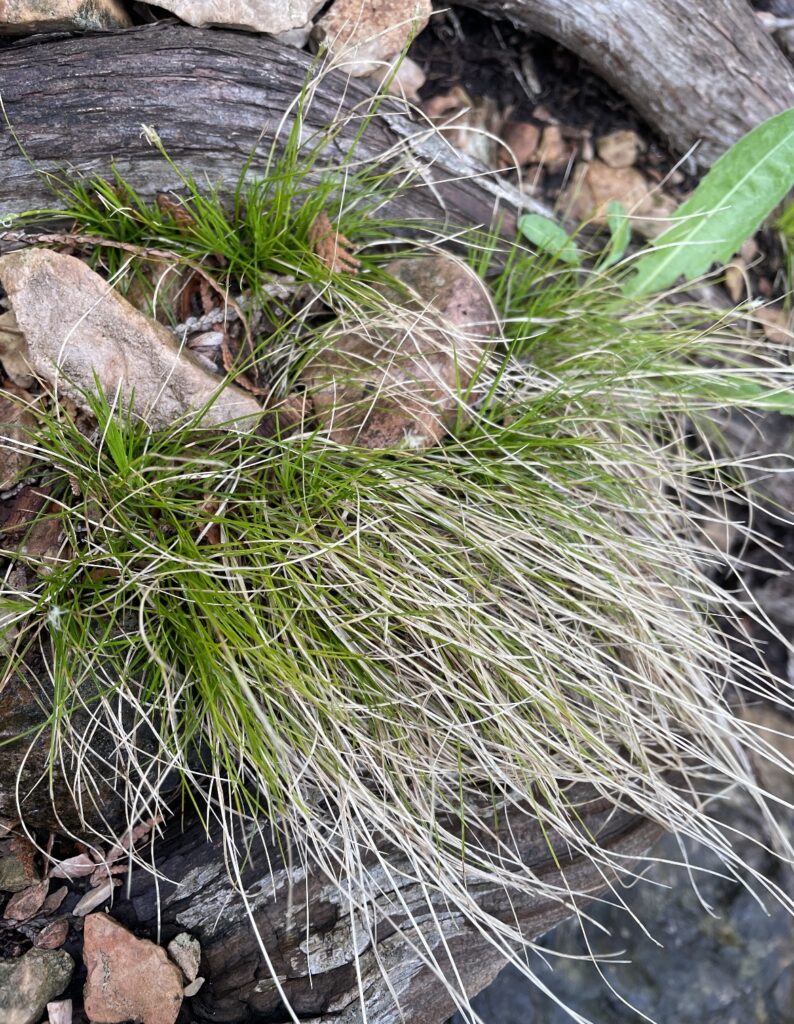
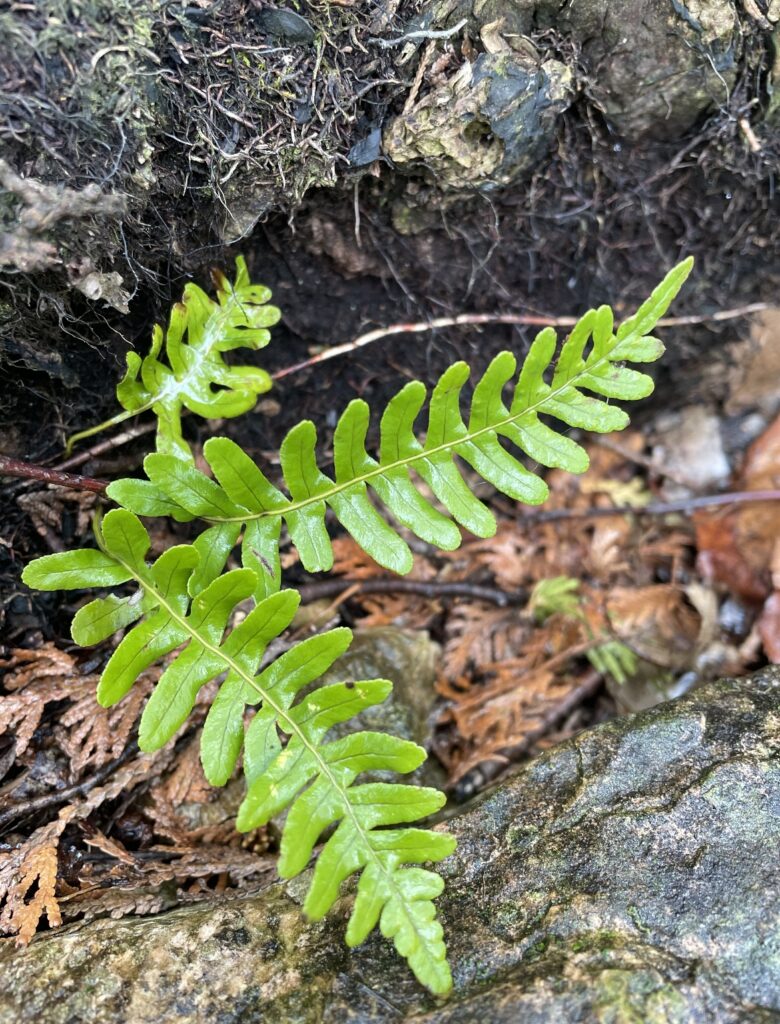
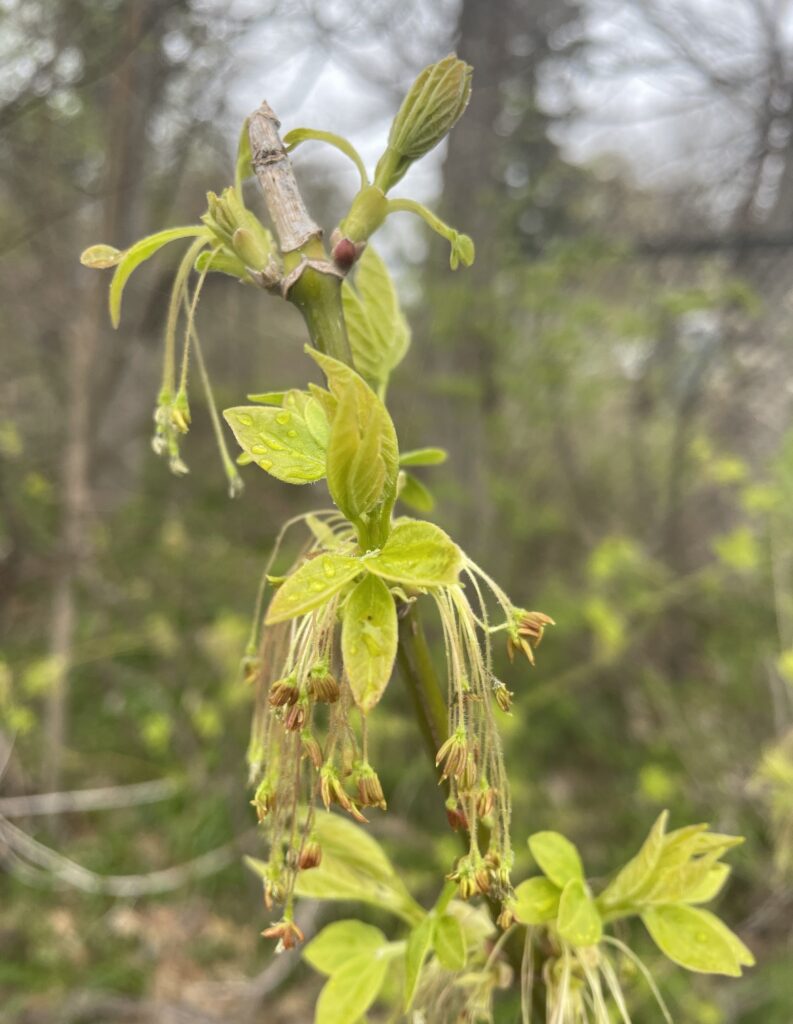
Rock Point!Rock Point Again!True SedgeRock PolypodyBox Elder
On April 24th, I traveled once again to my original phenology spot.
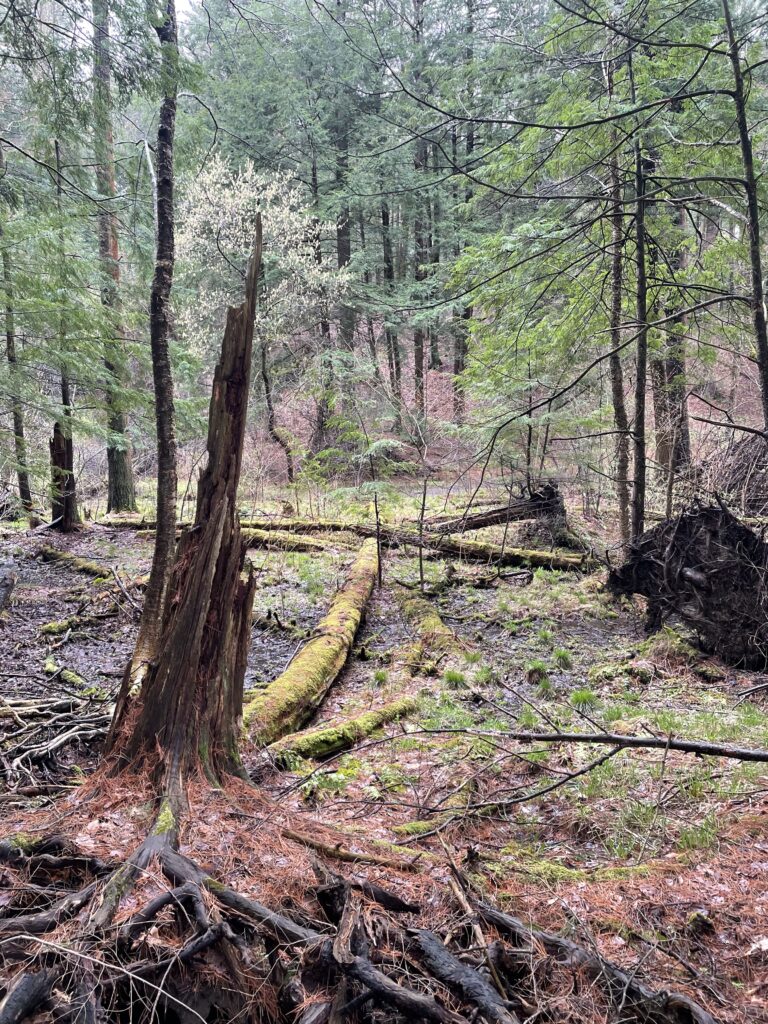
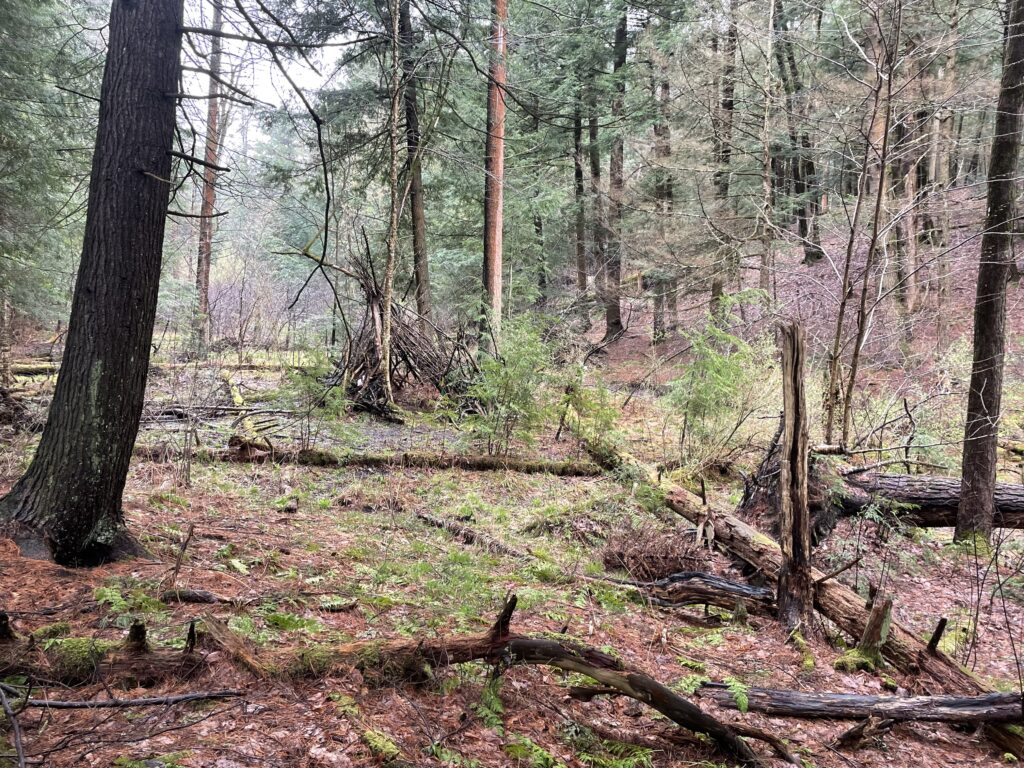
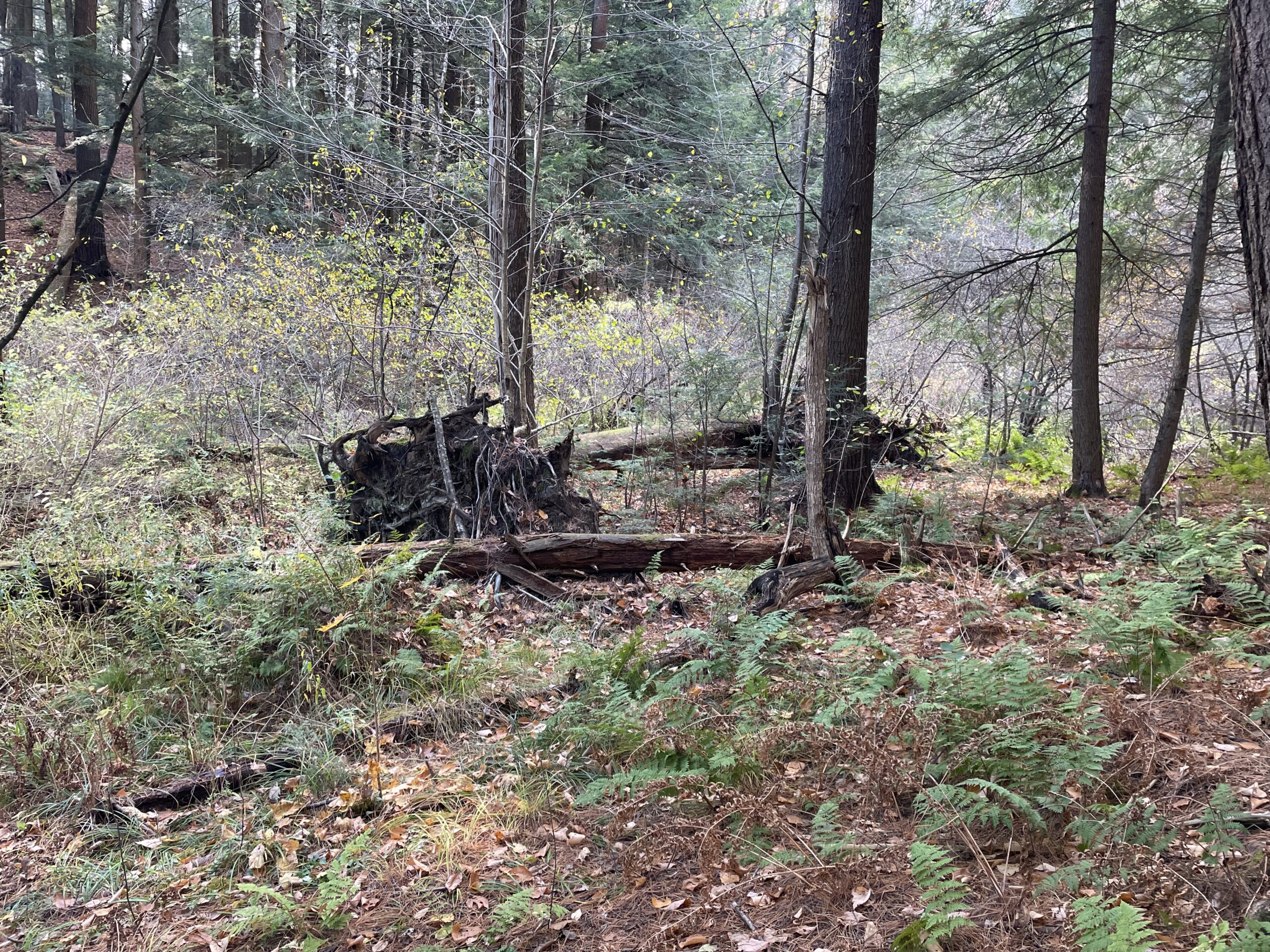
Storm/Human Changes: Upon reviewing my observations and photos over the course of the year, I concluded there were very little changes that occurred other than phenological ones. However, presumably because of the windy conditions throughout the season, there appeared to be large debris from the mature tree stands towering above. As a result, the understory plant species population decreased significantly from October, 2022. On the other hand, there was a large number of eastern hemlock saplings sprouting from the “Transition Zone” of my location. This area experience less natural disturbance from weather, preserving current understory species and emerging ones.
Major and Minor Landmarks:
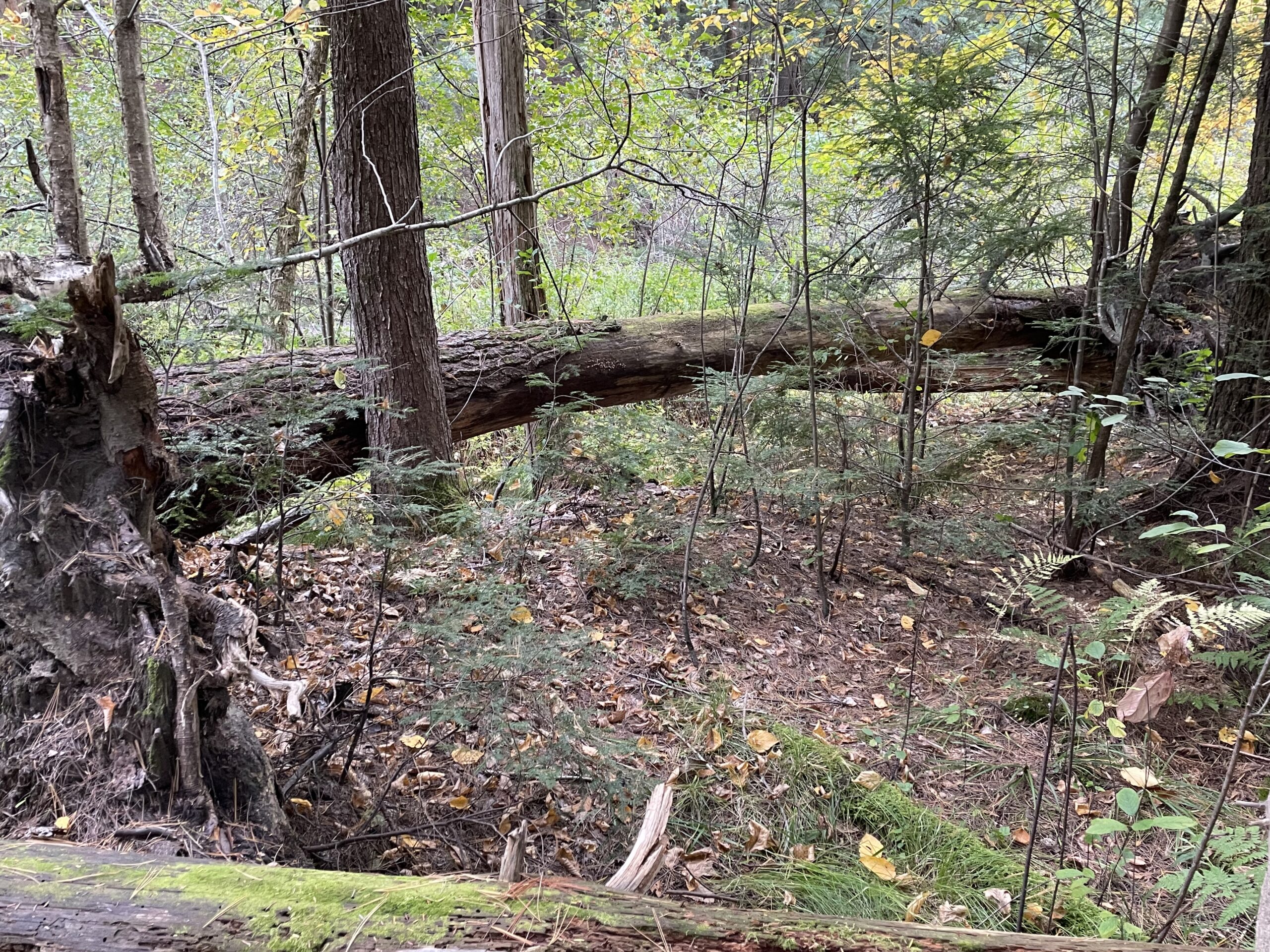
Two fallen trees over Centennial Brook
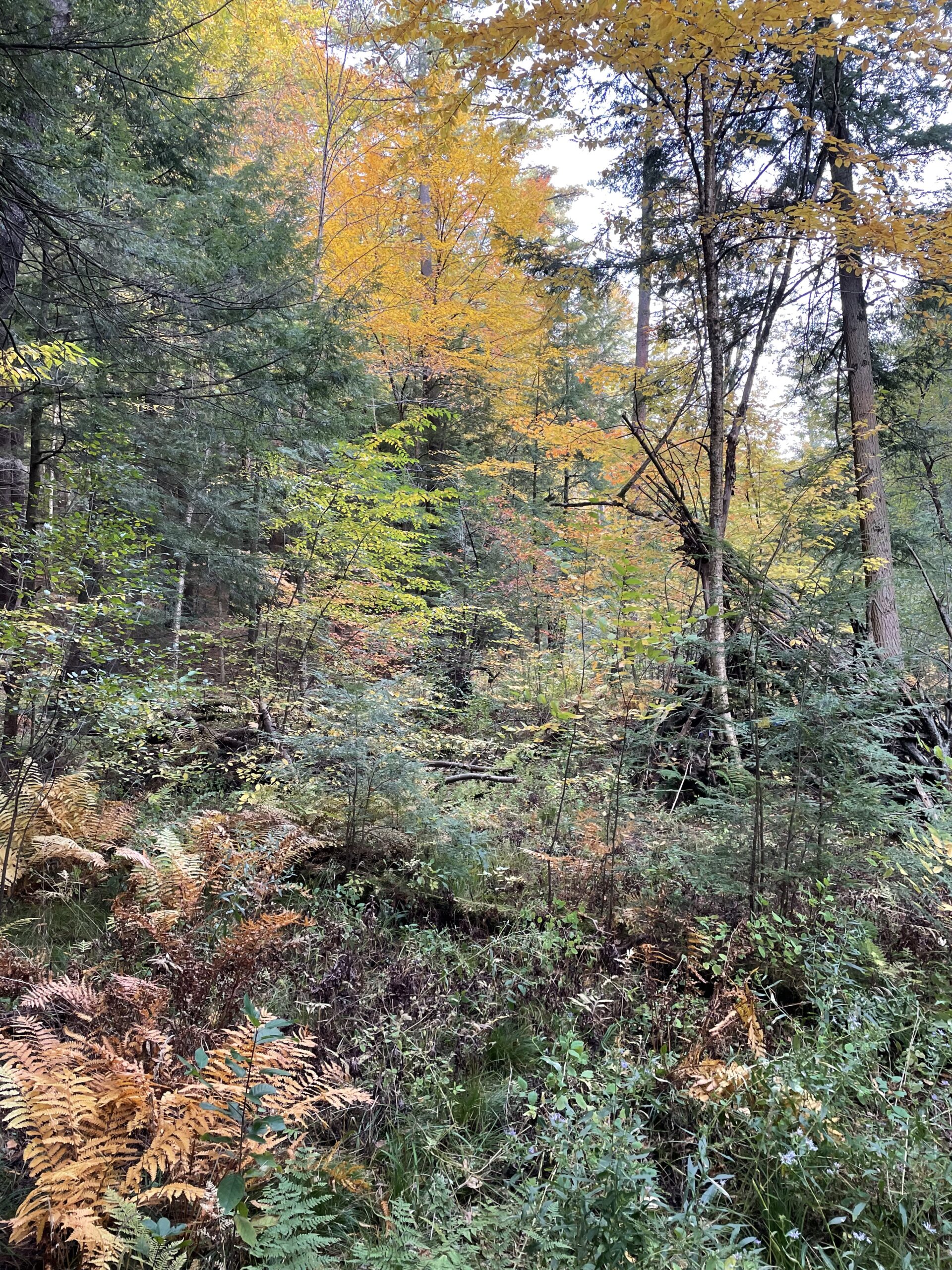
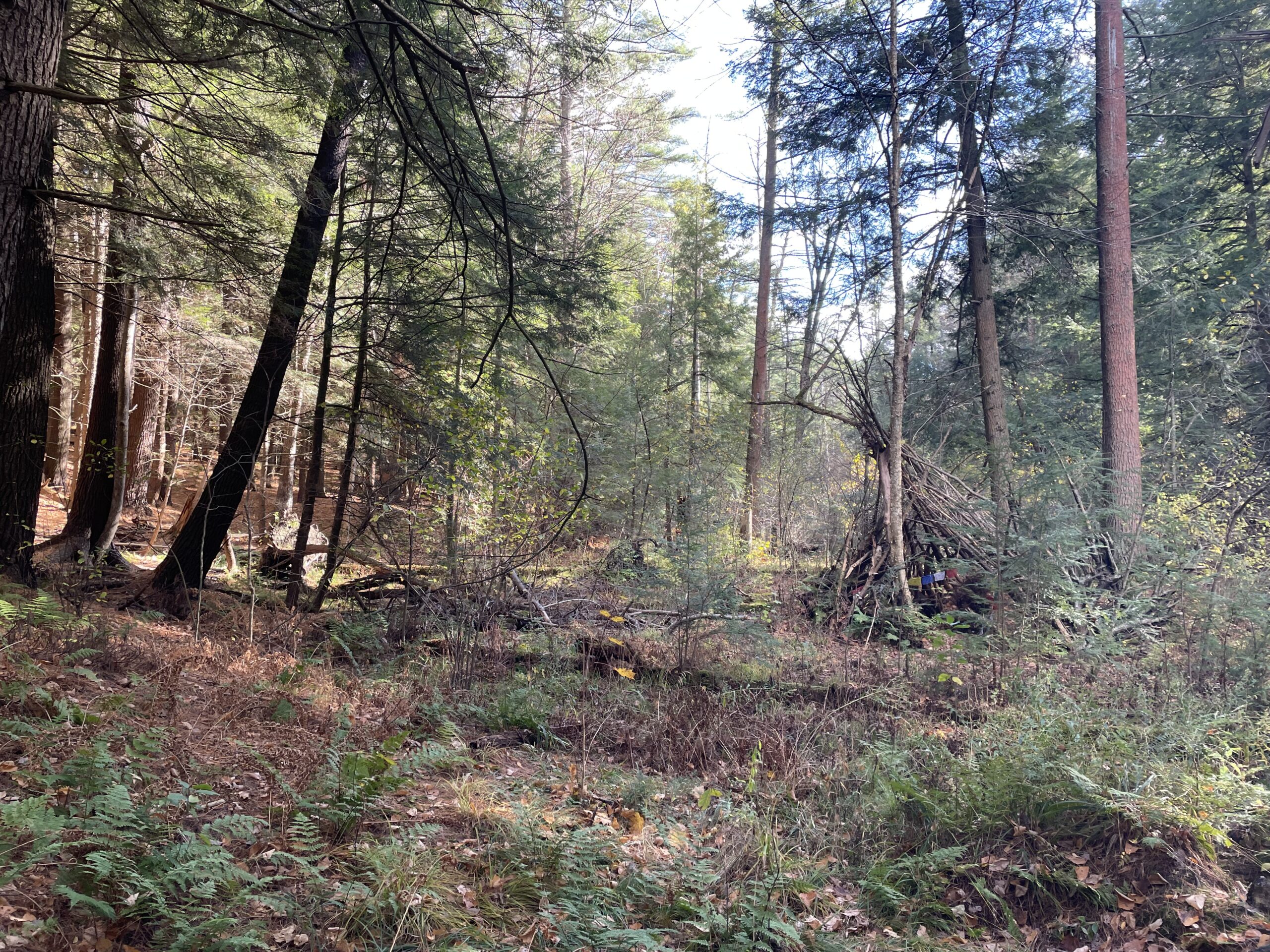
Large man-made stick fort
Collection of stumps near Centennial Brook
Nature and Culture Intertwining: I found that nature and culture did not intertwine here much. I specifically chose a location far from any prominent trails with the hopes of being close to untouched nature. A lack of human contact emphasized the raw nature present and any thoughts of culture slipped from my mind.
My Connection: I feel a very special connection with my phenology spot. Before this project, I often went there to meditate or explore the woods. I already feel that I have a strong tether to every place in nature that I go, but this one was different. Traveling to this little haven every week or so provided a safe space where I was able to escape the outside world. Watching this place change as the seasons passed made me feel as if I was a parent watching their child grow. I loved watching such natural processes take place that altered such a wonderful place little by little but also remained the same in a way. i consider myself to be a part of this place but also not. It is a bustling ecosystem that many species rely upon for life. I feel more like an outsider who is merely observing and appreciating the beauty around me.
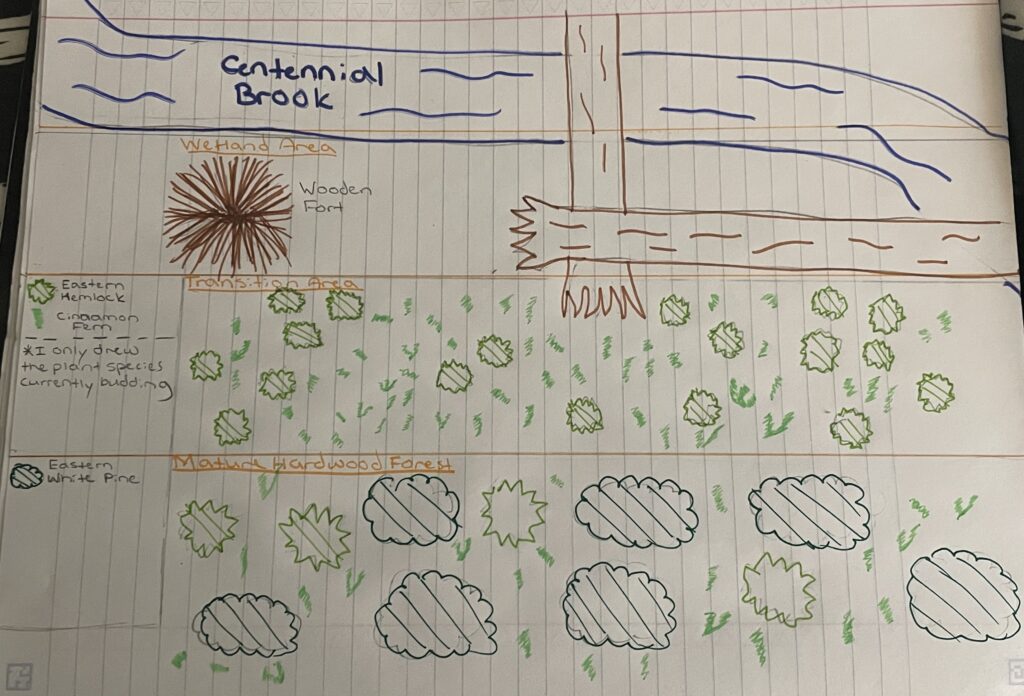
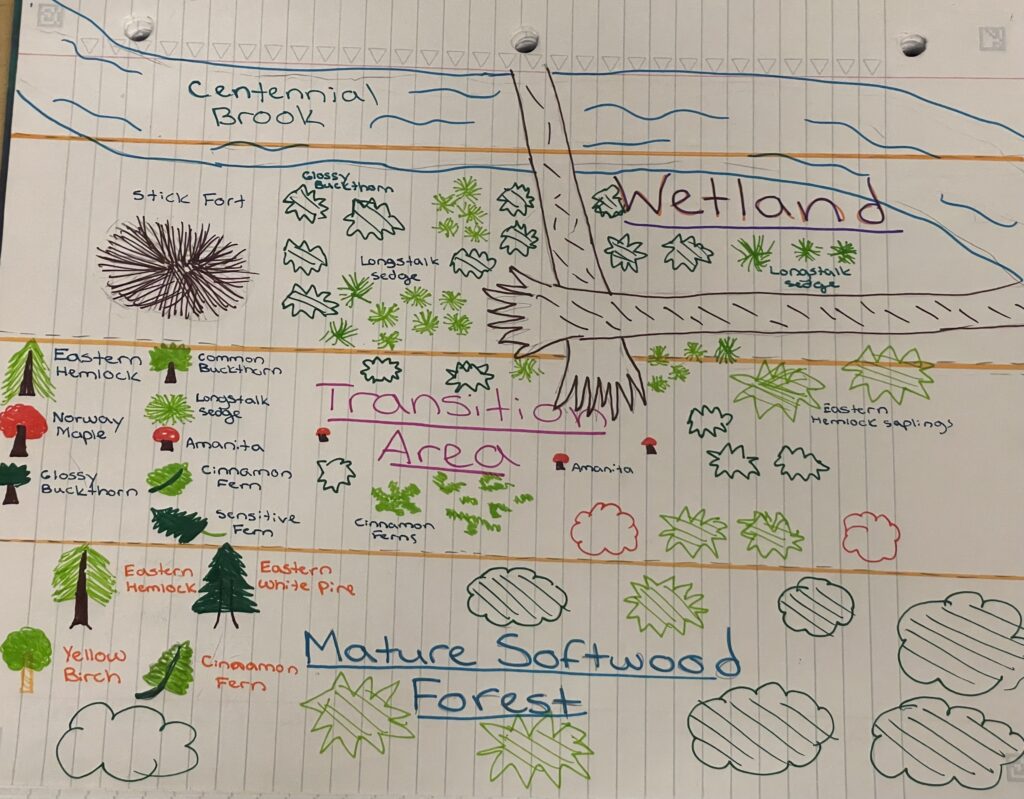
Aerial Drawing of Phenology Location (Only included budding plant species)
On April 11th, I revisited my American Beech tree. However, much to my surprise there appeared to be no changes with regards to its budding. As this week of warm weather passes through, I believe the budding of this tree will become evident. I wish there was more to report on! Hopefully next time!
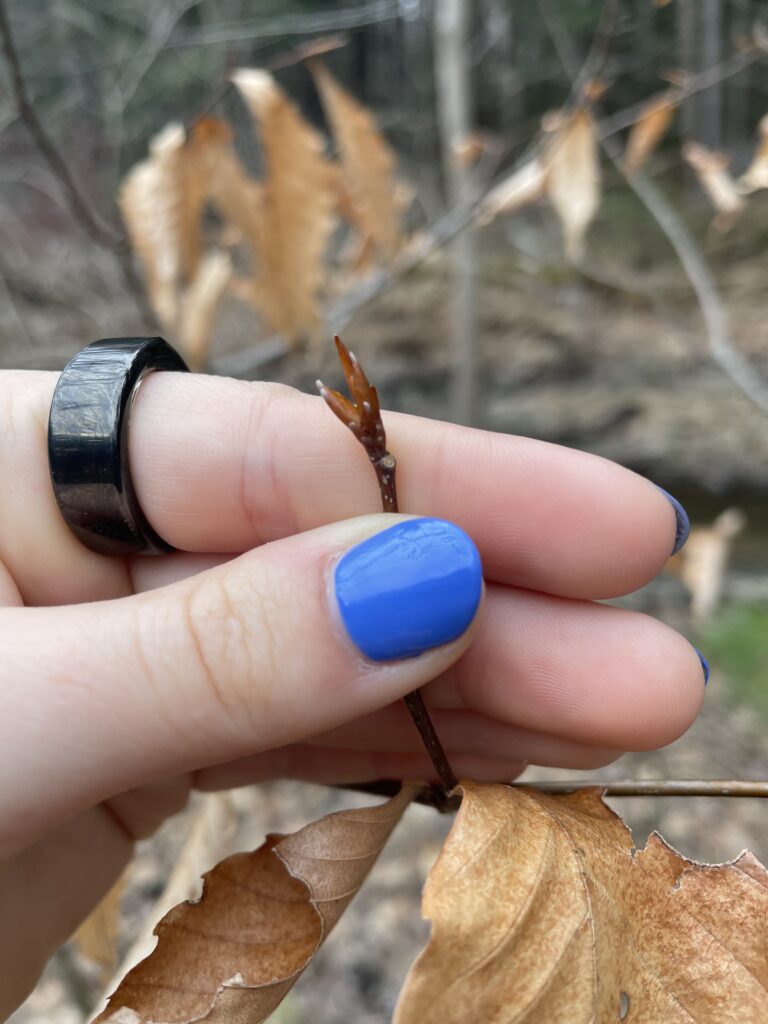
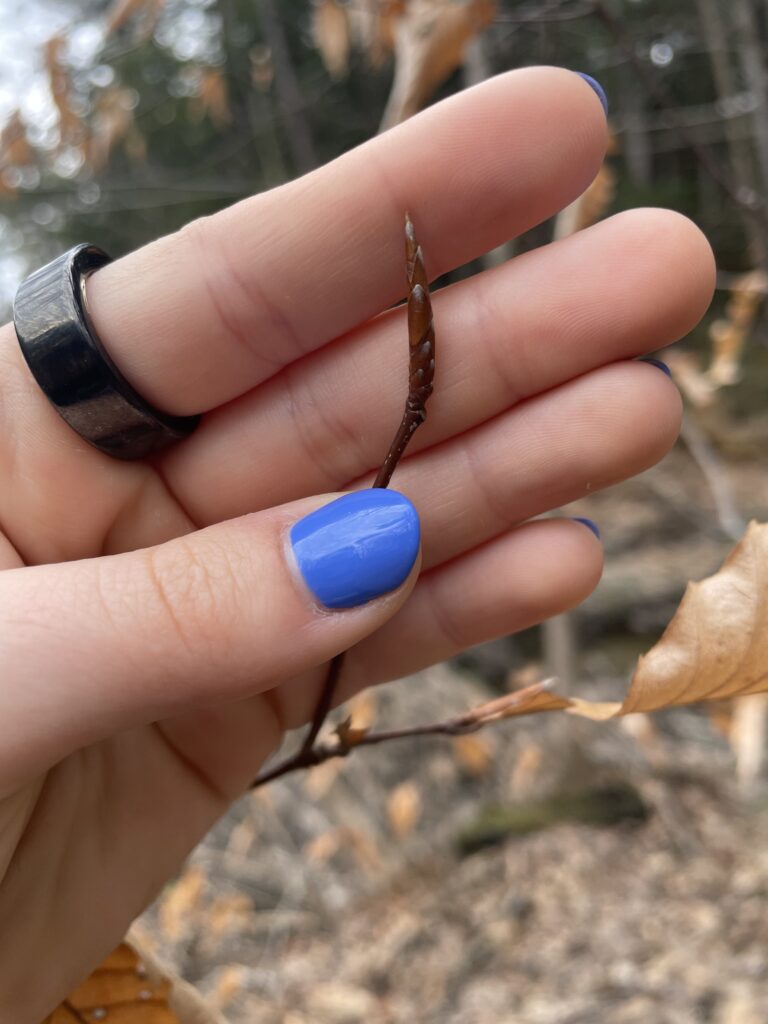
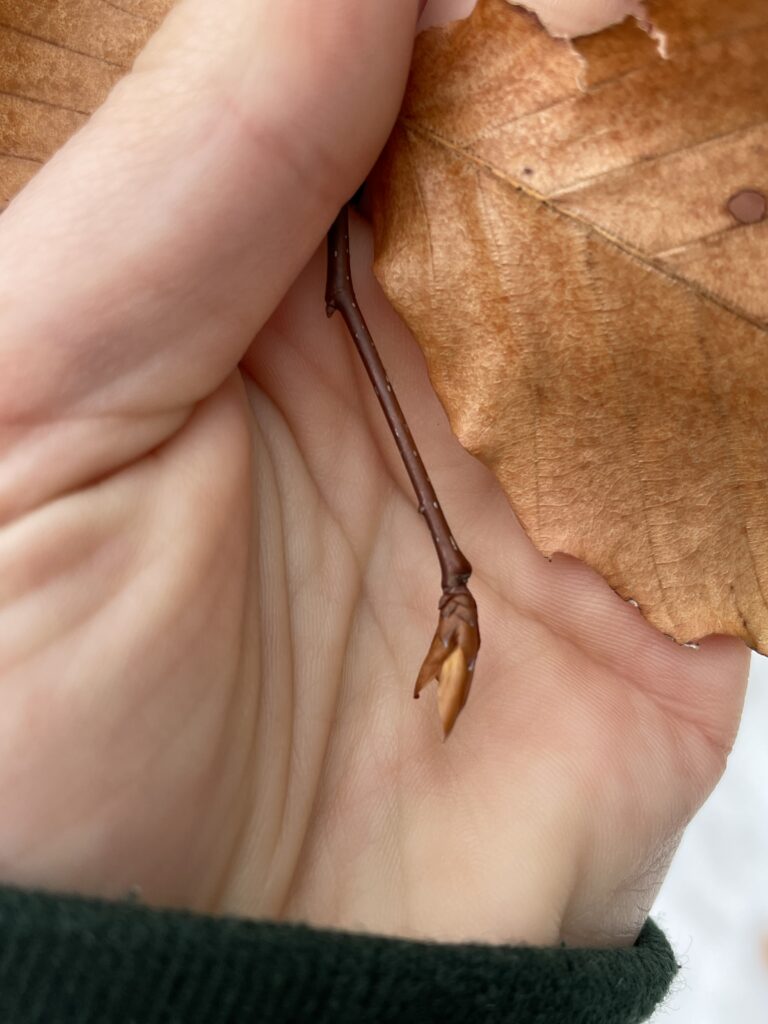
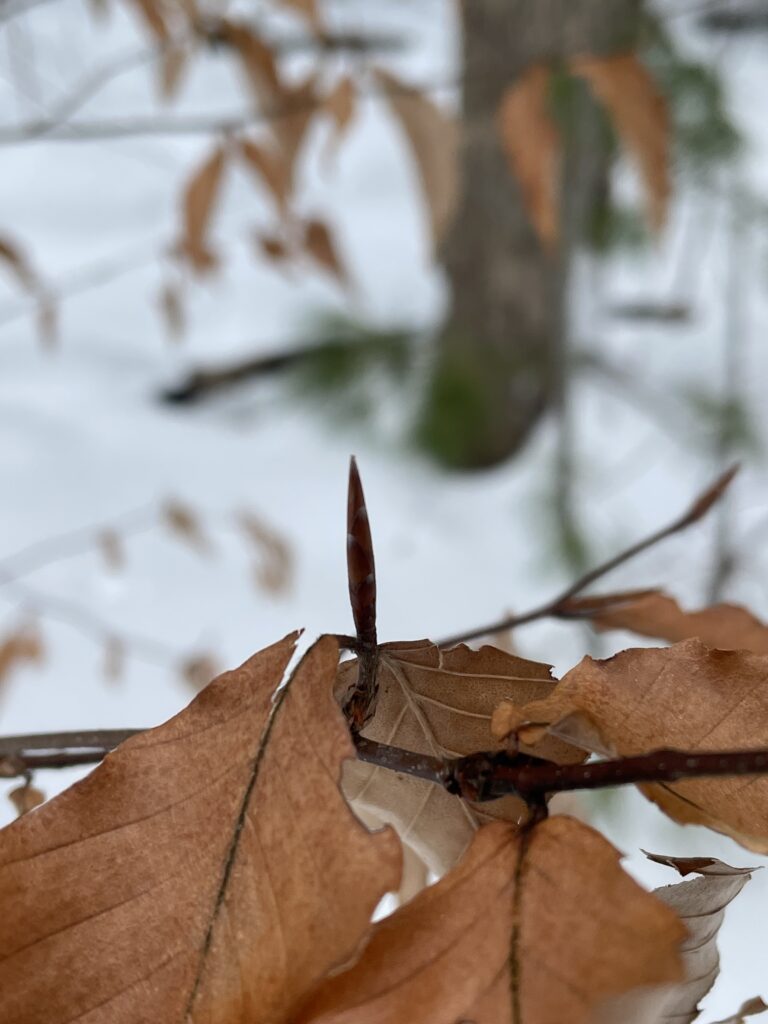
On March 26th, I revisited the American Beech tree I observed prior to spring break. Upon examining the branches, I immediately noticed a difference. Of the two buds I studied last time, one of them has begun the process of budding. Compared to the rest of tree, there were only four others that begun budding.
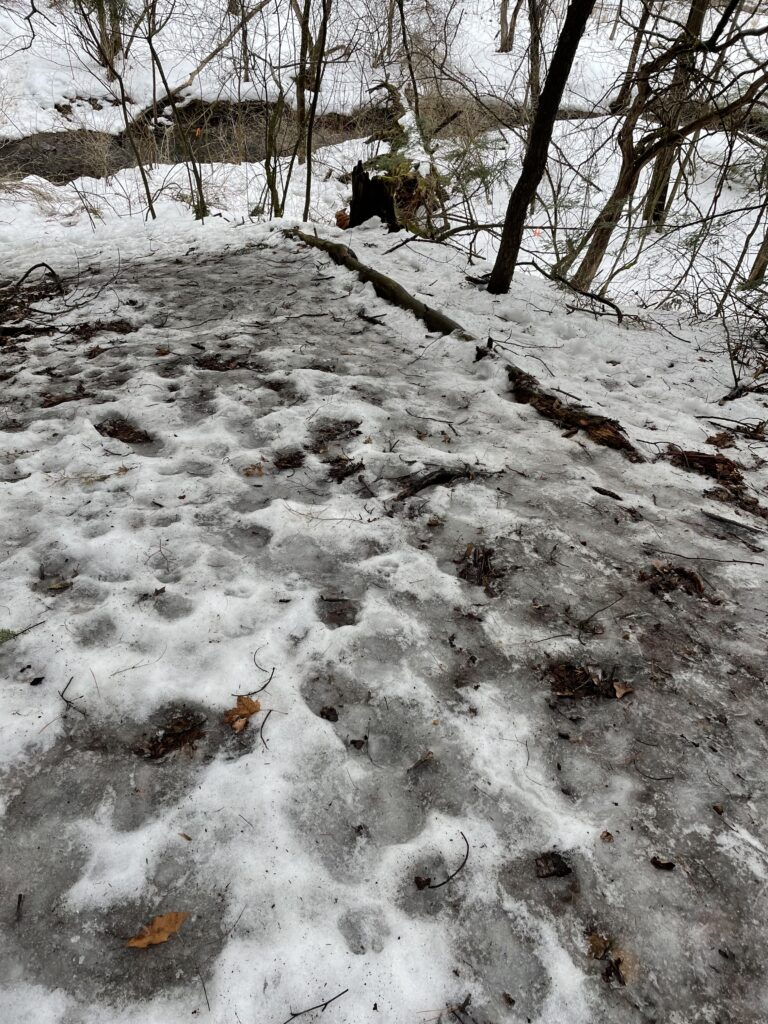
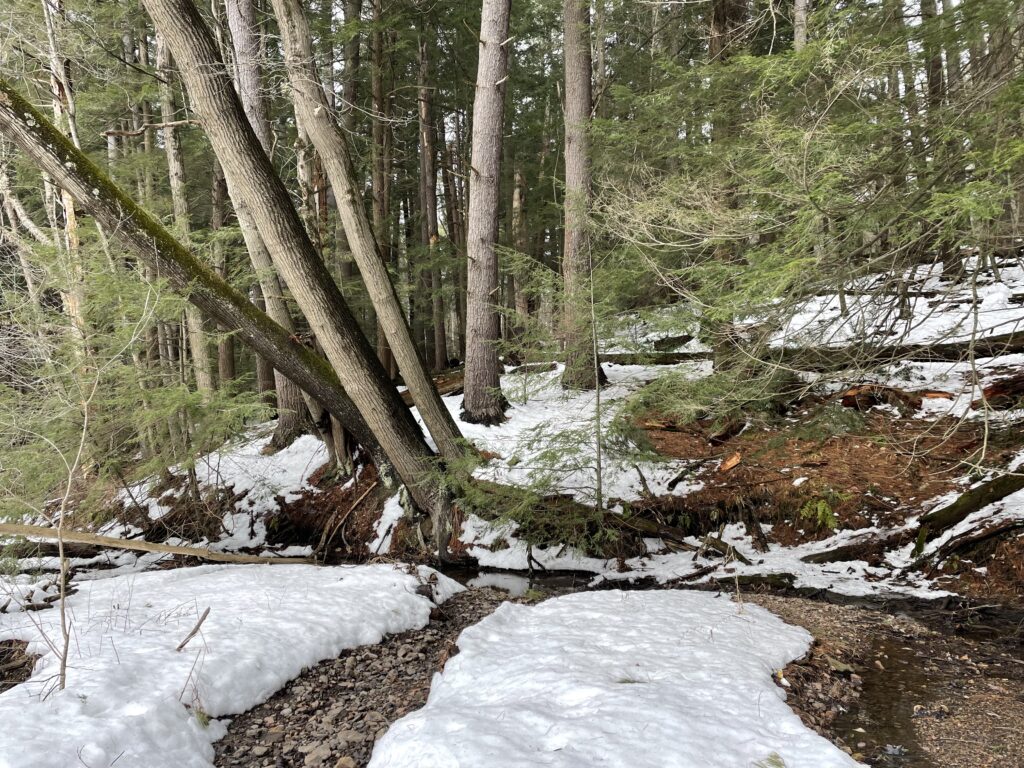
My experience revisiting my tree was slightly strenuous. Despite the rising temperatures and the snowmelt around campus, the forest has kept large portion of the snow frozen. Additionally, the constant melt and refreezing led ice to cover all of the major pathways, making it difficult to walk! Nevertheless, the landscape was beautiful and I enjoyed my time!
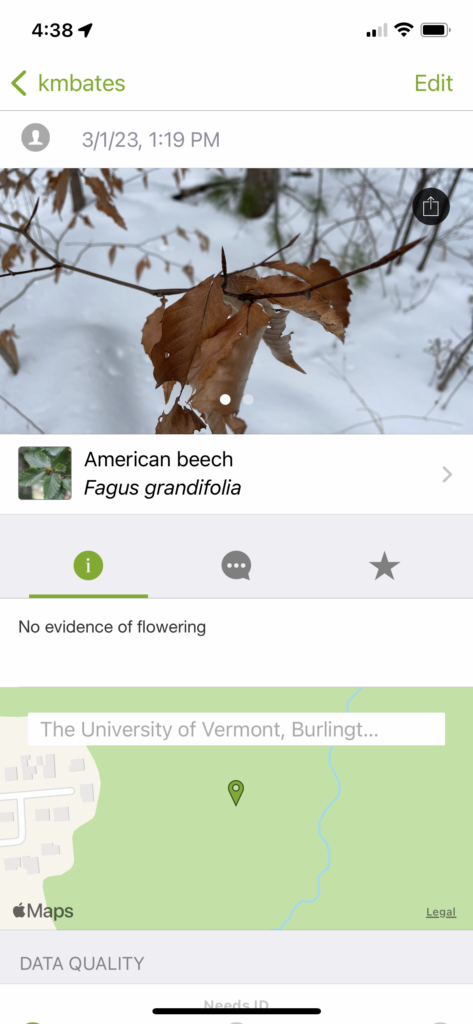
iNaturalist PostIced over pathwaysBuddingStream By My Tree
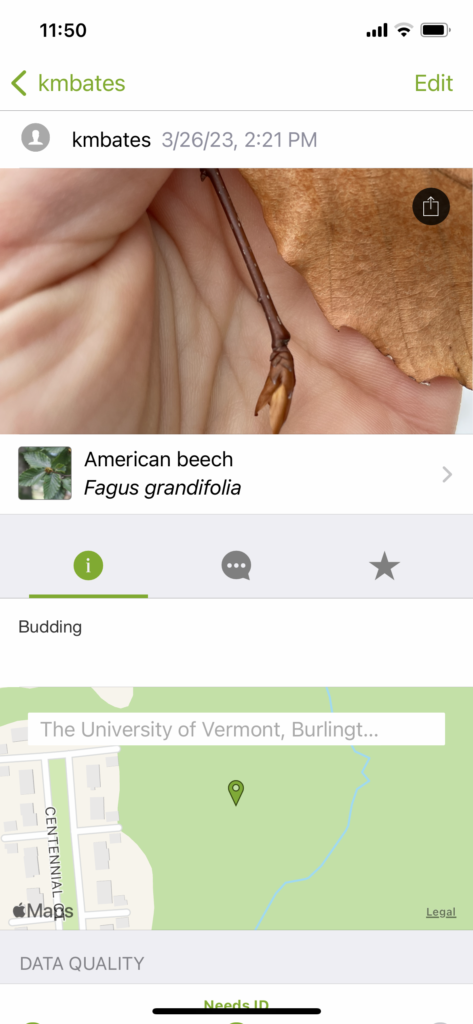
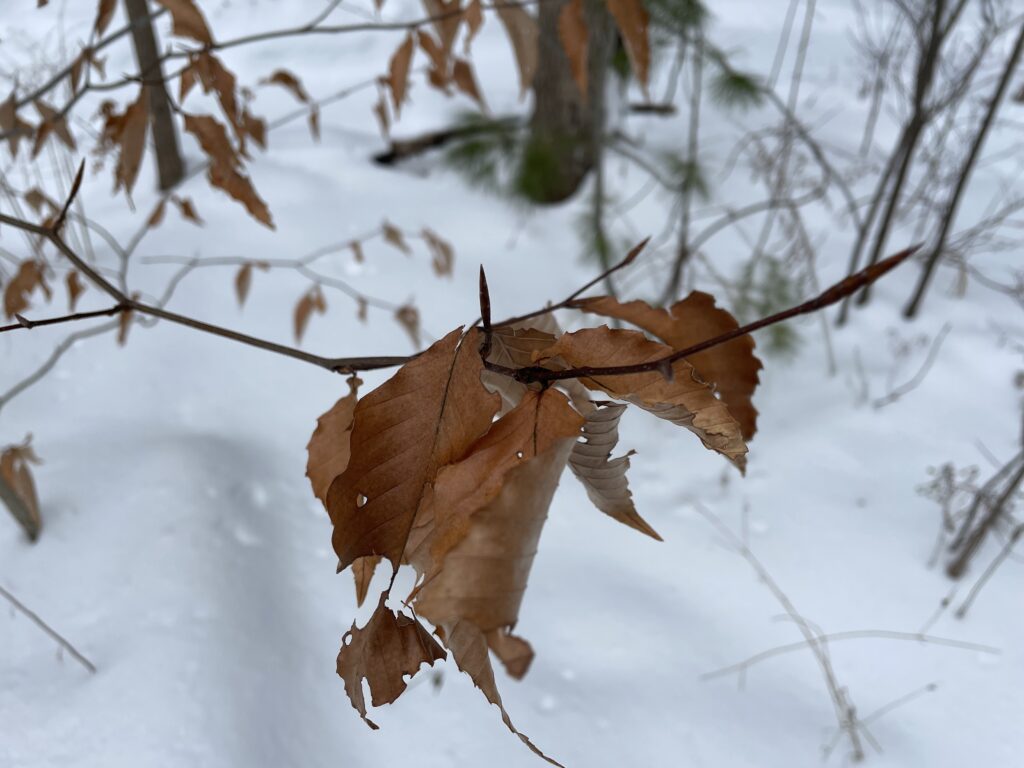
For my blog and iNaturalist post, I selected a young American beech tree in Centennial Woods. The identification process was easy because the tree still had leaves which were clearly the unique beech leaves (egg-shaped with distinct ruffles). If the leaves were not there, I would have been able to identify this tree using it’s twigs. Beech trees have thin, hairless, and true buds with many scales. Additionally, their twigs are very thin with short side twigs.
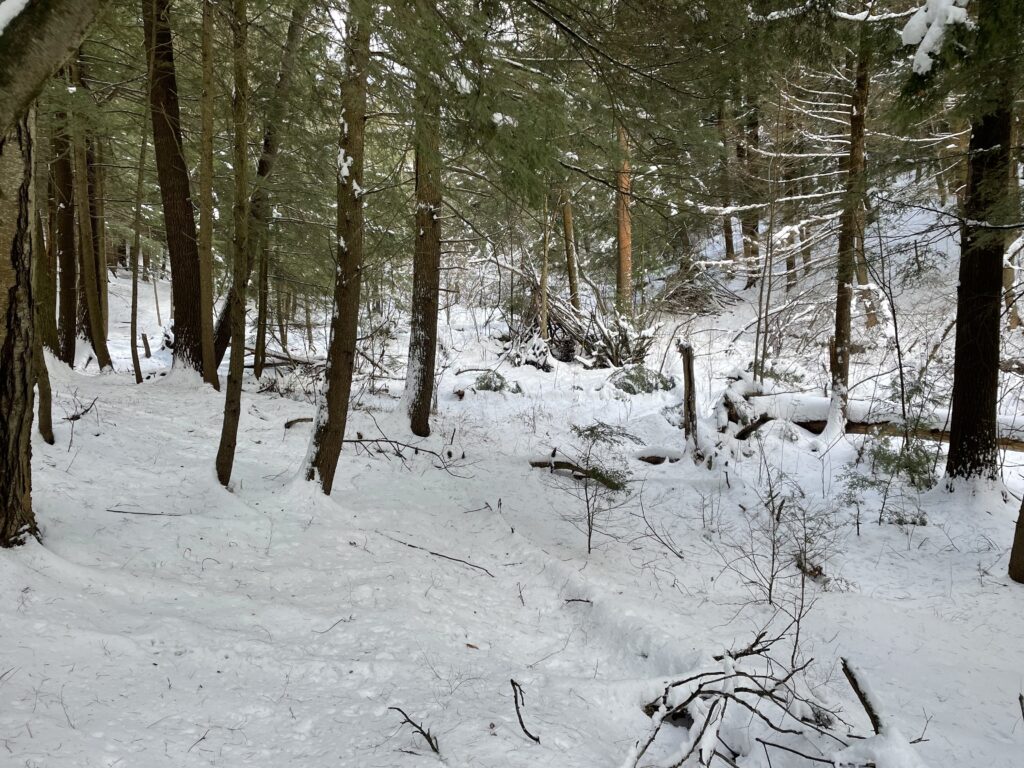
On February 19th, I explored the depths of Centennial Woods in order to find signs of wildlife. I was hoping to go somewhere other than here, but I just finished recovering from a concussion so my options were limited!
What did I encounter?
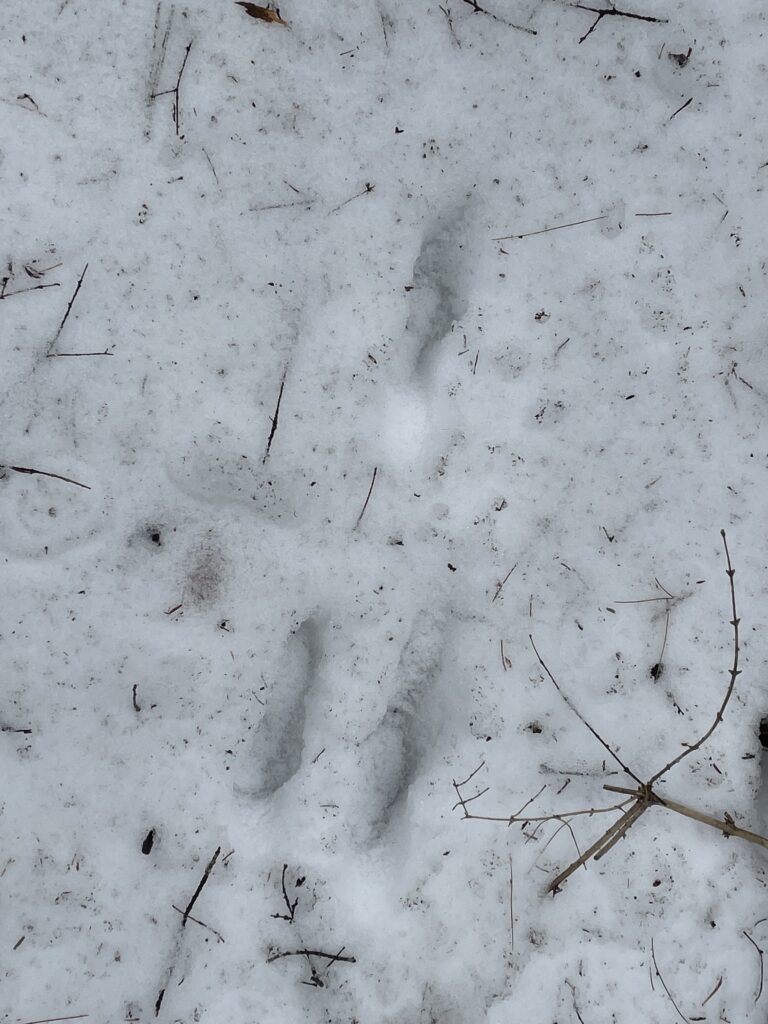
Various animal tracks in mud and snow
Two raccoons
Gray squirrel
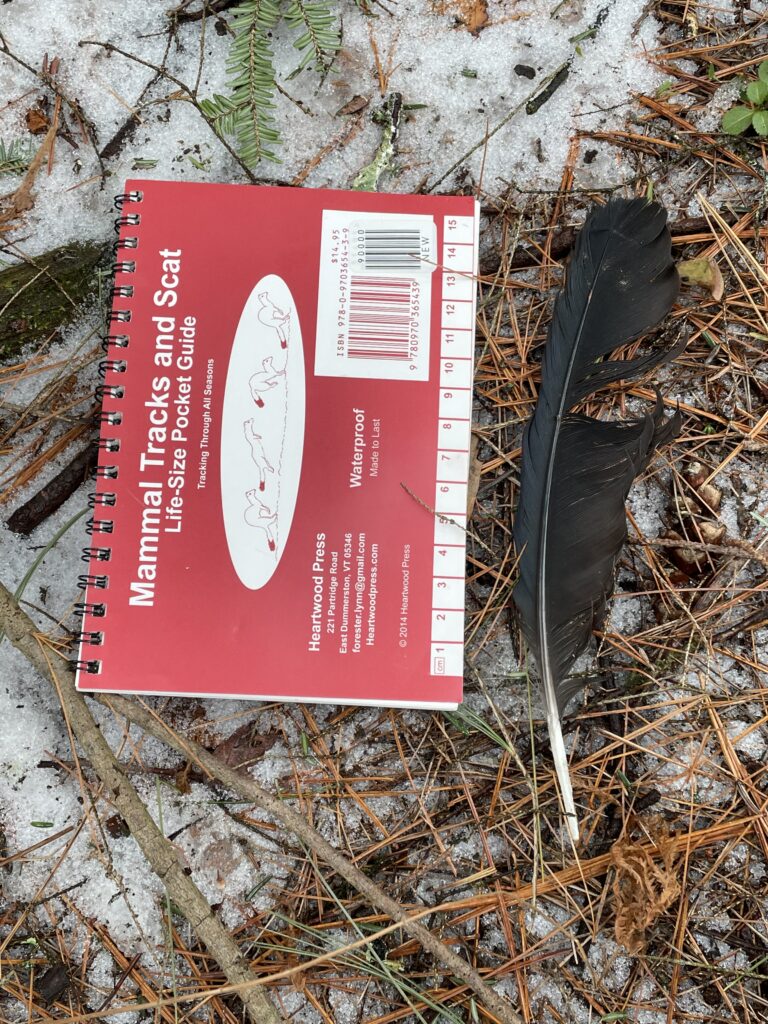
American crow
Cottontail rabbit
Red fox
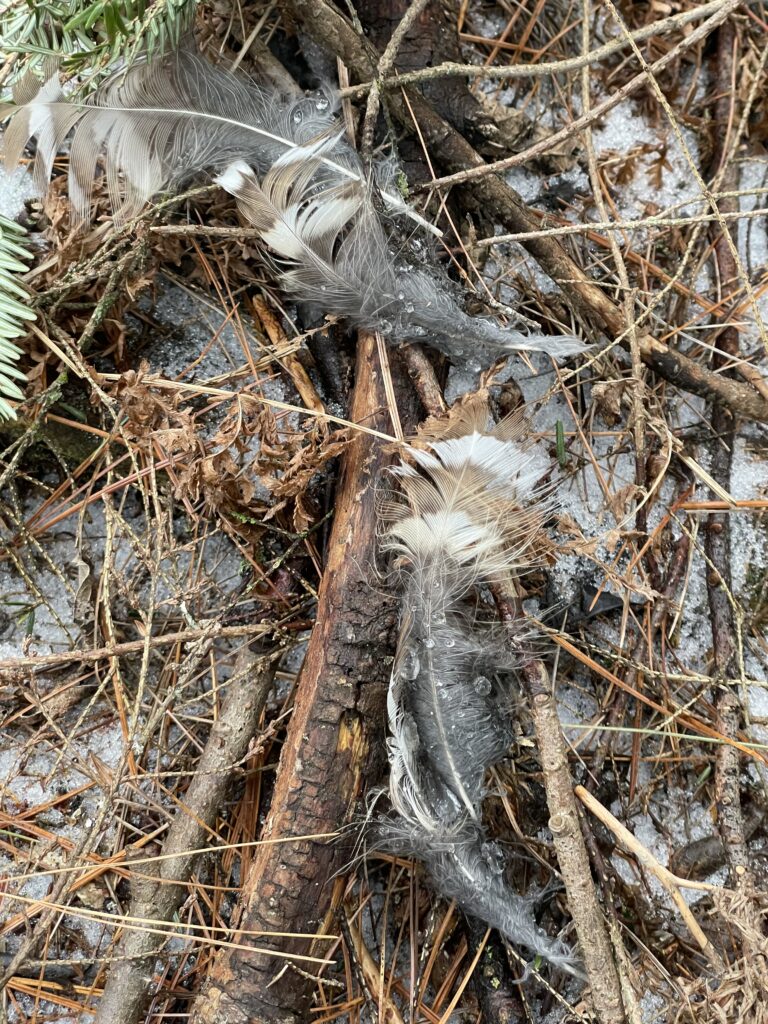
Various bird feathers
Barred owl
American crow
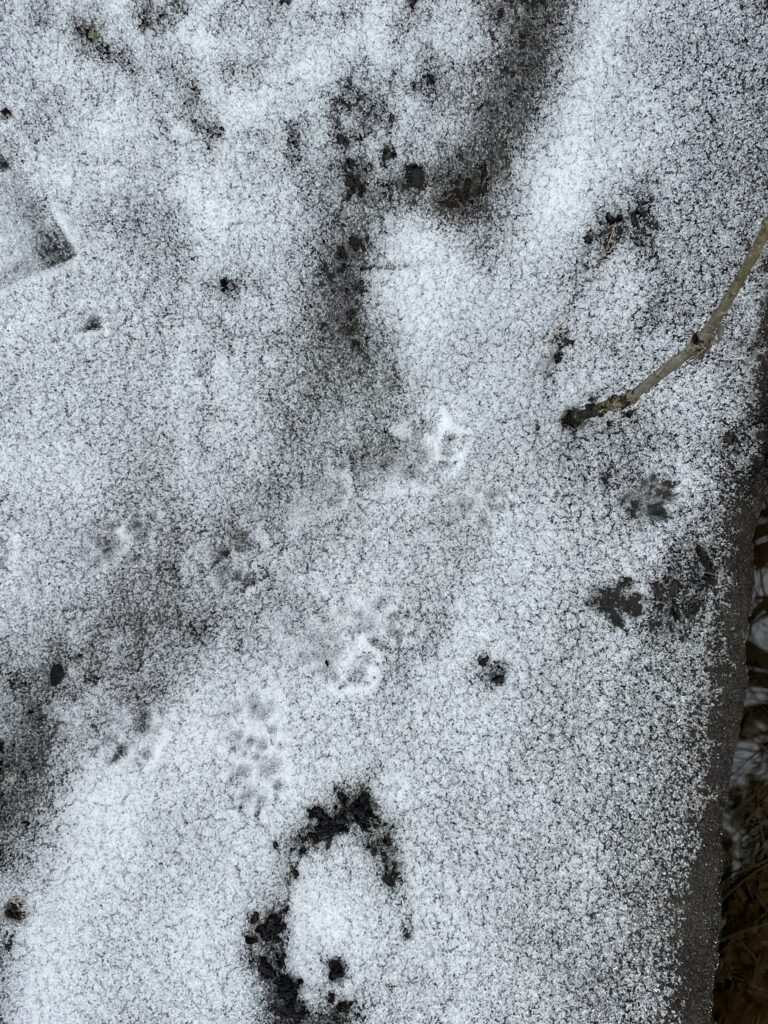
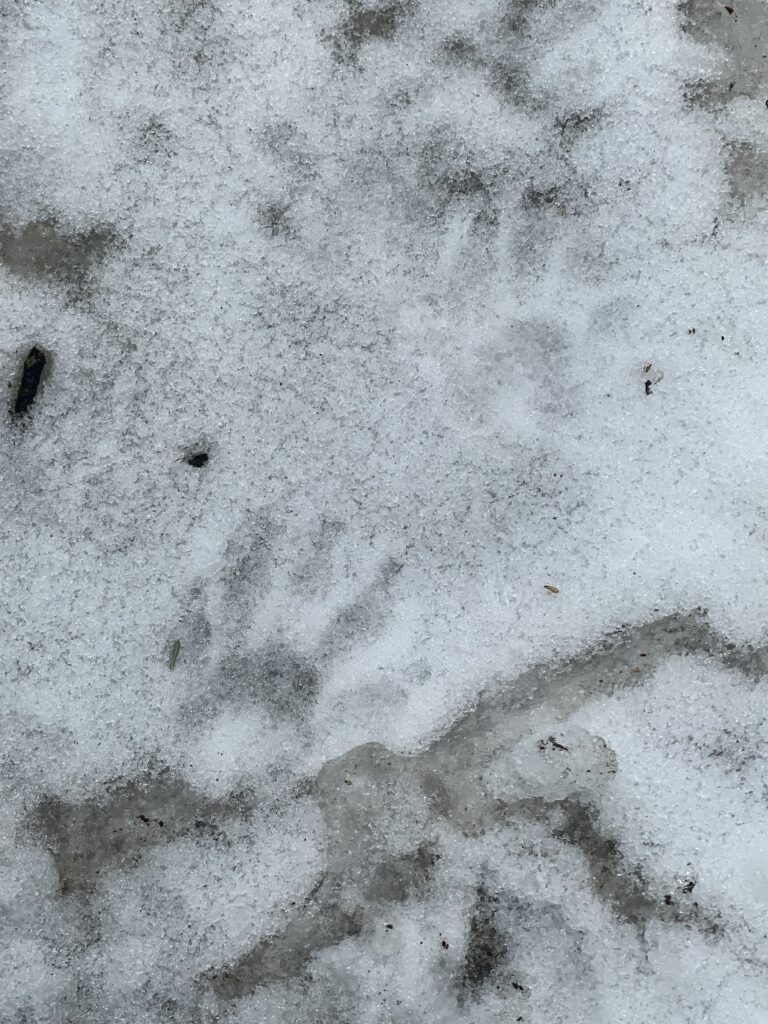
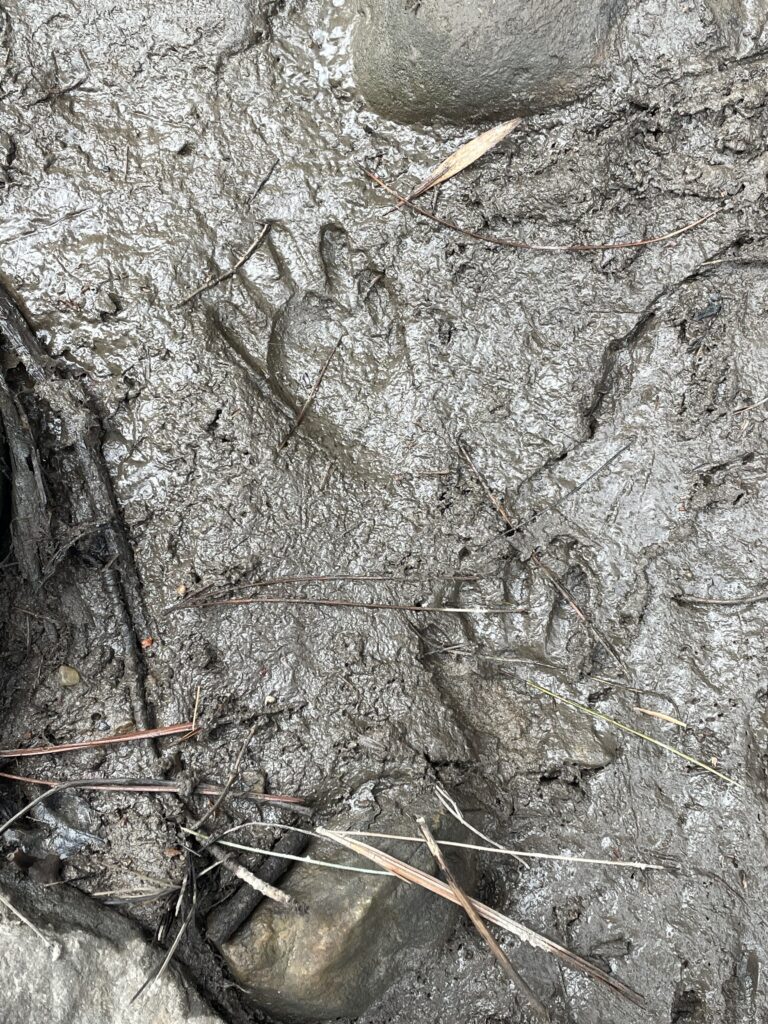
Red FoxRaccoon #1Raccoon #2
For the species such as raccoon and cotton tail rabbit, I had a fairly easy time determining their tracks. Rabbits have a very unique gait pattern and track sizes for example. It was clear that it was a cottontail rabbit based on the size of its hind legs in comparison to snowshoe hares. The raccoons were easy to decipher due to their easily-identifiable front track shape and size. With regards to identifying the squirrel’s tracks, I was able to differentiate between a red and gray squirrel based on the size of the tracks as well as the front foot placement (red squirrels often lands with one front paw slightly in front of the other). I really struggled to identify the red fox tracks due to how faded they were and how clustered they were. I found them at the edge of a creek, and the prints were overlapping each other which made it difficult to find a gait pattern or clear tracks. I was able to decide upon red fox based upon the size of the tracks, pad of the foot, and the oval pattern of the toes. I am not 100% sure about this identification to be honest though!
Barred OwlAmerican CrowCottontail Rabbit
iNaturalist App Experience:
My experience with the iNaturalist app was pretty good, I did struggle to post my observations to our class project but hopefully they went through! I really enjoyed being able to see my classmates’ observations and exactly where tracks were found.
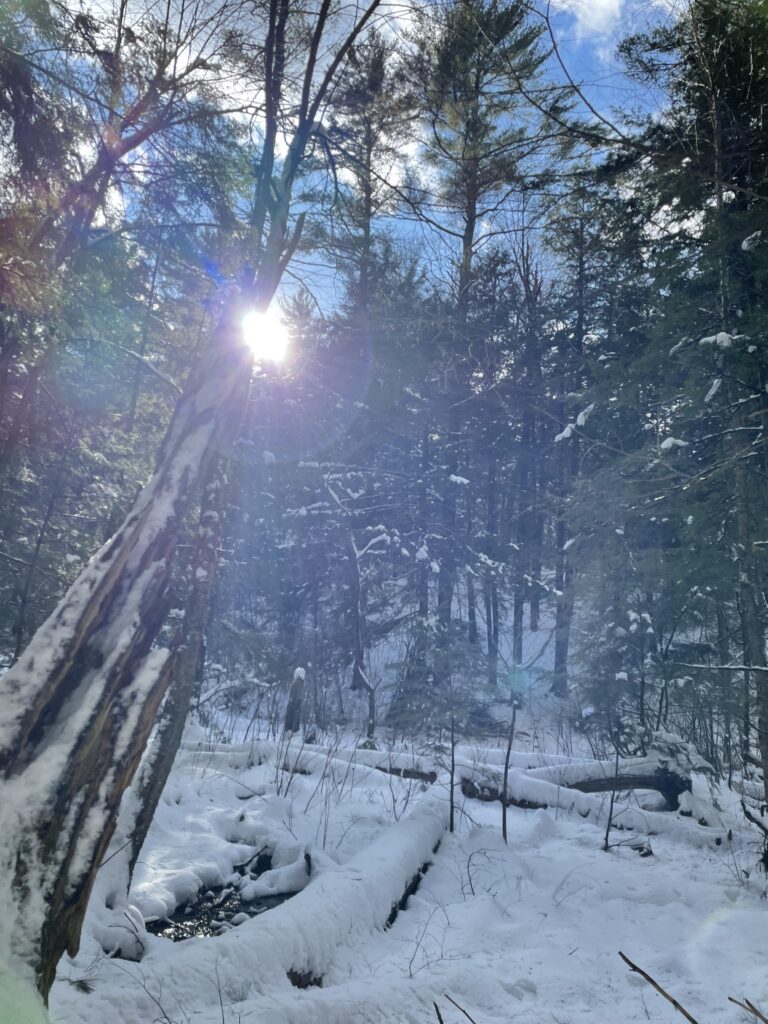
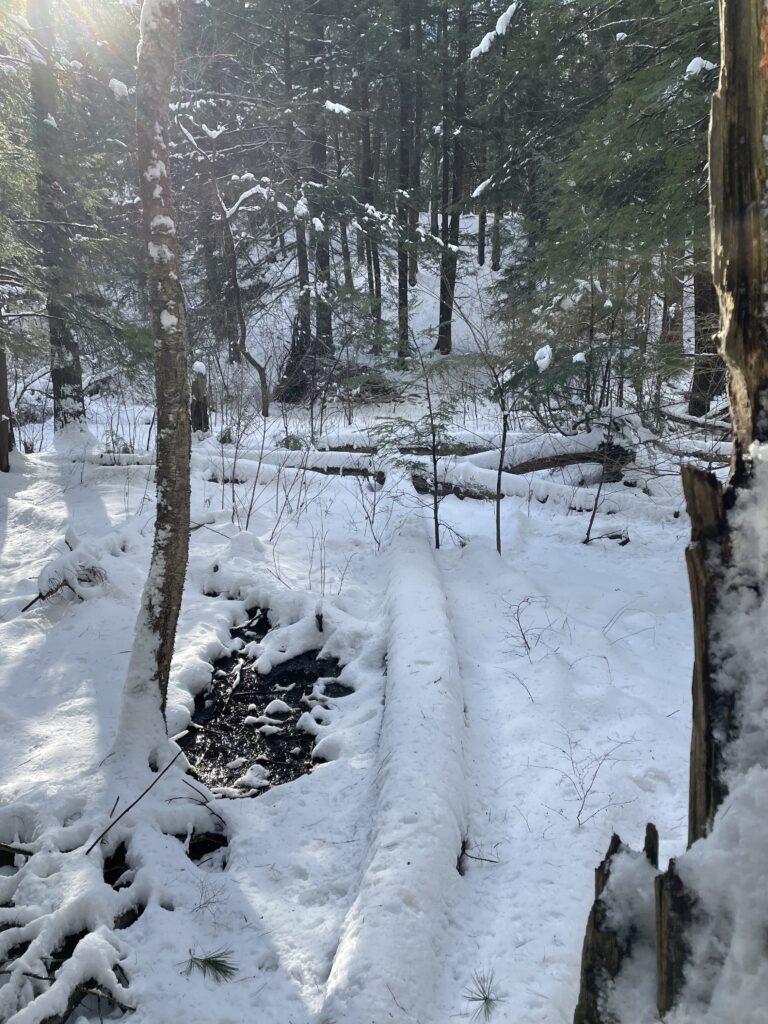
On January 28th, I traveled to the same phenological spot as last semester to observe any changes that occurred.
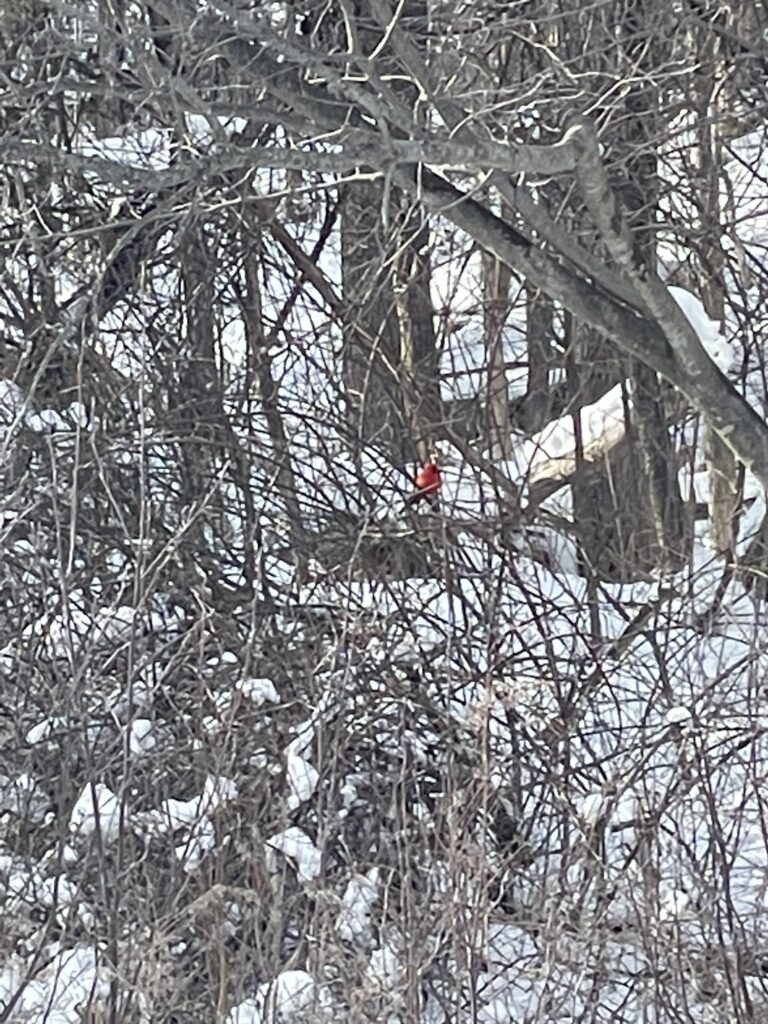
Wildlife Activity: The presence of wildlife decreased even further since the last time I visited in December. I sat in my spot for about thirty minutes and observed/heard no wildlife during that time, all attempting to survive these harsh conditions. However, one cardinal landed in at the very edge of my phenological spot, until it was quickly off again. Other than this, I observed no wildlife.
Plant and Tree Species: There were no changes with regards to the tree species in my since my last visit. I was unable to assess organic material and potential understory conditions due to the high volume of snow.
Wildlife Tracking: I had a very difficult time spotting previous signs of wildlife for a number of reasons. My location rests upon a large water source which means there is a large space that is absent of any trees. Because of this:
Strong winds pass through and knock snow and even branches off of the trees
Sunlight is able to penetrate and melt snow in the overstory and understory
Branches, twigs, etc. break under the pressure of snow and litter the ground
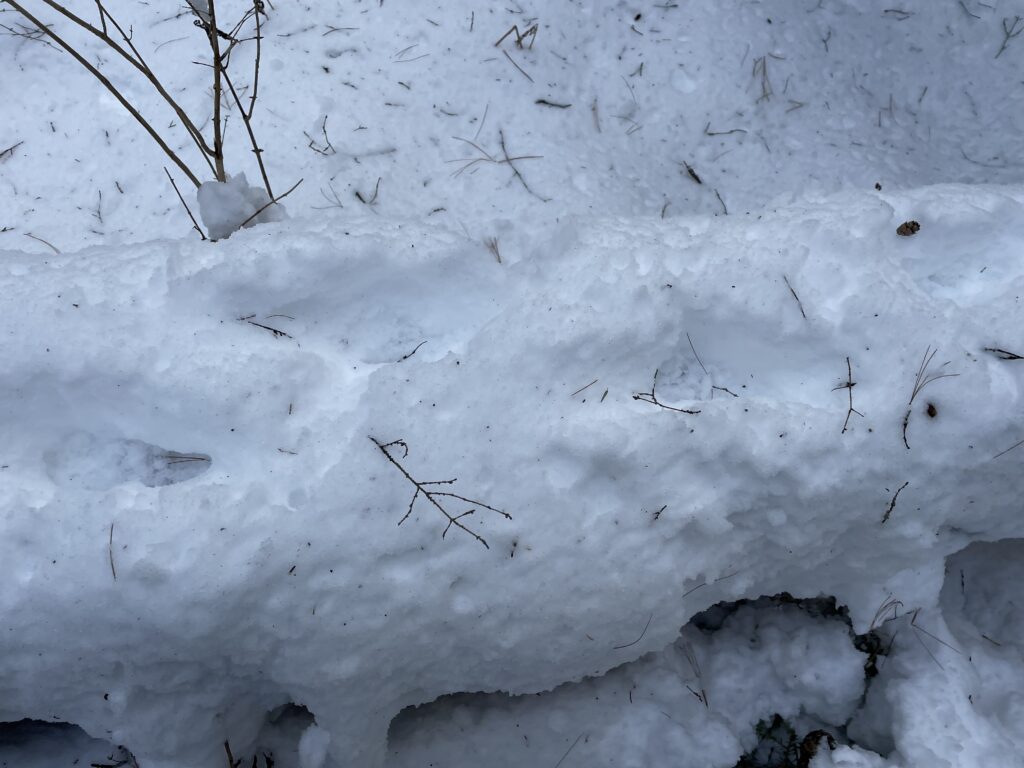
All of these destroy or cover animal tracks that had once been there. However, I came across footprints that crossed over a log and led into the large stream bordering my spot. I had a difficult time uncovering the identity of the animal as the prints had faded tremendously. Hopefully I will be more successful next time, when there is a fresh coat of snow!
On December 5th, I traveled to my phenological site to observe any changes that had occurred.
Observed Changes:
Wildlife Activity: The wildlife activity during this time decreased significantly. Upon arriving, the only animal I observed was a gray squirrel rummaging around the fallen foliage on the forest floor. Additionally, every time I came here in the past I saw or heard bird species at the very least. However, on this winter day I saw nor heard a single bird. The only signs of animal presence was a pile of animal scat on the ground and small holes dug by squirrels.
Foliage: All tree species had shed their leaves and pine needles except for…
Eastern Hemlock
Longstalk Sedge
Intermediate Fern
Organic Material: There appeared to be no new fallen foliage on the forest floor. However, there were signs of decomposition as the eastern white pine needles that were on the bottom of the foliage pile had turned brown and were decomposing. There were no signs of decomposers from my observations.
What aspects of my phenology place did I enjoy most? I cannot even begin to explain how much I enjoyed my phenology place. As a individual who spends most of their time exploring and enjoying nature, I found this location to be own little haven. I loved sitting in the forest quietly, listening and observing the ecosystem around me. This project itself peaked my curiosity and interest as I was able to connect my phenology knowledge to the real world. I loved this project!
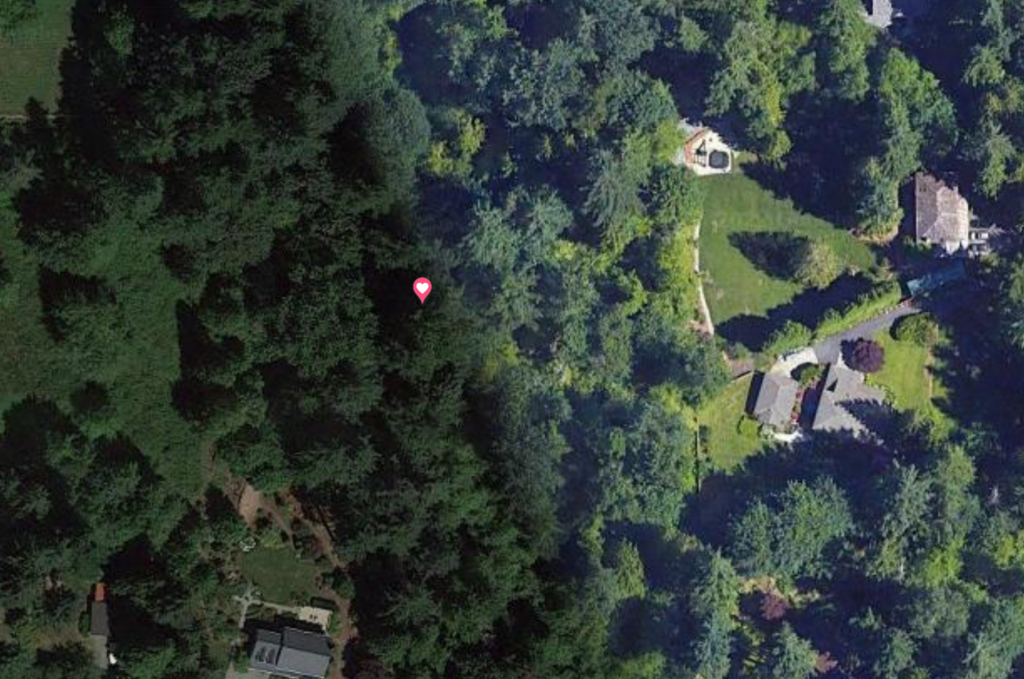
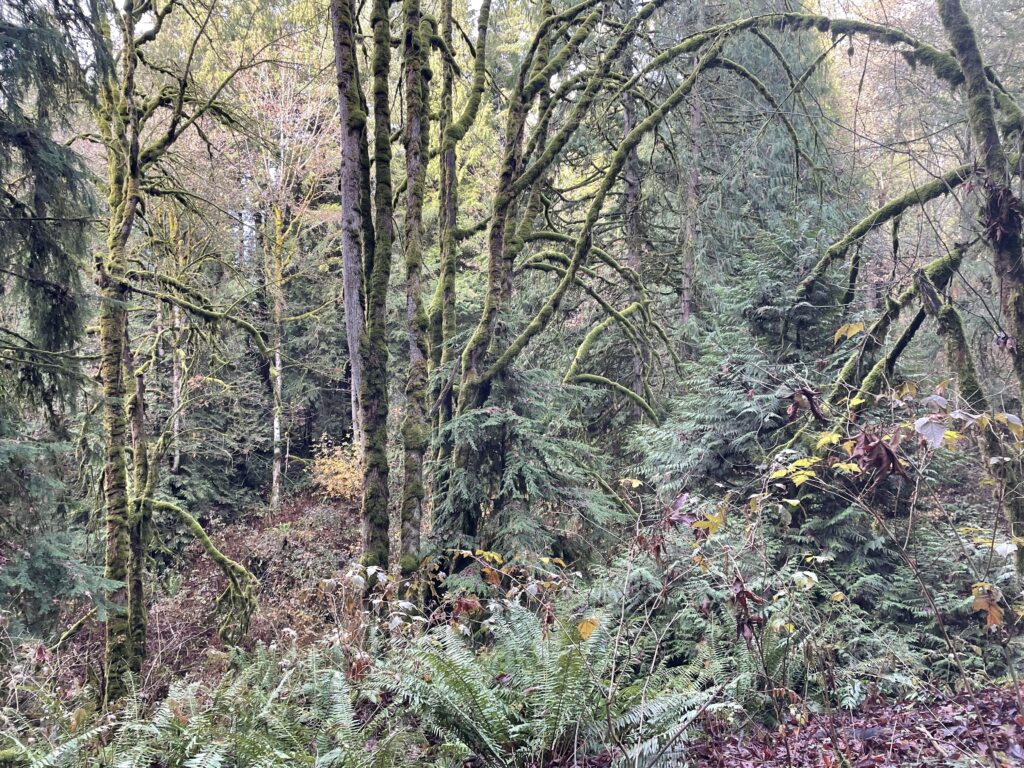
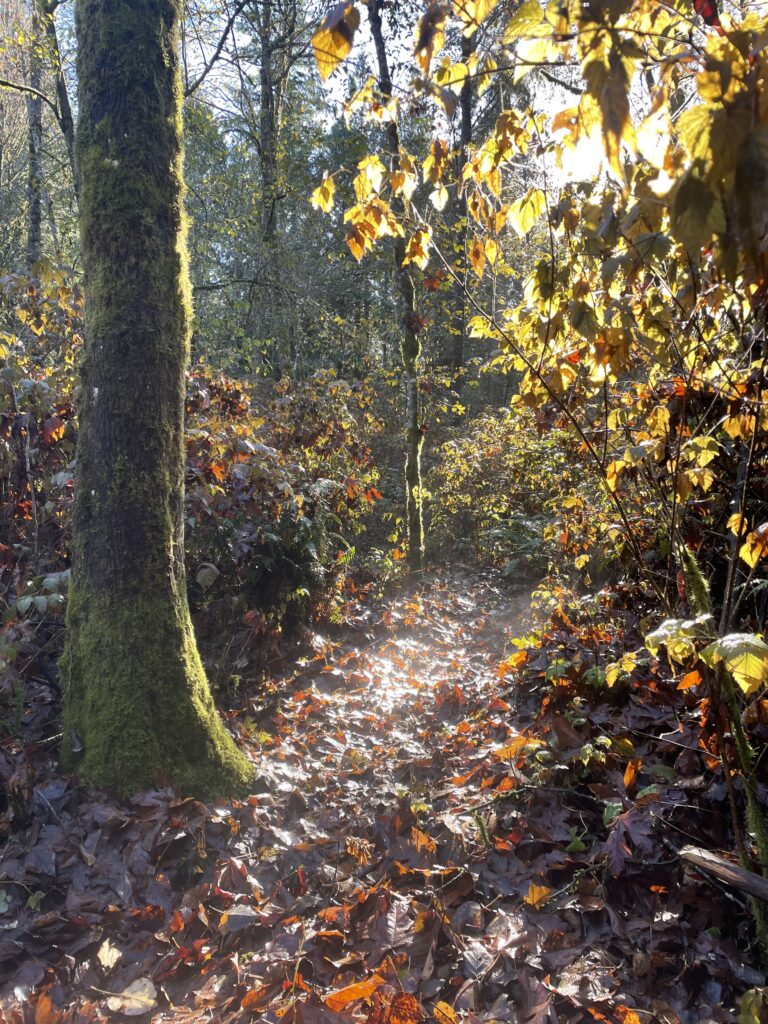
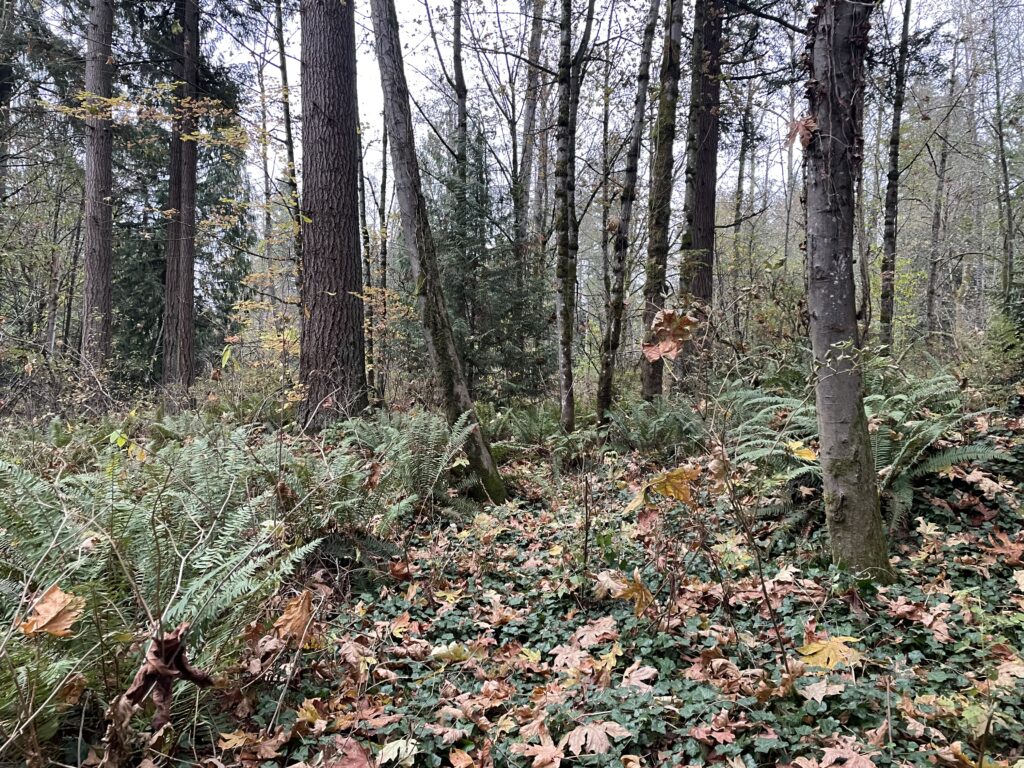
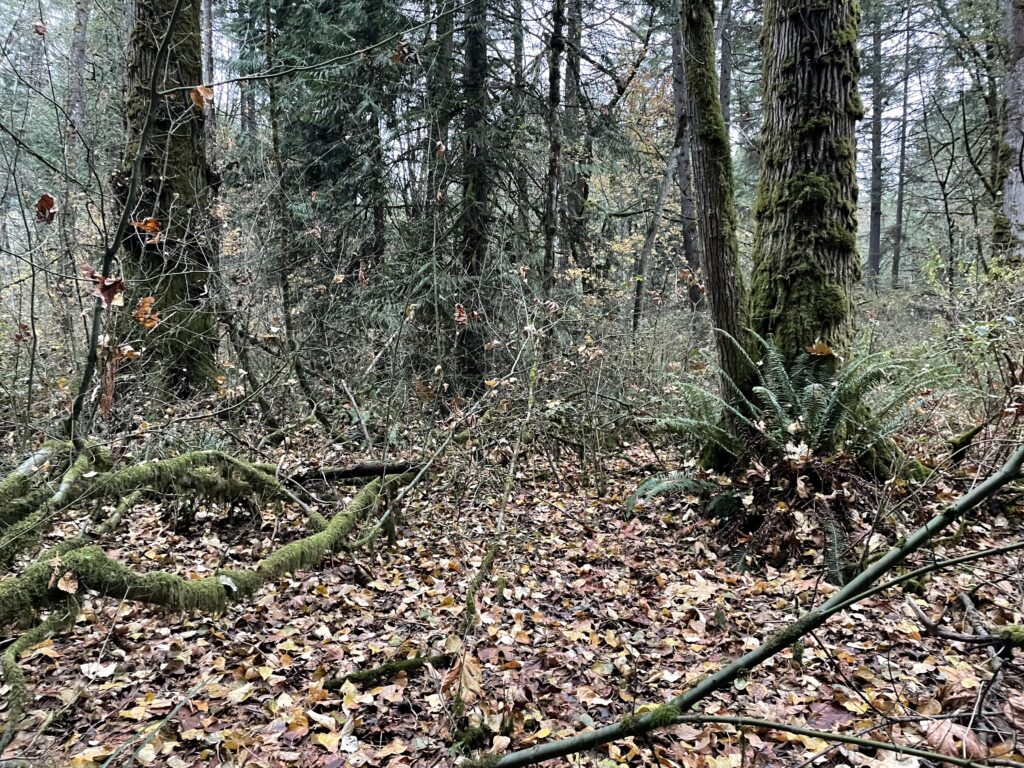
On November 21, I spent time in my new phenology location which resides in the dense forest surrounding my house in Seattle, Washington. This area is special to me personally as it is my safe place where I spend a large portion exploring and appreciating nature. It is also a very biodiverse region which has led to the development of a very popular travel route, feeding, and resting area for wildlife.
Map of New Phenology Location
Vegetation Description & Plant Species
In comparison to Vermont, western Washington state has a very cool and wet climate which results in forests that grow primarily evergreen trees and very shade tolerant plant and tree species. Additionally, western Washington regions are known for their tokul soil, a mix of iron from glaciers and ash from volcanic eruptions that strongly influences plant growth. This contrasts greatly with the sandy loam soils that rest upon limestone in Vermont. When taking these differences into consideration, it is clear why these were the most common species within my new phenology location in Washington state.
Most Abundant Tree Species:
Douglas Fir
Bigleaf Maple
Western Red cedar
Western Hemlock
Vine Maple
Red Alder
Most Abundant Plant Species:
Western Sword fern
Salmonberry Bush
Common Holly
English Ivy (Invasive species)
Moss
Honorable Harvest
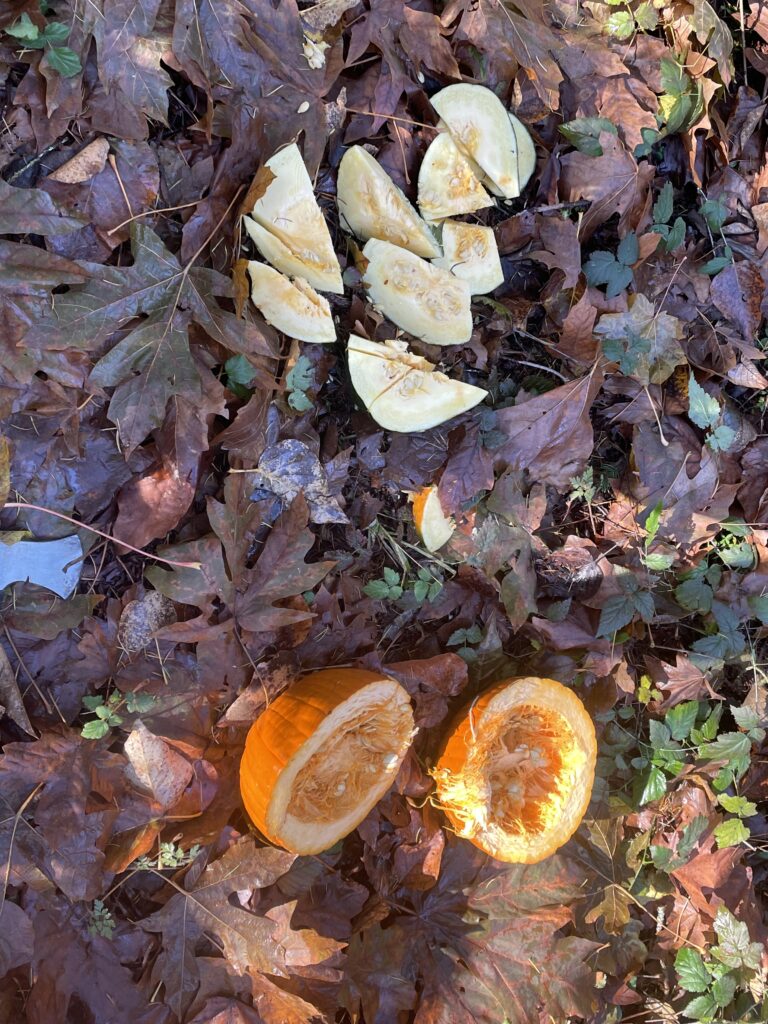
To participate in the Honorable Harvest, I decided to “gift” the forest in two ways:
Left two split pumpkins on the forest floor
I brought two untouched pumpkins (were going to be taken to the dump) and put them in my location in order to provide food for wildlife and provide rich organic material to the soil
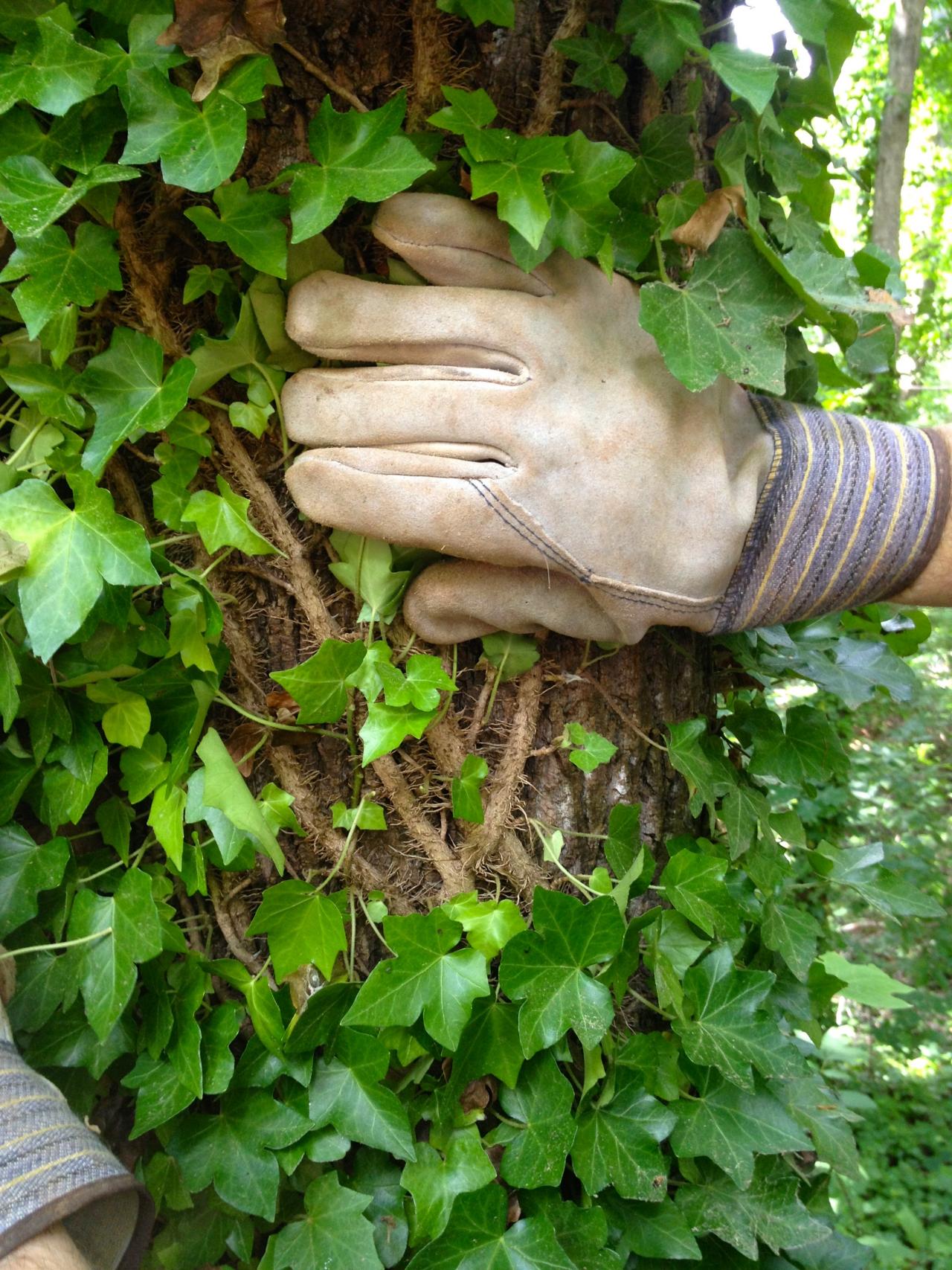
Removed invasive ivy species from trees
English ivy has overtaken a large portion of the forest and threatens to eliminate native plant and tree species. I removed the ivy from the plants and trees as well as tear the roots out to prevent regrowth
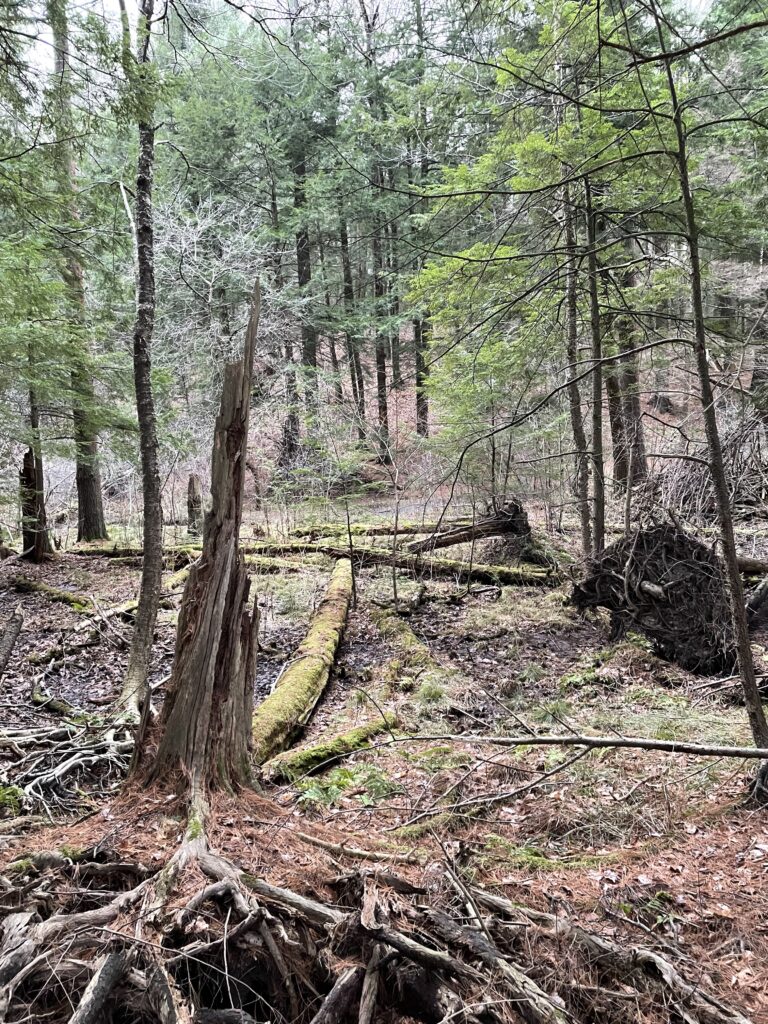
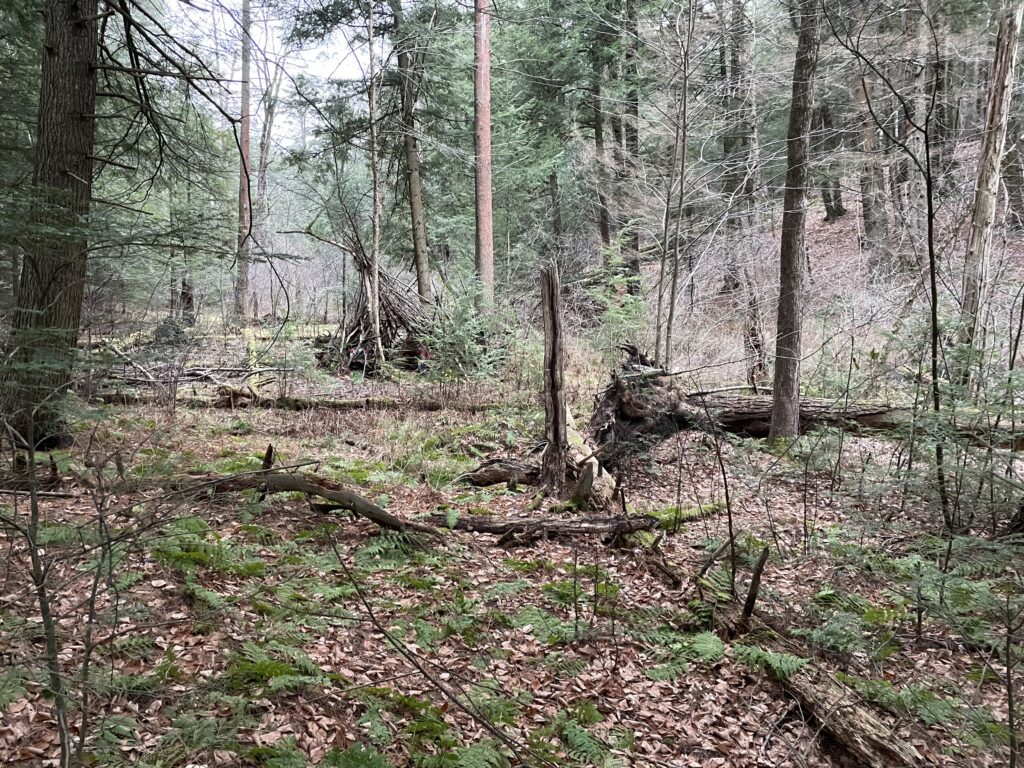
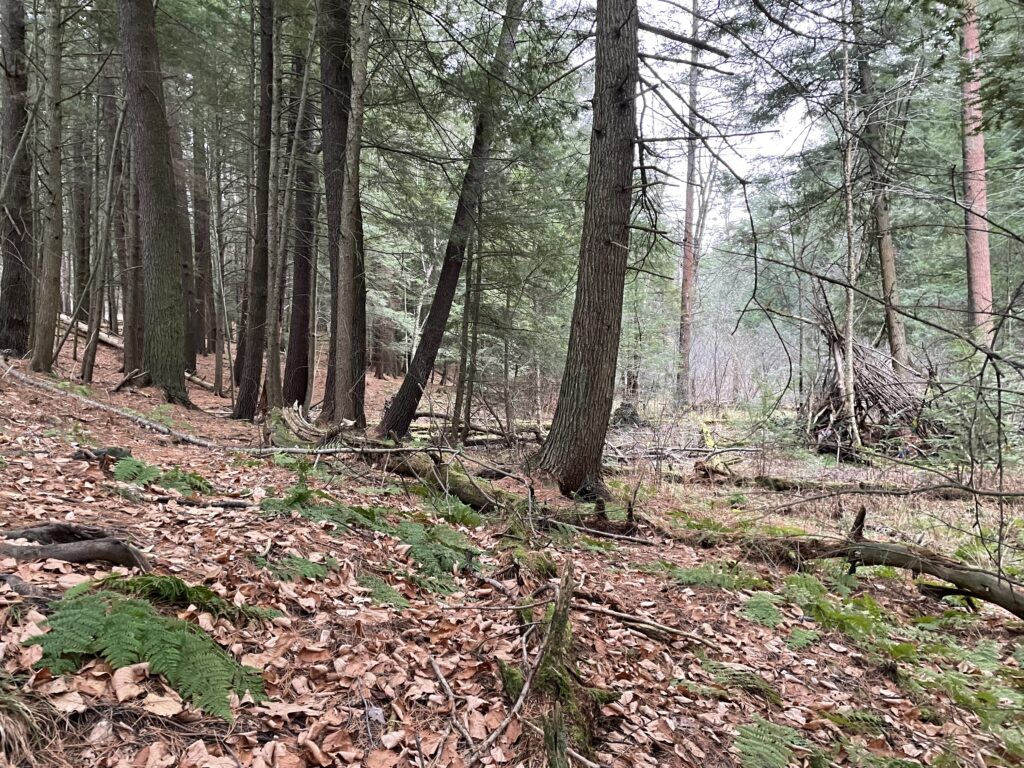
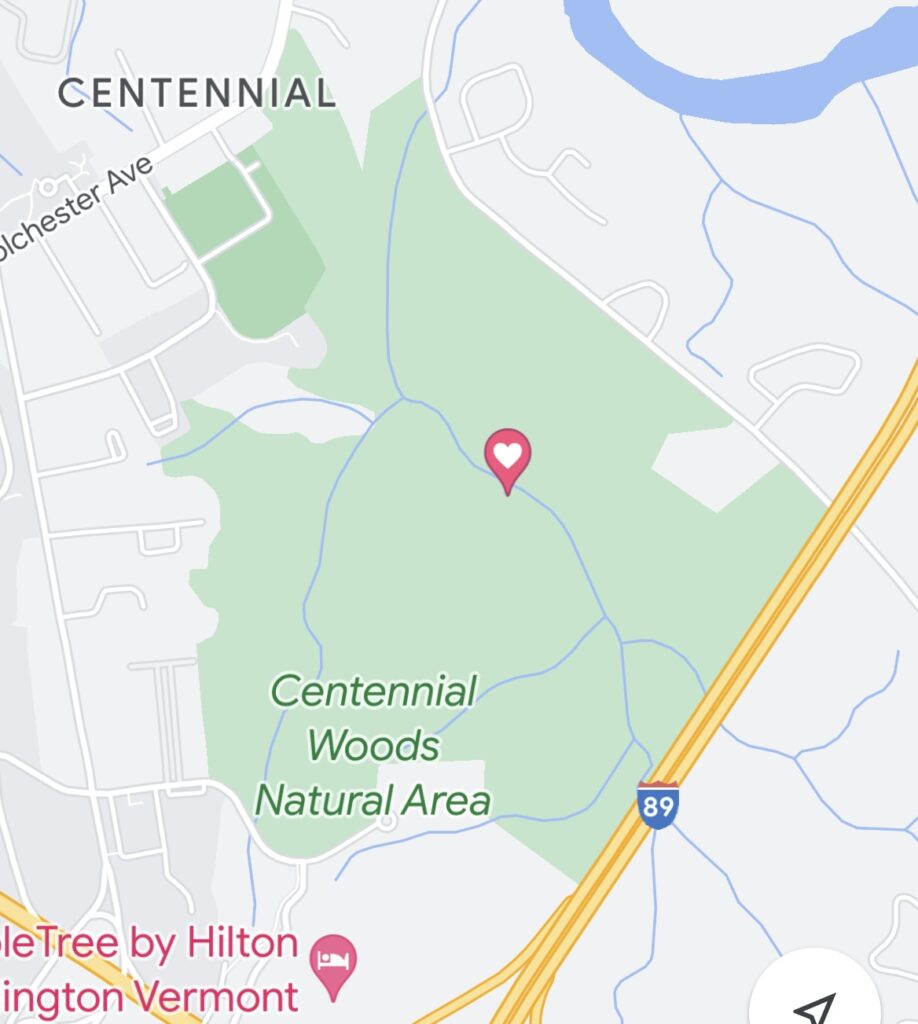
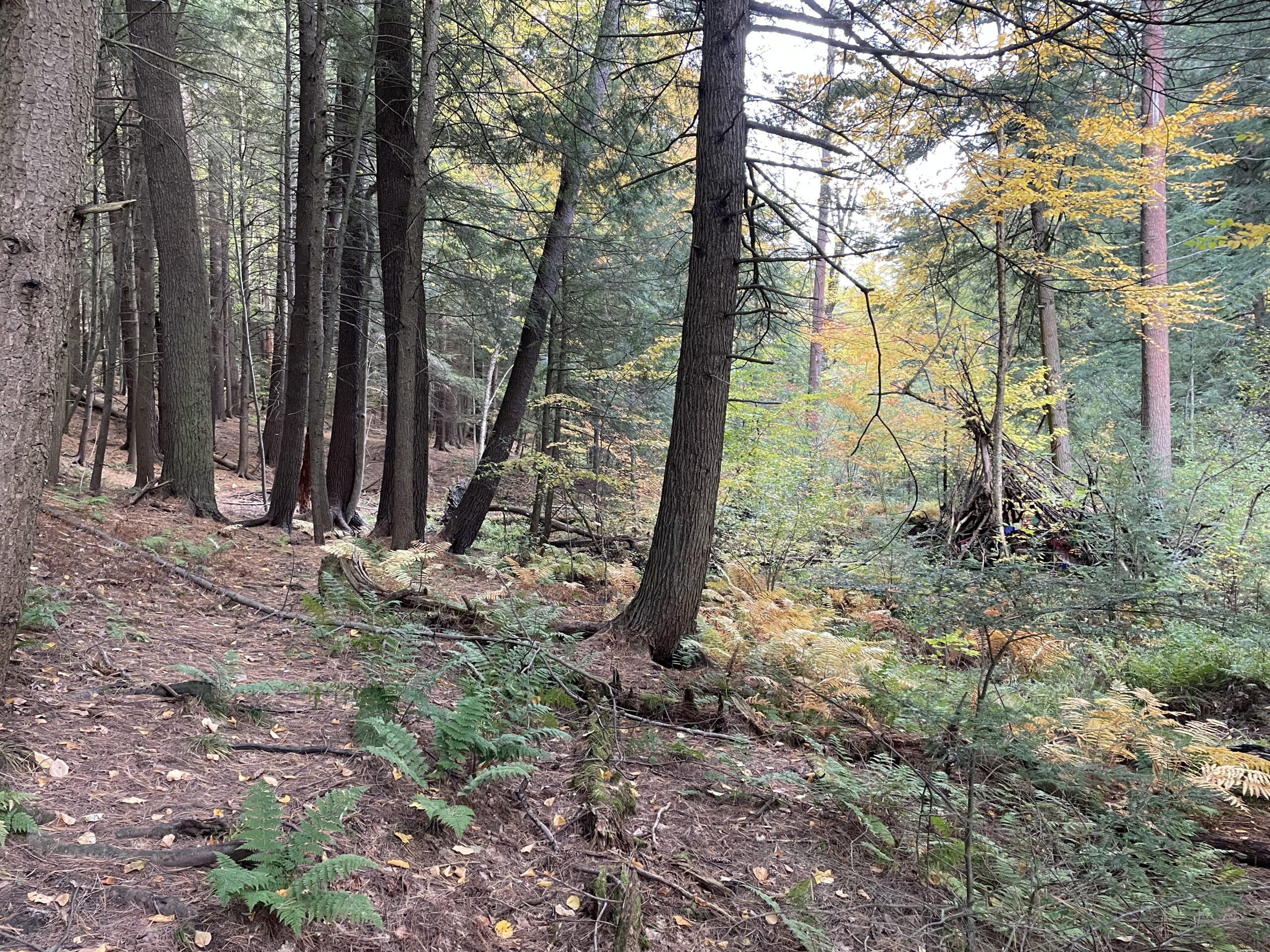
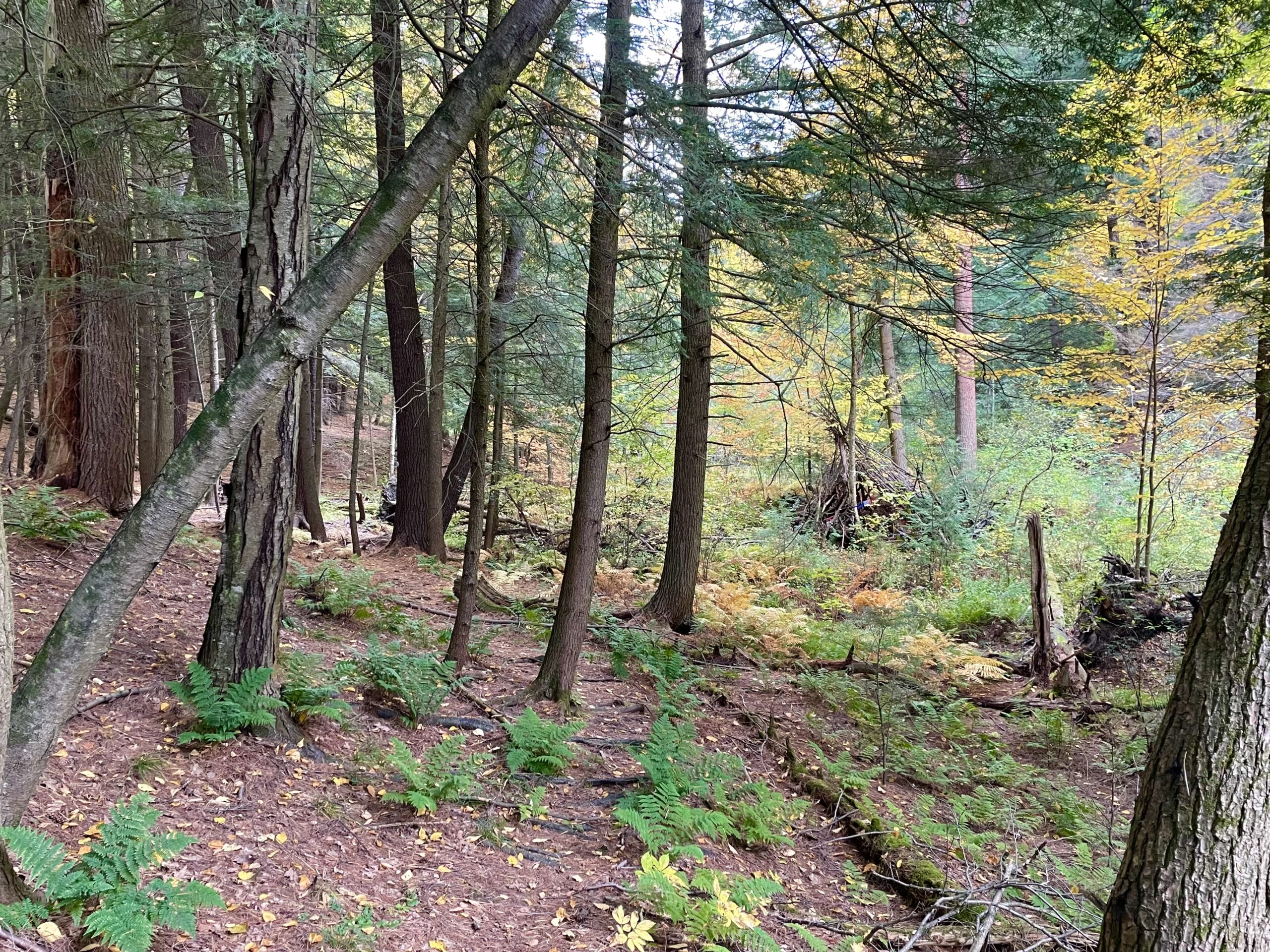
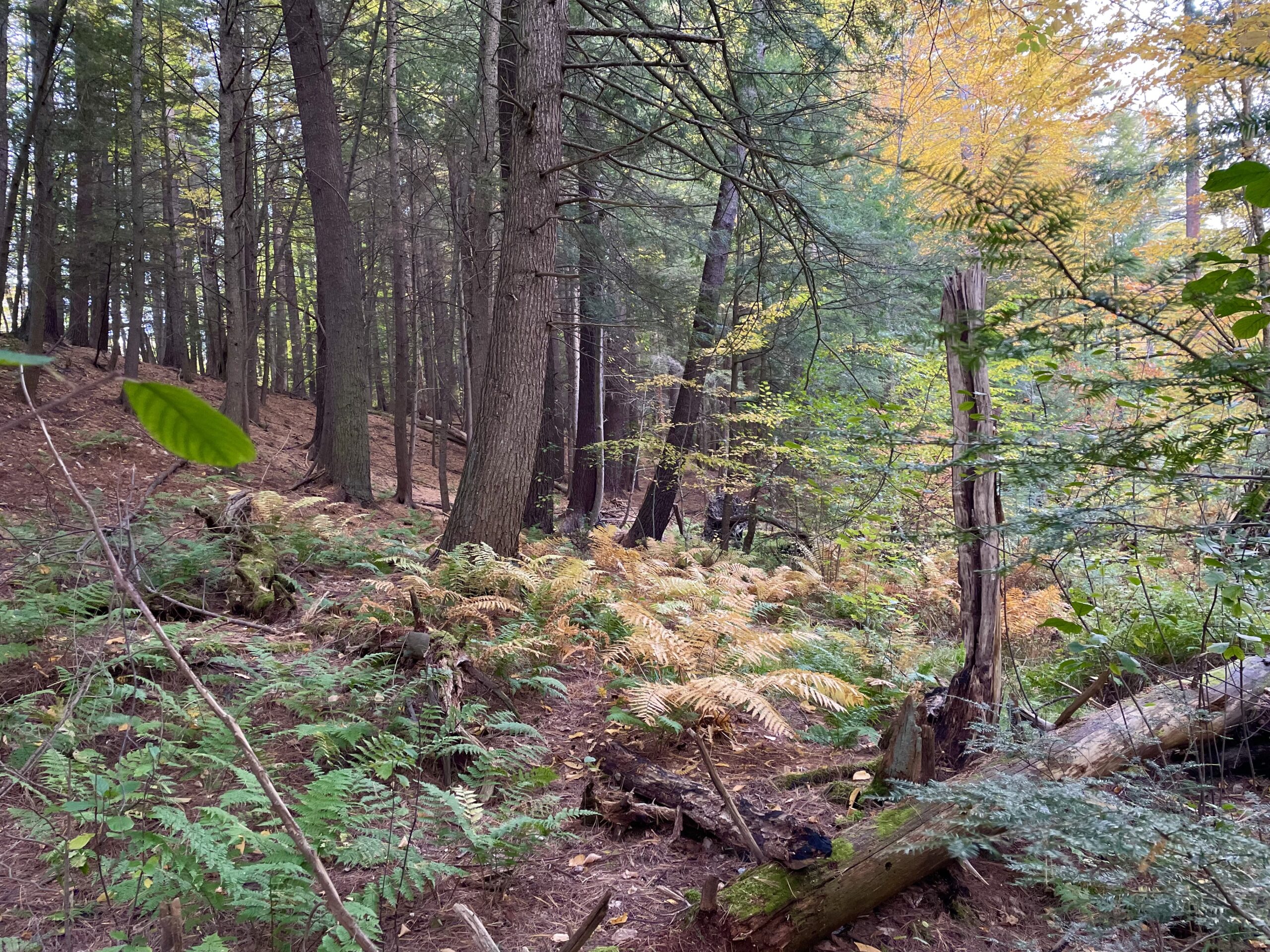
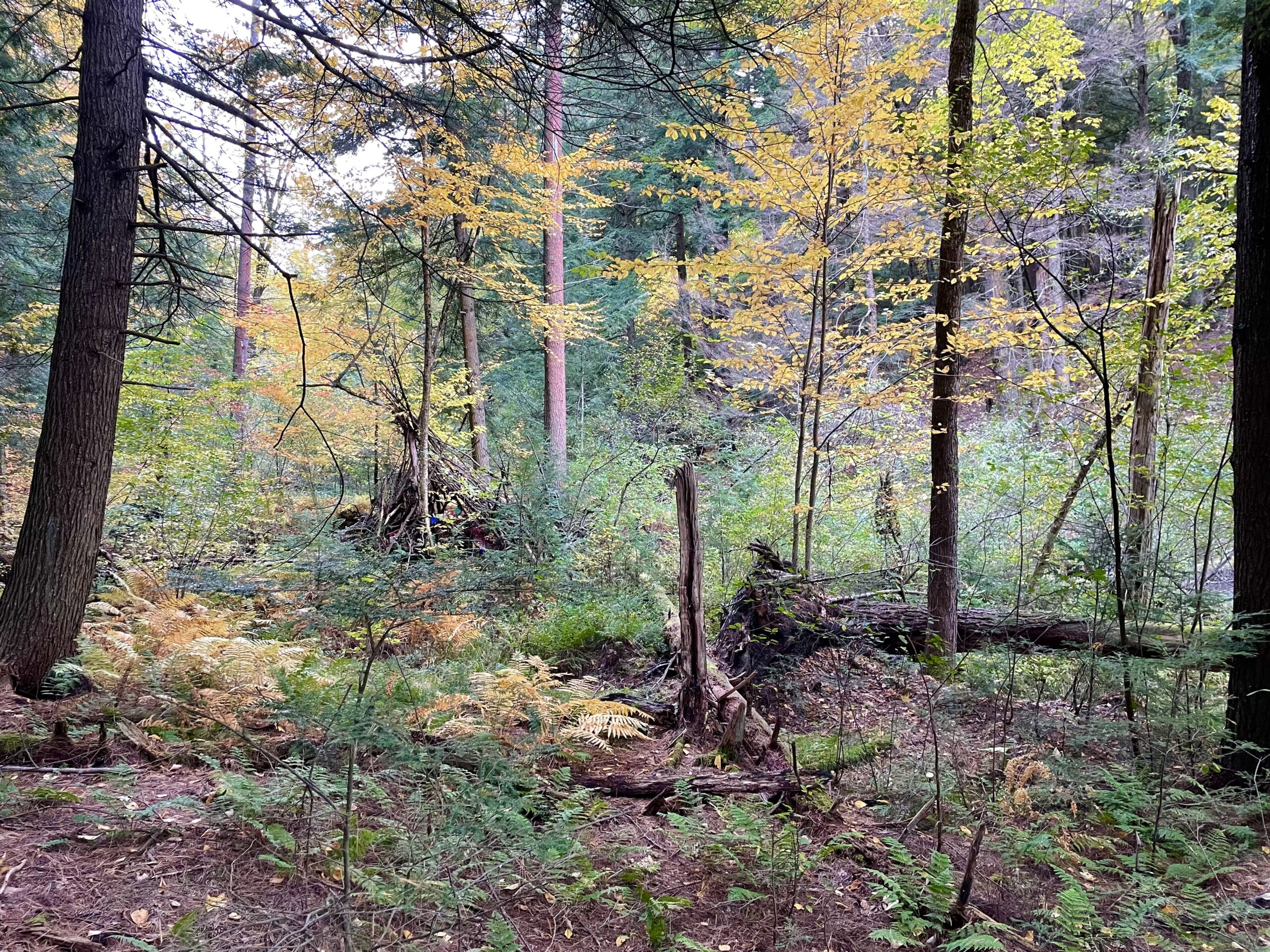
My place for this project is located within Centennial Woods. It resides along one of the two main Centennial brook’s streams created by bifurcation. In order to find this area, first, one must enter the main Centennial Woods entrance found across from the UVM parking lots. From there, follow the main path that NR-1 students used to reach the final location of the first NR-1 lab. Follow the trail that leads upwards from that area until you see a side trail that is found within a cluster of black cherry trees. Travel down this until you find another side path that trails off to the left, and then follow this path accordingly. Just beyond a large fort made of branches, you will find my place!
Phenology Location
Centennial Woods Map and Phenology Location
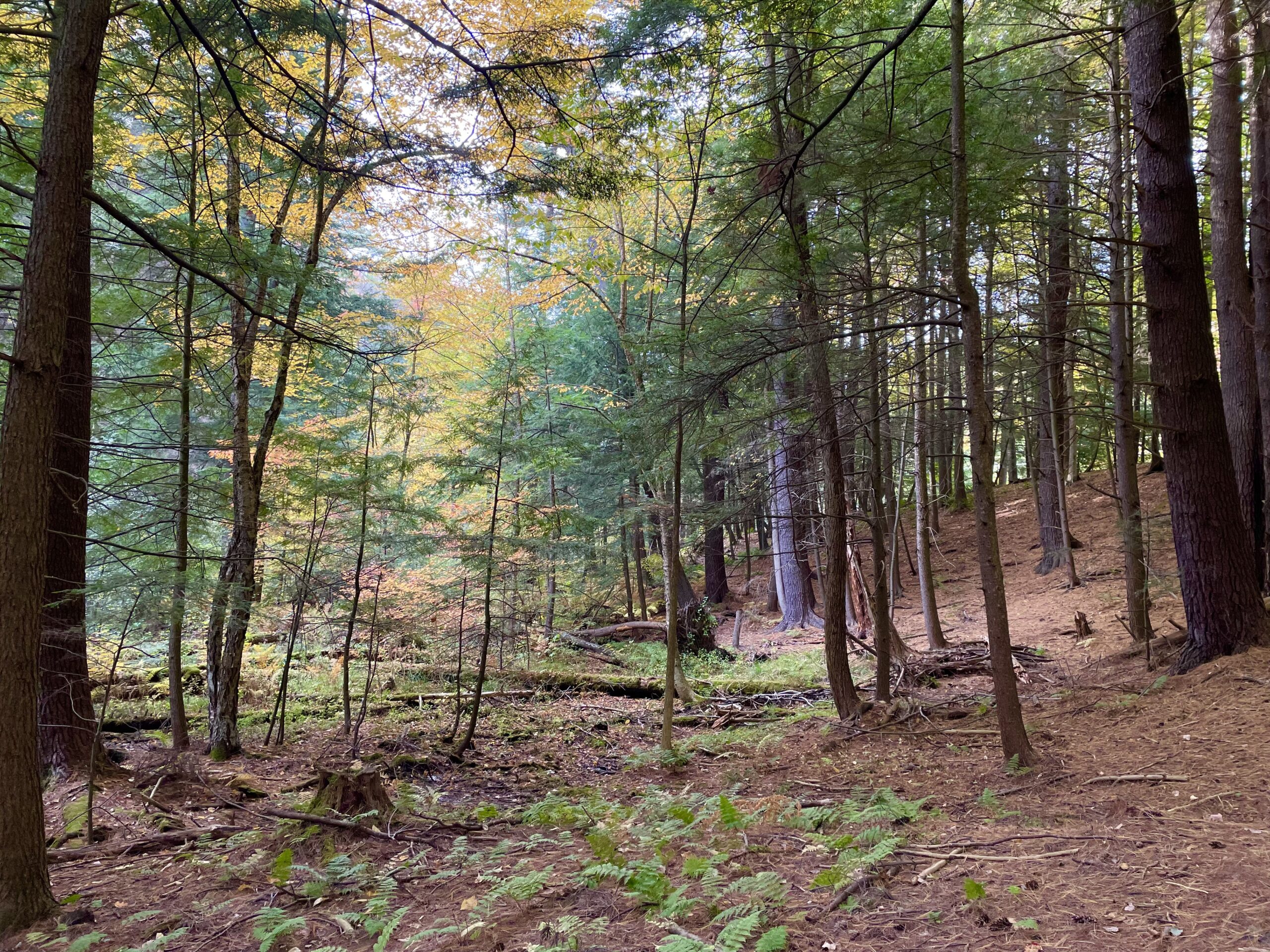
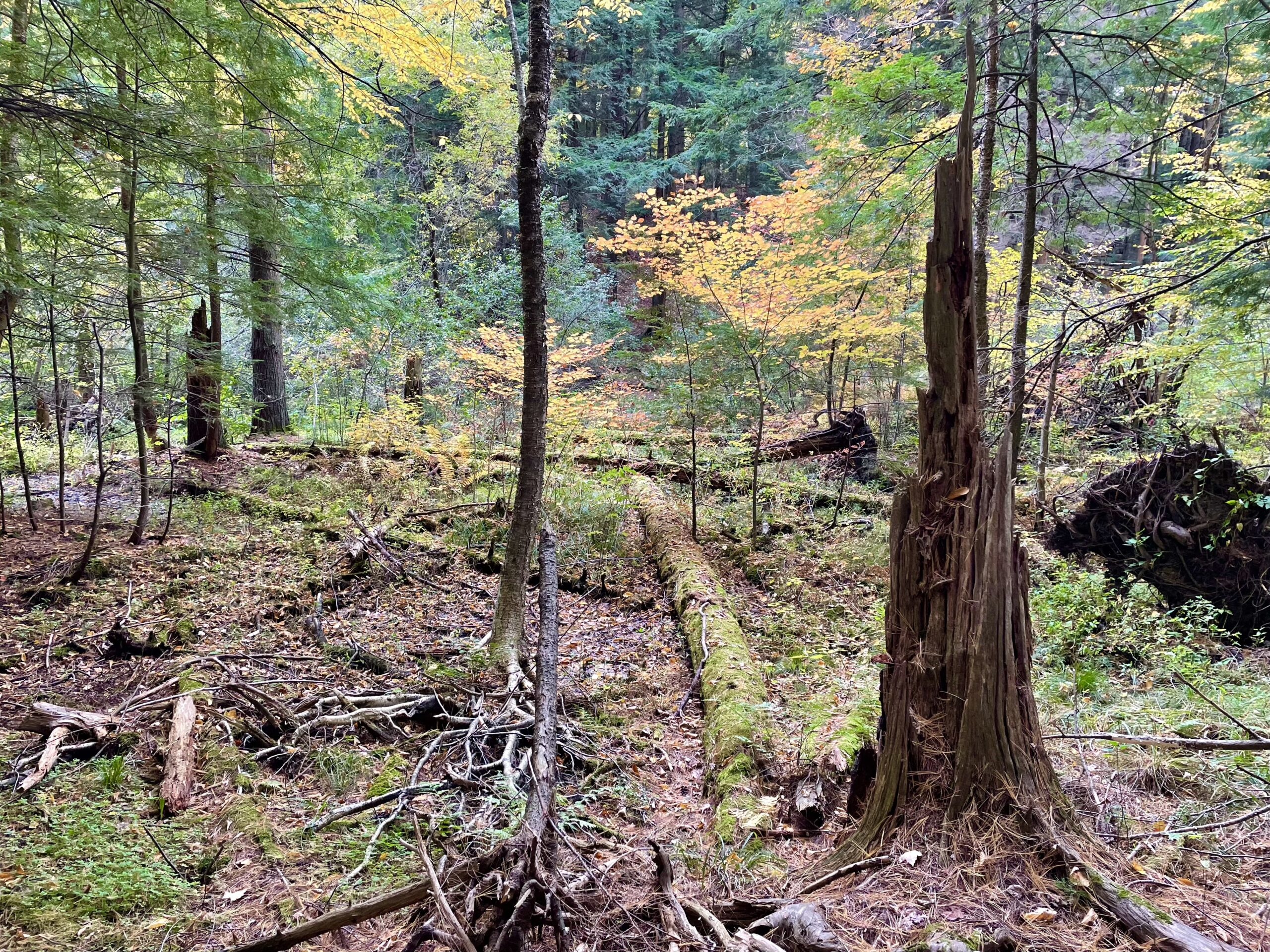
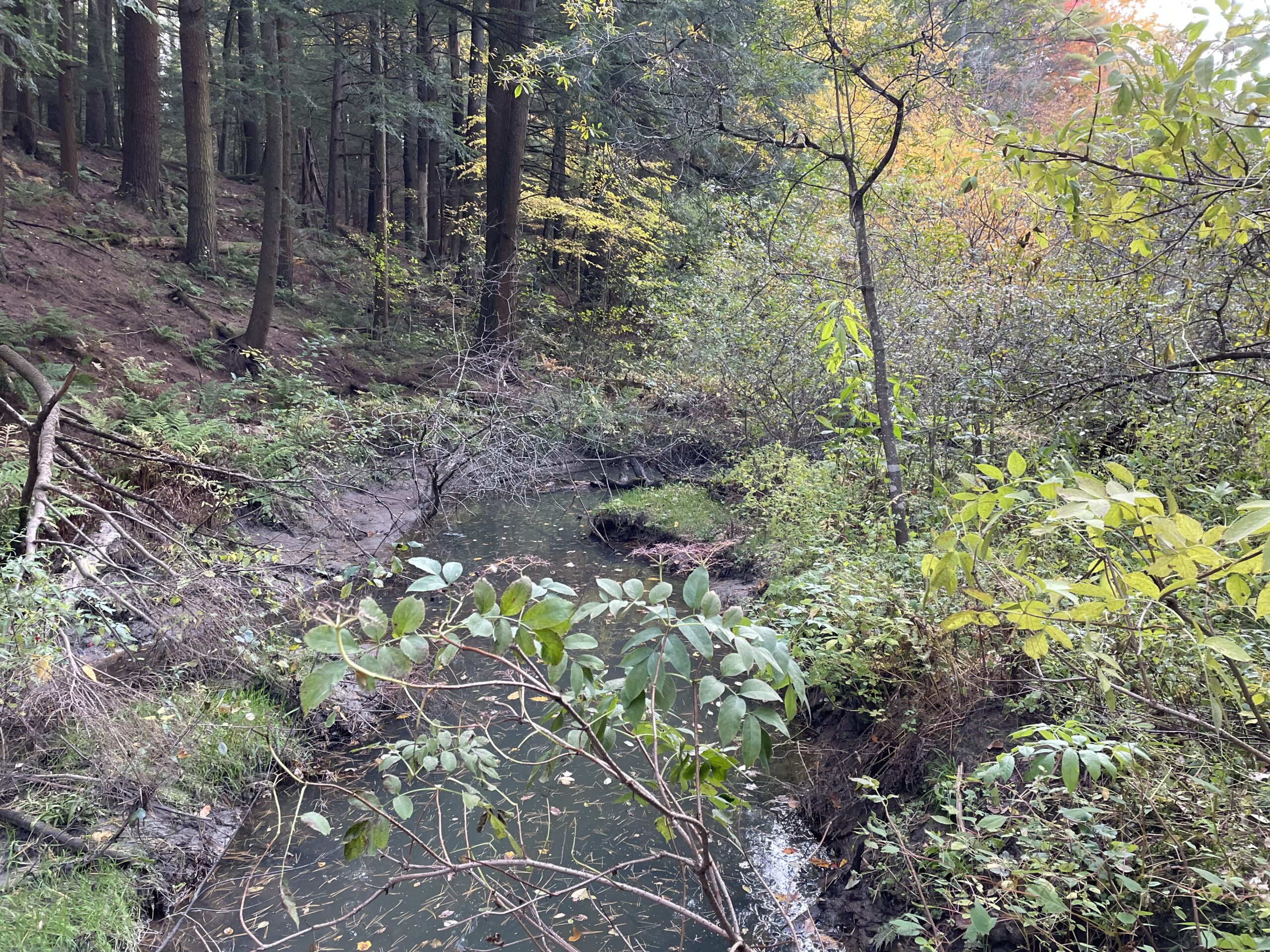
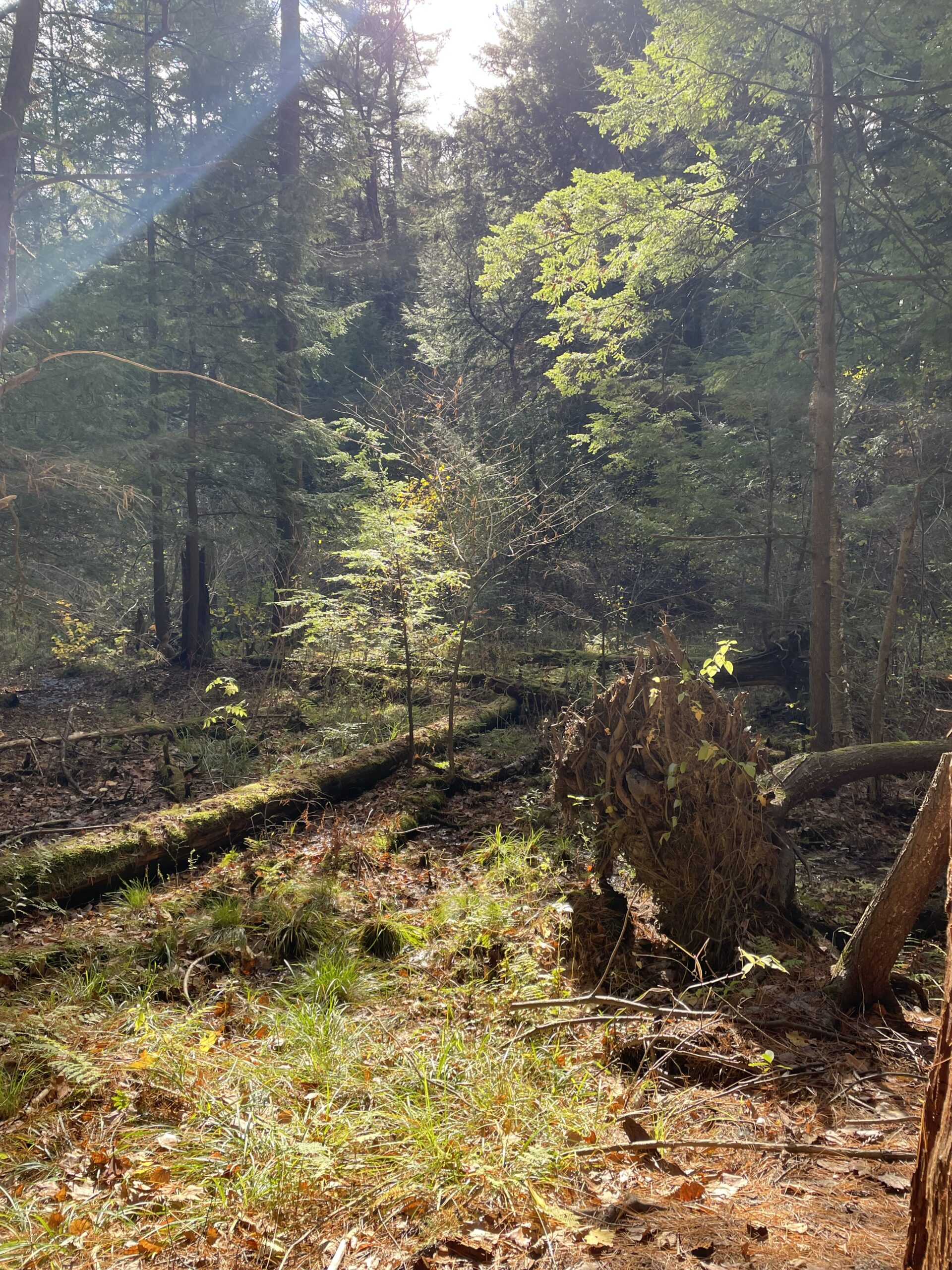
I love being in nature, so I often spend a good portion of my free time exploring Centennial Woods. One day, I was searching for signs of beavers around the beaver pond area and I eventually crossed the stream and stumbled across an area that I would soon choose to be my location for this project. It was perfect, as it consisted of a mature coniferous forested area that transitioned into a bustling wetland area surrounding a major stream. This location presents so much opportunity as it is such a diverse area with a high amount of biodiversity and varying landscape compositions. As fall continues and winter draws nearer, I expect to observe various types of wildlife trekking through this area largely due its stream water source.
Vegetation Description & Plant Species
My location consists of three different vegetation types :
Mature Softwood Forest: This region within the area is a mature softwood forest. Aside from mostly coniferous trees and a handful of deciduous trees, this area lacks a diverse and plentiful vegetation. The only other vegetation in this forest aside from these trees is a fern species.
Tree Species:
Eastern White Pine
Eastern Hemlock
Yellow Birch
Plant Species
Cinnamon Fern
Transition Area: This region is a transition area between the softwood forest and the wetland. It has the richest vegetation and highest biodiversity of all the regions as there is there is a high variety and concentration of plant and tree species.
Tree Species:
Norway Maple
Eastern Hemlock
Yellow Birch
Glossy Buckthorn
Common Buckthorn
American Elm
Plant/Fungi Species:
Longstalk Sedge
Amanita
Cinnamon Fern
Sensitive Fern
Wetland: This region contains a wetland that resides alongside Centennial Brook. Here, there is a rich vegetation that consists primarily of large plant species clusters and very few tree species and saplings.
Tree Species:
Common Buckthorn
Plant Species:
Longstalk Sedge
Sensitive Fern
Cinnamon Fern
Wild Raspberry
November Phenological Changes
Today, I traveled to my location to observe the phenological changes that have occurred.
Quiet Observation: I sat on a fallen log for about 45 minutes to further engage with my surroundings and observe any changes that occurred since my last visit in October. I found this to be similar to be very therapeutic, as my mind slowed and came to only focus on connecting my five senses to the forest. During this time, I melted away from reality as I only allowed my mind to engage with my surroundings. The forest created a rhythmic pattern from the freeway in the distance, various birds chirping, and the breeze blowing through the trees.
Observed Changes:
Wildlife Activity: At this time, I not only observed more wildlife species present in this location, but I also observed more intense foraging for food by each species
Blue jay: I observed ne blue jay frantically foraging around my location for nearly twenty minutes straight
Gray squirrel: I observed two gray squirrels foraging and storing food near the stick fort in my area
Woodpecker: I observed two wood peckers hopping from eastern hemlock trees in search of insects
Foliage: All tree and plant species had shed their leaves and pine needles except for…
Eastern hemlock
Longstalk sedge
Glossy buckthorn
Intermediate ferns
Organic Material: There was a significant increase in organic material within all regions of my area due to foliage shedding. The primary organic material came from…