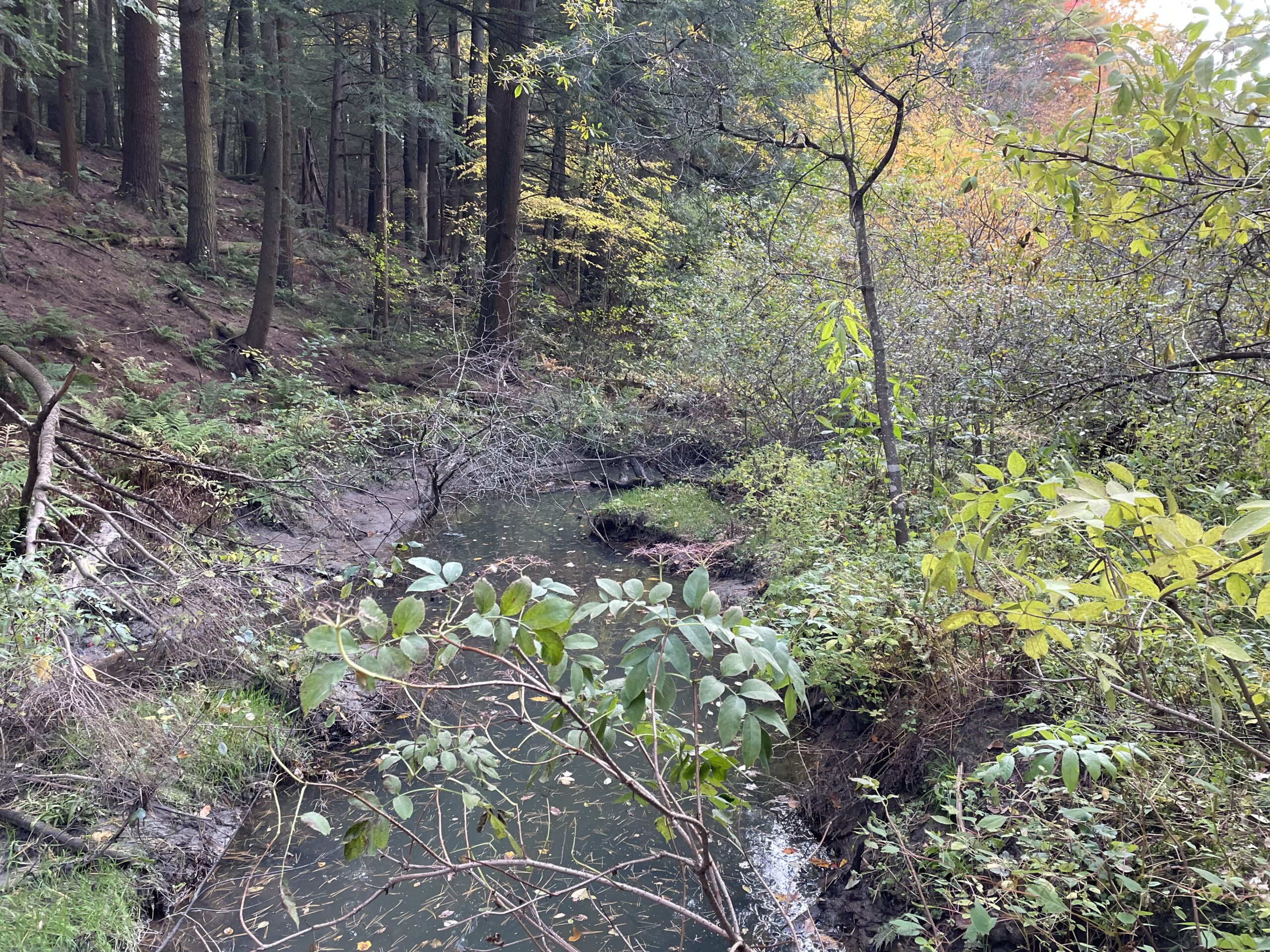
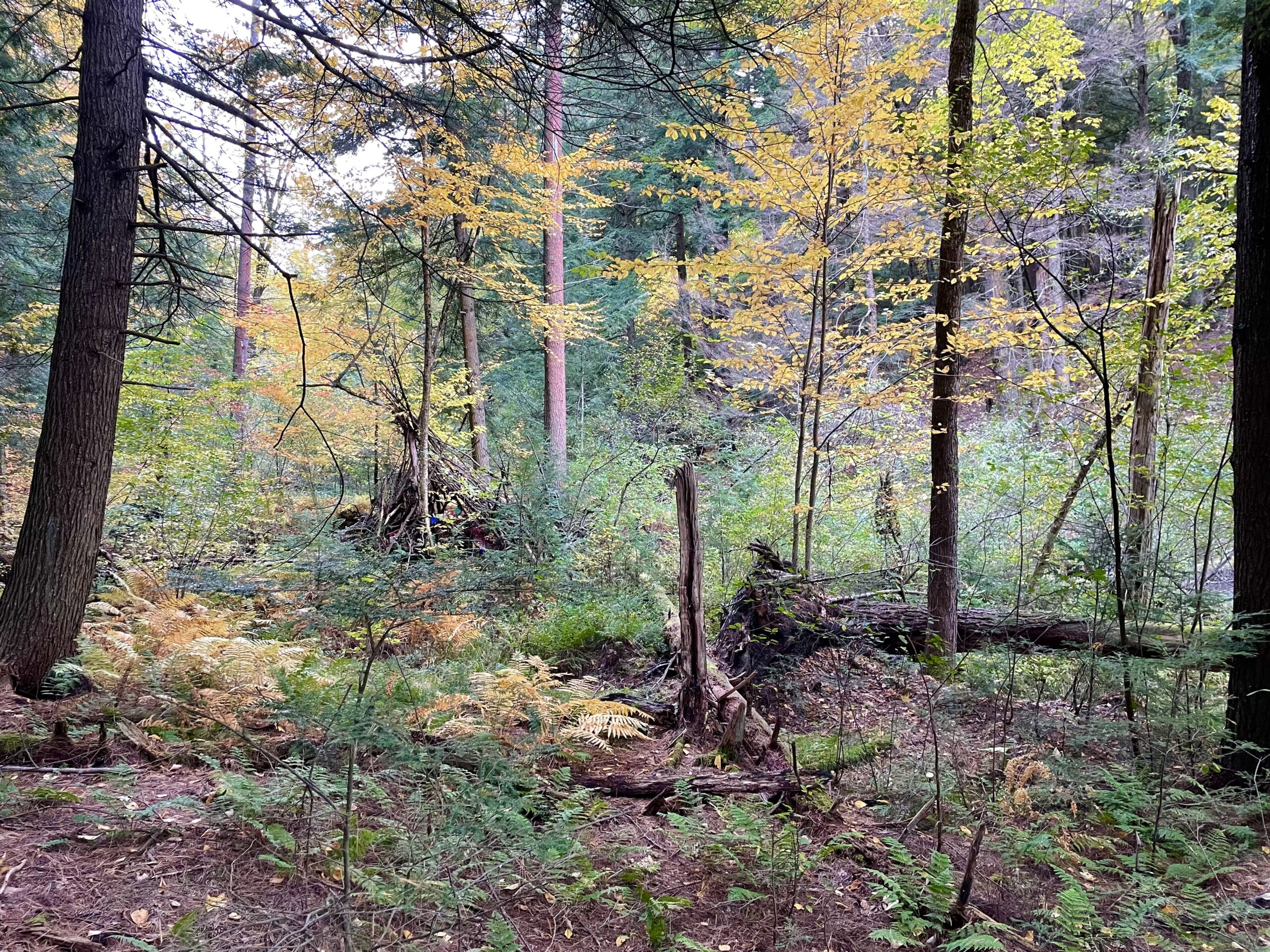
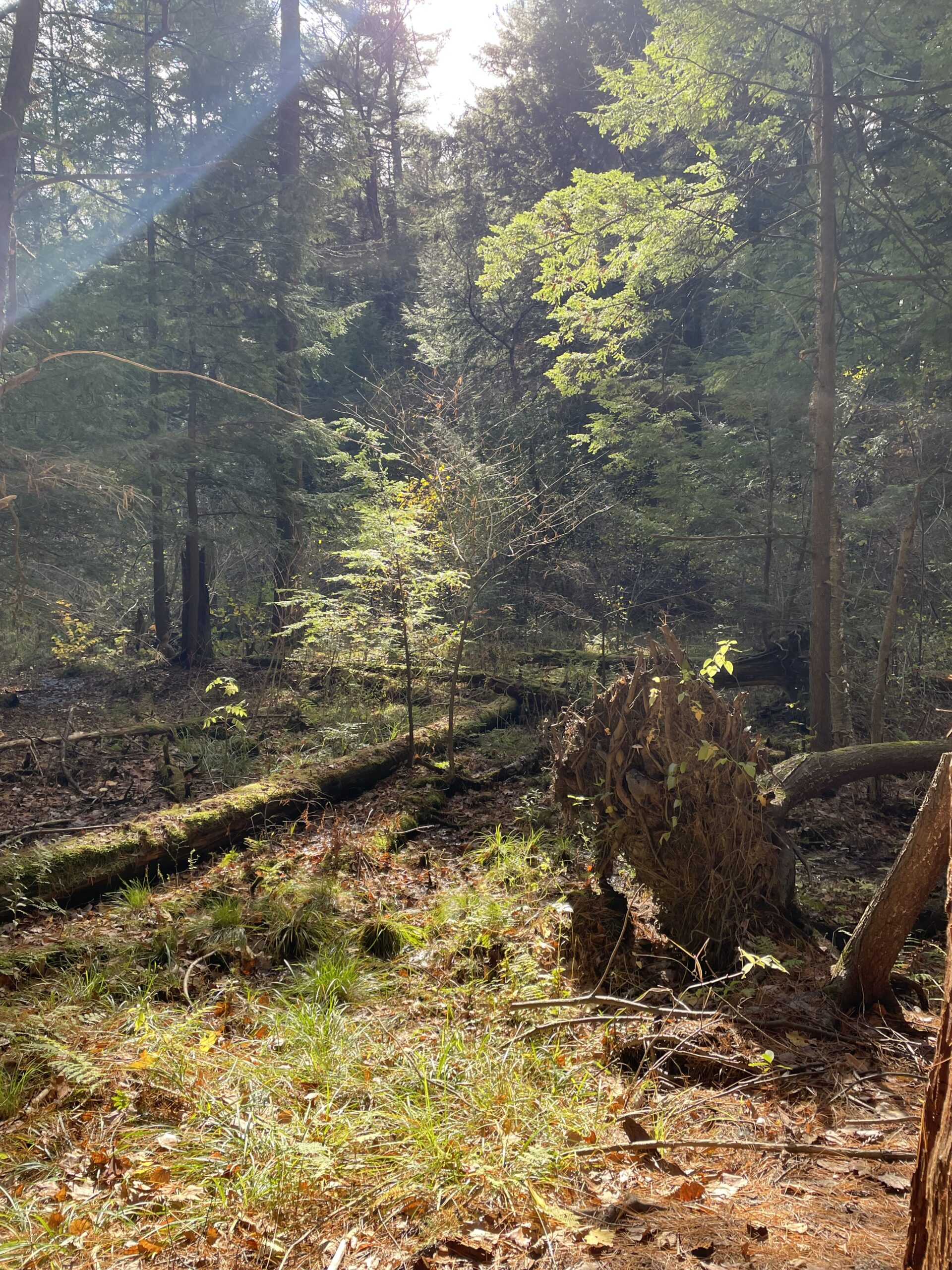
My place for this project is located within Centennial Woods. It resides along one of the two main Centennial brook’s streams created by bifurcation. In order to find this area, first, one must enter the main Centennial Woods entrance found across from the UVM parking lots. From there, follow the main path that NR-1 students used to reach the final location of the first NR-1 lab. Follow the trail that leads upwards from that area until you see a side trail that is found within a cluster of black cherry trees. Travel down this until you find another side path that trails off to the left, and then follow this path accordingly. Just beyond a large fort made of branches, you will find my place!
Phenology Location
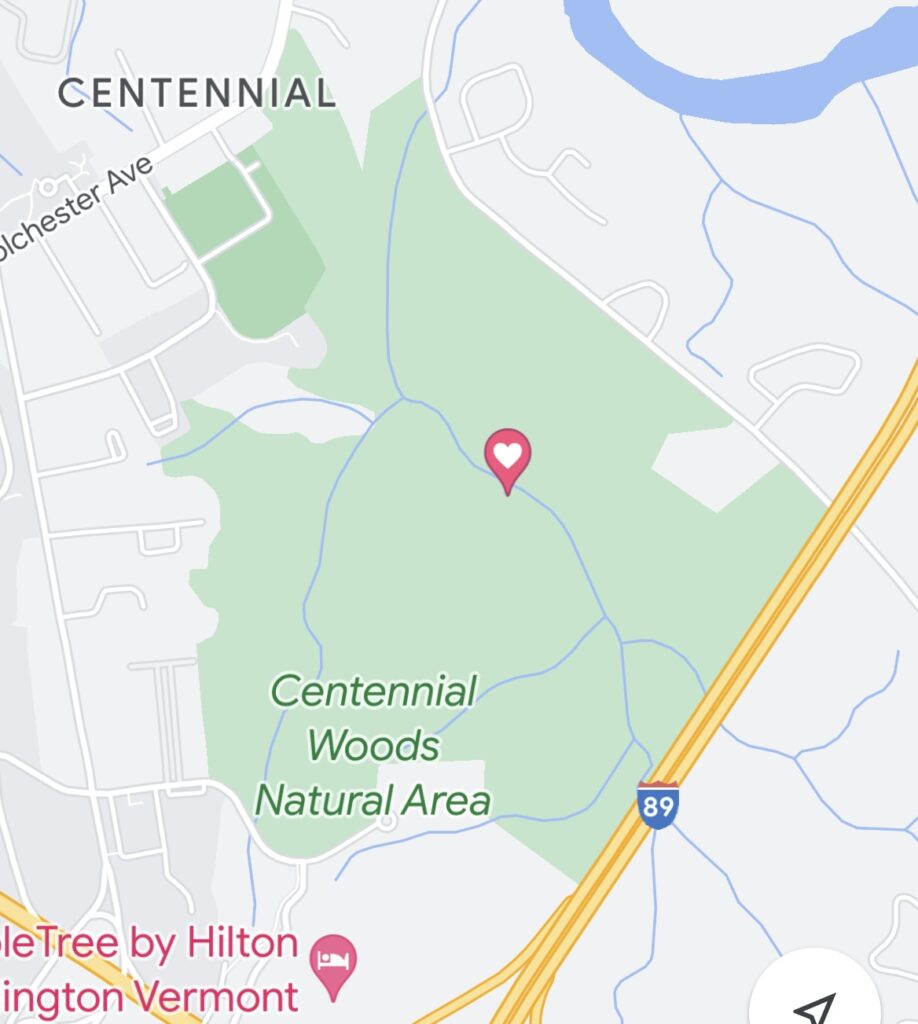
I love being in nature, so I often spend a good portion of my free time exploring Centennial Woods. One day, I was searching for signs of beavers around the beaver pond area and I eventually crossed the stream and stumbled across an area that I would soon choose to be my location for this project. It was perfect, as it consisted of a mature coniferous forested area that transitioned into a bustling wetland area surrounding a major stream. This location presents so much opportunity as it is such a diverse area with a high amount of biodiversity and varying landscape compositions. As fall continues and winter draws nearer, I expect to observe various types of wildlife trekking through this area largely due its stream water source.
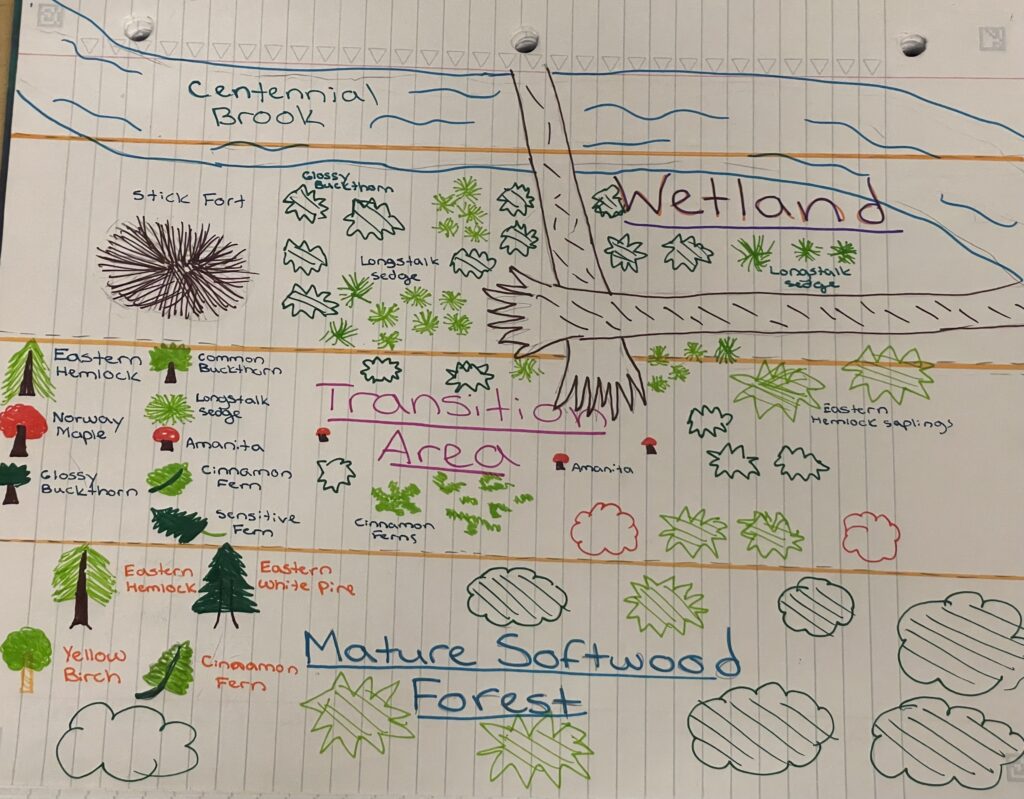
Vegetation Description & Plant Species
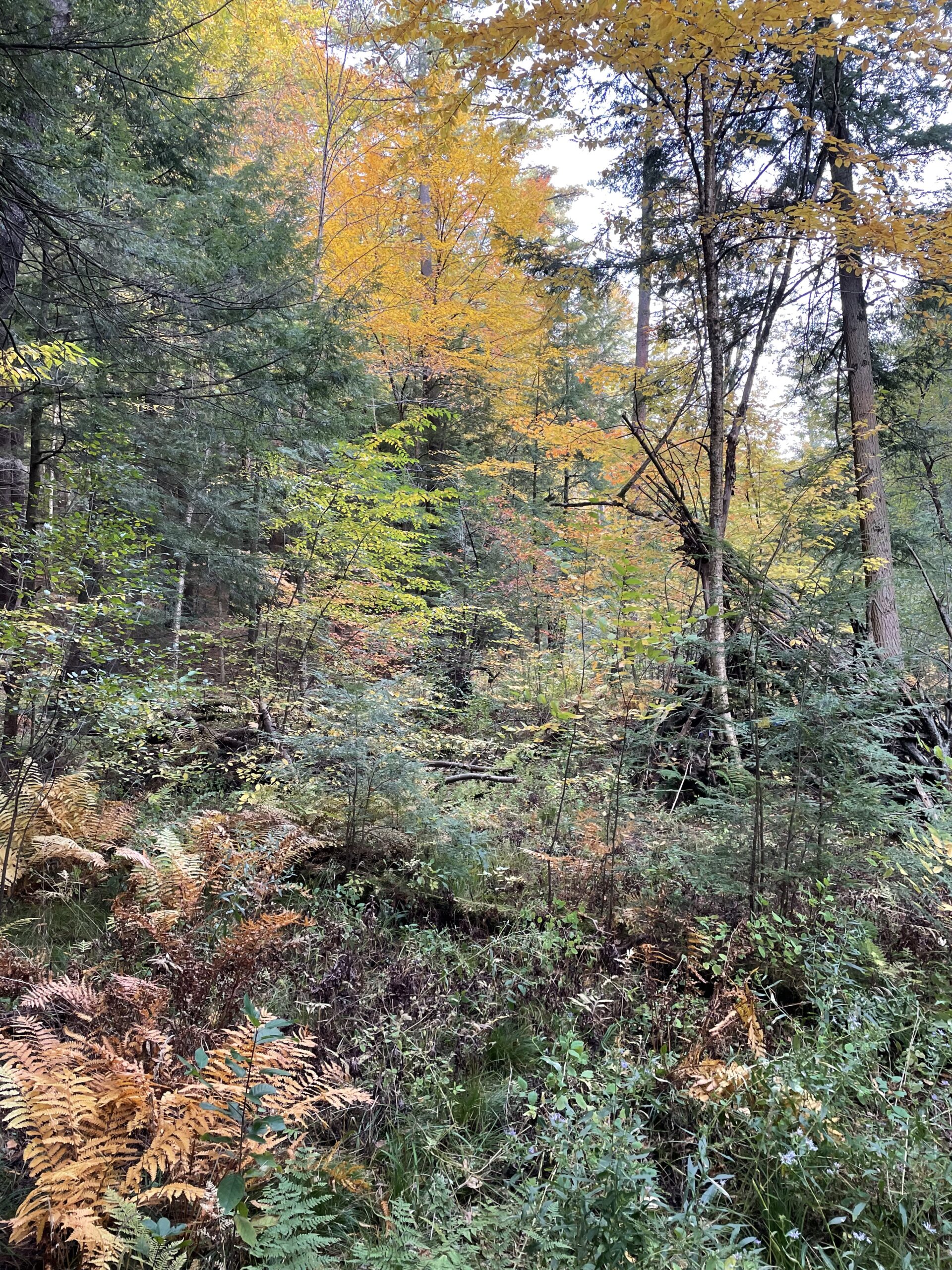
My location consists of three different vegetation types :
- Mature Softwood Forest: This region within the area is a mature softwood forest. Aside from mostly coniferous trees and a handful of deciduous trees, this area lacks a diverse and plentiful vegetation. The only other vegetation in this forest aside from these trees is a fern species.
- Tree Species:
- Eastern White Pine
- Eastern Hemlock
- Yellow Birch
- Plant Species
- Cinnamon Fern
- Tree Species:
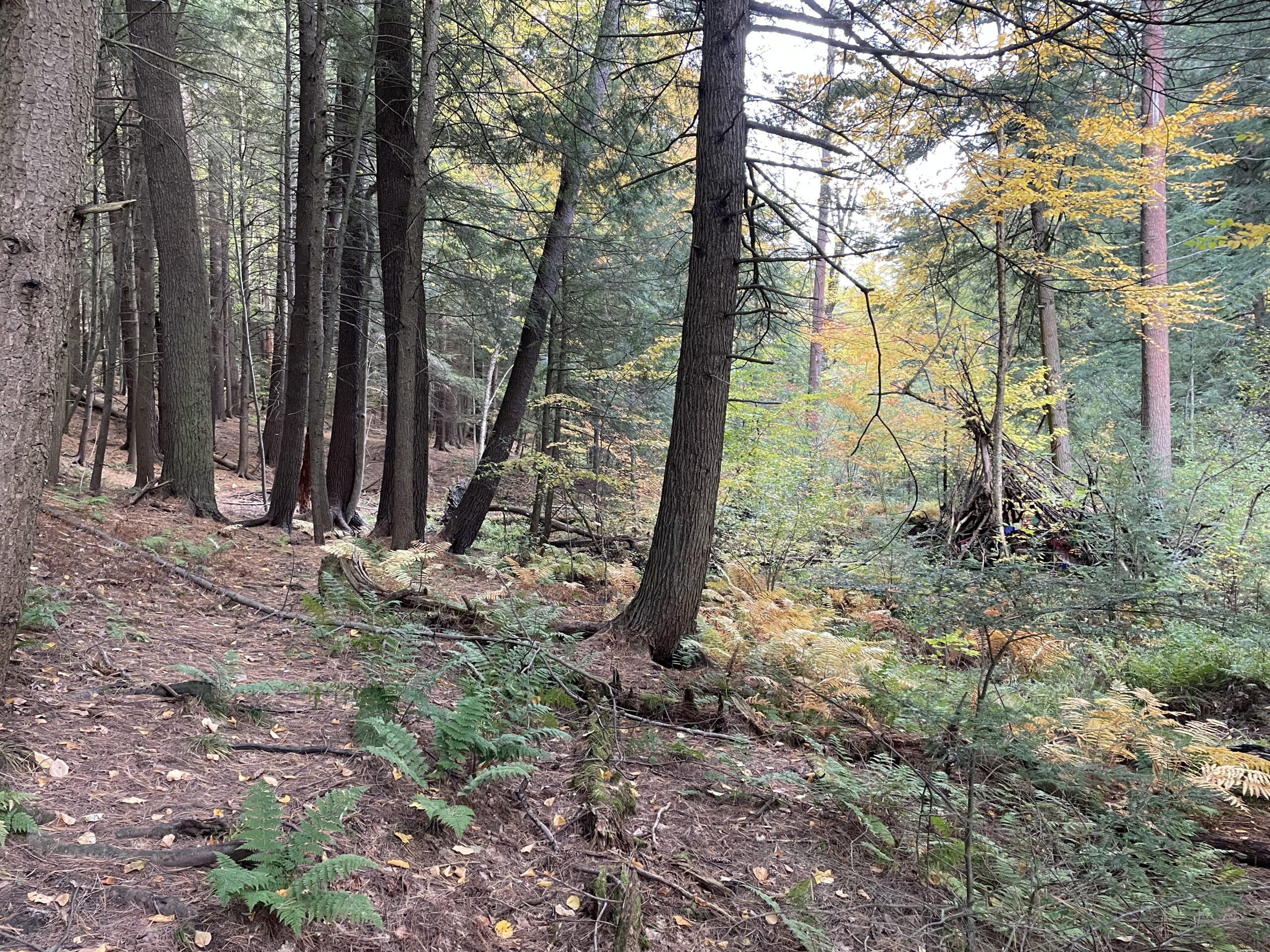
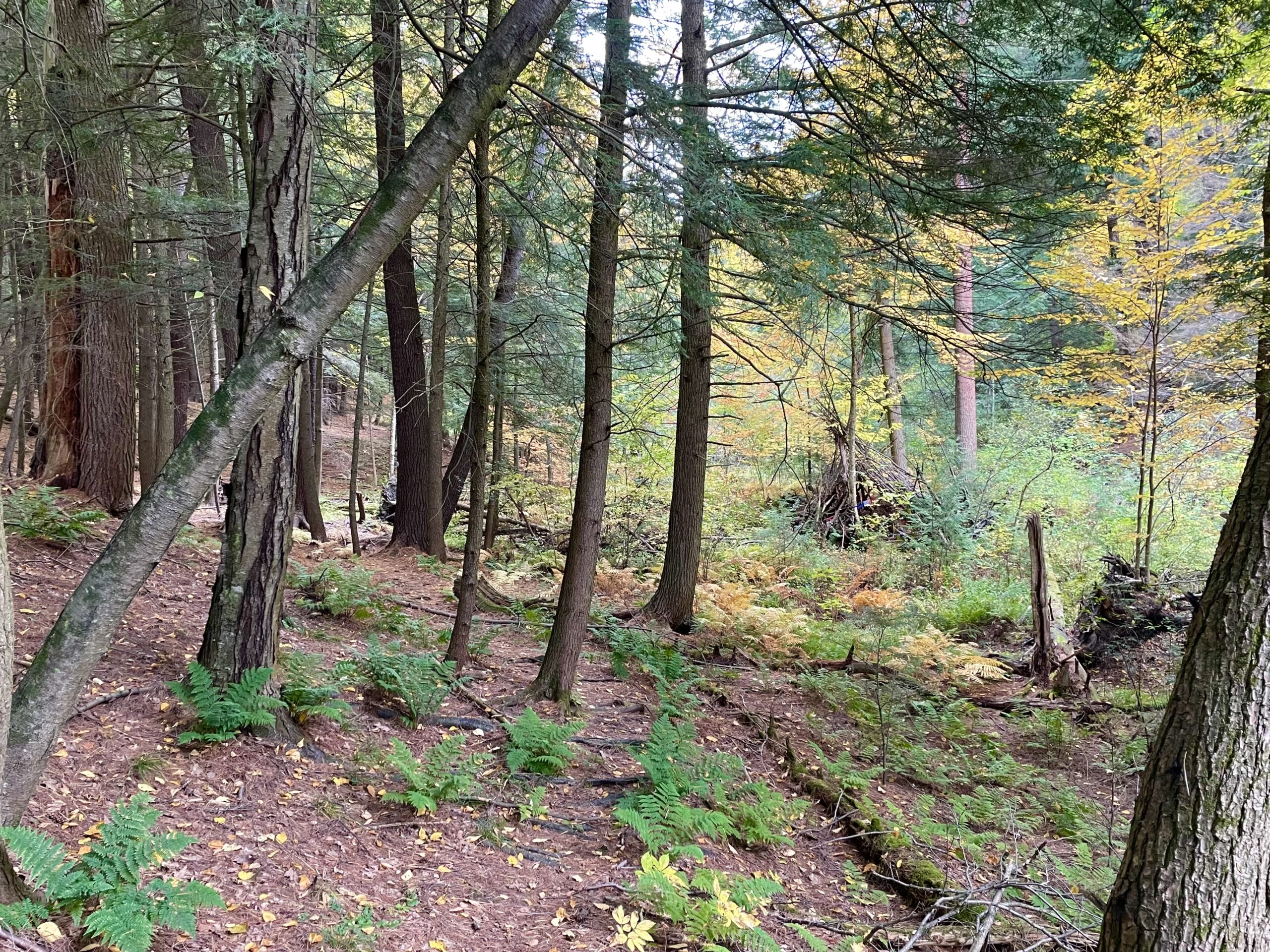
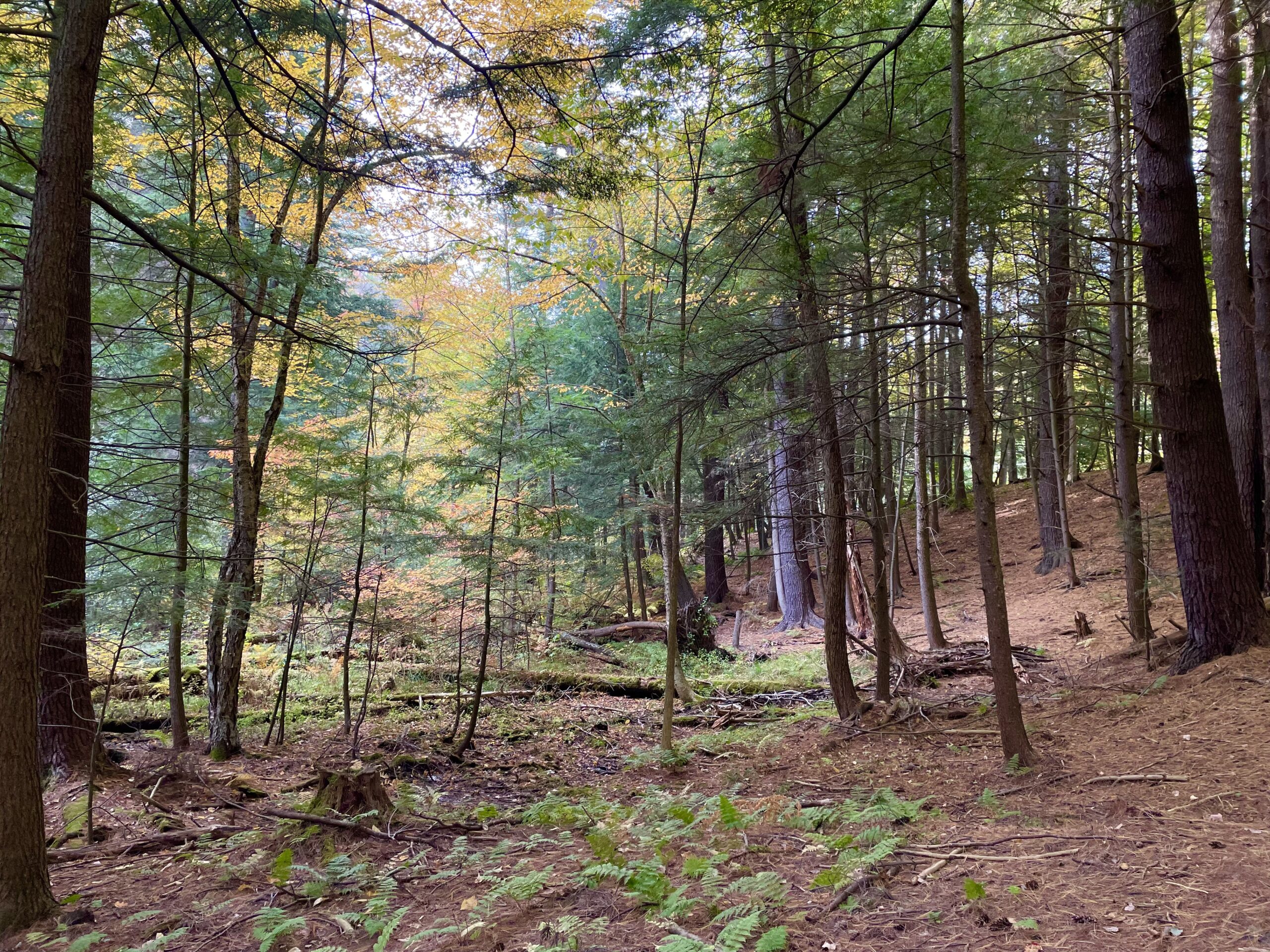
- Transition Area: This region is a transition area between the softwood forest and the wetland. It has the richest vegetation and highest biodiversity of all the regions as there is there is a high variety and concentration of plant and tree species.
- Tree Species:
- Norway Maple
- Eastern Hemlock
- Yellow Birch
- Glossy Buckthorn
- Common Buckthorn
- American Elm
- Plant/Fungi Species:
- Longstalk Sedge
- Amanita
- Cinnamon Fern
- Sensitive Fern
- Tree Species:
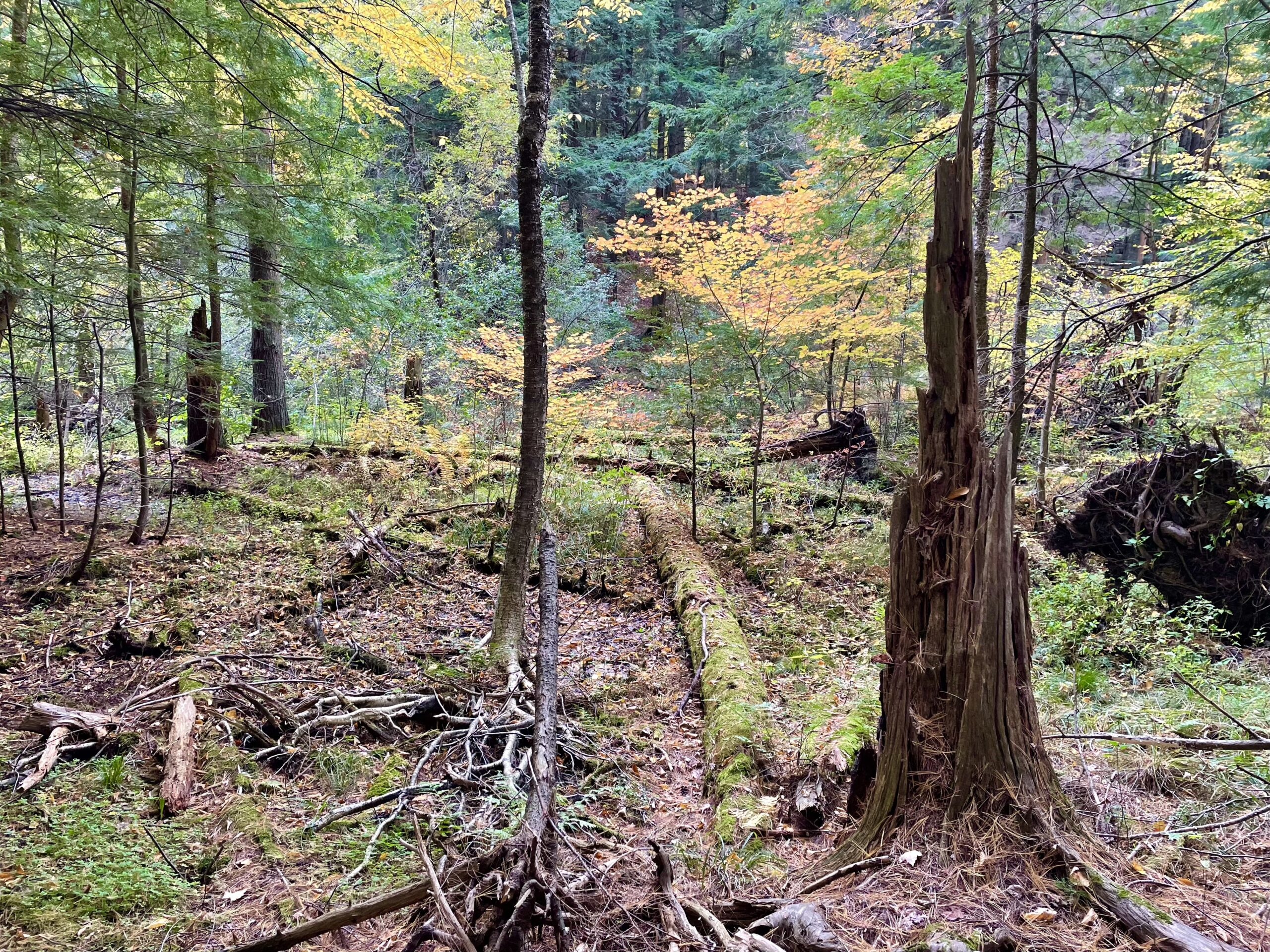
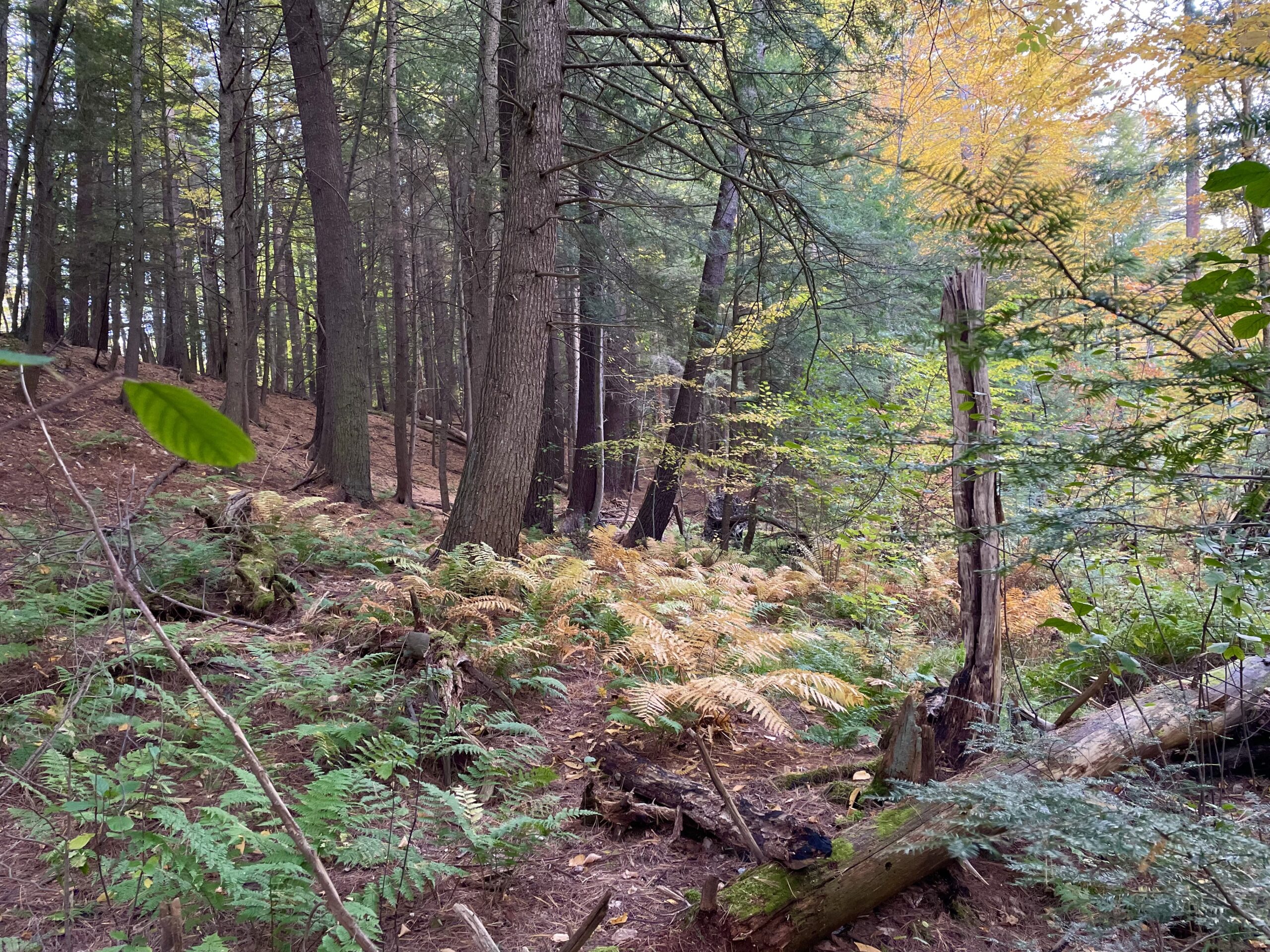
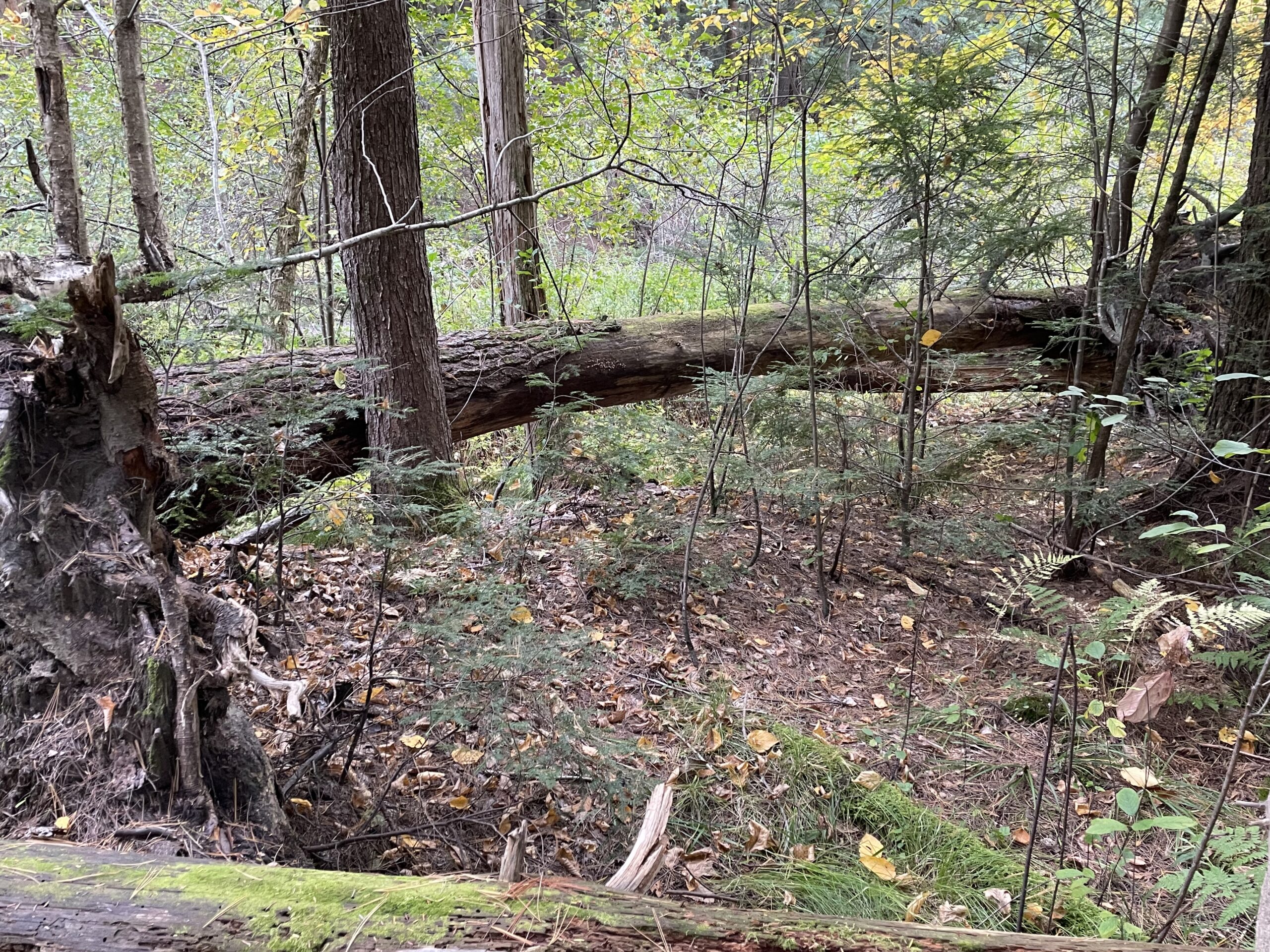
- Wetland: This region contains a wetland that resides alongside Centennial Brook. Here, there is a rich vegetation that consists primarily of large plant species clusters and very few tree species and saplings.
- Tree Species:
- Common Buckthorn
- Plant Species:
- Longstalk Sedge
- Sensitive Fern
- Cinnamon Fern
- Wild Raspberry
- Tree Species:
November Phenological Changes
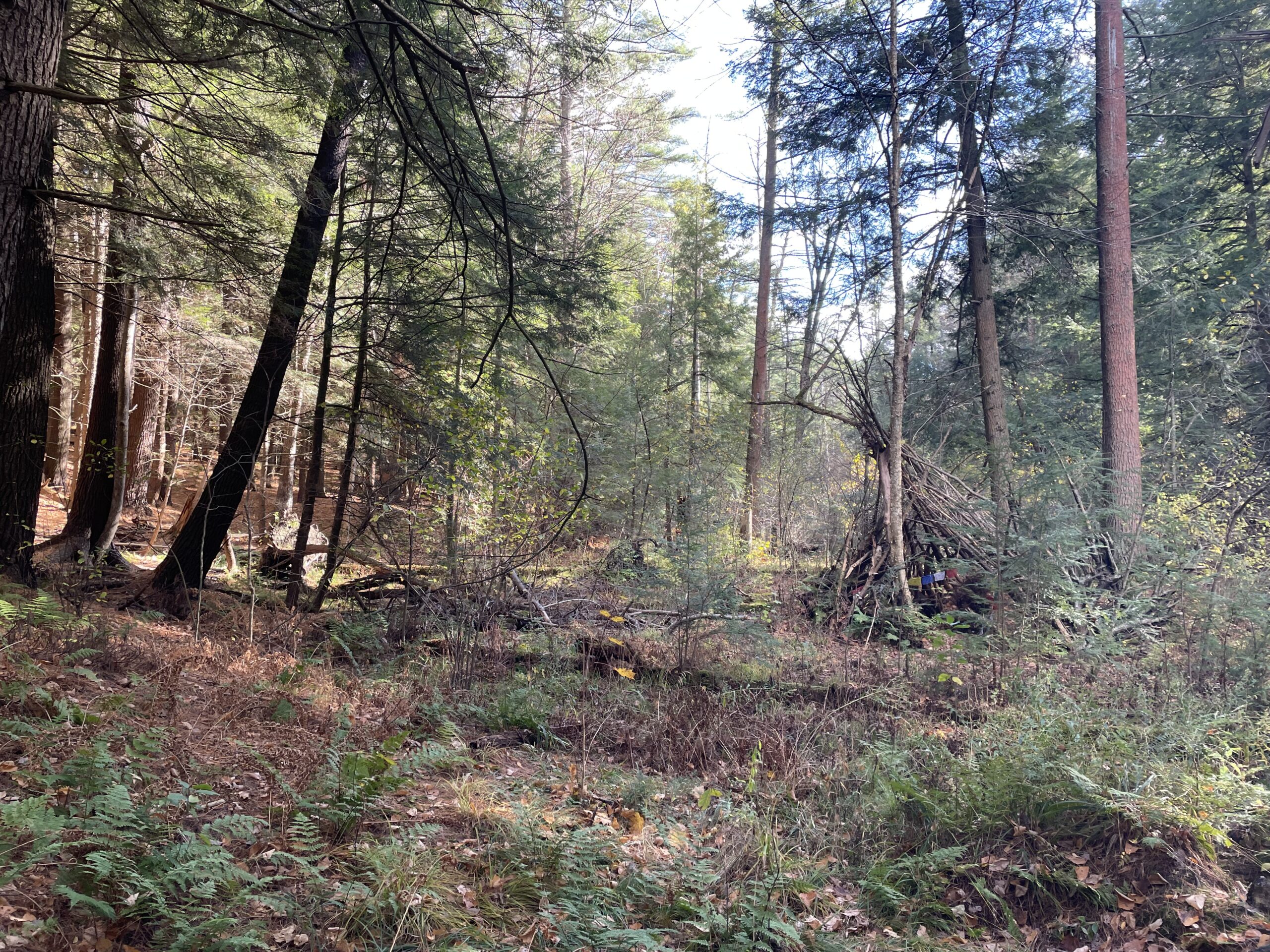
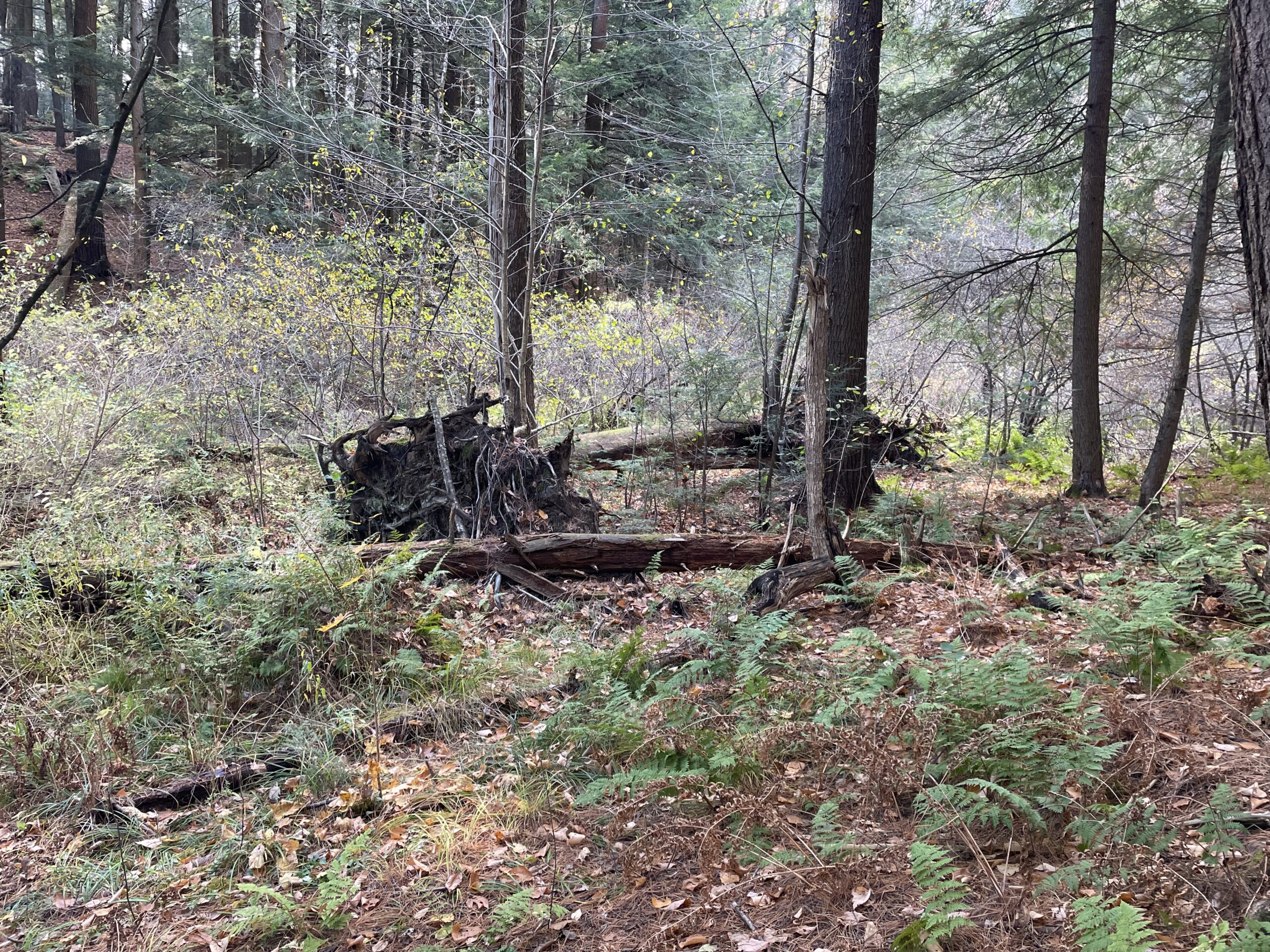
Today, I traveled to my location to observe the phenological changes that have occurred.
Quiet Observation: I sat on a fallen log for about 45 minutes to further engage with my surroundings and observe any changes that occurred since my last visit in October. I found this to be similar to be very therapeutic, as my mind slowed and came to only focus on connecting my five senses to the forest. During this time, I melted away from reality as I only allowed my mind to engage with my surroundings. The forest created a rhythmic pattern from the freeway in the distance, various birds chirping, and the breeze blowing through the trees.
Observed Changes:
- Wildlife Activity: At this time, I not only observed more wildlife species present in this location, but I also observed more intense foraging for food by each species
- Blue jay: I observed ne blue jay frantically foraging around my location for nearly twenty minutes straight
- Gray squirrel: I observed two gray squirrels foraging and storing food near the stick fort in my area
- Woodpecker: I observed two wood peckers hopping from eastern hemlock trees in search of insects
- Foliage: All tree and plant species had shed their leaves and pine needles except for…
- Eastern hemlock
- Longstalk sedge
- Glossy buckthorn
- Intermediate ferns
- Organic Material: There was a significant increase in organic material within all regions of my area due to foliage shedding. The primary organic material came from…
- Eastern white pine
- Yellow birch
- Cinnamon fern
Hi, this is a comment.
To get started with moderating, editing, and deleting comments, please visit the Comments screen in the dashboard.
Commenter avatars come from Gravatar.