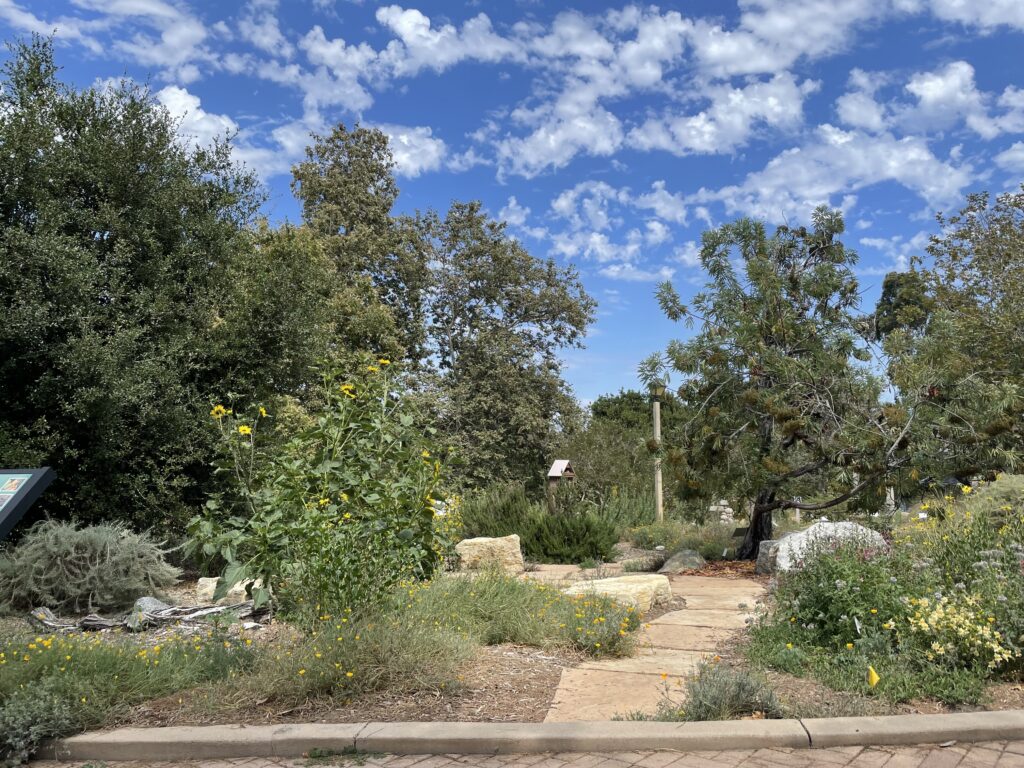
For my mini-project I wanted to do a video tour of my site, while zooming in on specific buildings, plants, and animal species. I wanted to show that even though it’s a small little garden, it has a lot to offer to anyone willing to see.
This connected me to my site because I looked into the history of the garden and I became even more familiar with the garden itself. I had to walk up and down it multiple times recording and also looking closely for different species to record and how to record it. And doing that made me more familiar with the layout of the garden and also the species within the garden which overall makes you connect more to a place. And specifically, I realized that my park is recycling water, which makes me appreciate it even more to know they’re doing their part for the environment. I didn’t realize there were so many insects using the sunflowers. It’s the first time I saw a caterpillar here too. I had seen the black phoebe bird multiple times but I never knew what type of bird it was, I always thought it was a chickadee so when I researched it for this project, I was surprising to learn it wasn’t. But overall just spending time in the garden and having to really pay attention to all the details of it and record all of it really makes me feel a lot more connected to it.
This project expanded my comfort zone because I am super self conscious about my voice and about being on videos and also have a lot of anxiety going out in public, especially by myself, let alone recording a video and recording myself talking. And I knew that when I planned this video, but I wanted to challenge myself. This was really a sort of test for me. While filming the one scene of me talking out loud to the camera there was a family by the top of the garden and it took me a few minutes to work up the courage to say the lines out loud. That sounds kinda stupid now that it’s over with and as I’m typing this but at the time it took me some time haha. Even just recording the tour video I felt self conscious since there were quite a few people at first and I felt like they were judging me. I also didn’t want to record them without permission so I kept having to angle the camera away from people while walking/recording the path which was awkward. I knew this video would require voice overs, and I could’ve done something else like drawing that doesn’t involve my voice or me making an appearance, but I wanted to challenge myself. Even though I felt anxiety and self-conscious while filming this, I did it anyway and I’m glad I did because now I know I can do things like this.
Sources:
Information signs at the Manhattan Beach Botanical Garden
Sunday July 3, 2022. 2:45 pm. the weather is sunny and warm outside.
2. Something that is new to me that I noticed was next to the wooden shed there was a sunflower, just one sunflower. It is pretty large too. I wonder why it’s there and why there is only one and not more. It’s also in an open space on wood chips and there’s no other plants around it. I thought that was rather interesting and kind of strange. I am able to explore a small area that I didn’t go to before because there’s usually people in that area for summer camp but since it’s Sunday there wasn’t anyone there. In this area there’s a little stream of water thats pretty cool. I wonder if it’s natural or if someone built it. And there’s a table here where you can eat lunch and theres even a roof for shade too. This table is enclosed by a stone circle barrier which gives it a cozy feel. The park definitely feels a lot more quiet and peaceful without the usual campers here.
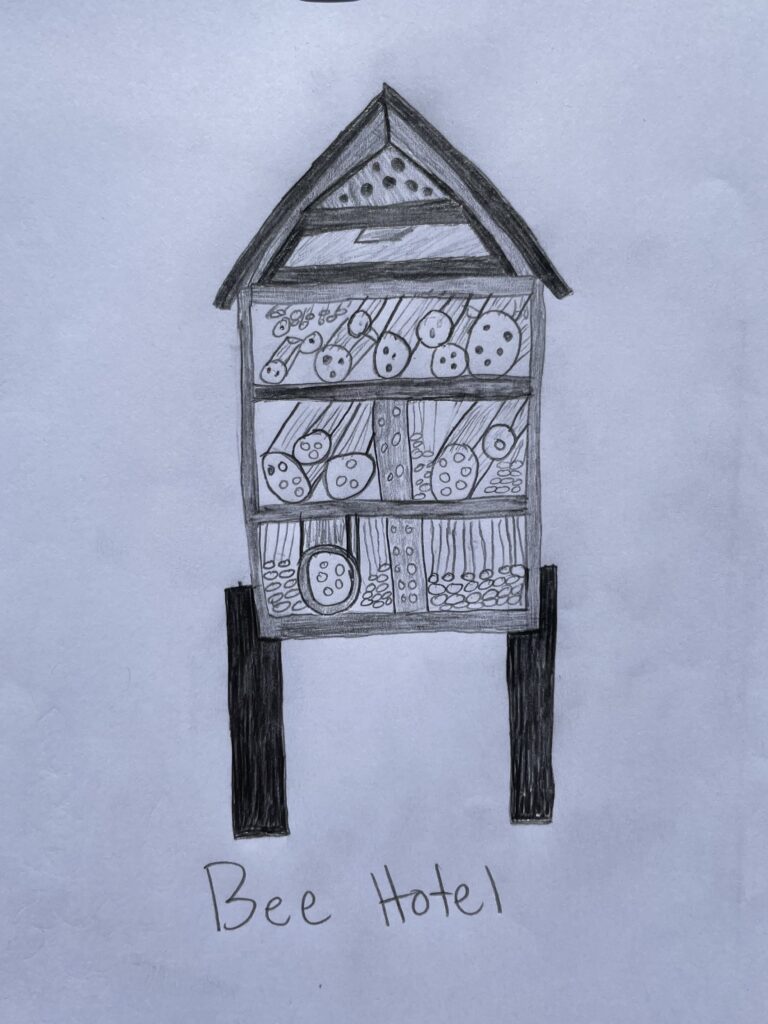
3. Something that is definitely intriguing at my site is there is this “bee hotel” and each time I wonder why it’s there. It’s curious to me because it’s made of wood logs and some are tiny and some are bigger so I wonder why that is. And since this is something that always gets my attention whenever I go to the park, I’ll share it here. According to the signage, solitary tunnel nesting bees use holes of dead trees, crevices underneath rocks or bark, and hollow stems of twigs in the wild. This was built because solitary bee numbers are declining due to lack of natural nesting areas and pesticides. And so depending on the species of bee, egg-laying may take place in fall or spring in this “hotel”. The eggs develop inside the tube until the larvae is mature and ready to emerge. As for the different size logs, this is to accommodate the sizes of different tunnel-nesting bee species. A solitary bee may use added materials like clay and soft leaves and collect pollen and leave it in the tunnel.
4.
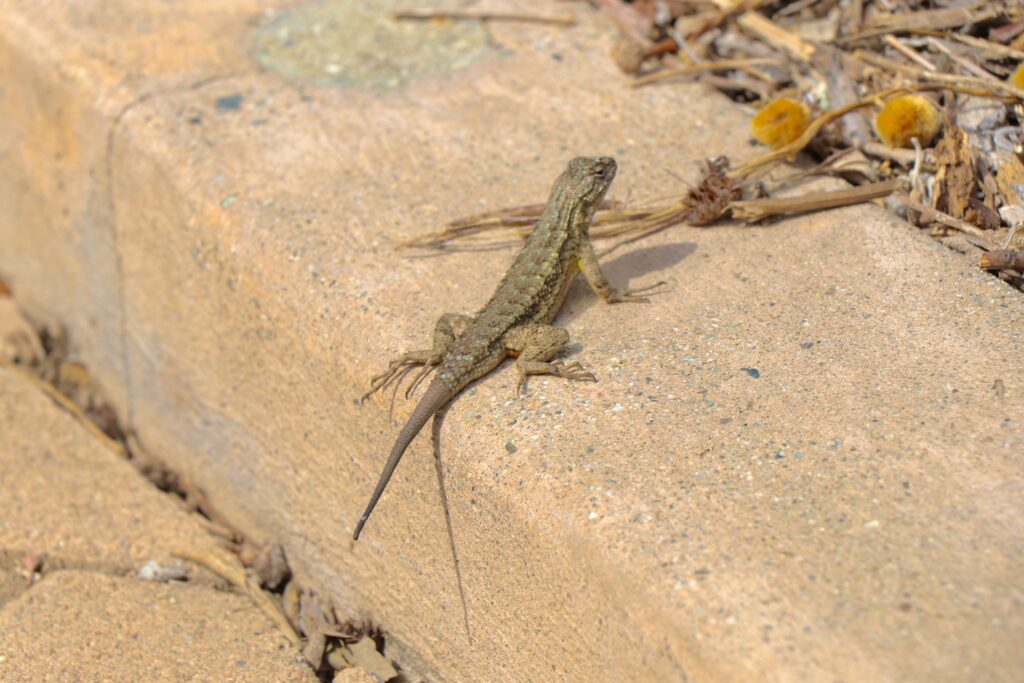
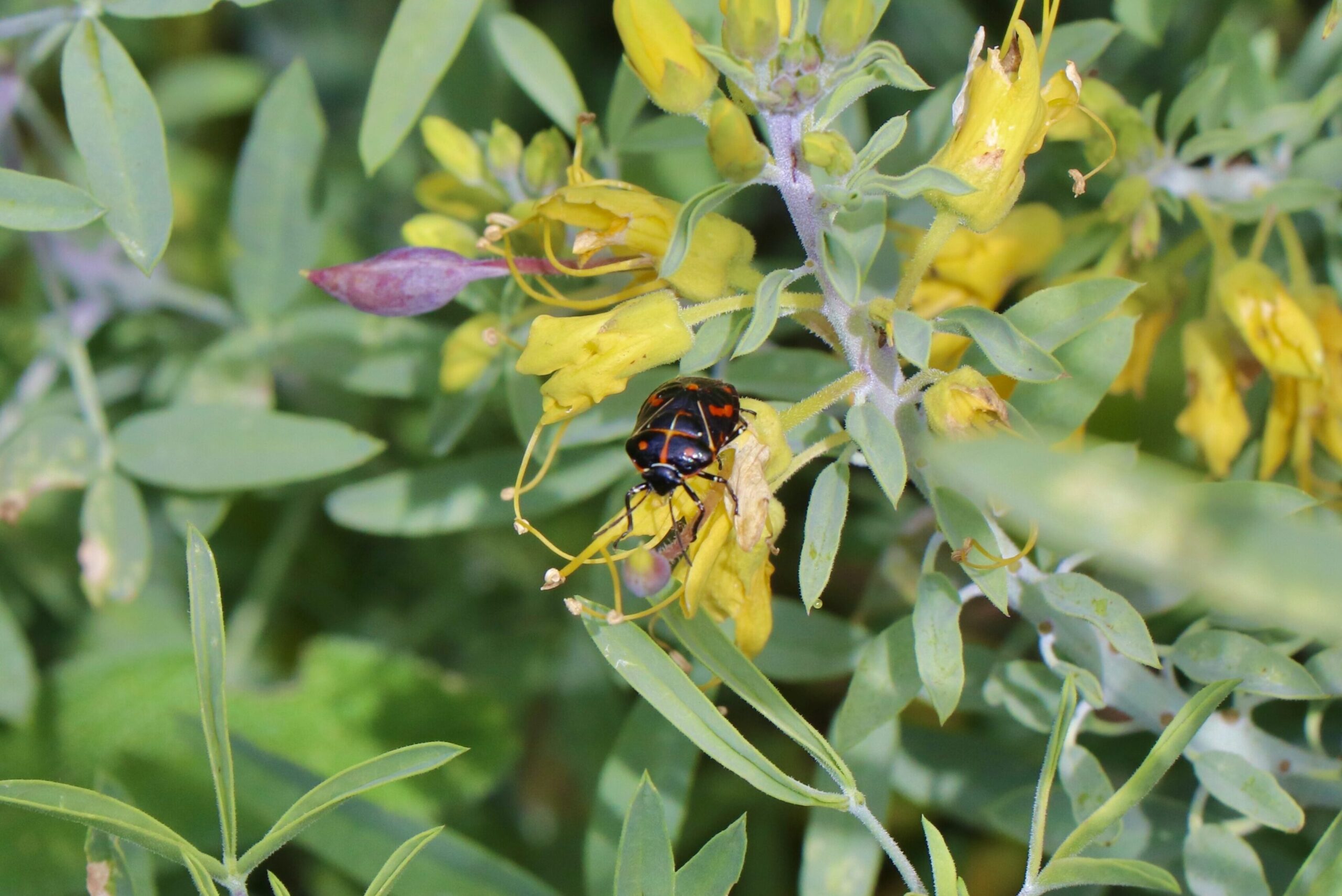
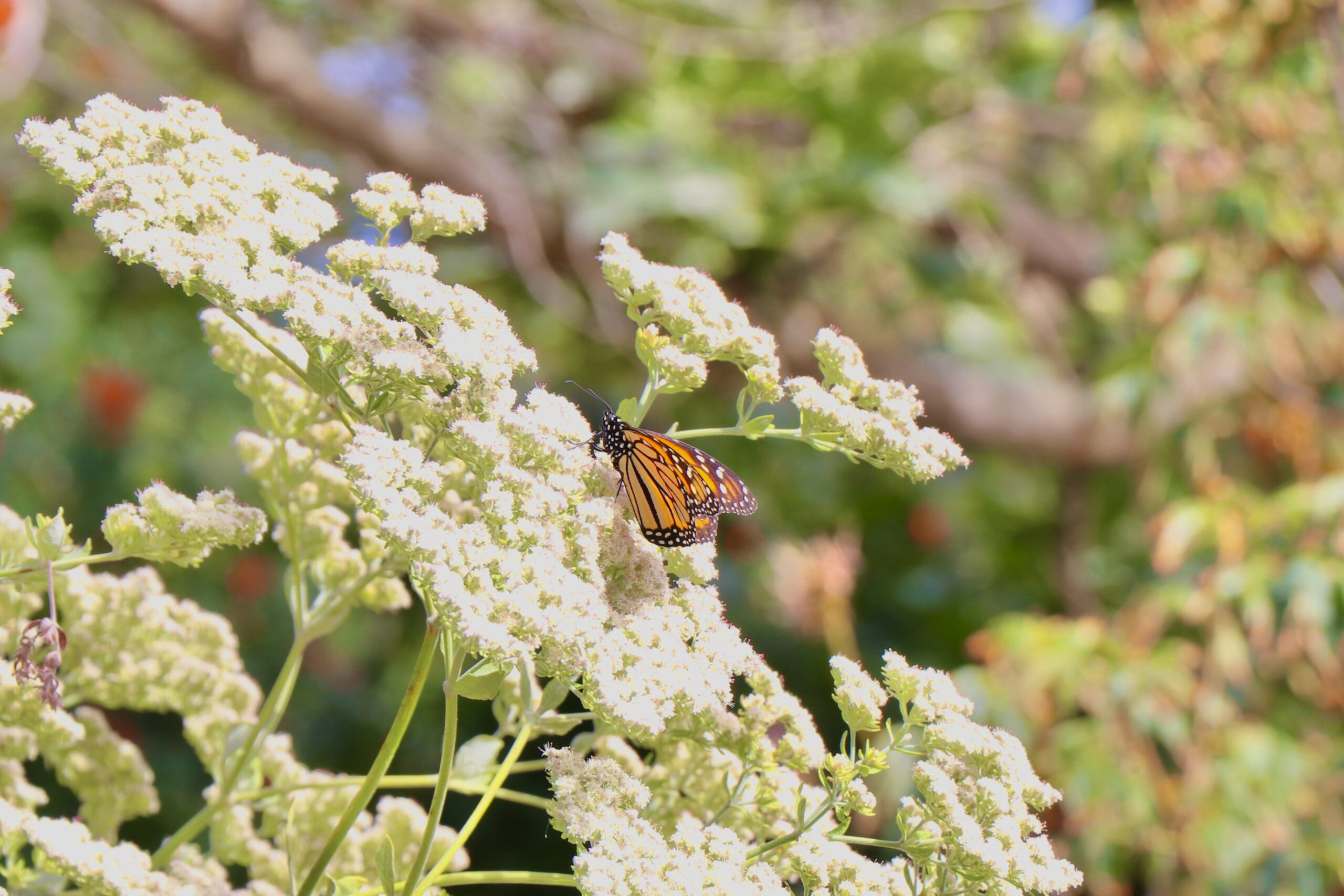
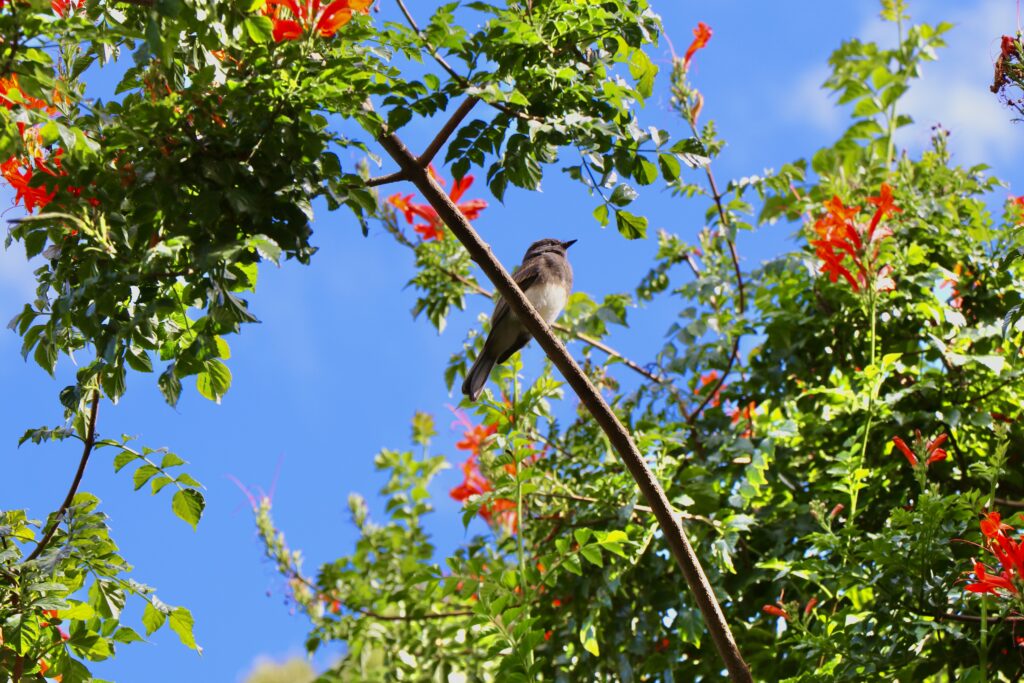
The subject of this photo is the lizard. I see lizards running around all the time in this botanical garden so I definitely wanted to get a good picture of one. I thought this species of lizard was especially cool because it looks like it has little blue and green dots on its back and so I waited til I found one resting in the sun to get good lighting. The subject of this photo is the squirrel. I watched it climb up and down the tree and I took lots of pictures of it but I wanted to get one that where the squirrel was in full view and not covered by branches. So I waited and finally got an opening with a perfect shot and I just thought its pose was so cute so that’s why I chose it. The subject of this photo is the Harlequin Bug. I saw this species of bug the first time I came to this botanical garden for the first assignment and so I knew they were out there and I wanted to get a good picture of one. It took a while to find one and when I did it was crawling all around the flower so it was hard to get a good shot at first and eventually it crawled on top of the flower, I took the shot, and got this photo. The subject of this photo is a butterfly. My absolute favorite insect is a butterfly and there were quite a few of them flying around so I wanted to get a picture. This was by far the hardest photo to get and required a lot of patience because all the butterflies were constantly flying and they fly so fast. Not only that, but when they land, which didn’t happen often, if you even get a little close they will fly away. So I had to keep my distance and wait until one decided to land on flowers near me and I quickly took this shot and managed to get a clear photo. The subject of this photo is the bird. This was the last photo I took and it was right at the edge of the garden. As I was looking for more things I could photograph, I saw this bird and it looked so perfect with the red flowers in the background and I definitely wanted to get that shot so that’s why I chose it. It was hard to get a good angle because I was directly under it so I had to hold my camera up to get a clear shot that wasn’t covered by branches and that also wasn’t directly beneath the bird.
Something new that I noticed as I took these photos was the red flowers on my 5th photo. They were higher up and so I hadn’t seen them before, I also hadn’t really explored much of the edge of the botanical garden. It was similar to sketching because you really had to look closely for things to photograph, just like I had to for sketches. It was different because I could take pictures of animals, which constantly move because taking a picture is just pressing a button in one second whereas drawing requires a lot of time and so you need your subject to be still for a long period of time. Theres a lot more options with photography. This assignment was really fun for me because I love photography, it’s one of my hobbies and so I was finally able to get some good shots of this place and the species in it. This really made me appreciate the variety of species in this garden and also gave me a greater appreciation for the creatures in general. For example, I see squirrels all the time, but watching this one closely and seeing it move and seeing it watching me made me realize how intelligent and cute they are. And looking back at the photos for my entry allowed me to see all the small details and complexities of each animal and just gave me a sense of awe for the animals and whoever/whatever created them.
Wednesday June 29, 2022 4:03 pm. The weather is sunny, not a cloud in the sky.
2. The 2 lines of ants that I saw last time are still walking that same path in the exact same spot, there appears to be a lot fewer of them though. I see 2 bumble bees pollinating a light purple flower. I see multiple honey bees pollinating a pink flower and a dark pink/purple flower. These flowers are right next to each other so I wonder if the bumble bees can pollinate the other flowers and if the honeybees can pollinate the light purple flowers or not. I stood observing for a while and finally a bumble bee pollinated a pink flower. I walked to the other side of the bush and saw a honeybee pollinating the light purple flowers. So they can both pollinate all the flowers. I see a lizard sunbathing on a rock, I’m only like 2 feet away from it and it hasn’t moved. It just walked out of my shadow onto a sunny part of the rock. The lizard’s head is angled so its eyes are looking at me though. It just scratched its head like a dog would, that was kinda cute. After it did that it then jumped off the rock and walked like 2 feet to a spot on the ground in the shade. Its belly is flat on the ground and its arms and legs are extended wide. That’s interesting, I wonder what it’s doing. Is it trying to remain low on the ground so predators don’t see it? Is it trying to cool down? Is it trying to make itself appear as big or as wide as possible?
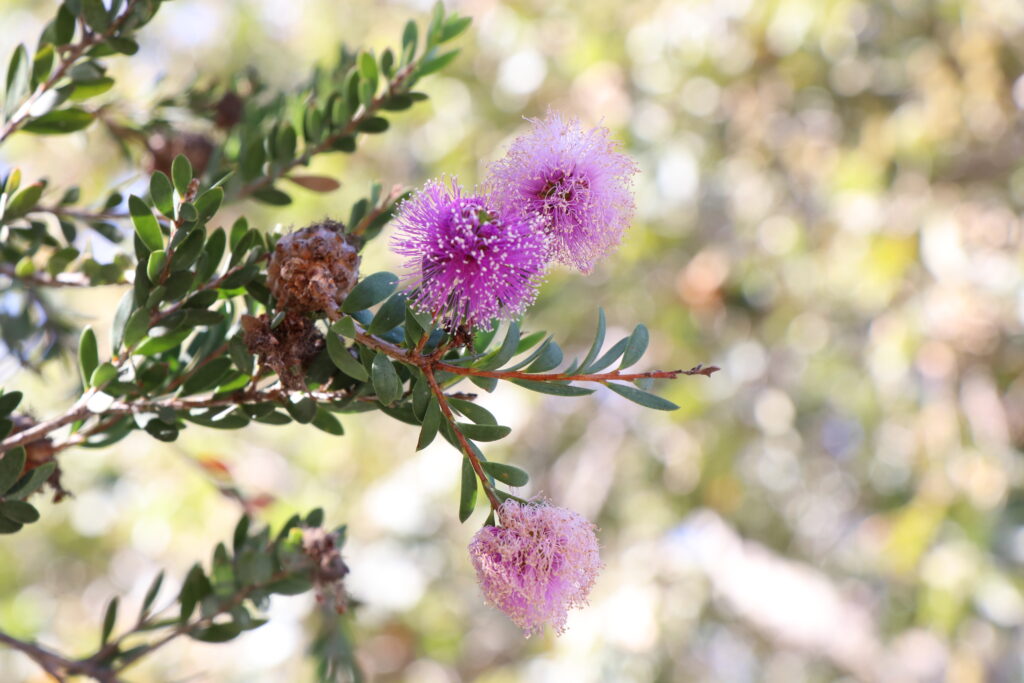
3. I’ve found a species of plant that I’m not familiar with. It look pink in color, it looks like its stringy and fuzzy. It is spherical in shape and has little white dots at the end of each string. After that, in order to identify it I walked over to the section of the botanical garden that has a board with pictures of all the plants and trees in the garden. I looked for a picture of the plant I was looking at and noted the species name. It’s called a pink melaleuca and it’s scientific name is melaleuca nesophila. A fact that I thought was interesting was that this plant is called Pink Melaleuca in the US but in Australia its common name is Showy Honey Myrtle. Pink Melaleuca was first introduced into California in 1915 by the California Nursery Company in Niles, CA. (https://www.smgrowers.com/products/plants/plantdisplay.asp?plant_id=1049)
Photo of Pink Melaleuca on 6/29/22
4.
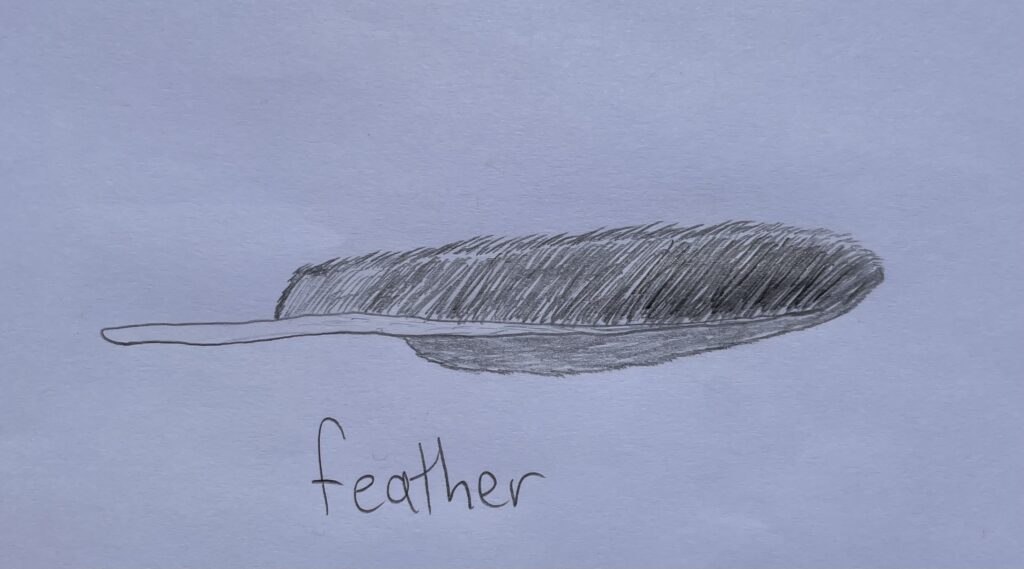
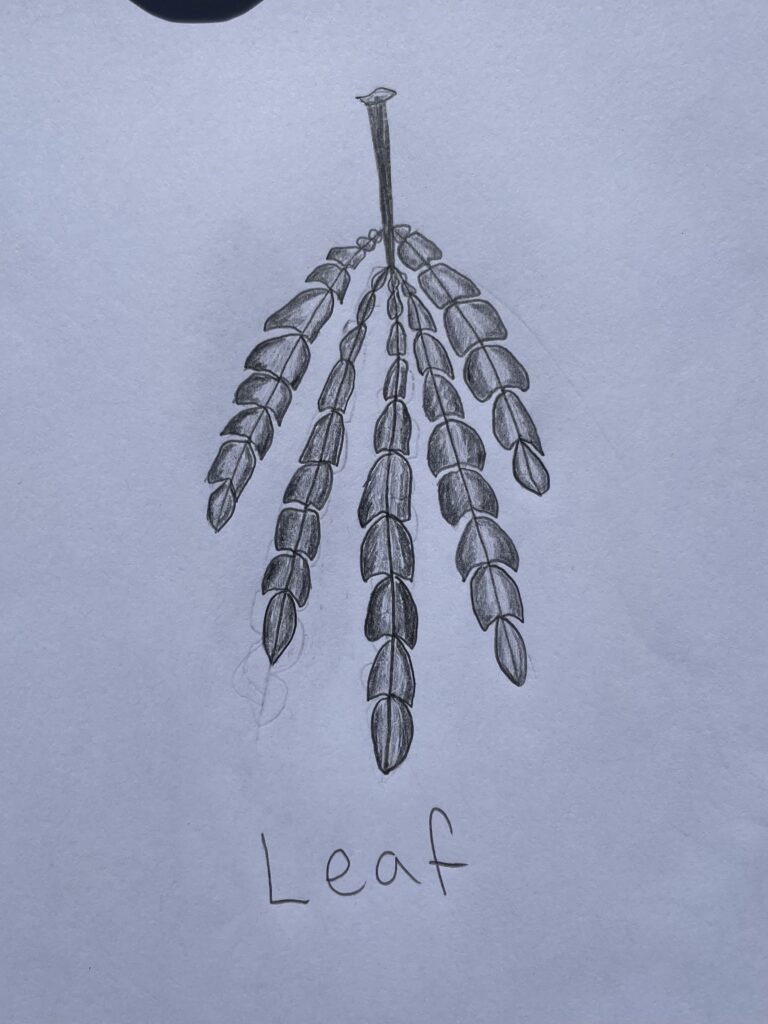
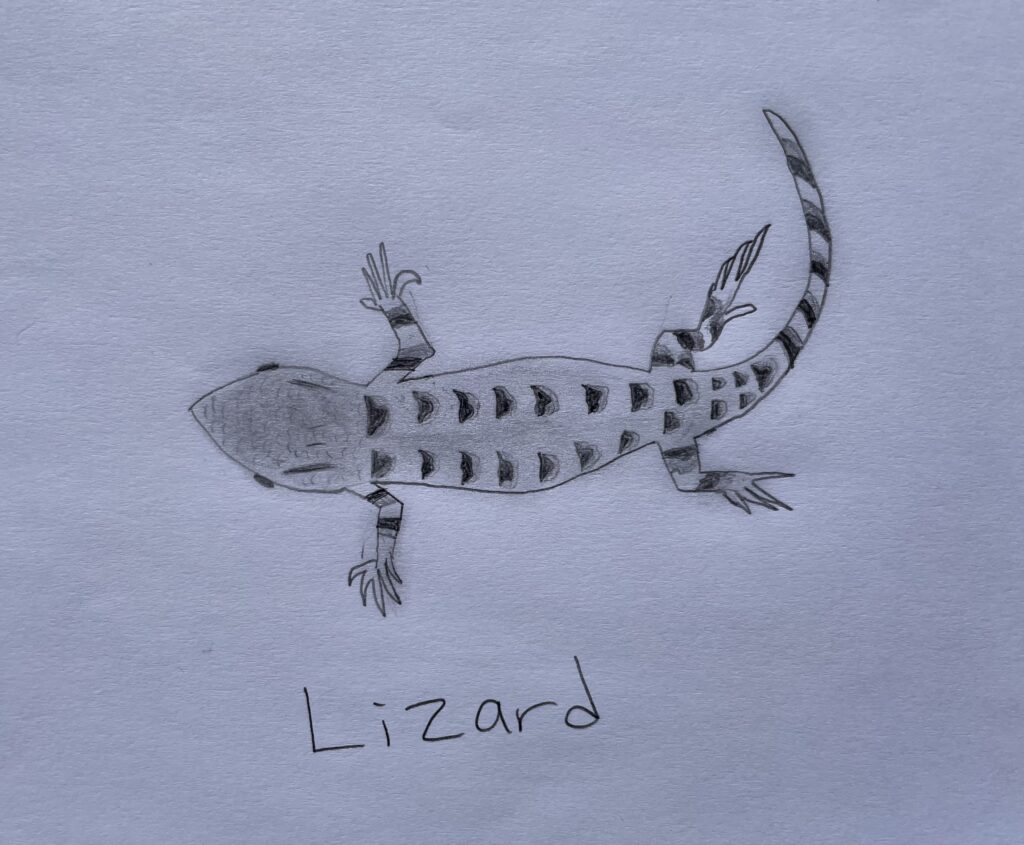
I was looking for things to draw that really stood out or were unique and I came across this feather on the ground, on top of the dirt next to the flowers. I decided to draw it because it really stood out in this landscape and this is the first time I’ve come across a feather here and it’s probably not gonna be here next week or even tomorrow and so that’s why I wanted to sketch it. I chose this because it’s a super unique thing in the middle of this park. I don’t know if I’ve ever seen a “bee hotel” at any other place before so I wanted to draw it. There is also a lot of different things and shapes and depth required to sketch this so I wanted to kind of challenge myself. I was looking for unique things to draw that weren’t so ordinary to me and after searching lots of tree leaves and flowers I came across this tree and I thought its leaves were really unique. They have sort of blocky shapes on them and it seemed like that was something that would make for a good sketch, so I decided to draw one of its leaves. This is the lizard that I saw earlier and thought was super cute. And when I came back to this spot of the park after finishing my other sketches, it was still in the same spot in the shade resting that I last saw it. So I decided I wanted to try and sketch it.
Conclusion:
Something that I notice that I didn’t expect was that I was actually able to focus my attention on my sketches without getting distracted or discouraged. That’s not usually something I can do with schoolwork. It actually felt relaxing at times and even therapeutic while sketching. However, one other thing I noticed was that these sketches actually took a lot of time too and it started to get a little tedious, that was one challenge I came across on all my sketches.
One challenge when drawing the feather was there wasn’t a bench or rock nearby that I could sit on and still be close enough to see it so I had to sit down on the pathway while drawing and that was kind of difficult. I felt a little self conscious when people passed by and also had to deal with some ants crawling on me. One good thing about the feather was it was the perfect object/texture to use the different sketching techniques we learned in class to make it look as real as possible. Once I was done sketching it I noticed I felt pretty accomplished. I’ve never been a good drawer but it actually turned out pretty realistic and I was surprised.
The next thing I drew was the bee hotel, and that was more challenging because that had multiple objects and shapes and depths. I felt a bit frustrated trying to drawing the shape of the wood and the logs and the little straw things because I couldn’t get the drawing to look 3d and look quite like it does in person. I noticed I was kind of frustrated when I messed up some of the logs and had to erase it. But once I got close to finishing it and realized I’ve made a lot of progress on it I felt myself being more relaxed and in the zone.
The next thing I drew was one of the leaves on a tree. My first attempt I didn’t like the shape of the branch leaves I was initially drawing which was kind of frustrating so I had to erase those. But once I got the shape down that I liked I felt excited because it looked really similar to the actual leaf. It was challenging though because it took longer than expected and it got really tedious drawing the square/circle stem leaves over and over again. But I noticed I was able to focus on the sketch completely and felt relaxed too because I was able to get into a rhythm and I came up with a good way to shade in the leaves to make it look more realistic, which was satisfying because I liked the way it was turning out.
My last drawing was the lizard. I was kind of anxious while drawing the lizard because I knew it could move at any minute. One challenge was drawing the pattern on its back because that was kind of tedious and took longer than expected and I noticed my wrist was a bit sore for a minute after drawing all that. I noticed I felt happy too while drawing it because I really liked the outline shape of the lizard, it looked similar to the actual lizard in from of me, which was surprising because I’m never good at drawing things, especially animals. I also liked using different shading techniques to make the patterns stand out and make it look more realistic, that was fun to do.
One thing I noticed about all the drawings was that as I was getting closer to finishing them I felt very satisfied. Drawing is not one of my strong suits and I actually thought they looked somewhat realistic and was happy with how they turned out. Another thing I noticed was that I was paying close attention to the detail of the objects. Normally I just look at things at a surface level and don’t see all the little details, but sketching really makes you look closer and appreciate the objects/plants/animals more. Something I didn’t expect while sketching was how I was able to really focus on the sketching and sort of block out everything else on my mind. I realized sketching, especially outside in nature, seems to be a good anxiety and stress relief. And I really think this might be a new hobby or break for me and I will more than likely return here throughout the summer to sketch things.
Something that I want to follow up with on my next visit is to see if I can see any other lizards resting and lying flat in the shade. Usually I see them sunbathing on rocks or crawling around the pathways and being super alert when I get near, but I was able to get pretty close to this lizard.
Part 1: Wednesday June 22, 2022. 2:50pm. The weather is partly cloudy.
Part 2: My site is located in Manhattan Beach in the Botanical Garden. I hear music in the distance and people talking. I hear crows squawking. I hear cars going by and peoples footsteps. I hear a plane in the distance. To my left I see a bumble bee pollinating an orange flower. There are 2 pathways in that direction and another one to my right. 4 crows just flew over my head. I see 2 monarch butterflies flying next to me. There are twigs on the ground. There is little plants sprouting from the brick pathway. There are a few giant trees to my left and middle and a medium tree to my right. There is a shed house to my right. There are ants crawling on the ground. I see 4 yellow and black butterflies. There are a few big rocks to my right, deliberately placed by someone. There is a ledge with ants crawling up and down it. There is a white butterfly flying around the flowers. There are sunflowers. There are pink, light yellow, darker yellow, light purple, darker purple flowers. There is a little pathway in front of me leading to a little area with larger rocks you can probably sit on. There are metal fences around around some plants. I feel a slight breeze. I just saw a lizard cross my path and go into a bush. I just saw a monarch butterfly and a yellow and black butterfly fly next to each other. I see 2 squirrels in a tree high up.
Part 4:
Why are the ants walking in 2 rows, one going up and one going down the ledge?
Where are the ants going to?
Why did the ants decide to gather there?
Why are there a bunch of stones deliberately places right behind the edge of the path?
How did a lizard get to this botanical garden?
How do the bees collect pollen from the plants?
Do the bumble bees and honey bees collect pollen the same way?
Can the Anise Swallowtail butterfly and monarch butterfly reproduce with each other?
How did the butterflies find this botanical garden?
Why are there metal gates around some plants but not others?
Why is there a fallen tree branch in the middle of the dirt?
Are there any creatures living inside of the fallen tree branch?
When did the branch fall or get cut down?
What is the crow looking for when it moves its head around while sitting on a branch?
Are the 4 crows eating near each other in a group or are crows solo animals?
What are the crows eating?
How many times a day do crows eat?
What kind of lizard is that?
I’ve seen a lizard go into the same bush/spot twice now at different times, is that the lizards home?
Is there food for the lizard behind the bush?
How are there plants growing from the cement?
Why are there 4 different types of plants growing from the cement all near the same area?
I see spiders and ants on a fallen tree branch, is that their home or shelter?
Do the spiders and ants get food from the fallen tree branch?
What kind of spider is it?
I see a pill bug on a wood chip with ants crawling on top of it, why are they crawling on top of it instead of going around it?
Why is the pill bug sitting there?
Is the pill bug dead?
How did the pill bug get there?
I approached a lizard by a bush and it froze, is that it’s defense mechanism to blend in and not be caught?
Does the lizard have any other defense mechanisms?
What does the lizard eat to survive here?
Why are there so many different types of flowers and plants here? Do they each have a different purpose?
I just saw a Harlequin bug, why does it have red spots on its back?
How does the Harlequin bug eat?
I noticed there are a lot of butterflies out today, do they come out at a certain time of day or are they here all day?
Do they come here a certain season or are the butterflies always here?
Were these trees planted here or were they originally here?
Do squirrels normally climb tall trees all the way up?
Do squirrels have nests? I see one in something that looks like a nest.
Or are the squirrels taking over a birds nest?
Two squirrels were making squeaking noises at each other when I was near, was that to signal danger?
The squirrels were wagging their tails, what does that mean?
Part 5:
The questions I have are about the harlequin bug I spotted. The first question I have is, “why does the Harlequin bug have red spots on its back?” What I found was that the red spots on a harlequin bugs back, “draw attention to it, telling predators that it’s inedible” (https://thenaturecollective.org/animal-guide/details/harlequin-bug/). The second question I have is “how does the Harlequin bug eat?” What I found was that harlequins have, “mouth sucking parts that enable them to suck moisture and nutrients from plant parts including leaves, stems, and fruits” (https://morningchores.com/harlequin-bug/).
Part 6: Today was a beautiful day with mostly sunny and partly cloudy skies and a small breeze. There were lots of beautiful plants and trees. There was also a lot of different animals that I saw. That was something I didn’t expect, I honestly just expected to see maybe some crows but I was pleasantly surprised that there were a lot of different types of animals in this little botanical garden today. I don’t think I’ve ever seen or noticed a harlequin bug so that was cool to observe and learn about. Something that caught my attention was in the middle of the garden there was a “bee hotel”. I briefly looked at it and saw what looked like wood logs in a sort of tiny wooden house. I didn’t get a good look though and didn’t read the sign and so on a future visit I’d like to see what exactly that was and why it is there.