Posts

Final Trip To Centennial Woods Bunker

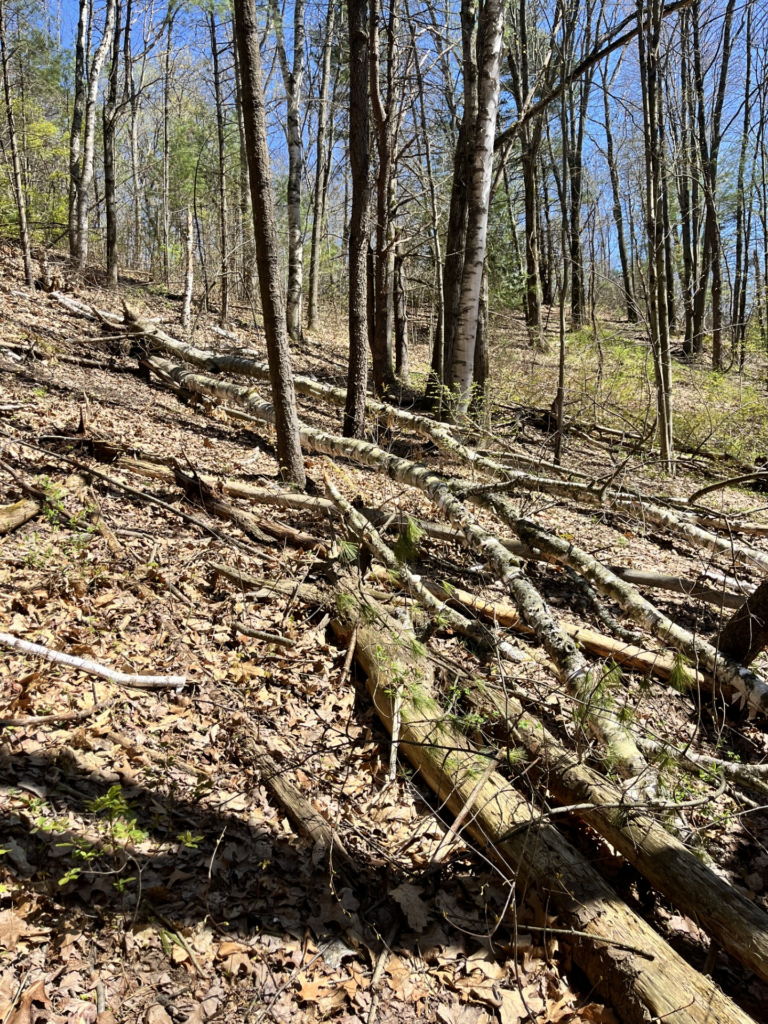
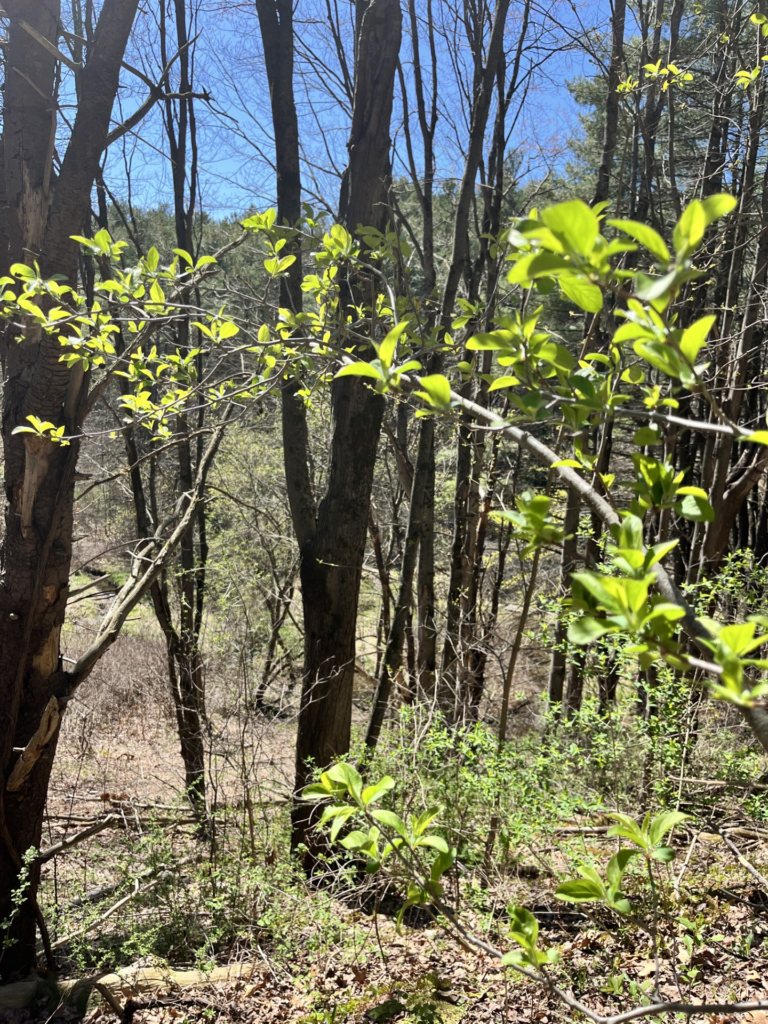
Over the past six months, I have been observing the area around the Centennial Woods bunker. I have seen the area change through all of the seasons. I have watched as the leaves changed colors, fell, and now grow back. From my most recent visit to the site, the understory has grown back in vibrant greens. The overstory has started to flower and leaves are soon to appear. There are some that do not have flowers but they have budded. It is clear spring has sprung in Centennial Woods. Since the fall, the amount of overstory has decreased. A lot of trees have fallen or have become rotten. During this site visit, there were fallen paper birch and white oak trees blocking the trail to the bunker. I believe that they fell during the thunderstorm that occurred this a few days before my visit. The moss that resides on the bunker has been thriving throughout all seasons, now it is a bright green. In the winter, there was minimal wildlife activity now in the spring they have made a return. I heard numerous birds and saw squirrels scurrying along the trees.

The major landmarks I have become accustomed to are the bunker that is the central spot of this phenology spot and the big hill that leads up to the central trail. The minor landmark that I mostly noticed is the stream that runs through the woods. This stream can be seen from the back of bunker and there is a trail that leads down to it from the site.

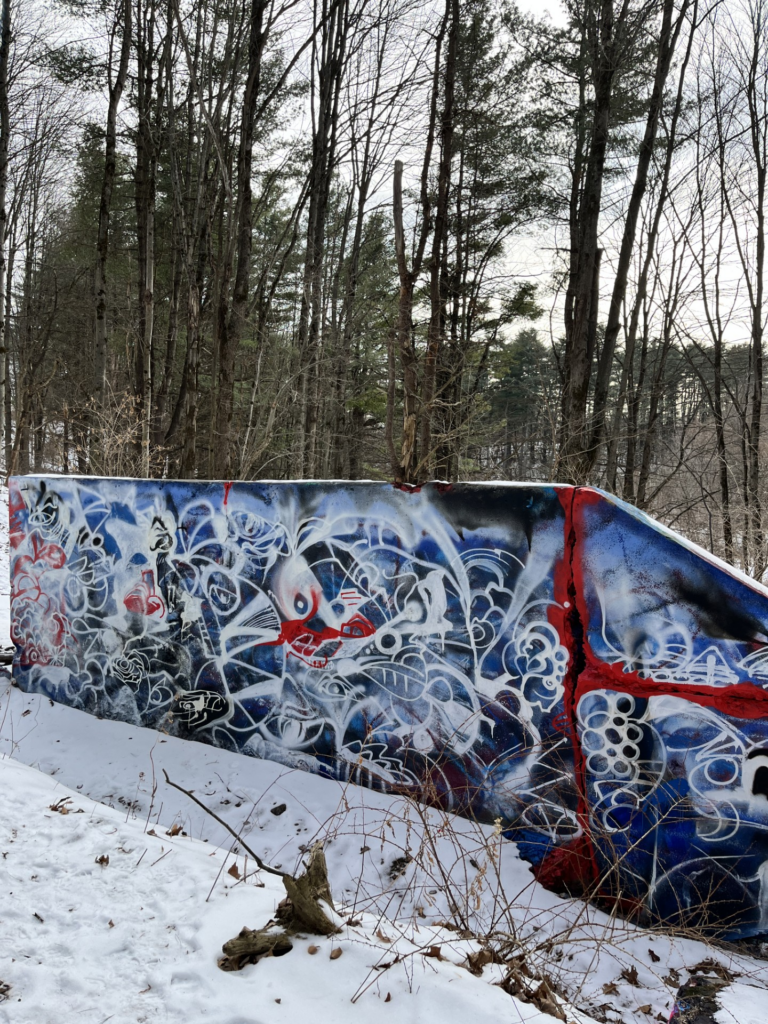
Nature and culture intertwine at this spot through the bunker and the vegetation around it. People use the bunker to express feelings and political opinions. Graffitied all over the concrete structure is the phrase “No I.C.E on campus”. Students and citizens of Burlington articulate their emotions and aspirations on this site. There are layers of art on this structure contributing to the culture of this area. Nature has started to grow over some of the art. The moss and other understory plants have started to take over. The new graffiti added has been placed around the understory protecting the nature around the site. It shows how people respect nature in the area even though they are “vandalizing” a structure.

I personally do not consider myself a part of my phenology spot. I think of myself more of a prolonged guest in the ecosystem. I have observed how the ecosystem functions and watched the changes through the seasons. I think that to be apart of the spot I would have to constantly be there and have a deep connection with the place.

Overall, I fully enjoyed this project. It got me outside and comfortable with Centennial Woods. I now go on weekly walks in the woods and have traveled deeper into the forest. Below are some of the photos from the final visit to my phenology spot.
City Nature Challenge iNaturalist

During the 4 day urban BioBlitz, I chose to stay on campus and identify some of the species located here. UVM campus is a very urban environment with all of the buildings so close together. It is also a big section of Burlington. My observations are mostly from Redstone and Athletic Campus as there is a lot of species that reside there.

Using iNaturalist was very simple and not hard to get the hang of. I have been using it for the past semester for other assignments in NR1020. The only issue that I had was joining the project of the City Nature Challenge but as soon as the links were posted on Brightspace my issue was solved I found that it was very easy to mark my location and if I was confused on a species it offered suggestions. This program is a great tool and I would recommend it to anyone. It is super fun to just play around on and identify species around you.

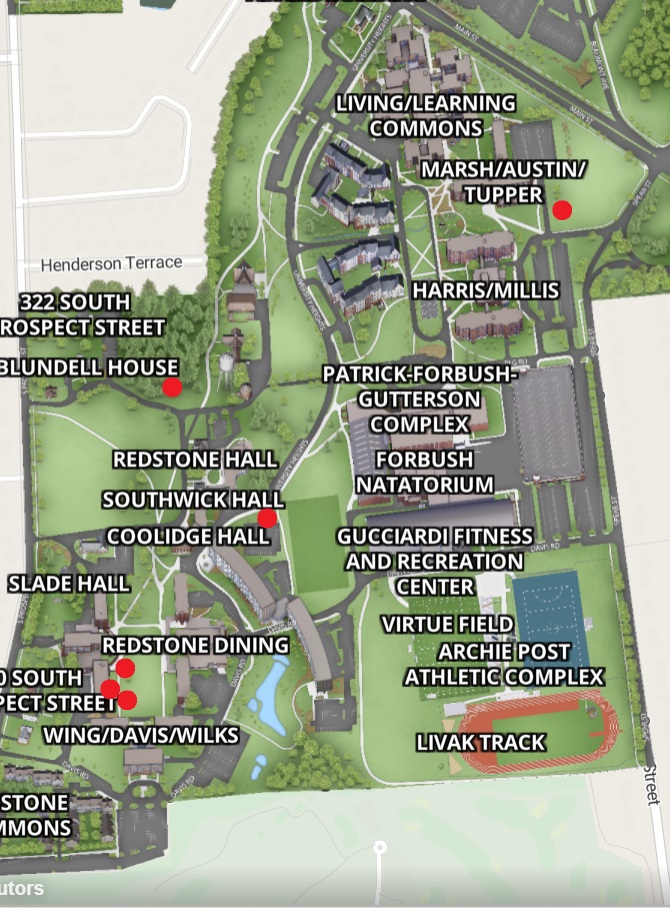
Above is a map of campus, marked in red are the area where I identified a species. The 3 dots next to Wing/Davis/Wilks are a collection of hardwood trees. There are 2 red maples and what I believe to a mature basswood. The texture basswood bark and buds are an exact match for the species, but I was a little skeptical due to the shade of the bark. The marking right past Coolidge Hall, I determined to be an American Elm due to the flowers on the branches. To the back of Harris/Millis there was a mature Eastern White Pine easily identified due to the pine cone and needle shapes. Traveling back towards Redstone Campus, there is a collection of conifers called Redstone Pines. I identified another Eastern White Pine by there (shown below)

Being able to see that people are observing species all around the world right now made me feel like I was one part of a bigger picture. I found out that this happens at my neighborhood back in Massachusetts. I have never heard of this and its amazing how so many people can come together for this. I would never know that Honeysuckle is so prominent back home, but according to all of the observations on iNaturalist, it is.

Phenology Walk

I went out on the phenology walk on March 28, 2025. I noticed that on every tree there were buds but they had not broken yet. I believe that all of the trees were in the same phenophase. I was a little confused because the white oak, behind the Aiken Center, still had dead leaves on the branches. Is this due to the lack of wind behind the building? Or is there another phenological reason? I was surprised that the leaves were still there through snow and rain storms. Is this a trait of white oak? I personally really enjoyed this assignment. I was able to really test my tree ID while searching for the correct tree to observe.

While looking at the NPN website, I came across an article about research and observations made to help put the progression of spring into perspective. Spring is the season where plants are growing and beginning to thrive in the thawing from the cold months. It shows how plants are reacting and evolving. With changing climate the rate of spring is changing. Having these new indices from this research, will help with fully understanding spring now and in the future. (https://www.usanpn.org/news/article/more-complete-picture-timing-spring)

Animal Tracking at Burlington Country Club

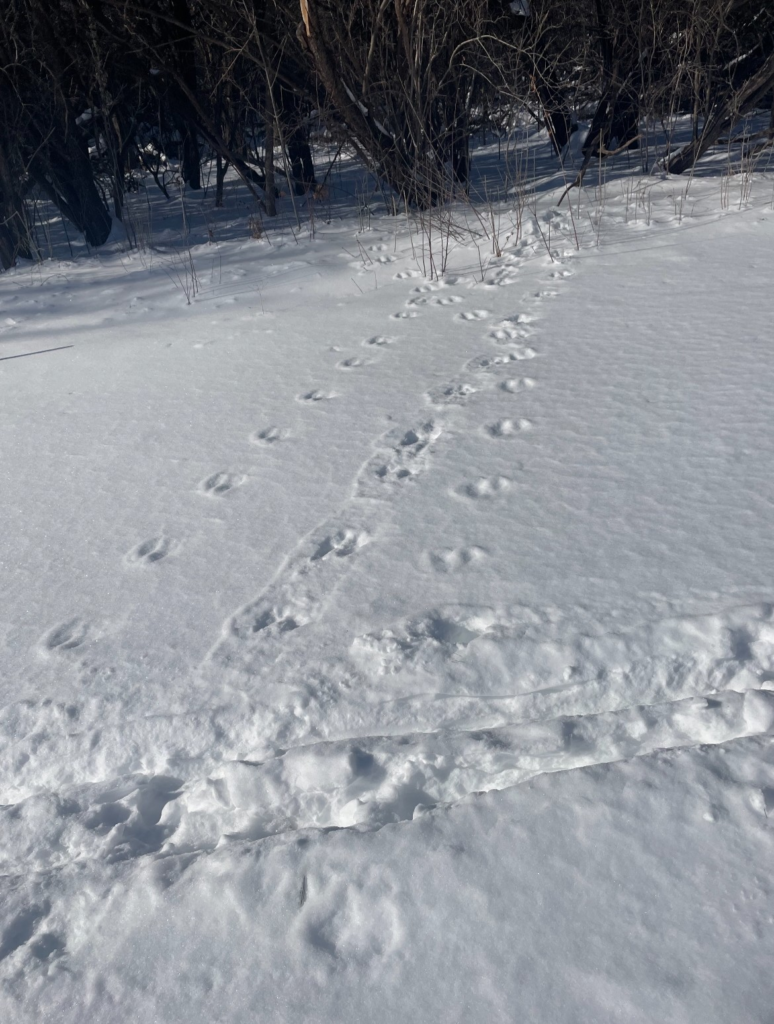
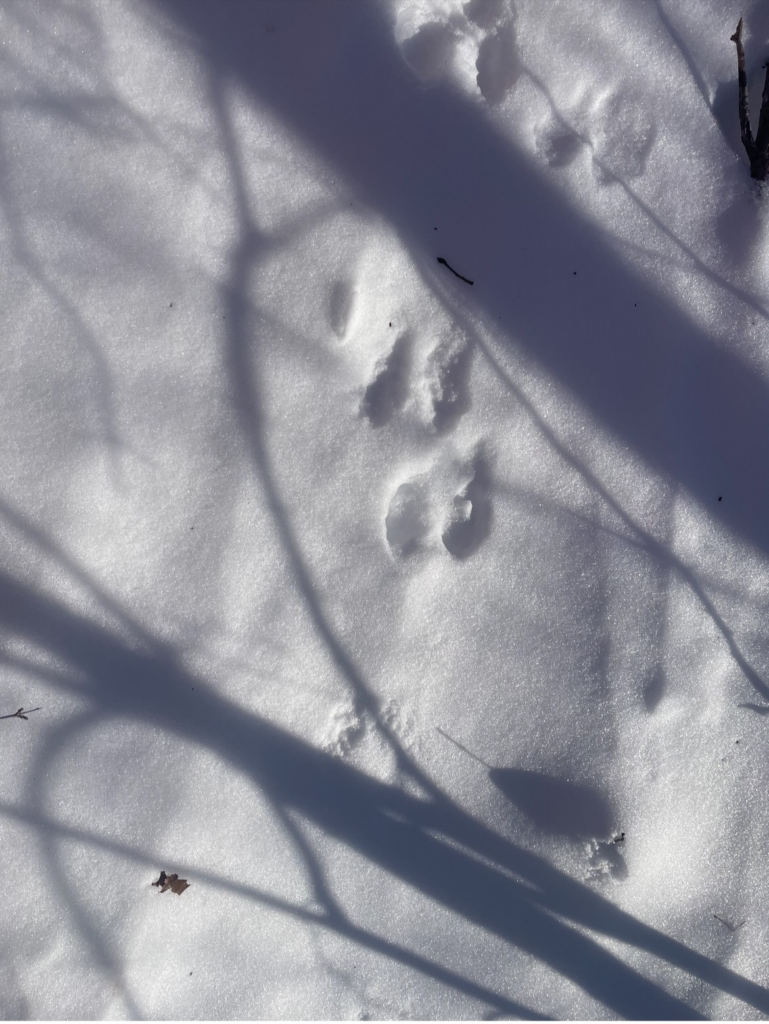
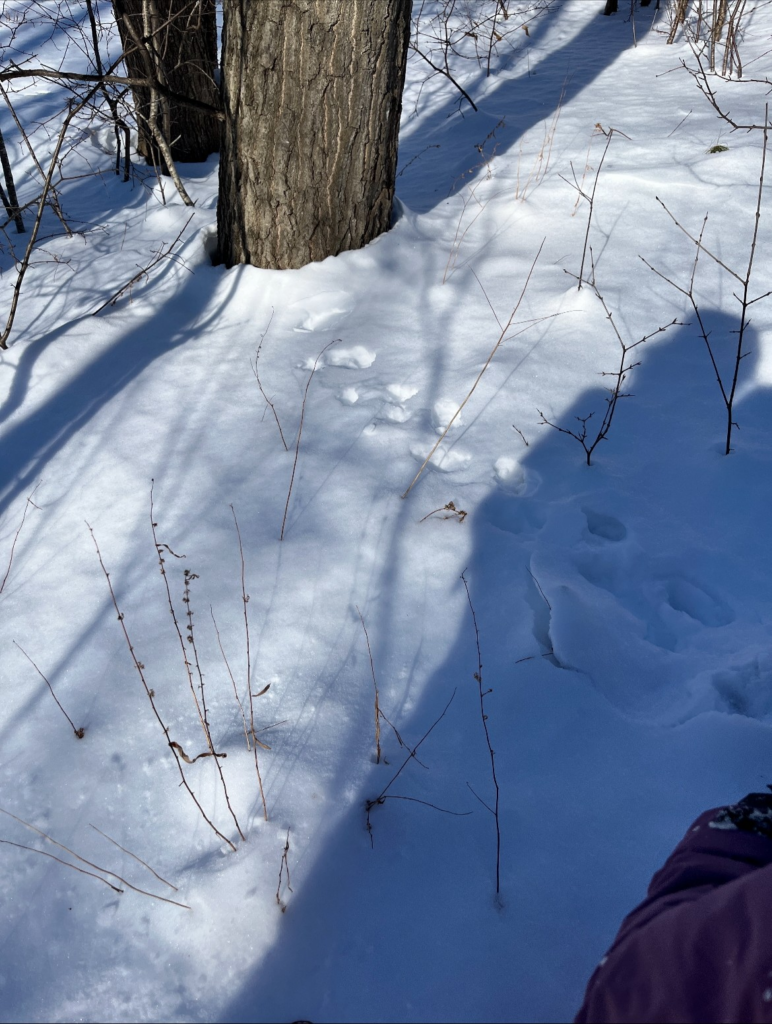
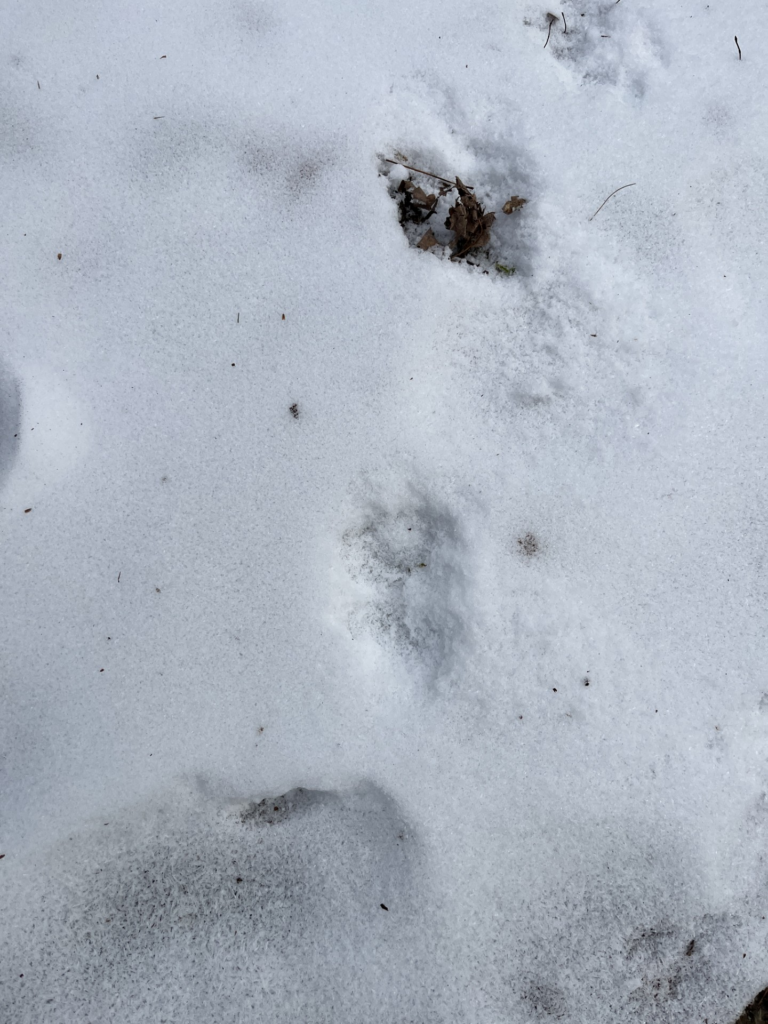
This past Saturday, I ventured to the golf course behind Davis Hall and found numerous animal tracks. I saw lots of squirrel and rabbit tracks. They were mostly traveling from tree to tree throughout the woods, right before the golf course. I also spotted deer tracks farther into the course. When determining the species of the tracks I looked at the shape and gate of them. The rabbit tracks were most likely a form of snow hare. This was determined by the bounding and slight tail drag present as well as the four prints per jump. While squirrel tracks had two prints per step. The deer tracks were very distinct, easily spotted by their hoof print. One set of rabbit tracks led to a hollow tree stump that could potentially be a den.

Using iNaturalist was not complicated and very helpful. I was able to plot the exact spot on the map where I found the tracks. My photos were not as clear as I hoped so the program did not always provide a suggested species. I mostly used my scat and track book to determine species.

Winter Update 1

Today I traveled back to the same phenology spot I have been observing, the Centennial Woods Bunker. There was not much change. There was more snow and the ground was frozen. The understory has become more of a graveyard. In the fall, the understory was filled with plants everywhere you looked. Now they are leafless and there is a significantly lower amount of plants. The moss that resides on the bunker is still thriving, keeping its bright green coloring. The wildlife activity seems minimal. The only tracks that were noticeable resembled dog prints. Hopefully next visit there are more diverse tracks in this area.

Phenology Day 5

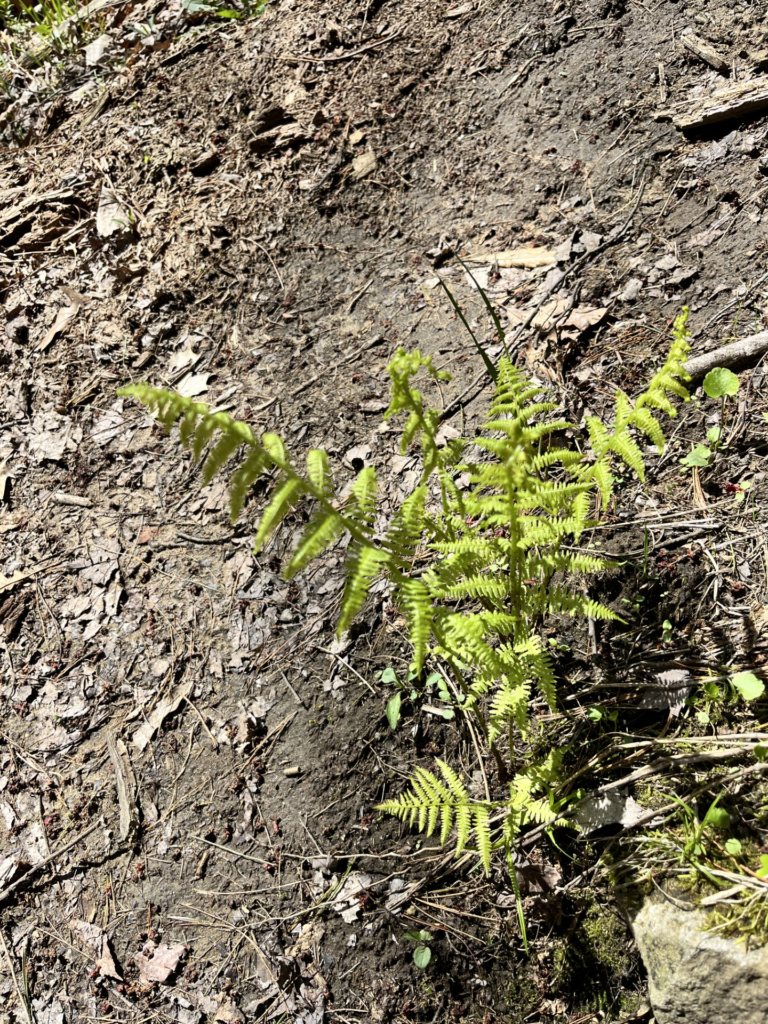
Since the last visit to the phenology spot, the foliage has come to its decline. There are no leaves on the trees and most of the understory plants are dead. I noticed that the ferns in the back of the spot are still green but they are not thriving as well as they would be in warmer weather. The leaves that are on the ground are not as bright colored but are dull browns signaling the start of decomposition. They are also broken up in to small pieces around the area. This could show signs of decomposers working on the organic material. While sitting centrally in my spot, I noticed there were less birds chirping. I also noticed that there is a recently downed tree on the path to the Bunker. This could either be from the strong winds recently or the tree was rotted.

I think that I enjoy how secluded my spot is from the main trail of Centennial Woods. There is a small trail that leads 20-40 feet into the woods to the Bunker. It makes my experience more calming and I can observe my surrounding without distraction.

Phenology Day 4: A Trip to My Hometown Woods

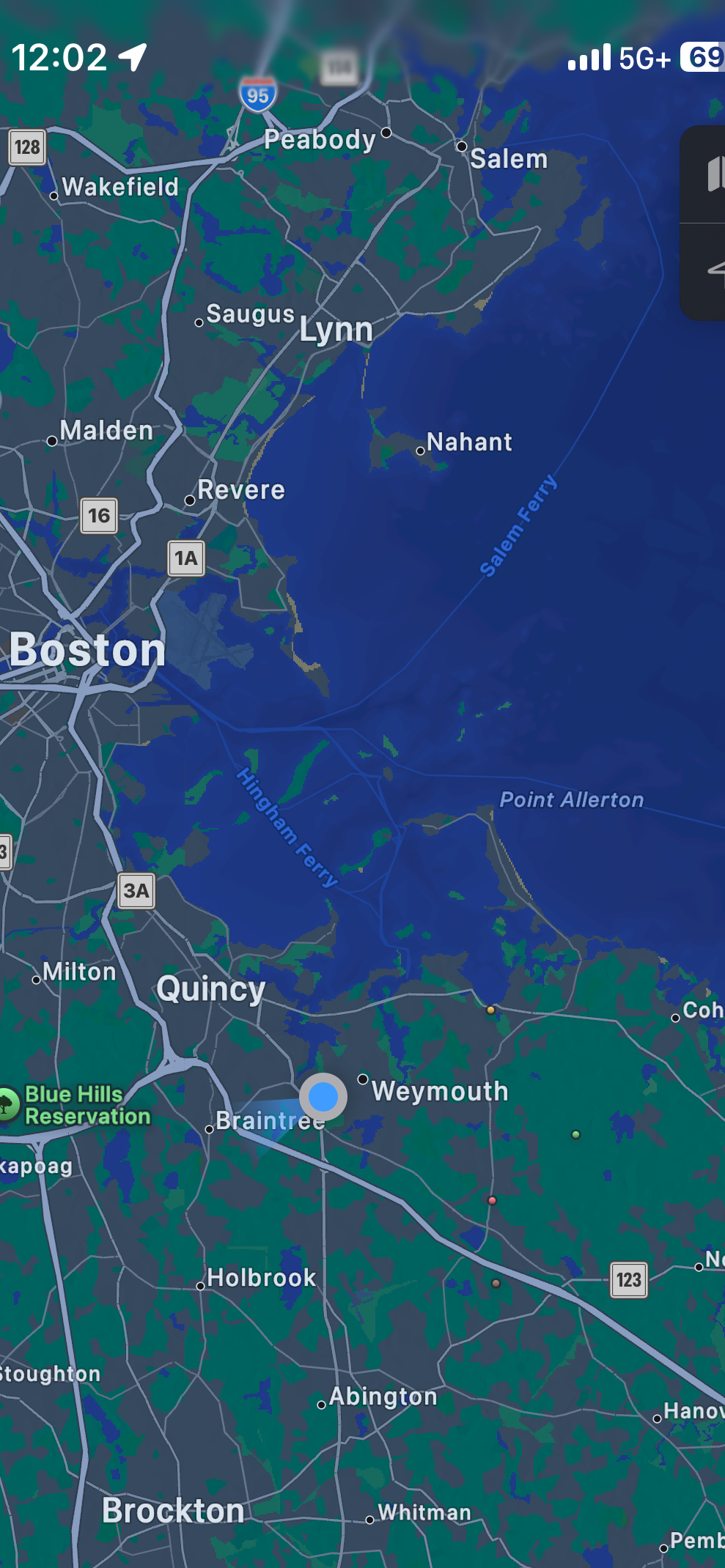
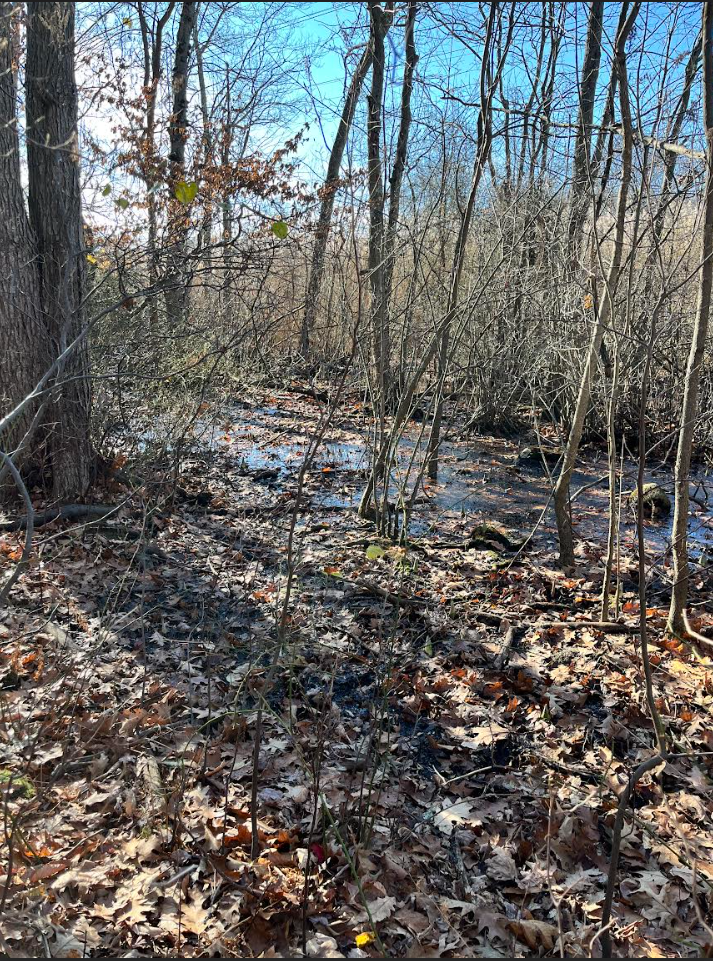
These observations took place in the woods next to my house in Weymouth, MA.

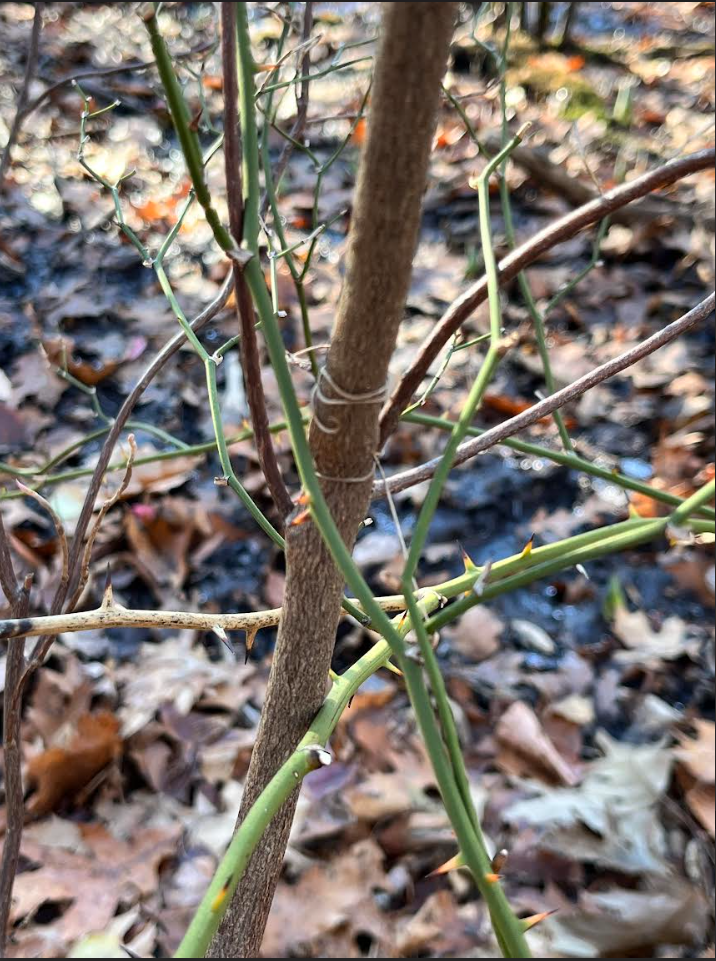
This place is special due to its of ecology and the structure of the ecosystem. There is a swamp and a dense forest. There are American Beech trees and oaks. There is also an overgrowth of thorns all over the section of woods. Comparing the structure to the Centennial Woods Bunker it is slightly different. This spot has a wetter soil and lots of organic material. While Centennial Woods has a drier soil and more maples which thrive in a higher nutrient soil.

Phenology Spot Day 3

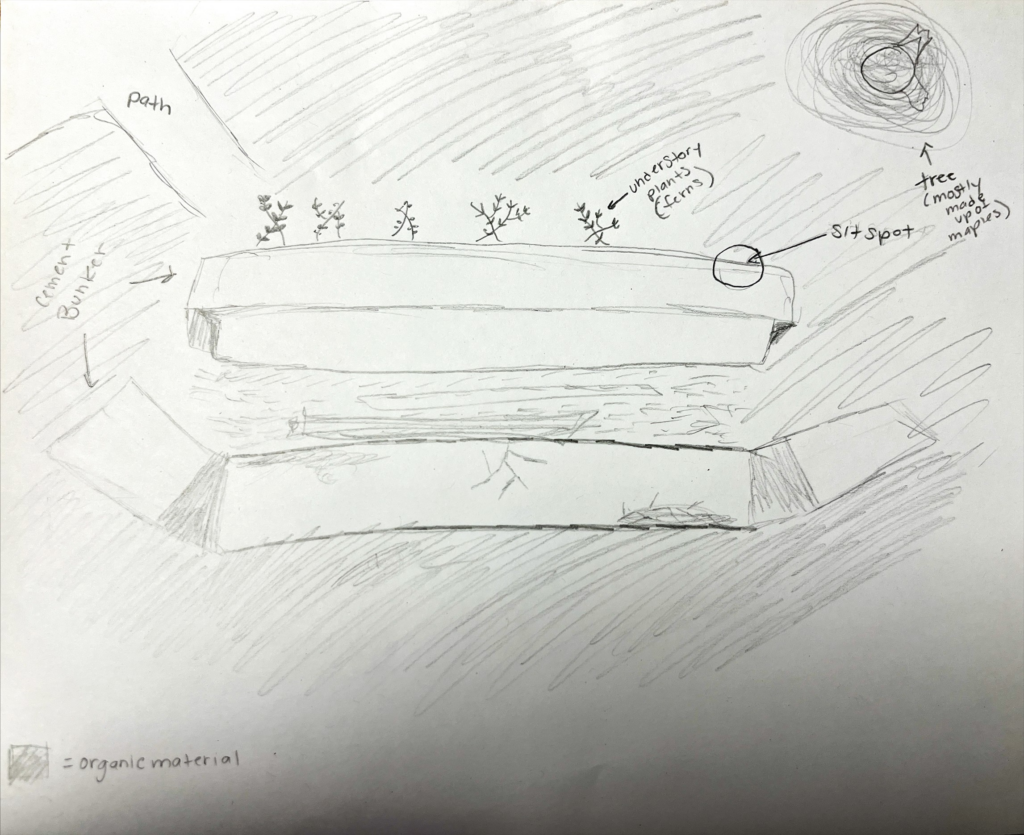
After sitting in my sit spot for 15 minute with no distractions gave me a whole new perspective of this phenology spot. I could hear the birds chirping, people walking by in the trails, and the leaves moving in the wind. With no direct input in my ears(i.e. music), I can listen to the ecosystem around me and be able to hear the disturbances in the woods. Sitting in this spot on the bunker, I can feel the cold stone underneath me and the leaves of the plants brushing up against my back. Sitting in the silence is reconnecting me to the nature around me. It is bringing me tranquility and solace. The cold is grounding me and it is alluring me to stay. Looking around the changes over the seasons is evident. There are more dead leaves on the ground. The leaves on the trees have changed to a light or dark orange while some remain a light green. The plants that surround the bunker still remain green and continue to grow.

Centennial Woods Bunker: Introduction

This image has an empty alt attribute; its file name is img_0567.jpg

Centennial Woods is the perfect get away from campus. It isn’t too far and it is far enough into the forest that the busy roads cannot be heard. I first ventured into these trails during the self-guided lab during the first week of classes. I was able to explore and let my curiosity take control. As I was wandering, I came across this bunker. It was covered in spray paint and moss with woody plants thriving all around it. I chose this place for the phenology project to continue to explore the bunker and the area surrounding it.

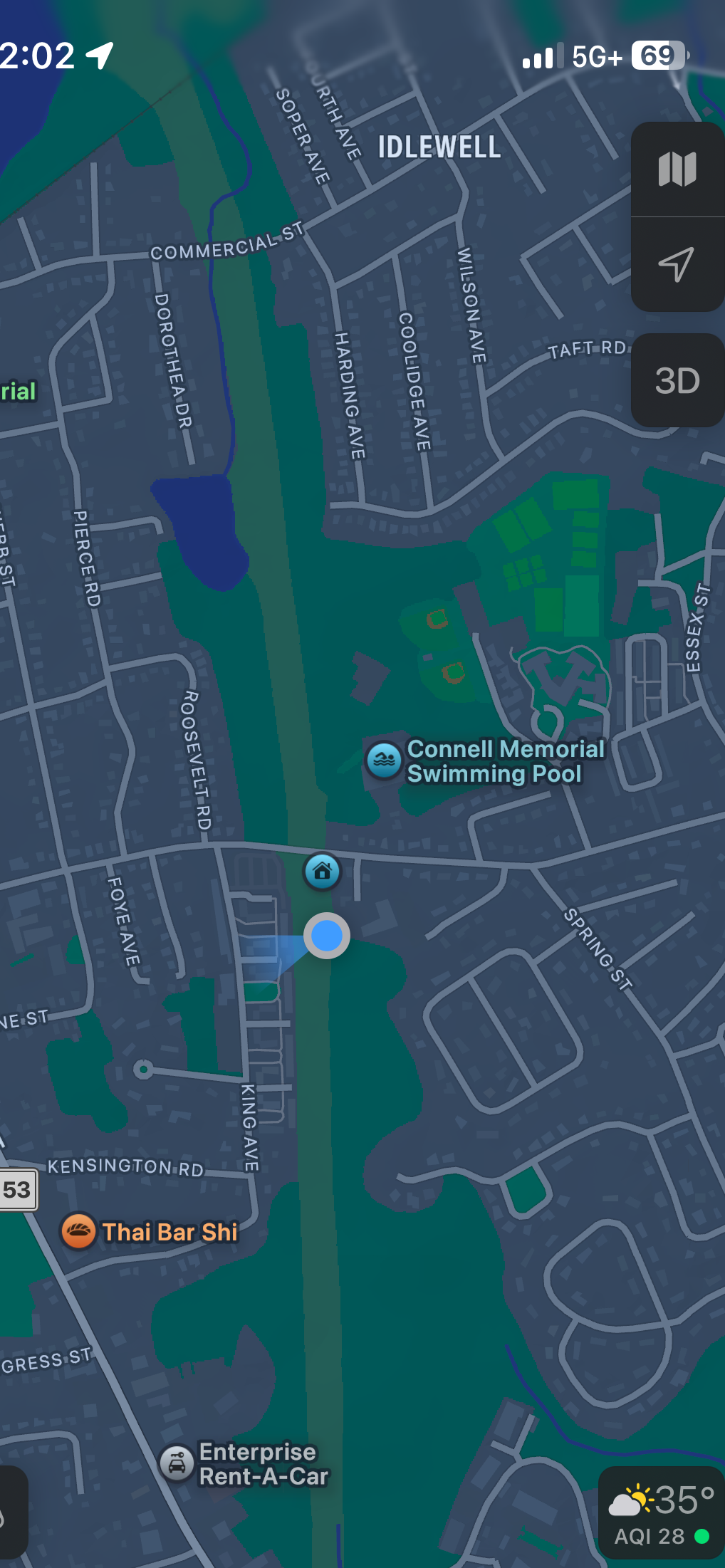
If you ever want to follow my path and go to this spot here are some directions. Walk around the back of the Jeffords Building, there will be a sidewalk to walk on. Follow this sidewalk through the first traffic light. Continue on to the next traffic light and here you will cross the street. You will be right next to the UVM Police Service building. Here you should be able to see a Centennial Woods UVM sign, this is the trail head. Follow this trail, until you reach an opening surrounded by trees. Take the path that leads up the hill. As you are walking look to your right, you will be able to see the bunker in the distance. There is a trail that leads you right to the bunker. And there you are at my phenology spot.

The vegetation in this area in amazing. There is around 40% understory plants, including ferns, barberries, burdocks, and black cherry trees. There is about 50% woody plants in the overstory, including species of American beech, hemlocks, maples, birches, and oaks.

A complete list of the common woody plants:

  • American Beech
    • there are 2 identified
  • Burdocks
  • Barberries
  • False-Buckthorns
  • Hemlocks
  • Maples:
    • Maple
    • Norway maple
    • Sugar maple
  • Black Cherry Yellow Birch
  • White Oak
  • Paper Birch
  • White Oak
  • Paper Birch

Skip to toolbar