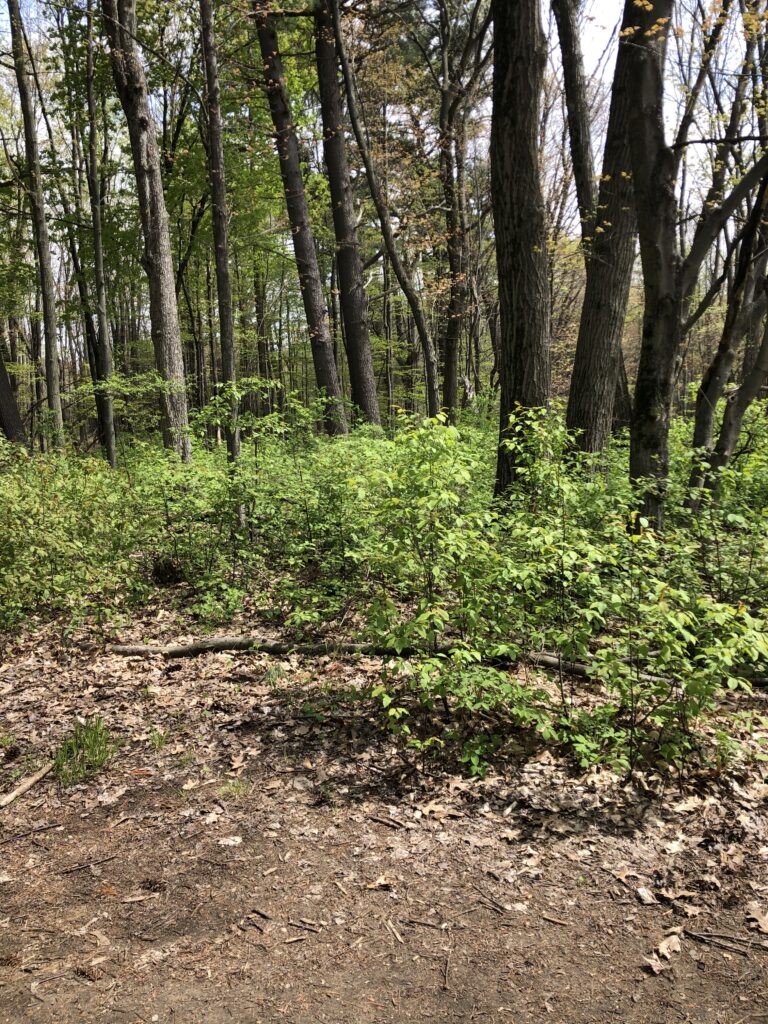
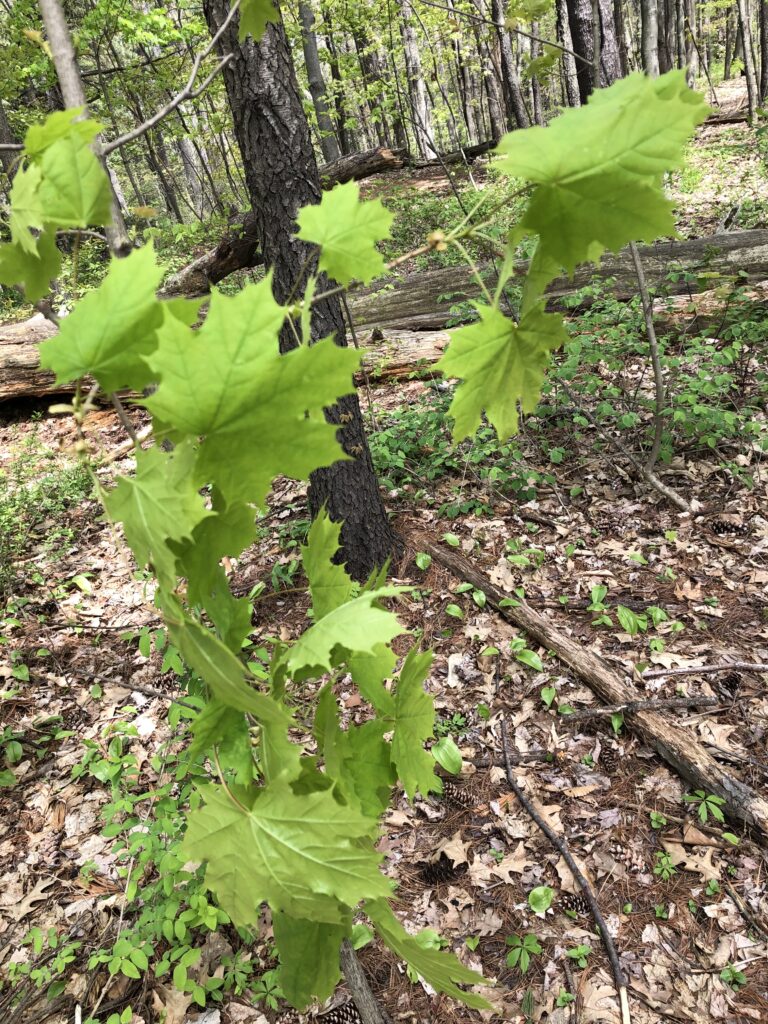
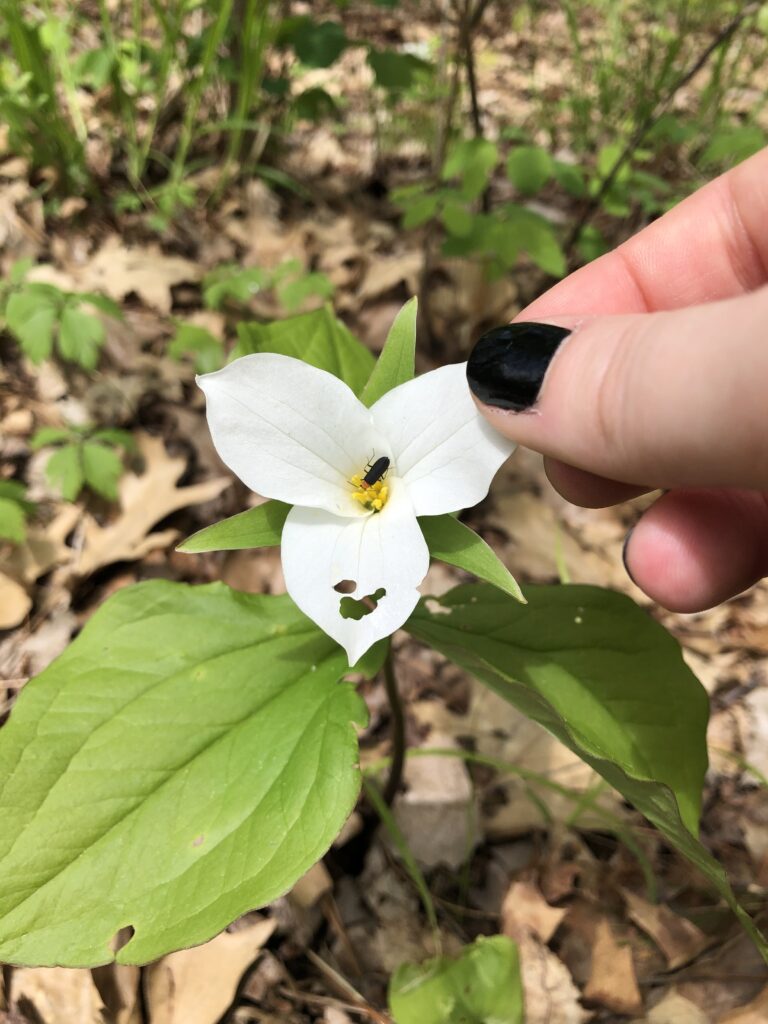
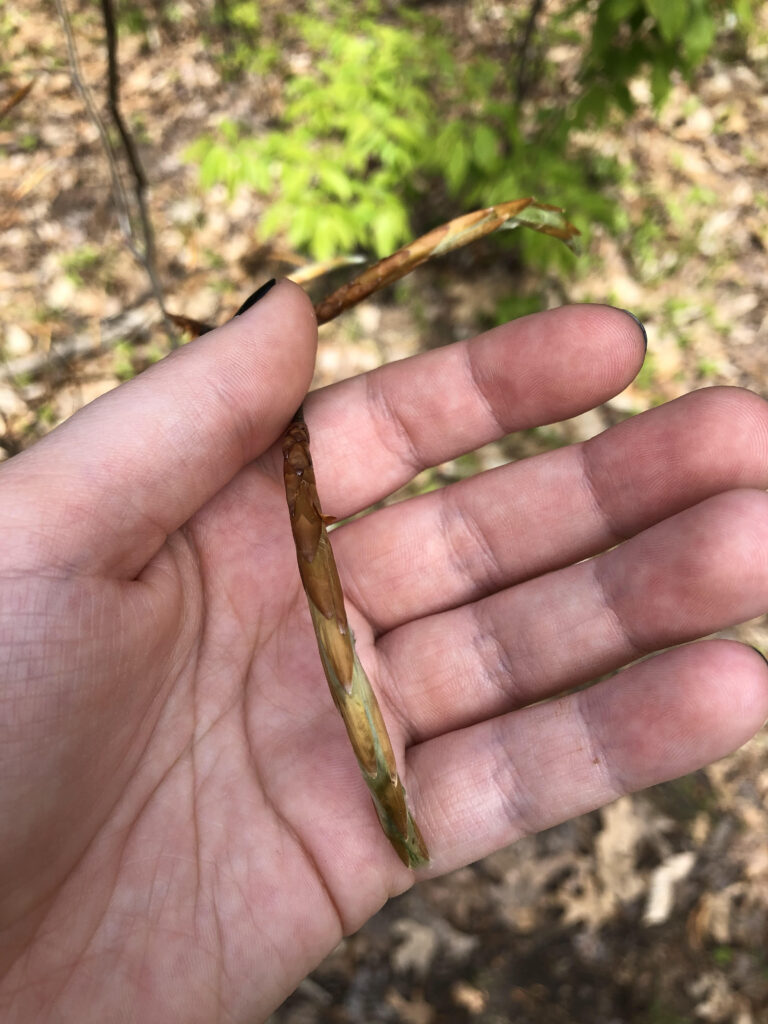
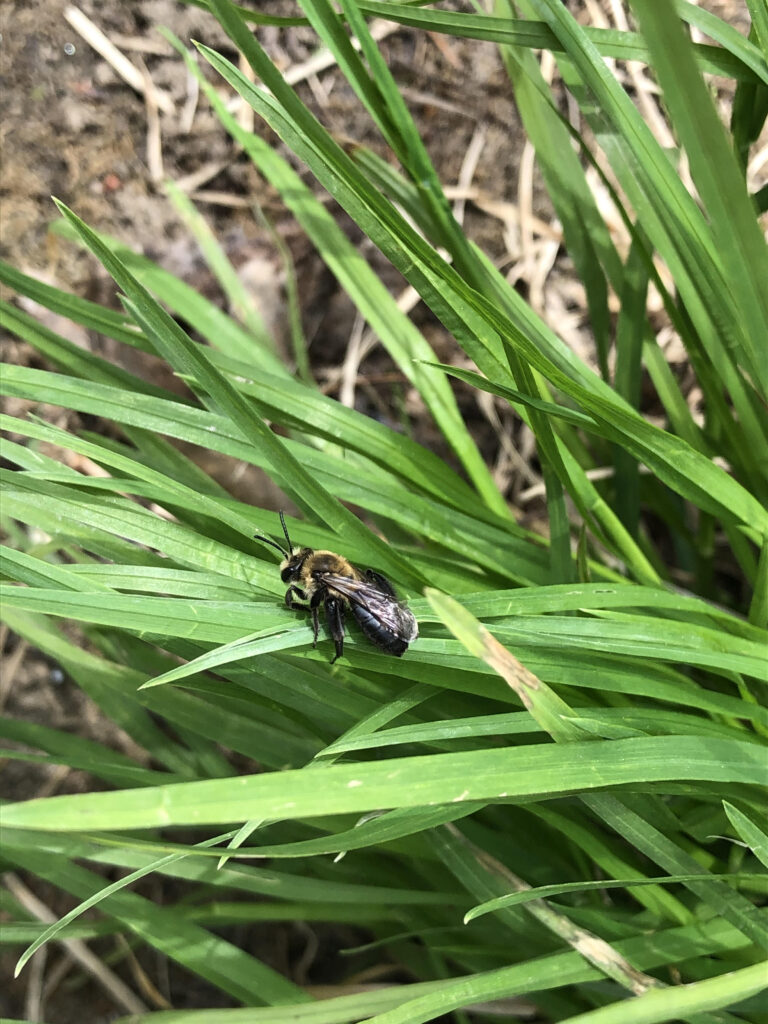
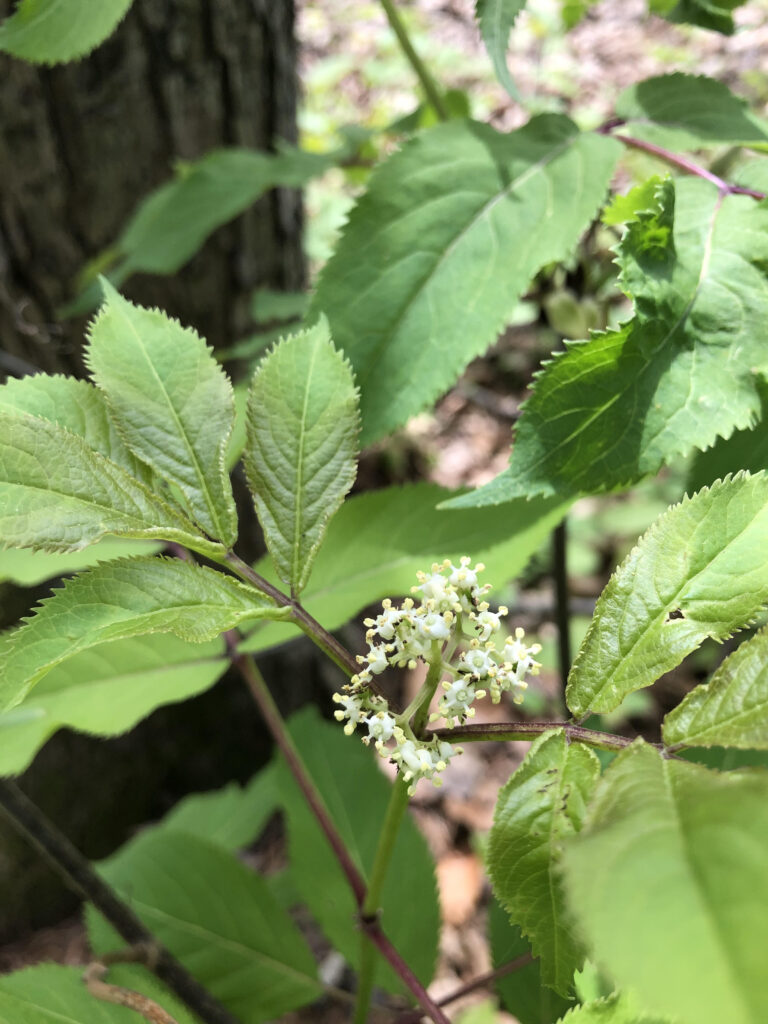
The forest has truly come to life with the sounds of birds and the activity of insects as well as the green leaves on the trees and shrubs and wildflowers across the forest floor. During my visit to my phenology site, I heard chickadees, a tufted titmouse, a winter wren, a black-throated green warbler, and an ovenbird which is a fairly recent migratory arrival to the Champlain Valley. Several species of wildflowers were in bloom that were not visible at my last visit including white trillium, wood anemone, elderberry, bluet, violet, celandine, and meadow rue. Many solitary ground-nesting bees and other insects were active pollinating these different flowers. The tree with the fullest leaves was certainly the Norway maple which is not surprising since leafing out early is likely a factor in its competitive success against native tree species. The other common nonnative species at the site, barberry and honeysuckle, were both fully leafed out and the barberry was flowering. Black cherry, sugar maple, and red maple were leafing out but many leaves were small or had yet to fully unfurl. American beech leaves were just about to begin unfurling.