Nature and culture intertwine in any space where humans are present. One of the most prominent ways to examine this is to look at who uses the natural space and for what purpose. Centennial woods is a conserved area and reflects cultural values of preserving nature for its value as a resource for recreation and beauty. Additionally, who is excluded from a space is culturally indicative. Centennial woods is located in the ancestral lands of the Abenaki people but they no longer have access to this piece of land as a home or for resources which reflects the racist systems of power in this society.
I am absolutely a part of this place. Every time I visit I leave an impact on the vegetation with my footsteps breaking twigs and crushing leaves. I impact the wildlife in their fear of me as a potential threat. Furthermore, my actions beyond my visits impact this site. I have a carbon footprint that may be small in comparison to the total carbon emissions but it still contributes to climate change. To see myself as separate from this ecosystem would be ignoring the impacts I have on it and others around me and it would ignore the love I have for this place.
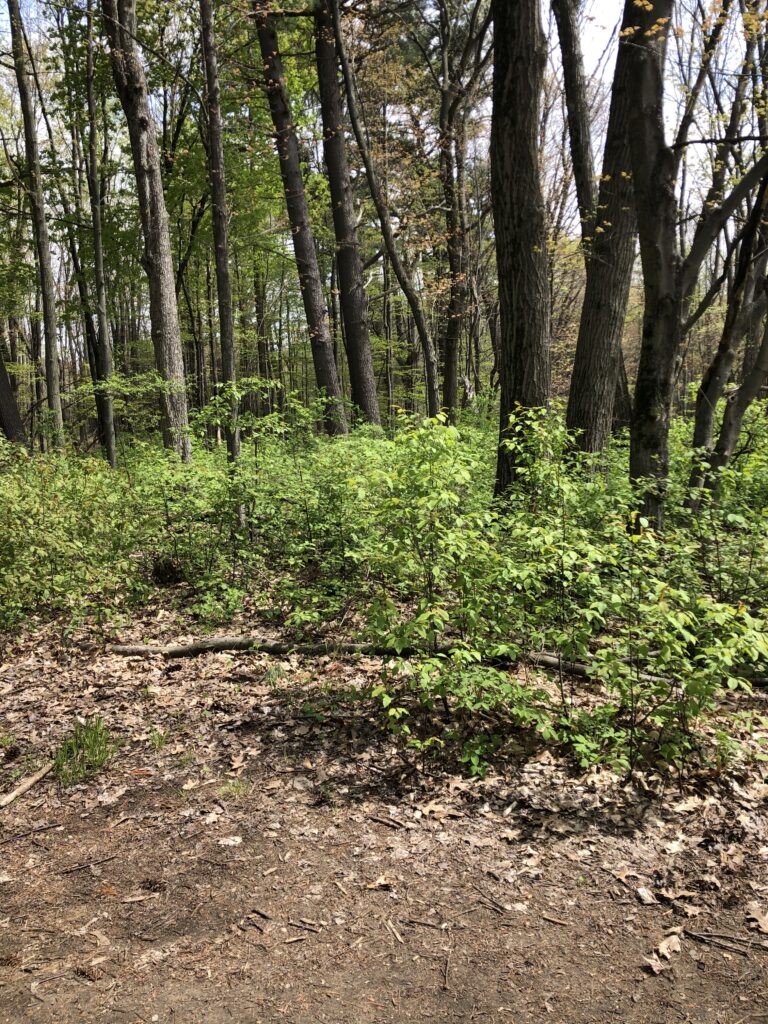
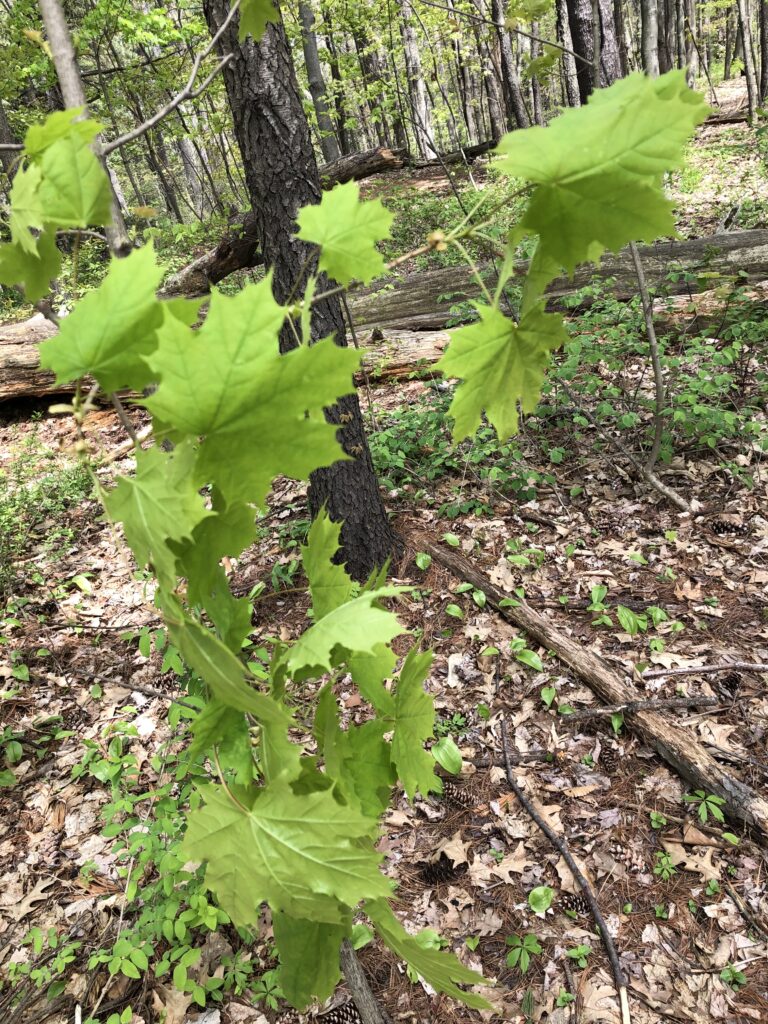
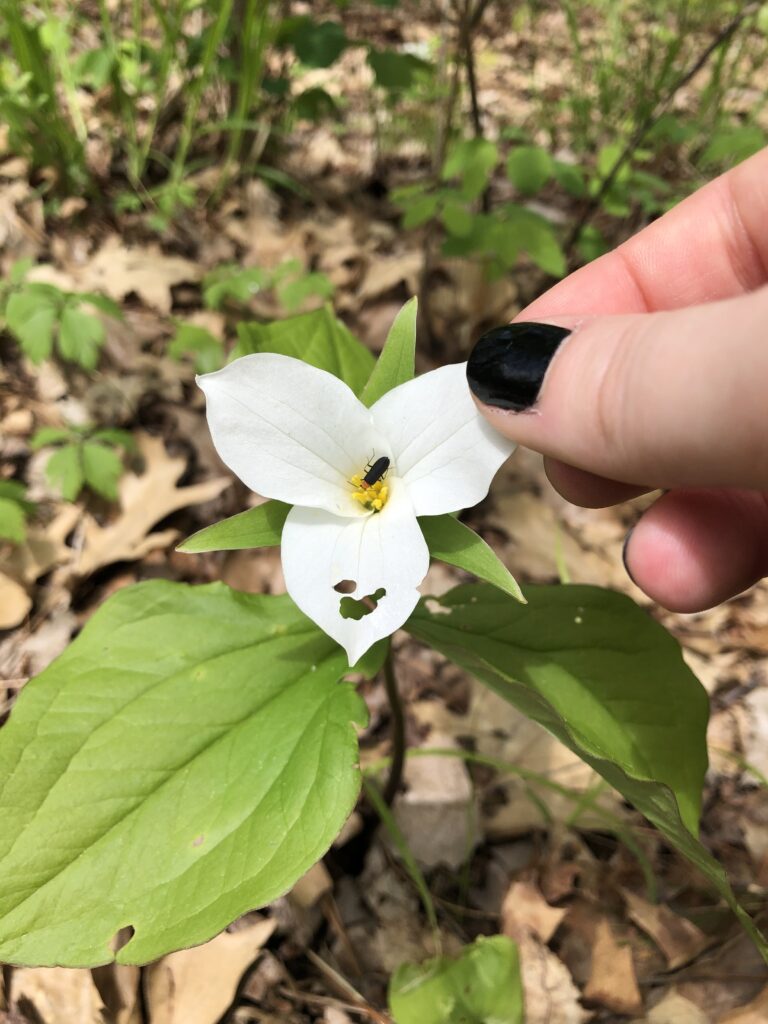
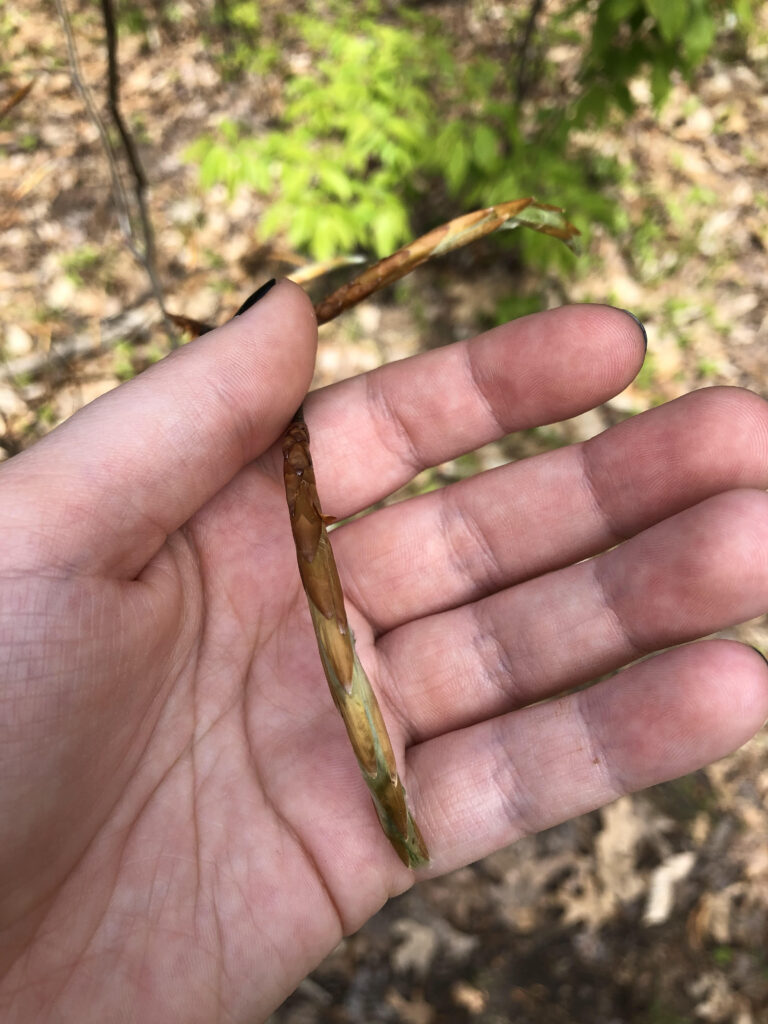
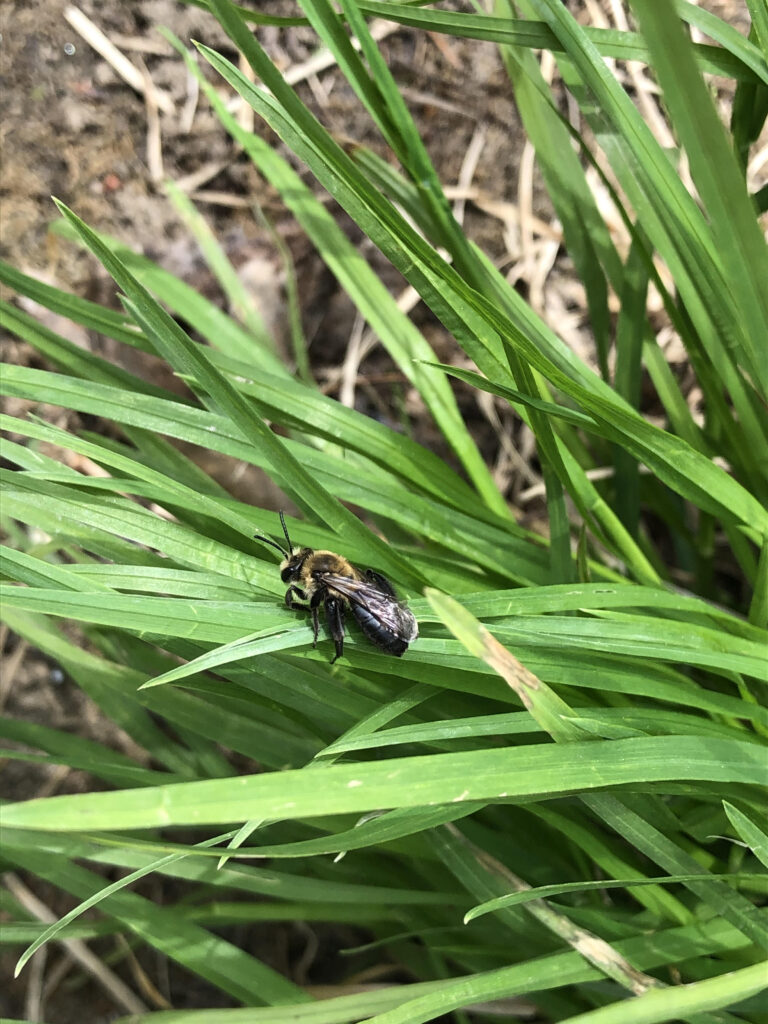
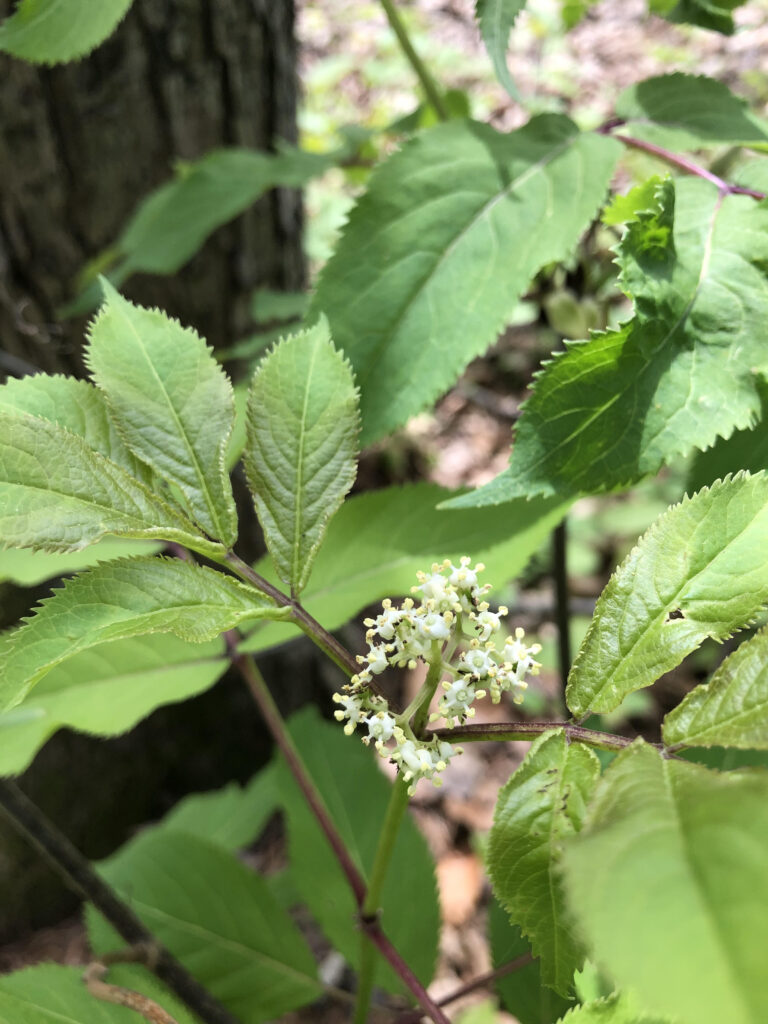
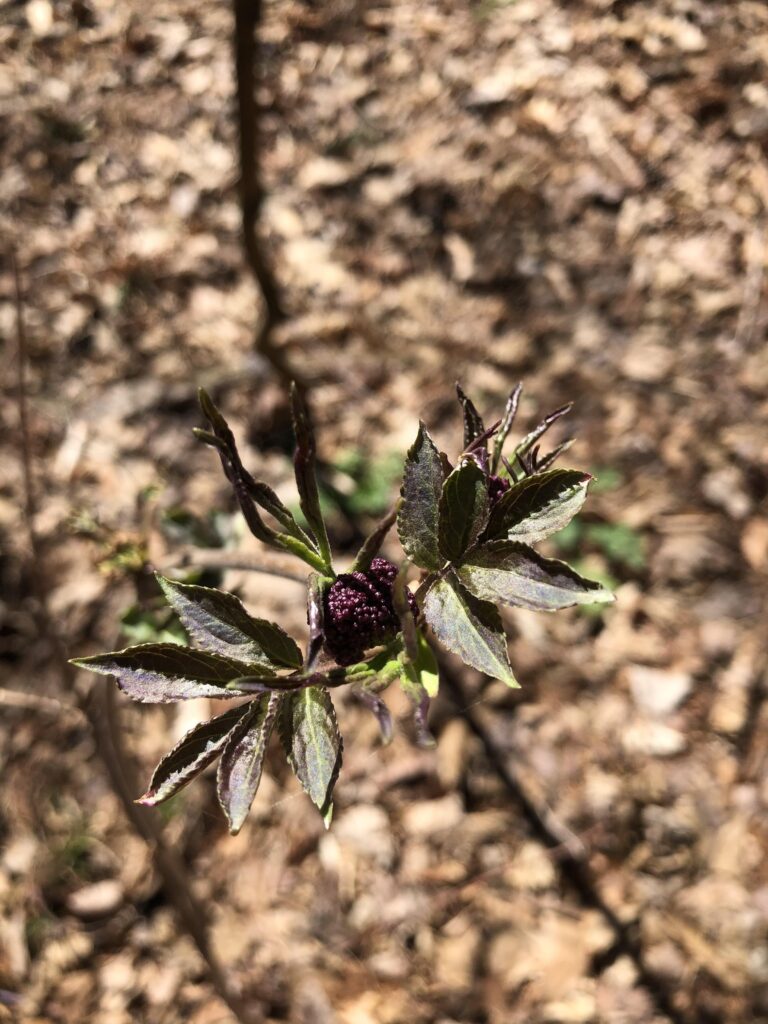
The forest has truly come to life with the sounds of birds and the activity of insects as well as the green leaves on the trees and shrubs and wildflowers across the forest floor. During my visit to my phenology site, I heard chickadees, a tufted titmouse, a winter wren, a black-throated green warbler, and an ovenbird which is a fairly recent migratory arrival to the Champlain Valley. Several species of wildflowers were in bloom that were not visible at my last visit including white trillium, wood anemone, elderberry, bluet, violet, celandine, and meadow rue. Many solitary ground-nesting bees and other insects were active pollinating these different flowers. The tree with the fullest leaves was certainly the Norway maple which is not surprising since leafing out early is likely a factor in its competitive success against native tree species. The other common nonnative species at the site, barberry and honeysuckle, were both fully leafed out and the barberry was flowering. Black cherry, sugar maple, and red maple were leafing out but many leaves were small or had yet to fully unfurl. American beech leaves were just about to begin unfurling.
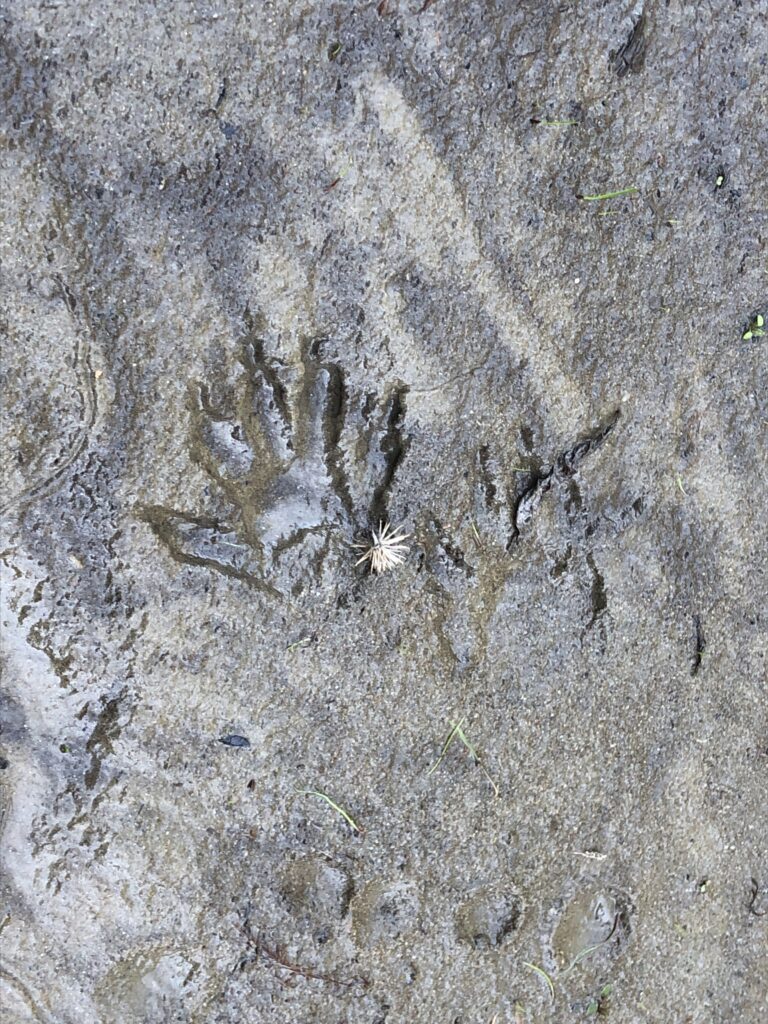
I spent time this past weekend exploring other parts of Centennial woods beyond my phenology site although I was limited to the northern half because the southern part of the woods is in South Burlington. I spent much of this time trying to become more aware of birds and identify them using the songs I have learned recently. I found that while I can fairly easily pick out a familiar song by ear, it is hard to record it for iNaturalist if other birds are singing at the same time or the one bird only sings once or twice and then stops. I was very excited to finally get a recording to log my observance of a white-throated sparrow after hearing the song probably 15 times without being able to record it in time! I think my favorite observation was finding raccoon tracks along a stream because I felt accomplished in having learned to recognize the tracks and also because I so rarely see raccoons. Overall, I think I took a much closer look at the woods around me which was a rewarding experience to both see the number of species I could observe and name and to appreciate the biodiversity around me. I also realized just how many species I see around me all the time but I do not know what they are. Before this, I had heard of iNaturalist but had never used it. I think I will continue to use it in the future to help me identify and document the biodiversity around me wherever I am and contribute to citizen-science based knowledge.
Looking at the participation of other cities around the globe, I was struck by the dedication of people to this event and the cause of celebrating biodiversity. As of the time I am writing this on May 3rd, Cape Town has almost 54,000 observations by over 1200 people. Overall, there have been over 900,000 observations of over 35,000 species. I found that my 43 observations of 40 species were dwarfed by some of the most committed people who made over 1000 observations and some of over 500 species. I find it fitting that dandelions are the second most observed species because they are found all over the world and are covering fields and yards with bright yellow flowers right now. I also found it interesting to look at the distribution maps of some of the commonly identified species and how widespread some of them are. I found many species that were observed on every continent except Antarctica including common dandelion, mallard, ground ivy, western honey bee, and house sparrow to name a few.
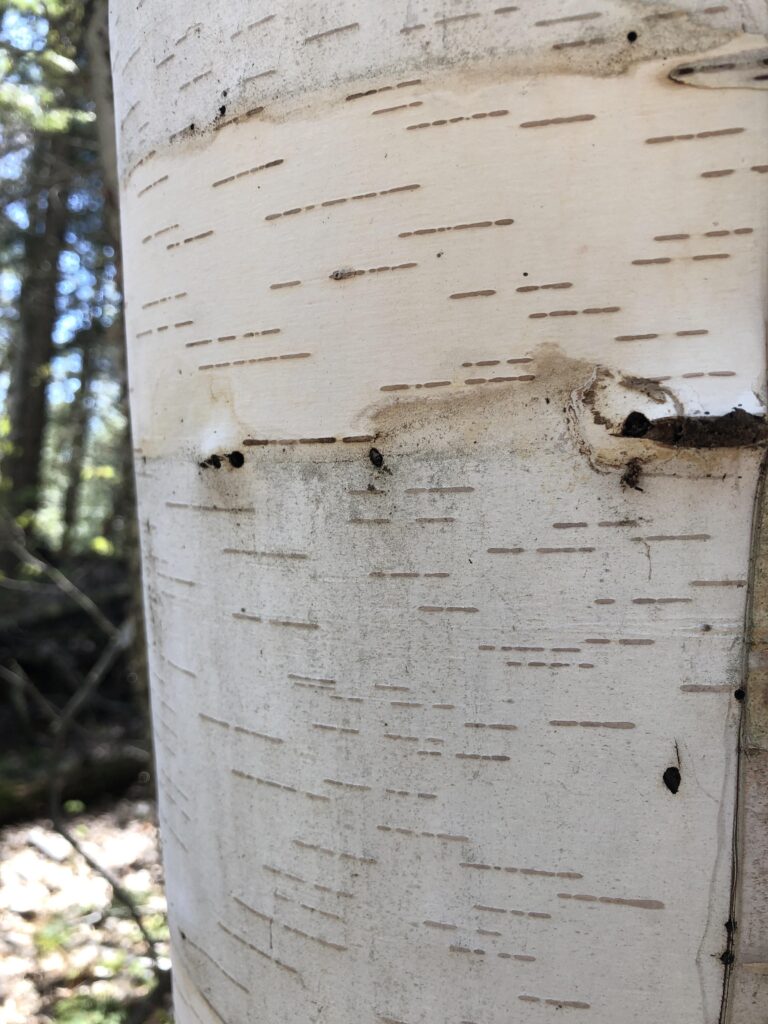
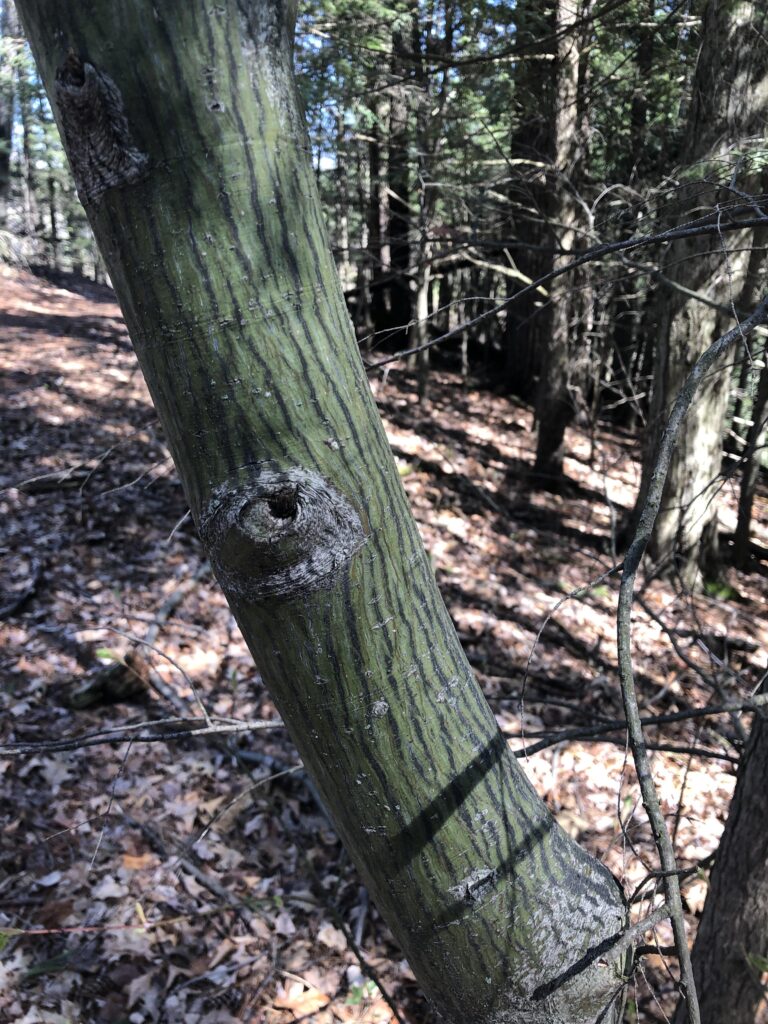
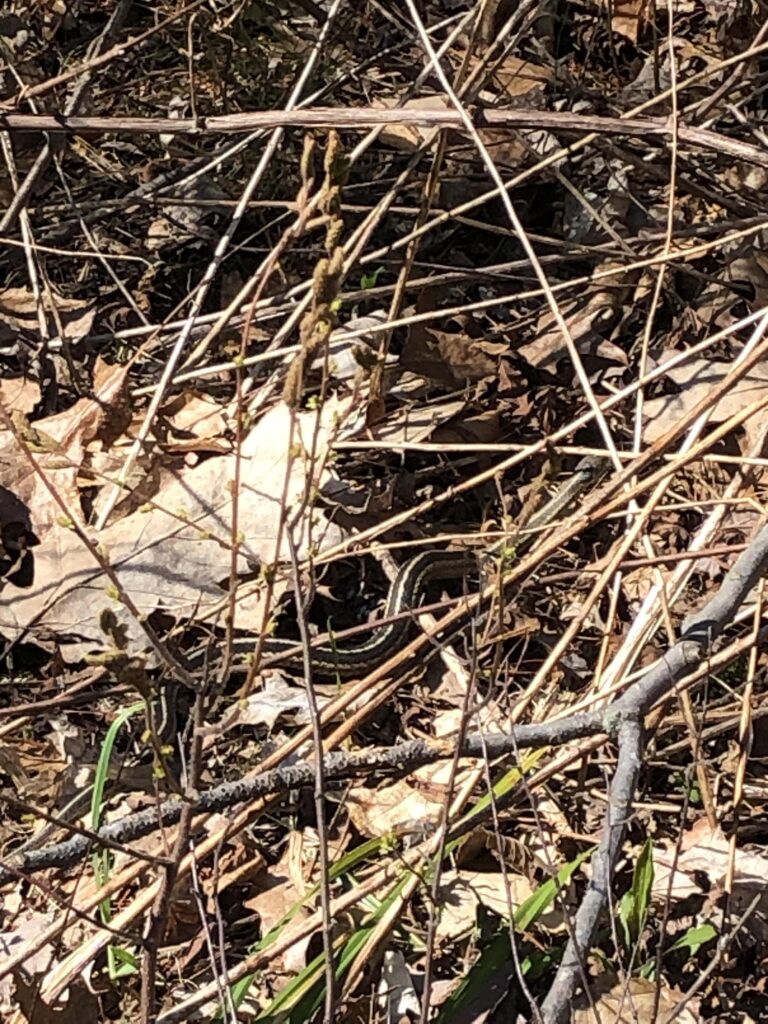
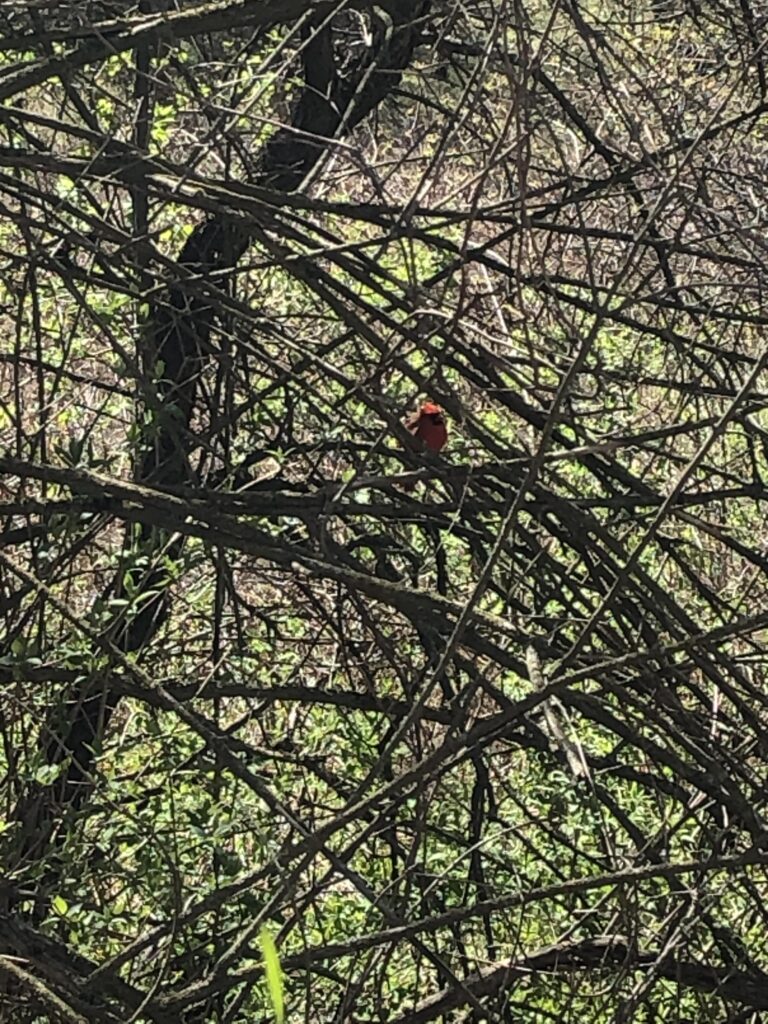
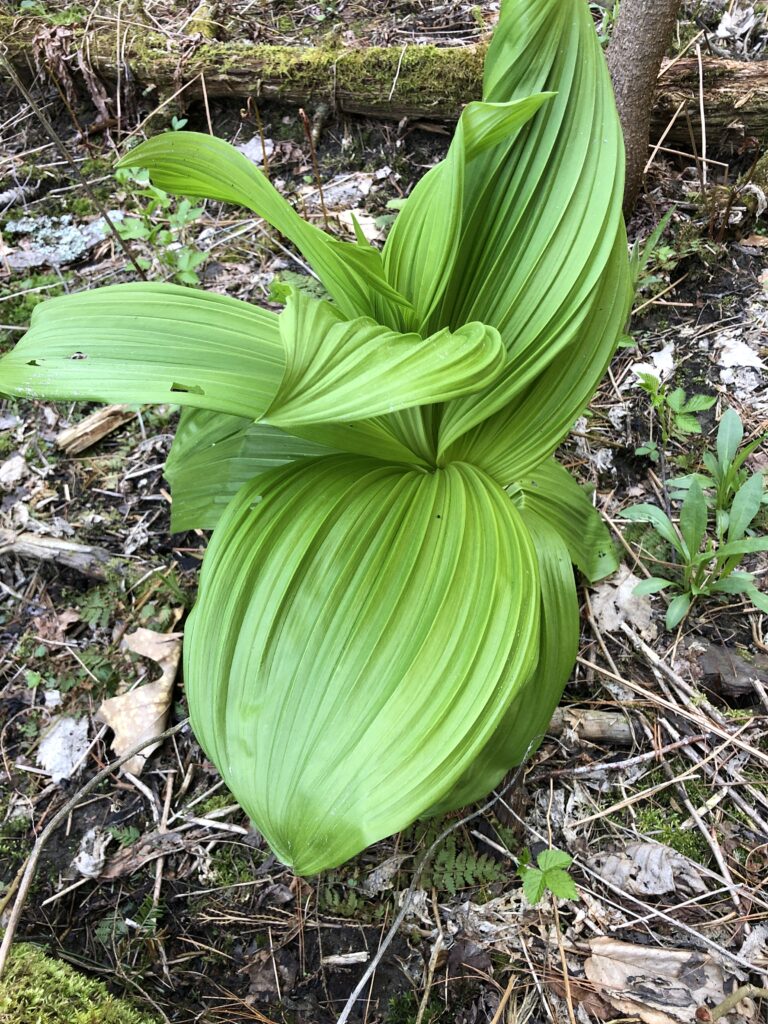
Image description left to right starting with back row: paper birch, striped maple, garter snake, cardinal, green false hellebore, raccoon track.
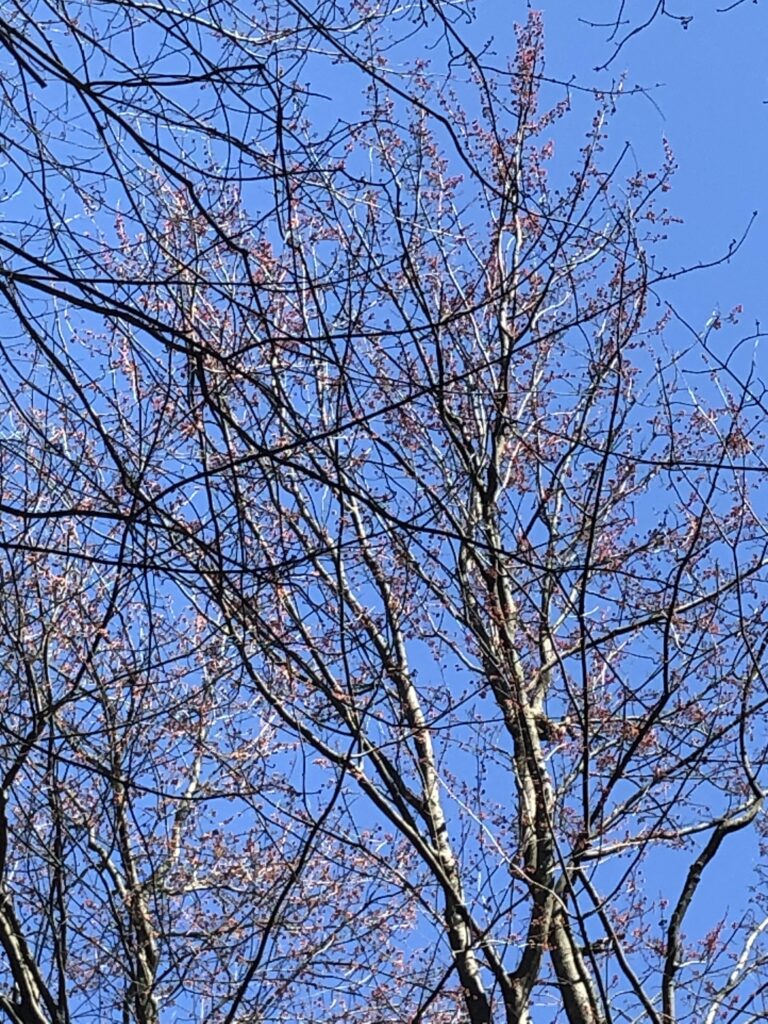
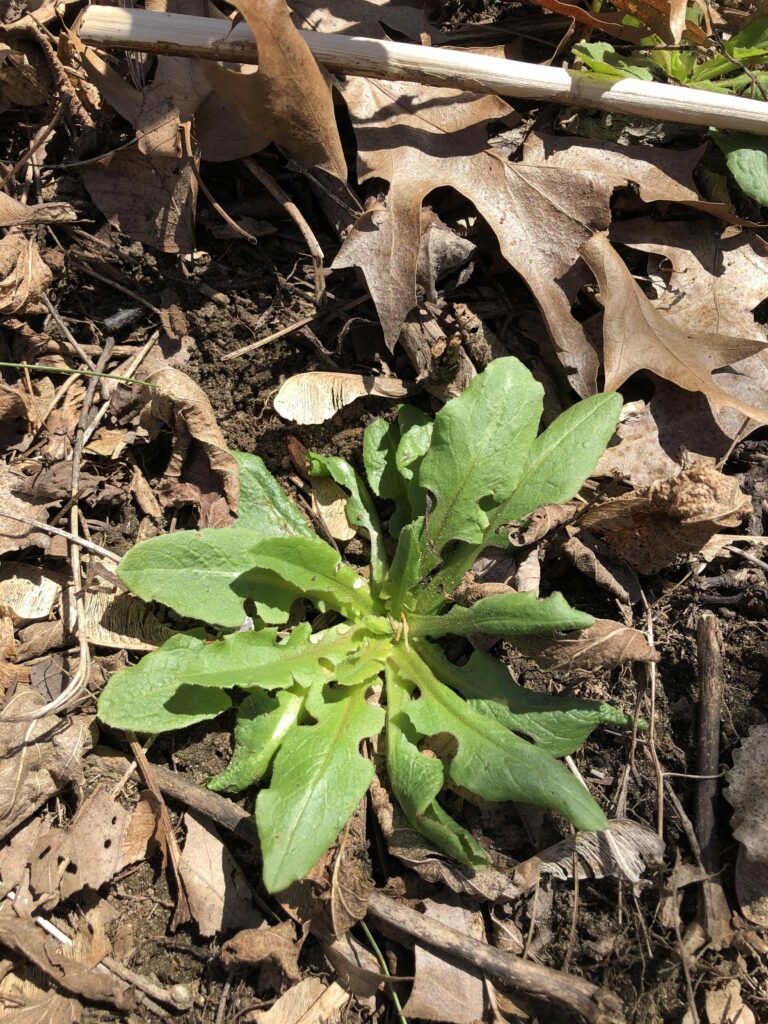
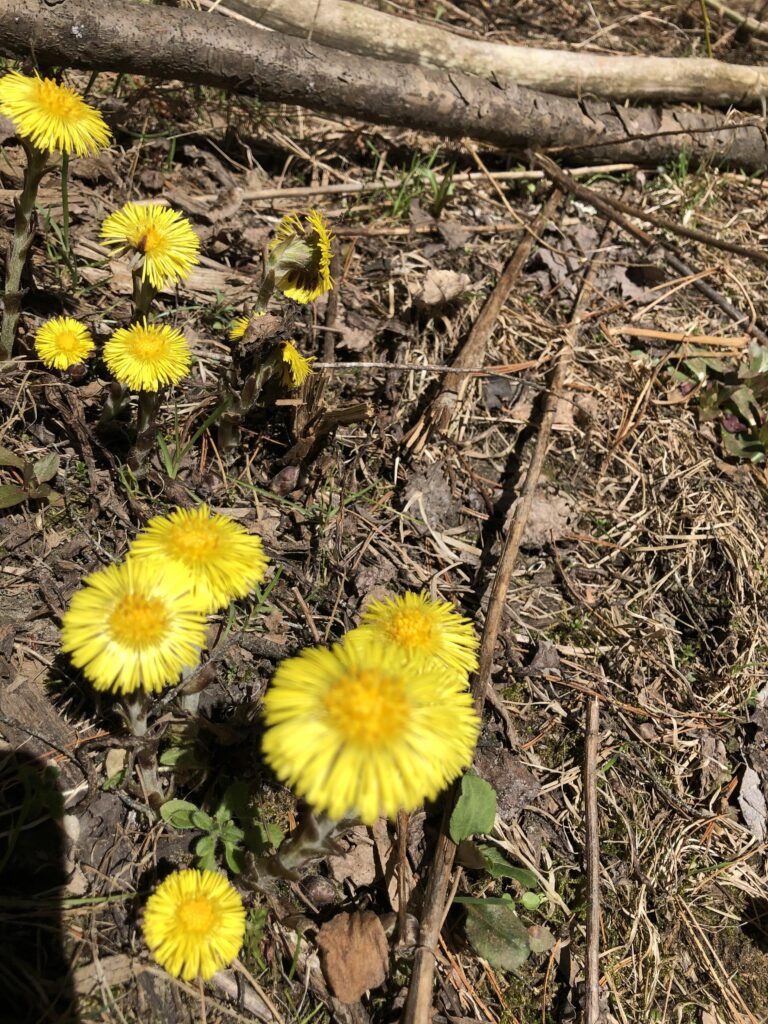
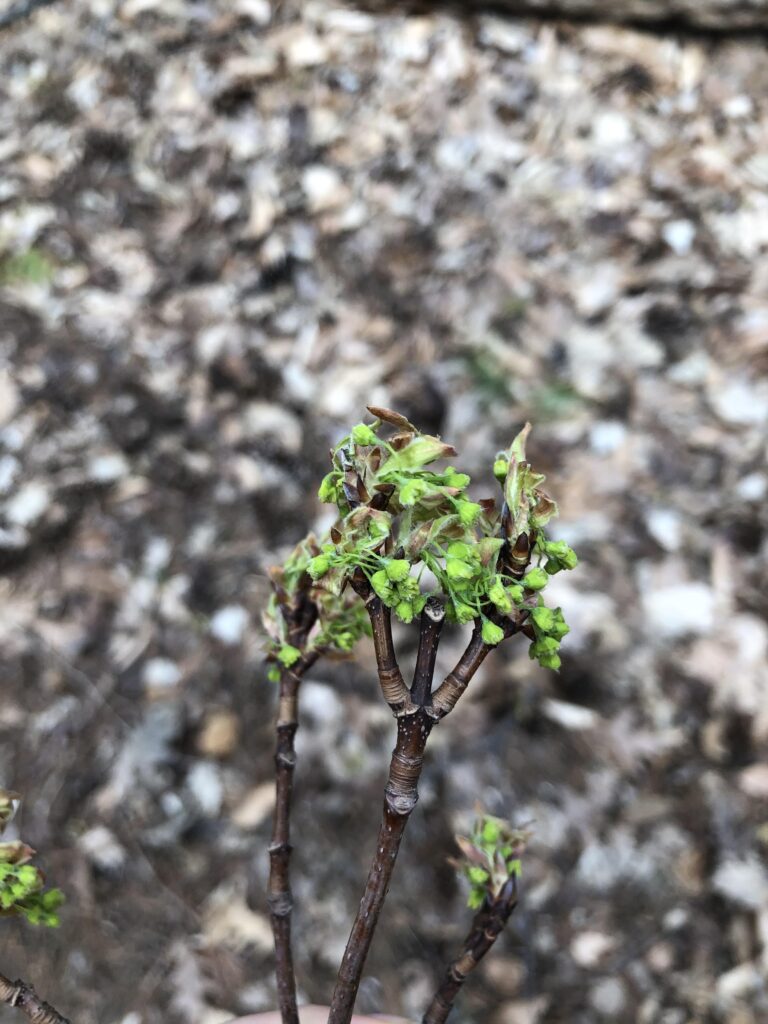
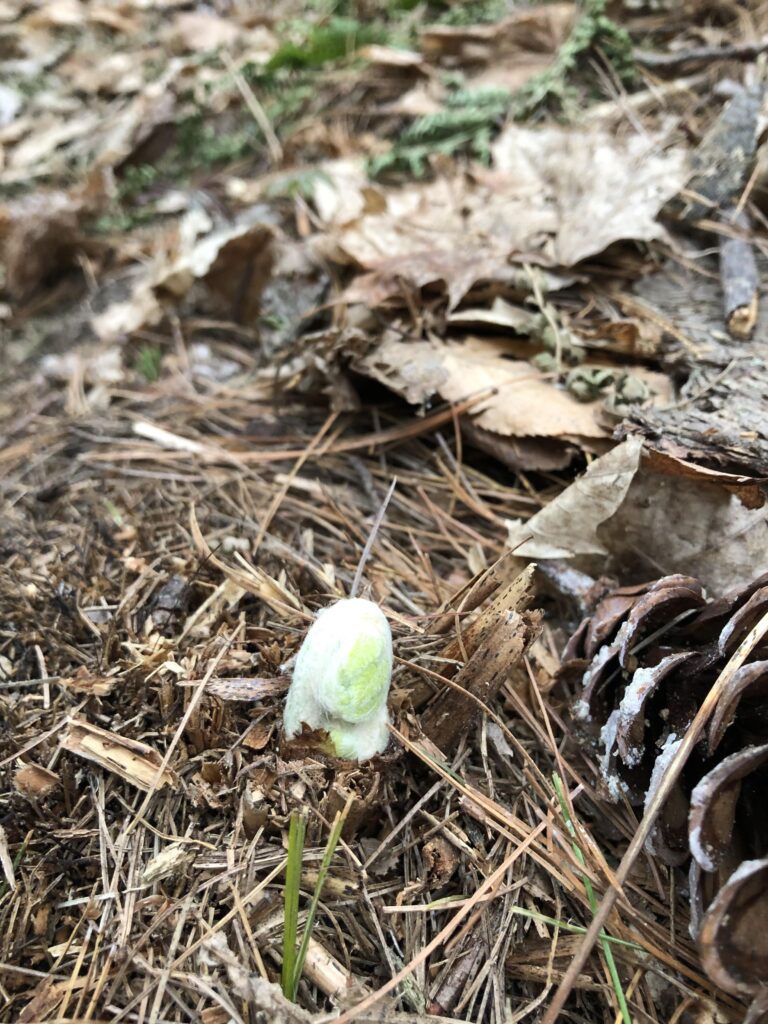
Spring has sprung and these changes are especially visible in the budding and leafing out of woody and herbaceous plants as well as increased bird activity. The red and sugar maples were the first trees at my site to bud and by now they are in bloom. It appears that the red oak and black cherry have started to bud but no sign of blooms or leaves yet. In the understory, the barberry, honeysuckle, and elderberry have all begun to leaf out. Lower to the ground, small herbaceous plants such as dandelion and coltsfoot as well as fiddleheads are poking up above the leaf litter. Now that the weather is warming and migratory birds are returning, bird activity has greatly increased. During my visits, I heard or saw red-winged blackbird, black-capped chickadee, dark-eyed junco, red-breasted nuthatch, downy woodpecker, cardinal, song sparrow, and winter wren. I also saw a garter snake and gray squirrels as well as various insects including some gnat-like flying insects, ground-nesting bees, hoverflies, and mourning cloak butterflies.
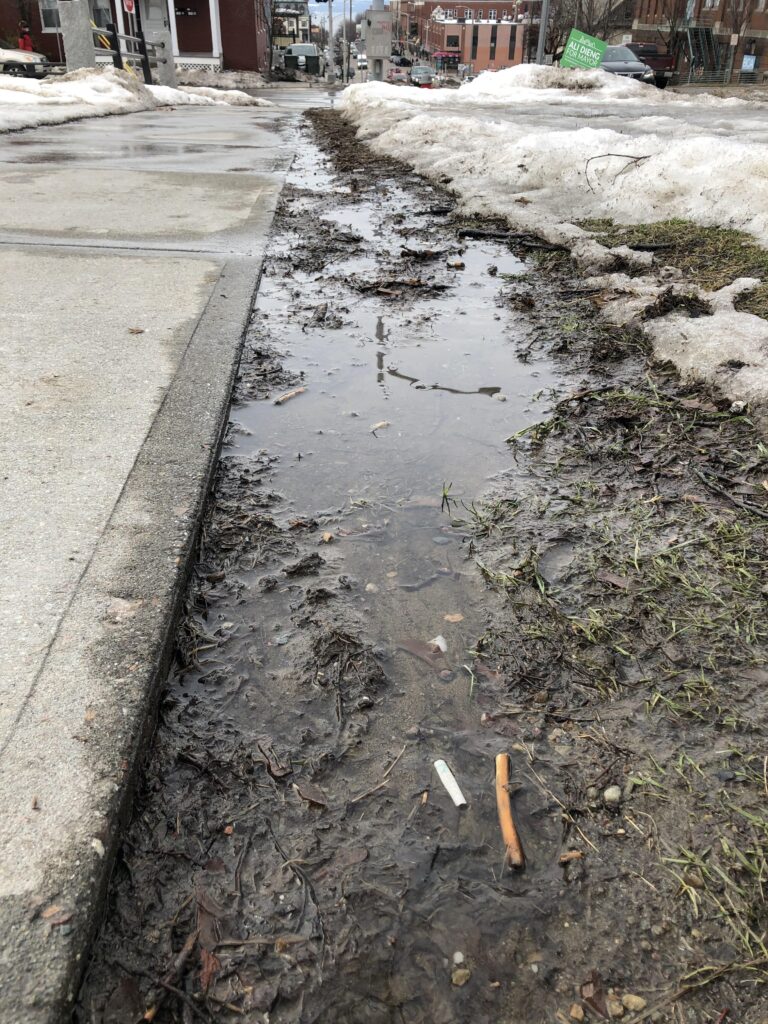
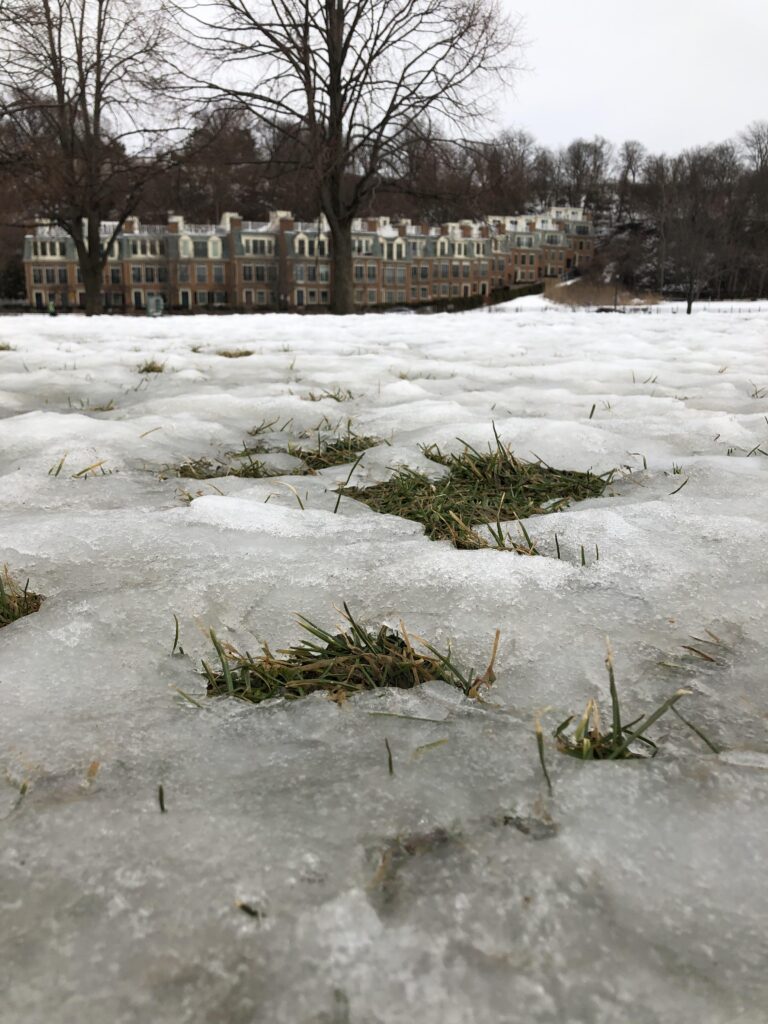
Early March is such an interesting time to study phenology as the earliest hints of spring emerge although much of nature is still in winter. I was able to go explore on a day where the temperature reached the low 40s and the sun peaked out from the clouds, melting the snow. The sidewalks were extremely slippery in some areas due to the thawing and refreezing of snow and the fresh layer of water on top from that days melt. In places where the snow had melted and the ground was visible, the soil had become mud with some of it carried away by running meltwater down toward the lake. The lake had some ice around the shoreline and along structures like docks but much of it has broken up or melted. In terms of animal activity, around campus, I have been seeing robins foraging on tree fruits while insects and worms are not available due to cold temperatures and snow. While on my walk, I observed common mergansers swimming and diving in the lake a little ways from shore.
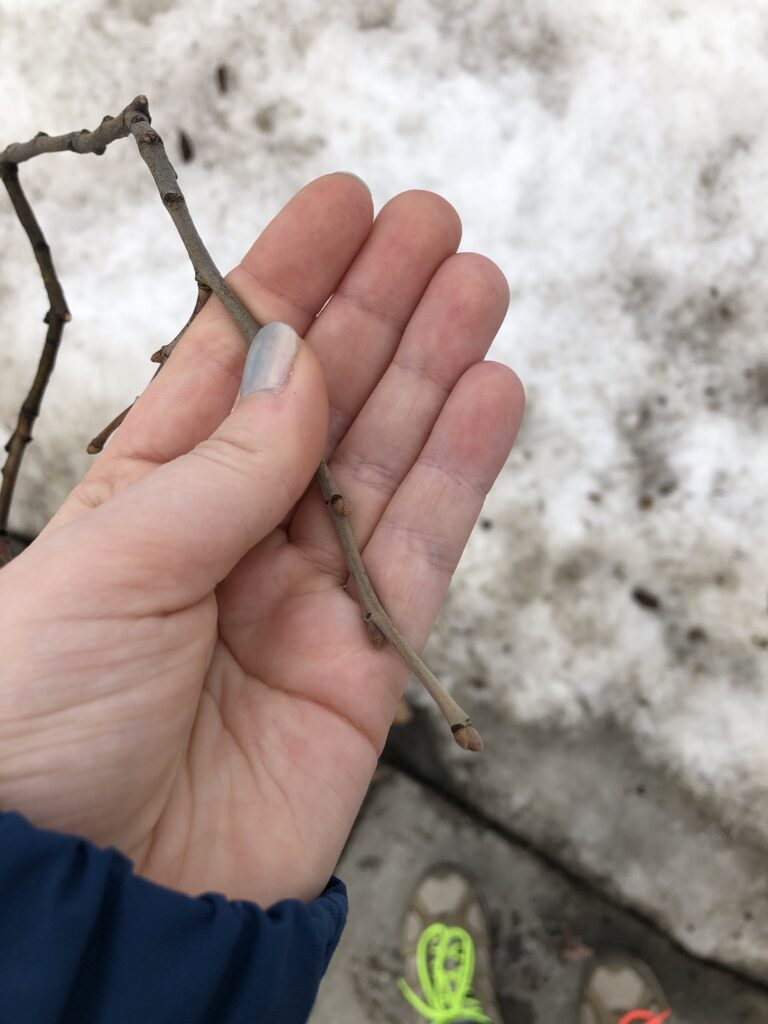
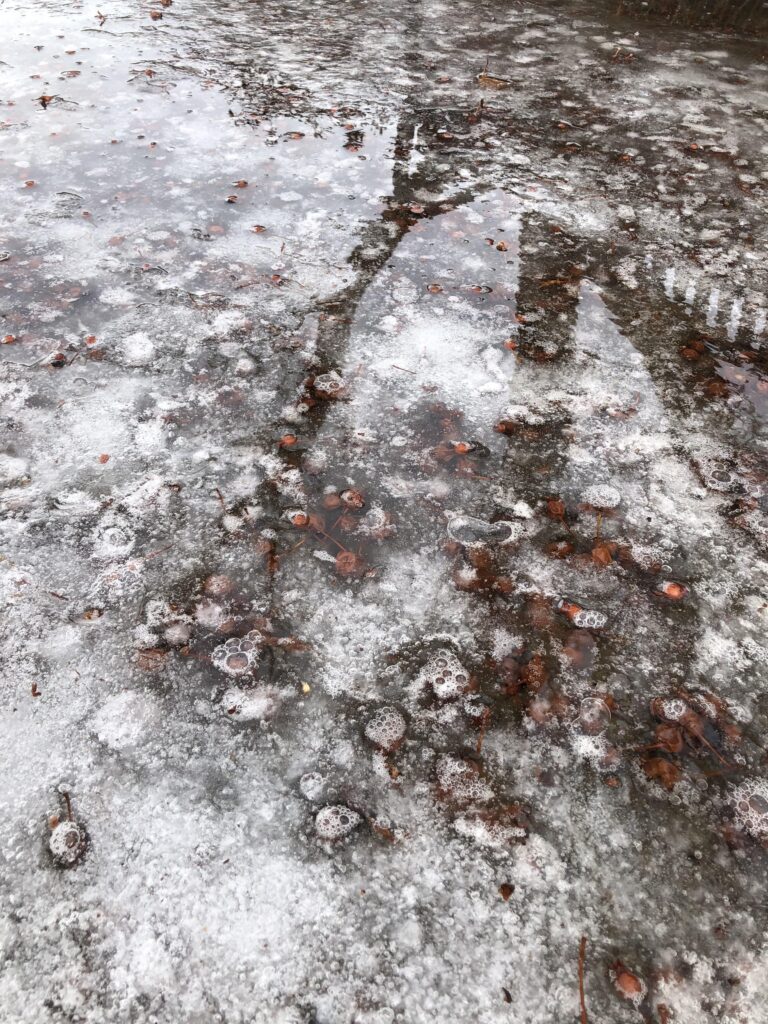
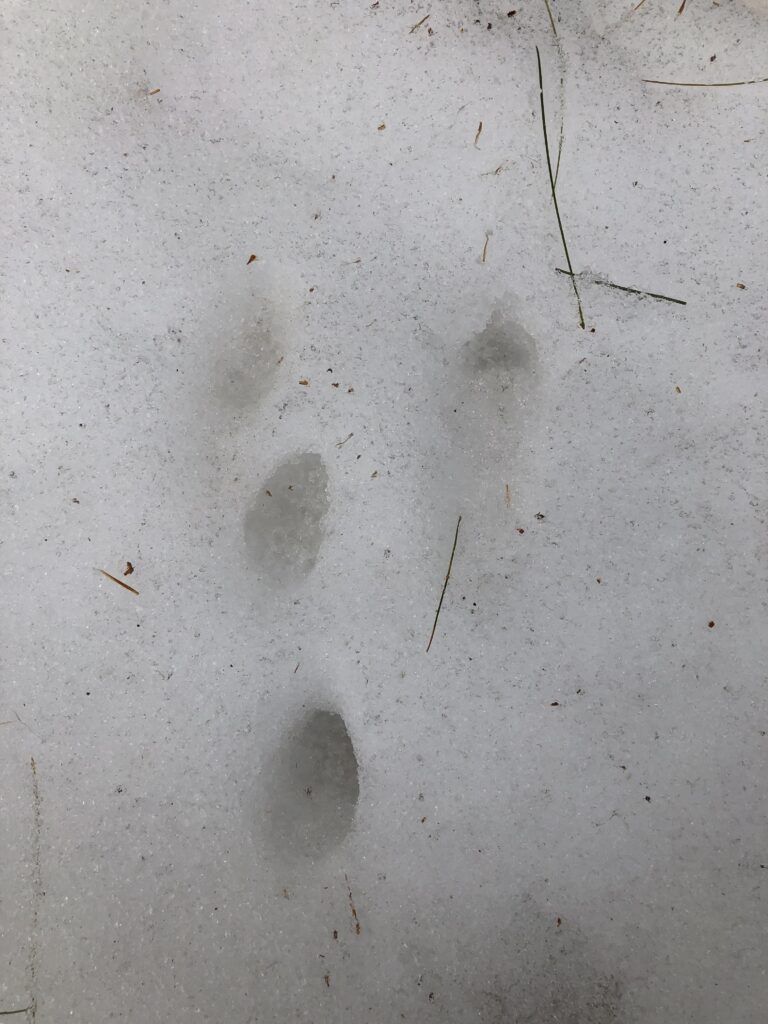
Image descriptions in order: a basswood twig, water from melted snow collecting along the roads and sidewalks, hackberries frozen in ice, a common merganser on the lake, grass poking up through the snow, tracks of either a red or gray squirrel.
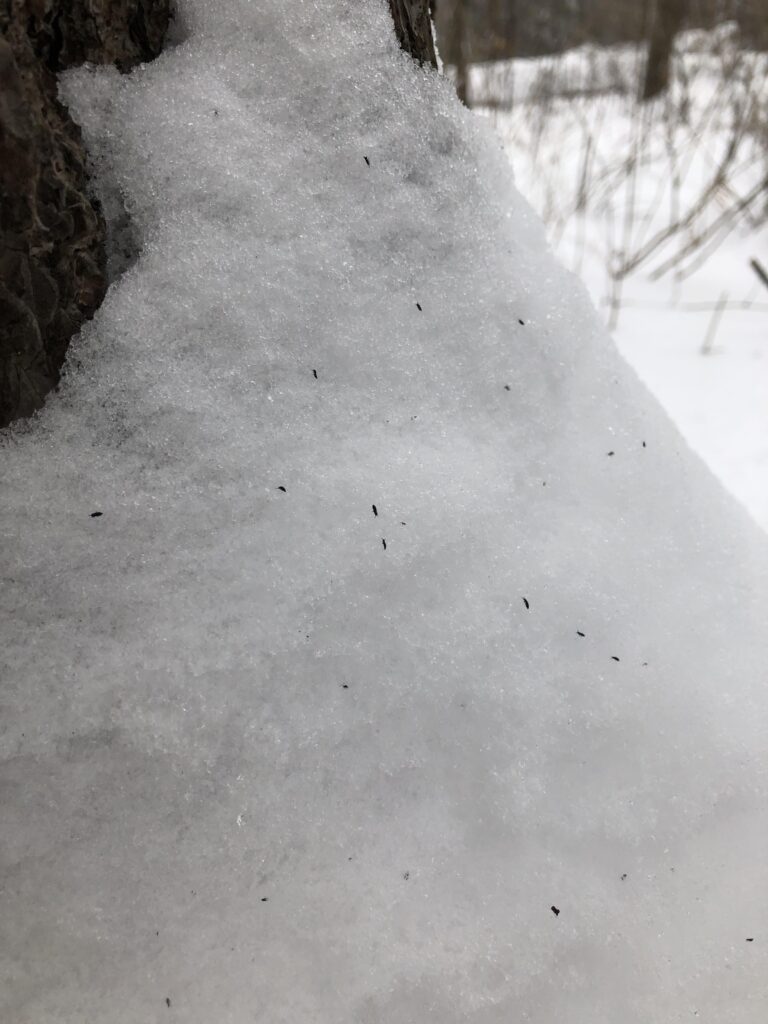
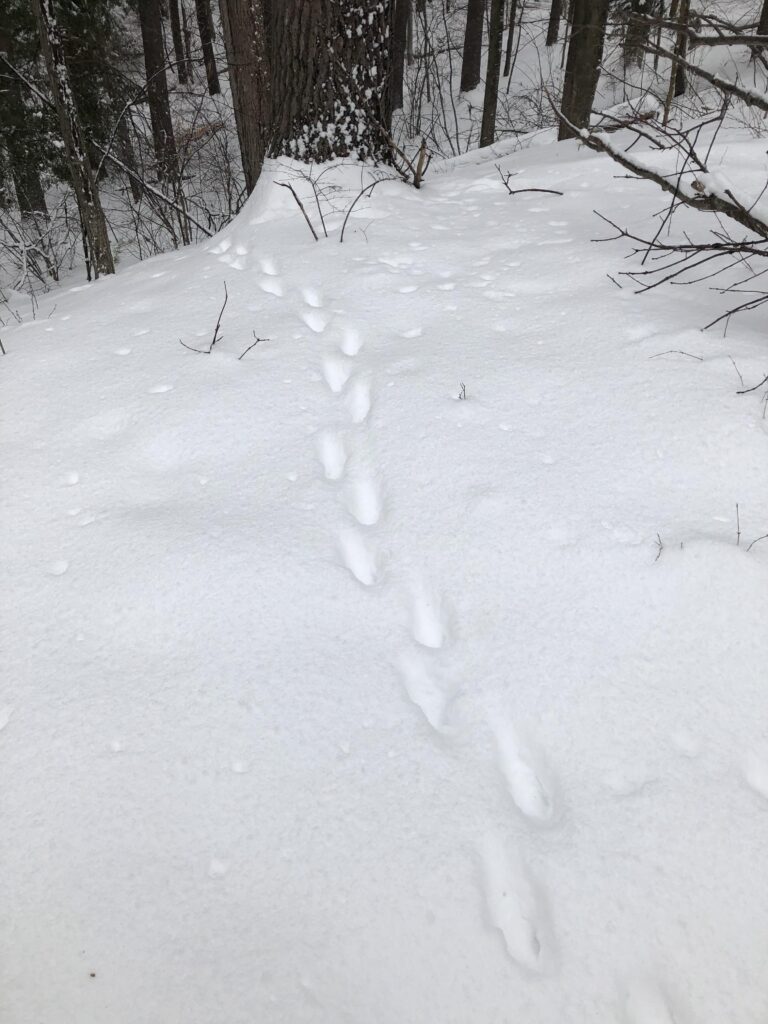
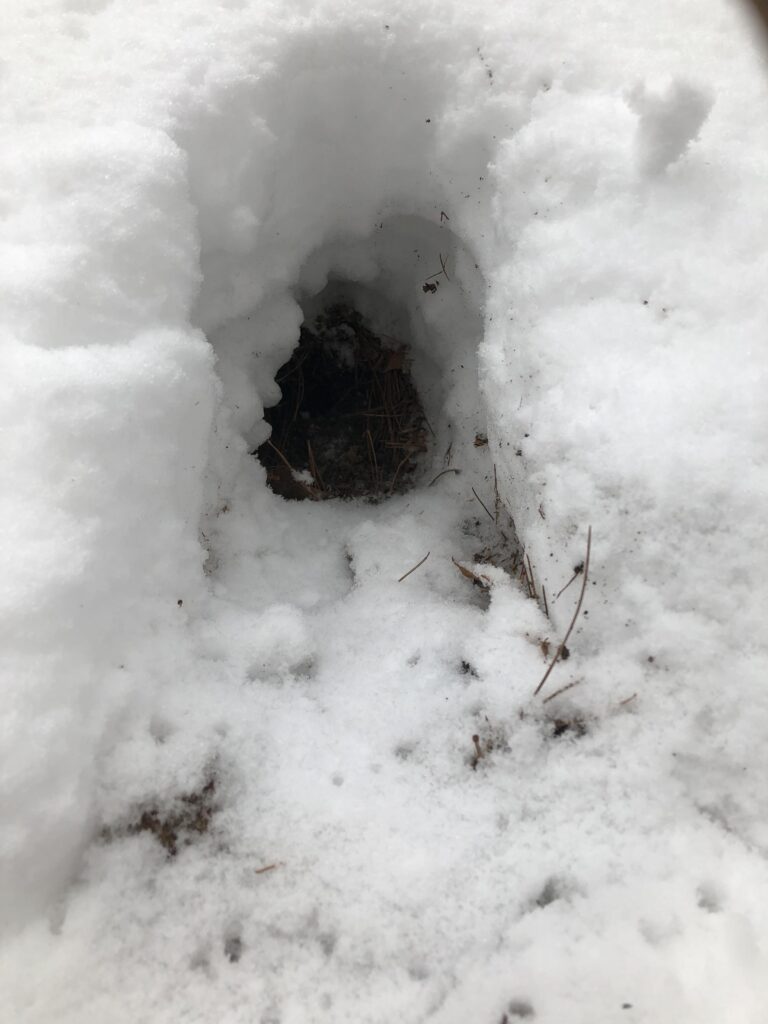
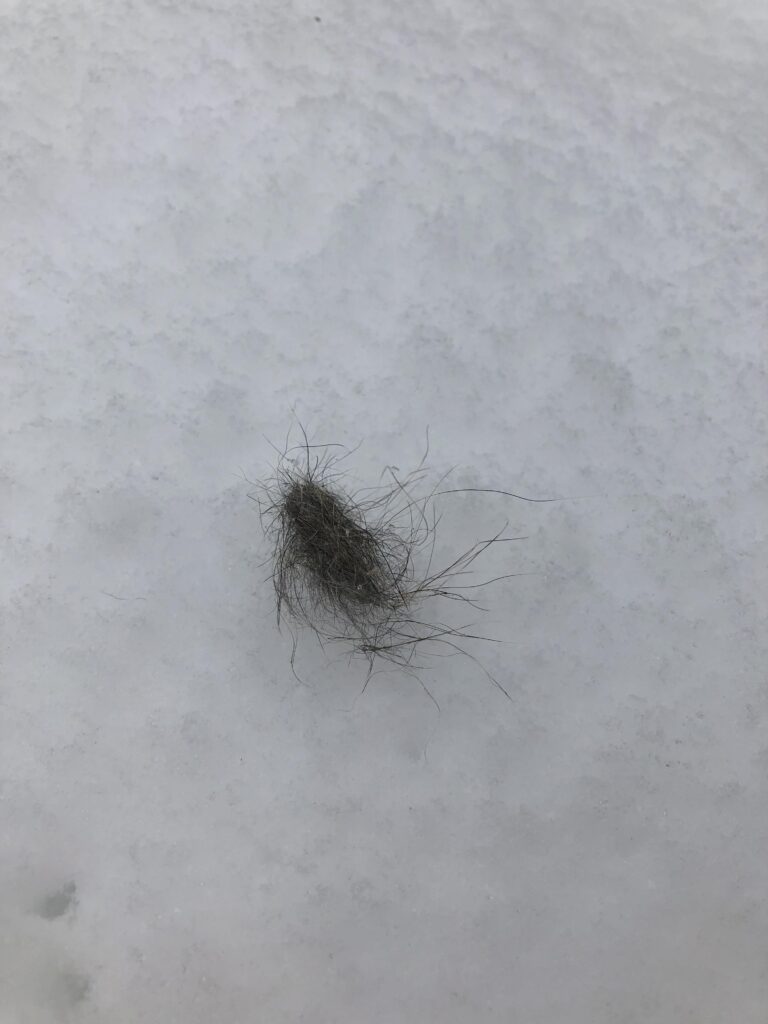
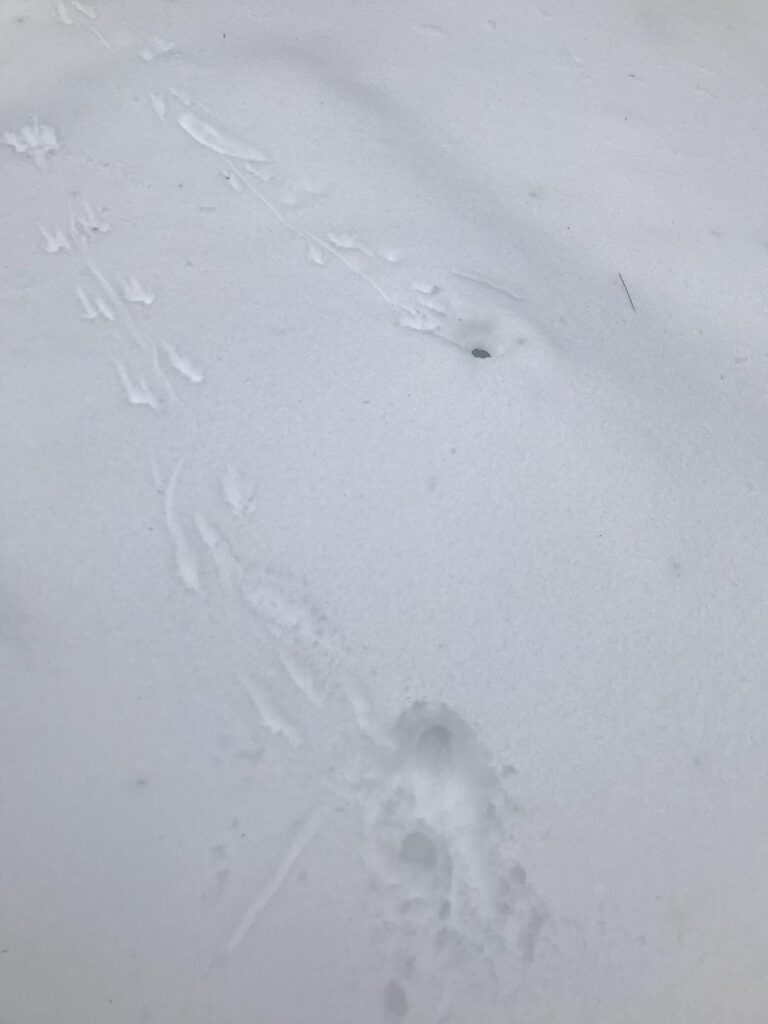
The biggest change since the last time I visited my site is the snow! There’s at least a foot of snow blanketing the woods. I did not hear or see much in terms of animal activity aside from tracks as most creatures were probably hiding out to keep warm in the cold weather. The fresh snow covered most of the tracks I could see but there were many large sets of tracks that were likely deer or canid but since they were filled in, I couldn’t see any features of the toes. Some small creatures had been out recently and I was able to find tracks of mice. Additionally, I found a clump of dark gray fur belonging to some animal. On top of the snow, I found a few snow fleas enjoying the slightly warmer 34-degree weather.
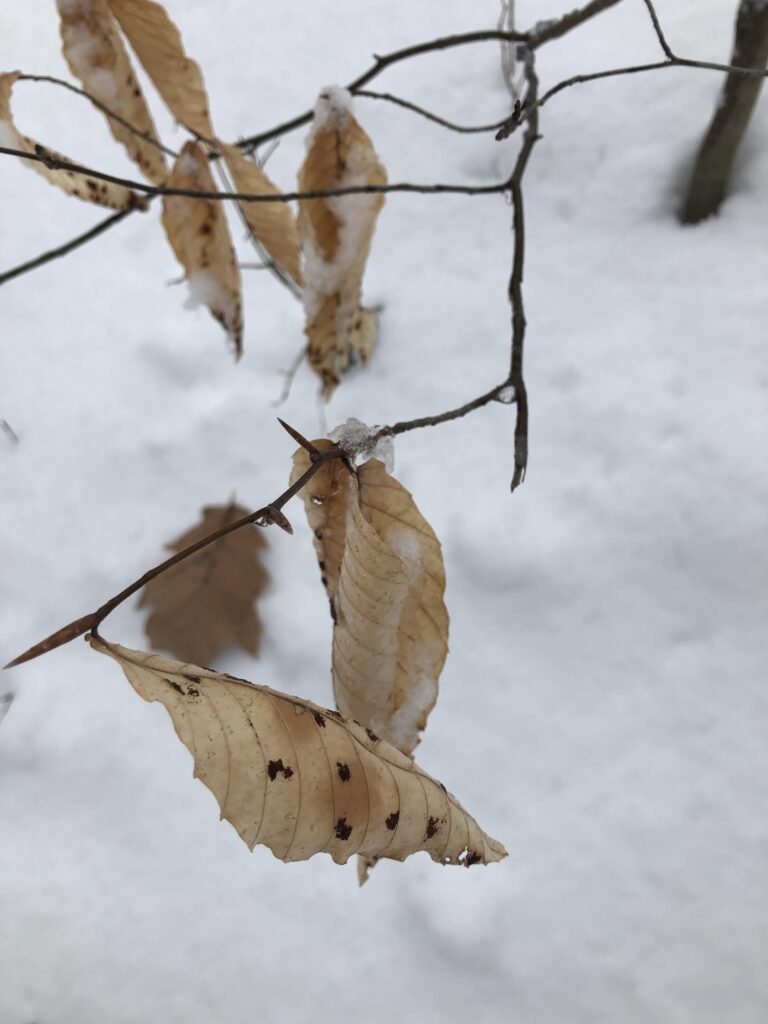
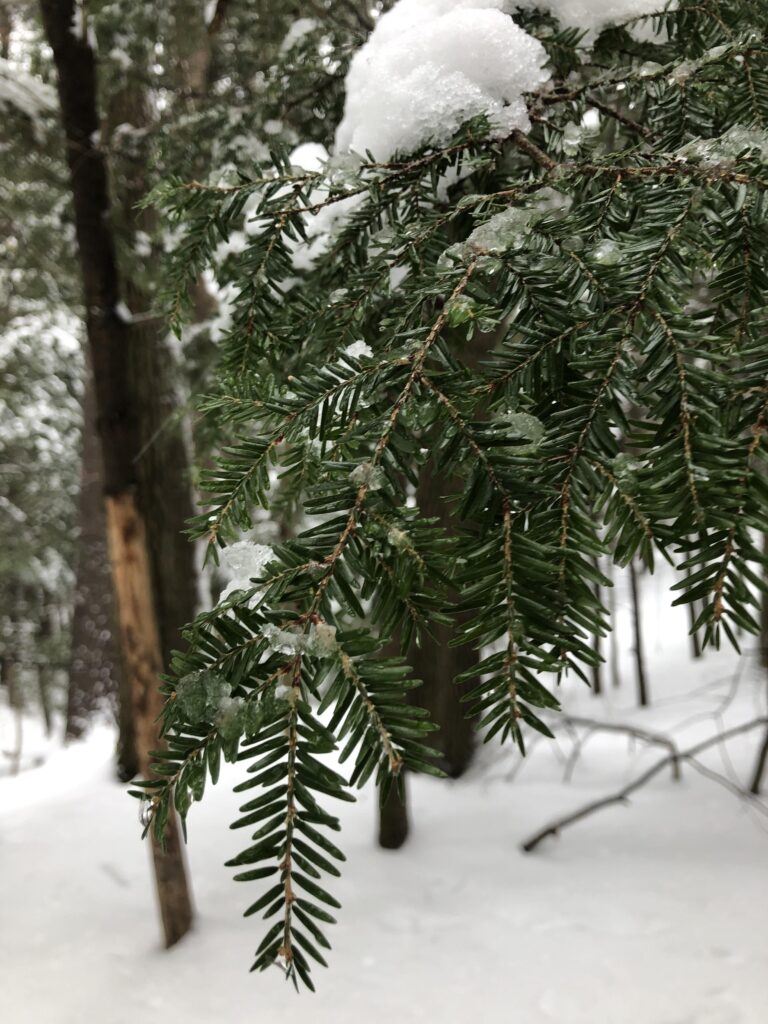
In terms of plant life, many of the small shrubs were covered in snow but the beech and red oak trees still held on to several brown leaves. The snow clung to the branches of the conifers, bending them toward the ground.
In the 19th century, the land that is now Centennial Woods was primarily used for agriculture, much of it being pasture for livestock. Thus, less than 200 years ago, this land was completely cleared and has only recently undergone reforestation. Between 1891 and 1968, UVM acquired several parcels of this land from different owners adding up to about 216 acres. Throughout the 1960s and 70s, the woodland shrunk due to various reasons such as the construction of I-89 by the government and construction of parking lots, housing, stormwater retention ponds, etc. by the university. In 1997, 66 acres of woods were preserved by the university which has remained Centennial Woods Natural Area on campus. The current permitted land uses are trail use and maintenance, sugaring, soil pits, and current rates of stormwater discharge.
Brooks, C. (2020). Lecture 4. University of Vermont, Burlington VT.
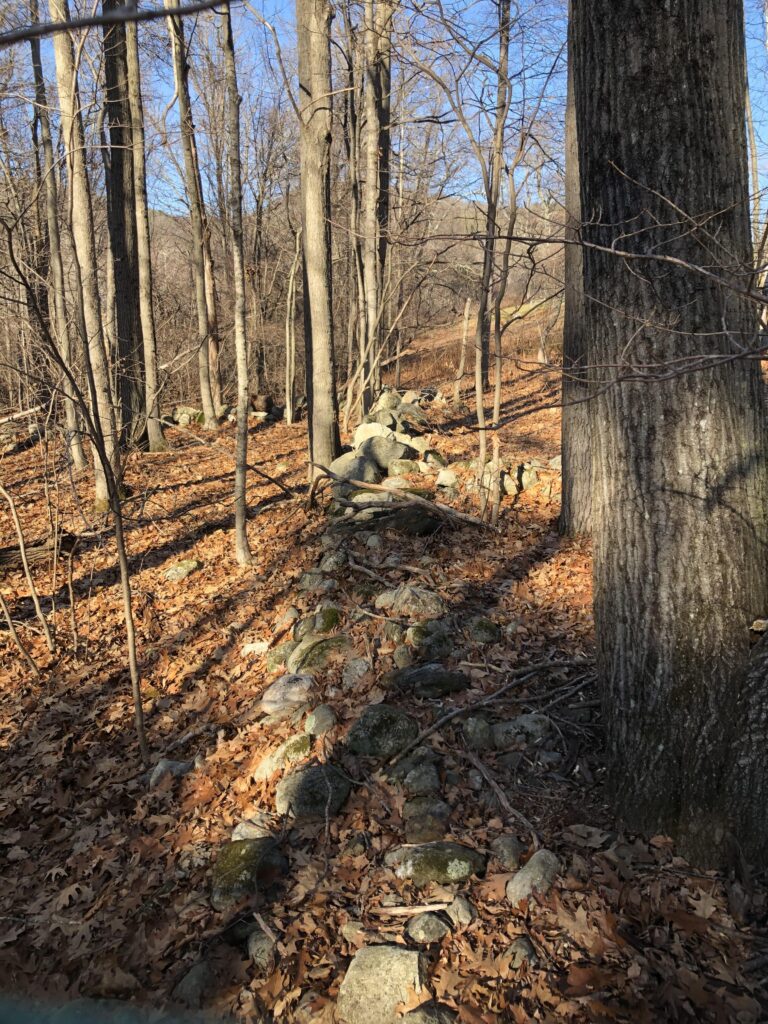
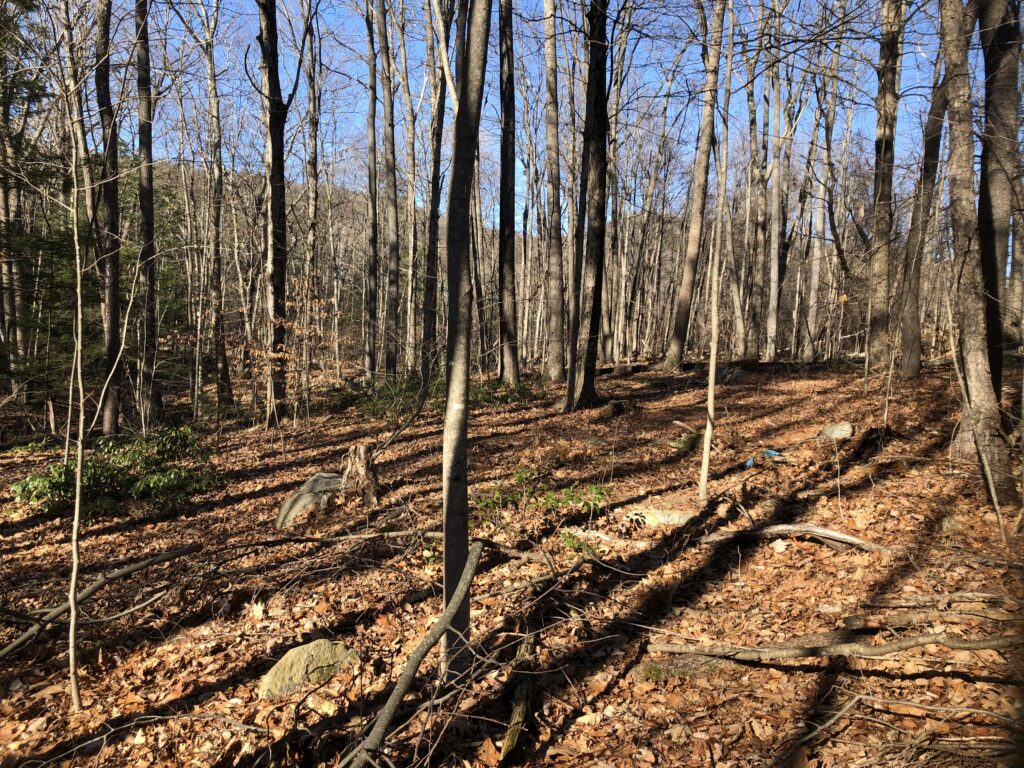
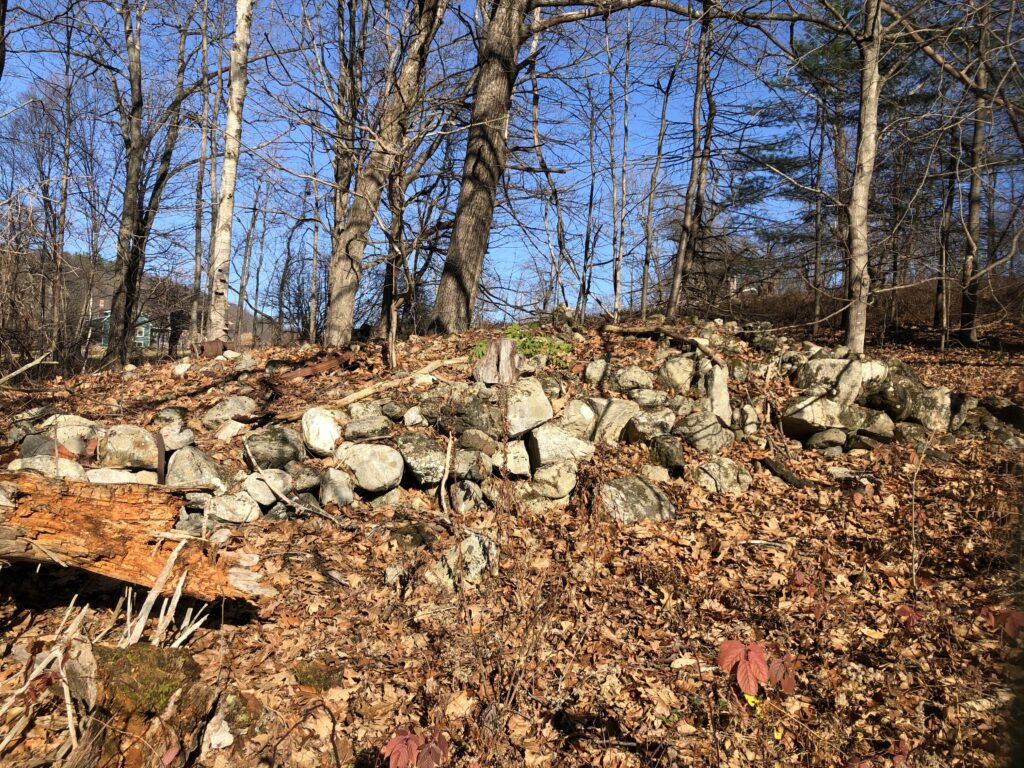
The composition of tree species in my site at home is similar to my site in Centennial Woods. The primary species in both are red maple, white pine, and red oak with some beech and black cherry. However, my site at home lacks Norway maple and has species I didn’t observe in Centennial woods such as sugar maple, hemlock, black birch, and aspen. Like in Centennial woods, my site at home is regularly used by people and has a trail that runs through. It also exhibits signs of its past land use as a farm with the piles of stones moved for crop fields, stone walls, and barbed wire. One major difference in the current land use is that Centennial woods is conserved and our land here is private land that my parents manage and regularly take/cut trees and control invasive species with pesticides.
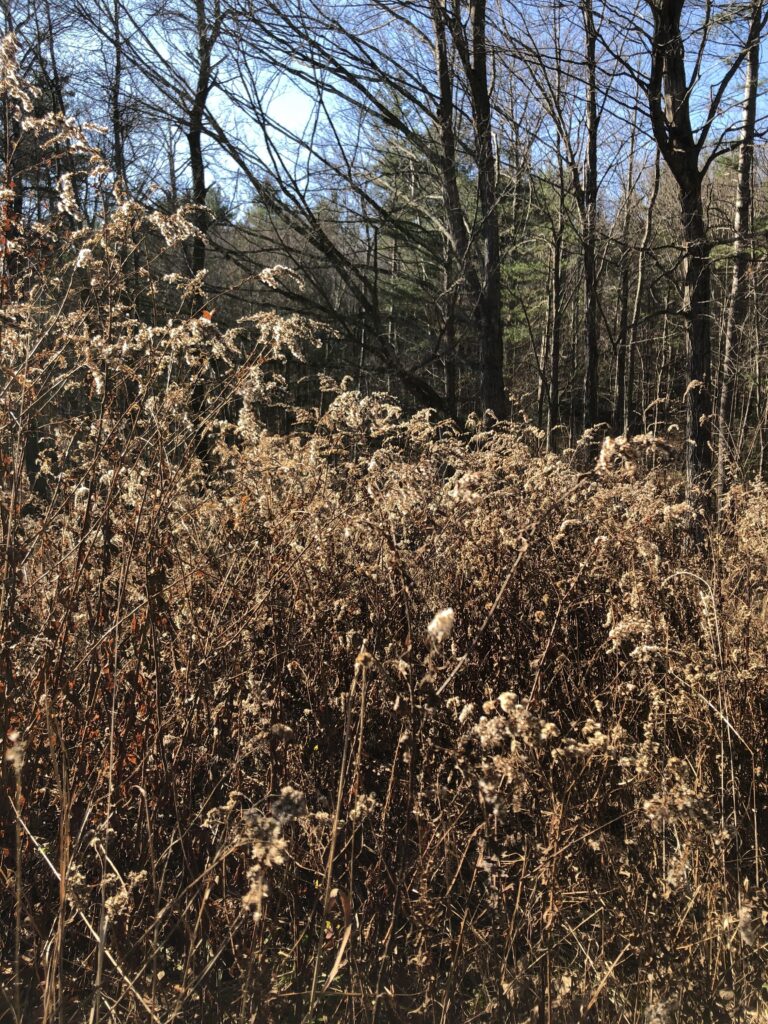
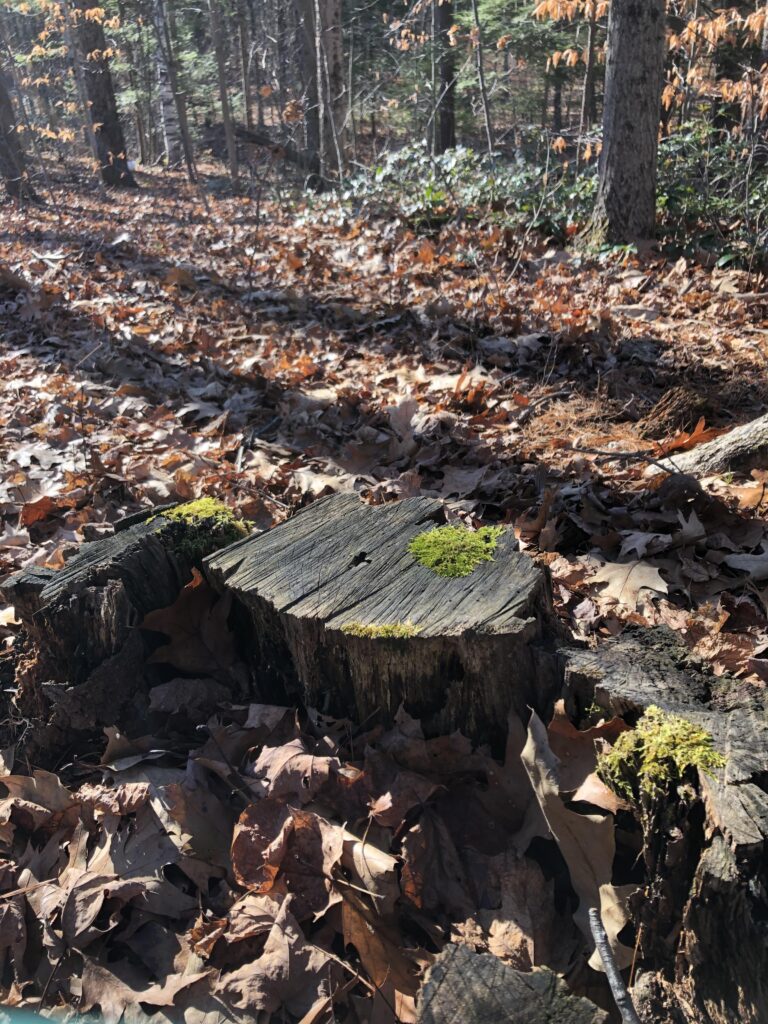
In terms of phenology, the red oaks at this point have lost all but just a few of their leaves so the beech are essentially the only deciduous species here to still be holding onto leaves. The ferns that we have growing here have all died back in the cold, waiting to grow again next spring although, in other areas of the woods, there are species of ferns that remain green. The only animal activity I observed today was a squirrel running through and seeing a pile of broken open shells of nuts that had been eaten by squirrels or chipmunks.
Here is a link to my updated google map including my site at home: https://www.google.com/maps/d/u/0/edit?mid=15sSdb-xryIs0aMJNcVSWqgakFRzlOLIH&ll=42.418968897375755%2C-72.71575634463655&z=17