Posts

Centennial Woods in May: Final Visit

It’s been really wet and muggy the past couple of days, which made travelling to my spot a bit of a pain. However it was definitely worth the trek, the leaves just started breaking and the understory is alive with new growth.
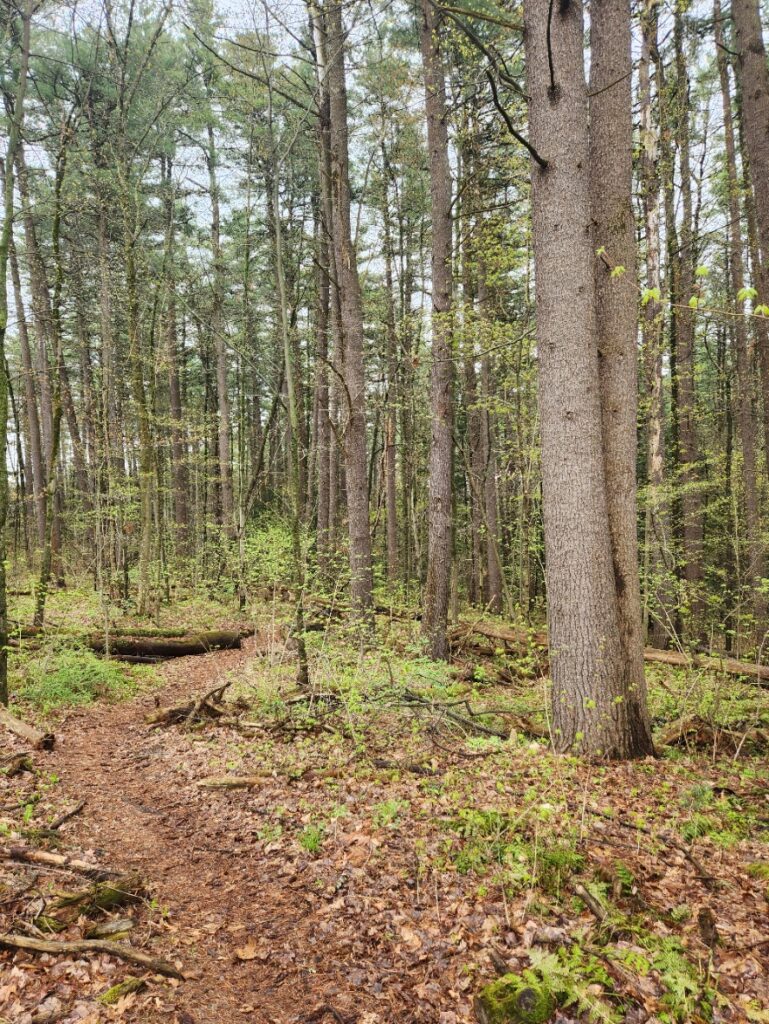
All the other times I visited, the understory was almost completely clear, but now that spring has come in earnest, the woods are completely different, all the little patches of green here are the new growth of striped and red maples.

In what ways do nature and culture intertwine here? This is an interesting question because I don’t really think this is a place of great cultural significance but it is a place of recreation. I think it’s a reflection of our democratic ideals. While it’s owned by UVM, this is a public place, in an accessible area, that’s open to everyone and enjoyed by many.

Intermediate wood ferns have been a perennial part of my spot in centennial woods. I thought there wasn’t any change since the last time I visited but upon further inspection, they’re starting to shoot up new fronds on top of last year’s growth.

Do I consider myself a part of this place? No. I never really understood the one-ness with nature that is sometimes mentioned in lecture. I’m only a passer-by, along with hundreds of others who have walked the same path I have. It’s not my land and I haven’t done anything to it so I don’t understand how I’m a part of it.
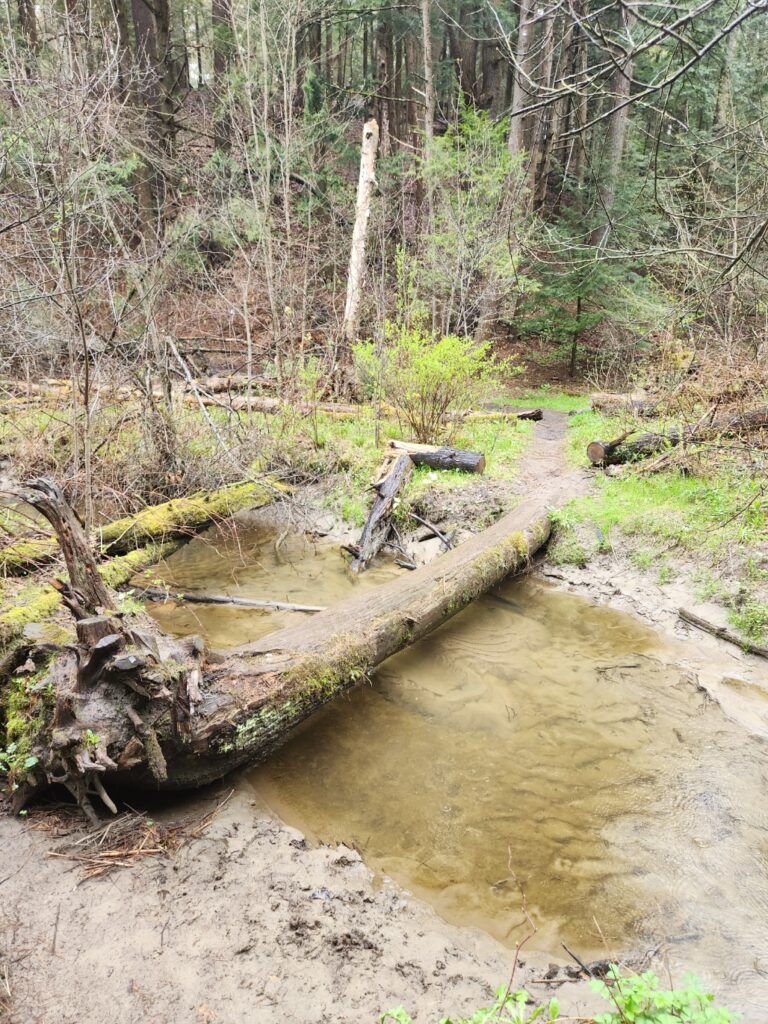
One landmark of this area that will always stick with me is this fallen log that people use to cross the brook. It adds a little sense of adventure to every trip. There have been a couple of times, including today, where the tree was slick with rain or snow, which always makes the crossing a little bit treacherous.
Bioblitz and Nature Walk at Salmon Hole

Spring is here, the woods are alive with new growth and the city nature challenge has begun!

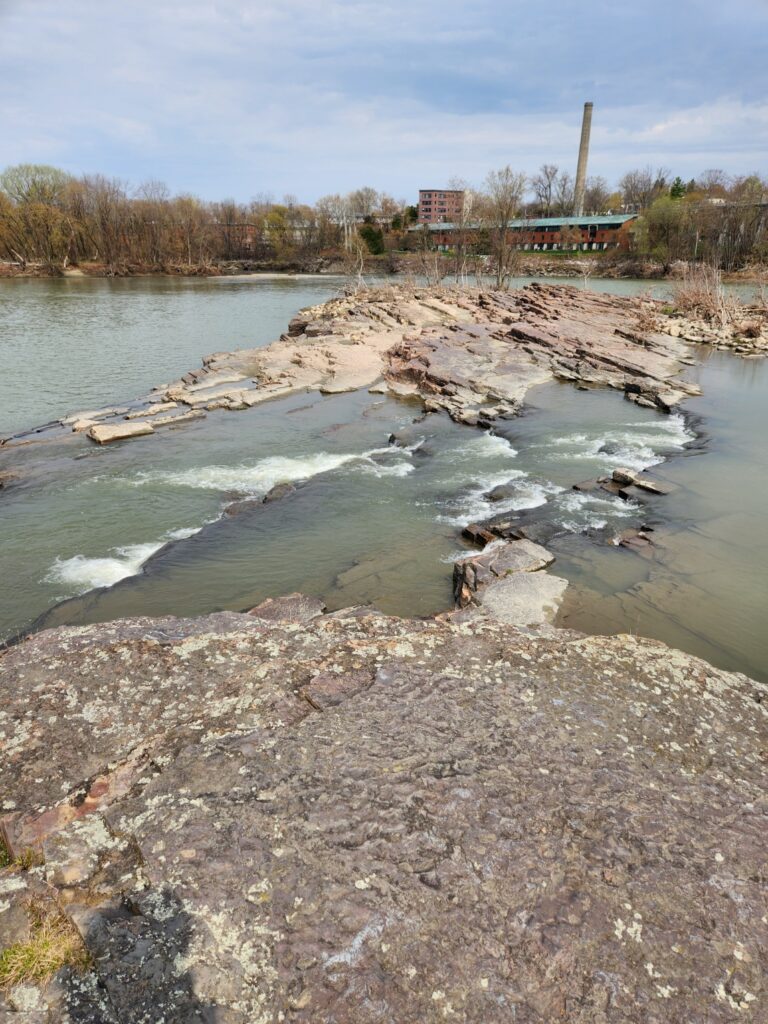
I’ve never been to salmon hole before, but I loved the way the river looked when we went there for the Winooski mills lab, so after class, I walked down to the river with a friend of mine.

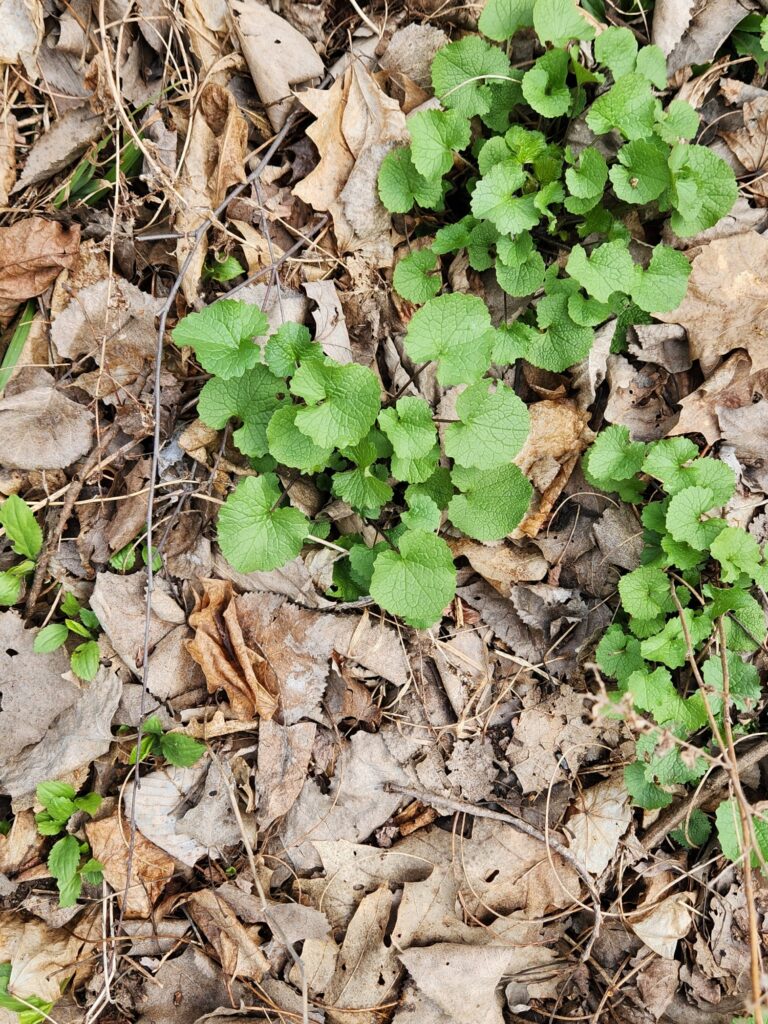
The first thing I noticed was that the ground was covered in these colonies of garlic mustard, Alliaria petiolata. It’s an invasive weed that grows prolifically on disturbed ground such as roadsides.

The river looked beautiful, it was a deep blue-green from the sediment. I wonder if this is a healthy color for the river, from my time spent in Maine, I’ve learned that this rich color means that there’s life in the water.

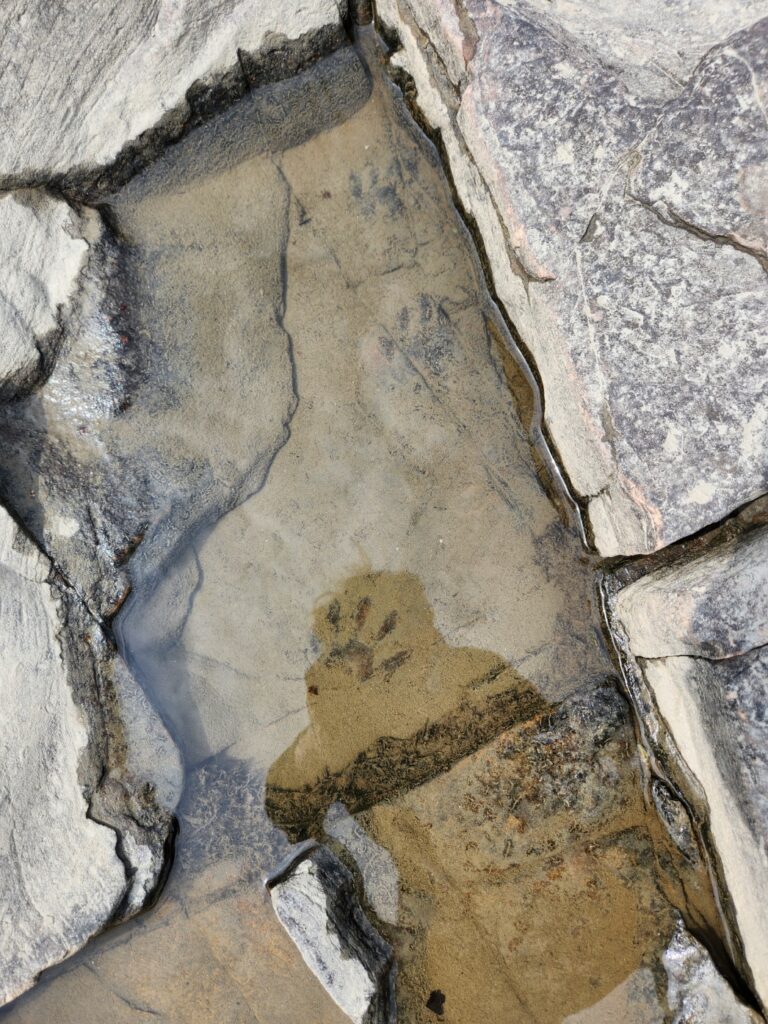
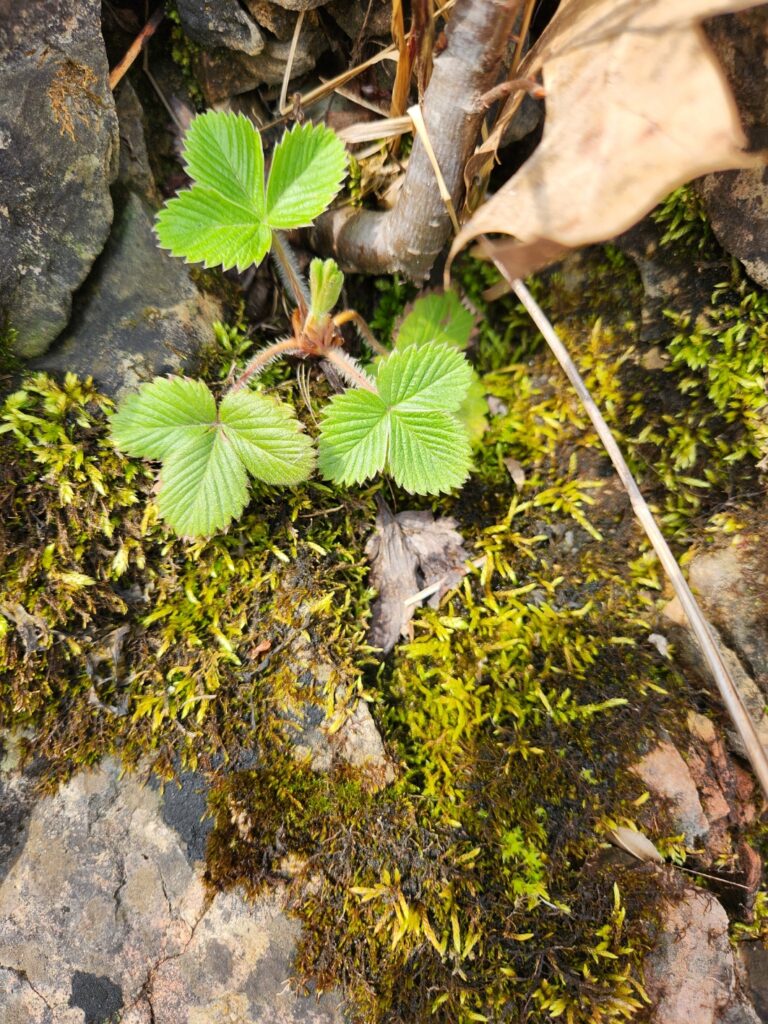
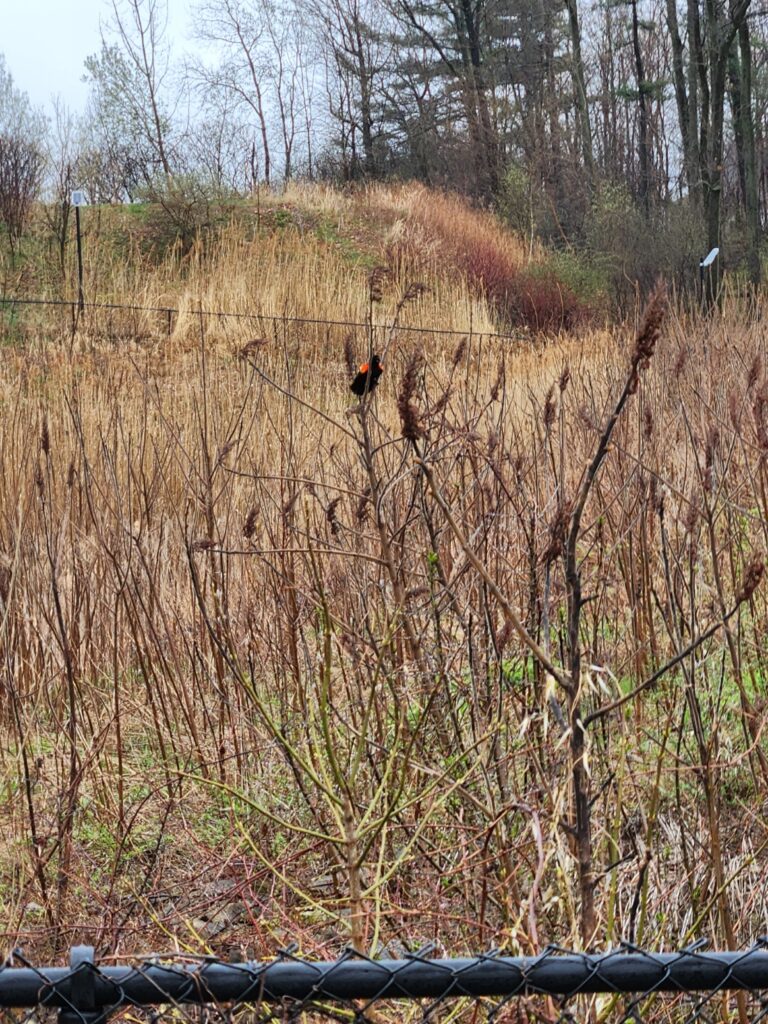
I encountered a bunch of species during my trip, some really common ones like American robin, garlic mustard as mentioned before, lots of moss, but one that I was pretty surprised to find was wild strawberry, I found it nestled between two great slabs of limestone. Another cool thing was that I found some racoon tracks preserved in sediment in a puddle.

One final thing I noticed was that fiddleheads were starting to emerge. These I believe are sensitive ferns since I saw some sensitive fern sporophylls nearby.

Animal Tracking along Potash Brook

I really liked the potash brook lab and I wondered what it would look like in winter and I was not disappointed. I didn’t know that potash brook was a UVM managed natural area like Centennial Woods. The only downside was that since the snow was over a week old, the snow was churned up by dog tracks so it was tough to distinguish wild animal tracks at a distance.

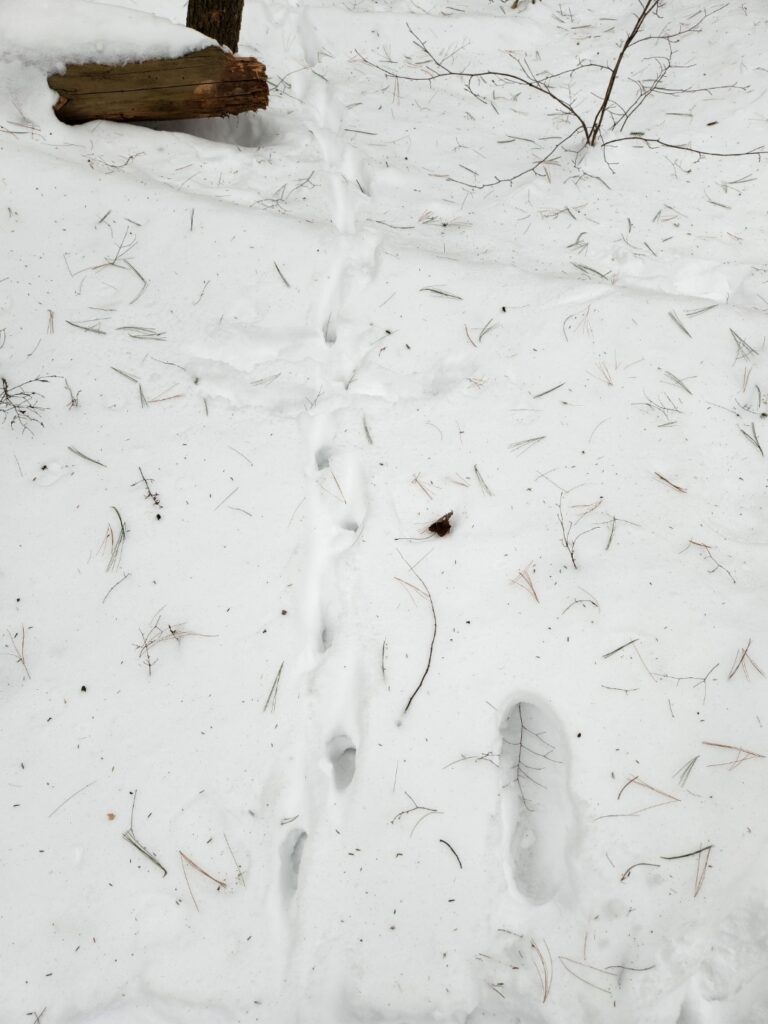
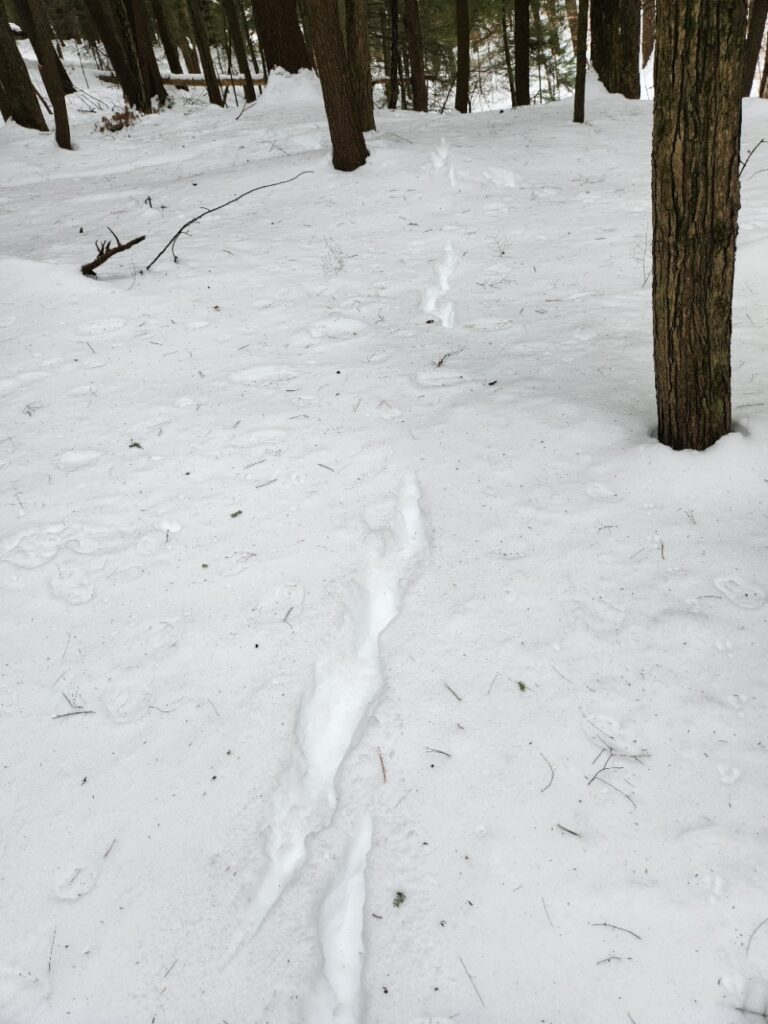
Here was an interesting one, I don’t think this was a dog because it was travelling in a straight line away from the trail. Also, these are not the sloppy tracks of a happy dog. Given the size, with my own footprint for scale, my best guess is that this is either a grey or red fox.

I had some trouble figuring out what this is. It looks like it has a bounding gait, roughly 3-4 feet from hind to front foot, and about a six inch straddle. Given the context, this is close to a large stream and I saw an otter slide (pictured below) near the brook, my best guess is that this is a fairly large river otter that I came across.

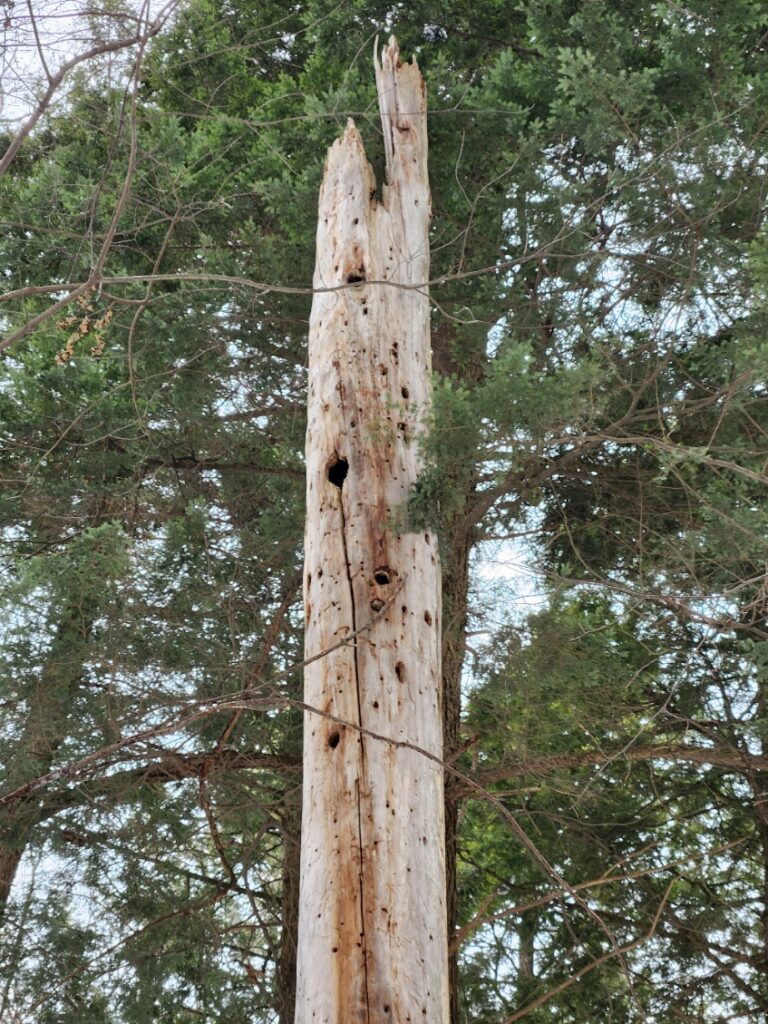
I was really excited to see this snag in the middle of the forest. This is such a good example of why snags are so ecologically important. Not only it it pocked with woodpecker holes but you can also see larger holes in the dead wood which provide the perfect habitat for birds and rodents.

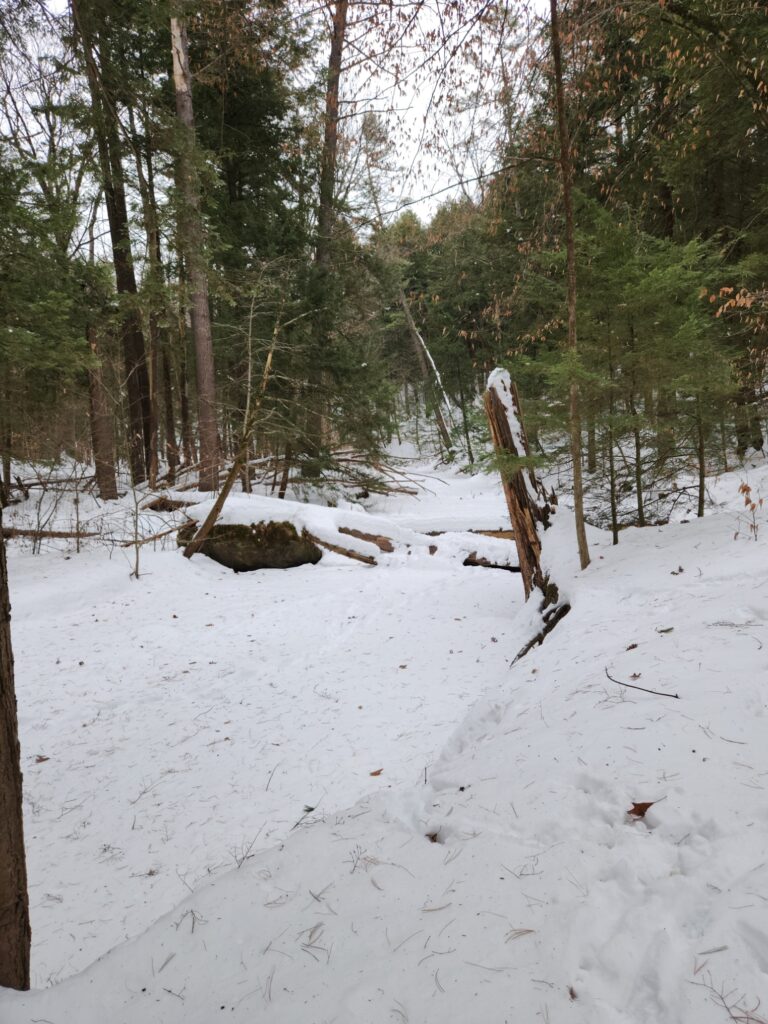
Thought I’d just throw this in, here’s the stream frozen over with the floodplains on either side. Most of the tracks in frame are either human or dog but they could have covered up some wild tracks.

January at Centennial Woods

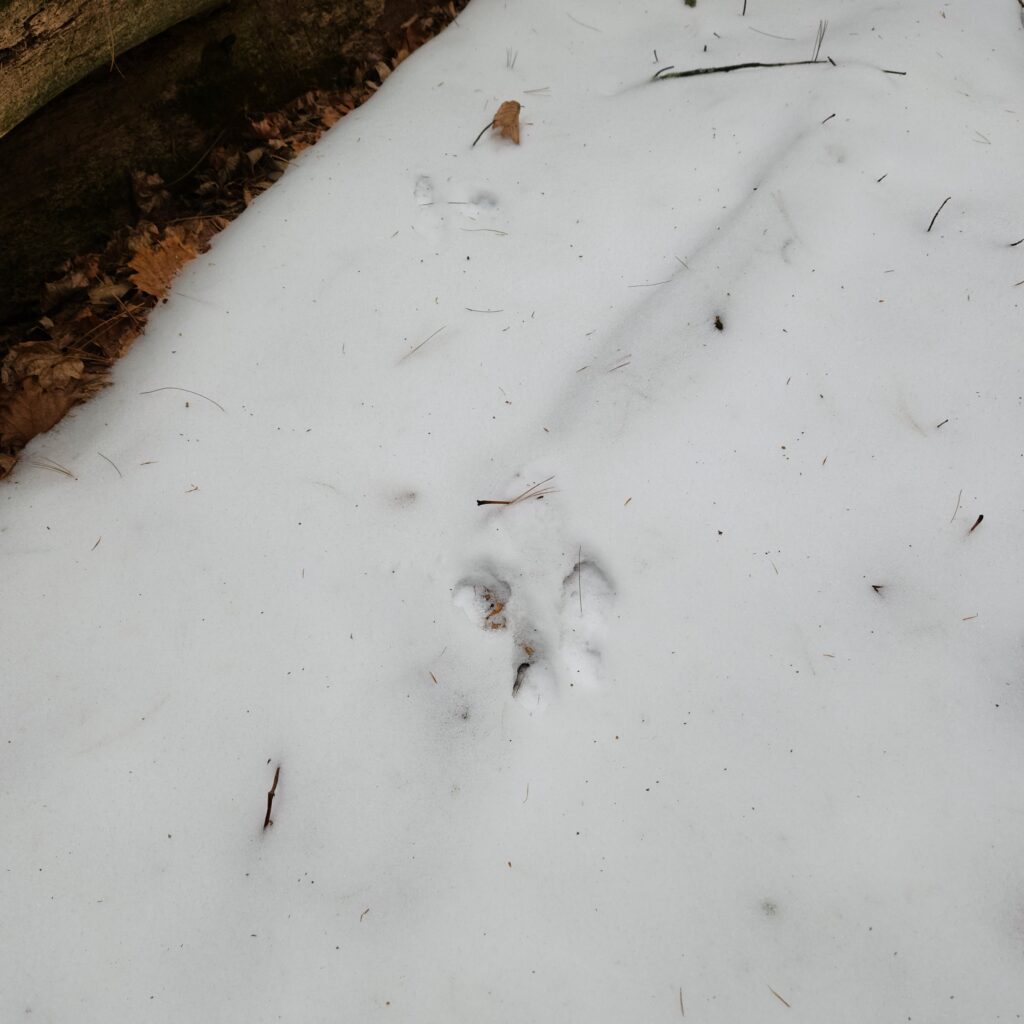
I didn’t get to see much animal activity while at my spot, and the recent thaw probably washed away many animal tracks but I was able to capture some rabbit tracks. I didn’t see any birds or hear any birdcalls but I attribute this to human activity.

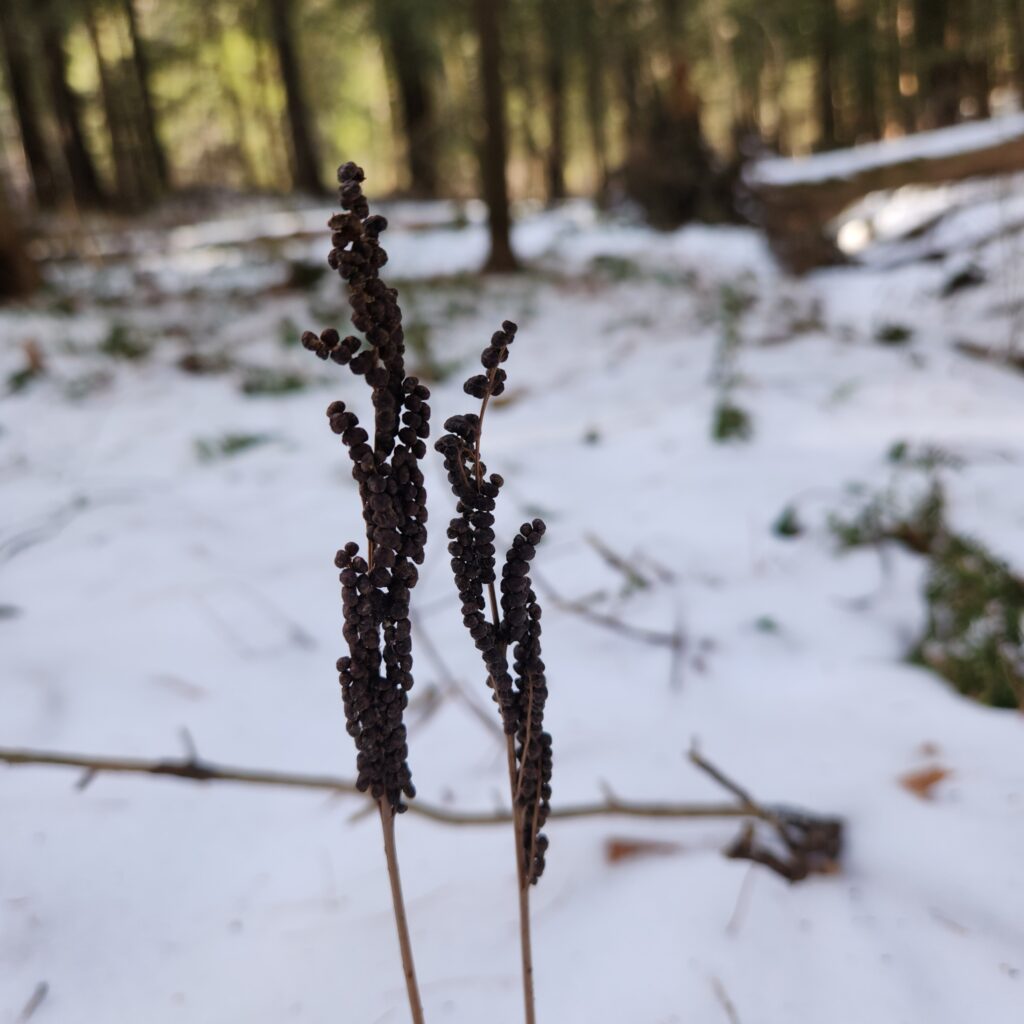
Below is a photo of what I assume is a species of fern. I really like how dead herbaceous plants contrast with the snow.

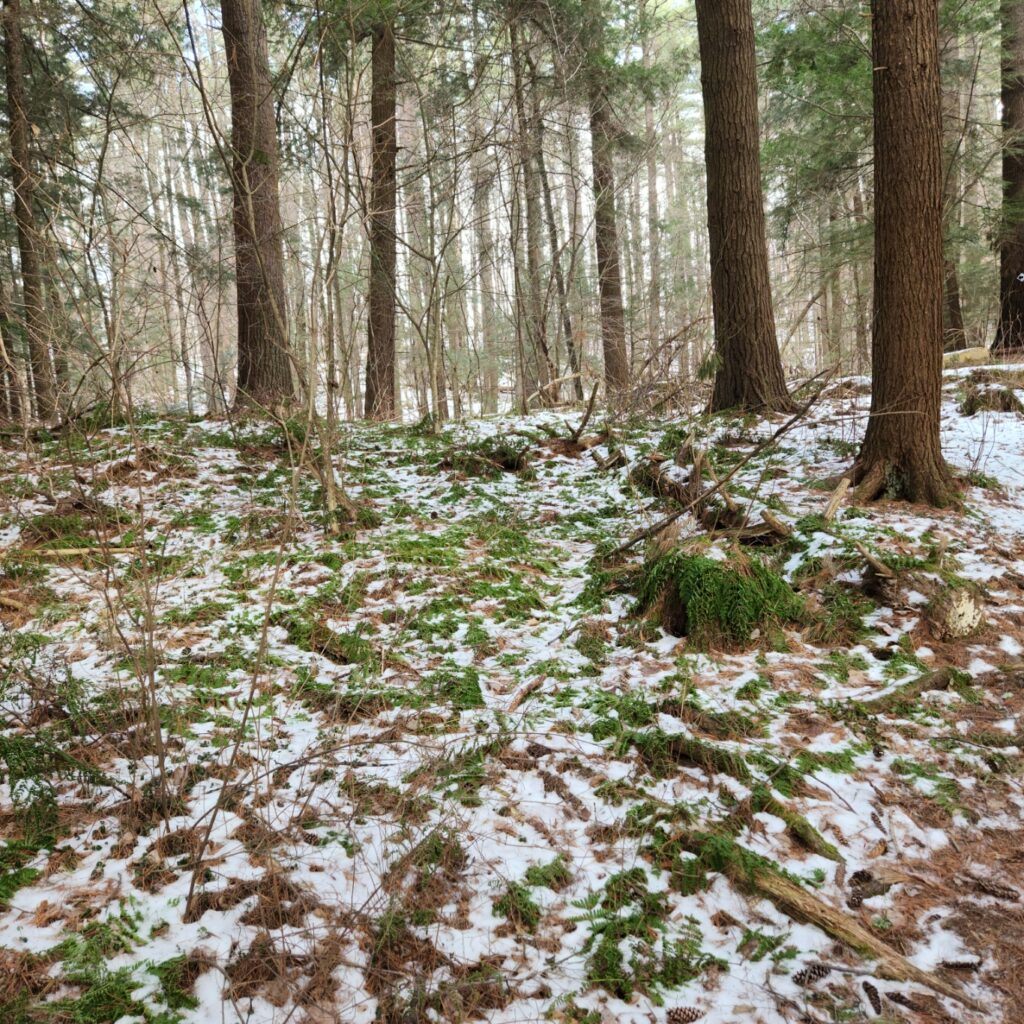
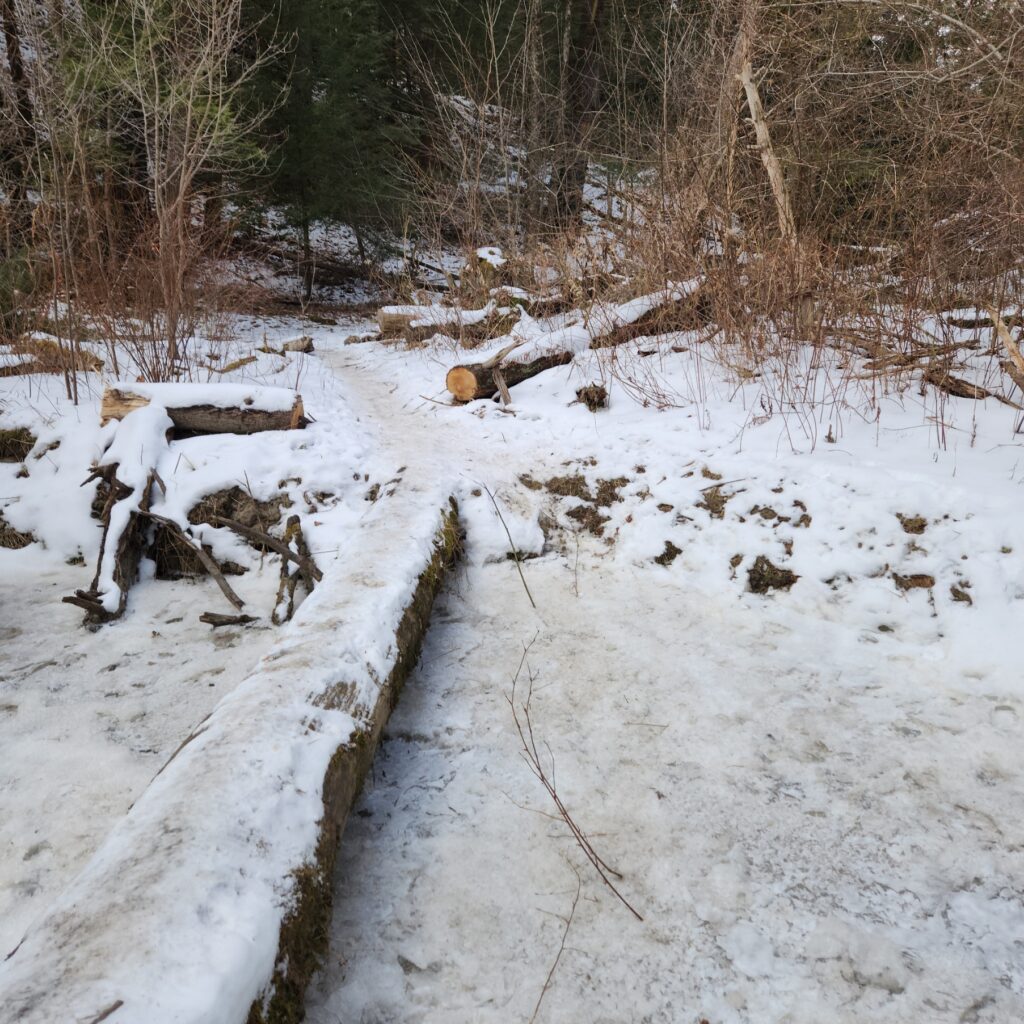
Above are some phenological changes I noticed since my visit in December. The intermediate wood ferns on the left are still alive even after the deep freeze we had in early January. When I visited in December, I had to walk across the dead log pictured on the right. When I visited a couple days ago, Centennial Brook had frozen solid and you could easily walk across it.

December in Centennial Woods

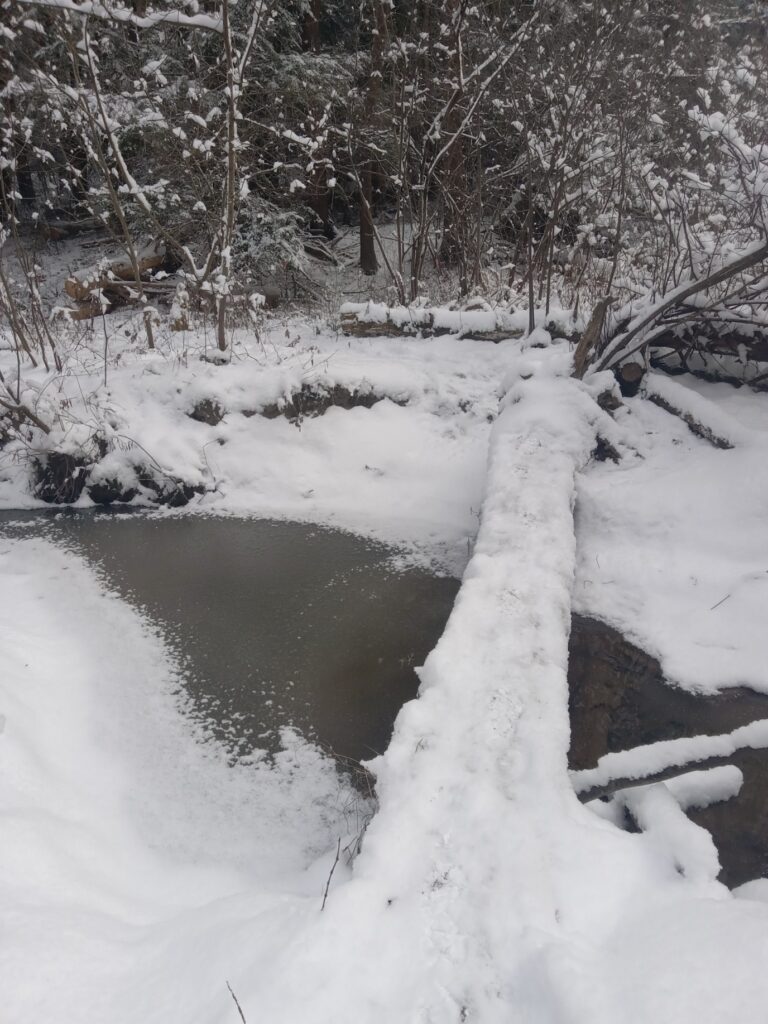
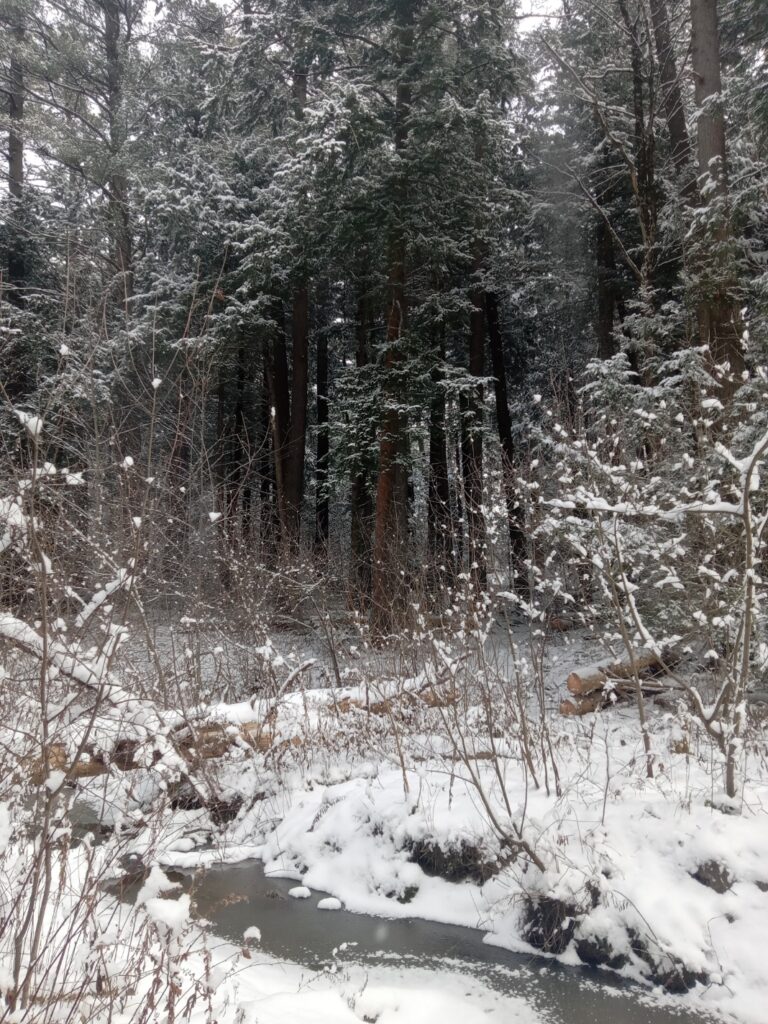
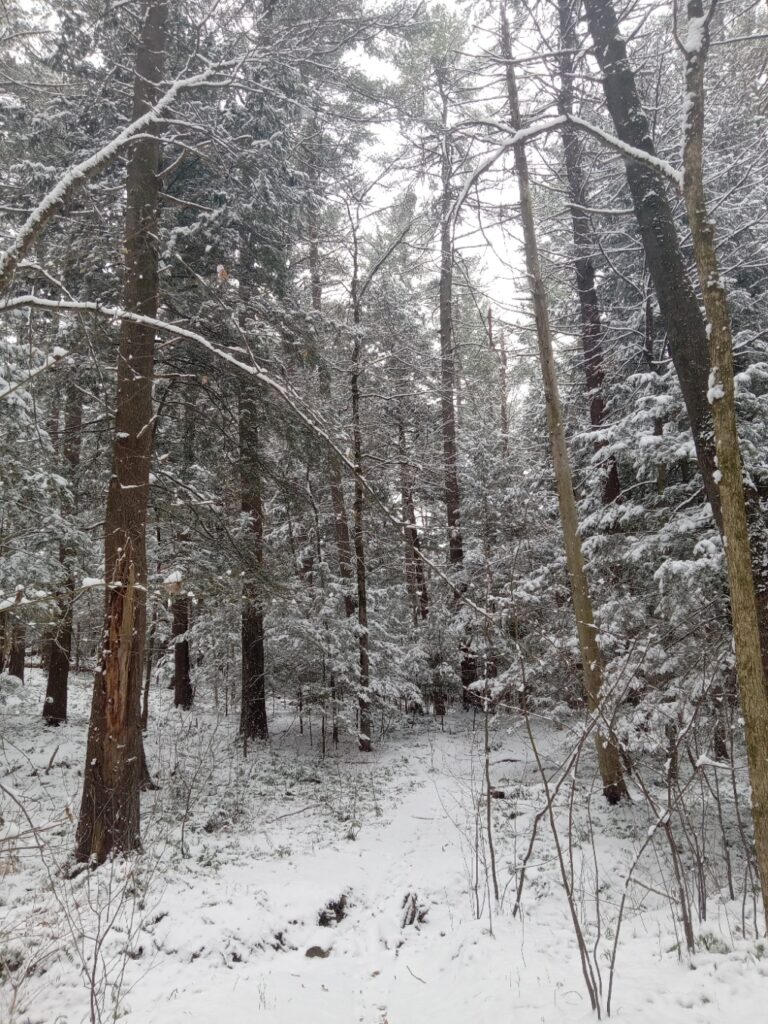
This was my favorite visit to my spot in Centennial Woods. Though it was wasn’t the easiest hike, I almost slipped on the snow-covered log into the brook. The eastern white pines and the hemlocks keep their leaves year round, making the understory noticeably darker as seen above.

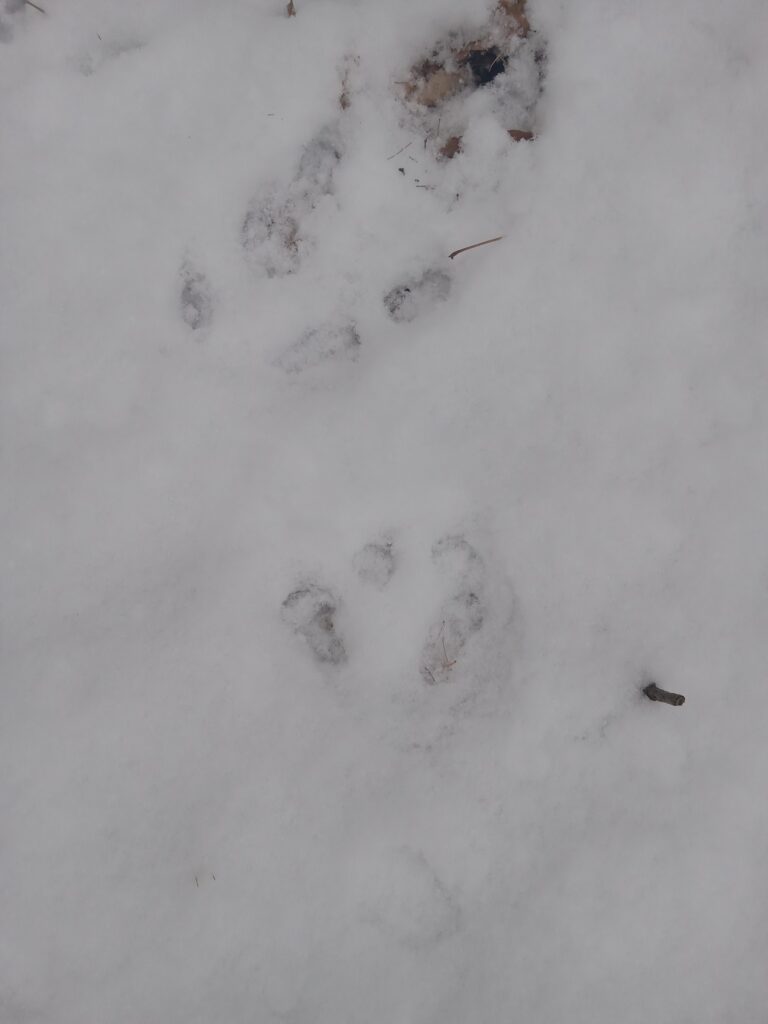
The only trace of wildlife that I saw were these rabbit tracks. Though, these tracks must have been very recent since the snow was still falling when I was there.

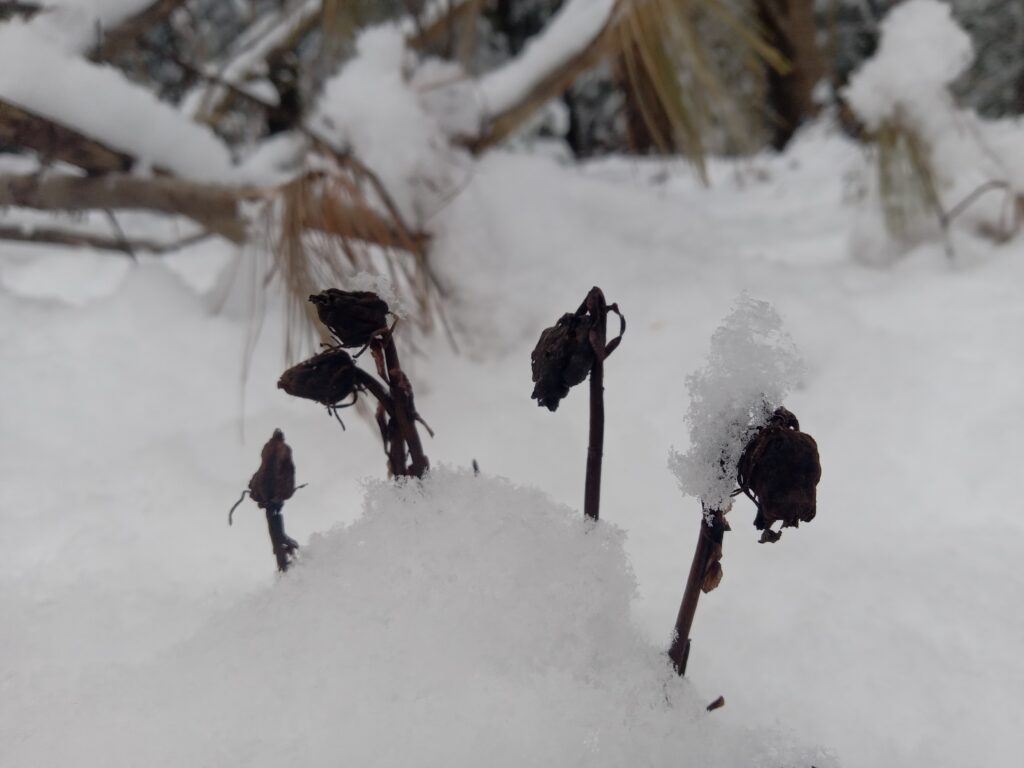
One thing that I saw that I didn’t notice before were these ghost plants. They’re always a favorite of mine when they bloom in late summer but I must have missed them. I think their blackened stems provide an interesting contrast to the white snow.

I saw many examples of plants keeping their foliage. I was surprised to see that these common buckthorns still kept their leaves well after the frost. The intermediate wood ferns still kept their leaves, which I read about in Naturally Curious.

Late November at Cochituate State Park

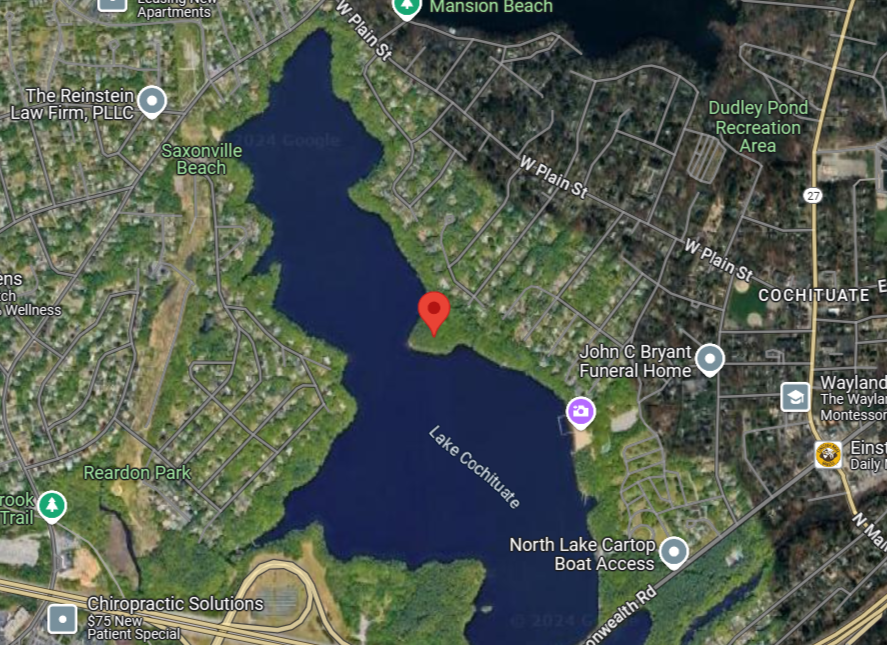
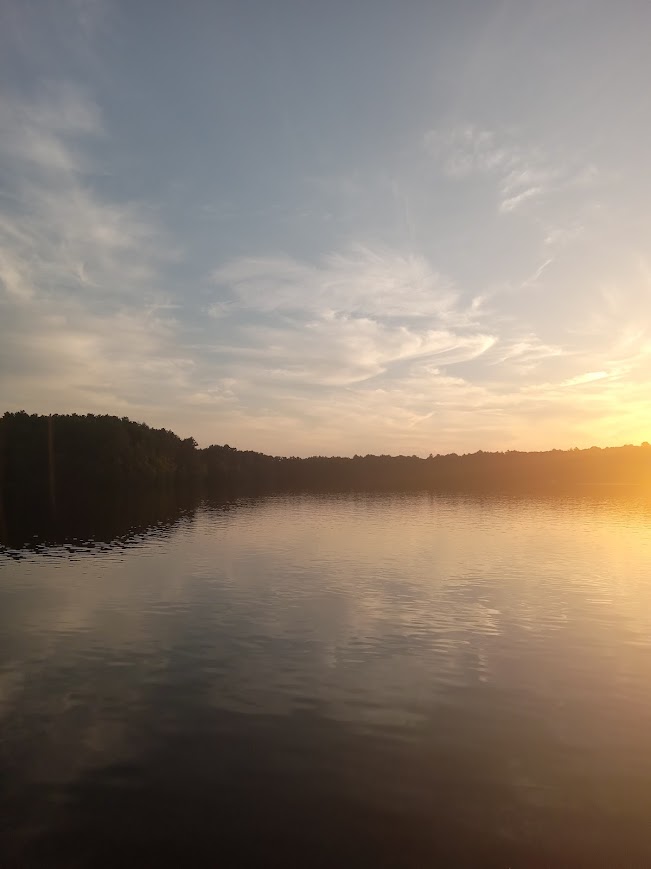
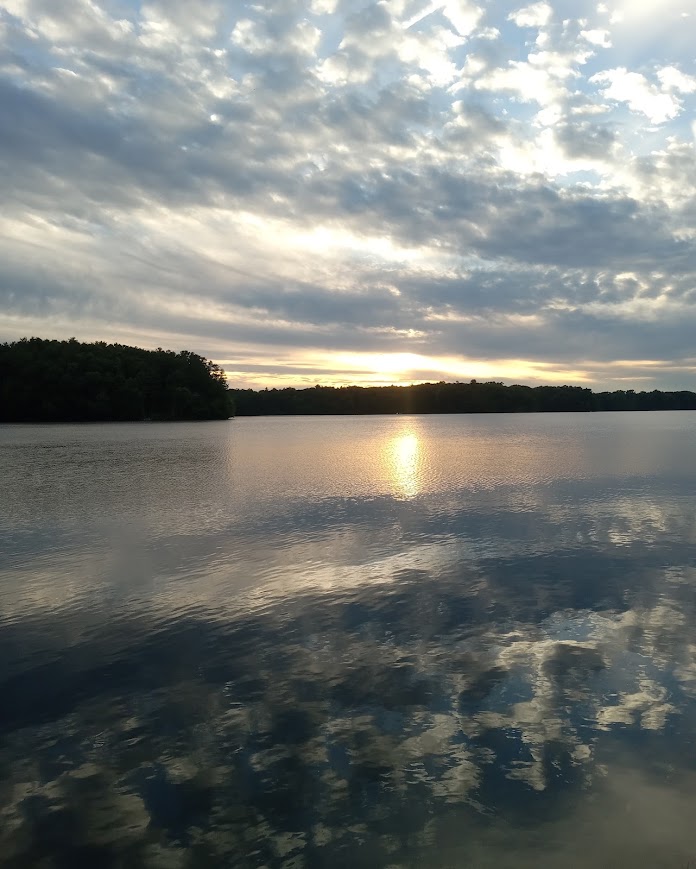
When I was growing up in Wayland Massachusetts, my friends and I used to take long walks around Lake Cochituate. One of our favorite places to go was the point, a small peninsula that jutted out from the lake and gave a good view up and down the length of the lake.

Interestingly, this spot is very similar ecologically to my spot in Centennial Woods. The soil is very sandy and eastern white pines are very prominent in both sites. However, there are a few differences. In Centennial woods, the pines are very old, yet sparse. In the point, the pines were much younger, around 30-50 years old, and almost completely dominant. Centennial woods has a much greater diversity of species, including black cherry, eastern hemlock, and yellow birch which were completely absent from Cochituate.

November in Centennial Woods

By now, most of the deciduous trees have dropped all of their leaves. Since my place is dominated by mature white pines, the ground is relatively clear of leaf litter, except for some yellow birches and beeches in the understory. The ferns really pop out this time of year since they’re the only green thing on the forest floor. I’m always surprised how clear the water in centennial brook is. I didn’t see any animals except for some squirrels in the oak stand and a couple small fish in the brook.

Most of the trees in my spot retained their leaves. The pines, ferns, and hemlocks are practically the same as when I first came in September. Even though the hardwood stands have a really sunny understory this time of year, the canopy in my place is still doesn’t let much light through and the surface is relatively bare.

October in Centennial Woods

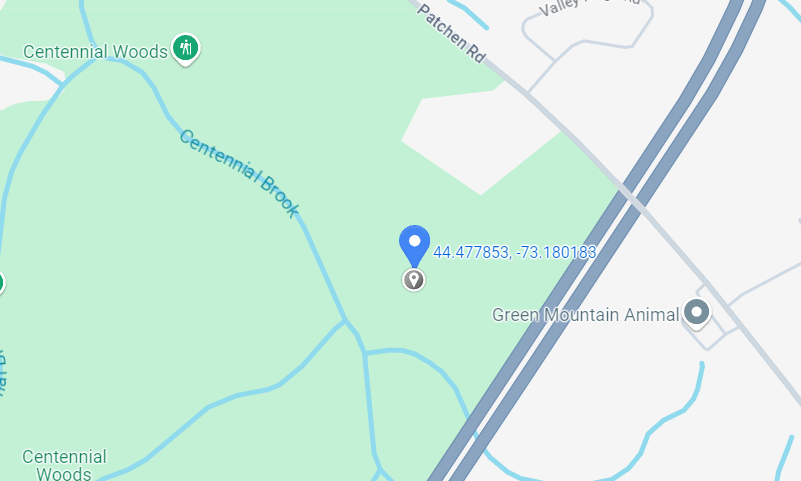
My place is located far on the eastern side of Centennial Woods, between I-89 and Centennial brook. The canopy is dominated by eastern white pine. The pines likely thrive because of the very sandy soil which was deposited there by Glacial Lake Vermont. Since there’s a nearby source of fresh water, there are many eastern hemlocks in the understory. The most common deciduous trees are black cherry and yellow birch.

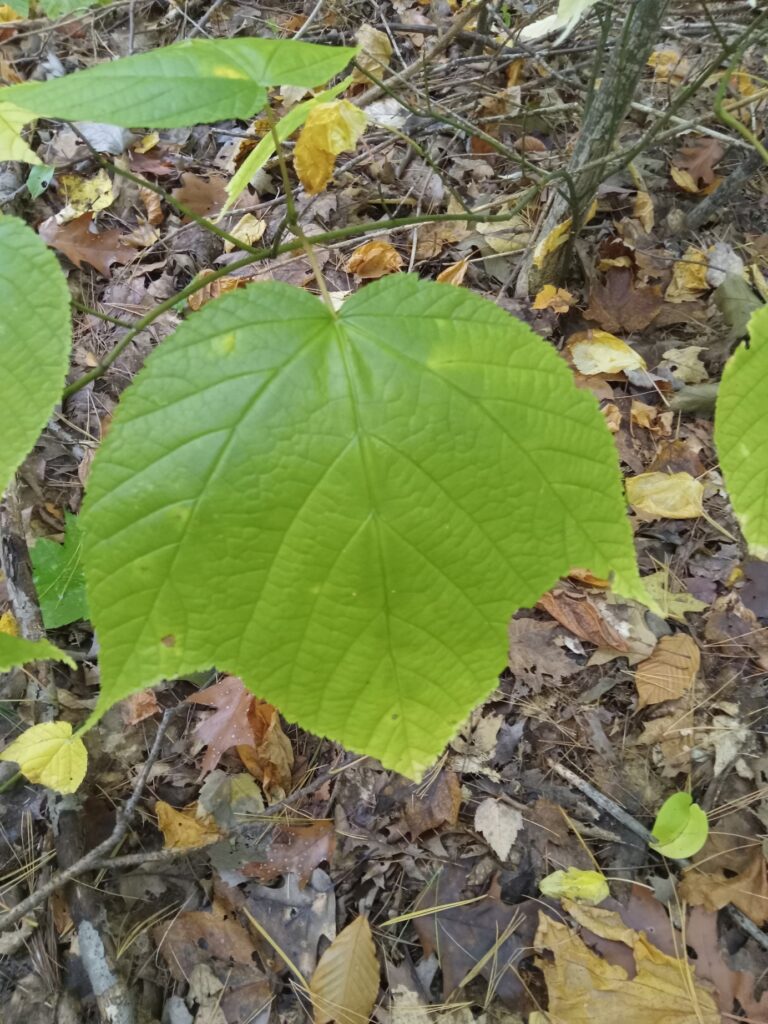
Since my area has a closed canopy, the understory is comprised of shade tolerant plants such as striped maple, beech, red and sugar maples. Grasses and woody shrubs are absent.

Here is a list of the most common woody plants I found in my place.

Black Cherry https://www.inaturalist.org/observations/246551983

Intermediate Wood Fern https://www.inaturalist.org/observations/246551978

Striped Maple https://www.inaturalist.org/observations/246551979

Yellow Birch https://www.inaturalist.org/observations/246551977

Japanese Barberry https://www.inaturalist.org/observations/246550416

Eastern Hemlock https://www.inaturalist.org/observations/246551984

Skip to toolbar