Archive for the ‘Uncategorized’ Category

Salmon hole last visit

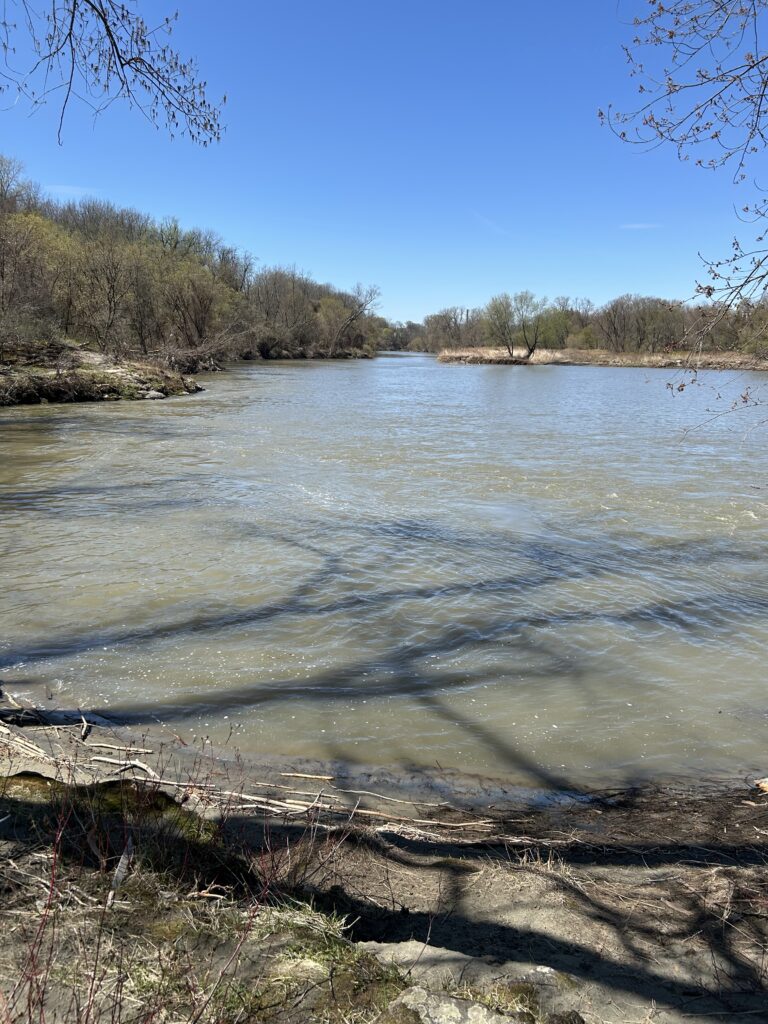
During my last visit I spent some time thinking about how this place has changed over time. From my first visit in September to cold visits in December and January, to now in may. As the laves begin to grow back, the sounds from cars and the busses and people becomes more muted again, as it was in September. After weeks of rain, the water is much higher, and I can see the return of animals; fish jumping out of the water, and flocks of gulls and ducks clustering around sandy beaches.

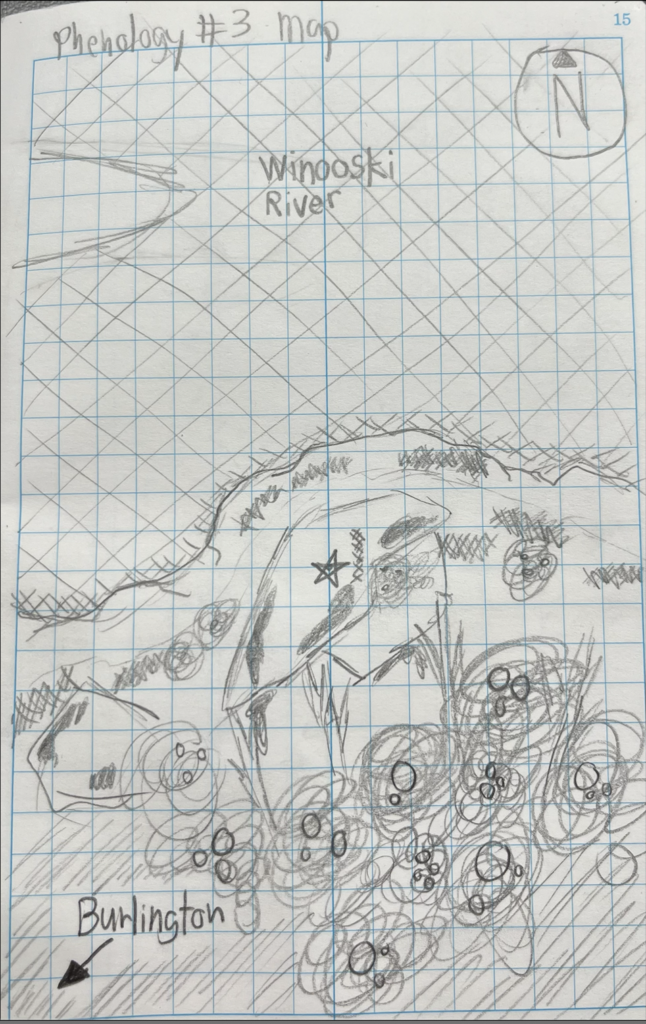
During my time here I have become familiar with several features in this place, mainly the large rock slab that pointings towards Winooski, as well as the dam, and a small island patch just downstream of the rock.

I think Salmon Hole is a great example of how culture and nature can be intertwined. As I sat at my spot, I saw people sitting on benches and rocks, simply enjoying the nature, as well as families walking along the river. I think little things like this show how nature can play a role in culture when it’s integrated into our cities in an accessible way. I also think this connection between nature and culture is especially clear in Vermont, as the state puts a lot of emphasis on conserving nature—not just for aesthetics, but for healthy, sustainable human use of natural lands.

I think that when I had just moved to Vermont, I definitely wouldn’t have considered myself a part of this place—and even after living here for seven months, I’m still not sure. I do feel a sense of connection to the Winooski River because of the ample time I’ve spent at both this location and others along the river, but I feel somewhat distant from Salmon Hole. Although I think it’s a very special place, it’s not really somewhere I go for recreation, and I don’t visit it very often. I would say that I’ve definitely fostered a connection with Salmon Hole, but I don’t feel like I’m necessarily a part of it.
Urban Bio-Blitz 4/28

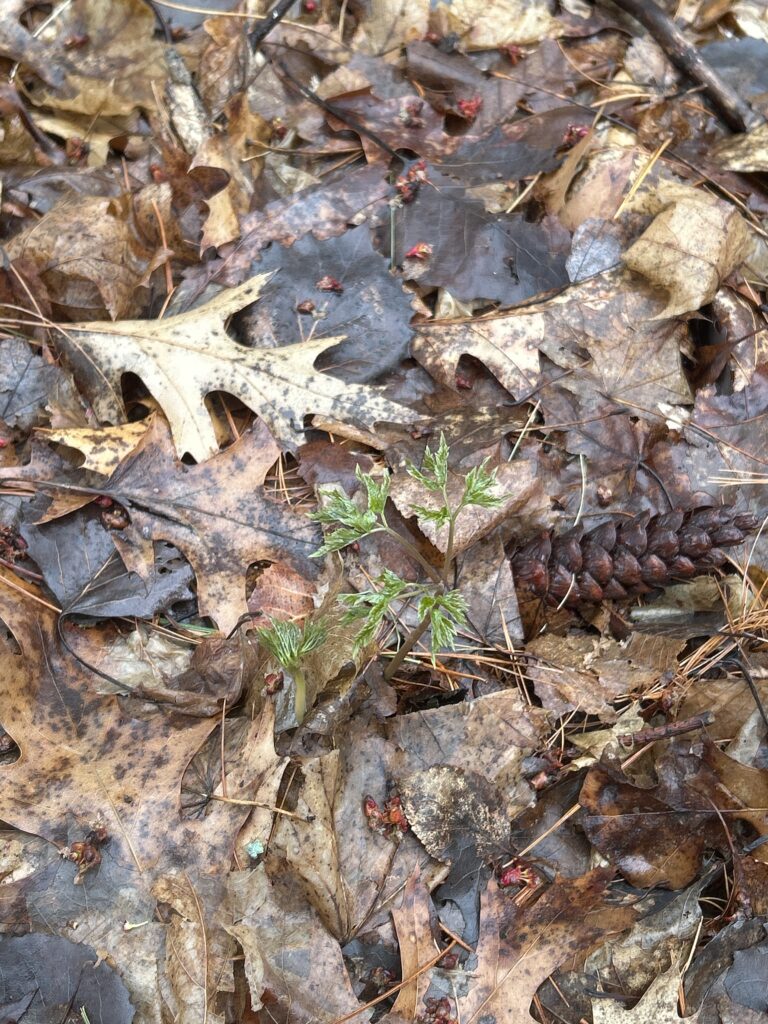
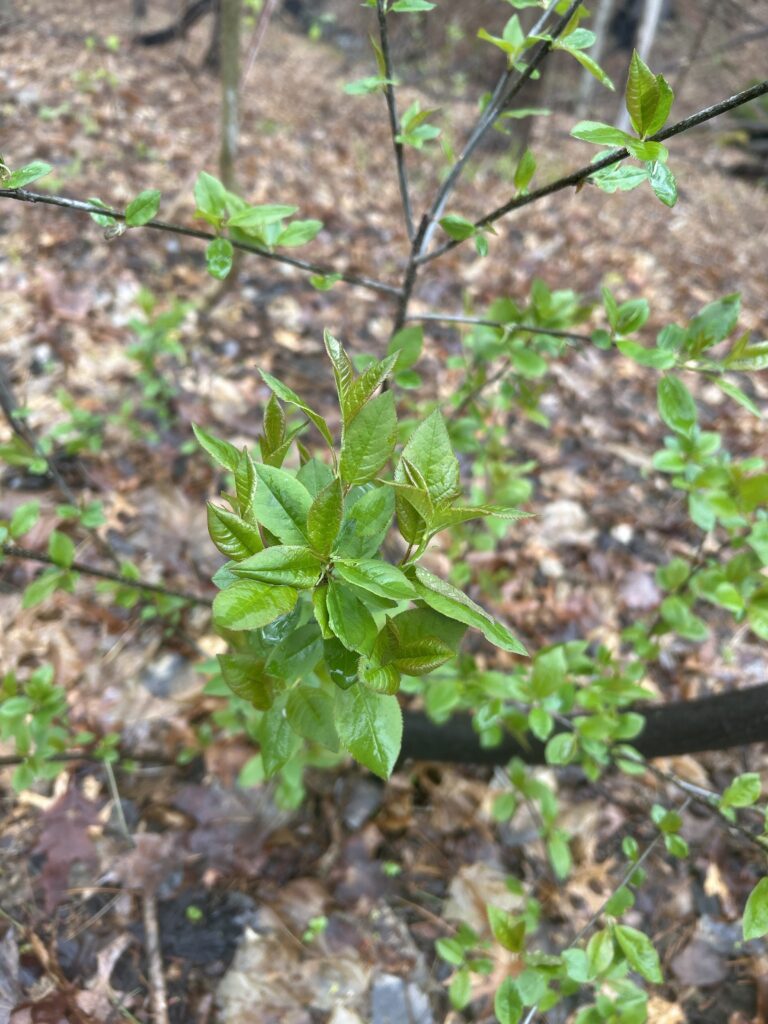
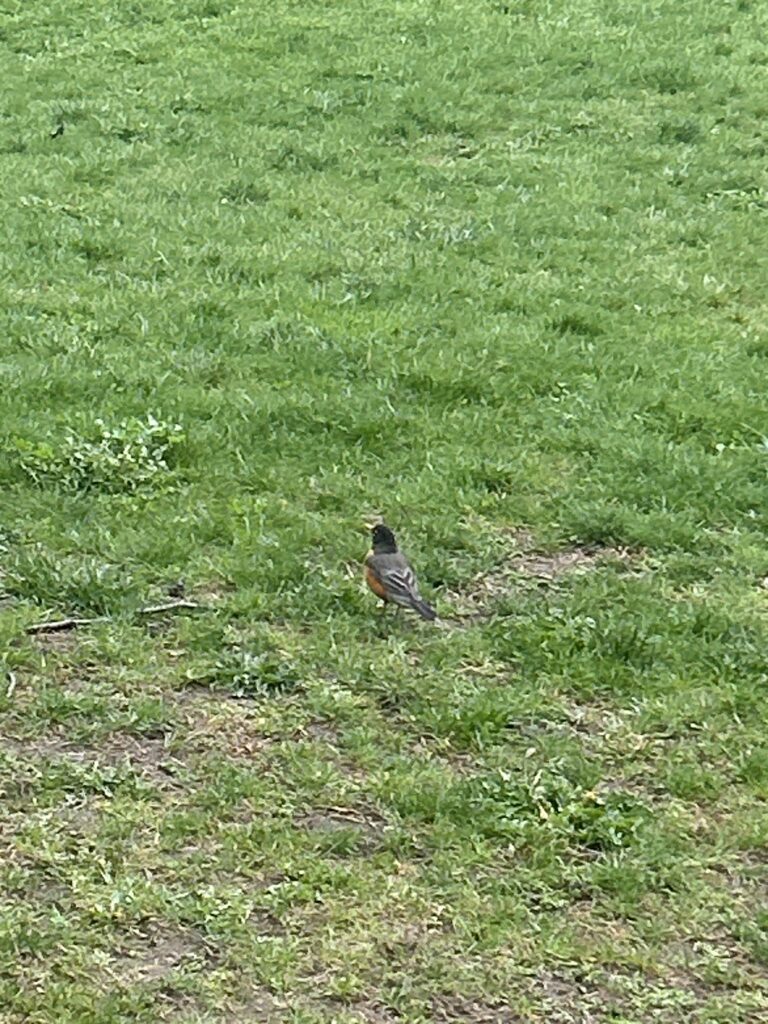
During the Urban Bio-Blitz that took place over the past 4 days, I have had several opportunities to get out in nature, and make some observations. On Sunday (4/27) I went for a walk in the Trinity woods, during which I recorded several different species in Inatrualist. I recorded a couple different woody species that were pretty common in the area, including chokecherry and baneberry bushes. I also spent some time searching for different animals, but the only ones I came across were a few robins feasting on worms freshly brought to the surface by the rain.

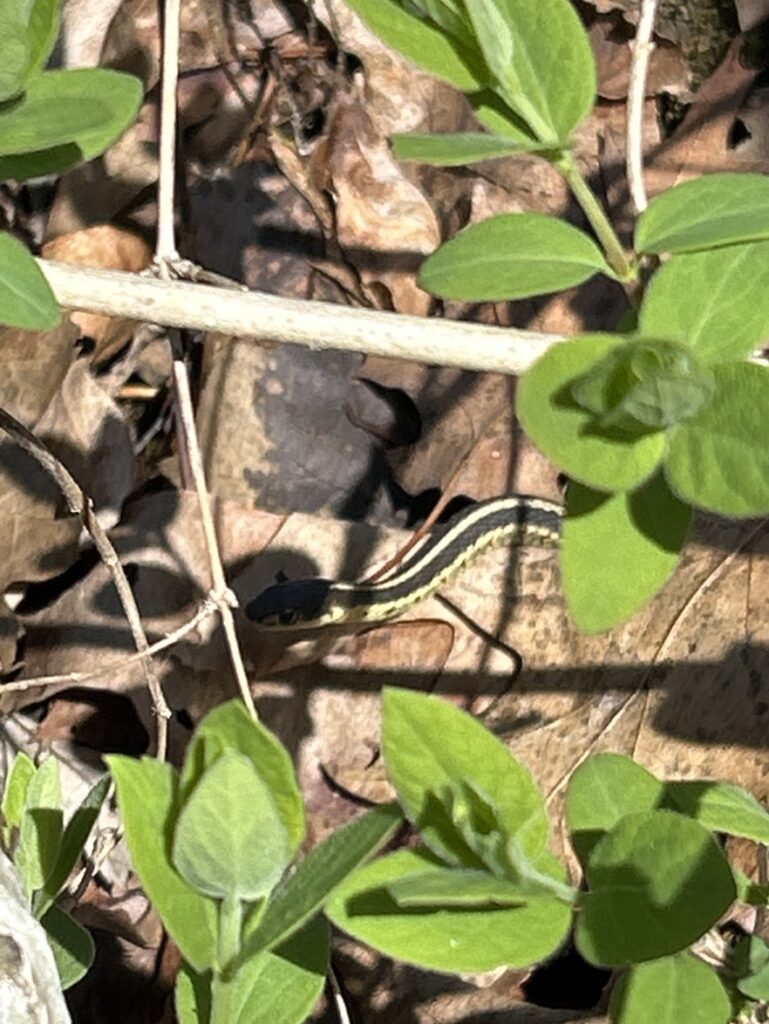
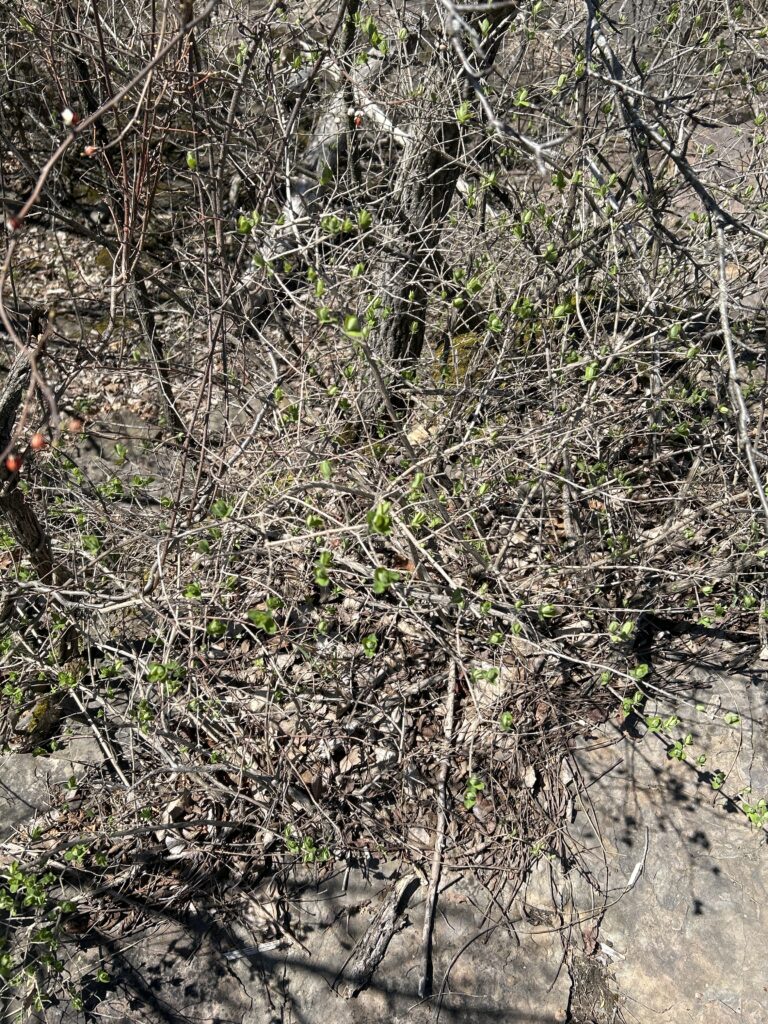
This afternoon –Monday (4/28)– I went down to salmon hole in Winooski. In contrast to the Trinity woods, Salmon hole felt much more lively. Notable species I observed here included several honeysuckle bushes, and a garter snake.

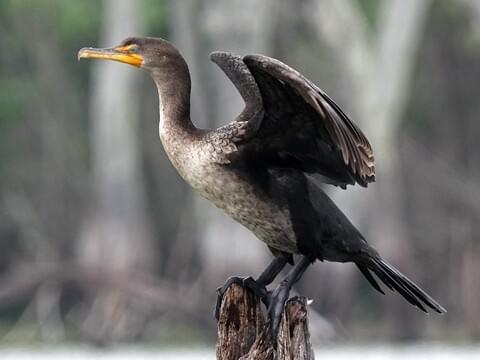
Overall, using Inatrualist to document species went pretty well. I think my biggest issue with it is that it’s just hard/ impossible to get a clear picture of all of the species I want to document, for example, at salmon hole, I saw a medium sized dark colored bird sitting on a rock with its wings spread. Once I got home and looked it up, I discovered it was most likely a Double-crested Cormorant, but since I couldn’t get a clear image of it I didn’t feel like there was any point in posting it since it was unverifiable.

Double-crested Cormorant Identification, All About Birds, Cornell Lab of  Ornithology
Double-crested Cormorant (Cornell Lab of Ornithology)

After my walk at Salmon hole, I looked at the global standings and reports from the Inatrualist Bio-Blitz. In particular, I looked at La Paz, Bolivia which had the most observations of any zone at the time of my writing this. One thing I found pretty interesting was that a lot of the observations seemed to be peoples houseplants. The diversity and species selection was also much more robust than Burlington, but this kind of expected when you consider how close Bolivia is to the equator.

Rock point April 19th

Recently with the changes in weather I have been spending more time outside, enjoying the local nature, and last Saturday I decided to take a trip down to Rock point.

The conditions during this trip was pretty normal for spring, 60 , cloudy and rainy–perfect for observing the manny changes taking place in the environment. On the hike i observed several different species of birds including the American robin, Cardinal, and, and Hermit thrush. I also saw a juvenile Fisher who was playfully jumping around on a collection of rocks. It seemed that the fisher ,like me was also enjoying the nice weather that day.

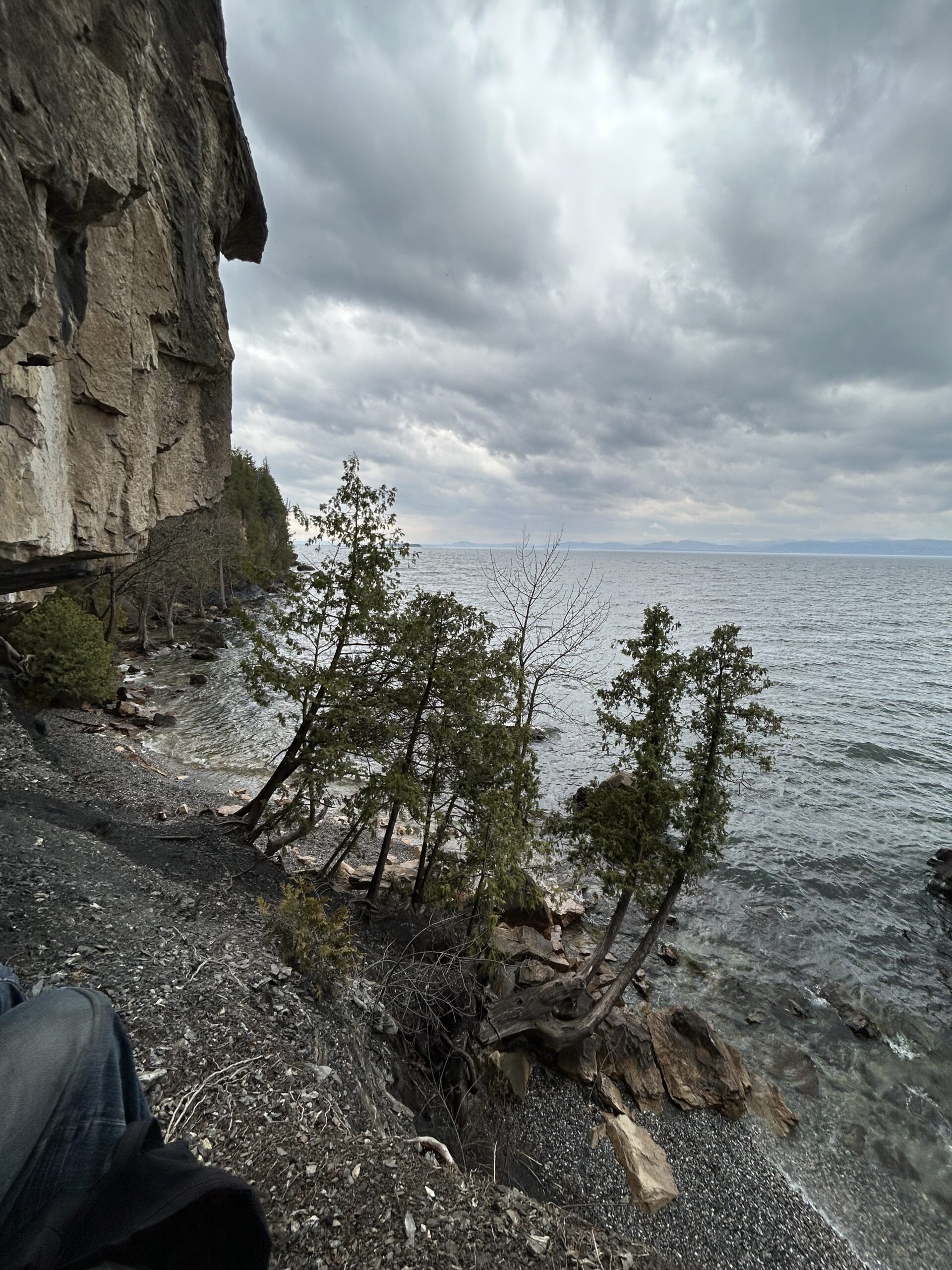
As for the plant life at rock point, The changes seemed more subtle. I think the place I visited in Rock point is a limestone cedar bluff , which was mainly made of eastern white cedar trees. Because these trees are evergreens they do not go through the full process of leafing in the spring as they keep their foliage year round. I do think that the trees definitely looked greener, which would make sense as they are beginning to photosynthesis again with the coming of spring.

Phenology walk April 1st

I took my phenological walk on April first, and during this time I observed phenological changes of several Tree species around campus. Overall the trees all still seemed dormant, and for the most part, had not yet begun to bun or leaf yet. The trees that did have small but noticeable changes was white oak and red oak.
About a quarter of the white oak trees I saw had some leaves, and some of them also had several fruits. The Red oak trees I saw has some seed/fruit droop under the tree.
After my walk I took some time to explore the NPN’s website, and the most interesting element i found was the data maps that showed when each parts of the US experienced their bloom return, and leaf return. This map also showed how early the phenological change was compared to historic data. I think this is relevant to climate change because we know that even small temperature changes can lead to large phonological imbalances in animal and plant life cycles.

February 24th Phenology post

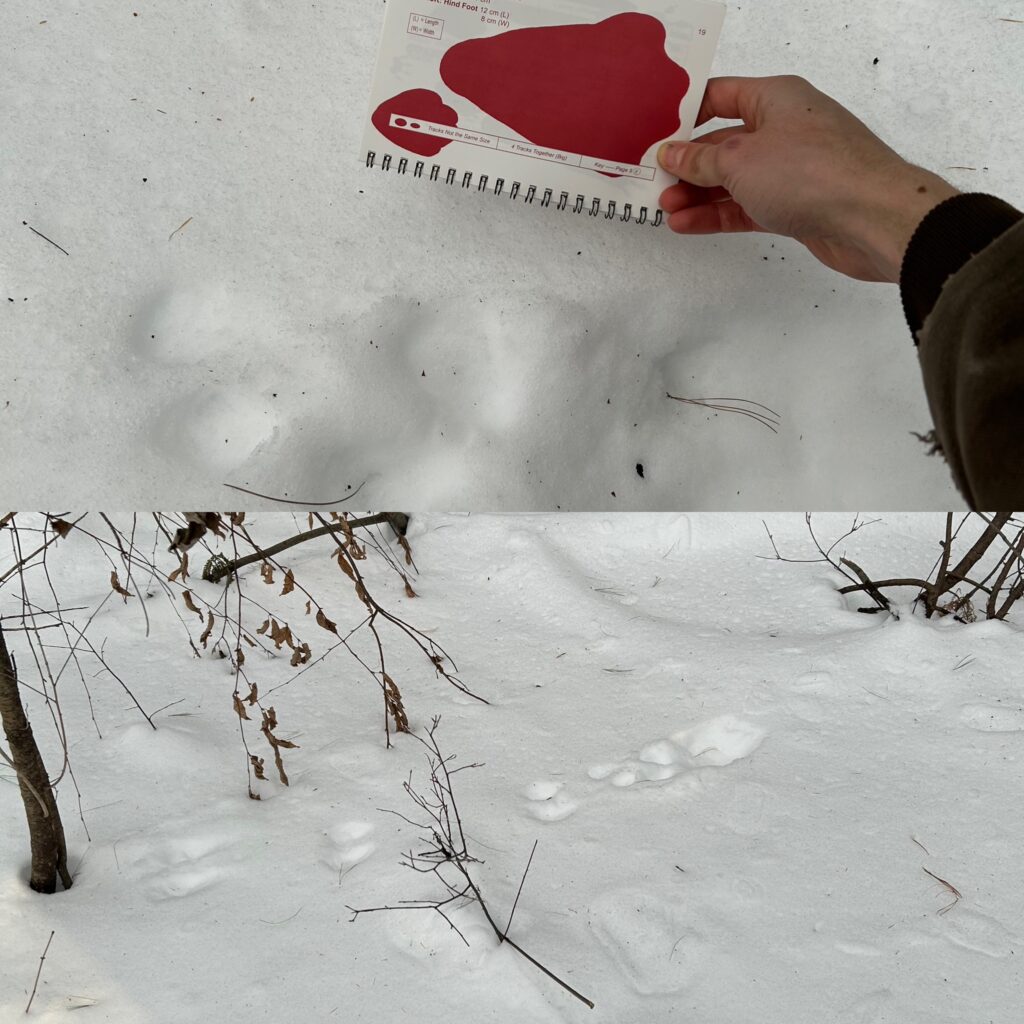
During this Phenology assignment I went to the rear part of centennial woods behind centennial field. This area of centennial is a large stand of mainly white pine trees. It was a warm wet day which made me worried it would be difficult to observe defined animal tracks, however there were abundant signs of animal life. 

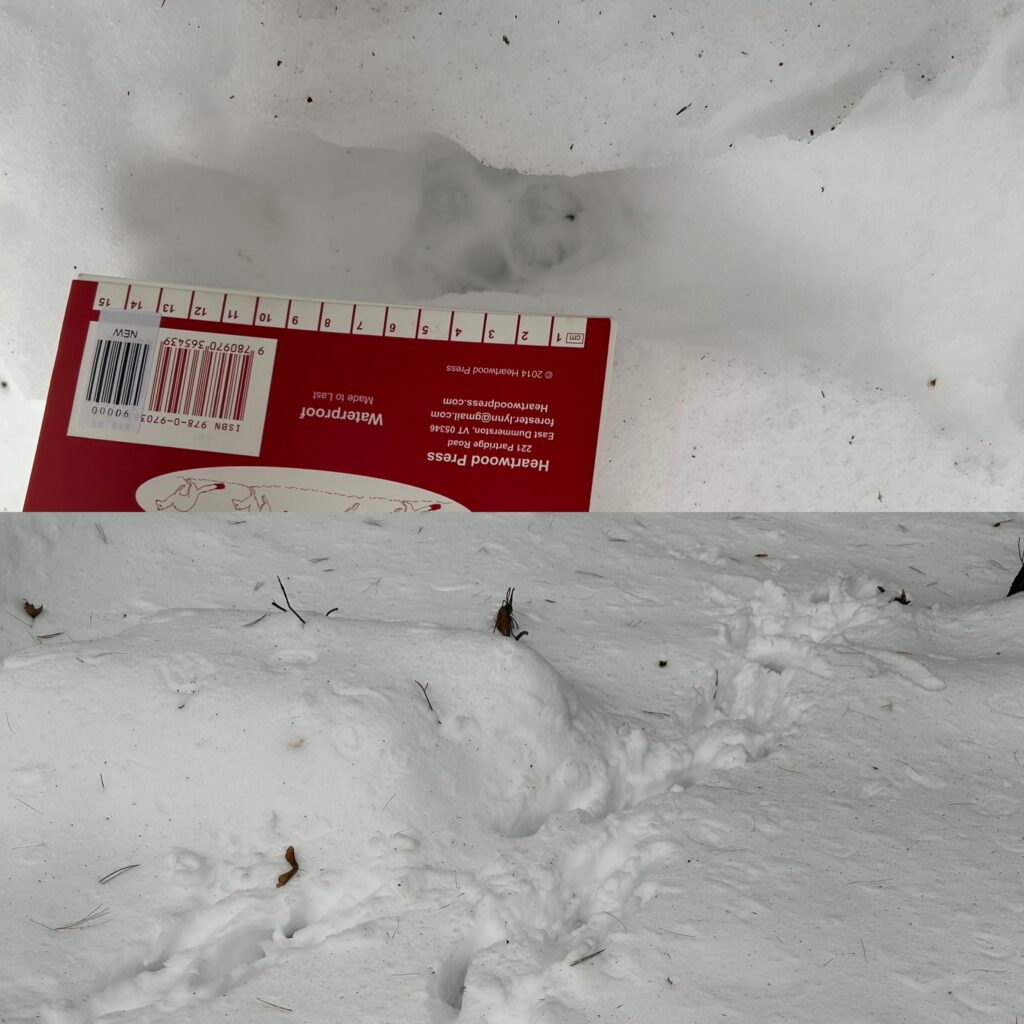
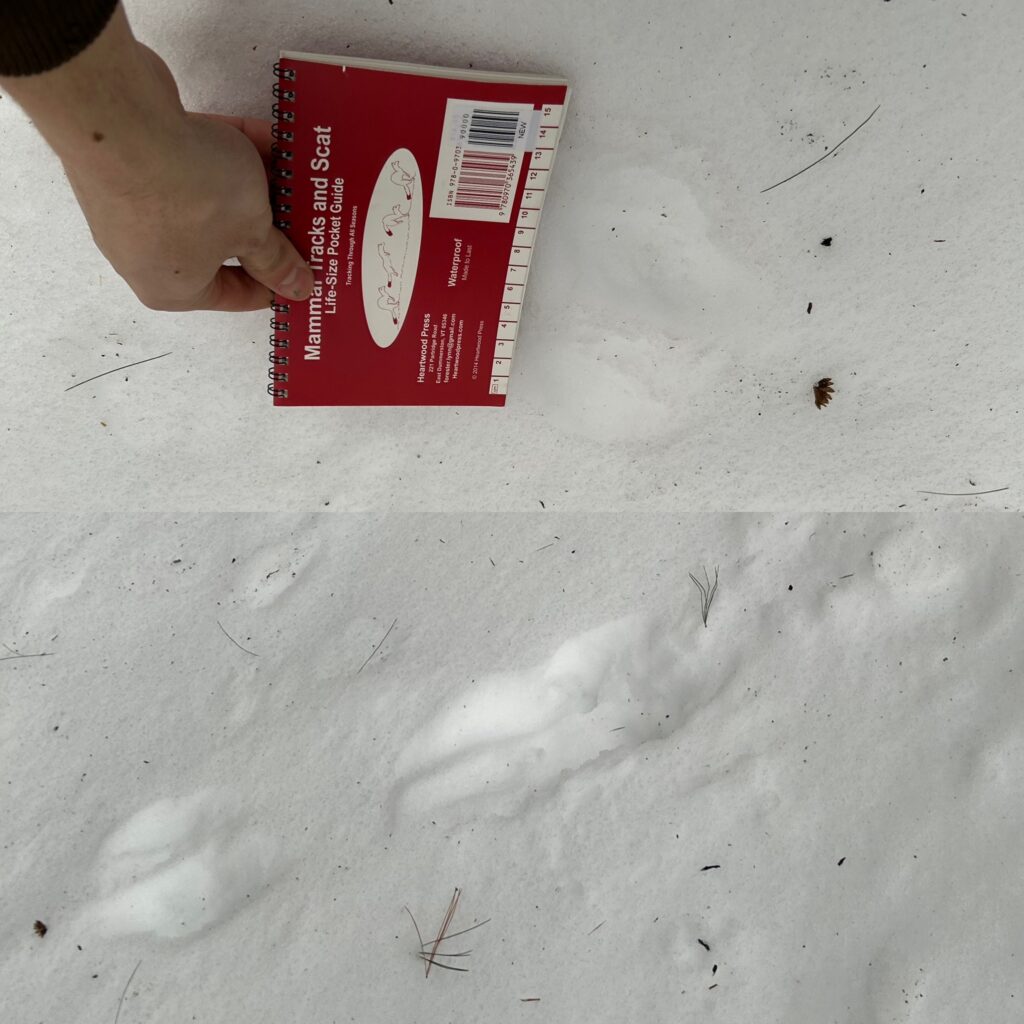
The first signs I found were a line of tracks hopping through the underbrush. Based on the track pattern and track size I think it is a snowshoe hare, but it was hard to tell because of the melty snow.

Next I found a path of what I think was domestic dog tracks. This is because the tracks led off of the path in a few circles and back to the path, additionally the prints left behind were decently defined and resembled a medium sized dog.

Lastly I found a trail of what I think we’re cottontail rabbit tracks. The tracks were slightly smaller than the snowshoe hare tracks, but with the same hopping pattern. 

January 27th Phenology


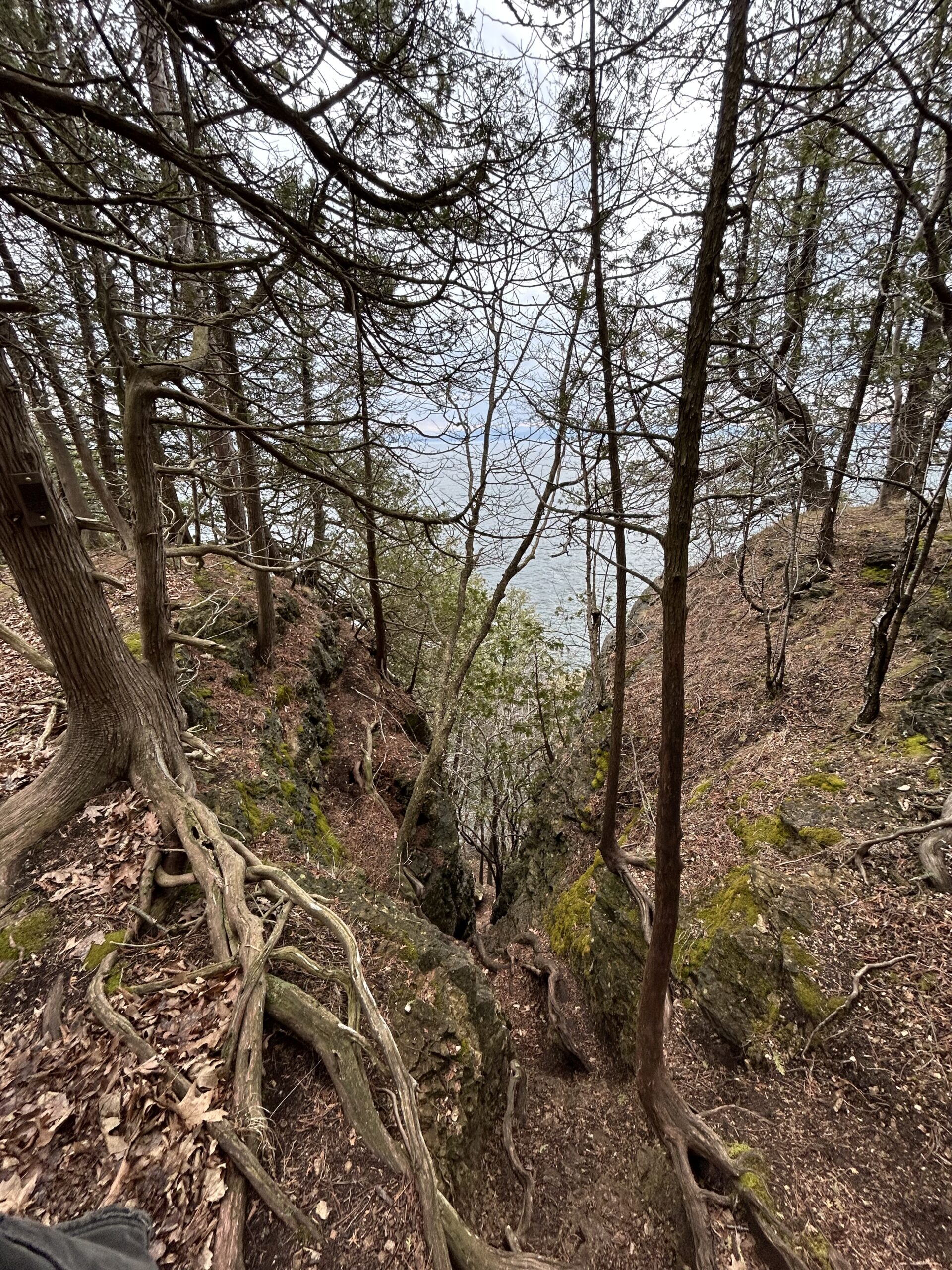
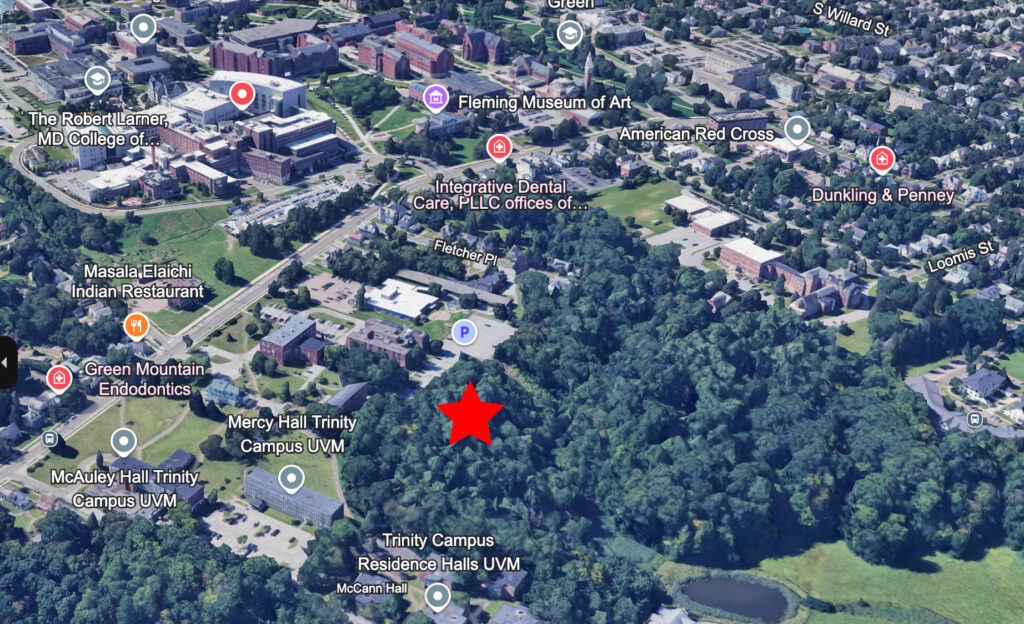
the spot I am visiting this semester for my phenology project is a small ravine in the woods behind Trinity campus. To get there you follow the path behind Mercy hall into the woods until you get to a small clearing. next you make your way down the side of the ravine until you reach the bottom.

When I visited my phenology location, all of the snow was either melting or already gone. This made it difficult to find any tracks or sign of wildlife. The only animal I observed was a squirrels running along a fallen tree.

Change over time

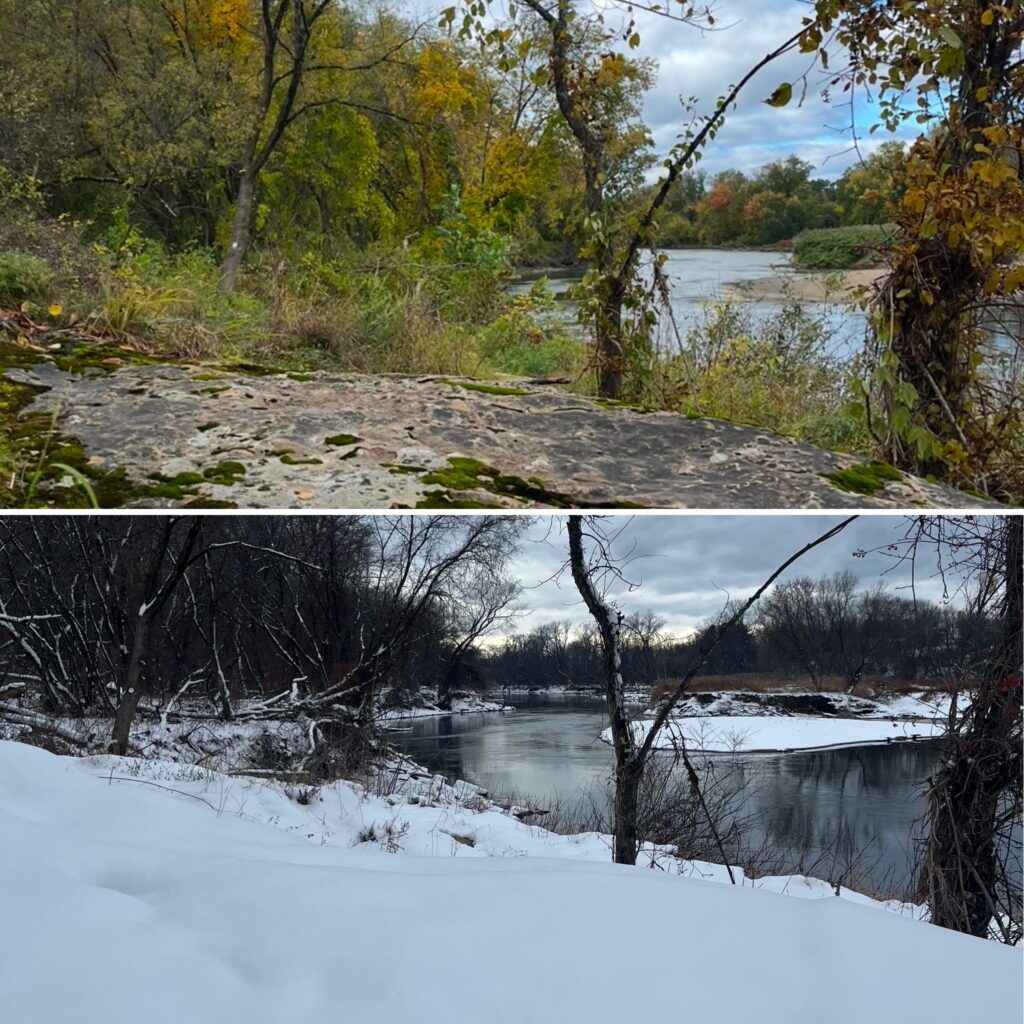
Over the past 3 months My phenology site has changed significantly from a lively forested creek bank to a much more quiet, bare area. I think These two photos, taken 53 days apart do excellent job of showing locational change over time.

I think over my time visiting here I have grown to appreciate a lot about this location as a whole but I think the most special part about this location to me is how close it is to Burlington, yet how “natural” it feels. This spot is an amazing escape from the city of Burlington and is a very peaceful place. every time I have come here I’ve left feeling less stressed and more rejuvenated.

December phenology observations

Since the last visit to salmon hole the last of the foliage has fallen. For the most part there is no persistent understory vegetation, except for a few remaining red berries on a couple of oriental bittersweet bushes.

(Oriental bittersweet bush with red berries)

the day before visited my location received a few additional inches of snow, further hiding the leaf litter bellow. The snow did however reveal an animals tracks through my site. The footprints and track pattern makes me think that these tracks were left by a snowshoe hare. Aside from the hare’s track I didn’t noticed any other signs of animal activity.

(Possible snowshoe hare tracks in the snow)

Phenology assignment #3

Since my last visit to my phenology location I have noticed several notable changes, temperature change, seasonal leaf loss, change in wildlife, no geese, less birds, no squirrels or chipmunks seen, lower tide. Another interesting change I noticed is how much more noise pollution there is from the road. I think this is because of the lack of leaves to dampen the sound.

Phenology Assignment #4

The Phenology location I chose over break was a small patch of woods in my backyard next to an abandoned field. To be more specific this location is in southeast of Pennsylvania near the tristate area with Delaware and Maryland. There are not that many phenological differences that I observed in this location, as it is very similar to the original sight in salmon hole. One of the small differences that I noticed was that there were more trees in the new location that still had leaves, and there was still a good amount of green leafy underbrush.

Some ecological differences I noticed was that the new site has less noise pollution, and at night less light pollution. Another difference is the level of disturbance. In salmon hole the forest surrounding my location is grown in and has manny late succession trees like sugar maples. In the new spot the abandoned field is still in the early stages of succession as the main plant is tall grass and smaller shrubs.

Skip to toolbar