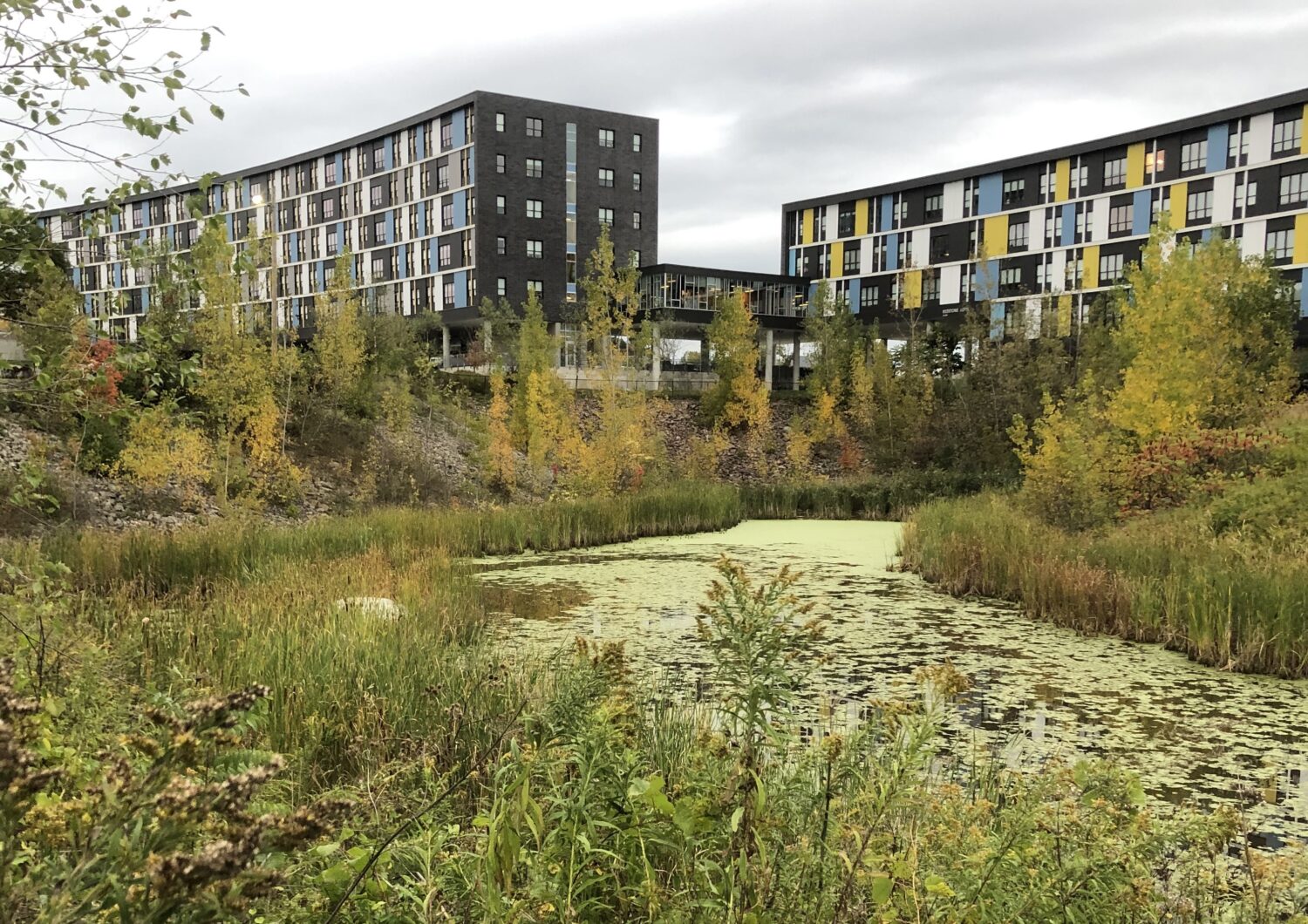
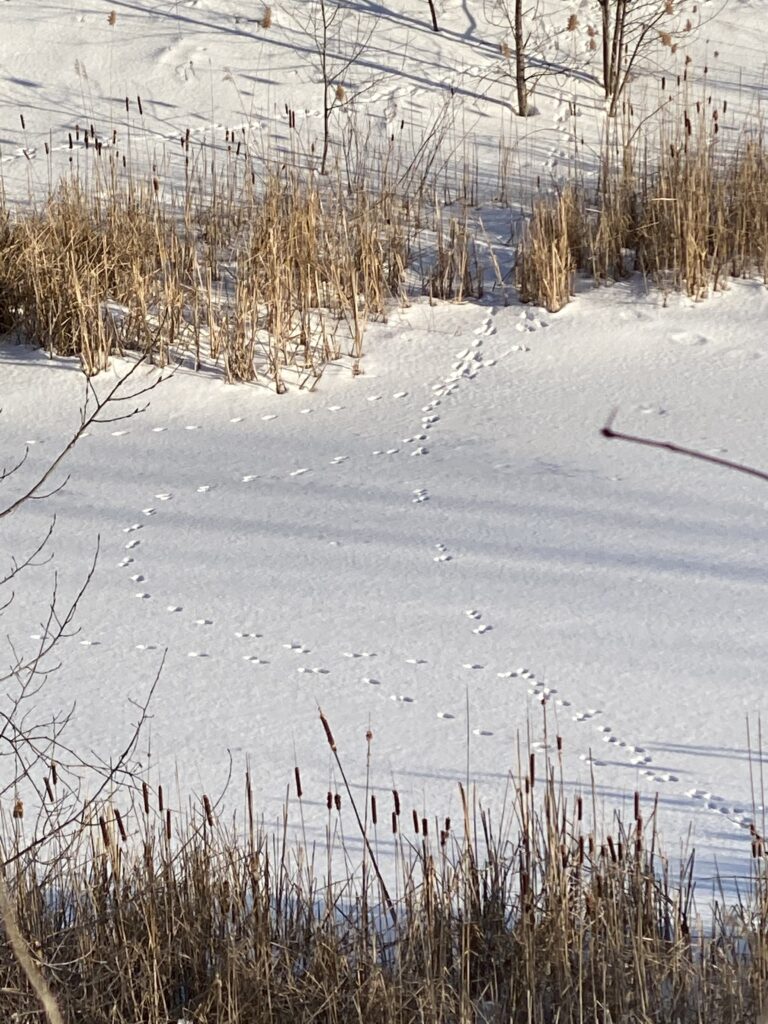
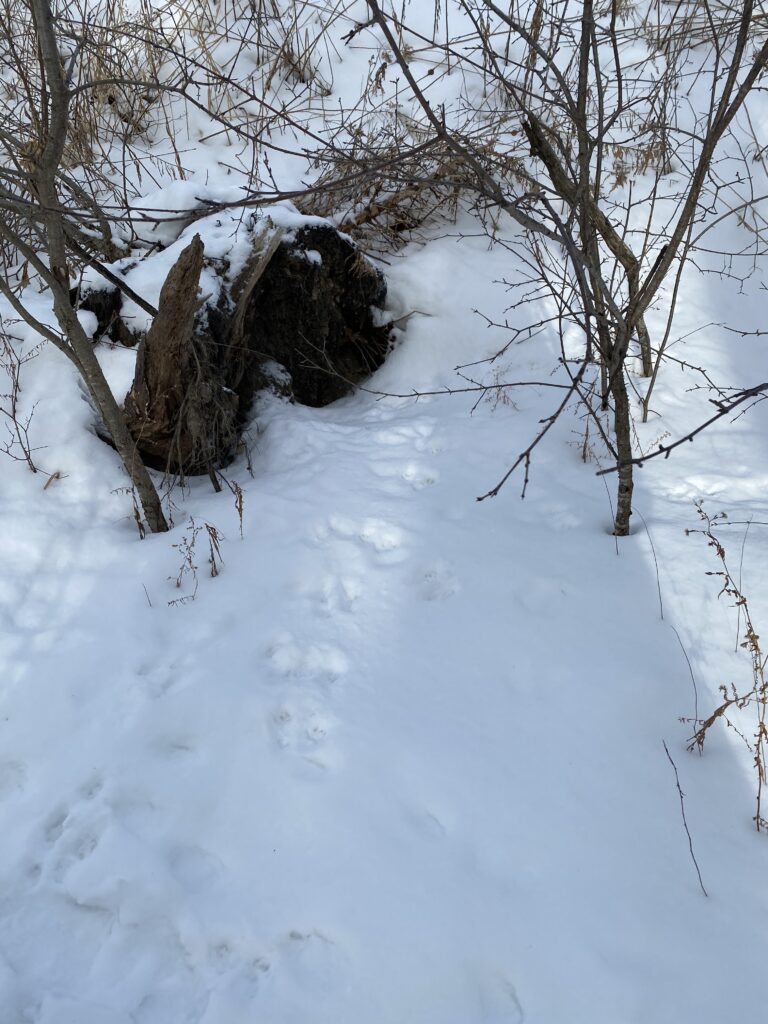
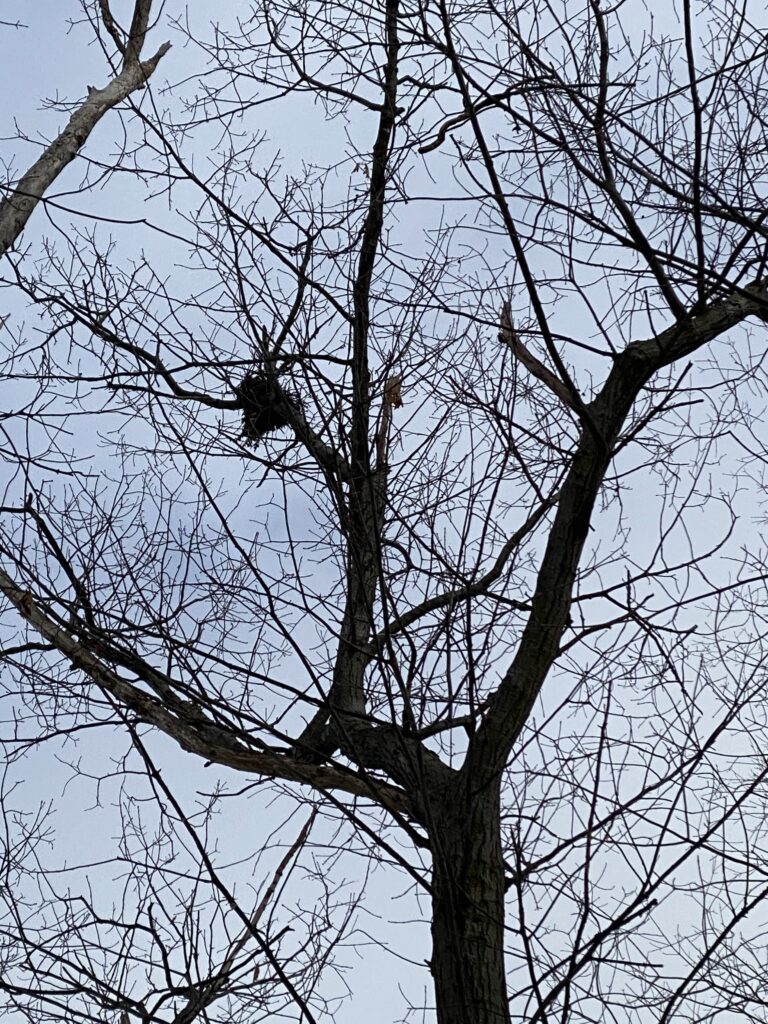
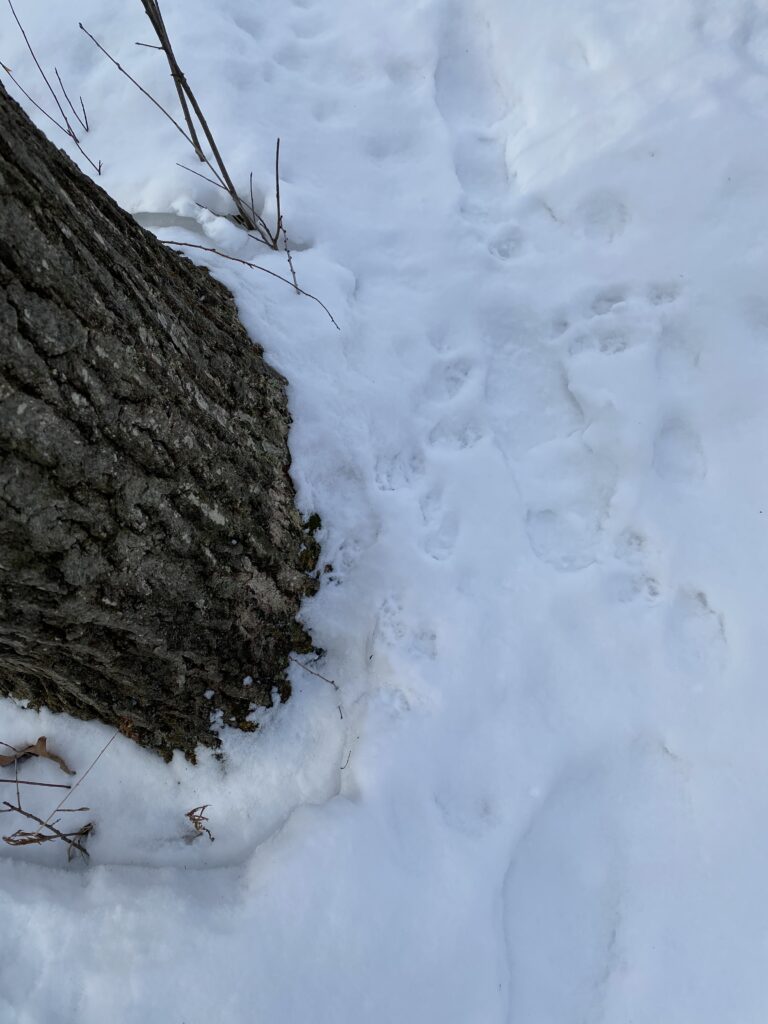
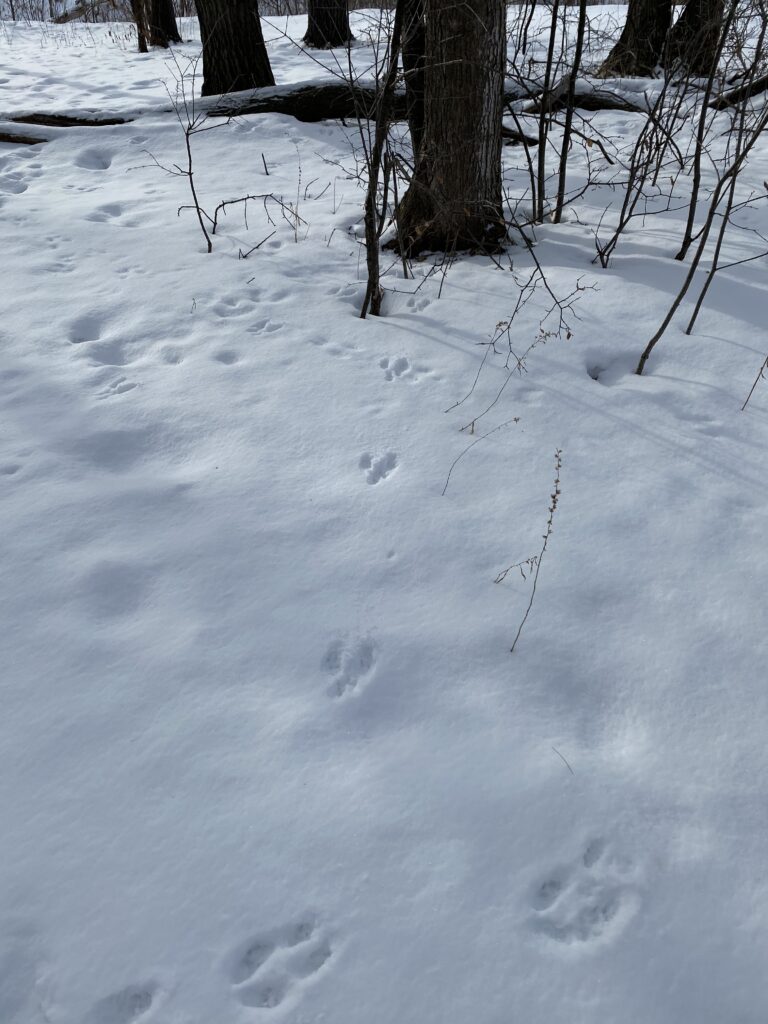
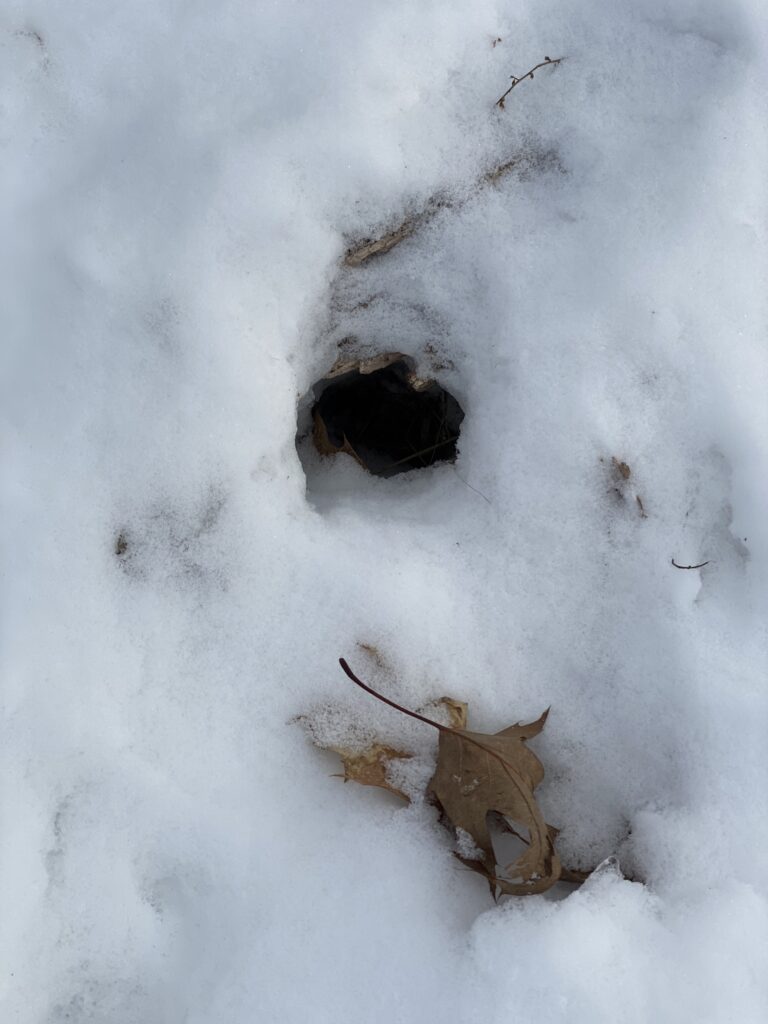
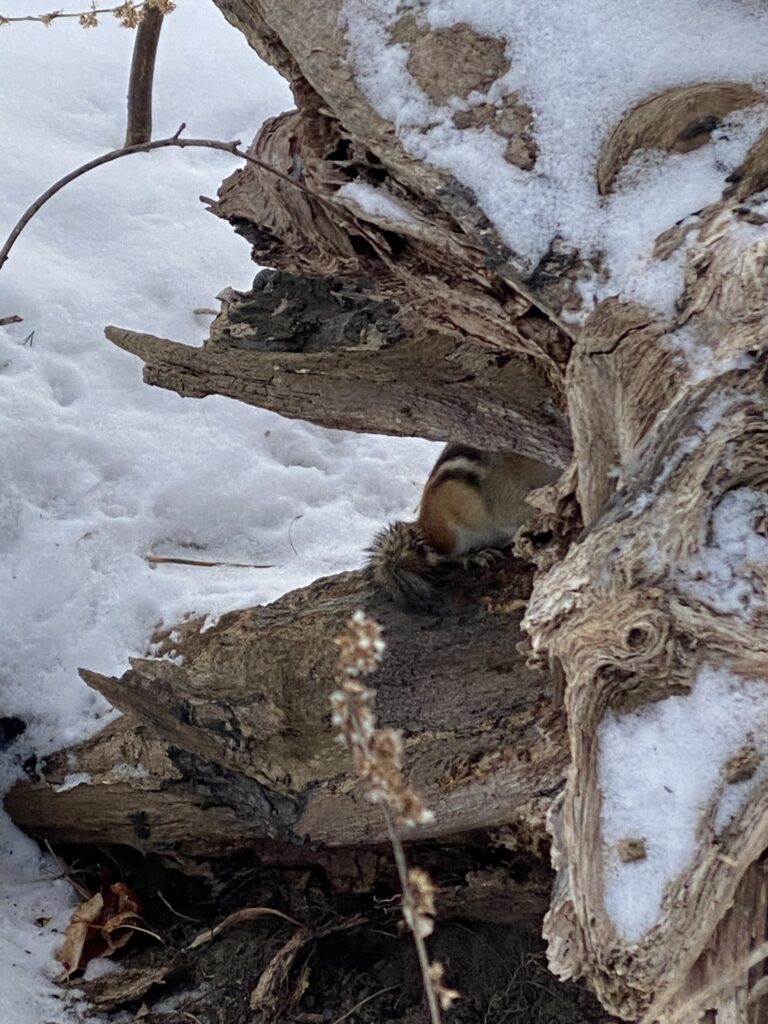
The Red Stone Woods are littered with signs of wildlife. With fresh snow from yesterday and last night, animal tracks are fresh and distinguishable. Gallopers dominate this area, both gray and red squirrels and chipmunks. The gray squirrel has the largest tracks and they are found connecting from the base of one tree to another. Gray squirrels live in nests that they create in deciduous trees. These nests are formed in the “crotch” of the trees where the entrance is found by the trunk. Their nests are made up of twigs and leaves, and are so tightly woven that they are soft and fairly waterproof. (Holland, M) These nests provide the squirrels the necessary shelter they need during the winter months, but they also tend to live in dens as well. These dens are densely packed with twigs and leaves and the earths heat provides some extra warmth. The gray squirrels do not hibernate in the winter and are able to survive on their fat reserves and the cached mast that they have stored. Squirrels are seen throughout the winter when it is above 30F and not snowing or raining. (Penn State) The squirrel tracks often led to the base of a tree or to an area by a fallen tree where dens have been made. This species is diurnal and is not present during the night. Predators of the gray squirrel include snakes, skunks, foxes, and birds of prey. Gray Squirrels are believed to have eyes that are slightly angled upwards in order to see hawks or owls that may be attacking. (Penn State)
Gray Squirrels are known to interact with each other, as they create communal mast storage and use each others nests and dens. They often interact with each other while feeding and have been seen grooming one another as well. In contrast, the interactions between red and gray squirrels are violent. The red squirrel is territorial and will hiss at the gray squirrels if they enter their territory. (Shea, S) Gray squirrels will also feed on mushrooms, flowers and buds. (Penn State)
Holland, M. (2019). Naturally curious: a photographic field guide and month-by-month journey through the fields, woods, and marshes of New England. North Pomfret, Vermont.: Trafalgar Square Books.
Penn State. (2013, October 13). Eastern Gray Squirrel. Retrieved from https://www.psu.edu/dept/nkbiology/naturetrail/speciespages/graysquirrel.htmÂ
Shea, S. (2019, February 11). The Sociable Gray Squirrel: The Outside Story. Retrieved from https://northernwoodlands.org/outside_story/article/sociable-gray-squirrel