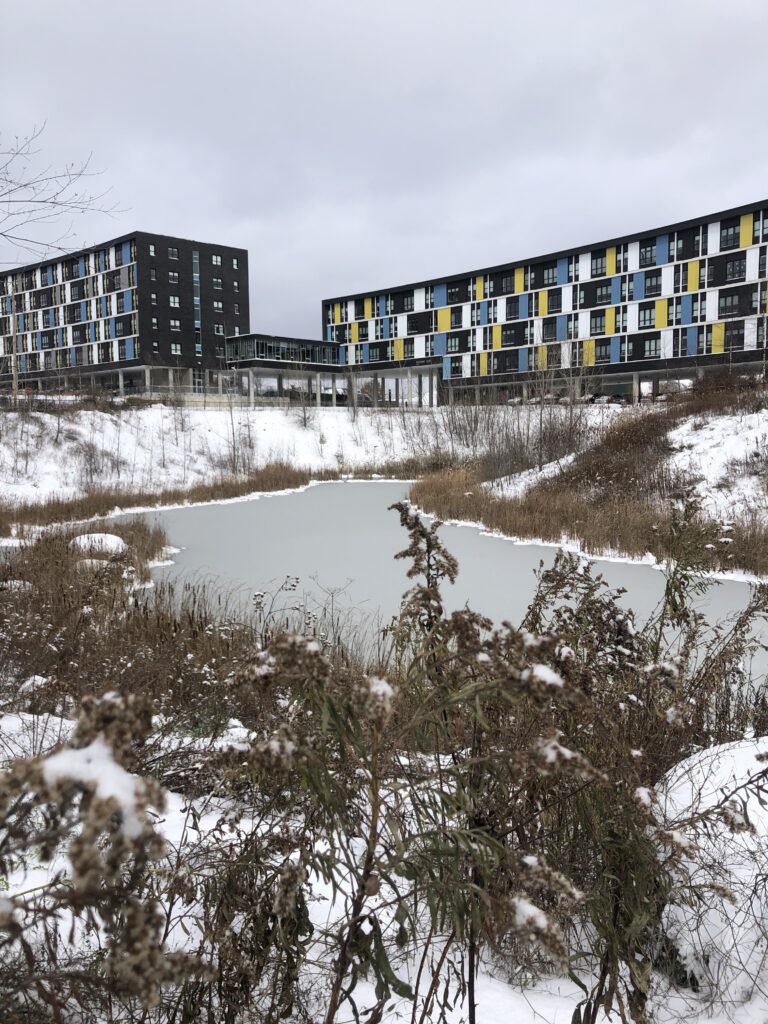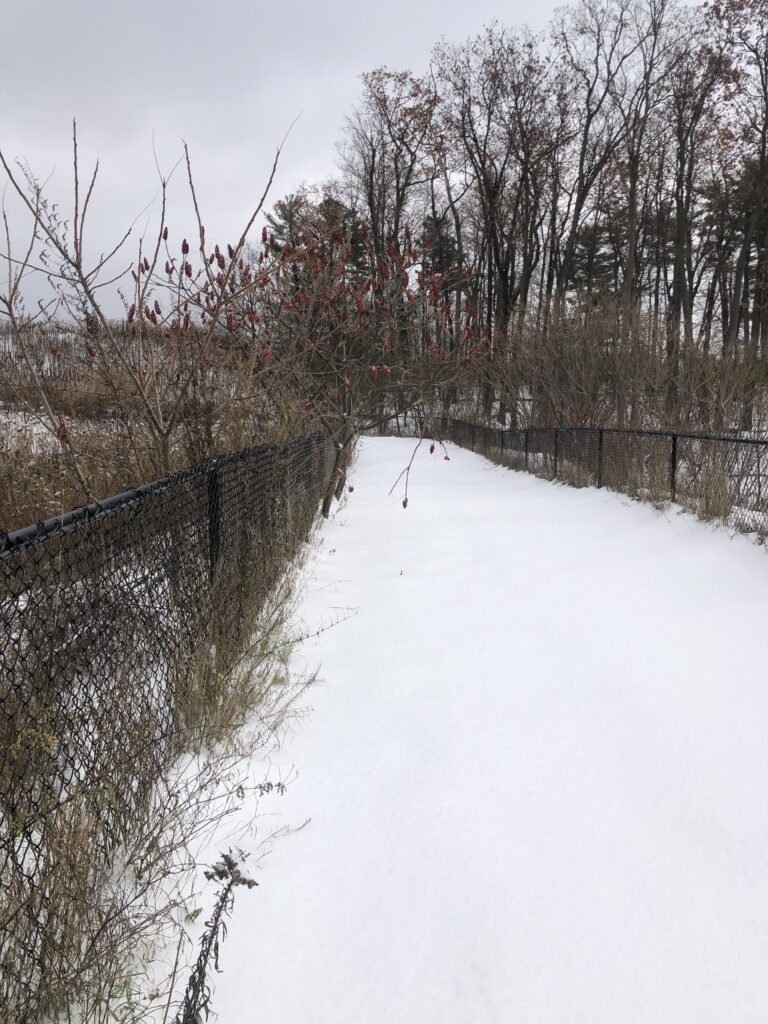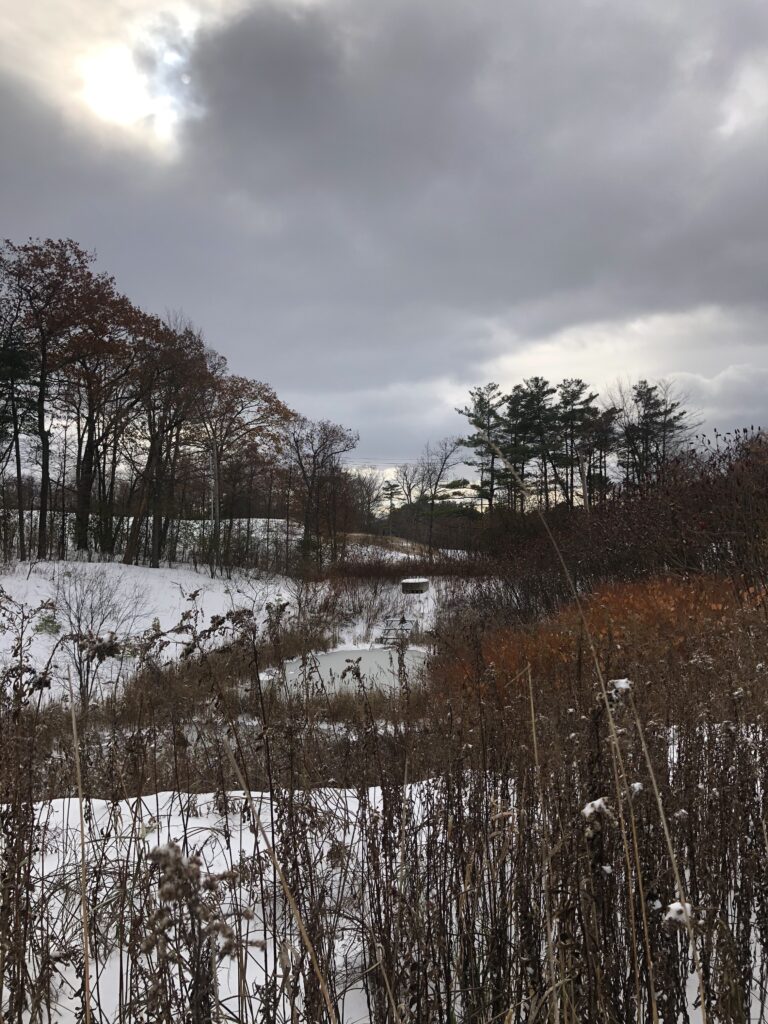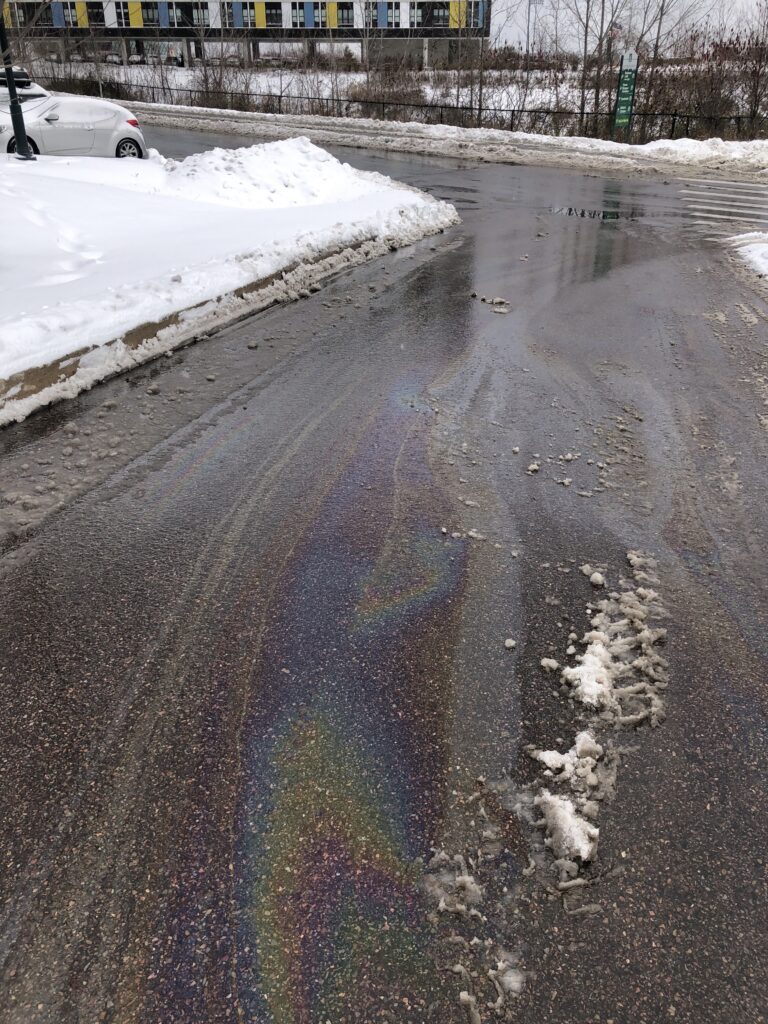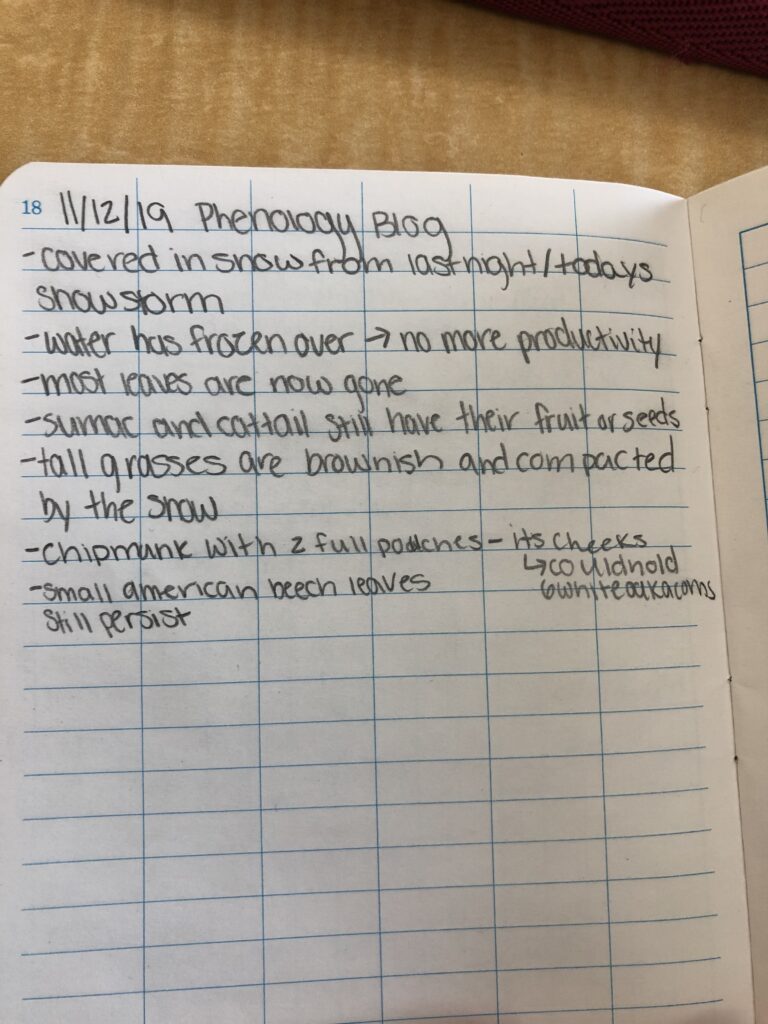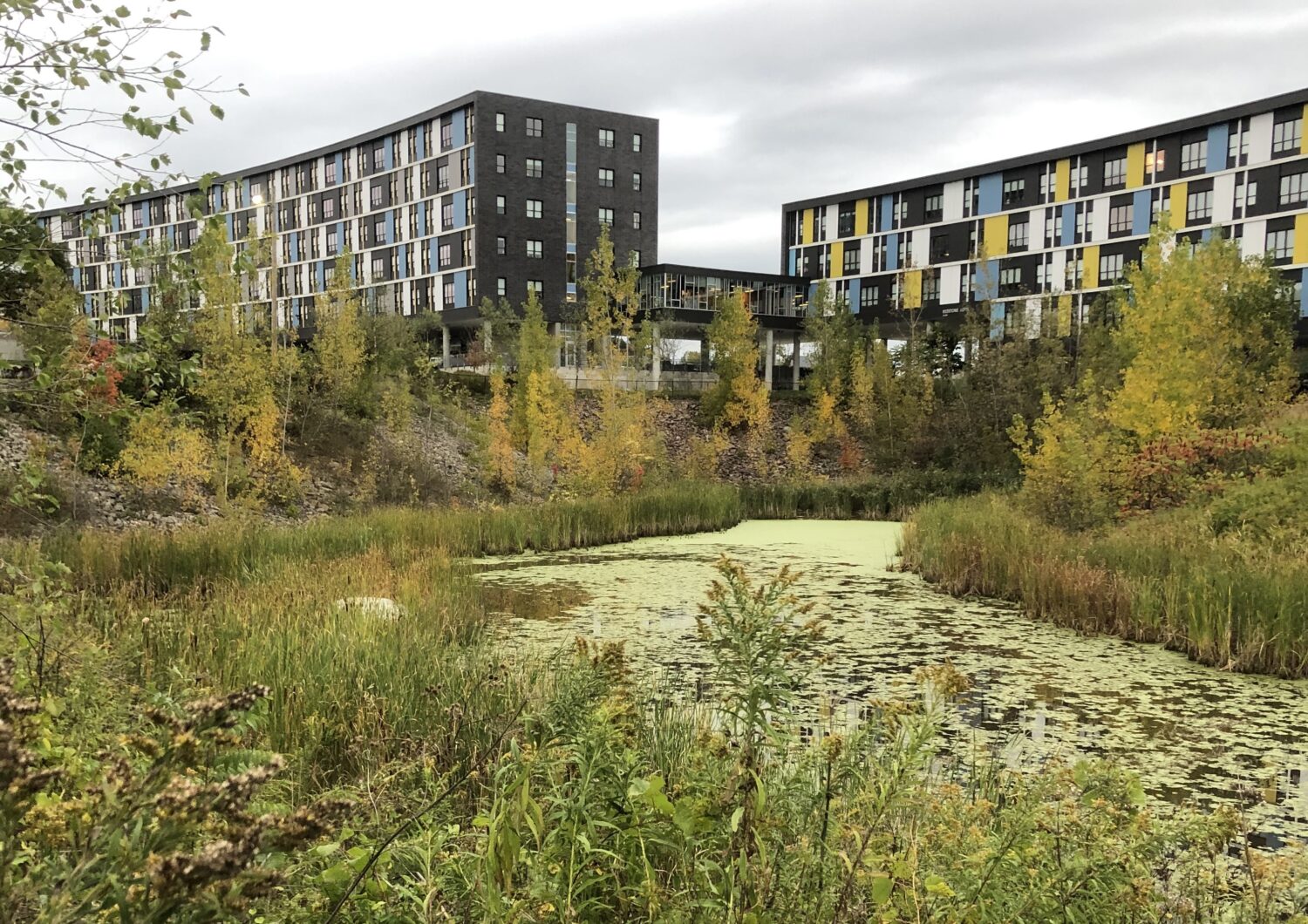
My sense of place at the Redstone Wetlands has now shifted from a peaceful and quiet grassy path between the two water bodies to cold and snowy. As the season has transitioned from fall to winter it has become less ideal for me to sit and be outside as it has become colder. The beautiful yellow and red leaves have fallen and are long gone, and the grasses are yellow and dead. This area is part of a larger place, from the Redstone Campus, to UVM, Burlington and Vermont as a whole. This location is outside of my dorm on Redstone. Being so far away from central campus gives me a sense of going home at night and away from school. Having a disconnect in location from school and my dorm gives a sense of a home away from home. The wetland is also part of the University of Vermont and represents what I have learned here so far. In this course there has been a large focus on wastewater management and how runoff affects Lake Champlain. Here I am able to use my knowledge of these concepts and apply them to this location. Having observed that during rain or snowfall the runoff pools down the roads as they are on hills aimed directly towards these water bodies. This sense of place is validated knowing that it diverts the amount of runoff that would have ended up in Lake Champlain. Zooming out further to Burlington my sense of place is different from that of home. My home town is a rural farm town, and while there is farmland around Burlington, this is a city. At home I had to drive to get anywhere, but here most things are in walking distance, and city buses run throughout the town as well. I’ve developed a connection to locations such as the waterfront and Church St which are more urban. Being in Vermont and not Massachusetts has left me homesick as this is the longest I have been away from home. However becoming more and more familiar with the location has given be connections and a sense of belonging to the place I am in. My place throughout history was most likely non existence. As the University has grown they have needed to compensate for more and more runoff and have done this by creating wetlands. This place was most likely once completely forested, and was cut to make room for farmland. The history of the land represents the stages of humanity as we transitioned farmland to the current industrialization.