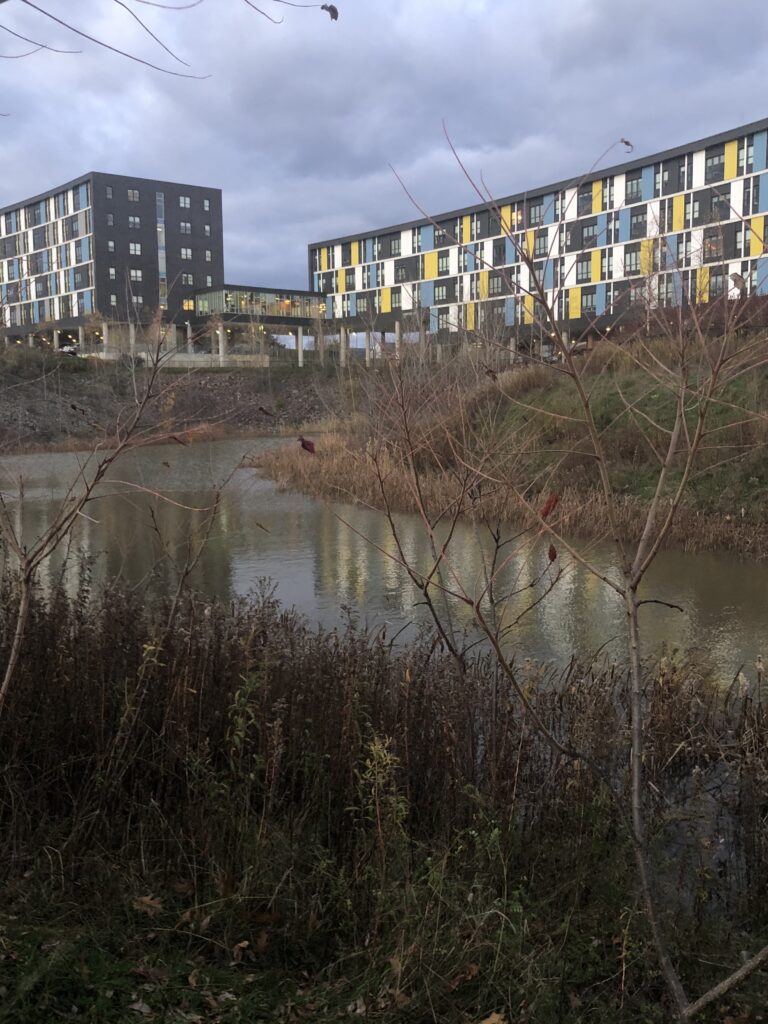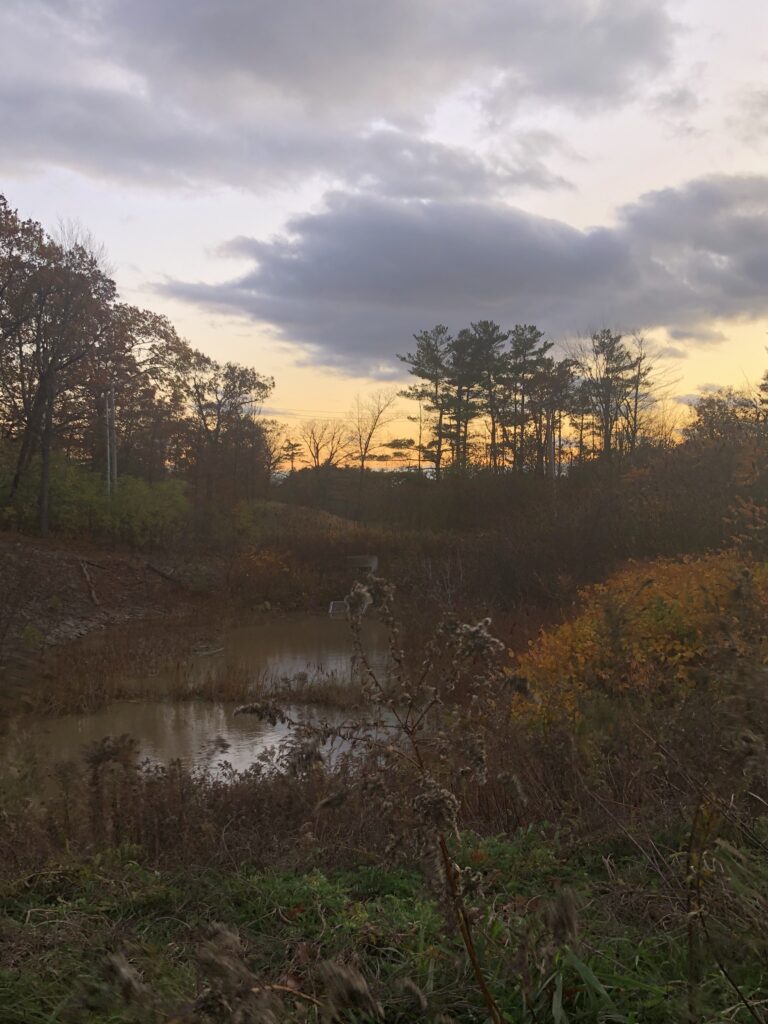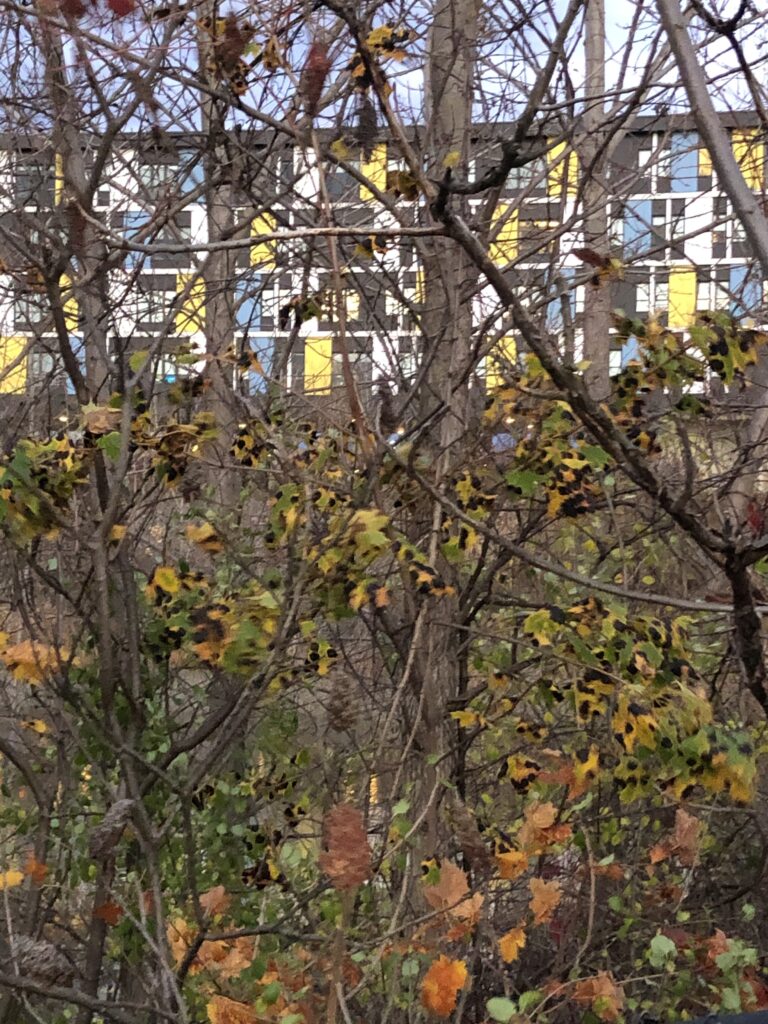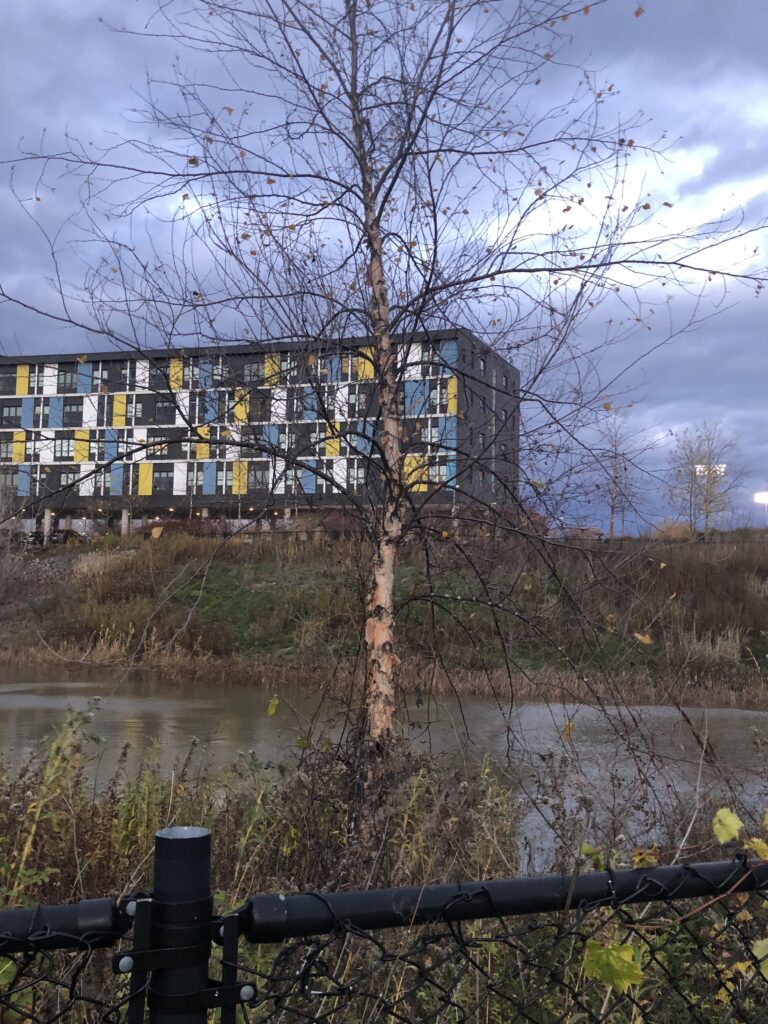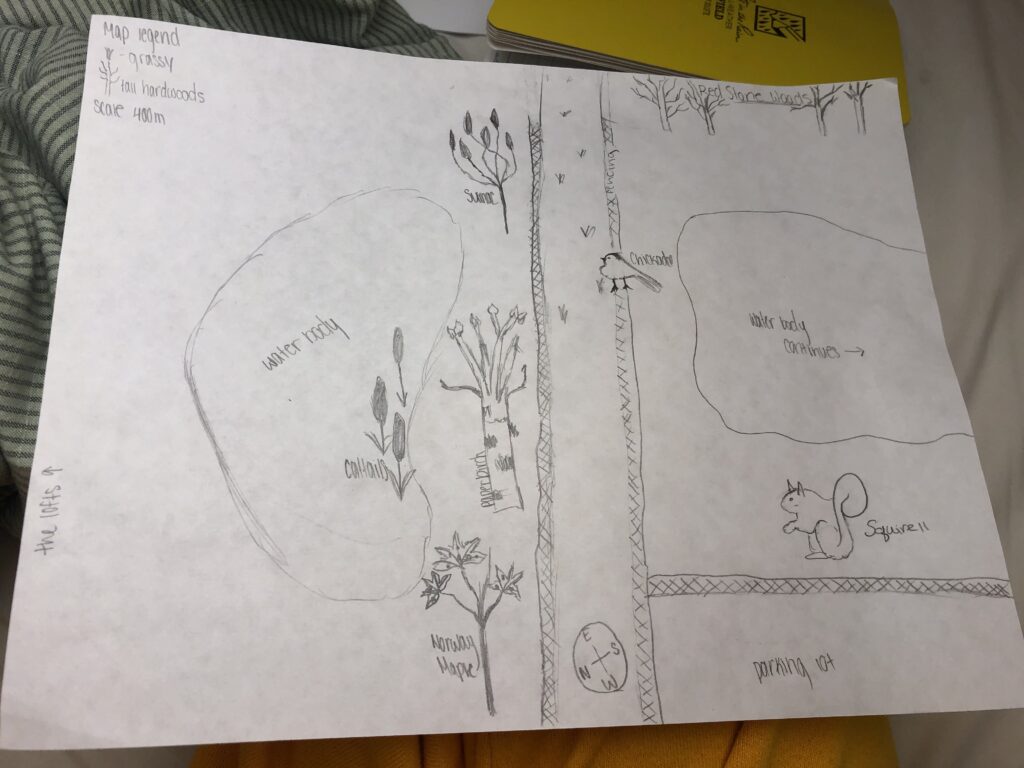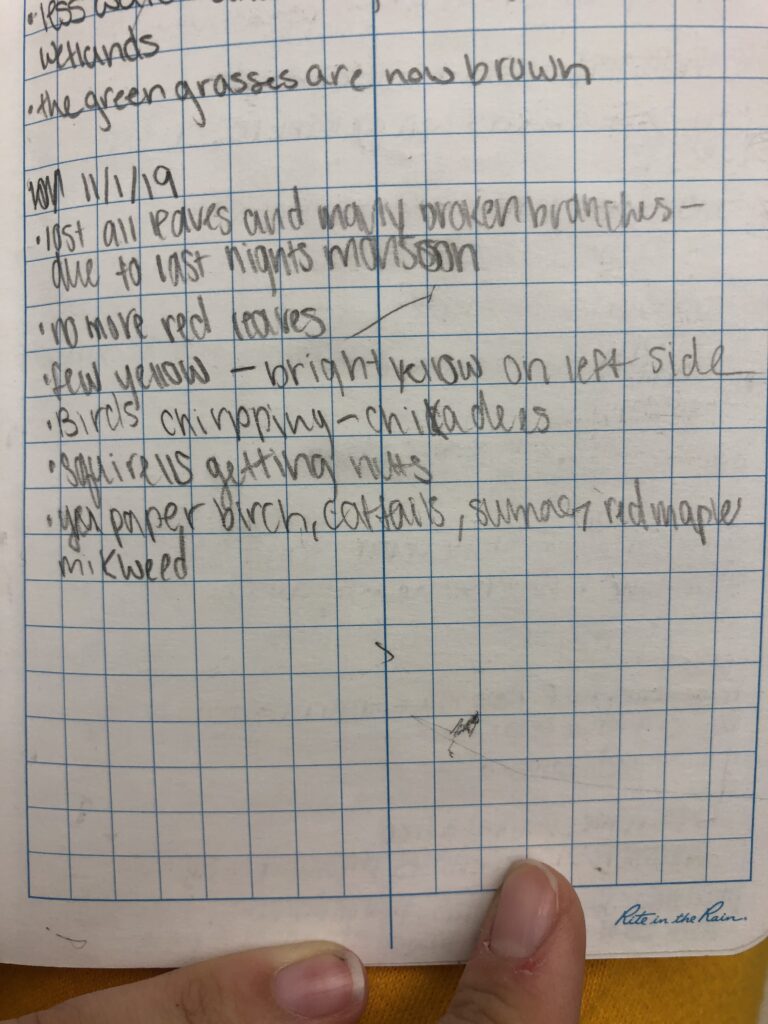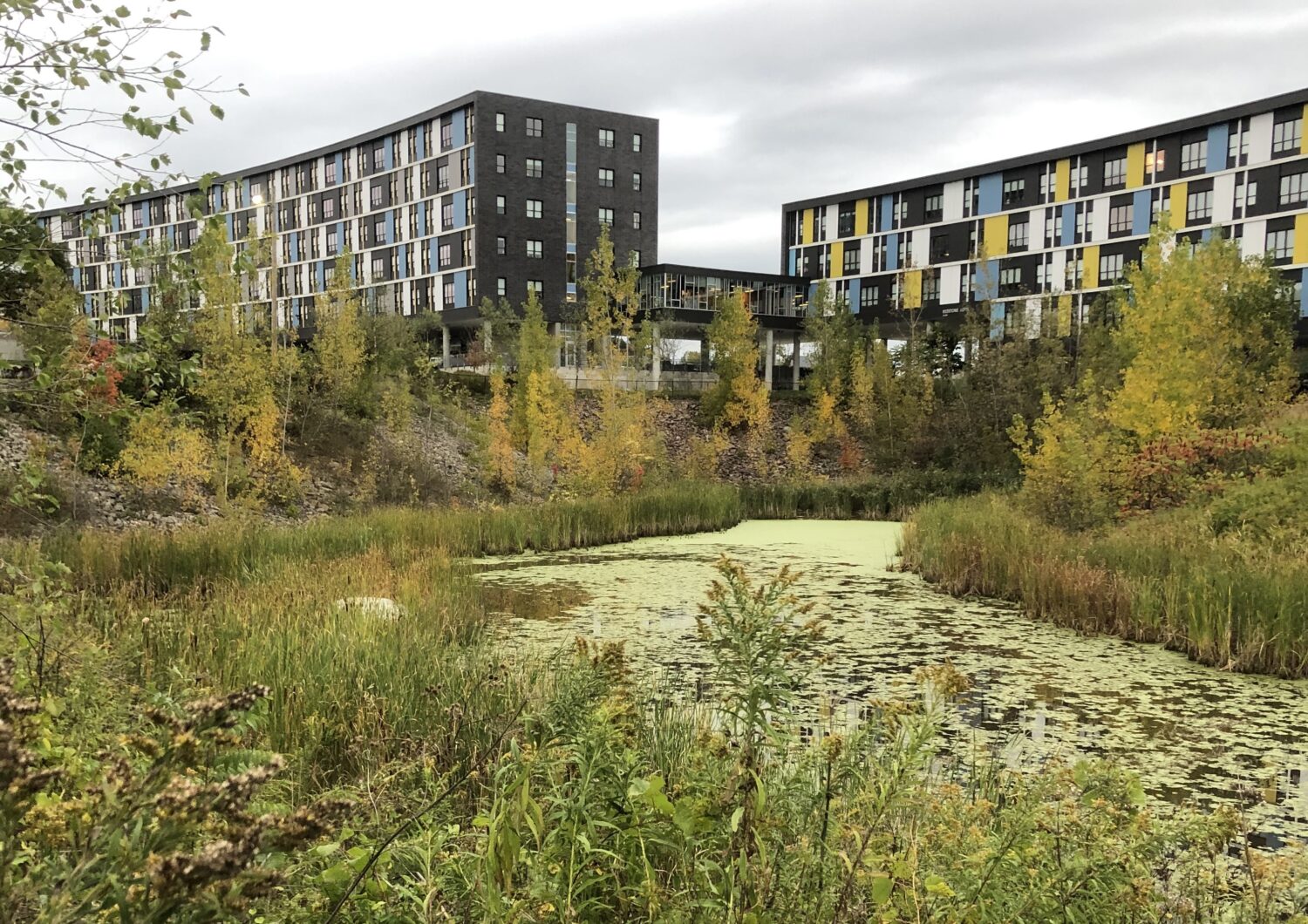
The 3 trees that characterize my site are Norway Maple, Paper Birch, and Sumac. All three species grow in a variety of soils but all need full light. Here by the path and the water these trees receive constant light as nothing blocks the light. The thick woods are far enough away that they do not block these small trees. Cattails are found all around the water body. These plants will spread like crazy as the big bushy flower blows seeds around the area. They prefer to be submerged in 1-2 feet of water so this small wetland is perfect. Cattails thrive in open sunny areas like this one and have grown in a thick, dense stand. Two organisms I observed during my time spent here were chickadees and a common gray squirrel. Since the wetlands are fenced off, and the location is so close to campus there are not many other signs of wildlife. The water is a murky brown color and most likely doesn’t support any fish or aquatic organisms. The flock of chickadees were fluttering around. They prefer the edge of deciduous forests like the Redstone forest, and make nests in trees such as Paper Birch. These chickadees characterize the site as many birds have begun to migrate south. The squirrel was carrying an acorn and is preparing for winter. It will bring back some acorns to its nest and also buries some nearby. Squirrels are found commonly throughout campus as they do not face any large predators here. The trees have lost most of their leaves, the majority dropped last night in the halloween monsoon. The sumac flowers still stand along with the Norway Maple leaves. The bright reds of the maples trees are gone along with some of the colors in the forest. The grassy path was wet and muddy from the storm as well. The water which has looked clear before was a muddy tan color and may be due to any runoff or sediment erosion that occurred during the monsoon.