Phenology Blog

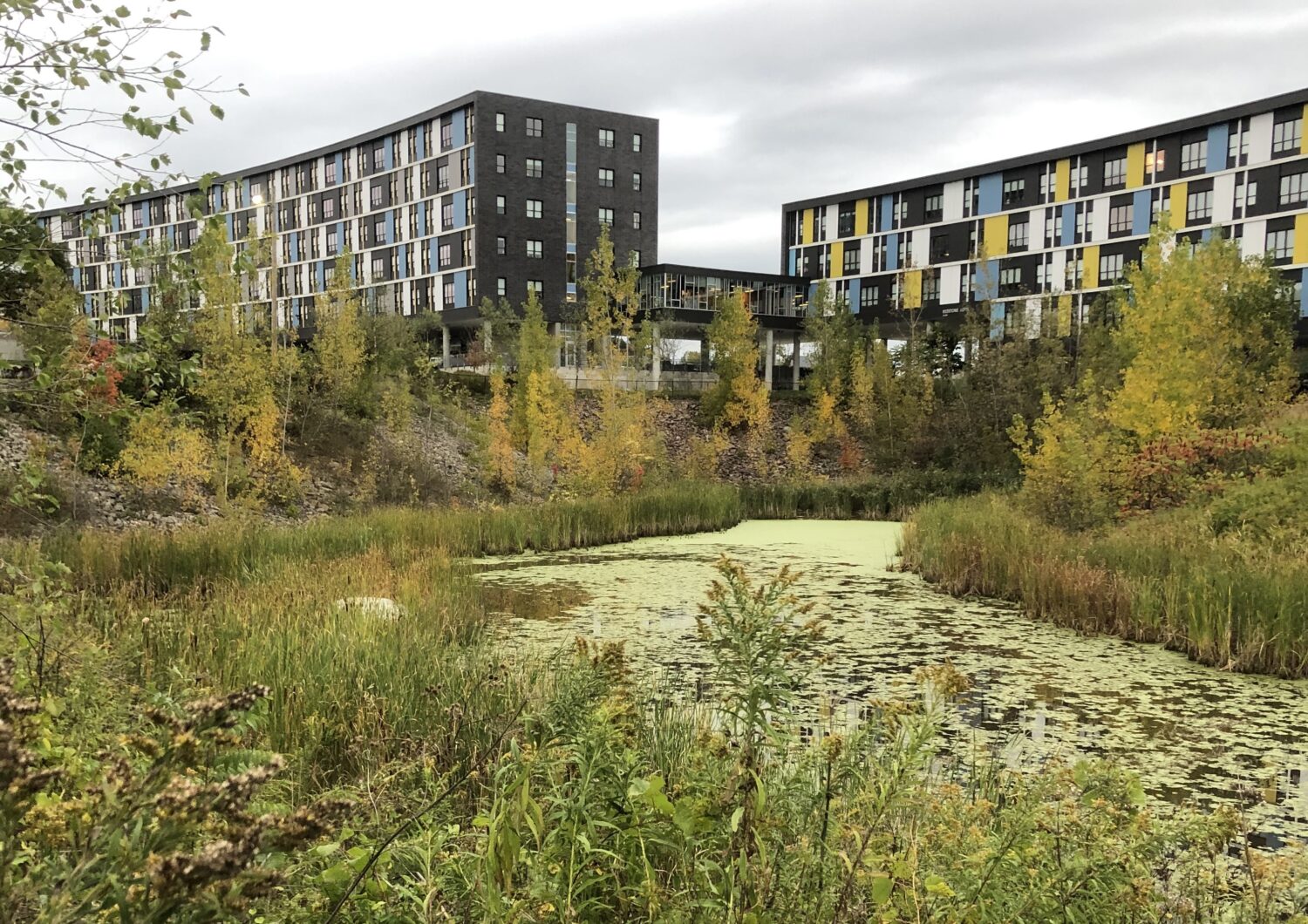
The wetlands by Redstone

May 1, 2020
by Bella Genova
0 comments

Final Reflection

As the semester ends, I wanted to return here to show some of my observations from home. When the coronavirus disrupted the middle of my second semester of freshman year I was devastated. I was very ill during January 2020 (which is why my January post here is blah) and as I suffer from depression had a long 2 week episode and was an anxious mess. When my health returned, I developed I good routine, went skiing with my friends often, and was thoroughly enjoying my time… for about a month. Spring break came and I have not been back to Vermont since. Most of my things remain in my dorm and I did not say goodbye to my friends. The past two months have been difficult as I miss social interaction and Vermont. However I have maintained a routine, trying to do schoolwork during the morning and day time, exercising after, and relaxing at night. My friend group from school has been zooming on Fridays and Saturdays which has been the highlight of every week. With all of the change that has occurred, nature and its impact on me has been constant.

In order to stay sane, I have been adventuring outside here in Mendon, Massachusetts. At first I did not have the energy to get up and go outdoors as I was so sad I was no longer in Vermont. However spring sprung, and the signs of nature and life were unavoidable. Nature has continued even though the world has been on hold. I have found great comfort in the ability to access trails from my neighborhood and to explore the creeks and forests around my home. I am incredibly thankful for what I have learned so far at UVM. I do not think I could have found a better fit for a university. I absolutely love being able to walk through the woods and be able to identify the trees growing, know that the birds activity is due to mating season, listening to the spring peepers mating call, and overall be able to observe the phenological changes occurring. Robin Kimmerer says in Braiding Sweetgrass, “I’m trying to imagine what it would be like going through life not knowing the names of the plants and animals around you. Given who I am and what I do, I can’t know what thats like, but I think it would be little scary and disorienting- like being lost in a foreign city where you can’t read the street signs.” This quote resonates with me, as I feel completely different walking through the woods now compared to a year ago. Now I cannot help but stop and identify the trees, observe the bark and differences in the trees, and look at the ones I do not know the names of. I am able to stand at the edge of my yard and know that the White Birch trees grow on the forest edge for they need full sunlight. I see the singular Eastern White Pine tree that is much taller than the rest, and can identify it as a wolf tree, one that has been here much longer than the rest of the trees. I step outside and hear the woodpeckers pecking away in the woods. I see the trees they have created there homes in, and know that the cavities they create are used by species of mice and other small animals. I look at the giant puddle that forms in my back yard every year due to snowmelt, and identify it as a vernal pool. I know that the spring peepers I hear are down in the pool mating, and that if I dug up the bottom of the pool I could find their eggs.

Maybe this blog post is just me rambling, but as the semester comes to an end, I am so incredibly thankful for the year I was able to have. Although it was cut short, and I am curious as to what could’ve happened over the past two months if I was on campus, I am thankful for the time I did have. I don’t think any other major or university could’ve been a better fit than this one is for me. I love what I am learning and am so thankful for the teachers and experiences I have had so far. I cannot wait to be able to return next year.
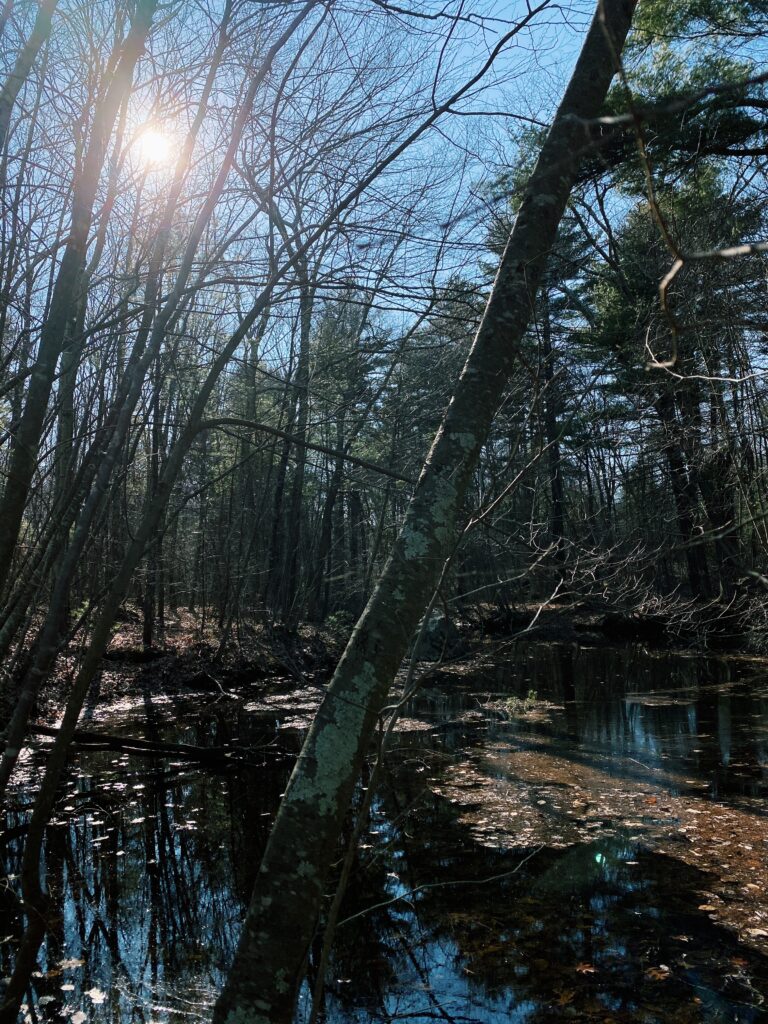
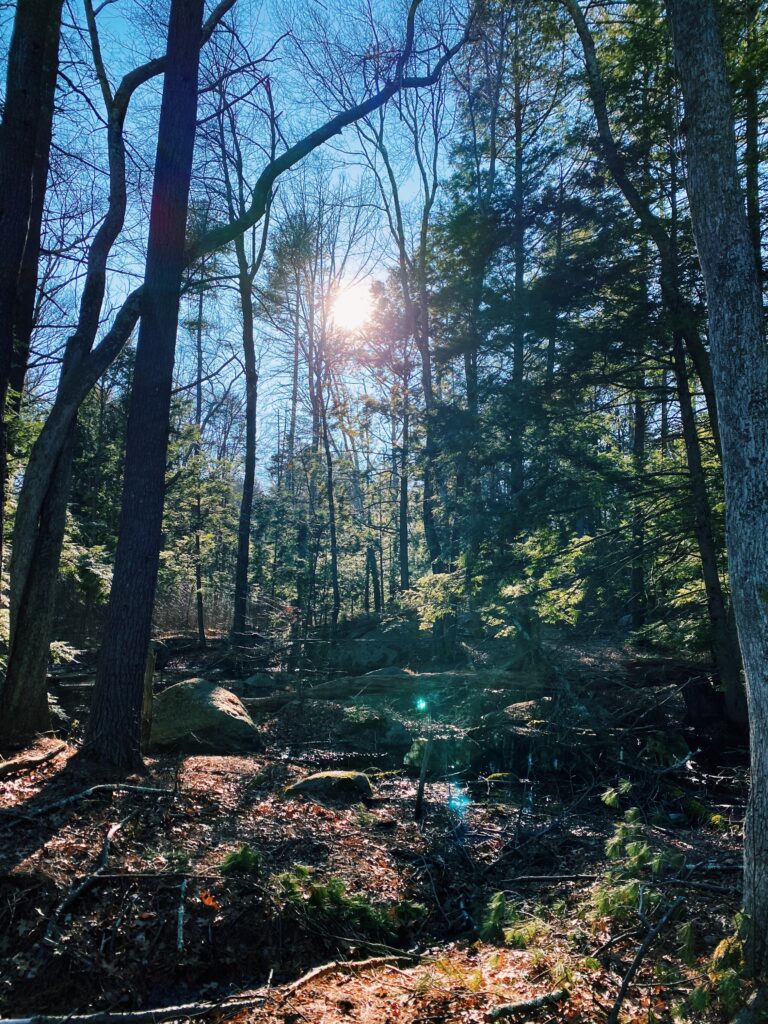
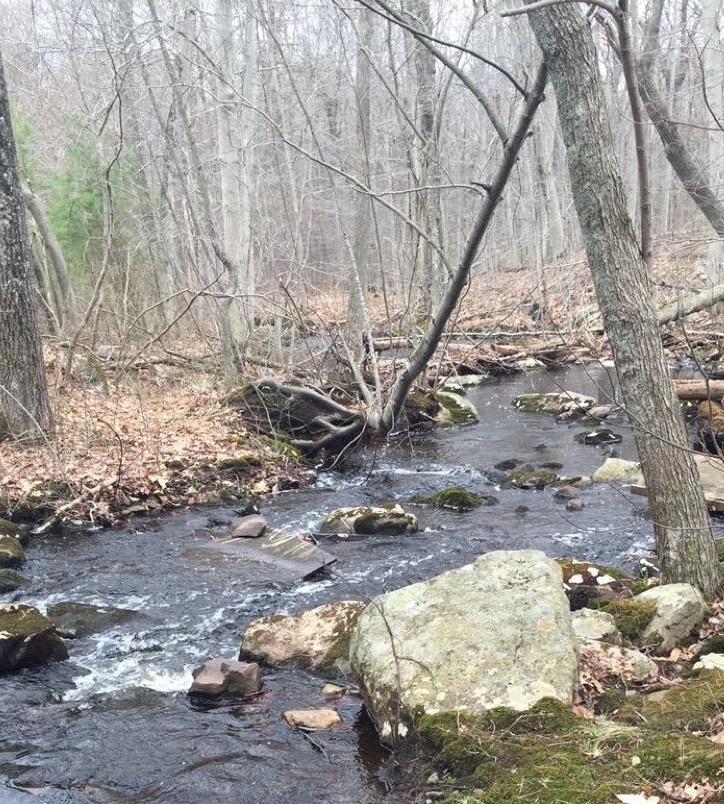
Figure 1. My own photo.
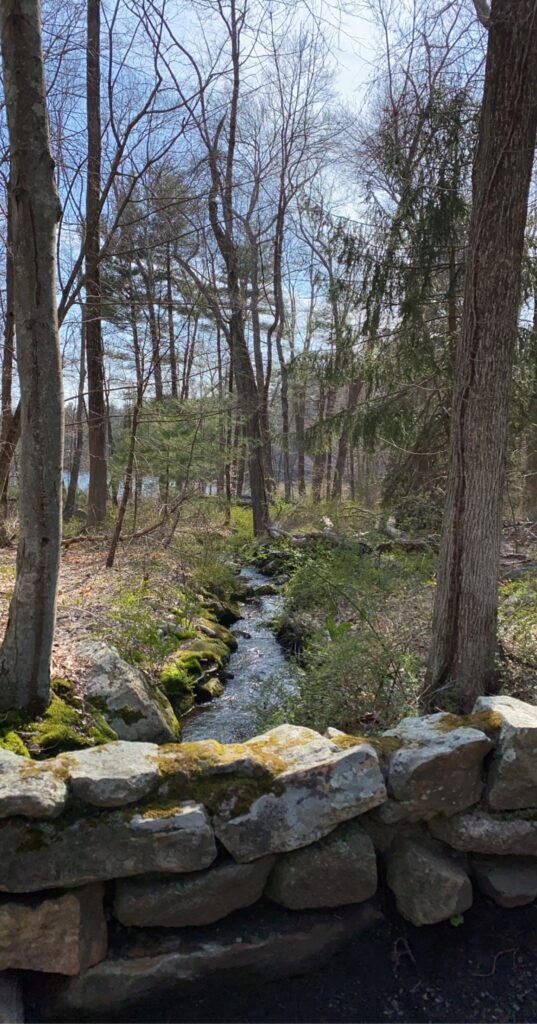
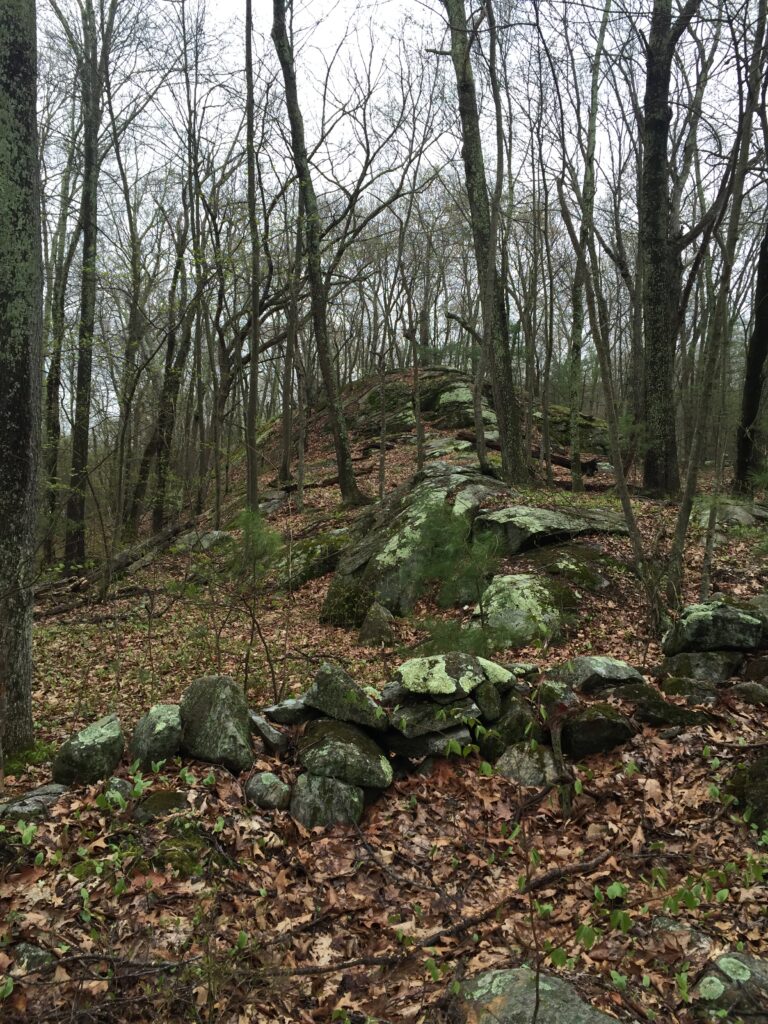
Figure 2. My own photo. Here you can see some of the old rock walls from farmers.
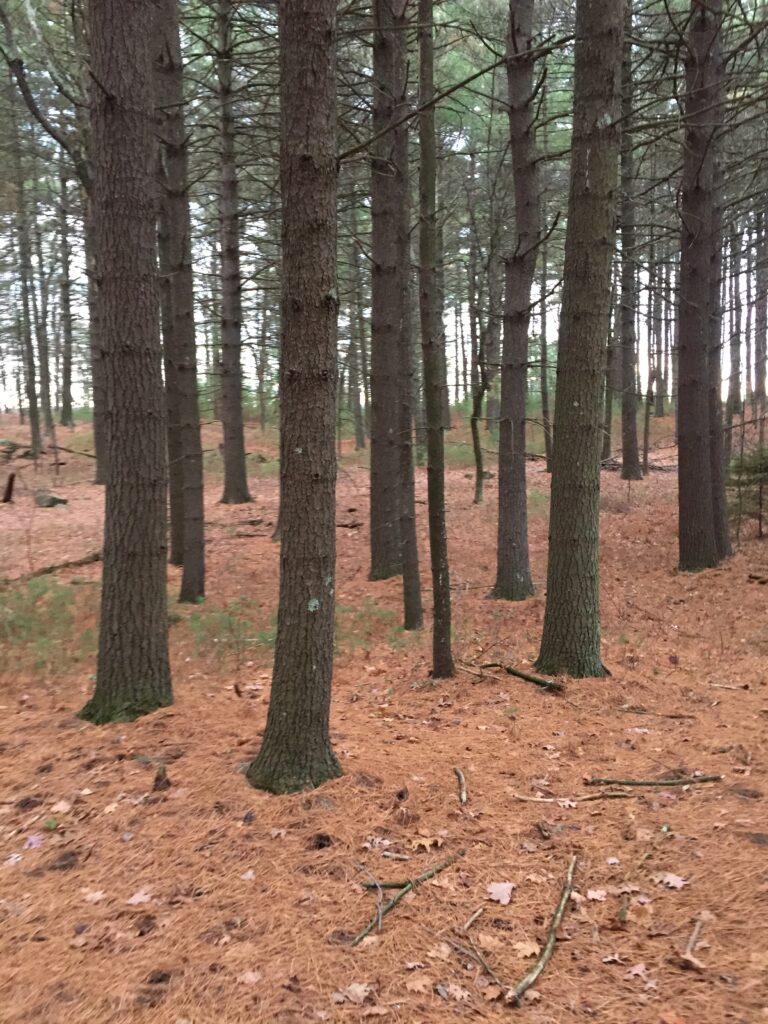
Figure 3. My own photo. On a walk in a nearby town forest. There are Norway Spruce and Eastern White Pines in the distance.
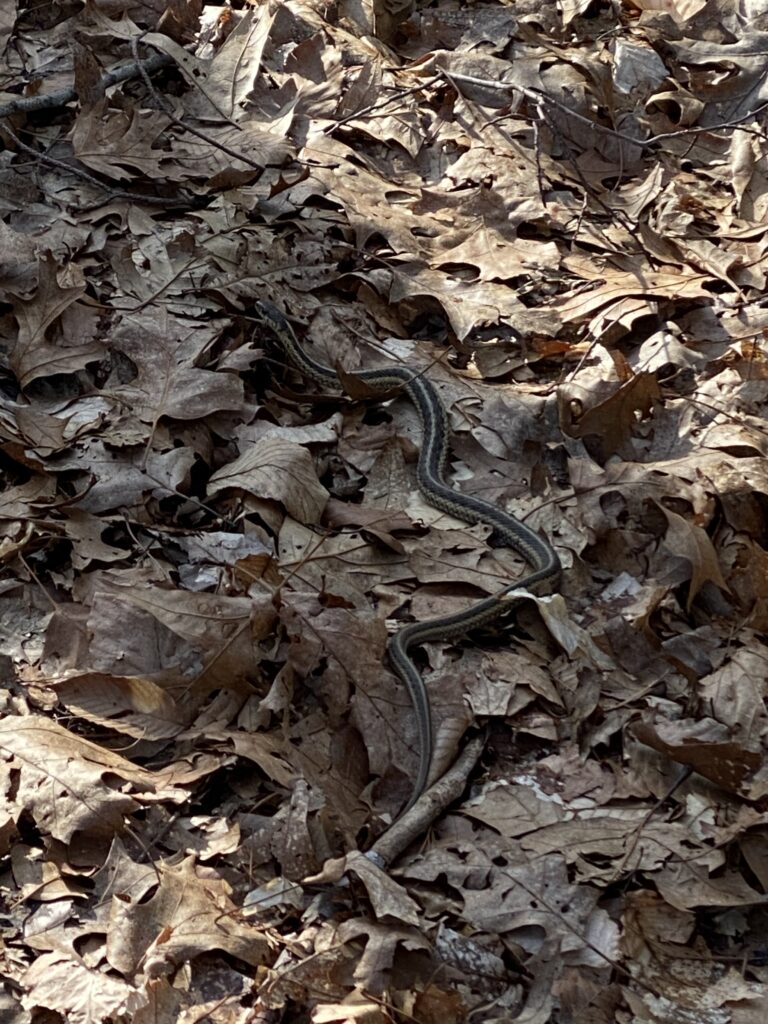
Figure 4. My own photo. On the same walk as Figure 3, I saw this garter snake out and about. The yellow and black stripes are what makes this snake so identifiable.
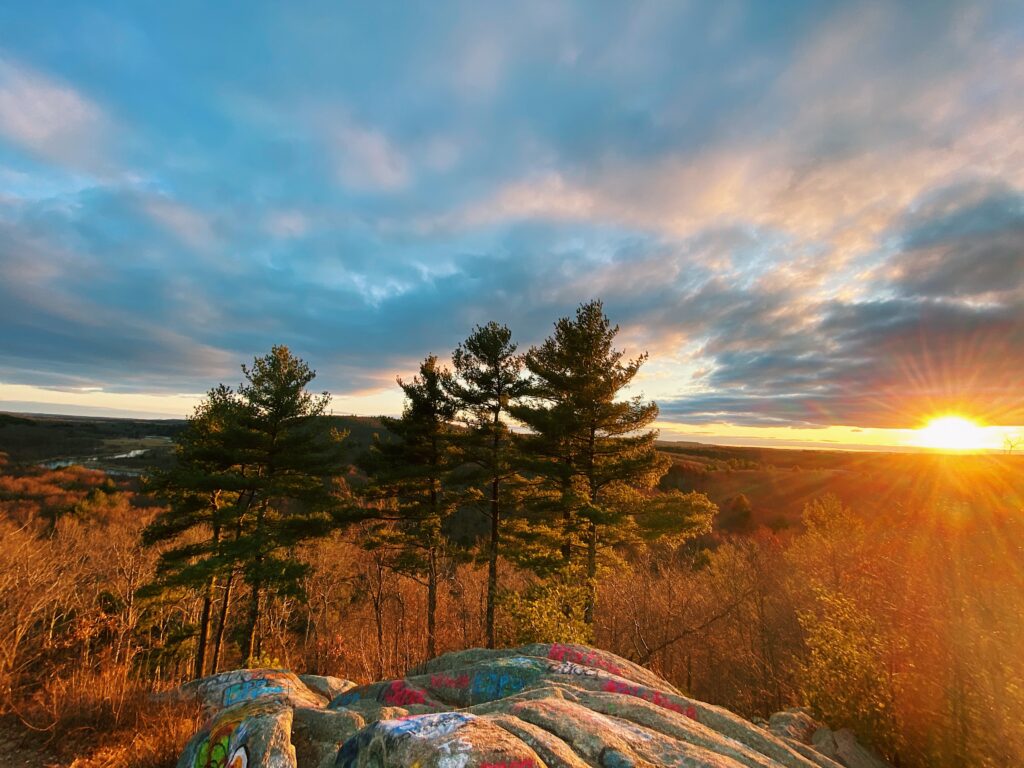
Figure 5. My own photo. Pictured here is a sunset at Lookout Rock in Northbridge Massachusetts. I was asked by my NR6 professor if the graffiti pictured bothered me. I have been going to this trail since I was little, when none of this graffiti was here. Most of it has been done by my high school classmates, and the students of other local high schools. I think its kind of fun, but I’m not sure about any possible impacts that come from it.
Figure 6. My video. This video depicts the woodpecker holes that have been created over the years.
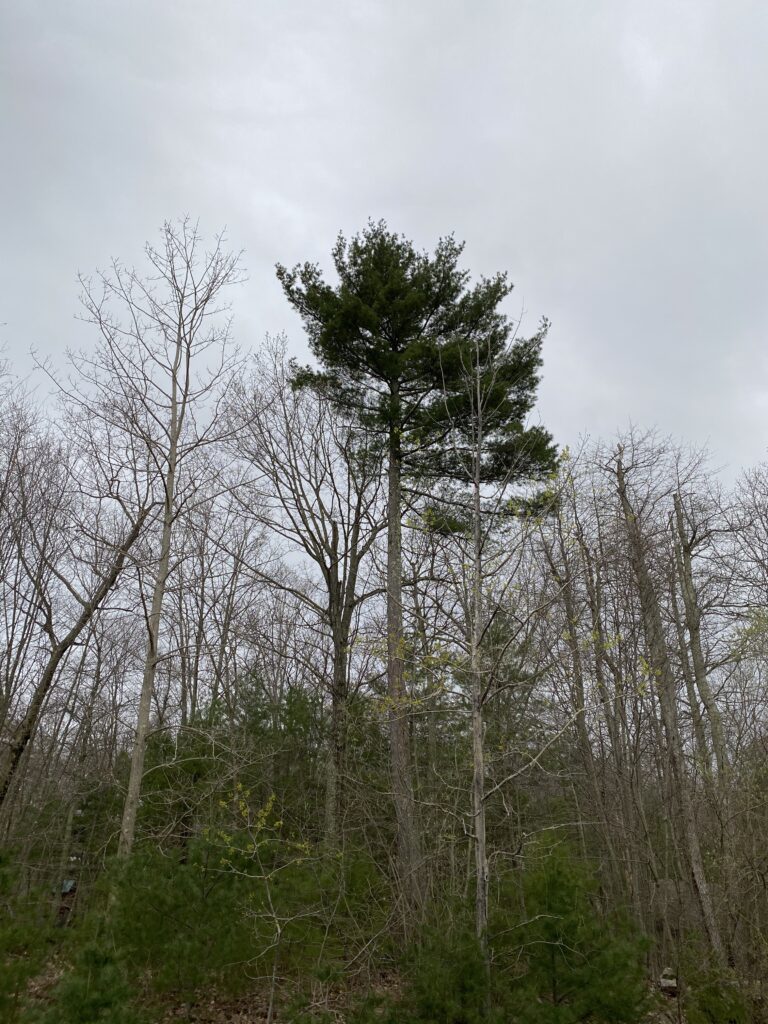
Figure 7. My photo. The wolf Eastern White Pine and some White Birch trees as well. These trees crave sunlight, and are pioneer species.
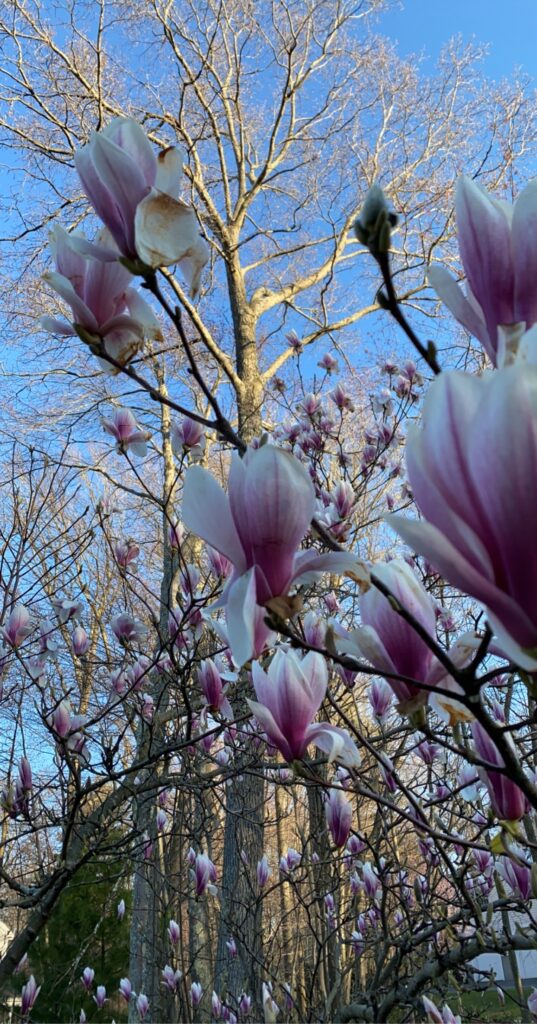
Figure 8. My photo. A bloomed Magnolia tree in my neighborhood.
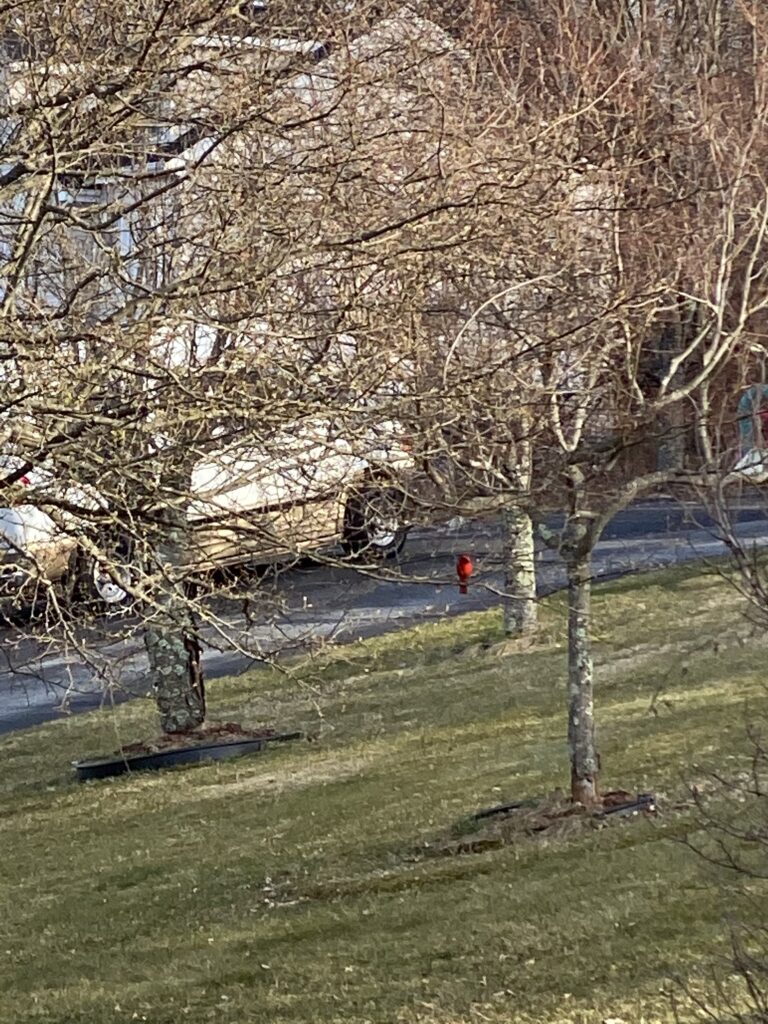
Figure 9. My photo. I have spotted many cardinals around my house recently. Usually I see 1 every once in a while, but I believe there are 3-4 of them hanging around here. As the saying goes, when a cardinal appears a loved one is near.
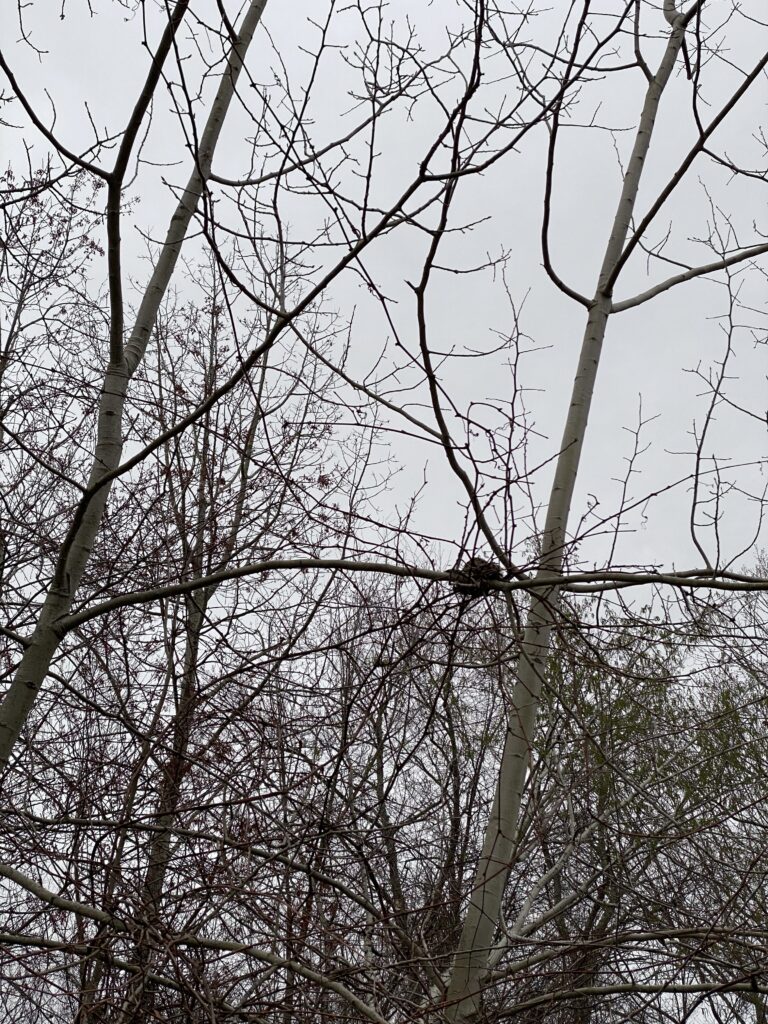
Figure 10. My photo. I saw this tiny little birds nest balancing perfectly in these interlacing twigs. Doesn’t look that secure to me.
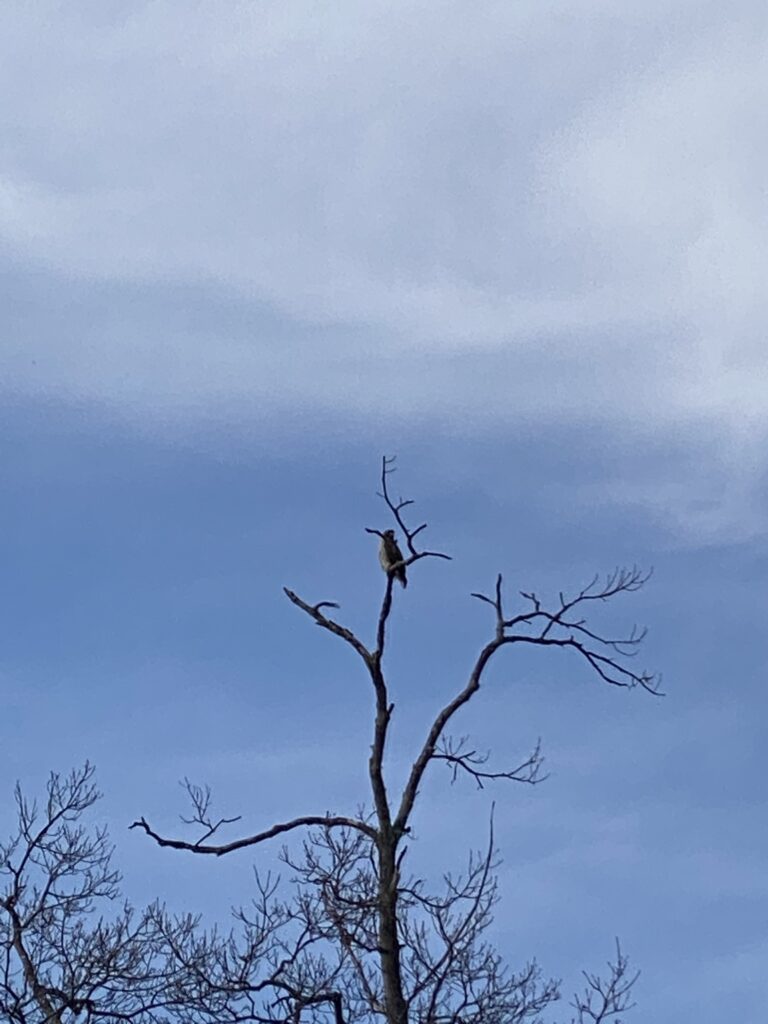
Figure 11. My photo. I have seen 2 hawks around often as well. I don’t know enough about them to identify the bird. A bird I was able to identify was a barn owl, as its call is very distinct. I heard two of them calling back and forth several times, but could not see them.
Figure 12. My photo. A few days after figure 11 another hawk or the same hawk was seen.

These are my photos from the past 2 months. Being outdoors has kept me sane during the coronavirus self isolation. I miss people, but the outdoors are pretty good.
February 29, 2020
by Bella Genova
0 comments

February: Survival

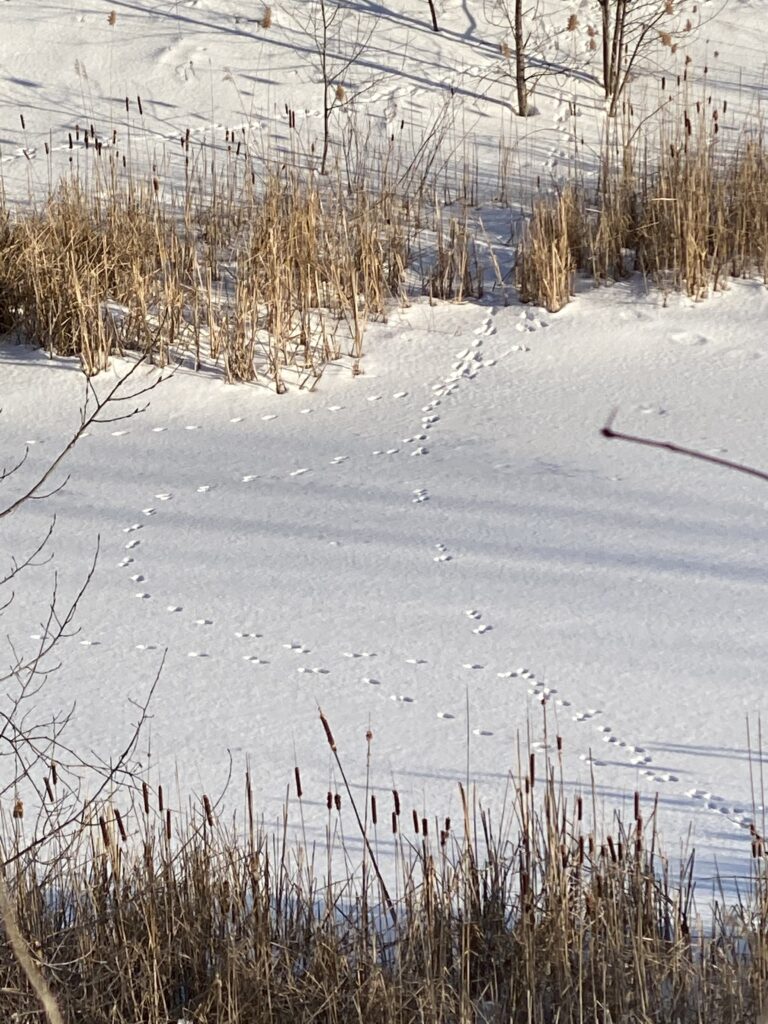
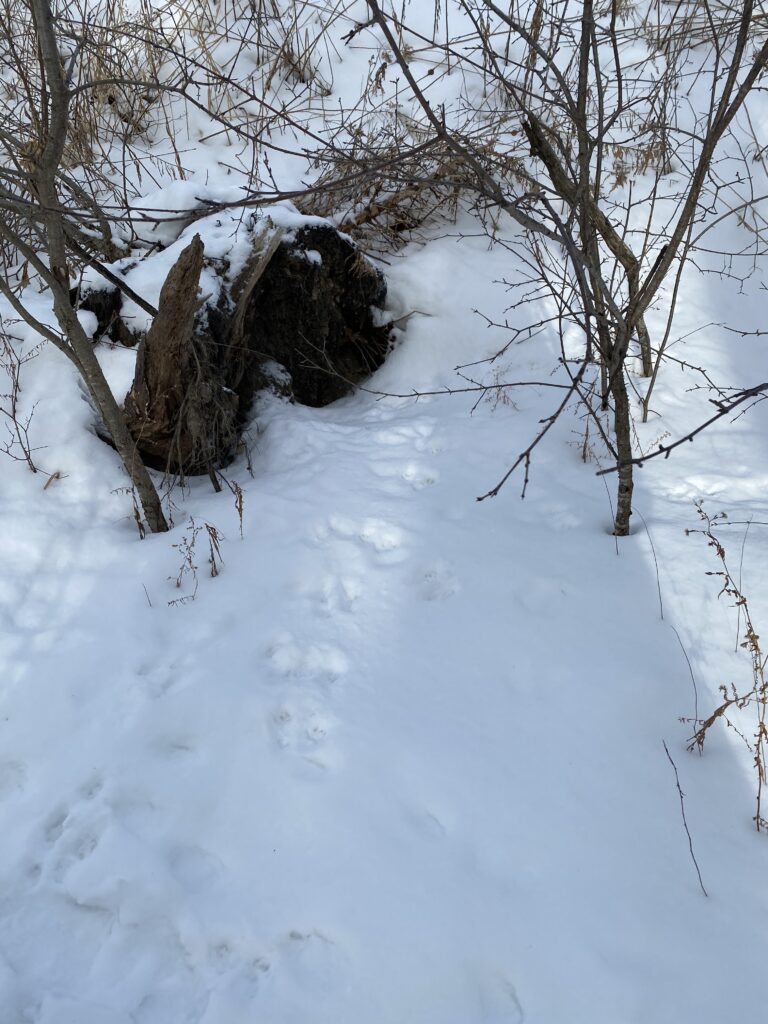
The Red Stone Woods are littered with signs of wildlife. With fresh snow from yesterday and last night, animal tracks are fresh and distinguishable. Gallopers dominate this area, both gray and red squirrels and chipmunks. The gray squirrel has the largest tracks and they are found connecting from the base of one tree to another. Gray squirrels live in nests that they create in deciduous trees. These nests are formed in the “crotch” of the trees where the entrance is found by the trunk. Their nests are made up of twigs and leaves, and are so tightly woven that they are soft and fairly waterproof. (Holland, M) These nests provide the squirrels the necessary shelter they need during the winter months, but they also tend to live in dens as well. These dens are densely packed with twigs and leaves and the earths heat provides some extra warmth. The gray squirrels do not hibernate in the winter and are able to survive on their fat reserves and the cached mast that they have stored. Squirrels are seen throughout the winter when it is above 30F and not snowing or raining. (Penn State) The squirrel tracks often led to the base of a tree or to an area by a fallen tree where dens have been made. This species is diurnal and is not present during the night. Predators of the gray squirrel include snakes, skunks, foxes, and birds of prey. Gray Squirrels are believed to have eyes that are slightly angled upwards in order to see hawks or owls that may be attacking. (Penn State)

Gray Squirrels are known to interact with each other, as they create communal mast storage and use each others nests and dens. They often interact with each other while feeding and have been seen grooming one another as well. In contrast, the interactions between red and gray squirrels are violent. The red squirrel is territorial and will hiss at the gray squirrels if they enter their territory. (Shea, S) Gray squirrels will also feed on mushrooms, flowers and buds. (Penn State)

Tracks across the frozen water from February 21, 2020 (Genova, I)
Gray Squirrel tracks leading up to a possible den from Feb 29, 2020. (Genova, I)
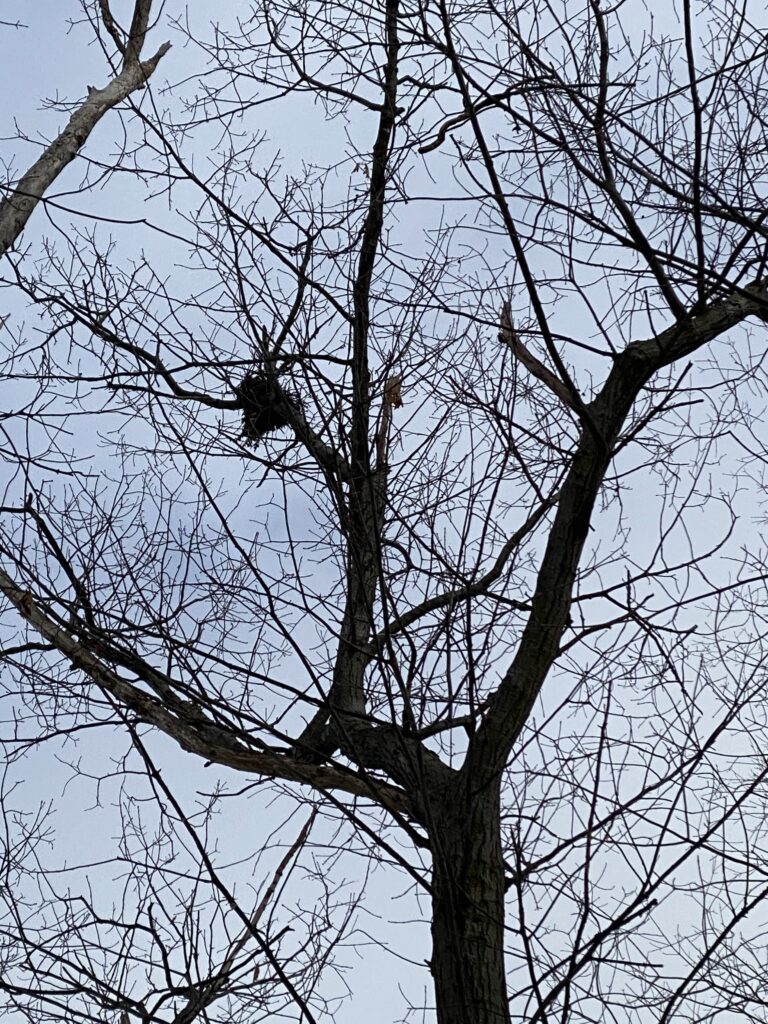
Squirrel nest in a Deciduous Tree from Feb 29, 2020. (Genova, I)
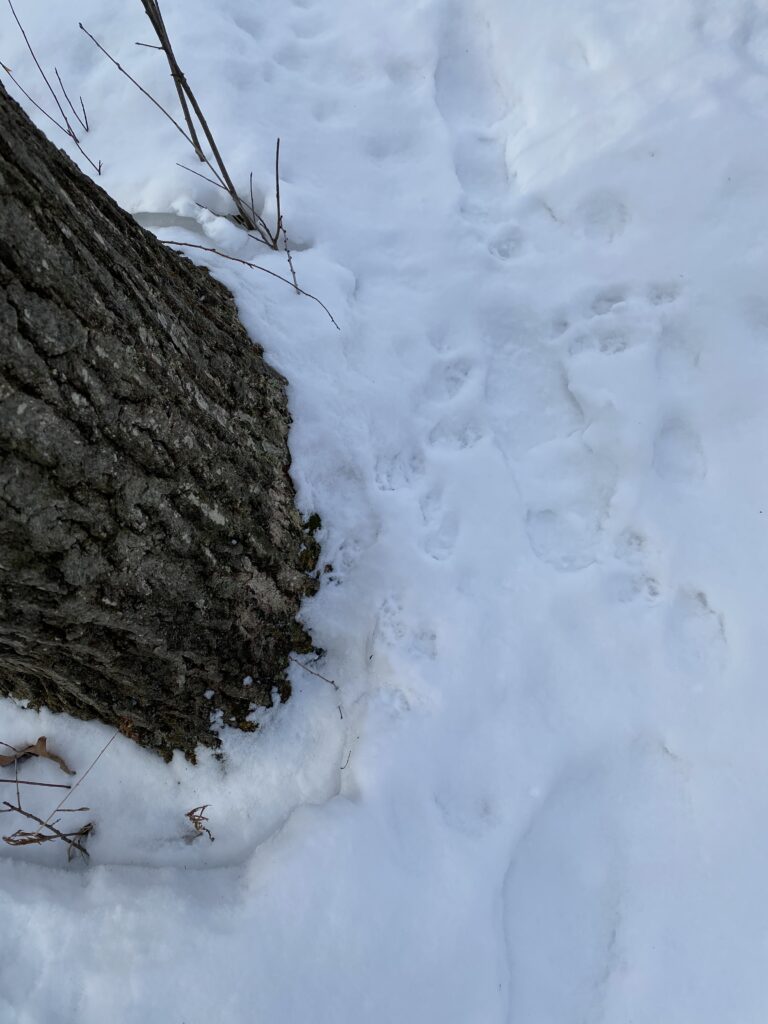
Gray Squirrel tracks at the base of the tree from Feb 29, 2020. (Genova, I)
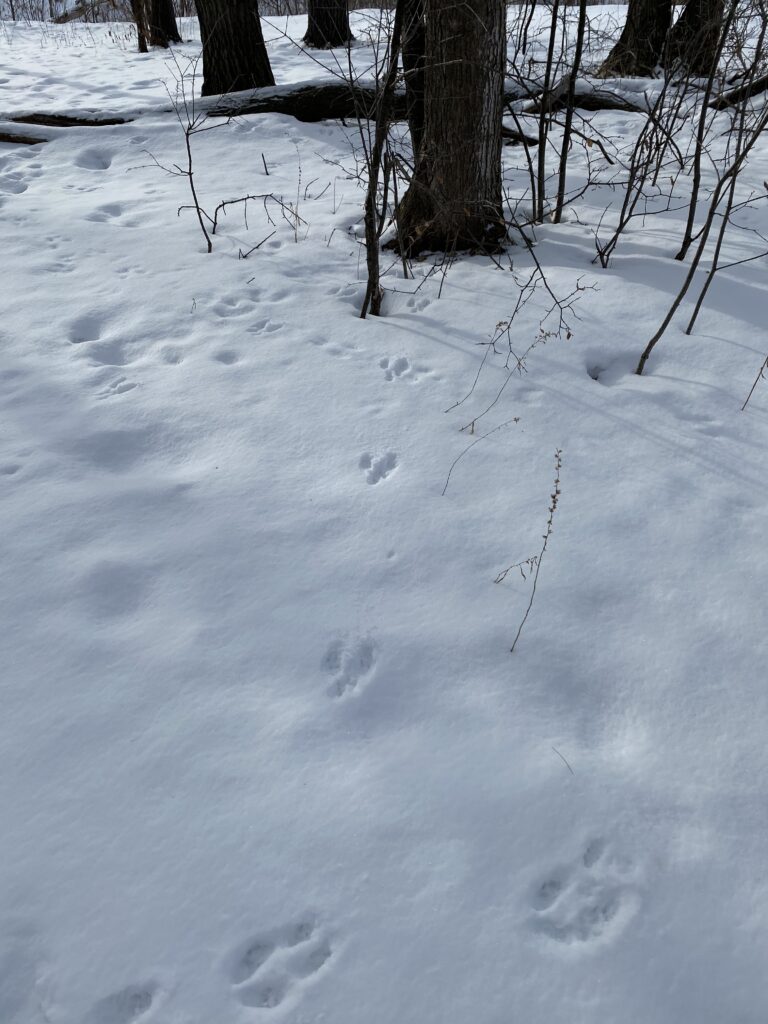
Tracks from the base of one tree to another from Feb 29, 2020. (Genova, I)
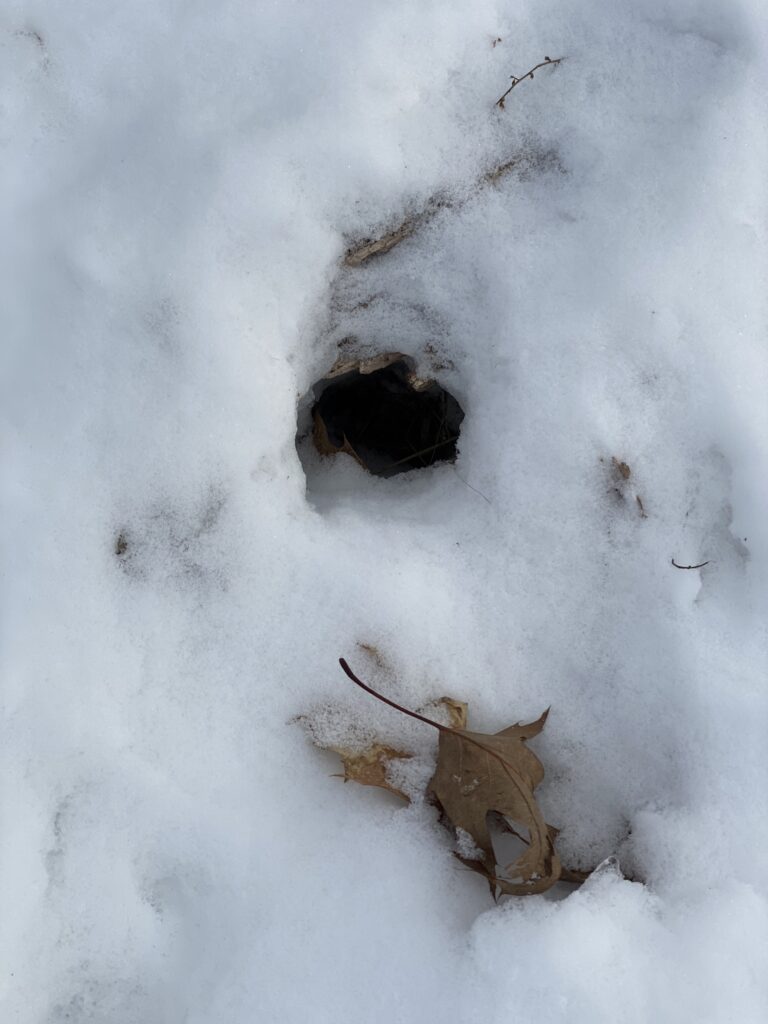
Hole leading to the Subnivean layer. Potentially from a vole, chipmunk or a shrew. From Feb 29, 2020. (Genova, I)
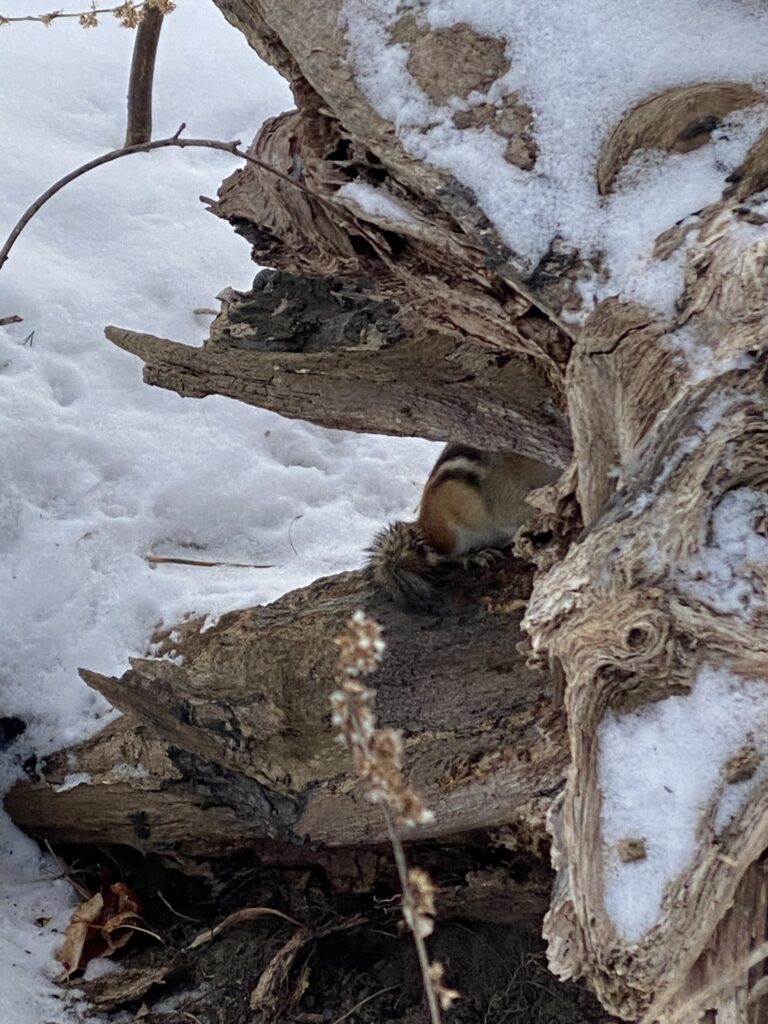
Chipmunk spotted nearby the hole above! Feb 29, 2020. (Genova, I)
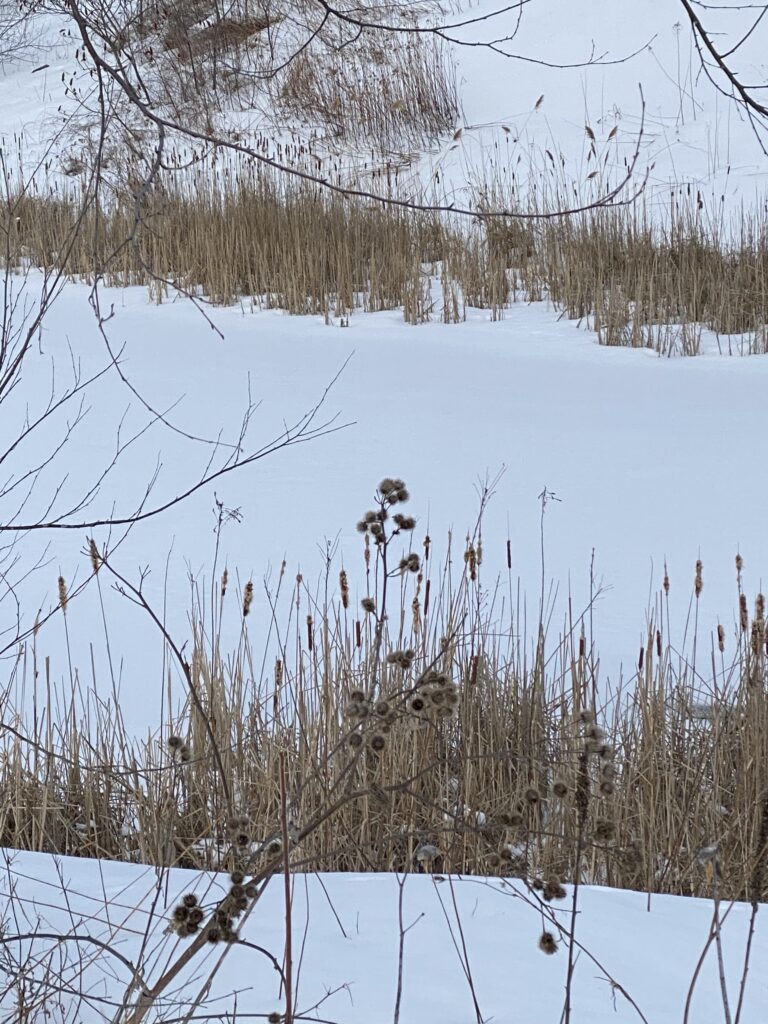
Left over flower buds and cattail flowers that have been picked at from Feb 29, 2020. (Genova, I)
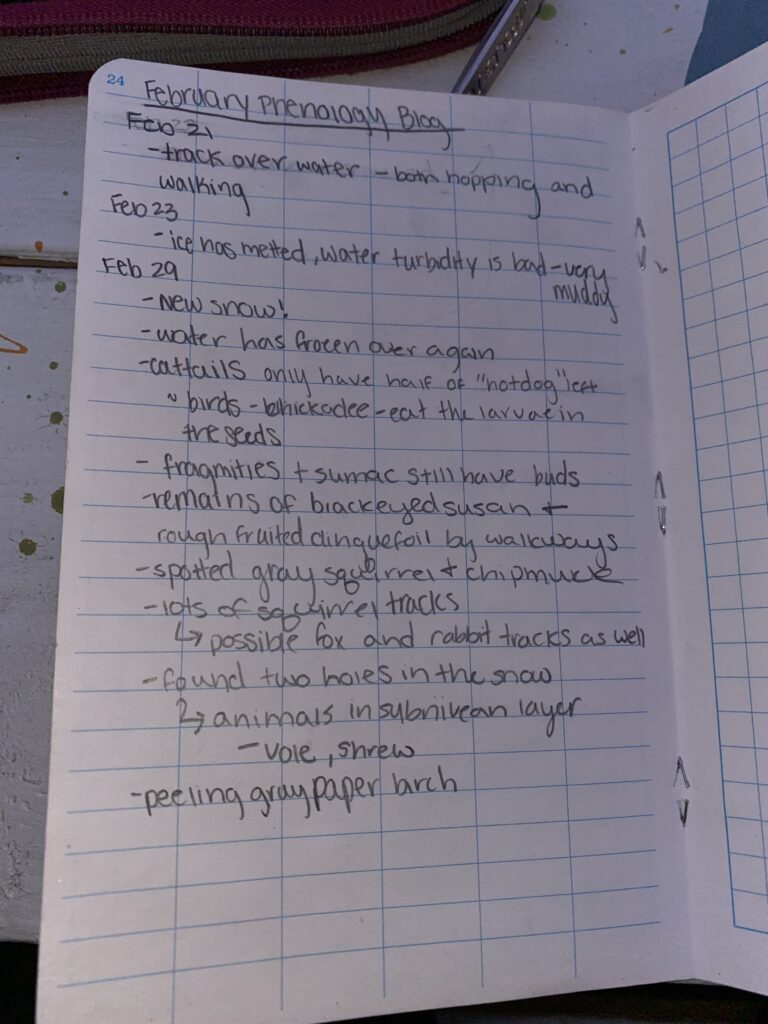
My field notes (Genova, I)

Holland, M. (2019). Naturally curious: a photographic field guide and month-by-month journey through the fields, woods, and marshes of New England. North Pomfret, Vermont.: Trafalgar Square Books.

Penn State. (2013, October 13). Eastern Gray Squirrel. Retrieved from https://www.psu.edu/dept/nkbiology/naturetrail/speciespages/graysquirrel.htm 

Shea, S. (2019, February 11). The Sociable Gray Squirrel: The Outside Story. Retrieved from https://northernwoodlands.org/outside_story/article/sociable-gray-squirrel

January 31, 2020
by Bella Genova
0 comments

January: Endurance

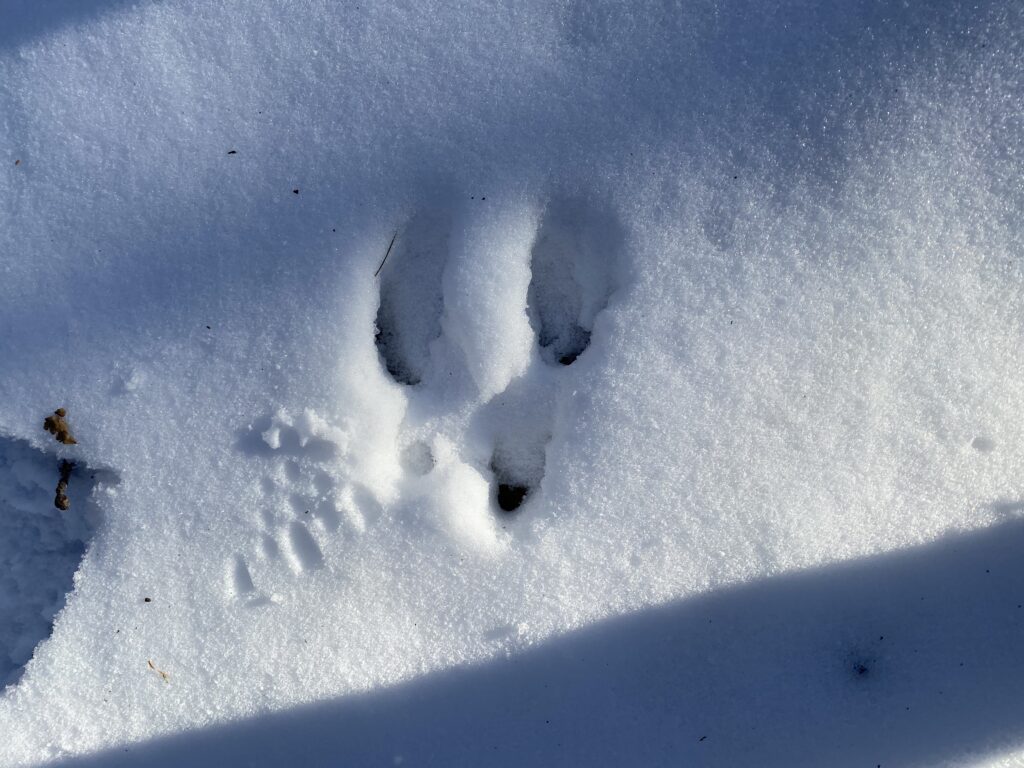
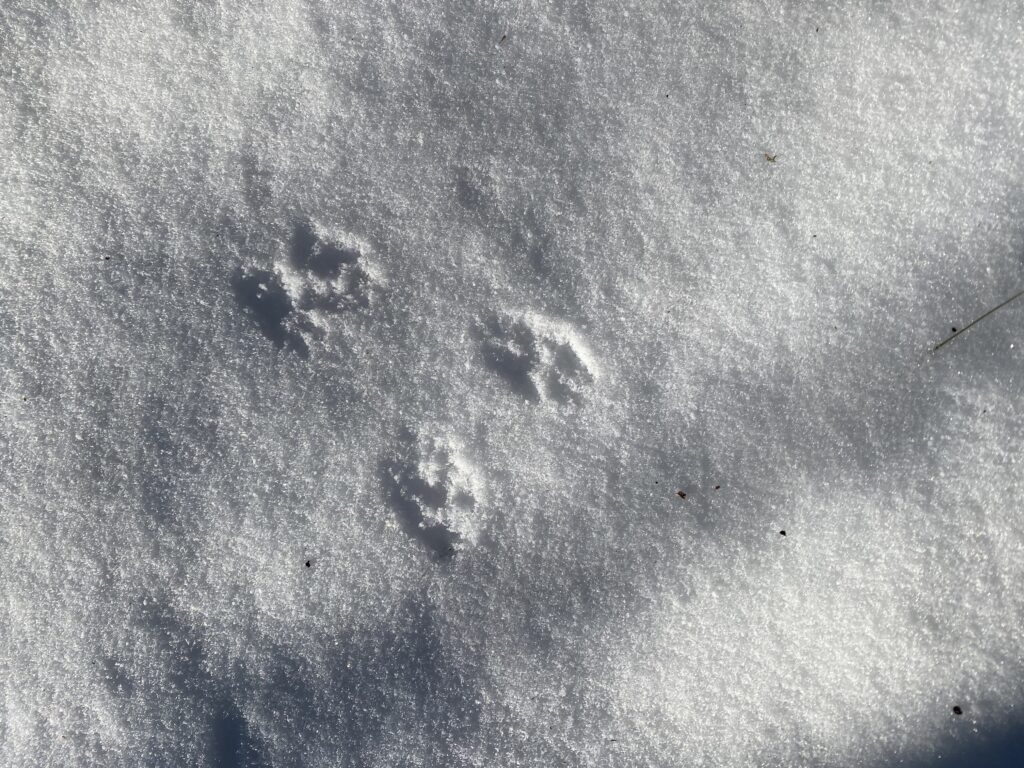
The only wildlife I could find nearby my phenology spot were squirrel and rabbit tracks. The first type of track I identified was of a cotton tail rabbit. The gait for this animal is hopping and you can see the front two and hind feet although the track has caved in slightly as the snow is older. In between each track measured about 10 cm and the straddle was about 9 cm. The feet measured at around 8cm and the tracks were about 3 cm deep. I think that this track is probably a rabbit as the hind feet seem larger than a squirrels would have been and the deeper tracks make sense as a rabbit is heavier than a squirrel. The set of squirrel tracks I found are red squirrel tracks. Again this animal has a hopping gait, and 9 cm between each track. The straddle of the animal was 4 cm and the feet measured 2.5 cm. This smaller animal left much smaller, dainty tracks on the snow. Both these animals are able to stay out at this time of year as it has still not become too cold for them yet and they can still scavenge for food. Since the last time I have come to this spot, it is evident that it is truly winter now. All the trees have now dropped their leaves except for the conifers in the forest. The wastewater systems have frozen over as the temperature has begun to drop. There is not a lot of snow in the area, although I am sure it is coming soon.

Genova, I. (2020). Cottontail Rabbit. Burlington, Vermont.
Genova, I. (2020). Gray Squirrel. Burlington, Vermont.
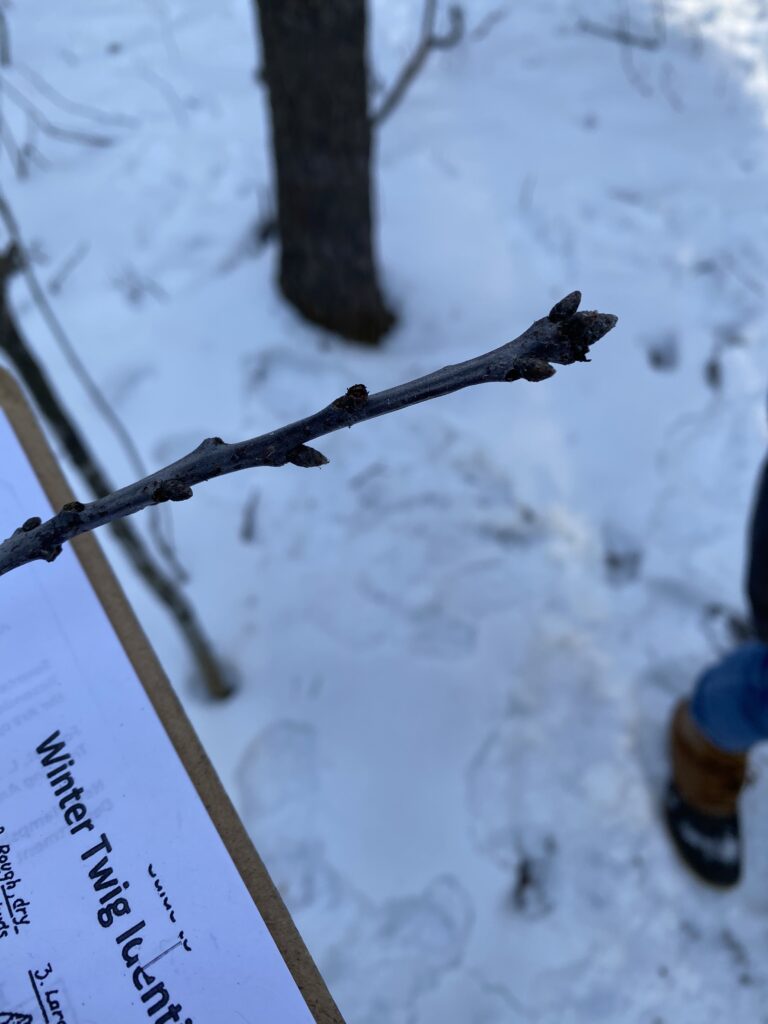
Genova, I. (2020). Black Oak. Burlington, Vermont.
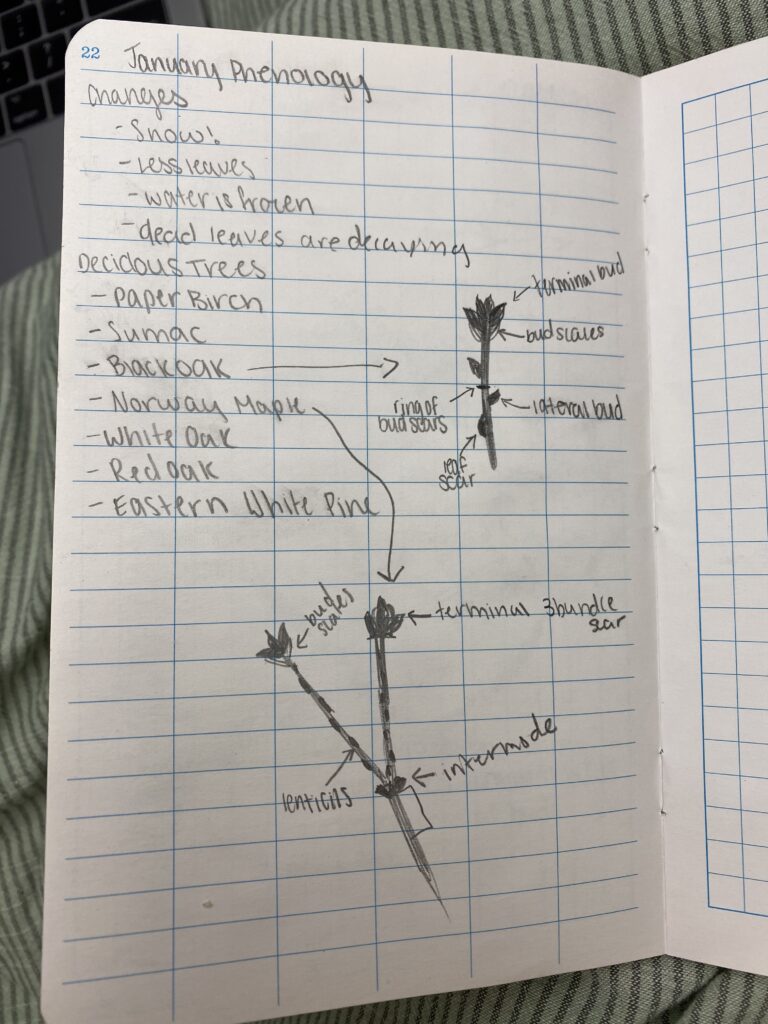
Genova, I. (2020). Phenology Blog Notes. Burlington, Vermont.

Levine, L., & Mitchell, M. (2008). Mammal tracks and scat: life-size tracking guide. East Dummerston, VT: Heartwood Press.

November 30, 2019
by Bella Genova
0 comments

Sense of Place – Hometown

My sense of place in my home town Mendon Massachusetts developed mostly during my childhood. Growing up in a secluded white picket fence neighborhood before the age of ipads and video games, the entire block would spend their days outside together. The kids would all bike around, play baseball or basketball, or just spend the day outside. Having the forest surrounding on almost all sides along with multiple brooks and large boulders from the ice age we found ourselves with a playground in nature. By spending so much of my childhood outside I developed a deep connection to the landmarks around me in the area I could get to by foot. I live in a small rural town that consists of a drive-in and a car dealership along with one stoplight and cows down the street. Having lived in such a small town for my entire life I have been able to learn where all the streets lead to developing a mental map of the area. This is something that I have not done as much in Burlington, other than UVM campus and the main street leading to church street. The large difference in size of these areas, Burlington at around 40,000 people while Mendon has 5,000, it feels like I’m living in a city. I could never walk downtown and explore growing up and was dependent on a parent driving me with their car. Now I can walk downtown and can explore the fun and lively city. Similar to Vermont, Massachusetts was majorly farm land as well. About a 5 minute walk from my house in the woods are the same type of stone walls and old foundations that are remnants of the farm life before. Old paths through the woods that are part of the town’s public forests are based on the old roads to farmlands. Having historic landmarks along with some of the old buildings downtown gave my childhood an endless imagination as I thought of the people before me. My sense of place in my hometown is where I developed my love for nature. If I had grown up in a city or a more urban area I do not think I would have spent as much of my childhood outside and since my parents were never big on hiking or camping I would not of experienced the outdoors like I did here. Along with the access to the outdoors, part of my sense of place developed with a sense of community as we would all be outside playing together. It has developed who I am as I am the kind of person who wants to know my neighbors and learn about the environment around me.

November 12, 2019
by Bella Genova
0 comments

Phenology and Place

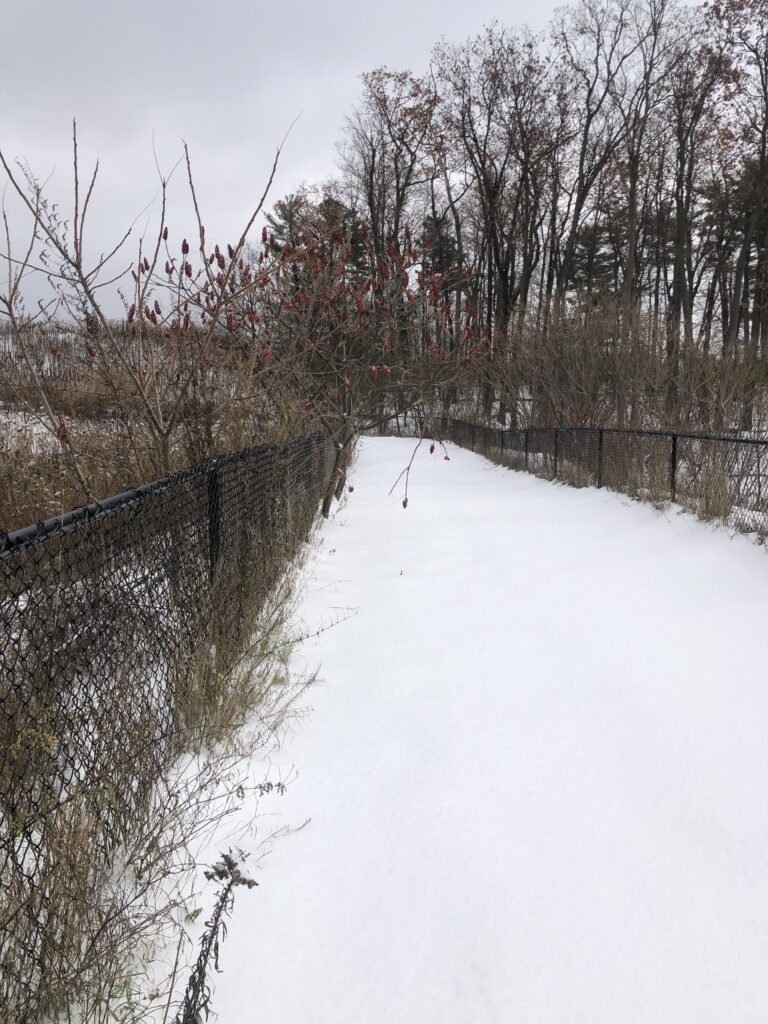
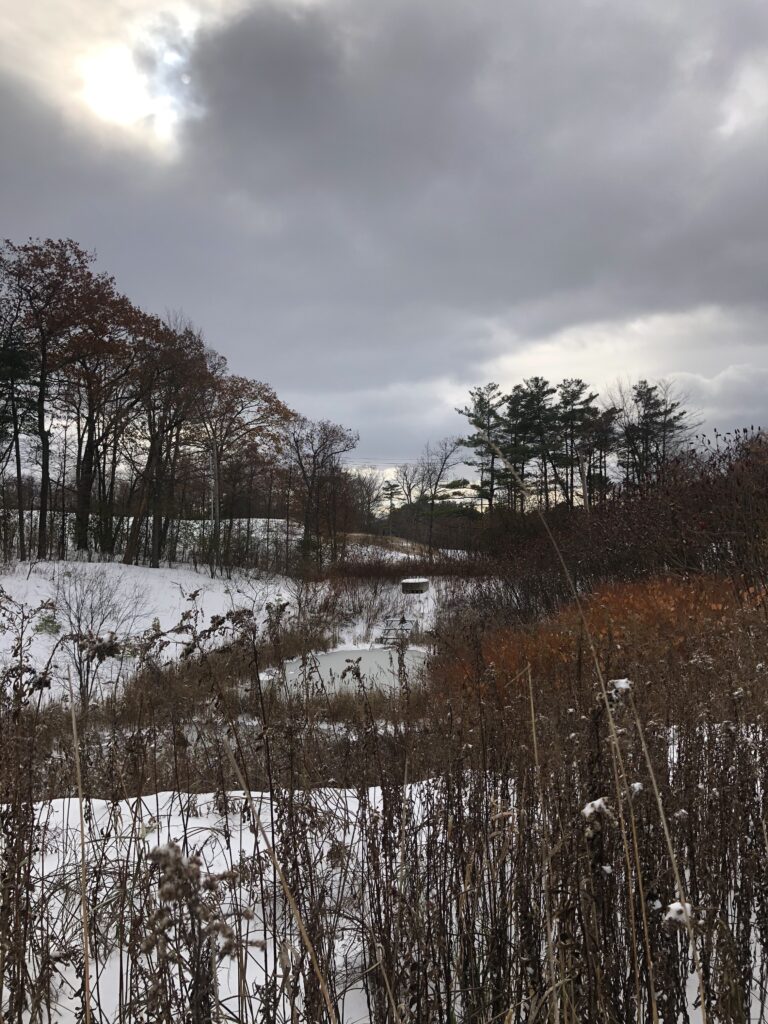
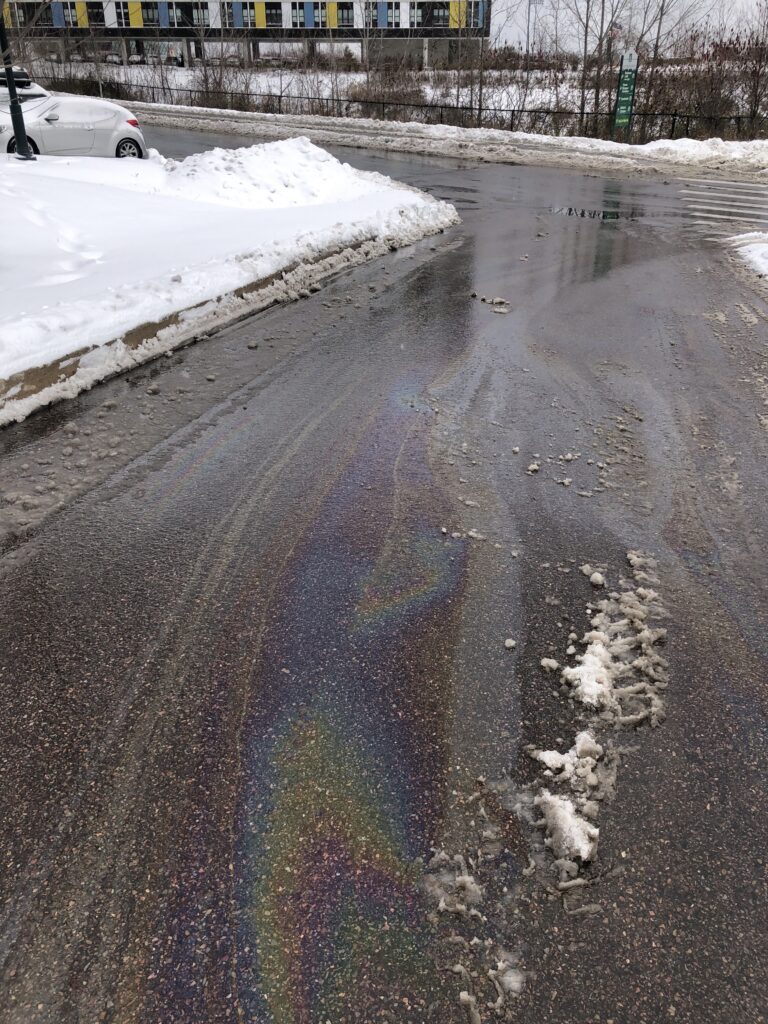
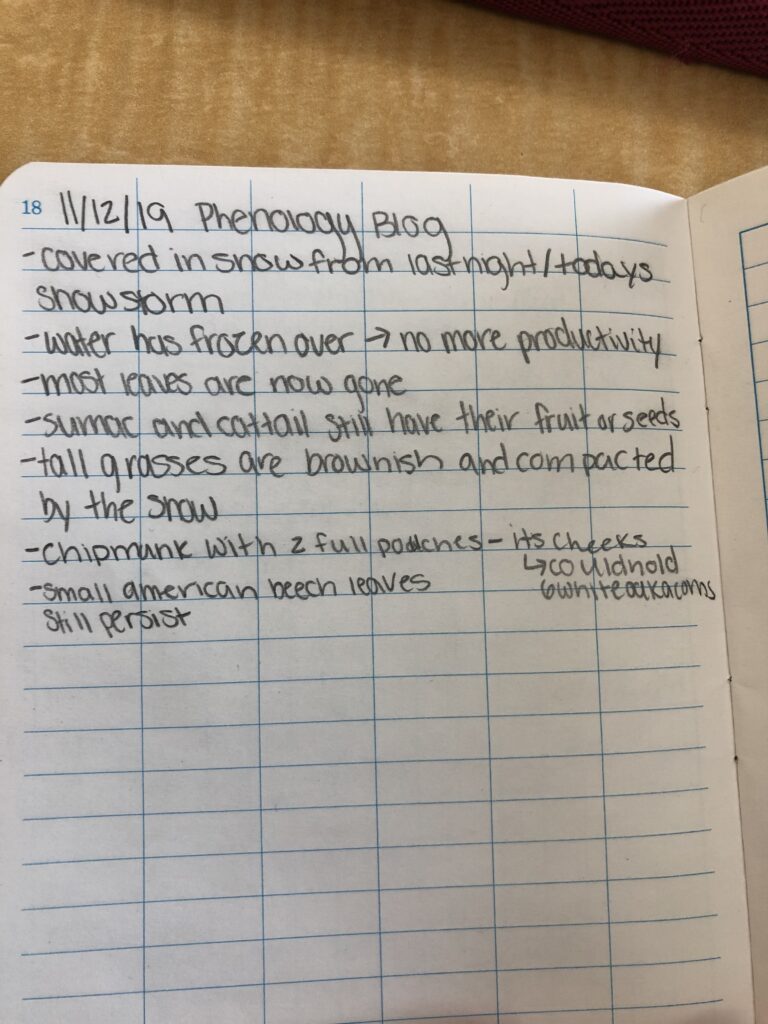
My sense of place at the Redstone Wetlands has now shifted from a peaceful and quiet grassy path between the two water bodies to cold and snowy. As the season has transitioned from fall to winter it has become less ideal for me to sit and be outside as it has become colder. The beautiful yellow and red leaves have fallen and are long gone, and the grasses are yellow and dead. This area is part of a larger place, from the Redstone Campus, to UVM, Burlington and Vermont as a whole. This location is outside of my dorm on Redstone. Being so far away from central campus gives me a sense of going home at night and away from school. Having a disconnect in location from school and my dorm gives a sense of a home away from home. The wetland is also part of the University of Vermont and represents what I have learned here so far. In this course there has been a large focus on wastewater management and how runoff affects Lake Champlain. Here I am able to use my knowledge of these concepts and apply them to this location. Having observed that during rain or snowfall the runoff pools down the roads as they are on hills aimed directly towards these water bodies. This sense of place is validated knowing that it diverts the amount of runoff that would have ended up in Lake Champlain. Zooming out further to Burlington my sense of place is different from that of home. My home town is a rural farm town, and while there is farmland around Burlington, this is a city. At home I had to drive to get anywhere, but here most things are in walking distance, and city buses run throughout the town as well. I’ve developed a connection to locations such as the waterfront and Church St which are more urban. Being in Vermont and not Massachusetts has left me homesick as this is the longest I have been away from home. However becoming more and more familiar with the location has given be connections and a sense of belonging to the place I am in. My place throughout history was most likely non existence. As the University has grown they have needed to compensate for more and more runoff and have done this by creating wetlands. This place was most likely once completely forested, and was cut to make room for farmland. The history of the land represents the stages of humanity as we transitioned farmland to the current industrialization.

November 1, 2019
by Bella Genova
0 comments

Mapping and Charismatic Species

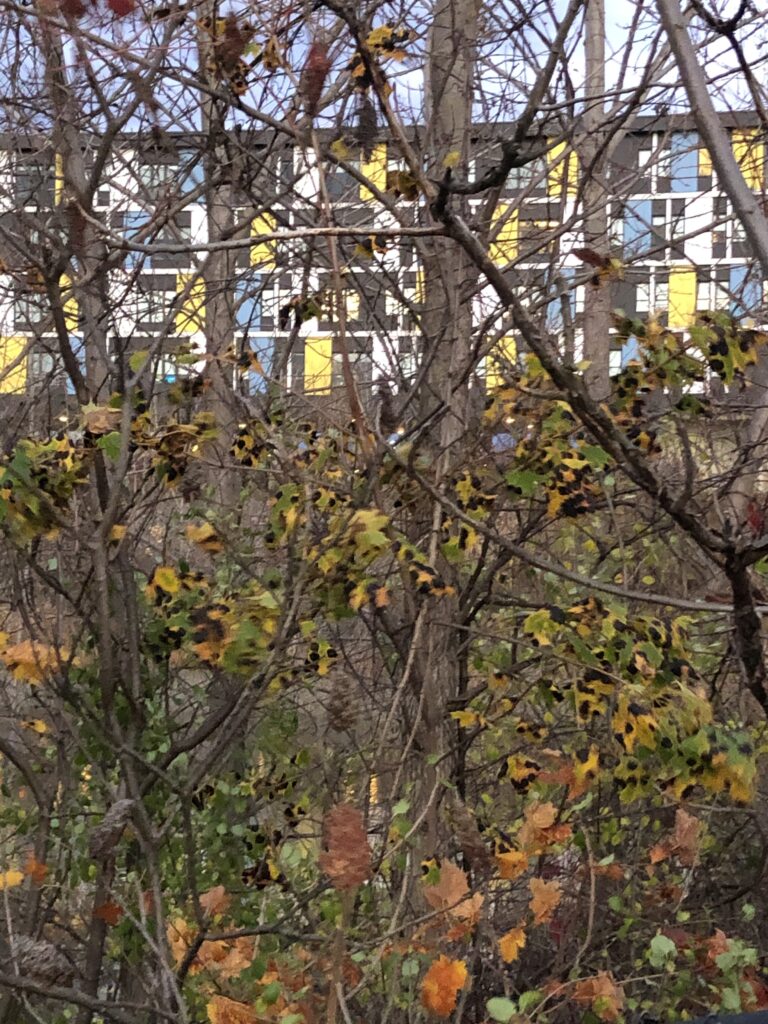
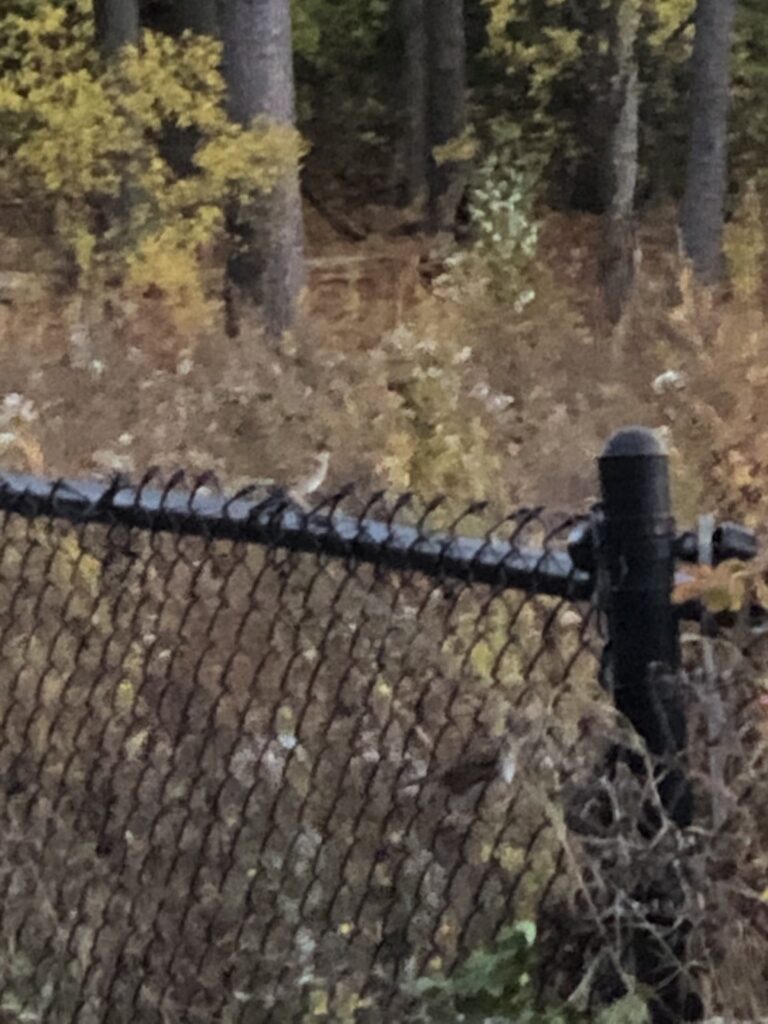
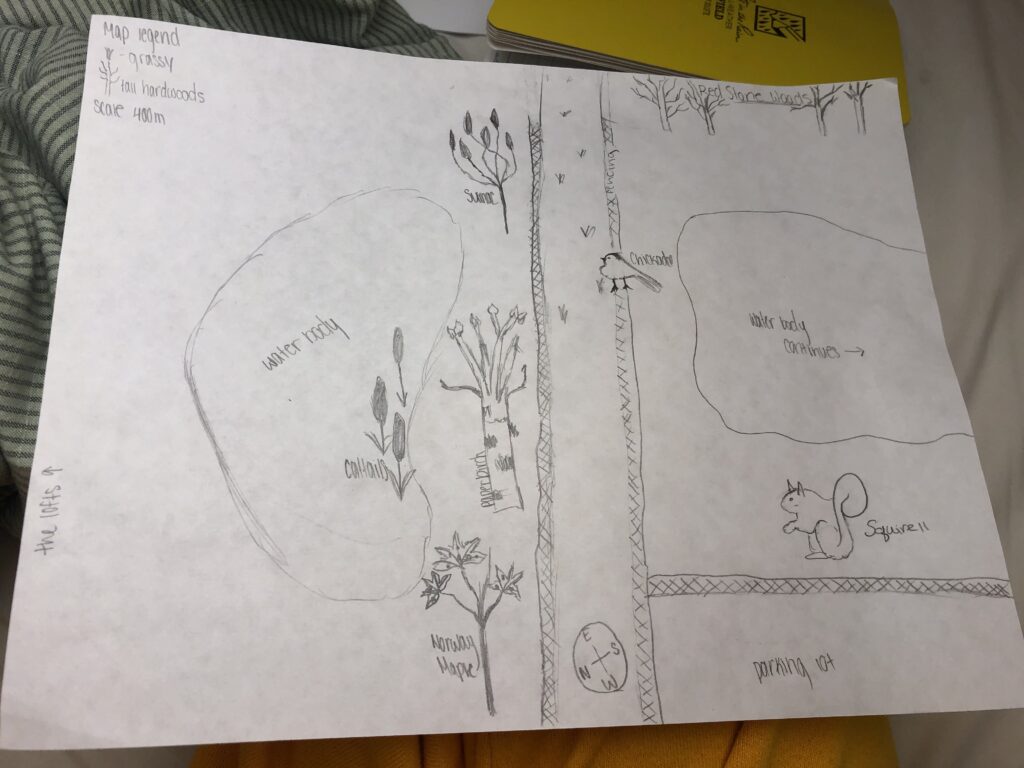
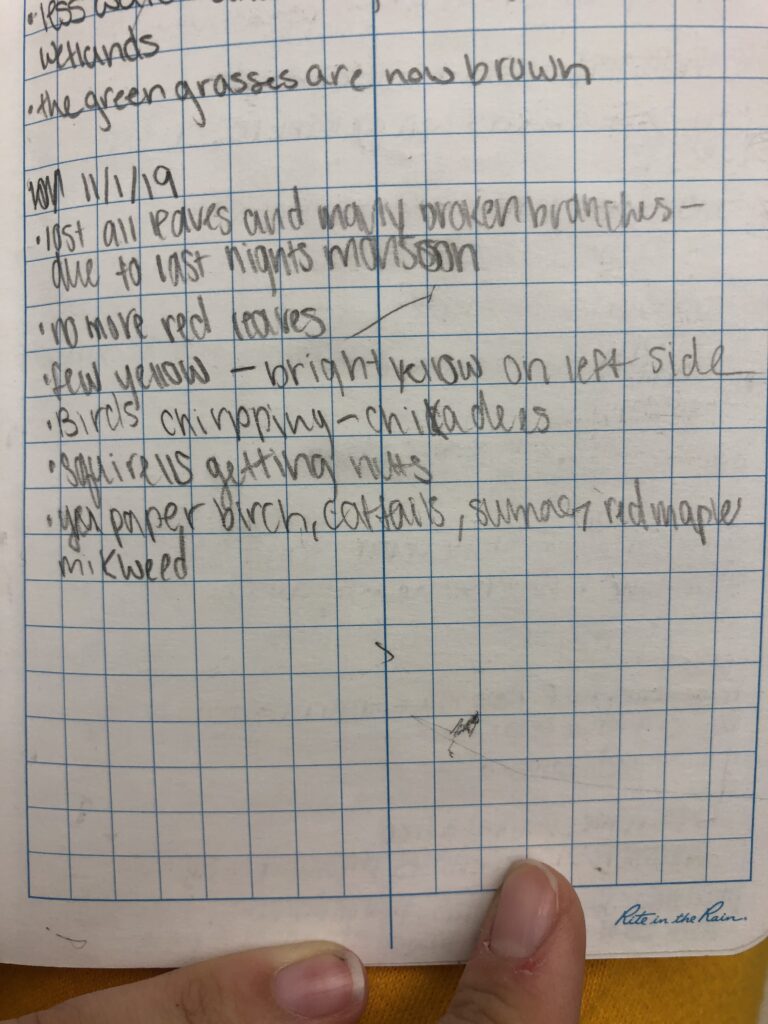
The 3 trees that characterize my site are Norway Maple, Paper Birch, and Sumac. All three species grow in a variety of soils but all need full light. Here by the path and the water these trees receive constant light as nothing blocks the light. The thick woods are far enough away that they do not block these small trees. Cattails are found all around the water body. These plants will spread like crazy as the big bushy flower blows seeds around the area. They prefer to be submerged in 1-2 feet of water so this small wetland is perfect. Cattails thrive in open sunny areas like this one and have grown in a thick, dense stand. Two organisms I observed during my time spent here were chickadees and a common gray squirrel. Since the wetlands are fenced off, and the location is so close to campus there are not many other signs of wildlife. The water is a murky brown color and most likely doesn’t support any fish or aquatic organisms. The flock of chickadees were fluttering around. They prefer the edge of deciduous forests like the Redstone forest, and make nests in trees such as Paper Birch. These chickadees characterize the site as many birds have begun to migrate south. The squirrel was carrying an acorn and is preparing for winter. It will bring back some acorns to its nest and also buries some nearby. Squirrels are found commonly throughout campus as they do not face any large predators here. The trees have lost most of their leaves, the majority dropped last night in the halloween monsoon. The sumac flowers still stand along with the Norway Maple leaves. The bright reds of the maples trees are gone along with some of the colors in the forest. The grassy path was wet and muddy from the storm as well. The water which has looked clear before was a muddy tan color and may be due to any runoff or sediment erosion that occurred during the monsoon. 

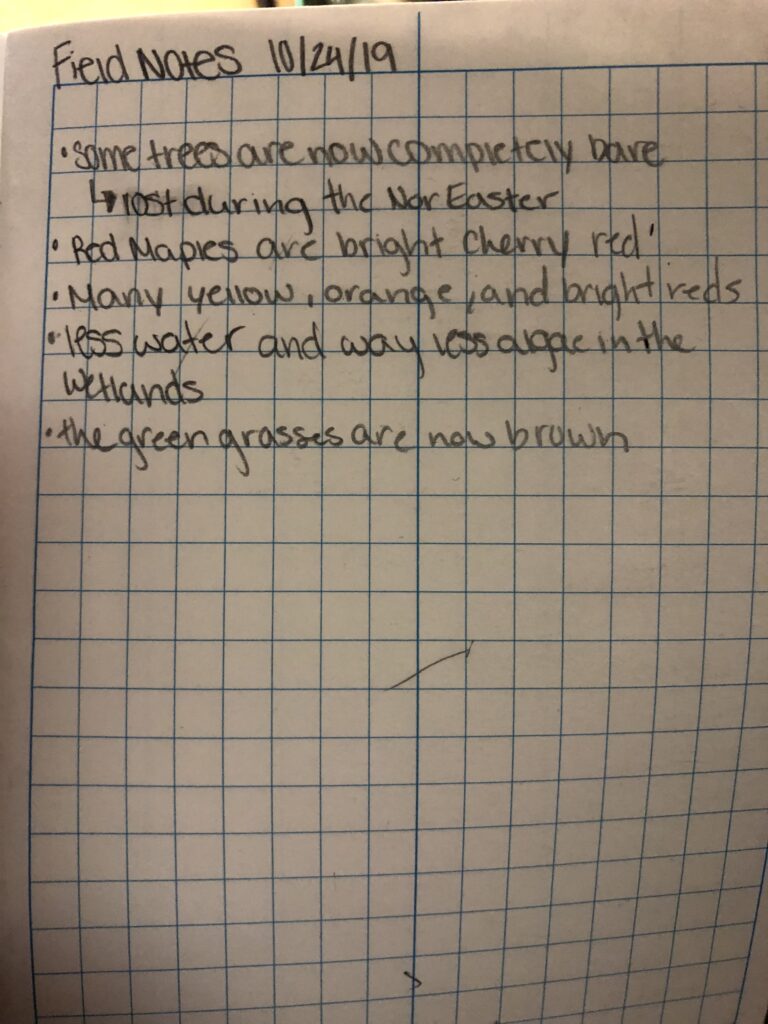
October 24, 2019
by Bella Genova
0 comments

Introduction

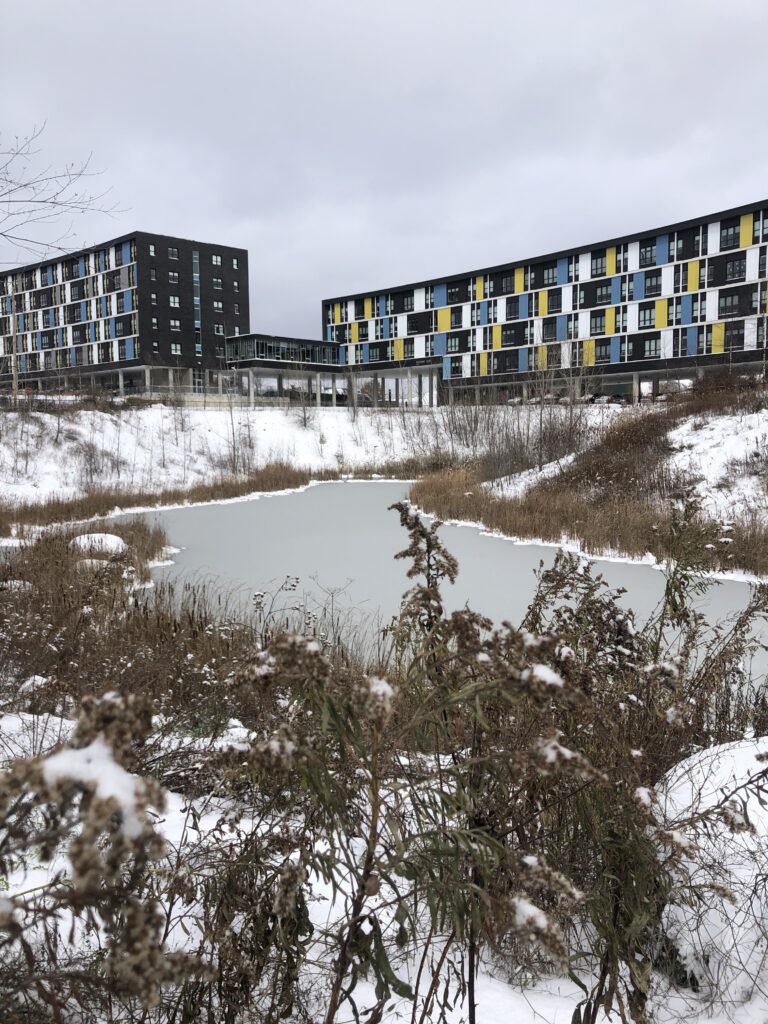
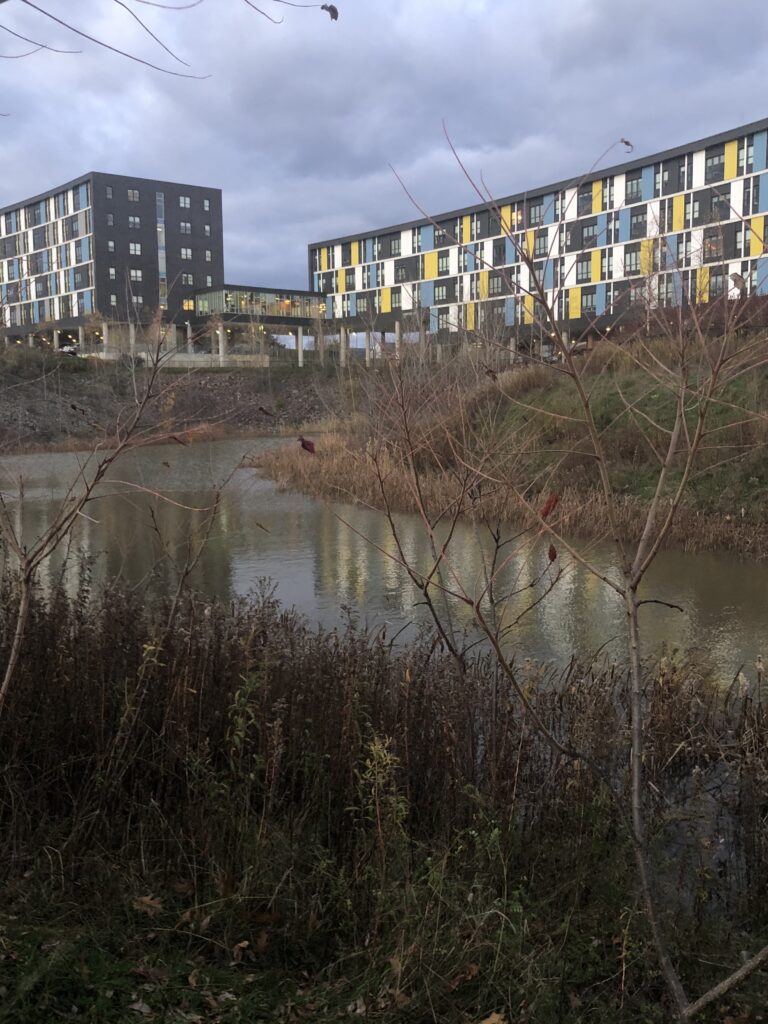
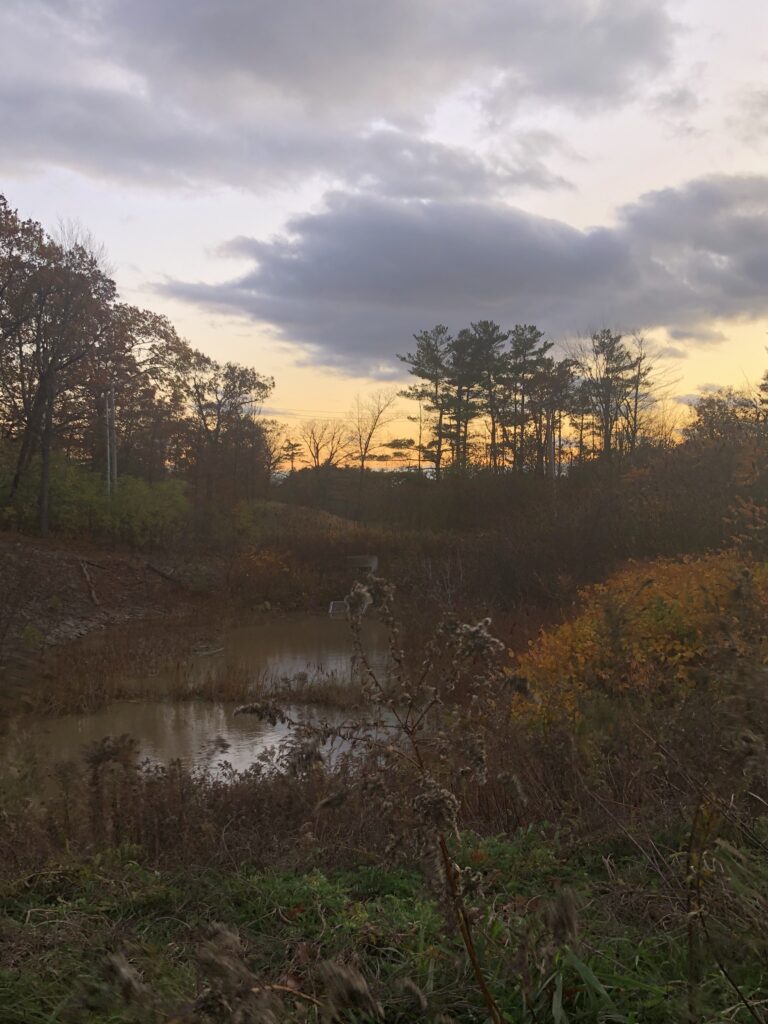
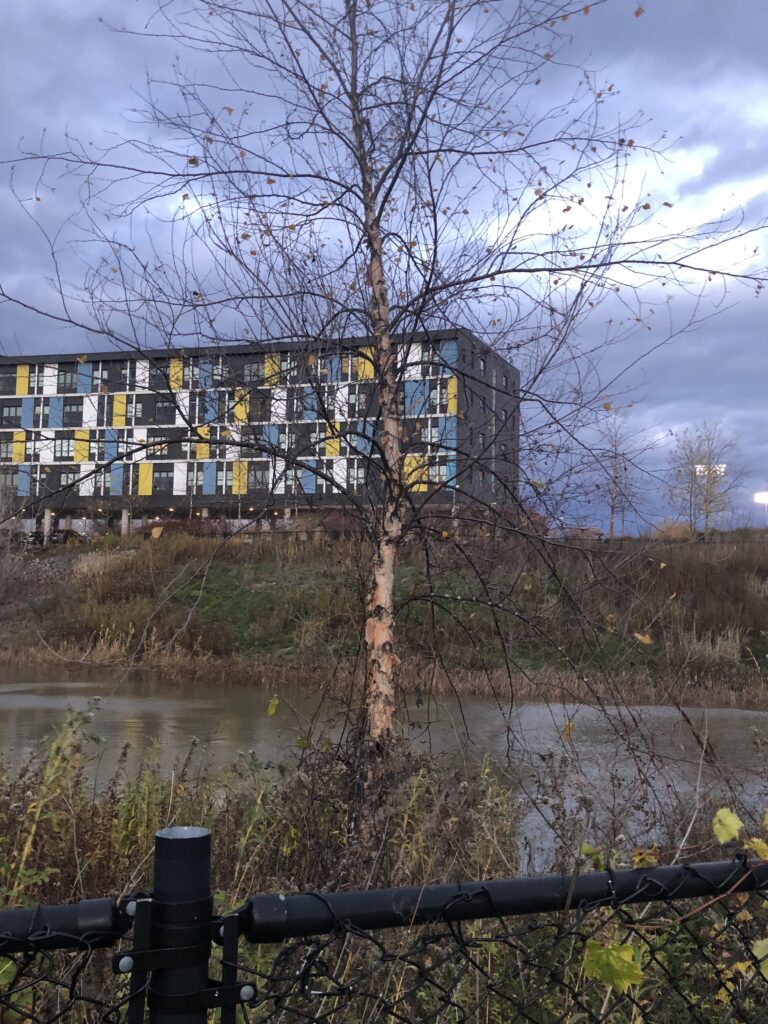
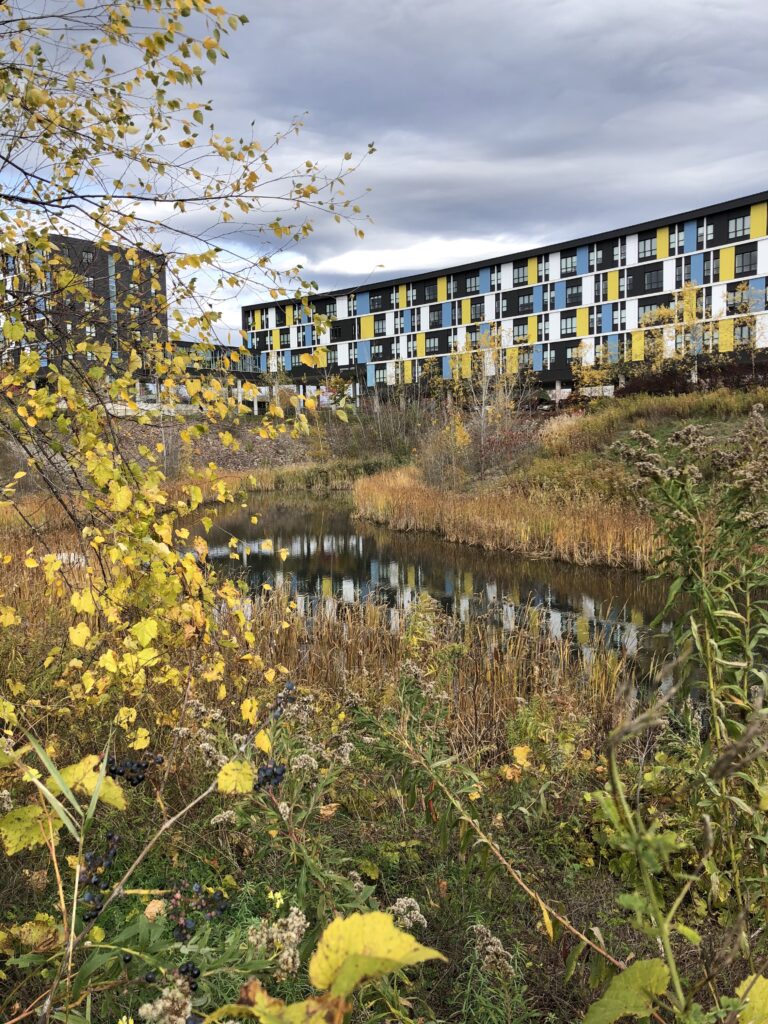
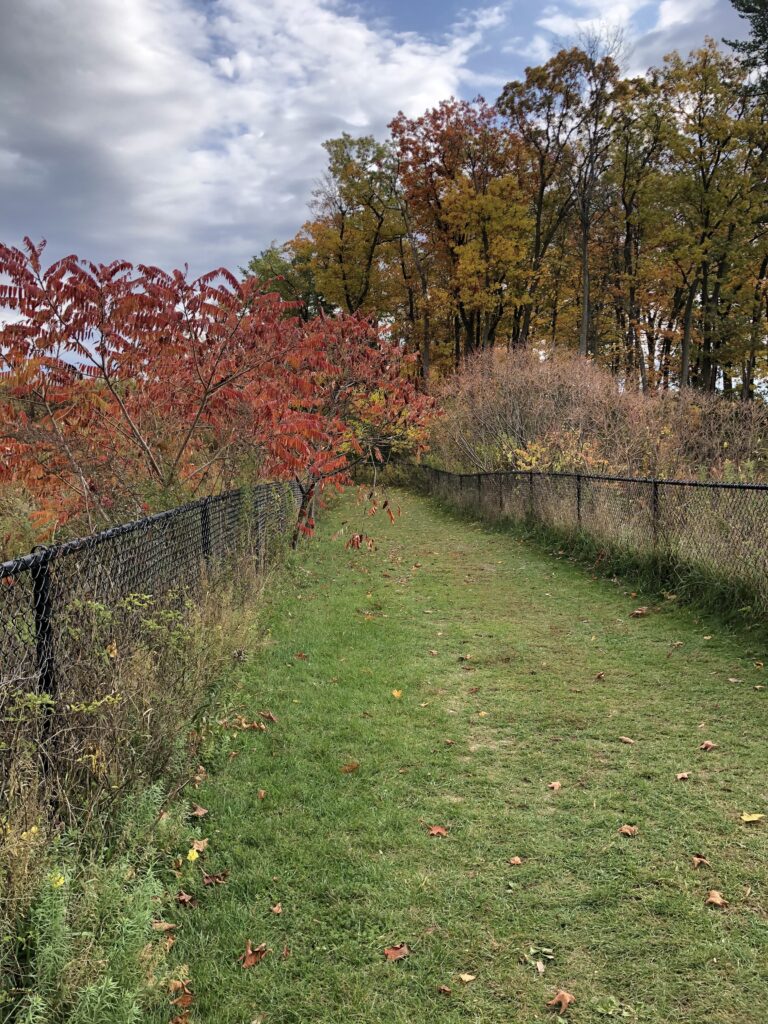
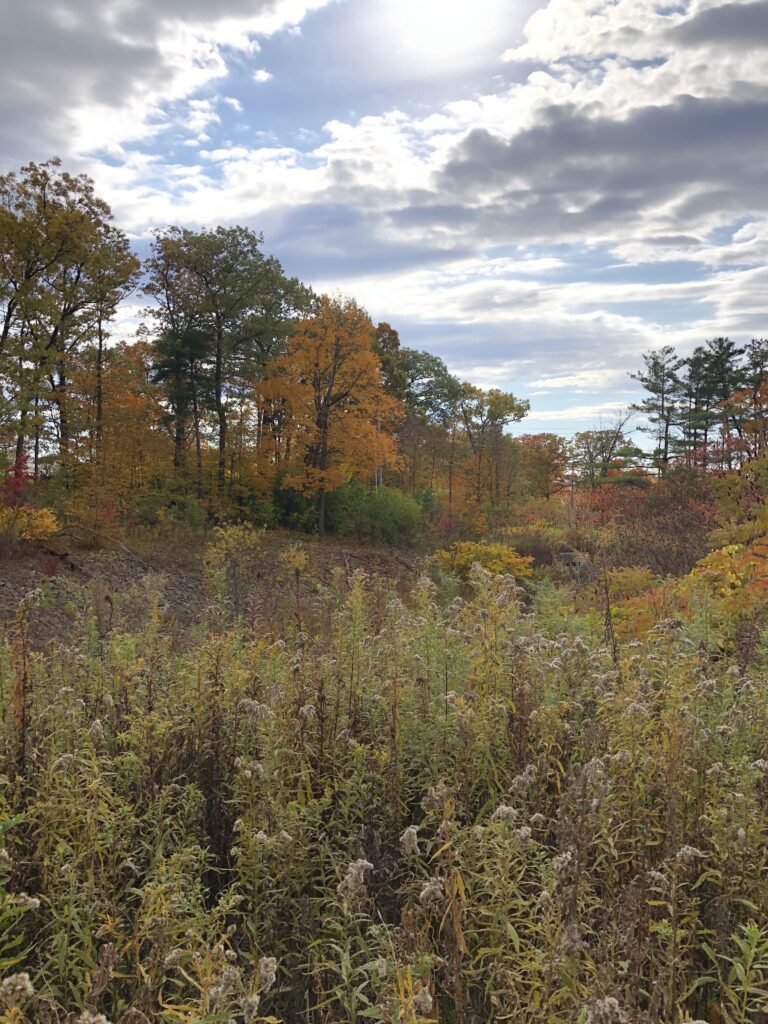
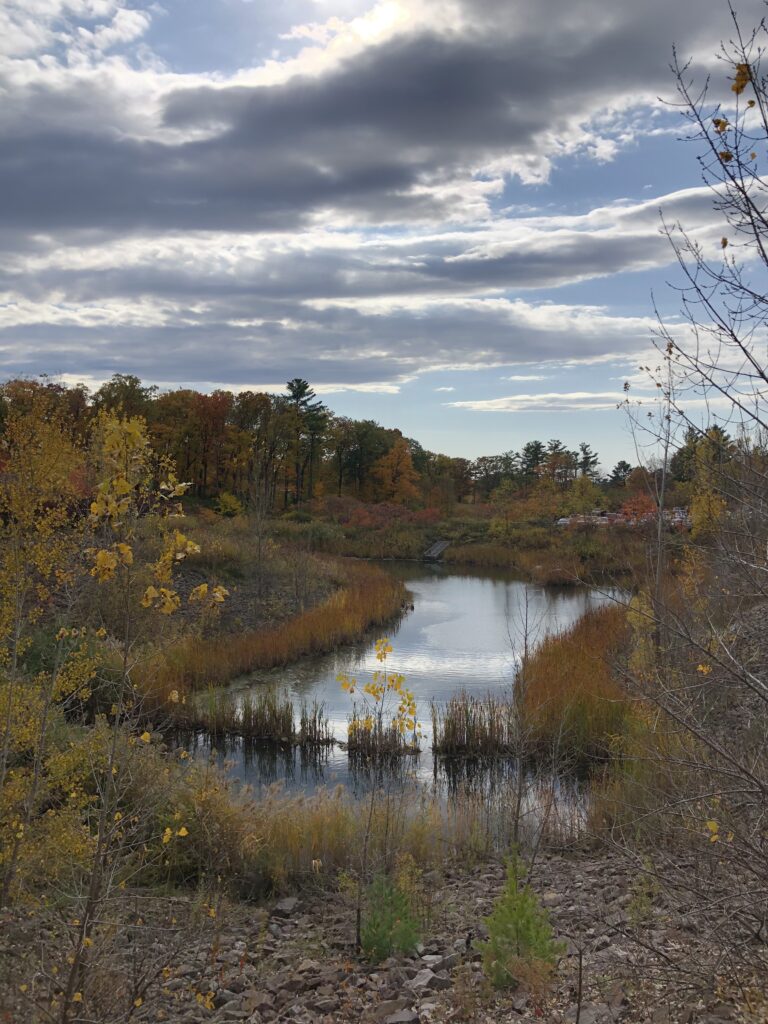
If you are trying to get to this wetland location, first head to Redstone Campus. Once you are on this side of campus head towards Wing Davis Wilks Residential Hall and take a left between the buildings. Then head down the small hill towards the Wing parking lot and you should see a path to the left of it. Halfway down the path is where I have specified my place to be, where you will have a clear view of the wetlands on either side. You will know you are there as you can see the Redstone lofts, the blue and green buildings, to the left in the background of the wetland, the woods straight ahead, and the second wetland on your right. This place is defined by the wetlands and the large amounts of vegetation around it. This is most likely an implemented water runoff wetland to manage the excess water from impervious surfaces such as the parking lot and surrounding roads. All the buildings here on campus result in a large amount of runoff. On rainy days the water runs down the walkways almost like a river and I can’t imagine what it must look like when the snow melts in the spring. The water must run somewhere, and here it runs into the wetlands. Surrounding the water, tall grasses, cattails, and milkweeds all surround the water and are important vegetation as they soak up and use nutrients that might have ended up in Lake Champlain. Having management areas like these on-campus shows how serious UVM is about its environmental impact, which is something I appreciate. This place is one of my favorites on the Redstone campus as it is quick and easy to access while also containing quite a bit of water. Although it is near campus roads and parking lots you can distance yourself by continuing into the woods up the path. Being near water is incredibly soothing and grounding. In my place, I can reconnect to nature and take time away from the demands of school on an everyday basis even if it is only for a short amount of time.

To the left
To the right
View from the lofts
Skip to toolbar