Posts

Final Post!

Nature and culture are directly connected in Centennial Woods because of the human interaction that takes place. There are walking paths throughout the whole area and people are constantly visiting the woods to connect with nature. This definitely has an impact on the natural community with the long history of human activity in the area, but the ecosystem has continued to thrive. After visiting my phenology site for the whole year, I developed a special connection to my spot specifically. I don’t think that I would consider myself to be a part of my place because I only visited it a handful of times. It doesn’t compare to a place that was filled with special memories like some natural locations I have elsewhere. I could see myself changing my opinion after leaving UVM because then I will have fully immersed myself in Burlington.
City Nature Challenge

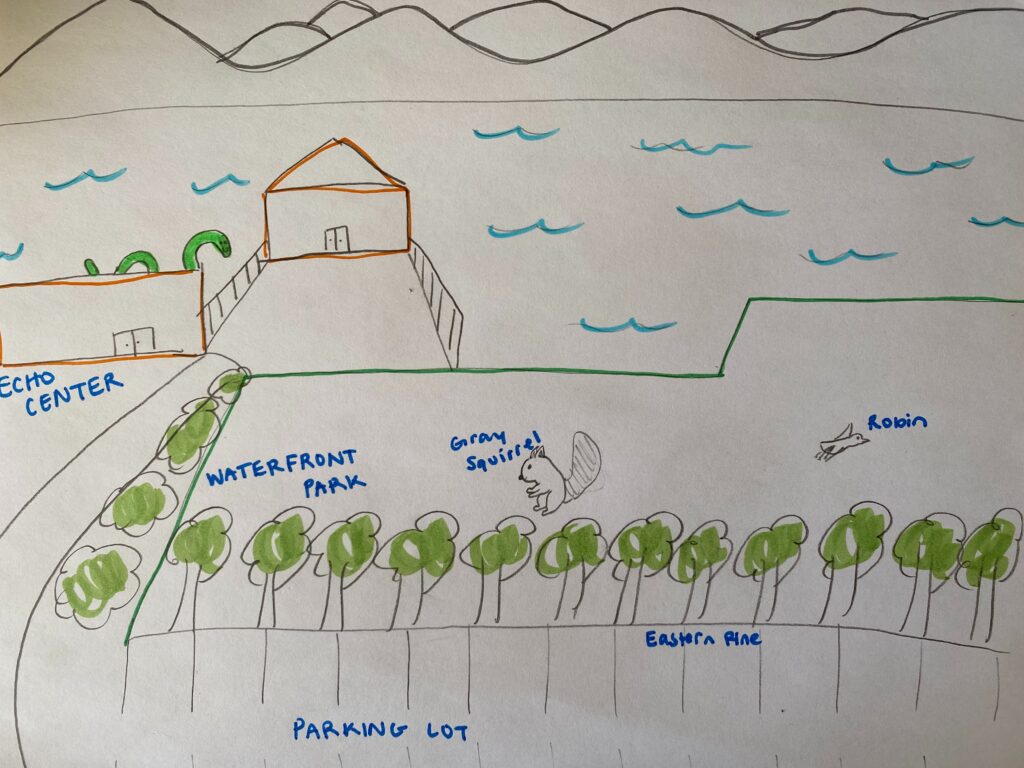
For the 2022 urban BioBlitz I explored the Burlington Waterfront. I had a great time using iNaturalist to identify the specie that inhabited the waterfront, or were solely visiting for the time that I was present. Unfortunately, I did not record as many species as I hoped I would, nevertheless, I discovered the notable species included the Gray Squirrel, American Robin, and Eastern Pine. It was really fulfilling to see that this was done all over the world and being able to see the diversity among all kinds of cities was truly inspiring. This event connected people, which although may be cliche, provided a wider understanding/view of our Earth’s biodiversity.

Spring Break Phenology

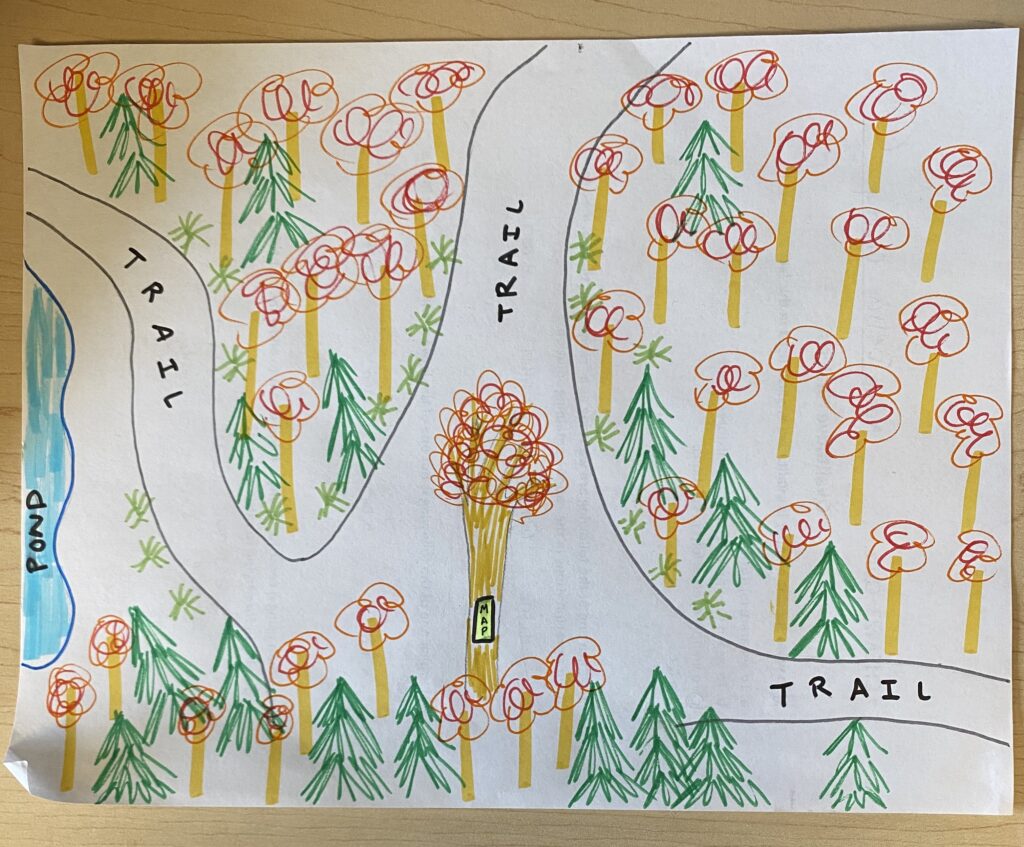
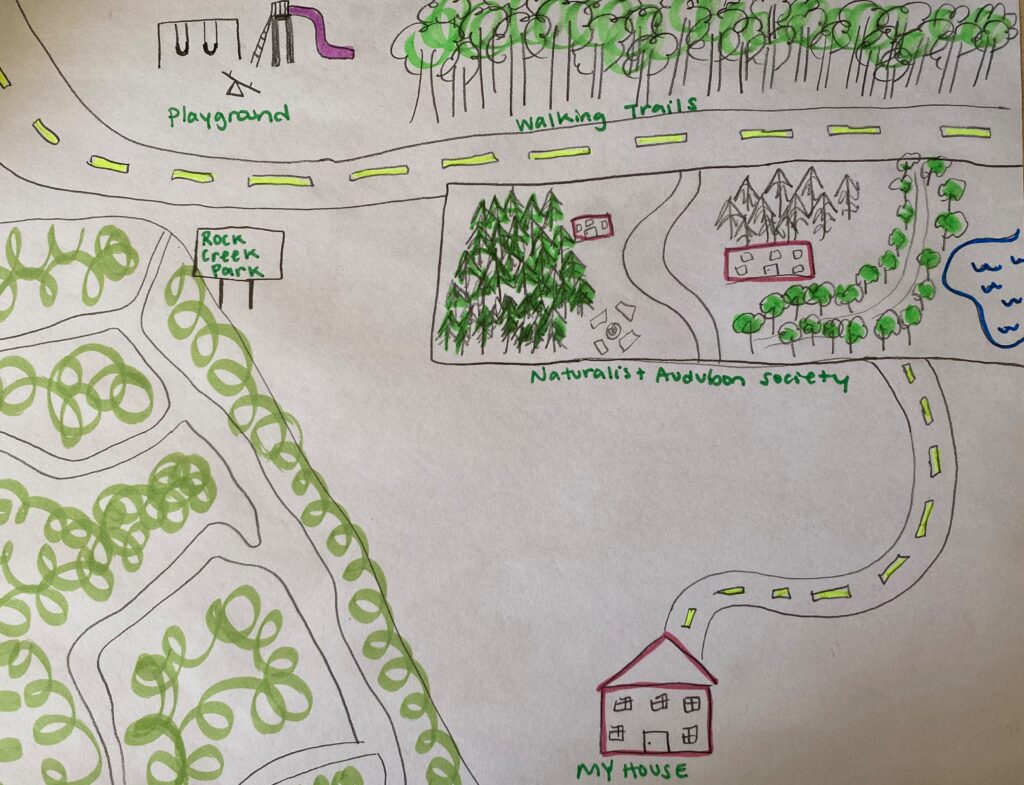
My new Phenological site was spending time throughout my neighborhood, especially in wooded trail areas that included the Audubon Society and Rock Creek Park. Both of these places are located very close to me and provide access to observing the phenological changes. Although in the map there is a lot of green depicted, the trees were bare, I solely needed a representation on the map. There was no snow present, trees did not have leaves, and a strong wind was present breaking many fragile branches off. Some of the bird species I identified included American Robin, Northern Cardinal, and Downy Woodpecker. The tree species identified included Birch, Bamboo, and Oak.

Exploration of Burlington Waterfront

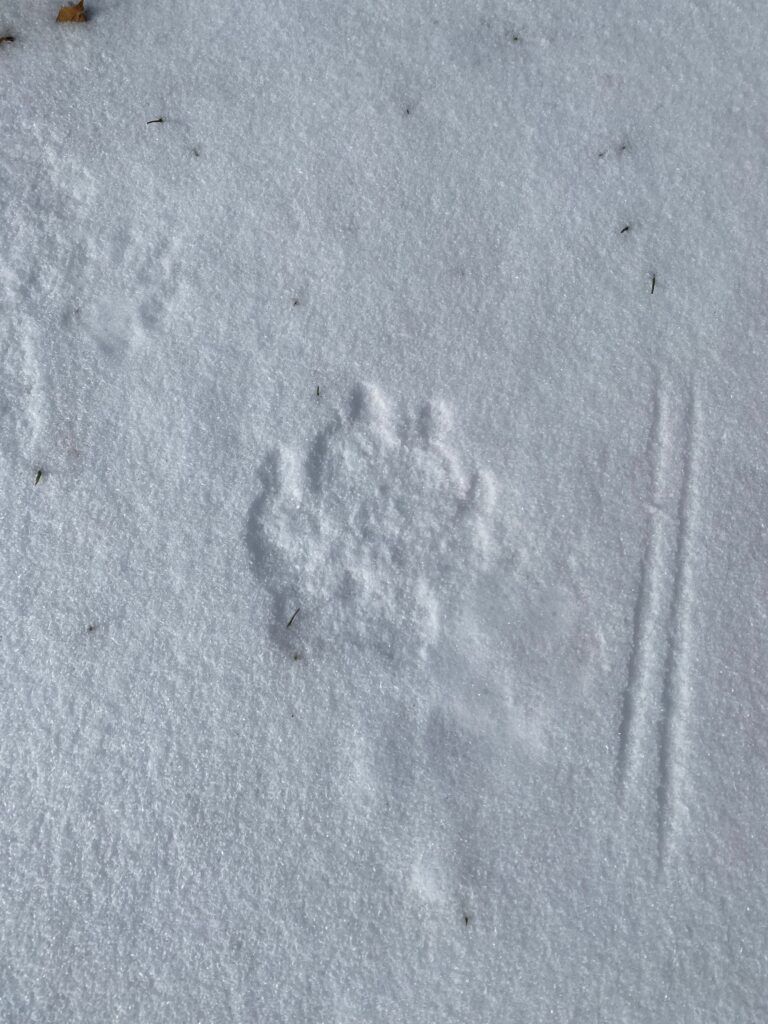
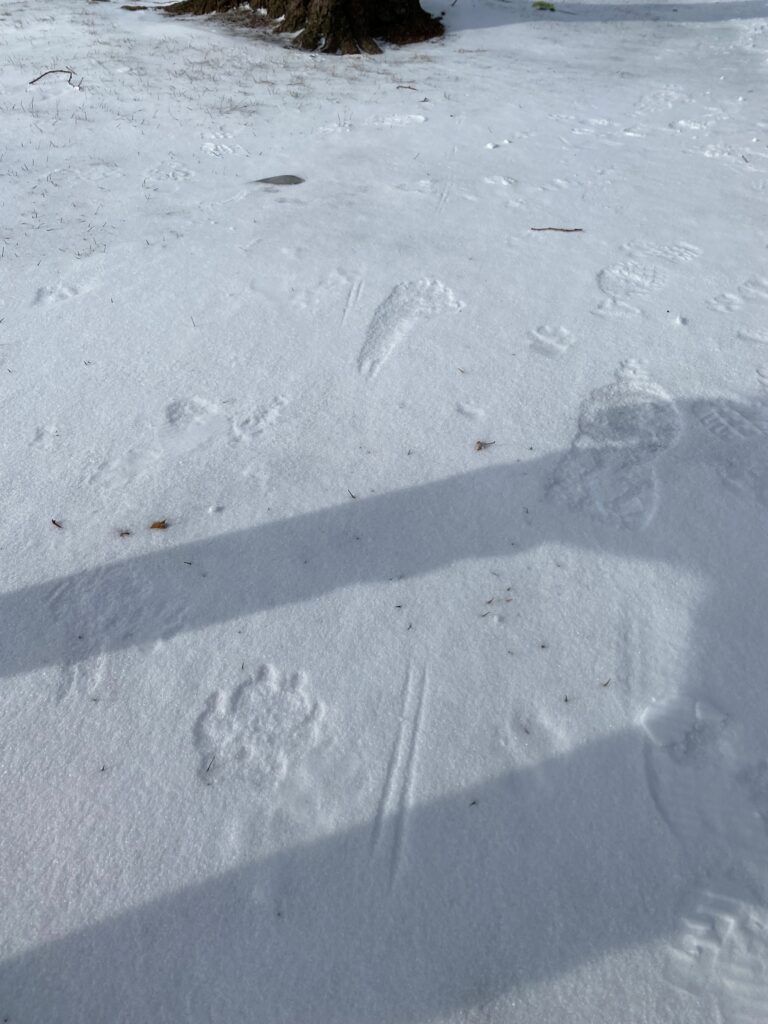
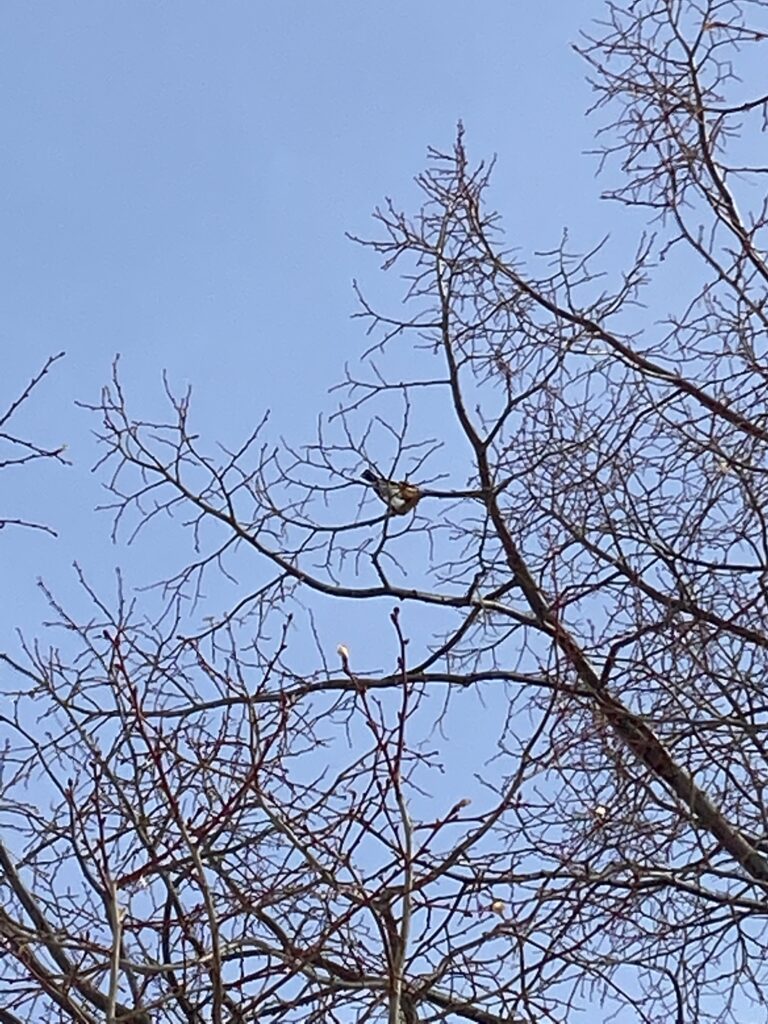
Over the weekend I visited the Burlington waterfront with two peers from NR002 to explore a place other than our phenology sites. During our experience, we were lucky to find many tracks and a real siting of some birds. The most notable tracks that we found was what appears to be a fisher print. There were also clear scratch marks, which can be seen directly next to the track print. It was really exciting to see these tracks, as it seems it would be unusual for this species to be down by the waterfront. In addition to these tracks, a few American Robins were observed sitting in a tree that was a located close the Echo center. Overall, it was a great experience to see the activity in other parts of Burlington than just those of Centennial Woods.

Wildlife Activity

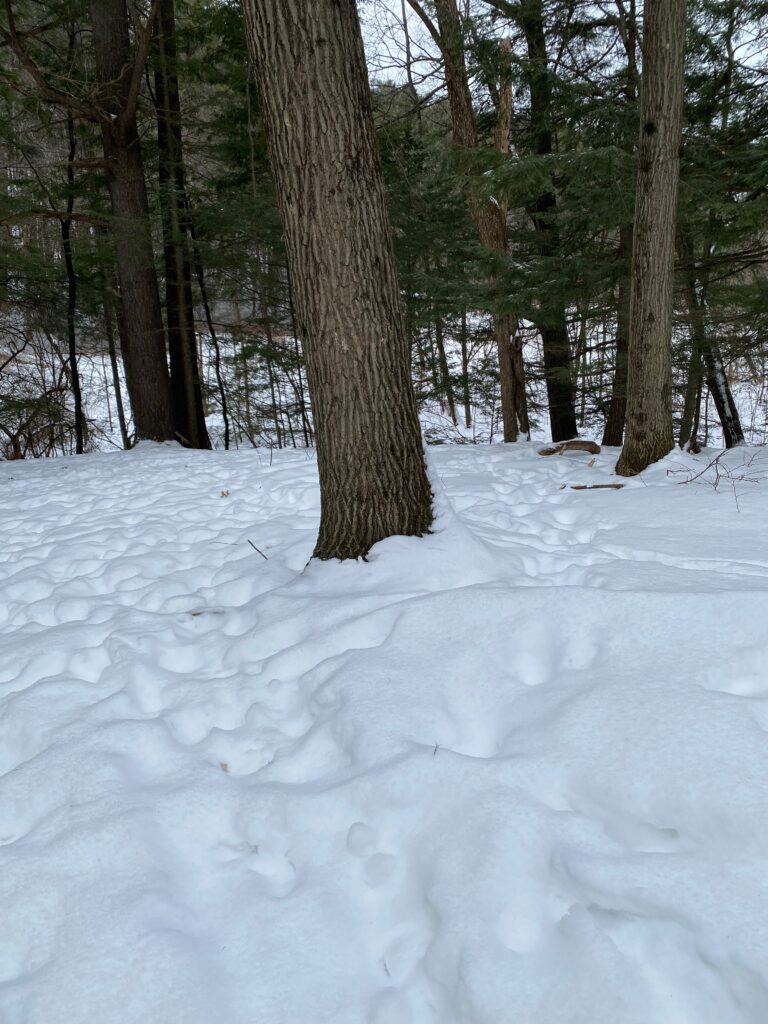
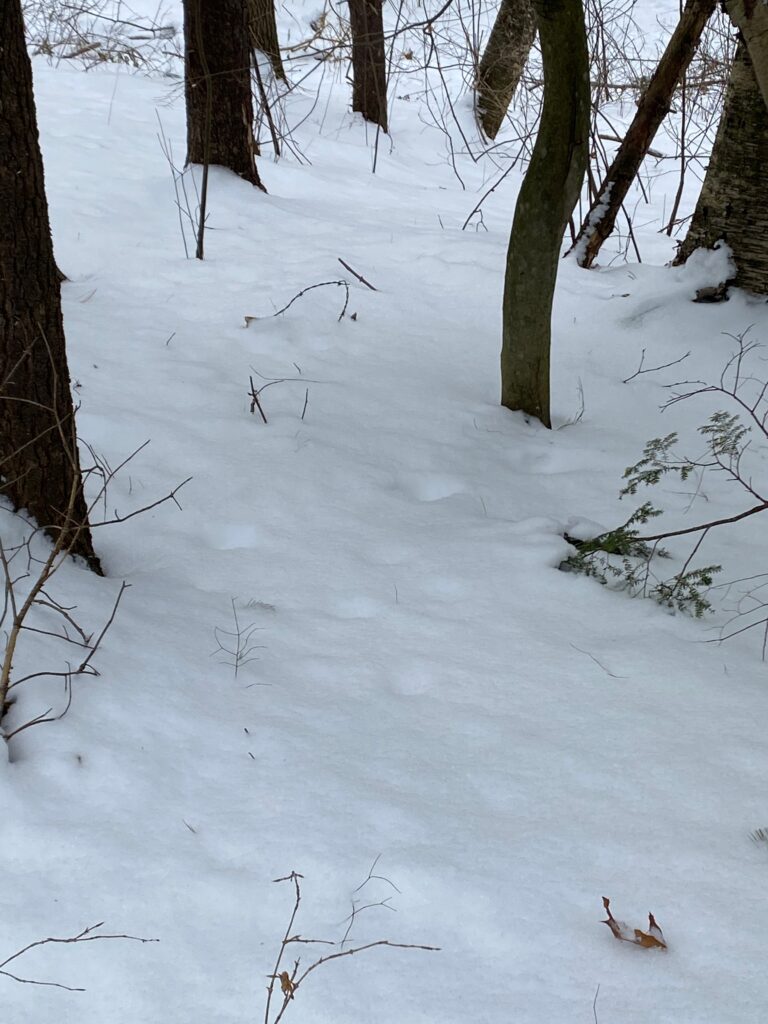
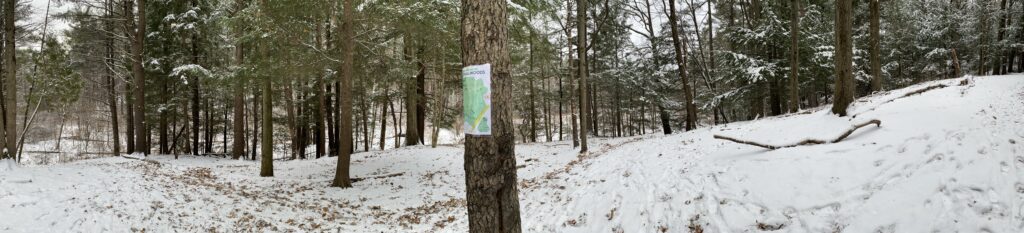
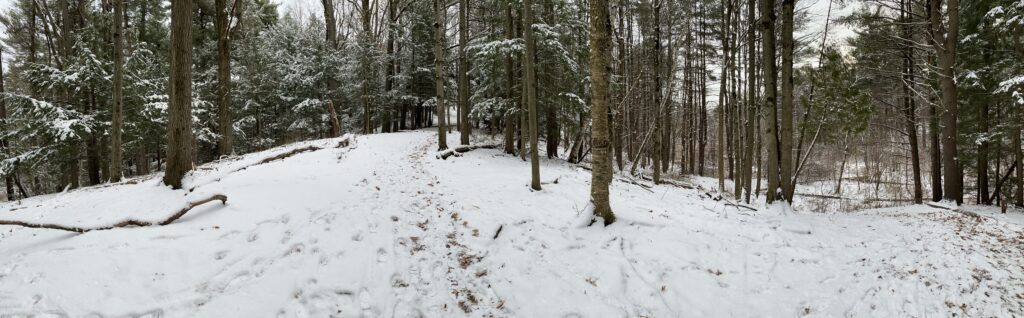
During my last visit to my phenology site, I noticed many tracks in the snow, however there seemed to be a lack of wildlife tracks. Due to the location of my site and its frequent human activity, I mainly observed human foot prints. I was able to observe very small, round tracks leading to a tree, but the animal was very difficult to identify because it had freshly snowed to create a layer on top of those tracks. Additionally, there are a lot of trees surrounding the area that still contain leaves on their branches. With this in mind, there were wavy patterns on the ground that I assume are from the snow falling through the branches on the trees. Overall, my site looks fairly similar to the last visit, however there was more snow on the trails.

Visiting a Friends Phenology Site

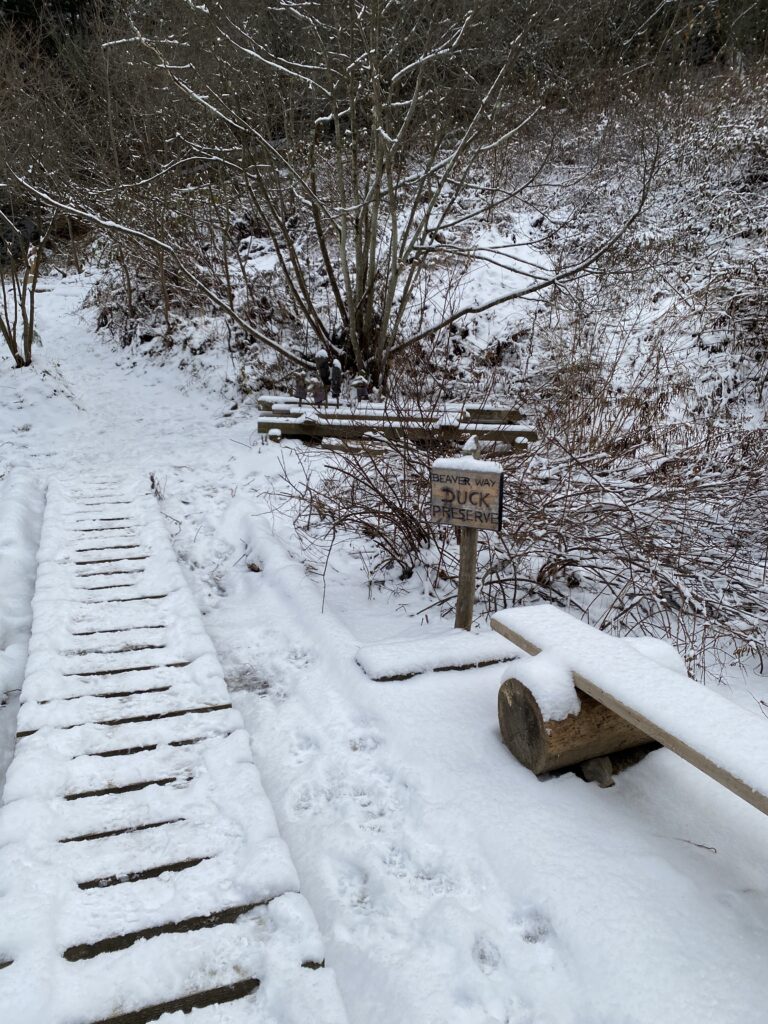
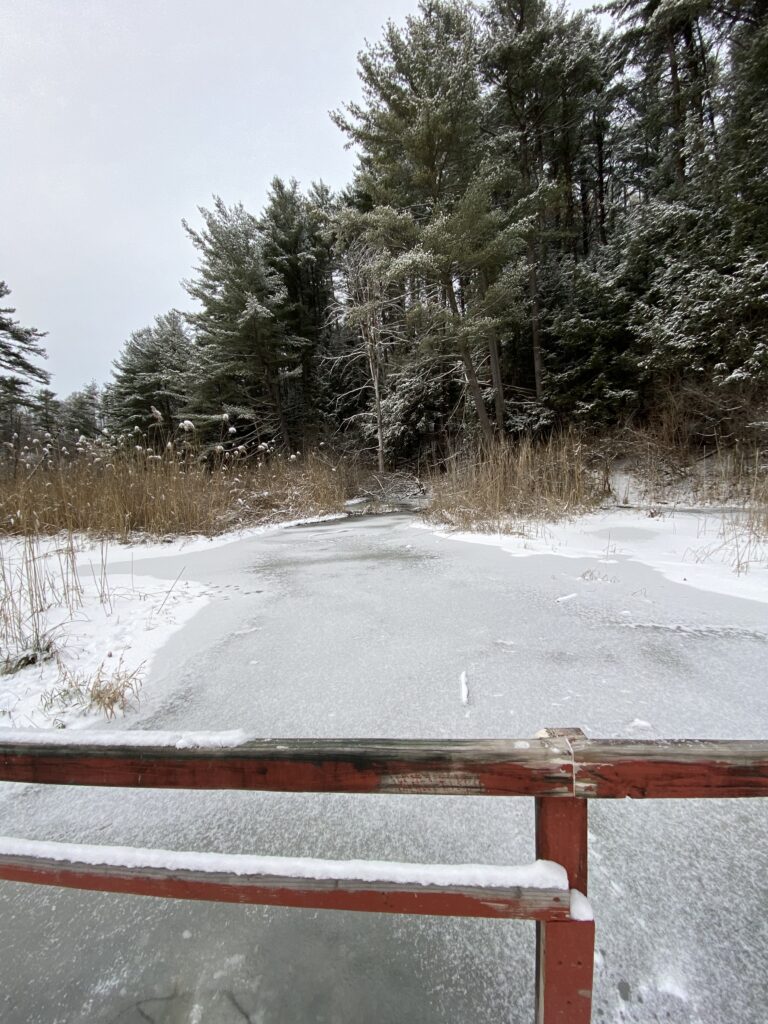
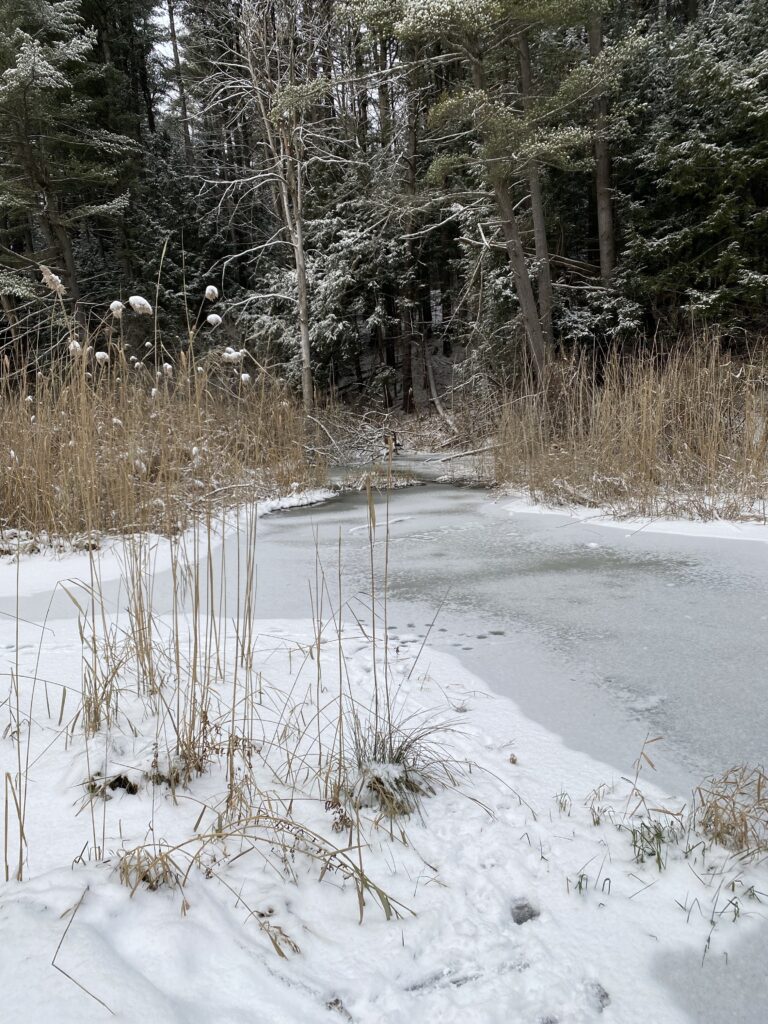
I was lucky enough to visit a friends phenology site, which happened to also be in Centennial Woods. However, it was well past my site and was a very different type of habitat. The site was a small pond in a wetland area that had a bridge to cross over the water. There were also many species of plants that I did not expect to see like cattails and phragmites. I expected to see similar species that I had observed in my area, yet there was a large contrast between the two sites despite both being located in Centennial Woods. When I visited the water had frozen over, in addition to snow piling up on the frozen waterway. The vegetation was fairly bare, looks like sticks poking out of the water. Finally, there were footprints in the snow from individuals who walked on the bridge and the path nearby.

Final Phenology Visit

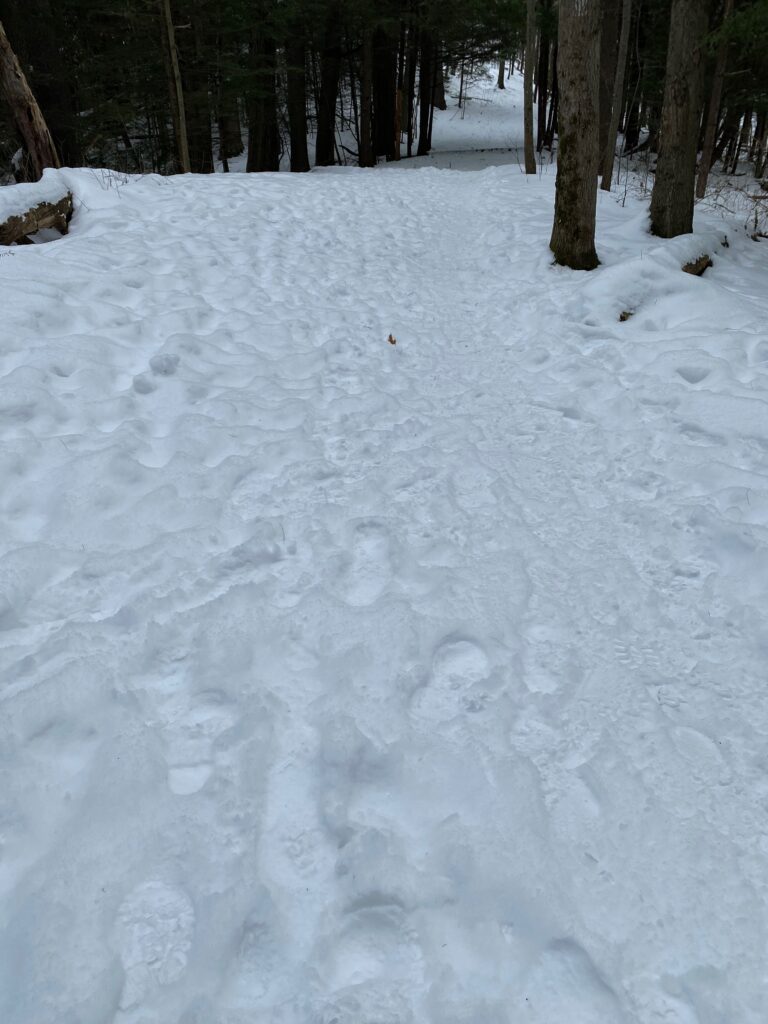
Now that it is December, winter is very present within Centennial Woods. This is clearly demonstrated by the lack of leaves on the trees, the snow covered ground, the limited vegetation on the path, and there were little to no noises from birds. Unfortunately, I could not find any animal tracks. With that said, they may have been located farther away from the main trail where people regularly walk. Due to the common human presence in my phenology site, there were a lot of footprints from people walking on the path. The day I visited was also particularly cold, making activity limited for animal species living in the area.

Phenological Exploration

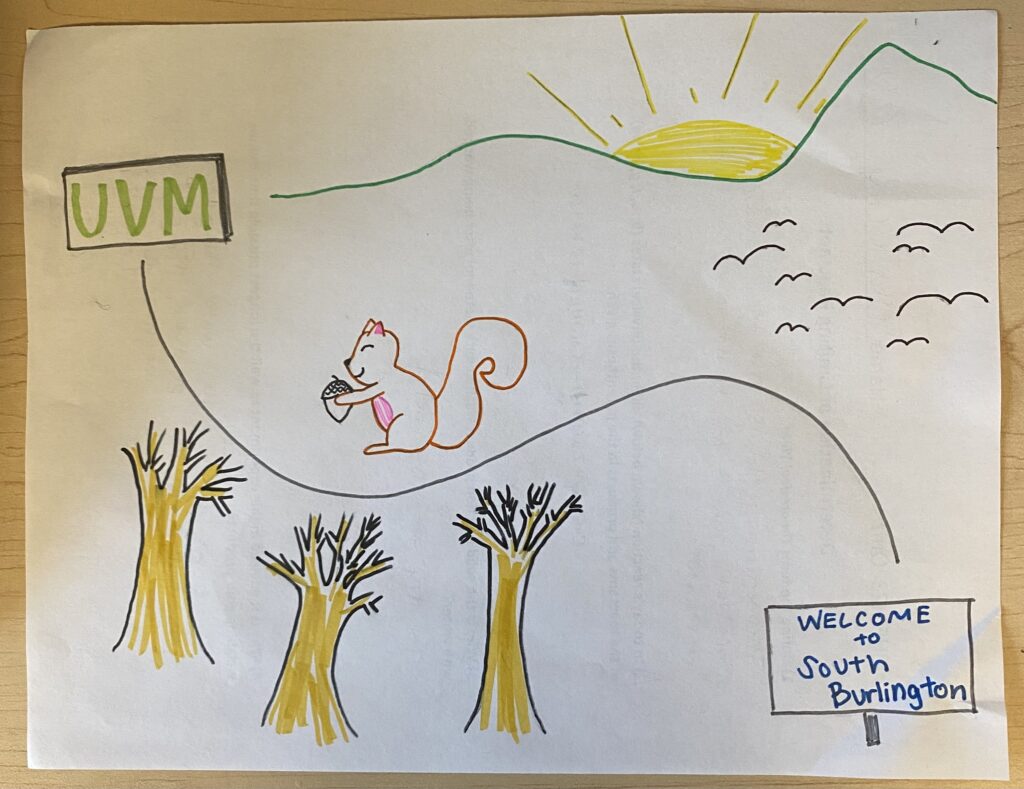
During a cold autumn afternoon, my friend and I went to South Burlington and was able to observe the season change that was present at that time. We walked to the bus stop on Main Street and took the bus to go get coffee. By the time we were done, the sun was setting and it turned to night.

Some of the signs of the change in season included the bare trees that had lost most of their leaves, squirrels looking acorns and other food to gather for winter, many birds species flying around (possibly flying to another location for the new season, but not completely sure), and finally watching the sun set earlier (around 5 pm).

Site Visit #2

My second visit to my phenology site gave me some time to fully experience the area. Taking the time to feel the sounds, embrace the trees, and have a break from life to connect with nature was really rewarding. When it came to what I heard, there were large gusts of wind that rattled the trees and the birds in the air. I could also hear some human-produced noises from planes that flew overhead. I could feel the crisp autumn air and organic matter that covered the ground where I sat. I could see the trees standing tall, unbothered by the moving world around them. I could smell the fresh woods that surrounded me from all sides. Due to their being a mix of species, some trees were changing colors and others seemed to follow their evergreen tendencies.

Welcome to Centennial Woods!

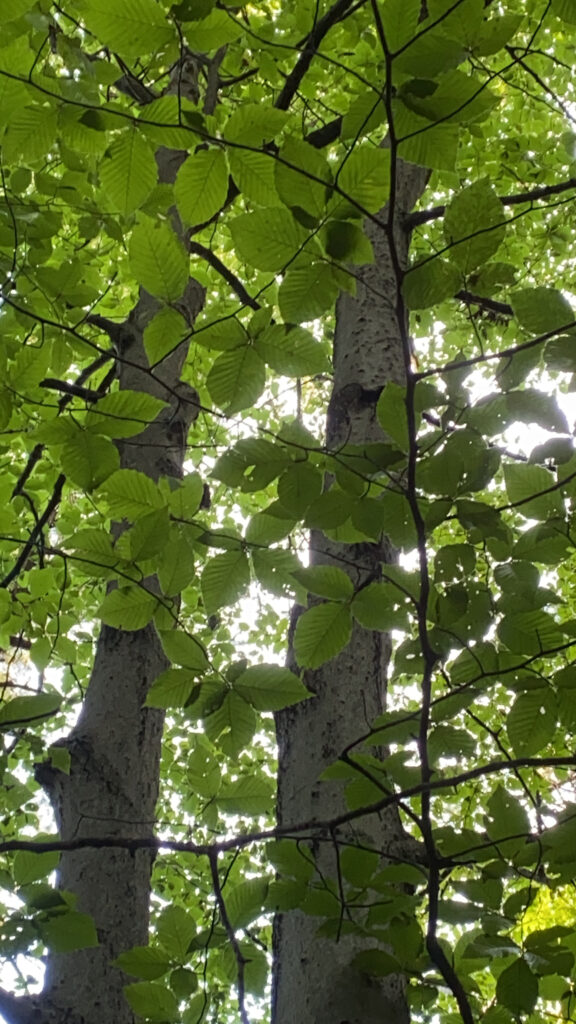
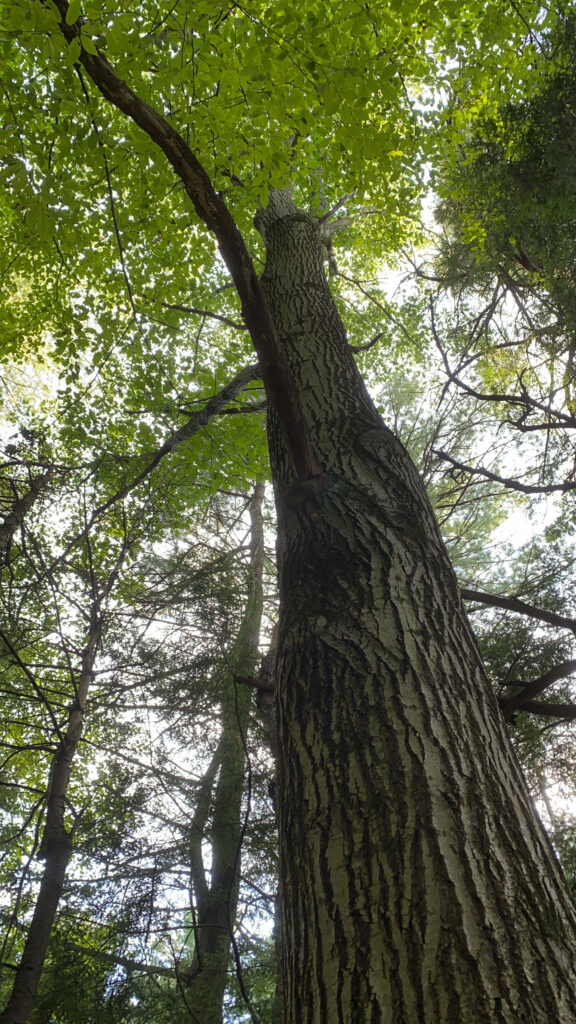
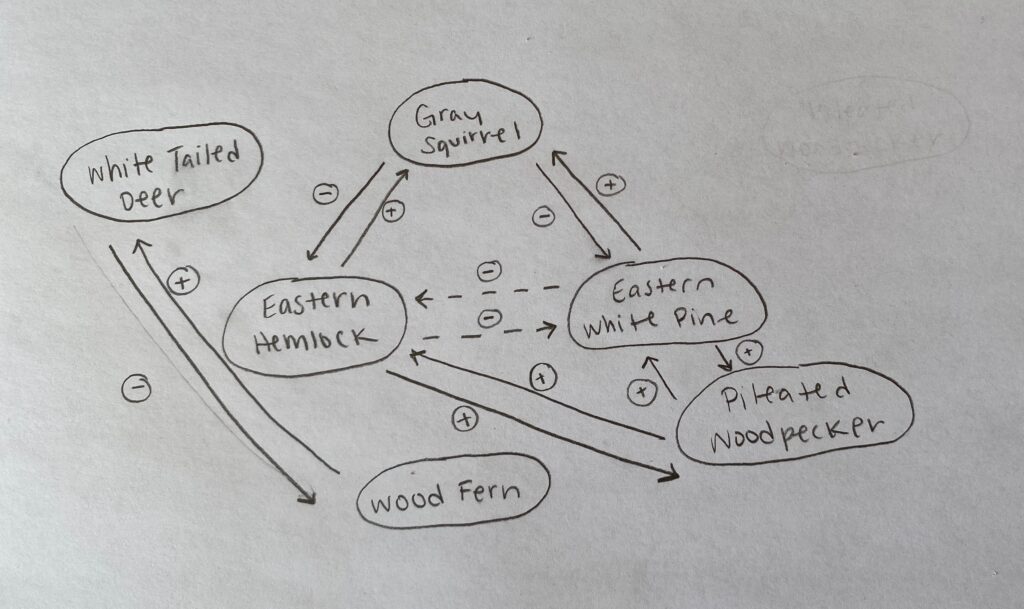
I chose Centennial Woods as my phenology site. The specific location I focused on was a large incline in the trail that is a home to multiple species of trees and vegetation. I love doing hikes or nature walks, as they always make me feel calm and happy. This specific spot in Centennial Woods reminded me of my favorite trail from home at Rock Creek Park in Washington D.C.. Though some of the species may not be the same as the ones at home, the topography was similar, which made me exciting to focus on it. One is able to get to this spot by just following the trail, it is just past the small creek that has the bridge. The species that I observed included:

  • American Beech
  • Yellow Birch
  • Eastern White Pine
  • Intermediate Wood Fern
Skip to toolbar