
For the class NR1010– Natural History & Human Ecology– we were assigned this project. Each student chose a small spot in the greater Burlington area where we will spend the semester watching seasonal changes in the landscape. For mine, I chose a spot in centennial woods. To reach it, start at the main entrance to the centennial woods trail system and follow the path in. At the first branch, take a left, then take another left at the next branch. At the third, take a right past the large blowdown and follow the trail over the trunk. This leads you into a small alcove that borders an area of wetland. Congratulations, you have found my phenology area!
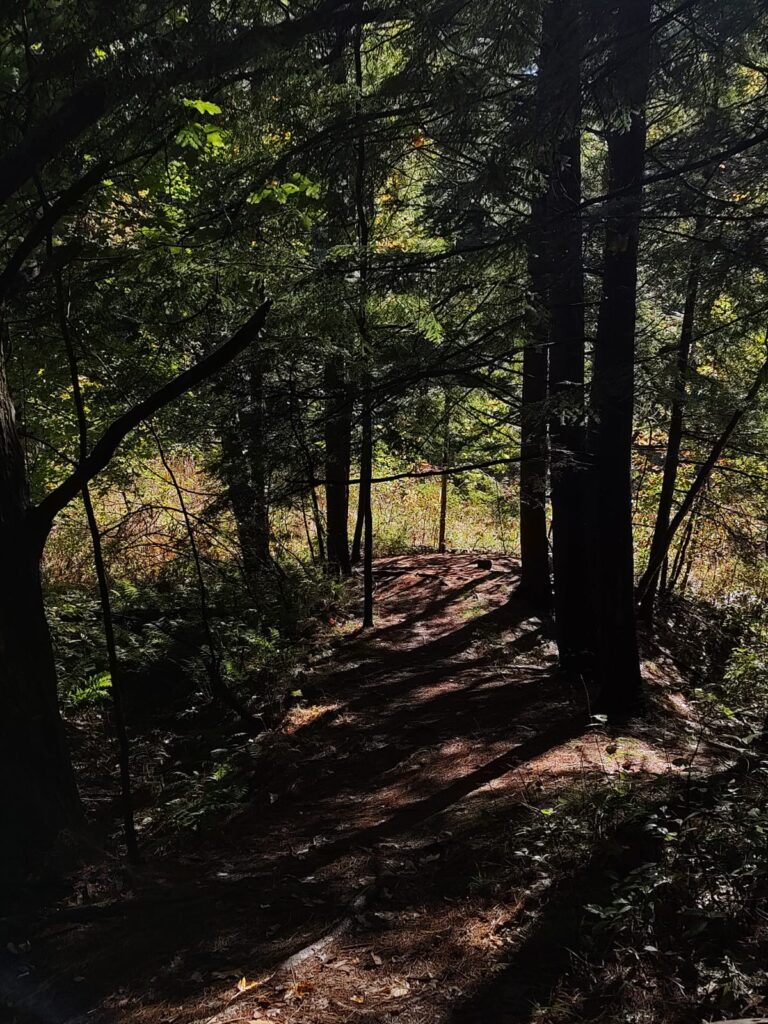
The back and sides of the area are closed in by a predominantly hemlock forest. There are also white oak, Norway maple, and paper birch trees around. The front of the spot overlooks a wetland/marsh area overgrown by cattails, grasses, and other low vegetation. Along the edge of the alcove are barberry and ferns. Other vegetation includes moss, lichen, and several small ground plants. Most common species are Eastern hemlock and white oak.
https://www.inaturalist.org/observations/245752592
Bird Species, 10/05/24:
- WTSP (White-Throated Sparrow)
- SOSP (Song Sparrow)
- BCCH (Black-Capped Chickadee)
- WBNU (White-breasted Nuthatch
- BHVI (Blue-headed Vireo)
- GRCA (Grey Catbird)
- BLJA (Blue Jay)
- GCKI (Golden-crowned Kinglet)
- RCKI (Ruby-crowned Kinglet)
- CAWR (Caroline Wren)
- NOCA (Northern Cardinal)
- HOFI (House Finch)
- EAPH (Eastern Pheobe)
- BRCR (Brown Creeper)
- NOFL (Northern Flicker)
Hi, this is a comment.
To get started with moderating, editing, and deleting comments, please visit the Comments screen in the dashboard.
Commenter avatars come from Gravatar.