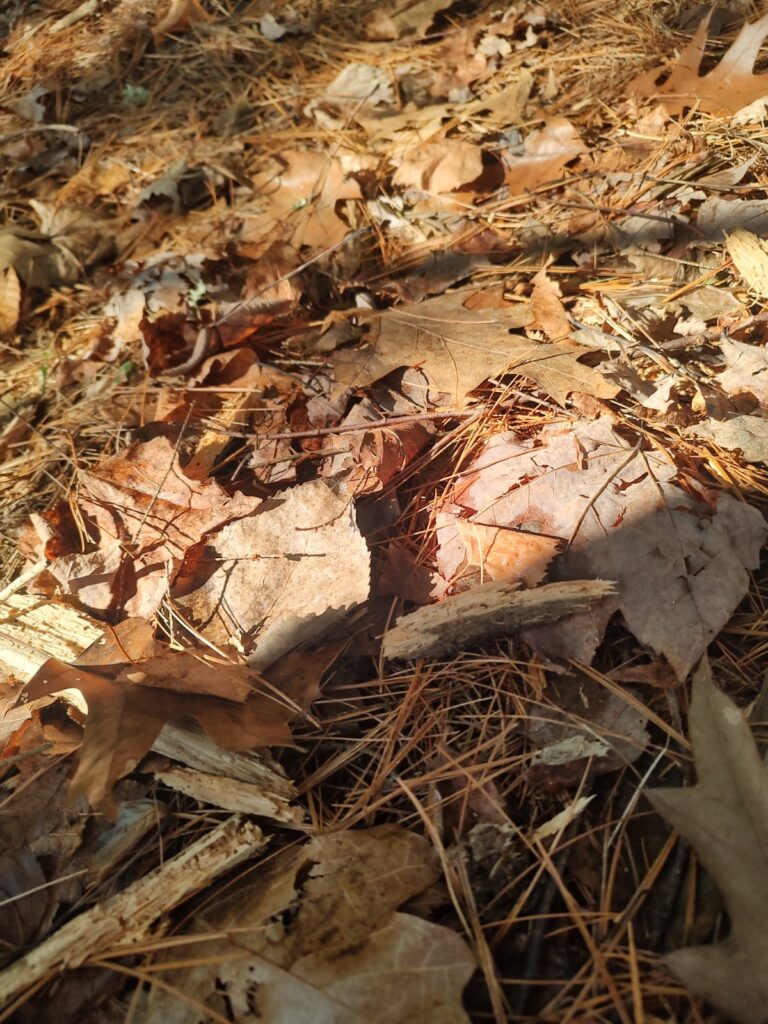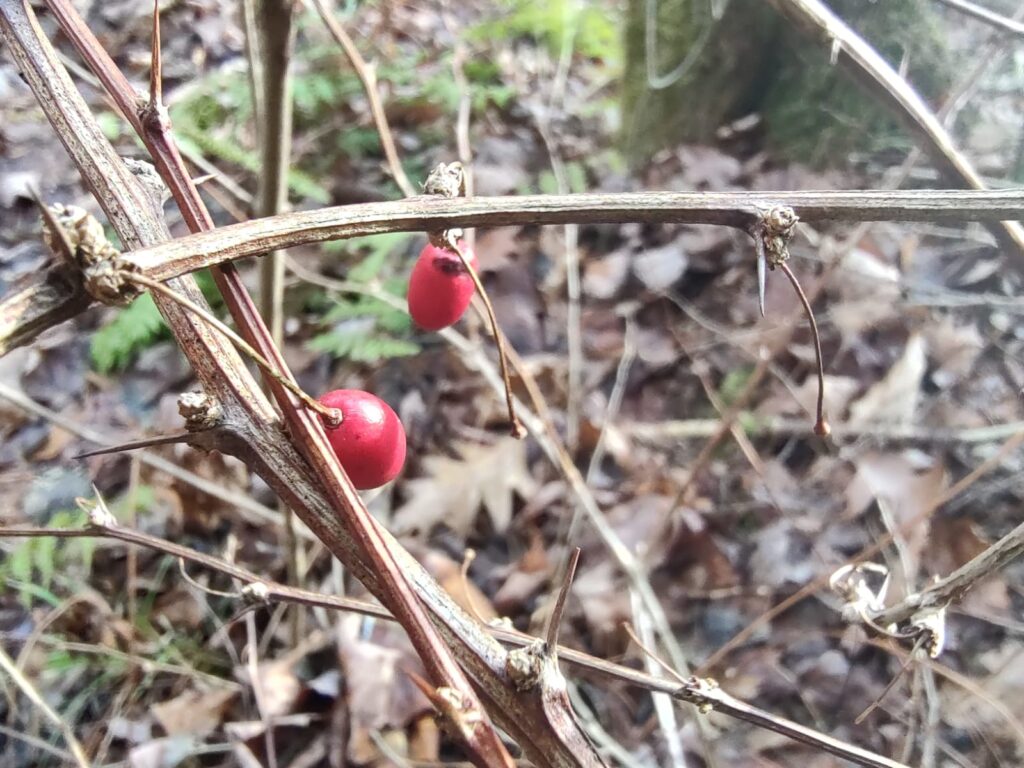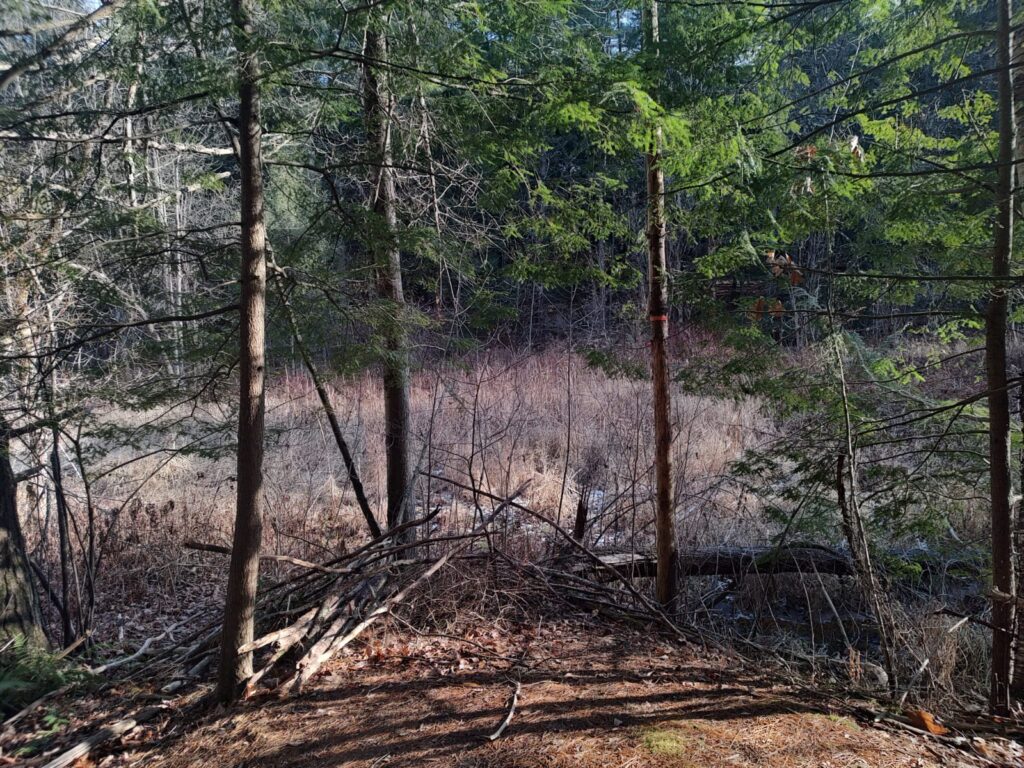
It is now December, yet unfortunately due to global warming Burlington has minimal snow on the ground and the city has yet to shift fully into the Winter season. However, there are still phenological changes that can be observed. Most deciduous trees have fully shed their leaves– a few stubborn species still cling on such as American beech and buckthorn. The majority of undergrowth vegetation has died off or is focusing all energy on the underground parts of the plant. A few ferns thrive on. Small hints of fruit can be found, such as just a couple berries left on each barberry shrub. The leaf litter on the ground is now composed of a solid mix of deciduous leaves and coniferous needles, and is up to a couple inches deep in spots. This shedding of leaves allows for the trees to conserve their energy in the colder months.
Small hints of wildlife can also be found. Although there is no snow for proper tracking, a track here and there can be spotted in mud. There were also several dig sites on the trail leading to my spot. Several small holes indicated that a gray squirrel had been caching. A larger area with scratch marks showed that a grouse or turkey had lain there recently. These signs are important to observe in order to learn about our non-human kin. I also observed a Winter Wren calling in the marsh near my spot.
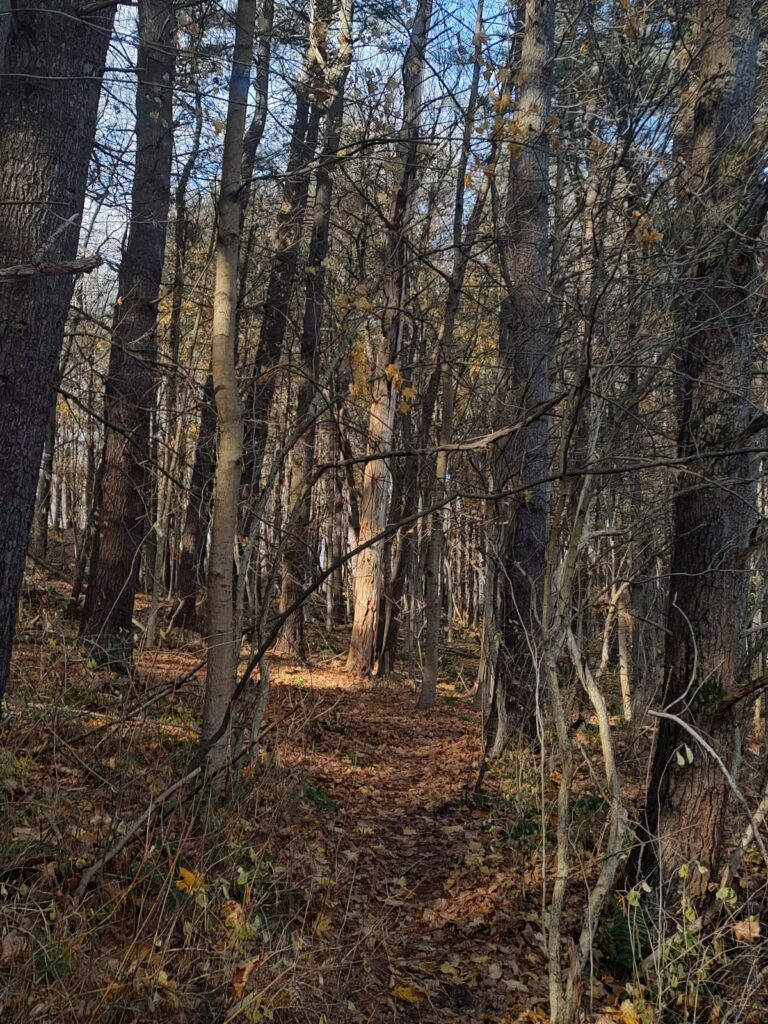
The forest in the late fall and early winter has a very different overall feel to it. You can see far through the trees as the sun easily reaches the ground through open canopy. It can be a vulnerable place but also very beautiful.