Posts

Final site visit

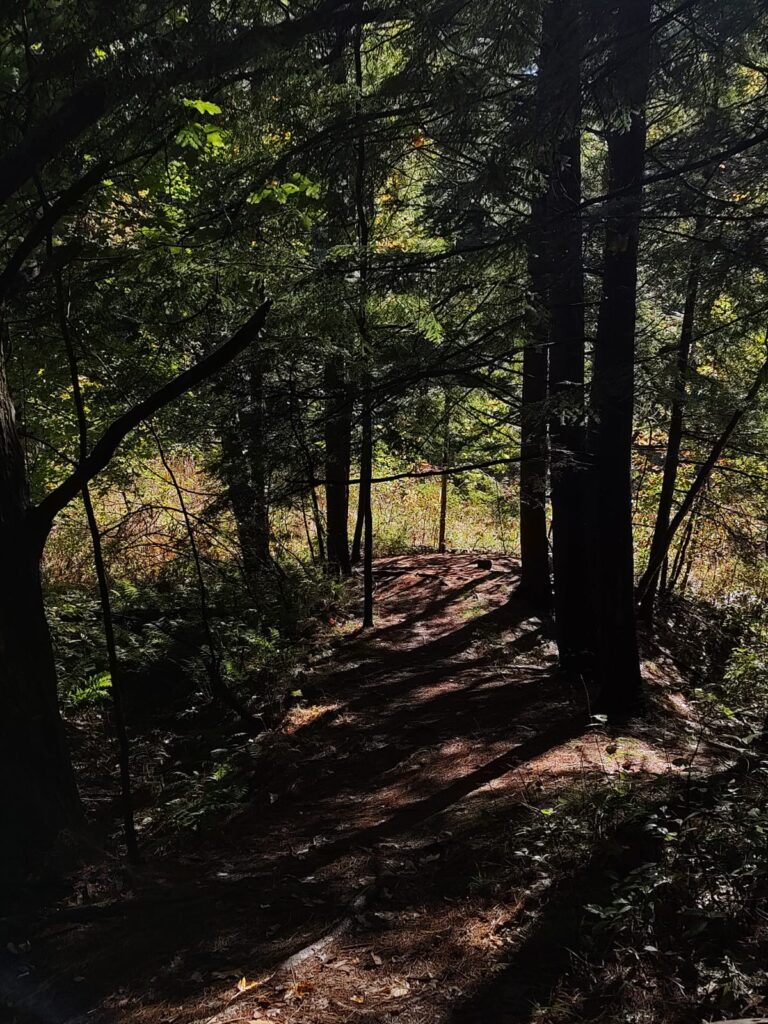
As we wrap up both the semester and the academic year, I made one last visit to my phenology site. Over time the major geography of the area has remained the same. The large fallen tree still lays across the path at the entrance, and the original ring of trees still circle the main spot I sit at when I sketch. The majority of change is seen in phenological happenings, as this project has focused on.

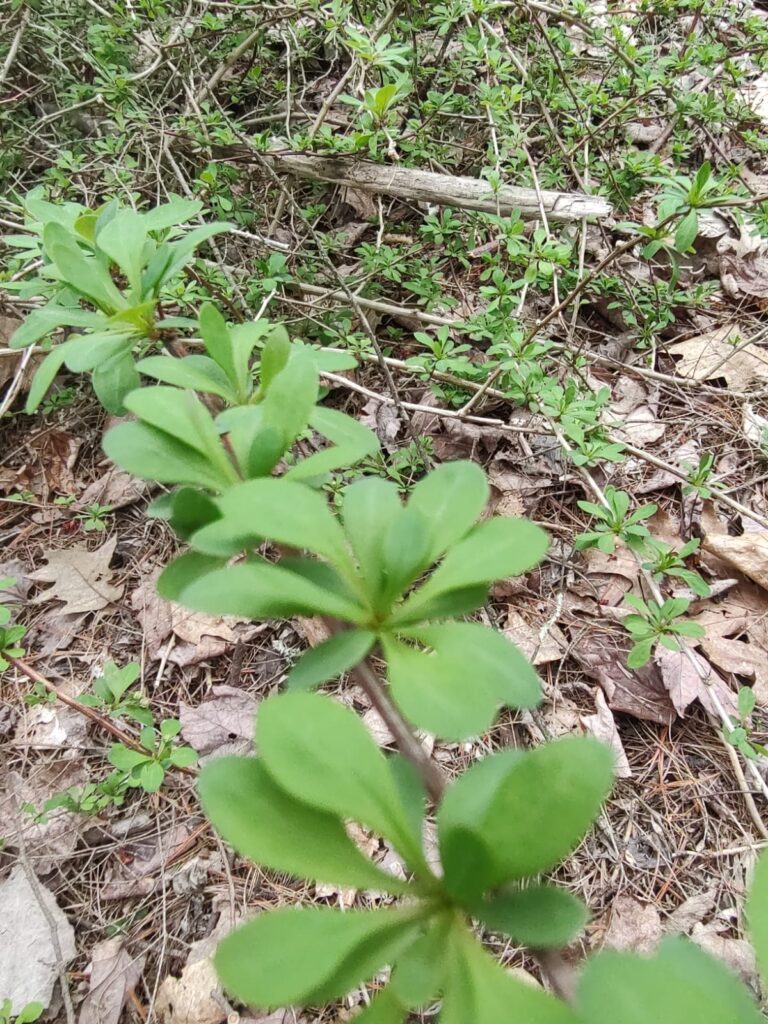
When I first set out to choose a spot, we were in full late summer bloom. The deciduous trees were covered in leaves, and the herbaceous ground cover was out. Currently, trees are just starting to show leaves. The ferns are just starting to unfurl from fiddleheads. Bushes and moneywort are slowly beginning to cover the area in green again.
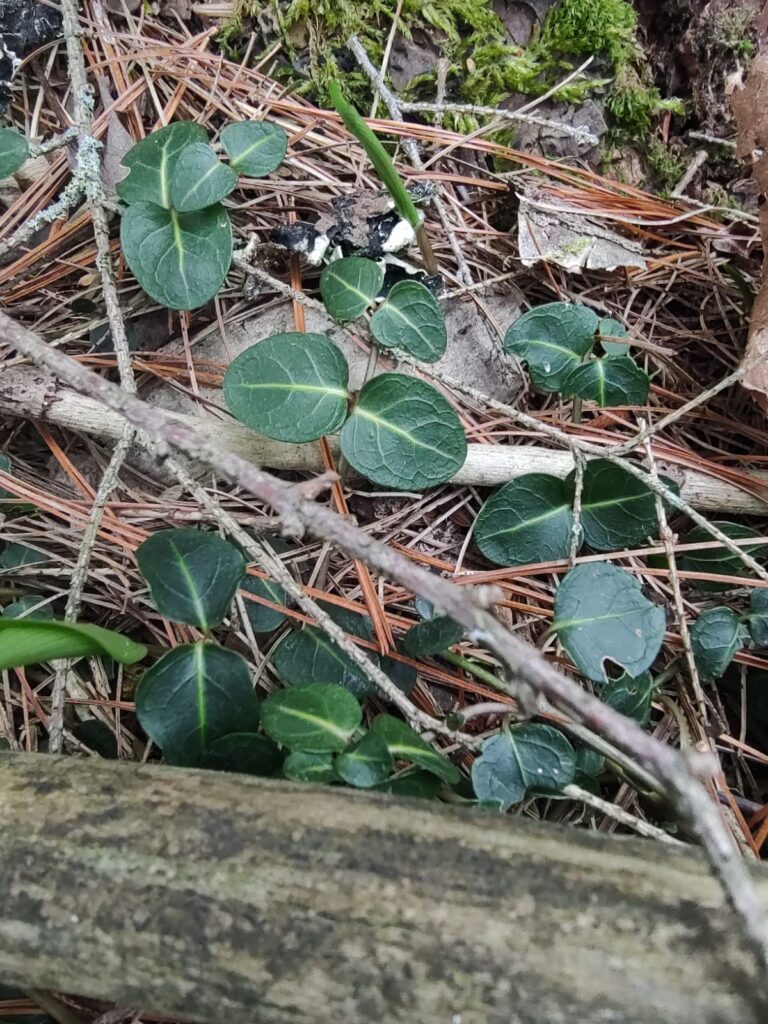
Human culture is an aspect of this site as well as nature. The forest itself is managed by people. Just a few hundred feet away from my site is an active project run by a restoration ecology class. My spot is a good spot to sit and enjoy nature, there have been signs that other people use it for this as well. Many UVM students like to get away from campus and into natural areas such as this.

I consider myself a part of this place in the way that a bird that visits a feeder is part of the household. I consistently visit, I pay my respects, I use the area, but the place does not need me. I do not stay there full-time, and I am not necessary to shaping and influencing the changes of the seasons. Although I will still visit my spot, it will not be as frequently after this project comes to an end. My phenology sight has served the purpose I need it to, and can now remain to serve the its more important purposes in the wider ecosystem.
City Nature Challenge

As we wrap up the academic year and inch closer to finals, the global city nature challenge takes place. This includes public participation in identifying biodiversity in different areas. Part of this is also a friendly competition. Our class participated as a group, yet split into lab groups as we race for a spot professor Walt Poleman’s mammoth trophy.

Due to being busy with many classes and events, I only recorded species found in the vicinity of campus, however I still observed six species. Using iNaturalist was streamlined and smooth as usual; the app is clearly designed and functions well.

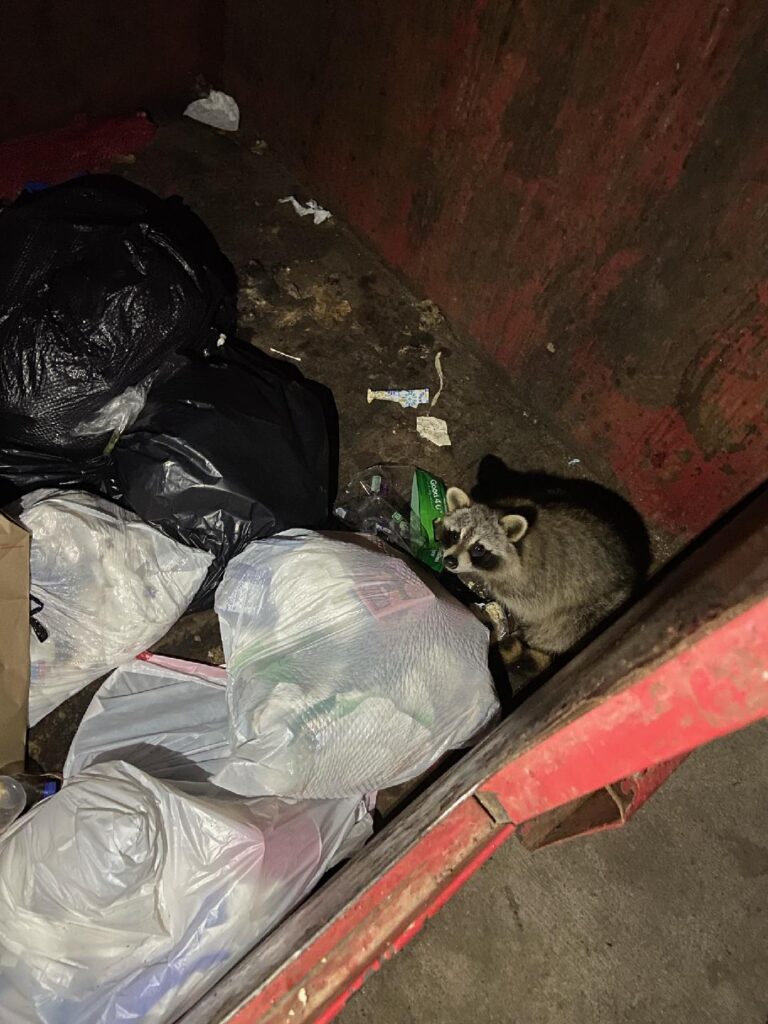
My most exciting encounter was late at night. I was outside talking with a friend when she pointed over my shoulder and said “hey look, a cat!” I turned around and we both has a moment where we stopped and realized that it was not a cat, but we hadn’t gotten a clear look. We got up and went over to the dumpsters it was heading toward and looked around. I peeked my head into the dumpster and there was a raccoon staring back at me (below left)!

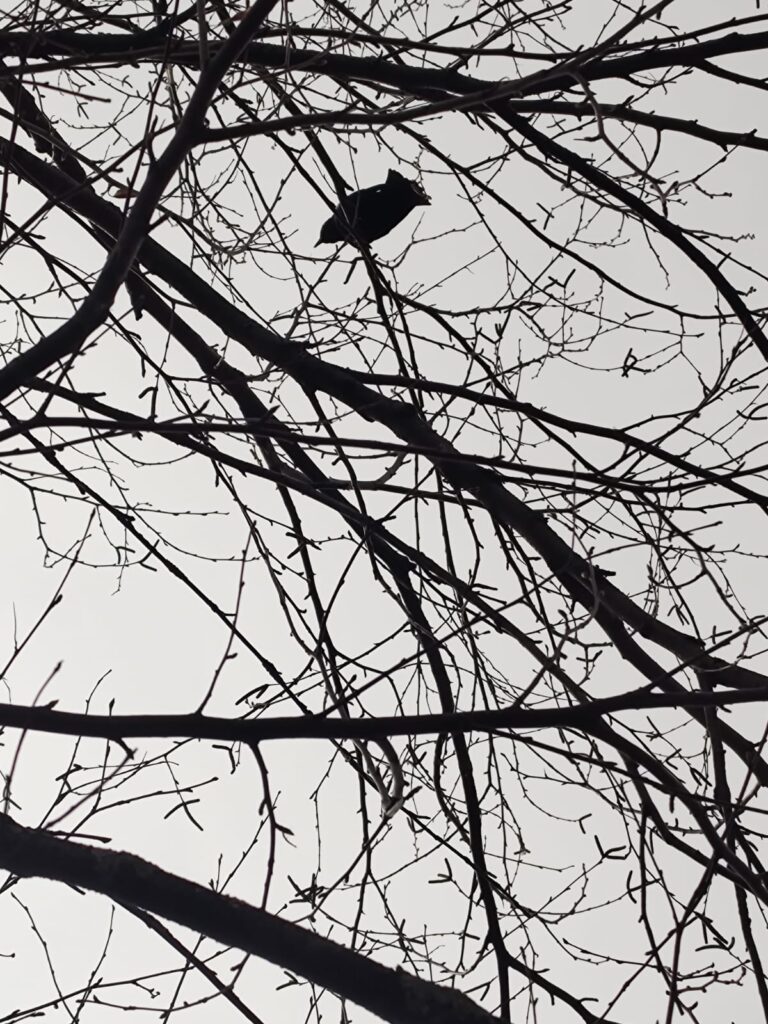
The other species I observed were all birds: ring-billed gull, Northern cardinal, American crow, red-winged blackbird (above right), black-capped chickadee, and chipping sparrow.

It’s always fun to see what species are reported in other cities and how different the biodiversity composition is.

UVM Phenology Walk

This phenology prompt was a little different than the rest. We were asked to walk through campus and take data on five specific tagged trees using “Natures Notebook”.

I went out early morning on April 5th for this activity. It was a moderate temperature and partly cloudy. All five trees were in roughly the same phenophase with no budding leaves, no flowers, and no pollen being released. Although a bit dissappointing now, it will be a lovely change once those buds do start to pop out!

The second part of this assignment was an exploration of the NPN (National Phenology Network) website. One thing I found interesting as I looked around were the central mission themes of “Dedication, Inclusion, and Innovation”. Although this program is simply about providing information and data, I wonder if even that wording may be under attack soon.

Phenology project: Wildlife Sign in Burlington

    For this assignment, I mostly stayed close to campus in order to fit the project into my schedule. I recorded wildlife sign on campus, in centennial woods, and at lab locations such as the Intervale center. I found iNaturalist to be a generally easy tool to use.

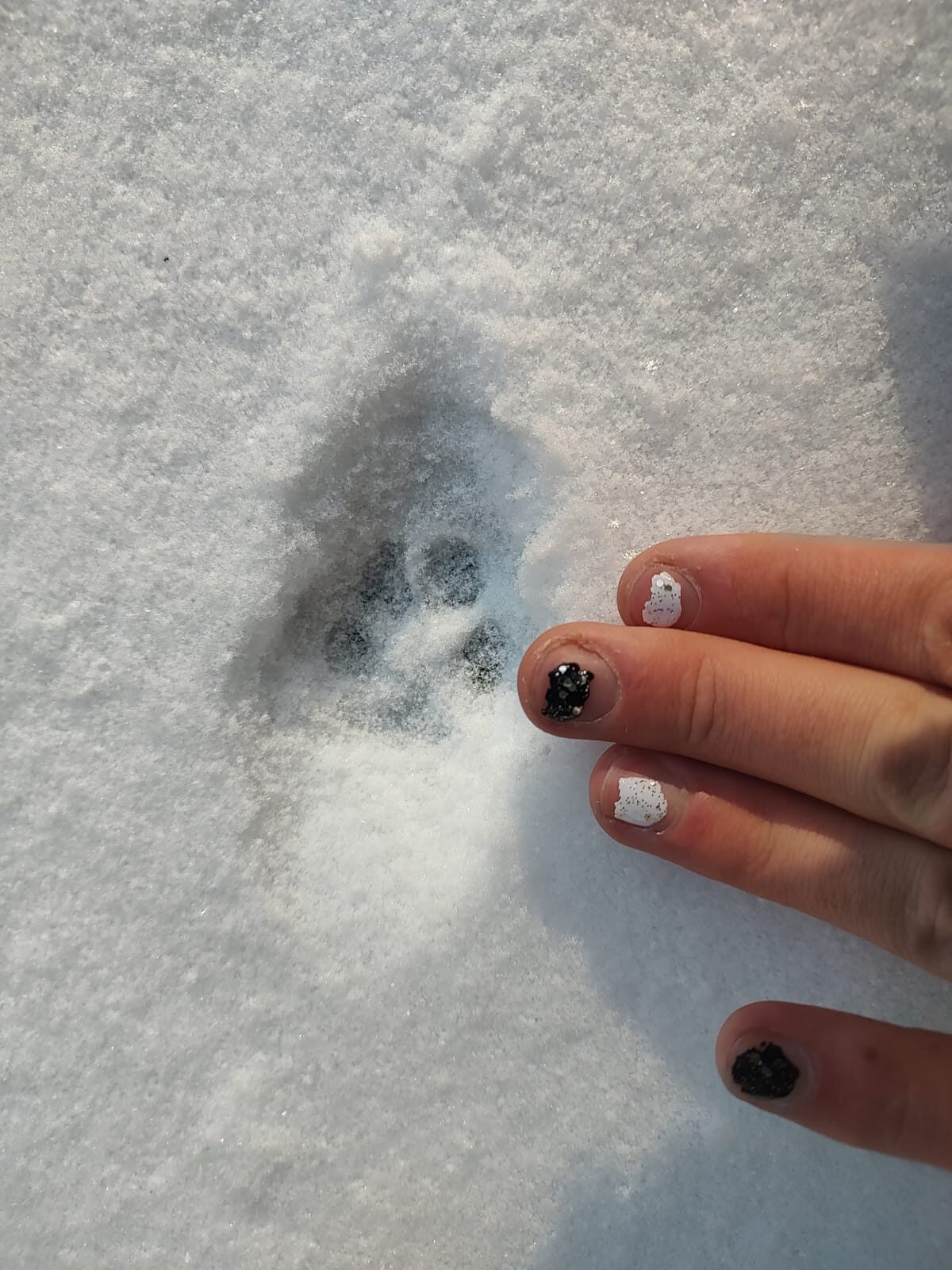
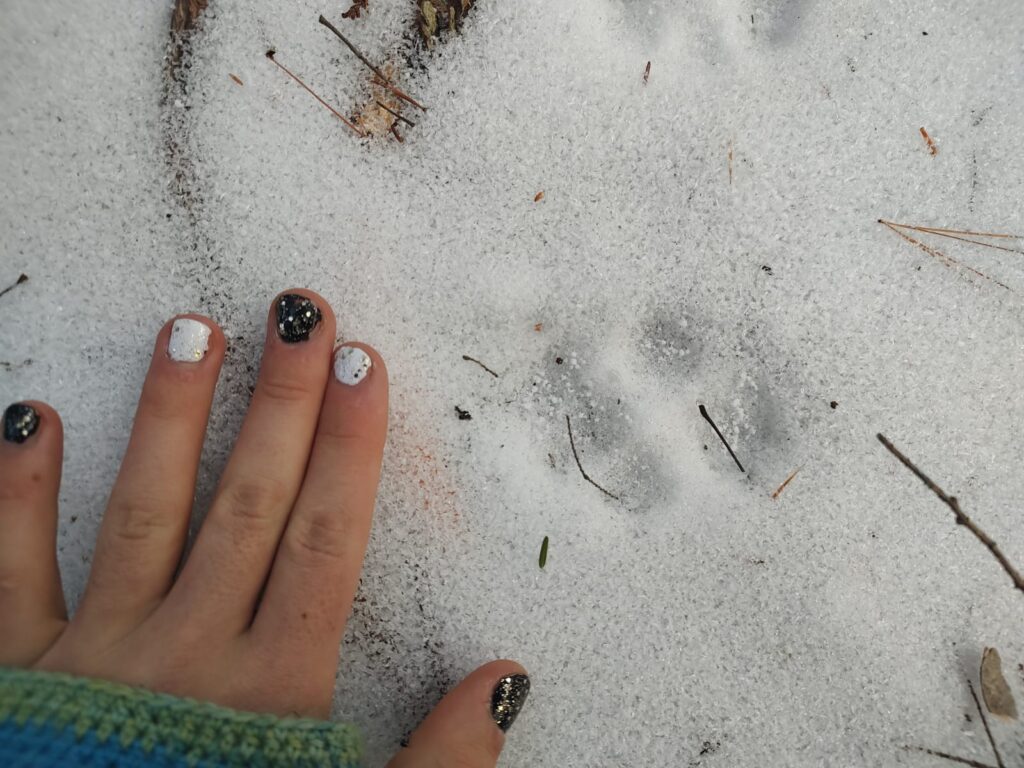
    Above: A track found in Centennial woods. This track was about an inch and half long, and an inch wide, with four large toes and a relatively small metacarpal pad. The negative space between the track was neat and the overall shape of the track was ovular. Based on these factors I IDed the species as gray fox.

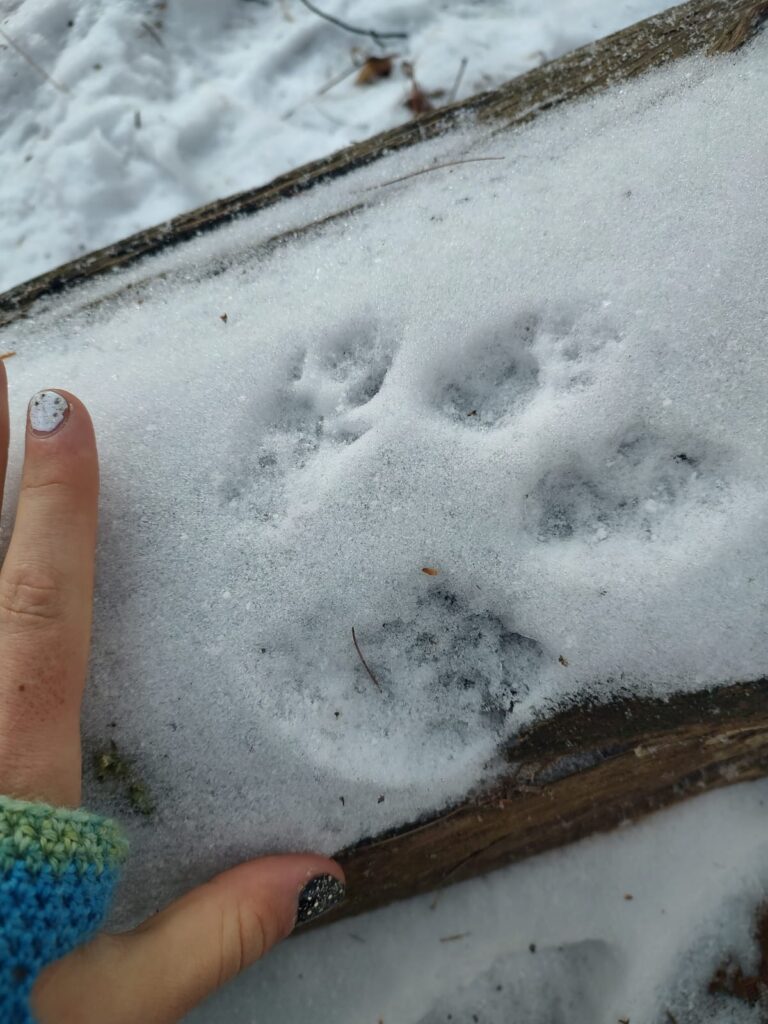
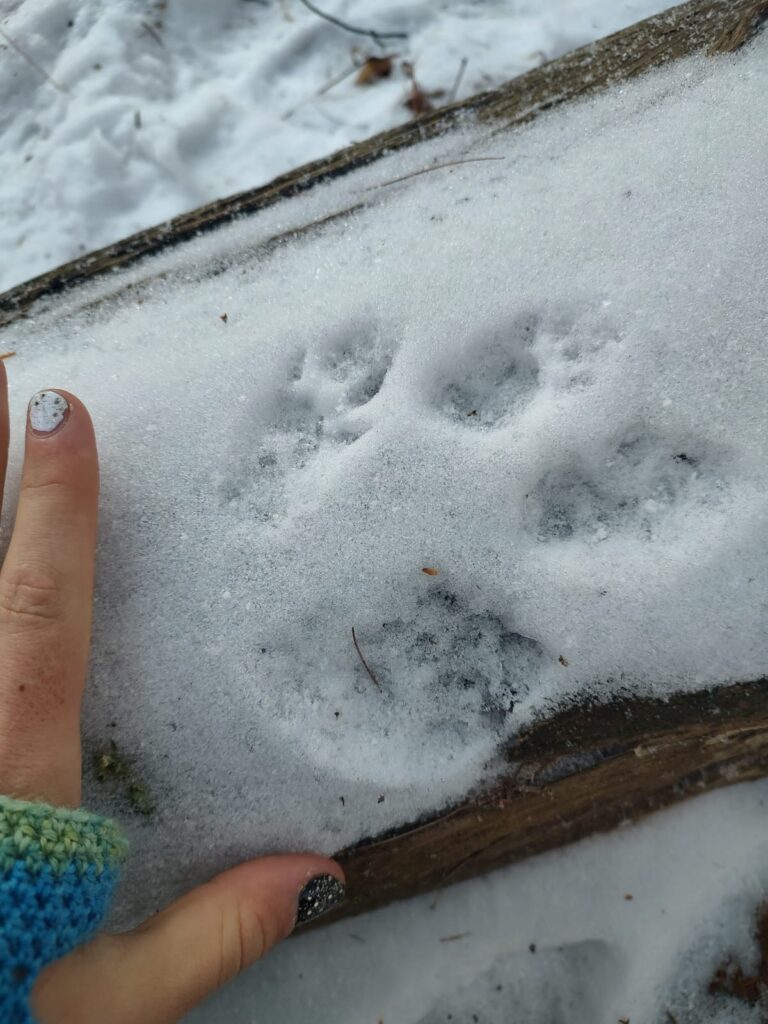
    Above: Another set of tracks found in centennial woods. Tracks were organized in sets of four. with four toes on the smaller front feet, and five toes on the larger hind feet. Individual hind feet were an inch and a half long, and front feet an inch long. For the majority of the trail the larger hind feet landed in front of the smaller front feet, and key indicator of a bounding pattern. I identified this trail as an Eastern Gray Squirrel.

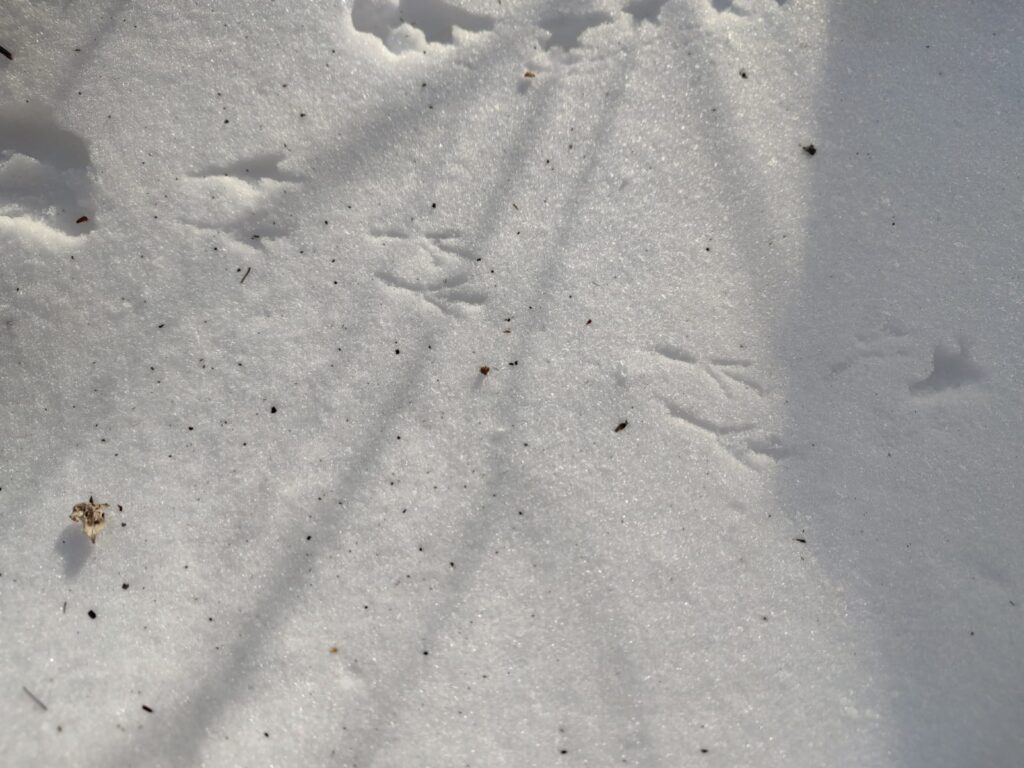
    Above: Small bird tracks, located near the winooski river bank at the Intervale center. These tracks were all over a large area, feet side by side indicate a hopping locomotion style. Individual tracks roughly one inch long. three front toes, all separate (as opposed to the “chopstick” tendency of toes III and IV in crows and ravens). Long hallux suggests that this species spends most of its time perching in trees. I cannot get an exact species ID on this track, however I would guess that it is some sort of sparrow or similarily sized bird.

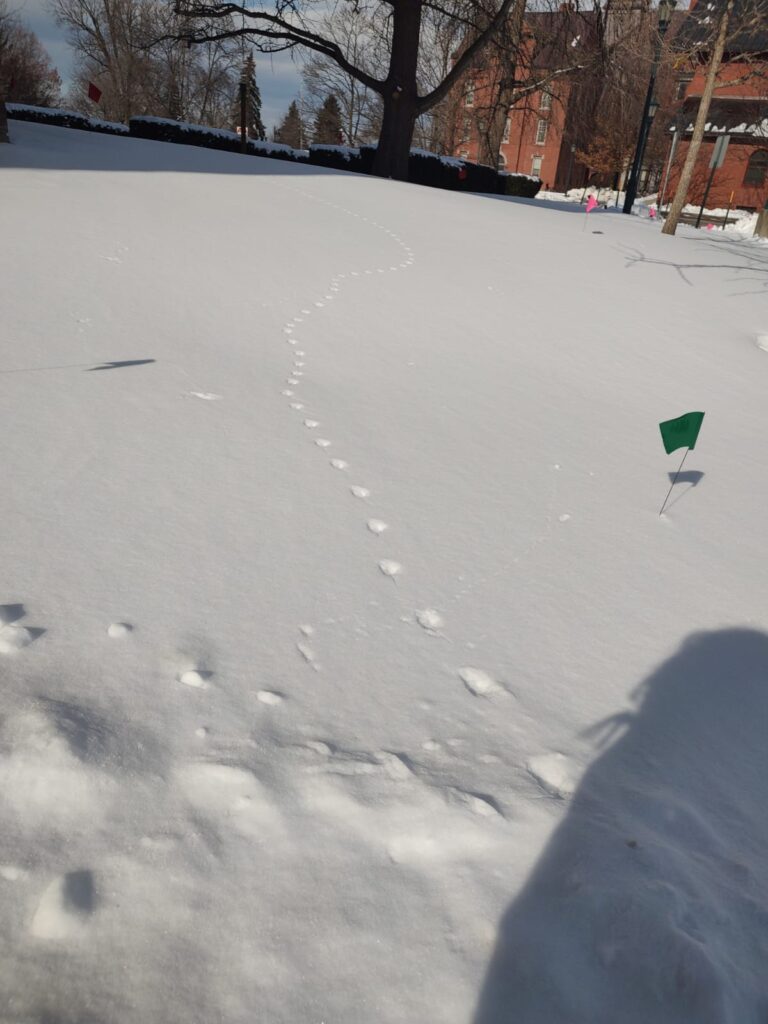
    Above: A small trail found on campus near old mill. This trail was noticed in passing, so I did not spend a great amount of time observing and noting details, however based on size and pattern I would venture to guess that this is a small rodent such as a mouse, or a shrew.

    New Semester !!

    After a long winter break I finally returned to my phenology spot and looked at how the area has changed since last time. The biggest difference is the presence of snow cover. The snow is packed down on the trails but still has volume in more exposed areas such as the swampy area behind my location.

    The presence of snow always means it is easier to see signs of animals clearly. Around my area the majority of tracks were gray squirrels scurrying to and fro, however there were also red fox and deer tracks. The squirrel tracks were much fresher and still had definition of foot morphology, while the fox and deer tracks have been aged slightly by snow, wind, and sun– Species ID was concluded by gait and size rather than foot morphology.

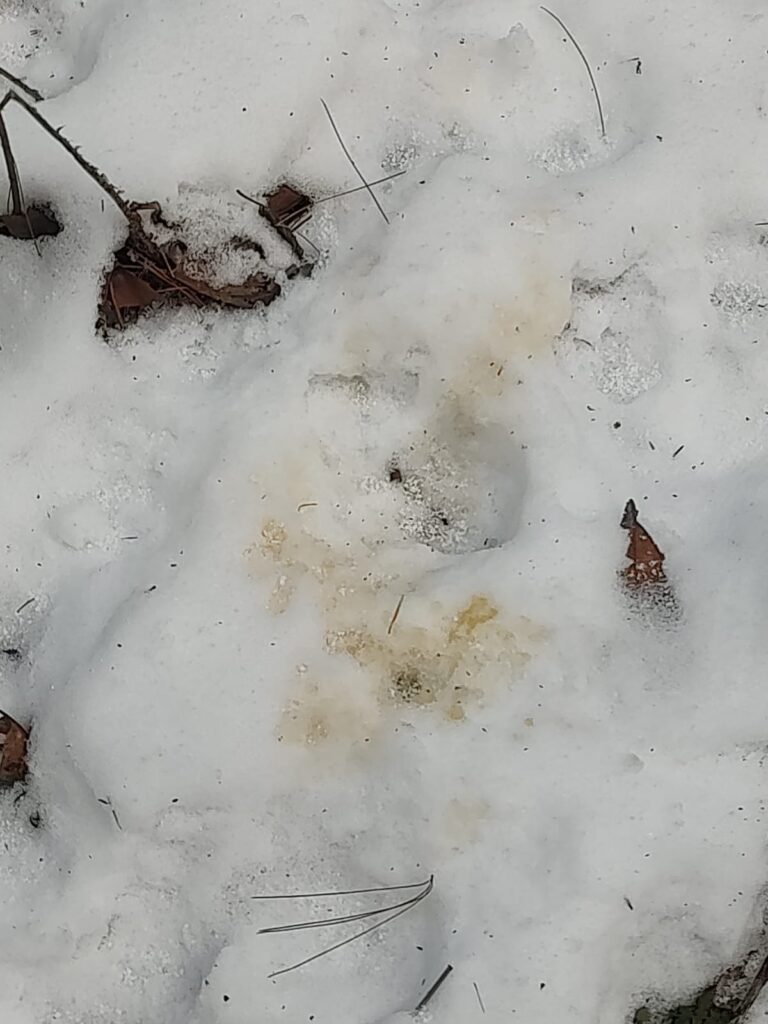
    Aside form tracks, I saw sign of animals in the form of urine post-marking. I also heard a small variety of birds including White-breasted Nuthatch, Black-capped Chickadee, Brown Creeper (sighted!), Downy & Hairy Woodpeckers, and a Winter Wren (also sighted!!).

    Preparing for the Cold (Pheno #5)

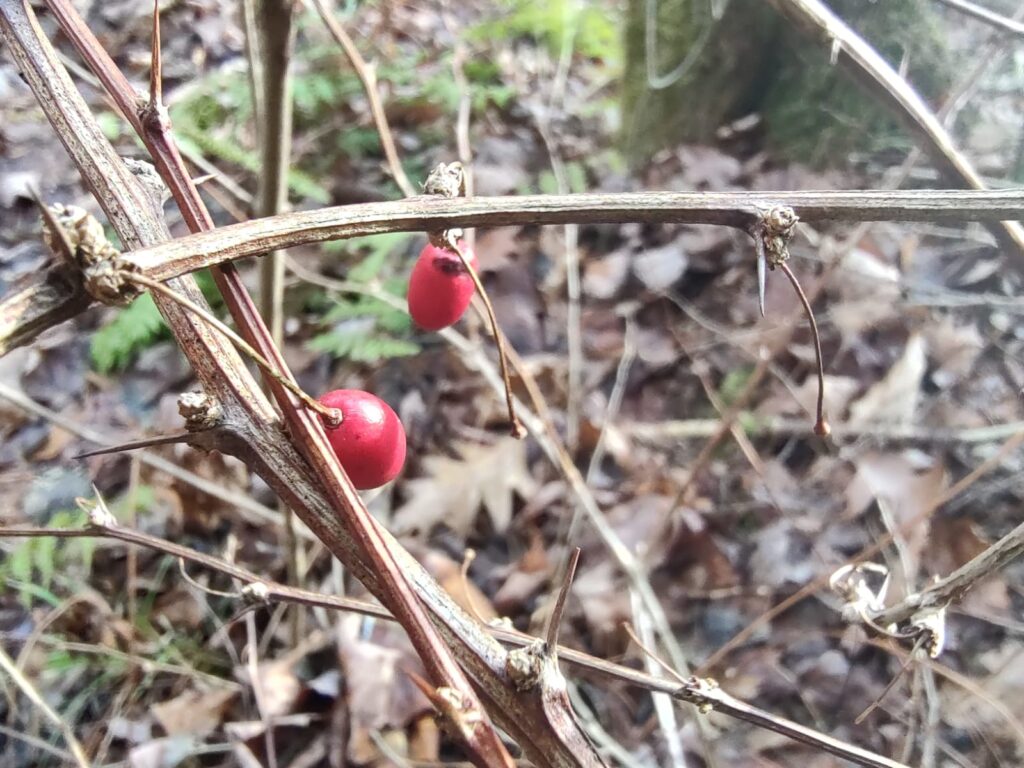
    It is now December, yet unfortunately due to global warming Burlington has minimal snow on the ground and the city has yet to shift fully into the Winter season. However, there are still phenological changes that can be observed. Most deciduous trees have fully shed their leaves– a few stubborn species still cling on such as American beech and buckthorn. The majority of undergrowth vegetation has died off or is focusing all energy on the underground parts of the plant. A few ferns thrive on. Small hints of fruit can be found, such as just a couple berries left on each barberry shrub. The leaf litter on the ground is now composed of a solid mix of deciduous leaves and coniferous needles, and is up to a couple inches deep in spots. This shedding of leaves allows for the trees to conserve their energy in the colder months.

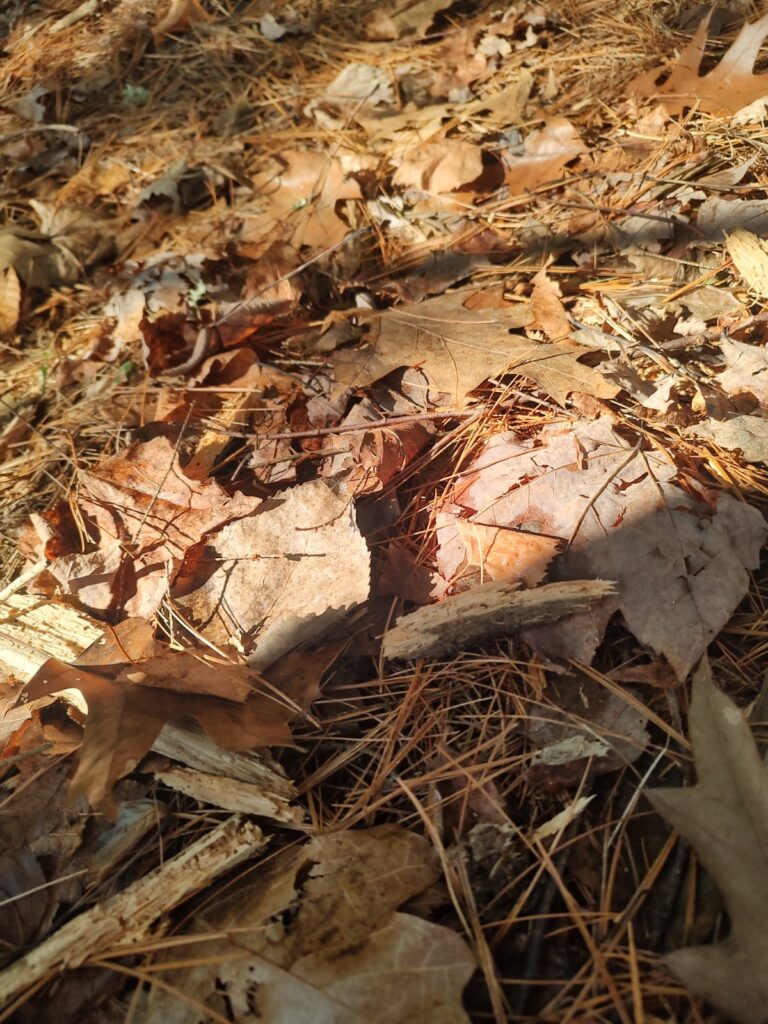
    Small hints of wildlife can also be found. Although there is no snow for proper tracking, a track here and there can be spotted in mud. There were also several dig sites on the trail leading to my spot. Several small holes indicated that a gray squirrel had been caching. A larger area with scratch marks showed that a grouse or turkey had lain there recently. These signs are important to observe in order to learn about our non-human kin. I also observed a Winter Wren calling in the marsh near my spot.

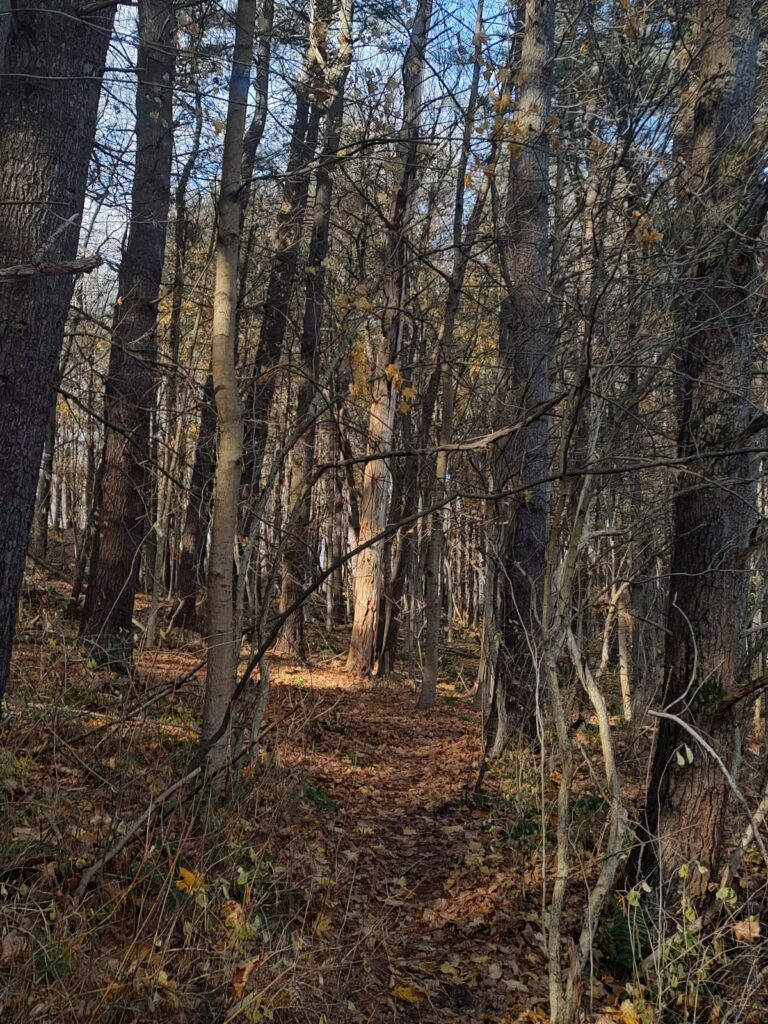
    The forest in the late fall and early winter has a very different overall feel to it. You can see far through the trees as the sun easily reaches the ground through open canopy. It can be a vulnerable place but also very beautiful.

    Porcupines!!!

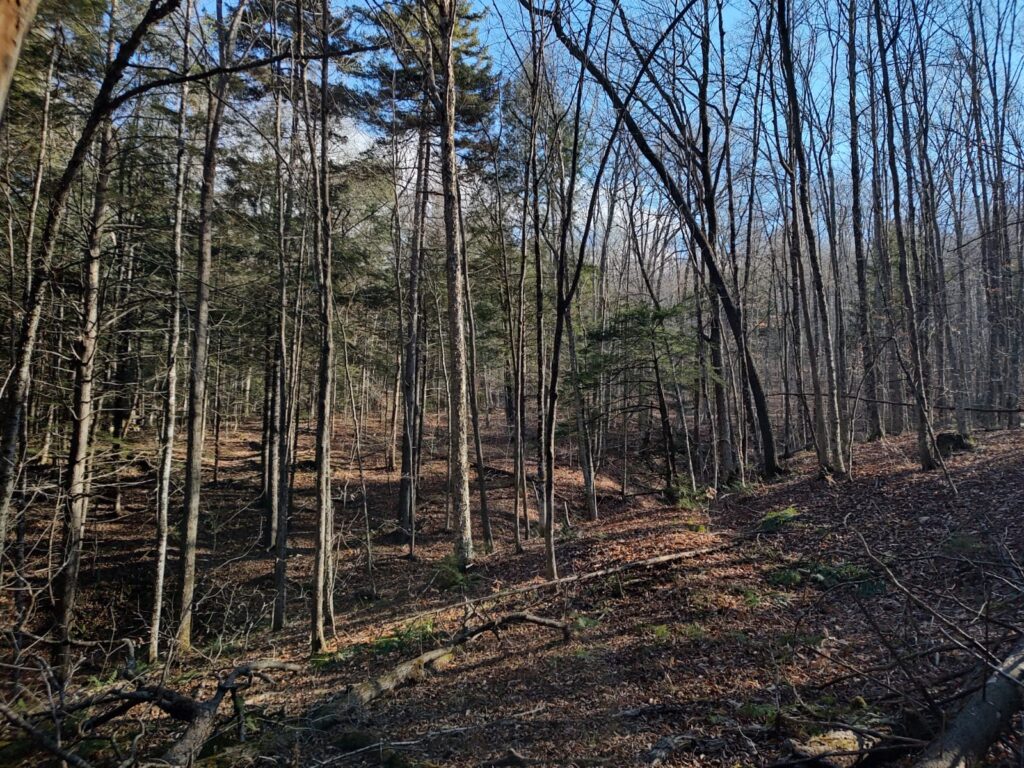
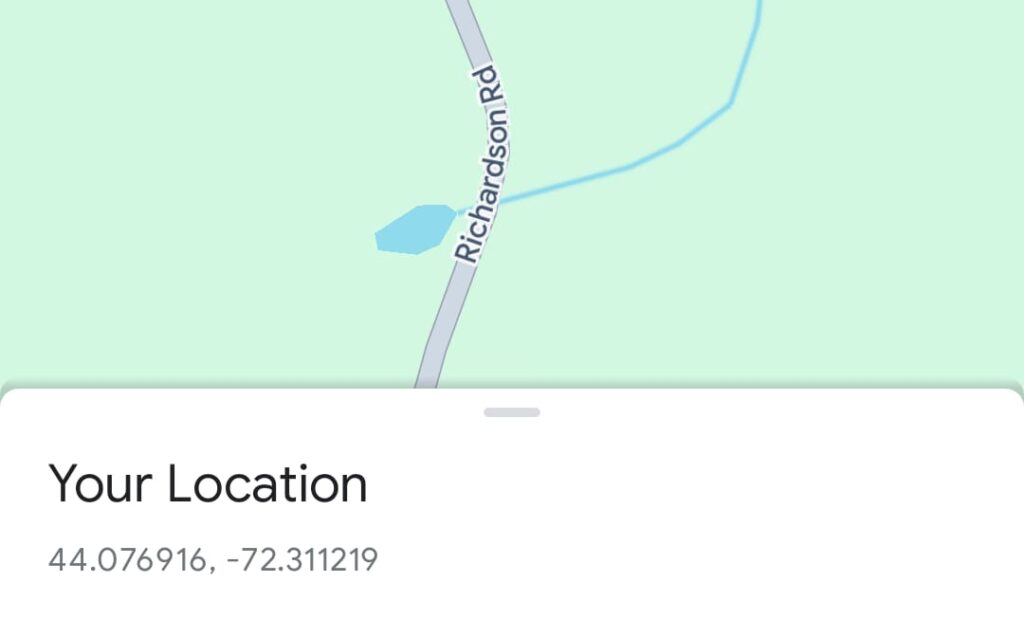
    This week we were asked to find a spot near us during thanksgiving break and compare it to our Burlington spot eco- and phenologically. For mine, I chose to go into part of the woods on my property and look at the area around what my mother and I have always called “Maude’s Tree.” This spot is situated in the middle of a slope, with a small creek below and hemlock/ash forest above. My land is at about 1,750 feet ASL, which is over 1,500 feet higher than Burlington. This is one of the biggest factors for the differences between the two spots. My home has gotten several snows this season, whereas Burlington has only had a sprinkling. Tree compositions are somewhat comparable however. My new spot has large percentages of hemlock, sugar maple, and white ash. All of these species show up in or near my original spot.

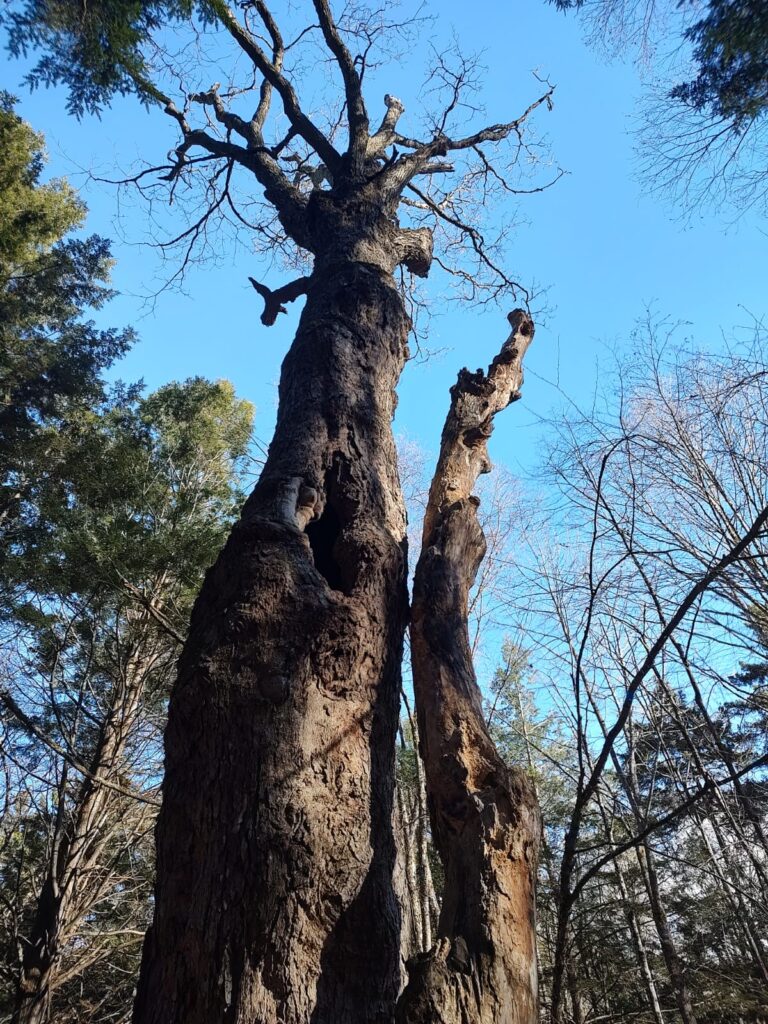
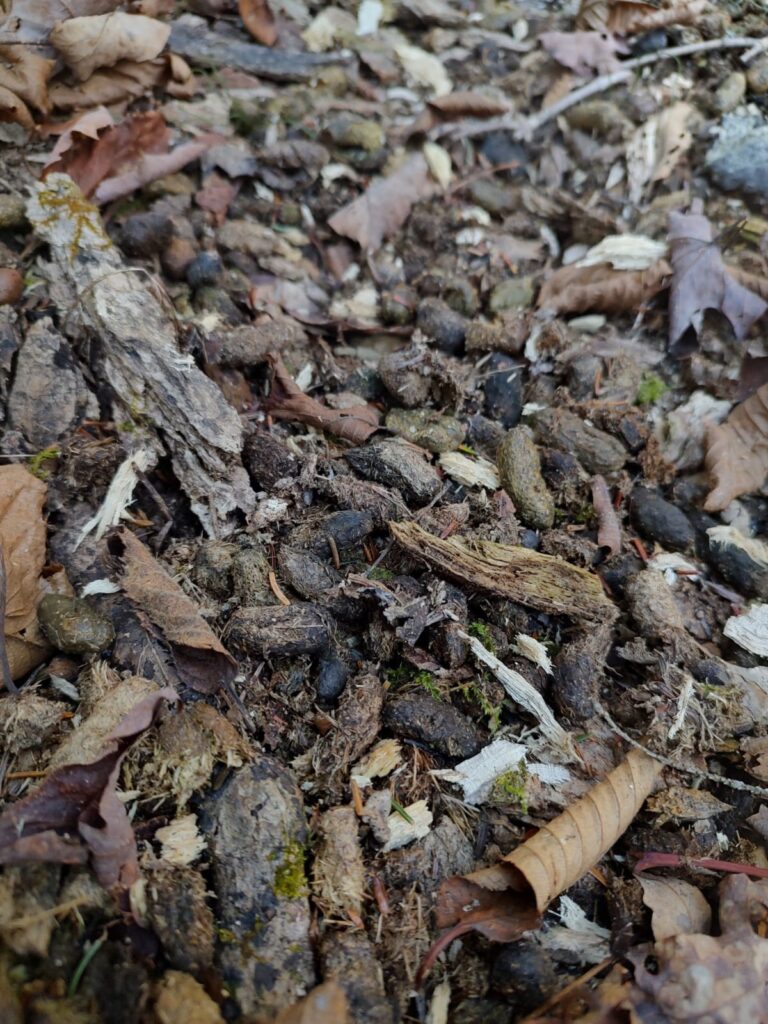
    The main feature of this spot is the huge dead sugar maple. This is where the title of “Maude’s Tree” comes from. Maude is the large porcupine that my family has been observing for years. Although porcupines tend to den in rocky hillsides, often times they will choose hollow trees. Maude was not present in the tree during this times observations, but when spotted she is usually hanging out on the side of the tree just looking. Despite not seeing her in person, fresh scat and dropped quills were found right at the base of the tree.

    Late October (Phenology assignment #3)

    Today I went to my spot and sat still for 20 minutes, no stimulations or distractions other than the natural world. This was a lovely experience, a break from the constant rush of classes and college life. At my home in central Vermont, I often spend long periods of time alone and quiet in the woods. The chance to connect to the landscape with no ulterior motives is quite special. Today I found myself comparing the experience of woods-sitting here in Burlington versus a more rural area. I could still hear the stream of traffic from both Main street and I-89. I could hear other people walking and chatting and alarms blaring from somewhere in the city. It made me realize how lucky i am at home to be able to fully escape into the woods and hear nothing human made except the occasional piece of farm machinery on the other side of the mountain. After a bit I also realized how lucky we are as students here to have access to places such as Centennial Woods and Rock Point.

    After I sat for awhile, I took some time to note the specific changes in the area since the last time I visited. The most obvious change is of course foliage color. The Norway and sugar maples are all a stunning bright yellow and the oaks a beautiful deep orange. The barberry bushes as well have turned a yellowish-green and lost all of their berries. The ferns and moss are still in full swing, however, the marsh area is mostly dead grasses and stalks.

    Today’s list of birds is much shorter than last time:

    • WBNU (White-Breasted Nuthatch)
    • BCCH (Black-Capped Chickadee)
    • WTSP (White-Throated Sparrow)
    • MALL (Mallard)
    • SOSP (Song Sparrow
    • BLJA (Blue Jay)

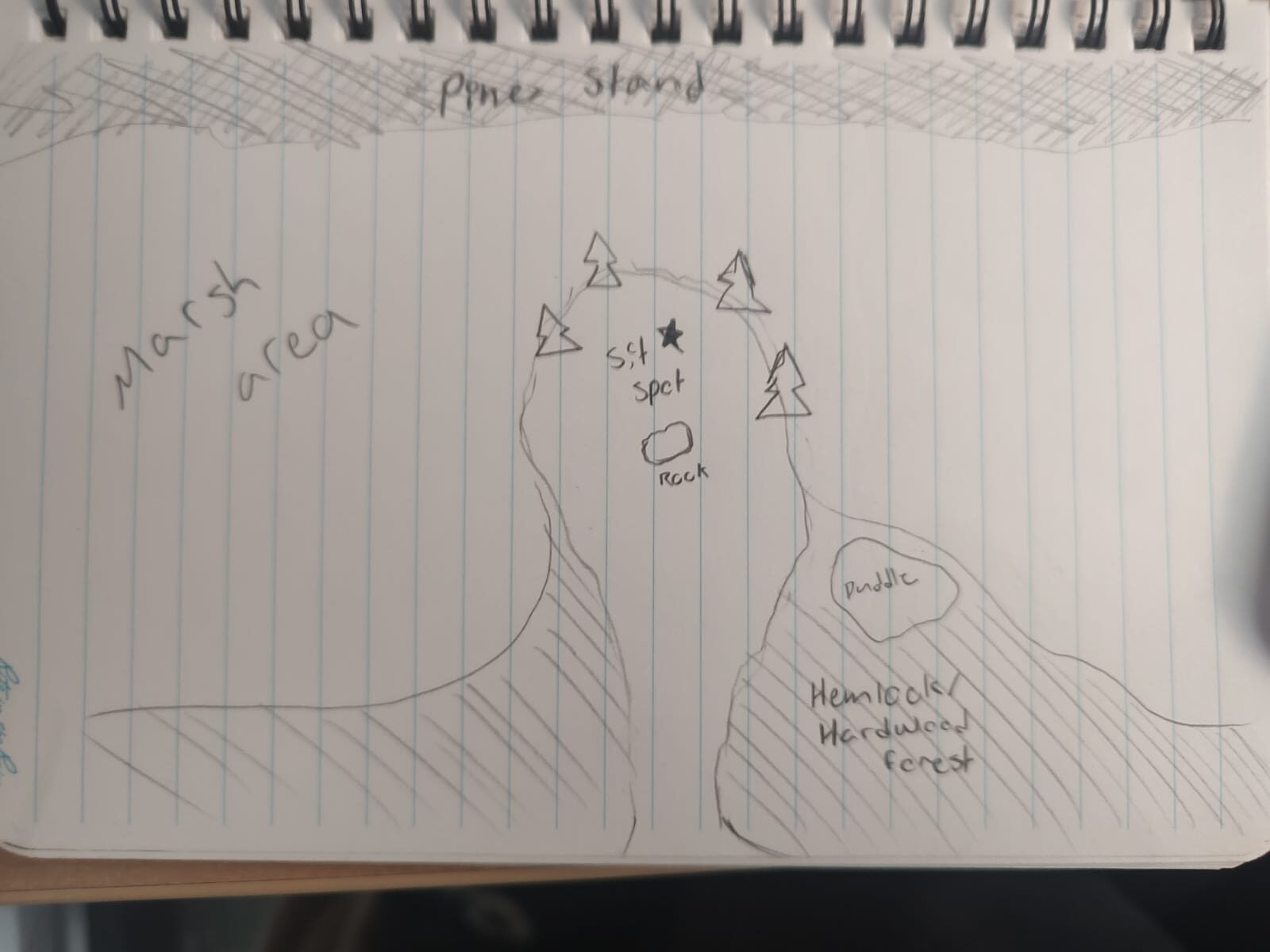
    Finally, I am including a general map of the area around my spot.

    Phenology Intro!!

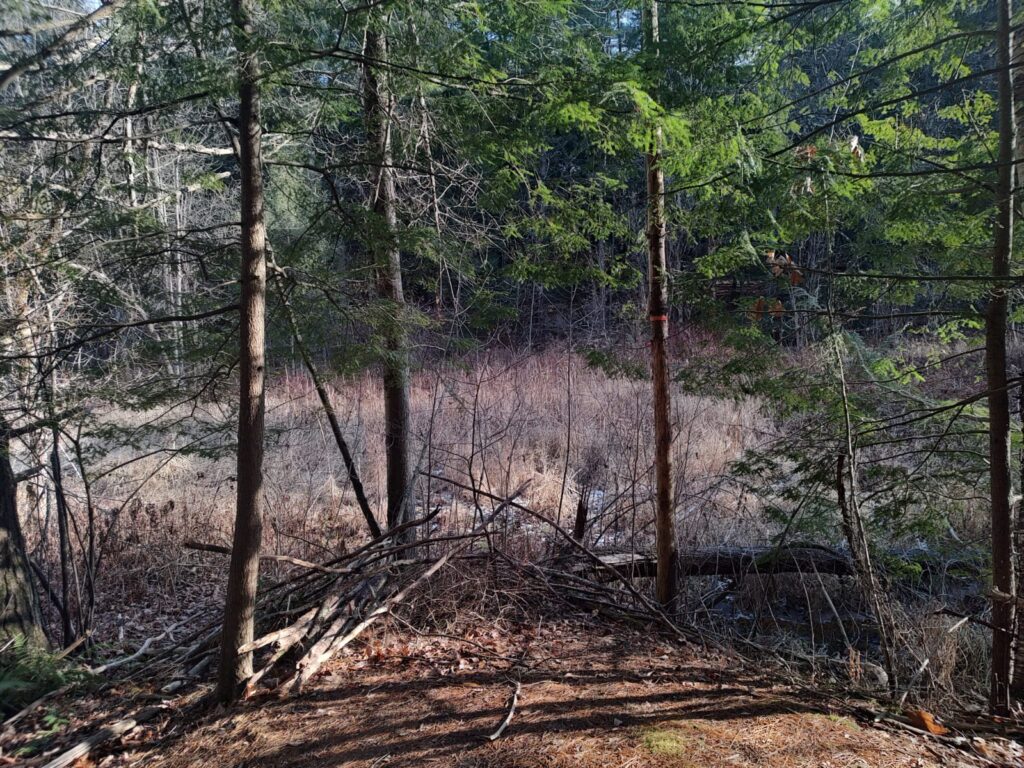
    For the class NR1010– Natural History & Human Ecology– we were assigned this project. Each student chose a small spot in the greater Burlington area where we will spend the semester watching seasonal changes in the landscape. For mine, I chose a spot in centennial woods. To reach it, start at the main entrance to the centennial woods trail system and follow the path in. At the first branch, take a left, then take another left at the next branch. At the third, take a right past the large blowdown and follow the trail over the trunk. This leads you into a small alcove that borders an area of wetland. Congratulations, you have found my phenology area!

    The back and sides of the area are closed in by a predominantly hemlock forest. There are also white oak, Norway maple, and paper birch trees around. The front of the spot overlooks a wetland/marsh area overgrown by cattails, grasses, and other low vegetation. Along the edge of the alcove are barberry and ferns. Other vegetation includes moss, lichen, and several small ground plants. Most common species are Eastern hemlock and white oak.

    https://www.inaturalist.org/observations/245752592

    Bird Species, 10/05/24:

    • WTSP (White-Throated Sparrow)
    • SOSP (Song Sparrow)
    • BCCH (Black-Capped Chickadee)
    • WBNU (White-breasted Nuthatch
    • BHVI (Blue-headed Vireo)
    • GRCA (Grey Catbird)
    • BLJA (Blue Jay)
    • GCKI (Golden-crowned Kinglet)
    • RCKI (Ruby-crowned Kinglet)
    • CAWR (Caroline Wren)
    • NOCA (Northern Cardinal)
    • HOFI (House Finch)
    • EAPH (Eastern Pheobe)
    • BRCR (Brown Creeper)
    • NOFL (Northern Flicker)
    Skip to toolbar