Today I visited Centennial woods in the same location as previously. The weather was a cool 45 degrees with partially cloudy skies. There wasn’t any wind where I was, so despite sitting on the ground for a while, the only part of me that got cold was my hands and increasingly slow fingers.
While observing the forest, I began to hear rustling within the leaves and trees and caws from above. The days have begun to feel colder, but a few critters are still out and about. The rustling had belonged to that of a squirrel, while the caws had come from crows high up in the sky.
The area itself appeared different than when I had last been there. The ground was scattered in leaves and pine cones, and the trail was a slick layer of mud. The only green left came from the needles of Eastern White Pine, the woody ferns growing in the underbrush, and the Northern maples whom had just begun to change color.
Posted in Uncategorized | Comments Off on A Birds Eye View and a Check-In of Centennial Woods
I chose Centennials Woods due to its close proximity to campus. Being a project that follows phenology, this location would allow me too watch the changes of plants, animals, and abiotic factors practically in my own backyard.
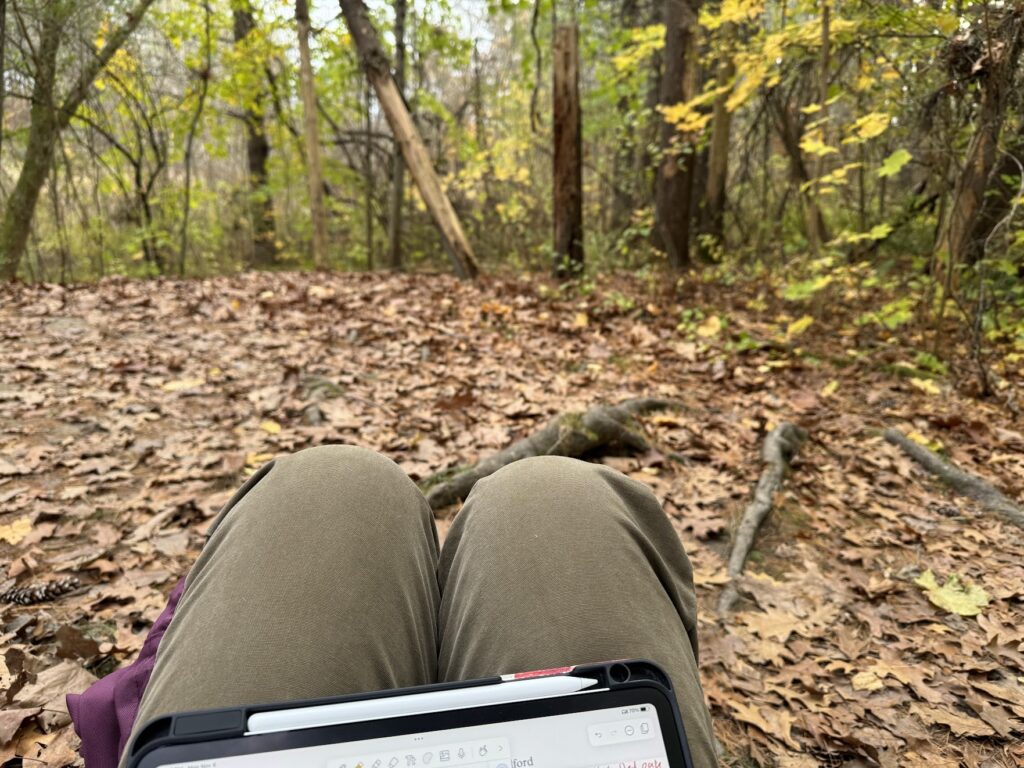
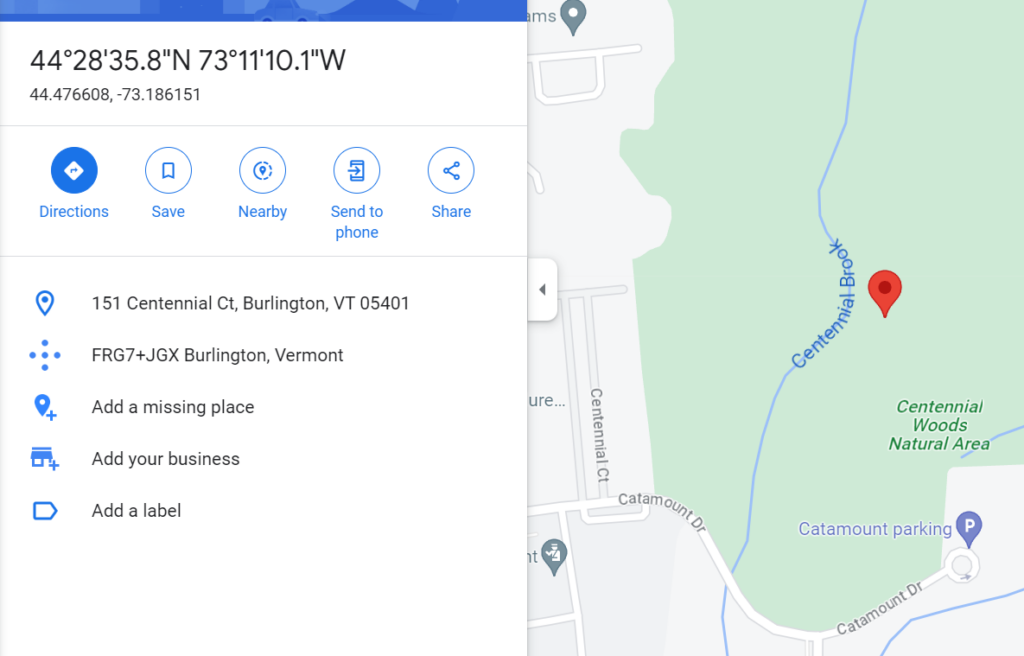
But how does one get to this spot? The answer comes in two parts, depending on how you like your directions. The simple way would be to drop a link which uses google maps to bring you there. But other directions to get there include walking down from the centennials woods trailhead until you cross over three bridges/wooden footpaths and come to a slightly more open clearing.
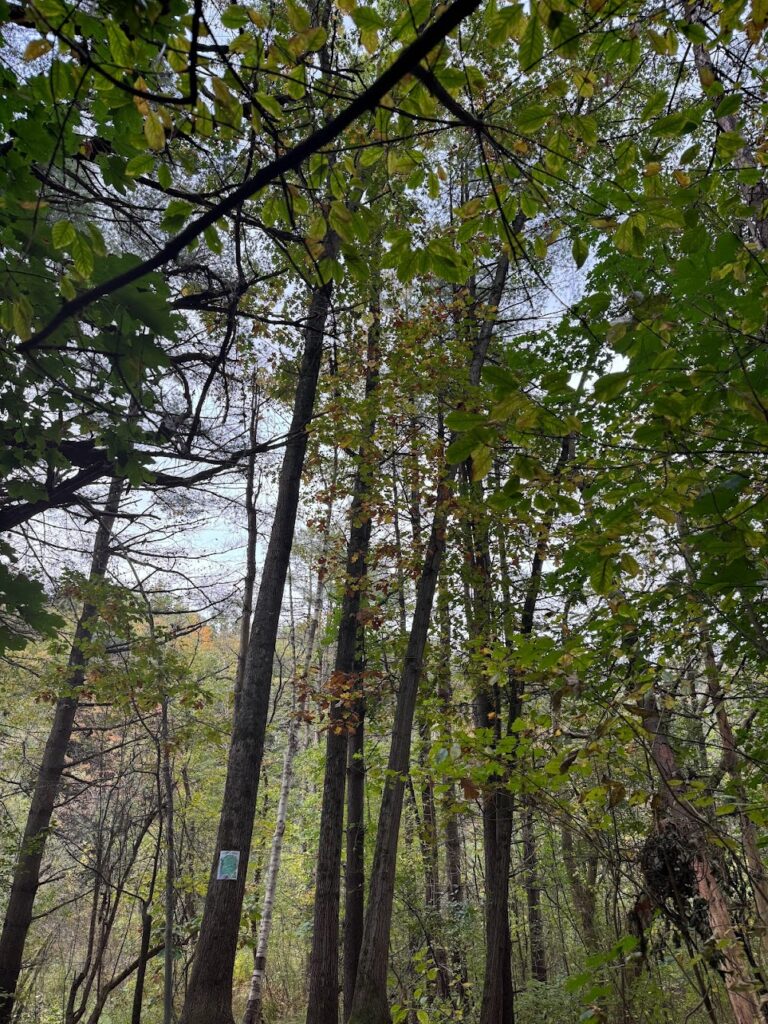
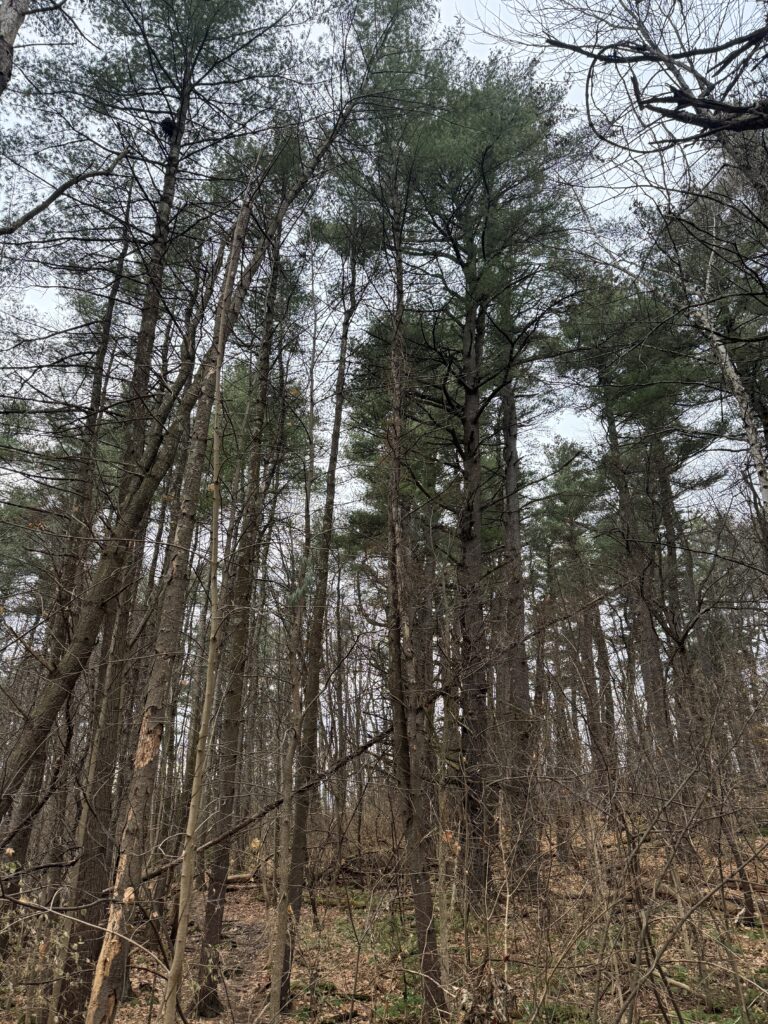
The vegetation within the area consists of a light layer of wood ferns. Along with ferns, there are fallen leaves and many pine needles which make up a soft forest floor. Above that there are tree saplings and young trees (many being Norway Maple) along with small Buckthorns. The tallest tree story is mainly composed of Eastern White Pine, Northern Red Oak, Norway Maple, and the occasional Paper and Yellow Birch.
Here, we can see the general composition of trees in the area
Posted in Uncategorized | Comments Off on An Introduction to the Phenology of Centennial Woods
My site started out green and full of life. Birds could be heard anywhere chirping, chipmunks scurried around, and large green leaves shaded the space in a beautiful canopy. Soon after, the canopy turned orange, yellow, and brown. Dropping its leaves onto the ground, the forest floor was then thick with colorful leaves, while the tree branches above became bare. Later, snow covered the forest in a thick blanket. This then caused a season of mud as the snow melted.
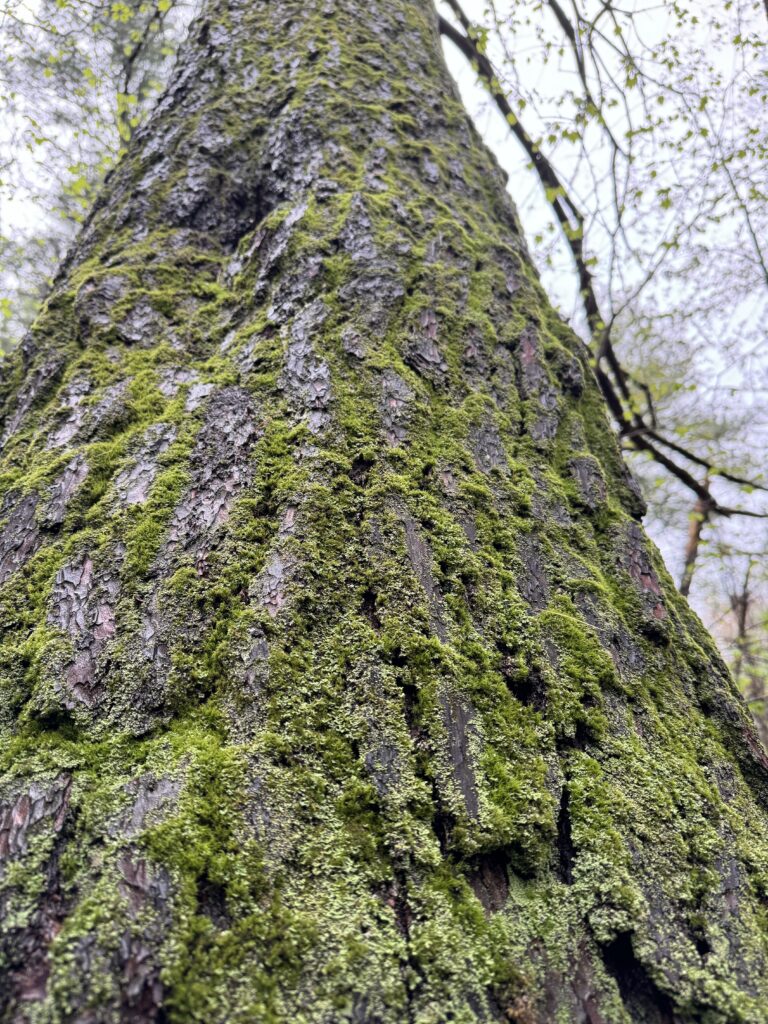
Today, after all the forest’s phases, it is back to green. While the canopy is not completely full of green leaves yet, small ones are starting to grow from the trees, especially the saplings springing to life on the forest floor. Additionally, a lot of moss coating mature trees is starting to grow. The sounds of the forest are also coming to life as many different bird calls can be heard up above. There also appears to be more fallen trees and branches recently than before.
The major landmarks I am now familiar with are the bridges connecting from either side of the trail, as well as another trail that sprouts off from the side, and a very large tree which stands closest to the center of the area. Small landmarks include the roots which stick up from the ground after you exit the bridge, and the two mature trees which are covered in moss and stand close to one another near the opening to another trail on the left.
Here, culture and nature intertwine by being both a habitat for birds, chipmunks, and other species, as well as a hiking spot for many people. There is a culture within people hiking. There is also just culture where people are, and where they feel connected. By being connected to Centennial woods, there is culture there. Nature is intertwined with this because there are many plants in the area creating a thriving ecosystem.
While I feel connected to Centennial woods, I don’t necessarily feel that I am a part of it. I feel that Centennial is a place to visit. A place to get away and enjoy the woods, ecosystem, and the beings which live and grow there. I don’t necessarily feel as though I am a part of it because I don’t see it all that often, and I don’t contribute much to it. If I participated in restoration projects within Centennial, I may feel more a part of it. With that said, I do feel connected to it. The park is a calm location, which offers quiet and beauty. I have grown comfortable with its sounds, sights, and feelings.
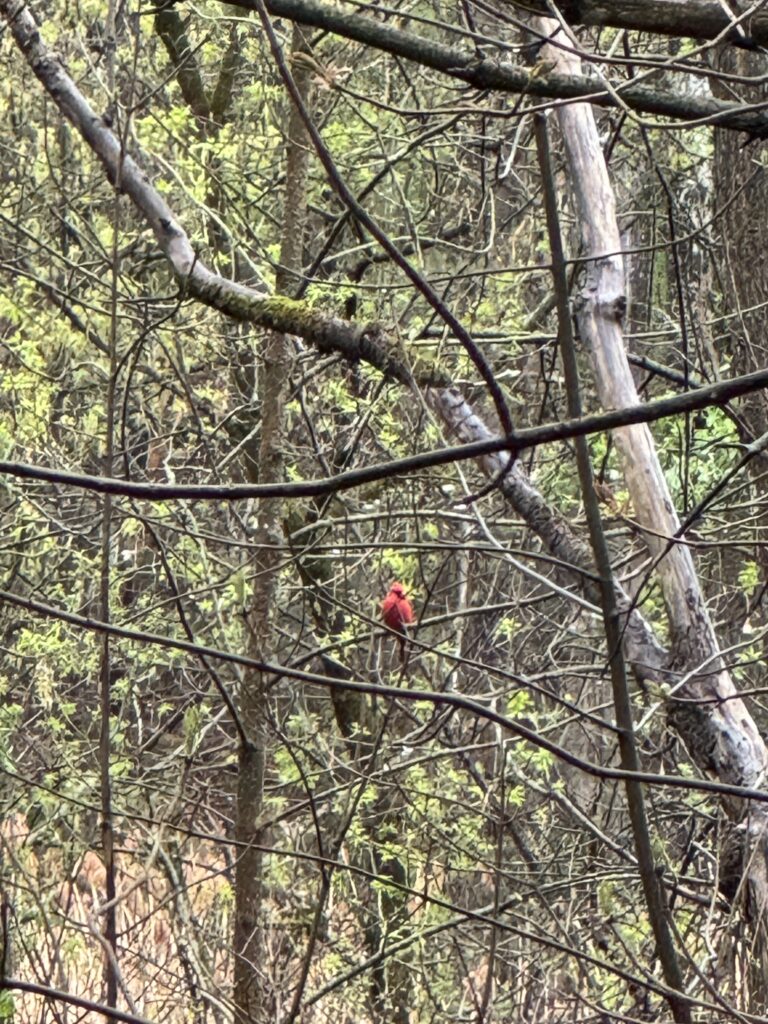
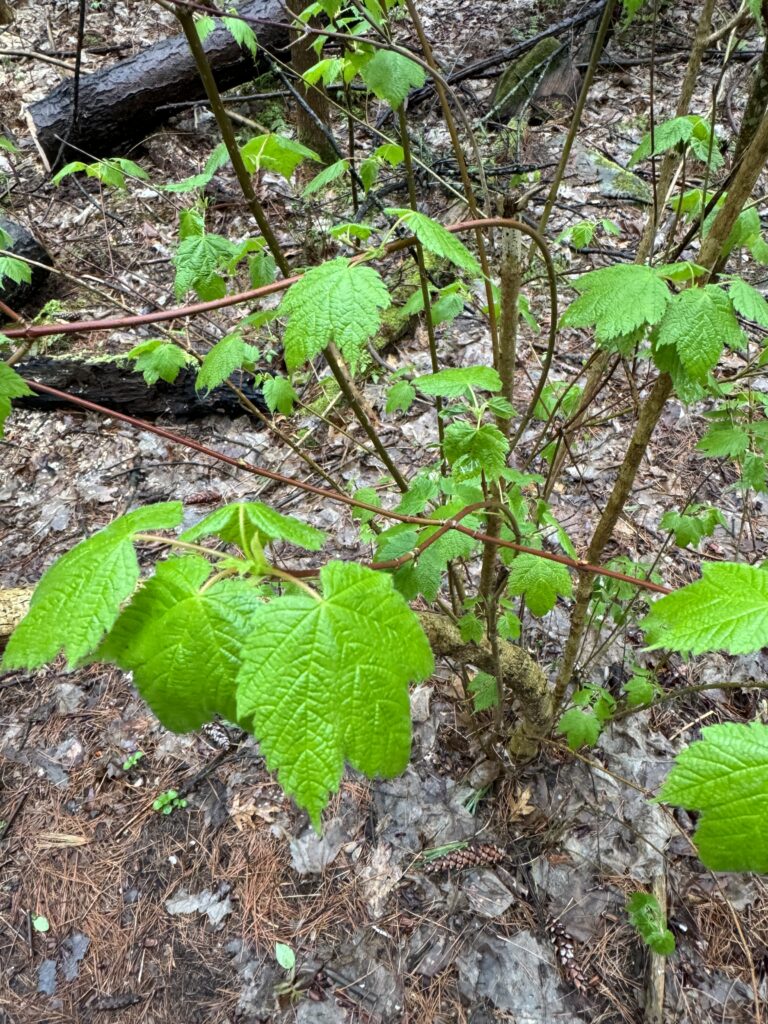
Here, you can see a male cardinal on a branch. A young maple sapling’s leaves
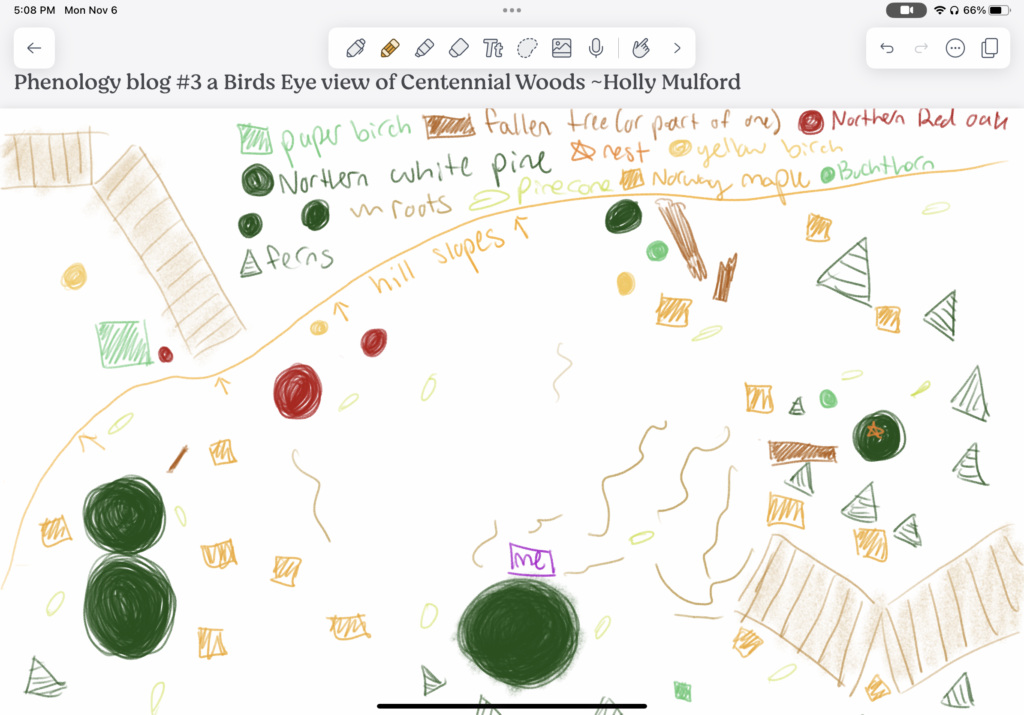
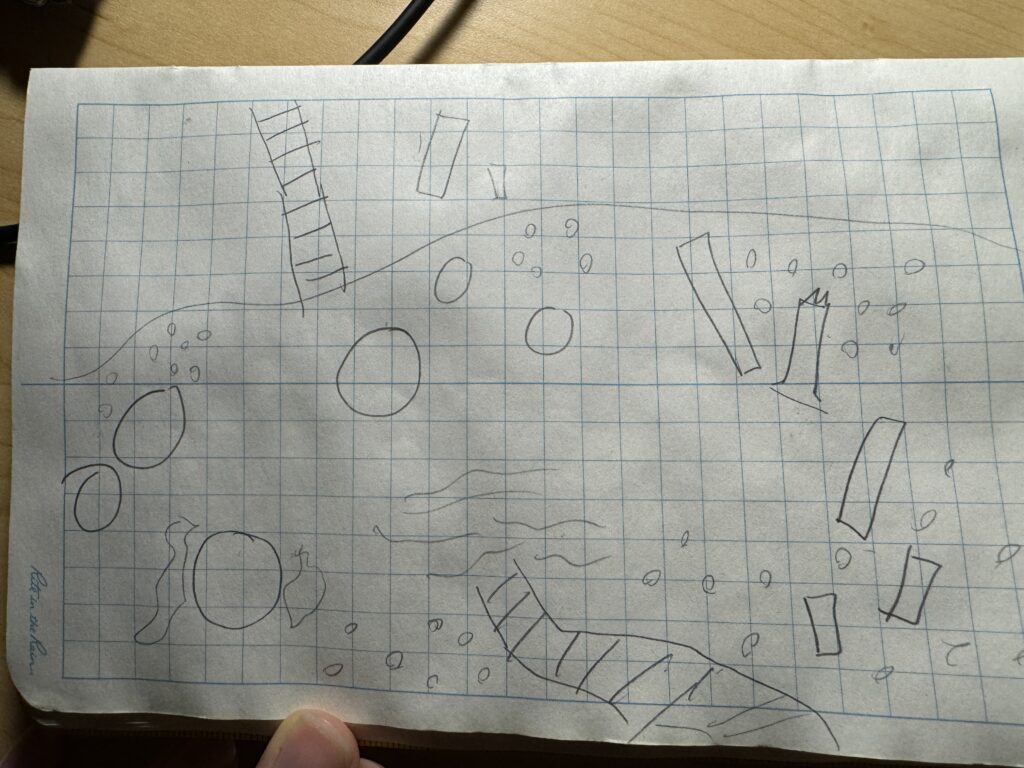
This is an updated bird’s eye map of my sight. The large circles represent mature trees, while small ones represent saplings. The long line across the page indicates where the hill drops off on the top of the page. Additionally, the rectangles show where trees are fallen and pieces lay. The squiggles at the top of the bridge are roots from the ground below.
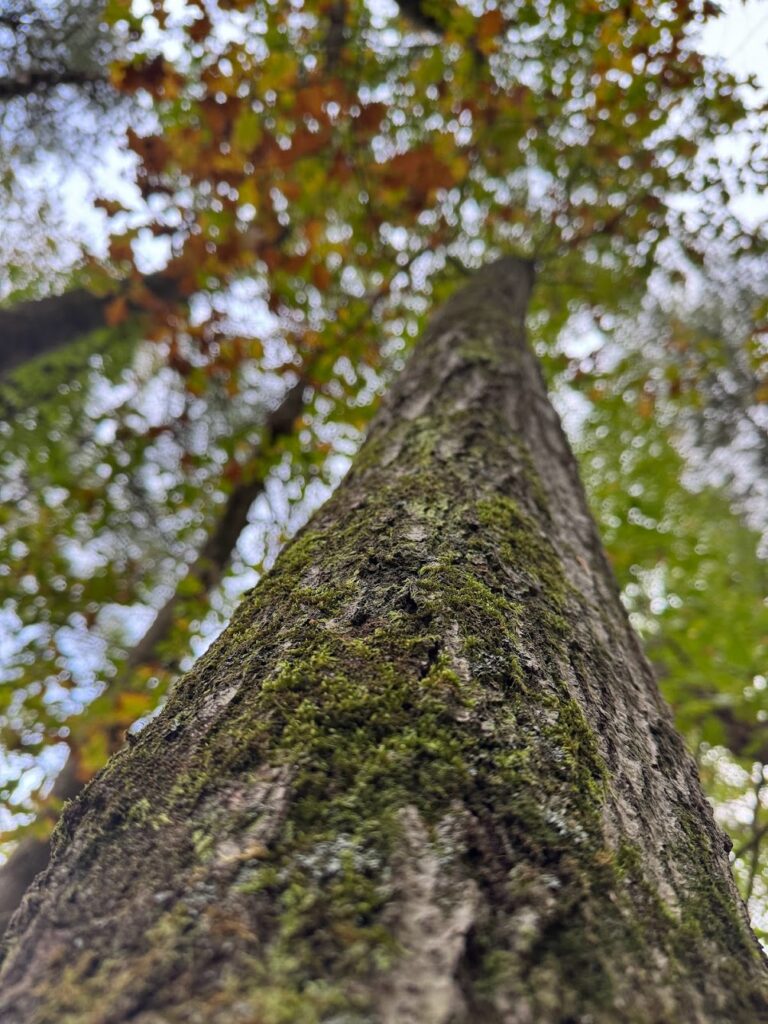
Bright moss on a tree
Posted in Uncategorized | Comments Off on A Final Look Into Centennial Woods
For those that may not know, the City Nature Challenge BioBlitz is a period of time where participating cities make observations of plant species and wildlife using iNaturalist. The identification of these species is then verified by ecologists. The data is then used to show biodiversity in and area. It is also used to create the phenological calendar for an area.
During the BioBlitz, I explored Central Campus. I figured that a lot of people would be making observations off campus so I wanted to make sure that we didn’t have a lack of observations within campus. I was also really curious what the plants blooming all around me were.
iNaturalist was super fun to use because all I had to do was take a picture and then get suggestions as to what it was. Additionally, I liked learning about the locations of where things typically originate.
I encountered six different species, four of which I could loosely identify using the app, two of which I was completely unsure. When looking at the observations from other locations, it was interesting to see how many of the plants here are just beginning to flower, while in many other places they have already done so.
Here was the first tree I tried to identify but was unable toThis plant appeared to be Genus PseudocercosporaThe yellow flowers above seem to be that of ForsythiasThis very interesting shaped tree blossom is from the species “dicots” of the Magnoliopsida class
Posted in Uncategorized | Comments Off on Burlington Bio Blitz
Friday March 22nd, I visited Centennial Woods. The weather was 30 degrees and it was partially sunny. The ground was mostly cleared with small patches of snow from the previous squalls still remaining. The trail was textured by the footsteps of hikers trekking through the previously soft mud, only for it to freeze and harden, creating a rough, solid path.
As I walking closer to my spot within centennial, I could hear crows ahead chattering and cawing at one another. Large groups rested upon the branches of a single tree. This was likely the loudest I had hear centennial in a while, largely due to the crows. No other creatures were out and about though. We had had some cold few days, discouraging any animals to wander about.
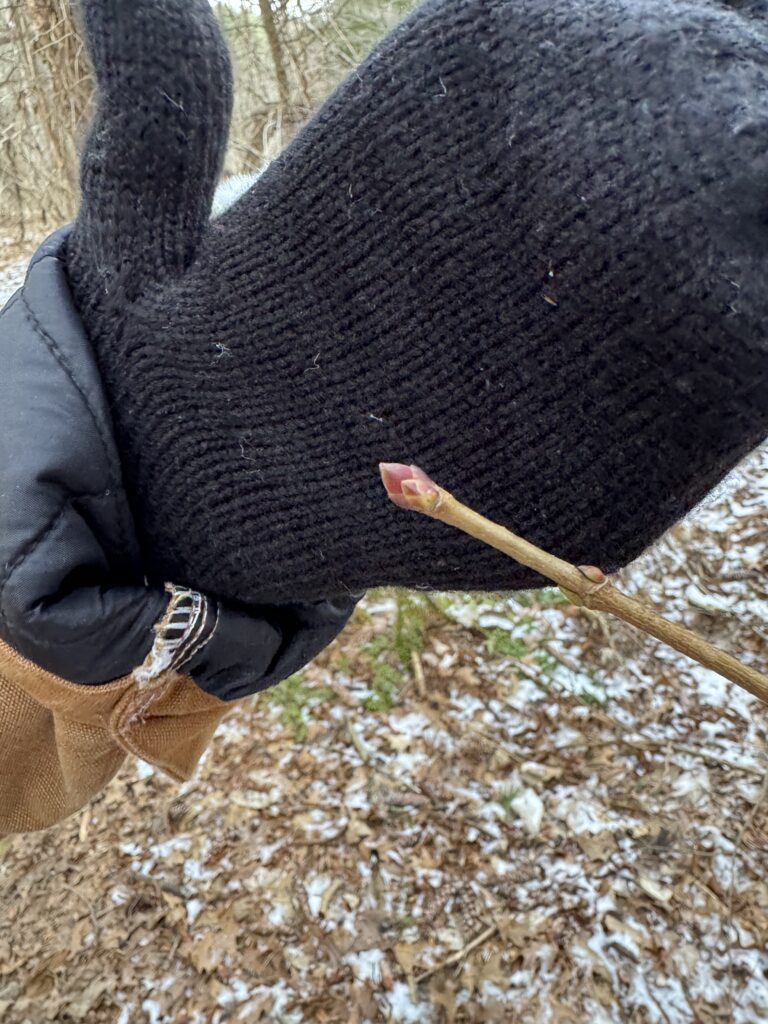
The frozen ground made it difficult to find any tracks, or signs of amphibians. Due to the below freezing temperatures, it was likely that many amphibians were not quite out yet. Despite this, trees had begun to show signs of spring. Buds were beginning to swell on most if not all of the present trees.
The budding branch of a Norway Maple
Posted in Uncategorized | Comments Off on Spring Beginnings
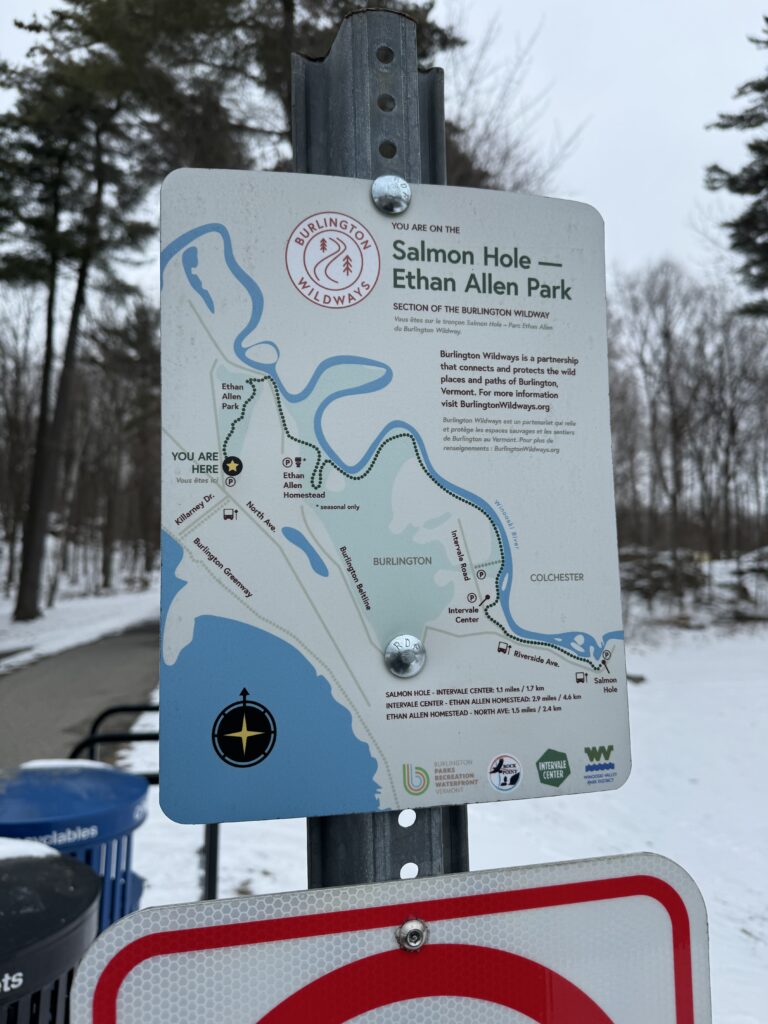
Yesterday morning I visited Salmon Hole- Ethan Allen Park. After light snow which fell intermittently over the past few days, there was a relatively fresh coat of snow which covered the trails and hillside. This snow was about three inches deep. Yesterday was twenty three degrees Fahrenheit, and very cloudy.
Using iNaturalist was very easy, even without a lot of service. It also allowed multiple pictures to be added to a single identification. It also allowed suggestions for identification without outwardly declaring something as such.
With new snow, most old tracks were covered, but we were still able to find some very fresh tracks. We encountered many dogs tracks. We could tell that they were dogs because they often spent a lot of time on the trail and then would venture a short distance off, and come back to the trail. They also had very irregular, circling movements, versus a more distinct, straight path while trying to get somewhere. Lastly, the four toes of the dogs were not pointed perfectly forward as a wild animal’s would be.
We did identify both the tracks of an Eastern Gray Squirrel and an American Red Squirrel. While the tracks themselves appeared the same, with two hind feet just in front of two much smaller back feet, the tracks were distinguished between by looking at their size.
Grey Squirrel tracks can be seen towards the right.
Here, Red squirrel tracks can be seen bounding across the snow.
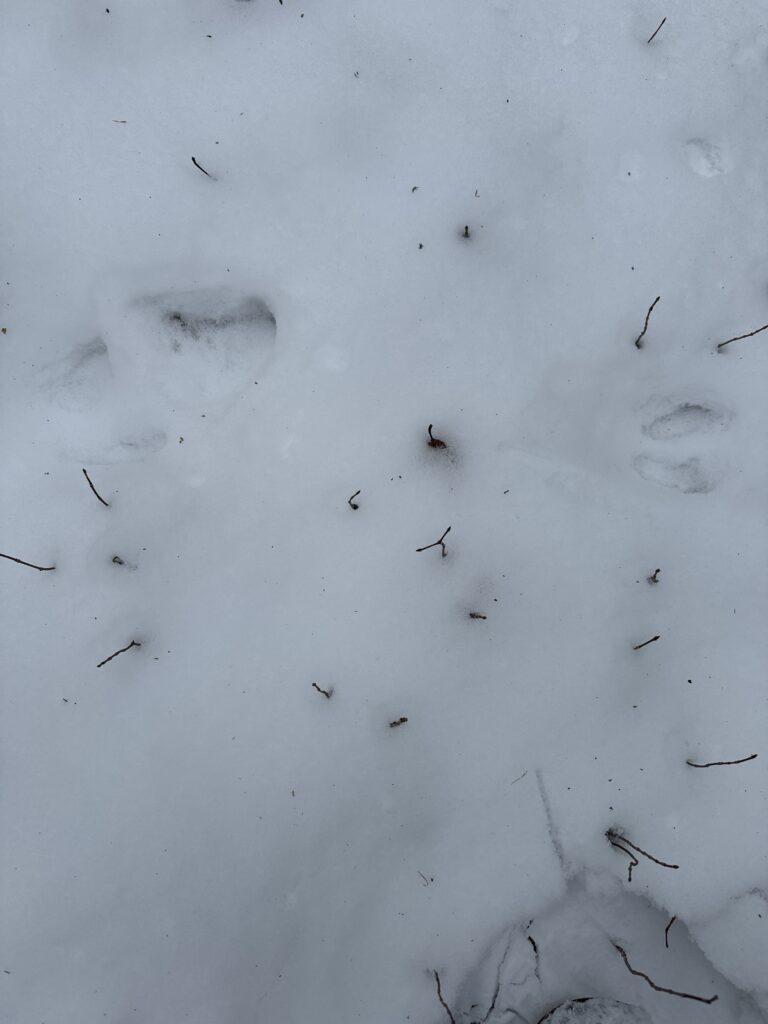
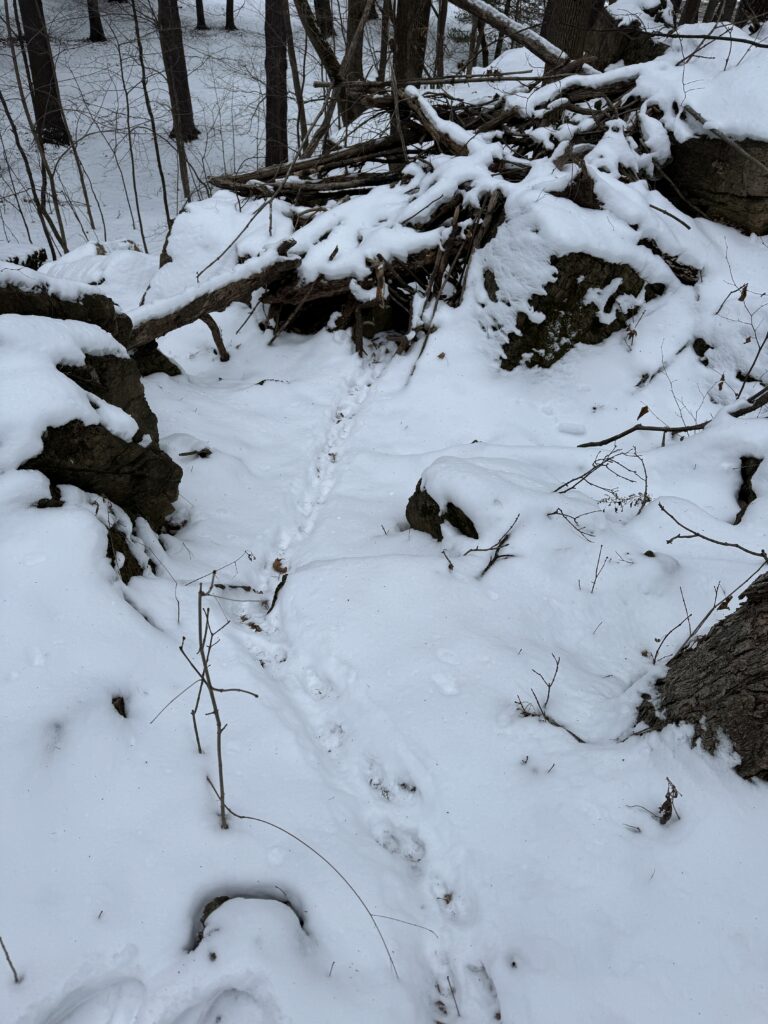
These tracks on the other hand, were challenging to identify. It appears that the animal went into a large den built of sticks. My initial thought was that it could be a beaver due to the pattern of the tracks and that there was a den of sticks. However, the feet were smaller than that of a beaver and the closest water was a little under a mile away. Due to the uncertainty, I did not leave an identification on the iNaturalist app.
Posted in Uncategorized | Comments Off on Tracking Wildlife Within Burlington
Today, I visited Centennial woods and found and exceptional measure of ice which was somewhat unexpected. At a cool 28 degree, cloudy day, the trail itself had a thick, hard layer which coated its entirety. While the surrounding areas had snow, melts caused by the warmth of previous days had taken the character out of it and allowed the trail to hardened smoothly, causing tracks to become a difficult find.
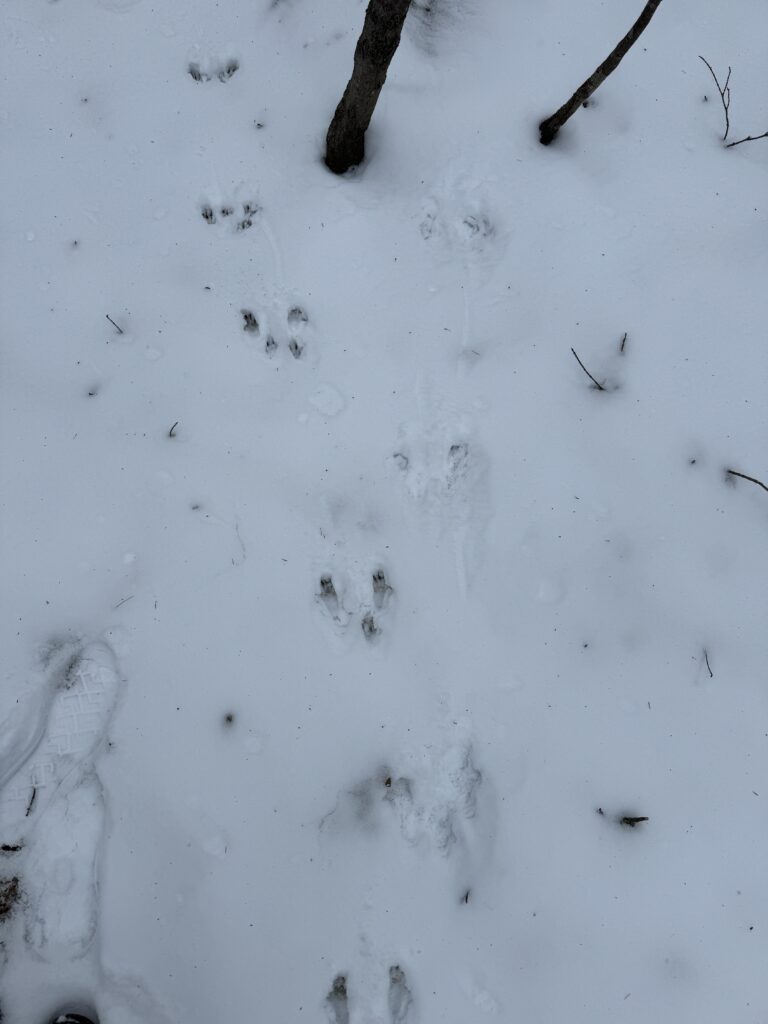
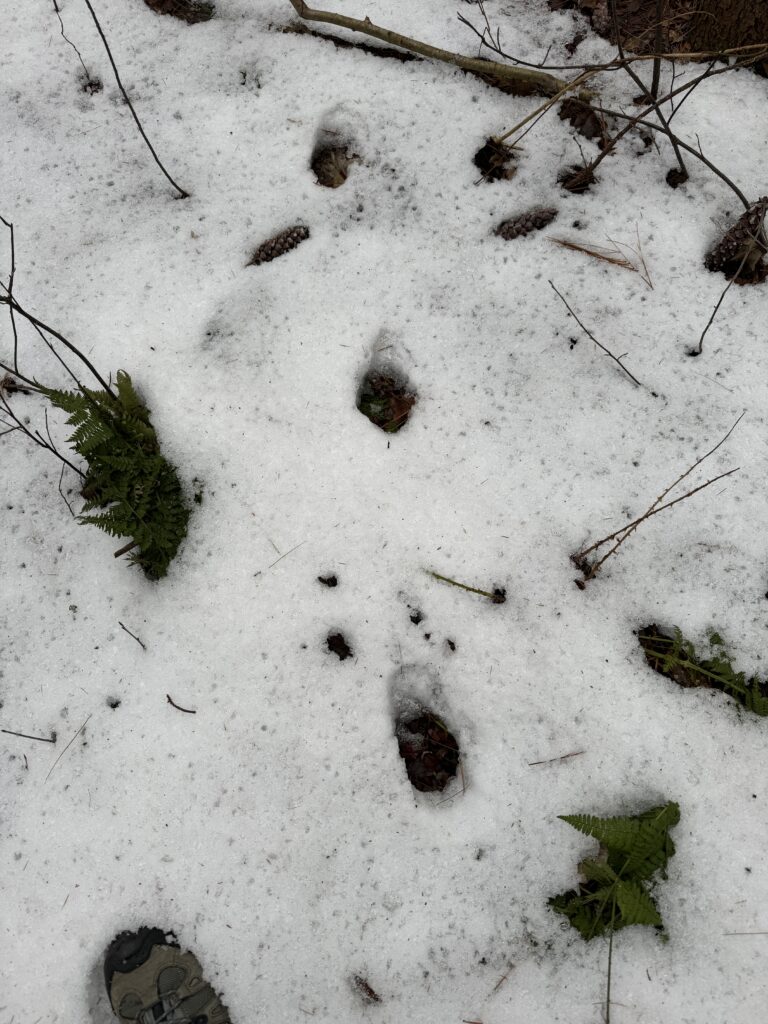
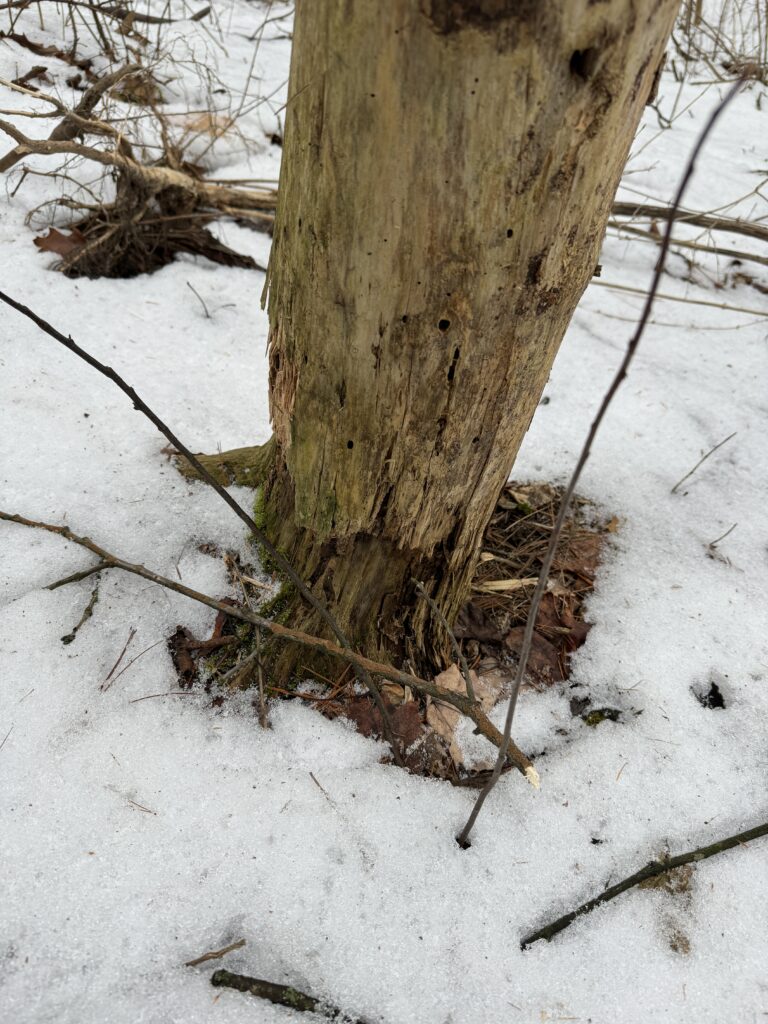
Despite the struggles between melted ice and snow, there were some potential deer tracks in sight. The melt of the snow made seeing the shape of the paw/hooves impossible. However, the spotted tracks seemed to be about a foot and a half apart and were mid-sized holes in the snow, marked by a walking and trotting pattern, in a roughly in a straight line. Despite the straddle of the tracks being quite small, the hooves/paw prints were quite wide, indicating that this likely was not a greatly small animal. The only other directs signs of animals came from the potentially chewed bark off the bottom of trees. This bark was likely consumed by creatures living in the subnivean zone when the snow was higher.
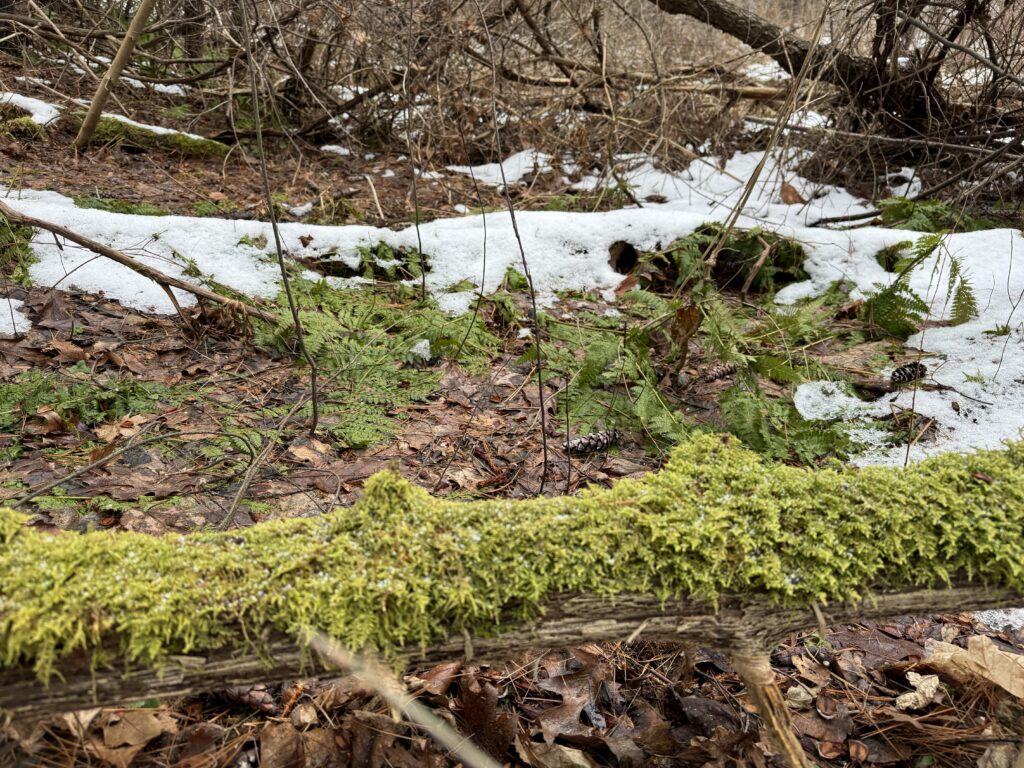
The main difference I saw between my last visit in December to now, the end of January, was the lack of color. While in December, the trees had lost their leaves, their orange color still littered the forest floor. Now, the ground was generally white with bits of brown and the occasional green moss showing. Additionally, many trees appeared to be shedding their bark much more noticeably than in December.
Potential deer prints above Bark consumed by animals in the subnivean zone potentiallyThriving green moss on a fallen, rotting branch
Posted in Uncategorized | Comments Off on A Winter Return
Entering the forest, I noticed it was more still than in past visits. Within the trees, there was shelter from any wind. What had previously been an array of yellow, orange, and red leaves covering the ground was now a thin layer of brown leaves. The thin layer indicates that decomposers such as earth worms were out and working hard. The Norway Maples which had previously been the last to keep their leaves had scattered their leaves with the rest.
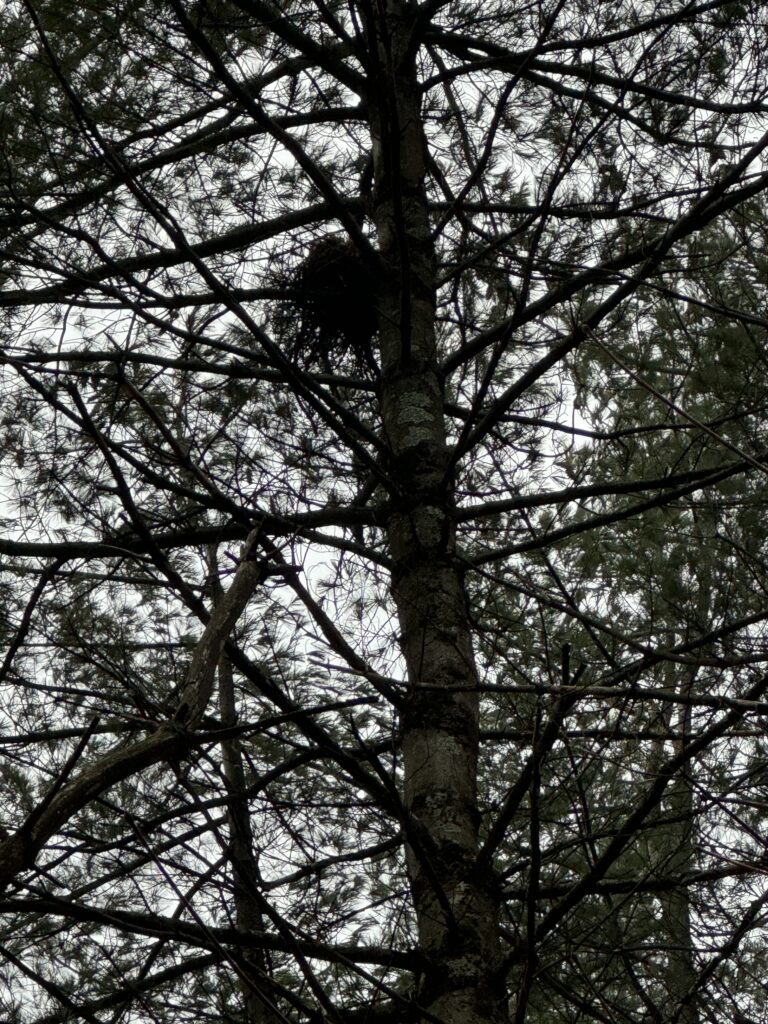
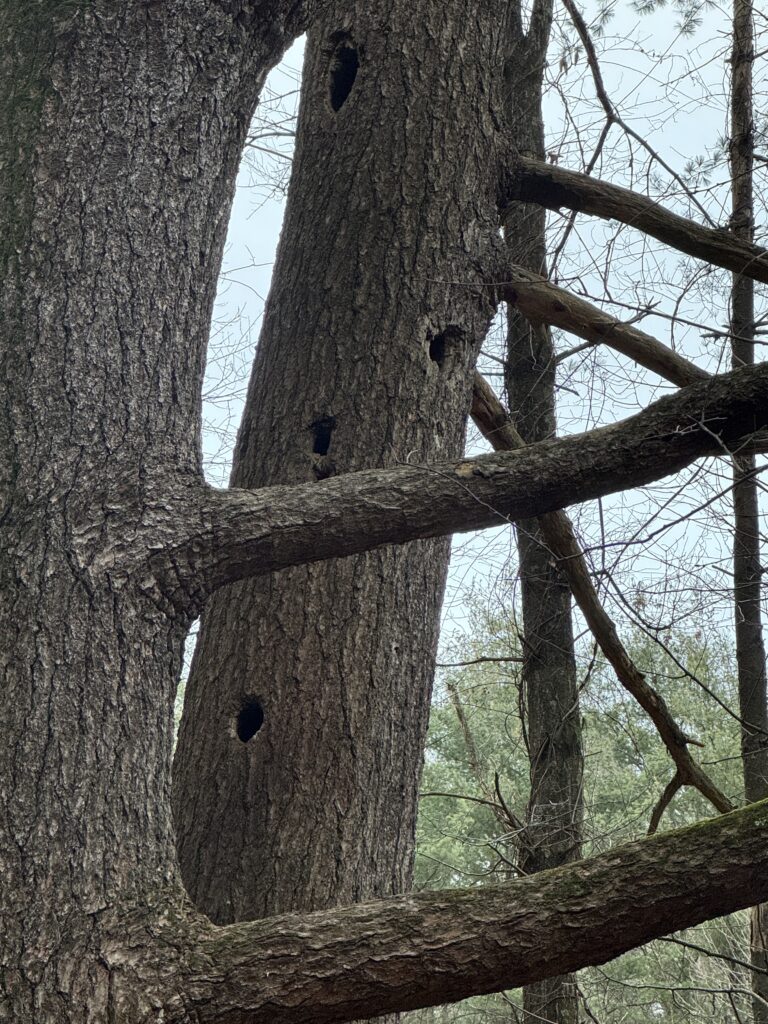
Although some bird nests could be seen in the nearby trees, birds themselves, could only be heard in the distance by listening very closely. It was a vast change to the chirping and rustling previously heard within the forest during past visits. No other animals were heard or seen, however, suspected homes in the holes of trees were identified. The only berries in sight were those picked from a tree or bush nearby and brought the base of a white pine tree nearby.
Above all, I enjoyed Centennial woods for its peace and tranquility. Every visit was a time to get out of my head and be somewhere other than campus. I always enjoyed how quiet but active it sounded, and how I could just sit and let time pass within thinking too heavily about it. It was also conveniently close to campus, so I could be surrounded by just trees while not needing to travel far.
General Tree CompositionA nest found towards the top of this Eastern White PinePotential homes for creatures to live inside A few berries found at the base of a White Pine, not close to the plant in which it came from
Posted in Uncategorized | Comments Off on Winter thoughts and Observations of Centennial Woods
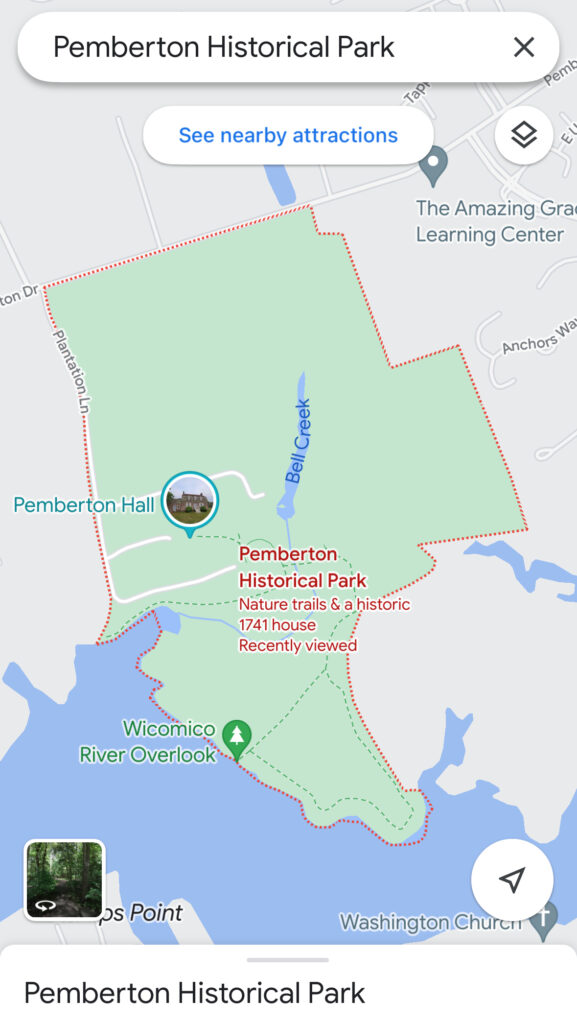
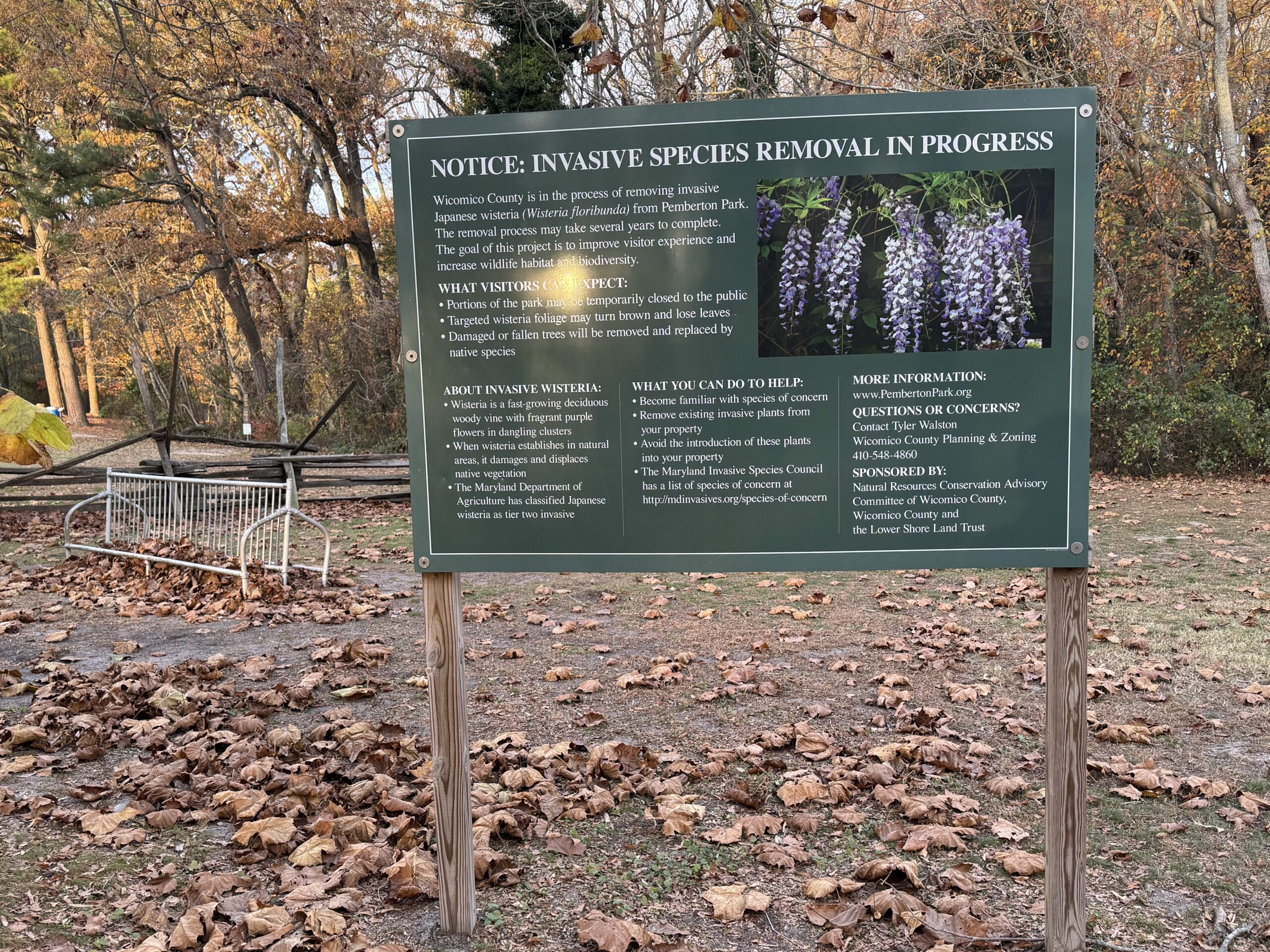
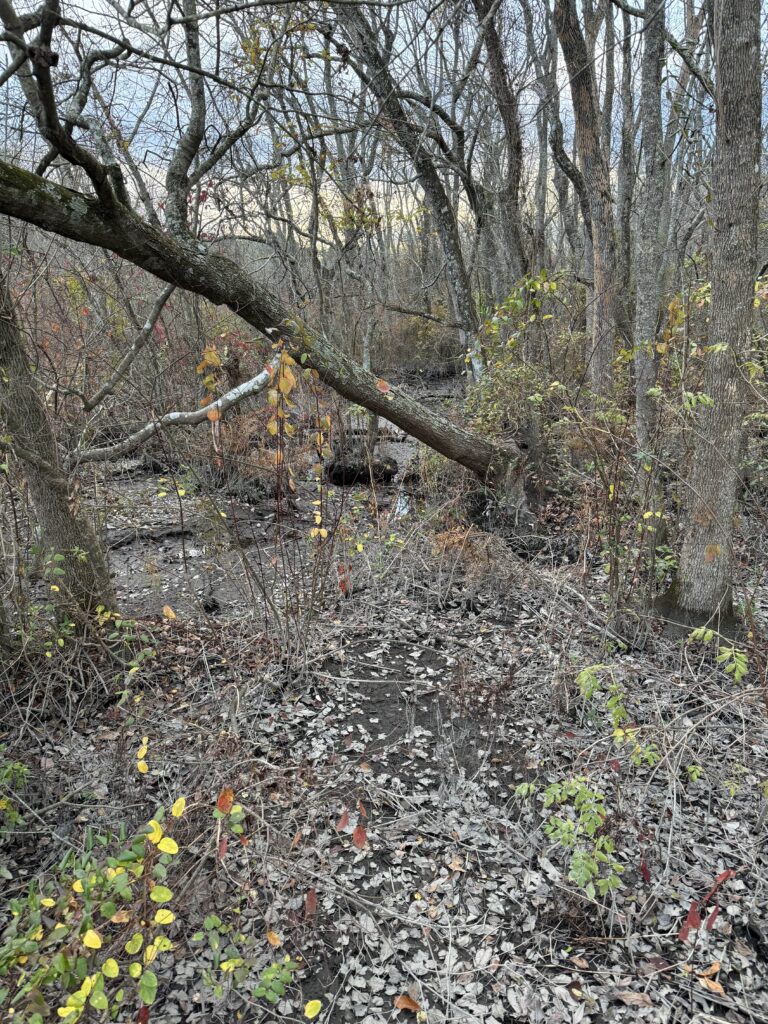
Over Thanksgiving break I travelled to Salisbury, Maryland and visited a local park. Pemberton historical park was originally a plantation which has now been transformed into a protected marsh. The marsh eventually reaches out to Wicomico river.
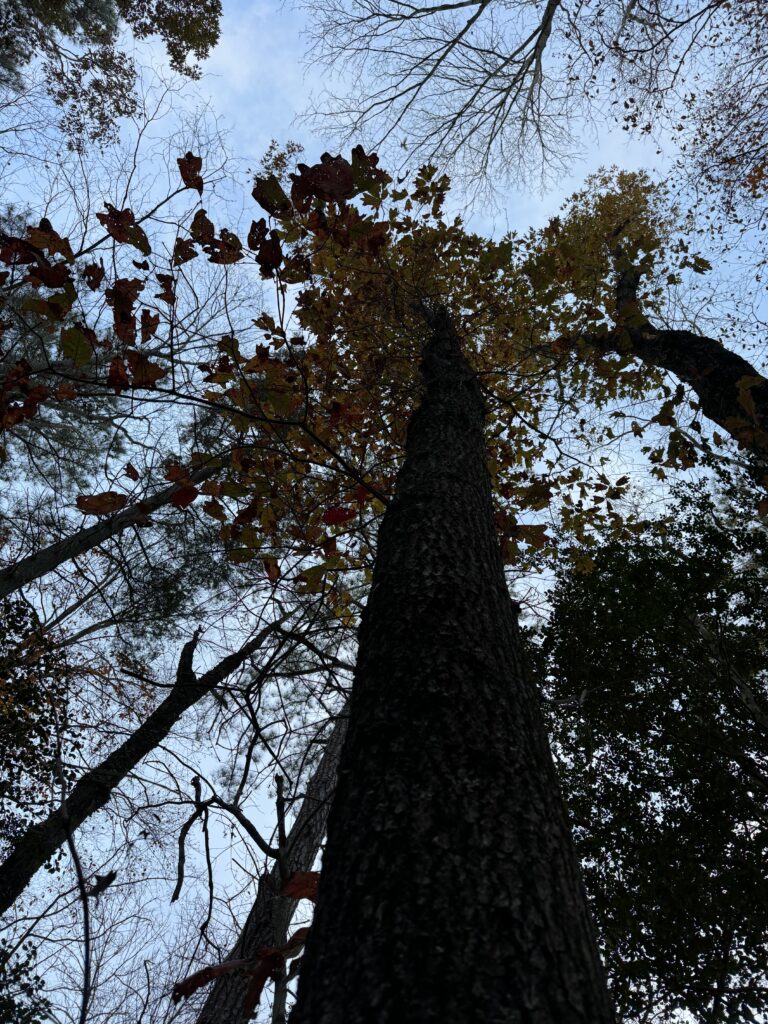
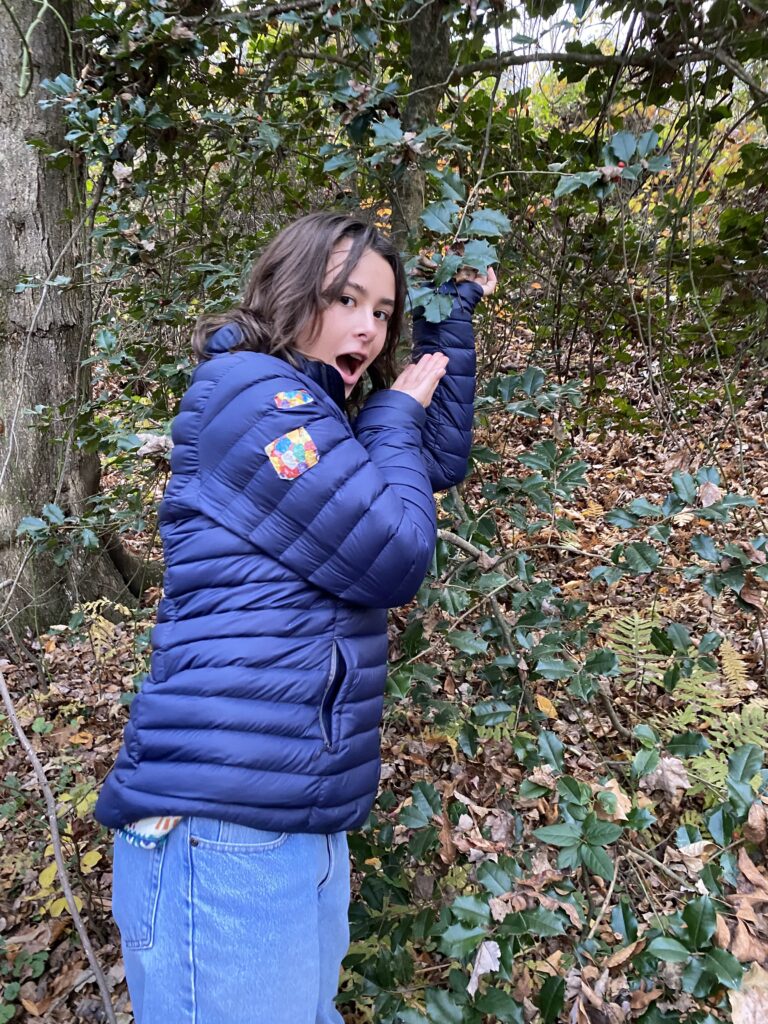
The marsh contained many mature, upper-story trees. The majority of the trees included deciduous White Oak, Red Oak, American Beech, Red Maple, and Honeysuckle. There was however, a somewhat equally dense population of evergreens including Loblolly, and many Hollies (a personal favorite of mine). The understory mostly consisted of dead underbrush and thorny plants.
In contrast to Centennial Woods, there was a lot more animal activity taking place. At almost all points, a grey squirrel could be heard or seen rustling through the trees. Additionally, birds unseen in the trees seemed to be much denser than currently in Vermont.
Visiting Maryland has felt as if I am experiencing a second fall. While in Vermont, almost all of the deciduous trees have lost their leaves, the ones here in Maryland are still bright and changing colors.
Here we can see the mud and water deepen in the distance White OakHolly x Hollie = Hollies Squared
Posted in Uncategorized | Comments Off on A Quick Trip to the Eastern Shore, Salisbury Maryland