This week, we were tasked with heading back to our sites, and sitting (there was a sketching component, but I dropped my paper in the mud – I’m not sure you’d have wanted to see my art anyway!) and reflecting for 15 minutes, before intentionally reflecting on and responding to a few questions. Attached is my responses in what amounts to my bittersweet last reflection on my site:
My site has experienced the full span of the phenological year, and nowhere is that more present than in the general state of the site. In the fall, my site was just coming off of a very hot summer, mostly exhibiting some drier bark and a very green overstory. Additionally, the understory in the fall was mostly a mulch-y, detritus-ridden sludge that was great for fungi in the area, but less great for my hiking boots.
The Winter season covered my site in snow, and took a ton of the lively color of the site with it. The understory and overstory were completely overwhelmed with snow, but underneath there was a thick layer of fallen leaves that really helped to fix the nitrogen cycle in the area. The wet state of the area made it ideal for a variety of wetland life in the winter from small frogs to salamanders and squirrels.
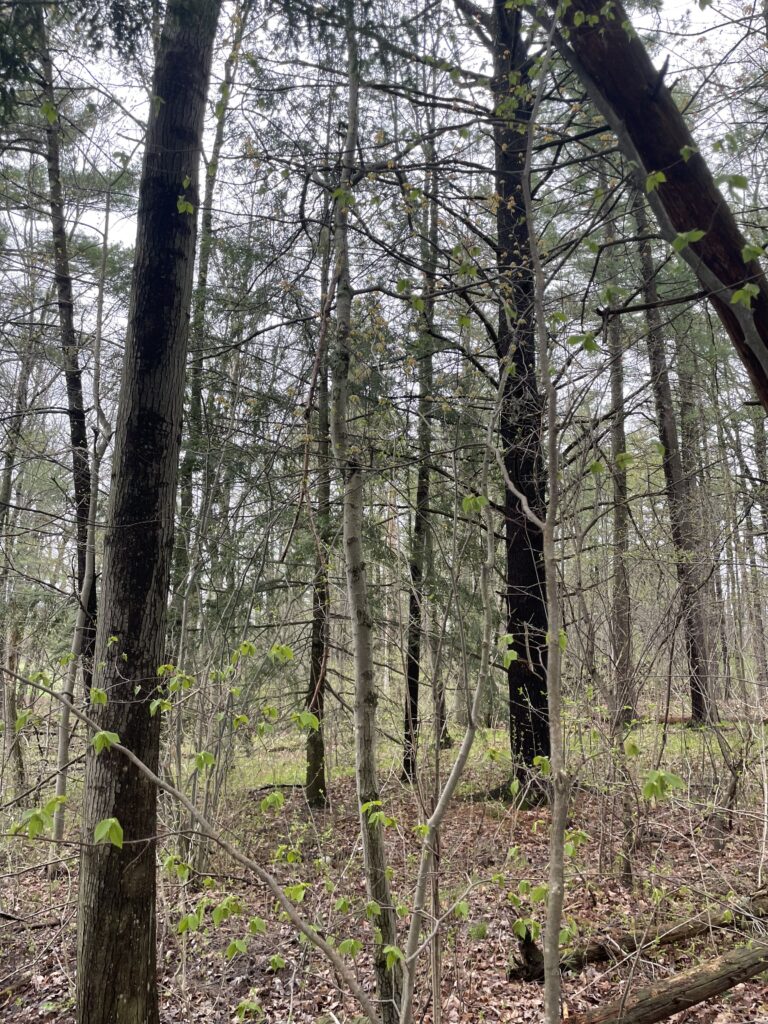
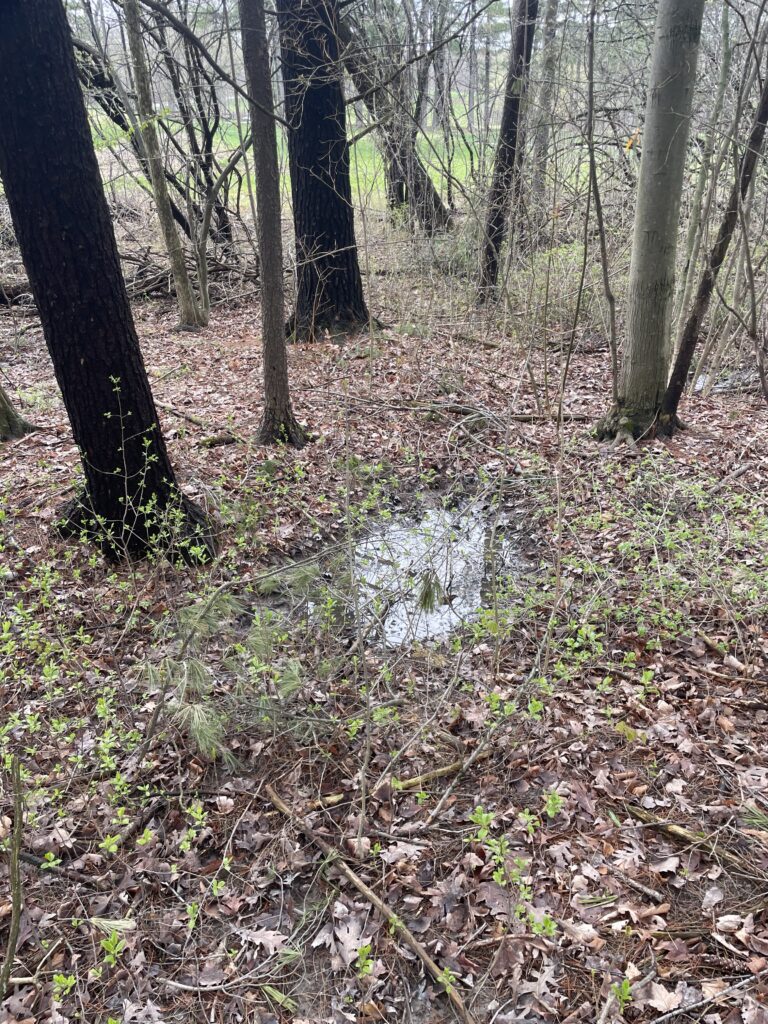
We are just now starting to the phenological influence of the Spring season, especially in the way it influences life in my site. In the pictures attached below, you’ll see a mostly green site with moss covering almost every available surface, as well as some pools of water that are finally making themselves seen (along with a lot of the lizards and flies that tend to make themselves known around still water). Additionally, most of the plants are beginning to bud plentifully, which is a delight to see!
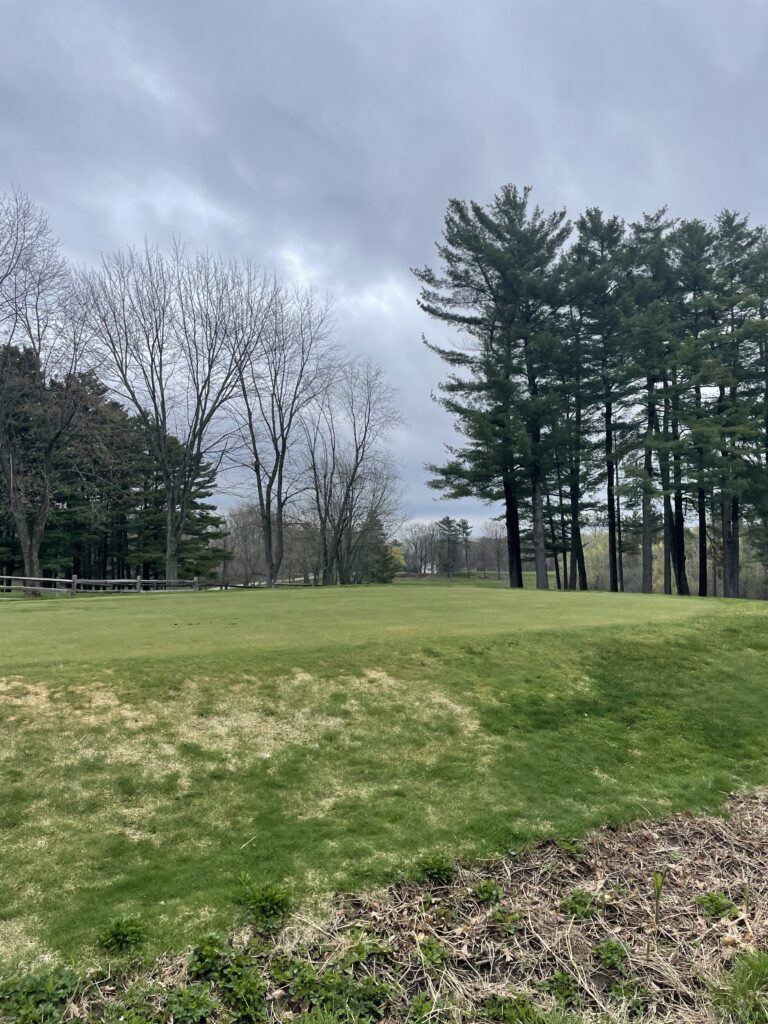
The site is nestled off of the edge of a golf course, which actually has some pretty gorgeous running trails throughout it (pictured below). The most notable section of my sight for me has come in my tree from earlier posts. Just given that we’ve visited it for a few weeks in a row, it has become a notable place within the site for me. Other than that, I mostly use the golf course itself as a means for navigation and sense of place within my site.
As was mentioned earlier, my site branches off of the Burlington Country Club, a small golf course just right off of campus. As such, the influence of humanity on this natural area is plentiful, but sort of double-sided: The management of the golf course for aesthetic purposes obviously has a negative impact on the natural ecology of the surrounding area, but they are also encouraged to keep sites like my phenology site alive and taken well care of because of their aesthetic benefit as a “barrier” from the world outside of the club. While the human influences on my site are aplenty, they seem to be done with regard to nature as a benefit for humanity.
I do consider myself to be a part of my place. Given that I’ve treaded on it’s ground, poked at the buds in the area, and spent hours of my time recording observations about my place, I’m sure I’ve impacted it just as much as it has impacted me. I could not be more grateful for my place and I will be sure to visit next year!