Posts

Last Post of The Year

For this last post, our entire class of NR002 was asked to partake in the most recent City Nature BioBlitz Challenge. This was a 4 day period of time in which we were instructed to use the platform iNaturalist (where we observed trees earlier this semester) and observe species (animal, plant, or otherwise) all over the greater Burlington area! This was a competition between cities all across the globe, and Burlington actually did fairly well at the end of things (we had about .08 observations per person, but larger states like NY were somewhere around 0.02 observations per person if I recall correctly). Reflecting on this process individually, students in NR002 were asked to answer a few questions, my responses to which were as follows:

What areas of Greater Burlington did you explore during this four-day urban
BioBlitz?

  • I actually took a bit of a run, and ran down to Rock Point in my biggest BioBlitz excursion. My running route is mapped below. This run was a 10k (slay) and I went all around the Rock Point managed area, which included a nice little natural area right by the Lakeview Cemetery! I really enjoyed the experience of actually getting out into nature as well as working out with a run (I set my PR in the 10k here)!

How was your experience using iNaturalist?

  • My experience using iNaturalist was almost the exact same as it has been. I’ve had some difficulties with the app actually uploading my pictures or observations, but it is easy to do through the website. I love the feature where others can suggest observation ID, although I’ve found it can be rather redundant. Some dude named Tom ID’d my Beech Tree as a Beech Tree a while back, when I had already ID’d it as a Beech Tree. This happens rather often, but it is ok.

How many species do you encounter?

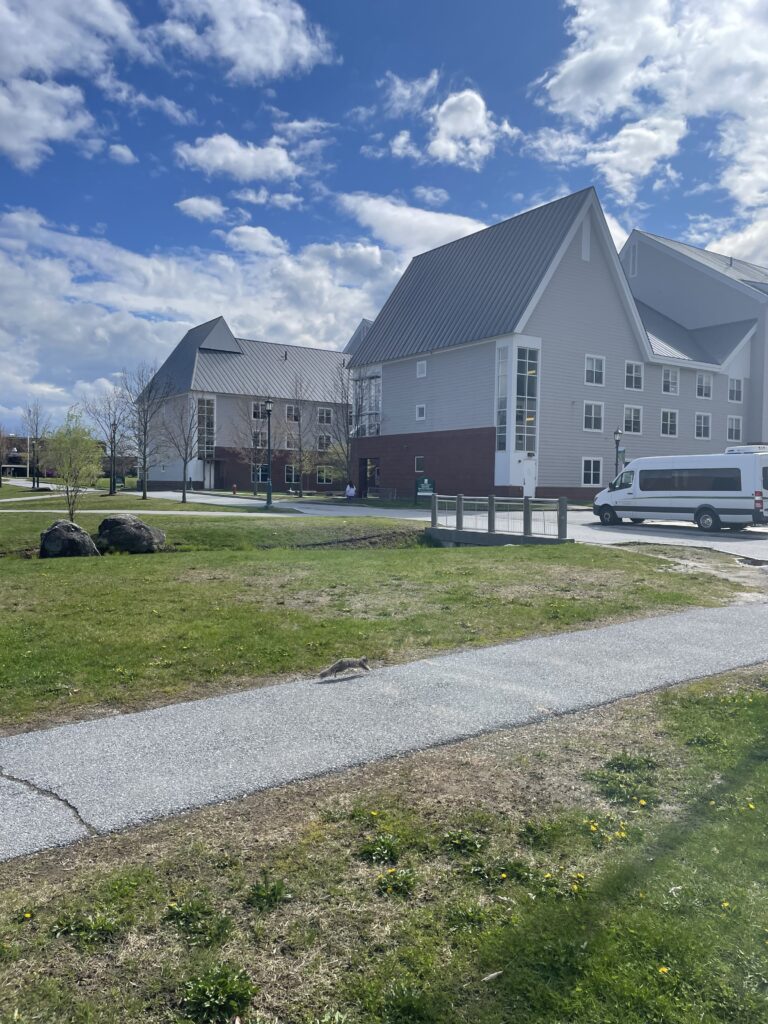
  • I encountered a ton of species, mostly plants, but I only ‘observed’ the ones that I was sure I could ID. As such, my two most prominent observations were the pigeon (found on the bike path) and the grey squirrel (found on campus) seen below. I was actually really jealous of my friends, who were able to observe cool animals like fish and frogs and stuff. I literally only saw pigeons and squirrels (and plants), but that is ok, as that is how it generally goes in the Environment!

What did you find interesting about reports coming in from other cities
participating globally?

  • I’m not sure how much sense this will make, but I found it really fascinating to see that other places in the world cared so much about nature. Cities in China and Australia were posting like crazy, and I found it really admirable. It is nice to know that a sense of respect for nature really does exist on a global scale.

That pretty much wraps up my last assignment for NR002, but not the end of this blog. I will be sure to check back in and provide an update for everyone next year. I have been so amazingly lucky to have the opportunity to engage with nature in this way, and I am forever thankful for NR002 and this assignment as a whole. Thank you so much to the NR002 Community for everything!


April 24- Last Visit

This week, we were tasked with heading back to our sites, and sitting (there was a sketching component, but I dropped my paper in the mud – I’m not sure you’d have wanted to see my art anyway!) and reflecting for 15 minutes, before intentionally reflecting on and responding to a few questions. Attached is my responses in what amounts to my bittersweet last reflection on my site:

My site has experienced the full span of the phenological year, and nowhere is that more present than in the general state of the site. In the fall, my site was just coming off of a very hot summer, mostly exhibiting some drier bark and a very green overstory. Additionally, the understory in the fall was mostly a mulch-y, detritus-ridden sludge that was great for fungi in the area, but less great for my hiking boots.

The Winter season covered my site in snow, and took a ton of the lively color of the site with it. The understory and overstory were completely overwhelmed with snow, but underneath there was a thick layer of fallen leaves that really helped to fix the nitrogen cycle in the area. The wet state of the area made it ideal for a variety of wetland life in the winter from small frogs to salamanders and squirrels.

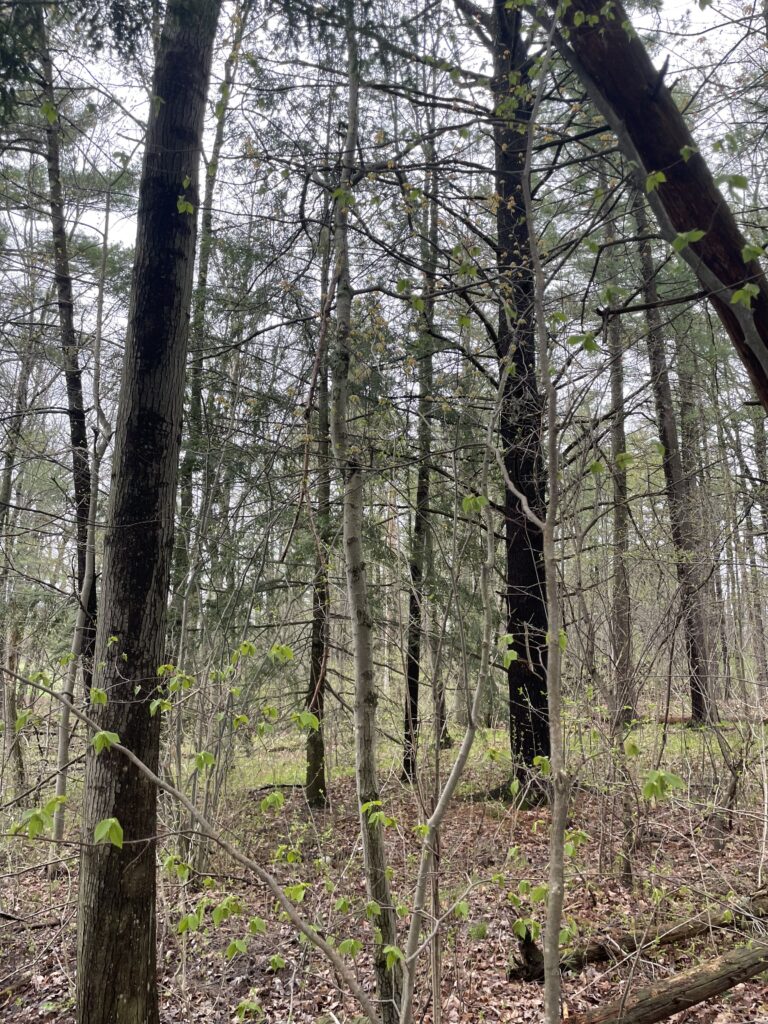
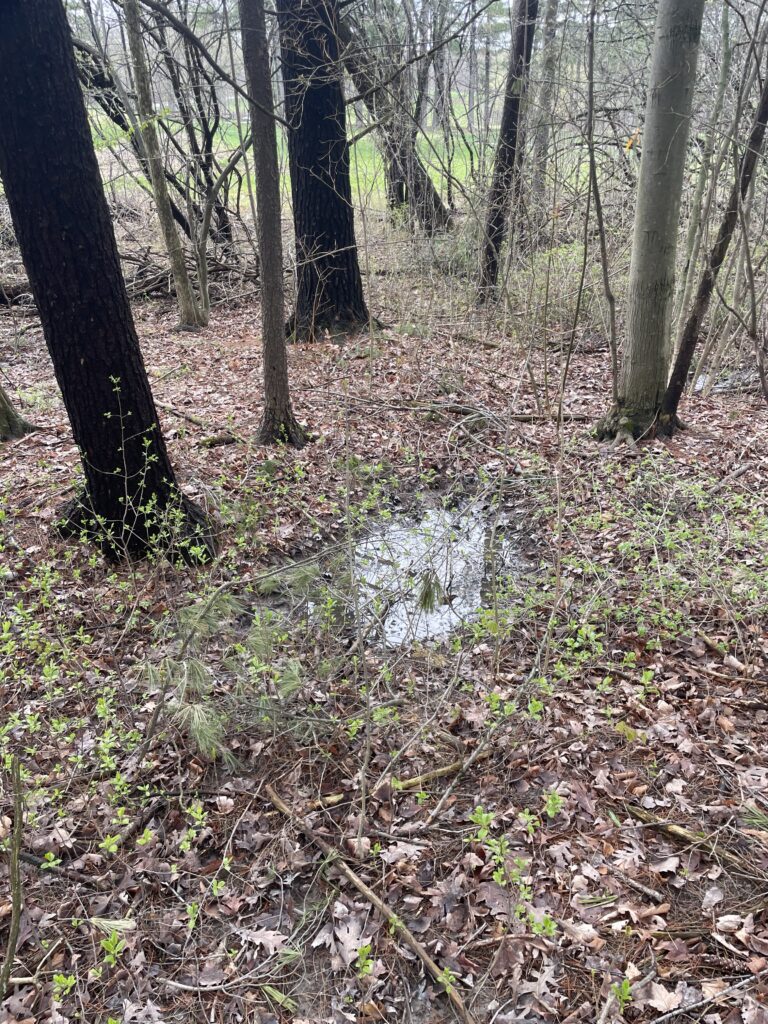
We are just now starting to the phenological influence of the Spring season, especially in the way it influences life in my site. In the pictures attached below, you’ll see a mostly green site with moss covering almost every available surface, as well as some pools of water that are finally making themselves seen (along with a lot of the lizards and flies that tend to make themselves known around still water). Additionally, most of the plants are beginning to bud plentifully, which is a delight to see!

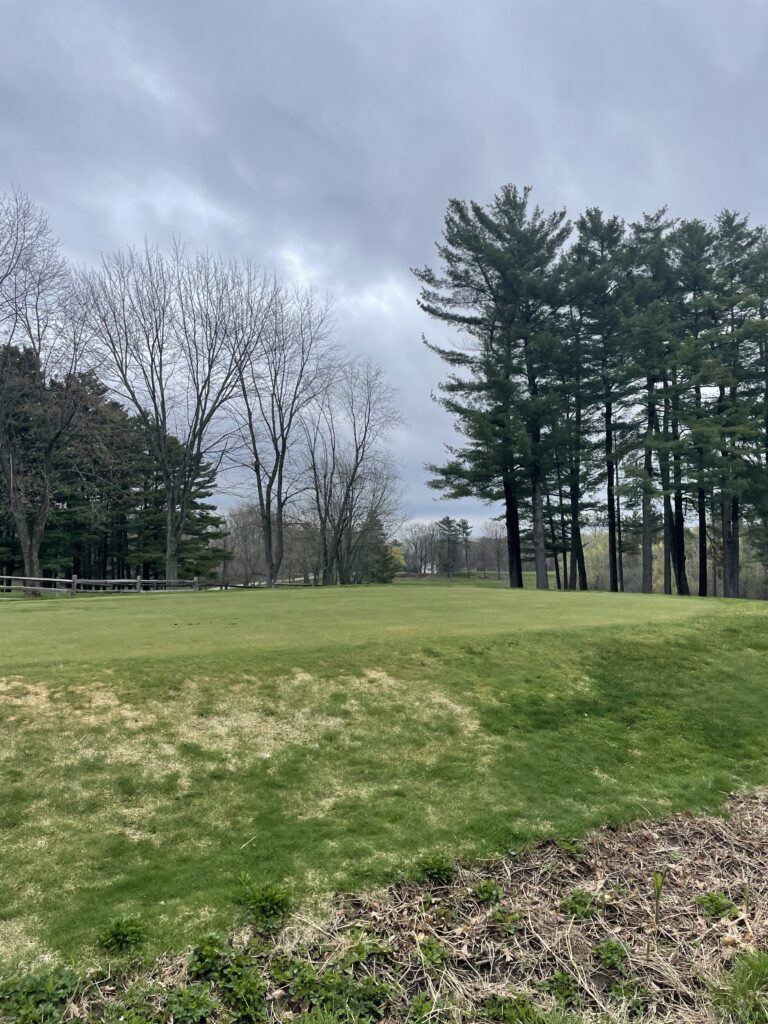
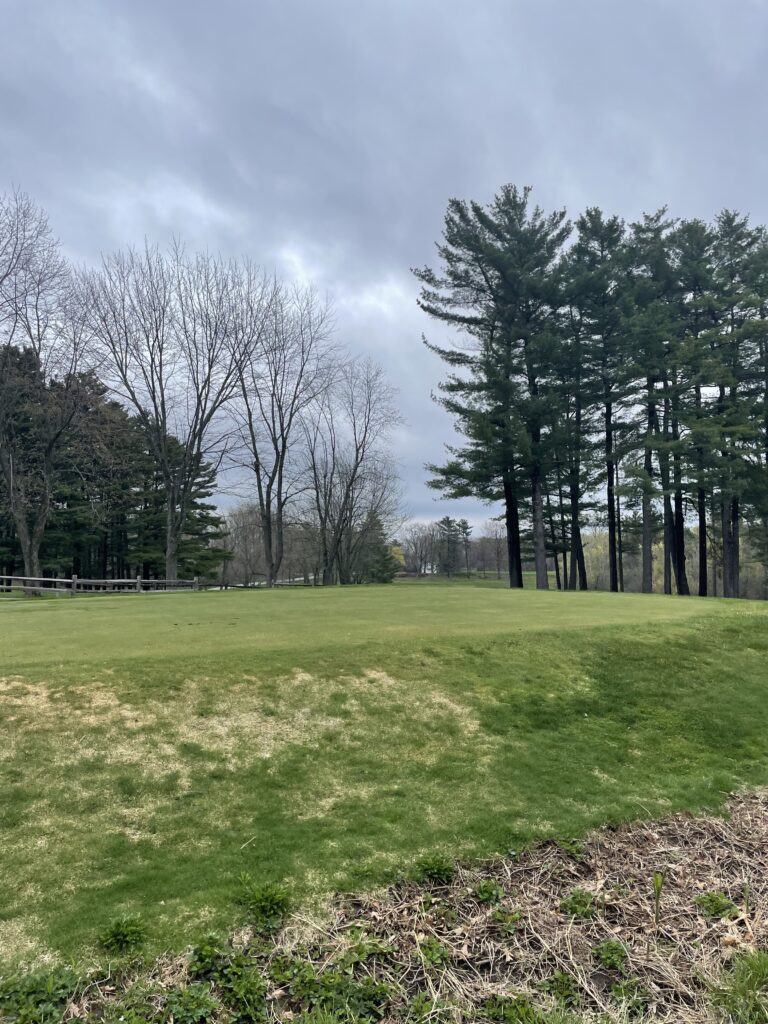
The site is nestled off of the edge of a golf course, which actually has some pretty gorgeous running trails throughout it (pictured below). The most notable section of my sight for me has come in my tree from earlier posts. Just given that we’ve visited it for a few weeks in a row, it has become a notable place within the site for me. Other than that, I mostly use the golf course itself as a means for navigation and sense of place within my site.

As was mentioned earlier, my site branches off of the Burlington Country Club, a small golf course just right off of campus. As such, the influence of humanity on this natural area is plentiful, but sort of double-sided: The management of the golf course for aesthetic purposes obviously has a negative impact on the natural ecology of the surrounding area, but they are also encouraged to keep sites like my phenology site alive and taken well care of because of their aesthetic benefit as a “barrier” from the world outside of the club. While the human influences on my site are aplenty, they seem to be done with regard to nature as a benefit for humanity.

I do consider myself to be a part of my place. Given that I’ve treaded on it’s ground, poked at the buds in the area, and spent hours of my time recording observations about my place, I’m sure I’ve impacted it just as much as it has impacted me. I could not be more grateful for my place and I will be sure to visit next year!

April 10- Spring Tree Update

This Week, we were tasked with returning to our trees (mine being the American Beech from the last two posts), and denote any phenological changes that are coming with the Spring (now that we are finally starting to feel Spring temperatures).

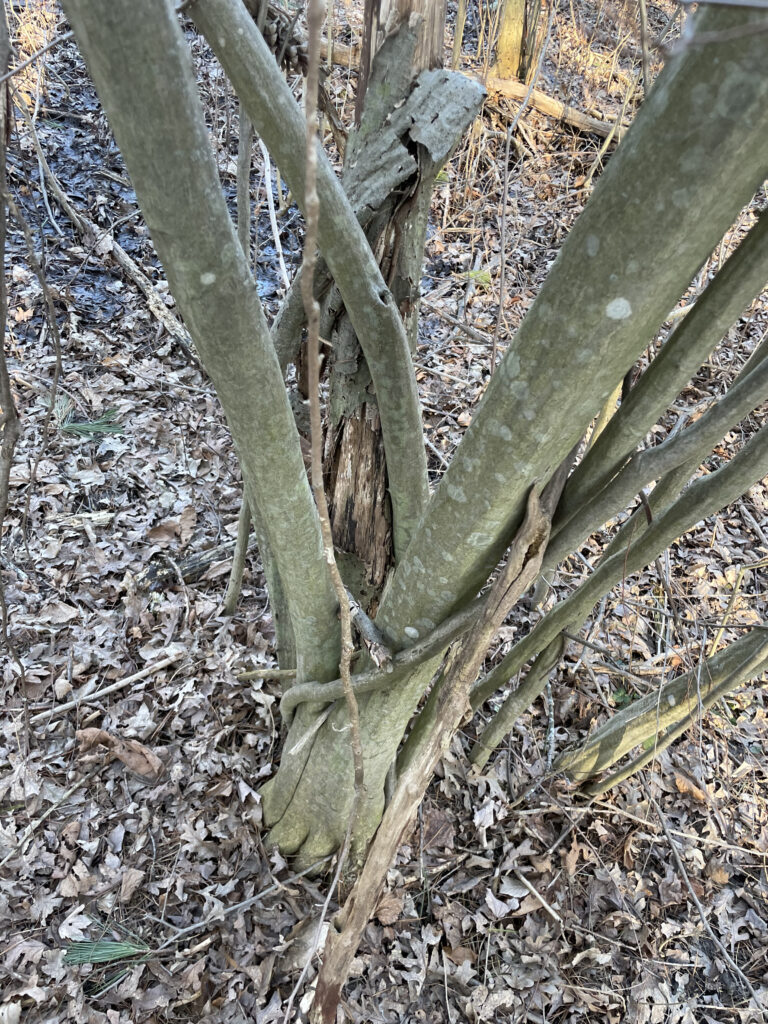
The biggest change I noticed in my Beech Tree was that it seemed to be getting a lot of color back in its trunk. The tree had gone remarkably grey during the winter months, and it seemed to be greening a bit (especially by the base). My tree is pretty inset among a forest of trees (and is therefore not exposed to a lot of sunlight), but the greening effect was particularly notable on other trees in the area. A hornbeam (a sister species of the Beech denoted by the fractured trunk) near my beech had an extremely green trunk, a picture of which is posted along side some beech pics.

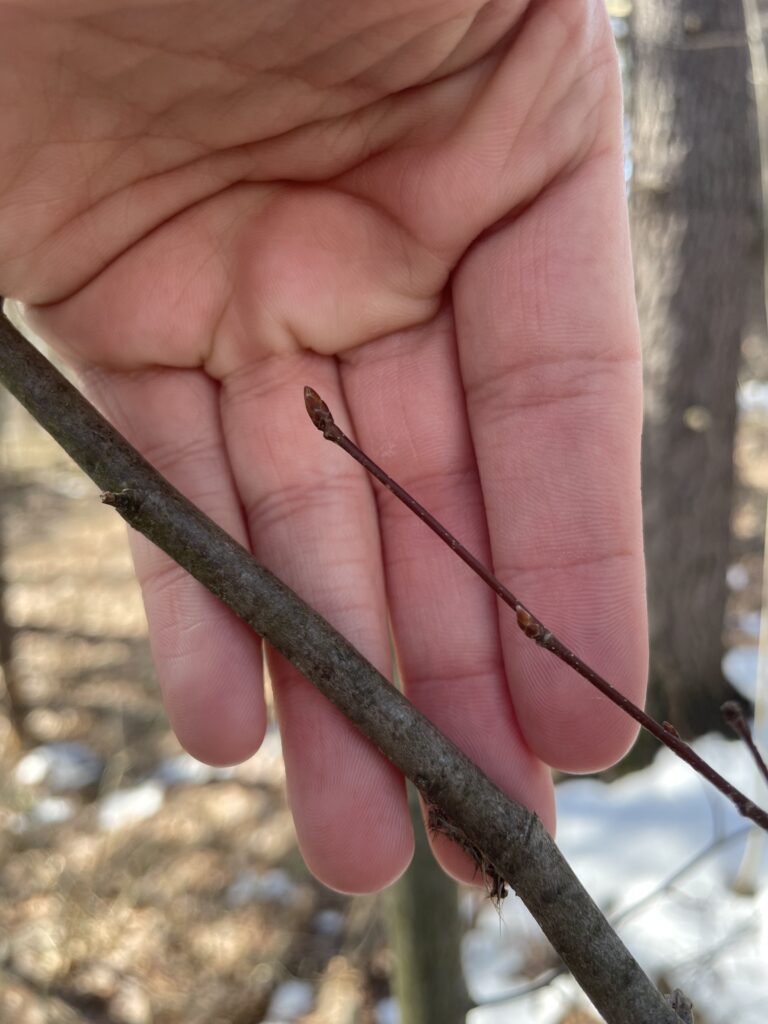
The buds of the Beech were coming along nicely, presenting an even brighter, more vibrant red color than the last time, pictures of a nice bud I found are included, but its possible that the redness doesn’t really come through on camera. Trust me, the buds were beginning to flower nicely.

It is worth mentioning that I have not yet seen any leaves on Beech, although I suspect this is normal (and becoming more normal in recent years as global warming shifts the start of our Spring season back). That being said, the lack of snow in my area meant that I could finally see leaves in the understory starting to turn to mulch. It was awesome to see the nitrogen cycle at work again, especially given how frigid and icy everything gets in the Winter.

Visiting my site was as amazing as ever, but it was really great to get out there in the warmer temperatures and really observe Spring! Screenshots of iNaturalist as well as some other pictures are posted below.

March 27- Returning to the Trees

Earlier in this semester (March 11), we were asked to visit our phenology sites (or anywhere in the Burlington area), and find a tree of a certain focal species. We were then asked to document some observations about the tree, especially as it pertains to the phenological timeline of the year. If you’re interested in my original observations, I would highly recommend looking back at that post, it was some pretty interesting stuff.

This week, we were tasked with revisiting these trees, and noting any significant changes that had been made, taking particular note of the budding processes of these trees and denoting any changes.

It was actually in the buds that I noticed the most change. From my earlier expedition to the tree, I noted that the buds looked very brown in color, but they now look red when shown against my skin (which has not changed shades all that much). Aside from that, there haven’t been that many changes. There was less snow on the ground, which did mean I was actually able to see the roots of the tree, which was new. The bark and branches have shown no signs of changing or leafage, but that makes sense given that it has only been just over two weeks since my last visit to the tree, and Spring hasn’t quite sprung to its fullest extent up here yet.

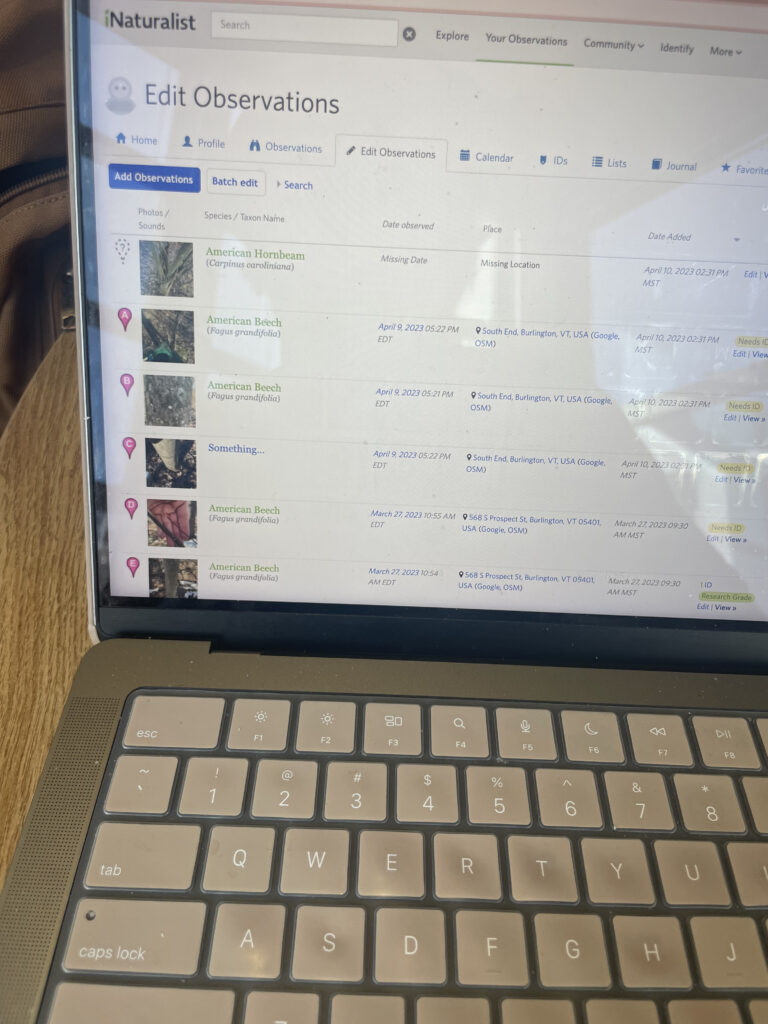
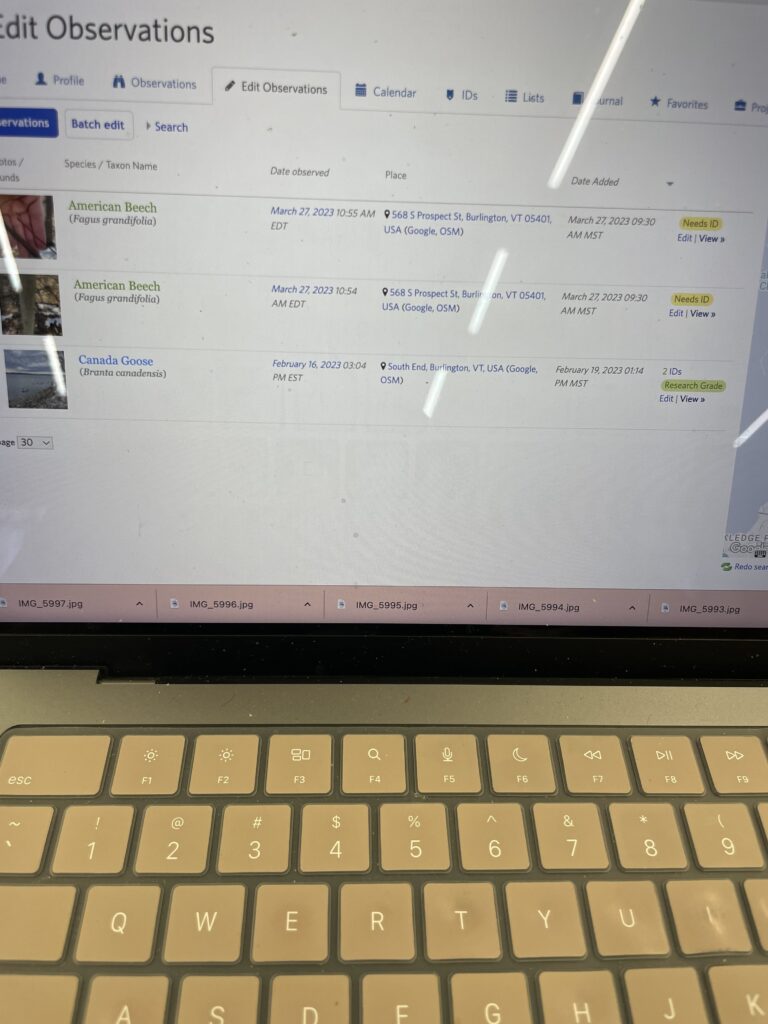
Uploading to iNaturalist was as easy as always, but I did find out that my last post never actually posted on the app, so I am going back to fix that now. Otherwise, enjoy the pictures of my site (and confirmation of me posting to iNaturalist – I use a computer to post, so it is not a screenshot as much as it is a picture of a computer screen) seen below. Happy exploring, and I will be back to check in soon!

March 18- Denver Phenology

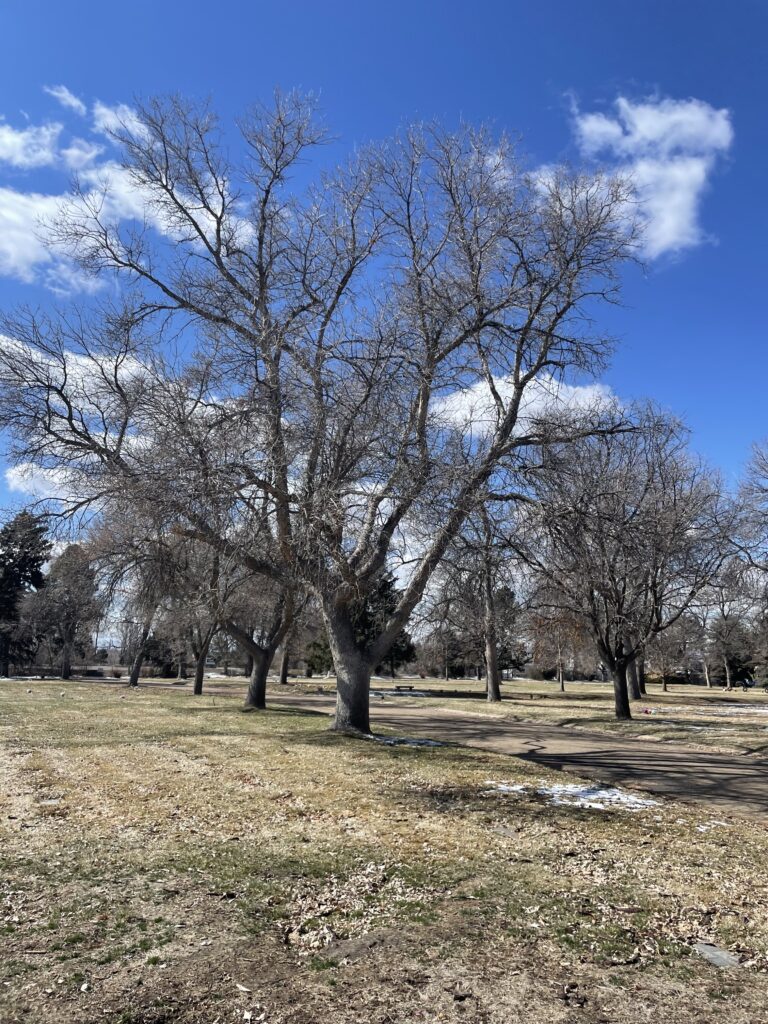
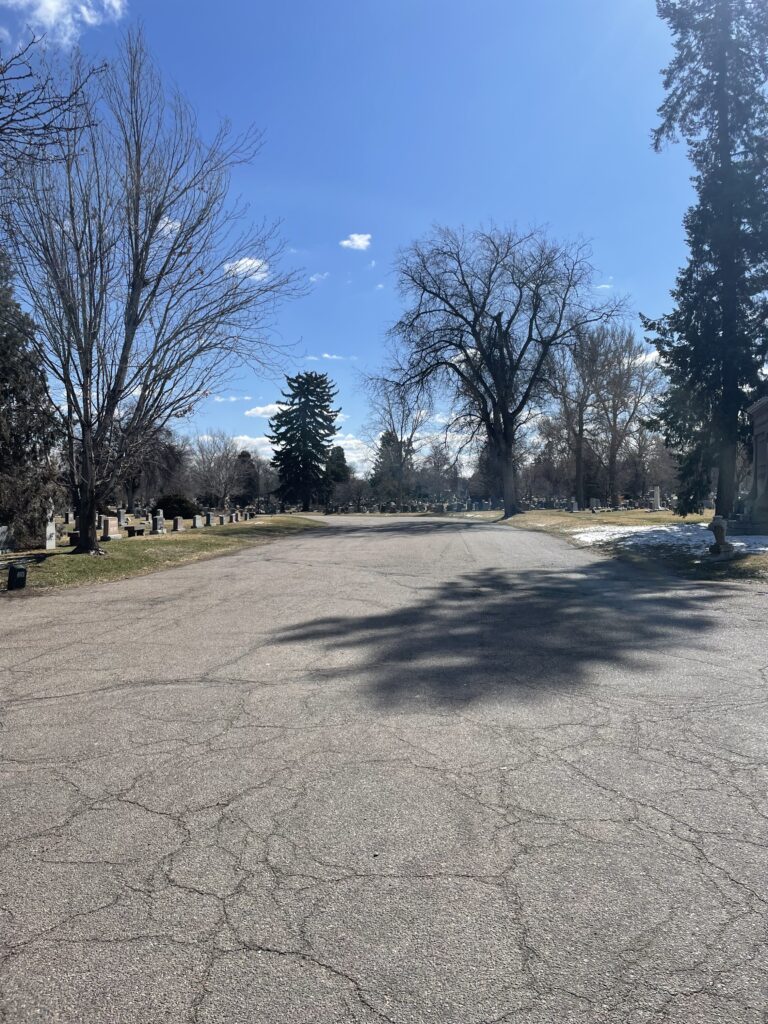
For a little bit of extra-credit fun, us NR002 students were tasked with visiting a local natural area for an hour over our Spring Break. Given the rapidly (and unsustainably) developing culture of Denver, CO, I chose to go visit a natural area that existed just outside of a local cemetery.

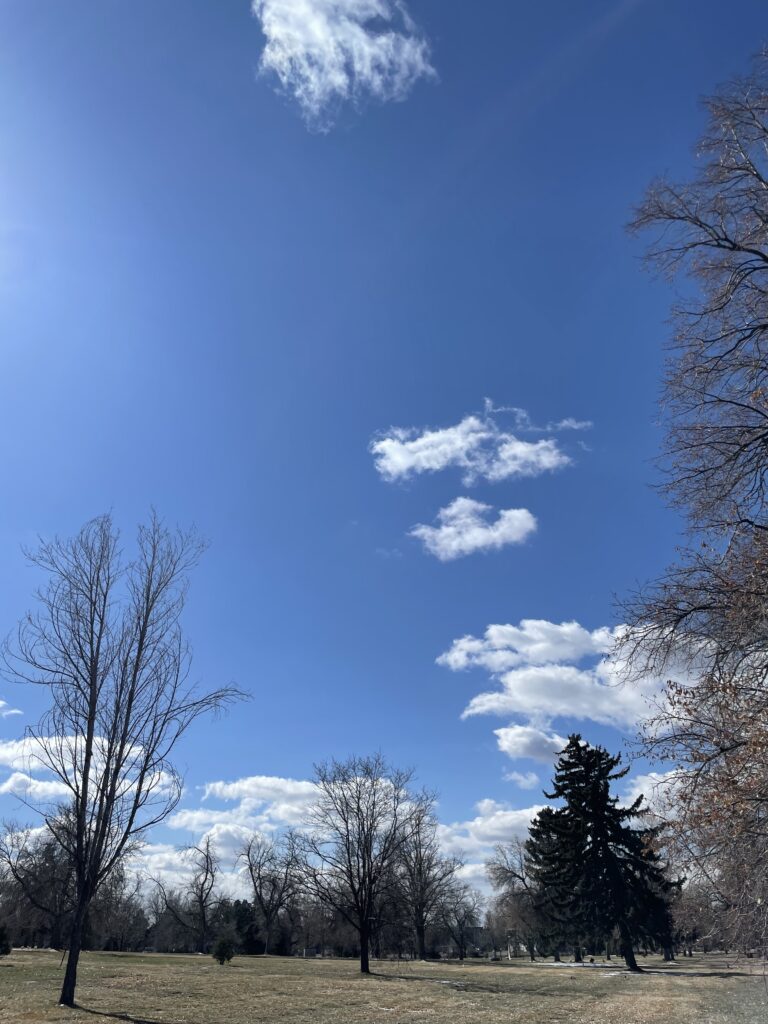
I chose the cemetery for a few reasons, the first of which being that it was absolutely gorgeous. While the air was pretty chilly (about 30 degrees), the clear skies combined with the relatively open expanse of the cemetery a really solitary experience, which I think I needed.

My second reason for visiting this natural area was that is has a rather interesting natural history:

  • The Fairmount Cemetery – the official name of the cemetery – was actually founded before the certification of Colorado as a state (late 1860s).
  • The cemetery then served residents of Denver, but given that I live in the suburbs (and not downtown), it would’ve served a smaller population.
  • As such, there are still wide swatches of untouched land (that are owned by the cemetery) that are going to be used for future gravesites.

To see open fields in the middle of such a developing area is fascinating, but signs of their intended future use are apparent.

There was no wildlife activity at all present in my natural area. There were dogs present, but they were domestic (I saw there owners). Otherwise, I assume that most animals are either not active (due to the season or just the fact that there were people there) or that the location of my natural area in the middle of developed land was undesirable. I saw no birds or squirrels or anything, but the plant life made up for it.

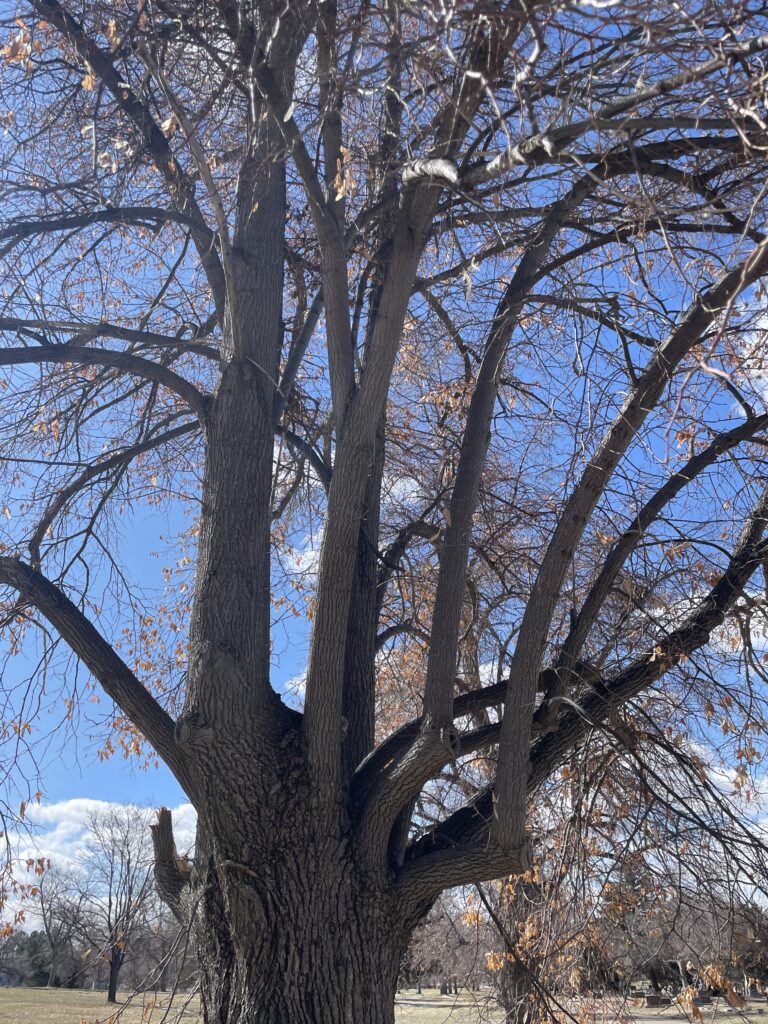
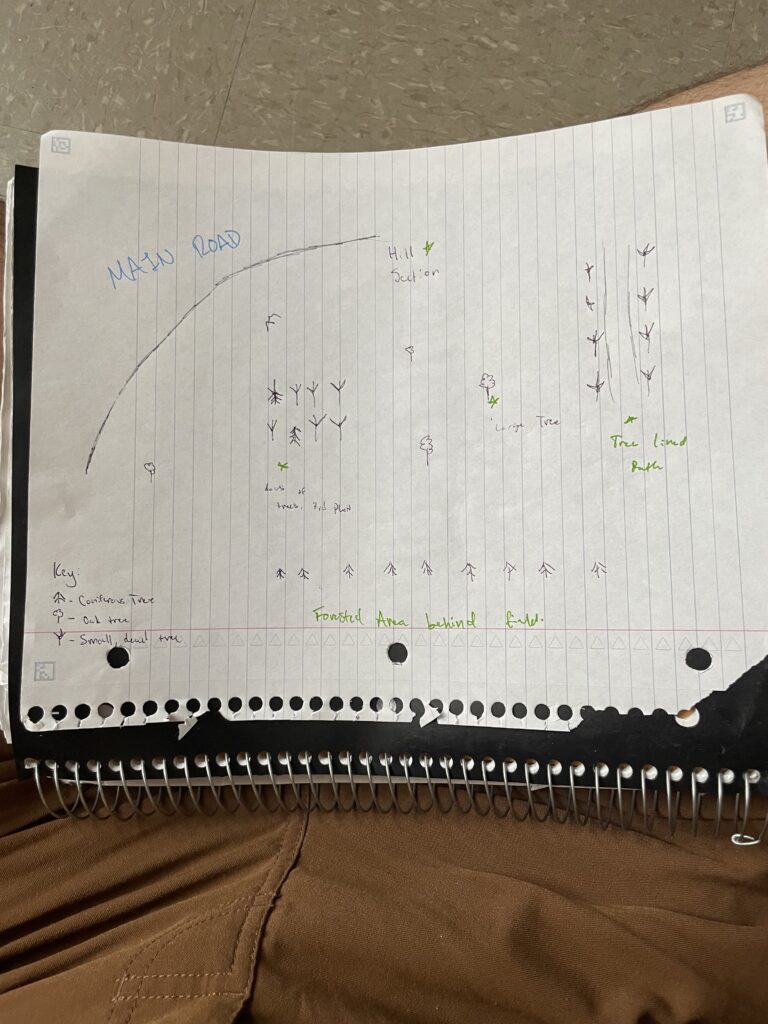
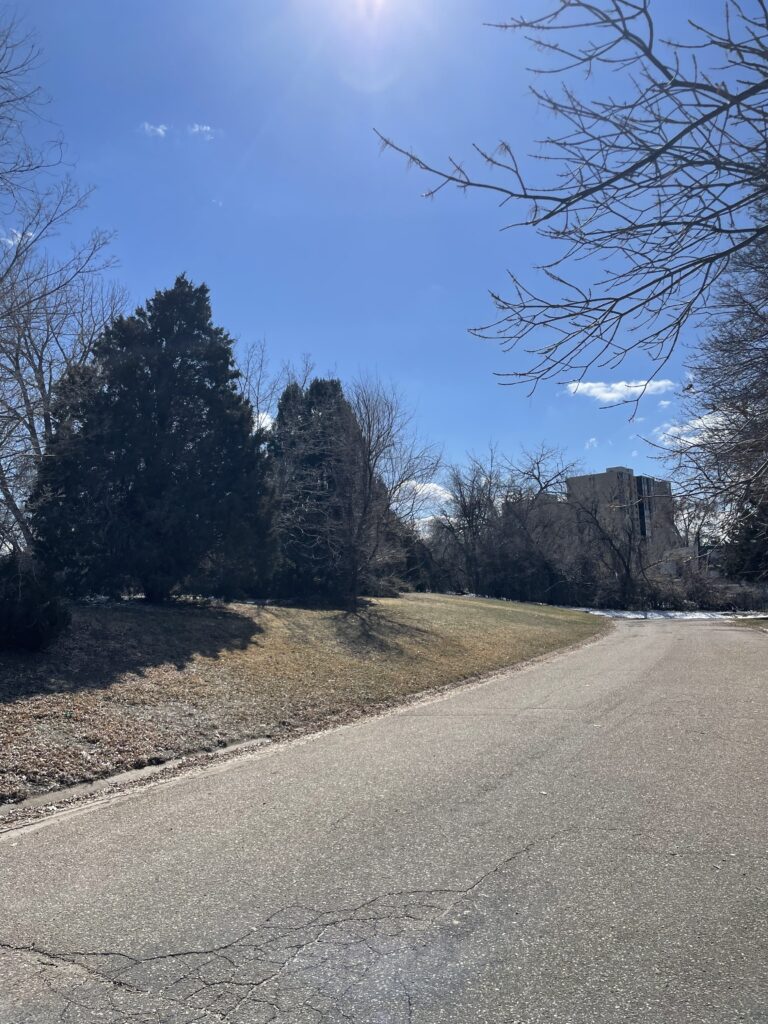
Along my natural area, there is a path lined with leafless birch trees. Additionally, there was an abundance of large oaks and various coniferous trees, complete with a forested area appearing at the edge of my area. There were also a good amount of shrubs on a “hilly section” of my area right by the road. Spring hasn’t quite sprung in CO yet, so all of these plants were in their late Winter phenological stages, having no leaves. The grass was also really, really dead (pictured below), but I can’t wait to go back in the Summer and see everything when it’s green.

On my way out of my site, I saw a really cool mausoleum-type building. It’s off of my site, but likely still functioning. It’s pictured below, and I think whatever human activity occurs there likely affects my natural area to some degree. I will be sure to enquire when I get back.

A small map (not an artist – don’t judge) of my site is posted along with pictures below. Thank you so much for reading, and I will be back with an update shortly!.

March 10- Winter Tree Phenology

Hello friends! It’s your favorite NR002 student, back again with another blog assignment. This week, we were tasked with exploring our phenology sites (or anywhere within the Burlington city limits, I chose my phenology site). During this exploration, we were asked to identify a tree from one of our focal species. This could’ve been a Red Maple, Northern Red Oak, Paper Birch, or an American Beech.

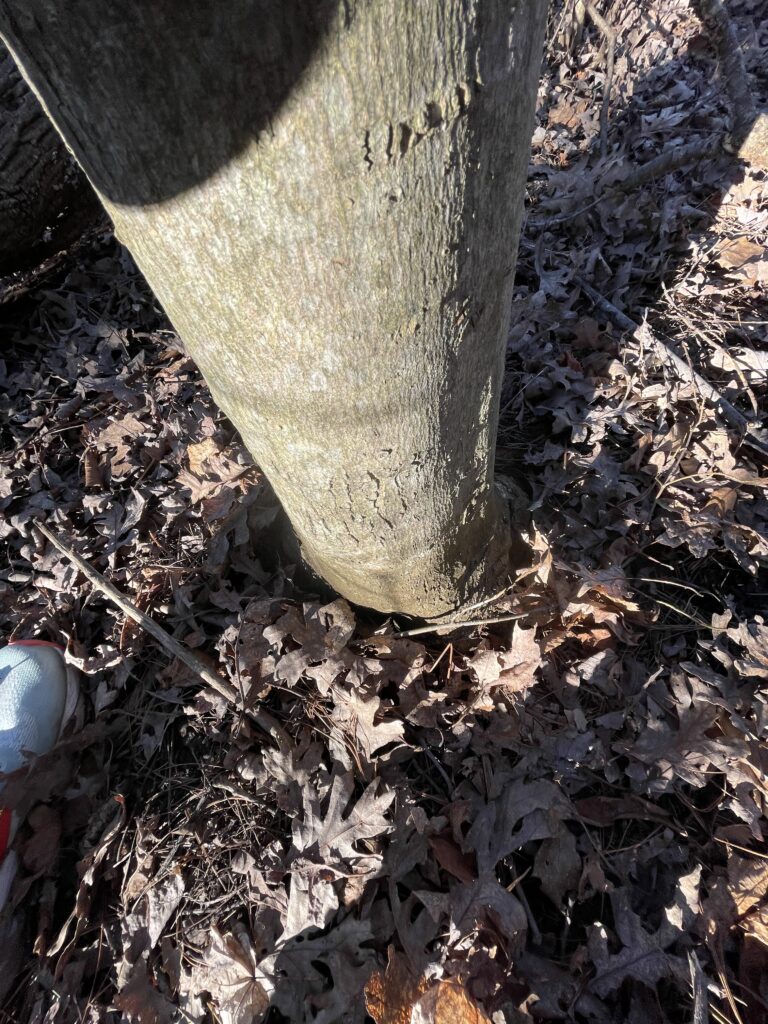
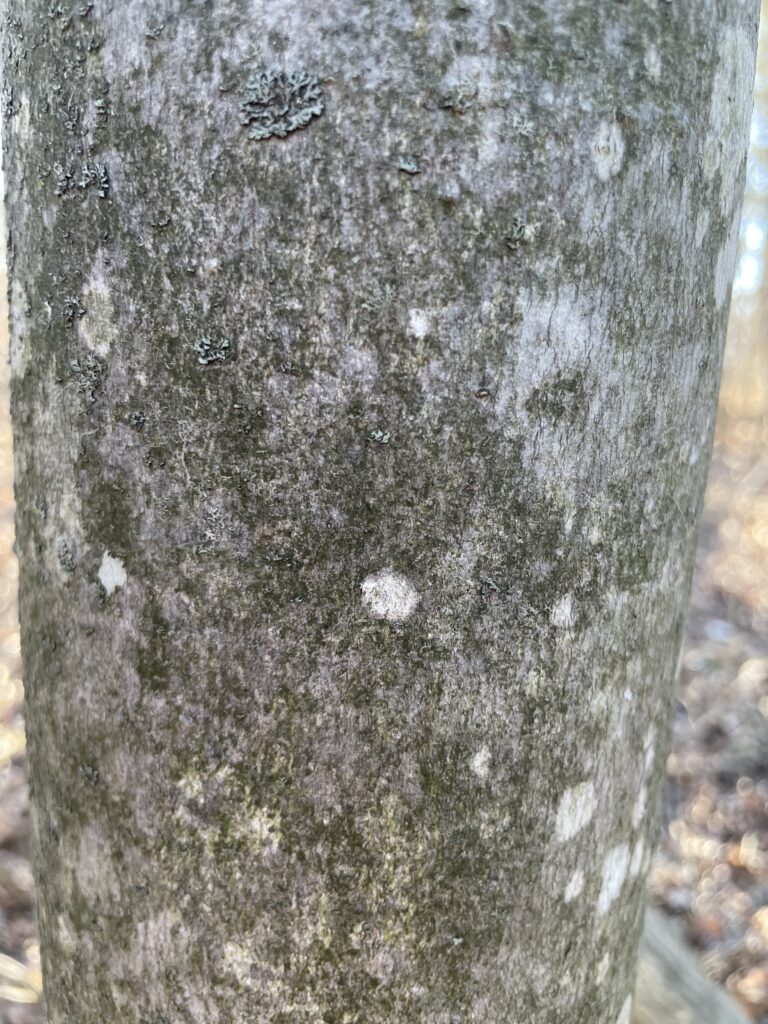
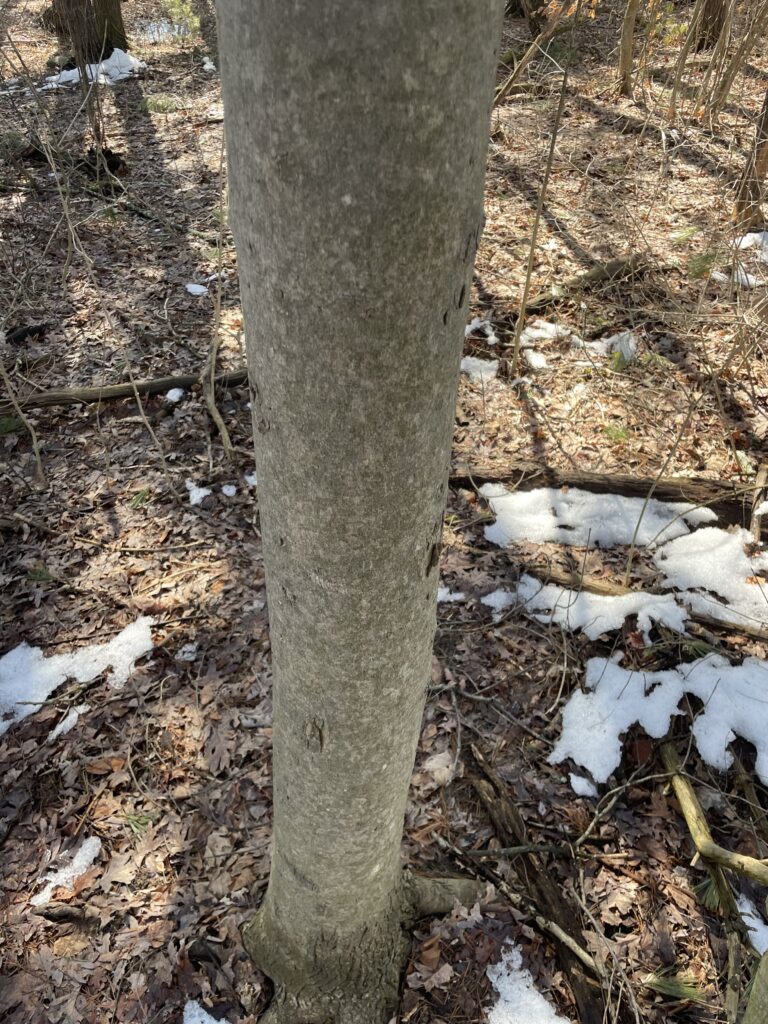
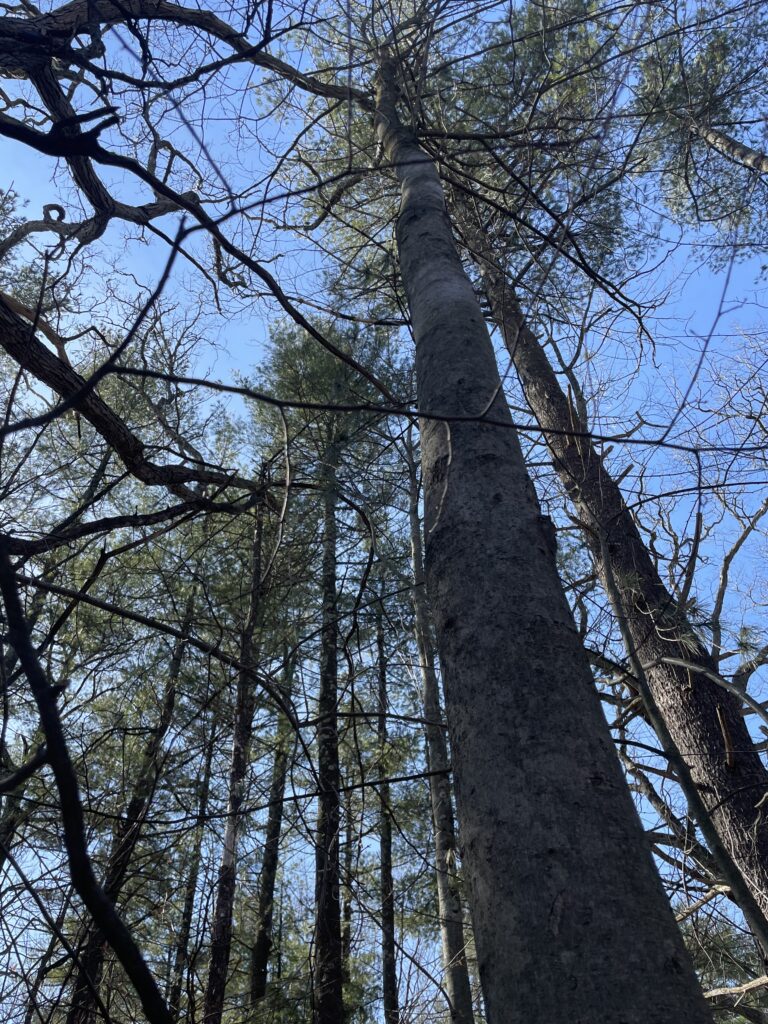
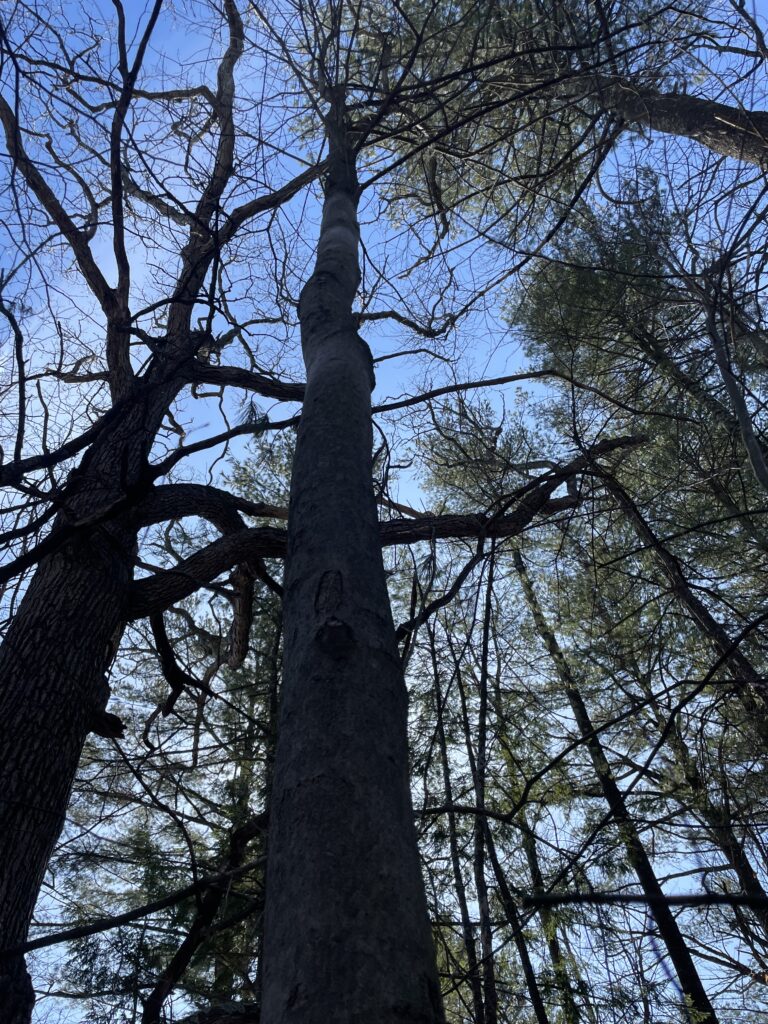
I was initially unsure of which tree I was going to find, but as soon as I stepped into the central clearing of my site, I saw a really gorgeous (and almost textbook) American Beech tree. The smooth bark, along with the larger size of the tree (coupled with the slender, non-imposing stature), is almost convincing enough to be sure of the species, but we were warned to check that it wasn’t an impostor tree. Given that many trees can lose their leaves in the winter (which – funnily enough – American Beeches hold on to for an uncharacteristically long time), there are a few trees that can look remarkably similar to each other.

The possible impostor for an American Beech is a young maple tree. Given that they exhibit the smoother bark that can be found on an American Beech. The largest hallmark with which one can tell them apart is in size. While barkless maples usually don’t exceed 20-30 feet in height, this American Beech was around 50-60, as (hopefully) is illustrated in the pictures below.

Additionally, we were asked to describe whether or not the tree was “flowering.” As we begin to enter a new Spring, many trees (especially maples) will begin to sprout new leaves. Early signs of this can be noted in the ends of twigs. Given that the American Beech holds onto its leaves for a while (as mentioned earlier), they actually take a really long time to begin flowering, so there are no sights of new growth yet. The picture of a twig (taken from my awful phone camera) should help to highlight this. Take note of the light coloration and flat (non-cigar shaped) ends. As far as the process of uploading to iNaturalist goes, it was as efficient and as painless as last time!

I will revisit this tree in a few weeks and make note of any changes. Until then, keep exploring!
On iNaturalist!

iNaturalist BioBlitz! – February 12-19

For this assignment, we were asked to expand our treks out to the greater Burlington area (and not just out phenology spots) and do some wildlife tracking for a bit of a bio-blitz! We were asked to report our findings both on this blog and on the iNaturalist website, and I am beyond happy to say that I have a lot to report!

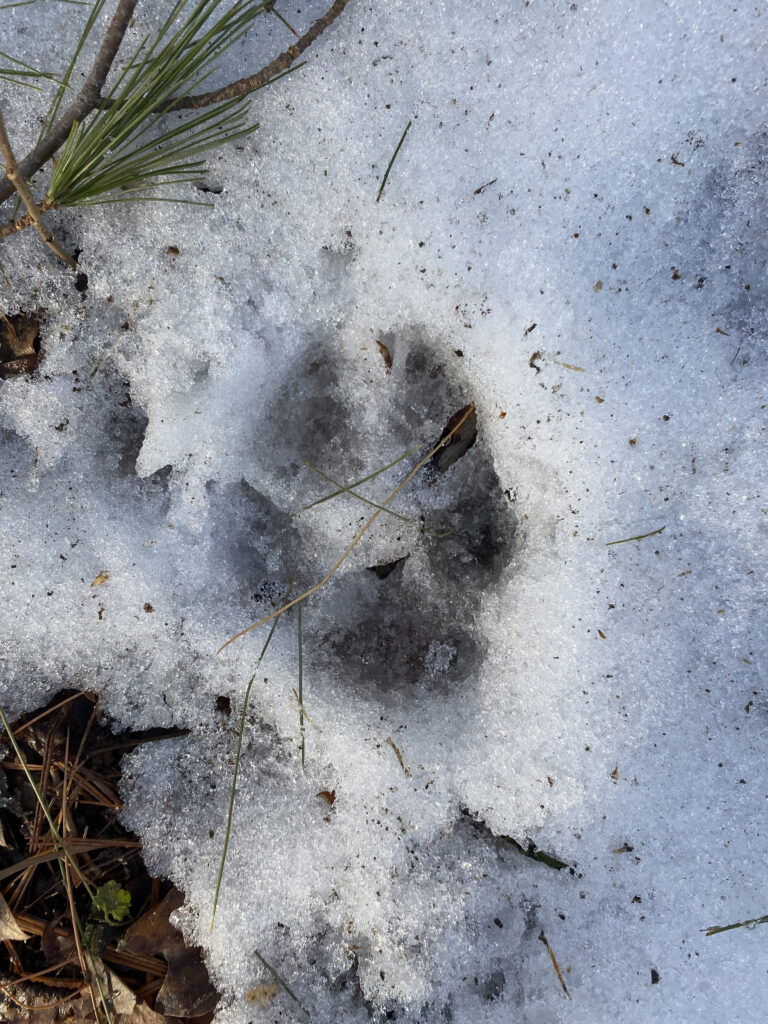
My exploration took me to Centennial Woods, where I began my tracking on Tuesday, February 14th. This Valentine’s Day journey took about an hour and a half, and immediately, we (me and my tracking partner, Ann) were presented with some difficulty. This happened to be the day after temperatures were in the high forties- low fifties, and a lot of prints that had been left in the snow were a mess of melted ice. Nevertheless, we were soon able to find tracks of various medium- sized domesticated dogs (shown below). Afterwards, we spotted some tracks that we were pretty sure came from an eastern grey squirrel (noted by the long “nails” present in the snow as well as the galloping pattern [image 2]). Lastly, we found some tracks that we think might be from a cottontail rabbit, although the snow melting had really harmed the integrity of the prints (image 3).

While that was all of the tracking I planned to do, I ended up taking a trip down to the waterfront Thursday afternoon to sit outside in the good weather. During this trip, I saw some more domesticated dog prints in the sand (image 4), but the real pinnacle of my trip was a spotting of a group of Canada Geese in the water (image 5)! They were really pretty, and they were actually the first observation I posted to iNaturalist. The picture of this posting is posted below (image 6), but I honestly had a really hard time with this posting thing. I’m not a tech whizz, and this was definitely a challenge for me. I had to get the photos from my phone to my computer, and then put those photos on the iNaturalist site. From file formatting issues to creating my iNaturalist account, there were challenges every step of the way. Nevertheless, I overcame these obstacles, and the observations are recorded! I thoroughly enjoyed this tracking experience, and sincerely look forward to next time! See you then!

Back in Business!- 1/28/2023

Happy Spring Semester, Fellow Catamounts! As a lovely re-introduction to the schoolwork grind, students in NR002 were tasked with returning to our phenology spots, and told specifically to look at any animal tracks or phenological changes that had occurred over the break. I’m very pleased to report that my specific site was plentiful in both of these regards.

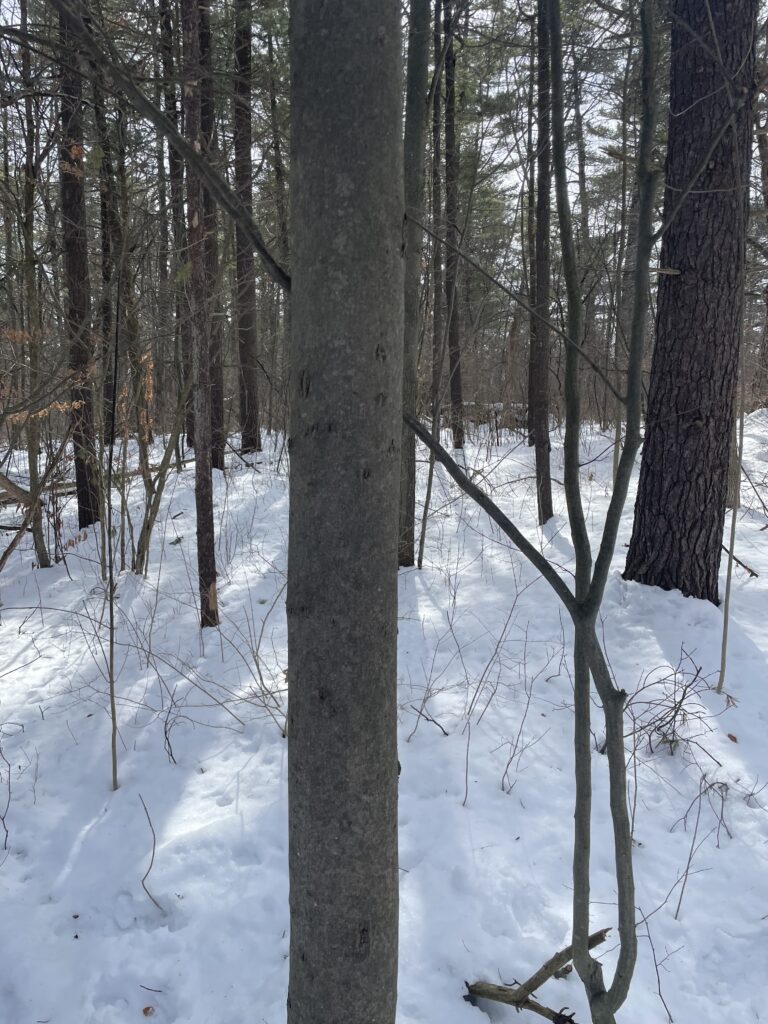
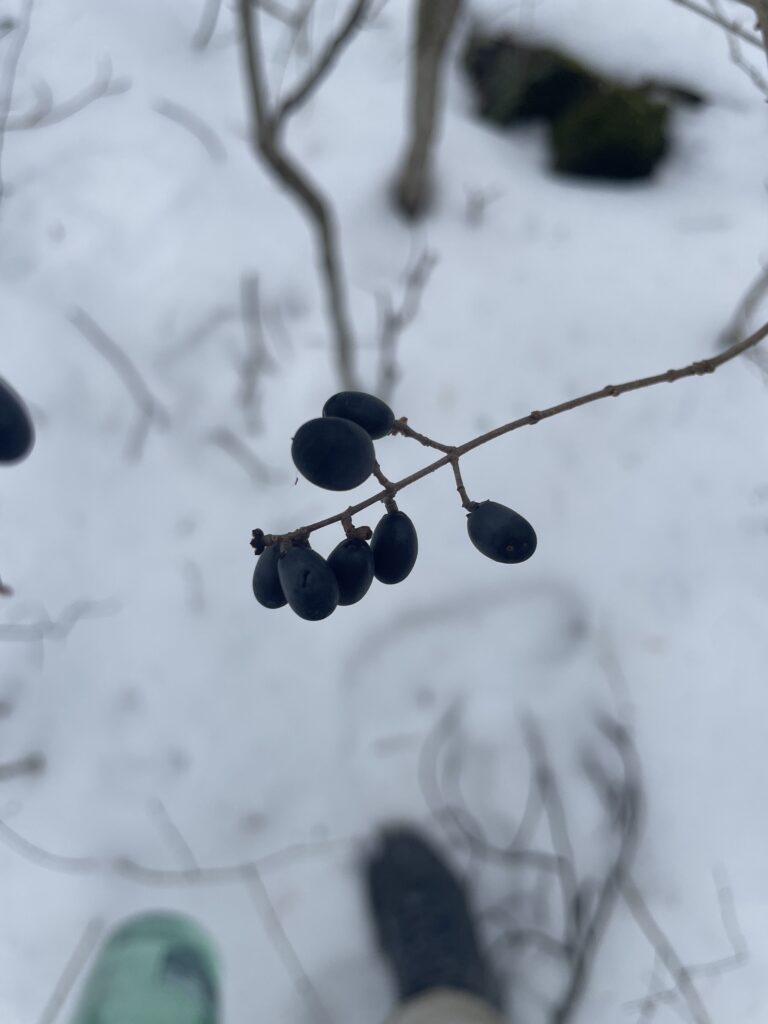
In terms of changes over break, its work mentioning that there is finally a thick layer of snow covering the entire floor of my site! This is quite the shocking transformation, especially given that the lack of snow (combined with the extensive foliage in my site) left lots to be desired in terms of snowfall. Additionally, whatever leaves the trees in the area had are now gone, but there are a few berries left on some shrubs, pictured below. The lack of green left in the area really changes the vibe of the area, and it’s been shocking to see the extent of the changes that have taken place so rapidly over about a month.

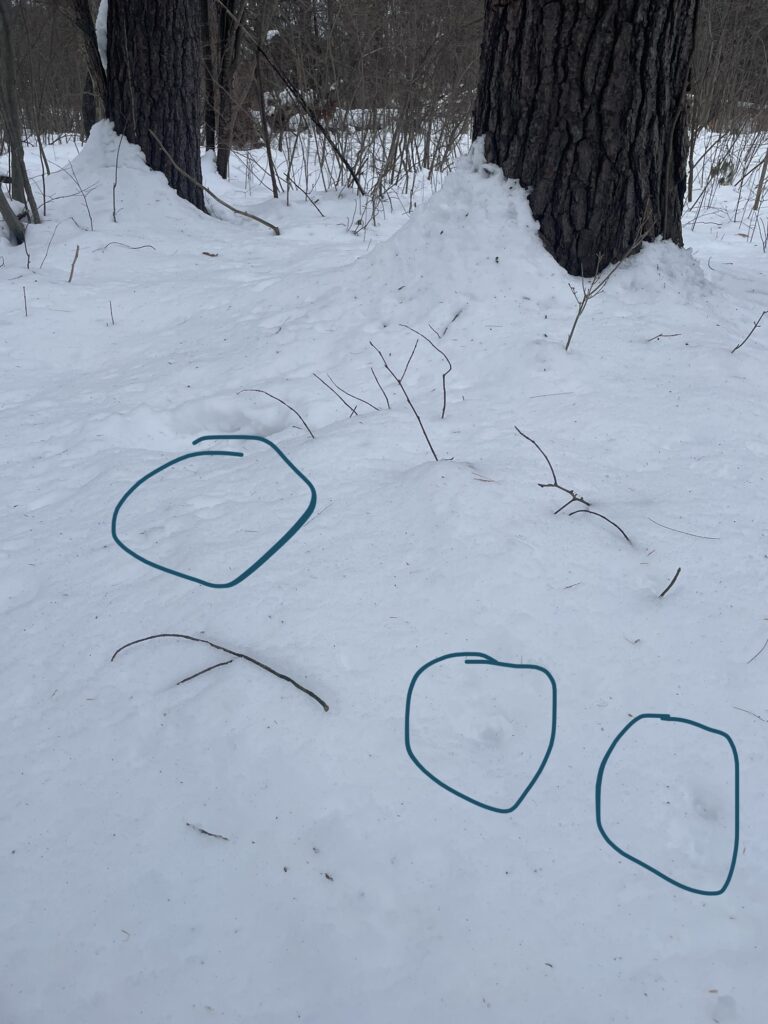
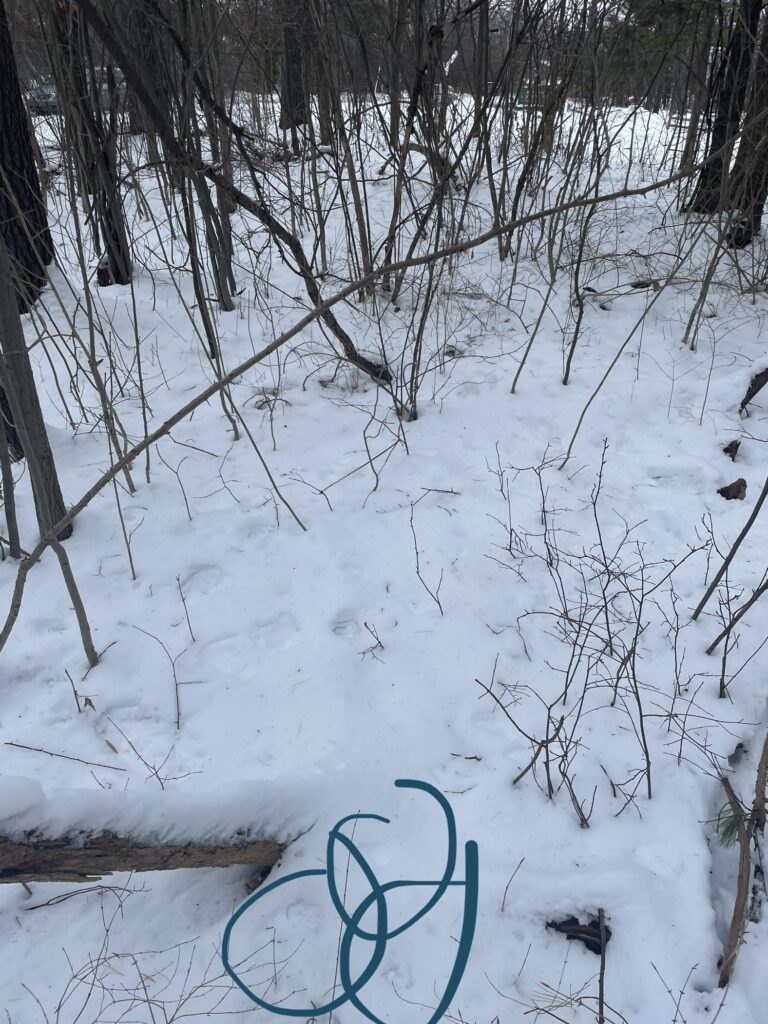
In terms of animal tracking, there are definitely some animals present in the area, but fresher snowfall and the sparse coverage of snow means that it is a little harder to identify which. My best guess is that the holes in the snow pictured below were created by squirrels or other small woodland creatures. The holes are rather small, but they are consistent with the sizing of a small mammal, and while it’s harder to see in the photos, there are some small consistencies with squirrel prints still present in the snow.

I was really hoping to find like a bird or a rabbit or something, but the only other notable tracks I’ve found have come in the form of what i believe could be possible prints of a small-medium sized dog, pictured at the bottom of the picture below. I really wish I was able to see more animal activity, but due to the more urban location, other signs of animals were a bit harder. Nevertheless, I really appreciated the chance to get out and explore a bit more of my phenology spot, and I look forward to when I can make it back out there next!

December 10th, The Post to End All Posts

It’s bittersweet to be writing the last phenology post of this semester, but like all good line segments and good roads, this too must come to an end. The site, just off of the Burlington Country Club, has undergone a great many changes throughout the season, with the wooded pictures from October 17th’s post now being largely replaced by the frail, withered sticks you see in the attached photos in this post. Some other changes I’ve noticed to the phenology of my site over time are as follows:

  • All of the leaves have fallen down. This doesn’t really come as a surprise or anything, but it’s kind of a stark contrast to my photos from earlier in the season and definitely worth mentioning .
  • The ground is covered in a much fresher layer of leaf litter. That, plus the combination of icy weather makes the ground much less mulch-y to walk on.
  • There are a few signs of decomposers, mostly worms having made their way through some of the leaves, but it’s a bit late in the season for a ton of animal activity. That being said, the proximity of my site to urban areas makes me think that there’s likely a lot of raccoon activity at night, given their nocturnal natures and ease of access to my site.

My site has changed a lot over the season, most notably in the functions of the space. In the warmer weather, the high presence of leaves at the tops of the overstory would do a lot for shading of naturally vulnerable plants and animals in the understory, but now that those leaves are gone, it is the fallen trees that provide this same shelter. Additionally, a notable amount of trees/shrubs fell down over the course of the season, making what once was a clear and easy to navigate understory into a confusing and brambly mess. Nevertheless, a few things about the site have stuck out to me, quickly becoming my favorite little tidbits lore about the Burlington country club.

  • I once saw a frog at the site. This wasn’t on an official visit so I didn’t take a picture, but I don’t see a lot of those in Colorado, that was awesome.
  • This place is so close to campus, but feels so secluded. This could be because it’s (maybe) trespassing to go there, but it legitimately feels so quite and removed from everything despite its proximity.
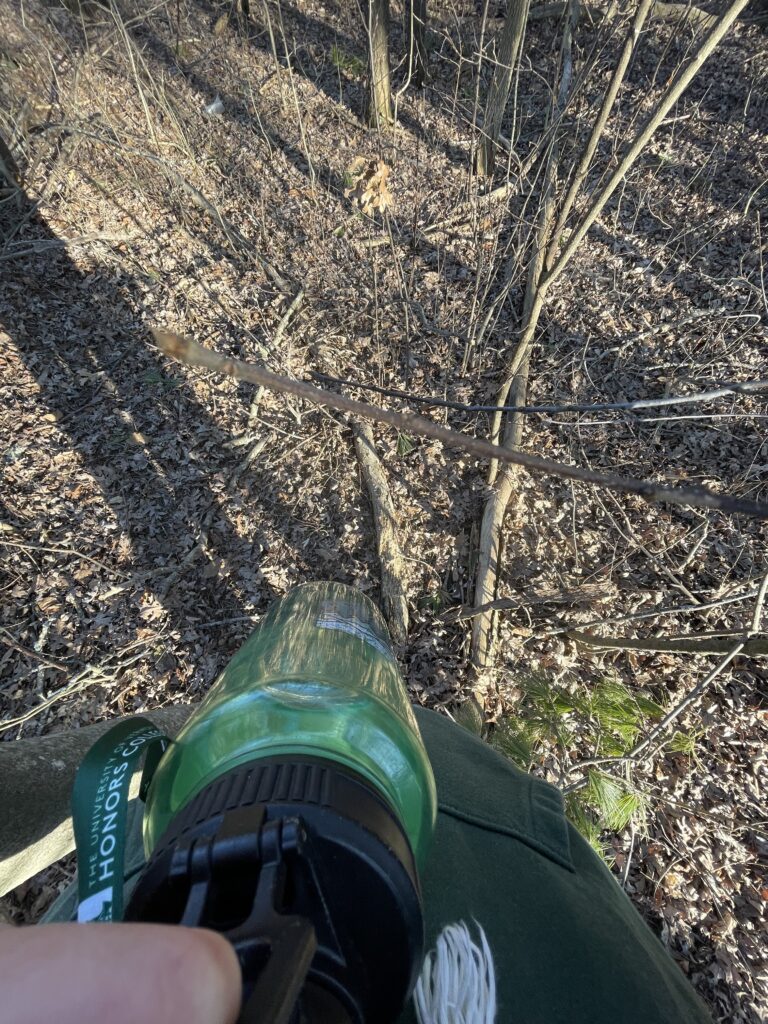
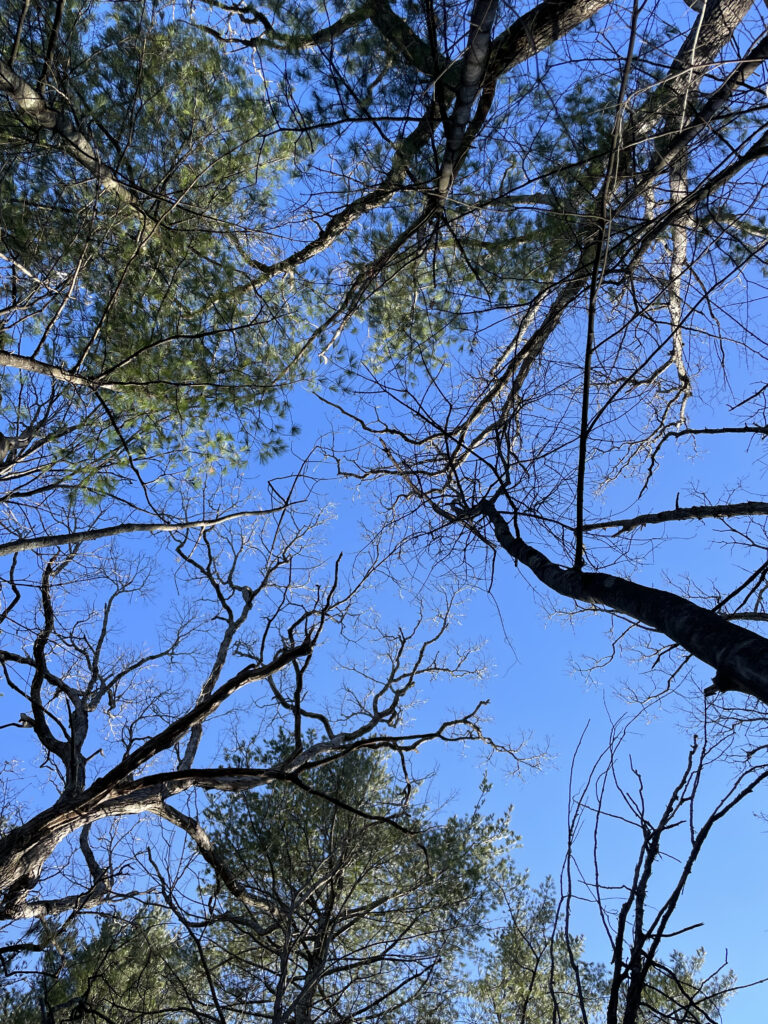
  • The sunlight comes through in a really pretty way in the winter time, I tried to capture it in some photos today but they sort of ended up looking like photos of the sky. Nevertheless, it is still absolutely gorgeous.

Well, that’s a wrap. Thank you so much to everyone who chooses reads this, and an extra special shout-out to Michael, who is required to read this, which is so much worse. I’ve loved doing this project, and look forward to continuing this project (or starting a new one, this time not for a grade) next semester! Be back soon!

November 28th, a site to Remember

Having recently heard about Michael Salerno’s (UTA extraordinaire) dream of going out west for graduate studies, I was anxious to get back out west and prove him wrong via the catalyst of the great state of Colorado! Having spent most of Fall Break at my home in the Denver metro area, I ended up going to a local park, who’s pièce de résistance consisted of the loveliest little dried up dam. Google maps says there’s a pond there, and they’re right (if you consider a fetid little puddle of shallow still water a pond).

Nevertheless, the natural beauty of this location was particularly striking. As an aesthetic-loving white mom at heart, the presence of sweeping swatches of beige and brown were beyond exhilarating! The nature in the ol’ CO is vastly different from that up here, as demonstrated by the presence of the skinniest little birch trees in my phenology spot, who are currently fighting for their lives a mile above sea level. The understory was lush, filled mostly with dead grasses, who’s constitution allowed them to survive a little longer, at the expense of making my home look like the set of an old western. I actually did really wanna get some pictures of Aspens to flex on everyone here because they’re really cool, but I am lazy and forgetful. I did make it up to the mountains, though (scenery from the car window pictured below).
I didn’t really feel that I had an appropriate gift to give to my phenology location, especially considering that park-based ecosystems in Denver are really fragile, and I wasn’t gonna mess with a less resilient ecosystem like that, because I’m not a very evil person. In all seriousness, Colorado is an absolutely beautiful state, and I’m glad to have grown up there, it just experiences a really volatile change in seasonality due to the dryness of the air and high altitude, so it doesn’t stay as pretty as Burlington (or anywhere on the east coast) for nearly as long as it should. As cool as the mountains, the Winter there makes me glad to be studying nature up here (with utmost respect to the Centennial State).

Skip to toolbar