Like most of the area around Burlington, this phenology site is in the Northern Hardwood Forest ecosystem type, meaning that its focal species are mainly deciduous trees like Sugar Maple or our keystone Species Eastern White Pine. However, given that this spot is mostly in an Eastern White Pine stand, there is not a lot of diversity in its plant and tree species. Below are more thorough descriptions and photos of the species found at this spot.
Eastern White Pine (Pinus strobus)
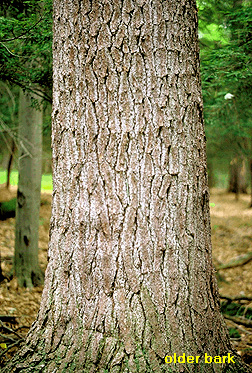
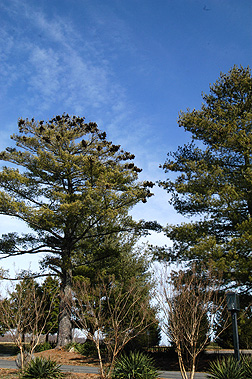
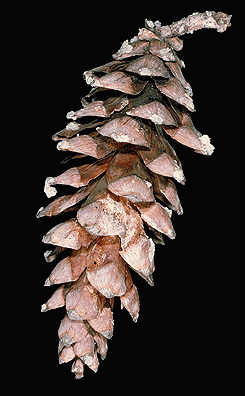
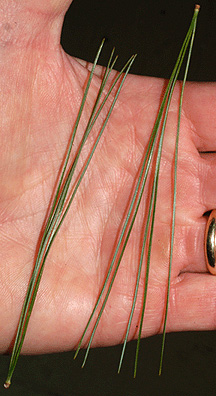
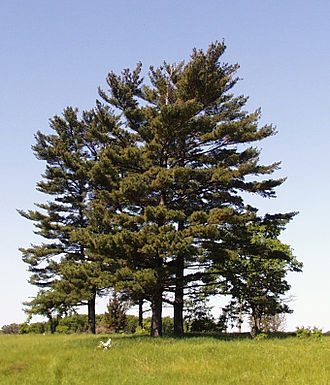
A foundational, keystone species across most of the North-Eastern United States and Canada. It is a famously tall, extraordinarily straight-growing evergreen that was historically used in the lumber trade. Now it is the main overstory tree in many of Vermont’s forests.
This is also true in this spot. The Eastern White Pine is the dominant species at this site and the overstory is pretty much only Eastern White Pines that reach high into the sky (on estimation anywhere from 50 to 100 feet tall). These trees are also why the spots soil is covered in a layer of dead, orange pine needles.
Key identification characteristics of this species:
- They will always have fascicles (clusters) of 5 long pine needles together. When alive, these needles are green with a tinge of Blue.
- They have long (4 to 7 inches) pinecones that are sticky to the touch (covered in resin). The scales turn out from the center of the cone (making it look like a Christmas Tree).
- The Bark on Older trees is greyish-brown, with large scales, dark furrows, and large ridges. The young bark of this tree is smooth and grey-green.
Credit to Virginia Tech Dendrology for photos and identification hints. Read more on Eastern White Pines below: https://dendro.cnre.vt.edu/DENDROLOGY/syllabus/factsheet.cfm?ID=111
Also photo credits to: https://web.archive.org/web/20080123082719/http://www.fws.gov/midwest/Sherburne/plantpics/PIST1.HTM
Sugar Maple (Acer saccharum)
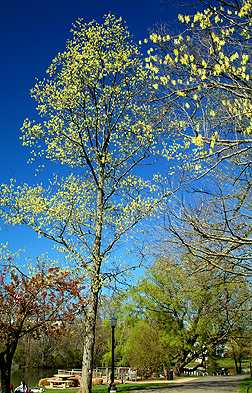
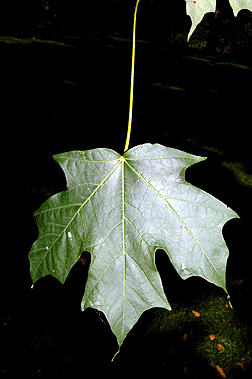
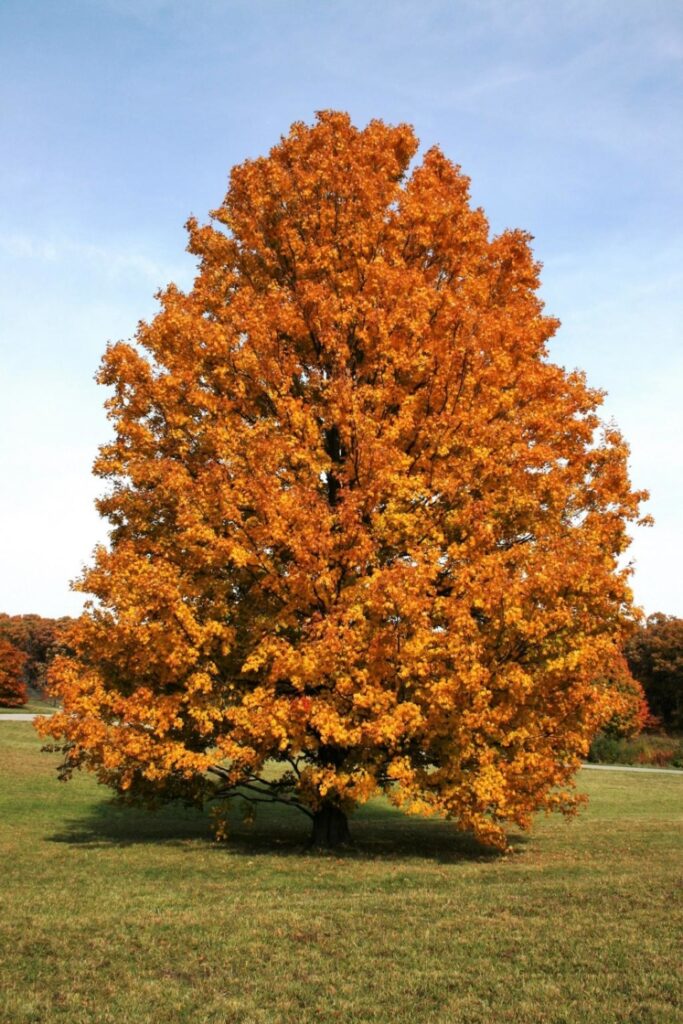
Vermont’s State Tree. Everyone knows and loves it for its contribution to breakfast: Maple Syrup. It is another incredibly common tree in New England and Canada and is used by many people to make Maple Syrup and other Maple treats (like Maple Taffy– by far a highlight of my trip to Québec). A shade tolerant tree, Sugar Maple is common in the understory of the forest, reaching out its palm shaped leaves at face-level as if ready to give a slap.
At this phenology spot, one of the first trees you are greeted with is the Sugar Maple. As a lover of the shade and moist soil, this phenology spot is perfect for it– the nearby creek and towering Eastern White Pines providing a sanctuary for this heavily prized tree. However, it is not as common as one would think, possibly due to the relative acidity of the soil, making it difficult for it to get all the nutrients it needs. Still, it is a pleasant sight at this spot.
Key identification characteristics of the Sugar Maple:
- Their leaves are distinct as they are opposite growing to each other, contrary to most trees’ alternate branching. The leaves are also simple and palmately veined with 5 lobes, no serration and a paler green underside to its green upside.
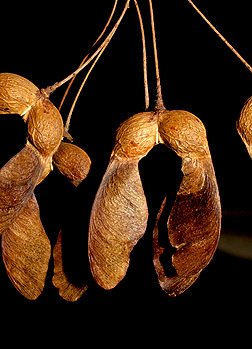
- It creates two samara seeds curved into a horseshoe shape, with each couple being an inch long. The seeds appear in clusters, making them hard to ignore. They fall like helicopters during autumn, and they are so fun to watch.
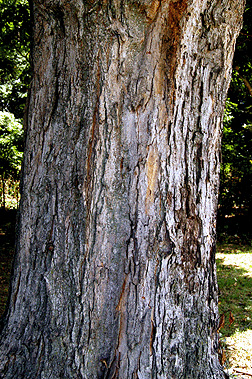
- The bark of the sugar maple is typically brown and has deep furrows and curling, firm ridges. The bark continues up its medium sized form (can get up to 100 feet) and into its dense crown.
Credit to Virginia Tech Dendrology for photos and identification hints. Read more on Sugar Maples below: https://dendro.cnre.vt.edu/dendrology/syllabus/factsheet.cfm?ID=2
Also photo credits to https://mortonarb.org/plant-and-protect/trees-and-plants/sugar-maple/.
American Beech (Fagus grandifolia)
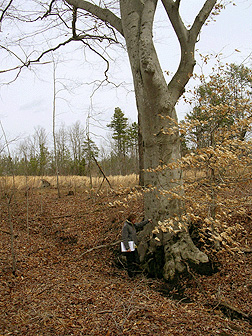
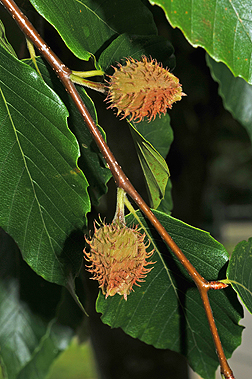
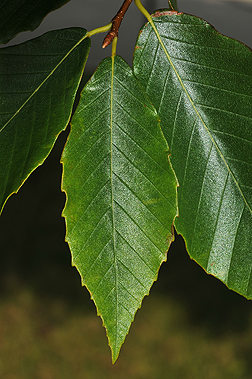
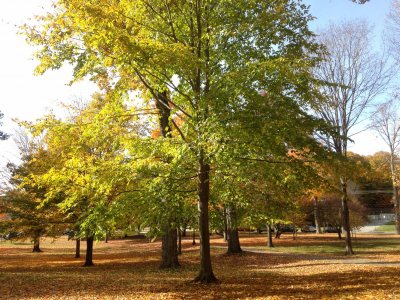
This is a common tree species in Vermont, though in the past, they were the most common tree (due to Beech scale disease, their numbers have plummeted). The reason why is obvious– American Beech is very shade tolerant and is not picky about what type of soil it grows in and can often thrive in low fertility soils.
At this site, American Beech is another common species in the understory. American Beech is heavily used by humans and wildlife for its nuts which can be eaten by a wide variety of animals (birds and mammals) as well as be used for oil. Though not the most striking tree, it is nevertheless important and valued by many conservationists.
Key Characteristics of the American Beech:
- They have simple, alternate leaves, similar to a Chestnut leaf. They are elliptical and pinnately veined, with each vein ending in a point and a waxy green upper side, with a paler underside.
- They have triangular nuts that are brown and found in pairs within a spiny wooden husk that is 1/2 to 3/4 inch long. They mature in the fall.
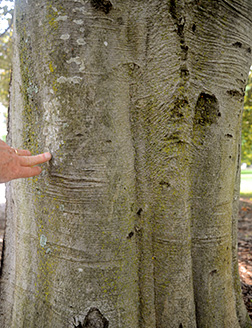
- Their bark is smooth, thin, and grey. They can grow up to 100 feet tall with a rounded crown and are often surrounded by other beeches.
Credits to Virginia Tech Dendrology for photos and identifications hints. Read more on American Beeches below: https://dendro.cnre.vt.edu/dendrology/syllabus/factsheet.cfm?ID=47
Also photo credits to: https://www.bates.edu/canopy/species/american-beech/
Northern Red Oak (Quercus rubra)
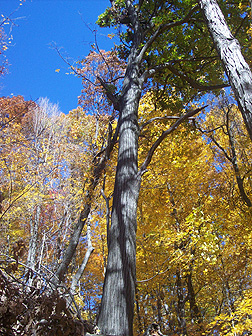
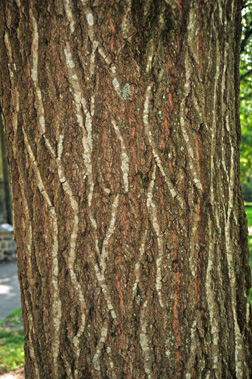
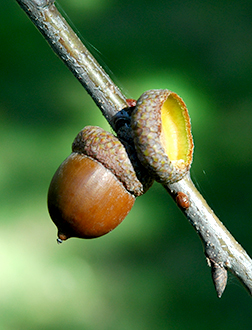
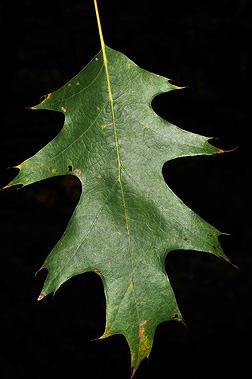
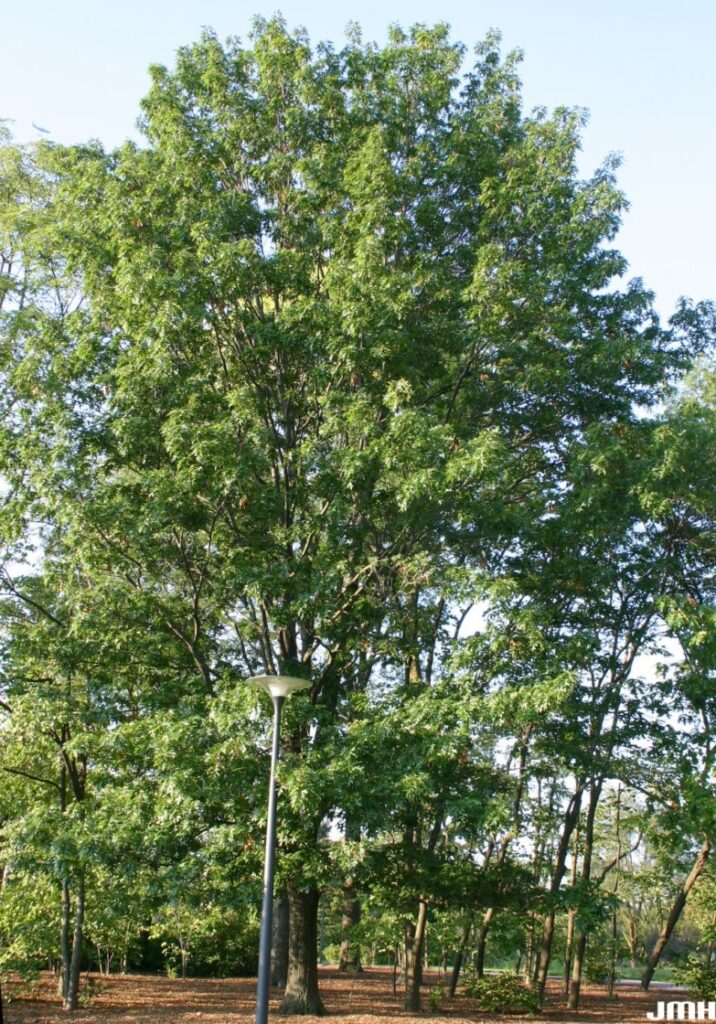
This is not as common as the three other trees, but it is in this spot as evidenced by the foliage on the ground in the area. This is also one of my favorite trees, a symbol of inner strength in my culture. Northern Red Oaks are used in the Northern United States as an ornamental tree, its large form and pretty leaves are common sites in most residential neighborhoods. They are also well-valued by wildlife for their acorns and humans love its strong wood for furniture, barrels, and veneer.
Northern Red Oaks are less shade-tolerant than the other deciduous trees that were mentioned above, and prefers to grow in well-drained soil. They are beautiful trees and their red foliage in the Autumn is amazing.
Key Characteristics of the Northern Red Oak:
- Their leaves are alternate, simple and have 7 to 11 bristle-tipped lobes. They are 5 to 8 inches long and have deep sinuses between the lobes (going to around half of the way down the midvein) and are dull-green above and paler below.
- Their acorns are 3/4 to 1 inch long and nearly round with a flat, thick cap that covers around a quarter of the acorn like a beret. The acorns mature in 2 growing seasons.
- The bark is smooth on young stems and older bark has wide ridges with shallow furrows. The furrows resemble ski tracts. This tree can grow up to 90 feet tall, a medium to large tree.
Credit to Virginia Tech Dendrology for photos and identification hints. Read more on Northern Red Oaks below: https://dendro.cnre.vt.edu/dendrology/syllabus/factsheet.cfm?ID=38
Also photo credit to: https://mortonarb.org/plant-and-protect/trees-and-plants/northern-red-oak/
Eastern Hemlock (Tsuga canadensis)
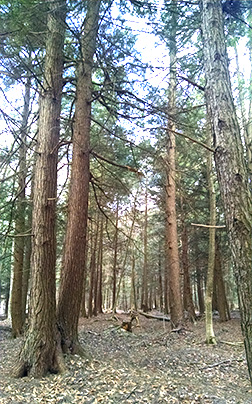
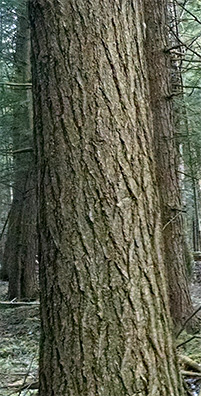
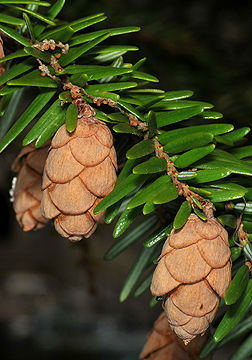
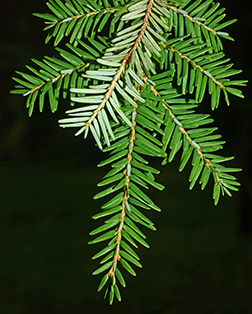
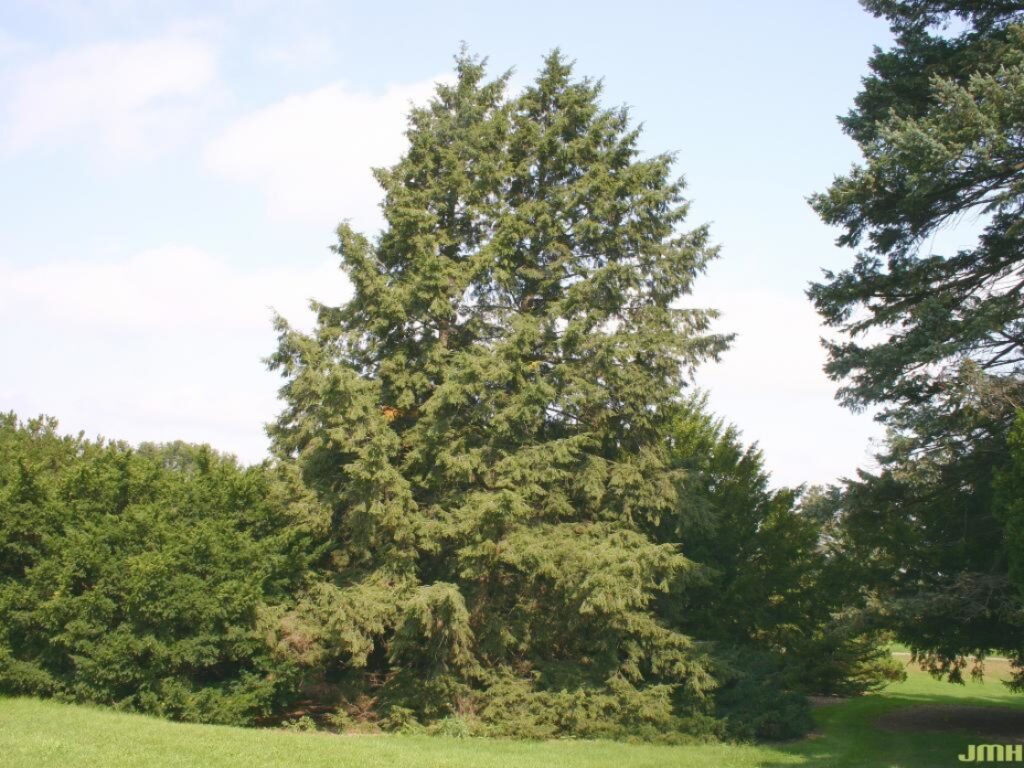
Funnily enough, this is Pennsylvania’s state tree. It adores cool, moist soils and can live up to 1000 years. Hemlocks are also incredibly tolerant of shade, often growing in complete shade. They are not the most common in Vermont, but they are personally one of my favorite trees because I grew up with three in my backyard that would sometimes host frogs underneath them.
Eastern Hemlock was historically used as a source of tannins for leather tanning. Its wood was also once used by the settlers, but now its main value is as a wildlife refuge. Their thick foliage allows for deer havens in winter and serve as a food source for many browsers.
Key Characteristics of Eastern Hemlock:
- They have small (1/2 inch), flat, single needles that are evergreen. They taper to a dull point and are shiny dark green above with two lines of white stomata and much paler color below.
- They have small light brown cone that are 3/4 inches long with rounded scales. The cone matures in late autumn.
- The bark is initially grey-brown and smooth that turns scaly as the tree grows. Older trees have red-brown bark with wide ridges and furrows. The tree itself can grow up to 80 feet tall, with a dense conical crown and drooping terminal shoot.
Credit to Virginia Tech Dendrology for photos and identification hints. Read more on Eastern Hemlocks below: https://dendro.cnre.vt.edu/dendrology/syllabus/factsheet.cfm?ID=116
Also Photo credit to: https://mortonarb.org/plant-and-protect/trees-and-plants/eastern-hemlock/
Ferns (Polypodiopsida)
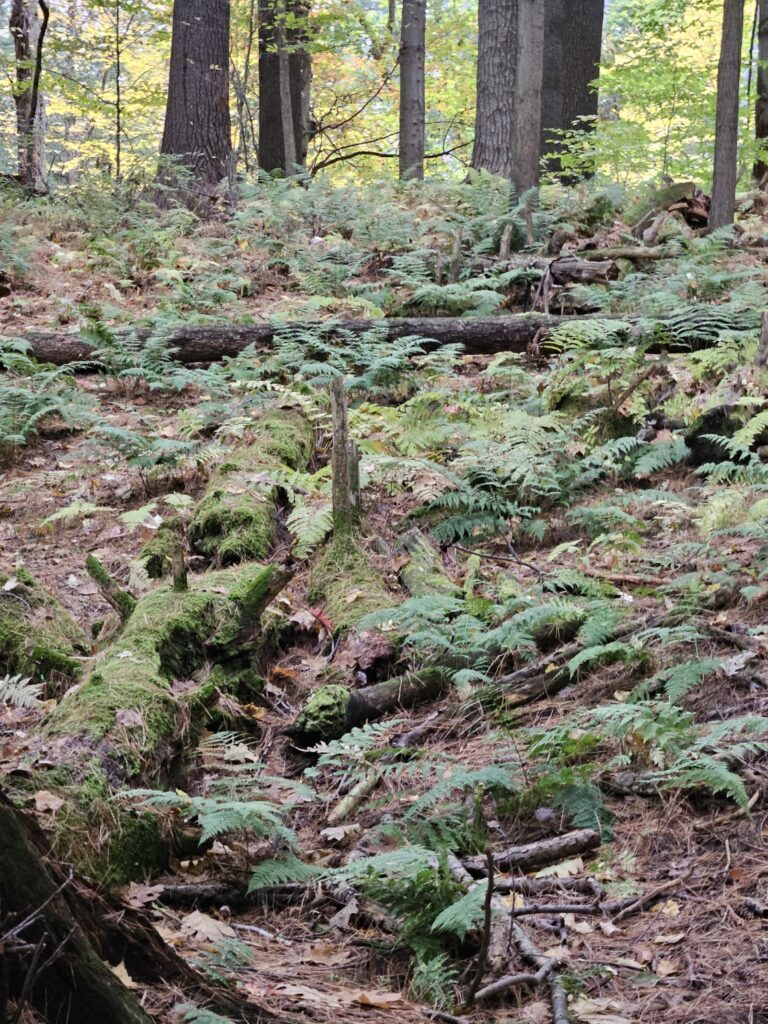
This is the only obvious ground cover plant on this site. The exact species of these ferns is uncertain– they are likely Rock Ferns (Common Polypodys) as they lack the drooping low leaflets of the Long Beech Fern.
Common Polypodys are medium-sized ferns that enjoy damp, shady gorges and woodland banks. They can reach a height of a foot (30 cm). Common Polypodys also like rocks, walls, and mossy branches, but can survive in dry conditions.
They are common and widespread in North America and can be identified by its simple, finger-like leaflets coming out of the main stem. They have small, round spore-bearing organs on the underside of their fronds.
Credit to The Wildlife Trusts for the information. Read more about Common Polypody here: https://www.wildlifetrusts.org/wildlife-explorer/ferns-and-horsetails/common-polypody
For more information about Ferns in Vermont, you can read here: https://www.vtstateparks.com/assets/pdf/ferns.pdf